I’ve set out to uncover the truth around low calorie natural sweeteners like Stevia, Monk Fruit & Yacon Syrup to find out whether they’re any different from non-natural artificial sweeteners.
If you’ve been reading the news lately, you may have seen the new developments in the area of artificial sweeteners. A recent 2017 systematic review has found that artificial sweeteners like Splenda and aspartame may cause weight gain and other serious health problems. Check out my post on artificial sweeteners and weight gain here where I explore some of these claims. Hearing this news may have triggered a variety of reactions. The first one might be: “I don’t believe it and until they ban them, I’m still using em.” Or maybe your reaction was: “What the F, #ByeFelicia!”. Or maybe your reaction looked like this: “it’s all good, I use low calorie NATURAL sweeteners, like Stevia so I’m in the clear.”
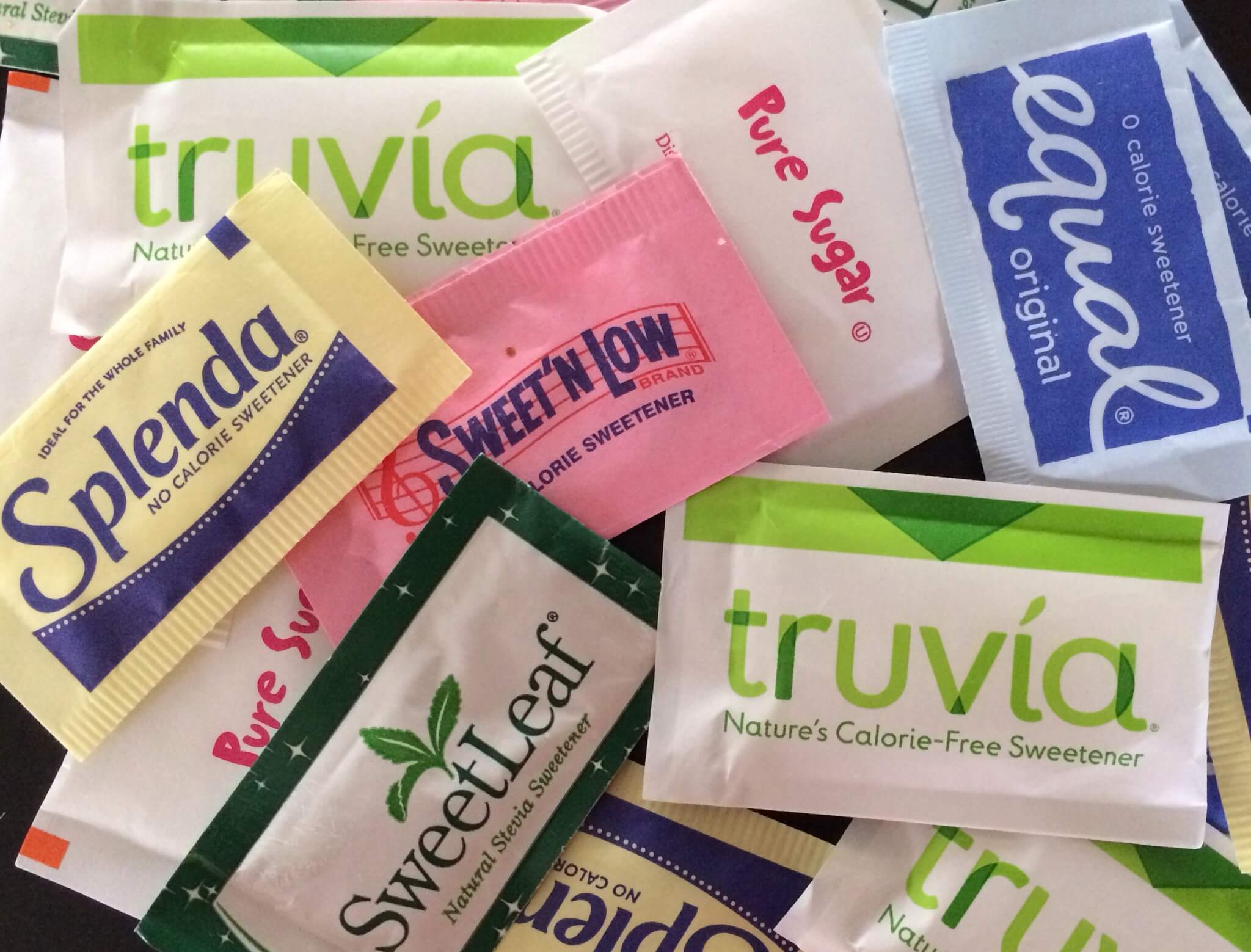
All of these reactions are totally valid, but for a while now I’ve questioned the super powers of Stevia and whether low calorie natural sweeteners are the way to go are really any different than the artificial stuff. To answer these questions, I’ve set out to uncover whether natural low calorie sweeteners, like Stevia, carry any of the potential dangers that artificial sweeteners have and whether natural necessarily equates to healthy.
What are Artificial Sweeteners?

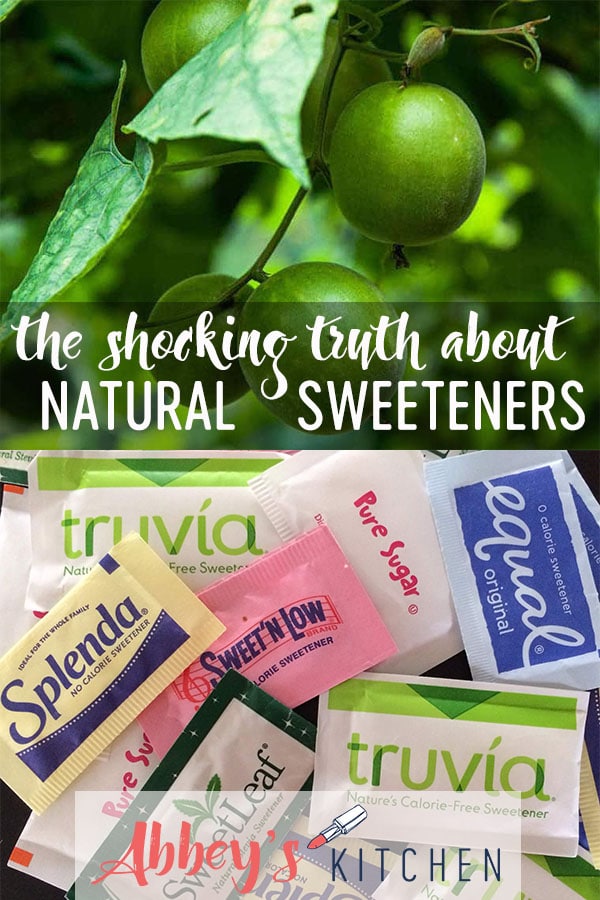
Artificial sweeteners are VERY low calorie sweeteners and have a higher intensity of sweetness per gram compared to common caloric sweeteners. You can find these sweeteners in diet soft drinks, yoghurts, desserts and gum. You can also purchase sweetener all on its lonesome to add to baking and beverages. As you can see from this handy dandy infographic here, Stevia extract is considered part of the artificial sweetener family, however the only difference is that it is extracted from nature and not synthetically made in a laboratory.
Artificial Sweeteners vs. Low Calorie Natural Sweeteners
Low Calorie Natural Sweetener 1: Stevia
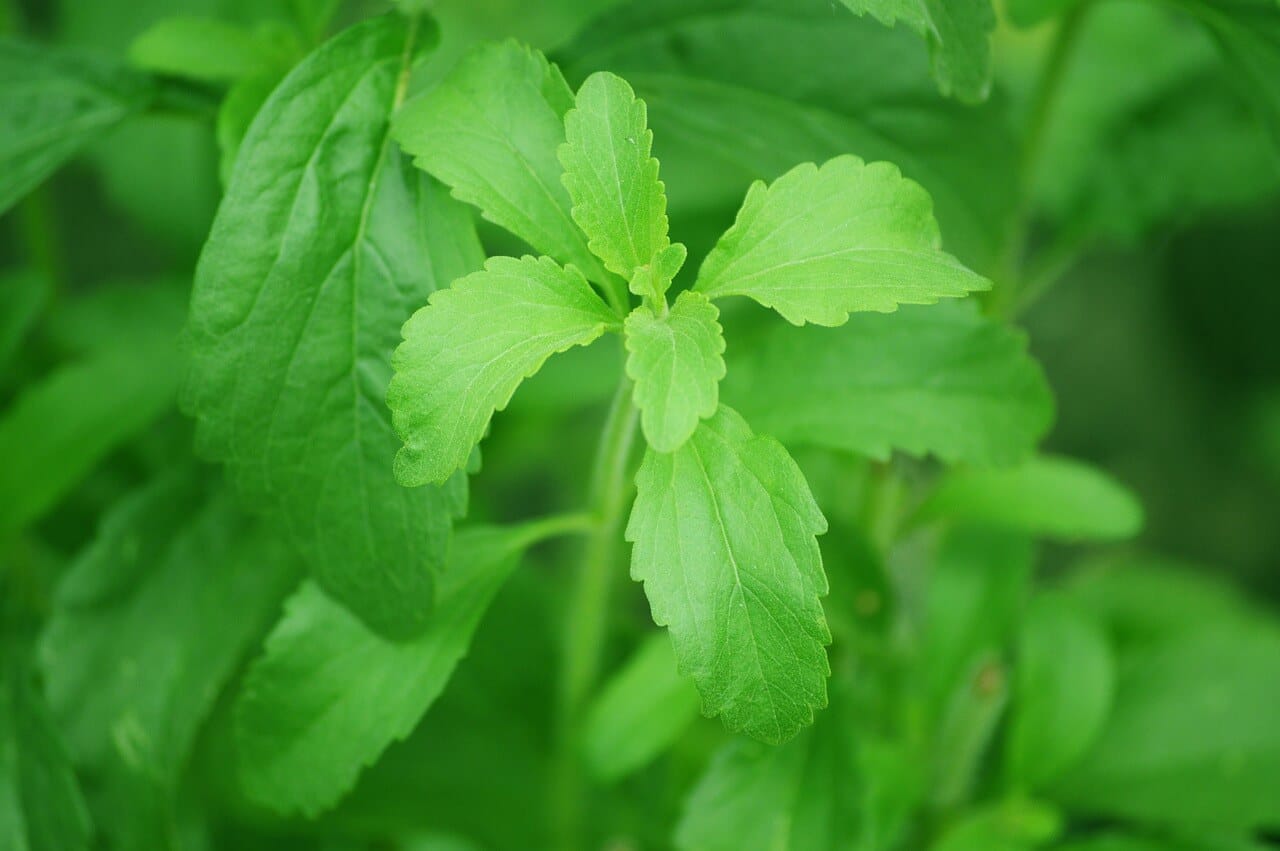
The hottest newest addition to the artificial sweetener list is Stevia. Stevia comes from the leaves of the stevia plant native to South America. You can buy Stevia in liquid or powder form. Stevia is used for medicinal purposes and indigenous groups use stevia leaves to sweeten herbal teas.
There are two forms of stevia that you should know about. Health Canada regulates purified stevia extract and is safe. Health Canada does not regulate Unrefined stevia extracts, leaves and powders. The unrefined version is a Natural Health Product (NHP). We don’t know much about this unrefined type of Stevia and its safety. In the United States Stevia is not needed to be approved by the FDA because it’s considered safe for use in food.
Since governments have deemed purified stevia extract safe, I want to know a few things. Does it carry any health benefits? Could it cause weight gain and other health problems like other artificial sweeteners?
First of all, in the 2017 systematic review stevia was one of the sweeteners examined, which means chronic consumption of stevia may lead to possible weight gain. Having said that, there is some research that shows that stevia may lower blood pressure. In a double-blind placebo-controlled trial, when oral stevia was given to 106 Chinese hypertensive subjections. After 3 months, their systolic and diastolic blood pressure decreased significantly compared to the control group. This was also shown in a study with rats, here and here.
A more recent 2010 systematic review found that two long term studies demonstrated that stevia may be effective at lowering blood pressure in hypertensive patients. However the results from shorter studies did not support those findings. That 2010 review was the most recent evidence I could find on the subject. Researchers concluded that a long-term investigation is necessary to make a more convincing claim that stevia carries any superior health benefits.
LOW CAL Natural Sweetener 2: Monk Fruit (Lakanto)
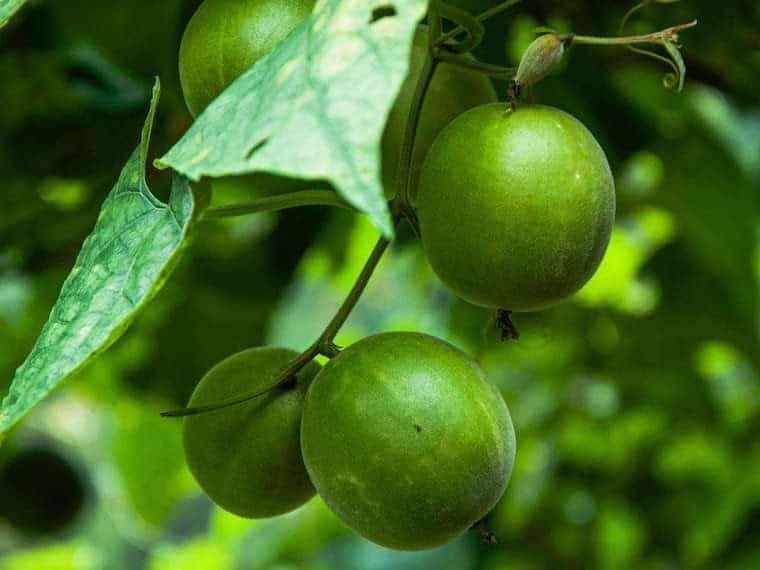
Photo: Carl99 / Getty
Is monk fruit safe?
Another natural sweetener is monk fruit, known by its commercial name: Lakanto. Monk fruit resembles a green melon and was first used by Buddhist monks. The fruit’s extract is used as a sweetener and is considered by the FDA as generally safe. The antioxidant, mogroside makes Monk fruit syrup sweet. As of yet, no studies have looked at monk fruit and its effect on weight specifically. I did find one recent 2017 study that compared aspartame, monk fruit, stevia and sucrose on energy intake.
In the randomized study, 30 healthy male subjects were allocated to four treatment groups (aspartame, stevia, monk fruit, sucrose). The study found that those who had any of the artificial or low calorie natural sweeteners ate more than those who ate the regular sugar drink. It seems that any energy they “saved” with the artificial sweeteners was fully compensated at the meal to yield no difference in daily energy intake between the treatment groups. The glucose response also did not differ between all groups. There also was no difference in the outcome when people consumed the artificial (aspartame) vs the natural low calorie sweeteners (monk fruit vs stevia). Not surprisingly, when people think they’re eating something low calorie, they feel they’re being “good” so they binge on unhealthy foods. You know, I call it the Diet Coke and Supersize fry effect.
Low Calorie Natural Sweetener 3: Yacon Syrup
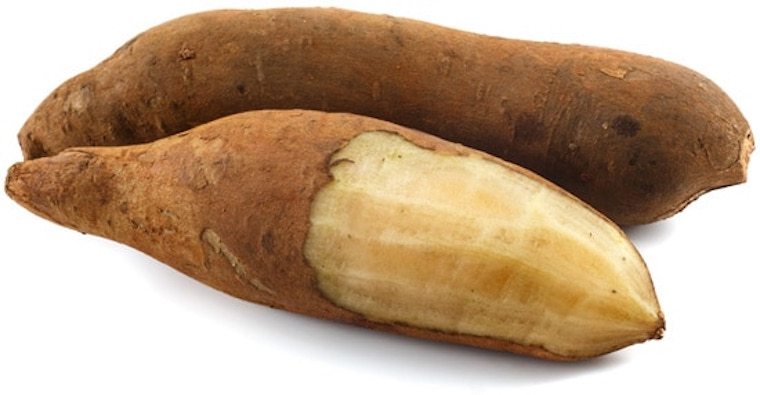
Photo: Authority Nutrition
I also wanted to touch on a fairly new trend which is the use of Yacon syrup as a low cal natural sweetener. Yacon syrup has recently become popular as a weight loss aid.
In the Andes mountains in South America, you’ll find Yacon syrup from the roots of the Yacon plant. The yacon plant is used for centuries as a medicinal tool. You might even mistake a Yacon root for a sweet potato. Through a very natural process, a tasty syrup resembling maple syrup, is extracted and filtered for use. Yacon syrup isn’t a zero-calorie sweetener, but it does contain one third of the caloric value of sugar.
How Did Yacon Syrup Become a Weight Loss Fad?
Well, you can thank America’s favourite doctor: Dr. Oz. Not surprisingly, all of the research supporting the weight loss benefits of Yacon syrup come from one single study. In the 2009 study women consuming Yacon syrup lost 33 pounds over a period of 120 days compared to the placebo group. This was a super short study with a small sample group. Also, there could have been a variety of factors that contributed to their weight loss (change in diet, increasing physical activity). Since 2009 there haven’t really been any new studies to support these findings.
This sweetener isn’t a weight loss aid in itself but does carry some key nutrients. Yacon syrup contains 40-50% fructooligosaccharides, which we cannot digest and pass through our digestive system. Fructooligosaccharides also contain inulin fibre which is a prebiotic that acts as a food source for the beneficial bacteria in our gut. So, if you want to get your prebiotic fix or cut back on sugar, sure go for it, but don’t rely on it as a reliable weight loss tool on its own.
Bottom line on monk sugar vs stevia vs yacon
Listen, I am all for natural foods. Meaning, I strongly advocate for eating food that is as minimally processed as possible. But to say that these low calorie natural sweeteners are a completely separate breed from artificial sweeteners is possibly not true. We still need a ton more research on most of them to catch up with the research we have on traditional artificial sweeteners. Ultimately, I think we should be focusing less on which sweetener to use and more on how much sweetener we’re using.
Become an Abbey’s Kitchen Subscriber
If you liked this post, you may like:
The Truth About Artificial Sweetener & Weight Gain
Aspartame & Artificial Sweeteners vs Sugar | Pros, Cons & Controversy
Should You Quit Sugar? Is Sugar Making You Sick?
Now I want to hear from you!
Have you heard of monk fruit syrup or Yacon syrup before?
Have you used Lakanto or stevia?
What’s your go-to sweetener of choice!
Comment below with your thoughts!
Contribution By:
Sofia Tsalamlal, MHSc, RD
Updated on December 2nd, 2021

Abbey Sharp is a Registered Dietitian (RD), regulated by the Ontario College of Dietitians. She is a mom, YouTuber, Blogger, award winning cookbook author, media coach specializing in food and nutrition influencers, and a frequent contributor to national publications like Healthline and on national broadcast TV shows.






Erin says
Overall good information but Lakanto is not pure monk fruit it contains sugar alcohols which can affect the gut. Same is true for most stevia found in the store. Would like to see comparisons with pure monk fruit and allulose. I am always amazed at how many dieticians still promote the sucralose, aspartame, etc for people getting ready for bariatric surgery.
Ram Yadav says
Great Article. Fabulous One….
Abbey Sharp says
Thank you 🙂 Glad you enjoyed the read.
Robert says
I’m diabetic (8yrs) and I’ve tested with monk fruit 7-13-20 and it for sure will cause insulin release and makes my blood sugar go down. I tested using only monk fruit after fasting.
So for me, it causes an insulin release which is very bad because it makes your cells more resistant over time. More resistant = more diabetic.
Hope to hear from others about this.
Abbey Sharp says
thanks for sharing
Erin says
You must have insulin to survive so it really depends on how much it releases and is there still too much sugar intake overall. Insulin response in correct cycles prevents resistance
M says
I’ve just started to play around with alternative sweeteners. Stevia has a bitter aftertaste. None that I have tried seemed as sweet tasting as sugar on its own. I made a chocolate cake with Swerve (erythritol) and I made a cheesecake with Lakanto (monk fruit/erythritol). Both dessert tasted pretty good but the Lakanto sent me to the bathroom immediately. I tried Lakanto in my hot tea and that sent me to the bathroom as well. But the Swerve in the chocolate cake didn’t. Is it just me? Or does monk fruit have this side effect?
Abbey Sharp says
hmm I don’t know. I’ll have to look into that
E. Grogan says
Erythritol and alcohol sugars are very difficult to digest for some people. I am one of them, can’t tolerate it. My stomach lining is not in good shape and I think that’s the problem. Also if you take too much, you get horrible stomach ache. One more point: my husband has been a biologist for 45 yrs and has diabetes. He’s done lots of research and says if you eat anything that raises insulin very much, you WILL get horrendously hungry. I know it does that to both him and to me, we are both diabetic. We can’t eat tons of cinnamon for example or we will be ravenously hungry, inulin does that too. That is the reason why, in that scientific trial, everyone got hungry and ate too much, because of insulin surge, NOT because they are simply eating alot because they can. Give me a break, not EVERYONE does that, only some folks; otherwise you wouldn’t have every single person eating too much in the test. I know that was the conclusion, but I say they are wrong, they are only guessing. The graph from that project was not good at all, research was not well done.
Mick Moore says
I’ve just eaten a packet of fruit pastilles that contain FOS and it’s making me feel like I’m having a hypo. I feel really drowsy and have no energy at all. I’ve never had anything like this from eating stevia and can’t find anything online referencing side effects like this.
Beth says
I have tried most of the alternative natural sweeteners and straight erythritol sends me to the bathroom. I like the taste of stevia the least and Monk Fruit and Allulose are my to favorites.
Harriett says
I used Monkfruit in Kool-aid like sugar and yes it will give you the runs if you drink a lot of it. It would work as a good colon cleanser ?.
I still use Monkfruit, but just to sweeten my coffee. It’s the most sugar-like tasting of the zero calorie sweeteners I’ve used. Stevia and Sucralose leave a bitter aftertaste.
Tish Varney says
I have always had a weight problem for most of my life. I’ve tried several sweeteners, in the one that I seem to always turn back to is Sweet and Low. Tried Splenda stevia Truvia, and many others. Am now trying monk fruit, but can’t really say I like you have to taste it has. I’ve always wondered about these in my problem with losing weight. Enjoy reading an informational article, thank you! Please do most study about Sweet and Low, in the truth but its effects on the body.
Mary says
Just want to comment that I think it´s incorrect to say that monk fruit equals Lakanto. In fact, Lakanto mostly uses erythritol and then mixes it with pure monkfruit to sweeten their products. I like some of their products, others…like the hot cocoa mix…has caused me severe stomach upset. This is is not a surprise, since erythritol commonly causes gastric distress. I can eat or drink it, but some products do cause me much distress, and others no distress.
The issue with this article, which I think would be greatly improved, should you choose to make an adjustment to it….is that monk fruit is a THING by itself…like Stevia is a THING by itself. Now, if everyday people want to incorrectly refer to a brand…Lakanto as a THING, monk fruit, fine, but I don´t think someone writing an expertise article should make that mistake. It causes confusion, for sure.
Finally, there is some indication that PURE monkfruit, while it does not raise blood sugar, actually may raise insulin, making it inherently insulinogenic, which also is not good for people trying to lose weight or to repair metabolic syndrome.
I do use pure monk fruit powder…organic… by Julian Bakery and I like it much more than stevia.
Pat says
As a Lyme syndrome patient, I find both stevia and monk fruit sweeteners play an important role in maintaining a good blood glucose/keto balance.
I do realize I “like” the monk fruit sweetener taste better than stevia. Stevia is mandated in my doctor protocols as a twice daily supplement and monk fruit is one of the suggested replacements for sugars that affect glucose/insulin levels when using a “Keto” diet.
I take my blood glucose and ketone levels regularly, ant this point, once a week. When starting out I tested several times a day to make sure I wasn’t getting worse.
After 3.5 months on the antibiotic/supplement/keto diet regime, making use of both types of sweeteners, I have lost 41 pounds, plus my blood sugars are constantly below 100. Before these changes, I was testing as “pre-diabetic” and felt weight loss was impossible.
In my case, these sweeteners have become a mainstay in my cooking. I’d be sad to hear they weren’t doing the good I believe they are doing. Plus, my husband has lost 15 pounds over the same time, by eating what I cook while still eating some carbohydrates and grains-just not as frequently as he consumed them before these changes.
Holly Primc says
Hi Abbey! I have been using monk fruit for a couple of months now but the thing I cannot stand is ERYTHRITOL being added to every monk fruit sweetener and the pure extract is cost prohibitive. The taste is terrible (plastic?? isopropyl alcohol?? it’s awful). I’ve tried researching the health impact as I cook/bake with it almost day. Can you shed some light on this additive? Thanks!
Abbey Sharp says
I will look into that!
Jamie D Cummins says
The thing is monk fruit will not raise your glucose level but it will not trick your body into thinking your’e consuming glucose – thus a response is triggered by insulin that will result in your blood sugar levels dropping. Mixing monk fruit and ERYTHRITOL is actually okay. Neither of them cause a problem with your body.
Even stevia has a glucose effect on the body but it is so low. If you don’t like the taste maybe got for pure stevia and just assume that 4 table spoon is 2 cals. Again the response of artificial sweetners is not calorie or sugar levels but more a trigger on insulin which is responsible for regulating sugar levels and storing fat.
James Casteel says
That study didn’t mention what else the subjects were consuming. I mean, if you have diet soda and still eat unhealthy you’re gonna gain weight. Blaming it on artificial sweeteners seems pretty dishonest. If you read the last part of the study they admit that “…..experimental studies and may be influenced by publication bias. New studies are needed to compare different types and formulations of nonnutritive sweeteners, and to evaluate the net effect of substituting nonnutritive sweeteners for sugar…..”.
Abbey Sharp says
Definitely. Which is why I’ve concluded that the evidence is still unclear.
Bekks says
Hi Abbey, love your YT channel 🙂
In order to be able to compare the effects why did they give the test subjects food at all? You cannot tell what’s what if you don’t even know what foods they were given. A proper trial should be only using the sweeteners and nothing else, then compare bloodwork again and again over a couple of hours after ingestion. They way they did the study clarifies nothing. What a shame, it would have been great to know.
Abbey Sharp says
Hey, which study are you referencing specifically? Sadly, with nutrition research there are usually always other variables that can affect results and it’s harder to get accurate results.
Linda says
Hi Bekks.
I have been a diabetic since I was 10. I am now 55. I have used every kind of artificial and natural sweetener and I can tell you which ones affected my blood sugar levels( when they are not supposed to according to research.
Maltitol and xylitol taste great, but they raise your blood sugar just as much as sugar but you don’t see the rise in blood sugar for 45 minutes to sometimes 3-5 hours after you eat sweets made with these sweeteners. Sorbitol also does the same thing. Gavin syrup ? I can’t remember how it affected my blood sugar.
Erythritol does not affect blood sugar no matter how much you eat. I recently have been using pure monk fruit extract and there is no ride in blood sugar levels. None! The extract is very expensive at about $25 for less than one ounce of the pure powder extract.,I’m experimenting currently to see how much to use in a cup of hot chocolate, and how much to use in a dozen muffins made with coconut flour. I gave up all sweets 2 years ago but really missed a cup of hot choclate on cold winter mornings. I use a teaspoon of organic cocoa powder , 3/4 cup of hot water, 1/4 cup organic coconut milk, and about 1 litmus shake of the pure mink extract. It’s touchy! Slightly more and it is bitter as can be, but the right amount makes it sweet like sugar. I’m working on it! Hope this helps you.
Linda says
Not “ Gavin”. That was supposed to say “ Yacon” And not “Mink”, that was supposed to say monk. Sorry for the typos!
Jennifer says
Thank you so much Linda! So VERY helpful to hear this straight from you – someone who has been monitoring blood sugar levels consistently for many years! I very much appreciate your sharing your personal findings. 🙂
D in Dixie says
I have tried all three. Powdered stevia has a bitter aftertaste, but dissolves okay in hot tea or coffee. Liquid stevia also has the aftertaste, but it is possible to get used to it. (To be honest, I occasionally eat bitter melon, so my tastes may not be average.) I’ve not cooked with it.
I do use Yacon syrup, but am taking it more for the prebiotics. Maybe next time I will try it on oatmeal or sweet waffles as a syrup.
I like the monkfruit best, as it seems to substitute best for sugar in baking and cooking. I don’t seem to suffer many digestive upsets due to any of them, that I can tell. I like Lankato brand, but it is pricey. Last time I purchased Health Garden brand from Sam’s Club online at about half the price.
Abbey Sharp says
Hi Dixie. Thank you for sharing <3
Peggy says
Interesting post/article, thank you! Having recently lost about 25lbs on a keto diet I’ve been experimenting a bit with sweeteners as I sparingly add carbs back in, including sweets. I use liquid stevia to add a bit of sweetness to coffee from time to time. Have not liked the taste in most attempts at making lo carb sweets. I had success with Erythritol as a sugar replacement in some recipes but something about it now is quite unsatisfying; cooked foods (puddings, pies) also do not seem to keep well in the fridge when made with Erythritol. I am referring to problems like liquid separation from the cooked item. I purchased a container labeled by manufacturer (Whole Earth Sweetener Co.) as ‘a blend of Stevia and Monk Fruit’, it was on sale and appeared to be an item that grocer (publix) had possibly decided to no longer carry. The original price was not something that I would ever be likely to pay, but at a steep discount it was worth a try. Label claims that 1/2 tsp = 1 tsp of sugar. It is granular and tastes very close to sugar on the tongue. When I look at the ingredients (fine print of course) it lists (in this order): Erithritol, Stevia leaf extract, monk fruit extract. A serving 1/2 tsp has 2 gm total carb and 2gm erythritol. This product is not even listed on the company’s website. Clearly the amount of Monk fruit is very small, too small for me to do much with this product in anything more than sweetening a beverage. I am beginning to agree with one of your reader’s earlier comments…avoiding sweets in general except for sweetening with fruits like banana. I have made banana bread with a small amount of sugar, very ripe mashed bananas and no carb/lo carb flours. It does become tedious to avoid all carbs, limiting them is a workable option for me.
Abbey Sharp says
Hey Peggy, thanks so much for sharing!
Ann Beth Priceman says
I have been using stevia but I feel it has a bitter aftertaste, I just bought some organic chocolate monk fruit liquid for use in my coffee, and I’m loving the flavor
Sofia Tsalamlal says
Awesome.
Erik says
OK Abbey, I’m really torn/confused here. LOL. I recently gave up diet sodas as a way to try and live healthier. I was a HUGE consumer of Diet Dr. Pepper which, as you probably already know, contains aspartame. When I switched from regular sodas to diet sodas (about 16 years ago) I thought I was doing a good thing. In fact, I lost weight immediately after the transition. It’s not hard to imagine because I consumed enough soda to reach my daily caloric intake without eating food. Well, with all the new research on artificial sweeteners, I’ve tried to cut them out of my diet as best as I can. The sodas, gone. Other foods with artificial sweeteners, gone. I’m trying to, eventually, cut back on ALL sweeteners period. I do like tea, and enjoy it “unsweet”. I’ve never been a fan of the “taste” of plain water but I’m trying to incorporate more of the H2O into my diet also. When I do use sweetener, I’ve been using Stevia (Stevia in the Raw) because I was under the impression that it’s “natural”. So, now I’m learning it may not be natural. UGH.
OK, so I’m on day 14 of this “kick” to kick diet sodas (& not go back to regular). I’ve also tried to eliminate as much of the artificial sweeteners that I “realize” are in certain foods (like yogurts, other drinks, and baked goods). As a result of eliminating aspartame, sucralose, & saccharin over the past 2 weeks I’ve noticed several health benefits already. I used to have joint pain and stiffness, mostly in my knees and hands, which is not completely gone. My knees feel like they did 20 years ago. I’ve also lost weight, noticing that I’m consuming less at each meal (especially dinner). Basically, I’m getting full “sooner” with smaller portions. I’ve also noticed that I’m less bloated. I have had a GI condition for years that’s required medication…I have not had any flare-ups from that in this 14 day period. In general, I just feel better.
So, my concern is with my use of Stevia. Have I traded the 3 most known “sweet toxins” for another? Will I start having the same issues I had from the other 3 if I continue to use it? I’ve tried researching this more and more but it seems there’s limited and conflicting information on Stevia but it’s been suggested as “natural” and maybe even having potential health benefits. I know, ideally, not using sugars/sweeteners would be the way to go…but sometimes you just need a little dab of sweet in your life. So, what’s your take on this? Is Stevia OK with daily consumption in coffee and tea as long as it’s not a lot? AND, what would be considered a lot? My goal is to transition into a weight loss plan and try to drop about 50 lbs. I wanted to eliminate the diet drinks first since latest research showed they actually contributed to weight gain after extended consumption (which I can confirm first-hand). I know Stevia is not a “magic bullet” for weight loss but was hoping to incorporate is as the sweetener of choice once I started my diet alterations for weight loss. Is there another sweetener you’d recommend? Or do you think limited Stevia consumption could still work? Thank you for any advice, input, or insights.
Frank Zen says
If you like Dr Pepper, try Dr Zevia sold in many supermarkets in the US. It’s a stevia based drink that’s not so bad taste wise. Still an aftertaste but it’s one of the better stevia drinks I’ve had so far… Stevia’s from a plant so I don’t see any problem with it. I’ve grown and used stevia for about 10 years now.
Priscilla Deatrick says
I like honey in my tea,raw, not so processed. Maple syrup is good also. I never every use artificial sweetner , tricks your mind and body to craving more food and sweetening.
Abbey Sharp says
Thanks for sharing love
Marie says
I think that sugar, in any form should be used as a treat and sparingly. Like anything overdone it will affect your weight. I choose to use Monk Fruit because I’m a type 2 Diabetic, and yes the same amount of regular sugar will spike my numbers.
Abbey Sharp says
Thanks for sharing Marie.