I’ve set out to uncover the truth around low calorie natural sweeteners like Stevia, Monk Fruit & Yacon Syrup to find out whether they’re any different from non-natural artificial sweeteners.
If you’ve been reading the news lately, you may have seen the new developments in the area of artificial sweeteners. A recent 2017 systematic review has found that artificial sweeteners like Splenda and aspartame may cause weight gain and other serious health problems. Check out my post on artificial sweeteners and weight gain here where I explore some of these claims. Hearing this news may have triggered a variety of reactions. The first one might be: “I don’t believe it and until they ban them, I’m still using em.” Or maybe your reaction was: “What the F, #ByeFelicia!”. Or maybe your reaction looked like this: “it’s all good, I use low calorie NATURAL sweeteners, like Stevia so I’m in the clear.”
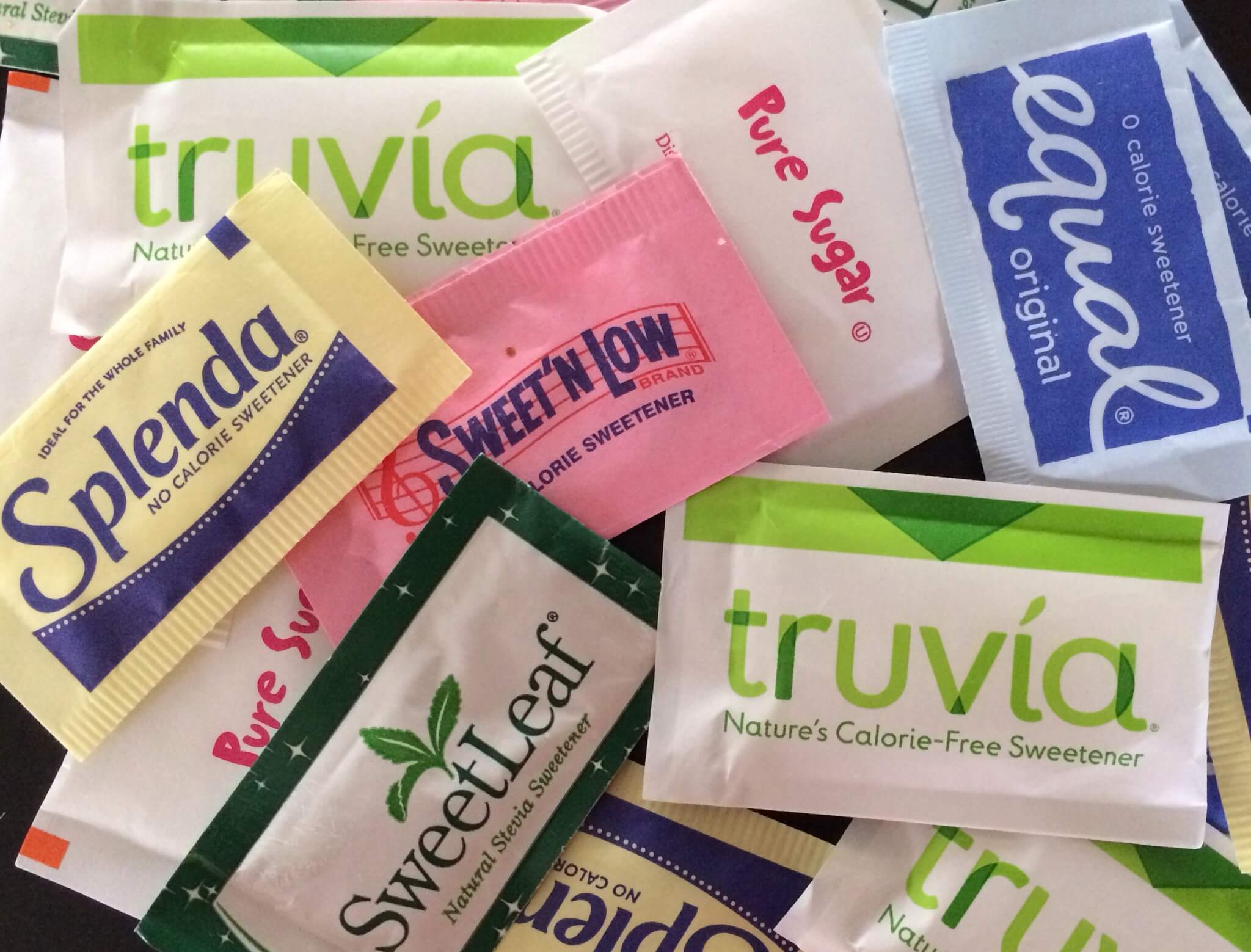
All of these reactions are totally valid, but for a while now I’ve questioned the super powers of Stevia and whether low calorie natural sweeteners are the way to go are really any different than the artificial stuff. To answer these questions, I’ve set out to uncover whether natural low calorie sweeteners, like Stevia, carry any of the potential dangers that artificial sweeteners have and whether natural necessarily equates to healthy.
What are Artificial Sweeteners?

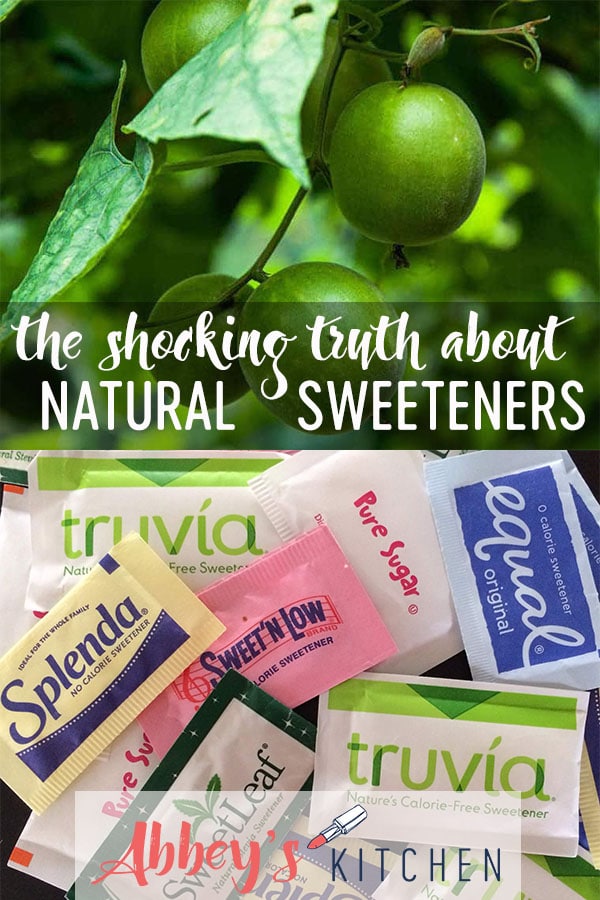
Artificial sweeteners are VERY low calorie sweeteners and have a higher intensity of sweetness per gram compared to common caloric sweeteners. You can find these sweeteners in diet soft drinks, yoghurts, desserts and gum. You can also purchase sweetener all on its lonesome to add to baking and beverages. As you can see from this handy dandy infographic here, Stevia extract is considered part of the artificial sweetener family, however the only difference is that it is extracted from nature and not synthetically made in a laboratory.
Artificial Sweeteners vs. Low Calorie Natural Sweeteners
Low Calorie Natural Sweetener 1: Stevia
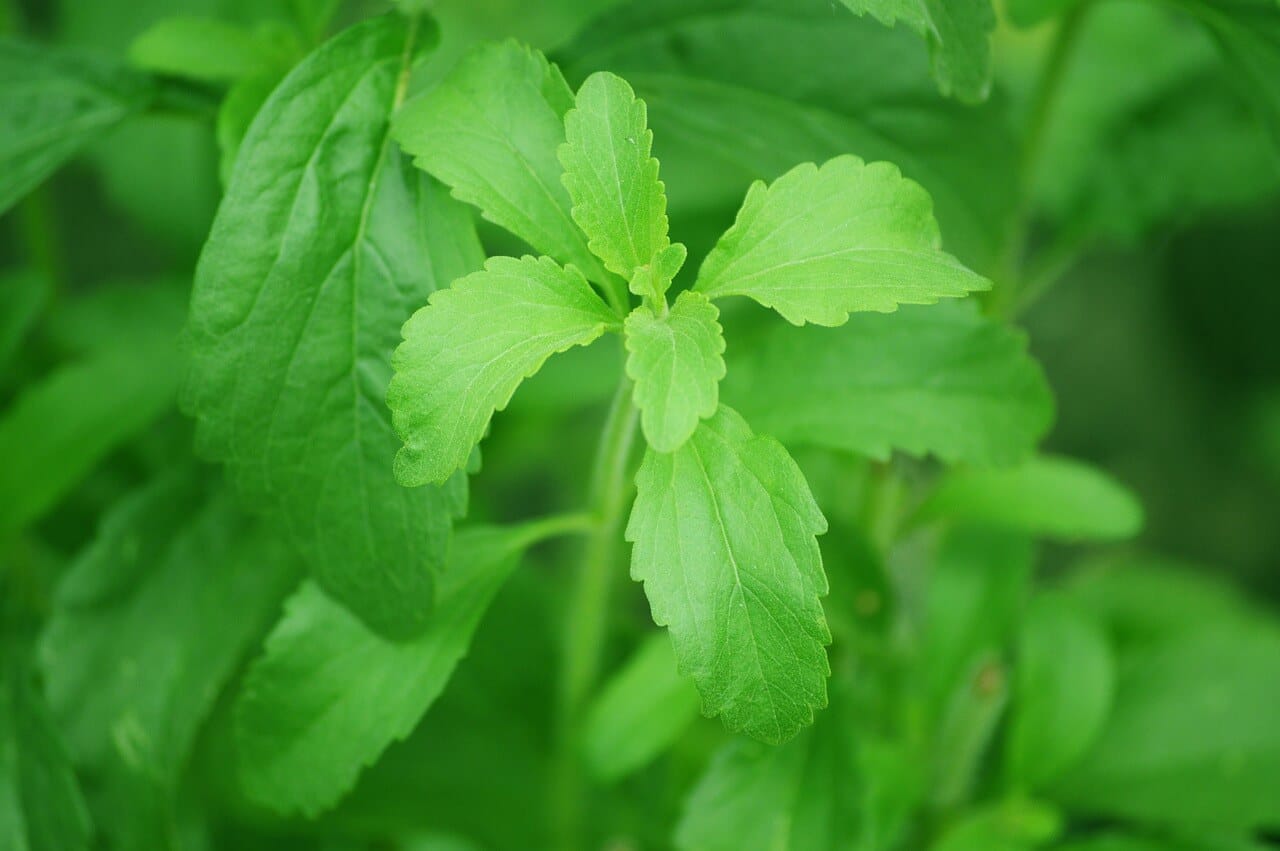
The hottest newest addition to the artificial sweetener list is Stevia. Stevia comes from the leaves of the stevia plant native to South America. You can buy Stevia in liquid or powder form. Stevia is used for medicinal purposes and indigenous groups use stevia leaves to sweeten herbal teas.
There are two forms of stevia that you should know about. Health Canada regulates purified stevia extract and is safe. Health Canada does not regulate Unrefined stevia extracts, leaves and powders. The unrefined version is a Natural Health Product (NHP). We don’t know much about this unrefined type of Stevia and its safety. In the United States Stevia is not needed to be approved by the FDA because it’s considered safe for use in food.
Since governments have deemed purified stevia extract safe, I want to know a few things. Does it carry any health benefits? Could it cause weight gain and other health problems like other artificial sweeteners?
First of all, in the 2017 systematic review stevia was one of the sweeteners examined, which means chronic consumption of stevia may lead to possible weight gain. Having said that, there is some research that shows that stevia may lower blood pressure. In a double-blind placebo-controlled trial, when oral stevia was given to 106 Chinese hypertensive subjections. After 3 months, their systolic and diastolic blood pressure decreased significantly compared to the control group. This was also shown in a study with rats, here and here.
A more recent 2010 systematic review found that two long term studies demonstrated that stevia may be effective at lowering blood pressure in hypertensive patients. However the results from shorter studies did not support those findings. That 2010 review was the most recent evidence I could find on the subject. Researchers concluded that a long-term investigation is necessary to make a more convincing claim that stevia carries any superior health benefits.
LOW CAL Natural Sweetener 2: Monk Fruit (Lakanto)
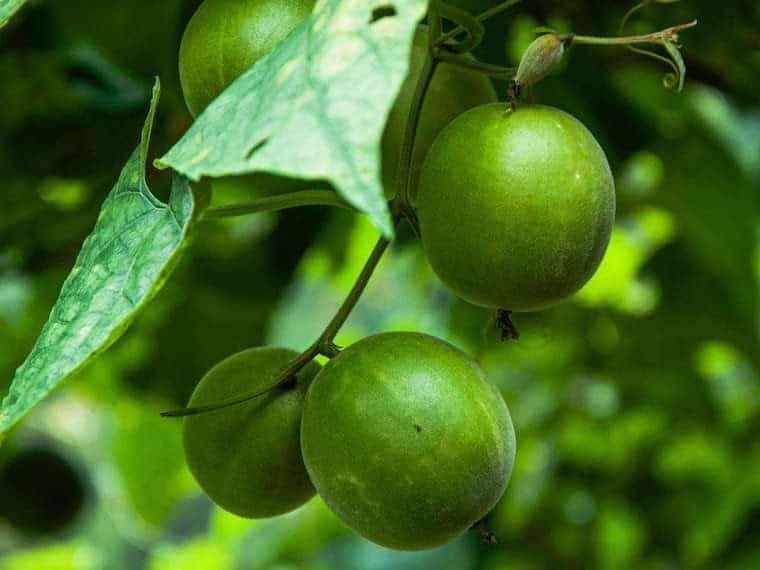
Photo: Carl99 / Getty
Is monk fruit safe?
Another natural sweetener is monk fruit, known by its commercial name: Lakanto. Monk fruit resembles a green melon and was first used by Buddhist monks. The fruit’s extract is used as a sweetener and is considered by the FDA as generally safe. The antioxidant, mogroside makes Monk fruit syrup sweet. As of yet, no studies have looked at monk fruit and its effect on weight specifically. I did find one recent 2017 study that compared aspartame, monk fruit, stevia and sucrose on energy intake.
In the randomized study, 30 healthy male subjects were allocated to four treatment groups (aspartame, stevia, monk fruit, sucrose). The study found that those who had any of the artificial or low calorie natural sweeteners ate more than those who ate the regular sugar drink. It seems that any energy they “saved” with the artificial sweeteners was fully compensated at the meal to yield no difference in daily energy intake between the treatment groups. The glucose response also did not differ between all groups. There also was no difference in the outcome when people consumed the artificial (aspartame) vs the natural low calorie sweeteners (monk fruit vs stevia). Not surprisingly, when people think they’re eating something low calorie, they feel they’re being “good” so they binge on unhealthy foods. You know, I call it the Diet Coke and Supersize fry effect.
Low Calorie Natural Sweetener 3: Yacon Syrup
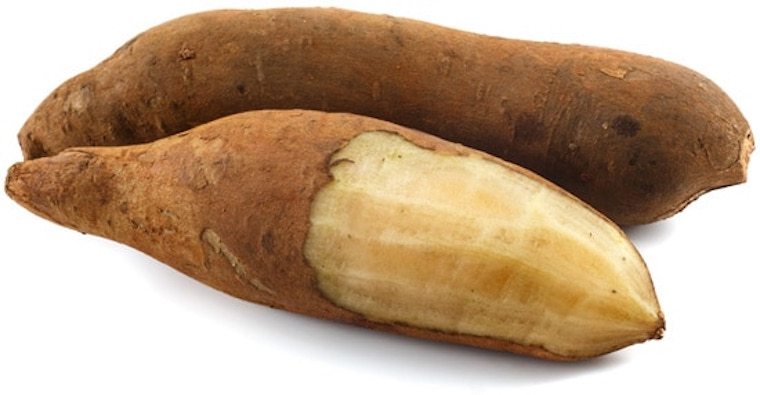
Photo: Authority Nutrition
I also wanted to touch on a fairly new trend which is the use of Yacon syrup as a low cal natural sweetener. Yacon syrup has recently become popular as a weight loss aid.
In the Andes mountains in South America, you’ll find Yacon syrup from the roots of the Yacon plant. The yacon plant is used for centuries as a medicinal tool. You might even mistake a Yacon root for a sweet potato. Through a very natural process, a tasty syrup resembling maple syrup, is extracted and filtered for use. Yacon syrup isn’t a zero-calorie sweetener, but it does contain one third of the caloric value of sugar.
How Did Yacon Syrup Become a Weight Loss Fad?
Well, you can thank America’s favourite doctor: Dr. Oz. Not surprisingly, all of the research supporting the weight loss benefits of Yacon syrup come from one single study. In the 2009 study women consuming Yacon syrup lost 33 pounds over a period of 120 days compared to the placebo group. This was a super short study with a small sample group. Also, there could have been a variety of factors that contributed to their weight loss (change in diet, increasing physical activity). Since 2009 there haven’t really been any new studies to support these findings.
This sweetener isn’t a weight loss aid in itself but does carry some key nutrients. Yacon syrup contains 40-50% fructooligosaccharides, which we cannot digest and pass through our digestive system. Fructooligosaccharides also contain inulin fibre which is a prebiotic that acts as a food source for the beneficial bacteria in our gut. So, if you want to get your prebiotic fix or cut back on sugar, sure go for it, but don’t rely on it as a reliable weight loss tool on its own.
Bottom line on monk sugar vs stevia vs yacon
Listen, I am all for natural foods. Meaning, I strongly advocate for eating food that is as minimally processed as possible. But to say that these low calorie natural sweeteners are a completely separate breed from artificial sweeteners is possibly not true. We still need a ton more research on most of them to catch up with the research we have on traditional artificial sweeteners. Ultimately, I think we should be focusing less on which sweetener to use and more on how much sweetener we’re using.
Become an Abbey’s Kitchen Subscriber
If you liked this post, you may like:
The Truth About Artificial Sweetener & Weight Gain
Aspartame & Artificial Sweeteners vs Sugar | Pros, Cons & Controversy
Should You Quit Sugar? Is Sugar Making You Sick?
Now I want to hear from you!
Have you heard of monk fruit syrup or Yacon syrup before?
Have you used Lakanto or stevia?
What’s your go-to sweetener of choice!
Comment below with your thoughts!
Contribution By:
Sofia Tsalamlal, MHSc, RD
Updated on December 2nd, 2021

Abbey Sharp is a Registered Dietitian (RD), regulated by the Ontario College of Dietitians. She is a mom, YouTuber, Blogger, award winning cookbook author, media coach specializing in food and nutrition influencers, and a frequent contributor to national publications like Healthline and on national broadcast TV shows.



Mary T Herman says
“33 pounds lost in 120 days”??? Is that a typo? Otherwise I’m heading to the store for some Yacon syrup!
Abbey Sharp says
That study had a really small sample group and there was likely a bunch of other factors leading to the weight loss, and may not have been directly the yacon syrup. Also no other studies have found similar results, so I would take these results with a grain of salt.
Aquaria says
And the four-sweetener study likewise had a small sample size.
To get a realistic study, you need hundreds of people to test over a prolonged period of time, from a wide range of ethnic groups and genders. And you cannot test it with food. There needs to be a fasting test, two hour wait, then test the blood sugar again WITHOUT FOOD to monkey with the results.
That study is criminally inept, and should never have been referenced.
Brutis says
I lost the same amount and same time factor (was 100kg down to 84) with Keto and a variety of artificial sweeteners, Erythritol, Xylitol, stevia etc.
Agree with Abbey, it was/is the Keto lifestyle rather than the sugar substitute.
LJ says
I have been vegan gf and sugar free baking for a while and also making raw versions of my fave sweet treats after suffering pass outs and migraines galore. I often use a single simple banana or caramelized sweet potato in certain recipes, but when I want to emulate the classics I often sub the light version of agave nectar for sugar. Not sure if it’s much healthier other than the fact that it’s lower Glycemic Index. I just got this awesome monk fruit syrup that I’m very excited to use on my sugarless pancakes etc.
I think all in all the perception of sweetness can lie in the degree of sugar intake on the day to day and if when I manage to fully ween myself off, a few weeks later, simple sugars from fruits and veggies taste much more prominent. It can be a psychological process. My meditation practice always amplifies the flavor of everything as well! Do I always make time for it…maybe not. But that’s what monkfruit and agave are for 😉
Abbey Sharp says
Thanks for sharing!
Ol' Biddy says
The shocking truth? Really? No. Nothing in this blog post is shocking, and the non-use of correct credit or citing leaves me wondering if you actually studied up on any of the information, before posting it as ‘truth’. Frankly, I’m pretty sure you didn’t. Obviously, your own credibility doesn’t matter to you.
Abbey Sharp says
It sure does! This whole article is based on all of the available evidence. Thanks for your comment
Debbie says
Maybe you could ask Abbey for her sources before deciding that she doesn’t have any…
What results did you get from your research?
Aquaria says
Reputable people who mention studies cite them by providing links to them.
That was done here, but one must also look at how many people CITE the article as well. If it’s not heavily cited, then it’s a questionable study, because that means other researchers have not found its findings credible.
Renee Stevens says
Hi Abbey,
Great article. I need clarification on something in your article about Stevia. Your first sentence (under the Stevia leaf photo) reads: The first one is purified stevia extract which is approved and regulated by Health Canada. It’s considered safe for consumption.
Your last sentence reads: In the United States Stevia is not needed to be approved by the FDA because it’s considered safe for use in food but in both Canada and the US, purified stevia extracts are NOT considered safe and have not been approved for use in food.
Should the last sentence read: unrefined stevia extracts (instead of purified stevia) are not considered safe and have not been approved for use in food?
Abbey Sharp says
Yes, sorry that is a typo. I’ll make that change. Thank you 🙂
Debby says
The one sweeter that wasn’t mentioned was xylitol.
Cheryl says
I want to know if you think that the least “processed” sweetener would be the healthiest to use, in moderation of course! I believe the Stevia on grocery shelves is highly processed by chemical means. I’ve been using monk fruit lately but am concerned about the way it has been processed. Thank you for the information you have provided!
Abbey Sharp says
I don’t like to use the term the “healthiest”. I think we all respond to foods differently, so it’s important people find what works for them personally and of course everything in moderation.
Hilary says
I was a big stevia fan for years. But recently I started having kidney pain after drinking any beverages with Stevia. That scared me. I’m back to using honey and plain old sugar.
Abbey Sharp says
Sounds very scary. Thanks for sharing Hilary
Sheryl says
As with anything that has to do with eating. Whether it’s substitute sugar products, except for man made sweeteners; which are death in a package, meat, fruit, vegetables or any other healthy eating habit, moderation is everything.
Abbey Sharp says
Yes, moderation is key
Mary T Herman says
I must add that I found your article interesting and informative.
Abbey Sharp says
Thank you!
Alistair Leadbetter says
Thanks for the article.
We’re using monk fruit in some fruit juice sample development at the moment. It’s a really useful ingredient. Of course, it’s not a magic bullet. There isn’t one of those, as much as we might all want one!
P.S. the stuff about the f word – it’s just not true.
Kelly says
Hi Abbey,
This was my first time reading one of your articles. In reading along, and keeping an open mind, I found that some of your information was quite conflicting. It seems that a negative outcome with a very small control group warranted your agreement with it’s findings, whereas another very small control group with a positive outcome for a natural sweetener warranted your skepticism due to the lack of participants. So, I’m not overly impressed with your inferences or conclusions. I hope to see your continued research into this topic. Best wishes!
Abbey Sharp says
I’m sorry to hear that. At the end of the day, my thoughts on sweeteners is it’s not about the type of sweetener, but really how much you are using because the research is thin on both sides. Thanks for your comment.
JayMonster says
My one (and really only) problem with how this is present (in the studies that is), is that they are basically blaming the natural sweeteners for people taking in more calories at a later meal, and that is (in my not so humble opinion) unfair.
Just like you mention the Diet Coke Super Size “effect” It is NOT the fault of Diet Coke that people self rationalize things away and choose to take in more calories because of it, just like it isn’t the fault of the monk fruit sweeteners that some people chose to eat a bigger lunch later because they thought they “saved” those calories. I mean people have been using this flawed logic in lots of places. Salads. How many people choose to eat salads for lunch, but then go ahead and put on too many additives like croutons and go way too heavy with the dressing? Can we then say, “Salads don’t aid in the reduction of weight?” This is correlation and not causation.
Abbey Sharp says
Well, actually these studies are showing that these drinks and sweeteners have impacts on our appetite and hunger cues, and may lead us to consume more if our hunger cues are impaired.
Kristen Myers says
I have tried everything except the Yakon (I probably spelled it wrong). And ALL OF THEM have had the most disgusting taste/after-tastes in my opinion. The grossest coming from food or drink made with Stevia. BUT the most amazing sweetener I’ve tried recently is Monk fruit. I was so happy with my purchase of the granulated Monk fruit and I now intend to buy it in liquid, golden, syrup and powdered form. It’s nearly as delish as coconut sugar. Those will now be my go-to sweeteners from now on .only negative is it isn’t very pocket book friendly.
Abbey Sharp says
Awesome! Thanks for sharing Kristen
Vanessa Pinter says
I’d like to see some long-term research on sedentary, overweight middle-aged men and women. That would have rather more relevance to the population likely to use these products than a study on healthy almost-teens!
And. If people with blood sugar issues (like most older Americans) or diabetics were to consume a majority of their calories at mealtimes, with sensible solid food, that would probably be a long-term health benefit.
I really appreciate your focus on research. That’s just what I was looking for and I will bookmark your site.
Abbey Sharp says
Amazing, thanks for sharing Vanessa
Deborah Brooks says
I don’t like the taste of any of these artificial or natural sweeteners. In my book, they are still sugar and I try to limit it
Abbey Sharp says
I hear ya!
Emily @Sinful Nutrition says
Totally agree! I do use monk and stevia on occasion, but just try to eat less sweeteners overall
Abbey Sharp says
Awesome! Thanks Emily