• Skip to main content

Abbey's Kitchen

Healthy Recipes, Nutrition Myth Busting, Healthy Eating Tips

  • Books
    • HCC™
    • The Mindful Glow Cookbook
    • Recipe eBooks
      • Family
      • Hypothyroidism
      • BLW
      • Vegan Week 1
      • Vegan Week 2
      • Vegan Week 3
      • Keto
      • Gluten Free Week 1
      • Gluten Free Week 2
      • Fitness
      • Paleo
  • Blog
    • Nutrition
    • Recipes
    • Motherhood
    • Life
  • Explore
    • Neue Theory™
    • Bite Back With Abbey Sharp
      • Apple Music
      • Spotify
      • Amazon Music
    • YouTube
  • Abbey
    • About
    • Coaching
    • Contact

Abbey Sharp

Last Updated April 30, 2020. Published February 24, 2016 By Abbey Sharp 13 Comments

Vegetarian White Bean “Meatballs” with Low Carb Noodles

vegetarian meatballs

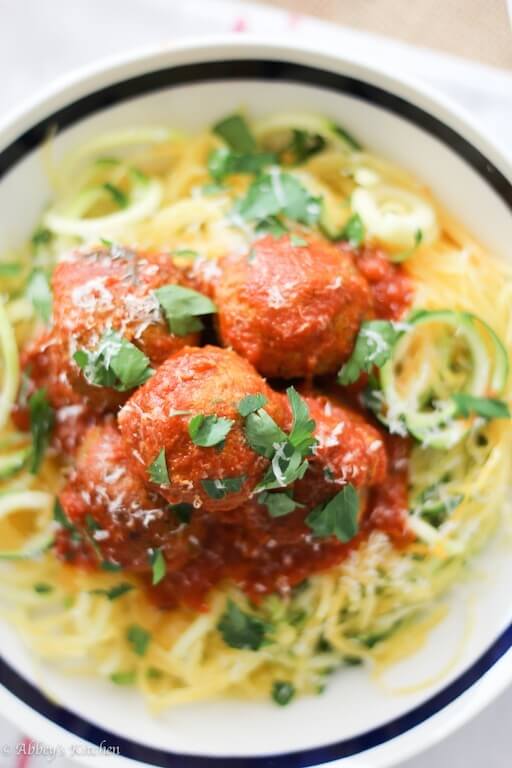
Yes, these are vegetarian meatballs which technically means they’re not meat at all. But hey, who makes the rules anyway.
vegetarian_bean_meatballs_8_of_8.jpg

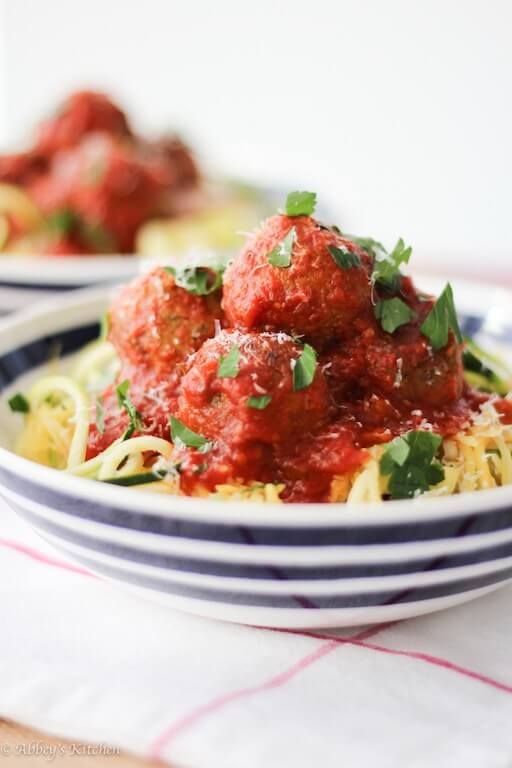
With the dollar constantly dropping, I’m all about trying to find ways to make healthy eating cheaper and one of the best way to do that is to cook with vegetarian meals with pulses and beans. Case in point- these vegetarian meatballs.
vegetarian_bean_meatballs_4_of_8.jpg

This recipe ticks all of the boxes. It’s super comforting for cold weather cravings- everyone loves a bowl of meatballs and noodles. It’s vegetarian and packed with protein and fibre. It’s made of canned beans, which is one of the cheapest ingredients in my house. And it’s a sinch to make. Seriously, if you can throw things in a food processor, roll them, and bake them, you can make this delicious meal.
vegetarian_bean_meatballs_6_of_8.jpg

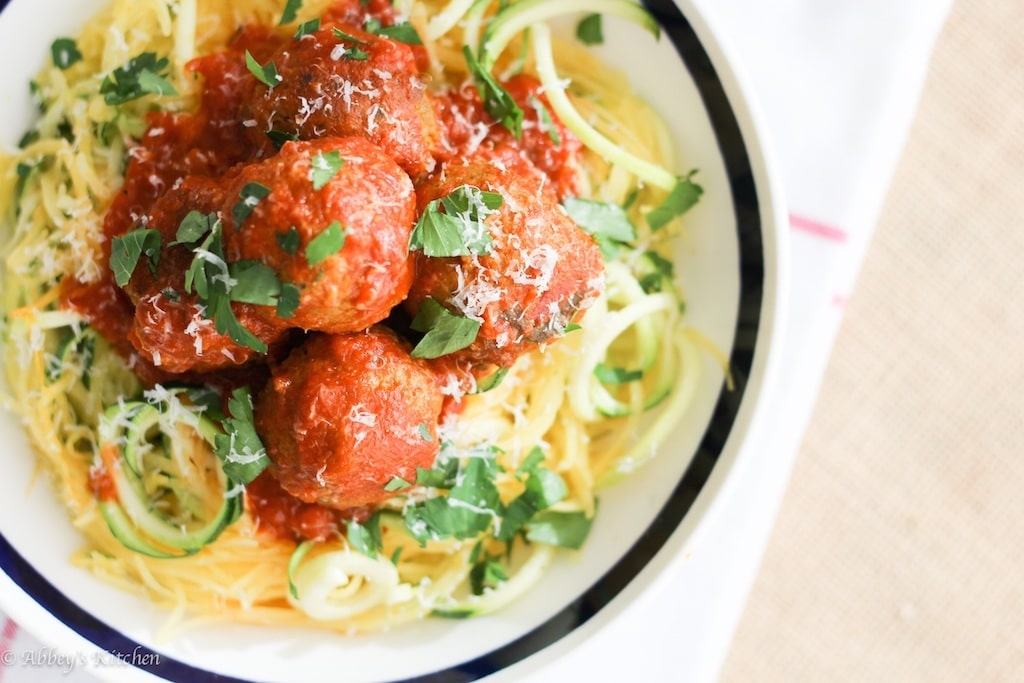
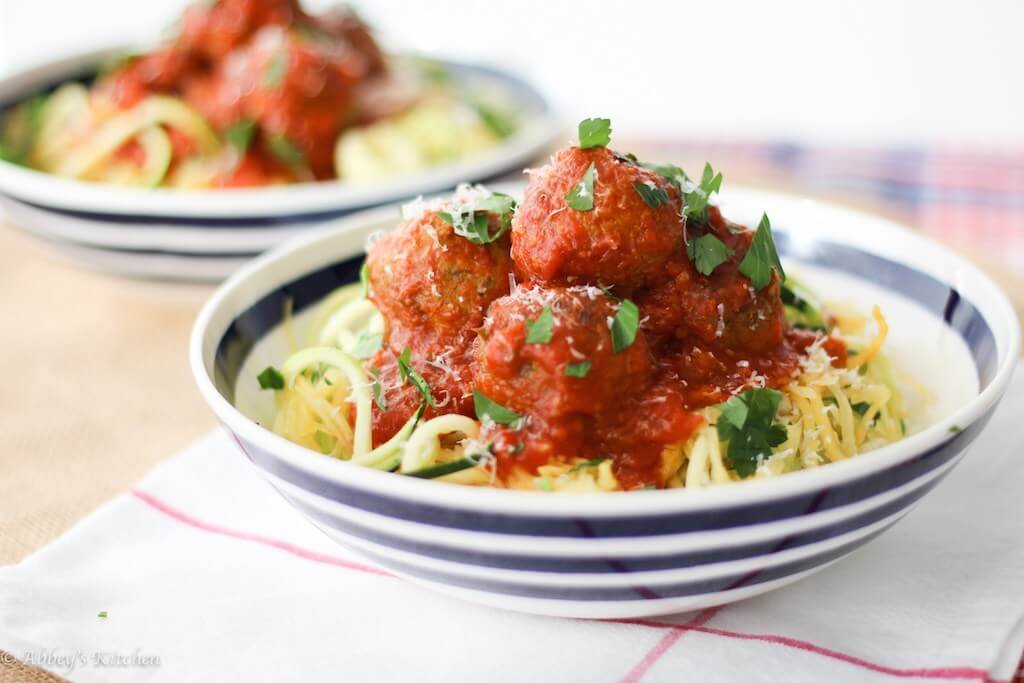
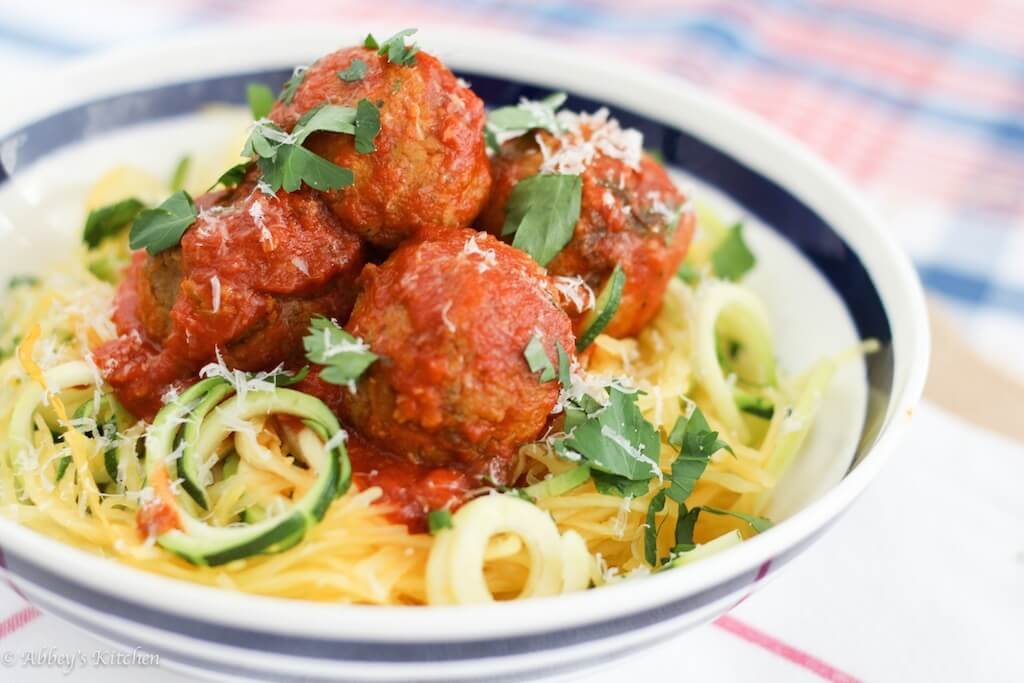
To keep this low carb, I use a combination of spaghetti squash and zucchini noodles in place of regular pasta, but by all means, feel free to use regular whole grain pasta.
vegetarian_bean_meatballs_2_of_8.jpg

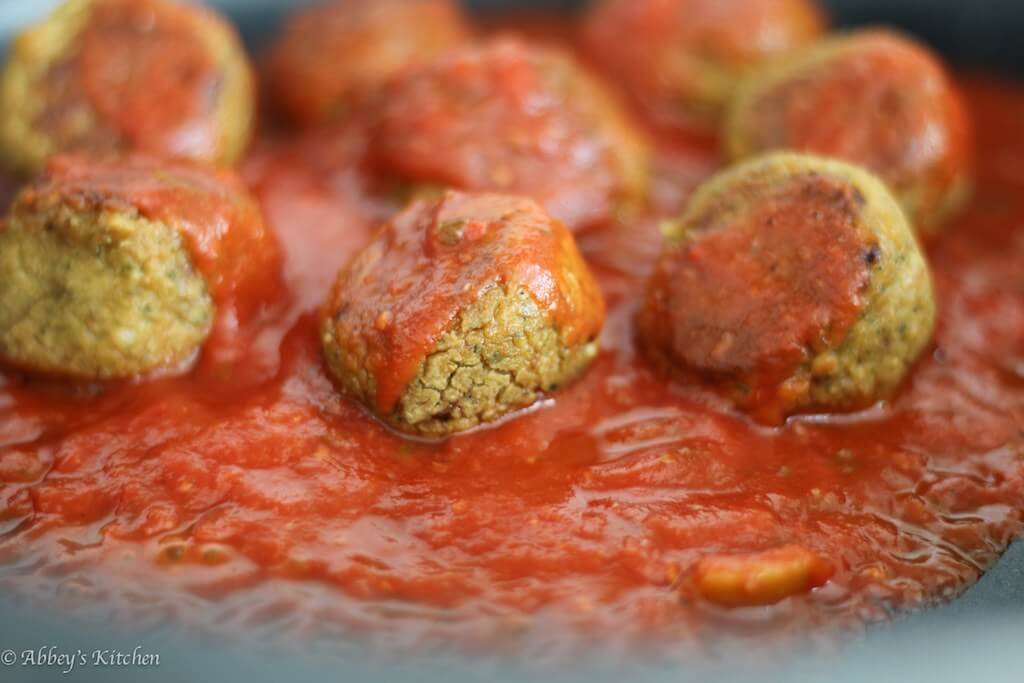
The result? This stuff literally tastes like a soft creamy falafel. Almost like if you took hummus, and then caramelized and crisped up its exterior edges. Maybe that sounds strange, but OMG it’s really good. Meatballs, you ain’t got nothing on my bean-balls (aka. vegetarian meatballs)!
vegetarian_bean_meatballs_3_of_8.jpg

What are some of your favourite ways to use canned beans? Have you ever tried using them to make vegetarian meatballs? Leave me a message below with your go-to inexpensive vegetarian ideas!
vegetarian_bean_meatballs_7_of_8.jpg

vegetarian meatballs
Print Recipe
4.67 from 6 votes

Vegetarian White Bean “Meatballs” with Low Carb Noodles

Yes, these are vegetarian meatballs which technically means they're not meat at all. But hey, who makes the rules anyway.
Prep Time15 minutes mins
Cook Time40 minutes mins
Total Time55 minutes mins
Course: Dinner
Cuisine: Italian
Servings: 4 people
Calories: 420kcal
Author: Abbey Sharp

Ingredients

  • 1/2 cup rolled oats
  • 2 cans of no-salt added white Cannellini beans 15 oz cans, drained and rinsed
  • 4 sundried tomatoes rehydrated with hot water, finely minced
  • 1/2 small onion finely minced
  • 2 cloves garlic minced
  • 1/4 cup Italian parsley finely minced
  • 1/4 cup basil leaves finely chopped
  • 1 egg
  • 1 1/2 tsp dried oregano
  • 6 tbsps parmigiano reggiano cheese finely grated
  • 1 1/2 tsp balsamic vinegar
  • 1/2 tsp salt
  • 1/2 tsp pepper
  • 1 spaghetti squash
  • 2 tsps olive oil
  • 2 zucchini spiralized into thin noodles
  • 1 L low sugar marinara pasta sauce
  • Parmigiano reggiano cheese for garnish
  • Italian parsley finely minced, for garnish

Instructions

  • Preheat oven to 350 F and place a baking sheet lined with parchment paper or a silicon baking mat into the oven to preheat.
  • Pulse the rolled oats in the food processor until they turn into a rough powder. Add in the beans, tomatoes, onion, garlic, parsley, basil, egg, oregano, cheese, balsamic, salt and pepper and puree until smooth and well mixed.
  • Roll the mixture into 2-tbsp balls (should make 20-24) and place on the baking sheet. Bake for 15 minutes.
  • Meanwhile, slice the spaghetti squash in half and place in a microwave safe dish with 1 inch of water. Microwave on high for 10 minutes, or until it “strings” easily when you scrape the squash with a fork. Set aside.
  • After 15 minutes in the oven, preheat a large nonstick skillet over medium high heat and add in the olive oil. Gently add the “meat” balls and brown on all sides. Remove from the pan.
  • Add in the zucchini noodles to the pan and toss until coated and lightly cooked, about 2 minutes.
  • Pour the pasta sauce into the pan and heat until hot. Add in the spaghetti squash and toss to coat.
  • To serve, place the noodles and “meat” balls into four bowls. Top with additional sauce, parmigiano reggiano cheese and parsley and enjoy.

Video

Nutrition

Calories: 420kcal
Abbey Sharp

Abbey Sharp is a Registered Dietitian (RD), regulated by the Ontario College of Dietitians. She is a mom, YouTuber, Blogger, award winning cookbook author, media coach specializing in food and nutrition influencers, and a frequent contributor to national publications like Healthline and on national broadcast TV shows.
www.abbeyskitchen.com/about-abbey/

Last Updated October 23, 2020. Published February 19, 2016 By Abbey Sharp Leave a Comment

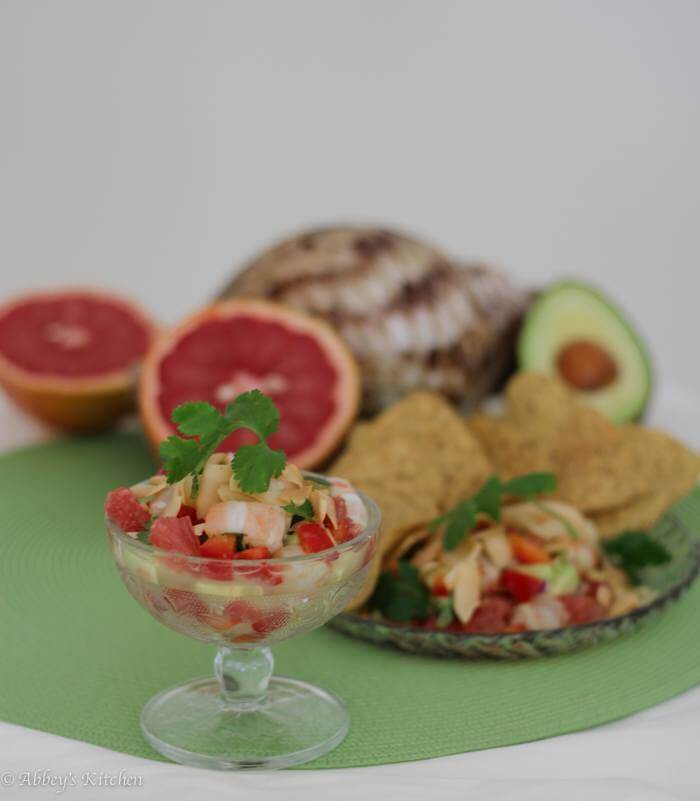
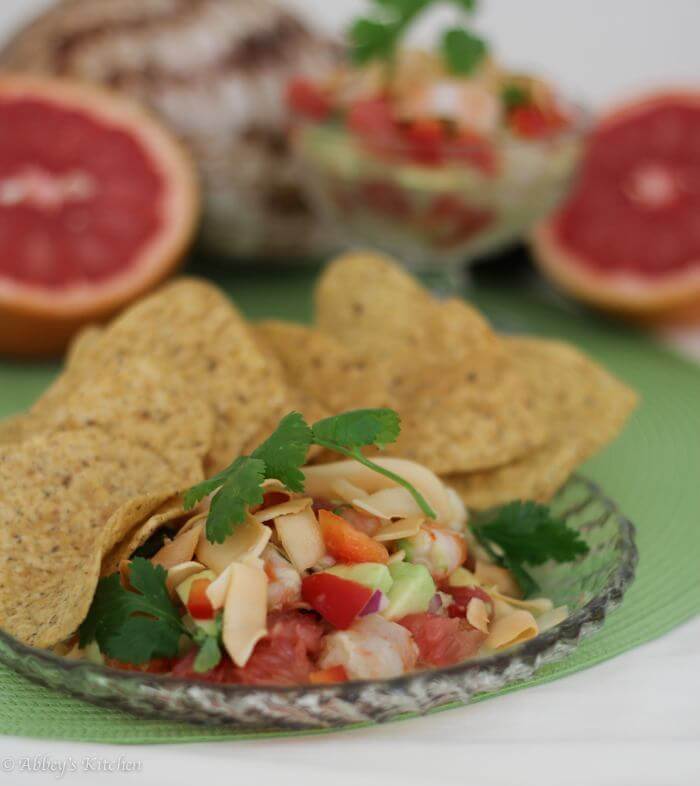
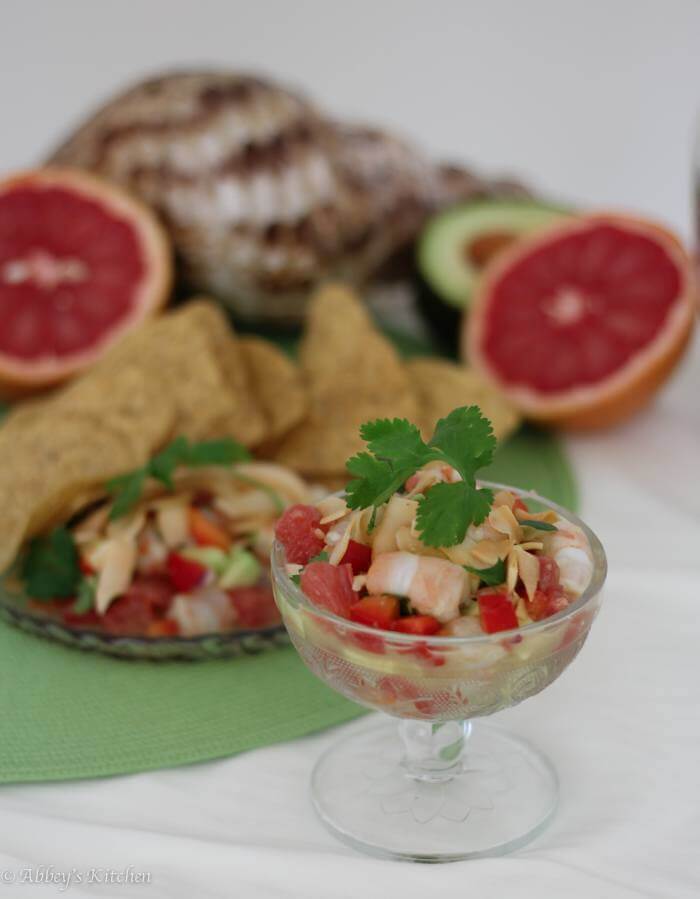
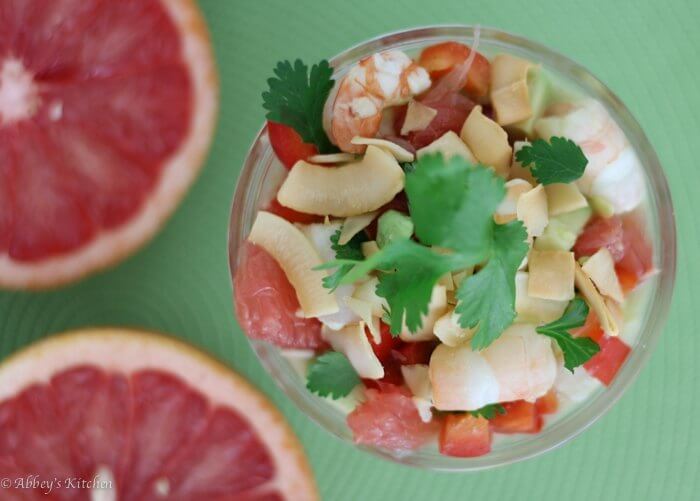
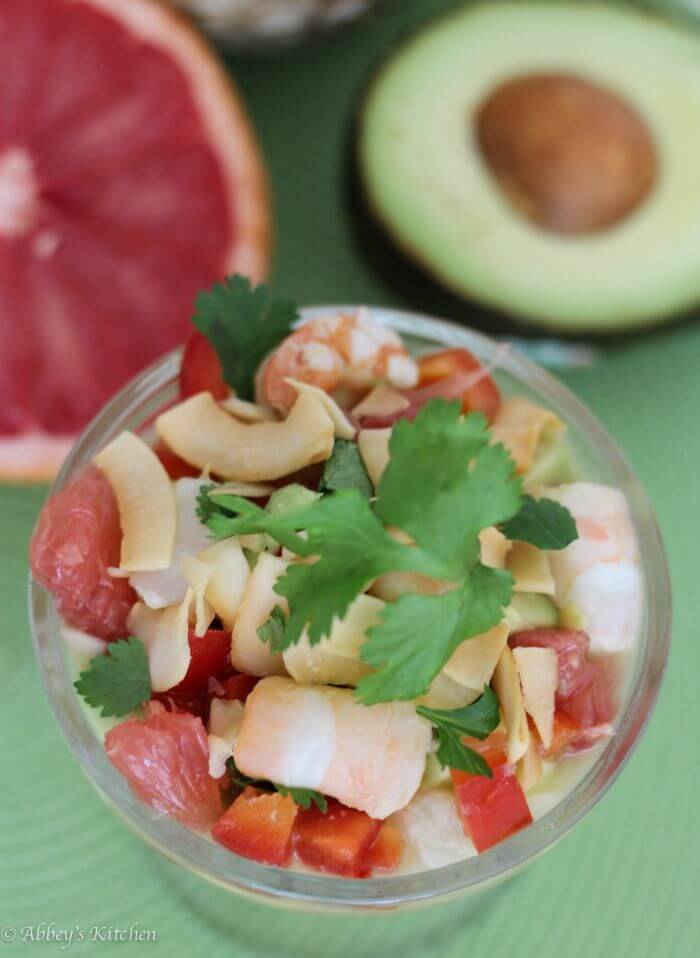
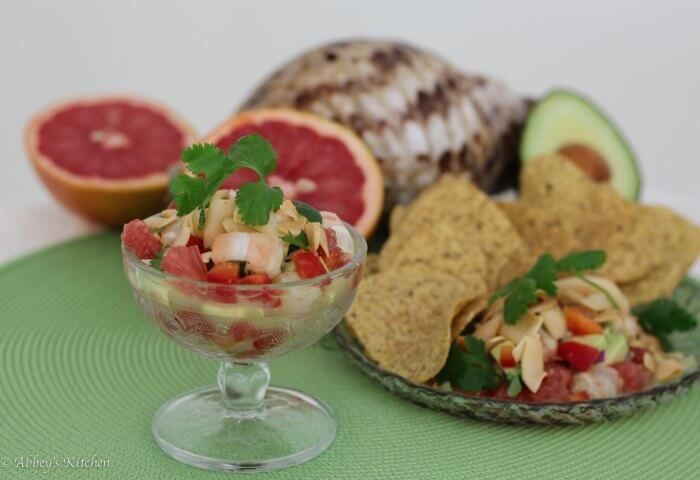
Grapefruit Avocado Shrimp Ceviche – Gluten Free Low Calorie Recipe

gluten free shrimp ceviche

The result is a healthy shrimp recipe that is low in fat, low in carbs, gluten free and super refreshing.

Shrimp ceviche is one of my all time favourites for a low fat, healthy meal or shareable snack. If you’re not familiar with ceviche it’s essentially a fish dish that is “cooked” by acid rather than heat. Okay, so it’s technically not actually cooked, but it isn’t raw either. Both heat from the stove and acid found in citrus juice “denatures” the proteins in fish and seafood which turns the flesh opaque like it had been grilled, baked or poached.

shrimp_ceviche_2_of_6.jpg

You heard that right- you don’t always need an oven, stove or BBQ for your healthy shrimp recipes. Without getting too technical, the acid essentially denatures the proteins the same way heat does, which gives it the same texture.

shrimp_ceviche_4_of_6.jpg

Since it’s best to make ceviche with really fresh, high quality fish, and it’s sometimes hard to find that in some areas, I opted to add a safety step of a quick blanch in boiling water. This isn’t absolutely necessary if you have really high quality fresh shrimp, but it also doesn’t hurt.

shrimp_ceviche_3_of_6.jpg

I was in Florida when I developed this recipe so naturally I wanted to incorporate some fresh citrus into the mix. The grapefruit adds a mild bitterness that is absolutely irresistible with the creamy avocado and naturally sweet shrimp. I don’t know about you, but when I’m down south I am always looking for tasty low calorie grapefruit recipes.

shrimp_ceviche_5_of_6.jpg

This shrimp ceviche recipe can easily be done with another mild lean fish or seafood, and of course, feel free to switch up the citrus by using orange, mandarin or clementine segments instead.

shrimp_ceviche_6_of_6.jpg

The result is a healthy shrimp recipe that is low in fat, low in carbs, gluten free and super refreshing. Exactly how I want to be eating after an indulgent holiday.

What’s you’re favourite healthy shrimp recipe? Have you tried shrimp ceviche? Leave me a message below with some of your favourite tricks and combinations!

shrimp_ceviche_1_of_6.jpg

 
gluten free shrimp ceviche
Print Recipe
4.67 from 3 votes

Grapefruit Avocado Shrimp Ceviche - Gluten Free Low Calorie Recipe

The result is a healthy shrimp recipe that is low in fat, low in carbs, gluten free and super refreshing.
Prep Time40 minutes mins
Cook Time5 minutes mins
Total Time45 minutes mins
Course: Appetizer
Cuisine: Spanish
Servings: 4 people
Calories: 320kcal
Author: Abbey Sharp

Ingredients

  • 2 large pink grapefruit
  • 1 lb high quality shrimp peeled, deveined, and tails removed
  • 3 limes juiced
  • 1 shallot minced
  • 1 large red bell pepper diced
  • 1/2 jalapeno seeded and deveined, minced
  • 1 avocado diced
  • 1/4 cup cilantro chopped (optional)
  • Shaved coconut toasted
  • Pinch salt and chili pepper a pinch each
  • Baked whole grain tortilla chips for serving

Instructions

  • Remove the bottom and top off of the grapefruits, and carefully follow the contours of the fruit to remove the skin without removing too much flesh. Then working over a bowl, remove the segments from the grapefruit with a pairing knife. Squeeze the remaining juice from the grapefruit into the bowl, then remove and dice the grapefruit segments. Set the segments aside in another bowl.
  • Meanwhile, prepare a bowl with ice water and a pot filled with water. Bring the water in the pot to a boil over high heat, add in the shrimp. Cook for 2 minutes, drain, then plunge immediately into the ice water to halt the cooking.
  • Chop the shrimp coarsely then add to the grapefruit juice bowl along with the lime juice. Cover it with plastic wrap and refrigerate for 30 minutes.
  • Gently mix in the shallots, bell pepper, avocado, jalapeno, the reserved grapefruit pieces, cilantro and salt and chili to taste. Garnish with flakes of toasted coconut and serve cold with baked whole grain tortilla chips.

Nutrition

Calories: 320kcal
Abbey Sharp

Abbey Sharp is a Registered Dietitian (RD), regulated by the Ontario College of Dietitians. She is a mom, YouTuber, Blogger, award winning cookbook author, media coach specializing in food and nutrition influencers, and a frequent contributor to national publications like Healthline and on national broadcast TV shows.
www.abbeyskitchen.com/about-abbey/

Last Updated February 8, 2016. Published February 8, 2016 By Abbey Sharp Leave a Comment

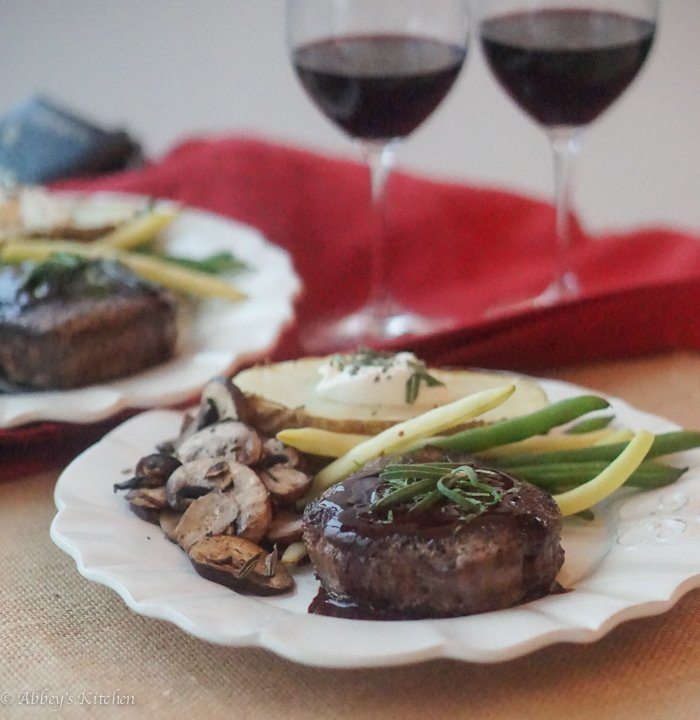
Rosemary Rubbed Beef Tenderloin with Chocolate Port Reduction

Valentine's Day Beef with Chocolate

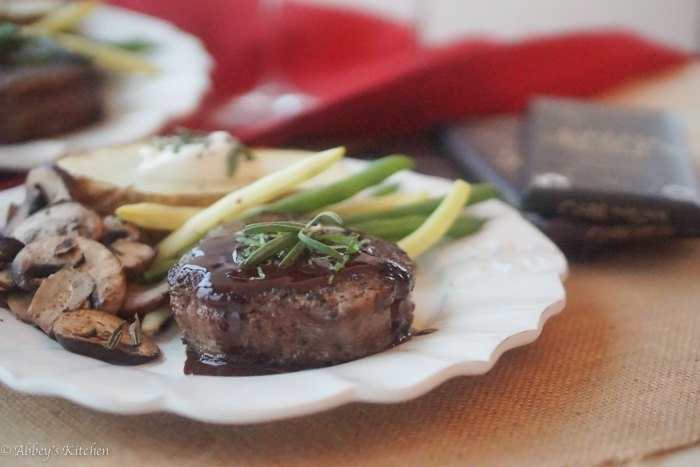
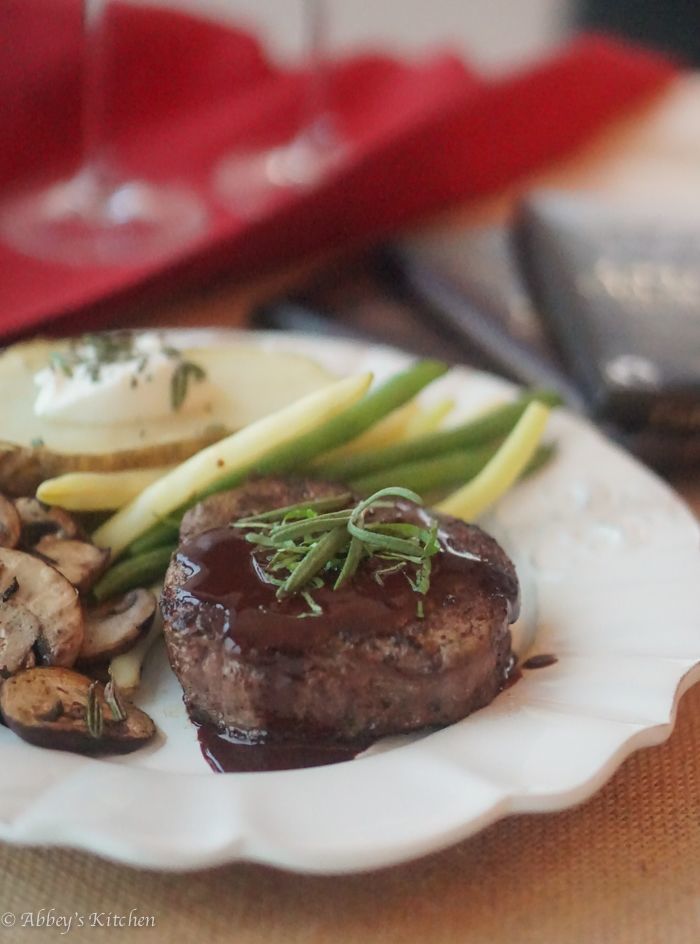
Valentine’s Day in my house is always a meal enjoyed at home. And whenever I’m cooking (aka always), it’s Valentine’s Day Beef.

chocolate_beef_tenderloin_1_of_15.jpg

We dine out so many other nights of the year that the token jacked-up-price, impossible-reservation, pre-fixe meal that is February 14th for some reason doesn’t appeal. Especially when we’re talking about Valentine’s Day beef dishes- those steaks are always overpriced!

chocolate_beef_tenderloin_3_of_15.jpg

Cooking at home also meals I can be a little bit more mindful of all the butter, cream and salt in my meal that may make me feel a wee bit too bloated for… um, well, anything other than passing out.

chocolate_beef_tenderloin_9_of_15.jpg

This recipe is a Valentine’s Day home run because it feels indulgent, it really is so easy to pull off, it utilizes ingredients you’ll want on hand for Valentine’s Day anyway (aka. chocolate and wine), and it tastes better than that $40 steakhouse filet.

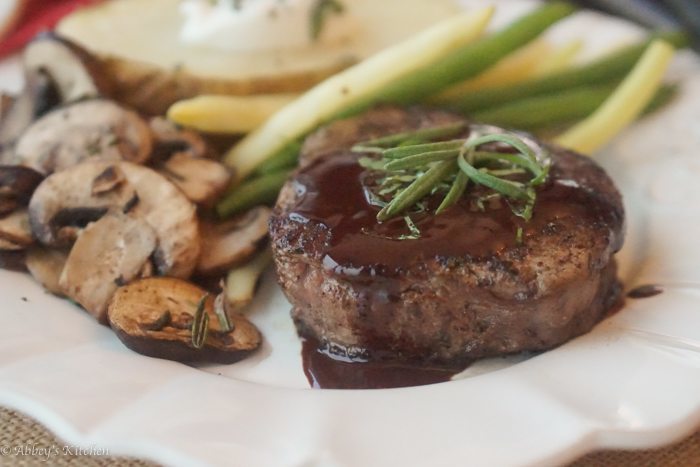
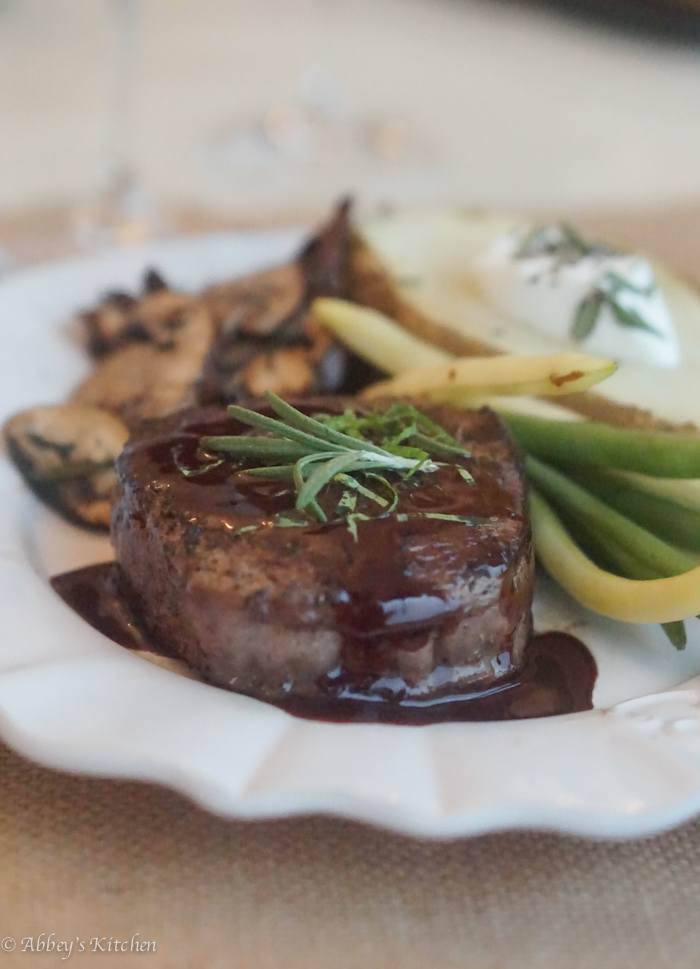
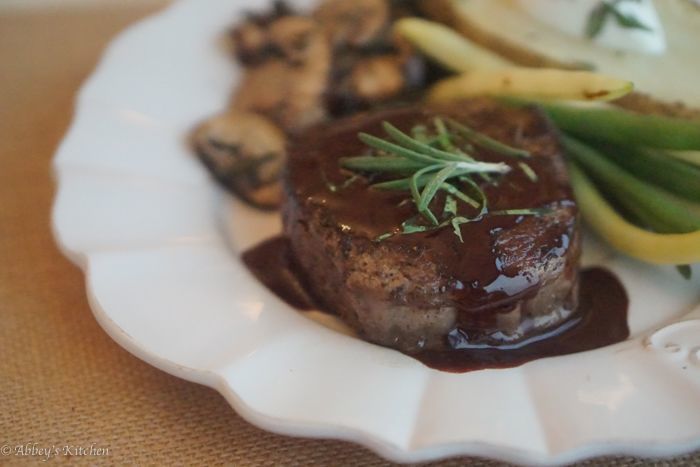
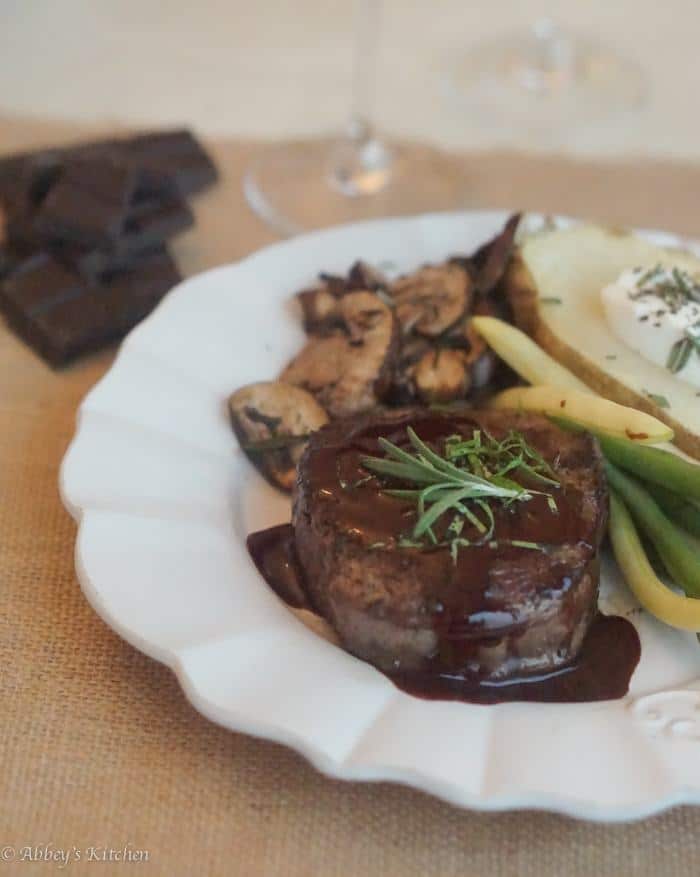
Introducing my Valentine’s Day Beef Tenderloin with (wait for it)… Chocolate Port Sauce!

chocolate_beef_tenderloin_7_of_15.jpg

Since this really is a pretty simple Valentine’s Day beef recipe, the key is to use really good ingredients. If you’re not excited to drink the rest of your bottle of port, don’t use it in the recipe.

chocolate_beef_tenderloin_14_of_15.jpg

Same with chocolate. If you wouldn’t snack on it all on its own, it shouldn’t go in the sauce.

chocolate_beef_tenderloin_8_of_15.jpg

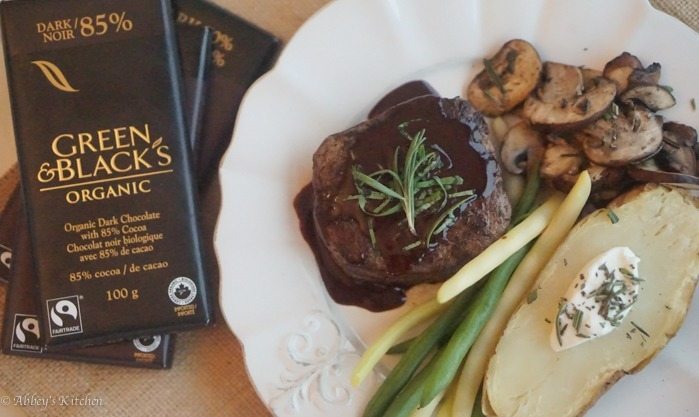
I use my go-to brand, Green & Blacks Organic 85% Dark Chocolate to yield a luscious bitter-sweet sauce to complement the earthy rosemary and meaty beef. If you’ve never considered cooking savoury dishes with chocolate before, this will be your gate way drug.

chocolate_beef_tenderloin_11_of_15.jpg

Have you ever tried to cook using chocolate in savoury meals before? What do you think of the idea of a Valentine’s Day beef tenderloin with chocolate? Leave me a message below on some of your successes and failures and I’ll try to give them a go myself!

chocolate_beef_tenderloin_13_of_15.jpg

Valentine's Day Beef with Chocolate
Print Recipe
4.75 from 4 votes

Rosemary Rubbed Beef Tenderloin with Chocolate Port Reduction

Valentine's Day in my house is always a meal enjoyed at home. And whenever I'm cooking (aka always), it's Valentine's Day Beef.
Prep Time10 minutes mins
Cook Time20 minutes mins
Total Time30 minutes mins
Course: Dinner
Cuisine: American
Servings: 2 people
Calories: 410kcal
Author: Abbey Sharp

Ingredients

  • 1/2 tsp coarsely ground pepper
  • 2 tsp fresh rosemary minced
  • 1/2 tsp mustard
  • 1/4 tsp garlic powder
  • 1/4 tsp salt
  • 2 filet mignon filets 5 oz filets, trimmed
  • 1 tbsp extra virgin olive oil
  • 3/4 cup good quality port wine
  • 1/4 cup reduced sodium beef stock
  • 1 tsp fresh rosemary finely minced
  • 1/2 tbsp aged balsamic vinegar
  • 20 g Green & Blacks Organic 85% Dark Chocolate
  • 1 tsp butter
  • Salt and pepper to taste, Fleur de sel for garnish
  • Rosemary for garnish
  • Parsely for garnish

Instructions

Steak

  • Preheat oven to 400 F.
  • In a small bowl, mix together the pepper, rosemary, mustard, garlic and salt. Pat the filets dry and then season on both sides with the rub.
  • Heat the oil over medium high heat in a medium nonstick or cast-iron skillet. Add the beef filets and sear until golden brown on both sides, about 3 minutes per side.
  • Transfer to a baking sheet and bake until an instant read thermometer reads 125 F for rare (or to your desired cooking temperature).

Sauce

  • While the steaks finish in the oven, add the port, beef and rosemary to the pan the steaks were cooked in, and raise the heat to medium high. Scrape up any beef bits from the pan and cook until well reduced to a light syrup.
  • Remove from the heat and stir in the balsamic, the Green & Blacks Organic chocolate, butter and salt and pepper to taste.

Assembly

  • Remove the steaks from the oven, and transfer to serving plates. Drizzle with the port chocolate sauce and garnish with a pinch of fleur de sel and fresh rosemary or parsley.

Nutrition

Calories: 410kcal

Disclaimer: This recipe was developed in paid partnership with Green & Blacks Organic, however, as always, all opinions are genuine.

Abbey Sharp

Abbey Sharp is a Registered Dietitian (RD), regulated by the Ontario College of Dietitians. She is a mom, YouTuber, Blogger, award winning cookbook author, media coach specializing in food and nutrition influencers, and a frequent contributor to national publications like Healthline and on national broadcast TV shows.
www.abbeyskitchen.com/about-abbey/

Last Updated December 8, 2021. Published January 31, 2016 By Abbey Sharp Leave a Comment

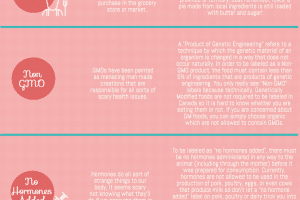
Decoding Food Labels and Nutrition Claims Infographic

Whether we’re flipping through our Pinterest feed for recipe inspiration, or comparing food labels and nutrition claims at the grocery store, we are often bombarded with what I like to call “nutritionese”. In other words, a complicated foreign language filled with nutrient and health claims that are nothing short of confusing. Trust me, even I’m confused.

Well, while food bloggers and recipe authors aren’t held to any standards (in other words, anything goes), the food industry definitely is, so all of those terms you read usually do have legitimate definitions. To help you learn the language of food labels and nutrition claims, we’ve put together a handy dandy infographic that you can print out or pull up the next time you see an ambiguous term so you know exactly what you’re getting.

Feel free to share with your friends, followers and even your arch-enemies.

Welcome to Nutritionese 101: Food Labels & Nutrition Claims

Food_Label_Misconceptions_Conflict_Copy_Conflict_Copy.png

Make sure to print this infographic out and bring it with you to to grocery store to help you make sense of those crazy food labels and nutrition claims. As you can see, there are a lot of words out there that mean a whole  lot of nothing, so this is a great tool to help you determine what is worth investing your money, time and concern over.

Do you have a nutrition claim or food label you’re stuck on? Not sure if it’s just a marketing tool or something you should be concerned with for your family’s health? Leave me a comment and I’ll try to decode it for you!

Contribution by AK Taster Martina Luketich

References:

Sugar Free

No Sugar Added

Trans Fat Free

Omega 3

Wheat Free

Whole Wheat

Multi/7-Grain

Made With Real Fruit

Fat Free

Cholesterol Free

Free Range

Free Run

Cage Free

Grass Fed

Organic

Probiotics

Local

Non-GMO

No Hormones

Antibiotic Free

Gluten Free

All Natural

Superfood

Fresh

Diet

Healthy

Unprocessed

Green

Pure

Light

Clean

Skinny

Abbey Sharp

Abbey Sharp is a Registered Dietitian (RD), regulated by the Ontario College of Dietitians. She is a mom, YouTuber, Blogger, award winning cookbook author, media coach specializing in food and nutrition influencers, and a frequent contributor to national publications like Healthline and on national broadcast TV shows.
www.abbeyskitchen.com/about-abbey/

Last Updated June 2, 2017. Published January 22, 2016 By Abbey Sharp 7 Comments

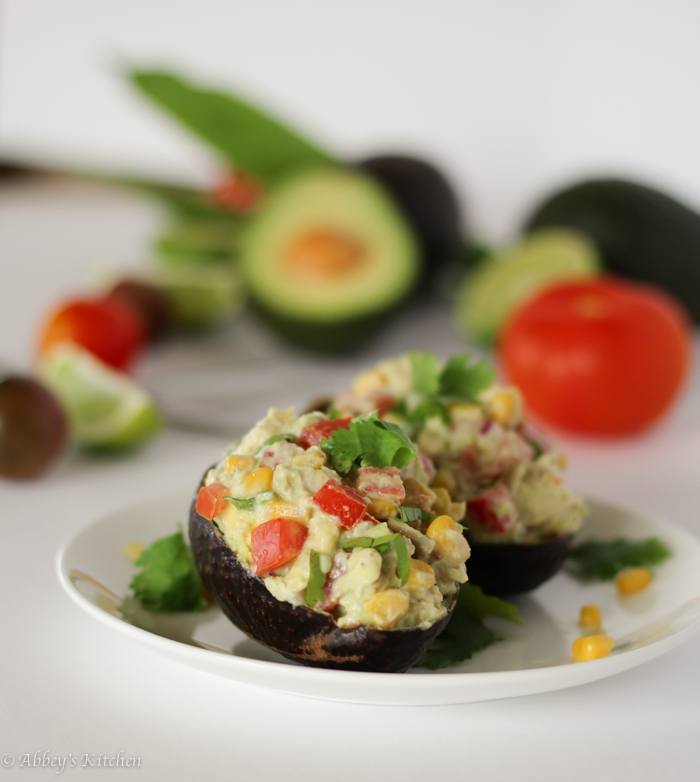
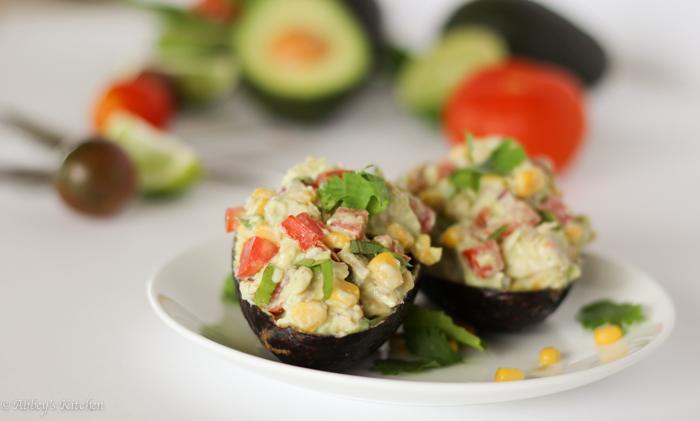
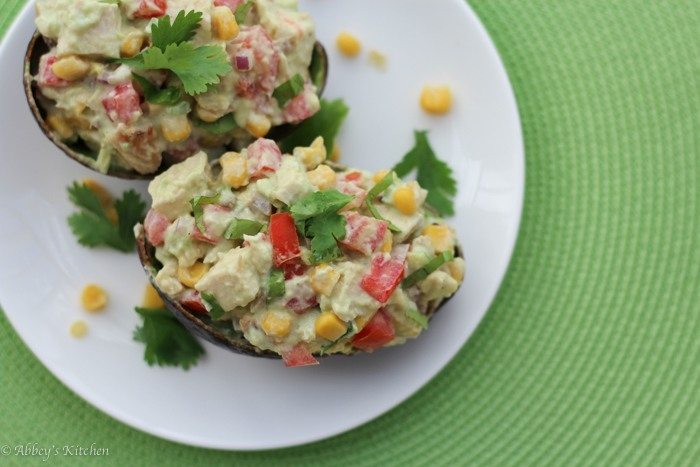
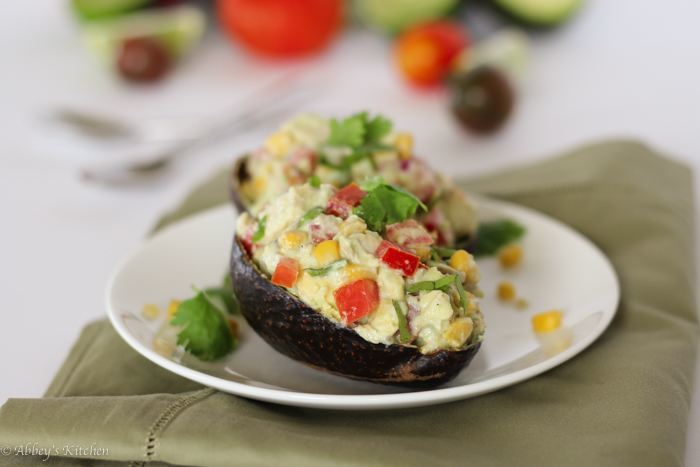
Healthy Low Fat Mexican Avocado Chicken Salad

low fat avocado chicken salad

This month I was working from a condo in Florida and attempting to take a little time “off”. I know, right. What a joke. Clearly, I’m failing at the whole vacation thing. One of my favourite things to do when traveling is of course to eat, because it inspires me for recipes to make for you all! Case in point- this Avocado Chicken Salad.

avocado_chicken_salad__3_of_4.jpg

We were at one of our little local diners for lunch when my fiancé spotted something similar on a menu, decided to order it and loved it. Naturally, the first thing I wanted to do was rush home to recreate it, and thankfully I already had all the ingredients for this healthy avocado chicken salad ready to go in the fridge. Well, almost all of the ingredients…

avocado_chicken_salad__2_of_4.jpg

The Recipe Redux Meet Avocado Chicken Salad Cravings

See, this month’s Recipe Redux challenge is all about a new year, and using new ingredients. We were invited to pick up an ingredient we didn’t know how to use. Sounded like a fun way to make the diner version of avocado chicken salad my own! So I hopped over to the local Publix and ran into the Culantro in the herb aisle. Yes, you read that right. Culantro, not cilantro. The first time I read it I was sure it was a mistake, too. But culantro is a cousin of cilantro and has a similar flavour but the two look nothing alike.


avocado_chicken_salad__4_of_4.jpg

So I went for a Mexican flavour profile with my avocado chicken salad, and then really cut down on the fat. While traditional chicken salad recipes call for globs of full fat mayo, I substituted the creaminess of the avocado plus some plain fat free yogurt. The result is a delicious low carb lunch that’s delicious on its own or stuffed into a pita or on bread.

Want to get some more inspiration for using new unfamiliar ingredients? Check out the Recipe Redux gallery here!

avocado_chicken_salad__1_of_4.jpg

low fat avocado chicken salad
Print Recipe
5 from 1 vote

Healthy Low Fat Mexican Avocado Chicken Salad

This quick, easy and healthy salad is packed with healthy fats and a lean source of protein. 
Prep Time10 minutes mins
Total Time10 minutes mins
Course: Salad
Cuisine: Mexican
Servings: 2 people
Calories: 320kcal
Author: Abbey Sharp

Ingredients

  • 1 avocado
  • 1/4 cup plain fat free Greek yogurt
  • 1 roma tomato seeds removed and finely minced
  • Juice of 1 lime
  • 2 tbsp frozen fresh or canned corn, thawed
  • 1/2 jalapeno seeds and ribs removed (or included, if you like a kick!)
  • 1 tbsp shallot minced
  • 2 tbsp culantro finely minced
  • 1 skinless boneless chicken breast grilled or baked and finely diced
  • Salt and pepper to taste

Instructions

  • In a medium bowl, scoop out the avocado and mash coarsely. Add in the yogurt, tomato, lime juice, corn, jalapeno, shallot, culantro and diced chicken. Stir until well combined, then season with salt and pepper, to taste.
  • Scoop the chicken salad into the avocado halves and enjoy on its own for a low carb lunch. You can also scoop it into pita pockets or smear on sliced bread for a heartier main.

Nutrition

Calories: 320kcal
Abbey Sharp

Abbey Sharp is a Registered Dietitian (RD), regulated by the Ontario College of Dietitians. She is a mom, YouTuber, Blogger, award winning cookbook author, media coach specializing in food and nutrition influencers, and a frequent contributor to national publications like Healthline and on national broadcast TV shows.
www.abbeyskitchen.com/about-abbey/

Last Updated December 31, 2022. Published January 15, 2016 By Abbey Sharp Leave a Comment

The Hormone Balanced Diet – Are Your Hormones Causing Weight Gain?

Hormone Diet

A review of the hormone balanced diet, its impact on weight loss, whether or not your hormones are causing weight gain.

As a dietitian, I’ve seen so many claims about the impact of hormones on weight gain, and that a hormone balanced diet through food and supplements is the key to weight loss and a fast metabolism. Yes, these are major claims, but I see so many sensational headlines I never really gave them much thought. That was until recently, when one of my RD colleagues posed a question about the hormone balanced diet in our Facebook support group, revealing that no one really had found any evidence to support them. This piqued my interest to start digging into the real research behind these magical hormone-balancing diets.

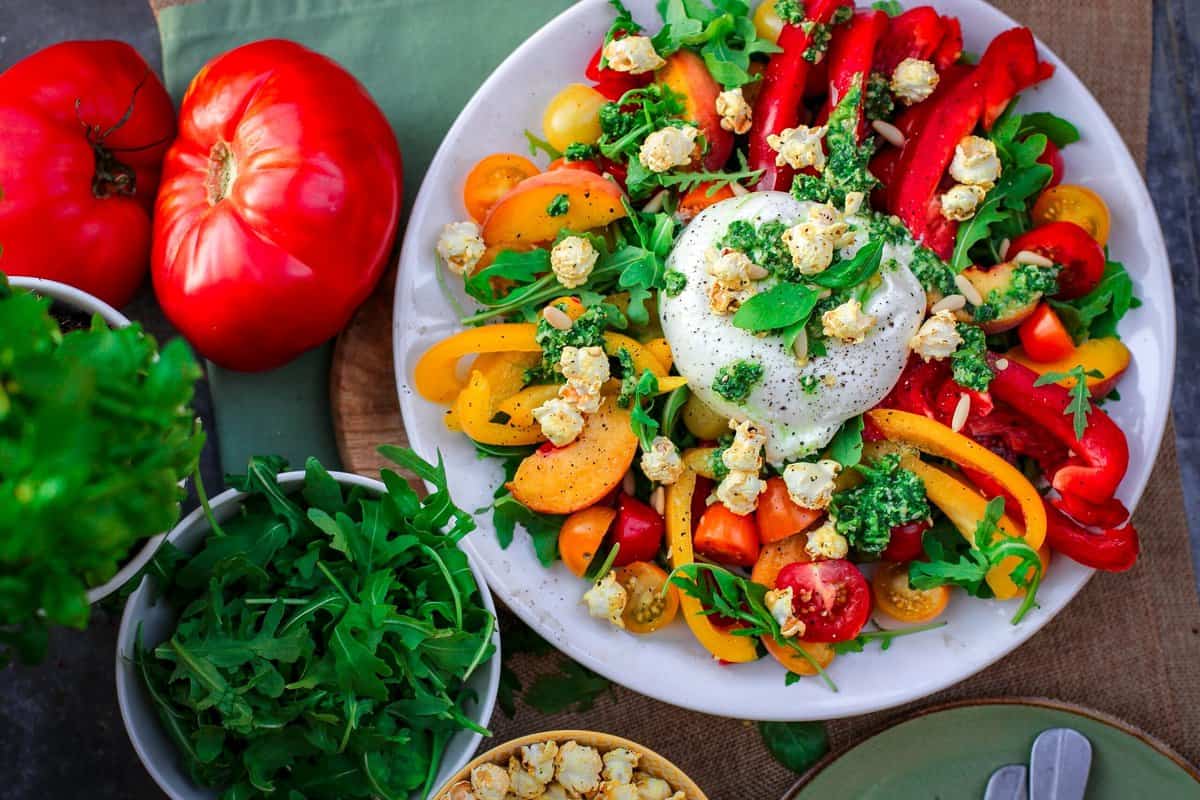
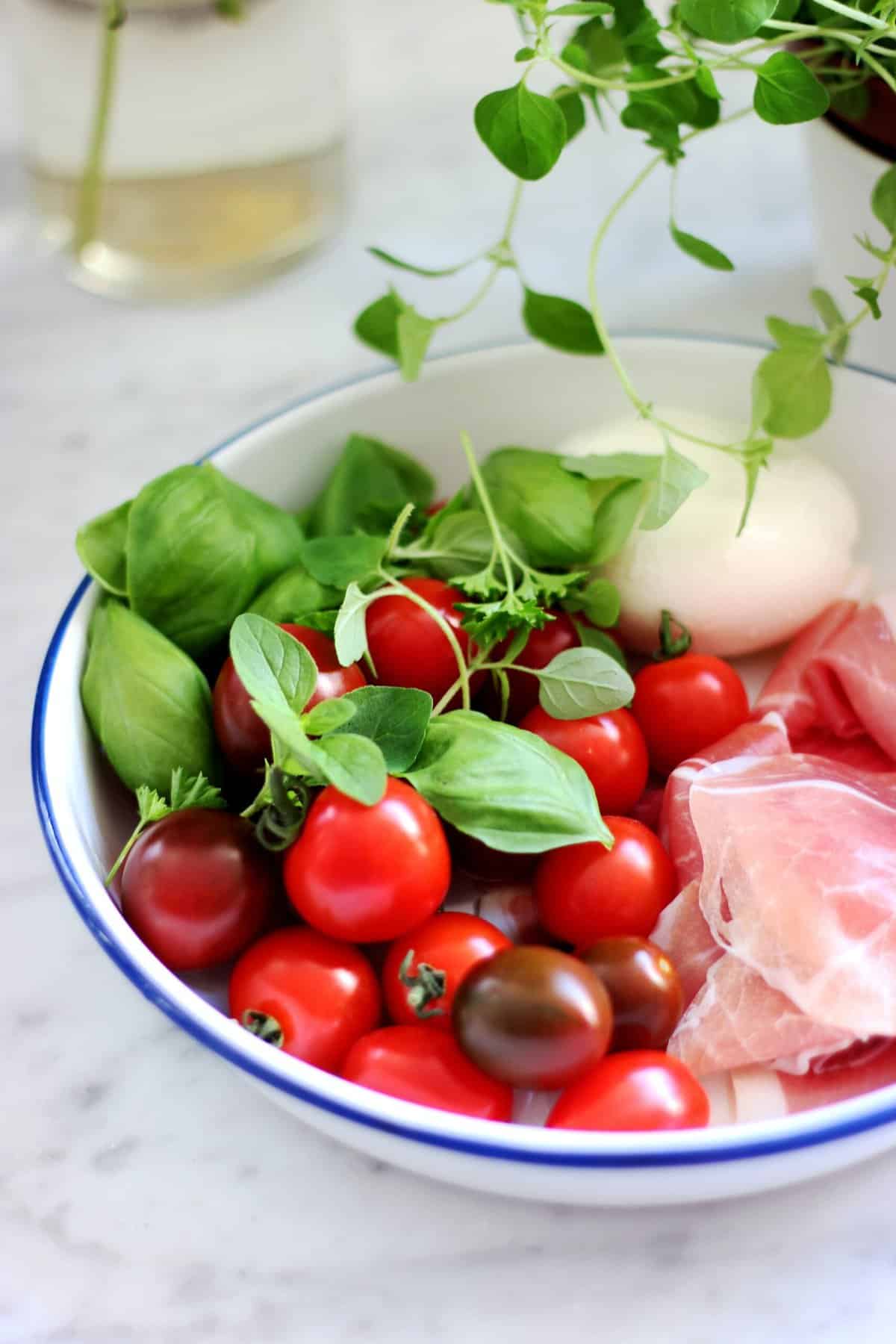
A healthy salad as part of the hormone balanced diet.

While the permutations are endless, we found three prominent metabolism-boosting diets based on balancing certain hormones that may be out of whack. Let’s start by looking at what each hormone balanced diet recommends and what the evidence shows.

The 7-Day Metabolism Boosting Diet

The 7-Day Metabolism Boosting Diet, written by nutritionist Haylie Pomroy, promotes a three-stage program designed to keep your metabolism “guessing.” In this hormone balanced diet, the first 2 days of the week you eat lots of carbs and fruits to “calm” your adrenal glands.  Days 3-4 you eat lots of protein and veggies with little carb to release stored fat, and finally, only days 5-7 you eat all of the above with an emphasis on fats and oils.  

First, the rationale behind “calming” your adrenal glands in stage one is that your adrenal glands produce the hormone cortisol, which controls blood sugar levels. If you eat lots of carbohydrates, it will reduce the stress on the adrenal glands to produce cortisol. This is referred to as “adrenal fatigue.” The Endocrine Society released a statement that adrenal fatigue is not a real medical condition and that this theory is oversimplifying the complex hormones and pathways of our adrenal glands. Interesting.

Stage two claims that eating lots of protein will release stored fat and build muscle. Let me clear this up, only exercise or lack of energy intake will release stored fat and build muscle. Simply eating protein will not build muscle- if it’s not utilized for energy then it will be stored as fat.

Finally in stage three, there’s an emphasis on “eating fat to burn fat”. This is based on the theory that you need fat to produce thyroid hormone and progesterone because certain hormones (like estrogen and progesterone) are fat soluble (aka. they are made from the fat we eat). But what your body is looking for is a happy medium in fat intake so there is no need to fat-load your diet if you’re worried your hormones are out of whack.

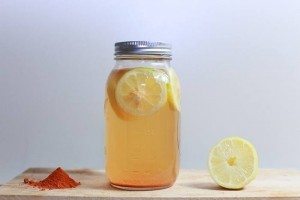
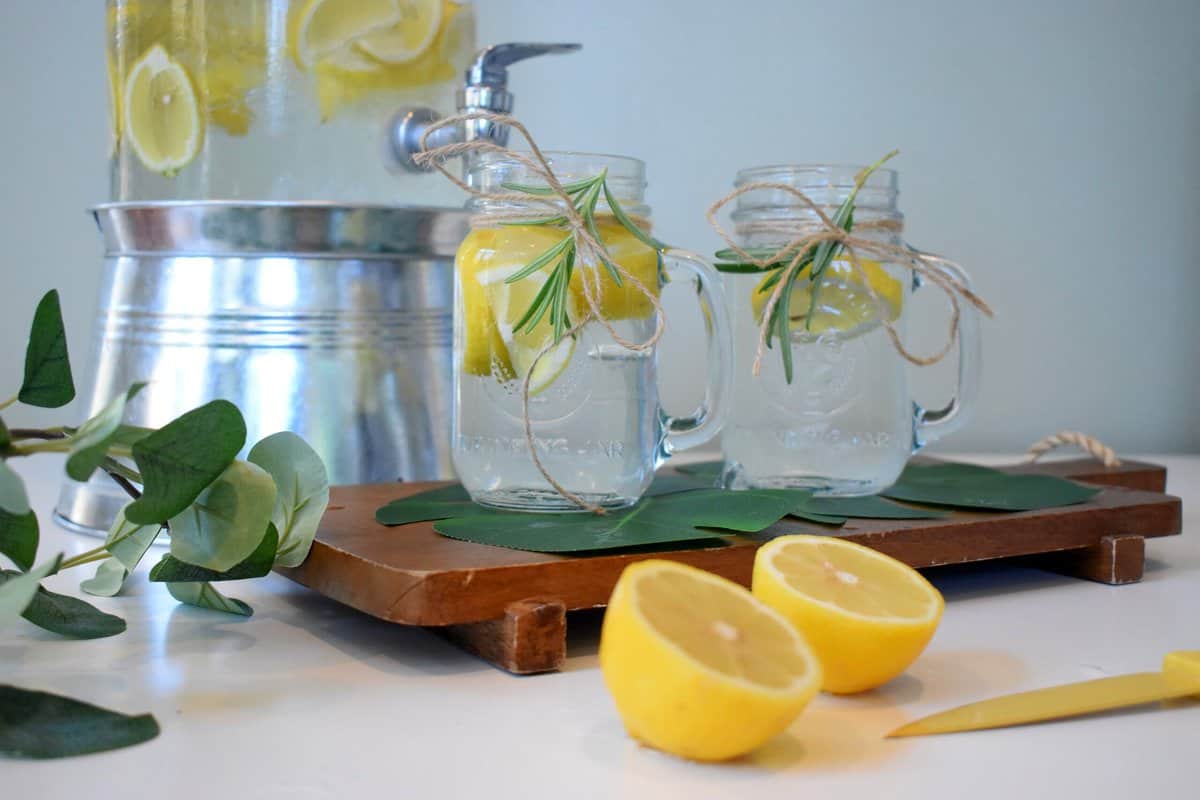
Mason jars with lemon juice that may be consumed in the hormone balanced diet.

The Hormone Diet

Natasha Turner is a naturopath who has founded The Hormone Diet. This diet again has 3 stages including renew and revitalize, replenish and balance hormones and restore strength, vigour and radiance. These pretty terms translated to taking hormone blood, urine and saliva tests in stage one, and a “prescription” of foods and supplements to balance hormones in stage two. The foods suggested were based on the “glyci-med” diet meaning low glycemic foods with a Mediterranean-eating pattern. The final stage is when an exercise program and toxin-free skin care regime are brought in.

The Hormone Solution

And the last hormone balanced diet we looked at was the The Hormone Solution/30 Day Natural Hormone Plan by Erika Schwartz. Schwartz believes that estrogen dominance from environmental toxins, stress, nutritional deficiencies and estrogen in the food supply causes weight gain. Her plan is based on diet and lifestyle changes, bioidentical hormone therapy and supplements.

Fork with measuring tape wrapped around it.

Similarities between Hormone Balanced Diet Regimes

All of the diets focused on estrogen, progesterone and cortisol as the major hormones of interest. They all also emphasized an organic eating pattern free from processed meats, alcohol and caffeine. Healthy lifestyle components such as adequate sleep, avoiding stress and exercising regularly seemed to be incorporated into most diets, as well. Overall, these hormone diets claim that hormonal balance will boost your metabolism, decrease bloating, improve mood, increase energy and of course, cause weight loss.

Dietary Component of the Hormone Balanced Diet

It’s important to note that the food portion of these hormone diets is generally very healthy! Despite them being restrictive in some areas (I know I can’t give up my morning coffee), they promote a balanced healthy diet and lifestyle that any dietitian would be cool with. Eating solely organic food is promoted on this diet to avoid consuming hormones or antibiotics. One of the disadvantages I saw was that buying exclusively organic would be coming with a pretty big price tag.  This seems like the perfect time to debunk what antibiotics and hormones are used in food production and what this means to the consumer. Growth hormones are only used in cattle produced for beef, not dairy cows or any other animal meant for consumption, so if you wanted to decrease your exposure to growth hormones, you could simply choose organic beef or just eat a little less beef.

Antibiotics are approved for all cows, chicken, turkey, pork and fish and must be Health Canada’s strict guidelines for human and animal safety. The levels of hormones they use are set far below the amount that is determined to pose a possible health concern.

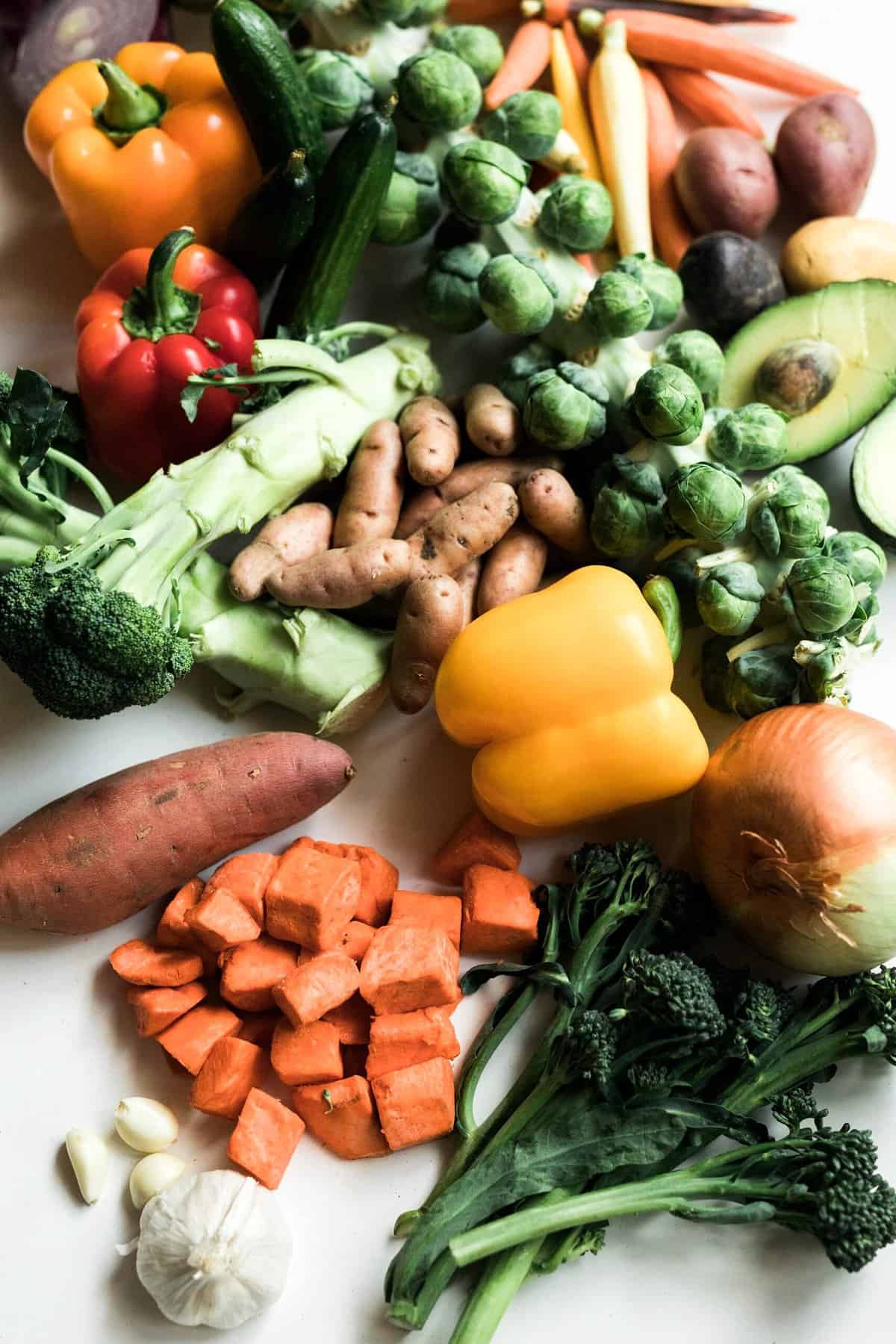
A variety of vegetables that may be consumed in a hormone balanced diet.

Hormone Testing

Step one of the hormone diet? Take a saliva, urine and/or blood test to see which hormones are “out of balance.” Now, aside of the high cost of taking these tests, which aren’t covered by most health insurance companies, lets dive into the validity of these tests. Most of the studies done on whether estrogen and progesterone are linked with weight loss were done with animal studies, which we know is not great evidence (here, here & here).  They showed small promising results that these hormones may be linked to overeating, but even in animal studies, they weren’t conclusive. Personally, I would want to see a bit more solid research before I hopped on board.

Recommended Supplements & Dangers

And what are the recommended supplements for the hormone balanced diet? Hormone replacement therapy is a common recommendation which may contain solely estrogen or in combination with progesterone. This therapy has proven side effects including increased breast cancer risk, cardiovascular risk, and endometrial cancer risk.  A large review of the evidence found that the dangers of starting hormone replacement therapy may likely outweigh the benefits, and women must be carefully screened before beginning a trial of hormone therapy.

The second, less aggressive recommended treatment is through bioidentical hormones. This is in form of hormones extracted from wild yams or soy oils that are applied as a cream. Now despite this being a seemingly safe option, there is a lack of evidence to support its effectiveness. It’s important to remember that all of this evidence was focusing mostly on postmenopausal women, not younger adults looking to tweak their metabolism.

Some of the other recommended supplements include: flax, vitamin B, vitamin C, magnesium and calcium.  These supplements are all safe if taken below the daily recommended intake, but they’re definitely not necessary for weight loss or metabolism boosting (to see what may help check out this post here).

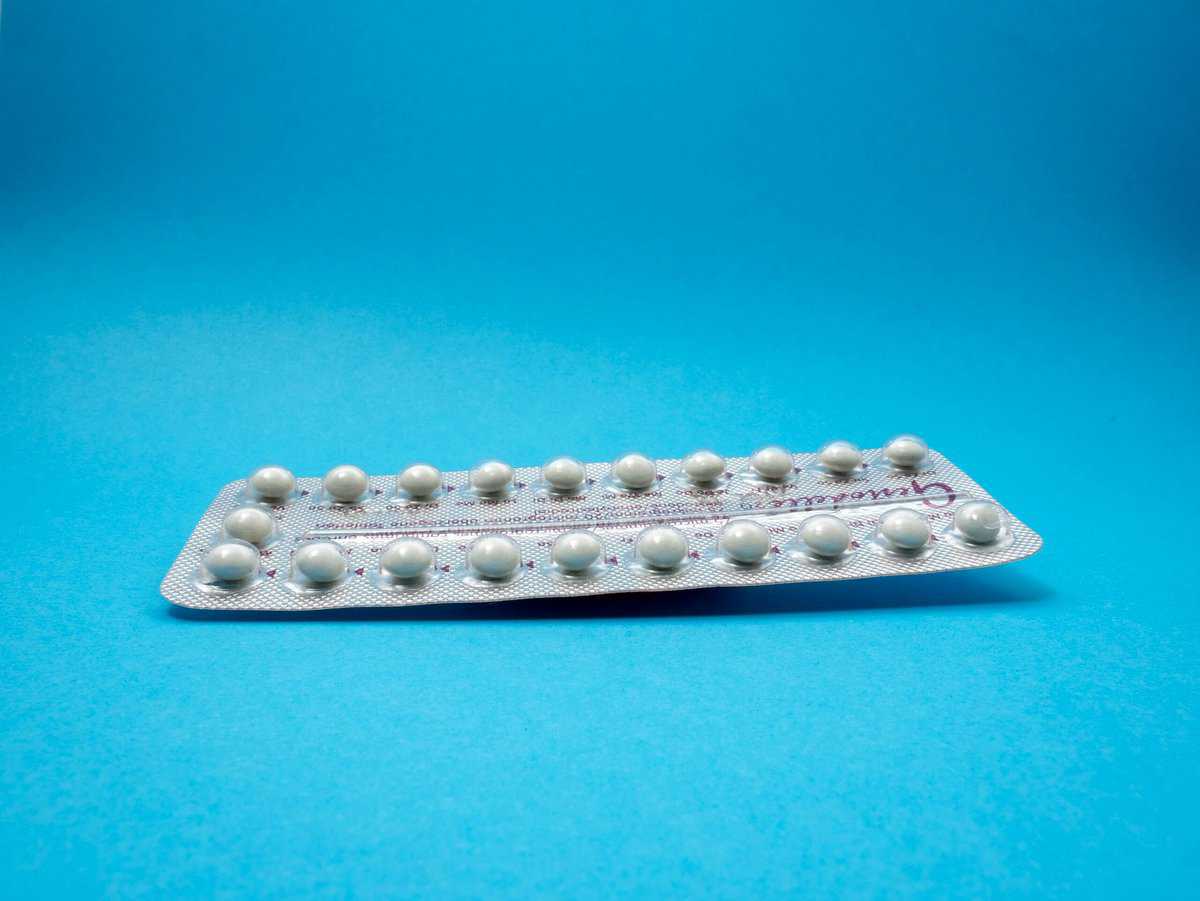
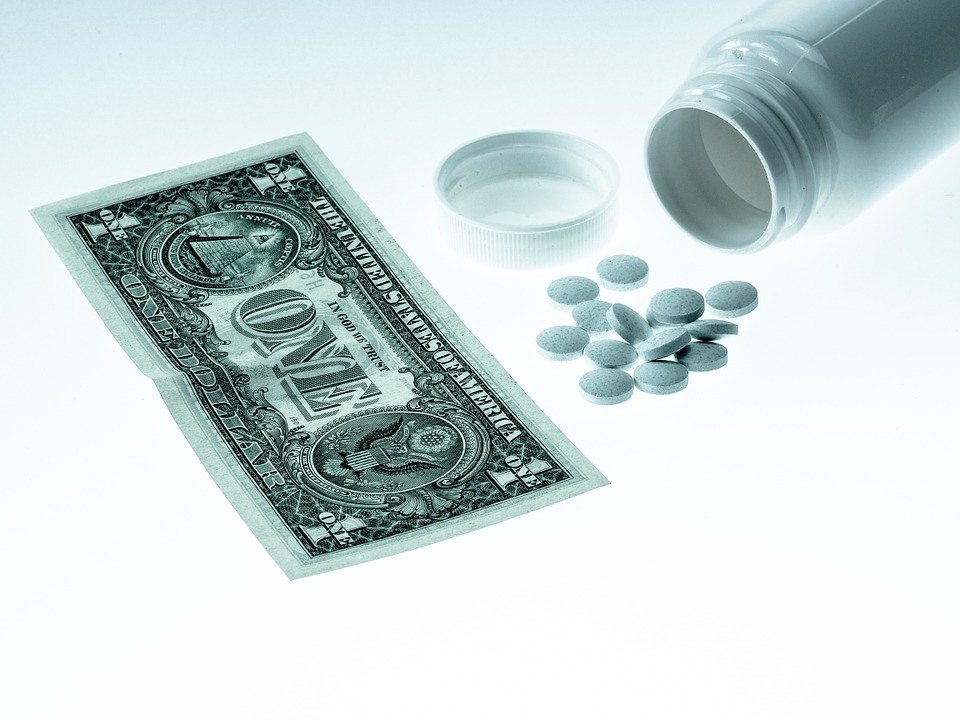
Pills used for hormone replacement therapy.

Hormone Diet Claims Debunked

Let’s get back to the major claims and see what the evidence has to say about them.

Increased metabolism and weight loss are definitely the number one reason people become attracted to trying the hormone diet. The biggest concern right of the bat is their oversimplification of hormones causing weight gain. Hormones and obesity are both extremely complicated and multiple dimensional- science can’t fully explain yet how the two are intertwined. Is there a relationship between these hormones and weight gain? Of course! Do we know the answer on exactly how? Unfortunately, not.

For example, we know our thyroid gland makes two hormones that regulate metabolism through vital function such as heart rate, intestinal speed and body temperature. An underactive thyroid will cause weight gain, and while an overactive thyroid will cause weight loss in addition to hot flashes, hair loss, diarrhea and insomnia. So you can see why we can’t just pump people with these hormones to induce rapid weight loss.

Overall, there isn’t enough good evidence to support a hormone balanced diet will promote weight loss. Claiming that we can “balance” our hormones through supplements and lifestyle changes oversimplifies our complex body processes. It’s not a simple hormone in, hormone out equation.

Now we can talk about the other three claims: decreased bloating, improved mood and increased energy. Now these claims probably are true, why? Because the diet and lifestyle portion, as mentioned earlier, is promoting decreased caloric intake, eating lots of whole food such as fruits, vegetables, proteins and healthy fats and oils. Along with getting some extra hours of sleep and starting to exercise regularly, of course people will be feeling more energetic and less bloated. But again, I want to stress that there isn’t enough evidence to support that the hormone changes are having any effect on these.

Vegetables in a bowl as part of a hormone balanced diet.

Hormone Diet Take Home Messages

  1. I would definitely recommend the food and lifestyle component of most of these hormone diets as they’re balanced and healthy- keep snackin’ on those whole foods!
  2. The hormone medical testing and buying only organic food will be very costly, and the rationale isn’t backed up scientifically.
  3. Hormone and antibiotic levels in animal products are regulated at safe levels for both the animals and people as regulated by Health Canada
  4. The cocktail of supplements and hormone therapies have not been fully studied for a healthy population looking to lose weight and therefore are not recommended.
  5. Your hormones are affected by more than diet and lifestyle, our bodies are a complicated and intertwined with many systems working together. We just don’t have the answers yet on the direct connections between hormones and weight gain.

Contribution by AK Dietetic Intern Tiffany Schebesch

More Blog Posts You Might Like

  • Insulin and Weight Gain: Is Insulin a Fat Storage Hormone?
  • Seed Cycling for Fertility: Does it Actually Work?
  • The Hormonal Acne Diet: The Best Foods for Healthy Clear Skin
  • Diet for PCOS: How to Manage Symptoms

Now tell me, lovelies- what has helped you with balancing hormones? Leave me a comment below!

Abbey Sharp

Abbey Sharp is a Registered Dietitian (RD), regulated by the Ontario College of Dietitians. She is a mom, YouTuber, Blogger, award winning cookbook author, media coach specializing in food and nutrition influencers, and a frequent contributor to national publications like Healthline and on national broadcast TV shows.
www.abbeyskitchen.com/about-abbey/

Last Updated October 23, 2020. Published January 11, 2016 By Abbey Sharp 2 Comments

Is Big Pharma & Government Funding Nutrition Research? & The Dietitian vs Nutritionist Debate

big pharma

In the nutrition world, there’s a lot of scepticism about big pharma, conventional medicine and dietitians. People constantly asking, “why should I believe what you’re telling me?”

Since the age of WebMD, Wikipedia, and government and big Pharma mysticism, people are becoming increasingly sceptical of traditional health care providers like registered dietitians.  Patients read blogs, watch Youtube videos and read up on every rare disease, diagnosing their own symptoms before arriving at their doctor or dietitian’s office. While all of this nutrition information allows patients to be informed and involved in their own health (which is great!), it also creates a whole new level of complexity for health care providers. What used to be simple counselling and education has become discussions over the wiki-style “research” patients bring in and an hour of debunking myths. We’re going to get into a few of these myths and uncover the truth behind them once and for all.

dietitian_vs_nutritionist_5.jpg

Myth: Dietitians are just the same as a nutritionist, right?

The dietitian vs nutritionist debate is real. The simple answer? A nutritionist is (likely) not the same as a dietitian.

In most provinces, any person can refer to themselves as nutritionists, whether that’s your grandmother, your little brother, or your pet rabbit.  There are some exceptions where variations of nutritionist are protected such as Quebec, Nova Scotia, Alberta and New Brunswick.  Now I don’t mean to paint all nutritionists with the same brush. Nutritionists can have a broad range of education ranging from a completed university degree to no formal education. To become a registered dietitian (RD), there are specific educational and licencing requirements just as there are for doctors or nurses. This is why dietitian or registered dietitian is a protected title across Canada. Plain and simple, there are a few mandatory steps to becoming a dietitian including:

  1. Obtaining a minimum of a bachelor degree from an accredited university program (which is very competitive);
  2. Completing supervised practical training from a post-degree internship or masters practicum program (which is even more competitive);
  3. Passing the national examination and registering with the regulatory body of the province you intend to practice in;
  4. Completing continuing professional educational requirements to maintain registration.

dietitian_vs_nutritionist_2.jpg

What does this mean for the public? It means you can rest assured that your dietitian’s advice is credible and valid. It also means a dietitian must follow the code of ethics set out by the regulatory body of their province, which is used to protect their profession. Protecting their profession means protecting their patients- this is a win-win in my eyes. Dietitians also must continue their professional development to maintain their registration, which is done through creation of yearly professional goals and joining nationwide professional communities such as Dietitians of Canada.  This means your dietitian is always looking at new research to base their practice off and not just regurgitating old science they learned in their undergraduate degree.

Myth: Evidence-based research is always funded by the government or big pharma

Has anyone heard of the term “peer reviewed?” This is a really important point when we’re talking about research funding and validity. Peer reviewed means knowledgeable experts in the field evaluate a study for its scientific credibility. Is the methodology is valid? Are the correct statistical tests used? How are the findings interpreted? Inclusive of this, they will be looking to see if the paper explicitly states their funding and any conflict of interests. However, the funding source may not be as important as everyone thinks.

Dr. Sharma MD/PhD, FRCPC wrote a great article discussing why the authors’ personal relationship to the funding source like big pharma or government doesn’t really matter. He discuses how all funders are pursuing a goal, that’s why they’re funding the study. But if the paper can still meet all the scientific requirements, then the funding source becomes irrelevant. He goes on to discuss how industry funded studies follow the same concept. Most industries, government or big pharma will only fund a study if they believe there will be favourable results, so they will ensure extensive background research is done before funding a study and only fund those likely to succeed. It’s important not to confuse this with the concept of industries manipulating a study to produce favourable results, which would be scientific fraud.

dietitian_vs_nutritionist_1.jpg

Now I know, this sounds like the exact opposite of what everyone thinks, but logically it does make sense. Even if you’re not in sync with Dr. Sharma’s ideology, it’s important to note that any credible research article will state who wrote the article and what the source of funding was. If the authors say that there was no conflict of interest, then regardless of who funded the project the researchers worked independently of their funding source.

Myth: Dietitians simply spew out information enforced by the government

So, lets think back to when we were talking about the process of becoming a dietitian. One of the first things you learn in school to becoming a dietitian is how to critically analyze and evaluate literature . This is similar to the peer review process we were talking about earlier. Dietitians are experts in combing through journal articles and making evidence-based recommendations.  This doesn’t mean reading one article and completely changing our practice- it’s a more conservative approach. We’re looking for multiple high quality articles that have found the same results before considering recommendation changes. Many of these suggestions are compiled for us already in a resource called Practice-Based Evidence in Nutrition, or PEN for short. This site gathers the latest and best evidence in nutrition to create recommendations for dietitians based on a graded scale of the quality of evidence.

Finally, the government (like big pharma) doesn’t dictate recommendations for dietitians to provide to the public and we aren’t required to give advice that we don’t believe is sound and valid. For example, the government bodies have created Canada’s Food Guide as an education tool for health care providers. Do all dietitians use it? Nope. I know a lot of them who hate it. I’m not a fan myself. This is where professional judgement and critical thinking come into play. All of our recommendations are based on providing the highest quality of care to patients while abiding the by The Jurisprudence Handbook for Dietitians in Ontario or in other provinces, The Professional Standards for Dietitians in Canada. This handbook is available to the public to ensure safety and confidentiality of patient care.

dietitian_vs_nutritionist_4.jpg

Myth: Conventional medical providers, such as dietitians and doctors, often promote specific medications because big pharma is funding them?

Now, this whole big pharma thing can be a confusing and highly controversial topic. It’s like a big, awkward, elephant in the room when you have a client who’s thinking “are they really on my side?” but never outright says it. I’m going to focus on the evidence for dietitians right now, but most of this evidence extends into many traditional professions in medicine.

In Canada, this whole big pharma issue falls under the conflict of interest section of the ethics guidelines. Dietitians are legally allowed to sell a product, although it is recommended to do so with caution and under strict guidelines. Dietitians are advised to use their professional judgement to deem if the product they’re promoting is the best choice for their client. It is prohibited under these ethical guidelines for a dietitian to be directly sponsored by a pharmaceutical company for their personal benefit. More often than not, a dietitian won’t promote any specific company or product to avoid these ethical concerns.

When in doubt, dietitians will use the DORM principle, and no, were not talking about that pizza-filled closet we called home during University. DORM stands for disclosure, options reassurance and modification. This means the dietitian must disclose the conflict as soon as possible, inform the clients of other options, reassure them that choosing another service won’t affect the quality of service the dietitian provides and make any modifications to remove the conflict of interest.

dietitian_vs_nutritionist_3.jpg

Let’s go over some important take home messages:
  1. Dietitian’s are not the same as nutritionists and require specific educational and licensing requirements.
  2. Evidence-based research is peer-reviewed and will often explicitly state their funding source and conflicts of interest so it really shouldn’t matter if it’s funded by Big Pharma or not. As long as the journal is peer-reviewed, the source of funding is less important.
  3. Dietitian’s analyze and interpret evidence on their own accord; they are not required to give government-based recommendations to patients. They are required, however, to practice ethically based on guidelines like The Jurisprudence Handbook for Dietitians in Ontario.
  4. Dietitians use their professional judgement to determine what they may promote or sell, and are not allowed to endorse products based on personal gain. As always, the client has the right choose another product or service than what the dietitian is recommending.

My hope is that this post has provided some transparency into the dietetic profession, answered some questions about Big Pharma, dietitian vs nutritionist, and conventional medicine, and alleviated the growing societal anxiety around the validity of this medical profession. Dietitians are here for the patients, and the end goal is for them to help their clients using the best resources available.

Contribution by AK Dietetic Intern Tiffany Schebesch

Abbey Sharp

Abbey Sharp is a Registered Dietitian (RD), regulated by the Ontario College of Dietitians. She is a mom, YouTuber, Blogger, award winning cookbook author, media coach specializing in food and nutrition influencers, and a frequent contributor to national publications like Healthline and on national broadcast TV shows.
www.abbeyskitchen.com/about-abbey/

Last Updated June 2, 2017. Published January 10, 2016 By Abbey Sharp 6 Comments

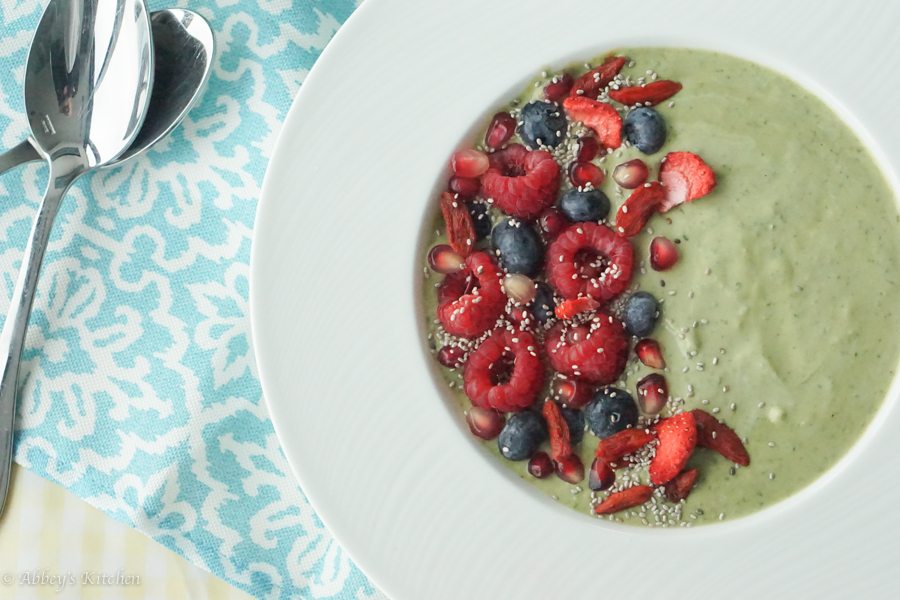
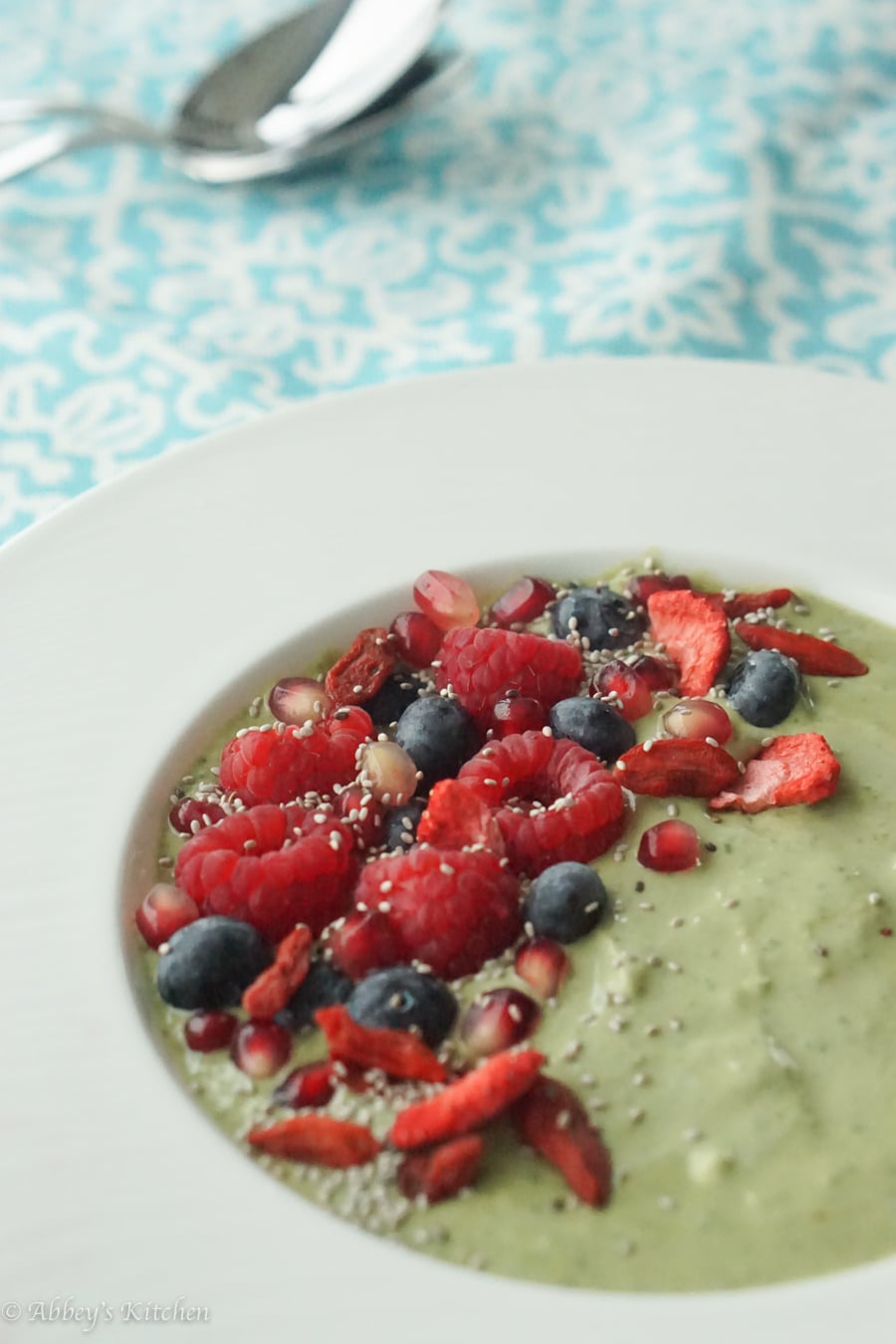
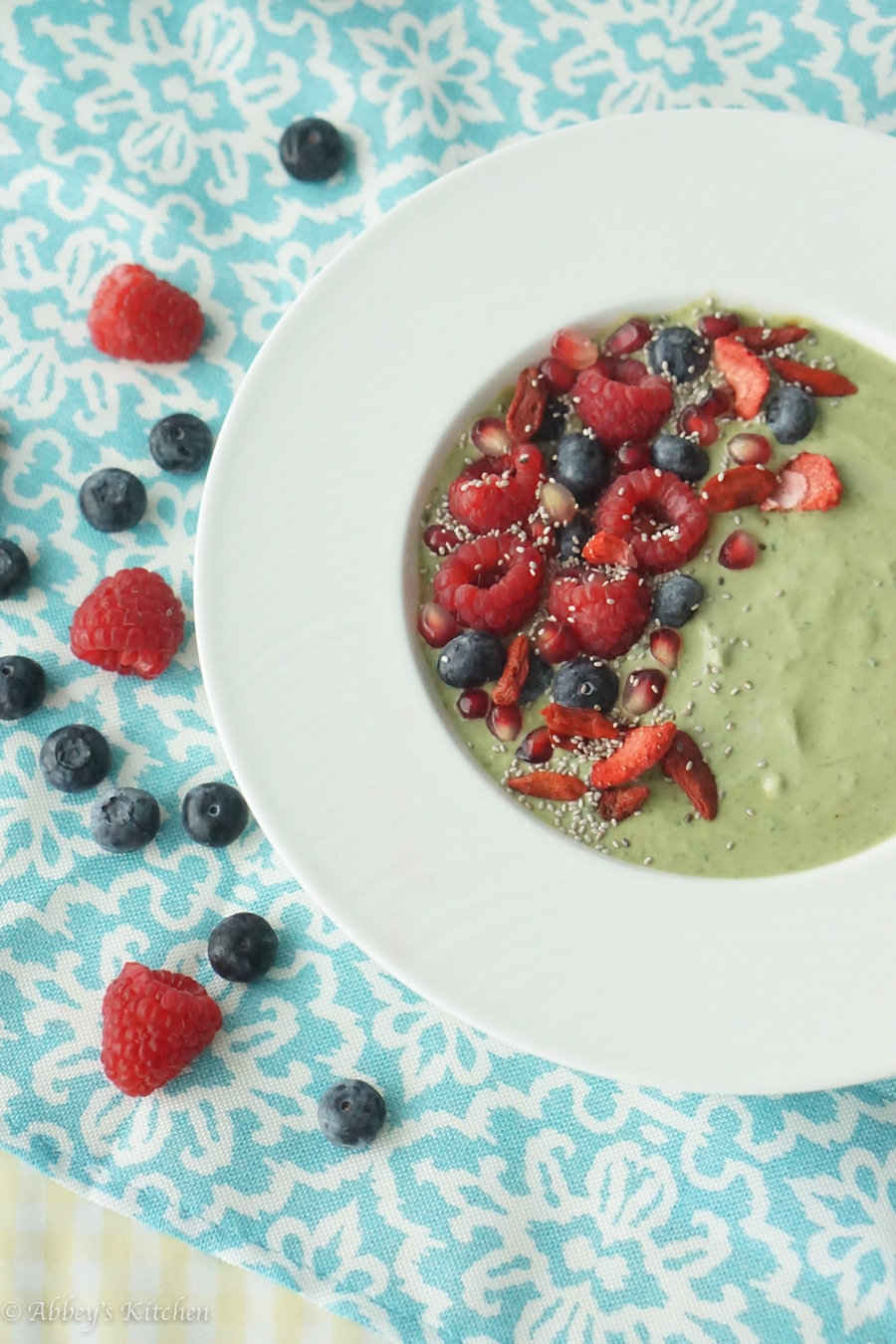
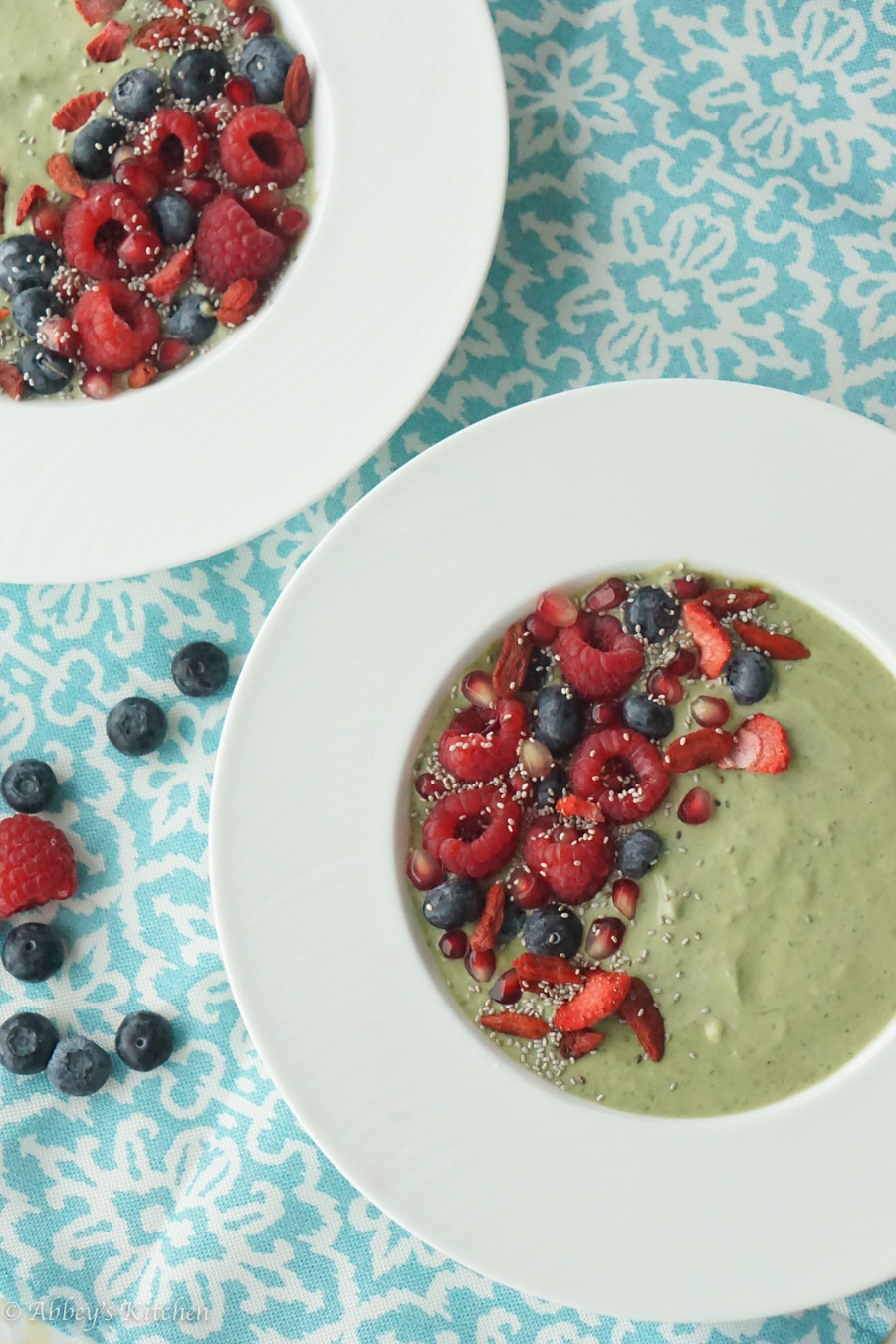
Green Smoothie Bowl with Antioxidant Packed Matcha & Berries

Take a look at pinterest and you’ll quickly see that the internet is obsessed with the “superfood” smoothie bowl. Originating from fancy pants Juice bars and smoothie shacks, the Acai Smoothie Bowl was developed as an alternative to the slurpable breakfast or snack.

smoothie_bowl_antioxidant_4_of_13.jpg

Truth be told- I hate Acai. I first tasted it as part of a blogger challenge for Top Chef Canada and I honestly thought I might gag. It’s brutally bitter and grossly viscous, not exactly the kind of thing I would be able to effortlessly spoonfeed myself.

smoothie_bowl_antioxidant_7_of_13.jpg

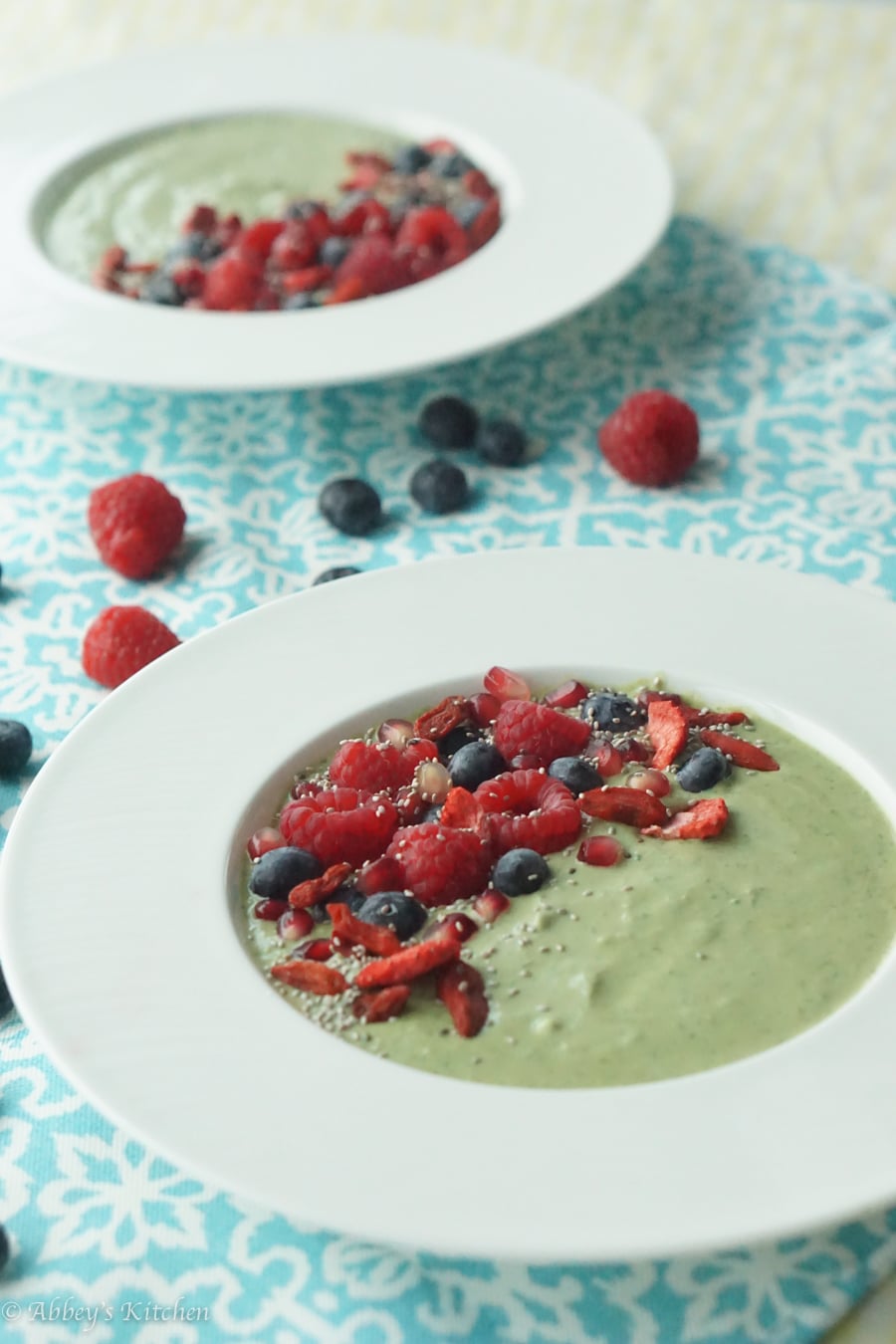
I care about what I eat but lord, there are tastier ways to get your antioxidants and a green smoothie bowl like this one is a great example.

smoothie_bowl_antioxidant_6_of_13.jpg

So I took the whole “Superfood” theme (ps: I hate that term, hence the quotations) and ran with it my own way, a way that actually tastes good! I included lots of antioxidant-rich fruits, vegetables and add ins in my green smoothie bowl, and made sure it tasted as good as it looked.

smoothie_bowl_antioxidant_11_of_13.jpg

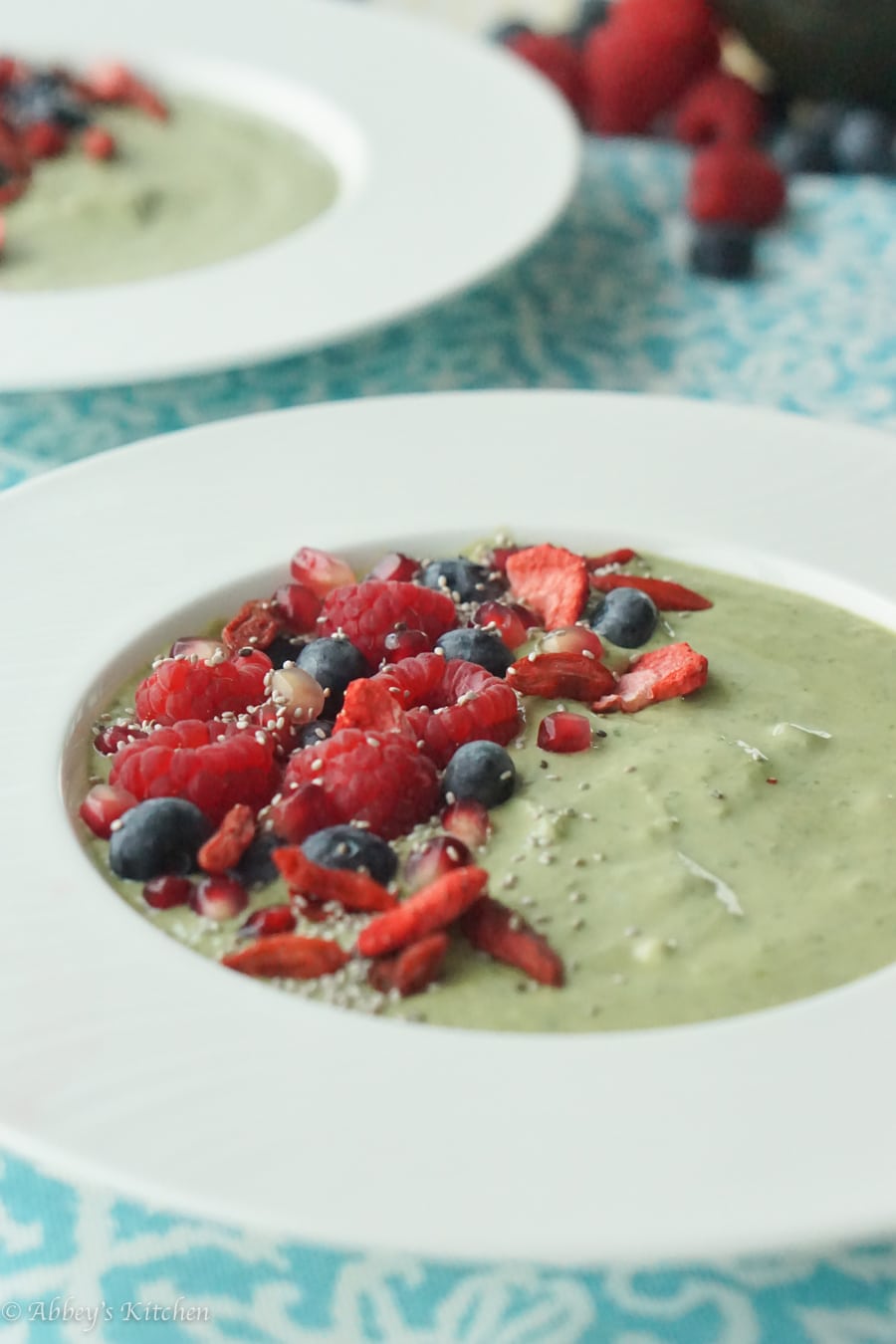
The result? A green smoothie bowl breakfast of champions. Check out just some of the nutrients you’re getting in this breakfast bowl!

smoothie_bowl_antioxidant_9_of_13.jpg

Antioxidants in This Green Smoothie Bowl

Skim milk for Protein, Calcium, Vitamin D, A, Bs and Potassium.Greek Yogurt for Protein, Calcium, vitamin D, Bs and Probiotics.Spinach for Vitamin A, E, C, K, B vitamins, Folate, Calcium, Potassium, Iron, Magnesium and Fibre.Bananas for B vitamins, C, Manganese, Potassium, and Fibre.Avocado for Vitamin K, B vitamins, E, Potassium, C, Folate, and Fibre.Lemon for Vitamin C, Folate and Flavonols.Matcha for Catechins.Blueberries for Vitamin C, K, Manganese, Anthocyanins, Anthocyanadins and FibreRaspberries for Vitamin C, K, E, Manganese, Anthocyanins, Flavonols, Tannins, and Fibre.Pomegranate Seeds Vitamin C, Folate, K, Manganese, Potassium, Anthocyanins, Tannins, Ellagic Acid, and Fibre,Goji Berries for Vitamin C, A, Bs, Potassium, Iron, Fibre, Zeaxanthin, Lycopene.Chia Seeds for Fibre, Protein, Omega 3 Fatty Acids, Calcium, Manganese, Magnesium, Phosphorus.

smoothie_bowl_antioxidant_13_of_13.jpg

This doesn’t even touch on how delicious it tastes! Try it out for yourself and let me know what you think. Have you tried making a green smoothie bowl? Do you prefer your smoothies in a glass or a bowl?

I share a one week high protein paleo meal plan filled with healthy recipes that provide around 1700 calories and 100 grams of protein. 
Print Recipe
5 from 1 vote

Green Smoothie Bowl with Antioxidant Packed Matcha & Berries

The perfect post workout snack packed with antioxidants and green tea matcha. 
Prep Time5 minutes mins
Total Time5 minutes mins
Course: Snack
Cuisine: American
Servings: 1 person
Calories: 320kcal
Author: Abbey Sharp

Ingredients

  • 1/4 cup unsweetened vanilla almond milk
  • 1/2 cup plain 0% Greek yogurt
  • 1 cup baby spinach leaves
  • 1/2 frozen banana diced
  • 1/4 avocado diced
  • Juice of 1/2 lemon
  • 1/2 tsp matcha powder
  • 1 tsp honey to taste
  • Blueberries
  • Raspberries
  • Pomegranate seeds
  • Goji berries
  • Chia seeds

Instructions

  • Blend together the milk, yogurt, spinach, banana, avocado, lemon, matcha and honey to taste. Pour into a bowl.
  • Decorate your smoothie with blueberries, raspberries, pomegranate seeds, goji berries and chia seeds. Enjoy!

Nutrition

Calories: 320kcal
Abbey Sharp

Abbey Sharp is a Registered Dietitian (RD), regulated by the Ontario College of Dietitians. She is a mom, YouTuber, Blogger, award winning cookbook author, media coach specializing in food and nutrition influencers, and a frequent contributor to national publications like Healthline and on national broadcast TV shows.
www.abbeyskitchen.com/about-abbey/

Last Updated November 22, 2019. Published January 7, 2016 By Abbey Sharp 5 Comments

Vegan Crispy Tofu with Sweet & Sour Orange Sauce– New Years Eve Healthy Chinese Food

healthy chinese food

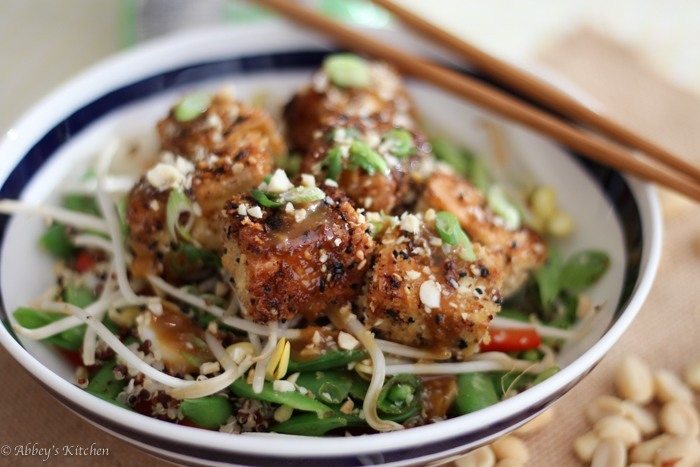
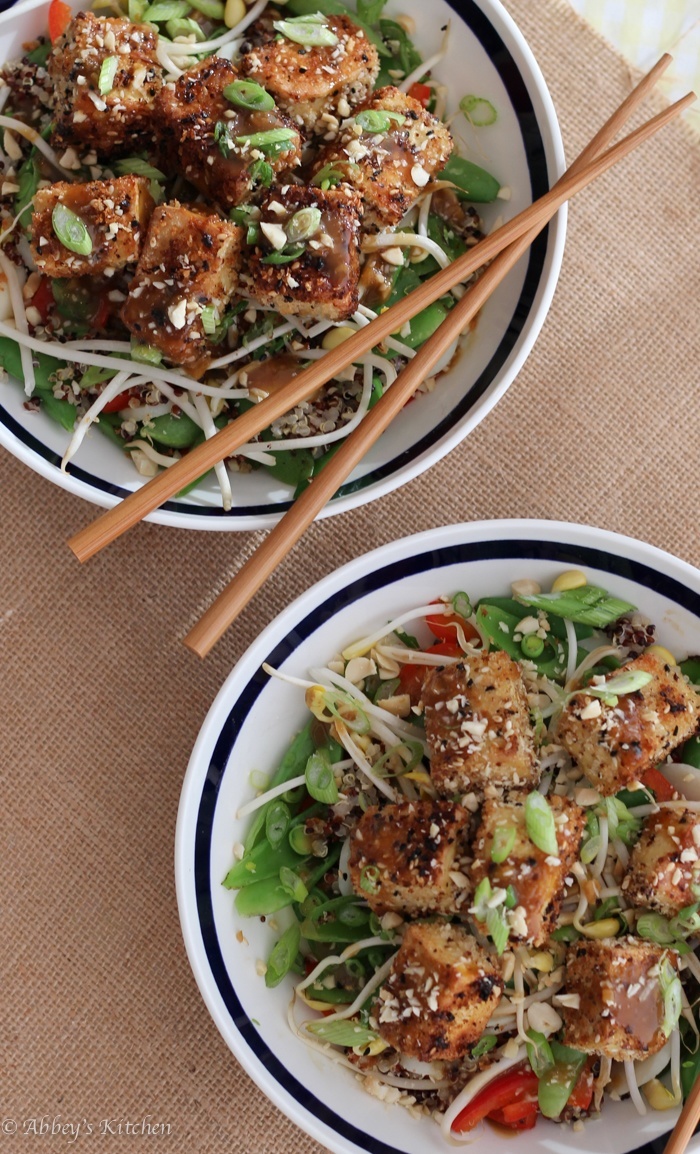
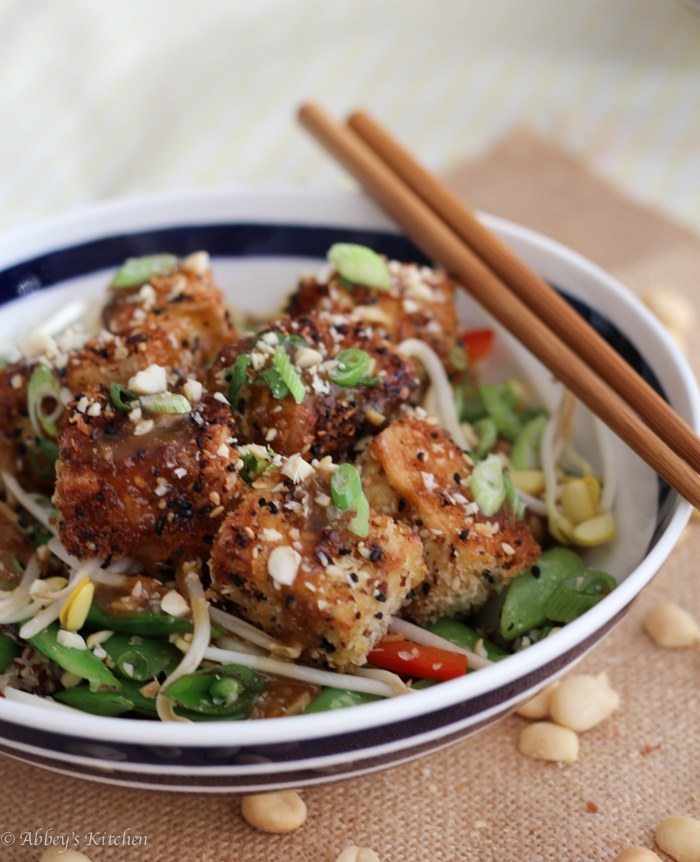
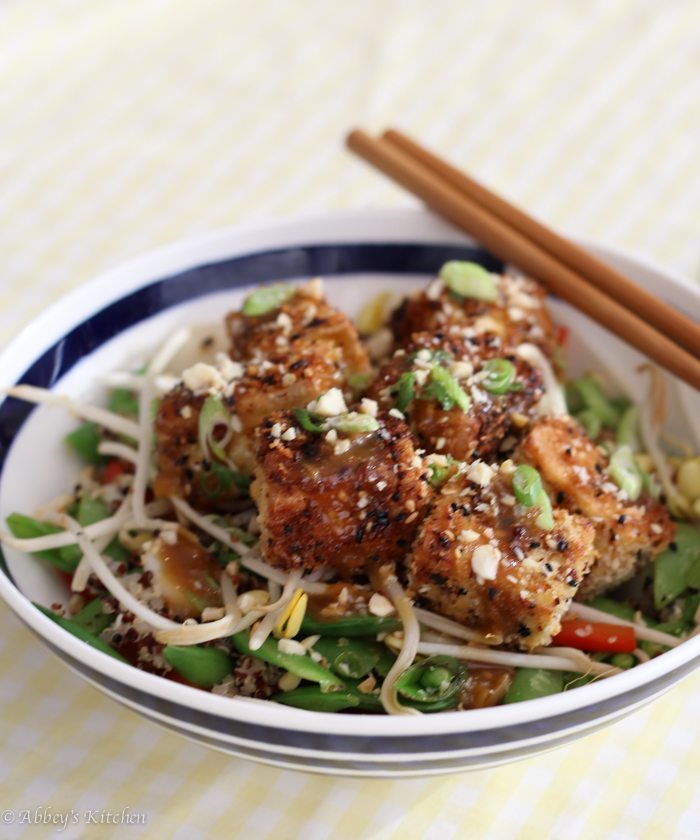
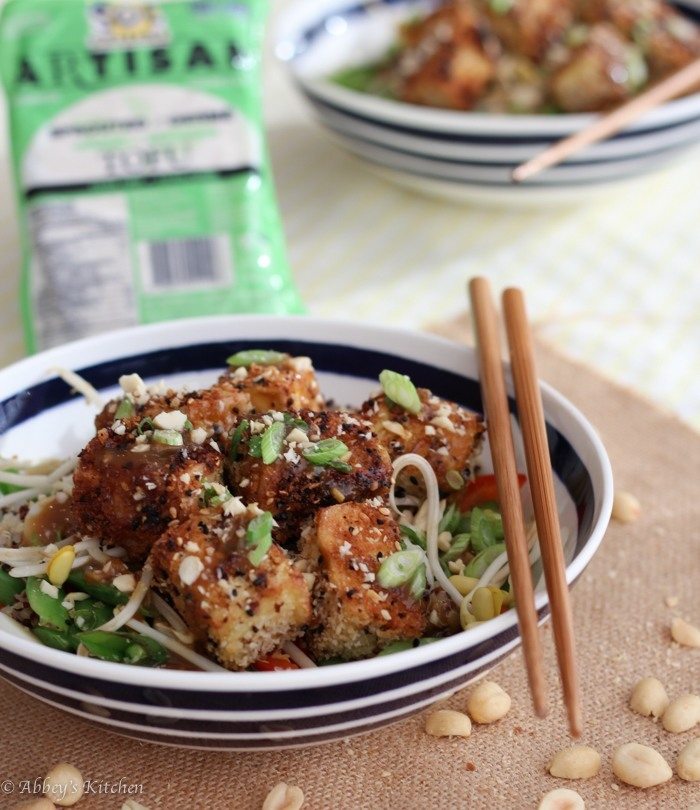
These Vegan Crispy Tofu with Sweet & Sour Orange Sauce is sponsored by Sol Cuisine and is total Healthy Chinese Food. This recipe makes for the perfect New Years Eve alternative to take out!

The countdown to 2016 is upon us and in my house, New Years Eve party ideas almost always revolve around champagne, fireworks and Chinese Food. But let’s be honest, after a massive Thanksgiving turkey feast, 8 days of Hanukah latkes, a Christmas roast and oh so many parties in between, greasy Chinese food take out is really the last thing I need. I need myself some healthy Chinese food to get through the crazy fact that it’s another year past.

crispy_tofu_with_orange_sauce_4_of_12.jpg

Let’s be honest. I knew I wasn’t going to be getting any healthy Chinese food from a delivery place.

crispy_tofu_with_orange_sauce_3_of_12.jpg

This year, I wanted to make my own healthy Chinese food for our New Years Eve party starting with this vegan Crispy Tofu with Sweet & Sour Orange Sauce. Now, I know what you meat eaters are thinking. Tofu? Hell no. But just wait to be amazed.

crispy_tofu_with_orange_sauce_8_of_12.jpg

Have you ever had crispy fried tofu in one of those trendy new Chinese restaurants? Carnivore or not, it’s probably one of the tastiest things you’ll ever have but with the deep fried factor, it can be a bit of a fat bomb.

crispy_tofu_with_orange_sauce_5_of_12.jpg

So… Healthy Chinese Food is a Real Thing?

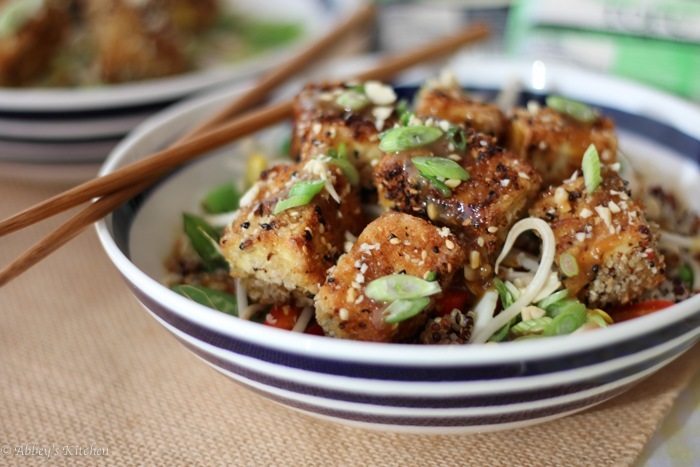
Yep. With a bit of experimenting, I came up with a mucho delicious crispy tofu that’s BAKED and tossed in the most addictive sweet, tangy and spicy sauce. It’s so good, you might miss the count down just for another bite.

crispy_tofu_with_orange_sauce_12_of_12.jpg

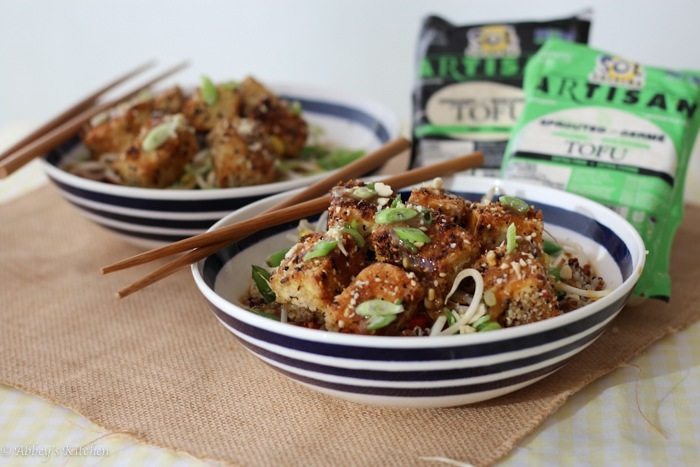
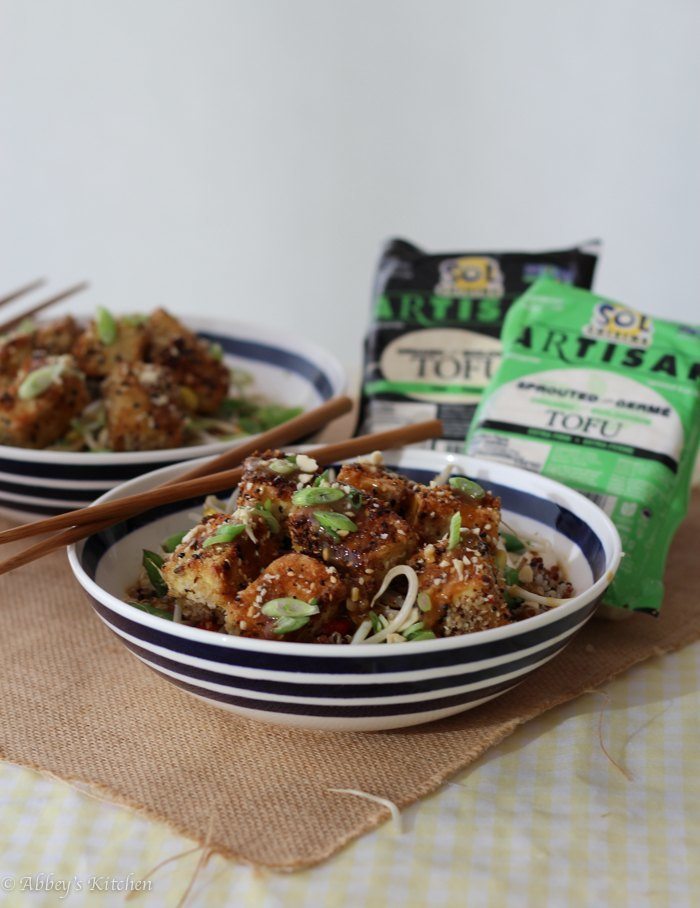
For this healthy Chinese food recipe, I’m using Sol Cuisine’s new Artisan Sprouted Extra Firm Tofu, which is vegan, gluten free and organic. I like the new sprouted version because it’s higher in protein and calcium then the traditional firm tofu, plus it has better digestibility. One 75 g serving delivers 13 grams of vegan protein, 10% of your Calcium and Iron needs and only 100 calories. It’s honestly quite mild and delicious in it’s own right, but when it’s crusted in golden brown panko crumbs and tossed in that Chinese orange sauce, you know it’s going to be a good night in.

crispy_tofu_with_orange_sauce_2_of_12.jpg

Sorry Mr. Delivery man, don’t count on an order this year. You’ve got nothing on my healthy Chinese food crispy tofu – the perfect new years eve food! If you want to try Sol Cuisine Artisan Sprouted Tofu, check out their facebook page for a printable coupon!

crispy_tofu_with_orange_sauce_11_of_12.jpg

What’s your go-to New Years Eve food ideas? Do you have any healthy Chinese food ideas you would like me to share on the blog? What are your favourite tofu recipes? Leave me a message below – I would love to hear from you!

crispy_tofu_with_orange_sauce_9_of_12.jpg

healthy chinese food
Print Recipe
3.75 from 4 votes

Vegan Crispy Tofu with Sweet & Sour Orange Sauce– New Years Eve Healthy Chinese Food

These Vegan Crispy Tofu with Sweet & Sour Orange Sauce is sponsored by Sol Cuisine and is total Healthy Chinese Food. This recipe makes for the perfect New Years Eve alternative to take out!
Prep Time10 minutes mins
Cook Time45 minutes mins
Total Time55 minutes mins
Course: Dinner
Cuisine: Chinese
Servings: 4 people
Calories: 415kcal
Author: Abbey Sharp

Ingredients

Tofu

  • 1 package Sol cuisine Artisan Sprouted Extra Firm Tofu
  • 3- 4 tbsp grainy or dijon mustard
  • 1/4 cup panko breadcrumbs
  • 1 tsp black sesame seeds
  • 2 tsp white sesame seeds
  • 1/2 tsp Chinese five spice blend
  • pinch salt and pepper Generous pinch of each

Sweet & Sour Sauce

  • 1 tsp coconut oil
  • 1 clove garlic finely minced
  • 1 tsp ginger finely minced
  • 1/4 cup concentrated orange juice
  • 1/2 tbsp coconut sugar
  • 1 tbsp rice wine vinegar
  • 1 tbsp reduced sodium soy sauce
  • 1/2 tsp sriracha
  • 1 tsp cornstarch
  • 1/2 cup water
  • Salt and pepper to taste

Quinoa

  • 1 cup Quinoa rinsed
  • 2 cups reduced sodium vegetable broth
  • 1 tsp olive oil
  • 1 tsp sesame oil
  • 2 cups sugar snap peas trimmed
  • 1 bell pepper sliced julienne
  • 1 cup Bean sprouts
  • 1 can water chestnuts drained and rinsed
  • Salt and pepper to taste
  • Green onions sliced, for garnish
  • Peanuts crushed for garnish
  • Toasted sesame seeds for garnish

Instructions

Tofu

  • Cut the tofu into 1 inch cubes, top with a layer of paper towels, then cover with a layer of heavy objects like cast iron skillets topped with canned goods. Let it sit for an hour to release a lot of its moisture.
  • Meanwhile, preheat the oven to 425 F.
  • Remove the weights and discard the paper towel.
  • In a small bowl, mix together the panko, sesame seeds, and Chinese five spice.
  • Brush the tofu in the mustard, then toss in the mixture. Season with a generous pinch of salt and pepper. Transfer to a baking sheet and bake for 30-40 minutes, flipping at least once throughout the cooking process.

Sweet & Sour Sauce

  • Meanwhile, heat the olive oil in a small skillet. Add the ginger and garlic and cook until fragrant, about 30 seconds. Add in the orange juice, coconut sugar, vinegar, soy sauce and sriracha and stir until bubbly.
  • In a small bowl, mix together the cornstarch and water until smooth, then add to the sauce to thicken. Season with salt and pepper, to taste, if needed.

Quinoa:

  • Prepare quinoa with vegetable broth according to box instructions. Transfer to a bowl or container, cover and keep warm.
  • Heat the olive and sesame oils in the same pan or pot, then add in the snap peas and bell pepper. Saute over high heat until slightly blistered and softened, then add in the bean sprouts and water chestnuts. Season with a pinch each of salt and pepper.

Assembly

  • Divide the quinoa between four bowls, top with the stir-fried vegetables, the crispy tofu and drizzle with the orange sauce. Garnish with green onions, peanuts and toasted sesame seeds.

Nutrition

Calories: 415kcal

Disclaimer: This recipe was developed in paid partnership with Sol Cuisine, however, all opinions are genuine.

Abbey Sharp

Abbey Sharp is a Registered Dietitian (RD), regulated by the Ontario College of Dietitians. She is a mom, YouTuber, Blogger, award winning cookbook author, media coach specializing in food and nutrition influencers, and a frequent contributor to national publications like Healthline and on national broadcast TV shows.
www.abbeyskitchen.com/about-abbey/

Last Updated June 2, 2017. Published January 6, 2016 By Abbey Sharp 16 Comments

Best Post-Workout Snacks & Swaps- High Protein Avocado Smash Toast, Tropical Pancakes & Cherry Pie Smoothie

best post-workout snacks

Between spinning, sessions with my trainer, and group fitness classes at my gym, I work up quite the appetite, so I’ve had to get creative with my post-workout snacks. I recently wrote an article about what to eat after a workout (and also before one too!), and I hope you’ve benefited from it as much as I have. Too often I see people killing it in the gym, only to undo some of their hard work with a poorly planned snack or meal. Or even worst- no food at all! Guys, if I have learned anything from my own experience trying to gain muscle and burn fat, it’s that your post-workout snacks and meals makes a huge difference in your results.

post-workout_snacks_5_of_11.jpg

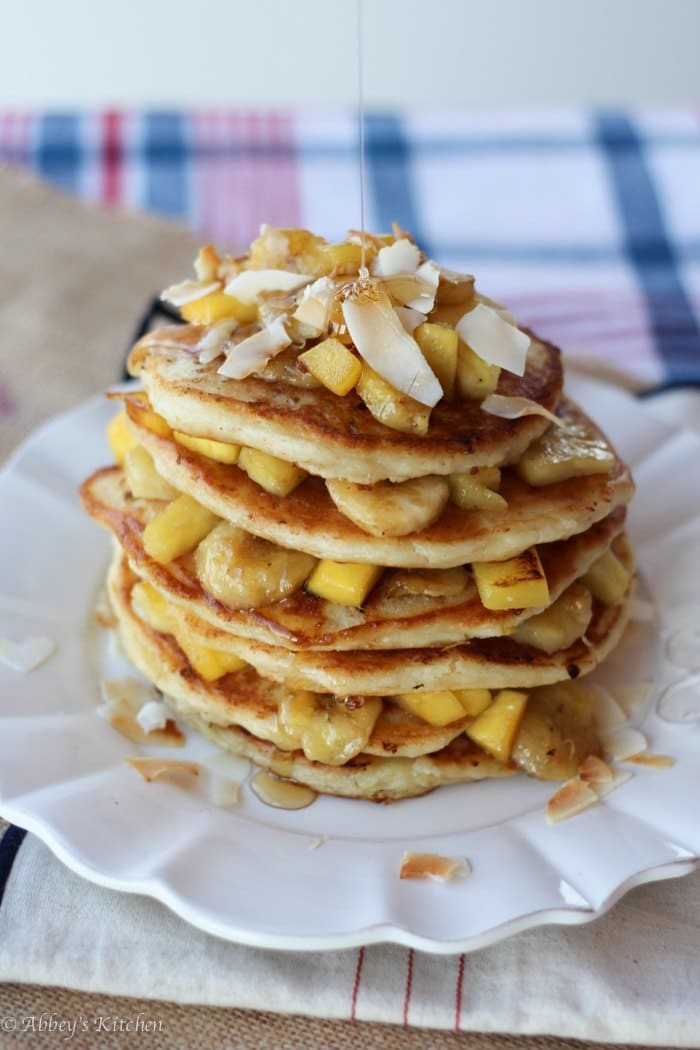
These Tropical Protein Pancakes will be the best darn pancakes you ever eat (because they are made with the best Dairyland, Neilson or Baxter cottage cheese). A girl can never have too much cottage cheese.

So that’s why I thought I would share with you some of my favourite post-workout snacks that pack a nice balance of protein and carbs. These easy after workout snack recipes swap out some of the ingredients in your typical snacks or meals with high protein fat free cottage cheese. While carbs are important for replacing the glycogen stores you burned through in exercise, the protein will help you build those muscles, manage your weight, keep you feeling satisfied, avoid a sugar spike and recover without soreness from that sweat sesh!

The Best Post-Workout Snacks!

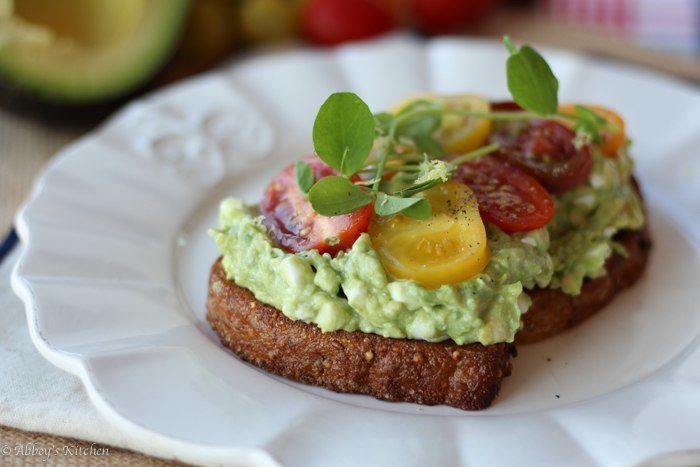
Swap the boring mayo on your post-workout snack whole-wheat toast for a layer of cottage cheese mixed with avocado, halved cherry tomatoes and cracked black pepper! One serving is 259 calories, 20g protein, 30g carbs, 8g fibre and only 8g fat!

post-workout_snacks_7_of_11.jpg

This super yummy High Protein Avocado Smash sandwich recipe (made using Dairyland, Neilson or Baxter cottage cheese) is my favourite post-workout snack- I love eating it for breakfast and lunch too!

Pancakes = post-workout snacks? Yes! Swap out the flour in your pancake recipe with some cottage cheese for a decadent high protein snack or breakfast. These freeze really well, so make a whole batch and pull them out as you need them throughout the week. One pancake is 60 calories, 5g protein, 8g carbs, 1g fibre and less than a gram of fat!

post-workout_snacks_3_of_11.jpg

Pancakes anyone? What better way to is there to start or end a workout than with a plate of scrumtious Tropical Protein Pancakes?! These pancakes are protein packed (thanks to the yummy Dairyland, Neilson or Baxter cottage cheese that I mix in)!

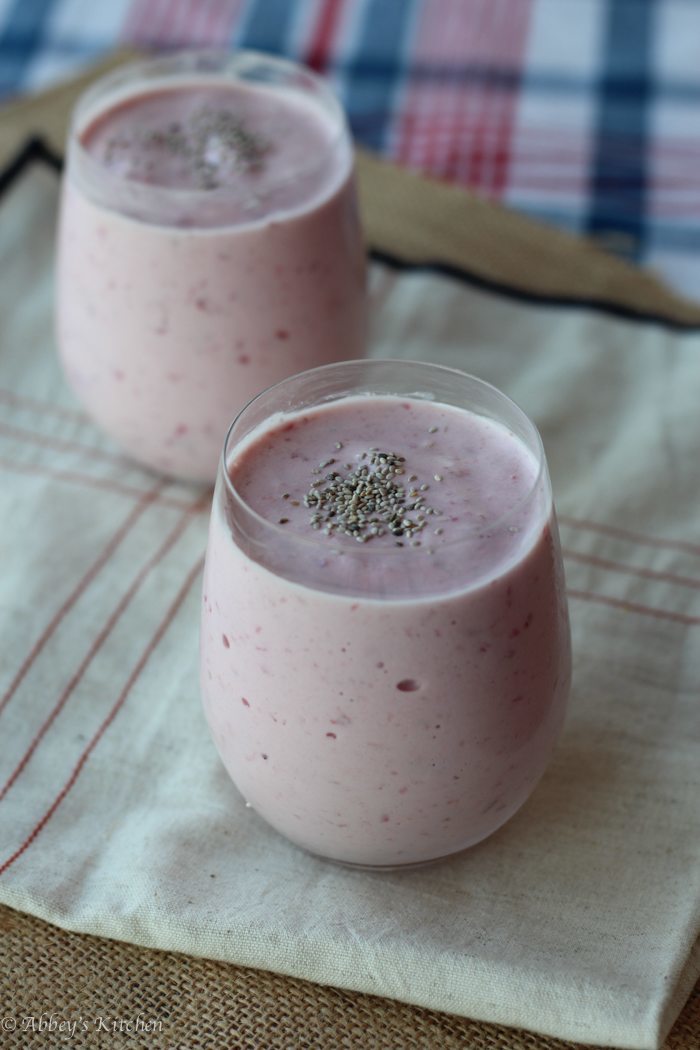
Swap the sweetened yogurt in your smoothies (amazing post-workout snacks) for cottage cheese to make it super thick and creamy without the fat! One smoothie is 308 calories, 13g protein, 58g carbs, 8g fibre and 5g fat!

post-workout_snacks_11_of_11.jpg

Shakes are all the rage these days! Make your fellow fitness lovers jealous by bringing a delicious Cherry Pie Smoothie (made with my favourite Dairyland,Neilson or Baxter cottage cheese) with you next time you hit the gym, and see how many new friends you will make…

If you liked these ideas, subscribe to the Ingredients by Saputo eNewsletter. These yummy post-workout recipes will be part of the newsletter as of January 11th, so you’ll want to subscribe to learn more about all the tasty products!

What are your favourite protein-rich post-workout snacks? Leave me a message below with your after workout snacks!

Print Recipe
5 from 2 votes

High Protein Avocado Smash

wap the boring mayo on your post-workout snack whole-wheat toast for a layer of cottage cheese mixed with avocado, halved cherry tomatoes and cracked black pepper! 
Prep Time5 minutes mins
Total Time5 minutes mins
Course: Snack
Cuisine: American
Servings: 1 person
Calories: 300kcal
Author: Abbey Sharp

Ingredients

  • 1 slice of whole grain bread toasted
  • 1/4 avocado
  • 1 tsp lime juice
  • 1/2 cup Neilson, Baxter or Dairyland Fat Free Cottage Cheese
  • 1/4 cup cherry tomatoes sliced
  • Salt and pepper

Instructions

  • In a small bowl, mix together the avocado with the lime juice, cottage cheese and a pinch each of salt and pepper.
  • Spread the avocado onto the toast and top with the cherry tomatoes. Enjoy!

Nutrition

Calories: 300kcal

best post-workout snacks
Print Recipe
5 from 1 vote

Tropical Pancakes

Pancakes anyone? What better way to is there to start or end a workout than with a plate of scrumtious Tropical Protein Pancakes?! These pancakes are protein packed 
Prep Time10 minutes mins
Cook Time20 minutes mins
Total Time30 minutes mins
Course: Breakfast
Cuisine: American
Servings: 18 Pancakes
Calories: 280kcal
Author: Abbey Sharp

Ingredients

  • 1 1/2 cups oats
  • 1 1/2 cups Neilson, Baxter or Dairyland Fat Free Cottage Cheese
  • 1 tbsp vanilla
  • 1 1/2 cup egg whites
  • Pinch of salt
  • 2 1/2 tsp baking powder
  • 1 banana sliced
  • 1/4 cup mango diced
  • 1/4 cup pineapple diced
  • Toasted coconut shavings for garnish if desired

Instructions

  • In a blender or food processor, puree the oats, cottage cheese and vanilla. Mix in the egg whites, salt, and baking powder.
  • Heat a large non-stick skillet over medium heat, spray with a spritz of vegetable oil and add 1/4 cup of batter at a time. 
  • Cook on both sides until lightly browned. Continue with the remaining batter.
  • Serve topped with banana, mango, pineapple and coconut!

Nutrition

Calories: 280kcal


Print Recipe
5 from 1 vote

Cherry Pie Smoothie

Shakes are all the rage these days! Make your fellow fitness lovers jealous by bringing a delicious Cherry Pie Smoothie 
Prep Time5 minutes mins
Total Time5 minutes mins
Course: Snack
Cuisine: American
Servings: 2 people
Calories: 290kcal
Author: Abbey Sharp

Ingredients

  • 1/4 cup oats
  • 2 tsp ground flax seed
  • 1 frozen ripe banana sliced
  • 2 cups frozen sweet cherries
  • 3/4 cup unsweetened vanilla almond milk
  • 1/2 cup Neilson, Baxter or Dairyland Fat Free Cottage Cheese
  • 2 tsp maple syrup or to taste
  • 1/4 tsp nutmeg
  • 1/2 tsp cinnamon
  • 1/2 tsp pure vanilla extract
  • 1/2 tsp chia seeds for garnish if desired

Instructions

  • Add everything to a blender and process until smooth. Divide between two glasses and enjoy!

Nutrition

Calories: 290kcal

Disclaimer: This post was developed in paid partnership with Saputo, however, as always, all opinions are genuine.

Abbey Sharp

Abbey Sharp is a Registered Dietitian (RD), regulated by the Ontario College of Dietitians. She is a mom, YouTuber, Blogger, award winning cookbook author, media coach specializing in food and nutrition influencers, and a frequent contributor to national publications like Healthline and on national broadcast TV shows.
www.abbeyskitchen.com/about-abbey/
  • Previous Page
  • Go to page 1
  • Interim pages omitted …
  • Go to page 79
  • Go to page 80
  • Go to page 81
  • Go to page 82
  • Go to page 83
  • Interim pages omitted …
  • Go to page 89
  • Next Page

Get started with

Eight Free Recipe Books

From the co-founder of Neue Theory and creator of the Hunger Crushing Combo

Sign me up!
Abbey smiling at table
Abbey Sharp

“Foods may never be nutritionally equal. But we can make them morally equal by recognizing that our worth is never determined by what's on our plate.”

— Abbey Sharp, RD About Abbey ◥

Books

  • HCC™
  • Mindful Glow
  • Free E-Books

Blog

  • Nutrition
  • Recipes
  • Motherhood
  • Life

Explore

  • Neue Theory™
  • Bite Back
  • YouTube

Abbey

  • About
  • Coaching
YouTube TikTok Instagram Facebook X Pinterest
Abbey Sharp - The No BS Dietitian From Abbeys Kitchen

© Abbey's Kitchen 2026  All Rights Reserved •  ACCESSIBILITY STATEMENT •  Privacy Policy

This site uses cookies. By continuing to browse the site, you are agreeing to the use of cookies Accept Privacy Policy

Privacy & Cookies Policy

Privacy Overview

This website uses cookies to improve your experience while you navigate through the website. Out of these, the cookies that are categorized as necessary are stored on your browser as they are essential for the working of basic functionalities of the website. We also use third-party cookies that help us analyze and understand how you use this website. These cookies will be stored in your browser only with your consent. You also have the option to opt-out of these cookies. But opting out of some of these cookies may affect your browsing experience.
Necessary
Always Enabled
Necessary cookies are absolutely essential for the website to function properly. This category only includes cookies that ensures basic functionalities and security features of the website. These cookies do not store any personal information.
Non-necessary
Any cookies that may not be particularly necessary for the website to function and is used specifically to collect user personal data via analytics, ads, other embedded contents are termed as non-necessary cookies. It is mandatory to procure user consent prior to running these cookies on your website.
SAVE & ACCEPT

Rate This Recipe

Your vote:


A rating is required
A name is required
An email is required