• Skip to main content

Abbey's Kitchen

Healthy Recipes, Nutrition Myth Busting, Healthy Eating Tips

  • Books
    • HCC™
    • The Mindful Glow Cookbook
    • Recipe eBooks
      • Family
      • Hypothyroidism
      • BLW
      • Vegan Week 1
      • Vegan Week 2
      • Vegan Week 3
      • Keto
      • Gluten Free Week 1
      • Gluten Free Week 2
      • Fitness
      • Paleo
  • Blog
    • Nutrition
    • Recipes
    • Motherhood
    • Life
  • Explore
    • Neue Theory™
    • Bite Back With Abbey Sharp
      • Apple Music
      • Spotify
      • Amazon Music
    • YouTube
  • Abbey
    • About
    • Coaching
    • Contact

Abbey Sharp

Last Updated April 2, 2016. Published January 4, 2016 By Abbey Sharp Leave a Comment

Muscle Building Supplements Decoded & Healthy Food Swaps

muscle building supplements

These days, there are muscle building supplements for everything. Want to lose weight? There’s a supplement for that. Detox? Check. How about pump up your workout, build muscle, get your protein, or give yourself a little (or big) energy boost? Check, check, check, and check. There are weight loss supplements and body building supplements for all of those. It maybe sometimes sounds too good to be true.

Sorry to burst your bubble folks, but a lot of supplements aren’t all they’re chalked up to be. When it comes to exercise supplements specifically, research is often inconclusive or straight up non-existent with regards to their effectiveness.  In many cases, they’re over priced, come with additives and sweeteners, and are unnecessary or potentially harmful when taken in high doses.  As for those the active ingredients in these protein, body-building, health, nutrition and muscle building supplements?  Those can often be found right on our plates, with bonus vitamins and minerals and none of that extra stuff we don’t want (like fructose, maltodextrin, and artificial sweeteners).

We know it may seem like an easy fix but there’s no such thing as a supplement that’s going to make getting in shape easy. While protein powder can provide a little boost to your breakfast smoothie, for the average exerciser, I wouldn’t suggest relying on these exclusively in the long term.  Instead, we’ve compiled a yummy list of foods to provide these muscle building, body building, exercise boosting, ‘super nutritious’ ingredients.  Look no further for answers to all your burning muscle building supplement questions.
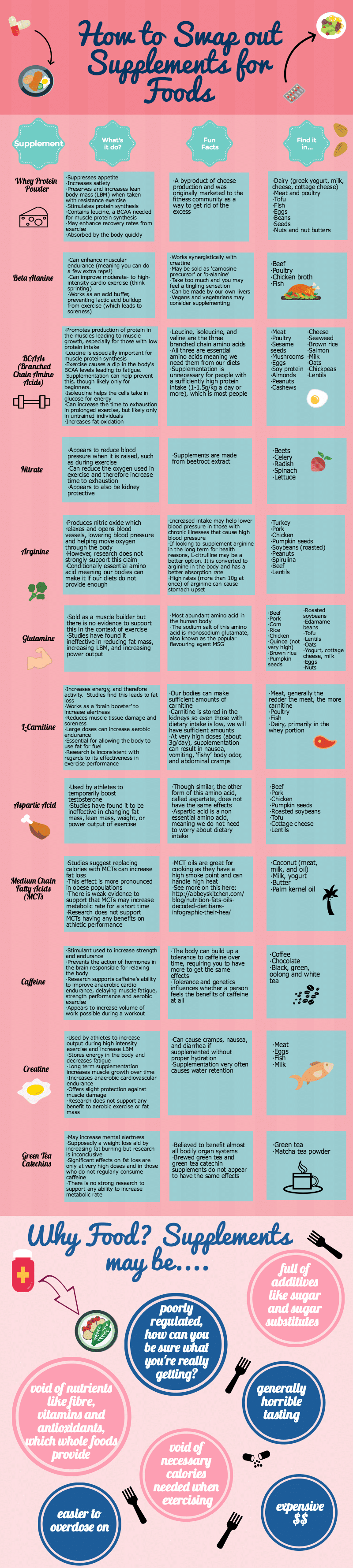
Athletic_Supplements_vs_Foods_Nov_17_copy.png

Pin or share this handy graphic for the next time you’re wondering if a supplement is the tastiest and most cost-effective way to get to your goals. If you do chose to take any supplements for health reasons, always consult with your doctor or a registered dietitian first.

Have any other health or muscle building supplement related questions or a favorite way to incorporate these foods into your diet?  Let me know in the comments below!

Contribution by AK Dietetic Student Olivia Cupido

Abbey Sharp

Abbey Sharp is a Registered Dietitian (RD), regulated by the Ontario College of Dietitians. She is a mom, YouTuber, Blogger, award winning cookbook author, media coach specializing in food and nutrition influencers, and a frequent contributor to national publications like Healthline and on national broadcast TV shows.
www.abbeyskitchen.com/about-abbey/

Last Updated October 23, 2020. Published December 4, 2015 By Abbey Sharp 1 Comment

Gluten Free Pasta Ramen Noodles with Chicken

Low Carb Gluten Free Pasta

DISCLAIMER: This post was developed in sponsored partnership with House Foods Tofu Shirataki Noodles, however, as always, all opinions are genuine.

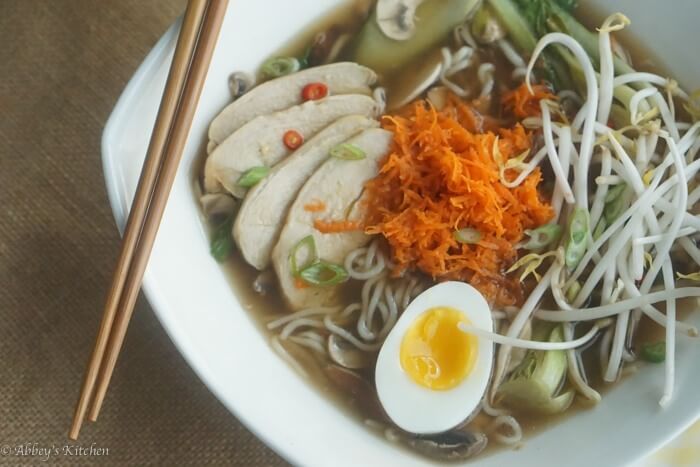
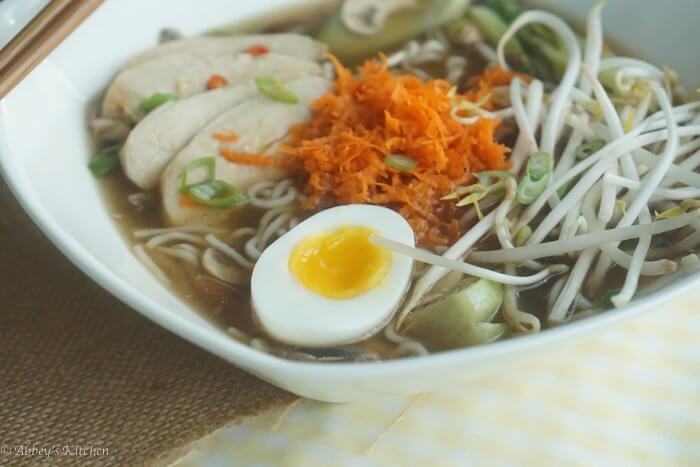
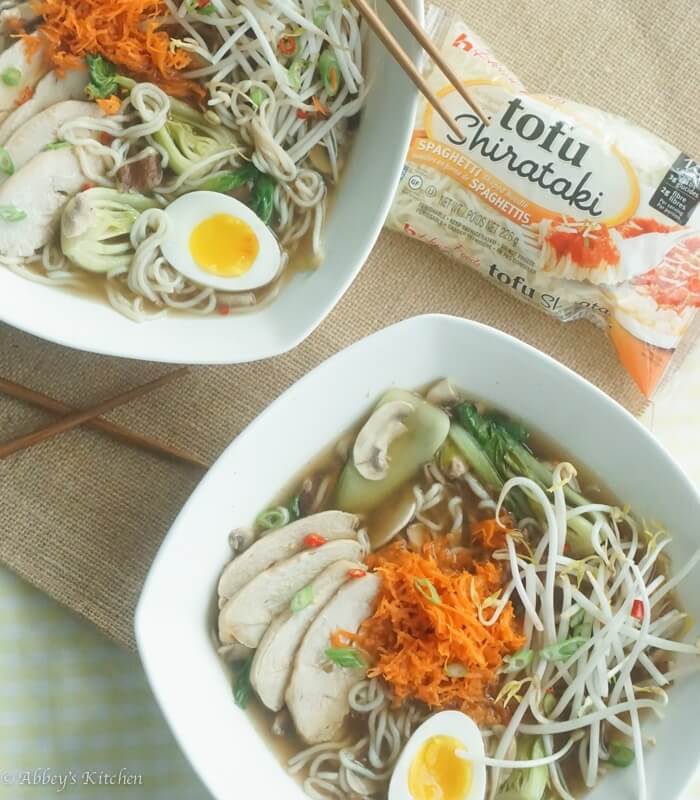
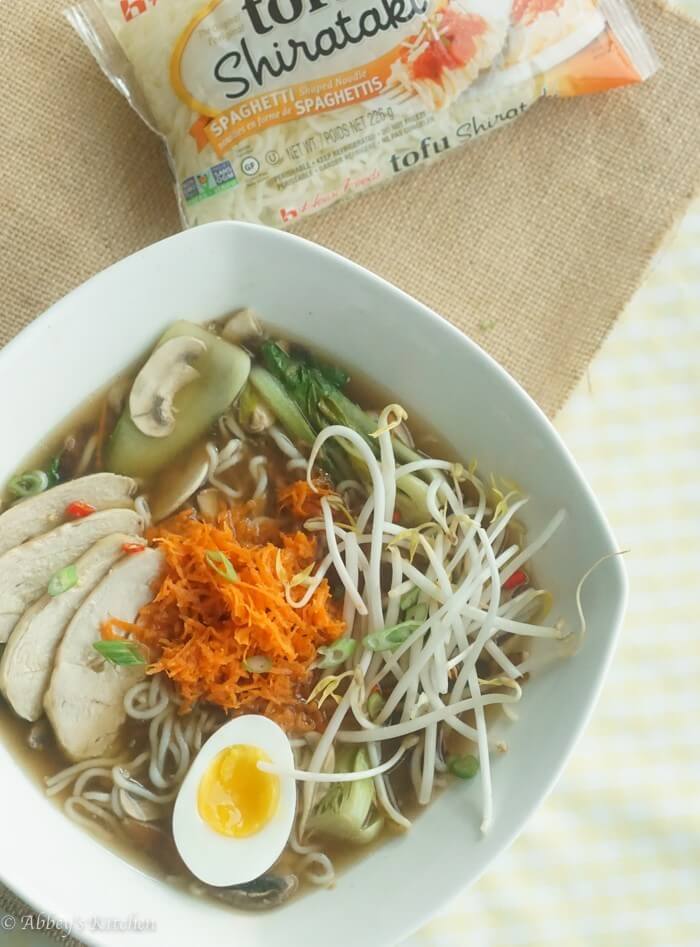
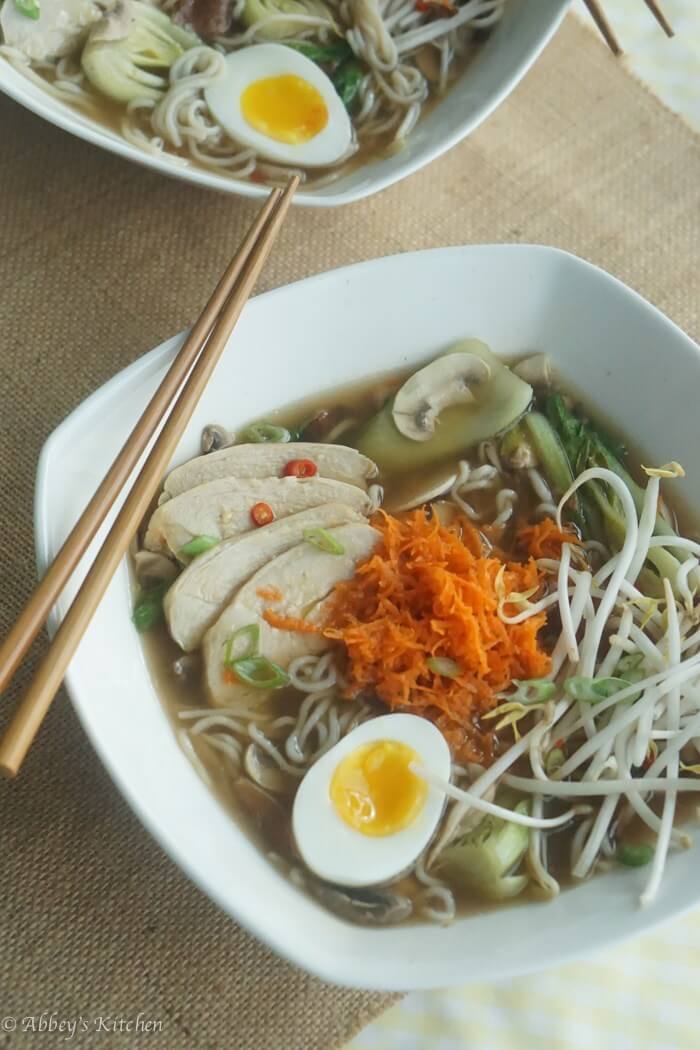
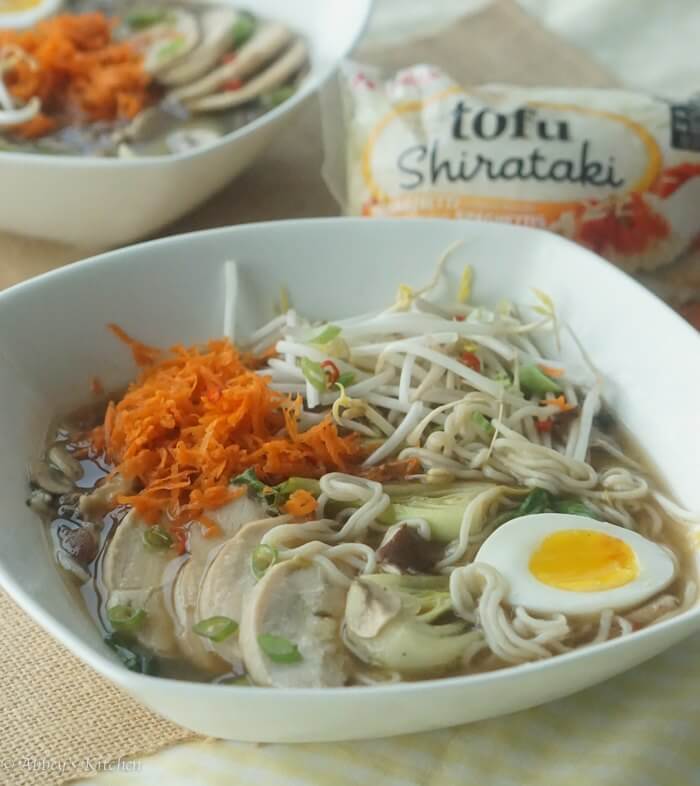
 This gluten free pasta ramen noodles is low in carbs and packed with flavour. 

Ramen noodles have become super trendy in the past few years, and coincidentally so has going gluten free. Gluten free pasta is now pretty easy to find, but low carb gluten free pasta? WHAT?

low_carb_gluten_free_ramen_10_of_14.jpg

Gluten Free Pasta That’s Also Low Carbs?

It’s true. While most gluten free pasta products out there are actually higher in calories, I found a solution that will make everyone excited to slurp up a big bowl of noodles.


low_carb_gluten_free_ramen_11_of_14.jpg

Thank you Tofu Shirataki noodles. Seriously guys, this is THE OFFICIAL Low Carb Gluten Free Pasta.

low_carb_gluten_free_ramen_3_of_14.jpg

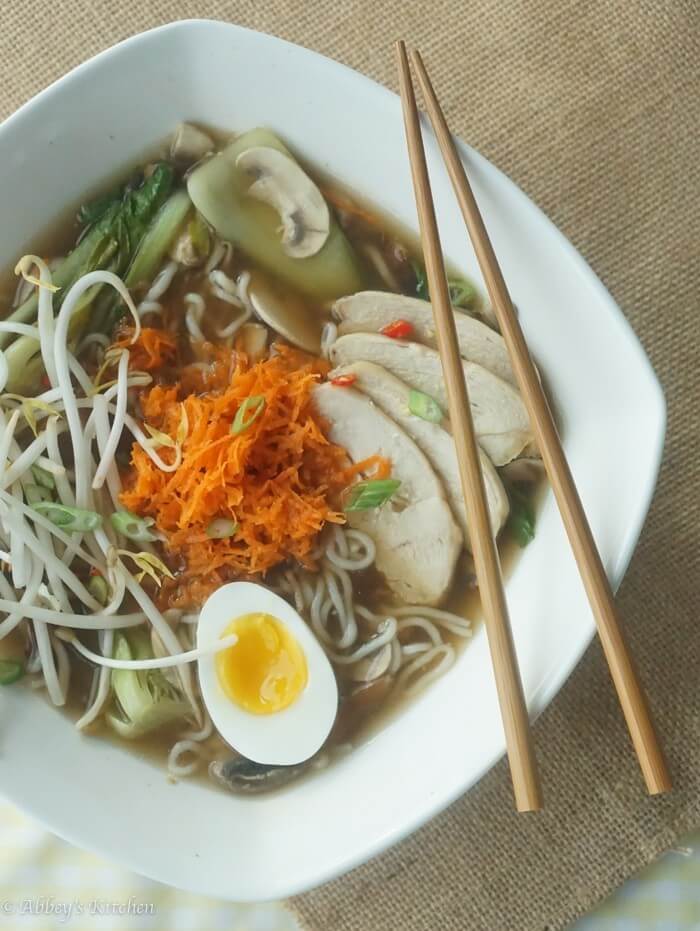
A half cup (half the bag) is just 15 calories, 0.5 grams of fat, and only 3 grams of carbs. The result is a bowl of comforting noodle soup without the calorie bomb bloat. I also added in some easy baked chicken breast and a soft boiled egg for extra protein and flavour.

low_carb_gluten_free_ramen_4_of_14.jpg

Remember when ramen restaurants completely took over your city as the hottest thing since sliced bread? Remember having to line up for like 45 minutes just to get a seat and a bowl of hot steaming carb-loaded noodles? Forget about it. This recipe delivers all the flavour and comfort of those restaurant ramen noodles but without the heavy hit of calories or the queue in the cold. Yep, and lots of gluten free pasta goodness.You’re welcome.

low_carb_gluten_free_ramen_7_of_14.jpg

If you want to cut carbs in calories in more tasty ways this winter, check out my recipe for Asian Cold Noodle Salad (you’re going to love it!)

low_carb_gluten_free_ramen_13_of_14.jpg

Love traditional ramen noodles? How does this low carb version stack up? What is your favourite slurpable noodle dish that needs to be made into a gluten free pasta? Leave me a message below and I’ll give it a try!

low_carb_gluten_free_ramen_5_of_14.jpg

Low Carb Gluten Free Pasta
Print Recipe
4 from 4 votes

Gluten Free Pasta Ramen Noodles with Chicken

This gluten free pasta ramen noodles is low in carbs and packed with flavour. 
Prep Time15 minutes mins
Cook Time50 minutes mins
Total Time1 hour hr 5 minutes mins
Course: Dinner
Cuisine: Japanese
Servings: 2 people
Calories: 310kcal
Author: Abbey Sharp

Ingredients

Chicken

  • 1 chicken breast 6 oz
  • Salt and pepper

Egg

  • 1 egg

Ramen

  • 1/2 tsp extra virgin olive oil
  • 1/2 tsp sesame oil
  • 2 tsp ginger grated
  • 1 clove garlic minced
  • 3 cups reduced sodium chicken broth
  • 2 tbsp dried mushrooms pulverized to a powder
  • 2 tbsp reduced sodium gluten free tamari
  • 1/2 tbsp mirin
  • 3 baby bok choy trimmed and cut in half lengthwise
  • 2 cups mixed mushrooms sliced
  • Salt and pepper to taste
  • 1 package House Foods Tofu Shirataki Spaghetti Noodles
  • 1 tsp red chili pepper thinly sliced
  • 1 small carrot grated
  • 2 green onions sliced on the bias
  • 1 cup bean sprouts

Instructions

Chicken

  • Preheat your oven to 400 F and season the chicken breast with salt and pepper. Bake until it reaches an internal temperature of 165 F, about 30-40 minutes. Allow to cool, then cut into thin slices.

Egg

  • Bring a small saucepot filled half way with water to a boil. Carefully lower a cold egg into the boiling water, reduce the temperature to medium low and simmer for 8 minutes. After the 8 minutes, immediately transfer to an ice bath to halt the cooking.
  • Once it’s cool enough to touch, peel the egg and set aside. Allow to cool, then cut in half lengthwise to expose the yolk.

Ramen

  • Heat the olive and sesame oil in a medium sauce pot over medium heat, add in the ginger and garlic and sauté until fragrant, about 30 seconds. Add the chicken broth, mushroom powder, tamari, and mirin and simmer with the lid on for 3 minutes on low. Add in the mushrooms and bok choy and cook for an additional 4 minutes. Taste, and season with salt and pepper, if desired.
  • Meanwhile, drain and rinse the House Foods Tofu Shirataki noodles. Cut the noodles into smaller pieces and pat dry.

Assembly

  • Divide the noodles between two bowls, then add in the soup. Top with the sliced chicken, egg half, chili pepper, grated carrot, green onions, and bean sprouts.

Nutrition

Calories: 310kcal

Disclaimer: This recipe was developed in paid partnership with House Foods Tofu Shirataki Noodles, however, as always, all opinions are genuine.

Abbey Sharp

Abbey Sharp is a Registered Dietitian (RD), regulated by the Ontario College of Dietitians. She is a mom, YouTuber, Blogger, award winning cookbook author, media coach specializing in food and nutrition influencers, and a frequent contributor to national publications like Healthline and on national broadcast TV shows.
www.abbeyskitchen.com/about-abbey/

Last Updated January 19, 2022. Published November 27, 2015 By Abbey Sharp 4 Comments

GMO Part 2: Implications of Genetically Modified Organisms (GMOs) and Ethical Concerns

Welcome to Part 2 of the Abbey’s Kitchen GMO conversation! If you missed Part 1, check it out here! Today we will get into the more heated topics surrounding GMO foods (remember folks this GMO stuff is really controversial so keep your food for thought hats on when reading as this topic can be looked at from many angles)!

Grab a cup of tea and a healthy snack (try my recipe for granola bars here) and get ready to dig deep into some of the issues surrounding GMOs!

GMO Impact on Health

While GMO research is still in its early stages, critics of GMOs mention a number of health concerns related to the consumption for GMOs. Lets take a look at some of the most popular.

1) Harm from Bt Protein:

Bt is a naturally occurring insecticide (a substance used to kill bugs) made from a type of bacteria called Bacillus thuringiensis. Genetic engineers remove the gene that produces Bt from the bacteria and then reinsert it into the DNA of plants. After this genetic modification, plants that have been genetically modified to contain Bt can protect themselves from insects, therefore reducing the need for farmers to use harmful superficial insecticides to protect their crops.  A new finding has also been revealed that the use of Bt crops has greatly reduced the use of synthetic insecticides. GMO Bt crops have a long history of reported safety and success. Organic farmers have even been known to use the original Bt protein as an insecticide given that it is a natural non-pathogenic bacterium naturally found in the soil.

How can this Bt genetic modification be safe? Well, given that the Bt plant-incorporated protectants are proteins (remember proteins are commonly found in the diet) they present minimal risk except for few well-described cases such as food allergens, which we will explain below.  Numerous reports, including those from Greenpeace have discovered that the level of toxins present in Bt crops was highly “limited, and that “the plants sampled showed in general very low Bt concentrations.”  Additionally, dozens of research studies have discovered that Bt is in fact one of the world’s safest pesticides with little to no reported instances of human infection.  Based on findings collected from 1996 to 2015, the Bt trait genetically modified in corn has contributed to a statistically significant increase in crop yields, especially in areas where there is high insect-pest pressure and low availability of water. This is good news, right?

2) Allergies:

According to a recent national survey, the potential that GMO foods may trigger allergies is highly concerning to consumers. To begin with, virtually any food is capable of causing an allergic response. Awareness of GMO’s and their link to potential allergens has increased due to the knowledge that allergy inducing proteins known to be present in one specific species will remain an allergen after being engineered into a second species. A well-known example of this is the Brazil nut allergen, which was transferred into the soybean species. It was discovered that the allergy producing property associated with the particular protein in the Brazil nut was still produced even after being expressed in the soybean, which could obviously be bad news bears for someone with a nut allergy enjoying some French fries cooked in soybean oil. This case documents that we are capable of detecting known allergens that have been genetically engineered from one species to another.

genetically modified organisms.jpg

Besides known allergenic proteins, it should also be noted that when foods are manufactured through biotechnology, a new gene is introduced into a plant’s DNA, resulting in the production of a new protein. It is possible that isolated cases of allergic responses to these new genes have the potential to arise, however, jumping to the conclusion that GMO foods cause allergic reactions is not justified at this point. Even though there has been a rise in food allergies over time, a committee that review hundreds of studies on GMO foods, could not find any relationship between the consumption of GMOs and the prevalence of food allergies. There are so many other factors involved that could explain the rise in food allergies, but for the time being, it doesn’t seem to be GMOs.

3) Constituents that can Alter Nutrient Bioavailability:

Genetic modifications can potentially influence the bioavailability of certain nutrients (bioavailability is the ability our body has to absorb nutrients).  Mycotoxins, for example, are toxins produced by molds and other fungi. It is possible that changes to a crop by genetic modification may make the crop more or less susceptible to mycotoxin production. These changes in myotoxin production have been seen with corn modified to express Bacillus Thuringiensis (see here, here, here). Another example involves phytoestrogens, which we know are naturally present in soy and other legumes. It’s possible that genetic engineering can increase or decrease the amount of phytoestrogens in the crop, which in turn may have positive health effects for some individuals, and negative health effects in excess for others (here).  Of course, these are just possibilities that need further investigation, and would simply need to be tested for in genetically modified products. Also, another thing to keep in mind is that aside from GMOs, there are many factors that may alter the nutrient content of a crop, such as: agricultural growing/feeding practices, soil quality, and harvesting methods/timing, so future studies will have to factor in those effects when determining what the likely cause is of low bioavailability.

4) Random Gene Insertion

Critics of GMOs often worry of the dangers of inserting a gene into DNA, as it is thought that the randomness of it may cause mutations or change the way genes are expressed. This may be true, but it is also true in other forms of conventional breeding.  Genes and larger fragments of DNA can often get rearranged or inserted during conventional plant breading, and some experts believe that this process is far more unpredictable in conventional breeding then in the heavily-regulated GM process.  Furthermore, changes in DNA are also a natural part of evolution. It happens every day to a wide range of crops as part of evolution, so what we see in GMOs is not exactly novel.

5) Lack of Long-Term Studies

An updated review was conducted in 2016, where Domingo re-iterates the concern with the lack of long-term studies. The researcher also states the majority of GMO research is based on nutritional studies (which has shown GMO and non-GMO foods are nutritionally equivalent) but limited long-term toxicology studies exist.

One positive thing that Domingo points out in his review is that recently GMO research has reached a certain equilibrium, meaning aside from just biotechnology companies funding research, there have also emerged a number of studies conducted by independent research groups that do not have the intention of commercializing the GM crop. Kicking biased studies to the curb means we can more confidently support the findings in these studies.

One thing that remains difficult in the study of GMO is without GMO labeling (where we could know who is eating GMOs and who isn’t), it’s very hard to know for sure what the long-term impacts are. Also, while it may be appropriate to say that GMOs are safe based on current research, this may not be true for future crops. Each crop will need to be tested on a case-by-case basis but thankfully, that’s exactly what is done.

GMO Impact on the Environment

There have been concerns with respect to the influence of GM crops on biodiversity. Let’s look at some of the potential concerns.

1) Honey Bees

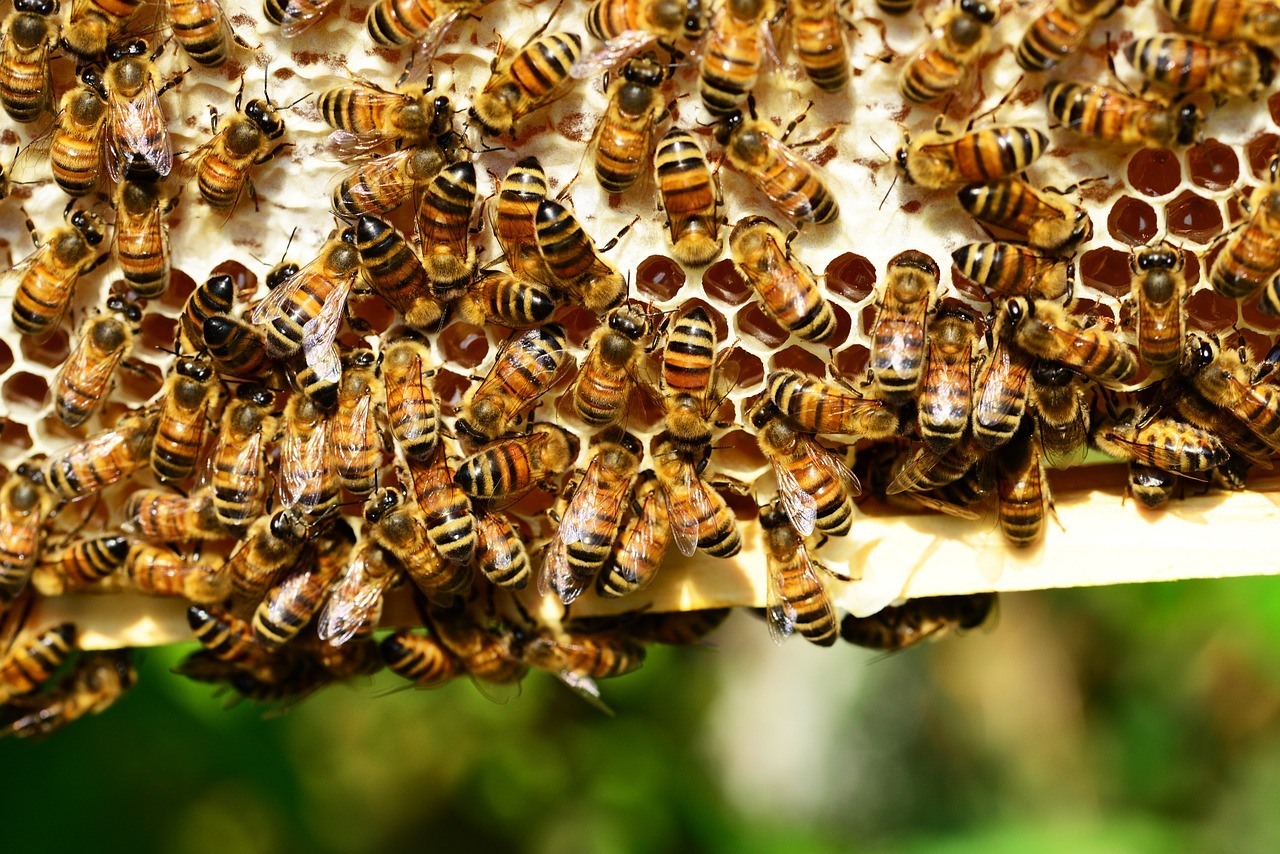
Genetically modified (GM) plants and their impact on honey bees have been widely studied, and the results indicate that genetically modified plants are actually not harmful to honey bees. A review by Malone and Pham-Delègue looked at seven studies. Their conclusion was that “Bt transgene products are very likely to be safe for honey bees and bumblebees.” One large study by Duan et al. looked at 25 different studies and concluded that “the Bt Cry proteins used in genetically modified crops for control of caterpillar and beetle pests do not negatively affect the survival of honey bee larvae or adults in the laboratory.” The study included an experiment where they exposed honey bees to 50 times the dose of Bt varieties and there was no mortality noted.  A more recent 2015 article by Johnson reviewed a number of studies and concluded confidently that Bt pollen and nectar are not harmful to honey bees. This is great news for honey lovers everywhere!

genetically modified organisms.jpg
2) Superweeds

Superweeds are weeds that have become immune to the herbicides sprayed on them.  One of the most common herbicides used to kill weeds is the “Roundup” (glyphosate) because it is less toxic than other common herbicides. You’ve probably heard about Monsanto’s GMO line of seeds called Round Up Ready seeds, which were manufactured to be resistant to Round Up. In other words, farmers could use a less toxic herbicide to kill the weeds but not damage their crops.

However, the over reliance on herbicides like Round Up and the lack of diversity in weed management practices have resulted in 14 weed species becoming resistant to the herbicide.  In other words, they’ve become Superweeds. So, while they may have been introduced to reduce the use of herbicides, they have only increased farmers’ dependence on finding more powerful alternatives. On top of that, recently the World Health Organization declared that glyphosate may be a carcinogen. Granted, this was a controversial statement and further studies are needed to fully understand the mechanisms behind glyphosate and its potential link to cause cancer. This is something to be aware of since glyphosate is the world’s most widely produced herbicide and used extensively in agriculture. The question remains if we are engineering plants to use more of these herbicides, we need to ensure they don’t pose a serious health threat. It seems that the effects of herbicide resistant GMOs on yields is mixed and depends on how much weed control costs are reduced and genetically engineered seed costs increase.

genetically modified organisms.jpg

Slightly more promising is the use of genetically engineered insect-resistant (Bt) crops. Expects suggest that in high pest scenarios, Bt crops like corn and cotton seem to increase the net returns of crops when compared to conventional seeds. But this advantage is also dependant on a variety of factors including how traits are stacked with genetically engineered traits.  While there is some indications that insect resistance is developing to some insecticides, it seems to be more delayed than what’s seen with herbicides like Round Up thanks to farmers planting sufficient non-Bt crops near the Bt crops. Clearly the solution to pest management is not that simple.

GMO Genetic Diversity

The abundance of genetic modification occurring in a variety of plants and animals has prompted many to argue that genetically modified plants may affect the genetic diversity of a population through crossbreeding or uncontrolled growth.  Genetic Diversity (the DNA that codes for an organism is varied between species) is important for the environment because it provides a better opportunity for organizes to adapt to a changing environment. A common event that showcases the dangers of the lack of genetic diversity happened in the 1800s, during the potato famine in Ireland. At the time, the same potatoes were planted year after year, until suddenly one pathogen invaded and killed the entire potato crop. If they had a greater diversity of crops, some would have been able to withstand the pathogen, preventing the famine.

Now, if for say, wild crops and GMOs mate, it is possible for the two plants to naturally cross-pollinate producing a hybrid version of the two.  But, on the same note, natural hybridization usually has a positive impact on genetic diversity because it introduces a new combination of traits to that environment.  That being said, critics of GMOs assert that with the introduction of wild plant populations into the environment through this process, they could unintentionally cause a fitness advantage in the hybrid species giving them more power to reproduce. A study on GMO crops and wild species looked at a company that genetically engineered ‘creeping bentgrass’ (commonly used on golf courses) to resist herbicides so that they could apply spray to kill their weeds but not their grass. Researchers found that after collecting seeds from the wild plants at all different areas, the existence of the herbicide resistant gene was noted in wild grass up to 9 miles away from its origin only one year after the grass was planted.  Although this study indicated clear hybridization patterns in this species of plants, it is important to note that many crops cultivated in the U.S. (like corn, soy and cotton) don’t have wild relatives growing in such proximity and the majority of hybridization effects have been reported in less than a mile apart.  Future investigation is still needed to determine if these hybridizations increase the fitness of wild species.

On the other hand, some GMOs are given traits that give them advantages against their wild cousins, which may take resources away from their non-GMO relatives if they are in the same area. This is the concern, for example, with genetically engineered salmon. Many are unsure what the implications would be if the GMO salmon were released into the wild. Would they continue to grow at a faster rate than the wild due to their genetic advantages or would they not adapt to their wild environment. Experts aren’t quite sure.

It was discovered in a 2016 report, that the use of Bt variety crops resulted in higher insect biodiversity compared to non-Bt trait crops so that’s a good start.

Ultimately, while there isn’t a lot of strong research against GMOs on biodiversity any more than traditional crop cultivation practices, it doesn’t mean there won’t be serious future consequences.  Clearly, more research needs to be completed and strategies and procedures upheld to prevent any disruption to biodiversity.

GMO Social and Ethical Impact

Mandatory Labeling:

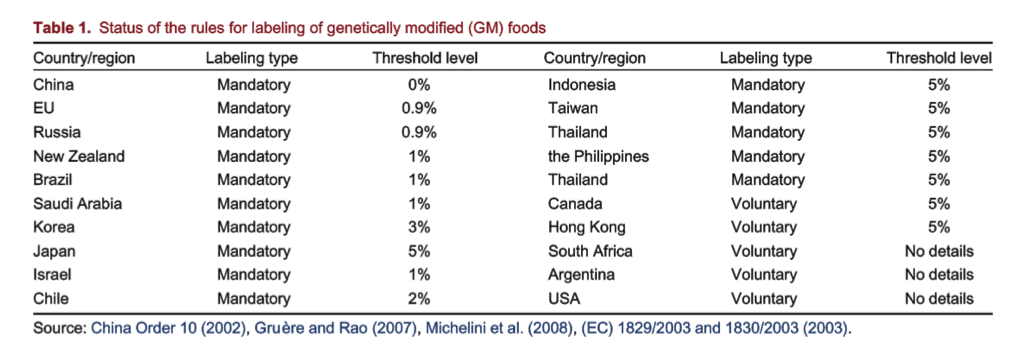
In 1997, GMOs and genetically modified products were introduced by the European Union (EU) for consumers to have the right to know about the information of GM ingredients. Currently, the established labeling regulations can be classified into two categories: voluntary (e.g., Canada, USA, Honk Kong, and South Africa) and mandatory (e.g., Australia, the EU, Japan, Brazil, and China). Among the countries with mandatory labeling, there are many different aspects among their rules and regulations (see Table 1).  The FDA supports voluntary labeling that provides consumers with this information and has issued draft guidance to industry regarding such labeling.

A table showing the status of rules of labelling of genetically modified (GM) foods.

Some of the problems manufacturers of GMOs have with “mandatory labelling” is the fear that consumers might perceive the information as dangerous.  Unless you read the evidence- based information out there and scientific journals that have been published on GMOs, the lay person may familiarize themselves as recognizing GMOs as awful and avoidable. That’s probably not a huge deal and ultimately one’s choice if you have the money to choose organic if you please, but many families cannot afford to regularly choose non-GMO and will be made to feel that they are making a bad choice for their family. Furthermore, these families may end up avoiding very healthy foods (like fruits and vegetables) just because they are GMO and they cannot afford the non-GMO alternative. It’s also important to note that labelling foods as GMOs won’t tell the consumer any specifics about the nutritional value, ie. how calorie-laden your food is, % of macro and micronutrients, % of added sugar, additives etc. so there is fear that consumers will make a decision based on one piece of information that may end up being completely irrelevant in the grand scheme of health.

Dietary Observances:

A fellow RD of mine told me she wanted to know if a food that is traditionally Kosher or Pareve (contains no dairy or meat products) is genetically modified to include a non-kosher product’s protein (ie. shellfish), does that make it no longer Kosher or Pareve? Paul Patel, who works in the Quality Lab for ED Technologies, told us that whether or not the ingredients are Certified Kosher (OU) or contain Pareve ingredients, they can still contain GM ingredients. I think some rabbi’s and observant Jews may object to having shellfish proteins in their Kosher corn, but because GMOs are not labelled, they may not know. Like with allergens, this may be one of those unique situations where labelling would be important.

How to avoid GMOs (If You Want To)?

GMO labelling is currently not mandatory, so the only way to avoid GMOs is by choosing Organic which must be GMO-free to maintain its title. You can also look for foods that are labeled as non-GMO, which is a voluntary label for food manufacturers.

GMO Bottom Line

This really is all just food for thought, I’m not a radical on either side of the fence. I really don’t feel strongly that there’s enough evidence against them GMOs, but I am still on my toes wondering about their long-term effects and wish there was an easy way to get that information. Ultimately, as a dietitian, my stance from a nutrition perspective is to simply aim to get enough vegetables and fruits in general- regardless of whether they are genetically modified or organically grown.

Questions or comments? We want to hear from you! Leave us a comment below to get the GMO dialogue started!

Contribution by AK Nutrition Students Olivia Maida and Alexis Silver

Abbey Sharp

Abbey Sharp is a Registered Dietitian (RD), regulated by the Ontario College of Dietitians. She is a mom, YouTuber, Blogger, award winning cookbook author, media coach specializing in food and nutrition influencers, and a frequent contributor to national publications like Healthline and on national broadcast TV shows.
www.abbeyskitchen.com/about-abbey/

Last Updated May 12, 2020. Published November 26, 2015 By Abbey Sharp 6 Comments

Best Pre Workout Meals & Post Workout Meals for Endurance & Strength Training

As a dietitian who loves her spin classes and lunch hour training sessions, I’m constantly getting asked by my fellow gym rats about what to eat. I don’t know about you, but what I decide to put in my body as Pre Workout Meals and Post Workout Meals can have a significant impact on my performance, endurance, and recovery.  Here’s what I’ve learned so far.
sports_nutrition_3_of_6.jpg

Pre Workout Meals and Post Workout Meals – Why are Carbohydrates So Important?

Since carbohydrates are your body’s main source of energy (and you brain’s ONLY source of energy), this nutrient is obviously very important if you want to excel during your workout.

So how does this relate to your exercise?  When you eat carbs in your pre workout meals, the “glucose” (energy) in the is converted to “glycogen” and stored in your muscles and liver.  During a workout, your body takes the glycogen, and converts it to back to glucose in your blood so it can be used to fuel your workout, depleting those glycogen stores in the process. This is why it’s so important to eat proper amounts of carbohydrates in your pre workout meals.  You never want to have your glycogen stores completely depleted as your body will subsequently resort to breaking down protein (aka. yep, those hard earned muscles) for the energy to fuel your body.  This results in decreased muscle mass and fatigue – the exact opposite of what you’re probably hoping to achieve.

After an energy-depleting workout, it’s often important to replenish the glycogen that was used in your post workout meals!  Your body naturally kicks this into gear within 24-48 hours after exercise, however, eating carbs within about a 1 1/2 hour recovery window after exercise can help speed up this process and optimize recovery.  Post-workout meals with carbs and protein will enhance glycogen replacement, and help build and repair your tired and sore muscles.  This is especially important if you’re a competitive or high-intensity athlete!

BUT, before we go running towards our cookies and white bread, I want to distinguish between simple and complex carbohydrates.

sports_nutrition_1_of_6.jpg


Simple = “fast” energy.  Although it sounds appealing in this context, these carbs will only give you a small and quick spurt of energy, important for some endurance athletes but often not always necessary for a recreational workout as they don’t have the same satiety factor as complex carbs. These carbs are found in white flour products, juice and desserts.

Complex = “slow” energy.  This is the type of carb you should be aiming for most often!  They give us long-lasting energy throughout our exercise, and are found in whole grain products, vegetables, fruits, and legumes.

Pre Workout Meals

Lets get into what are the best snack choices for pre workout meals. Key word here people: snack! We’re talking 100-200 calories people.  A common misconception is that we “need” to eat before working out. Whether we’re talking about cardio or weight training, we only need to eat if it’s been a few hours since your last meal, or if you’re feeling hungry- but we’ll get into those specifics in a few minutes. Let’s talk for a minute first about what kinds of snacks we’re talking about pre workout.

Protein, fat, and fibre, although incredibly important diet components in your diet for good health and weight management, take a back seat when it comes to eating before exercise.  Generally before a cardio session, look for a meal that’s higher in complex carbohydrates. There has been some debate between dietitian’s and competitive bodybuilders on what type of carbs to have pre and post workout. To pop some gummy bears or have a whole wheat piece of toast? I’m going to be discussing complex carbs for the most part since I believe the small amount of added fibre won’t sit in your stomach much longer and there are many benefits such as being higher in B-vitamins and iron- which play a key role in metabolism and transporting oxygen.

Also, look for snacks relatively low in protein, fibre, and fat. The last 3 nutrients are actually “slow-digesting”, which is great for preventing overeating and watching your weight, but can make you feel uncomfortably full while you’re trying to crush a 10 K.

Slow, Long and Steady Cardio

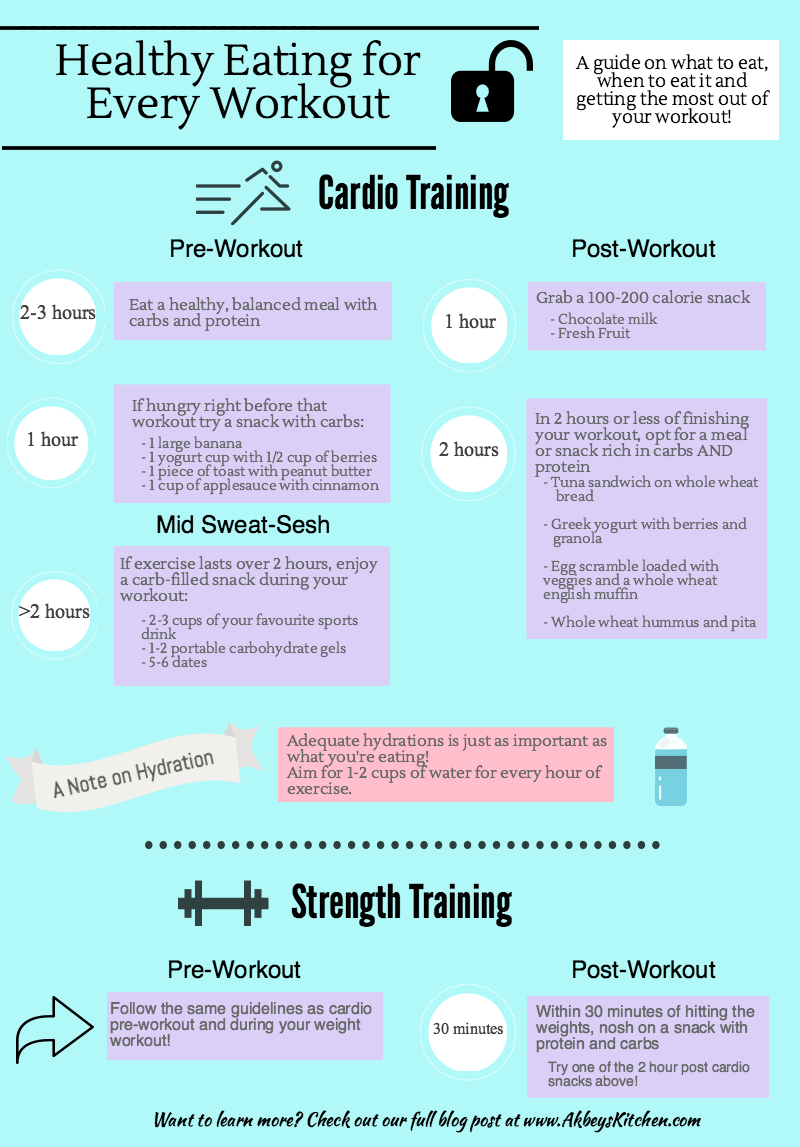
If you’re planning a longer exercise session lasting over an hour, it’s ideal to eat balanced pre workout meals 2-3 hours beforehand.  Why this time frame?  It allows for full digestion before your workout (so there’s no uncomfortable “full” feeling), it helps stabilize your blood sugar levels, and will keep you feeling energized and ready to workout.  What do we mean by “balanced?” We’re talking about a meal with long-lasting complex carbs and protein.  If you need to eat a snack closer to the time of exercise, say, 1 hour or less, go for mainly high complex carb foods. . Remember, this is a 100-200 calorie snack so you’re not feeling stuffed while lacing up those runners.

Snack examples:

  • 1 large banana
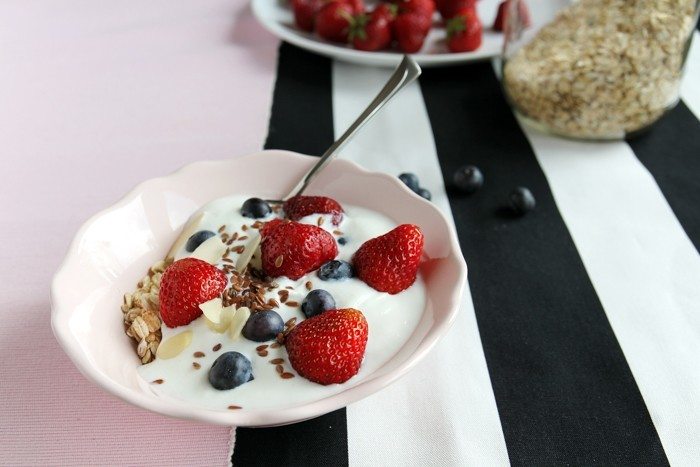
  • 1 small yogurt cup with half a cup of berries
  • 1 cup of applesauce within cinnamon
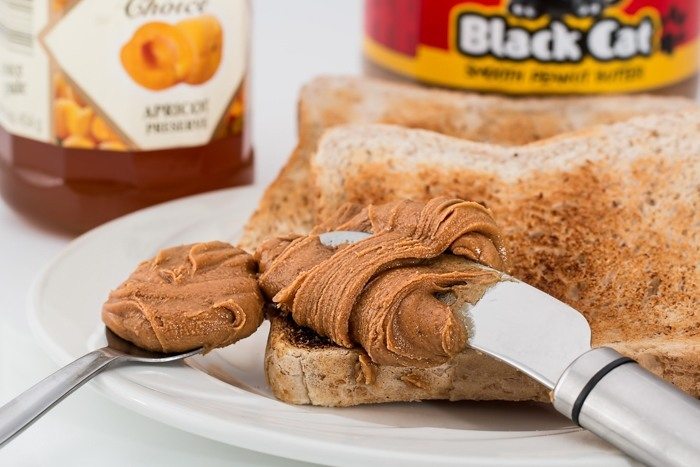
  • 1 piece of whole wheat toast with 1 tbsp of peanut butter (my personal favourite!)
sports_nutrition_2_of_6.jpg


Avoid eating foods really high in fat and fibre in your pre workout meals, as these two are slowly digested and can lead to an upset stomach during your workout.  Refined, high sugar foods will also lead to a quick high (lots of energy!), but unfortunately your energy levels can crash just as quickly as it rose.

Quick tip: Caffeine, depending on the person, can sometimes cause gas, bloating and loose stools. There’s a reason they call them the “runs”.  But seriously, the last thing you want is to run looking for a washroom in the middle of your long-distance run or hike.

VERY Slow, Long and Steady Cardio (Marathon)

If you’re running a marathon, or engaging in any physical activity that lasts several hours, it may be wise to eat during your exercise as well.  This is where we’ll be bringing simple carbs into the picture. Whether it’s running or walking, the general rule of thumb is to take a few minutes every hour to re-fuel on foods high in simple carbs, as this can maintain normal blood glucose levels, extend your endurance, increase your power output, and increase overall sports performance!  You should be eating approximately 30-60 grams of carbs per hour. Some examples here include :

  • 2-3 cups of your favourite sports drink
  • 1-2 portable carbohydrate gels
  • 5-6 dates
Hard, Short & Fast Cardio

For high-intensity cardio that lasts less than an hour like a spin class, zumba, or a short fast paced run, the focus is similar to low-intensity long-term cardio.  It is wise to load up on 100-200 calories of complex carbohydrates in your pre workout meals, and limit high fibre and fat foods. The same snacks listed for low intensity cardio can be used here!

sports_nutrition_5_of_6.jpg


Your body’s glycogen stores are not likely to run too low in this short amount of time.  Plus, I’m not sure about you guys but the thought of popping a handful of trail mix while jumping around in an aerobics class just doesn’t sound appetizing.

Strength Training

Many of the same eating guidelines apply for strength training as with cardio. Aim to have balanced pre workout meals 2-3 hours before hitting the weights. And remember, have a snack high in complex carbs 30-60 minutes before only if you’re feeling hungry or know you’ll be in that sweat sesh for an hour or more.

Post-Workout Meals

Lets start by looking at what the literature says about post workout meals. In a large meta-analysis study the authors found a decrease in gherelin (the hunger hormone) and an increase in three hormones that suppress hunger. They also found there is insufficient evidence to conclude what the effect of intensity has on these hunger hormones. Sound like the opposite of what you expected?  What I took from this study is the importance of mindful eating, especially post-exercise. Do you actually feel hungry, or do you feel like you want those 4 cookies because of the grueling Mount Everest cycle class you just endured?

There’s no problem in treating yourself to a delicious dessert once in a while, or even after your workout, just be knowledgeable of the fact that what you eat after a workout is just as important as what you eat before. Also, stop for a minute to think about how much you’re eating. We’ll talk about that next.

Post-Cardio

Eating after exercise is the perfect opportunity for you to restore your body’s depleted energy levels, repair your tired and sore muscles, and re-hydrate yourself after all that sweating. Carbohydrates are still important here in your post workout meals, but they no longer take precedence over protein, as they are both important.  Now, after a workout, it’s time to focus on simple carbohydrates high in naturally-occurring sugar, so it can be quickly absorbed into your bloodstream, and you can immediately start replenishing the glycogen stores in your body.  The goal is to be quick!

General Guidelines:

1)      Make sure you eat a small snack high in carbohydrates within 60 minutes after your activity.  More specifically, think about having about a 100-200 calorie snack within  the first 60 minutes following exercise.

Some great options include :

  • Chocolate milk is a favourite go-to post-workout snack for me. It contains simple carbs, a little protein, lots of fluid as well as sodium and potassium to balance those electrolyte levels out.
  • Fresh fruit, I find oranges can be very refreshing

You’ll notice I didn’t add serving sizes to these snacks. This is because depending how long your cardio sesh is, you could be burning between 300-1200 calories.  As you can imagine, that will change the size of your post-cardio snack significantly. For example, if you’re on the lower end of 30 minutes of cardio, aim for 1/4 cup of chocolate milk, or a small apple. If you’re on the high end, maybe a two-hour long run, you’re looking at 1 cup of chocolate milk or 1 large navel orange with a handful of grapes. This is when it becomes important to listen to your body’s hunger cues!

2)      Now, within 2 hours after your activity (so 1.5 hours after your previous snack), aim for post workout meals that are rich in complex carbs and protein to keep you full!  Your body is in full recharge & recovery mode during this 2-hour window, so we better take full advantage of it. Again, choose the quantity of these snacks based on your length of workout and hunger cues!

Some tasty options include :

  • Tuna sandwich on whole wheat bread
  • Greek yogurt with berries and granola
  • Egg scramble loaded with veggies and an whole wheat english muffin
  • Whole wheat pita with hummus
sports_nutrition_4_of_6.jpg
Post- Strength Training

Eating for recovery after strength training is similar to that of cardio, but with slight variations!

The purpose of strength training is to increase muscle mass, right?  Well, the increase of muscle isn’t due to the actual lifting, as that actually breaks down your muscle tissues – that’s why your body feels sore!  The actual bulking comes in after the weight-lifting sesh, when you replace the nutrients you’ve lost to maximize recovery.  That’s why you need to make sure nutrients are available for you muscle right away.

There is also a window of opportunity here. It’s best to eat protein in your post workout meals within 30 minutes to help maximize your protein synthesis. Carbohydrates (to replenish glycogen stores) and protein (to build muscle) are key components, yet again. Notice a trend?

Contrary to popular belief, stuffing yourself with seemingly endless amounts of protein will not result in increased muscle gain…your body only uses what it needs and disposes of the rest! When you digest protein, it is broken down in your stomach into amino acids. These amino acids can now enter your bloodstream or tissues in your gut to be absorbed. One article in the International Journal of Sport Nutrition and Exercise Metabolism found amino acids can be absorbed at a rate of 1.3-10g per hour. Since that’s a lot of variation, and what does that really mean anyway, we’re going to take a look at how much protein we need daily instead. Dietitian’s of Canada recommends 1.2-1.7g/kg of body weight per day for athletes (depending on the sport), which can be met through food alone. For a 70kg woman that equates to 84-119g of protein daily which is ideally spread throughout the day. I’ve seen people waste expensive protein powders because of this myth…only use what you need!

The Importance of Hydration

Did you know muscle is made up for 75% water?  It’s no secret that hydration massively contributes to good performance on the track or in the gym.  As you exercise, your body produces sweat in order to cool itself down, resulting in a loss of bodily fluids.  A general recommendation is 8-10 cups of non-caffeinated water a day, although more for those who are physically active.

Aim to have around 1-2 cups of fluid for every hour of exercise.  This can be plain water, juice, or a sports drink – which can be especially helpful during endurance exercise as it has both carbs for fuel and electrolytes, which helps your body “hold on” to fluid. Use caution though, one cup of juice or sports drink can have 100-150 calories and as much sugar as a can of pop. For the majority of people exercising less than an hour, water is the best choice.

If you lose any weight immediately after exercise, it’s actually water loss from your body – so drink 3 cups of liquid for every pound lost.  Trust me, you don’t want to suffer from dehydration.  It not only affects your athletic performance, but your daily life as well.

Generalized Take-Home Message

Pre Workout Meals

  • Enjoy a balanced meal 2-3 hours pre-workout
  • Have a snack with complex carbohydrates 30-60 minutes before exercise only if you’re hungry or if your workout lasts more than an hour
  • Stay hydrated.

Post Workout Meals

  • Stock up on complex, high glucose carbohydrates immediately
  • Within 2 hours of activity, include complex carbohydrates and protein to enhance glycogen replacement, and help build and repair your tired muscles.
  • Again, stay hydrated!

Follow these guidelines like I do, and I guarantee you’ll be well on your way to having an amazing, butt-kicking workout while feeling great afterwards. Happy exercising!

Sports_Nutrition1.png

Contribution by AK Nutrition Student Trista Chan, AK Dietetic Intern Tiffany Schebesch and consulting with Ben Sit, RD

References:

http://www.dietitians.ca/Your-Health/Nutrition-A-Z/Sports-Nutrition-(Adult).aspx

http://www.heidismithnutrition.com/Home10.html and her sports nutrition book, Nutrition for the Long Run

http://www.eatrightontario.ca/en/Articles/Physical-Activity/Sports-nutrition–Facts-on-carbohydrate,-fat-and-p.aspx#.VgnaLXg-Dq0

https://mysportsdconnect.com/sports-nutrition-podcast/part-2-recovering-faster-with-nutrition-post-workout-nutrition/

https://www.sportsdietitians.com.au/factsheets/fuelling-recovery/eating-drinking-sport/

http://www.pennutrition.com/KnowledgePathway.aspx?kpid=8180&trid=8176&trcatid=43

http://www.todaysdietitian.com/newarchives/110413p18.shtml

Abbey Sharp

Abbey Sharp is a Registered Dietitian (RD), regulated by the Ontario College of Dietitians. She is a mom, YouTuber, Blogger, award winning cookbook author, media coach specializing in food and nutrition influencers, and a frequent contributor to national publications like Healthline and on national broadcast TV shows.
www.abbeyskitchen.com/about-abbey/

Last Updated November 18, 2015. Published November 18, 2015 By Abbey Sharp 1 Comment

Ginger, Cranberry & Pistachio Dark Chocolate Bark – Holiday Edible Gifts

DISCLAIMER: This post was developed in sponsored partnership with COOKINA, however, as always, all opinions are genuine.

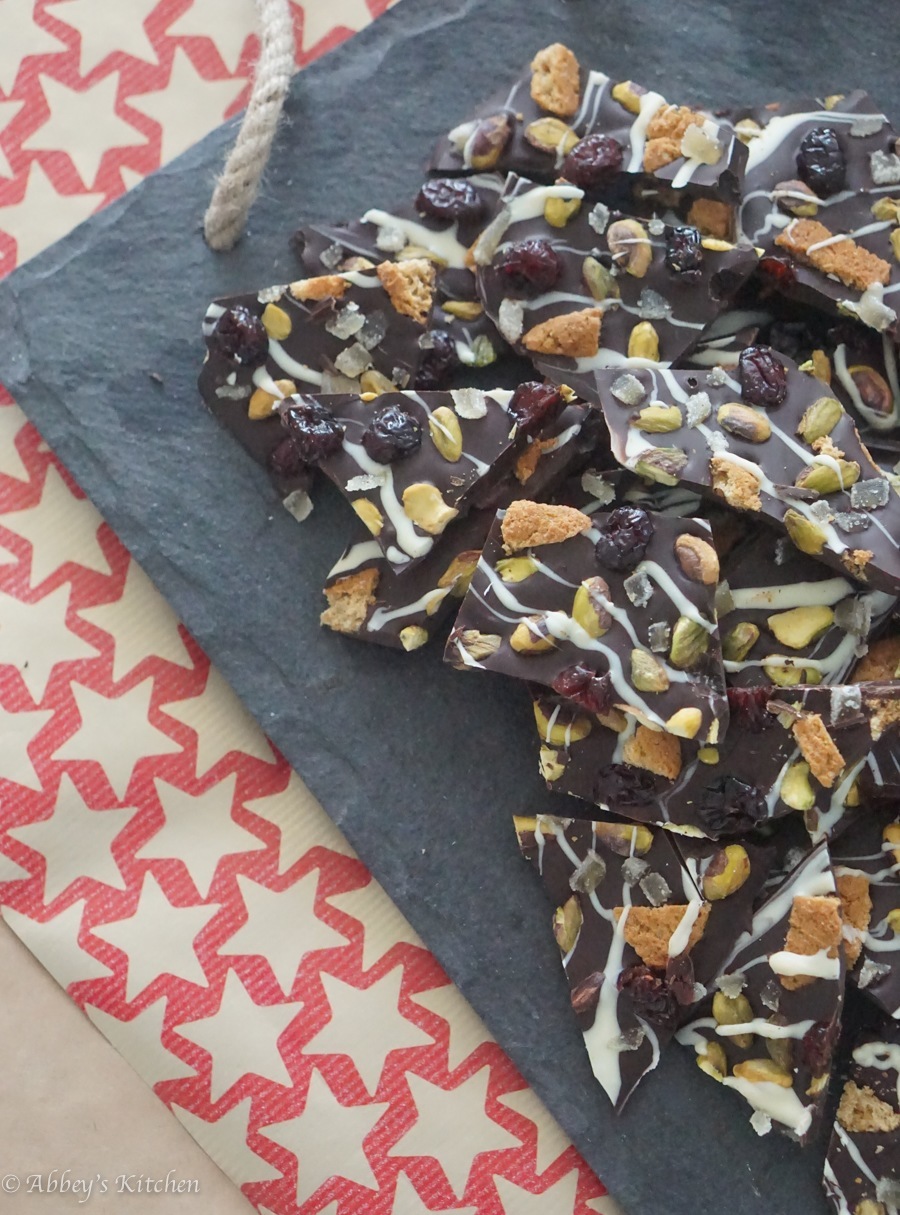
This Ginger, Cranberry & Pistachio Dark Chocolate Bark recipe could not be simpler and is also very adaptable depending on your friends’ palates or what you have on hand.

With the holidays almost a month away (ah! Where did our spring/summer/fall go?!), we can all identify with the mountainous pressure of annual gift giving. From shopping for your kids, spouse, neighbours, parents, and that kid who shoveled your driveway (G-d bless him), you’ve definitely got a lot of gifts to buy. This is where my idea for making chocolate bark came from.
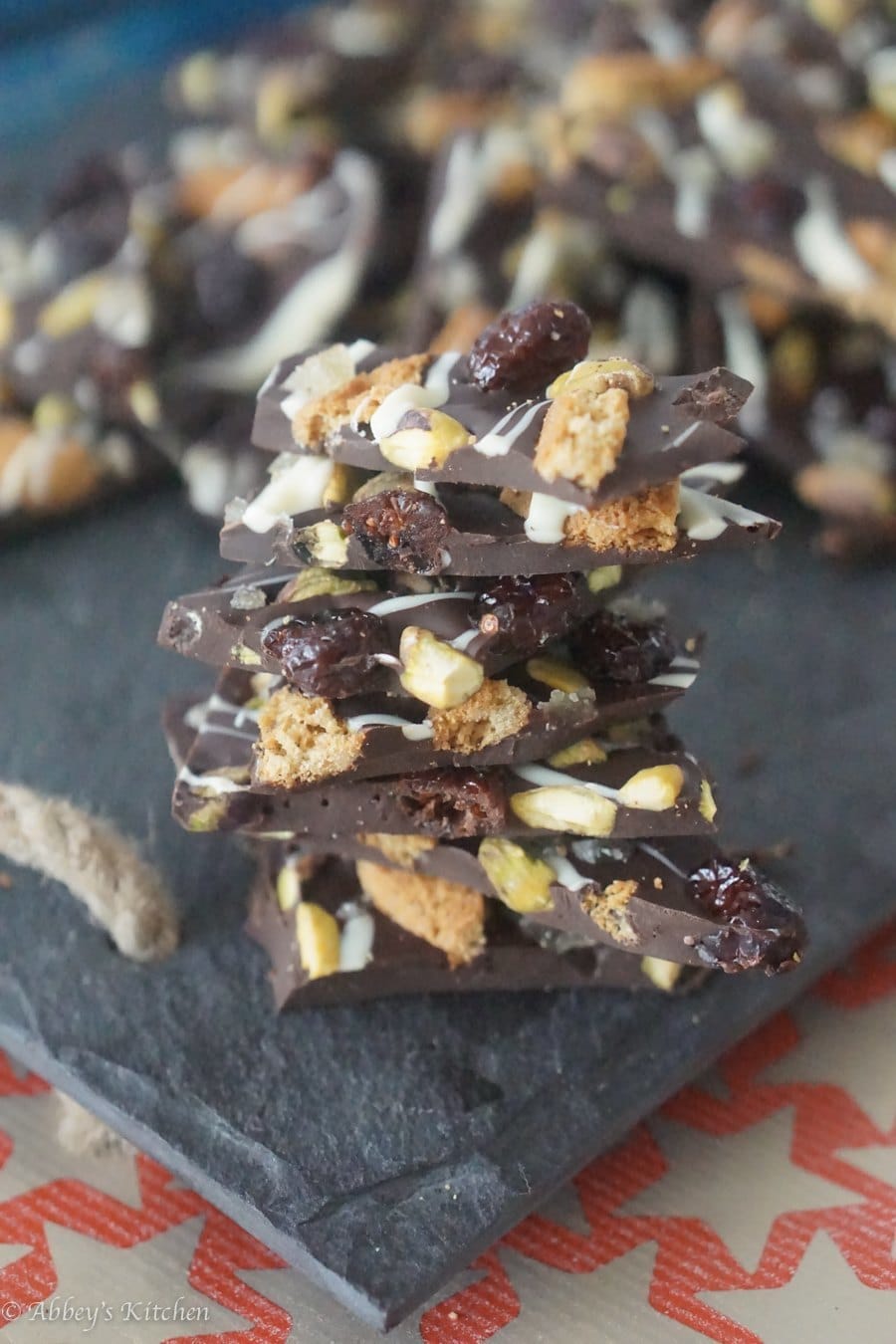
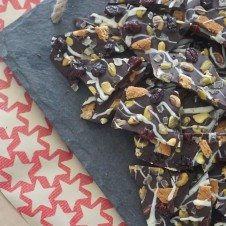
A serving of chocolate bark with cranberries and pistachios.

I love gift giving. But I also love eating and paying for rent and buying new boots when last year’s pair grow holes, and when you live in a city like Toronto, that all costs a lot of dough.

A stack of chocolate bark.

The great news is that gift giving doesn’t have to be expensive and in a world of token ties and mediocre bottles of wine, everyone loves an edible homemade gift. Homemade gifts mean that you not only put thought into what to give your loved one, but you actually put a lot of effort in as well. Plus, edible gifts like this chocolate bark insinuate that eating is involved, and I’m always down to eat.

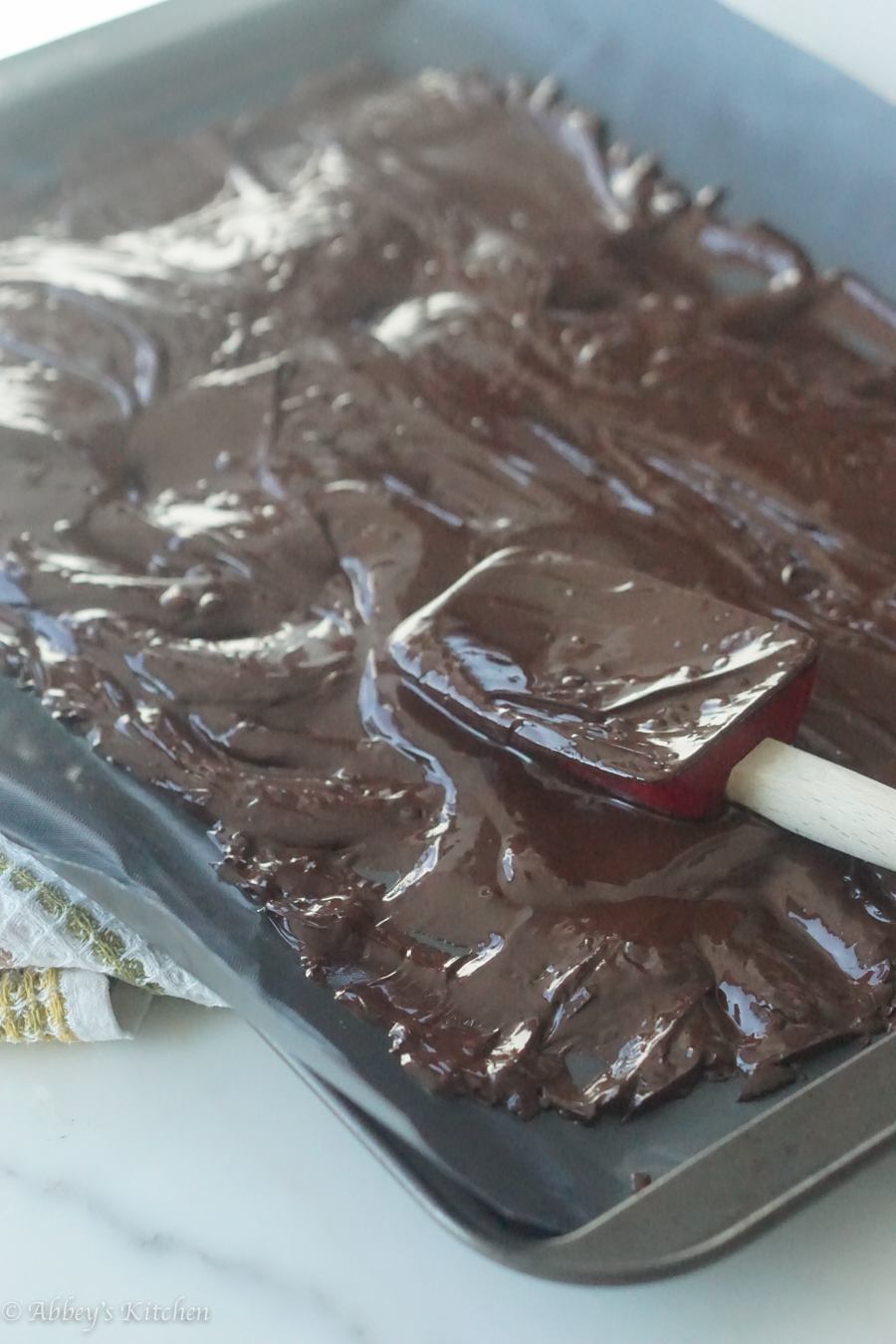
Chocolate being spread with a spatula.

How to Make Dark Chocolate Bark

This Ginger, Cranberry & Pistachio Dark Chocolate Bark recipe could not be simpler and is also very adaptable depending on your friends’ palates or what you have on hand.

To make a chocolate bark, all you need to do is finely chop up a bunch of good quality chocolate bars (I use a 70% dark chocolate for the added antioxidants and reduced sugar), melt it down in a low heat oven and top it with lots of sweet goodies. Let it set in the fridge or freezer (if you’re impatient) until solid and then break up into little pieces!

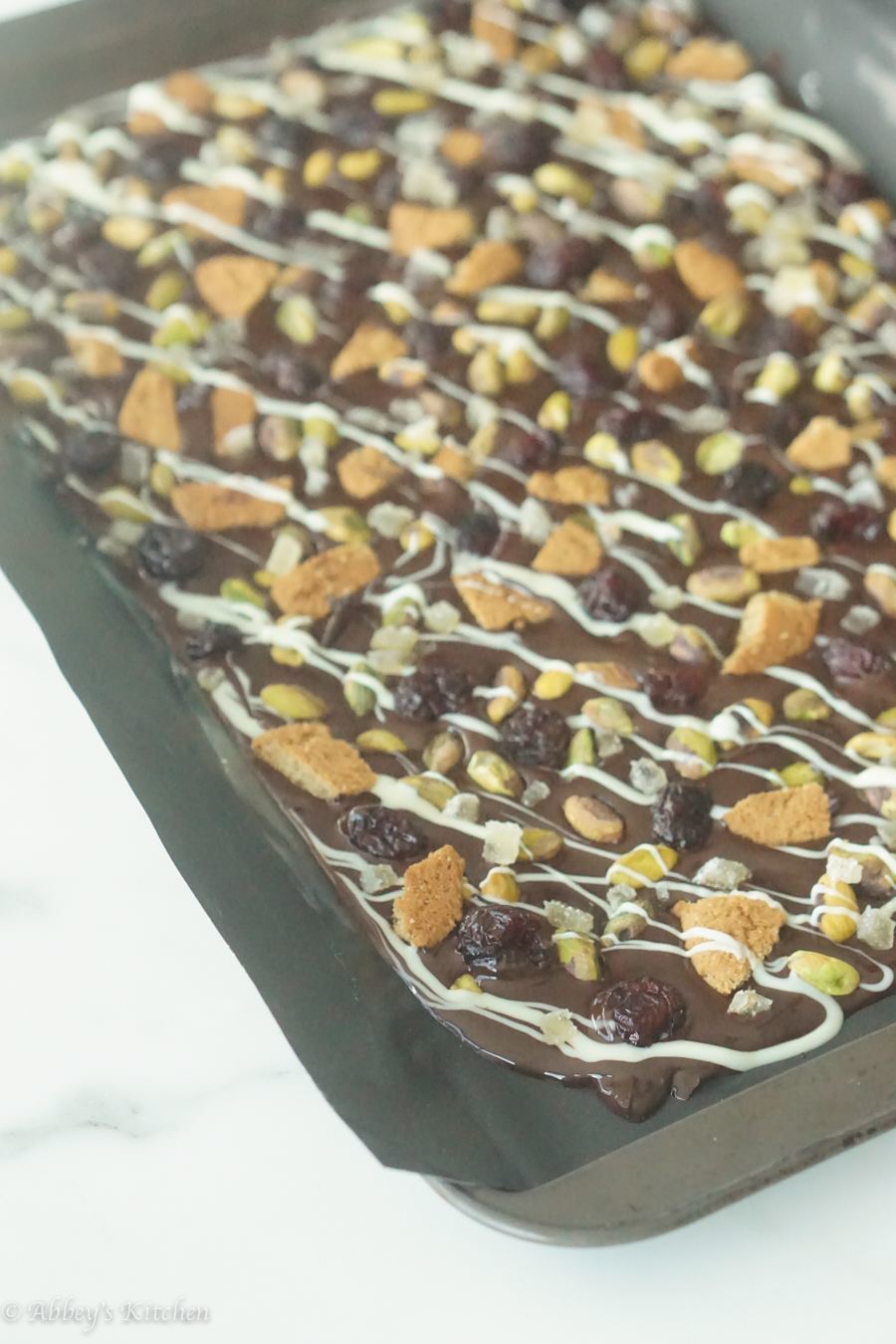
A sheet of chocolate bark before it sets.

I used a combination of candied ginger, cranberries, pistachios and ginger snaps in my chocolate bark to keep in line with the holiday season, but feel free to use whatever combination of dried fruit, nuts, seeds, candies or cookies you have on hand!

Dark chocolate bark recipe.png

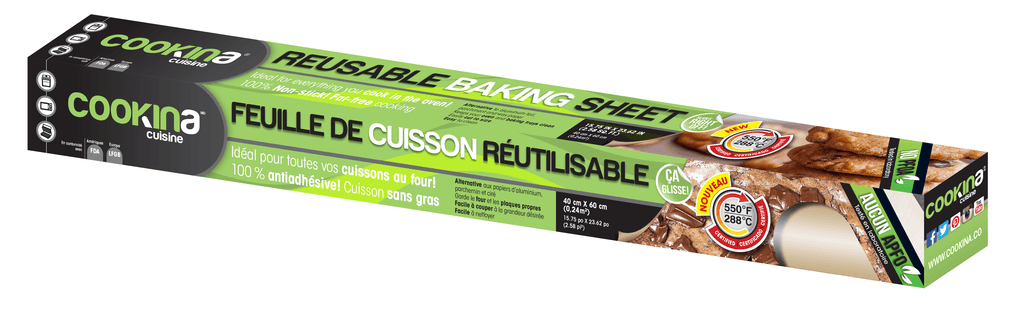
As you can image, this chocolate bark recipe has the potential to be very…very messy and a pain to pry off an old baking sheet. So this tip is important-  do not attempt this recipe without a nonstick mat. I use COOKINA Cuisine Reusable Baking Sheets. They’re made with a durable PFOA-free material called PTFE that is actually used in medical procedures by surgeons inside the body so you know it’s safe to be cooking with. I use them for all of my holiday baking because they’re completely nonstick, reversible, and customizable to whatever size baking sheet or dish you have. For example, I have a bunch of slightly different baking sheet sizes, so I just cut the 150 cm roll to fit each one.

Dark chocolate bark recipe.jpg

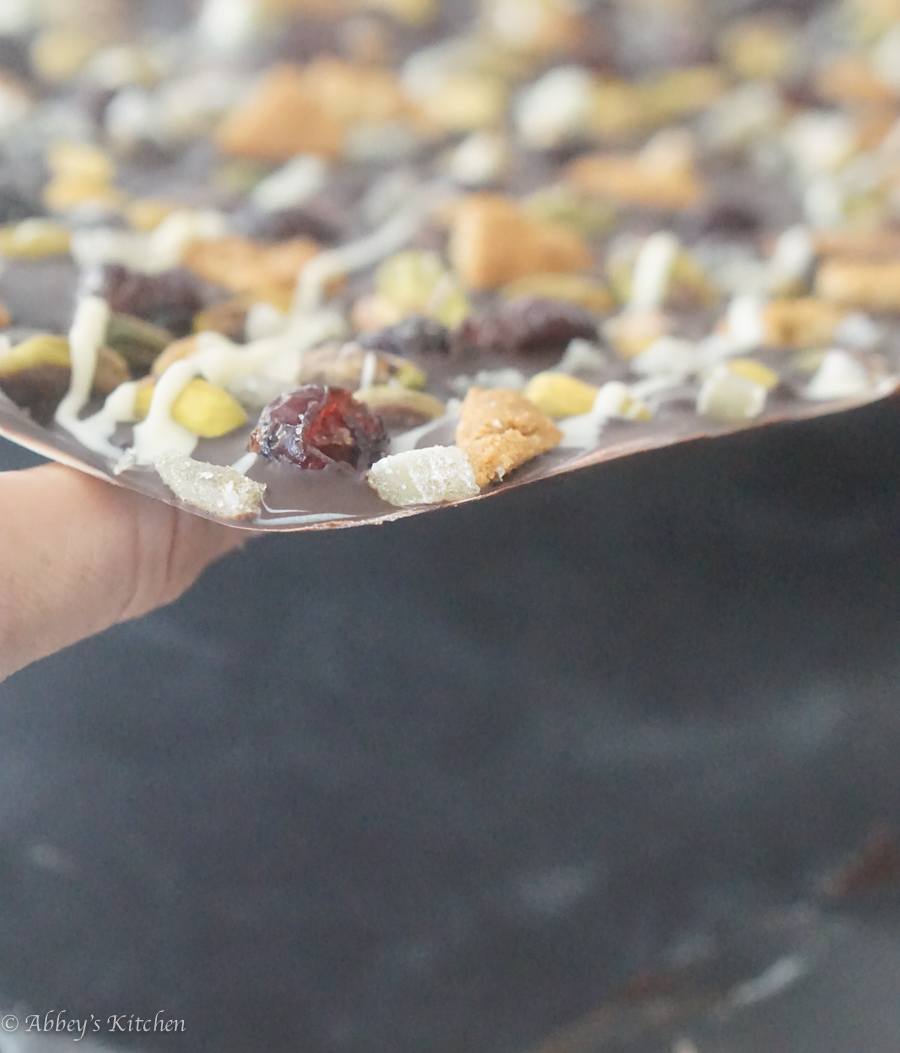
You then can just lift the COOKINA off of the baking sheet, and easily peel it away from the chocolate bark. No need to get out the old ice pick or ruin your pans with a knife- this really could not be simpler.

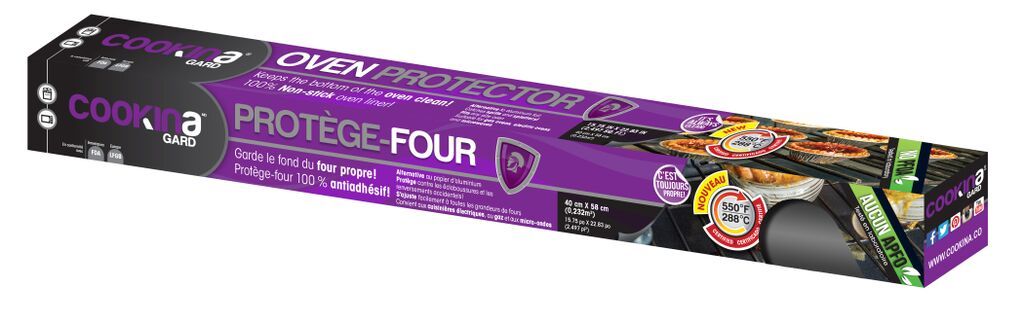
I also recommend using a COOKINA GARD Oven Protector on the bottom of your oven to protect it from any little spills of liquid chocolate. Trust me, no one wants to have to crawl in there to scrub stuck on candy. Like the baking sheet, it’s also nonstick and customizable so it will fit any oven.

A close up showing how thin chocolate bark is.

The bark slides right off!

Since so many of our friends and family will likely be baking and cooking this season (turkey grease is notorious for causing messes), these COOKINA products would make beautiful stocking stuffers alongside your homemade chocolate bark.

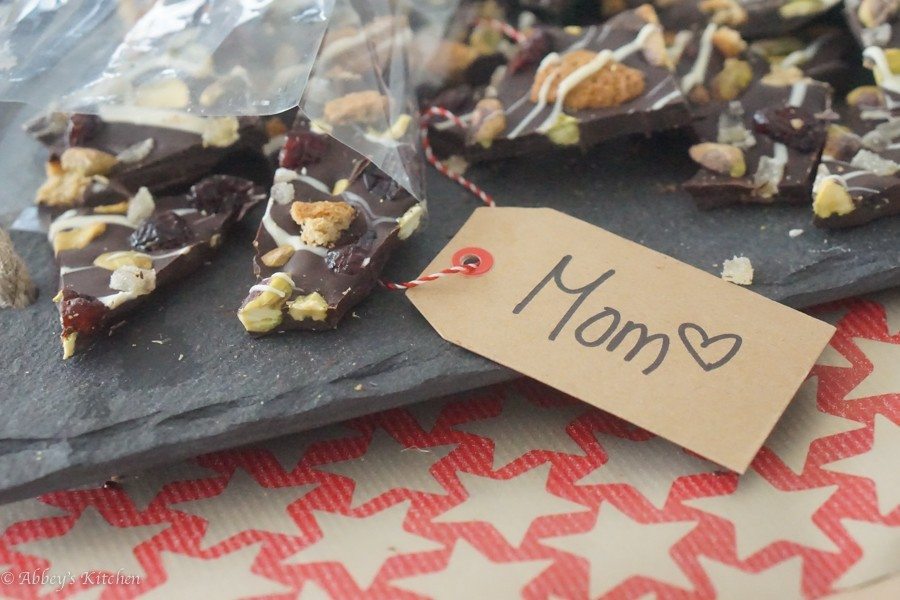
A bag of chocolate bark with a tag reading \"Mom.\"

What flavour combo would you use on your chocolate bark? What’s your favourite edible treat to get or receive? Leave me a message below or tweet to me using the hashtag #COOKINAHoliday and I will try to lighten up your version!

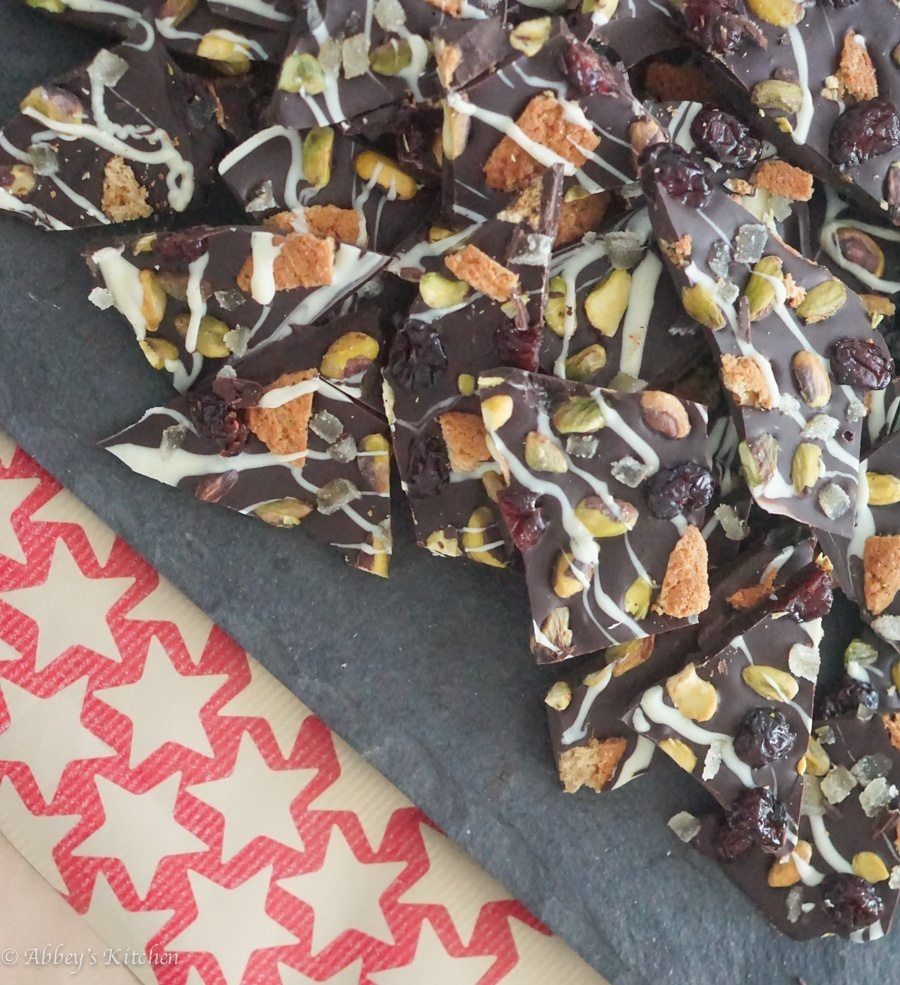
A serving of dark chocolate bark.
A serving of chocolate bark with cranberries and pistachios.
Print Recipe
5 from 1 vote

Ginger, Cranberry & Pistachio Dark Chocolate Bark

This Ginger, Cranberry & Pistachio Dark Chocolate Bark recipe could not be simpler and is also very adaptable depending on your friends’ palates or what you have on hand.
Prep Time15 minutes mins
Cook Time5 minutes mins
Total Time20 minutes mins
Course: Dessert
Cuisine: American
Servings: 30 pieces of bark
Calories: 280kcal
Author: Abbey Sharp

Ingredients

  • 500 g 70-85% dark chocolate finely chopped
  • 100 g white chocolate finely chopped
  • 6 ginger snap cookies broken into small pieces
  • 1/3 cup naturally sweetened cranberries
  • 1/4 cup pistachios
  • 3 pieces candied ginger finely minced

Instructions

  • Preheat oven to 250 F.
  • Cut a COOKINA Cuisine Reusable Baking Sheet to slightly hang over the sides of your baking pan.
  • Cut a COOKINA GARD Oven Protector to fit the bottom of your oven to protect it from spills.
  • Place the chopped dark chocolate on the COOKINA Cuisine Reusable Baking Sheet on the baking pan and put in the oven. Put the white chocolate in an oven safe dish and add to the oven. Allow the chocolate to melt slowly, checking every minute to make sure it doesn’t over cook and stirring it gently throughout. This should take no more than 3-4 minutes.
  • Once melted, smooth out the dark chocolate to evenly coat the COOKINA Cuisine Reusable Baking Sheet, then use a fork to drizzle the white chocolate over the dark chocolate.
  • Sprinkle the cookies, cranberries, pistachios and candied ginger around the chocolate until adequately covered. You can gently press down on some of the nuts and cookies to make sure they sink down to the bottom a bit.
  • Transfer to the fridge for an hour, or the freezer for about 15 minutes, or until the chocolate if fully set and cold.
  • When set, peel the chocolate off of the COOKINA Cuisine Reusable Baking Sheet, break into pieces and transfer to gift bags or boxes. Enjoy!

Nutrition

Calories: 280kcal

Disclaimer: This recipe was developed in paid partnership with COOKINA, however, as always, all opinions are genuine.

Abbey Sharp

Abbey Sharp is a Registered Dietitian (RD), regulated by the Ontario College of Dietitians. She is a mom, YouTuber, Blogger, award winning cookbook author, media coach specializing in food and nutrition influencers, and a frequent contributor to national publications like Healthline and on national broadcast TV shows.
www.abbeyskitchen.com/about-abbey/

Last Updated October 4, 2021. Published November 12, 2015 By Abbey Sharp 2 Comments

Why Fat Shaming Doesn’t Cause Weight Loss or Promote Health

A cartoon of a woman beside a sign "Please Do Not Feed."

Fat shaming – ugh.

Before this past labour day long weekend, a lot of you had perhaps never even heard of this phenomenon, but YouTuber and self-professed “comedian” Nicole Arbor changed all that in her wildly offensive viral video.

While watching Nicole’s cruel, unapologetic, poorly written monologue really was a pretty sad waste of anyone’s time, it at least sparked a much-needed discussion about something that we tend to try to ignore – our active and passive role in fat shaming. Thanks, Nicole!

What is fat shaming?

In its simplest form, fat shaming is defined as criticizing someone or oneself about their weight or eating habits. It’s a form of prejudice against a body type seen as “different” than a socially desired shape but can differ from other types of prejudice like homophobia, sexism or ableism because perpetrators often justify their criticism as “helpful”. Long story short- the research could not disagree more.

A person showing weight loss by wearing oversized bottoms.

Why does fat shaming not work?

Fat shaming folks often preach their actions as honourable because they believe (or at least they claim to believe) that shaming fat people will encourage them to “get healthy”. Let’s look at a few reasons why this doesn’t add up.

1. Obesity isn’t only just caused by overeating or behaviours

You’ve heard that weight gain is a basic equation of less energy in and more energy out, but it’s maybe not always that simple.

First, our genetics plays a role in our body type and our likelihood of weight gain. You probably all have at least one friend who can eat almost anything and stay slim, and at the same time, another friend who meticulously restrict their intake and continue to gain weight. Genes contribute to our weight in many ways- by affecting appetite, satiety, metabolism, food cravings, body-fat distribution, and stress eating.The strength of the genetic influence on weight varies from 25% to as high as 80%, so regardless of the time spent in the gym or the number of calories cut, some people just won’t lose weight. Translation? You cannot assume obesity or body shape is in any way related to “laziness”, lifestyle or unhealthy behaviours.

Second, our environment isn’t always conducive to good health. Many North Americans live with low socioeconomic status and in regions without easy access to fresh, local and nutrient dense foods. Those living without a full grocery store in walking distance usually have to rely on fast food joints and corner stores where processed, high sugar, high fat items are more available than low calorie fresh produce and lean meats. We’re also seeing a lack of neighborhood sidewalks, safe recreation areas, parks and affordable gyms, which reduce the activity levels in many communities.

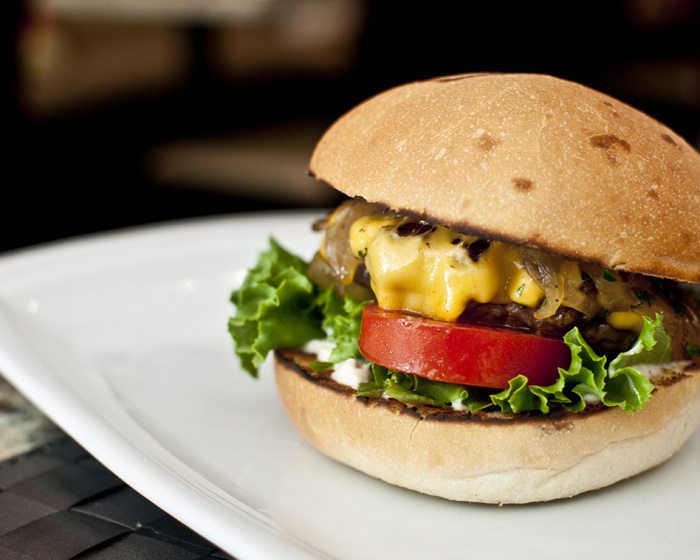
A truffle burger.

Third, diseases that cause an imbalance in the endocrine glands often can have significant influences on body weight. Conditions like hypothyroidism (underactive thyroid), polycystic ovarian syndrome, and certain unusual tumors of the pituitary gland, adrenal glands, or the pancreas can all predispose individuals to uncontrollable weight gain.

2. You can’t tell a person’s health, physical or otherwise, just by looking at them

Contrary to popular belief, someone who physically looks obese or overweight can be perfectly healthy. Even more shocking for some is the fact that someone with a healthy BMI can be in a worse health state than their overweight or obese counterpart. Metabolic syndrome is a form of insulin resistance, which can be caused by obesity, but can also be linked to genetics, aging, ethnicity, and physical inactivity regardless of body weight, as well as those who engage in yo-yo diets and weight loss.  In other words, your weight doesn’t determine your health outcomes, and you can have health problems regardless of your weight. Studies have actually shown that mortality rates are significantly higher in metabolically obese normal weight individuals than in healthy obese subjects.

To tackle the assumption that leaner individuals are much healthier than overweight or obese people, the HAES movement helps explain these myths. HAES, the acronym for Health at Every Size, acknowledges that the number on the scale does not determine one’s health status or well-being. Statements claiming that overweight people have shorter lifespans, are automatically at extreme health risk regardless of their behaviours, and that weight, not health, should be the ultimate goal are all well challenged by critical HAES research. That deserves it’s own post, but you can definitely check out Linda Bacon’s HAES Manifesto here.

3. Fat shaming may actually cause weight gain

Some believe that fat shaming overweight people about their eating habits or body may actually help motivate them to change their behaviours. However, psychologists have done a lot of research on this topic, and the evidence is clear – fat shaming does NOT motivate people, it only makes them feel terrible about themselves. Not surprisingly, the persistent shame can actually lead to additional guilt and stress-related eating, embarrassment at the gym, and consequently, further weight gain.

Two 2kg hand weights with a scale in the background.

4. The harms of fat shaming can go beyond physical trauma

Victims of fat shaming aren’t only experiencing physical trauma, but they’re also hurt psychologically, too. People who are discriminated against for their weight are at a higher risk for reduced self-esteem, depression, and eating disorders, like binge eating – which research suggests has severe health consequences just like obesity. In summary, with implications for stress levels, anxiety, increased cortisol levels and mental health problems, weight discrimination may actually raise the risk of a range of chronic diseases.

A cartoon of a woman beside a sign \"Please Do Not Feed.\"

The Bottom Line on Fat Shaming

The self-perpetuating problem here is that the fat shaming stigma is doing more harm than good. Criticism and guilt do not motivate people to make healthier choices, and instead, pose serious threats to physical and mental health. The opposite approach, acceptance, is significantly more effective. Let’s tackle the bigger issue here- rather than fat shaming by lecturing and bullying individuals about weight loss, let’s start emphasizing a more efficient approach to achieve health at every size. We all can have an active role to play in promoting the optimal health of our fellow men and women- preventing discrimination is a big part of that role.

Research support from AK Nutrition Student: Martina Luketich

Abbey Sharp

Abbey Sharp is a Registered Dietitian (RD), regulated by the Ontario College of Dietitians. She is a mom, YouTuber, Blogger, award winning cookbook author, media coach specializing in food and nutrition influencers, and a frequent contributor to national publications like Healthline and on national broadcast TV shows.
www.abbeyskitchen.com/about-abbey/

Last Updated October 4, 2021. Published November 11, 2015 By Abbey Sharp 12 Comments

Healthy Chicken Cassoulet – Low Fat, High Fibre, High Protein

cassoulet, chicken cassoulet, healthy cassoulet, high fibre cassoulet

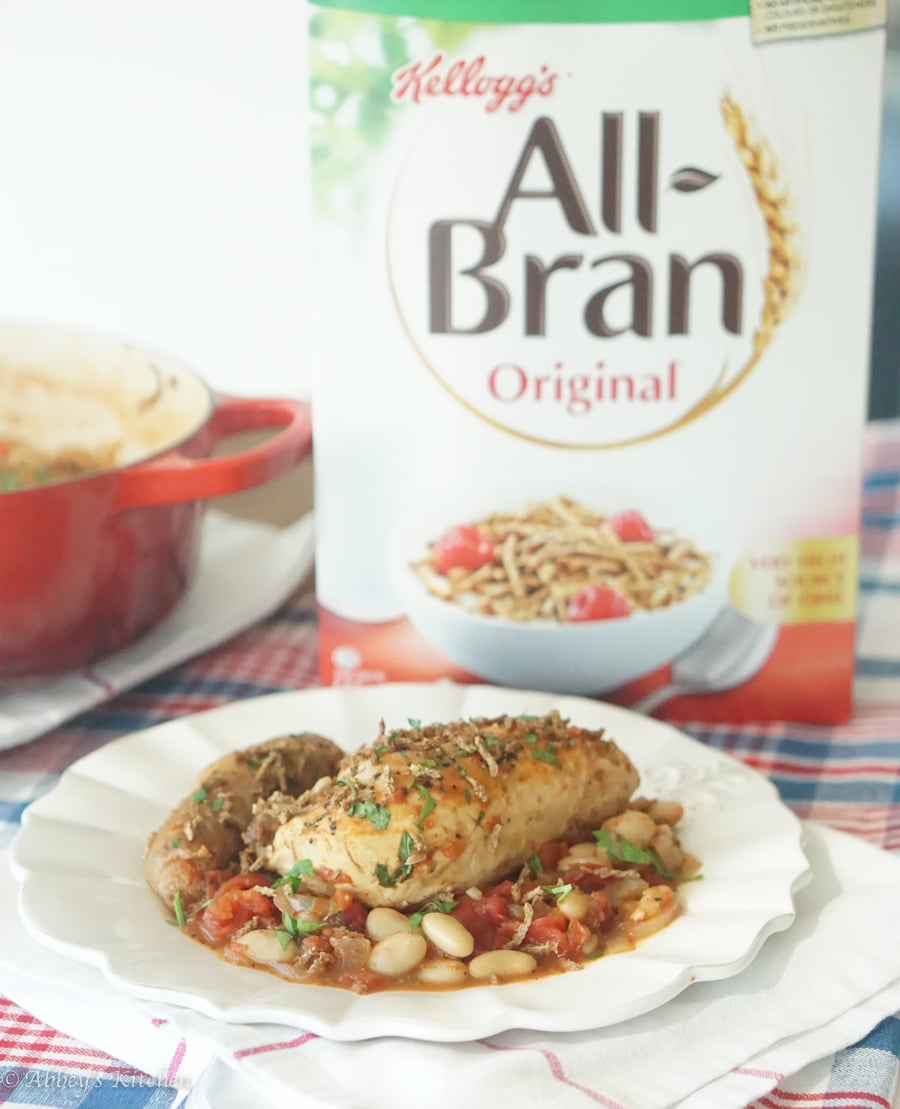
DISCLAIMER: This post was developed in sponsored partnership with All-Bran, however, as always, all opinions are genuine.

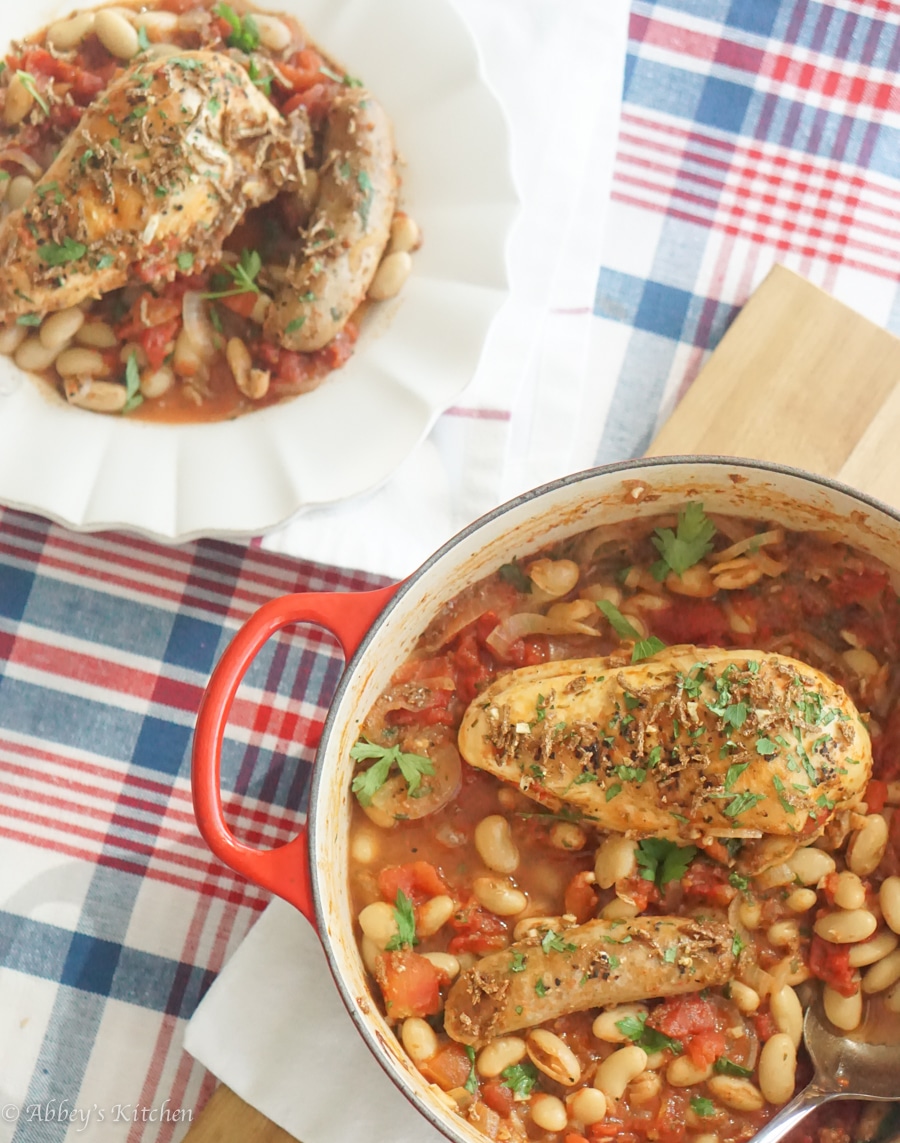
It’s officially Autumn, and Winter is well on its way, which means cozy sweaters, hot cocoa and lots of comfort food like one of my go-to meals- Chicken Cassoulet.
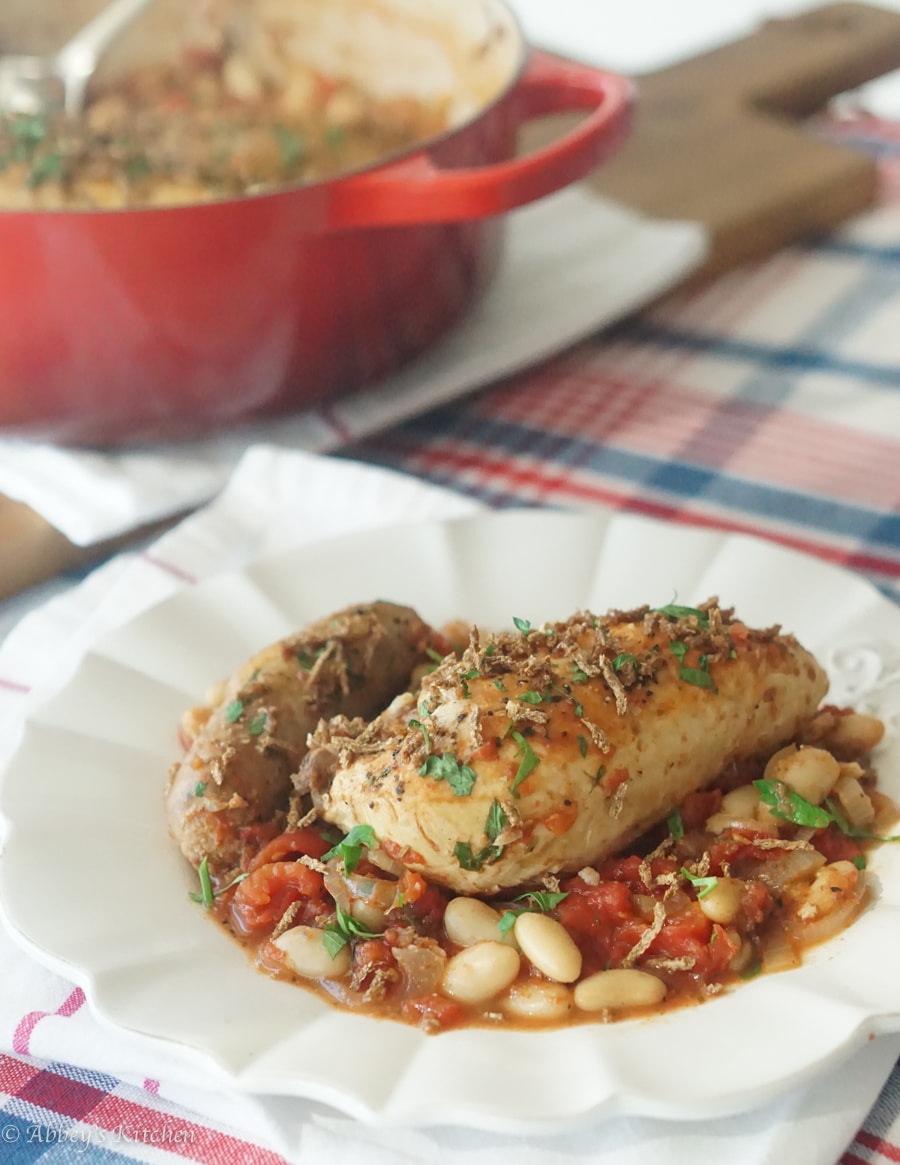
cassoulet_healthy_11_of_13.jpg

But just because we’re craving that cold-weather fare and covering up in chunky layers doesn’t mean we need to put the breaks on our fresh and light Summer eating habits. In fact, Autumn can be an ideal time to get ourselves into a healthy routine because the recipes are so rewarding, you’re going to want to stay in and cook!

cassoulet_healthy_6_of_13.jpg

Dreaming of French Chicken Cassoulet … In Canada

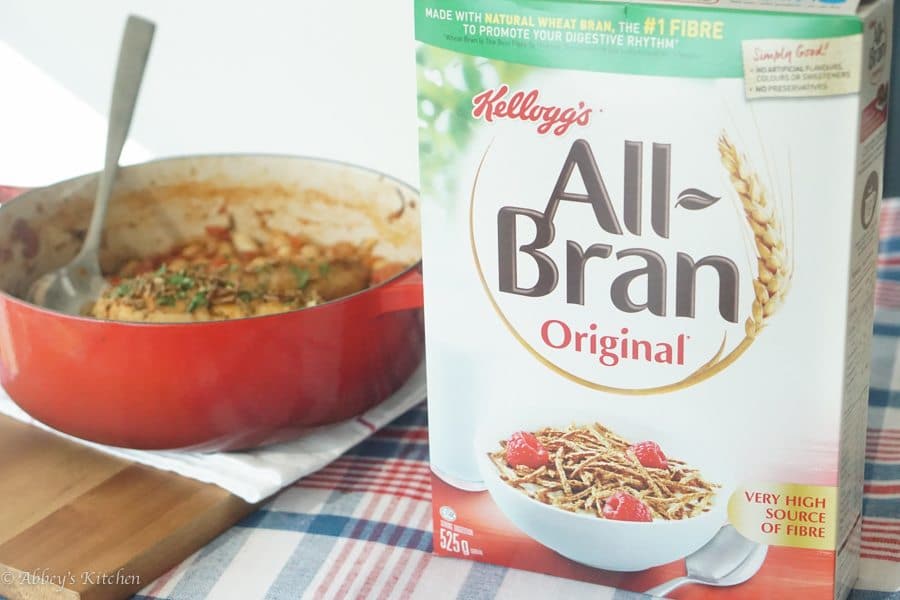
This cozy chicken cassoulet takes the French classic one-pot-wonder and boosts it’s nutritional value by using lean chicken breasts and turkey sausages, and topping it off with some high fibre All-Bran cereal.

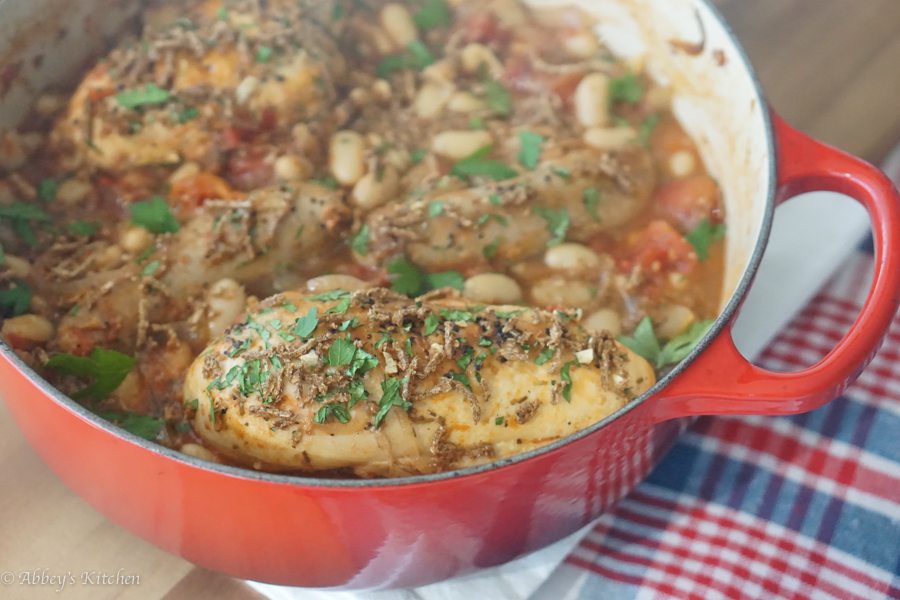
cassoulet_healthy_1_of_13.jpg

Seriously, a half cup of this stuff gives you 10 grams of fibre and 4 grams of protein in just 80 calories- a huge improvement from the nutrient-poor white bread crumbs. Serve this chicken cassoulet with some steamed green beans and a little slice of crusty whole grain bread, and you have a comforting meal worth staying in for.

cassoulet_healthy_12_of_13.jpg

As part of the Kellogg’s All-Bran Incorporation Program, I am also so excited to be giving away an All-Bran Prize Pack including a chance to attend the Cook for the Cure Celebrity Chef School on November 14th!

cassoulet_healthy_13_of_13.jpg

To enter you must create or re-create a recipe using All-Bran cereal and reference Kellogg’s All-bran Incorporation Program.  Then post the recipe on social media linking back to my blog post and using the hashtag #AllBran. In addition to this chicken cassoulet, you should also check out my other All-Bran recipes including my Holiday Cocktail Meatballs and my Healthy Pumpkin Apple Crisp!

cassoulet_healthy_10_of_13.jpg

More of a visual person? Check out the full chicken cassoulet recipe in this easy how-to video here!

cassoulet, chicken cassoulet, healthy cassoulet, high fibre cassoulet
Print Recipe
3.84 from 6 votes

Healthy Chicken Cassoulet

It’s officially Autumn, and Winter is well on its way, which means cozy sweaters, hot cocoa and lots of comfort food like one of my go-to meals- Chicken Cassoulet .
Prep Time15 minutes mins
Cook Time50 minutes mins
Total Time1 hour hr 5 minutes mins
Course: Dinner
Cuisine: French
Servings: 4 people
Calories: 420kcal
Author: Abbey Sharp

Ingredients

All-Bran Topping

  • 1 tsp extra virgin olive oil
  • 6 tbsp All-Bran Original Cereal
  • 1 clove garlic finely minced
  • 2 tbsp parsley finely chopped
  • Pinch each of salt and pepper

Casserole

  • 1 tsp extra virgin olive oil
  • 2 skinless boneless chicken breasts cut in half
  • Pinch each of salt and pepper
  • 2 low fat turkey sausages cut in half
  • 1 1/2 cups of thinly sliced onions
  • 2 cloves garlic minced
  • 3/4 tsp dried herbs de Provence
  • 1 bay leaf
  • 3 leaves thyme
  • 14 1/2 oz can of diced tomatoes in juice
  • Pinch salt and pepper pinch of each
  • 19 oz can of white beans (Cannellini, Navy or Great Northern), drained and rinsed

Instructions

  • Preheat oven to 375 F.
  • Heat a teaspoon of olive oil in a Dutch oven over medium heat. Add in the All-Bran cereal, and garlic, and a pinch each of salt and pepper. Stir until combined and crumbly, mix with the parsley and then set aside.
  • Season the chicken with a pinch each of salt and pepper.
  • When the pan is hot, add the chicken breasts and sear on all sides until golden brown, about 4 minutes per side. Remove from the pot, and set aside.
  • In the same pot, add in the sausages, and sear on each side until golden brown. Remove from pot, and set aside.
  • Return the pot to the low heat, and add in the onions. Cook for 7-8 minutes, until softened. Add in the garlic and cook for another 30 seconds. Add in the herbs, bay leaf, thyme, tomatoes with their juice, and season with a pinch each of salt and pepper.
  • Bring the mixture to a boil. Reduce the heat to medium low and simmer for 8 minutes.
  • Add in chicken breasts, sausages and beans and transfer to the oven with the lid on for 10 minutes.
  • After 10 minutes, remove the lid and finish cooking until the sausages and the breasts reach an internal temperature of at least 165 F.
  • Remove from the oven and top with the All-Bran crumble. Serve immediately.

Nutrition

Calories: 420kcal

Disclaimer: This recipe was developed in paid partnership with All-Bran, however opinions are genuine.

Abbey Sharp

Abbey Sharp is a Registered Dietitian (RD), regulated by the Ontario College of Dietitians. She is a mom, YouTuber, Blogger, award winning cookbook author, media coach specializing in food and nutrition influencers, and a frequent contributor to national publications like Healthline and on national broadcast TV shows.
www.abbeyskitchen.com/about-abbey/

Last Updated May 12, 2022. Published November 2, 2015 By Abbey Sharp 9 Comments

GMO Part 1: An Introduction to Genetically Modified Organisms (GMOs)

A close up of a field of corn.
Us RDs and #RD2BEs here at Abbey’s Kitchen love to stay on top of the most interesting and controversial topics in the world of nutrition. Welcome to Part 1 (stay tuned for Part 2) of the Abbey’s Kitchen GMO conversation!
 
An Overview of the GMO

What are GMOs you ask? Genetically modified organisms (GMOs) are plants, animals or microorganisms (excluding humans of course) that have had their genes altered, using biotechnology, to express desired traits that don’t otherwise occur naturally (biotechnology is pretty technical stuff, so don’t worry, you don’t need to know the in’s and out’s of biotechnology to understand GMOs).

A close up of a field of corn.

Here is a bit of a background on how a GMO is created. Genetic modification (the process that creates GMOs) usually involves the following steps:

•Step 1: Isolating and/or removing a single gene from one organism,

•Step 2: Manipulating it outside of the cell (in a laboratory for example) &

•Step 3: Reinserting it into the same organism or into the genetic material of another organism.

A photo of a DNA sequence.

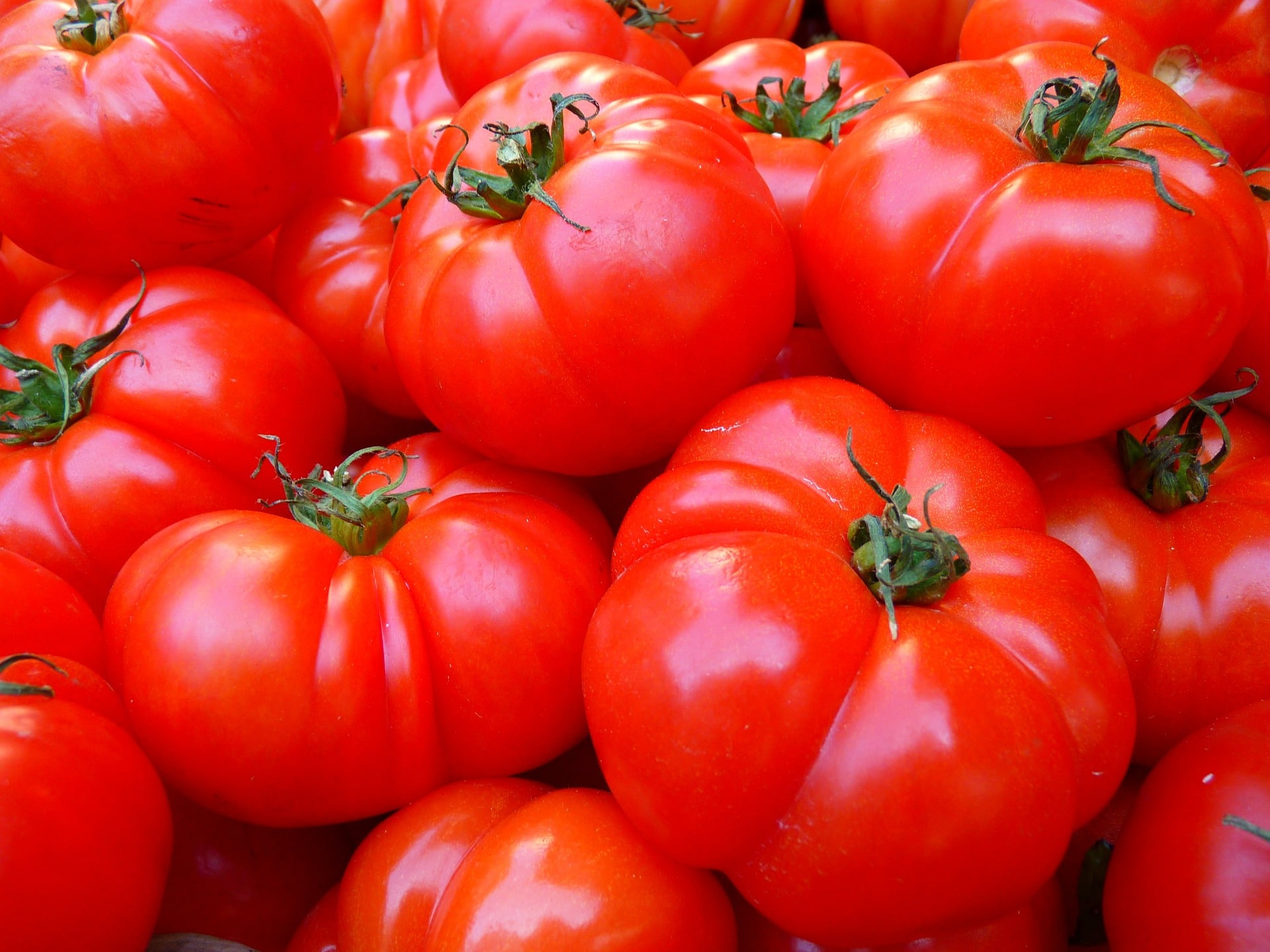
When did GMOs first start appearing in the food supply? Good question! The ‘Flavr Savr’ tomato was the first commercialized GMO to appear on store shelves over a decade ago (this GMO was approved by the FDA in 1994).  ‘Flavr Savr’ tomatoes were engineered to have a longer shelf life than conventional tomatoes (unfortunately these GMO ‘Flavr Savr’ tomatos failed to meet market expectations- not to mention they tasted pretty bland, so they were pulled from the market in 1998).  Today, more than 40 types of plants have been genetically modified worldwide.

A close up of a pile of tomatoes.

Fast-forward ten years and the GMO scene in Canada has boomed (GMOs are popping up here, there and everywhere)! The four most common GMO crops in Canada are: corn, canola, soybean and sugar beet. Because these four GMOs are so popular, we can pretty much bet that GMOs appear in a big part of our food supply (including in sauces, soups, dips, cereals, snack and breads just to name a few). In other words, whether you like it or not, they make up a fair chunk of the Canadian and American diet.

Proposed Benefits of the GMO

Fans and proponents of GMOs mention a number of important benefits. Let’s take a look at some of the most common.

1) GMOs promote resistance to certain pests, diseases, or environmental conditions(droughts, flooding, heat waves), in order to improve crop yield (therefore potentially feeding more people, for less money). Some crops have been genetically modified to express agriculturally desirable traits including resistance to pests and to herbicides, reducing the need for farmers to continually spray their fields with pesticides. A 2014 meta-analysis measuring the economic impacts of GM crops found that pesticide use by farmers was reduced by 37% and crop yields increased by 22% which increased farmer profits by 68%. But the latest 2016 report on the safety of GMOs emphasized that GMO crops DOES NOT ALWAYS mean better crop yield. They looked at hundreds of studies and found that SOMETIMES, NON-GMO breeding techniques resulted in more successful results, however GMO breeding may have resulted in other desirable results like insect and pest management. They concluded that they cannot yet confidently state GMOs improves all crop yields worldwide. Another thing the report found is that some insects are starting to adapt to the insect-resistant-GMO crops. In other words, the GM crops have been bread to keep bugs away may no longer be working. That’s a big problem.

A tractor in a field.

2) GMOs promote longer shelf life to reduce or delay spoilage, thus, improving crop yield (and again, therefore potentially feeding more people, for less money). The Flavr Savr tomato that was discussed above is an example of this.This benefit may also aid in increasing the food supply in underdeveloped areas.

3) GMOs can be modified to have enhanced nutrient profiles compared to similar non-GMO foods. This can be particularly important in developing countries where people depend on a small number of crops for their complete nutrition. An example of a GMO with an enhanced nutrient profile is “golden rice”, rice that was genetically modified to contain additional Vitamin A (beta-carotene) to prevent blindness in developing countries. While GMO critics tried to discredit this advance suggesting it may cause birth defects and other toxicity symptoms, the research suggests it was both safe and effective at stopping nutritional deficiencies. Recently, a 2016 World Food Prize award was given to a group of scientists who developed a genetically modified sweet potato packed with additional vitamin A for mainly children in Africa.In cases like these, the nutritionally enriched GMO foods must be labeled to show the nutritional differences according to FDA policy.

4) GMOs can potentially help in reducing human disease through transgenic plant-derived vaccines. In other words, there is potential to deliver oral vaccine antigens through food to protect against a variety of infectious diseases. An interesting study describes the clinical trials on oral transgenic plant vaccines against diseases such as enterotoxigenic E. coli and norovirus, which are the leading bacterial cause of diarrhea in the developing world. Another study demonstrated the success immunization for hepatitis B virus via a transgenic potato which may place a crucial role in hepatitis B prevention and even eradication worldwide. Still early research, however it’s heading in a promising direction.

GMO Testing

GMOs undergo testing for a variety of factors including safety and nutrient value, and these factors are tested and compared against those of non-GMO foods to ensure quality and safety of GMOs.

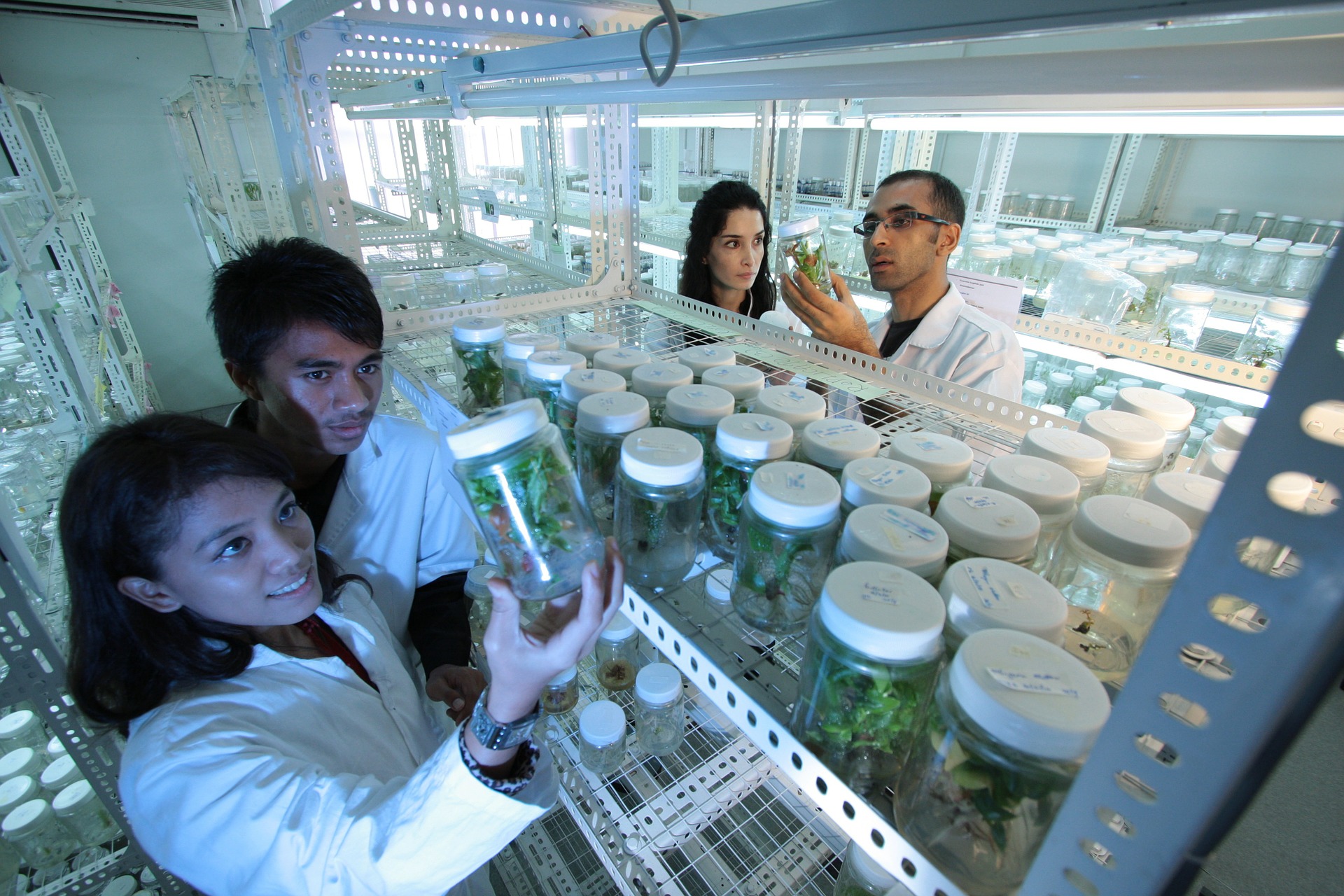
People in lab coats looking at jars.

In Canada, it takes about 7-10 years of testing before new GMOs reach the market place.  Regulatory bodies around the world including those in Europe, Australia, New Zealand, Japan and USA apply a similar regulatory approach.

Despite public concern about GMO safety, Health Canada is not currently planning on implementing any long-term studies regarding the safety of GMOs because they do not see any characteristics of GMOs as being unique or different from all other foods currently available in the food supply. This research gap is unfortunately probably one of the biggest critiques by anti-GMO groups.

GMO Impact on Nutrition

Critics of GMOs argue that genetically modified foods are less nutritious than their conventionally grown equivalents. However, similar to organic produce, numerous studies have demonstrated no nutritional differences between commercially available GMO and non-GMO foods.

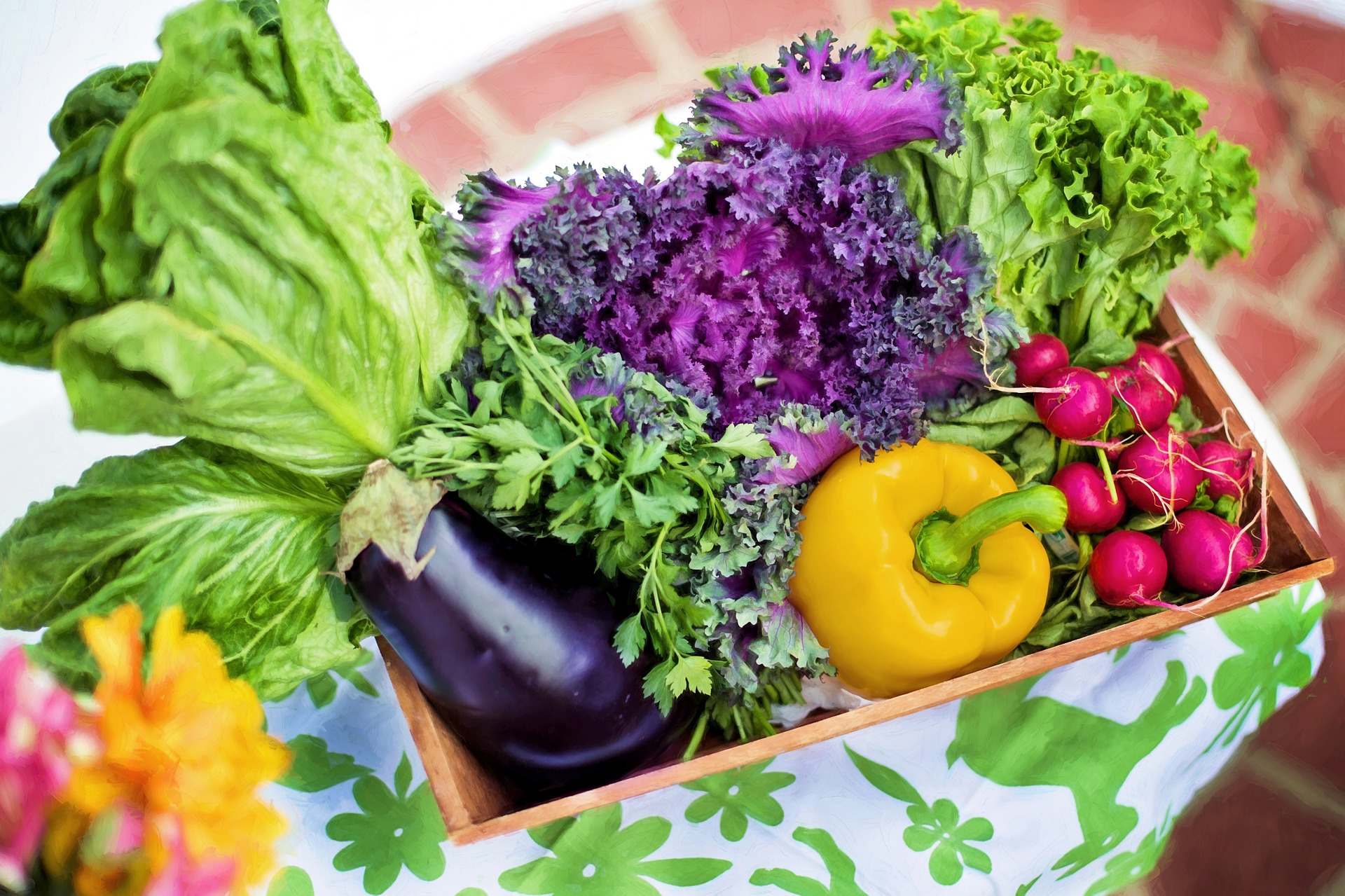
A box filled with vegetables.

An updated review of 33 studies (17 long term and 16 multigenerational) found no substantial health hazards related to consuming GMO foods. According to the FDA, nutritional assessments of foods from genetically engineered plants have been shown to be equally as nutritious as that of food from the “traditionally bred plant”. Health Canada agrees, stating that after a dozen years of reviewing the safety of GMOs, there is no published evidence that suggests GMOs are less healthy or safe than traditionally growth foods. This was even further confirmed by a lengthy 2016 report by the National Academies of Science, Engineering and Medicine which made this statement:”we found no substantiated evidence that foods from GE crops were less safe than foods from non-GE crops”.

GMOs got you interested? Check out Part 2 of the GMO series coming soon to Abbey’s Kitchen!

Questions or comments? We want to hear from you! Leave us a comment below to get the GMO dialogue started!

Contribution by AK Nutrition Students Olivia Maida and Alexis Silver

Abbey Sharp

Abbey Sharp is a Registered Dietitian (RD), regulated by the Ontario College of Dietitians. She is a mom, YouTuber, Blogger, award winning cookbook author, media coach specializing in food and nutrition influencers, and a frequent contributor to national publications like Healthline and on national broadcast TV shows.
www.abbeyskitchen.com/about-abbey/

Last Updated August 12, 2019. Published October 23, 2015 By Abbey Sharp 12 Comments

3 Best Healthy Halloween Treats- Grilled Cheese, “Eye Ball” Soup & Boo-zy Cocktail

Here are three healthy halloween treats the whole family will love. 
If I surveyed 20 people what their favourite childhood meals were, I bet you the large majority would tell you grilled cheese and tomato soup. And since Halloween is all about bringing out the kid in all of us, I figured, let’s make healthy Halloween treats that kids and adults will enjoy.
Screen_Shot_2015-10-21_at_3.26.14_PM.png

So this past Halloween, I was having people over and one thing I’ve learned about party food is to apply the old KISS rule- keep-it-simple-stupid. Don’t make a fancy pants foie gras, or use this as your chance to experiment with sweetbreads. Make what you know the masses are going to like- and I know the masses like grilled cheese. They like soup. They like booze. They are going to love these healthy Halloween treats.

No Tricks! Just my Favourite Healthy Halloween Treats

Obviously there are a million and one ways to make grilled cheese and tomato soup, but I wanted to stick to the Halloween theme. That meant I made olive-bocconcini “eyeballs” for the soup and I added some hot red pepper jelly & orange tomatoes in the grilled cheese. I also busted out my Halloween cookie cutters that I got on sale at Williams Sonoma for less than $1. Mind blowing, I know, considering every other time I walk out of there I’ve dropped $300 or more.  I also whipped up an adult beverage featuring the probiotic benefits of Kombucha! Okay, so those healthy halloween treats are adults only.

Screen_Shot_2015-10-23_at_1.27.09_AM.png

Now, you certainly don’t have to save these recipes for Halloween. This would make a fantastic grilled cheese for any day (minus the shapes) and the soup would be fabulous without the “eye balls”- I just thought it would be fun to throw that in. If you’re really in a crazy grilled cheese mood, you should also really check out my recipe for this Sexy Duck grilled cheese– ideal for Valentines Day, of course!

More of a visual person? Check out the YouTube video here and don’t forget to subscribe!

Print Recipe
5 from 1 vote

Halloween Spicy Aged Cheddar Grilled Cheese

Here are three healthy halloween treats the whole family will love. 
Prep Time5 minutes mins
Cook Time8 minutes mins
Total Time13 minutes mins
Course: Lunch
Cuisine: American
Servings: 1 person
Calories: 350kcal
Author: Abbey Sharp

Ingredients

  • 2 slices Pumpernickle Bread
  • 1 oz Aged Orange Cheddar Cheese
  • 2 tsp hot pepper jelly
  • 2 slices orange tomato
  • Melted butter for brushing

Instructions

  • Using Halloween cookie cutters, cut your bread into Pumpkin shapes.
  • Brush the melted butter onto the outside sides of the pairs of bread (brushing the melted butter on allows you to use less!) Spread the inside of one slice with the jelly, top with the tomatoes and load it up with cheese. Top with the other piece of bread (butter side up).
  • Preheat your pan to medium heat. Add the grilled cheese and cook for about 2-4 minutes until golden brown. Carefully flip and cook on the other side another 2-4 minutes. Enjoy warm or at room temperature.

Nutrition

Calories: 350kcal
Print Recipe
5 from 1 vote

Eye Ball Tomato Soup

Here are three healthy halloween treats the whole family will love. 
Prep Time15 minutes mins
Cook Time1 hour hr
Total Time1 hour hr 15 minutes mins
Course: Soup
Cuisine: American
Servings: 4 people
Calories: 300kcal
Author: Abbey Sharp

Ingredients

Soup

  • 1 tbsp butter
  • 2 tbsp olive oil
  • 1 small onion diced
  • 2 carrots peeled and finely diced
  • 3 cloves garlic minced
  • 2 tbsp all purpose flour
  • 1 tbsp tomato paste
  • 3 containers of San Marzano tomatoes 28 oz containers
  • 1 L reduced sodium chicken stock
  • 2 tbsp brown sugar or to taste
  • 1/2 cup 2% milk
  • 1/4 cup parmigiano reggiano cheese finely grated
  • Salt and pepper to taste

Eyeballs

  • 1 container bocconcini cheese balls
  • 32 mini olives stuffed with pimento sliced in half

Instructions

Soup

  • Heat the butter and olive oil in a large, heavy-bottomed pot over medium-low heat. Add the onions and carrots and saute for about 8-10 minutes, or until very tender. Once tender, add the garlic and cook until fragrant, about 1 minute.
  • Add the flour and tomato taste and stir until the colour darkens and it coats all of the vegetables.
  • Then add in the tomatoes, chicken stock, and sugar and whisk until there are no more lumps and it’s well combined.
  • Bring the soup to a boil, then lower the heat to medium low, and simmer, uncovered, for about 45 minutes or until all of the vegetables are very tender.
  • Transfer to a blender and puree until smooth. Strain back into the pot and stir in the milk and cheese. Season with a pinch each of salt and pepper, to taste.

Eyeballs

  • Using a small pairing knife, cut out a little crater of cheese from the cheese ball with a large enough diameter to fit the olive but don’t go down further than 1/2 way down. Stuff the olive half into the cheese ball. Continue with the remaining bocconcini balls. Store in a air tight container until ready to eat.

Assembly

  • To serve, ladle out the serving of soup and drop a few eyeballs into it. Serve with the grilled cheese for dunking.

Nutrition

Calories: 300kcal
Print Recipe
5 from 1 vote

Creepy Ginger Cocktail

Here are three healthy halloween treats the whole family will love. 
Prep Time10 minutes mins
Total Time10 minutes mins
Course: Drinks
Cuisine: American
Servings: 1 person
Calories: 190kcal
Author: Abbey Sharp

Ingredients

  • 1/2 cup Pomegranate molasses
  • 1/2 cup freeze dried berries pulverized into a powder
  • 1 oz vodka
  • 6 leaves mint
  • 2 tsp lemon juice
  • 4-6 oz Ginger flavoured Kombucha
  • Ice

Instructions

  • Pour the pomegranate molasses into a bowl or dish and rim your glass with it.
  • Then pour the powdered freeze dried berries into another dish or bowl and rim the sticky pomegranate molasses with the powder.
  • Give the mint and lemon juice a little bruising in a glass with a muddler and top with an ounce of vodka, Ginger flavoured Kombucha and ice.

Nutrition

Calories: 190kcal
Abbey Sharp

Abbey Sharp is a Registered Dietitian (RD), regulated by the Ontario College of Dietitians. She is a mom, YouTuber, Blogger, award winning cookbook author, media coach specializing in food and nutrition influencers, and a frequent contributor to national publications like Healthline and on national broadcast TV shows.
www.abbeyskitchen.com/about-abbey/

Last Updated October 4, 2021. Published October 22, 2015 By Abbey Sharp 8 Comments

Gluten Free Cauliflower Pizza with Chocolate, Almonds & Berries for Dessert

This gluten free cauliflower pizza is the perfect low carb dessert that you can enjoy without the guilt! 
If you own a Pinterest account and have ever logged on…like even once…ever… you’ve probably heard about cauliflower “rice”. It’s been popular on the Pinterest circuit for making cauliflower pizza and the like. I’ve been known to rice up a few heads of cauliflower every once in a while like in one of my go-to salad recipes with (real) couscous, figs, spinach and chevre.
cauliflower__dessert_pizza_8_of_11.jpg

So what the heck is cauliflower rice? Essentially, when you pulse a head of cauliflower in the food processor, it breaks up into teeny weeny pieces that resemble couscous or rice. You can then swap your carb-heavy starches for the low cal faux-rice in dishes like stir-fries, salads and curry.

cauliflower__dessert_pizza_10_of_11.jpg

But what else could you possibly use those little low-carb crumbles for? I bet you weren’t thinking dessert.

cauliflower__dessert_pizza_9_of_11.jpg

When the Marilyn Denis Show called me and asked for a few recipes using cauliflower rice, dessert wasn’t exactly my first thought, either. But then I remembered the epic internet obsession of 2014 with cauliflower pizza crust and ta da, a sweet dessert pizza recipe was born.

cauliflower__dessert_pizza_1_of_11.jpg

Now, admittedly, I have never read a recipe for a DESSERT cauliflower pizza, so I was going to be taking a bit of a risk. But I had faith that as long as I was using good quality ingredients and trusting my senses on texture and consistency, that I could nail this pizza crust without the dreaded #PinterestFail.

Cauliflower Pizza? For Dessert?? WHAT?!

While most savoury cauliflower pizza crusts are held together by copious amounts of shredded cheese, I wanted to keep things even healthier and of course, make it sweet. So I used a combination of cauliflower rice, yummy almond flour (gluten free), egg, honey and cocoa powder. Woot woot- a delicious chocolate pizza crust was born. And yes, it really does stay together.

cauliflower__dessert_pizza_11_of_11.jpg

Next, I had some fun layering on some lightly warmed natural almond butter (so it spreads smoothly), melted dark chocolate, sweet sliced fruit and some toasted almonds and coconut. The cauliflower really helps cut those calories and carbs, while all of those almonds deliver the hunger crushing combination of fibre, protein and healthy fats. Trust me, you’re not going to be looking for a snack right after you eat this cauliflower pizza.

cauliflower__dessert_pizza_5_of_11.jpg

The result is a decadent looking gluten free cauliflower pizza dessert that’s so healthy, you can legitimately eat it for breakfast. And if you want it a little more sweet (because neither the chocolate, nor the almond butter is sweetened), you can finish things off with a little drizzle of honey.

cauliflower__dessert_pizza_3_of_11.jpg

You can bet your boots I did a little happy dance in the kitchen after nailing (and inhaling) this cauliflower pizza.

cauliflower__dessert_pizza_7_of_11.jpg

Have you tried making cauliflower pizza? What miraculous comfort food would you like to see me make with cauliflower rice? Leave me a comment below and share this recipe in any of your favourite social media outlets!

This recipe is proudly part of #TheRecipeRedux, so check out some other nut-filled recipes!

cauliflower__dessert_pizza_4_of_11.jpg
Print Recipe
5 from 3 votes

Gluten Free Cauliflower Pizza with Chocolate, Almonds & Berries

This gluten free cauliflower pizza is the perfect low carb dessert that you can enjoy without the guilt! 
Prep Time15 minutes mins
Cook Time23 minutes mins
Total Time38 minutes mins
Course: Dessert
Cuisine: American
Servings: 6 people
Calories: 280kcal
Author: Abbey Sharp

Ingredients

Crust

  • 1 2 lb head of cauliflower cut into florets
  • 3/4 cup almond flour
  • 2 tsp natural cocoa powder
  • 1 egg beaten
  • 1 tbsp honey
  • Pinch salt, cinnamon and nutmeg pinch of each

Toppings

  • 3 tbsp natural almond butter
  • 1 oz dark chocolate finely chopped
  • 1/4 cup banana sliced
  • 1/4 cup strawberries sliced
  • 1 tbsp shaved coconut toasted
  • 1 tbsp almond slices toasted
  • Honey if desired

Instructions

Crust

  • Preheat oven to 450 F. Line a baking sheet with a silpat or nonstick mat.
  • Put your cauliflower into a food processor and pulse until it breaks up into small pieces that resemble rice.
  • Measure out 3 cups and transfer to a microwave safe bowl. Microwave for 2 minutes on high. Allow to cool, then squeeze the moisture out of the cauliflower rice.
  • To the cauliflower, mix in the almond flour, cocoa powder, egg, honey, salt, cinnamon and nutmeg.
  • Roll into a ball, then press into a round pizza crust, about 1/4 inch thick. Bake for 18-20 minutes, or until the centre is dry and the edges begin to brown.

Toppings

  • In a small microwave safe bowl, heat the almond butter in 30 second increments, stirring between each time, until soft and very smooth.
  • In another small microwave safe bowl, add the chocolate shavings and microwave on high for 30 second increments, stirring between each time, until melted and smooth.

Assembly

  • Spread the almond butter onto the crust, leaving a 1/2 inch border around the outsides. Top with the sliced fruit, almonds and coconut.
  • Dip a fork into the melted chocolate and drizzle it over the pizza. If you want to make the pizza sweeter, add a little drizzle of honey on top. Cut into slices using kitchen scissors, and enjoy at room temperature.

Nutrition

Calories: 280kcal

Disclaimer: The preceding recipe was developed in paid partnership with Almond Board of California, however, as always, all opinions are genuine. 

Abbey Sharp

Abbey Sharp is a Registered Dietitian (RD), regulated by the Ontario College of Dietitians. She is a mom, YouTuber, Blogger, award winning cookbook author, media coach specializing in food and nutrition influencers, and a frequent contributor to national publications like Healthline and on national broadcast TV shows.

www.abbeyskitchen.com/about-abbey/
  • Previous Page
  • Go to page 1
  • Interim pages omitted …
  • Go to page 80
  • Go to page 81
  • Go to page 82
  • Go to page 83
  • Go to page 84
  • Interim pages omitted …
  • Go to page 89
  • Next Page

Get started with

Eight Free Recipe Books

From the co-founder of Neue Theory and creator of the Hunger Crushing Combo

Sign me up!
Abbey smiling at table
Abbey Sharp

“Foods may never be nutritionally equal. But we can make them morally equal by recognizing that our worth is never determined by what's on our plate.”

— Abbey Sharp, RD About Abbey ◥

Books

  • HCC™
  • Mindful Glow
  • Free E-Books

Blog

  • Nutrition
  • Recipes
  • Motherhood
  • Life

Explore

  • Neue Theory™
  • Bite Back
  • YouTube

Abbey

  • About
  • Coaching
YouTube TikTok Instagram Facebook X Pinterest
Abbey Sharp - The No BS Dietitian From Abbeys Kitchen

© Abbey's Kitchen 2026  All Rights Reserved •  ACCESSIBILITY STATEMENT •  Privacy Policy

This site uses cookies. By continuing to browse the site, you are agreeing to the use of cookies Accept Privacy Policy

Privacy & Cookies Policy

Privacy Overview

This website uses cookies to improve your experience while you navigate through the website. Out of these, the cookies that are categorized as necessary are stored on your browser as they are essential for the working of basic functionalities of the website. We also use third-party cookies that help us analyze and understand how you use this website. These cookies will be stored in your browser only with your consent. You also have the option to opt-out of these cookies. But opting out of some of these cookies may affect your browsing experience.
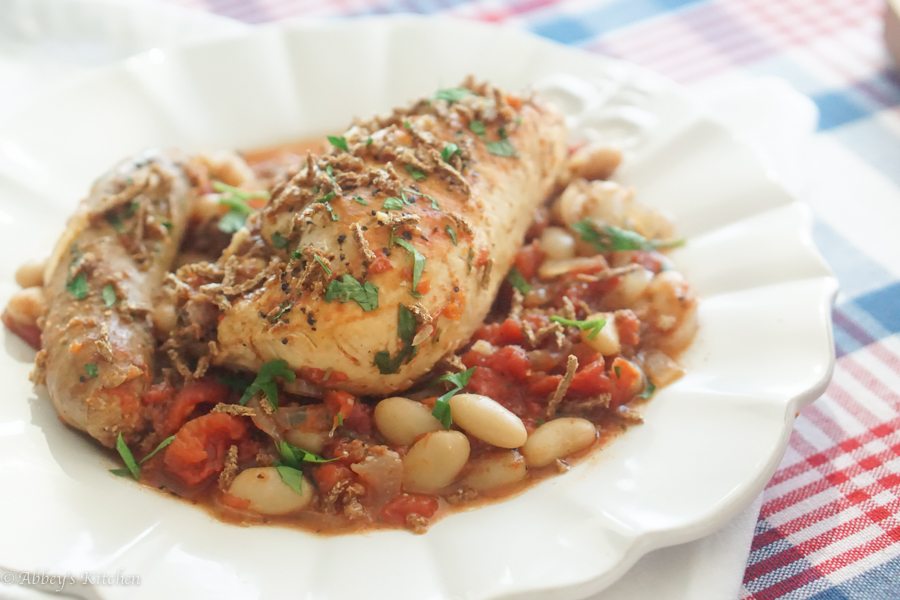
Necessary
Always Enabled
Necessary cookies are absolutely essential for the website to function properly. This category only includes cookies that ensures basic functionalities and security features of the website. These cookies do not store any personal information.
Non-necessary
Any cookies that may not be particularly necessary for the website to function and is used specifically to collect user personal data via analytics, ads, other embedded contents are termed as non-necessary cookies. It is mandatory to procure user consent prior to running these cookies on your website.
SAVE & ACCEPT

Rate This Recipe

Your vote:


A rating is required
A name is required
An email is required