• Skip to main content

Abbey's Kitchen

Healthy Recipes, Nutrition Myth Busting, Healthy Eating Tips

  • Books
    • HCC™
    • The Mindful Glow Cookbook
    • Recipe eBooks
      • Family
      • Hypothyroidism
      • BLW
      • Vegan Week 1
      • Vegan Week 2
      • Vegan Week 3
      • Keto
      • Gluten Free Week 1
      • Gluten Free Week 2
      • Fitness
      • Paleo
  • Blog
    • Nutrition
    • Recipes
    • Motherhood
    • Life
  • Explore
    • Neue Theory™
    • Bite Back With Abbey Sharp
      • Apple Music
      • Spotify
      • Amazon Music
    • YouTube
  • Abbey
    • About
    • Coaching
    • Contact

Abbey Sharp

Last Updated November 22, 2019. Published June 6, 2016 By Abbey Sharp 9 Comments

Peanut Butter and Jelly Chia Pudding | Healthy, Vegan, Gluten Free

Two containers of peanut butter and jam vegan chia pudding.

This amazing Peanut Butter and Jelly Chia Pudding was created with the Peanut Bureau. It’s healthy, vegan and gluten free and will quickly become your go-to nutritious snack, breakfast or dessert.
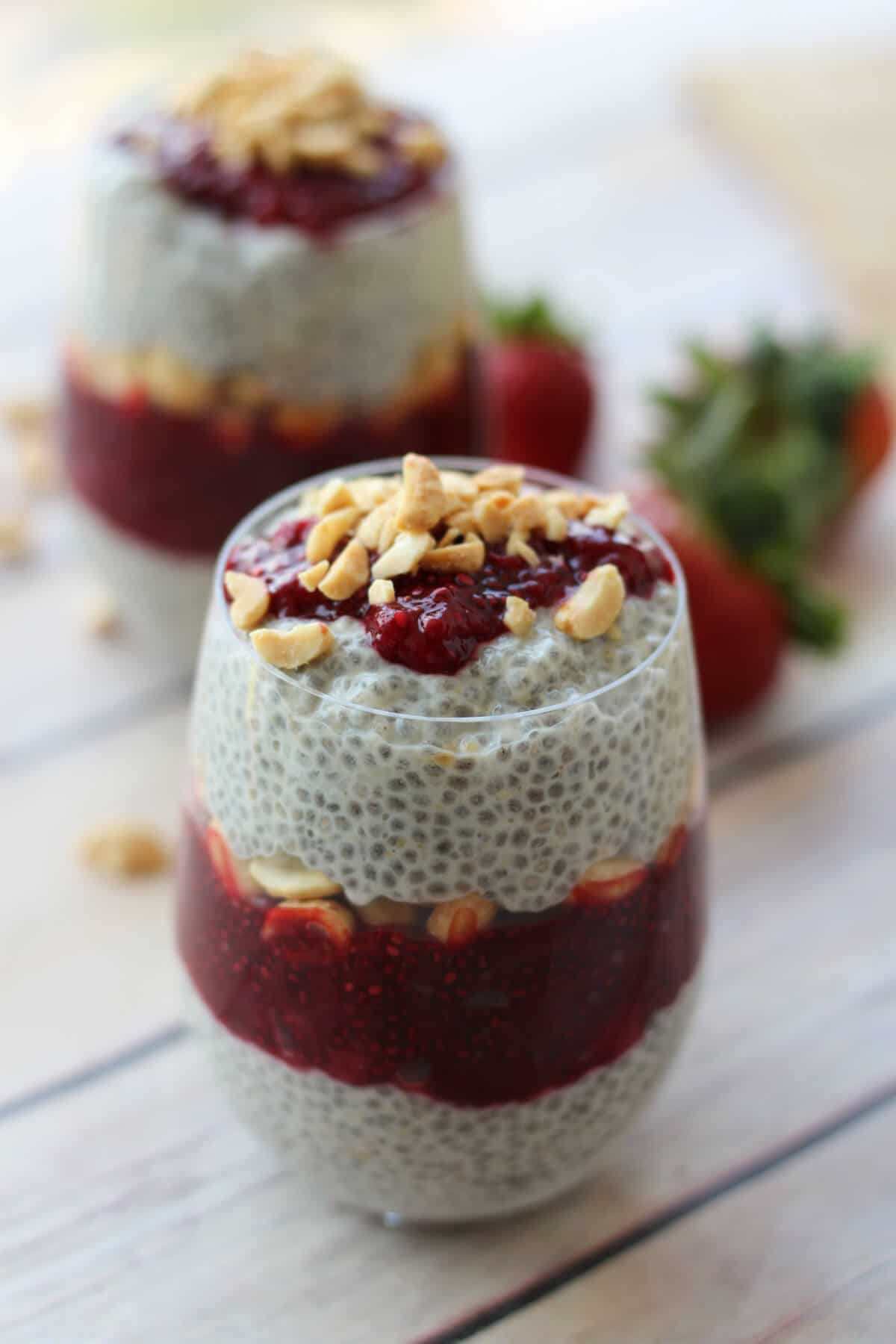
A cup of peanut butter and jam vegan chia pudding.Y’all know I love my peanut butter and banana combination recipes, but I’m equally obsessed with peanut butter and jelly. I mean, my growth as a child literally depended on a steady stream of the stuff. Recently, I’ve gotten really into Chia Pudding as a great vegan, non-dairy, gluten free snack, breakfast or dessert and this recipe adds even more nutrition with the benefits of peanuts!
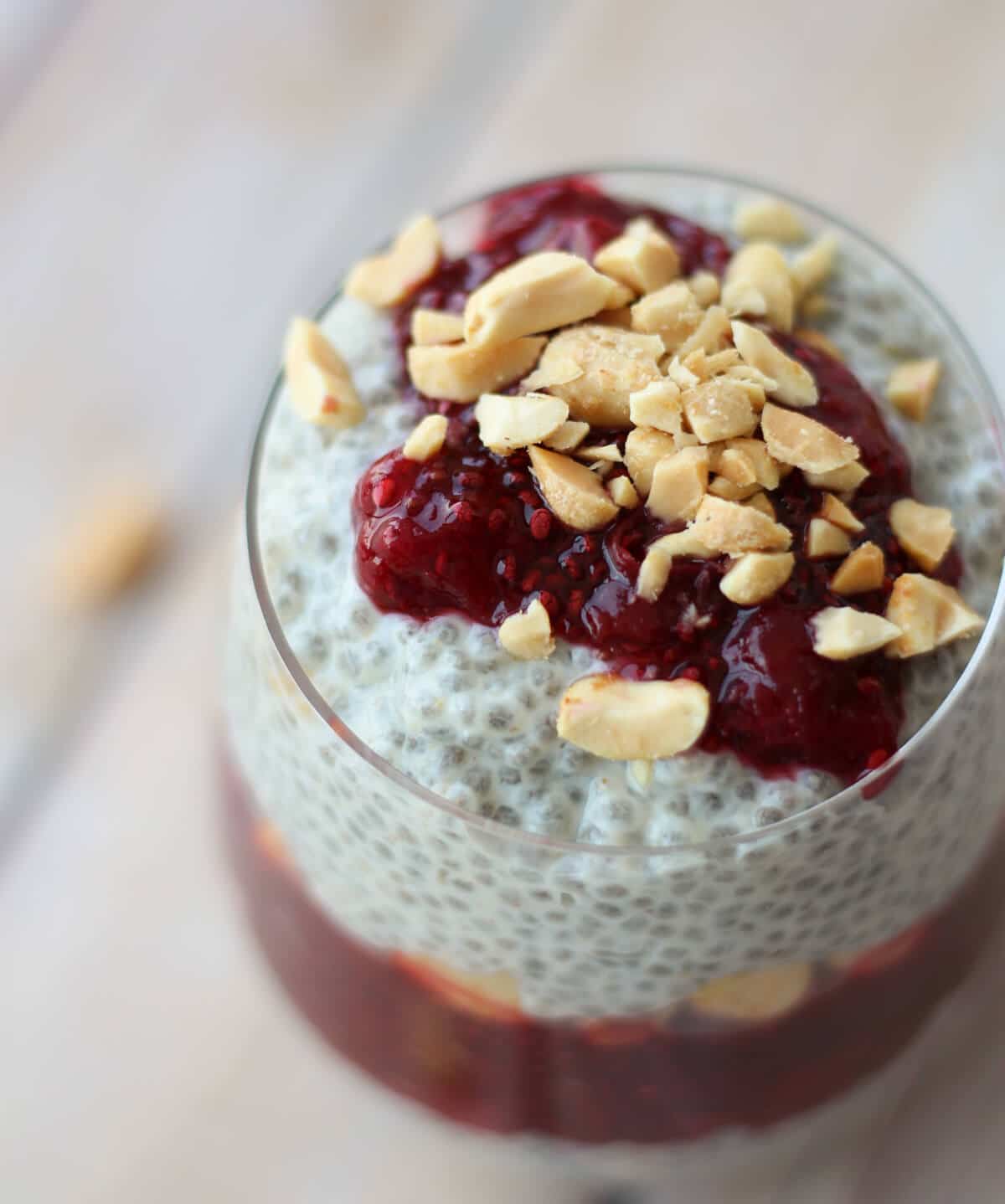
An overhead photo of a container of peanut butter and jam vegan chia pudding.

I love using peanuts in this recipe because they not only add amazing flavour and great luscious body, but they help pump up the staying power even more. Thanks to their hunger-crushing combo of fibre, protein and healthy monounsaturated fats, I literally can eat this after my morning workout and stay full until lunch.
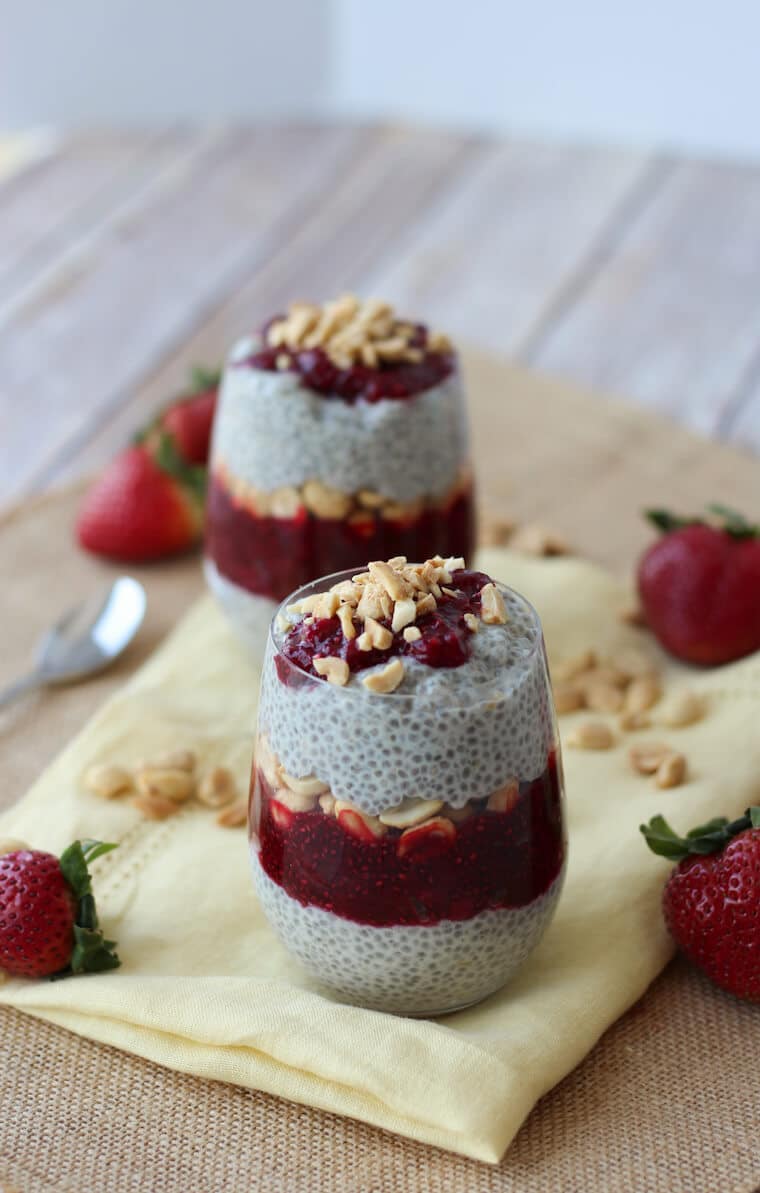
Two containers of peanut butter and jam vegan chia pudding.Did you know that 1/3 Canadians eat peanut butter right out of the jar? I have a feeling that it’s actually a lot more than that, but I know some of us are shy to admit it.

If you’re looking for a classier way to enjoy your PBJ, then you’ll love this Peanut Butter and Jelly Chia Pudding.

Click To Tweet

How to Make Peanut Butter and Jelly Chia Pudding

It starts with my go-to chia jam that I actually just posted on the blog last week. It’s literally amazing on everything but I specifically love it layered into this chia pudding parfait because it’s low in sugar but packed with protein, fibre and healthy fats.
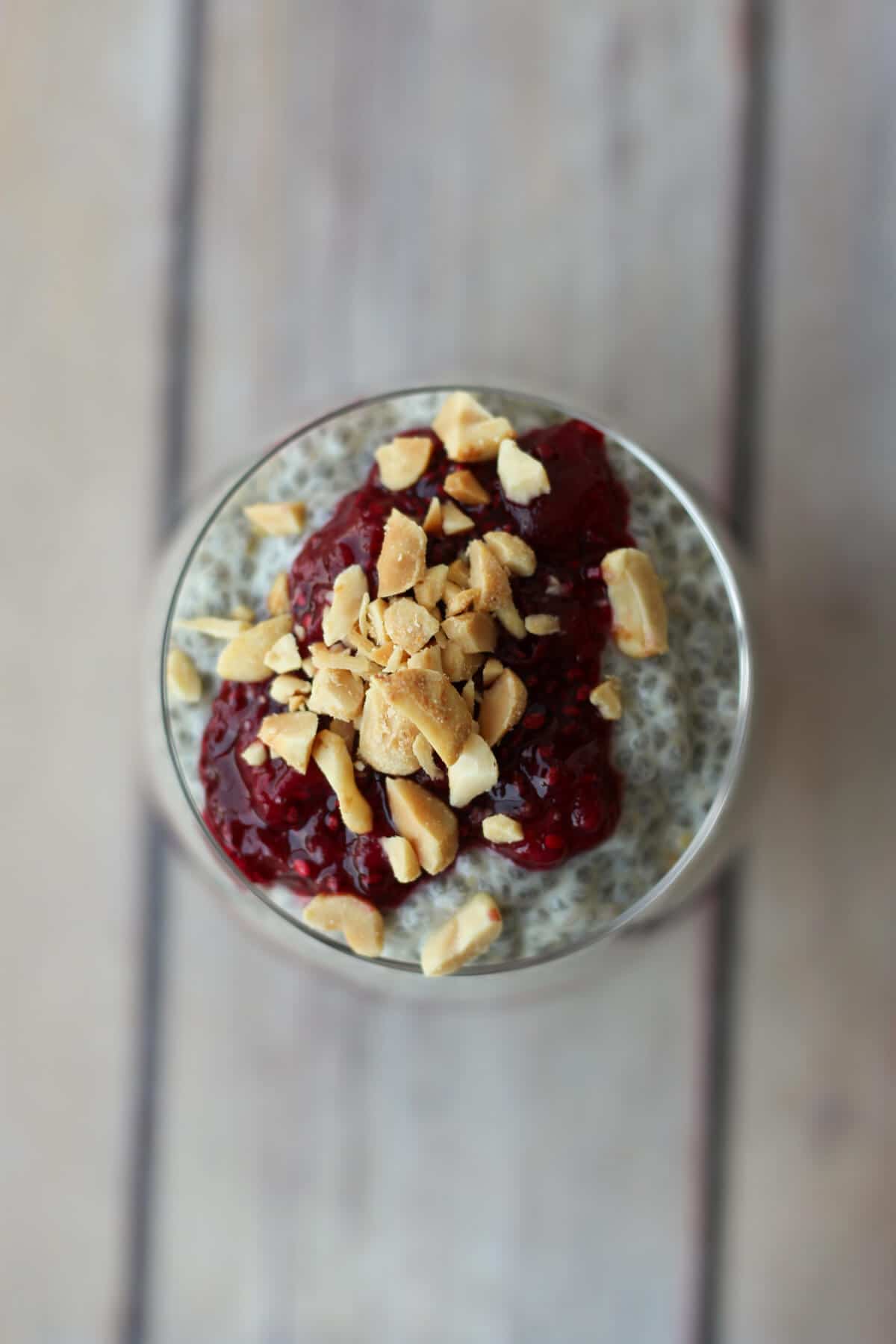
Overhead photo of a peanut butter and jam vegan chia pudding.

Then I make my peanut butter chia pudding. I start by gently heating soy milk in a pan, melting some room temperature peanut butter and a little maple syrup into it, and whisking the whole thing together until smooth. Once it’s all combined, I add in my chia seeds and let the mixture sit in the fridge overnight. This is literally the hardest part so I try to make it RIGHT before bed so I don’t have to pine over it for too long.
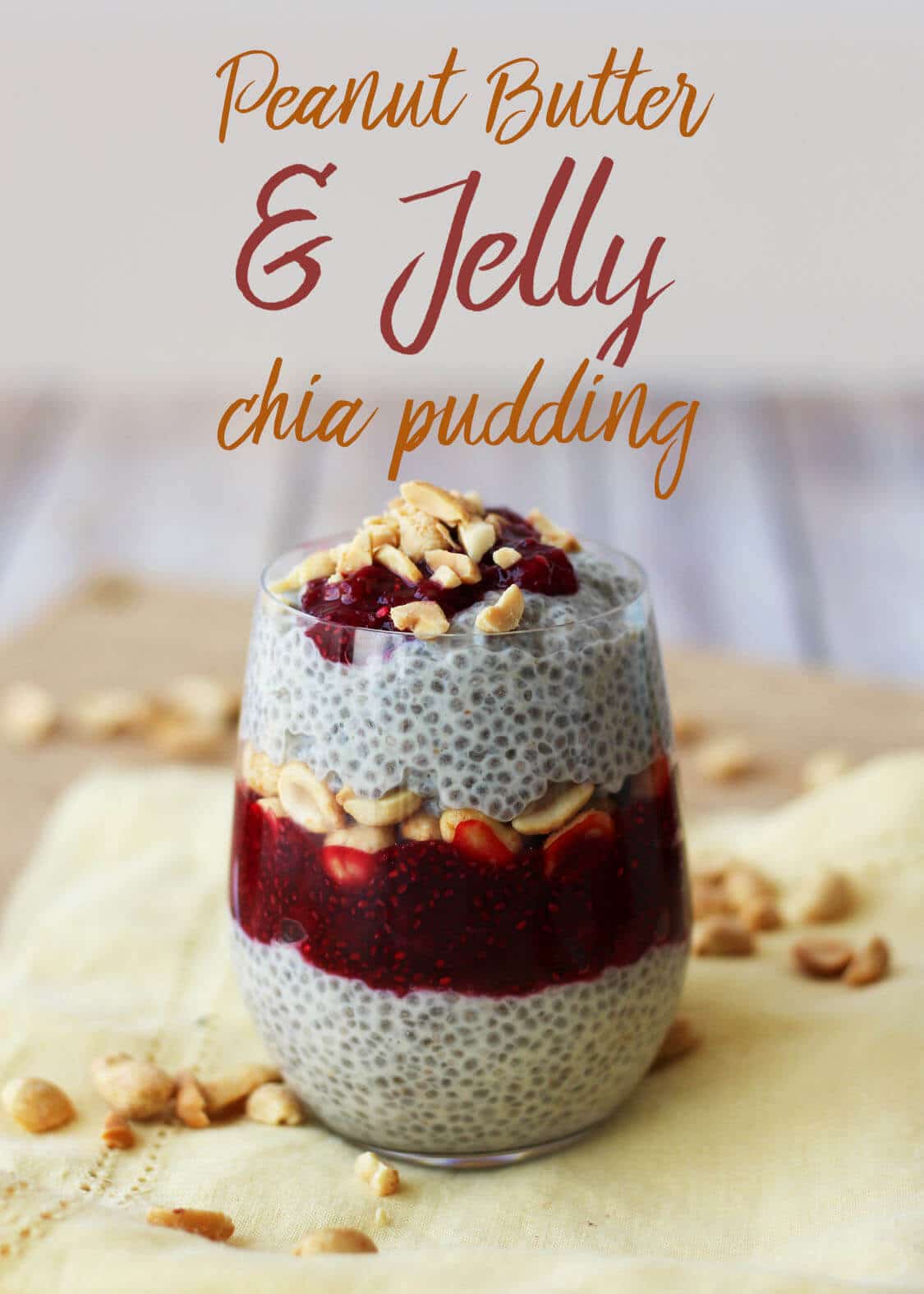
A pinterest image of chia pudding with the overlay text \"Peanut Butter & Jelly Chia Pudding.\"

The next morning, I assemble my peanut butter and jelly chia pudding! I layer the peanut chia pudding with the sweet cherry strawberry chia jam and a handful of chopped peanuts for added texture and crunch and I am officially a happy girl.

What are your favourite ways to enjoy the nostalgic combination of peanut butter and jelly? Have you tried making this peanut butter and jelly chia pudding? Leave me a comment below with some of your go-tos!
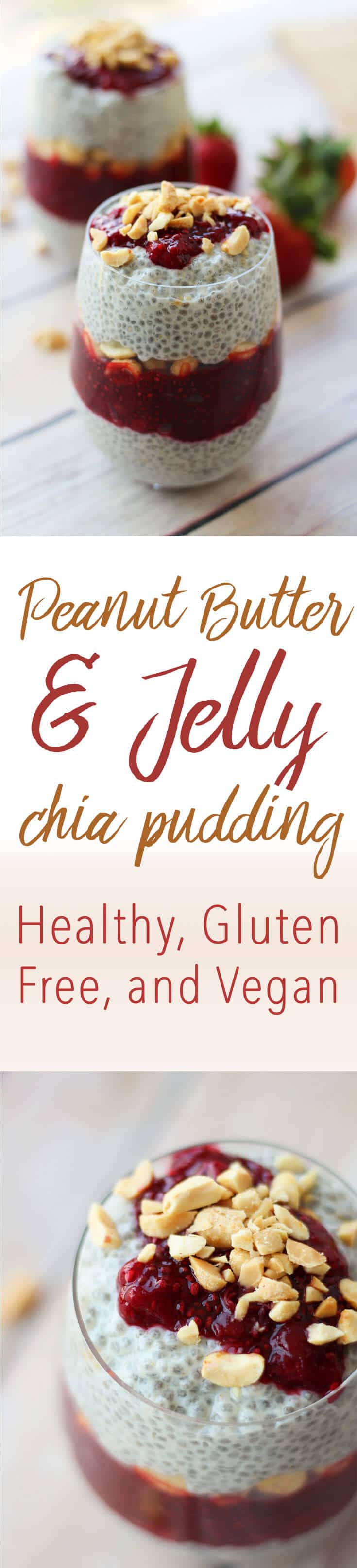
A pinterest image of chia pudding with the overlay text \"Peanut Butter & Jelly Chia Pudding Healthy, Gluten Free, and Vegan.\"

A pinterest image of chia pudding with the overlay text "Peanut Butter & Jelly Chia Pudding."
Print Recipe
5 from 3 votes

Peanut Butter and Jelly Chia Pudding | Healthy, Vegan, Gluten Free

This amazing Peanut Butter and Jelly Chia Pudding is healthy, vegan and gluten free and will quickly become your go-to nutritious snack, breakfast or dessert.
Prep Time4 hours hrs
Cook Time5 minutes mins
Total Time4 hours hrs 5 minutes mins
Course: Snack
Cuisine: American
Servings: 4 people
Calories: 360kcal
Author: Abbey Sharp

Ingredients

  • 2 cups unsweetened vanilla soy milk
  • 2 tbsp natural peanut butter room temperature
  • 2 tsp maple syrup or to taste
  • 6 tbsp chia seeds
  • 1/2 cup chia jam
  • 1/2 cup peanuts crushed

Instructions

  • In a small saucepan, heat the soy milk on medium low until it almost starts to simmer. Add in the peanut butter and maple syrup and whisk until combined. Transfer to a container and set aside to cool. Add in the chia seeds and refrigerate overnight.
  • The next day layer the chia pudding, chia jam and crushed peanuts in parfait glasses and enjoy!

Nutrition

Calories: 360kcal


Disclosure: This recipe was made in paid partnership with the Peanut Bureau, however, all opinions are genuine. This post may contain affiliate links. If you purchase from the link, I make a small commission that adds no cost to you, but helps me pay for my blog! Thanks for your support.

Abbey Sharp

Abbey Sharp is a Registered Dietitian (RD), regulated by the Ontario College of Dietitians. She is a mom, YouTuber, Blogger, award winning cookbook author, media coach specializing in food and nutrition influencers, and a frequent contributor to national publications like Healthline and on national broadcast TV shows.
www.abbeyskitchen.com/about-abbey/

Last Updated September 1, 2022. Published June 1, 2016 By Abbey Sharp 28 Comments

Sugar and Cancer – The Sugar Feeds Cancer Myth & Facts

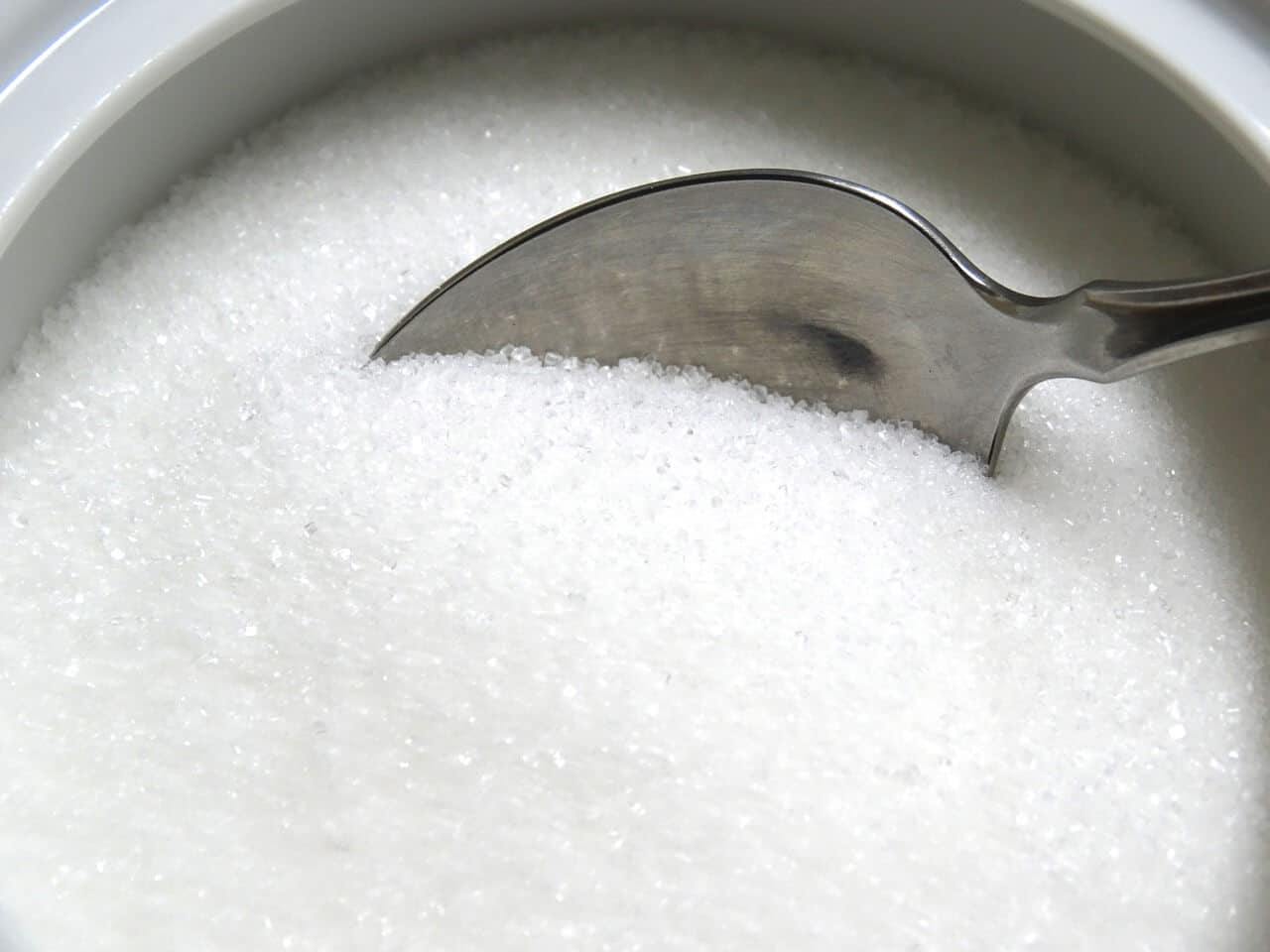
Close up of sugar.

The sugar and cancer connection has been a question for quite some time. Type “cancer and…” into Google and the word “sugar” or “carbs” will inevitably pop up. It’s a common belief that “ sugar feeds cancer cells” and that you need to completely eliminate carbs from your diet to reduce your risk. So we wanted to attack this concept head on to look at what the research says. Does sugar feed cancer? Let’s take a look.

Sugar Feeds Cancer?

Thanks to the internet’s wide buffet of pseudoscience-peddling “experts”, a lot of people believe that sugar feeds cancer. The main rationale is that sugar raises insulin levels and possibly other growth factors that may influence cancer cell growth. Many cancer cells have insulin receptors, which make them respond more than normal cells to insulin’s ability to promote growth. So does that mean sugar feeds cancer? Let’s look at the basics first.

What is Sugar?

When you hear the word “sugar”, do you think about the sweet, white, powdery granules in your kitchen pantry? Or perhaps you think about gum drops, candies, doughnuts, desserts, and all sorts of sweet goodness?

The reality is, “sugar” is the same as the all-encompassing, umbrella-term “carbohydrates”. Carbs include both “simple sugars” (monosaccharides: one glucose unit) and “complex carbohydrates” (polysaccharides: a chain of multiple glucose units) found in a wide variety of foods. The type of sweet, granular table sugar you might be very familiar with is a refined carbohydrate source from the sugar cane plant that is composed of sucrose. It’s commonly used to sweeten juices, soft drinks, sauces, salad dressings, condiments and desserts. In contrast, complex carbs are found in foods like breads, pastas, grain products, and fruits and vegetables. Typically, complex carbs also come with beneficial fibres that help slow their digestion, reduce blood sugar spikes and keep you feeling satiated for longer.

Close up of sugar.

The Sugar and Insulin Connection

Carbs, either simple or complex, are our bodies preferred source of fuel. When we eat any kind of carb, it gets broken down to its simplest form (glucose) for our body, absorbed into the blood stream and raises your blood sugar levels. The pancreas responds by releasing a hormone called insulin which acts as a “key” that opens the “lock” of the cell, allowing for glucose in the blood to enter and be used by the cell for energy. I don’t care what the bro at the gym says, carbs are super important! Even if you found a way to completely cut out carbs, your body will make glucose from other things you eat such as protein or fat, leading to potential malnutrition, muscle loss and slowed metabolism. That is definitely not what we want.

The problems come into play when you exceed your body’s needs for carbs again and again and again. If we continually put stress on our pancreas to produce more and more insulin, either because we are consuming an excessive amount of sugar or because we have body fat that makes it hard for the insulin to reach the cells, we can end up in a state of insulin resistance. Insulin resistance (along with hyperinsulinemia and increased IGF – 1 /insulin-like growth factor-1 levels), are the hallmark traits of Type 2 Diabetes. The connection here is that epidemiological studies suggest that diabetes sometimes hand in hand with some types of cancer by potentially promoting the growth and development of tumours (here and here).

Sugar and Cancer – Pancreatic

A large meta-analysis examined the connection between sugar and pancreatic cancer, suggesting that high blood sugar and high insulin levels likely play a role in its development. When reviewing various cohort (planned) studies, there was no association found on the effect of diets high in total carbohydrates, sugar, or high glycemic index on risk of pancreatic cancer.  Likewise, previous epidemiological studies have not been able to specify the exact types of carbohydrates (e.g. sucrose, fructose, glucose) linked to pancreatic cancer. However, the results of the 10 cohort studies analyzed have suggested that a high consumption of fructose (the type of sugar in fruit) may increase the risk of type 2 diabetes, obesity, insulin resistance and pancreatic cancer.

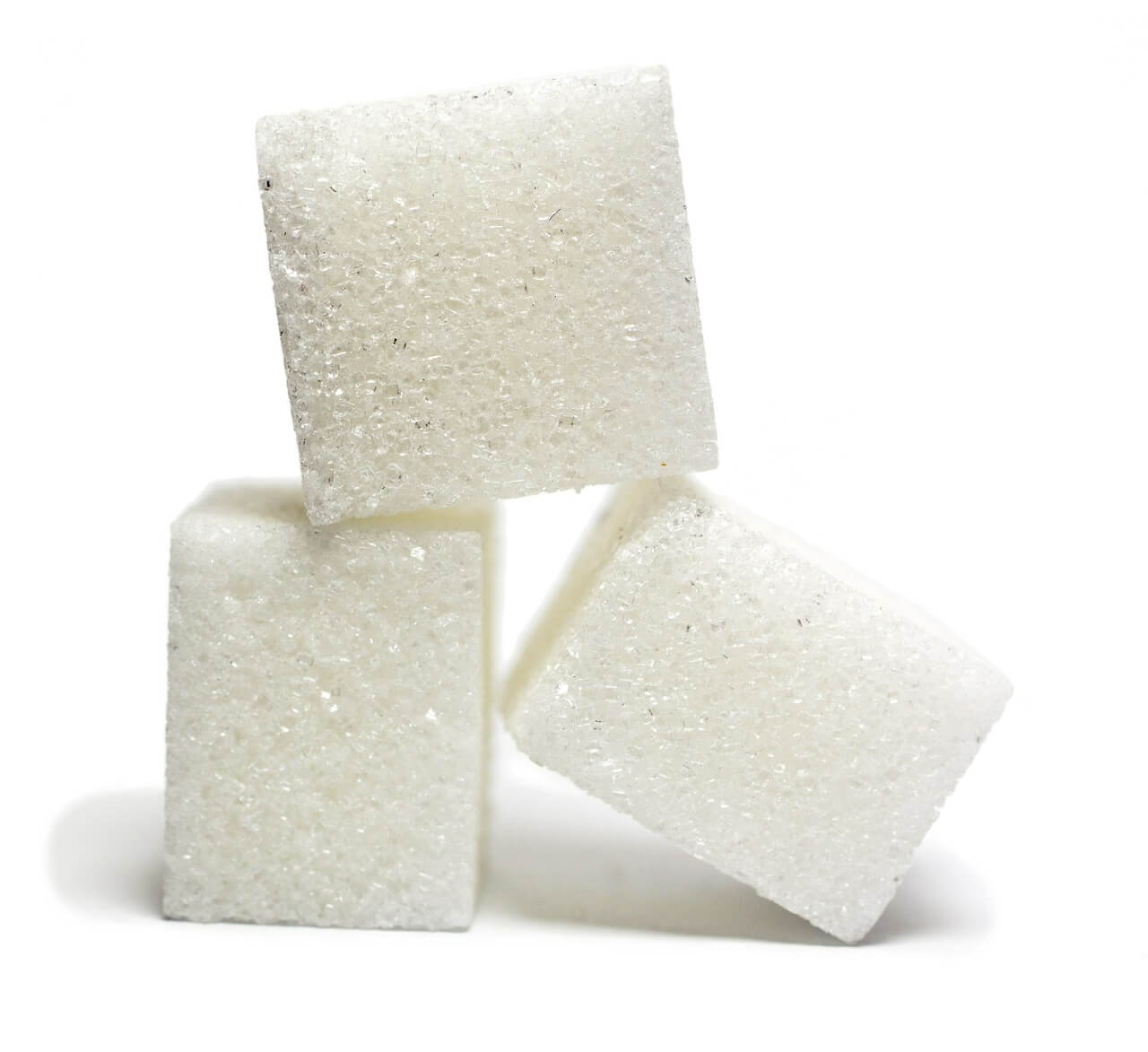
Three sugar cubes.

Sugar and Cancer – Prostate

A new longitudinal study looked at the diets of over 3000 volunteers since the 1970s and found that diets with a higher glycemic load (most notably from pops and fruit juices) were associated with 88% higher risk of prostate cancer. This study, of course, can’t speak to cause and effect and was conducted on an almost exclusively Caucasian population, so there is definitely a need for more research in this area.

Sugar and Cancer – Endometrial

You may have heard that hormone-dependent cancers like endometrial and breast cancer are linked to sugar consumption since it’s often thought that sugar messes with our hormones. Insulin and insulin-like growth factor-1 system (IGF – 1) receptors have been theorized to give rise to rapidly multiplying cancer cells, suggesting that they may promote cancer growth and cancer cell survival. Some evidence has suggested that increased estrogen from excess body fat and diabetes may help increase the risk of endometrial cancer in postmenopausal women. Having said that, aside from there being a higher risk of obesity and type 2 diabetes with a greater consumption of sugary drinks, on the whole, there isn’t much evidence out there on the link between sugar-sweetened beverages and endometrial cancer. Studies have either found a very weak or moderate influence of sugar in fruit juice, sweet, baked or starchy foods on endometrial cancer risk or no difference between those who drank sugar-sweetened beverages and those who did not. In other words, there may be a connection between sugar and endometrial cancer (i.e. obesity and diabetes), but it’s in no way cause and effect.

A serving board with measuring tape.

Sugar and Cancer – Breast

In the area of breast cancer, one study suggested that breast cancer patients who increased their consumption of carbs for about 2 years after diagnosis had a higher risk of recurring breast cancer incidences, but the findings were not statistically significant. Another recent headline claimed that a high sugar diet increases one’s risk of breast cancer and lung metastasis. The researchers of the study proposed that fructose in particular was “responsible for facilitating cancer production and growth.” While this does seem promising, this particular study was done on mice, which right away tells us that this cannot automatically translate the results to humans. This is an important jumping off point for future research on sugar and cancer, but nothing to write home about quite yet.

Types of Sugar on Cancer

Now, I know what you’re all saying. What about refined added “bad” white sugar compared with “healthy” or “natural” sugar? Remember that all sugars are identical chemically and broken down in our bodies into glucose. Complex carbs are digested more slowly because they have to be broken down and are bound with beneficial fibres, while simple carbs spike your blood sugar and insulin faster because they’re already in their most simple form. If the proposed link between cancer and sugar is insulin and blood sugar, the form of sugar may be really important! This is why researchers performing a prospective health study investigated the effect of different sugar types, such as fructose, sucrose, added sucrose and added fructose, along with total sugars on cancer risk. And still, with the exceptions I mentioned in the sections above, there was no clear association found between any of the dietary sugars analyzed and the risk of colorectal, pancreatic, breast, endometrial or prostate cancers.

A more recent study found a looked at the impact of simple and complex carbs on cancer outcomes. The researchers in this new longitudinal study found that consuming low glycemic foods like legumes, non-starchy vegetables, most fruits, and whole grains was associated with a 67% lower breast cancer risk. On the other hand, regular and higher consumption of processed carbohydrates like sugary beverages was associated with a 3 times higher risk of developing prostate cancer. As shown in the difference between whole, unprocessed complex carbohydrates (usually low glycemic) and refined, simple carbohydrates (high glycemic) on cancer risk, it’s suggested that we shouldn’t focus too much on total carbohydrates, but rather, the type of carbohydrates we consume.

What I believe is likely happening here is that while we can’t necessarily say for sure that ANY one type of sugar feeds cancer on its own, it may be that specific dietary pattern may help reduce your risk. For example, people who consume a diet high in pulses, and whole grains, but low in refined sugars may be better at managing their weight and blood sugar levels. Again, it’s only speculation because it’s difficult to draw conclusions from cohort or observational studies, so clearly we need more rigorous research in this area of sugar and cancer.

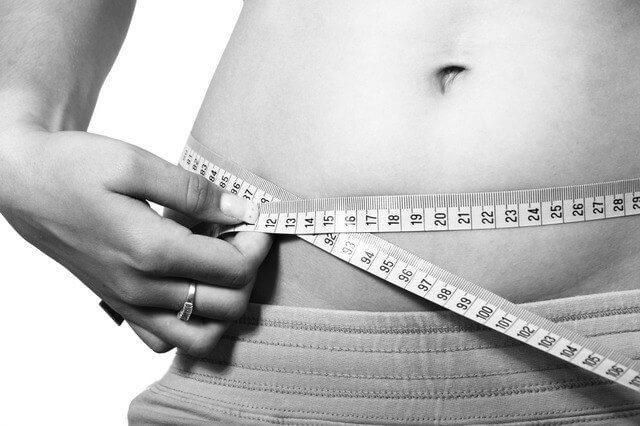
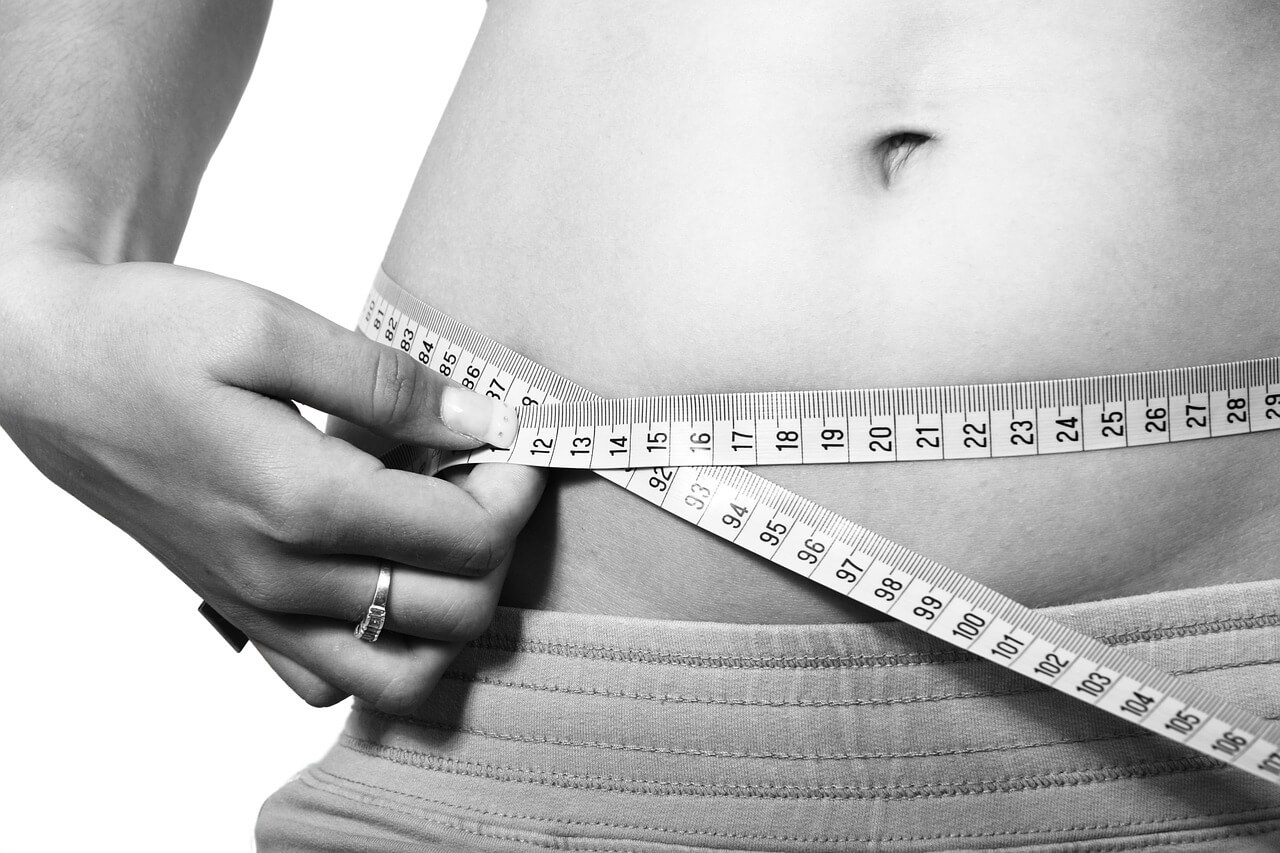
A person measuring their waist.So Should we Avoid Sugar and Carbs to Reduce Cancer Risk?

Let’s review this sugar and cancer link. Bottom line? Sugar doesn’t feed cancer cells any more or less than sugar feeds ALL of the cells in your body. Avoiding all sugar can do more harm than good since your healthy body cells require carbs to function properly and will do anything it has to do (including breaking down your muscle) just to get it. What we do want to be more mindful of is consuming an excess of sugar and refined carbohydrates which are linked to weight gain, and may indirectly increase your cancer risk over time. With the evidence we have now, we cannot make a solid claim that cancer has a sweet tooth for sugar, but there are a few good practices we can adopt to reduce our risks of chronic disease like cancer.

  1. Choose high fibre, low glycemic index foods like fruits, vegetables and whole grains. These are our beautifully fresh and natural, whole, unprocessed foods.
  2. Listen to your body for those satiety and hunger cues to prevent overeating or binges. Remember, your body will let you know what you need. You will want to nourish your body and take good care of it, and that looks nothing like starving or overfeeding yourself!
  3. Engage in regular physical activity. Be active and do something that you love! It’s time to start investing in your health.
  4. Enjoy protein and healthy fat with your carbs to help slow down their absorption. This will leave you feeling satisfied and energized throughout the day.
  5. Spread out your carb intake throughout the day to reduce insulin spikes. This will give you balanced blood sugar levels without the mid-afternoon slump!

What do you think about the connection between sugar and cancer? Are you trying to cut back on carbs out of fear of cancer? Leave me a comment below with your thoughts and don’t forget to share and subscribe above!

A pinterest image with sugar with the text \"Sugar and Cancer | The Sugar Feeds Cancers Myth & Facts.\"

Research by RD2B Rachel Shim

Abbey Sharp

Abbey Sharp is a Registered Dietitian (RD), regulated by the Ontario College of Dietitians. She is a mom, YouTuber, Blogger, award winning cookbook author, media coach specializing in food and nutrition influencers, and a frequent contributor to national publications like Healthline and on national broadcast TV shows.
www.abbeyskitchen.com/about-abbey/

Last Updated October 4, 2021. Published May 9, 2016 By Abbey Sharp 21 Comments

Is Leptin Resistance the new Insulin Resistance? How Hormones Are Making You Fat

A person measuring their waist with measuring tape.

The topic of discussion today is resistance! Vive la resistance! Okay, so maybe not that kind of resistance, but rather the body’ resistance to certain hormones. Most of us have heard about insulin resistance but what about its sister-hormone, leptin resistance? Both are driven by sugar intake, and both are linked to weight gain and loss. Let’s take a closer look.

Insulin vs. Leptin

Insulin is produced by the pancreas’ beta cells and is the “key” to unlocking our cells to let glucose (aka. sugar or carbohydrates we eat) in so they give us energy to do things. In healthy people, insulin is tightly regulated via feedback loops, but can be out of whack as is in the case of diabetes. Leptin is known as the satiety hormone (meaning, it’s released when we’ve had enough to eat) but it has been consistently linked to obesity. For years, science has perhaps oversimplified the weight loss equation to a simple caloric deficit equation, but we now know that the regulatory mechanisms are not well understood. Instead of obesity seen as the body’s lack of weight regulation (resulting in extreme overweight), it may be more appropriate to view obesity as a defense of an elevated body weight. In other words, our body tends to “protect” its preferred weight.
A bowl of brown sugar.

(To be) Obese or not obese, that is the question!

 [ATTENTION Fat Shamers] Please take note that research suggests that gaining weight is way more than just a lack of will power (find out why fat shaming doesn’t work here). You may want to stop reading if you refuse to let your current views on fatness get challenged. Keep reading to find out why!

There are various factors that influence obesity. Simply saying “they’re too fat because they eat too much” is a) super rude and b) quite more complex. Factors influencing obesity are multi-faceted and range from obesogenic environments that provide energy-dense foods to sedentary lifestyles, long-term excess calories to genetic predisposition. And yes, we can choose what we eat and how much we exercise, but we do not choose our genetic makeup. It is one thing to do all the right things to lose weight like eat well, get adequate sleep, exercise, quit smoking yadi-yadi-yada… but maintaining that weight loss in people who are just not predisposed to maintain that weight loss is a whole other story. To give you just one evidence-based example, a large meta-analysis of US studies found that after 4-5 years, only 23% (~3kg) of participants’ initial weight loss was maintained. This may be where insulin resistance and leptin resistance come into play.

Insulin Resistance

Insulin allows glucose (aka. the carbs you eat) to enter our cells for energy metabolism. Insulin is like a key and its corresponding cell receptor is much like the lock. When the two make nice, glucose enters the cell to be used as fuel. However, in insulin resistance, the key and lock mechanism become out of sync. Let’s get a bit more silly here. The pancreas is like a hopeless romantic guy who can’t get a clue that the girl he is crushing on (the cell) isn’t into him. The guy (pancreas) sends more flowers (insulin) to the girl in hopes that she accepts his love (glucose). But the girl (the cell) just keeps resisting his advances. The guy keeps sending flowers only to be denied, and eventually he becomes exhausted and gives up. An exhausted and lonely pancreas can no longer produce sufficient insulin to keep up with insulin resistance. Since the rejected glucose is left outside the cell, higher than normal blood levels can damage the body over time. Serious complications can include neuropathy, blindness, and cardiovascular disease. Insulin resistance best describes type 2 diabetes which we know can be linked to lifestyle and dietary habits. In contrast, Type 1 diabetes is when the body produces no insulin so it has to be supplied in the form of a vital injection. Given that 80-90% of individuals with type 2 diabetes are overweight or obese, it has been suggested that the solution may lie in weight management and hormonal balance. Excess body fat actually increases the risk for insulin resistance, which helps explain the relationship between above-average weights and diabetes. I like to think of that excess fat as being overbearing father figures- they get in the way of the guy’s advances towards the pretty girl. It’s harder for insulin to make it through a convoluted stuffy quarters when there is physical fat blocking the way, and this is one reason for insulin resistance.

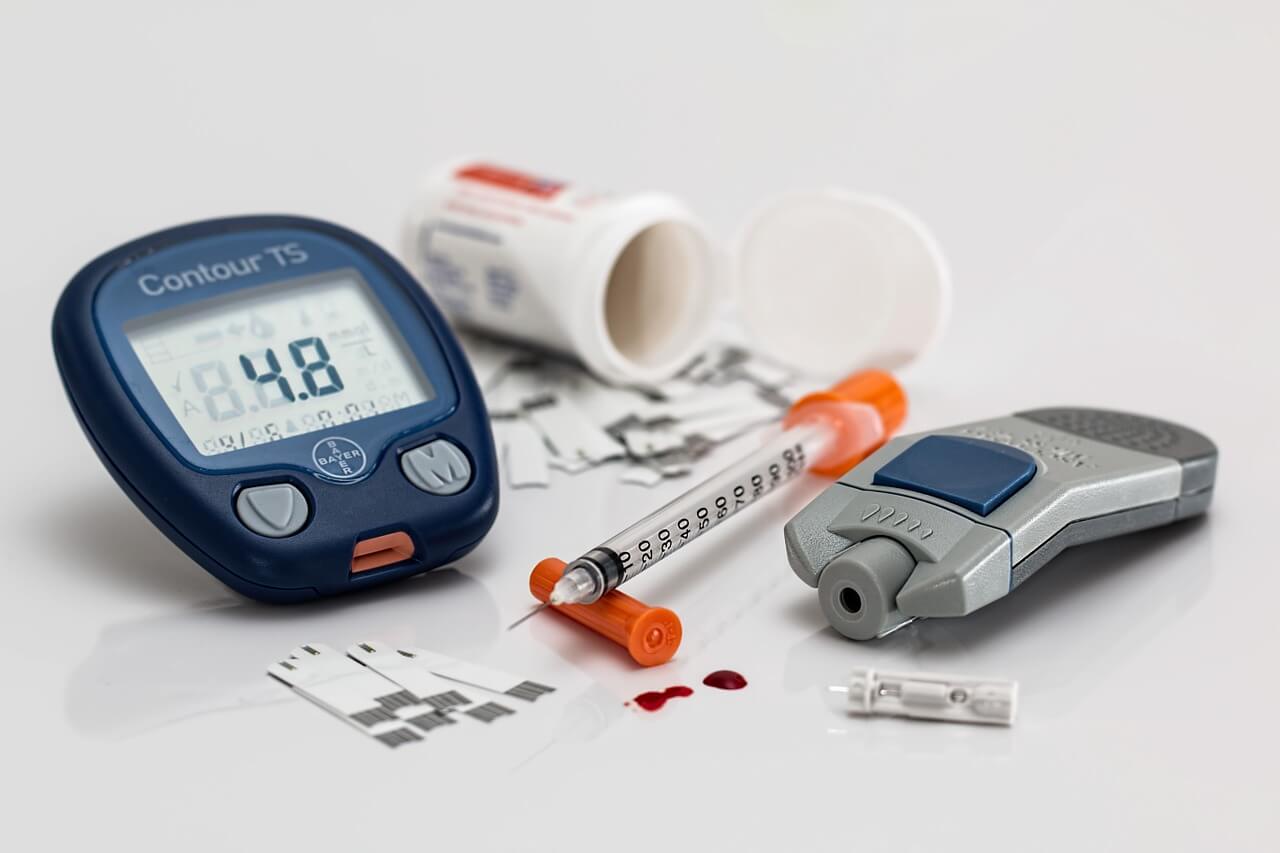
Diabetes testing tools.

Leptin Resistance

Leptin is a hormone produced in adipose tissue and it is responsible for satiety or how full we feel after we eat as well as regulating energy-expenditure and weight loss. This curious hormone has a negative feedback to energy intake, which simply means that leptin levels rise as you consume more food. Leptin levels fall when you’re hungry and you’re needing to conserve energy. In obese individuals with insulin resistance, leptin levels have been correlated with the amount of fat on the body. The more fat you have, the more leptin you have drifting around your body. You would then think that the more leptin you have in your body, the fuller you naturally feel and perhaps the less you would eat. Could this be the cure for obesity and binge eating? Unfortunately, I’m not the first to think of this. Researchers found that giving diet-induced obese people leptin injections didn’t counter obesity. But it did lead to the discovery of leptin resistance. It’s the same concept as insulin resistance. When you overeat, your leptin levels are chronically high, but your body becomes less able to recognize that satiety because of a variety of complicated mechanisms. These mechanisms are not yet fully understood, however, research on developing a leptin sensitizer may be in the works. A sensitizer would act by making the body more responsive to leptin’s signals to reduce hunger, thereby decreasing dietary intake and ultimately leading to weight loss. Leptin resistance is still not fully understood, but these pathways may open up targeted therapies for the obese population.

Leptin Resistance and Weight Loss

Early rodent studies suggest that when rats lose weight, their leptin levels drop, which in turn decreases their energy expenditure and increases their appetite (makes them hungry again). In another rat study, it was found that leptin was not effective in helping subjects maintain weight loss. As a result, they would just REGAIN any weight they had lost. DAMNIT!!  I also recently wrote about the Biggest Loser contestants and the impact their extreme weight loss had on their leptin levels. This area definitely needs more research to understand the role of leptin on human physiology as the majority of studies appears to be in animal models. Now you are hopefully starting to appreciate why losing weight is not as easy as just eating less and moving more.

Research on rats with leptin resistance suggests that a combination of caloric restriction and exercise is more beneficial than either intervention alone at reducing leptin resistance. Other drugs have been found to be effective in lowering leptin resistance, so while leptin as a stand alone treatment will not work, it may in fact be effective when coupled with a joint pharmacotherapy.

A person measuring their waist with measuring tape.

How Does Sugar Play into Insulin and Leptin Resistance?

What do we know about sugar? For one, it makes desserts awesome. But sadly, secondly, it is energy dense and lacks nutrients other than carbohydrates. It is definitely something to be enjoyed, but not overindulged in. We know that limiting added sugar to 10% of our daily intake is recommended, which amounts to about 48 g of sugar based on a 2000 kcal diet. That’s not a whole lot – having just one can of pop would use up 85% of our daily recommendation! Sugar sweetened beverages like pop, fruit juice and your Grande non-fat Frapppuccino (which by the way exceeds the recommended 48g), are not only high in sugar and calories but they aren’t particular satiating. So 200 kcal from your Starbucks drink and 200 kcal from a quarter cup of almonds will yield completely different satiety ratings. The almonds may keep you full for a few hours, while the drink may spike your blood sugar and leave you ravenous soon after. The issue with this is that we may then overeat to compensate for our lack of satiety, despite having already consumed an adequate amount of energy (aka. calories). Fibre, on the other hand, helps us to feel satiated and is abundantly found in fruits, vegetables, nuts, seeds, pulses, and whole grains. While fibre containing foods contribute carbohydrates, they also contribute wonderful things like phytochemicals, antioxidants, vitamins, and minerals.

Now at this point there may be little we can do to directly modify our hormones that influence our weight, but we can certainly influence our diets to get the most satiating bang for our caloric buck. In the case of diabetes, eating lower glycemic foods is recommended to delay the sugar rush that comes with carbohydrates so that the pancreas is not overloaded. It’s also important to enjoy a balance of protein, fat, and carbohydrate at meals and snacks to help reduce the sugar load at any time. Insulin’s partner in crime, leptin, is also a hormone we cannot much change ourselves but we may be able to hijack its ability to signal when to eat. There is yet to be a Metformin equivalent created for obesity, but when it is made, maybe they’ll call it “Leptformin” (BTW I’m trademarking that). Until then, we need to slow down, and tune into our unique hunger and satiety signals to guide when to eat and when to stop.

Small dietary changes in the home could add up over time. Just as excess weight doesn’t appear overnight neither can it disappear overnight.  The equation to solving the obesity epidemic is clearly more than 1+1=2, but answers are emerging as researchers continue to investigate this phenomenon.

Two cans of coca cola beside two glasses with straws.

A few Quick and Dirty Take Aways

  1. Aim for 25-38 grams of fibre each day to help you feel full, keep you regular, and manage weight
  2. Stay within the 10% of caloric intake from added sugar. If you are craving sweets, grab a piece of juicy fruit to satisfy your craving.
  3. Keep healthy foods close at hand in the home and keep only single-serving sized treats at hand.
  4. Get in at least 150 minutes of weekly activity throughout the week that you enjoy. With the wonderful weather headed our way, biking, hiking, and outdoor activities can make exercise even more rewarding.
  5. Do not take for granted the internal hormone regulators we have within us! Be kind to them and respect their role in regulating your body.

A pinterest image with soda, sugar, and diabetes testing tools with the text overlay \"Is Leptin Resistance The New Insulin Resistance? How Hormones Are Making You Fat.\"

Contribution by RD2B Shane Kwong

Abbey Sharp

Abbey Sharp is a Registered Dietitian (RD), regulated by the Ontario College of Dietitians. She is a mom, YouTuber, Blogger, award winning cookbook author, media coach specializing in food and nutrition influencers, and a frequent contributor to national publications like Healthline and on national broadcast TV shows.
www.abbeyskitchen.com/about-abbey/

Last Updated October 4, 2021. Published May 6, 2016 By Abbey Sharp 11 Comments

Top 5 Foods That Burn Fat – What Science Says Works

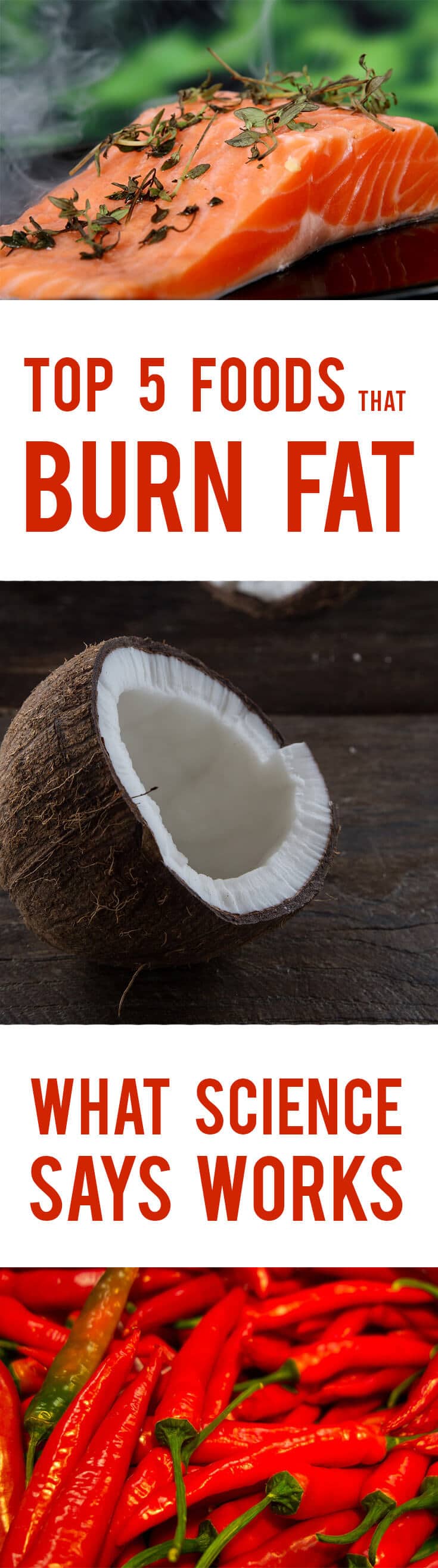
A close up of a slice of salmon before getting baked.

It’s nearly impossible to scroll through blogs or flip through a magazine without seeing something like “Foods that Burn Fat – Page 12.” They seem easy enough-  a sprinkle of hot pepper here, a cup of green tea there and my body fat will melt right off! Maybe not so much. Luckily for you, I’ve gone through the research (or lack thereof) of the top five popular foods that burn fat and ranked them in order from least (5) to most (1) effective.

Top 5 Foods that Burn Fat

Foods the Burn Fat #5: Hot Pepper

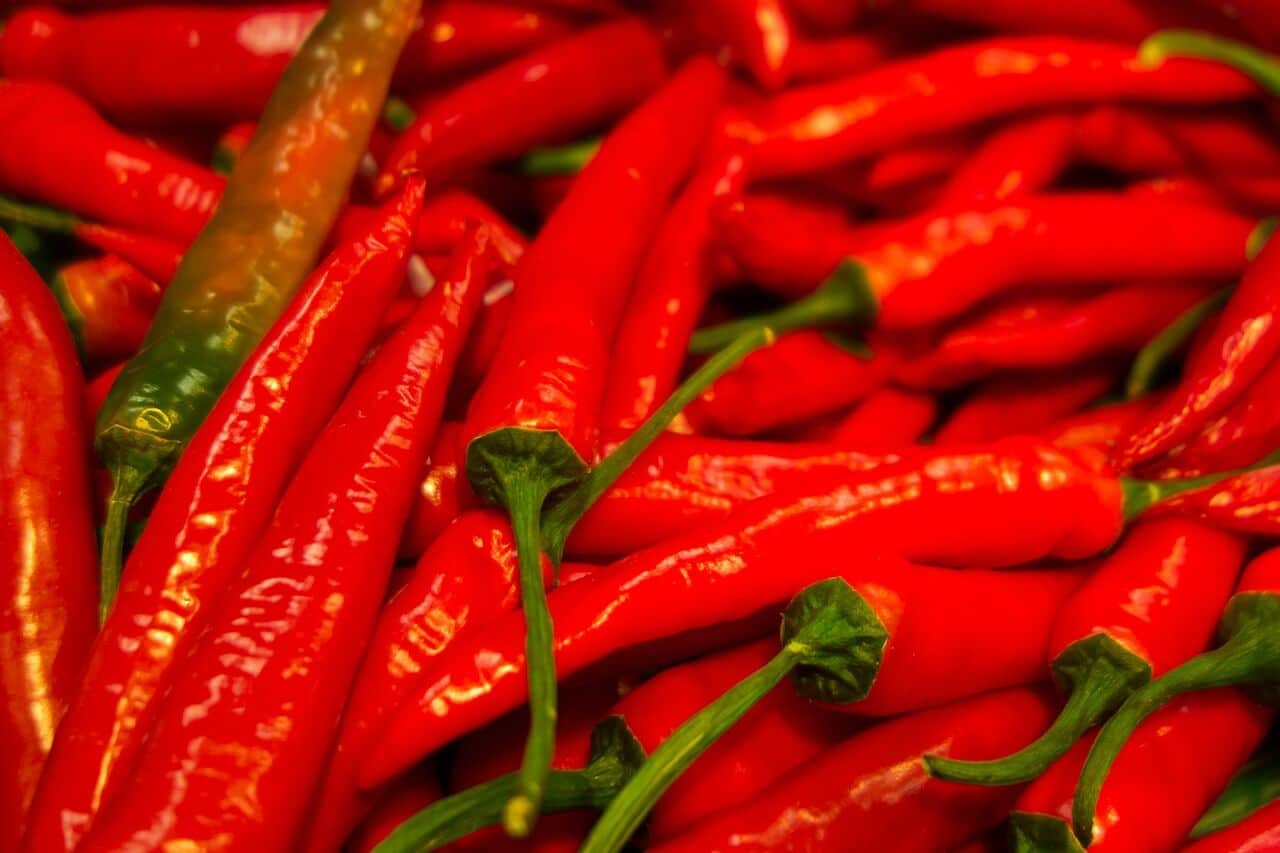
If it’s burning my tongue it must be a food that burns fat, right? Wrong. The active ingredient that makes hot peppers hot, and supposedly causes fat burn, is called capsaicin. Research has found it to increase fat oxidation (that’s the process of our body breaking down fats) by stimulating the sympathetic nervous system, decrease hunger, increase body temperature, and energy expenditure. Capsaicin has also been found to increase resting metabolic rate decrease energy intake, and cause the body to turn for fats for fuel instead of carbs. Though these studies have found hot peppers to be very effective, the populations studied are not always comparable to North America and the effects were greatest in those who don’t commonly eat spicy foods. Finally, it’s important to note how much capsaicin you need to consume to see any benefits. Studies had participants consume up to 10g of hot peppers, which is about 1/4 cup! Hot pepper is delicious, and it’s a great way to flavor foods without tons of extra salt or oils, but it’s not one of the best foods to burn fat.

A close up of spicy peppers.

Foods the Burn Fat #4: Omega 3s

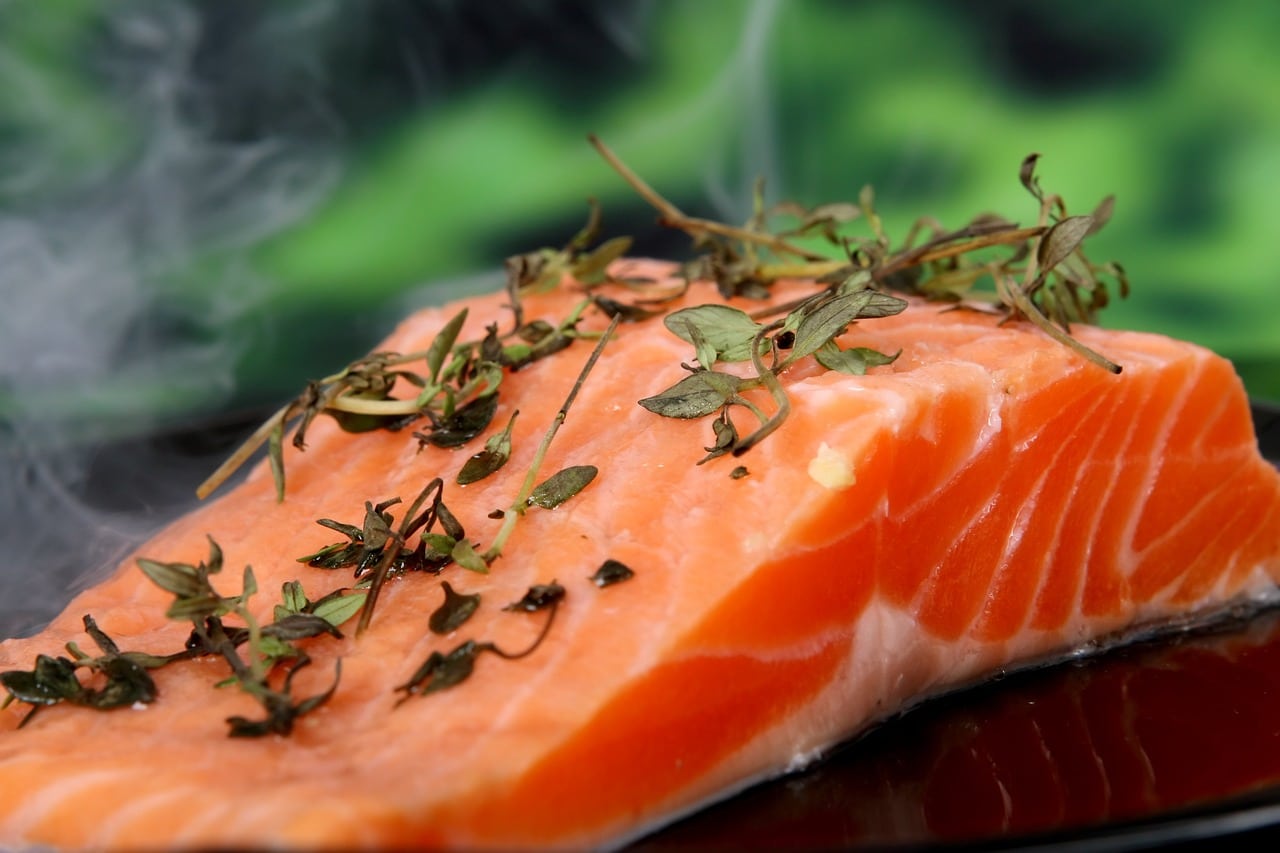
Omega 3s are the super healthy fats found in fish, nuts, and some vegetable oils. They have a number of benefits, and apparently fat burning is one of them. Research looking at fish oil supplements, which contain omega 3s, supports their ability to decrease body fat mass and increase fat oxidation. After two groups were given either fish oil supplements or a placebo, the fish oil group saw a decrease in their body fat mass and an increase in their resting metabolic rate. Though they are advertised as being fat burners, very little research in has properly investigated the individual role of omega 3s in humans. Omega 3s are great to have in your diet, especially since the typical North American diet is much higher in omega 6 fatty acids, but we can’t conclude that they are inherently foods that burn fat.

A close up of a slice of salmon before getting baked.

Foods the Burn Fat: #3 Coconut Oil

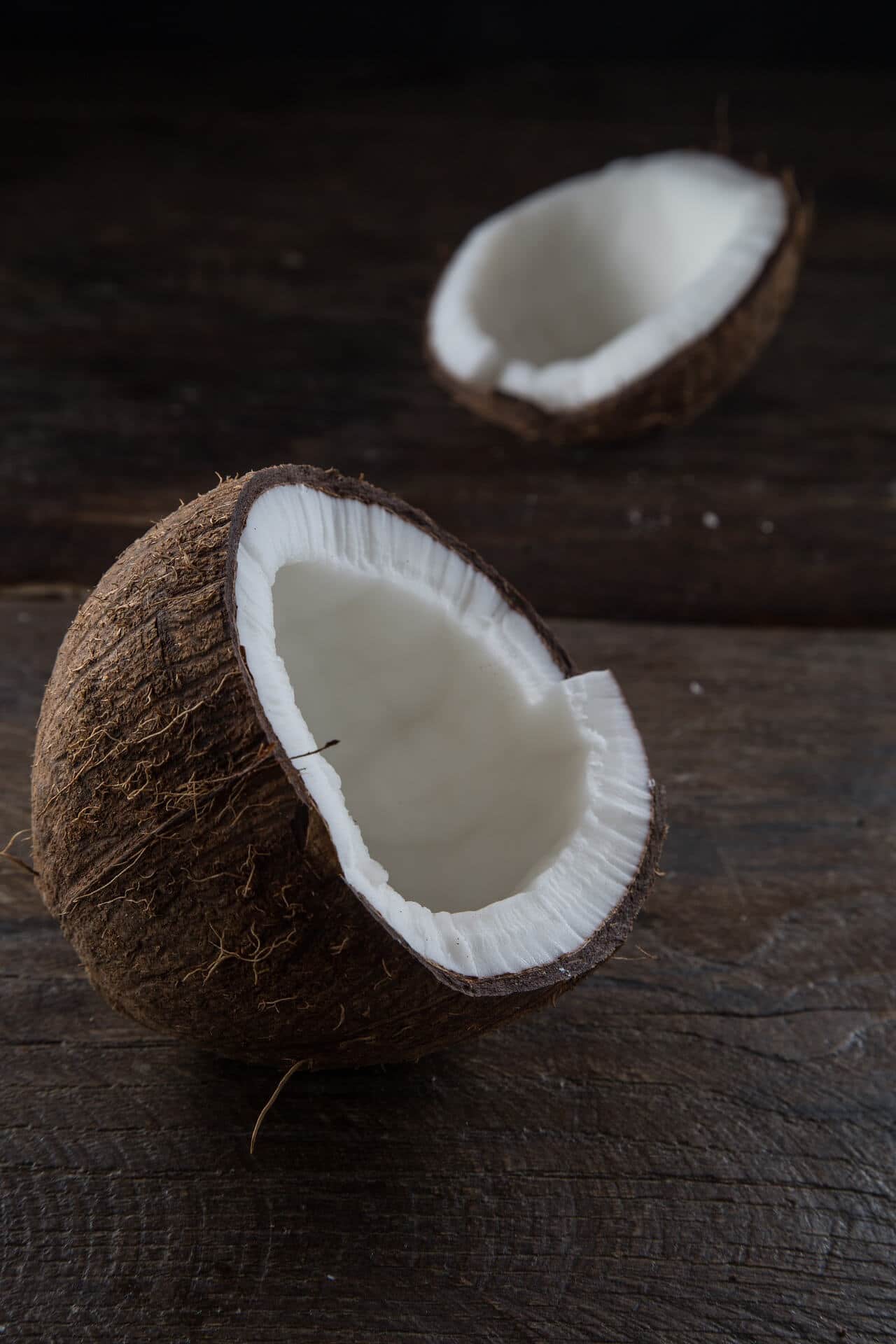
Coconut oil is unique because of its high ratio of medium chain triglycerides (MCTs) compared to other types of fats. MCTs are broken down differently because they go straight to the liver to be metabolized first. This is said to be the reason coconut oil is a fat that won’t make you gain weight. Studies found having a diet high in MCTs compared to other fats slightly increases energy expenditure and fat oxidation. It has also been found to increase dietary induced thermogenesis, which is the energy needed to break down and store the nutrients after eating. Other studies found MCTs to increase satiety, therefore decreasing intake at meals later in the day, but were overall ineffective in weight loss. According to this research, MCTs are actually pretty great, but coconut oil isn’t made purely of MCTs so it’s hard to know how the whole food (and not just one component of it) influences weight. Not to mention it is mainly made of saturated fats and can pack in quite a few calories. Try including coconut oil in your diet, but no need to have it by the spoonful thinking it’s a food that burns dat. It’s important to consume a variety of different fats and oils as all have different benefits and uses.

Opened coconuts.

Foods the Burn Fat #2: Coffee

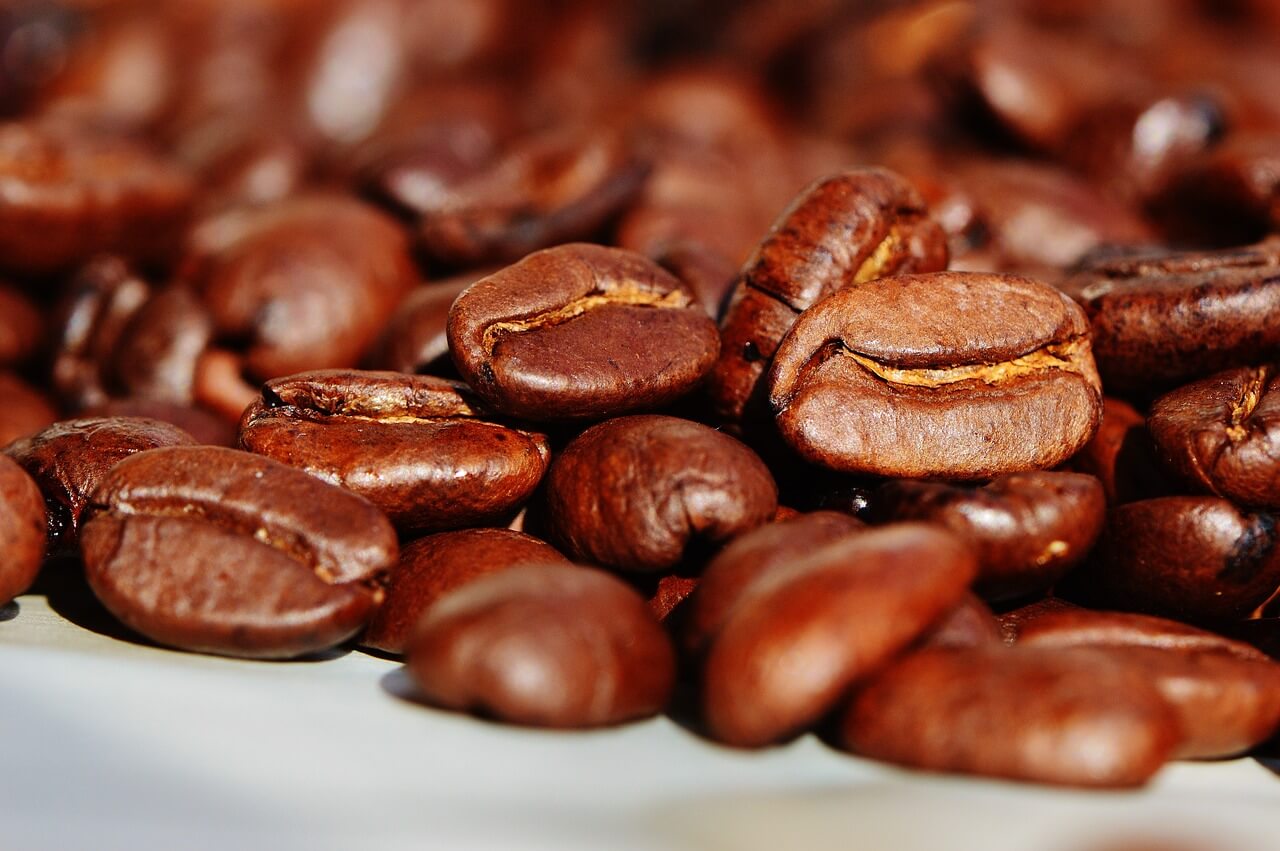
The caffeine in coffee is responsible for keeping us awake during those early morning meetings, and apparently also for melting off our fat. Studies found 300mg of caffeine a day (that’s roughly 3 cups) to be associated with an increase of 80 calories burned per day. They also found that men who had 5 cups of coffee a day had a smaller waist circumference compared to those who drank decaf instead. Calling coffee drinks foods that burn fat may be related to caffeine’s ability to increase adrenaline and release fatty acids. However, constantly drinking coffee causes us to build up a tolerance to it, meaning we are not as affected by it over time. Enjoy your morning cup if you like it, but don’t forget about caffeine’s negative affect on sleep and ability to increase, blood pressure, risk of gastric reflux (aka heart burn), and stress hormones.

A close up of coffee beans.

Foods the Burn Fat #1 Green Tea

Green tea is probably the most commonly known ‘fat burning food’, and the research does support its positive (though small) benefits (I’ve written about it a lot here). Compounds called polyphenols are the active components in green tea that have been studied extensively and found to increase fat oxidation and energy expenditure. They have also been shown to push the body to use fat for fuel instead of carbohydrates. Research suggests that these polyphenols prevent absorption and accumulation of fats by preventing digestive enzymes from doing their job. This all sounds great, but there are a few things to note about green tea products as foods that burn fat. First, the effects are minimized in very low calorie diets, so if you’re already skimming back on the calories green tea won’t be very effective. Second, many of these studies had participants consuming green tea extract, in some cases in amounts equivalent to about 7 cups of tea a day! Yikes! Green tea is delicious and full of antioxidants, so sip away at tea time, but I wouldn’t recommend it as an exclusive food that burns fat.

Three cups of green tea beside a teapot.

Like many nutrition claims, this one has very little truth behind it. Sure these foods are great for you and are filled with of great properties, but don’t hold your breath waiting for the pounds to melt off. I’ve said it before and I’ll say it again (it’s important!) for a healthy weight and healthy lifestyle it all comes down to moderation. Consuming these foods in the amounts necessary to call them foods that burn fat would likely be far from moderate. We’re talking about 3 cups of coffee, 7 cups of green tea and enough hot peppers to turn your mouth on fire. Um, no thanks. My recommendation would be to try including these foods in your diet because they’re delicious and great for you, not because they’re foods that burn fat.

What foods have you heard help you burn fat? What foods do you like to incorporate into your diet as fat burners? Leave me a comment and be sure to share this post with friends who are trying to lose fat in time for Summer!

Two opened coconuts.

Contributed by RD2B Olivia Cupido

Abbey Sharp

Abbey Sharp is a Registered Dietitian (RD), regulated by the Ontario College of Dietitians. She is a mom, YouTuber, Blogger, award winning cookbook author, media coach specializing in food and nutrition influencers, and a frequent contributor to national publications like Healthline and on national broadcast TV shows.
www.abbeyskitchen.com/about-abbey/

Last Updated October 27, 2021. Published May 4, 2016 By Abbey Sharp 11 Comments

Preserves 101 + Best 15 Jelly, Salsa, Sauce, Pickle, Jam Recipes

A jar of fermented pickles.

We are getting into warmer weather, which means finally, local crops will start to grow! The farmers markets are in full swing, the fresh salads are looking surprisingly tempting, and we may even have a bumper crop for making preserves.

 But What are Preserves?

Preserves are goodies we can or bottle (with important food safety precautions) that allow us to eat out-of-season ingredients all year round. They include salsas, pickles, jellies, jams, sauces and other delicious treats.

Why Bother Making Preserves?

I love making preserves because it means you get to eat your favourite foods all year long, even when they’re not in season. It means you can save a lot of money in December when you desperately want homemade salsa, but our local tomatoes taste super bleh. And it means our food is more nutritious, because when we buy out of season produce that is shipped from afar, the transit time results in nutrient loss. Sounds like a win, win to me!

 Canning Healthy Preserves 101

The key is to prepare delicious healthy preserves is to use a canner and follow these steps.

  1. I place a canner rack in the bottom of my canner and fill the canner half full with warm water. I heat the water to 140 F if I’m adding raw foods (ie. salsa, pickles), or 180 F if I’m canning cooked foods (ie. jelly).
  2. I fill my jars, and top with the lid and ring band, and load them carefully into the canner using a jar lifter. I always make sure the jar is sitting up right.
  3. I make sure the water is 2 inches above the jars. If it’s not, then I’ll add more boiling water as needed.
  4. Heat the burner of my Frigidaire stovetop on high, I cover the canner with its lid and heat until the water boils.My Frigidaire freestanding induction range boils water in less than 2 minutes, so I keep an eye on it because this happens fairly quickly.
  5. Once boiling, I set the timer for the total minutes required in my recipe to properly can the food. If the water level ever goes below the cans, I just top it off with a bit more boiling water.
  6. Once the time is up, I turn off the head, remove the canner lid and wait 5 minutes before removing the jars using the jar lifter.
  7. Then, very carefully, I will remove the cans from the canner, being carefully not to tilt or tip the jars over. I let them cool on a towel or cooling rack for at least 12 hours. Once they’re cooled, you can remove the ring bands, wash the jars, label them and store them in a cool dry place (mine go in the closet!)

Are you ready to make preserves? Check out my top 15 healthy preserves recipes from fellow food bloggers and dietitians!

Three mason jars of chipotle salsa.
Smart Nutrition – Chipotle Salsa


A mason jar of preserved lemons.

Eat Chicago- Preserved Lemons


A jar of fermented pickles.

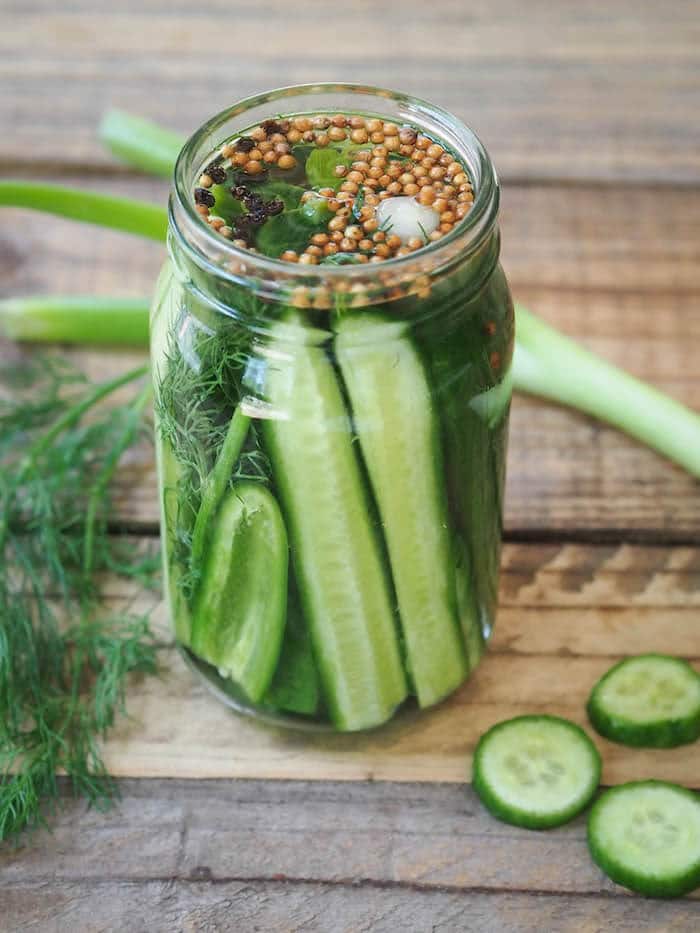
Avocado a Day Nutrition- Fermented Pickles


An opened mason jar of homemade jam.

Mom’s Kitchen Handbook- Homemade Jam


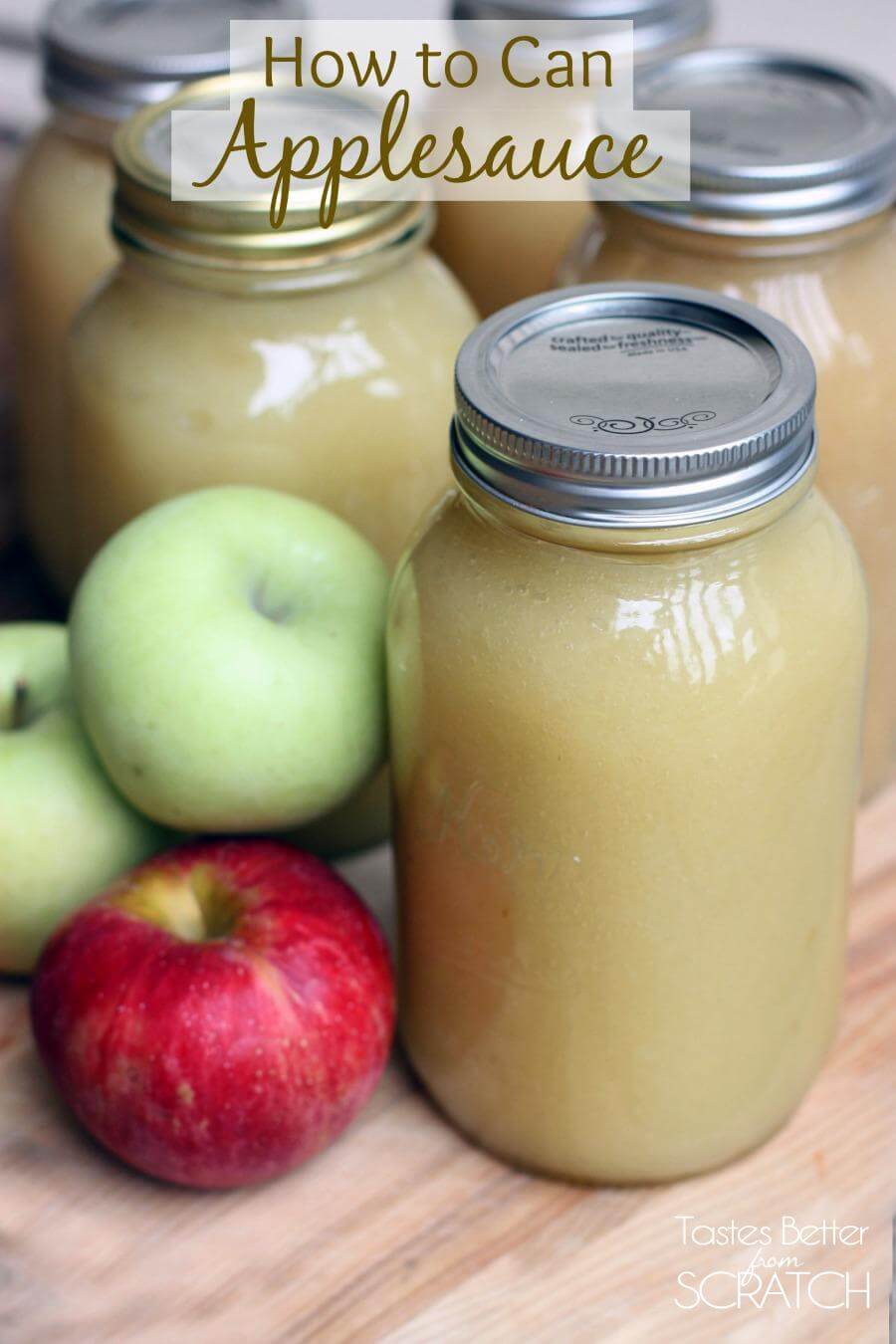
Mason jars of canned applesauce.

Tastes Better From Scratch- Applesauce


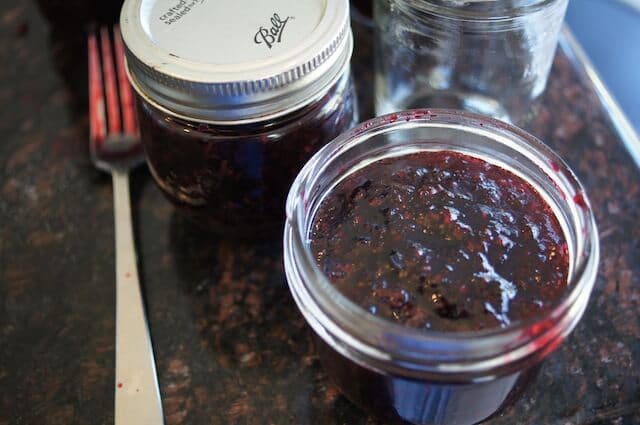
Tastes Better From Scratch – Raspberry Jam


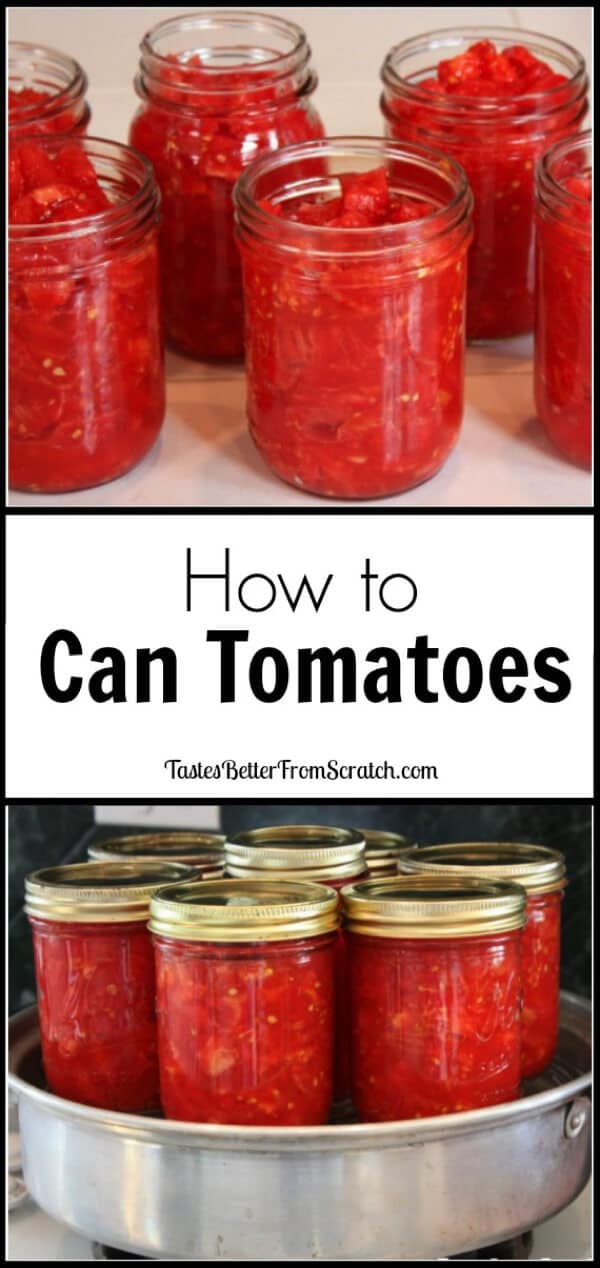
Mason jars of tomatoes with the text overlay \"Hot to Can Tomatoes.\"

Tastes Better From Scratch – Canned Tomatoes


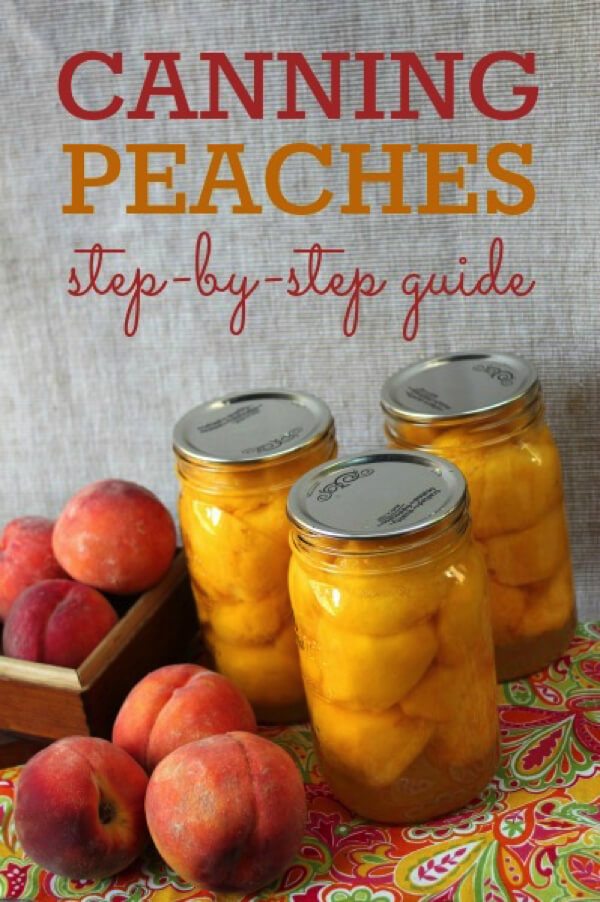
Mason jars of peaches with the text overlay \"Canning Peaches step by step guide.\"

Frugal Living- Canned Peaches


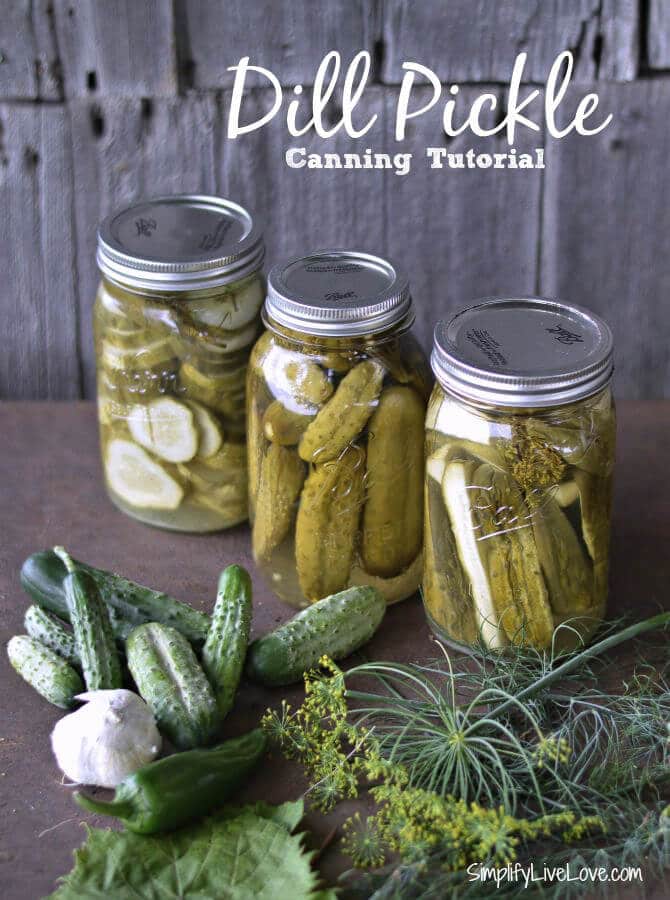
Three mason jars of pickles with the overlay text \"Dill Pickles Canning Tutorial.\"

Simply Live Love – Dill Pickles


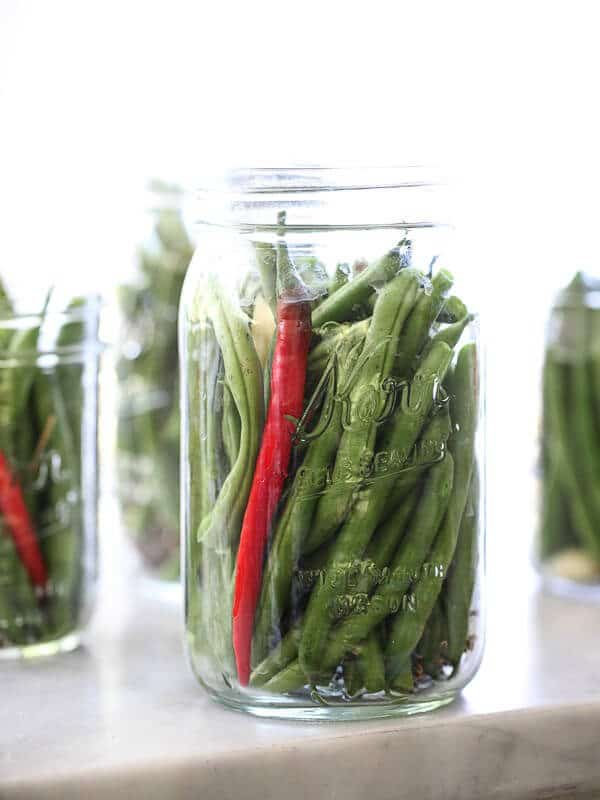
A mason jar with beans and a red chili pepper.

Foodie Crush- Dilly Beans


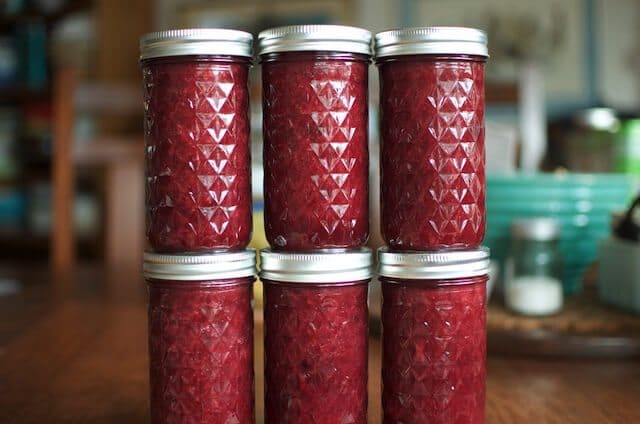
Six mason jars of cherry rhubarb jam.

Food in Jars – Sweet Cherry Rhubarb Jam


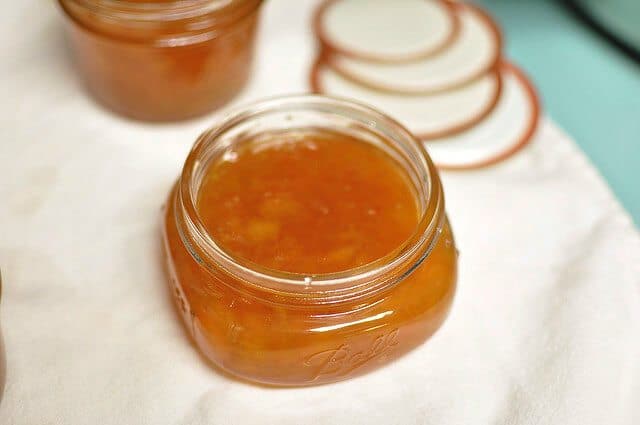
A jar of grapefruit jam.

Food in Jars – Grapefruit Jam


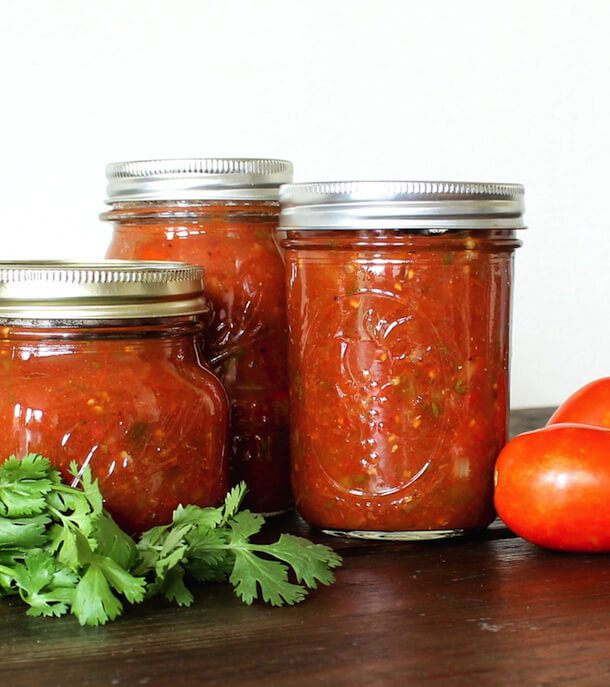
Three jars of fiery roasted salsa.

Heart Beet Kitchen – Fiery Roasted Salsa


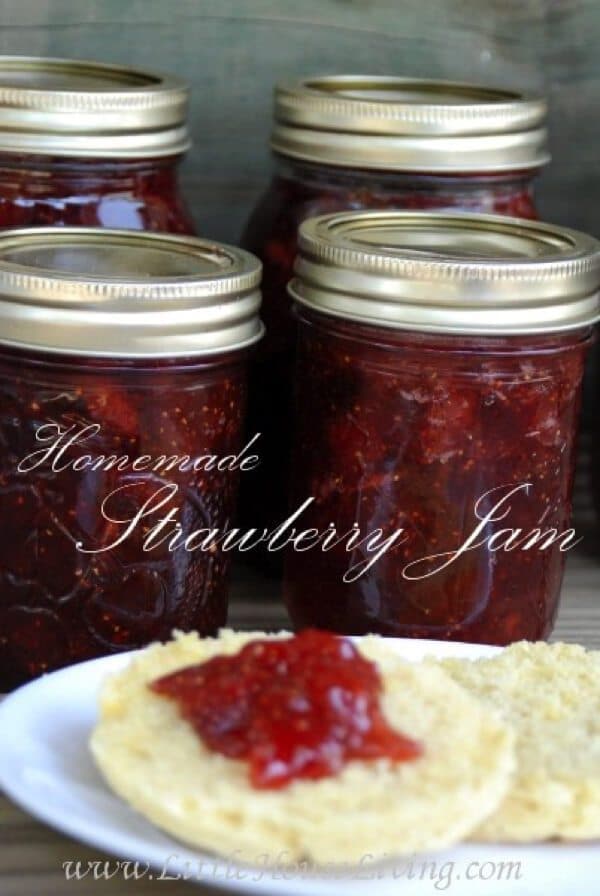
Jars of strawberry jam.

Little House Living- Strawberry Jam


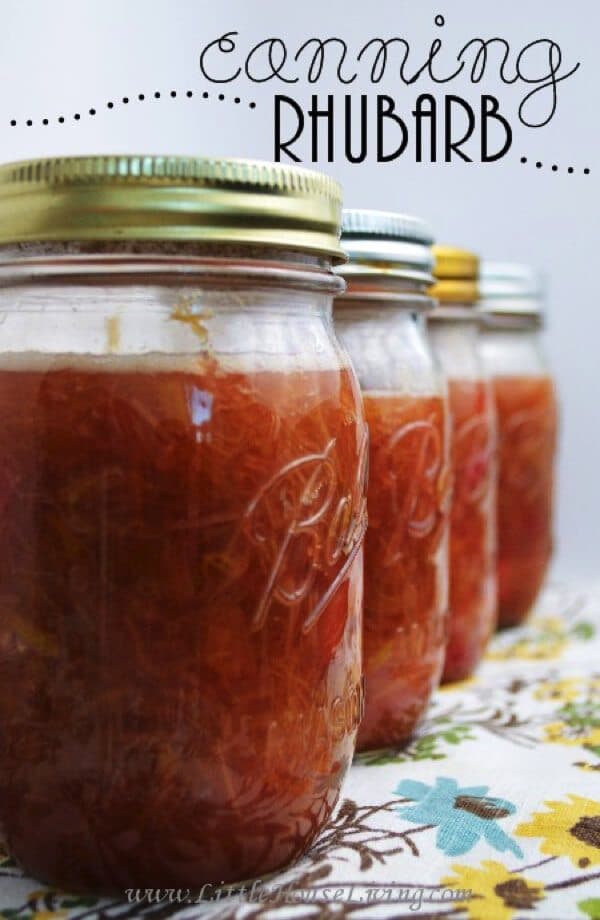
Multiple jars of canned rhubarb.

Little House Living- Rhubarb


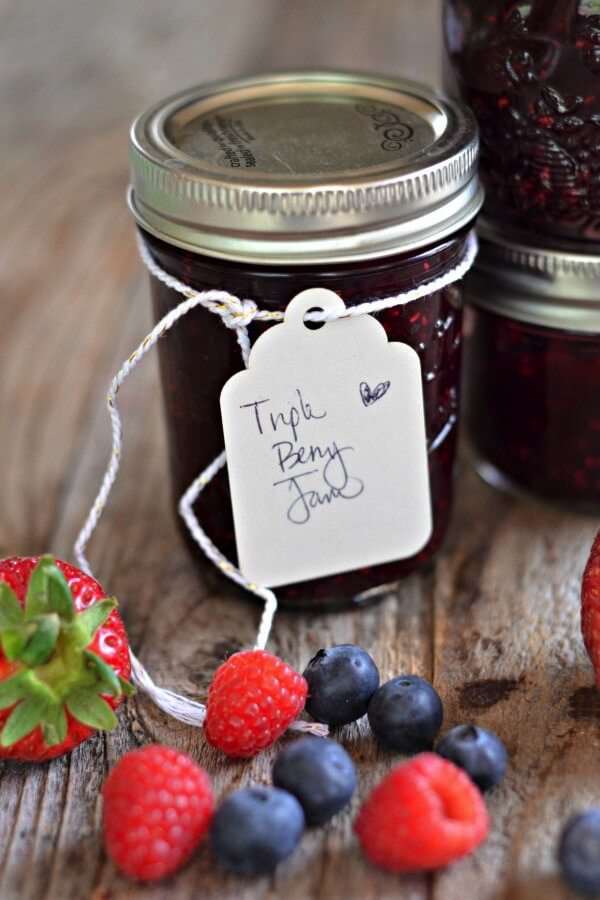
A mason jar of triple berry jam.

Mountain Mama Cooks – Triple Berry Jam


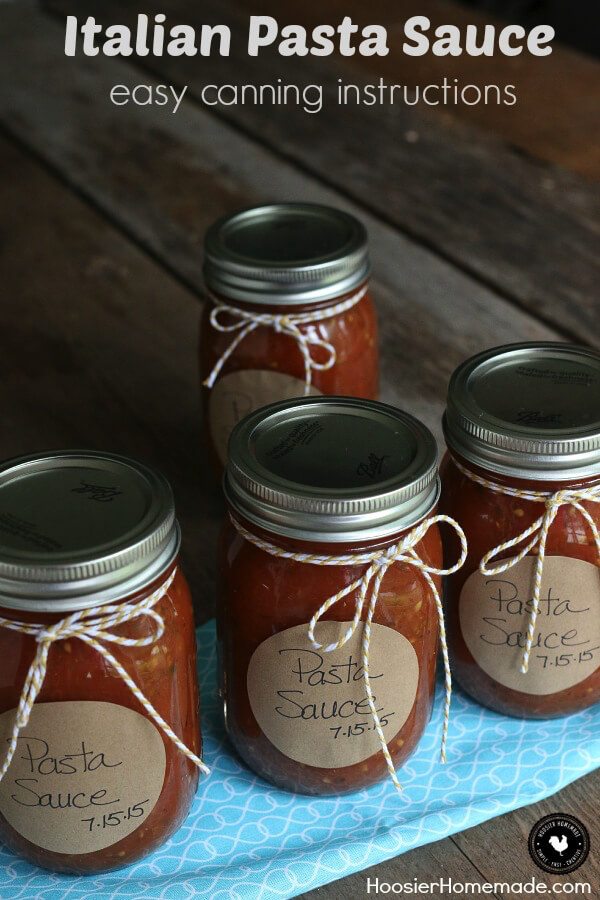
Four cans of canned pasta sauce.

Hoosier Homemade – Italian Pasta Sauce

What are your favourite preserves to make? Have you tried any of the healthy preserves in this round up? Leave me a comment below and let me know what you think!

A pinterest image of jars with the text overlay \"Preserves 101 and the Best 15 Jelly, Salsa, Sauce, Pickle, Jam Recipes.\"

Disclaimer: This post was developed in partnership with Frigidaire, however, as always all opinions are genuine.

Abbey Sharp

Abbey Sharp is a Registered Dietitian (RD), regulated by the Ontario College of Dietitians. She is a mom, YouTuber, Blogger, award winning cookbook author, media coach specializing in food and nutrition influencers, and a frequent contributor to national publications like Healthline and on national broadcast TV shows.
www.abbeyskitchen.com/about-abbey/

Last Updated October 4, 2021. Published April 20, 2016 By Abbey Sharp 11 Comments

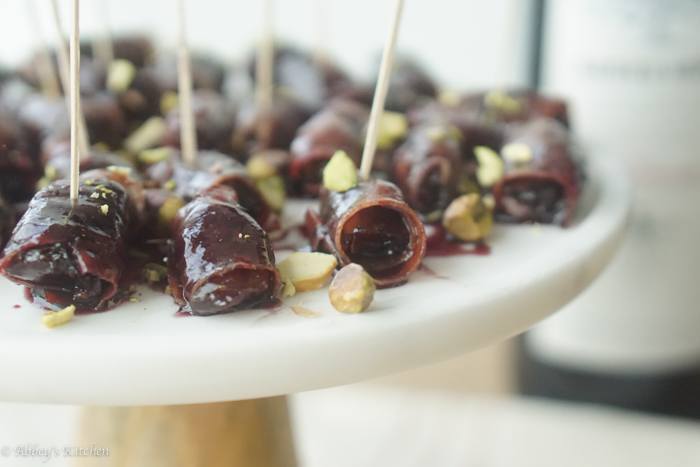
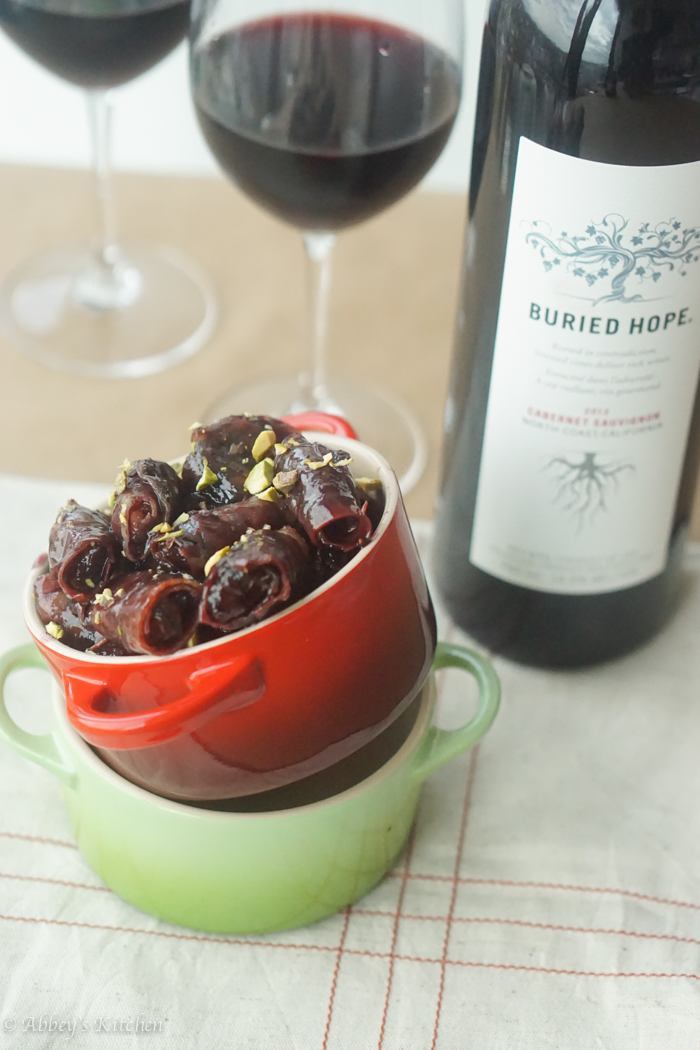
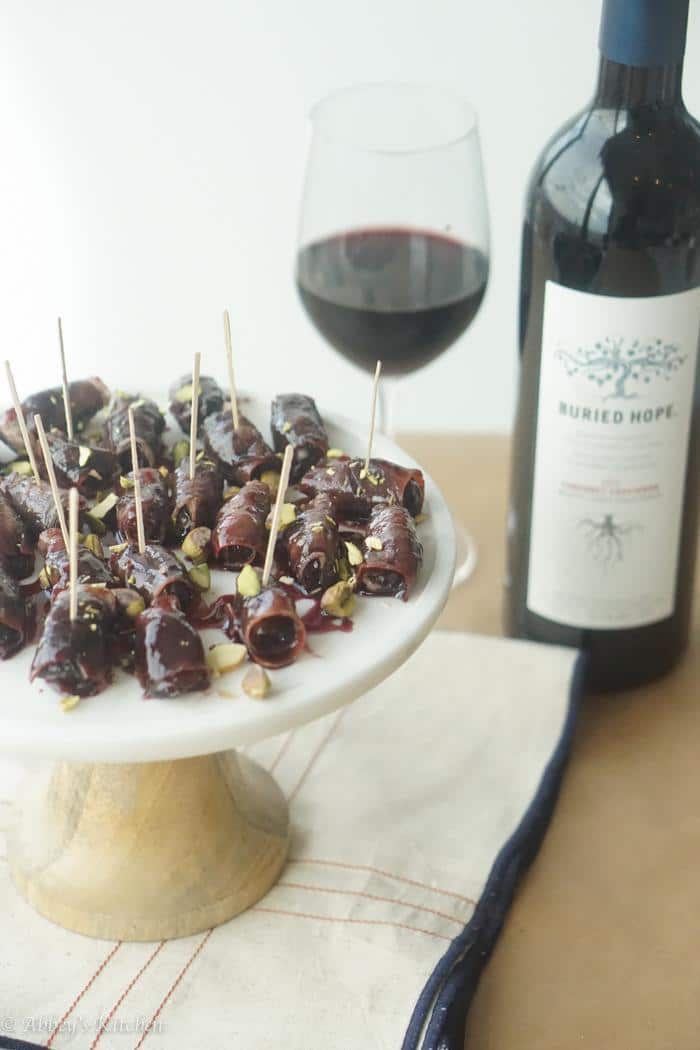
Prosciutto Bacon Wrapped Dates with Manchego Filling & Wine Glaze

Bacon Wrapped Dates

DISCLAIMER: This post was developed in sponsored partnership with Corby Spirit and Wine Limited, however, as always, all opinions are genuine.

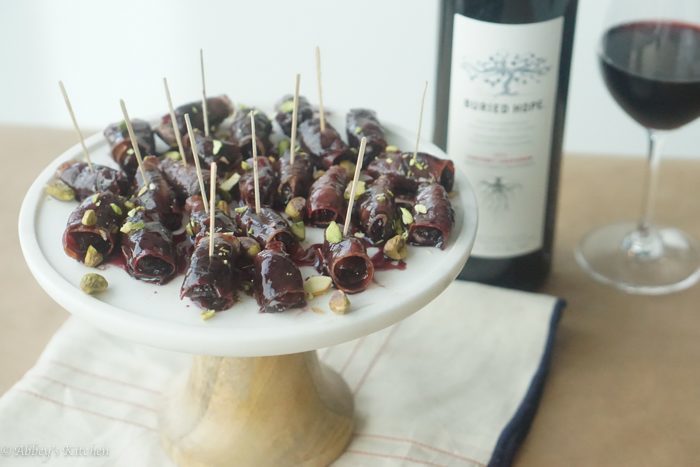
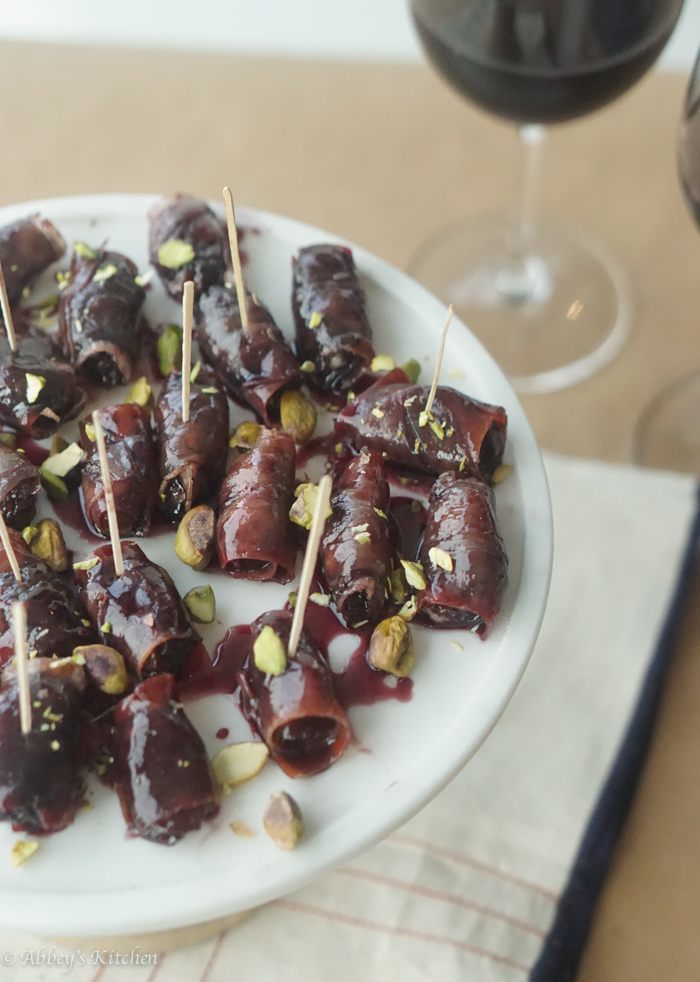
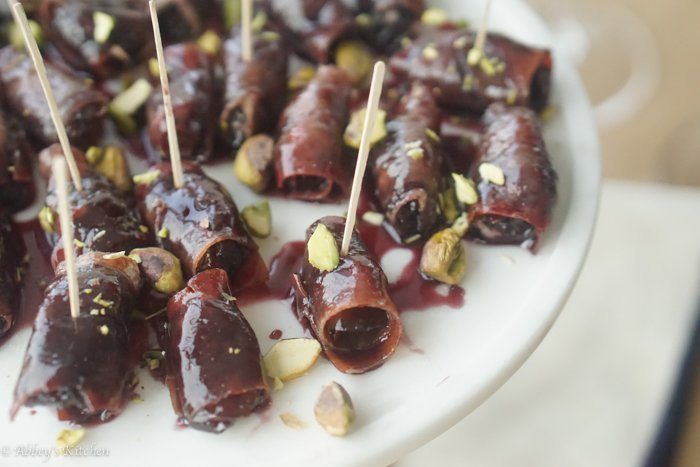
These prosciutto bacon wrapped dates with manchego filling and wine reduction are created using our sponsor, Corby wines and will make any party special.

prosciutto_wrapped_dates_3_of_10.jpg

But let’s be honest, bacon doesn’t exactly come with a classy connotation. But prosciutto bacon is a whole other game. Prosciutto bacon says, “hey, I taste amazing AND I am a sophisticated single bite.”

prosciutto_wrapped_dates_1_of_10.jpg

The key to a tasty one-bite hors d’oeuvre is to pack a lot of flavour into a small bite. You need different textures, opposing flavours and it needs to look so good, you pretty much want to make a full meal of them. This is clearly why bacon wrapped dates have always gone over so well.

prosciutto_wrapped_dates_4_of_10.jpg

So, what if We Add Cheese & Wine to the Bacon Wrapped Dates Party?
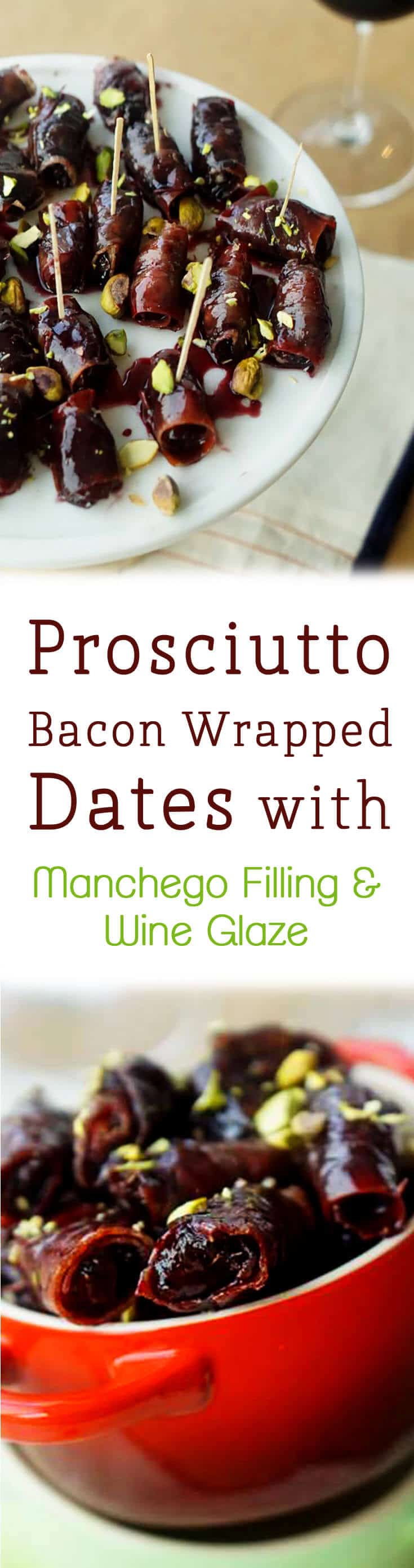
Introducing my Manchego Stuffed Prosciutto Bacon Wrapped Date with Cabernet Reduction. These baby bites maybe sound a bit indulgent, but thanks to their itty-bitty size and crazy pants flavour, they’re really quite light- especially in comparison to the traditional puff pastry hors d’oeuvres and deep-fried calorie bombs. They’re also gluten free, which I am finding to be more and more important in your holiday spread.


prosciutto_wrapped_dates_5_of_10.jpg

At a dinner party, I like to pair these bacon wrapped dates with a Cabernet like the one by Buried Hope that features rich plum and cassis flavours, and a nice level of tannin. The jammy rich flavours of this wine really does help balance out the salty manchego and prosciutto beautifully.

prosciutto_wrapped_dates_10_of_10.jpg

Now I know I said these were portion controlled. They are, I didn’t lie – but they’re so delicious you’ll likely need to park yourself on the opposite side of the buffet to avoid hogging them all to yourself.

prosciutto_wrapped_dates_6_of_10.jpg

If you’re having a holiday wine party, then you definitely will need a few varieties and appropriately paired snacks. Definitely check out my recipe for Red Wine Cherry Bruschetta and my White Wine Mushroom Bruschetta, as well.

What are your favourite party snacks to pair with your favourite wines? Don’t you love bacon wrapped dates? Leave me a comment below and I’ll try to lighten it up!
These prosciutto bacon wrapped dates with manchego filling and wine reduction are a perfect bite for a holiday party!

Bacon Wrapped Dates
Print Recipe
5 from 1 vote

Prosciutto Bacon Wrapped Dates with Manchego Filling & Wine Glaze

These prosciutto bacon wrapped dates with manchego filling and wine reduction are created using our sponsor, Corby wines and will make any party special.
Prep Time10 minutes mins
Cook Time15 minutes mins
Total Time25 minutes mins
Course: Appetizer
Servings: 16 Dates
Calories: 210kcal
Author: Abbey Sharp

Ingredients

  • 16 dates pitted
  • 16 slices small very small matchstick of manchego cheese cut into the length of the dates
  • 4 slices prosciutto cut into quarters
  • 1/2 cup Cabernet
  • 1 1/2 tbsp honey
  • Pistachios for serving if desired

Instructions

  • Preheat oven to 350 F. Prepare a baking sheet with a wired cooling rack on top of it.
  • Carefully pry open the date at it open slit and stuff in a piece of manchego cheese. Tightly wrap the piece of prosciutto around the date, making sure to fully cover the opening like a blanket. Plate onto the prepared baking sheet and bake for 11-13 minutes, or until the prosciutto gets crispy and the cheese begins to slightly melt.
  • Meanwhile, add the Cabernet and honey to a saucepan and bring to a boil. Reduce the heat to medium low and simmer until syrupy and thick.
  • Once the prosciutto dates are crispy, transfer them to the pan and toss in the wine syrup. Transfer to a serving tray or bowl with toothpicks, garnish with nuts and enjoy warm.

Nutrition

Calories: 210kcal


Disclaimer: The preceding recipe was developed in paid partnership with Corby Spirit & Wines, however, as always, all opinions are genuine.

Abbey Sharp

Abbey Sharp is a Registered Dietitian (RD), regulated by the Ontario College of Dietitians. She is a mom, YouTuber, Blogger, award winning cookbook author, media coach specializing in food and nutrition influencers, and a frequent contributor to national publications like Healthline and on national broadcast TV shows.

www.abbeyskitchen.com/about-abbey/

Last Updated October 4, 2021. Published March 22, 2016 By Abbey Sharp 7 Comments

3 Ingredient Healthy Hummus Burgers – Gluten Free, Egg Free, Low Fat

3 Ingredient Healthy Burgers

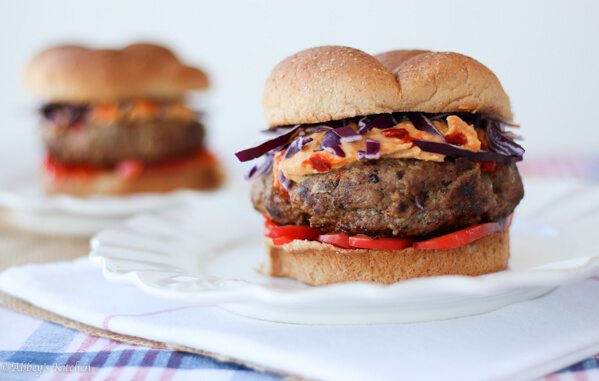
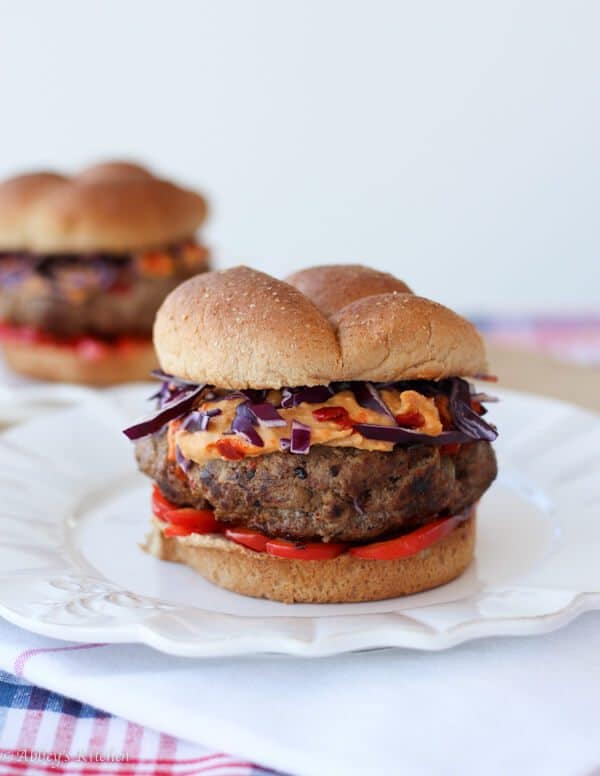
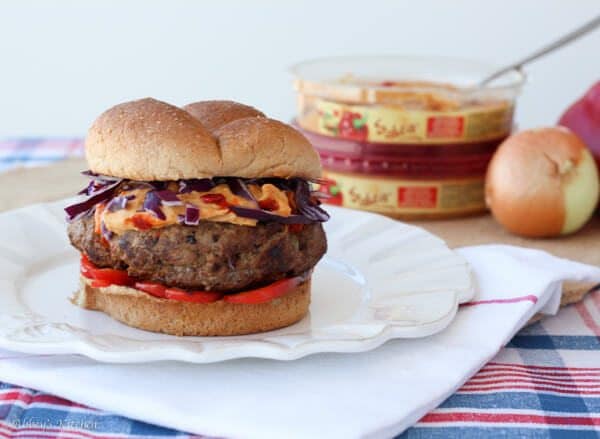
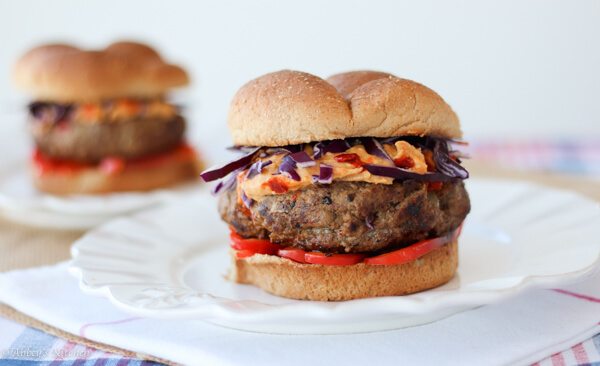
A healthy beef burger recipe with hummus in it that adds a lot of flavour, fibre and extra protein and is gluten free.

Yes. You read the title right. There are 3 ingredients (other than a little oil, salt and pepper) in these healthy hummus burgers, and yes, one of them is my beloved hummus.

healthy Hummus burger (2 of 6)

Hummus is obviously one of my go-to snacks for busy days, but you can also use it in a range of recipes as well. And not just healthy hummus burgers! 

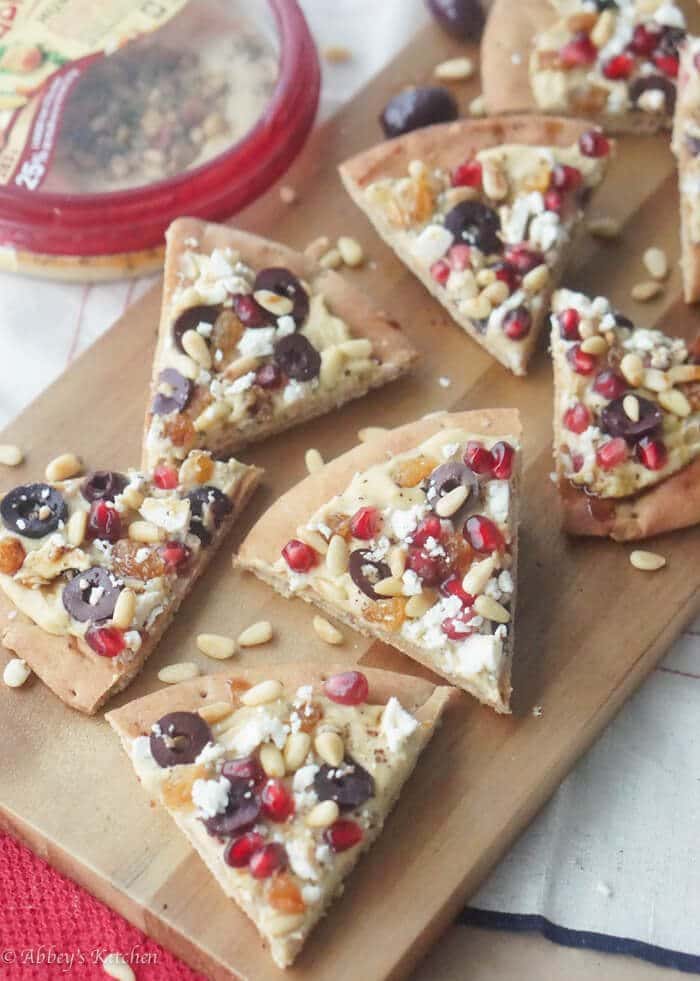
sabra hummus flatbread (8 of 20)

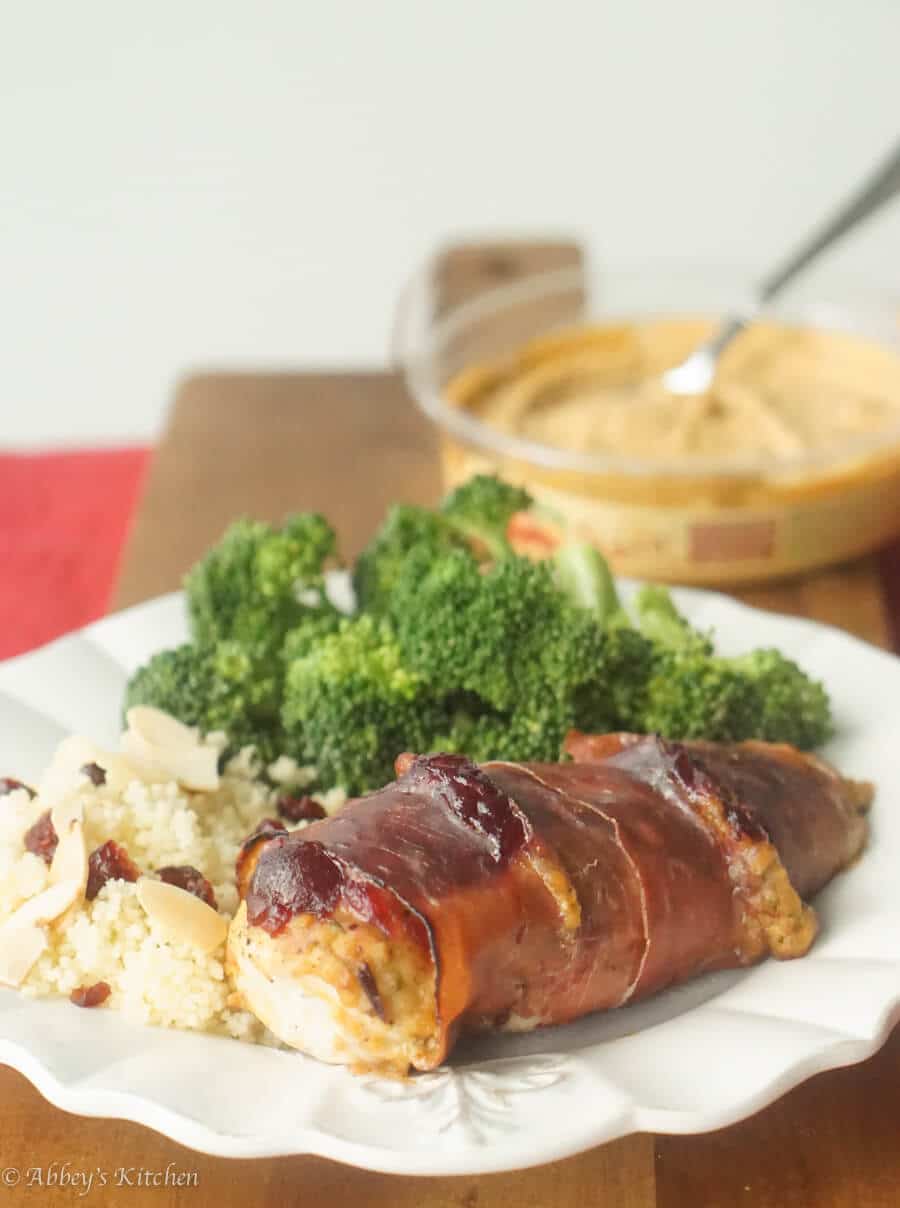
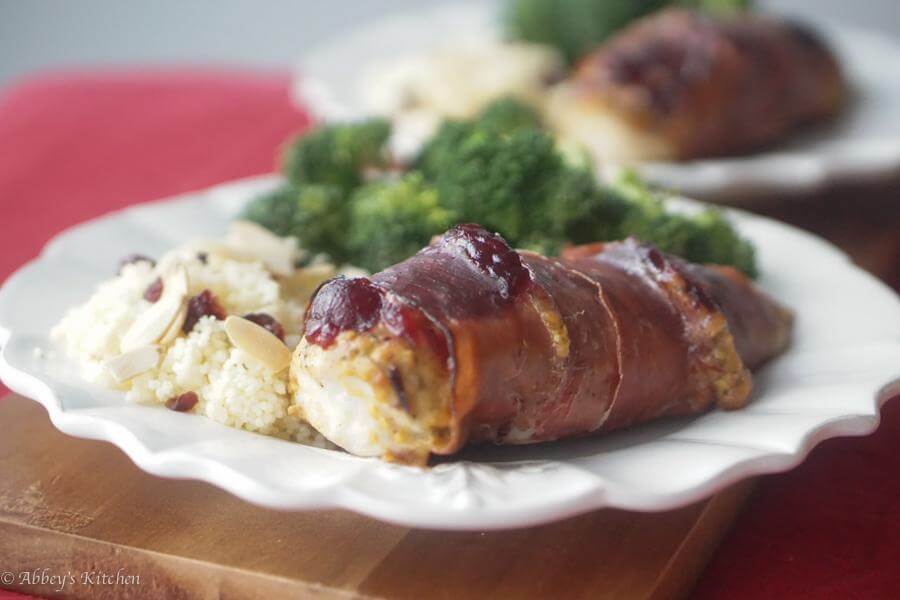
And my Prosciutto-wrapped Cranberry Hummus Chicken Breasts.

hummus chicken breast (12 of 13)

Oh yah, and all of these easy little swaps I dreamed up to cut calories and fat with hummus.

But I’m back with another one because the weather is getting warmer, and I officially am ready to bust out the grill. I know, it just snowed recently, but I can’t wait anymore. I know my fellow Canadians can identify!

healthy Hummus burger (3 of 6)

 How to Make Healthy Hummus Burgers

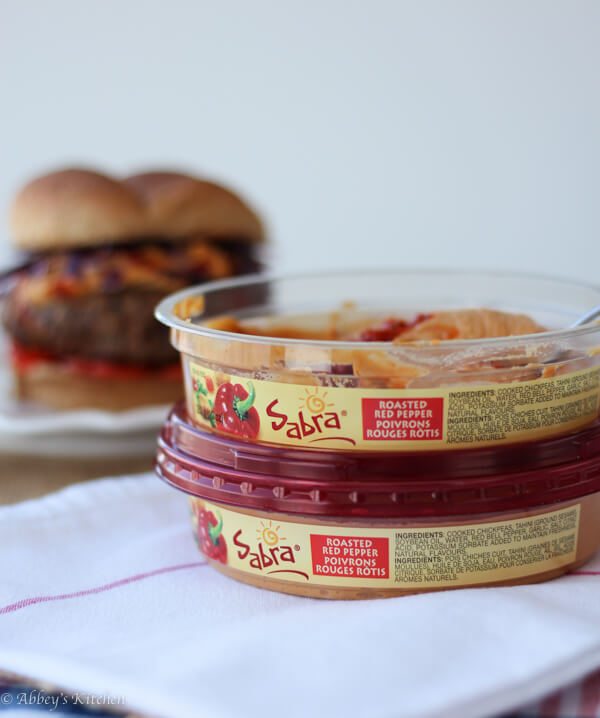
These healthy hummus burgers could not be easier to put together and feature’s my go-to Roasted Red Pepper Hummus as the flavour and binder. Because the hummus is thick and a bit sticky, it perfectly replaces both the egg and breadcrumbs in these healthy burgers both egg and gluten free. It also has built in flavour (garlic, lemon, sesame, and roasted red pepper), which knocks out the need for much else in this recipe. I really just love that Sabra is made with a simple ingredient list (just oil, spices, garlic, lemon, chickpeas, tahini) so these burgers end up packed with protein and fibre and totally guilt free. It’s also the International Year of the Pulse so I’m always looking for ways to get my pulses in. This recipe is a great way to help you meet your pulse target for those of you interested in taking the official #PulsePledge!

healthy Hummus burger (6 of 6)

I dress my healthy hummus burgers up with some sliced bell pepper and cabbage for crunch, and another heaping spoonful of Hummus on top for extra richness and flavour.

healthy Hummus burger (4 of 6)

What are your favourite ways to add mucho flavour to your burger? Do you have a favourite recipe for healthy hummus burgers? Leave me a message below, I would love to hear about your family’s favourite combinations!

And don’t forget to check out these other amazing 7 ingredient or less recipes from the dietitians at #TheRecipeRedux!

An InLinkz Link-up

healthy Hummus burger (1 of 6)

3 Ingredient Healthy Burgers
Print Recipe
5 from 2 votes

3 Ingredient Healthy Burgers with Hummus - Gluten Free, Egg Free, Low Fat

A healthy beef burger recipe with hummus in it that adds a lot of flavour, fibre and extra protein and is gluten free.
Prep Time20 minutes mins
Cook Time20 minutes mins
Total Time40 minutes mins
Course: Burger
Cuisine: American
Servings: 4 people
Calories: 410kcal
Author: Abbey Sharp

Ingredients

Beef Patties

  • 1 tsp olive oil
  • 1/4 cup onion very finely minced
  • 1 lb extra lean ground beef
  • 1/4 cup Roasted Red Pepper hummus
  • 1/4 tsp pepper
  • 1/4 tsp salt

Burgers

  • 4 gluten-free buns toasted
  • 1/4 cup Roasted Red Pepper Sabra hummus
  • 1/2 red bell pepper finely sliced
  • 1/2 cup cabbage shredded

Instructions

  • Heat the oil in a nonstick skillet over medium heat. Add in the onion and sauté until it softens and slightly caramelizes, about 4 minutes.
  • Add the onion to a bowl with the beef, Hummus, pepper and salt. Mix until well incorporated, then form into 4 3/4” patties. Using your thumb, make a shallow depression in the centre of each burger.
  • Place burgers on a grill heated to medium, close the lid and cook on both sides, about 6-8 minutes per side, until they reach an internal temperature of 160 F.
  • To serve, place the bell peppers on the bottom half of the buns, top with the burger and a tablespoon of Sabra hummus, and garnish with the shredded cabbage. Enjoy!

Nutrition

Calories: 410kcal


Abbey Sharp

Abbey Sharp is a Registered Dietitian (RD), regulated by the Ontario College of Dietitians. She is a mom, YouTuber, Blogger, award winning cookbook author, media coach specializing in food and nutrition influencers, and a frequent contributor to national publications like Healthline and on national broadcast TV shows.

www.abbeyskitchen.com/about-abbey/

Last Updated October 4, 2021. Published March 21, 2016 By Abbey Sharp 12 Comments

Best Healthy Fast Food from 13 Restaurants for Road Trip Food

healthy fast food

Road trips can be a fun, inexpensive way to get away, but between the long hours sitting down and the gas-station fare, staying on track with your healthy eating regime may seem like a daunting task. Thankfully, fast-food outlets have come a long way since the days when a fried chicken sandwich would be deemed your best bet. Yes, there is such thing as healthy fast food.

healthy fast food (13 of 41)

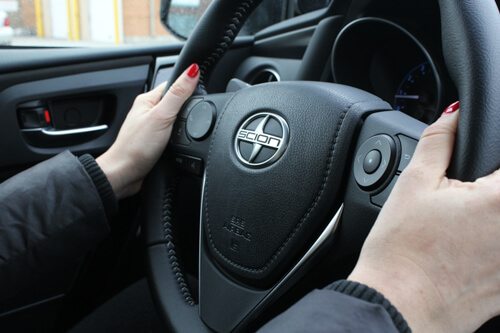
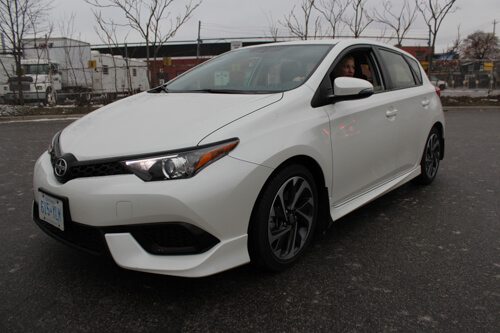
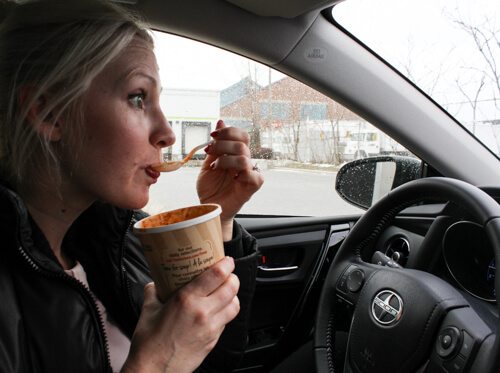
When I know I’ll be on the road over a mealtime, I always program my Scion iM GPS to map out where my options to eat are. It definitely helps keep me calm to have a game plan right in front of me where I know I can stop to eat and stretch my legs.

healthy fast food (15 of 41)

And once you get there, you may need some help making decisions. Sometimes dishes that sound like super healthy fast food diet-fare (like meal size salads with low-fat dressing) can be loaded with sodium, calories or fat.

healthy fast food (12 of 41)

In contrast, sometimes calories are not the most important consideration when looking for healthy fast food. Even if a small order of fries is only a few hundred calories, it’s important to ask yourself how satisfied you’ll feel after those fries and if you’ll simply need to stop again a half hour later for another meal.

healthy fast food (16 of 41)

Our advice? Focus on finding the most satisfying meals at your fast-food staples that pack a good dose of protein (and ideally fibre), plus the least amount of sodium possible. This may take a little bit of special ordering, but small changes can make a big difference.

Healthy Fast Food Picks

WENDY’S

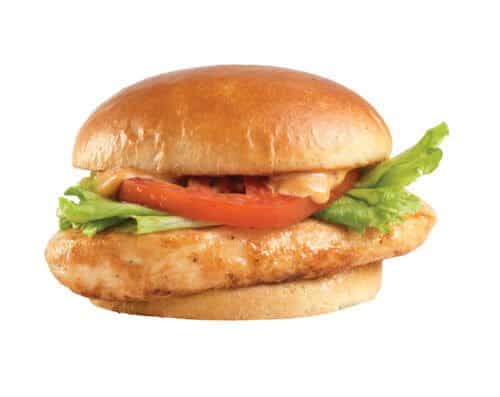
Lunch or Dinner: Chicken Grill Sandwich

healthy fast food (11 of 41)

Held together with a multi-grain bun, this sandwich is a winner for your on-the-go lifestyle as healthy fast food. After eliminating the Tangy Herb Sauce from the original recipe, you’re left with a high protein, low fat meal.

Stats (without sauce): Calories: 300 kcal, Protein: 32 grams, Carbohydrate: 34 grams, Fibre: 2 grams, Sodium: 840 mg, Fat: 4 grams

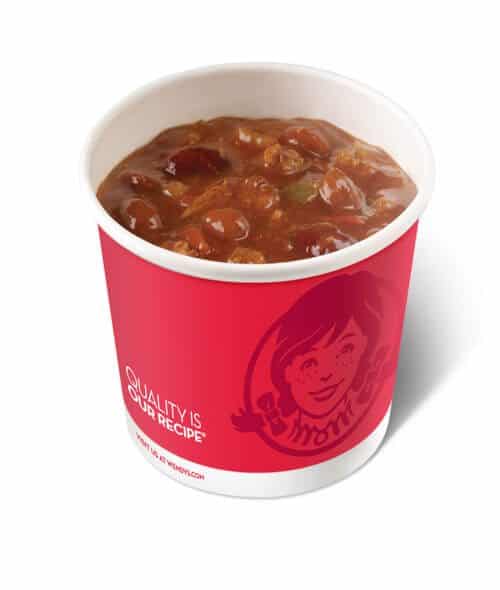
Side Dish or Snack: Wendy’s Small Rich and Meaty Chili

healthy fast food (21 of 41)

High in fibre and protein, this meal will keep you satisfied for lunch or dinner. Be sure to order the small size and skip out on the cheese and crackers which will skyrocket your sodium intake for the day.

Nutrition (without additional toppings): Calories: 170 kcal, Protein: 15 grams, Carbohydrate: 16 grams, Fibre: 4 grams, Sodium: 780 mg, Fat: 5 grams

MCDONALDS

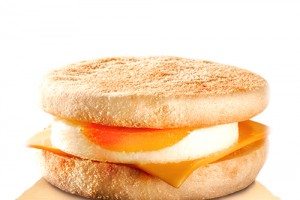
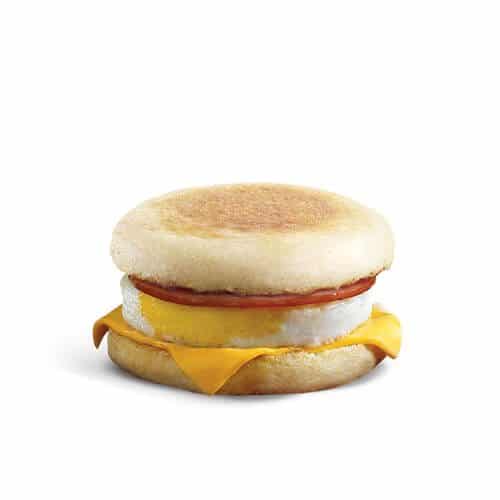
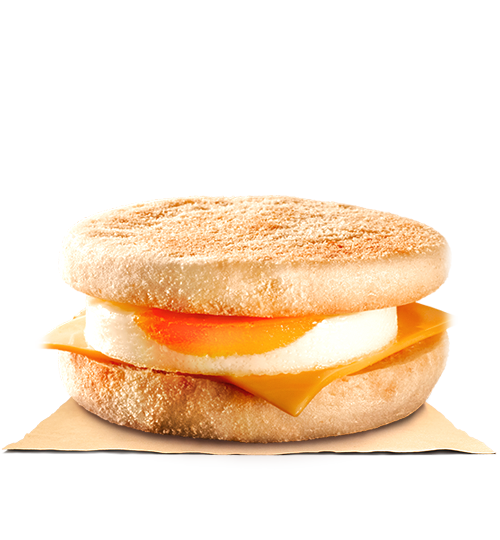
Breakfast: Egg McMuffin Sandwich

 healthy fast food (40 of 41)

Image: McDonalds

A relatively low-calorie breakfast with a fair big of protein from the egg. Eliminating the bacon lets you cut the fat in half and lose 266 mg of excess sodium.

Stats without bacon: Calories: 216 kcal, Protein: 10.64 grams, Carbohydrate: 29.74 grams, Fibre: 2 grams, Sodium: 454 mg, Fat: 5.46 g

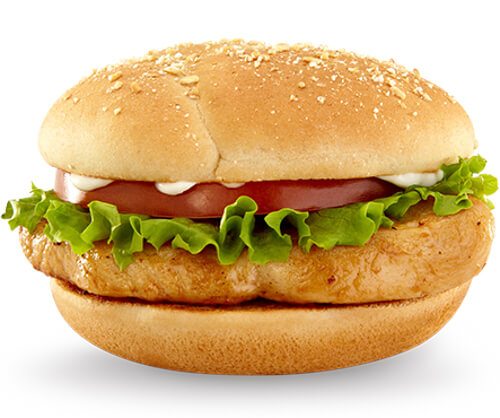
Lunch or Dinner: Premium Grilled Chicken Classic Sandwich

healthy fast food (41 of 41)Image: McDonalds

By sticking to our mantra of not just looking at calories, but to focus on the balance between calories, protein, carbohydrates, fat and sodium, the Premium Grilled Chicken Classic Sandwich satisfies the criteria. If we were to order this, we’d skip out on the mayo completely, and maybe ask them to double up on the lettuce and tomato.

Stats without mayo: Calories: 300 kcal, Protein: 27 grams, Carbohydrates: 41 grams, Fibre: 3 grams, Sodium: 730 mg, Fat: 3.5 grams

Snack or Side: Apple Slices

You can’t go wrong with some fibre rich apple!

Stats: Calories: 40 kcal, Protein: 0 grams, Carbohydrates: 10 grams, Sodium: 5 grams, Fat: 0 grams

KFC

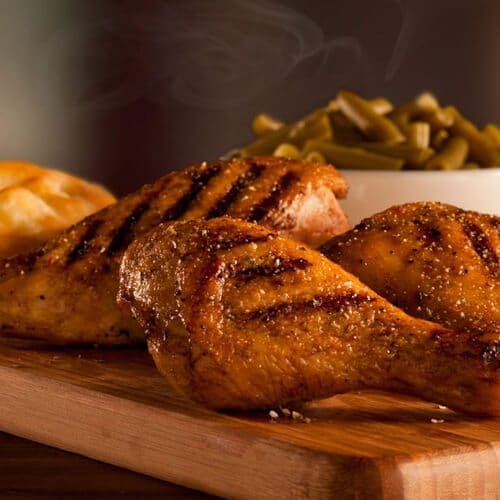
Lunch or Dinner: Grilled Chicken Drumsticks

healthy fast food (38 of 41)Image: Skinny Twinkie

Believe it or not, you do not have to revert to a side salad to find healthy fast food at KFC. By removing the skin on your chicken, you can trim about 220 calories, 15.9 grams of fat and 308 mg of sodium. Holy, smokes! Bring it on, Colonel!

Stats without skin for 2 drumsticks: Calories: 164 kcal, Protein: 24.04 grams, Carbohydrates: 0 grams, Fibre: 0 grams, Sodium: 80 mg, Fat: 6.78 g

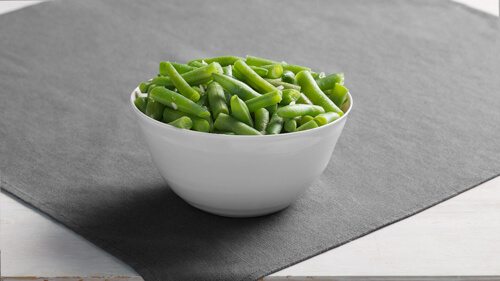
Side or Snack: Green Beans

healthy fast food (39 of 41)

Image: KFC

An easy meal of protein and vegetables sounds pretty healthy fast food to me!

Calories: 25 kcal, Protein: 1 gram, Carbohydrates: 4 grams, Fibre: 2 grams, Sodium: 260 mg, Fat: 0 grams

BURGER KING

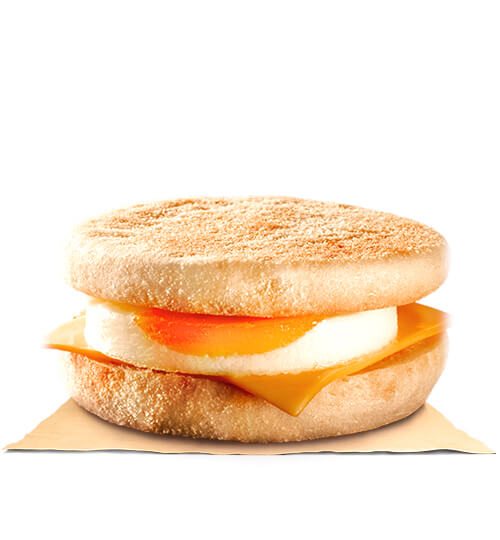
Breakfast: Egg & Cheese Muffin (without sausagehealthy fast food (36 of 41)Image: Burger King

The english muffin breakfast sandwiches are definitely your best bet for getting a bit of protein in your first meal of the day and avoiding the fat load from the croissants. Trust me, I love a good croissant, but preferably from a patisserie, not a fast-food joint. Yes, it’s still a fairly high sodium meal, but you can eliminating the sausage to trim away nearly 200 calories and 300 mg of sodium!

Stats without sausage: Calories: 260 kcal, Protein: 13 grams, Carbohydrates: 27 grams, Sodium: 830 mg, Total fat: 11 grams

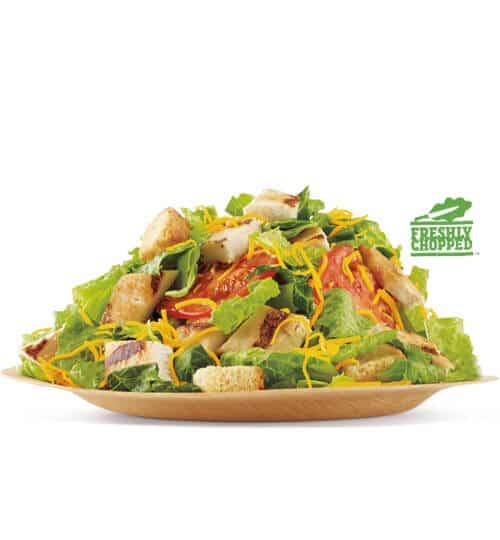
Lunch or Dinner: Garden Grilled Chicken Salad (with 1 Tbsp of Lite Balsamic Dressing and no cheese)

healthy fast food (37 of 41)Image: Burger King

While it is a pretty high sodium salad, we like it for packing a massive whopper of protein that will help keep you feeling fuller longer. You can help cut that salt a bit by leaving off the cheese and sticking to a single tablespoon of it to prevent the sodium from creeping up any further.

Stats with 2 tbsp Lite Balsamic Dressing: Calories: 300 kcal, Protein: 33 grams, Carbohydrates: 18 grams, Sodium: 720 mg, Fat: 11 g

Snack or Side: Motts Natural Apple Sauce

No sugar added, fruity and always a good choice.

Stats: Calories: 50 kcal, Protein: 0 grams, Carbohydrates: 13 grams, Sodium: 0 mg, Fat: 0 g

PANERA BREAD

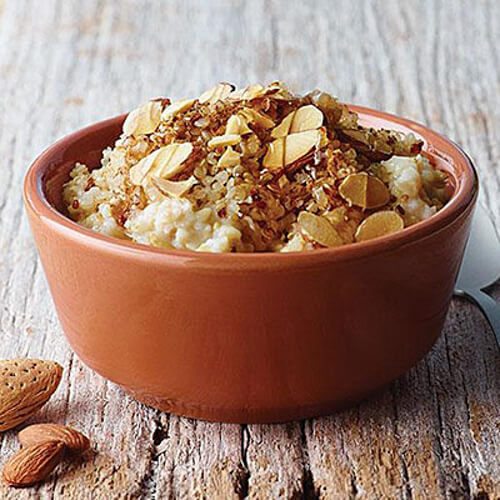
Breakfast: Power Almond Quinoa Oatmeal

healthy fast food (32 of 41)

Image: Health.com

A blend of steel-cut oats and quinoa, this oatmeal checks off all the boxes on our long list of healthy fast food credentials! It’s low-cal, low sodium, low fat, high protein and high fibre. It’s sure to keep you fueled for your trip ahead.

Stats: Calories: 300 kcal, Protein: 8 grams, Carbohydrates: 52 grams, Fat: 6 grams, Sodium: 220 mg, Fibre: 9 grams

Lunch or Dinner: Clean Pairings Menu

When dining for lunch and dinner at Panera Bread, we think that their “Clean Pairings Menu” is definitely the best healthy fast food. By choosing a duo of soup, salad or sandwiches over their full sized options, you’re getting a more suitable portion size for your meal, while also fitting in some variety in terms of tastes, textures and nutrients.

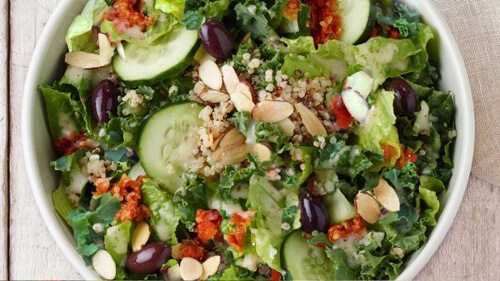
Mediterranean Quinoa Salad with Almonds

healthy fast food (33 of 41)

Image: Panera bread

We love the mix of whole grain quinoa with crunchy almonds and lots of colourful vegetables.

Stats for Clean Pairing Portion: Calories: 230 kcal, Protein: 10 grams, Carbohydrates: 15 grams, Fat: 18 grams, Sodium: 350 mg, Fibre: 4 grams

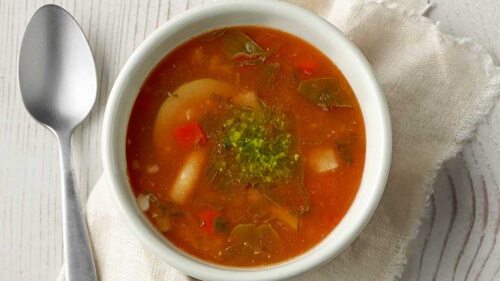
Low Fat Vegetarian Garden Vegetable Soup with Pesto

healthy fast food (34 of 41)

Image: Panera bread

Light, flavourful and packed with fibre-rich veggies.

Stats for Clean Pairing Portion: Calories: 80 kcal, Protein: 2 grams, Carbohydrates: 13 grams, Fat: 2 grams, Sodium: 750 mg, Fibre: 3 grams

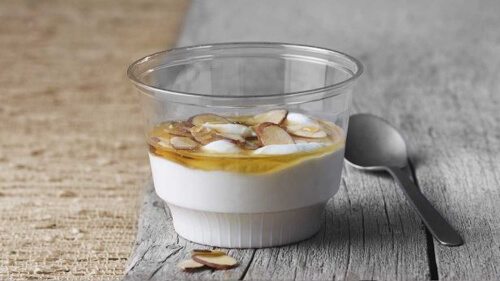
Side or Snack: Honey Almond Greek Yogurt Parfait

healthy fast food (35 of 41)

Image: Panera bread

Packed with protein, energizing carbs and some healthy fats from the nuts. A perfect healthy fast food combo.

Stats: Calories: 180 kcal, Protein: 14 grams, Carbohydrates: 25 grams, Sodium: 55 mg, Fibre: 1 gram

TACO BELL

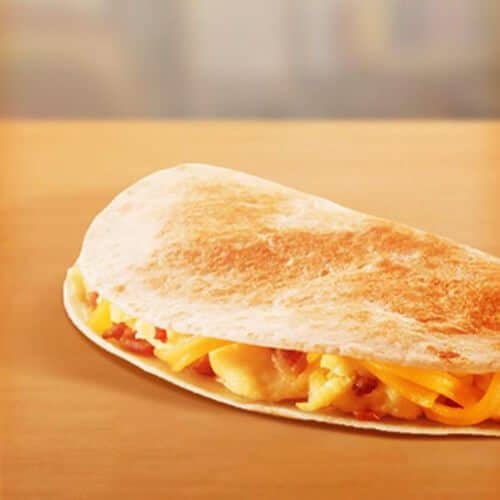
Breakfast: AM Grilled Taco with Egg & Cheese (no bacon)

healthy fast food (30 of 41)

Image ZMenu

Believe it or not, there are a lot of decent options at TB if you make a few substitutions. We like the grilled Taco without bacon and a side of hot sauce for extra low-cal flavour!

Stats: Calories: 170 kcal, Protein: 7 grams, Carbohydrates: 17 grams, Fat: 9 grams, Trans Fat: 0 grams ,Sodium: 370 mg

Lunch and Dinner: Fresco Steak Burrito Supreme

healthy fast food (31 of 41)

Image: Health Comu

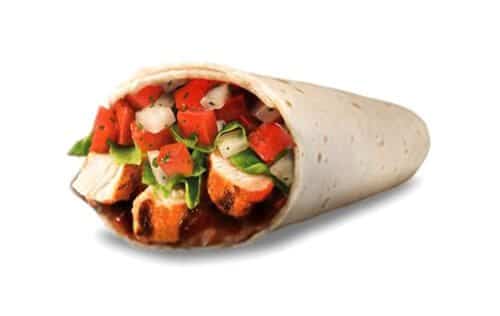
A solid dose of protein for just 300 calories makes this our go-to choice at Taco Bell.

Stats: Calories: 310 kcal, Protein: 15 grams, Carbohydrates: 43 grams, Fat: 9 grams, Trans Fat: 0 grams ,Sodium: 660 mg

Side or Snack: Black Beans

The combination of fibre and protein in beans make it a great pick for a quick snack or side. Great healthy fast food!

Stats: Calories: 80 kcal, Protein: 4 grams, Carbohydrates: 12 grams, Fat: 1.5 grams, Fibre: 5 grams, Sodium: 200 mg

A&W

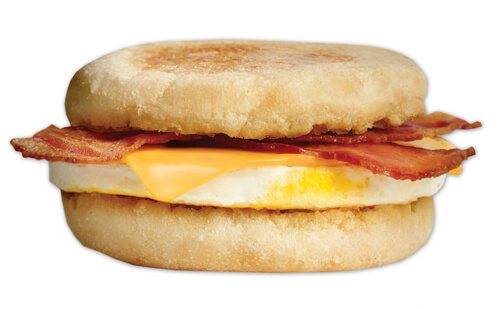
Breakfast: English Muffin Cheese & Egger

healthy fast food (9 of 41)


Yes, there’s a reoccurring theme here- in general, english muffin breakfast sandwiches are your best bet at most typical fast-food joints. Also, though, A&W is a pioneer in the fast food game by serving eggs from hens fed a vegetarian die without animal by products.

Stats (without ranch dressing): Calories: 330 kcal, Protein: 15 grams, Carbohydrates: 30 grams, Fibre: 1 grams, Sodium: 640 mg, Fat: 17 grams

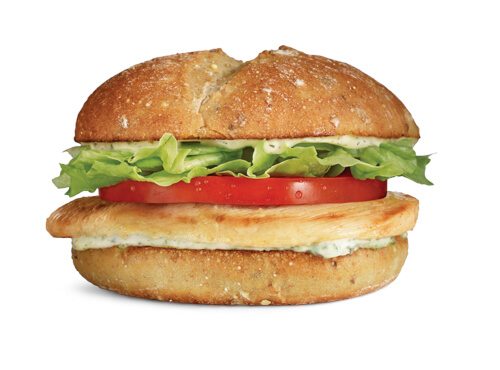
Lunch or Dinner: Chicken Grill Deluxe (without ranch dressing)

healthy fast food (29 of 41)


This chicken burger is packed with protein and veggies to keep you sustained throughout the day. If we were to order this burger, we’d customize it by dropping the ranch dressing. This would it cut back the calories, fat and sodium content, and let the flavor of the natural vegetables and seasoned chicken shine through.

Stats (without ranch dressing): Calories: 258 kcal, Protein: 23 grams, Carbohydrates: 28 grams, Fibre: 2 grams, Sodium: 658 mg, Fat: 6.45 grams

Snack or Side: 2% Milk

Milk is always a wholesome choice that packs carbs and protein – and is always very healthy fast food.

Stats: Calories: 130 kcal, Protein: 8 grams, Carbohydrates: 12 grams, Sodium: 120 mg, Fat: 5 grams

ARBY’S

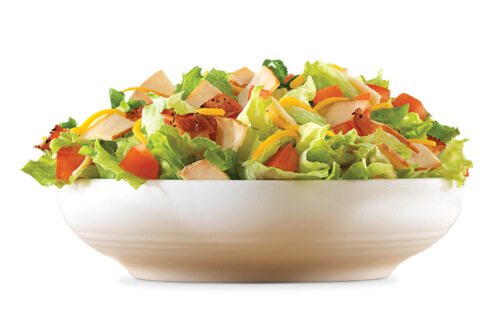
Lunch or Dinner: Roasted Turkey Farmhouse Salad (with no bacon, cheese and half of a Light Italian Dressing packette)

A bowl of salad.

Arby’s meals tend to have a lot of sodium, and the only way we’ve been able to get that down is by cutting back on some of the processed add ons. By removing the cheese, bacon and half of the dressing, you can get the salt down to a somewhat more reasonable level.

Stats: Calories: 85 kcal, Protein: 12 grams, Carbohydrates: 8 grams, Sodium: 730 mg, Fat: 1.5 grams

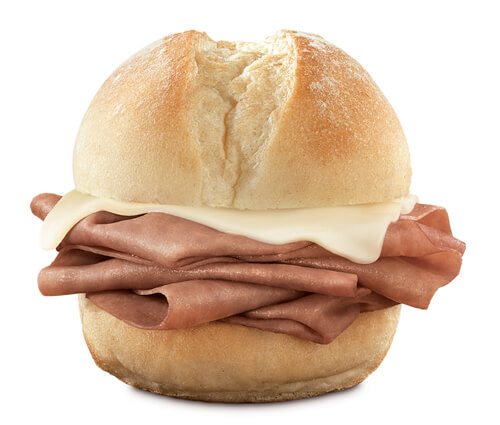
Snack: Roast Beef Slider (without cheese)

healthy fast food (4 of 41)


So apparently, everything at Arby’s is super high in sodium, but at least this mini slider will deliver some protein and carbs to keep you fueled on your trip.

Stats: Calories: 190 kcal, Protein: 11 grams, Carbohydrates: 21 grams, Sodium: 470 mg, Fat: 7 grams

CHIPOTLE

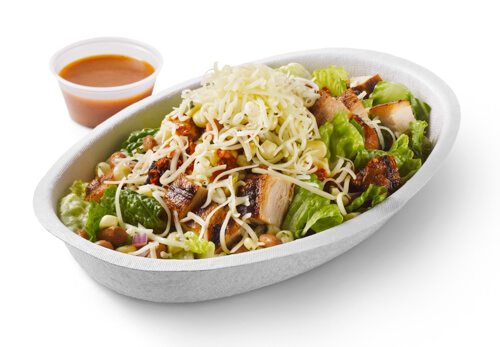
Lunch or Dinner: Burrito Bowl (Chicken, Fajita Vegetables, Tomatillo Green Chili Salsa, Romaine Lettuce)

healthy fast food (10 of 41)

Photographer: Charles Schiller

It’s super easy to find healthy fast food at Chipotle since the whole concept is incredibly customizable. While all of the protein picks are pretty lean and around the 200 calorie mark, going with the chicken keeps it a little lighter in calories. If you’re able to keep your sodium down the rest of the day, feel free to add some rice or beans.

Stats: Calories: 220 kcal, Protein: 33 grams, Carbohydrates: 9 grams, Sodium: 735 mg, Fibre: 2.5 grams, Fat: 7.5 grams

Snack or Side: Organic Milk

Again, not the place for snacking at Chipotle. It’s possible to find something small to eat, but most are similar to the burrito bowl. Grabbing a container of milk will provide a small 100 calorie snack with some protein and carbohydrate.

Stats: Calories: 90 kcal, Protein: 7 grams, Carbohydrates: 10 grams, Sodium: 105 mg, Fat: 2 grams

FRESHII

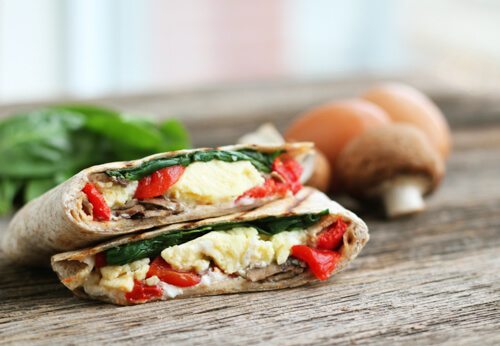
Breakfast: Spinach, Mushroom & Cheese Grilled Egg Pocket

healthy fast food (8 of 41)

A take on the classic breakfast sandwich, this time, filled with fresh veggies to get your day started on the right track. Relatively low in calories and sodium with an awesome 15 grams of protein, you’ll be sure to stay sustained and feeling comfortable for your long drive.

Stats: Calories: 340 kcal, Protein: 15 grams, Carbohydrates: 28 grams, Sodium: 490 mg, Fat: 18 grams, Fibre: 3 grams

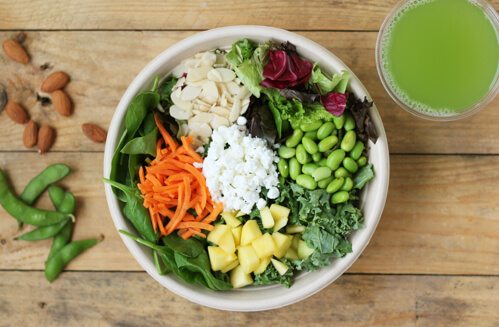
Lunch or Dinner: Metaboost Salad with Chicken and Balsamic Vinegar

healthy fast food (7 of 41)

Containing all the necessary greens and tasty toppings, this super food Metaboost salad is packed with spinach, field greens, kale, avocado, mango, carrots, edamame, almonds, and goat cheese. Total healthy fast food! In our opinion, the wide variety of toppings contributes a great deal of flavour, so, you could swap the traditional balsamic vinaigrette (which contributes a significant amount of the calories, fat and sodium) with a plain balsamic vinegar. We then recommend using those calories to add a little extra protein with chicken on top!

Stats (with balsamic vinegar and chicken):

Calories: 396 kcal, Protein: 26 grams, Carbohydrates: 26 grams, Sodium: 562 mg, Fat: 11 grams, Fibre: 6 grams

Snack or Side: 2 Hard Boiled Eggs

Eggs are literally mans perfect food, so grab a few of these bad boys for a quick protein boost.

Stats: Calories: 120 kcal, Protein: 12 grams, Carbohydrates: 1 grams, Sodium: 370 mg, Fat: 8 grams, Fibre: 0 grams

SUBWAY

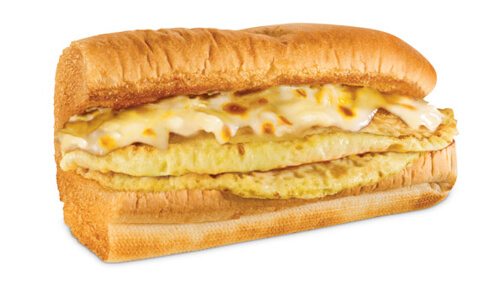
Breakfast: Egg White & Cheese Omelette Sandwich with Extra Veggies & Swiss Cheese on 9 Grain Wheat Bread

healthy fast food (26 of 41)

Image: Subway

The great thing about Subway is you really can customize your meal to make it fit your preferences and dietary needs and fit our criteria for healthy fast food. Our go to combination at breakfast is an egg white & cheese omelette sandwich with Swiss cheese (the lowest in sodium), loading up on as many extra low calorie veggies as you would like.

Stats (with egg whites, swiss cheese, green peppers, lettuce, spinach and tomatoes on wheat bread):

Calories: 350 kcal, Protein: 22 grams, Carbohydrates: 46 grams, Sodium:740 mg, Fat: 9 grams, Fibre: 5 grams

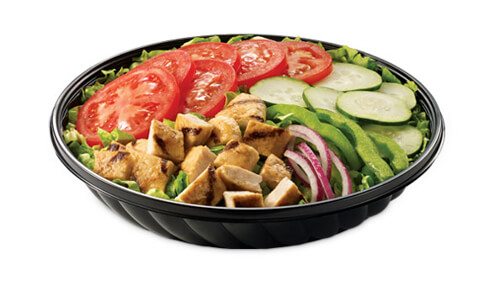
 Lunch or Dinner: Oven Roasted Chicken Salad (with Double Protein, Avocado, and Vinegar)

healthy fast food (27 of 41)

Image: Subway

We love Subway because of the freedom you get with adding vegetables in your healthy fast food, so load it up! Next time you’re in a hunger crunch, opt for a leaner meat option such as the chicken or turkey, and ask them to double your protein portion. While there is certainly caloric room for full-fat salad dressing, it’s best to go with basic vinegar to keep your sodium in check while adding some healthy fats with added avocado.

Stats (with double chicken, avocado and vinegar):

Calories: 350 kcal, Protein: 28 grams, Carbohydrates: 12 grams, Sodium: 635 mg, Fat: 10 grams, Fibre: 6 grams

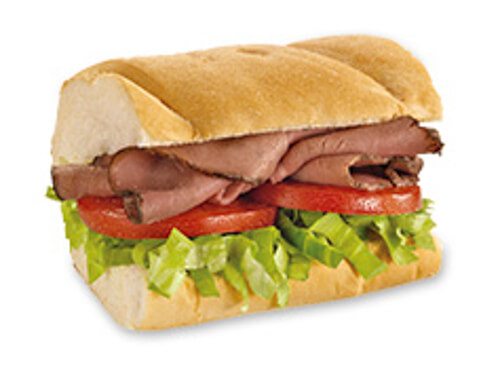
Snack or Side: 4” Roast Beef Kids Sandwich (no cheese or sauce, with extra veggies)

healthy fast food (28 of 41)

Image: Subway Kids

If you need a little pick me up, the kids size sandwich is a perfect balance of protein, carbs and fat in a petite 4” portion. While any of the standard deli meats are fine, the roast beef offered the most amount of protein without the most amount of sodium to make it great healthy fast food. Plus, it comes with a mini pack of apples and a water bottle!

Stats (with lots of veggies, no sauce or cheese): Calories: 190 kcal, Protein: 11 grams, Carbohydrates: 31 grams, Sodium: 460 mg, Fat: 3 grams, Fibre: 3 grams

DAIRY QUEEN

Breakfast: Egg Biscuit Sandwich (no Ham)

The breakfast selection at DQ is definitely high in salt. The only way we could get the stats under 50% of your needs for the day (yes, in the one meal) was to eliminate the ham from this sandwich. Still, if you’re in a pinch, this is definitely your best bet.

Stats (with no ham): Calories: 330 kcal, Protein: 10 grams, Carbohydrates: 25 grams, Sodium: 780 mg, Fat: 20 grams, Fibre: 1 grams

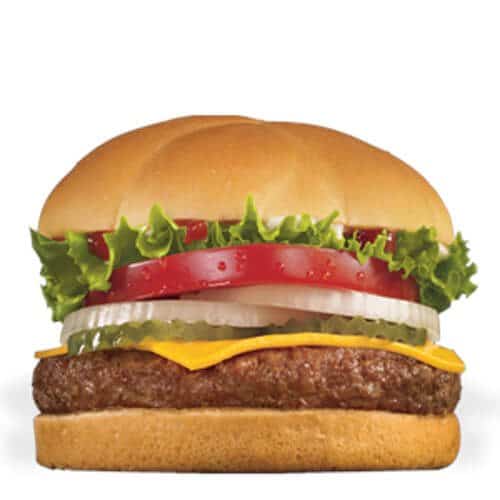
Lunch or Dinner: 1/4 lb GrillBurger (no mayo or ketchup)

healthy fast food (25 of 41)

Image: DQ

We tend to think of ice cream when we think of DQ, but you can get a fairly healthy lunch or dinner there, too. While normally we would choose the grilled chicken sandwich, the 1/4 lb burger delivered significantly less sodium and a little more protein. Plus, it’s more fun to eat a burger!

Stats (no mayo): Calories: 420 kcal, Protein: 20 grams, Carbohydrates: 39 grams, Sodium: 410 mg, Fat: 20 grams, Fibre: 2 grams

Side or Snack: Child’s Size Chocolate Dipped Cone

healthy fast food (24 of 41)

Image: DQ Fan Club

You’re at DQ. You kind of need to get some sort of ice cream and a children’s size dipped cone is definitely your best bet. It will help to satisfy your sweet tooth in a small mindful portion.

Stats: Calories: 220 kcal, Protein: 4 grams, Carbohydrates: 30 grams, Sodium: 75 mg, Fat: 9 grams, Fibre: 0 grams

TIM HORTONS

Breakfast: Multigrain Flatbread with Turkey Sausage, Egg White and Cheese

healthy fast food (3 of 41)

Image: That Chic Mom

Tim Hortons is basically ingrained in every Canadian’s morning routine, so we couldn’t leave it out of our healthy fast food round up. While it’s still a bit higher in sodium, we like the fibre and protein in this morning flatbread.

Stats: Calories: 280 kcal, Protein: 20 grams, Carbohydrates: 27 grams, Fibre: 4 grams, Sodium: 860 mg, Fat: 11 grams

Lunch or Dinner: Tuscan Chicken Panini (Whole Wheat bread, no cheese or sauce)

healthy fast food (2 of 41)

Image: Sean’s Adventures in Flavortown

A protein-rich sandwich guaranteed to keep you sustained throughout the entire day. It is already pretty high in sodium, so we suggest leaving off the cheese and creamy sauce.

Stats: Calories: 298 kcal, Protein: 23.4 grams, Carbohydrates: 44 grams, Fibre: 4.9 grams, Sodium: 904 mg, Fat: 3.1 grams

Snack or Side: Latte

healthy fast food (22 of 41)

Image: Simply Frugal

You can’t go to Timmy’s and not get a coffee. If you go with a latte, you’ll be getting a little extra protein in there too.

Stats: Calories: 80 kcal, Protein: 8 grams, Carbohydrates: 12 grams, Fibre: 0 grams, Sodium: 120 mg, Fat: 0.2 grams

STARBUCKS

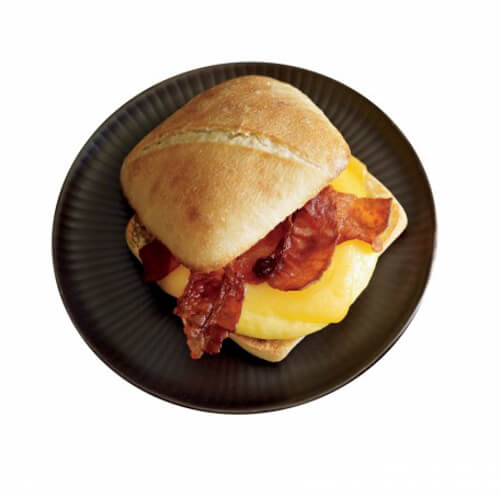
Breakfast: Reduced Fat Turkey Style Bacon, Cheddar, Egg-White Breakfast Sandwich

healthy fast food (5 of 41)


While the Greek yogurt and the oatmeal are both lower sodium choices, we like this egg white breakfast sandwich as healthy fast food for its extra protein.

Stats: Calories: 230 kcal, Protein: 13 grams, Carbohydrates: 28 grams, Total Fat: 6 grams, Fibre: 2 grams, Sodium: 540 mg

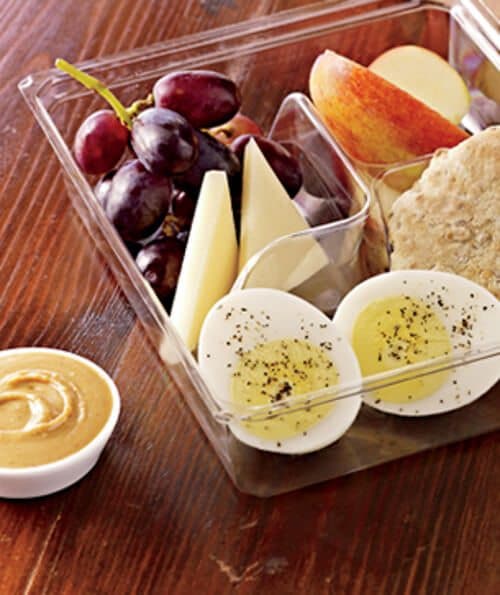
Lunch or Dinner: Protein Bistro Box

healthy fast food (23 of 41)

Image: Starbucks

With a hard boiled egg, fruit, peanut butter, cheese and a multigrain muesli bread, this is our go-to box for a more filling meal or snack.

Stats: Calories: 360 kcal, Protein: 14 grams, Carbohydrates: 37 grams, Total Fat: 18 grams Fibre: 5 grams, Sodium: 520 mg

Side or Snack: Tall 2% Latte

healthy fast food (6 of 41)

You’ve gotta have a coffee drink when you visit Starbucks, and sticking to a latte without sugar is your best bet. And feel free to go for 2% instead of skim, which will provide you with a little more satiety factor.

Stats: Calories: 150 kcal, Protein: 10 grams, Carbohydrates: 14 grams, Total Fat: 6 grams, Fibre: 0 grams, Sodium: 125 mg

There are a lot of things to stress over when planning a road trip, but now, hopefully, finding healthy fast food isn’t one of them! Just remember to print this handy list, highlight your top picks and use that GPS to track down your go-to eateries. To find more information on my favourite car for getting me around, check out Scion’s website here.

healthy fast food (20 of 41)

What are your favourite healthy fast food picks? Looking for more road-trip tips? Stay tuned for Part Two of my on-the-road series where I will be sharing my ultimate healthy tips and tricks when you’re on the road.

healthy fast food (19 of 41)

Research from Abbey’s Kitchen Nutrition Student Martina Luketich

Disclaimer: This post was developed in paid partnership with Scion iM,  however, as always, all opinions are genuine.

Abbey Sharp

Abbey Sharp is a Registered Dietitian (RD), regulated by the Ontario College of Dietitians. She is a mom, YouTuber, Blogger, award winning cookbook author, media coach specializing in food and nutrition influencers, and a frequent contributor to national publications like Healthline and on national broadcast TV shows.

www.abbeyskitchen.com/about-abbey/

Last Updated August 30, 2022. Published March 14, 2016 By Abbey Sharp 2 Comments

Top Healthy Easter Recipes for Easter Dinner, Lunch or Brunch

healthy easter recipes

Easter is just around the corner, and that means massive family feasts, candy and mountains of chocolate. But Easter doesn’t have to be an absolute diet doozy of a holiday. A healthy approach to this Spring holiday can mean colourful salads, flavourful lean meats and a celebration of seasonal produce. Yay for early Spring produce!! To help you plan out your Easter menu, I’ve compiled a list of some of my favourite healthy Easter recipes in a delicious round up.

But first, we need some decadent mini eggs and hot cross buns.

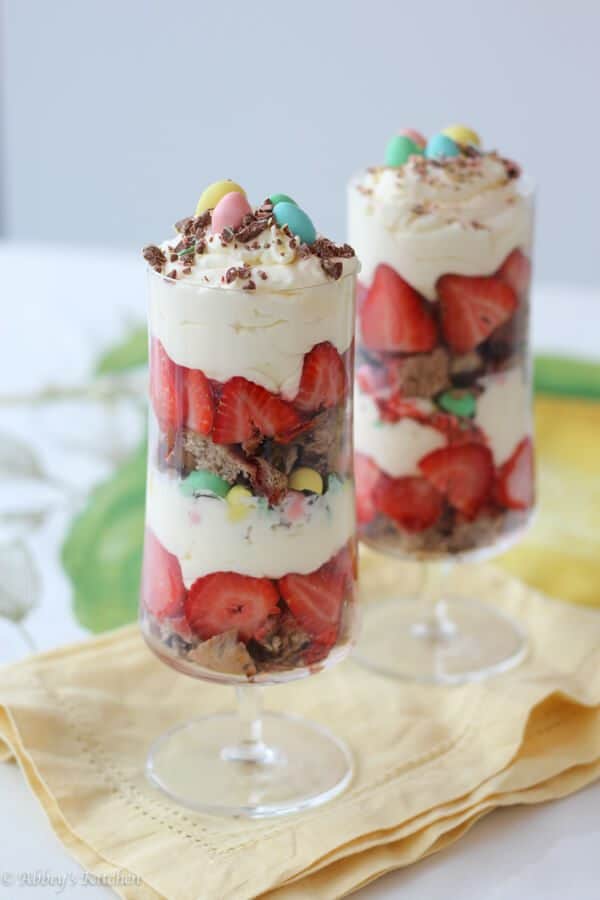
Abbey’s Kitchen- Mini Egg & Hot Cross Buns Trifle

best easter recipes (8 of 18)

Alright, now that we got our fix, let’s check out those healthy Easter recipes.

Best Healthy Easter Recipes

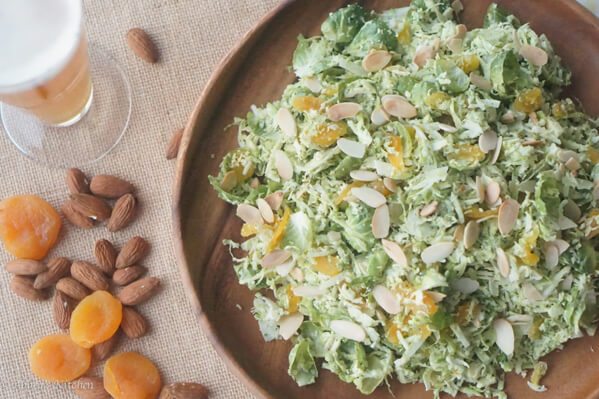
Abbey’s Kitchen- Brussels Sprout, Apricot and Beer Pesto Slaw

best easter recipes (7 of 18)

Yep. Beer IN your salad along with parmesan cheese, almonds, apricots, apple and shredded Brussels sprouts. You’re welcome.

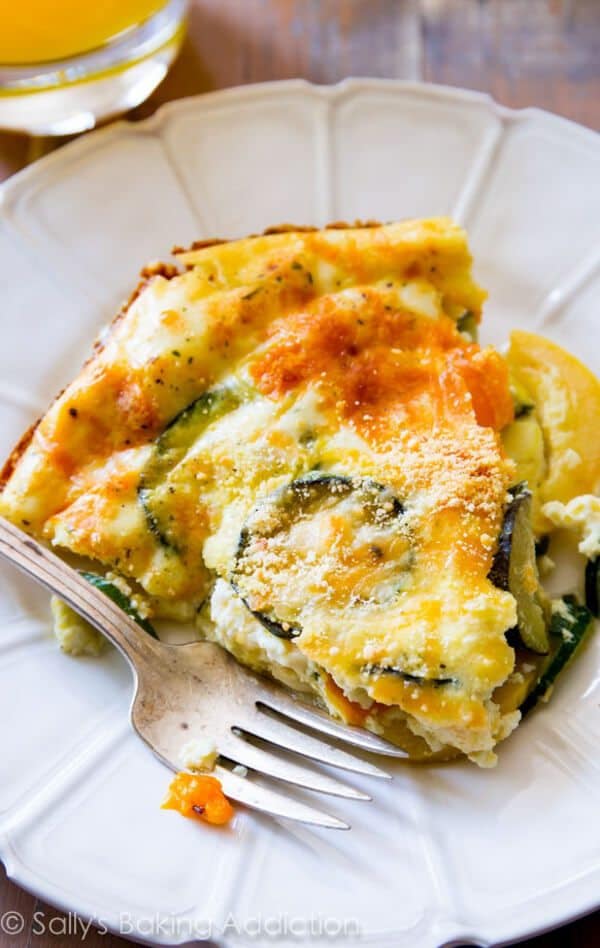
Sally’s Baking Addiction- Crustless Veggie Quiche

best easter recipes (3 of 18)

This lightened up version of a classic vegetable quiche is one of my favourite healthy Easter recipes.  And because (realistically) no one is having a sliver of quiche during the holidays, its low-cal (110 kcal/serving), crustless, low-carb and packed with egg whites to help keep you satiated throughout the day!

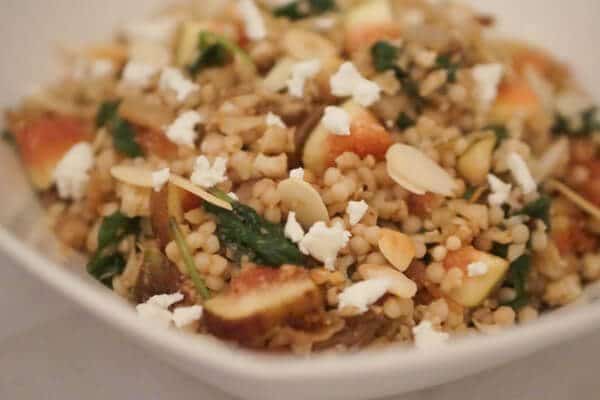
Abbey’s Kitchen – Fig, Couscous, and Cauliflower “Couscous” Salad

best easter recipes (6 of 18)

Why not stretch your carbs with this cauliflower couscous and add mucho flavour with figs, spinach and crunchy almonds!

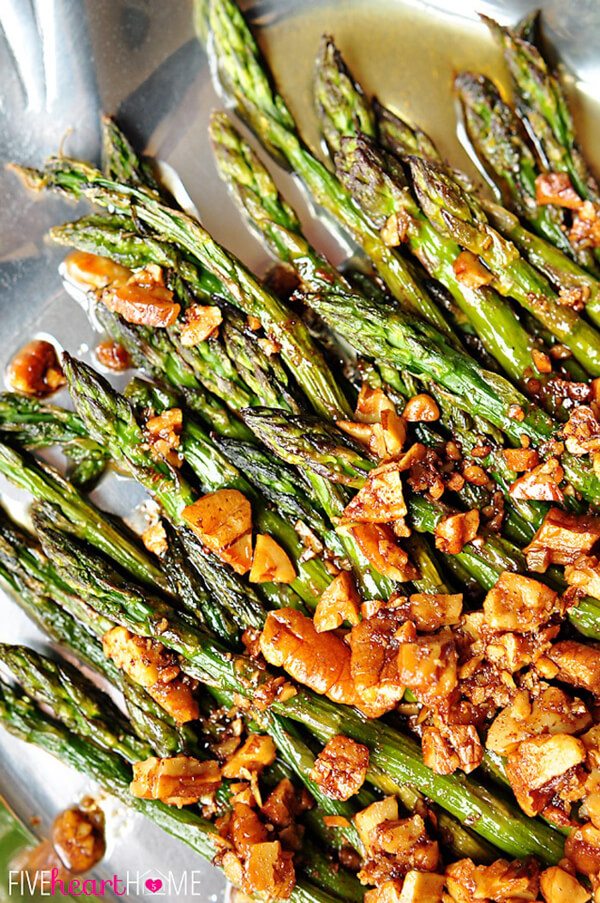
Five heart Home- Roasted Asparagus with Brown Butter Pecans

best easter recipes (17 of 18)

Okay, are you drooling?  Because we are. This lightened up Easter recipe is the perfect spring dish. And with these mouth watering brown butter pecans, it really brings out the awesome caramelized, sweet flavour and aroma of these widely cultivated vegetables crops.  This is sure to be a hit on your dining room table this year!  Check-it-out.

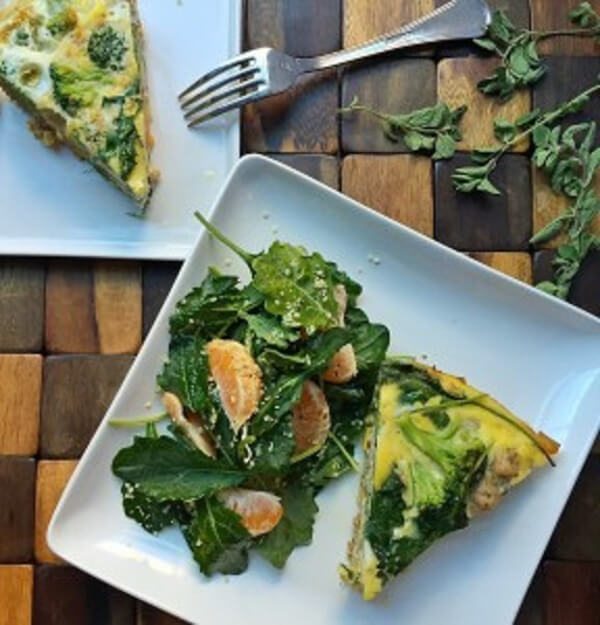
NourishBreatheThrive- {Noruish} Chicken Sausage, Kale and Broccoli Frittata

best easter recipes (12 of 18)

You cannot go wrong with frittata.  And the combination of juicy chicken sausage, kale and green broccoli make it an amazing spring brunch main.

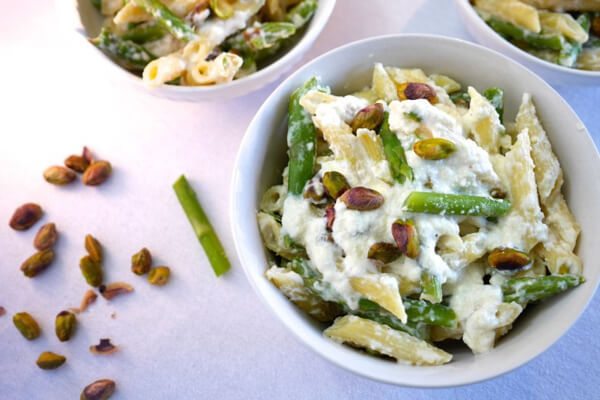
The Nutty Nutritionist- Pistachio Power Pasta

best easter recipes (5 of 18)

‘The Nutty Nutritionist’ puts a healthy spin on a cheesy penne, that includes asparagus, a Greek yogurt sauce, low fat mozzarella and wait for it… PISTACHIOS! Now, you might not think of this type of nut as something to include in a pasta dish, however, the flavours compliment each other perfectly and give the pasta a nice little crunch.  Plus, they’re loaded with awesome nutrients too.

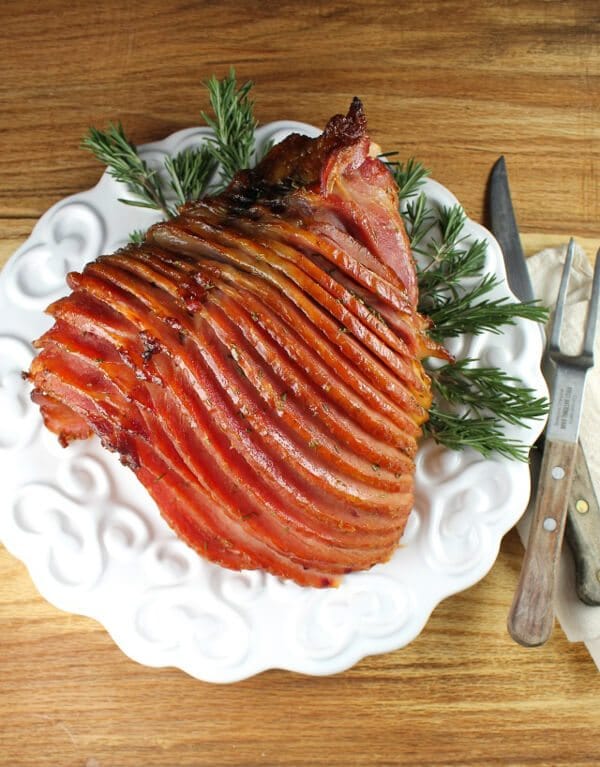
Miss in the Kitchen- Maple, Dijon and Rosemary Glazed Ham

best easter recipes (1 of 18)

This lovely Maple Dijon and Rosemary Glazed Ham by Miss in the Kitchen is a quick and easy glaze hickory smoked entrée that came just in time for your Easter dinner.  The simplicity of the recipe makes it an attractive main course to offer to your loved ones this Easter holiday.  Plus, the authenticity of real maple syrup, dijon mustard and fresh rosemary really come together to create a perfect main dish.

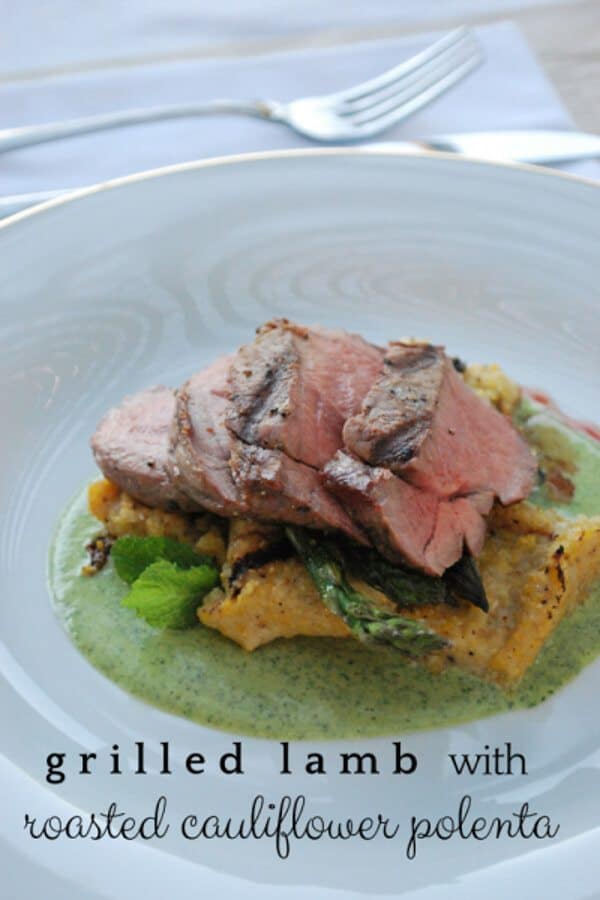
NourishRDs- Grilled Lamb with Roaster Cauliflower Polenta
best easter recipes (11 of 18)

Lean meats like lamb are commonly showcased on many kitchen tables around the time of Easter. This dish is perfect served with some of the roasted vegetables and springtime side dishes we’ve included for you in this roundup. This is one of my favourite healthy Easter recipes.

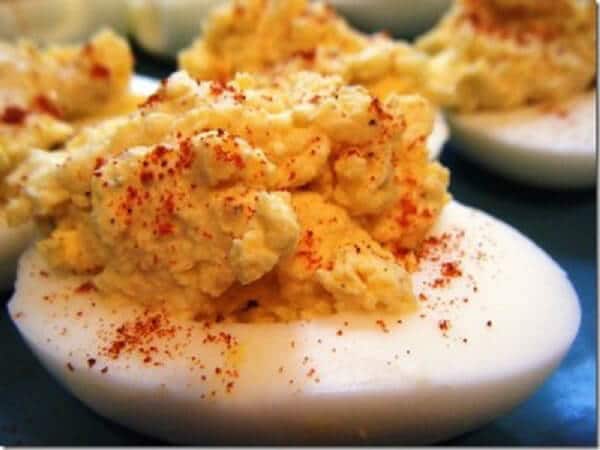
fANNEtastic foods-  Healthy Deviled Eggs

best easter recipes (16 of 18)

Ahh, delicious deviled eggs, who doesn’t love this one?  It’s common to find this recipe using mayonnaise to give the yolk center a creamy consistency, however, this recipe uses Greek Yogurt instead- equally as good but half the calories.  This year enjoy this Easter delicacy guilt-free.

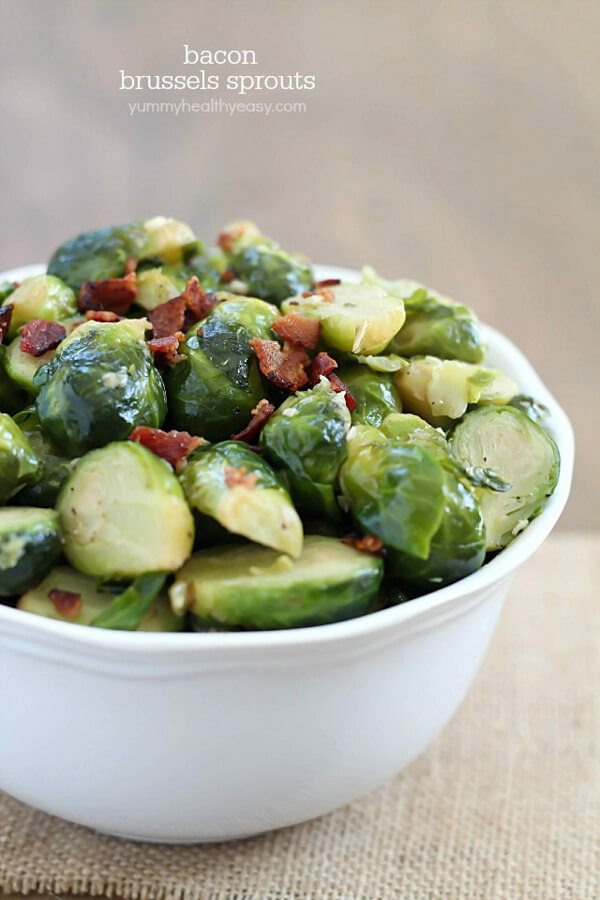
Yummy Healthy Easy- Easy Bacon Brussels Sprouts

best easter recipes (4 of 18)

This awesome Bacon Brussels Sprout recipe combines the meaty flavours of bacon with delicious Brussels sprouts. Perfection? We think so.

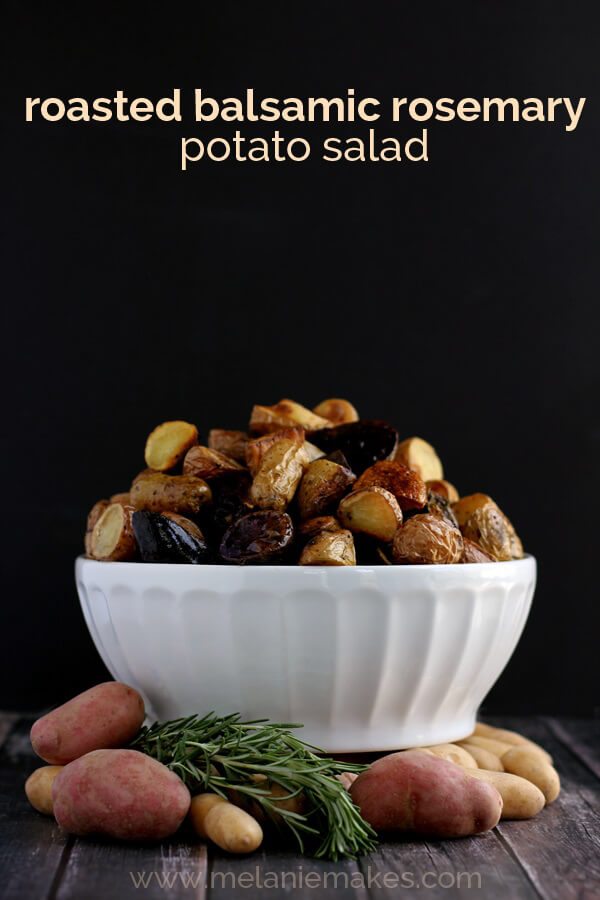
Melanie Makes- Roasted Balsamic Rosemary Potato Salad

best easter recipes (2 of 18)

Melanie believes the potato salad is best when eaten around the warmer seasons, when you can enjoy it outside with friends. We couldn’t agree more.  These gorgeous red, white and purple potatoes will look beautiful alongside your other dishes on the kitchen table.  This recipe is super easy to make, and you can enjoy the potatoes right from the oven!

Well Plated- Strawberry Broccoli Salad

The colors of this salad not only look beautiful on the plate, but the combination of this tangy dressing, prominent cheddar cheese, sharp red onions, crunchy almonds and sweet strawberries make it totally irresistible.

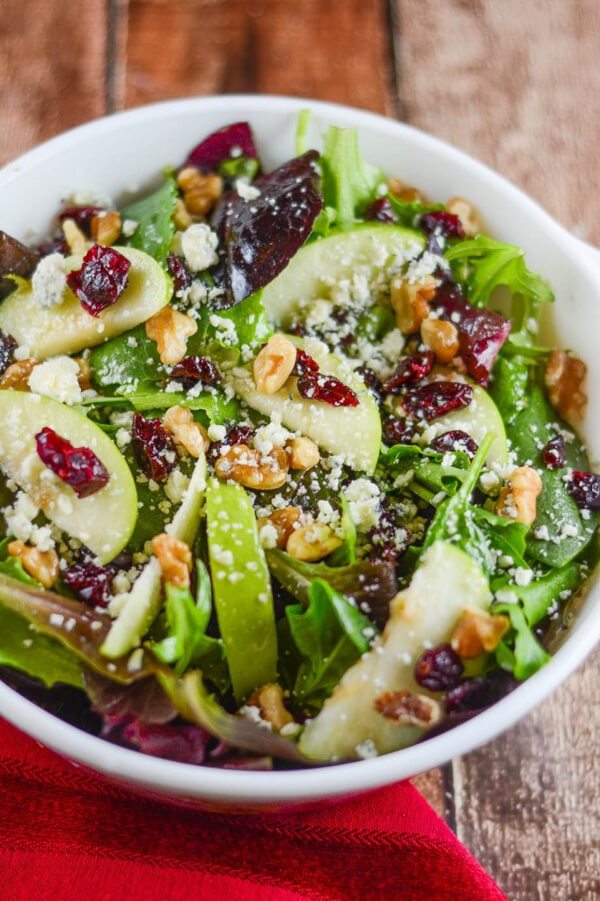
Flavor Mosaic- Apple Walnut Cranberry Salad

best easter recipes (9 of 18)

Want to impress your friends and family?  Want a healthy but delicious salad?  Want to spend 15 minutes or less preparing your sides?  If you answered yes to any (or all) of the above, you’ve gotta try out this salad!  Flavor Mosaic nailed it with the sweet apples, tangy cranberries, slightly salty gorgonzola cheese and crunchy walnuts!  Added bonus: save a few dollars and make your own dressing with the simple Apple Cider Vinaigrette in this recipe.

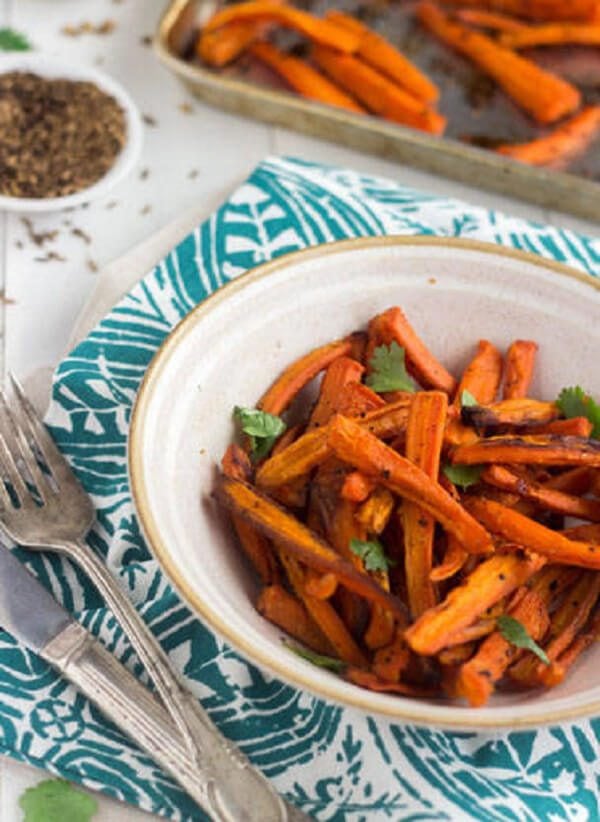
FoodfaithFitness- Roasted Carrots with Coconut and Cumin (Gluten Free Low Fat)
best easter recipes (10 of 18)

Taylor at Food faith Fitness never fails with delicious, simple and tasty meals- we love her healthy Easter recipes!  This makes the perfect side dish and the combination of cumin, coriander seeds and garlic to give the carrots the perfect kick they need.

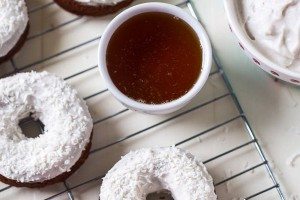
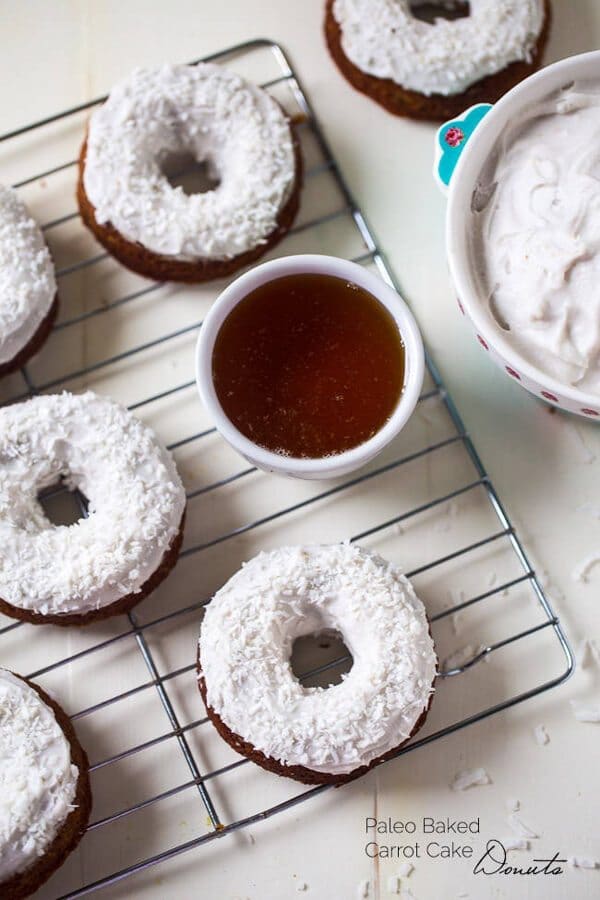
FoodfaithFitness- Gluten Free Carrot Cake Baked Donuts with Coconut Cream Frosting {Paleo}
best easter recipes (13 of 18)

This recipe is gluten free, and uses 100% pure blend Golden Blossom Honey (pure blend of White Clover, Orange Blossom, and Sage Buckwheat) which gives it a naturally sweet taste from the citrus, and earthy undertones.  The frosting uses a super easy heart-healthy-feel-good fat, coconut, and honey cream, and this recipe is completely Paleo!

FoodfaithFitness- Mini Gluten Free Carrot Cakes
best easter recipes (15 of 18)

These aren’t the traditional kind of Easter cakes you find at the grocery store, these are the cutest little Gluten Free Easter themed cupcakes. They’re simple to make and relatively speaking, lower in fat, than your classic carrot cakes. Such a great addition to our healthy Easter recipes ! They’re made using coconut flour instead of all-purpose flour, coconut oil instead of vegetable oil, reduced-fat cream cheese and (optional) Cadbury mini eggs on top, just for an extra touch!  We think these are a keeper.

What are some of your favourite healthy Easter recipes? Do you have a go-to decadent Easter recipe that you would like to see lightened up? Tell us in the comments below, we’d love to hear some of your favorites!

Disclaimer: no Easter Bunnies were harmed in the making of this post.

Contribution by AK Nutrition student Alexis Silver

Abbey Sharp

Abbey Sharp is a Registered Dietitian (RD), regulated by the Ontario College of Dietitians. She is a mom, YouTuber, Blogger, award winning cookbook author, media coach specializing in food and nutrition influencers, and a frequent contributor to national publications like Healthline and on national broadcast TV shows.

www.abbeyskitchen.com/about-abbey/

Last Updated October 4, 2021. Published February 29, 2016 By Abbey Sharp 1 Comment

Protein Part 2: How Much Protein Do We Need and The Best Sources & Recipes?

A man squatting with weights.

A few posts ago, I dug deep into the complicated world of protein, helping you better understand why protein is important for weight loss and metabolism. Hopefully I had you reaching for a high protein snack afterwards. Today I wanted to tackle the more tangible questions of how much protein you actually need and share some of my all time favourite protein sources and yummy recipes!

A plate of nuts.

How Much Protein Do I Need?

This is of course a very personal question, based on your size, goals, activity levels (ie. weight trainers will obviously need more), age, sex and health status. But based on the latest science, many experts today recommend adults get about 0.75 -1 g of protein / lb of body weight or 1.2-2.2 g of protein / kg of body weight. According to this equation, I need somewhere between 67- 123 grams, depending on my activity level and goals.  For those who are engaging in physical activity daily, and looking to lose fat and build lean muscle, I generally recommend a simple rule of thumb of imagining your goal weight in lbs and just aiming to get 75-100% of that number in grams of protein. So if I want to stay around 125 lb, then I’ll aim for between 93-125 grams of protein each day.

A plate of steak.

But numbers definitely do not tell the whole story. How much protein is almost irrelevant if we don’t talk about when to eat it, and I always recommend evenly distributing your protein throughout the day at every meal. I see so many people eating fruit and toast for breakfast, a cheese sandwich for lunch, and a massive 16 oz steak at dinner to meet their protein needs. But that’s not how it works. Research shows that eating protein at each meal is important for stimulating muscle growth, preventing muscle loss during activity and kick starting your metabolism in the morning. In fact, a study in the Journal of Nutrition found that muscle synthesis was 25% higher when protein was evenly distributed across meals rather than loading it up during any one meal. While needs are again dependant on activity, age, sex and other factors, a good rule of thumb is to aim for about 25-30 grams of protein per meal. If you eat a lot more in one sitting, your body likely won’t be able to utilize it efficiently (and it may be stored as fat). Alternatively, if you eat much less than that, and you may be making yourself susceptible to muscle breakdown. Neither scenario is ideal.

A man squatting with weights.

Here’s a great video clip from Dr. Stuart Phillips on protein needs in the 50+ population.

Obviously how much protein you need should be specifically tailored to meet your unique needs, so always speak with a Registered Dietitian to determine your goal.

A person measuring their waist with measuring tape.

The Best Protein Sources

Now that we have a ballpark for how much protein we need, lets talk about where it’s coming from. Not all sources of protein are created equal. And I don’t just mean that filet mignon is better than stewing meat. That’s a given. I’m talking about quality. Without getting too technical here, the best protein sources are those that contain all of the essential amino acids your body needs. These “high quality protein” sources are generally regarded as animal proteins like meat, fish, poultry, dairy, and eggs. Hemp and soy are also now considered good to go for adults (but not so much for young ones). Incomplete protein sources are foods that are missing one or more of those essential amino acids – generally, they’re vegetarian foods like legumes, grains, nuts and seeds. Back when I was in school, we thought that vegetarians looking to get high quality protein would have to eat vegetarian protein sources in specific combinations at the same meal so that the amino acid profiles overlapped and the missing amino acids were accounted for. It seemed like a heck of a lot of planning. Thankfully, we now know that our bodies are not that picky and as long as you’re getting a nice variety of proteins throughout the day, you’re definitely good to go.

A cracked opened egg.

With that out of the way, my go-to protein sources are generally lean or higher in heart-healthy fats to give me by biggest satiating bang for my caloric buck! While the options are endless, here are my top ten picks!

1)Skinless Boneless Chicken Breast

2)Eggs

3)Pork Tenderloin

4)Chickpeas

5)Wild Salmon

6)Grass Fed Beef Tenderloin

7)Firm Tofu

8)Plain Fat Free Greek Yogurt

9)Quinoa

10)Almonds

A bowl of uncooked quinoa.

Need some protein rich inspiration? Check out some of my favourite protein rich recipes:

Turkey Stuffed Apples
turkey stuffed apples.jpg
Vegan Crispy Tofu

crispy tofu with orange sauce.jpg

Cottage Cheese Snacks

post-workout_snacks_7_of_11.jpg

Chicken Cassoulet

cassoulet_healthy_9_of_13_1.jpg

Prosciutto Wrapped Cranberry Hummus Chicken

chicken breast.jpg

Asian Turkey Meatballs

healthy appetizers.jpg

What are your favourite recipes to help you meet your protein goals? Leave me a message below with some of your favourite snacks and meal ideas!

Disclaimer: This post was developed in paid partnership with Maple Leaf Foods, however, as always, all opinions are genuine.

Abbey Sharp

Abbey Sharp is a Registered Dietitian (RD), regulated by the Ontario College of Dietitians. She is a mom, YouTuber, Blogger, award winning cookbook author, media coach specializing in food and nutrition influencers, and a frequent contributor to national publications like Healthline and on national broadcast TV shows.

www.abbeyskitchen.com/about-abbey/
  • Previous Page
  • Go to page 1
  • Interim pages omitted …
  • Go to page 78
  • Go to page 79
  • Go to page 80
  • Go to page 81
  • Go to page 82
  • Interim pages omitted …
  • Go to page 89
  • Next Page

Get started with

Eight Free Recipe Books

From the co-founder of Neue Theory and creator of the Hunger Crushing Combo

Sign me up!
Abbey smiling at table
Abbey Sharp

“Foods may never be nutritionally equal. But we can make them morally equal by recognizing that our worth is never determined by what's on our plate.”

— Abbey Sharp, RD About Abbey ◥

Books

  • HCC™
  • Mindful Glow
  • Free E-Books

Blog

  • Nutrition
  • Recipes
  • Motherhood
  • Life

Explore

  • Neue Theory™
  • Bite Back
  • YouTube

Abbey

  • About
  • Coaching
YouTube TikTok Instagram Facebook X Pinterest
Abbey Sharp - The No BS Dietitian From Abbeys Kitchen

© Abbey's Kitchen 2026  All Rights Reserved •  ACCESSIBILITY STATEMENT •  Privacy Policy

This site uses cookies. By continuing to browse the site, you are agreeing to the use of cookies Accept Privacy Policy
Privacy & Cookies Policy

Privacy Overview

This website uses cookies to improve your experience while you navigate through the website. Out of these, the cookies that are categorized as necessary are stored on your browser as they are essential for the working of basic functionalities of the website. We also use third-party cookies that help us analyze and understand how you use this website. These cookies will be stored in your browser only with your consent. You also have the option to opt-out of these cookies. But opting out of some of these cookies may affect your browsing experience.
Necessary
Always Enabled
Necessary cookies are absolutely essential for the website to function properly. This category only includes cookies that ensures basic functionalities and security features of the website. These cookies do not store any personal information.
Non-necessary
Any cookies that may not be particularly necessary for the website to function and is used specifically to collect user personal data via analytics, ads, other embedded contents are termed as non-necessary cookies. It is mandatory to procure user consent prior to running these cookies on your website.
SAVE & ACCEPT

Rate This Recipe

Your vote:


A rating is required
A name is required
An email is required