• Skip to main content

Abbey's Kitchen

Healthy Recipes, Nutrition Myth Busting, Healthy Eating Tips

  • Books
    • HCC™
    • The Mindful Glow Cookbook
    • Recipe eBooks
      • Family
      • Hypothyroidism
      • BLW
      • Vegan Week 1
      • Vegan Week 2
      • Vegan Week 3
      • Keto
      • Gluten Free Week 1
      • Gluten Free Week 2
      • Fitness
      • Paleo
  • Blog
    • Nutrition
    • Recipes
    • Motherhood
    • Life
  • Explore
    • Neue Theory™
    • Bite Back With Abbey Sharp
      • Apple Music
      • Spotify
      • Amazon Music
    • YouTube
  • Abbey
    • About
    • Coaching
    • Contact

Abbey Sharp

Last Updated July 21, 2020. Published September 5, 2018 By Abbey Sharp 7 Comments

Keto Beet Green Pesto Zoodles | Gluten Free, Low Carb Pasta

These Keto Beet Green Pesto Zoodles are the perfect elegant gluten free, low carb pasta dish for entertaining friends or enjoying any night of the week!
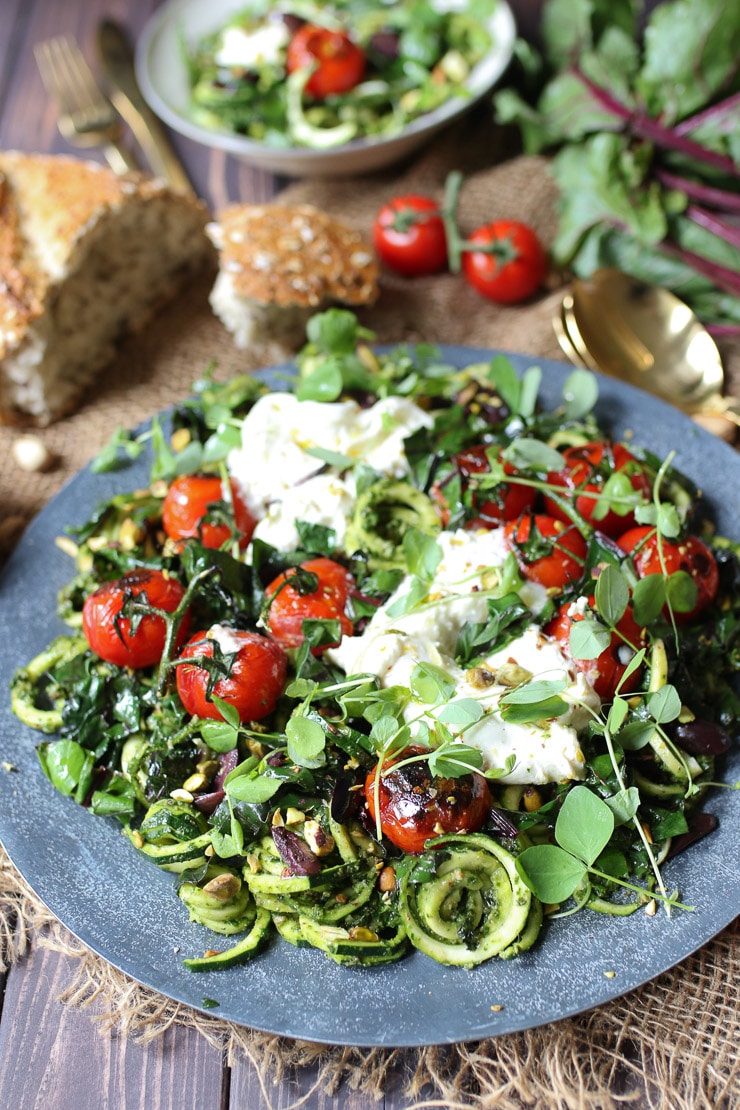
These Keto Beet Green Pesto Zoodles are the perfect elegant gluten free, low carb pasta dish for entertaining friends or enjoying any night of the week!keto beet green pesto zoodles on a grey plate topped with tomatoes and cheese

I get a lot of recipe requests for keto recipes, and while I’m not on board with the use of the diet for weight loss (y’all know you’re going to gain it back, right?), I get that it has some serious therapeutic purposes so I’m happy to share some keto-approved recipes. I mean, as long as they’re delicious and healthy enough that ALL of us carb-lovers can get on board, I’m jazzed about whipping them up. These keto beet green pesto zoodles are the kind of dish that I get really pumped out. They’re gluten free, low carb, and LOADED with zippy nutty flavour. They’re also pretty resourceful since they use up the pretty beet greens that we often toss out.
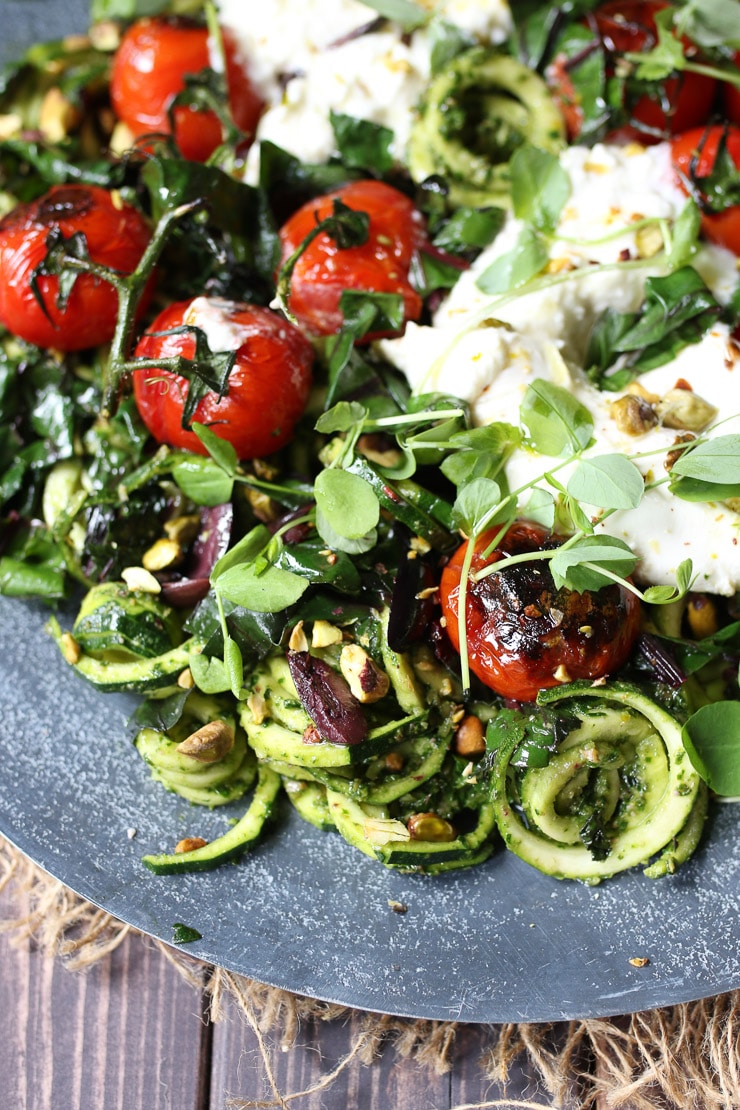
close up of keto pesto zoodles on a grey plate garnished with tomatoes and cheese

How to Make Keto Beet Green Pesto Zoodles
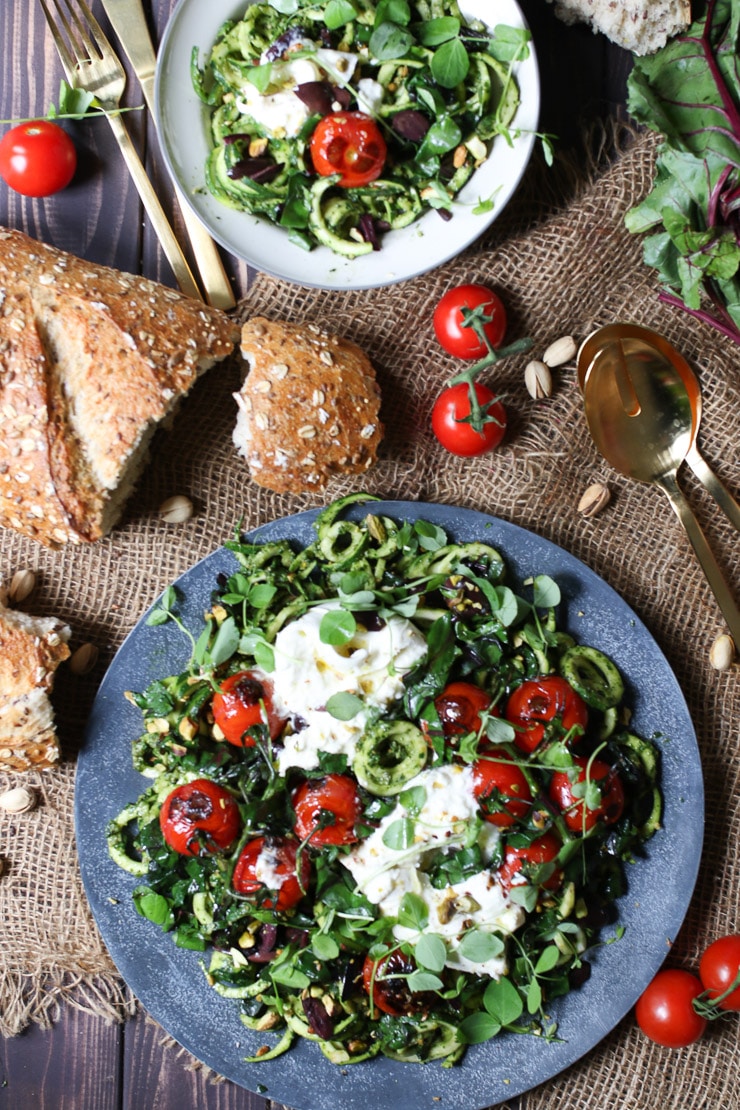
birds eye view of pesto zoodles topped with tomatoes and cheese on a grey plate next to a loaf of bread

Pesto is typically such a summer staple because it’s a great way to use up the bumpercrop of basil a lot of us have growing in our yards. But you don’t need to only make pesto in the summer months! As the weather cools down (sorry, but it’s going to happen before we know it), I’m looking for more ways to make this nutty, rich, hearty pasta sauce. This keto beet green pesto is INSANELY tasty, swapping out basil for beet greens, and pine nuts for pistachios. I then toss the beet green pesto with some of my famous beloved zoodles (you know I got your back with lots of zoodle recipes on the blog!), and add in some blistered tomatoes and greens. We could stop there, but… burrata.
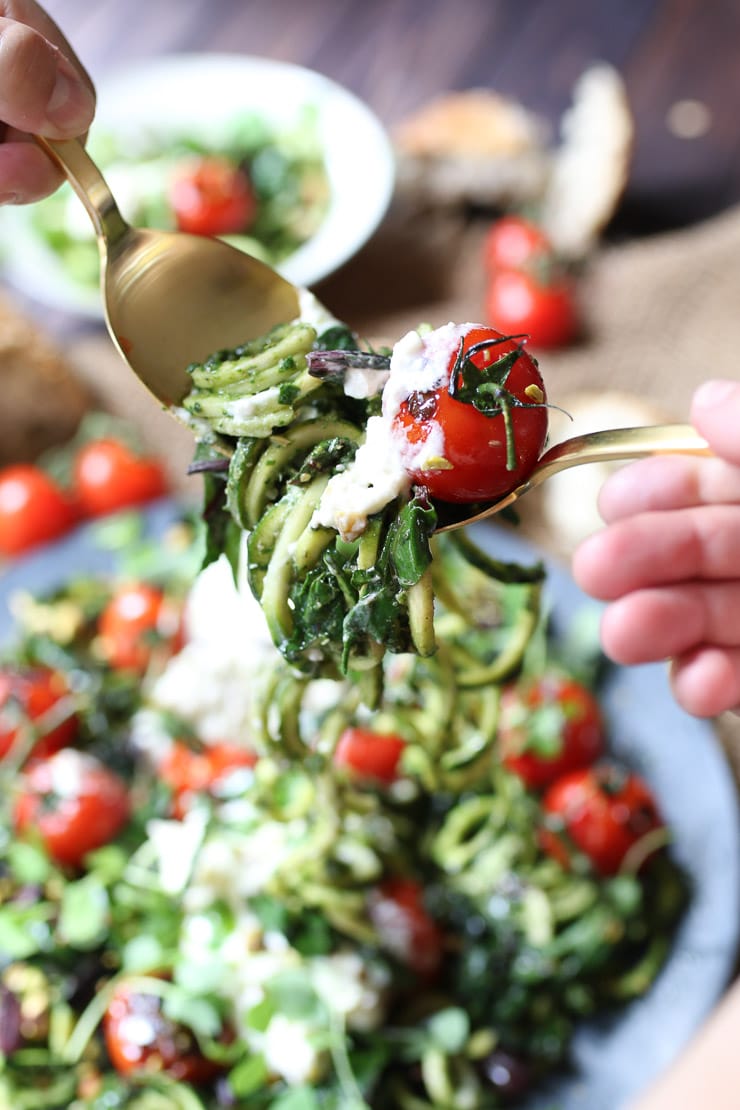
fork taking a bite out of keto beet green pesto zoodles garnished with tomatoes and cheese

Burrata is the Elvis of the cheese world. Rich, creamy, and OMG so sweet. I’m kind of obsessed with the stuff. Throw a ball on top, give it a delicate pull into pieces and face plant into that ASAP.

Now lovelies, have you tried making these keto beet green pesto zoodles?

What keto-approved swaps do you want to see me pull off next?

Leave me a comment below with your thoughts!
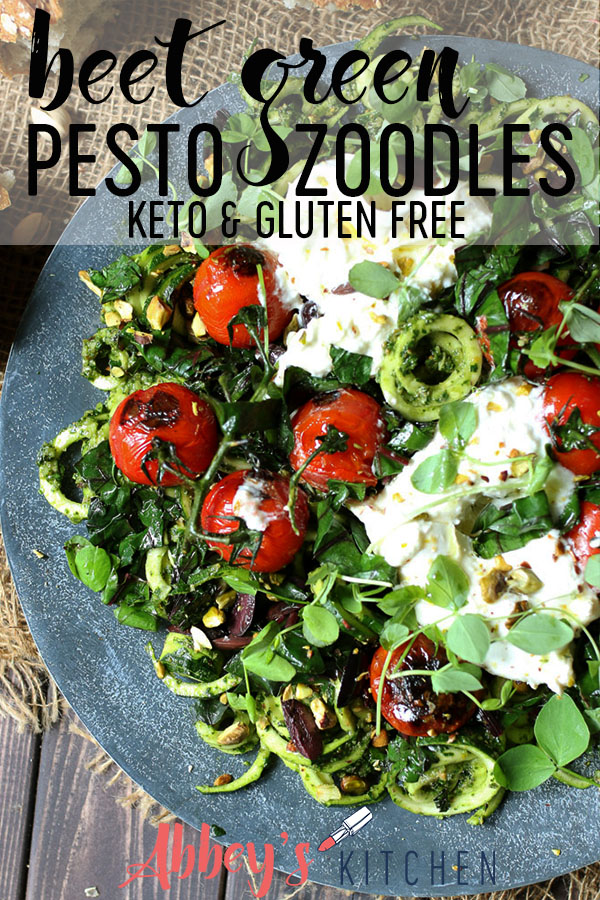
pinterest image of keto beet green pesto zoodles with text overlay


These Keto Beet Green Pesto Zoodles are the perfect elegant gluten free, low carb pasta dish for entertaining friends or enjoying any night of the week!
Print Recipe
5 from 1 vote

Keto Beet Green Pesto Zoodles

These Keto Beet Green Pesto Zoodles are the perfect elegant gluten free, low carb pasta dish for entertaining friends or enjoying any night of the week!
Prep Time15 minutes mins
Cook Time6 minutes mins
Total Time21 minutes mins
Course: Dinner
Cuisine: American
Servings: 4 people
Calories: 586kcal
Author: Abbey Sharp

Ingredients

Pesto:

  • 2 garlic cloves minced
  • 3/4 cup pistachios
  • 4 cups beet greens from 2 bunches of beets, roughly chopped
  • ½ cup extra virgin olive oil
  • 3/4 cup parmesan cheese grated
  • Juice of 1 ½ lemons
  • Salt and pepper to taste

Pasta:

  • 5 zucchini spiralized
  • 1 tsp kosher salt
  • 2 tbsp extra virgin olive oil
  • 2 cups beet greens from 1 bunch of beets, roughly chopped
  • 2 cups cherry tomatoes
  • ¼ cup sliced Kalamata olives for serving
  • 1 ball burrata torn
  • Parmesan for serving
  • Olive oil for serving
  • Pistachios for serving

Instructions

  • To a food processor, pulse the garlic, pistachios and beet greens until they reach a finely minced consistently, then add in the oil, parmesan, lemon juice and a pinch each of salt and pepper. Pulse a few more times until it comes together. We like a texture that is fine, but not completely smooth. Adjust the seasoning with salt and pepper, to taste.
  • Place the zucchini on a cutting board lined with a kitchen towel and sprinkle with kosher salt. Place paper towel or a kitchen towel on top along with some heavy items and allow to sit for 10 minutes. Pat very dry and set aside.
  • In another pan, heat the olive oil over medium high heat and add in the tomatoes. Stir until lightly blistered, then stir in the beet greens. Saute for about 3-4 minutes until wilted. Add in the zucchini and toss for another 1-2 minutes on the heat.
  • Remove from the heat, then stir in the pesto. Toss to coat.
  • To serve, top the pasta with the burrata, olives, parmesan, olive oil and pistachios.

Nutrition

Serving: 1g | Calories: 586kcal | Carbohydrates: 20g | Protein: 16g | Fat: 51g | Saturated Fat: 9g | Cholesterol: 12mg | Sodium: 1170mg | Potassium: 1489mg | Fiber: 7g | Sugar: 10g | Vitamin A: 4735IU | Vitamin C: 79.7mg | Calcium: 367mg | Iron: 4.1mg

Abbey Sharp

Abbey Sharp is a Registered Dietitian (RD), regulated by the Ontario College of Dietitians. She is a mom, YouTuber, Blogger, award winning cookbook author, media coach specializing in food and nutrition influencers, and a frequent contributor to national publications like Healthline and on national broadcast TV shows.

www.abbeyskitchen.com/about-abbey/

Last Updated July 21, 2020. Published September 4, 2018 By Abbey Sharp 5 Comments

Healthy Vegan Pumpkin Spice Frappuccino | Starbucks Copycat

I share my healthy vegan pumpkin spice frappuccino, a must-try Starbucks copy cat recipe to get you ready for fall without all the excess sugar!

I share my healthy vegan pumpkin spice frappuccino, a must-try Starbucks copycat recipe to get you ready for fall without all the excess sugar!

Fall is just around the corner, and as much as I’ve enjoyed the weekend getaways to the cottage and the warm weather I think I’m ready for pumpkin season. From lattes to frappuccinos, we’ve gone pumpkin crazy but I’m okay with that because I love me a frappuccino. I’ve been on a Starbucks copy cat kick these days, and if you missed it last week I whipped up my own version of a Healthy Vegan Lemon Bar Frappuccino. So I’m keeping the frappuccino party going and whipping up a fall-themed fave. Can you guess it??

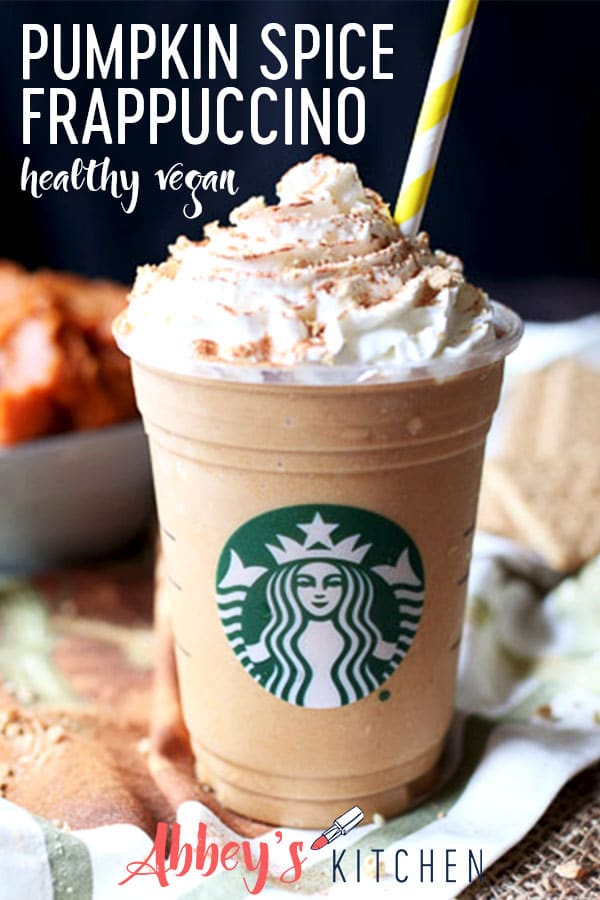
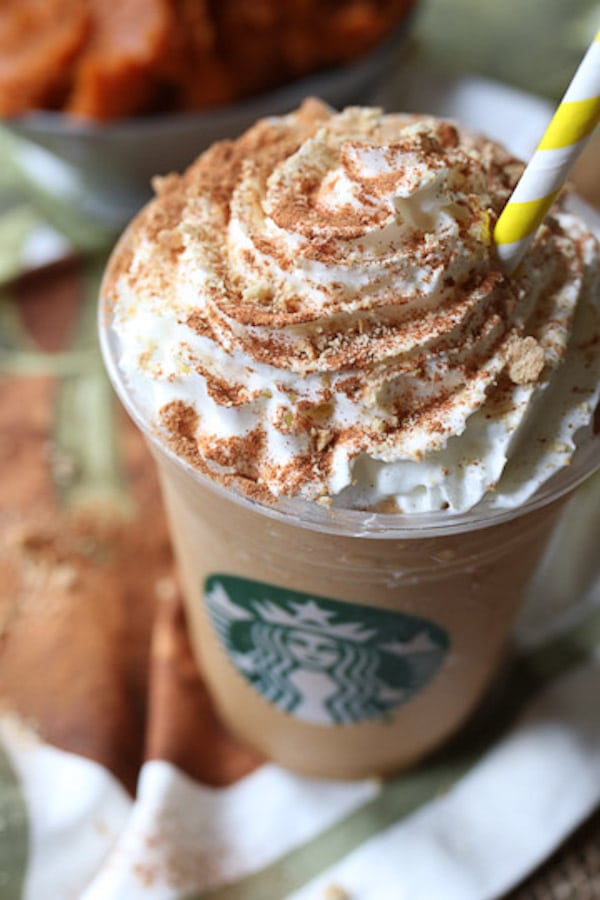
close up of healthy vegan starbucks copycat pumpkin spice frappuccino topped with whipped cream and a straw

Here in Canada we’ve been experiencing some hella warm weather, and I have a feeling September is going to be no different, so I’m going to take advantage of that and whip up my own version of a Healthy Vegan Pumpkin Spice Frappuccino.

The Problem with the Starbucks Pumpkin Spice Frappuccino

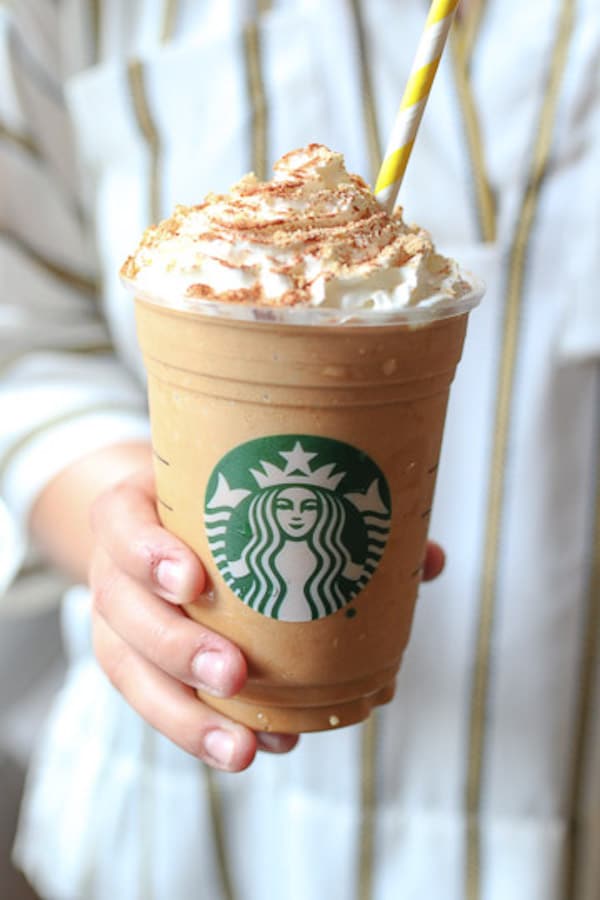
hand holding a starbucks cup with homemade pumpkin spice frappuccino topped with whipped cream and a straw

That’s a no brainer: it’s the sugar. A grande sized Pumpkin Spice Frappuccino clocks in at 450 calories with 73 grams of sugar. That’s basically a full meal, or a really large dessert. My healthy vegan pumpkin Spice Frappuccino is gluten free and has 200 calories less and only 15 grams of sugar. Plus it has REAL fibre-rich pumpkin in it, not some sickly syrup. Yes, it’s still a treat, but it’s far more satiating with far less refined sugar going on and you still get to honour the pumpkin spice tradition!

How to Make This Healthy Vegan Pumpkin Spice Frappuccino

healthy vegan starbucks frappuccino copycat topped with whipped cream and a straw

The best part of making this frappuccino is all you need is a blender! This vegan pumpkin spice frappuccino is a simple combination of almond milk, coconut milk, vanilla, maple, pure pumpkin, pumpkin pie spice and ice. Oh and don’t forget the best part: finished with a generous dollop of coconut whipped cream, a few sprinkles of pumpkin pie spice and crushed gluten free graham crackers.

Become an Abbey’s Kitchen Subscriber

It’s obvious that I’ve been on a serious Starbucks copy cat kick these days, so let me know which frappuccinos or other Starbucks drinks you want to see me makeover!

pinterest image of healthy vegan starbucks copycat pumpkin spice frappuccino with text overlay

I share my healthy vegan pumpkin spice frappuccino, a must-try Starbucks copy cat recipe to get you ready for fall without all the excess sugar!
Print Recipe
5 from 6 votes

Healthy Vegan Pumpkin Spice Frappuccino

I share my healthy vegan pumpkin spice frappuccino, a must-try Starbucks copy cat recipe to get you ready for fall without all the excess sugar!
Prep Time5 minutes mins
Total Time5 minutes mins
Course: Drinks
Cuisine: American
Servings: 2 people
Calories: 250kcal
Author: Abbey Sharp

Ingredients

  • 4 tsp instant coffee granules
  • 2/3 cup canned pure pumpkin
  • 1 1/2 tsp pumpkin pie spice
  • 2/3 cup unsweetened vanilla almond milk
  • 2/3 cup lite coconut milk from the can
  • 2 tsp maple syrup or to taste
  • 1 tsp vanilla
  • 2 cups ice

Toppings:

  • Whipped coconut cream
  • Pumpkin pie spice
  • Crushed graham crackers vegan, and gluten free, if needed

Instructions

  • In a blender, puree all of the ingredients until smooth.
  • Top with whipped coconut cream, pumpkin pie spice and crushed graham crackers, if desired.

Nutrition

Calories: 250kcal

Abbey Sharp

Abbey Sharp is a Registered Dietitian (RD), regulated by the Ontario College of Dietitians. She is a mom, YouTuber, Blogger, award winning cookbook author, media coach specializing in food and nutrition influencers, and a frequent contributor to national publications like Healthline and on national broadcast TV shows.

www.abbeyskitchen.com/about-abbey/

Last Updated October 23, 2020. Published September 3, 2018 By Abbey Sharp 56 Comments

Healthy Grocery Shopping Tips & How the Grocery Store Encourages Unhealthy Eating

In this blog post we’ll be discussing the psychology behind how the grocery store encourages unhealthy eating and some healthy grocery shopping tips.

In this blog post we’ll be discussing the psychology behind how the grocery store encourages unhealthy eating and some healthy grocery shopping tips.

Ever wonder why you go to the grocery store for the usual items like milk and eggs, but somehow ended up polishing off half a chocolate bar and bag of chips by the time you get home? Or when you’re at the checkout and “a quick trip to the market” turned into a $100 charge? While we can write lists and resist temptation at home if we don’t buy the food, it becomes a different story when the grocery store makes choosing the unhealthy choice seem like the easiest choice. Research suggests that half of our grocery purchases are unintended. Even though we tend to blame ourselves for picking up that case of soda pop, believe it or not, the supermarket is actually set up to encourage us to purchase more, and evidently purchase processed, packaged, and more often than not, less healthy items. The path to eating healthy and staying on budget is a long and winding road through the different and tempting aisles. Let’s take a closer look at the most common shopping mistakes and some healthy grocery shopping tips to prevent them.

How the Grocery Store Encourages Unhealthy Eating:
Sugar, Spice, and Everything Strategic


Disclaimer: This is in no way an accurate representation of every grocery store, however, the next time you’re shopping, be aware of the layout, and how it may mirror some of the themes discussed here along with some of the healthy grocery shopping tips to prevent getting tricked.

Entrance and Music
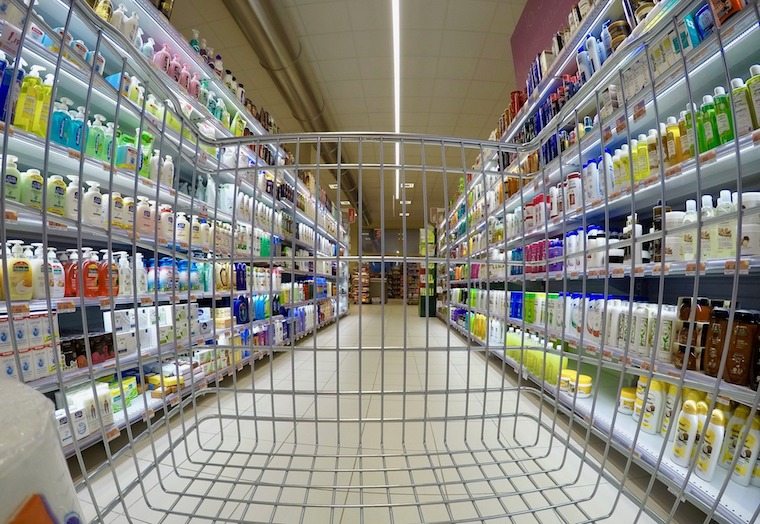
the inside of a cart for grocery shopping

We’ll start at the beginning of your journey when you first enter the store: usually the store will have a one-way gate or door for the entrance, and to exit the store you have to walk around to the checkout. While this may seem like it’s for security purposes, it does serve as a method to make you stay longer in the store than leaving the second you walk in (basically, you’re trapped). Also, have you ever noticed the music playing? Usually calm, slow, and inviting music is played to give the customer a welcoming feeling, so an individual doesn’t feel rushed, and generally evokes a positive attitude and experience when shopping.

The math is simple: no rush to shop + longer time in the store = you’ll probably spend more.

Shopping Carts
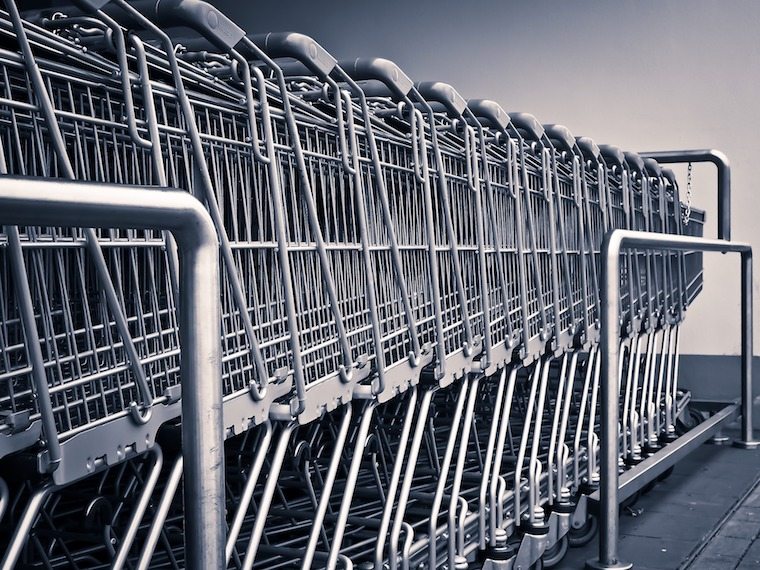
carts for grocery shopping

A study on mindless eating found that individuals will eat more with a larger plate, and feel less satisfied with the same amount of food on a larger plate in comparison to a smaller one. The results from this study concluded that we tend to eat more without even realizing this – also known as mindless eating. Bare with me, it may seem like a stretch, but, this same concept can be applied to shopping carts in comparison to baskets. While most people can fit what they need in a shopping basket, the carts are enlarged to encourage purchasing behaviours. Most people will not put more than they can carry or fit in a basket, but with a spacious empty-looking cart, people may feel the desire to add more.

To sum all this up: the bigger the shopping cart + endless items in the store = the greater likelihood you will purchase (and subsequently eat) more.

Produce, Bakery, and Floral Sections

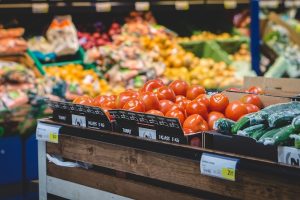
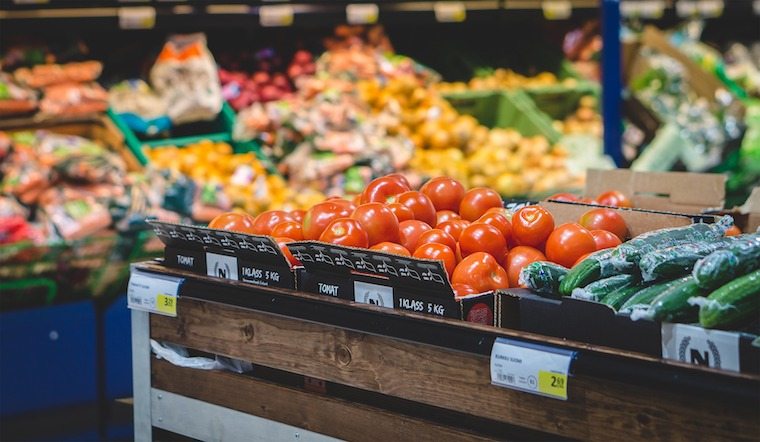
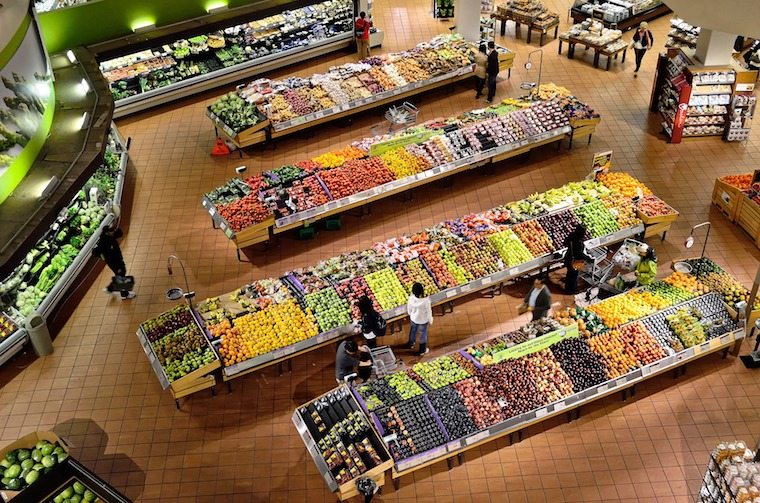
fruits and vegetables on display at a store

Once you have passed the doors of no return and you’re shopping to the beat of the music, usually the first sections you see are the produce, bakery, and floral, radiating their beautiful colours. The first impression of the grocery store is that it’s vibrant, fresh, healthy, and smells delicious. Grocery stores understand the importance of stimulating senses with increased lighting in these areas to highlight the different colours, as well as evoke familiar and delicious smells like that fresh apple pie your mom used to make. In my own experience, when I’m still in the underground parking lot of my grocery store I can smell the fresh bread and it’s hard to resist the temptation. This curated experience encourages us to shop with our stomach, rather than with our head or shopping list.

Smells delicious/fragrant + looks tasty/beautiful = you are more tempted to buy it … and you probably will.

Staple Items (Meat, Dairy, Eggs)

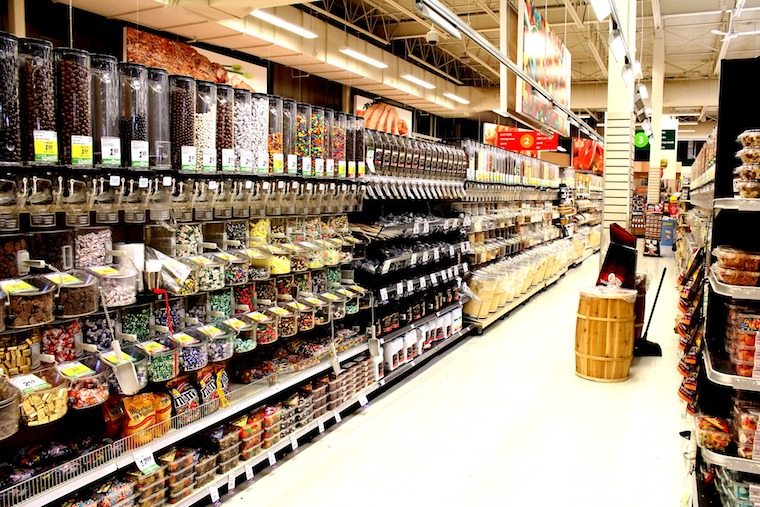
dry food section of a grocery store

Pop Quiz: Where can you find all the “essentials” like milk, eggs, and dairy products kept in the grocery store? In the back of the store!

To get to the essential food items you have to walk through a large portion of the store, including possibly going in-between distracting aisles that are showcasing bargains you can’t pass up. With the goal in mind that you just need milk, head to the back, and never look back.

Sample Stations

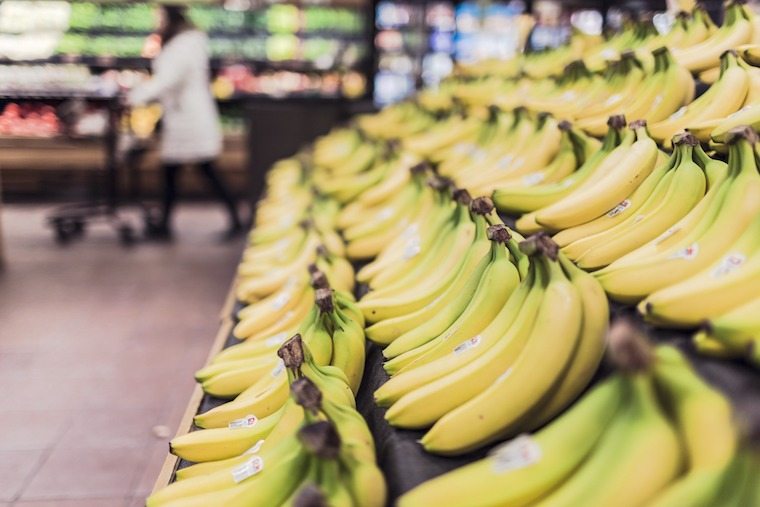
close up of bananas at the grocery store

Many people will agree that the free samples given are done to encourage you to try new products without commitment or any fees, and not as a refreshment snack. Another study reviewing mindless eating compared having sweets and fruits in plain sight versus having them put away; participants were more likely to consume the food if it was within reach and they could see it. Although this study observed the home environment, the grocery store may use mindless eating behaviours to encourage consumption, too. For instance, products that would have gone unnoticed in the aisle, you’re now in line waiting to try it, because they’re cooked, free, and most importantly, readily available. From personal experience, they’re never, ever, ever, ever, showcasing fresh bananas and kiwis, because they’re most likely giving out samples of processed and packaged products. By the time you try that small sample, you’re more likely to purchase it, crave it, and eat it on an ongoing basis. Sample stations are usually located in high-traffic areas for three reasons: more people will visit the aisle, it slows down the traffic, and the product is usually within arms-reach. This may cause you to look at what people are lining up for, or spend a longer time going through the aisles (which means more time looking at products that you may purchase).

End-Cap and Within the Aisle

The grocery store is set up like a maze with endless aisles that are organized by canned goods, pasta, baking items, baby food, frozen items, breakfast cereals, granola bars, soda pop, chips, etc. A common theme among these items is that a majority are processed, packaged food items that are often high in calories, fat and sodium. Before entering each aisle there’s usually a small section called an “end-cap” that entices you with sales and a preview of what is within each aisle. Approximately 30% of revenue from products come from the end-cap areas of the grocery store. An observational study conducted in the UK comparing the sale of alcoholic and non-alcoholic drinks at the end-cap saw an increase between 23.2-46.1% and 51.7%-113.8% respectively. By following each end-cap throughout the store, you eventually walk through each aisle, which exposes you to more products and encourages purchasing and consumption patterns.

Another strategy that encourages purchasing is the placement of the product on store shelves. Many of these companies pay to have their products at eye-level of the aisle, meaning it’s most likely where your eyes naturally gaze to, and you can pick up the product with minimal effort. The higher shelves have the specialty items, and the lower shelves have the store-brand and cheaper options. Companies and marketing experts have even considered the average height of a child to advertise products on shelves catered to them at a lower eye-level of a child.

Convenience Snacks (aka. Impulse Purchases)

Unless you’re doing self-checkout, it’s nearly impossible to miss the sweet and savoury treats located by the cash register. Evidence suggests that when products are conveniently displayed, individuals who may not consciously or rationally choose these items, are more likely to choose indulgent products that are often high in sugar and fat. This is their last attempt to try to get you to purchase something you don’t need, but when you see it … you want it. This goes beyond grocery stores; they can be found in retail as well because they work! Interestingly enough, when a study in Norway tried to increase fruit consumption by placing bananas in convenient locations such as the cash register, sales did not increase.

Healthy Grocery Shopping Tips

fruits and vegetables on display at the grocery store

Now that I’ve overwhelmed you with all of these marketing secrets, how about I share with you some tools to navigate your local grocery store like a champ with these healthy grocery shopping tips.

  1. Follow The Perimeter Of The Store 

This will ensure that you’re less likely to be exposed to packaged and processed goods within the aisles, and it means a quicker trip to the market since you’ll only be travelling to areas like the produce, meat, dairy, and eggs section.

2. Make A List

I know this seems a bit counterintuitive since even those with a shopping list can’t avoid the layout, but it serves as a good reminder of what you actually came to the store for. This may be helpful in situations where that tub of ice cream seems to be calling out your name.

3. Eat Before You Shop

Believe it or not shopping when hungry alters your perception towards foods, including high fat products. This is a perfect example of shopping with your stomach, rather than your head and you may end up buying quick and convenient items that you can munch on before you get home to have dinner.

4. Beware Of Distractions At Checkout

This can be a challenge when there’s a long line and you’re essentially “stuck” waiting beside the candy, chocolate bars, and chips. While it’s easy to say you should avoid looking at it, try to rationally discuss if you really need that treat or if it’s simply because it’s there that you want it. If all else fails, I’ll grab a gossip magazine and skim through it to pass the time while waiting in line (Kardashian drama trumps candies every time).

5.  Everything In Moderation

While we can get so caught up on trying to label everything as “good” and “bad” and how aisles are often separated you can notice the difference between the fresh produce section and the chip aisle. I believe that this is the most important tip: everything in moderation, including those indulgent purchases.

Bottom Line

Of course, not all supermarkets will mirror this discussion, but it’s interesting to know that there’s considerable thought that goes into where products are placed to encourage us to buy and eat more. This blog post is in no way a solution to losing weight, and as always speak to a registered dietitian for trusted nutrition advice. However, next time you’re in your local grocery store, try to be more aware of the layout, and use some of my healthy grocery shopping tips to ensure you’re stocking up your fridge and pantry with healthy items and essentials.

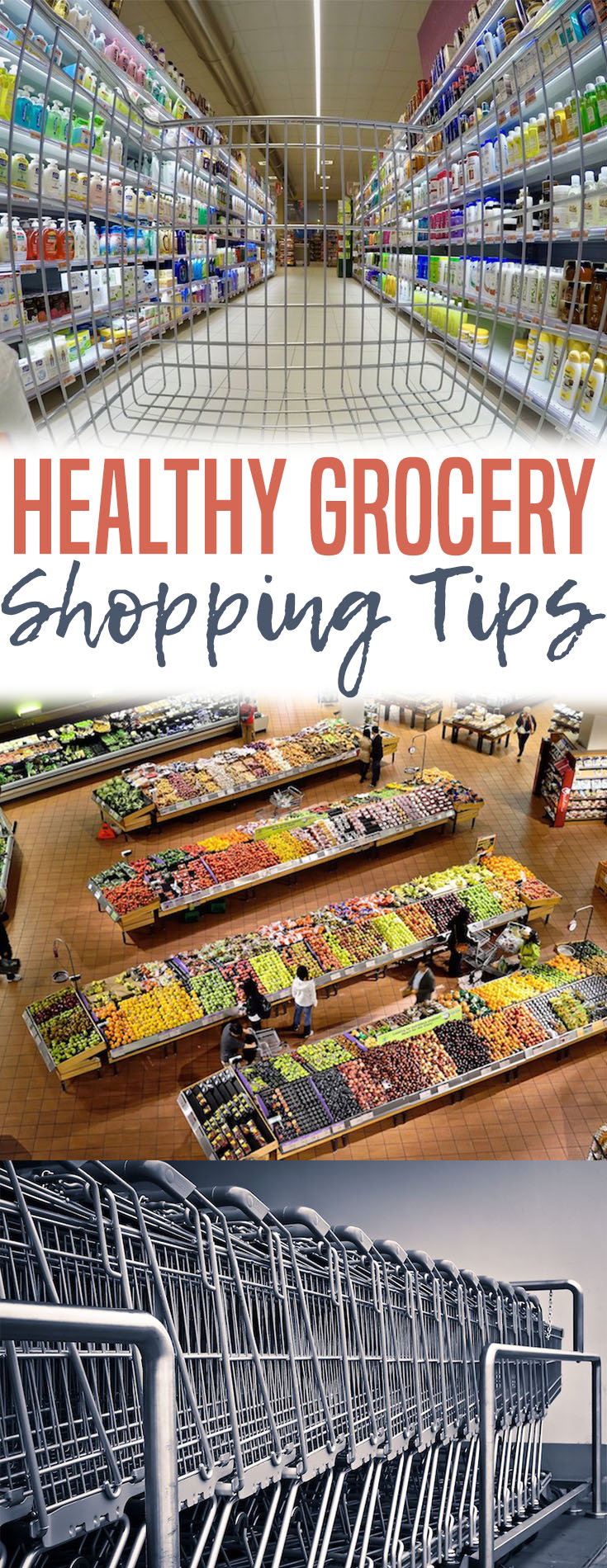
pinterest image of various photos of the grocery store with text overlay

Contributed by Christina Demirkok #RD2B

Abbey Sharp

Abbey Sharp is a Registered Dietitian (RD), regulated by the Ontario College of Dietitians. She is a mom, YouTuber, Blogger, award winning cookbook author, media coach specializing in food and nutrition influencers, and a frequent contributor to national publications like Healthline and on national broadcast TV shows.

www.abbeyskitchen.com/about-abbey/

Last Updated July 9, 2020. Published August 24, 2018 By Abbey Sharp 14 Comments

Vegan Tahini Beet Power Bowl | Gluten Free Buddha Bowl

This Vegan Tahini Beet Power Bowl is a delicious Gluten Free Buddha Bowl recipe that is great for meal prep because it contains a nice balance of protein, fibre and healthy fat!

This Vegan Tahini Beet Power Bowl is a delicious Gluten Free Buddha Bowl recipe that is great for meal prep because it contains a nice balance of protein, fibre and healthy fat!

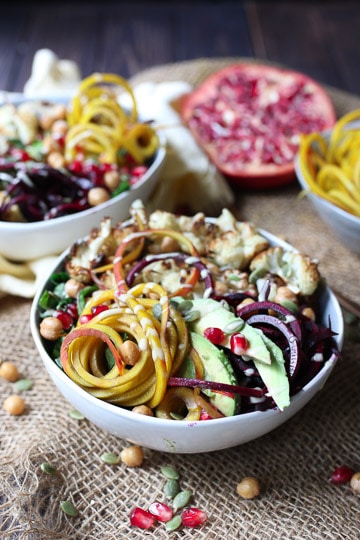
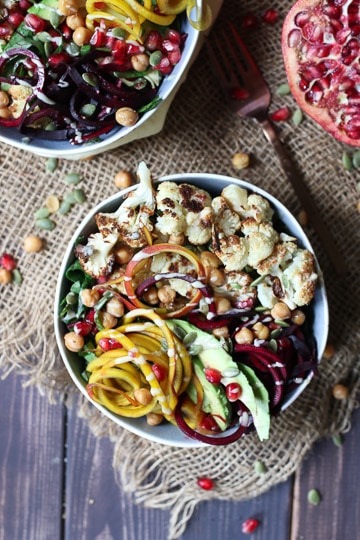
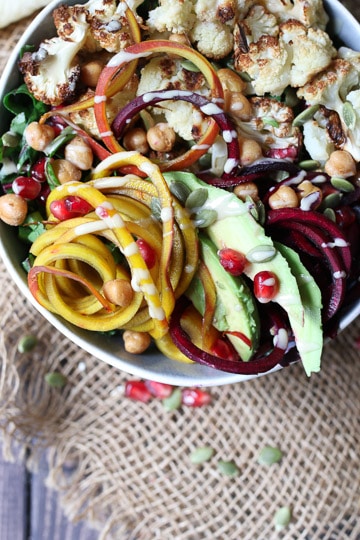
vegan tahini beet power bowl in a white bowl garnished with pomegranate seeds

Call it what you want. Power bowls, buddha bowls, macro bowls, whatevs. I don’t really care as long as it gets to my mouth when I need a food fix. Beets have become a real obsession as of late, mainly because they’re absolutely gorgeous, but also because both the root and the leaves are loaded with nutrition. And what’s up with always throwing out the leaves! They are arguably better for you than the roots and I think their natural bitterness helps balance out the sweetness of the beets really nicely when served together in a bowl like this vegan tahini beet power bowl.

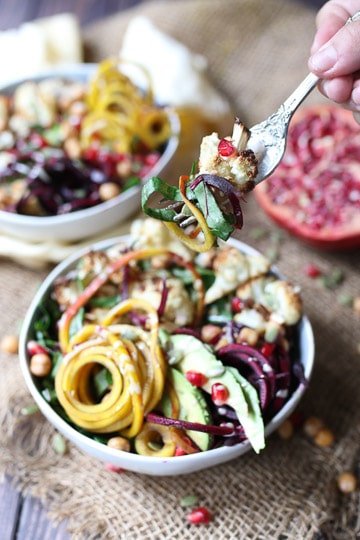
fork taking a bite out of vegan tahini power bowl in a white bowl topped with pomegranate seeds

How to Make this Vegan Tahini Beet Power Bowl

birds eye view of vegan tahini and beet buddha bowl in a large white bowl

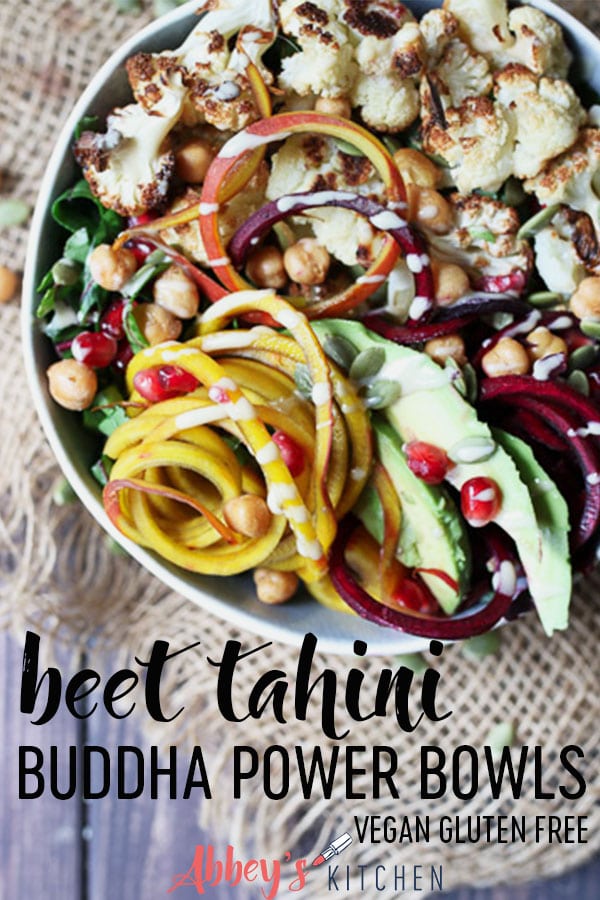
Power bowls are all about colour, variety, and great textures and flavours. I start with my go-to grain, quinoa, because it’s loaded with protein and is also naturally gluten free. I then roast up some cauliflower and chickpeas until they’re golden and crispy, and then add a melange of spiralized beets and their raw greens. Avocado basically needs to go in EVERYTHING so that’s a must, and sweet pomegranate and crunchy pumpkin seeds round things out. I top mine with a little tahini drizzle for that savoury flavour and face plant into the bowl.

close up of vegan power bowl in a white bowl garnished with tahini

Lovelies, let me know, what would you put in your dream power bowl?

What are your thoughts on this vegan tahini beet power bowl combo?

Leave me a comment below!

pinterest image of vegan tahini beet buddha bowl garnished with pomegranate seeds with text overlay
This Vegan Tahini Beet Power Bowl is a delicious Gluten Free Buddha Bowl recipe that is great for meal prep because it contains a nice balance of protein, fibre and healthy fat!
Print Recipe
5 from 4 votes

Vegan Tahini Beet Power Bowl

This Vegan Tahini Beet Power Bowl is a delicious Gluten Free Buddha Bowl recipe that is great for meal prep because it contains a nice balance of protein, fibre and healthy fat!
Prep Time10 minutes mins
Cook Time32 minutes mins
Total Time42 minutes mins
Course: Dinner
Cuisine: American
Servings: 4 people
Calories: 520kcal
Author: Abbey Sharp

Ingredients

  • 1 cup quinoa rinsed and dried
  • 4 tbsp extra virgin olive oil divided
  • 1 head cauliflower cut into florets
  • 1 can chickpeas drained, rinsed and dried
  • 2 tbsp lemon juice
  • 4 cups beet greens from 2 bunches of beets, chiffonade
  • 2 red beets spiralized or grated
  • 2 yellow beets spiralized or grated
  • 1/3 cup pomegranate arils
  • 1 avocado thinly sliced
  • ¼ cup toasted pumpkin seeds
  • 3 tbsp tahini
  • Salt and pepper to taste

Instructions

  • Bring two cups of water in a small saucepot to a boil over high heat. Add in the quinoa, cover and simmer until cooked, about 10-12 minutes. Set aside.
  • Meanwhile, preheat your oven to 450 F. Spread the cauliflower out onto one baking sheet and the chickpeas onto another and toss each with a tablespoon of olive oil. Sprinkle with a pinch each of salt and pepper. Roast for 20 minutes, or until golden brown. Set aside.
  • Meanwhile, mix together the remaining 2 tablespoons of olive oil and the lemon juice, along with a pinch each of salt and pepper.
  • In a bowl, massage the raw beet greens with 2 tablespoons of the dressing.
  • Toss the quinoa with the remaining dressing and divide the quinoa between four bowls. Top with the massaged beet greens, spiralized beets, roasted cauliflower, crispy chickpeas, pomegranate arils, avocado, and pumpkin seeds. Drizzle with a little tahini and enjoy.

Nutrition

Calories: 520kcal
Abbey Sharp

Abbey Sharp is a Registered Dietitian (RD), regulated by the Ontario College of Dietitians. She is a mom, YouTuber, Blogger, award winning cookbook author, media coach specializing in food and nutrition influencers, and a frequent contributor to national publications like Healthline and on national broadcast TV shows.

www.abbeyskitchen.com/about-abbey/

Last Updated October 14, 2020. Published August 23, 2018 By Abbey Sharp 38 Comments

What This Dietitian Thinks About the Proposed Changes to Canada’s Food Guide

There are new proposed changes to Canada’s Food Guide on the horizon, so I break down my thoughts as a dietitian.

There are new proposed changes to Canada’s Food Guide on the horizon, so I break down my thoughts as a dietitian.

It’s been ten years since any changes have been made to Canada’s Food Guide but in early 2018, Canada will be getting a brand new spanking food guide and this time you may not recognize it.

What do some of these changes to Canada’s Food Guide look like?

image of a wooden kitchen counter

Well, in short, the overarching goal of the new food guide is to focus less on what to eat and more on what not to eat and how to eat. There are also plans to shift towards a greater emphasis on plant-based proteins. The dairy section will most likely be renamed and the meat section will be replaced with an overarching protein category that doesn’t prioritize animal-based protein.

Before we dig deeper, I thought it would be fun to do a brief review of the past food guides that have come before us. You know, because I’m a geek like that.

The History of the Canadian Food Guides

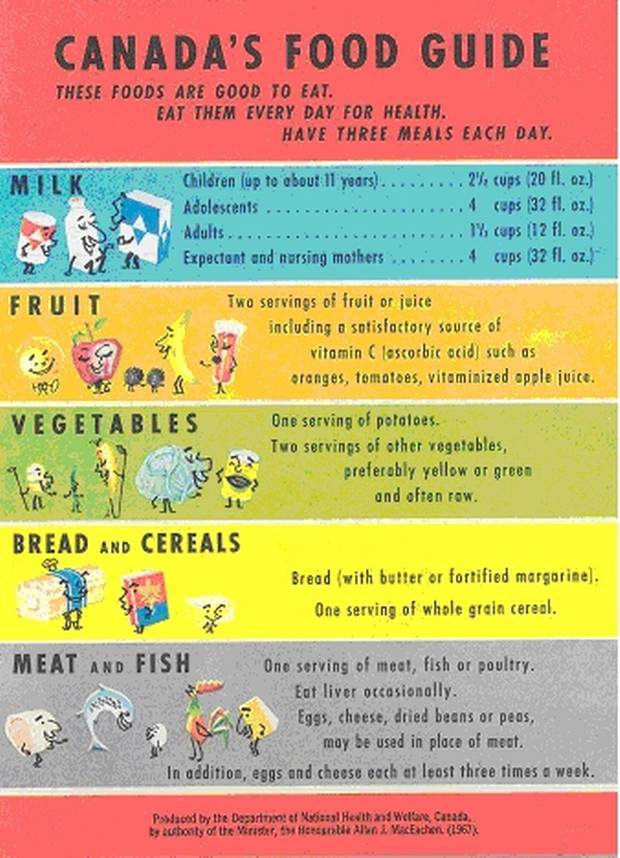
In Canada, the food guide has been a long-standing controversial tool. Some people treat the food guide like the bible while others see it as a useless tool funded by the food industry. Aside from the controversial nature of the guide, it’s still regarded as one of the government’s most popular documents and is downloaded more than 230,000 times with more than 1.7 million print copies. In Canada, our food guide has a HUGE impact on our school lunches, and hospital menus and is typically the go-to tool used by medical professionals and institutions. This is a valuable tool, which is why any change to it, will affect a significant amount of people.

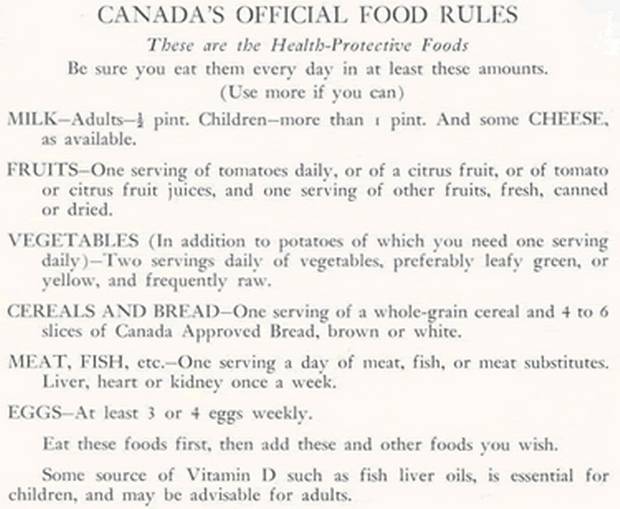
1942 – Canada’s Official Food Rules

image of canada's official food rules

Photo Credit: Globe and Mail

The earliest food guide came at a time when the focus was on wartime rationing and reducing malnutrition. The guide was developed to properly fuel soldiers and properly fuel a population suffering from poverty and food shortages. Back then, Canada’s food guide was not seen as a “guide” but really as a prescription. The diet centred around hearty carbohydrates like potatoes and bread as well as liver, heart or kidney once a week.

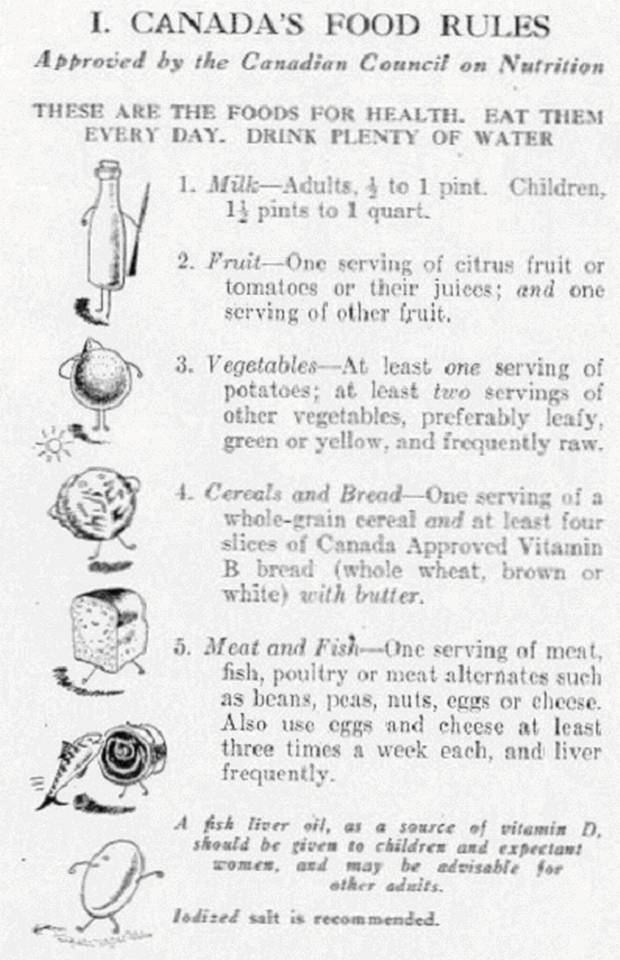
1944 – Canada’s Food Rules

information from canada's food guide

Photo Credit: Globe and Mail

A couple years later, a new set of rules were released that increased the portion sizes of milk and potatoes, and while eating liver frequently remained, kidney and heart were removed due to limited supplies. Wow, can you imagine those were your only reasonable options? Yikes.

1961 – Canada’s Food Guide

infographic from canada's new food guide

Photo Credit: Globe and Mail

In the 40s, the main concern was to reduce malnutrition so people were encouraged to eat more, but by the 60s, the mentality soon shifted to “more is not necessarily better”. The 60s were marked by both food shortages and overeating so obviously, the rules needed to be revamped. One way to promote their new mandates was to rename it a “guide” instead of a set of “rules”. Another major change was the use of food groups, as well as the addition of colour and images.

1977 – Canada’s Food Guide

information from canada's new food guide

Photo Credit: Globe and Mail

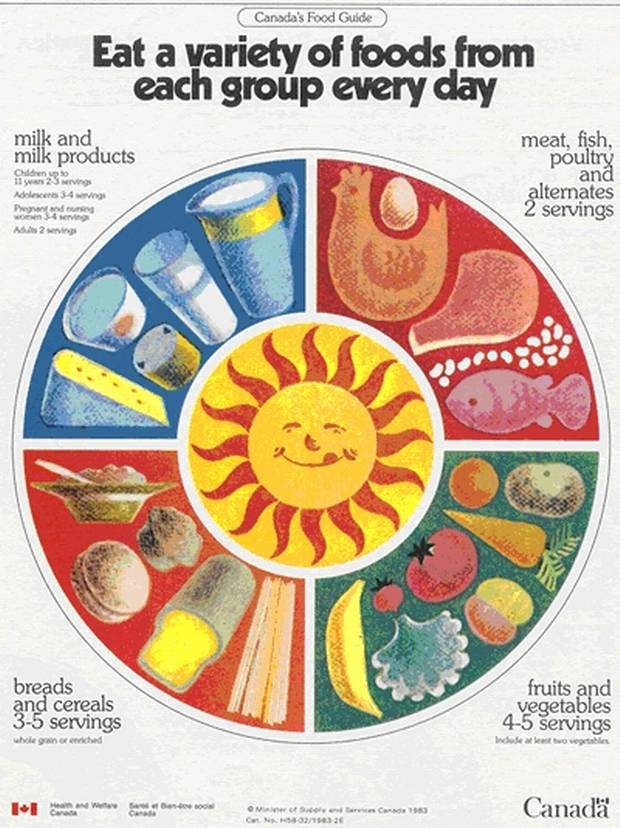
In the Canada’s Food guide of the 70s, fruits and vegetables were combined into a single group and the idea of variety became a central theme. Eat a variety of foods from each food group every day – this one still holds true today!

1992 – Canada’s Food Guide

infographic from canada's food guide

Photo Credit: Globe and Mail

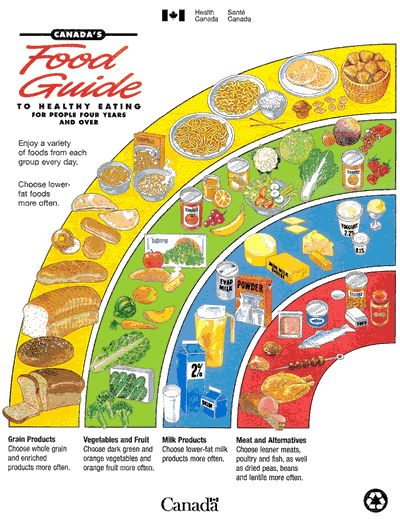
The 1992 Canada’s food guide introduced the rainbow template where a variety of foods were categorized under each food group. To reflect Canada’s multiculturalism, back in the 90s, they attempted to include culturally specific foods like the bowl of rice with chopsticks. However, Canada still has a long way to go to create a more culturally appropriate food guide that reflects Canada’s rich diversity.

Critics of the Food Guide

For decades, the food guide has received a ton of criticism. Here are some of the main concerns of health experts and the public.

Too Many Calories: A major criticism is that the food guide prescribes way too much food. I remember I once did an experiment in University where I calculated my caloric intake making the lowest calorie choices on Canada’s Food Guide, and even if I only ate lettuce and boiled chicken breasts, I would still have gained weight!

It’s Just Too Long: Many people also claim the food guide is too long, and because of that, the messages are less effective and convoluted.

WTF is a Serving?: Serving sizes also tend to be confusing and inconsistent as they’re offered in cups, ounces and teaspoons dependent on the type of food. The majority of people are not measuring out their food and have no freaking clue what a “serving” looks like (despite educational efforts) so this becomes a major barrier to use.

It’s Not Inclusive: As mentioned earlier, new Canadians are arriving every day from all over the world, and the food guide is not representative of this. Some cultural groups do not drink milk, so a food guide telling them to drink two glasses of milk may not be suitable for them. This is why nutrition information, especially these resources, must be tailored to a variety of unique audiences. When developing the upcoming food guide, Health Canada listened to more than 20,000 Canadians at open sessions which has made this process more open and democratic than ever before so I’m excited to see what they’ve come up with.

Food Industry Influence: A common criticism of past Canadian food guides is the omnipotent influence food industries have had in past decision processes- specifically of the dairy, cattle and sugar industries. The upcoming food guide will likely receive some serious backlash from the food industry because Health Canada will no longer be meeting privately with food industry representatives as part of the process. However, all consultations are open to the public, so it is likely that these representatives will find themselves there to promote their professional agenda in some regard. This action will not come without consequences, however. Canada’s dairy and cattle sector play a significant role in our agricultural economy. We’re talking thousands of Canadian jobs. Over the years, milk sales have decreased and this is having a huge impact on the livelihood of Canadian farmers, so there is always a downside to consider to these massive shifts in government recommendations. We will always need to eat, whether we’re eating animal proteins or plant-based ones, so I’m hopeful that even if jobs do get lost in these industries, that they may be shifted to alternative farms.

Proposed Changes to Canada’s Food Guide

Food Groups be Gone:

A major goal of the new Canada’s food guide is to shift from what to eat to how to eat. For this reason, there’s talk that they may do away with food groups all together which would be a HUGE change from the guides before it.

cow in a field

Prioritizing Plants: Food groups or otherwise, we’ll also be seeing a complete overhaul on meat and dairy. It’s been rumoured that Health Canada may be planning on eliminating dairy as a food group, however according to the Globe and Mail, Health Canada has responded that no decisions have been made. According to a series of guiding principles and recommendations recently released by Health Canada, the food guide will recommend: “regular intake of vegetables, fruit, whole grains and protein-rich foods, especially plant-based sources of protein”. That doesn’t mean that meat and dairy will be eliminated. They will be included in the appendix as examples of “protein rich foods”. It is still unclear whether specific protein groups will be created. This action reflects the diversity in individual’s diets by recognizing a vegetarian and vegan diet.

Foods to Limit: The guide is slated to advise on limiting the consumption of ultra-processed prepared foods and to limit foods high in saturated fat and sodium. I believe this action is a real game changer and totally necessary. Dr. Yoni Freedhoff has said that “the [current] guide ignores the fact that 25 per cent of calories Canadians are currently consuming are coming from other foods” which is why we should be spending time discussing on the foods that people are eating that are not represented currently in the food guide. The current food guide contains only a tiny blurb near the end about limiting trans fat and saturated fat, and another small blurb about high salt, and high sugar foods to limit. The rest of the food guide solely focuses on the main food groups. I think it’s naive to think that if we don’t emphasize these “foods to limit” in Canada’s food guide, people will forget about them and avoid them. They may not be in the guide, but they’re everywhere else. Let’s change that.

New Themes in Canada’s Food Guide

The new Canada’s Food guide will also expand beyond what foods to eat, and speak more to how to eat. Let’s look at some of those new themes.

Environmental Sustainability: As we continue to learn about the harmful impact food production is having on our environment, we can discuss specific dietary strategies that may help contribute to a more sustainable planet. This new food guide will explore concepts like green gas emissions, food production/distribution and food waste, and help you choose the most sustainable foods to address these issues.

sunset over a field

Cultural Diversity: In the past, Canada has attempted to create a more inclusive food guide that reflects our diversity, however there is still a hell of a lot more that must be done. Thankfully, Health Canada echoes that same belief which is why the new food guide will include a greater amount of culturally appropriate foods by representing, for example, indigenous cultures and traditions.

Food Skills & Knowledge: We’re in a food-obsessed age where chefs are celebrities and the majority of hashtags on Instagram are food related, but at the same time, we’re cooking less and eating more meals on the go. The new food guide plans to explore this gap by encouraging people to grow and cook their own meals, and eat together with friends and family whenever possible.

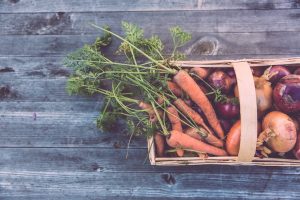
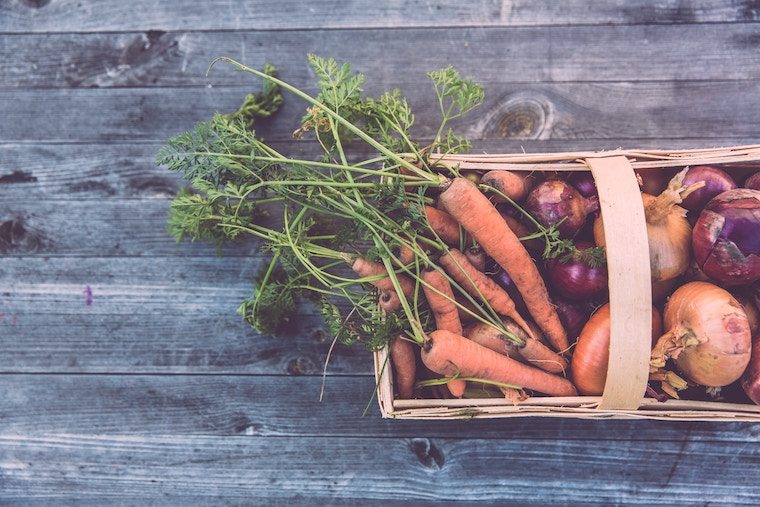
birds eye view of carrots in a basket

Canada’s Food Guide vs Brazil’s Food Guide

Much of these themes and proposed changes were inspired by the gold standard of dietary guidelines: Brazil’s Food Guide, which was launched in 2014.

Why is it the gold standard? Well, Brazil’s guide features simple, easy to follow key messages and looks at food from a social lens. Instead of listing foods in each food group, they categorize foods based on processing and encourage the consumption of more naturally/minimally processed foods.

  1. Naturally or minimally processed foods
  2. Oils, fats, salt and sugar
  3. Processed foods (bread, cheeses, cured meats and pickles)
  4. Ultra-processed foods

The Brazilian food guide makes an obvious connection between healthy diets and sustainable food production and distribution practices. They discuss how food should be eaten, and they even touch on food marketing. It’s no wonder this food guide has become a model on the international stage and has triggered the re-development of a variety of food guides worldwide.

Here are Brazil’s 10 steps to a healthy diet:

  1. Make natural or minimally processed foods the basis of your diet
  2. Use oils, fats, salt and sugar in small amounts
  3. Limit consumption of processed foods
  4. Avoid consumption of ultra-processed foods
  5. Eat regularly and carefully in appropriate environments and in company
  6. Shop in places that offer a variety of natural or minimally-processed foods
  7. Develop, exercise and share cooking skills
  8. Plan your time to make food and eating important in your life
  9. Out of home, prefer places that serve freshly made meals
  10. Be wary of food advertising and marketing

AH, why can’t we just copy and paste this into ours???

What is the Role of Canada’s Food Guide?

Before we get too wrapped up in the new food guide, let’s remember one thing: it’s just a guide. Back in the 40s, we had a different understanding of the food guide and they were seen as a concrete rule for a different time. But our population is changing and growing every day, and our food guide must reflect that. We’re not all eating the same way, and our needs aren’t all the same, so one guide cannot effectively represent each individual’s needs. In dietetics were taught about the unique needs of each individual, and simply handing someone a food guide is not the answer to healthy eating. Despite what some people believe, this is NOT what dietitians do. In fact, I don’t know any dietitians who actively use the guide. Dietitians want to explore how we’re eating, where we’re eating and who we’re eating with. Yes, it’s important to know what we’re eating, but that’s only one small piece of the puzzle. Which is why I’m excited that the upcoming food guide will encompass some of these concepts. Let’s be real, it’s impossible to come up with a guide that can be effectively used by everyone, but I think we’re getting closer with this one.

What do you think about the proposed changes to Canada’s Food Guide?

Are you happy with them?

What kind of changes do you hope to see in the upcoming food guide?

Comment below with your thoughts! 

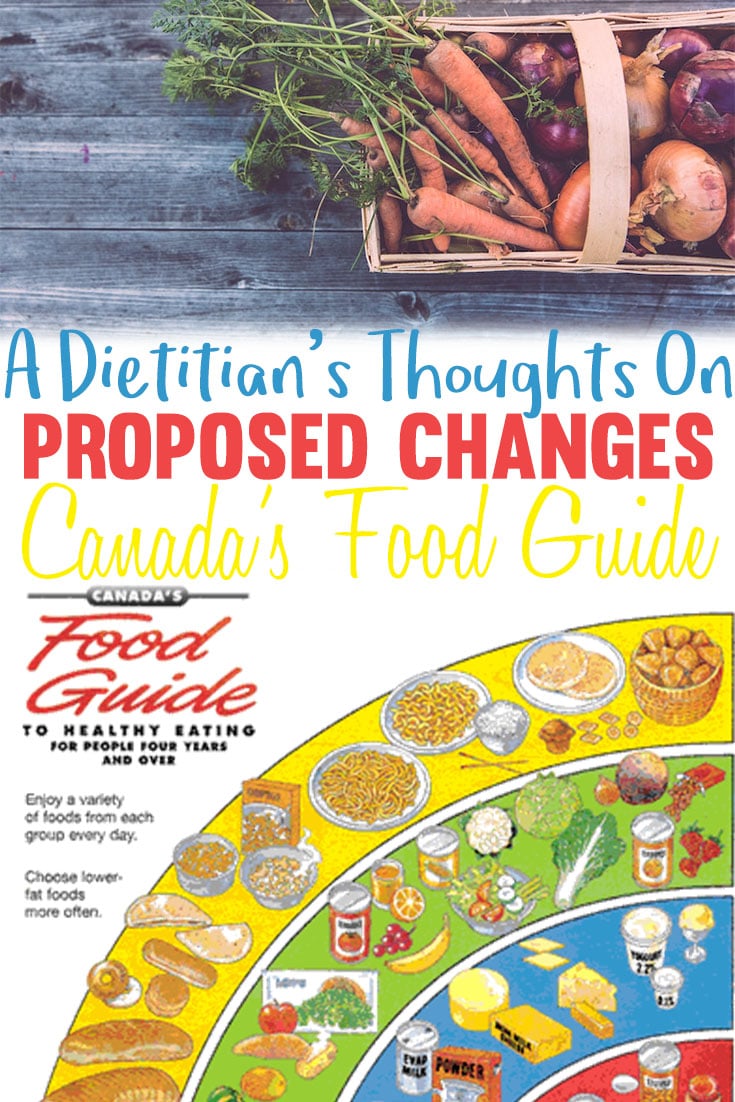
pinterest image of carrots in a basket above an image of canada's food guide with text overlay

Contribution by Sofia Tsalamlal, RD

Abbey Sharp

Abbey Sharp is a Registered Dietitian (RD), regulated by the Ontario College of Dietitians. She is a mom, YouTuber, Blogger, award winning cookbook author, media coach specializing in food and nutrition influencers, and a frequent contributor to national publications like Healthline and on national broadcast TV shows.

www.abbeyskitchen.com/about-abbey/

Last Updated August 15, 2020. Published August 21, 2018 By Abbey Sharp 47 Comments

Nootropics 101: The Dangerous Truth About Smart Pills

We discuss a group of supplements known as Nootropics, and find out the dangerous truth about taking smart pills.

We discuss a group of supplements known as Nootropics, and find out the dangerous truth about taking smart pills.

You may remember back in college when students took common prescription drugs like Ritalin or Adderall to help focus or finish up a research paper the night before it’s due. This was and still is a major problem, because students are using prescription meds that are not even subscribed to them, and are using them to treat conditions that they don’t even have. These pills carry dangerous side effects because of their misuse and ended up putting more young people at harm.

image of a library with seating

While the Adderall fad is now considered passé, a new trend is sweeping college campuses, high tech companies and really anyone feeling the pressures from their highly demanding stressful jobs. They’re called nootropics, aka smart pills. In 2015, the nootropics industry has already racked in nearly one billion dollars and it’s not showing signs of slowing down anytime soon.

What Are Nootropics?

animation of nootropic bottles

Literally translated from Greek: “towards the mind”, these compounds either directly or indirectly influence our brain function. Proponents of nootropics claim these compounds can increase our capabilities, state of wellbeing and/or our learning potential, which is pretty significant. These compounds are able to do this by altering our neurochemicals, enzymes or hormones in our brain and increasing catecholamine signalling. Catecholamines include neurotransmitters such as dopamine and norepinephrine which control a variety of our brain’s functions like motor control, cognition, emotion and memory processing. For a compound to be considered a nootropic, it must improve at least one cognitive domain: attention, arousal, mood, memory and creativity.

Here’s a Nootropics history lesson, guys. A short one, I promise.

Corneliu E. Giurgea, a Romanian psychologist and chemist, was named the father of nootropics. In the 1960s, Giurgea and his colleagues were attempting to develop new sleeping pills, when they accidently discovered a common nootropic known as Piracetam. Instead of quieting the brain, Piracetam activated the brain which he soon labeled as a nootropic. Giurgea was famously quoted saying: “Man will not wait passively for millions of years before a solution offers him a better brain”. Instead of focusing solely on treatment, nootropics started to become used to enhance our brain health and are heavily encouraged among healthy individuals.

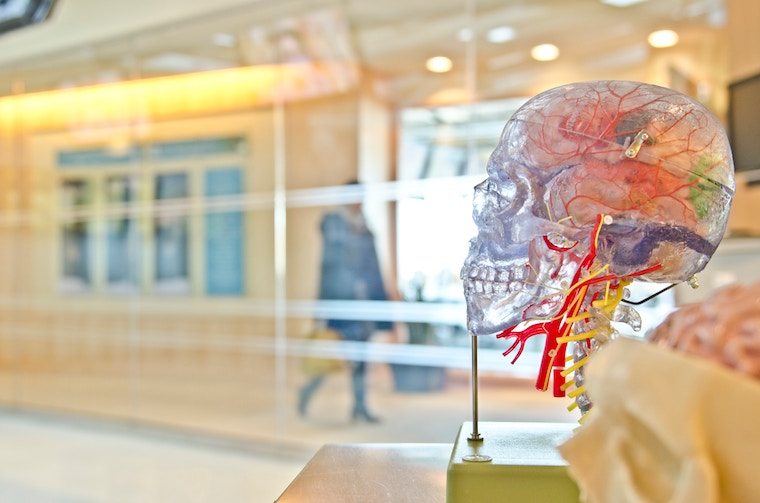
sculpture of a brain

Since the discovery, the market for nootropics have exploded. In the UK, a new recent study found that a large population of healthy students are using nootropics to help them complete tasks that they commonly procrastinate with. According to this nootropics website, nootropics can benefit these areas:

  1. Useful for their productivity and motivational effects
  2. Boost in social ability (increase confidence, extroversion, and verbal fluidity)
  3. Improve exercise performance
  4. Support brain health
  5. Improvement of mental wellbeing (anxiety aid, mood brighteners, anti-depressants)

But the real question remains, do nootropics work? Let’s review a few common nootropics.

Piracetam

Piracetam is one of the most popular nootropics since it was first discovered by the father of nootropics, Giurgea. The downside with a lot of the studies looking at piracetam is that they are not conducted on individuals using nootropics, like young healthy individuals. Instead the majority of the studies are conducted on the elderly that have a variety of cognitive disorders. This makes it difficult to know whether piracetam can actually enhance or improve cognitive thinking in healthy individuals (basically the people currently using these pills).

Images of test tubes.

Here are a few studies on piracetam:

In this study, brain function in elderly patients was improved after regular dosing with piracetam.

In this 1976 study, piracetam improved the memory in most adult volunteers after two weeks.

In this 1987 study, piracetam helped dyslexic students improve their nonverbal learning skills (reading ability/comprehension).

The trouble with a few of these old studies is that they haven’t been replicated since, have small sample sizes and were fairly short term, so it’s still unclear the impact piracetam has in long term use.

In 2001, a review was unable to find enough evidence to support the use of piracetam in the treatment of people with dementia or cognitive impairment.

On top of that, Cochran (an independent network that reviews health research reviewed hundreds of studies looking at the role of piracetam with dementia and Alzheimer’s found that there is insufficient evidence to confirm that it enhances thinking/memory.

Modafinil

Amongst all nootropics, modafinil is touted as the best. To use this nootropic, you must have a prescription. Modafinil is supposed to be used to treat ADHD, narcolepsy and other sleep disorders (obstructive sleep apnea). Modafinil acts by increasing dopamine levels (so does cocaine) which controls our brain’s reward and pleasure centers. In one study, modafinil helped “sleep-deprived surgeons become better at planning, redirecting their attention and being less impulsive when making decisions”. In another study, researchers concluded that it was difficult to extrapolate from disease to healthy state. Modafinil was able to help individuals with ADHD by slowing things down, however in healthy individuals, this nootropic may shift away from our optimal state, and slow things down as well. On top of that, modafinil is also associated with addictive tendencies, since it affects our dopamine levels and may lead to dangerous side effects, especially if individuals are using prescriptions that were not even prescribed to them in the first place.

machine used for research

So far, the research is telling us that in a disease state, nootropics can provide slight improvements, while in a healthy state, research is lacking in whether it can improve any cognitive abilities or that it provides us any additional benefits. We also don’t know whether prolonged use of these substances alter our brain chemistry and put us at harm over time.

The Dangers of Nootropics

high voltage danger sign and a fence

Based on the research, there is a consensus that nootropics don’t provide any additional benefit in healthy individuals. One major concern with these substances is that in Canada, nootropics are not allowed to be sold for consumption because they have not yet been tested for safety by Health Canada, mainly because of the limited evidence. In the United States, they are seen as food products, so do not need to be approved to sell (that’s a whole other kind of blog post). The way Canadians get around this is by ordering nootropics online from American retailers. The concern with purchasing supplements online is that you don’t really know what your purchasing and they may be mixed with other substances or contaminated with dangerous compounds. A huge study by a Guelph researcher, Steve Newmaster found that one in three vitamins and supplements sold were fake. On top of that, 60% of vitamin and supplement products contained ingredients not listed on their labels. WHAT?! Keep in mind these are products that are supposed to be regulated by Health Canada, so imagine products that are not even regulated or deemed safe by our government? Scary thought.

There has also already been cases about the misuse of nootropics. In the United States, since they’re classified as dietary supplements, nootropics unregulated, so companies are not held accountable for providing adequate labels with clear instructions. Because of this, overdose cases have already been reported (check that out here.) In both of the overdose cases, they were young men stressed and overwhelmed with work and needed a pick me up so turned to these supplements. I have major beef with the FDA around this, because supplements are NOT the same as food and just because something is “natural” doesn’t mean it’s safe.

Think about this for a second.

1 teaspoons of caffeine powder can be equivalent to 16-25 cups of coffee. I’m pretty positive that’s not an average coffee run order.

Placebo Effect

When it comes to supplements, we can’t ignore the placebo effect because it’s especially plausible in this case. When nootropics are touted as mood boosters or social anxiety relievers, it’s highly likely you can easily trick yourself into believing they help you. And yes, they’ve done research on this. This study showed that prescription stimulants influenced an individual’s mood but not cognitive enhancement.

Natural Nootropics in Food

Enough about supplements, let’s talk about food. So maybe we don’t yet have enough research to support the use of nootropics, but we can find many of these compounds in food itself (and that’s a hell of a lot safer).

Eggs

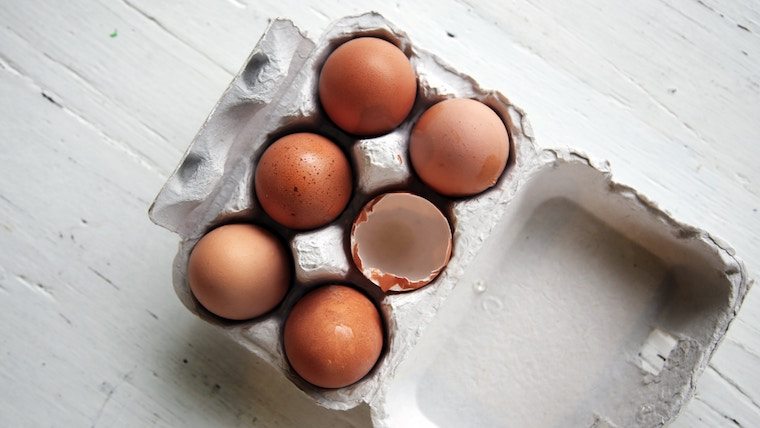
carton of eggs

Eggs provide us with a rich source of choline which is the precursor to a neurotransmitter acetylcholine which is important for learning and memory. Our body can only produce small amounts of choline, so we must get it from food. You can also get choline from liver, seafood and shellfish.

Dark Chocolate

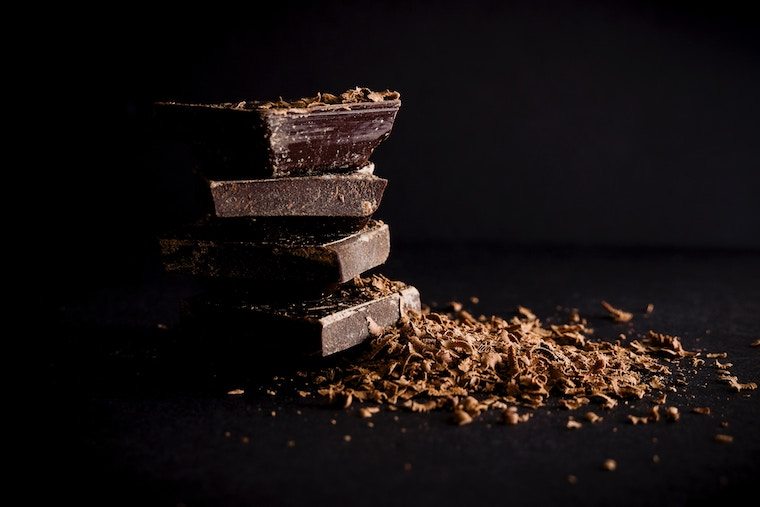
squares of dark chocolate

I know you guys will like this one. For a while now, studies have found the link between dark chocolate consumption and cognitive function because of some antioxidant compounds known as flavanols. Regular intake of chocolate was significantly associated with stronger cognitive function “irrespective of other dietary habits”. Yaaaaaaaaaaas!

Green Tea

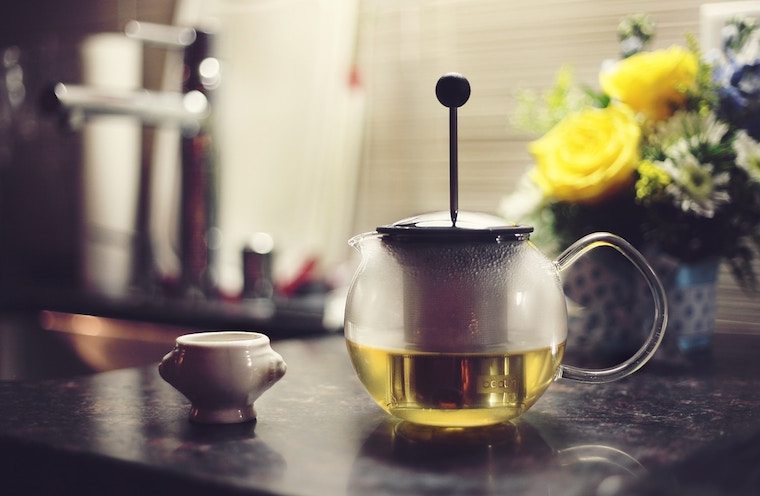
boiling tea pot

Green tea is notorious for carrying health benefits because of its antioxidant catechin and L-Theanine content. L-Theanine is a common nootropic and has been shown to promote relaxation which is why tea is often used as a calming device. Meanwhile, the catechins are known as flavanols, and like with chocolate, may promote brain function. In a small study, the consumption of green tea increased the connections between brain regions to aid in memory exercises.

Blueberries

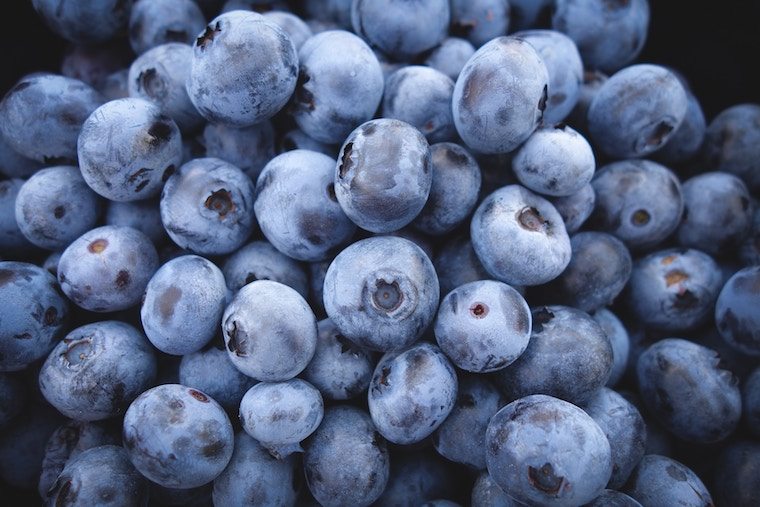
close up of blueberries

Blueberries are high in flavonoids and have been shown to reduce rates of cognitive decline in older adults.

Fatty Fish

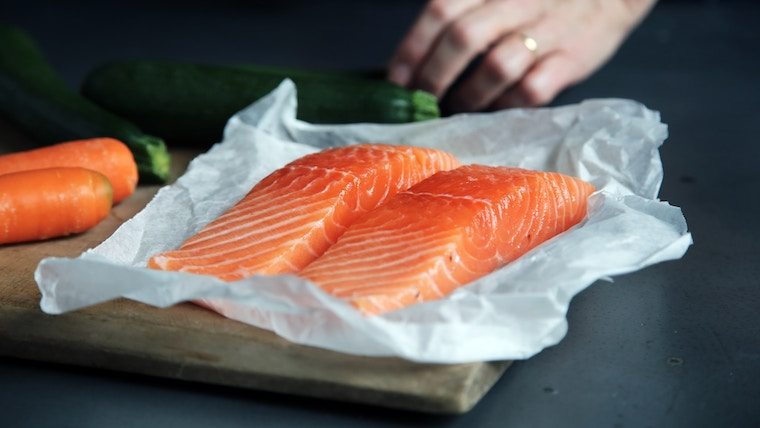
two salmon filets on parchment paper

We’ve been talking about omega-3s and 6s for a while now, and it’s been heavily studied in the area of cognitive health. This 2017 review linked the consumption of omega-3 and omega-6 with healthy brain aging.

As you can see, you can benefit from some of these brain foods without having to spend a ton on supplements that may not even benefit you. There has even been a trend in the nutrition world toward brain diets.

The MIND Diet

The Mediterranean-DASH Intervention for Neurodegenerative Delay

is exactly what it looks like. A mash up of the Mediterranean diet and the DASH diet, both of which have been found to carry significant health benefits. This diet is not seen as another fad diet, but really a diet developed by public health experts and based on research. The DASH diet focuses on helping people eat foods that can lower their sodium intake and blood pressure, while the Mediterranean diet focuses on eating minimally processed natural foods and limiting unhealthy fats and red meat.

The diet recommends eating these ten foods daily:

  1. Vegetables
  2. Green leafy vegetables
  3. Berries
  4. Nuts
  5. Beans
  6. Wine
  7. Whole grains
  8. Fish
  9. Poultry
  10. Olive oil

Based on research

conducted on the MIND diet, results showed that the diet lowered the risk of Alzheimer’s by as much as 53% in participants that adhered to the diet.

For the time being, I am a food first kind of dietitian. There may be a role for nootropics in various neurological diseases and/or injury, however there is simply not enough evidence to suggest these pills will make the healthy lay person smarter. Save your money, don’t risk taking sketchy unregulated supplements, and eat real food.

What have you heard about these smart pills?

Have you or would you take them?

Have they worked for you?

Comment below with your thoughts!

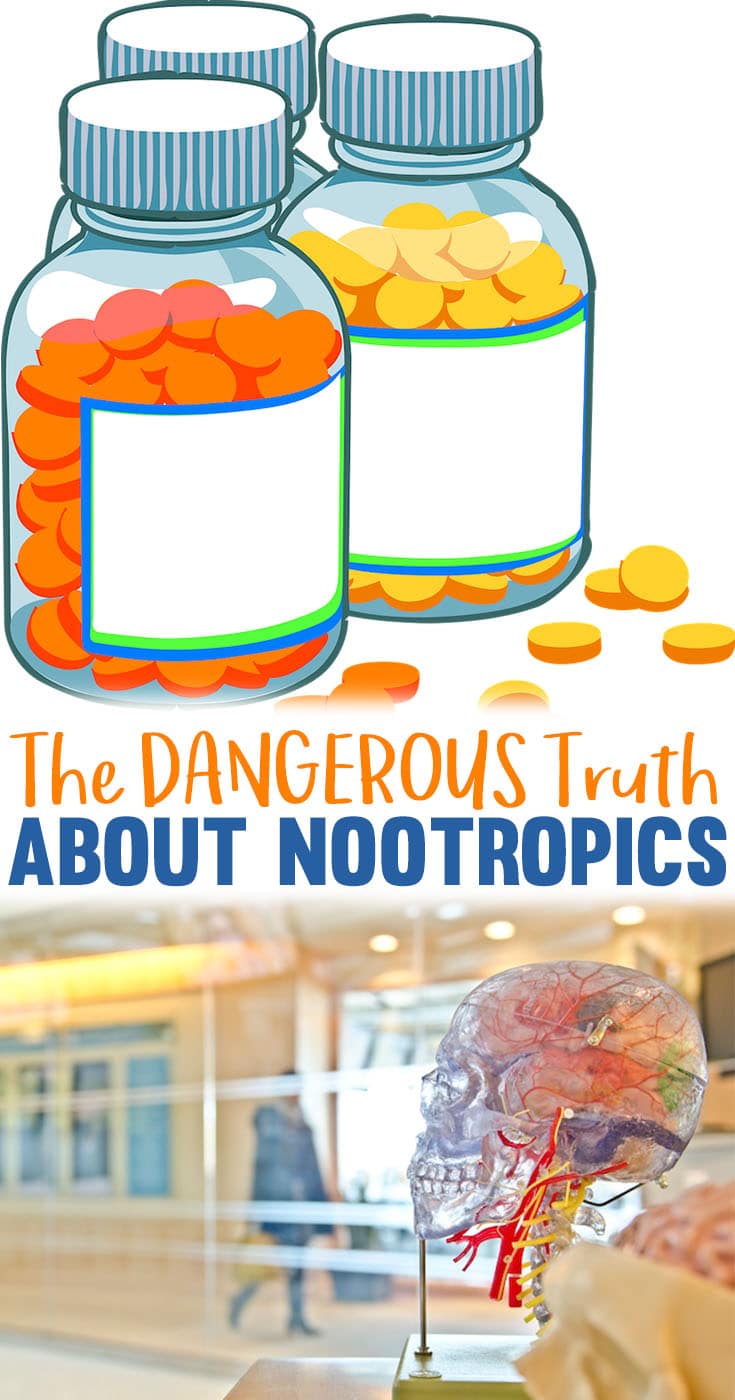
pinterest image of a cartoon of medicine bottles above an image of a brain sculpture with text overlay

Contribution by Sofia Tsalamlal, MHSc, RD

Abbey Sharp

Abbey Sharp is a Registered Dietitian (RD), regulated by the Ontario College of Dietitians. She is a mom, YouTuber, Blogger, award winning cookbook author, media coach specializing in food and nutrition influencers, and a frequent contributor to national publications like Healthline and on national broadcast TV shows.

www.abbeyskitchen.com/about-abbey/

Last Updated July 9, 2020. Published August 20, 2018 By Abbey Sharp 8 Comments

Frozen Vegan Peanut Butter Pie | No Bake, No Sugar Added, Gluten Free

This Frozen Vegan Peanut Butter Pie is a great No Bake, No Sugar Added, Gluten Free, Healthy Nice Cream Dessert that is perfect for Summer when it's too hot to cook or bake dessert!

This Frozen Vegan Peanut Butter Pie is a great No Bake, No Sugar Added, Gluten Free, Healthy Nice Cream Dessert that is perfect for Summer when it’s too hot to cook or bake dessert!

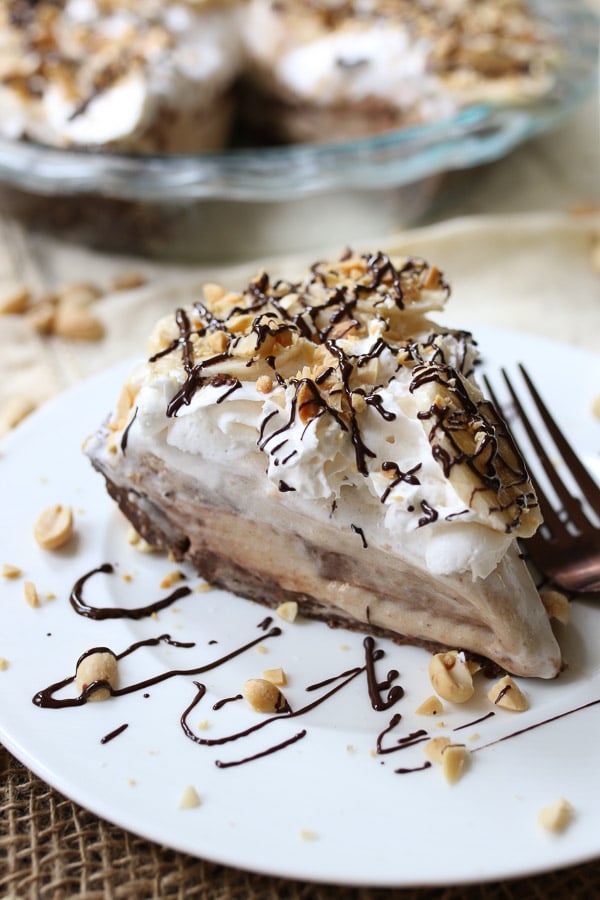
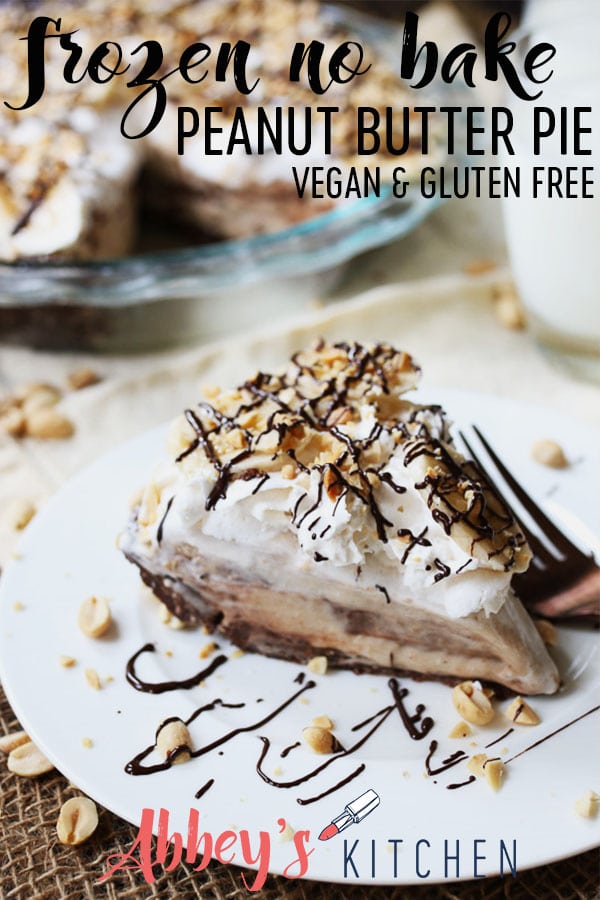
slice of no bake peanut butter and chocolate pie on a white plate topped with peanuts and chocolate

Remember DQ ice cream cakes? I was recently at my in laws celebrating Father’s Day and we had a DQ ice cream cake and OMG it was so good. I guess I forgot how yummy that smooth light ice cream with the fudgy layer is, and also just how nice it is to eat cake that’s cold in the summer. So naturally, I got inspired and this frozen vegan peanut butter pie was born!

How to Make Frozen Vegan Peanut Butter Pie

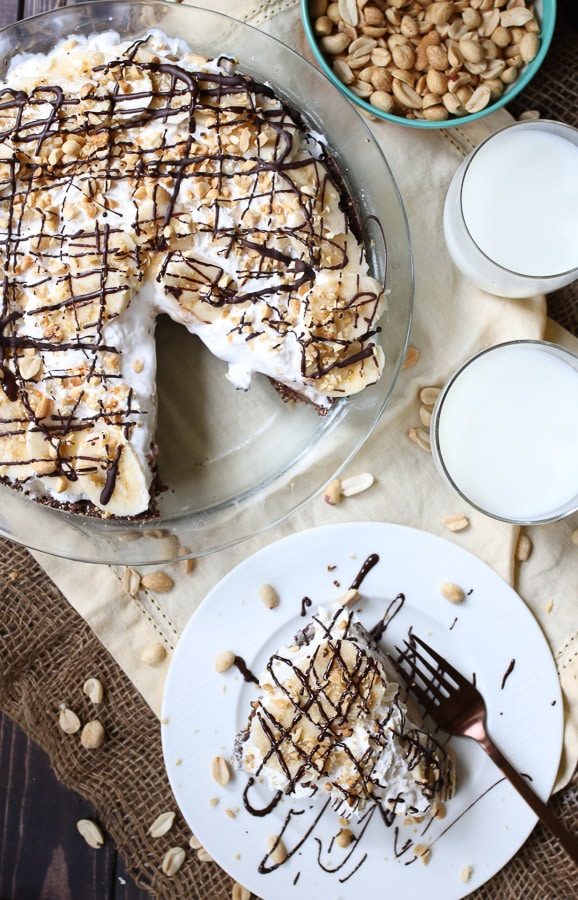
birds eye view of frozen peanut butter pie next to a slice of no bake pie on a white plate garnished with chocolate and peanuts

I don’t mind baking, but in the summer, I often can’t bring myself to turn on the oven to make a simple supper, nevermind to bake a whole pie. This frozen vegan peanut butter pie is legit the most delicious refreshing treat ever. PLUS it’s actually pretty light since I make my ice cream out of frozen bananas (aka. nice cream) blended with powdered peanut butter which is WAY lower in calories and fat compared with regular peanut butter. I also make a no bake crust out of nuts, dates and unsweetened cocoa powder and a fudge from dark chocolate and dates. That means this frozen vegan peanut butter pie has no sugar added, is gluten free and is reduced in calories and fat. YAAAAAAS.

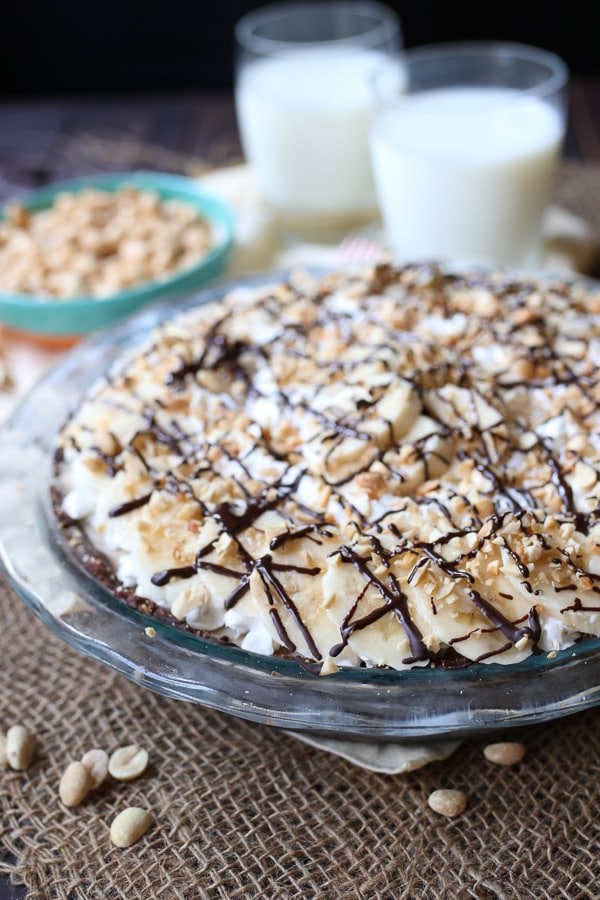
frozen peanut butter pie in a glass dish topped with chocolate and chopped peanuts

I also love that because it’s frozen, and not a baked good that can easily get stale, you can pace yourself on the portion size more easily. I find that I’m often encouraged to eat more of a cake or pie faster simply because I don’t want it to go bad (especially when I worked hard to make it!) But this frozen vegan peanut butter pie stays “fresh” in the freezer for up to 3 months so you can enjoy a small mindful portion every night without worrying about it spoiling.

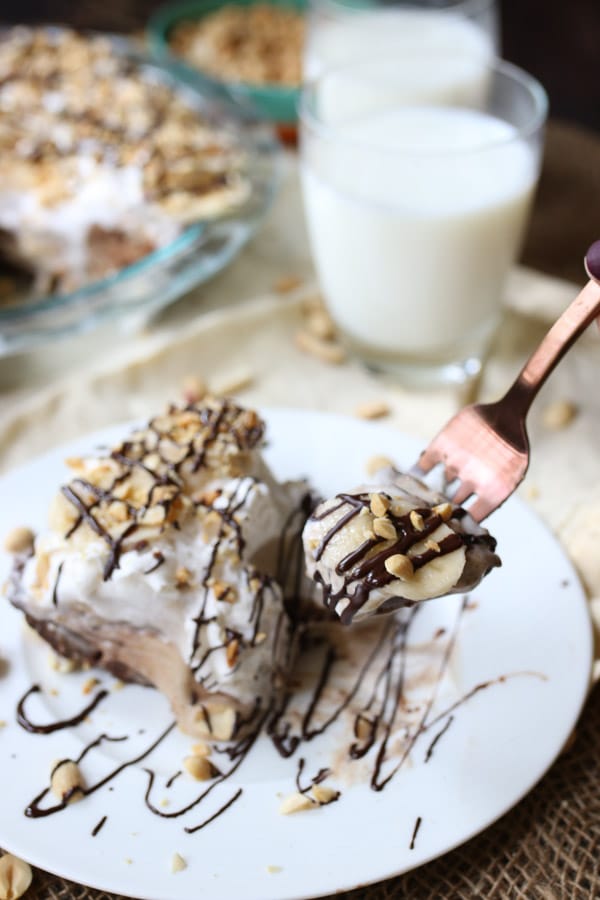
fork taking a bite out of no bake peanut butter pie garnished with chocolate drizzle on a white plate

That said, I ate this whole pie to myself in about a week. I mean, I have no qualms about that. It was just nuts and bananas really (okay and some chocolate) so I say totally fair game.  I make a lot of great recipes but I do think this frozen vegan peanut butter pie is going to go down in my history books as one of my greatest inventions. I think if you try it, you’ll agree!

So loves, tell me – WHO remembers the DQ ice cream cake?

Have you tried making this frozen vegan peanut butter pie? HOW GOOD IT IT, RIGHT?!

Leave me a comment below with your thoughts!
pinterest image of vegan and gluten free frozen peanut butter pie on a white plate with text overlay
This Frozen Vegan Peanut Butter Pie is a great No Bake, No Sugar Added, Gluten Free, Healthy Nice Cream Dessert that is perfect for Summer when it's too hot to cook or bake dessert!
Print Recipe
5 from 2 votes

Frozen Vegan Peanut Butter Pie

This Frozen Vegan Peanut Butter Pie is a great No Bake, No Sugar Added, Gluten Free, Healthy Nice Cream Dessert that is perfect for Summer when it’s too hot to cook or bake dessert!
Prep Time1 hour hr
Total Time1 hour hr
Course: Dessert
Cuisine: American
Servings: 12 people
Calories: 345kcal
Author: Abbey Sharp

Ingredients

Crust:

  • 1 1/2 cups medjool dates pitted and diced
  • 1 1/2 cups unsalted peanuts
  • 3 tbsp unsweetened cocoa powder
  • 1/4 cup powdered peanut butter
  • 1 tbsp coconut oil melted

Fudge:

  • 1/3 cup dates pitted and diced
  • 50 g. vegan dark chocolate chopped
  • 2 1/2 tbsp coconut cream

Filling:

  • 5 cups frozen diced banana
  • 1/2 cup plus 1 tbsp powdered peanut butter or more, if you prefer a stronger PB taste
  • 3/4 cup coconut cream

To Garnish:

  • Coconut whipped cream
  • Peanuts crushed
  • Melted vegan dark chocolate

Instructions

  • To make the crust, pulse the dates, peanuts, cocoa powder, powdered peanut butter, and coconut oil until fairly smooth. Pack into the bottom of a pie plate and freeze.
  • To make the fudge, puree together the dates, melted dark chocolate and coconut cream until very smooth. Set aside.
  • To making the filling, puree the frozen bananas, powdered peanut butter and coconut cream until smooth.
  • To assemble, remove the pie crust from the freezer, Divide half of the banana on the crust, and top with the fudge. Top with the remaining banana and smooth it out. Freeze for at least 30 minutes.
  • To serve, top with the coconut cream, crushed peanuts and a drizzle of dark chocolate. Enjoy!

Nutrition

Calories: 345kcal | Carbohydrates: 41g | Protein: 9g | Fat: 19g | Saturated Fat: 9g | Cholesterol: 1mg | Sodium: 51mg | Potassium: 608mg | Fiber: 7g | Sugar: 25g | Vitamin A: 90IU | Vitamin C: 5.9mg | Calcium: 38mg | Iron: 1.9mg
Abbey Sharp

Abbey Sharp is a Registered Dietitian (RD), regulated by the Ontario College of Dietitians. She is a mom, YouTuber, Blogger, award winning cookbook author, media coach specializing in food and nutrition influencers, and a frequent contributor to national publications like Healthline and on national broadcast TV shows.
www.abbeyskitchen.com/about-abbey/

Last Updated October 21, 2020. Published August 17, 2018 By Abbey Sharp 10 Comments

Why You Need More Vitamin D- Yes, Even in this Crazy Hot Summer

I share the benefits of vitamin D, why you don’t want to rely on the sun to get your vitamin D and the best sources of vitamin D for good health.

DISCLAIMER: This post was developed in sponsored partnership with Jamieson Vitamins, however, as always, all opinions are genuine.

I share the benefits of vitamin D, why you don’t want to rely on the sun to get your vitamin D and the best sources of vitamin D for good health.

As a dietitian, I get asked a lot of random questions. Most are about fad diets, or how to lose weight for your cousin’s wedding STAT, but one of my favourites to dig into is about Vitamin D. There’s a lot of curiosity and concern about getting enough vitamin D and I would say that’s rightfully so, especially here in Canada where (let’s be real), we don’t get sun all year long. Approximately 40% of Canadians are below the recommended vitamin D intake in the winter, and 25% are low in the summer months. So why is it even important? Let’s take a looksy at what Vitamin D does for you.

What is Vitamin D?

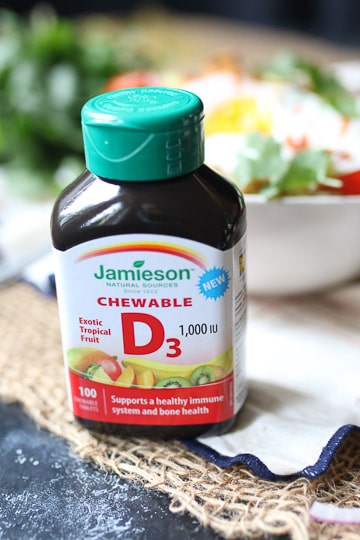
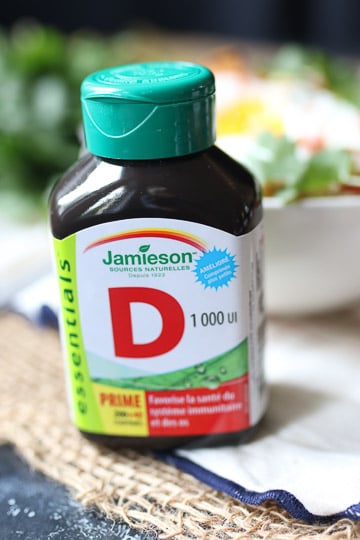
bottle of vitamin D supplements

Vitamin D is a fat soluble vitamin available in two different forms, D3 – which is found in animal foods, and D2 – which can be found occasionally in some mushrooms. D3 is the more effective form so we recommend people focus on this.

What are the Benefits of Vitamin D?

close up of a bottle of vitamin D supplements

Vitamin D, or the sunshine vitamin, has been the talk of the town for good reason. It plays an important role in a lot of things! Here’s the highlight reel.

Cancer: This is exciting stuff! One study found that getting a modest 1100 IU a day (in conjunction with calcium) helped cut participants’ cancer risk by 60%! We have seen some early evidence that adequate vitamin D may help reduce the risk of colorectal cancer, prostate cancer, breast cancer and total cancer rates.

Immune Support: A 2010 study found that getting enough vitamin D may help reduce your chances of catching the flu.

Heart Health: One 2008 study found that vitamin D may help reduce the risk of heart disease.

Multiple Sclerosis: Early research suggests that high vitamin D levels may be associated with lower risk of multiple sclerosis.

Strong bones: One study found that getting adequate vitamin D can help prevent osteoporosis, falls and fractures.

Type 1 Diabetes Research suggests that getting just 2000 IU of Vitamin D daily may help reduce the risk of Type 1 Diabetes by more than 75%!

Type 2 Diabetes One 12-year cohort study found that vitamin D status is inversely associated with risk of Type 2 Diabetes.

Depression: We all love ourselves a little sunshine, and this is apparent in the research too! Studies show that vitamin D supplementation may help reduce symptoms and boost mood in people with depression.

Mortality: While it’s difficult to track people for life, a meta-analysis of the research suggests that vitamin D supplementation may help prolong people’s life.

What Happens with Vitamin D Deficiency?

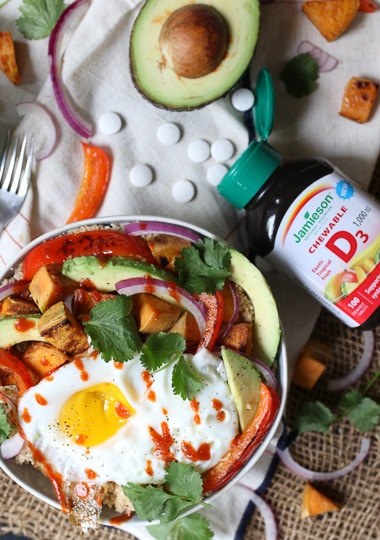
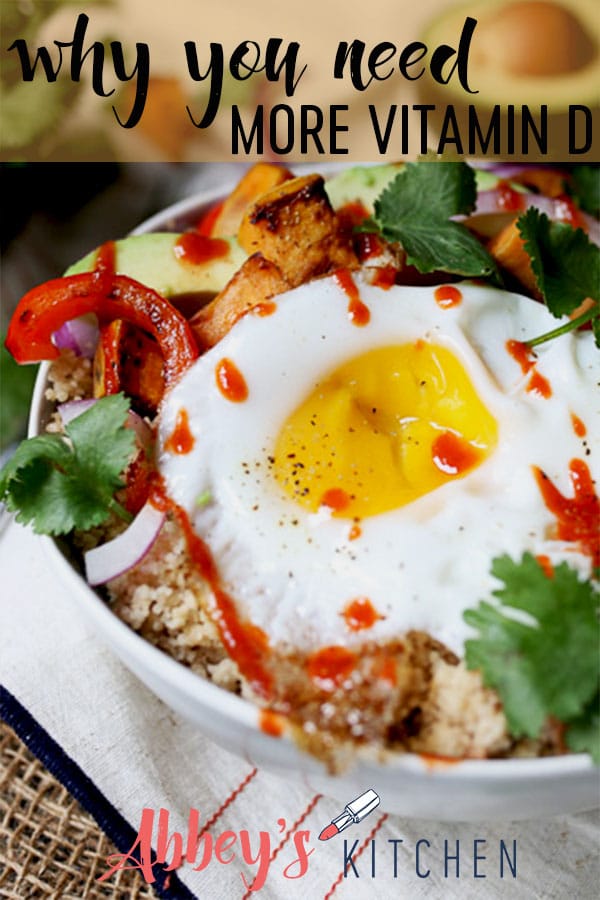
birds eye view of a nourish bowl topped with an egg next to a bottle of vitamin D supplements

It’s not a pretty thing yet it’s one of the most common nutrient deficiencies out there.  Have you ever heard of rickets in children? Hopefully this is not something you’re that familiar with in your own personal life.  Rickets (a bone disease) was a huge public health issue in children back in the day, but thanks to fortification and supplementation of breast-fed babies, we’ve seen a sharp decline.  But since vitamin D works so closely with calcium in bone structure and health, deficiency is commonly linked to osteoporosis and increased risk of fractures and falls in elderly populations. Vitamin D deficiency has also been linked with heart disease, Type 1 and Type 2 Diabetes, cancer, dementia, MS and mortality, in general.

How Do I Get Vitamin D

close up image of a sunny side up egg on a buddha bowl drizzled with hot sauce

The body is a pretty amazing thing, and actually manufactures vitamin D in the skin from the sun! This is one reason why Canadians are particularly susceptible to vitamin D deficiency in the winter – there’s just not enough sunlight to go around. But what about the Summer (especially this one!) – we MUST have gotten enough D for the year with the scorcher we’ve had, right?

Maybe not. If you’re practicing safe sun hygiene, you’re hopefully wearing a good UVA and UVB sunblock, as well as sun protectant clothing when you’re outdoors. I don’t know about you, but I’ve already had a number of suspicious moles removed so I don’t take ANY chances when it comes to the sun. We may all want a glowing tan, but please remember that ANY colour is considered to be sun damage and something we want to avoid.

So How’s a Girl (or Guy) Supposed to Get MORE Vitamin D, Then?

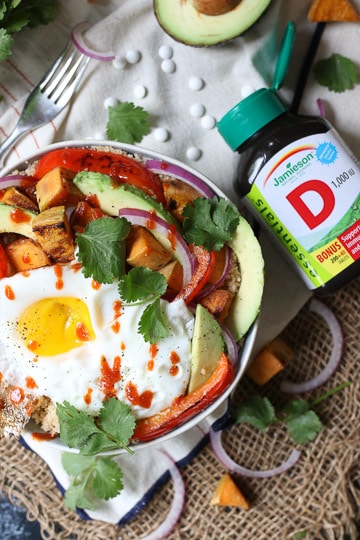
birds eye view of a buddha bowl garnished with cilantro and hot sauce next to a bottle of vitamin D supplements

Well, there are a few food-sources of vitamin D3 including salmon, tuna, whole egg yolks, while dairy products, dairy alternatives and cereals are often fortified. Otherwise, you’re looking at getting in a daily supplement, something that I believe most, if not all, Canadians should talk to their doctor or dietitian about doing. I’m a big fan of Jamieson Vitamins Vitamin D3 (available in tablets, fast-dissolve, soft-gel, gummies, spray, droplets or chewables). I’m especially on board because this summer, they’re matching donations to Canadian Cancer Society research dollar-for-dollar up to $100,000. Donating to cancer research by purchasing the Gift of Discovery at cancer.ca/discovery, enables you to double your donation in funding important cancer research led by Canada’s best and brightest researchers and make a difference in the lives of Canadians living with cancer.  You can also read up on some of the inspiring stories of some amazing cancer survivors here!

Want some more information on how you can help improve the lives of Canadians living with cancer? Check out this link and donate today!

How do you get enough vitamin D?

Do you take a vitamin D supplement?

Are you practicing safe sun hygiene this Summer?

Leave me a comment below with your thoughts!

close up image of a fried egg on top of vegetables in a white bowl

Disclaimer: This post was developed in paid partnership with Jamieson Vitamins and Canadian Cancer Society, however, all opinions are genuine.


Abbey Sharp

Abbey Sharp is a Registered Dietitian (RD), regulated by the Ontario College of Dietitians. She is a mom, YouTuber, Blogger, award winning cookbook author, media coach specializing in food and nutrition influencers, and a frequent contributor to national publications like Healthline and on national broadcast TV shows.
www.abbeyskitchen.com/about-abbey/

Last Updated October 28, 2020. Published August 14, 2018 By Abbey Sharp 32 Comments

Low Fat Homemade Chorizo and Sweet Potato Tacos with Low Carb Lettuce Wraps | Gluten Free & Paleo

DISCLAIMER: This post was developed in sponsored partnership with duBreton, however, as always, all opinions are genuine.

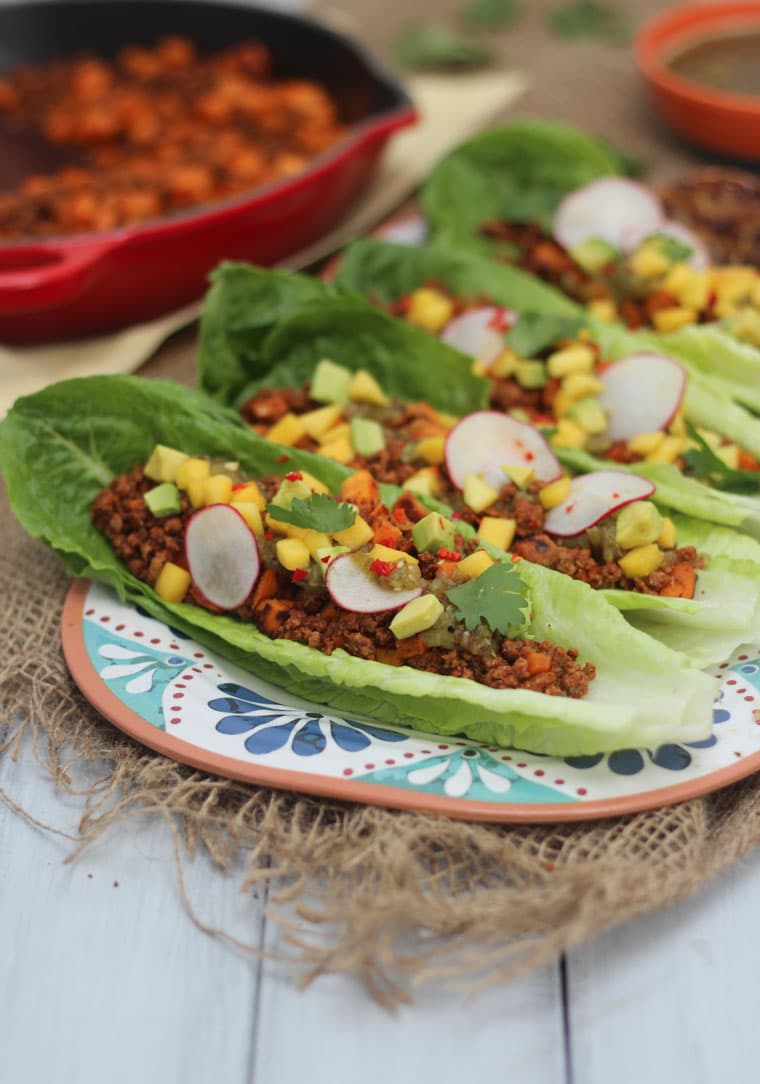
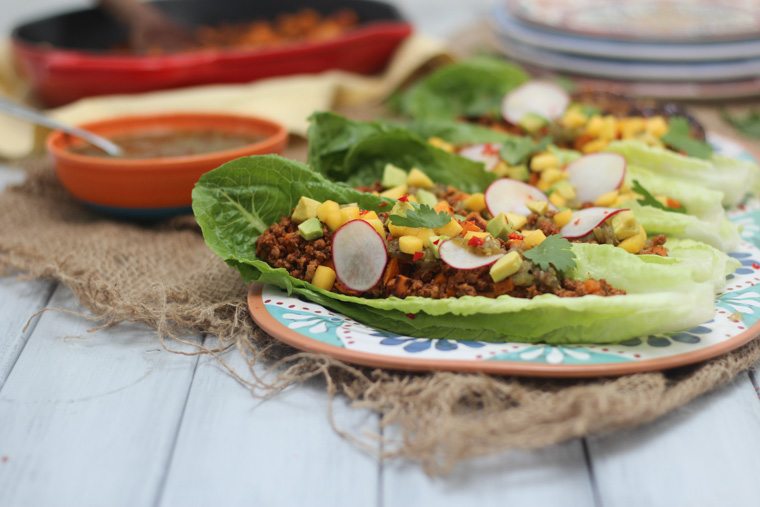
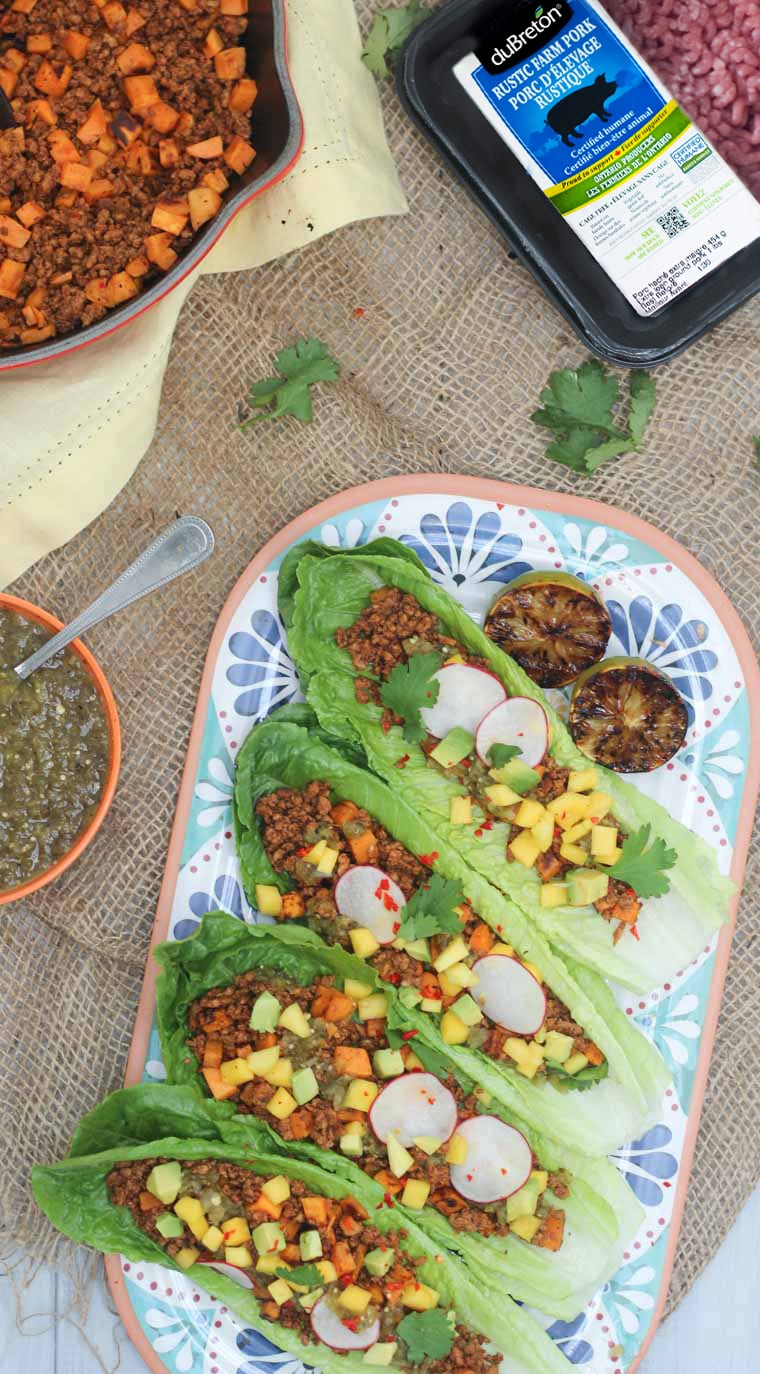
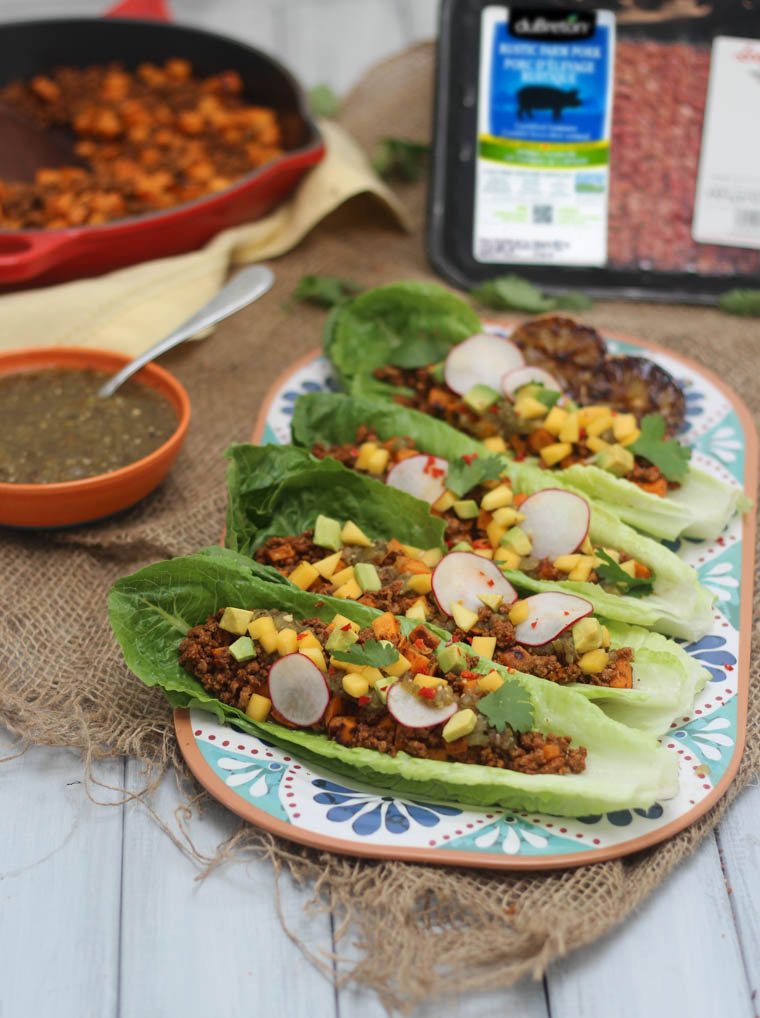
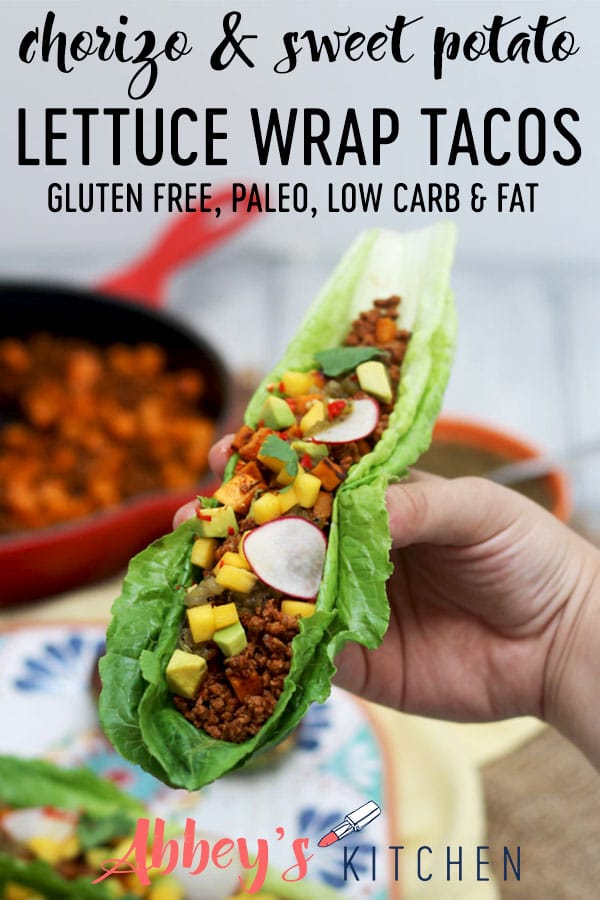
These low fat homemade chorizo and sweet potato tacos are packed with flavour, served in low carb lettuce wraps, and topped with avocado, mango and radishes.low fat homemade chorizo and sweet potato tacos served in lettuce wraps garnished with fresh vegetables on a colourful plate

Real talk- taco night is always the best night. No, not just because I enjoy any excuse not to eat with a fork and knife. And not just because it’s an inexpensive way to dine out or in. But because everything always tastes better in a taco- #AmIRight?

paleo chorizo and sweet potato tacos garnished with fresh vegetables served in lettuce wraps on a floral plate

Case in point- chorizo. I mean, chorizo sausage, a classic spicy sausage popular in Mexican and Spanish cuisine, is delicious any way you slice it (or in this case, crumble it). But when topped off with all the classic taco-suspects and packed into a handheld meat-vessel, it just tastes better. Having said that, typical chorizo is really rich and oily. Like you’re pretty much guaranteed to ruin your shirt from chili-died oil after a single chorizo taco bite. So I decided to make my own Low Fat Homemade Chorizo and pack them into a low carb lettuce taco shell. And the key to that is to start with the best quality ground pork.

birds eye view of sweet potato and chorizo tacos served in lettuce wraps on a floral plate

I’ve recently been buying duBreton pork products since I was introduced to them at Taste of Toronto this summer. DuBreton is the only Canadian pork company to have earned the Certified Humane distinction on all of its Rustic Farm Pork and Organic products. We’ve talked a lot about animal welfare on this blog lately, and it’s definitely a trendy topic. If you aren’t already seeing it in stores, this official designation demands that animals are given a nutritious diet without antibiotics or animal by-products. They have to be raised in a crate-free environment  with free access to shelter, hay or straw bedded resting areas, plus have enough space and ability to engage in natural behaviours. So if animal welfare is a priority for you, you definitely want to be on the lookout for the Certified Humane label on any of the meats you buy.

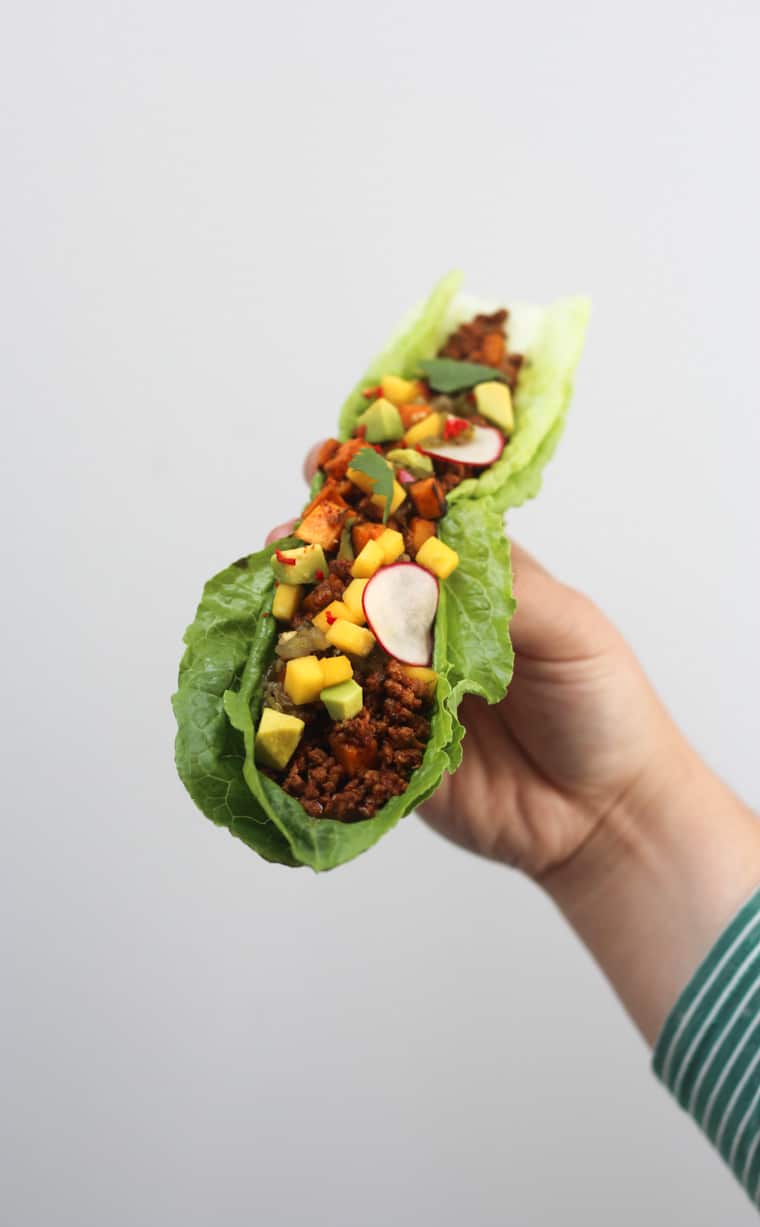
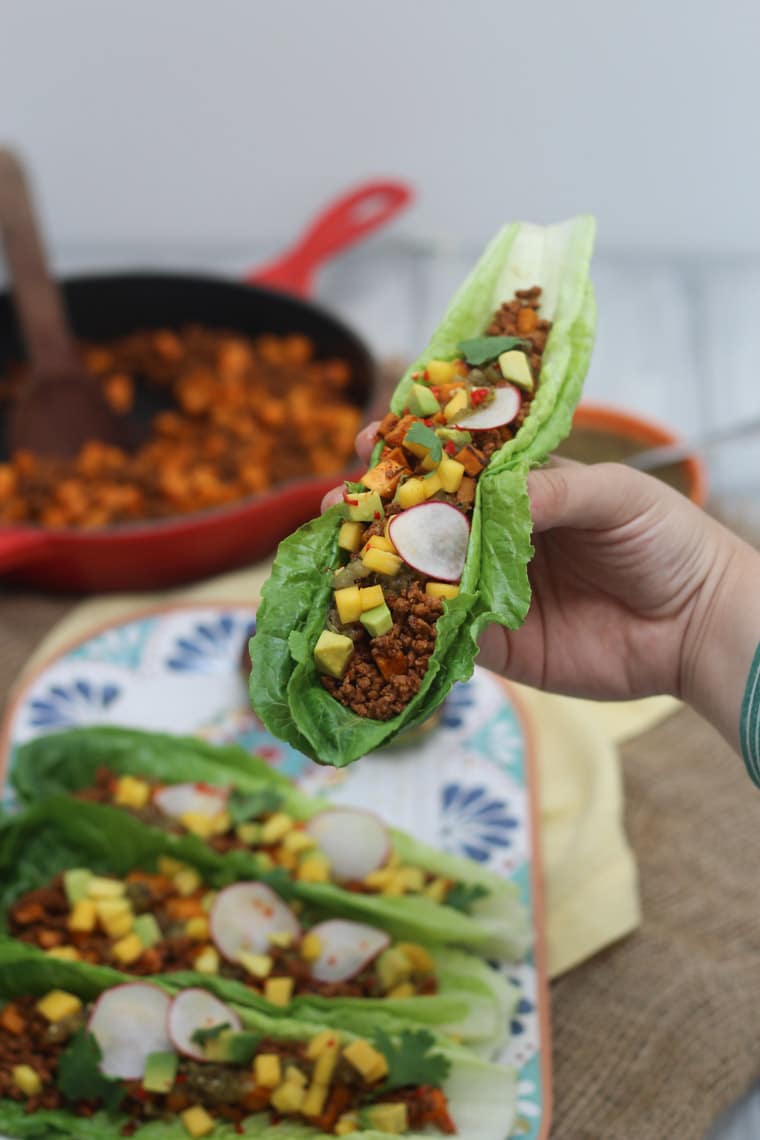
hand holding paleo chorizo and sweet potato taco garnished with fresh vegetables

How to Make AMAZING Low Fat Homemade Chorizo and Sweet Potato Tacos

lineup of homemade sweet potato and chorizo tacos served in low carb lettuce wraps on a floral plate

Now that you’ve got your meat, making your own low fat homemade chorizo is surprisingly easy. It just takes a bunch of different spices mixed with a little apple cider vinegar and of course- your ground pork. I prefer to let mine sit in the fridge over night before cooking to really let those spicy flavours sink in but if you’re in a pinch, it still tastes ah-maz-ing freshly mixed.

hand holding low fat gluten free paleo chorizo and sweet potato taco garnished with fresh vegetables

For my Low Fat Homemade Chorizo and Sweet Potato Tacos, I cook off some finely diced sweet potato and the chorizo before stuffing it all into some crispy fresh lettuce leaves. While I have no qualms about using traditional corn or flour tortilla shells, sometimes I just crave something lighter and lettuce is a crunchy vessel for my meat. Plus, this makes them naturally gluten free, low carb and paleo-friendly if that’s your jam. You can serve your tacos however you want but I usually like to top mine with some sweet mango, crunchy radish, buttery avocado and fragrant cilantro to balance out the heat. Hey, you do you!

Now, I want to know, have you seen Certified Humane on any labels of products you buy regularly?

What’ss your go-to taco filling?

Have you tried my Low Fat Homemade Chorizo and Sweet Potato Tacos?

Leave me a comment below!

pinterest image of a hand holding low fat gluten free paleo chorizo and sweet potato taco with text overlay

Disclaimer: This post was developed in paid partnership with duBreton, however, all opinions are genuine.

I share a one week high protein paleo meal plan filled with healthy recipes that provide around 1700 calories and 100 grams of protein. 
Print Recipe
5 from 4 votes

Low Fat Homemade Chorizo and Sweet Potato Tacos with Low Carb Lettuce Wraps

These low fat homemade chorizo and sweet potato tacos are packed with flavour, served in low carb lettuce wraps, and topped with avocado, mango and radishes.
Prep Time8 hours hrs
Cook Time15 minutes mins
Total Time8 hours hrs 15 minutes mins
Course: Dinner
Cuisine: Spanish
Servings: 4 people
Calories: 380kcal
Author: Abbey Sharp

Ingredients

Chorizo:

  • 1 ½ lb duBreton extra lean ground pork
  • 2 tbsp chili powder
  • 1 1/2 tsp cumin
  • 1 tsp sweet smoked paprika
  • 1 tsp garlic powder
  • 3/4 tsp salt
  • ½ tsp coriander
  • ½ tsp dried oregano
  • ½ tsp dried thyme
  • ½ tsp cayenne pepper
  • ¼ tsp cinnamon
  • 1/8 tsp black pepper
  • 1/8 tsp cloves
  • ¼ cup apple cider vinegar

Tacos:

  • 2 tbsp extra virgin olive oil
  • 1 sweet potato peeled and finely diced
  • Salt and pepper to taste
  • 1 large head of romaine lettuce
  • ½ cup salsa verde
  • ½ mango finely diced
  • ½ avocado finely diced
  • 1 radish thinly sliced
  • ½ cup cilantro
  • Lime for serving

Instructions

  • In a large bowl, mix together the deBreton pork with all of the spices and vinegar. Stir until well incorporated and mixed, then transfer plastic wrap. Wrap it up tightly into a log and refrigerate overnight.
  • Heat one tablespoon of oil in a large nonstick skillet over medium high heat. Add in the sweet potato and cook until browned and soft, about 6- 7 minutes. Season with a pinch each of salt and pepper and transfer to a bowl.
  • Return the pan to medium high heat and add in the remaining oil. Stir in the chorizo and brown until cooked through. Add the sweet potato back in, just to rewarm.
  • To serve, add the chorizo-sweet potato to the lettuce leaves, and top with salsa, mango, avocado, radish and cilantro. Serve with lime, if desired.

Nutrition

Calories: 380kcal
Abbey Sharp

Abbey Sharp is a Registered Dietitian (RD), regulated by the Ontario College of Dietitians. She is a mom, YouTuber, Blogger, award winning cookbook author, media coach specializing in food and nutrition influencers, and a frequent contributor to national publications like Healthline and on national broadcast TV shows.
www.abbeyskitchen.com/about-abbey/

Last Updated August 9, 2018. Published August 9, 2018 By Abbey Sharp 14 Comments

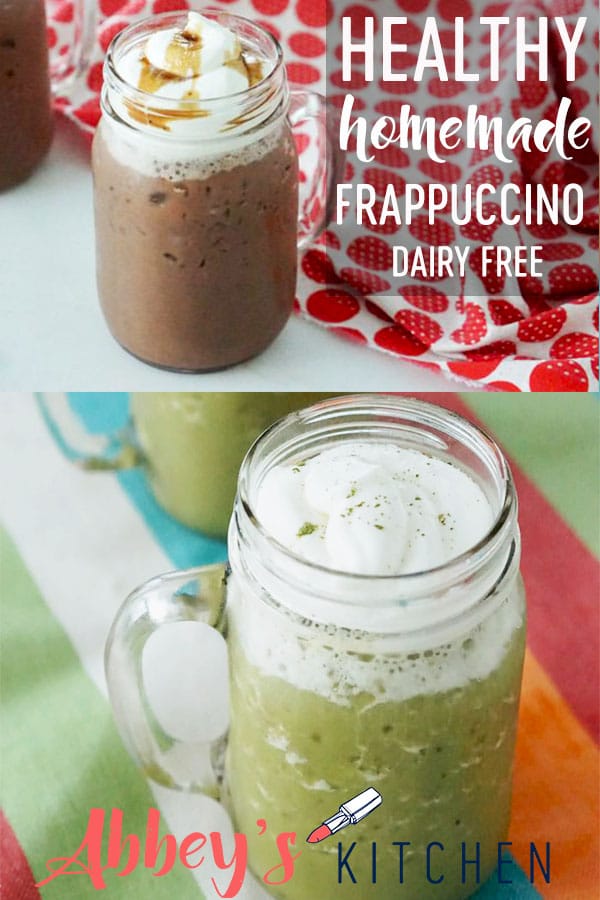
Healthy Homemade Frappuccino with 3 Dairy Free Flavours!

Three healthy homemade frappuccino recipes without dairy and all the added calories! 

Coffee is a beautiful thing. It helps me get through my workouts, workdays, and life in general. And when summer hits, it’s hard to resist heading straight for those frothy frozen frapucccinos at the ‘Bucks.  Not only are they incredibly pricey, but they’re also all loaded with so much fat, sugar and artificial ingredients, you might as well be eating a mass produced dessert. Some even pack as much as 600 calories each and more than 3 times you’re suggested intake of added sugar for the day- before you’ve even had breakfast! That’s not a drink- that’s an 8 AM dessert for a family for four! Just imagine how much better a homemade frappuccino would be – both for your wallet and your waistline.

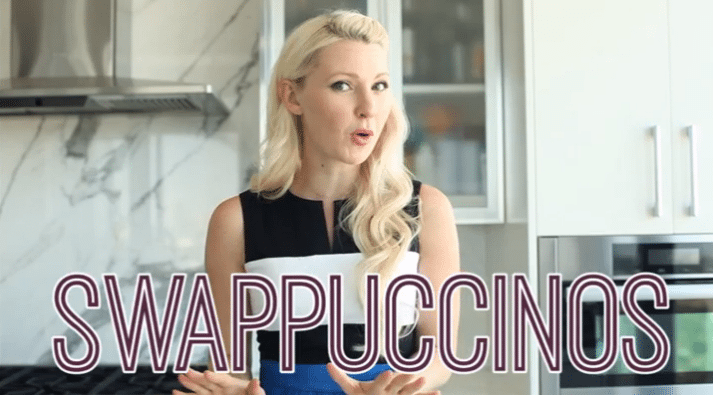
abbey sitting in kitchen with text overlay

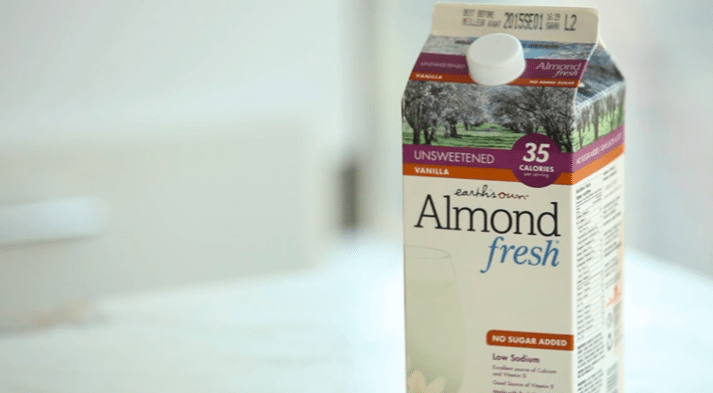
So that’s why I developed my 3 dairy-free swappuccinos (aka the homemade frappuccino) with no artificial sweeteners or flavours and a fraction of the calories, sugar and fact of your favourite frozen drinks. In all of my recipes, I’m using Almond Fresh Unsweetened Vanilla almond milk. Not only is it dairy and lactose free, but each cup gives you 30% of your daily needs for calcium, almost half your requirement for vitamin D and only 35 sugar-free calories- that’s just over 1/3 of the calories in skim milk! Hello bikini season!

close up of a carton of almond milk

For every homemade frappuccino I came up with, I make a vegan whipped cream out of coconut milk. It’s best to pop your coconut milk in the freezer first to separate the solids so that you can whip it until thick and creamy with a teaspoon of vanilla.

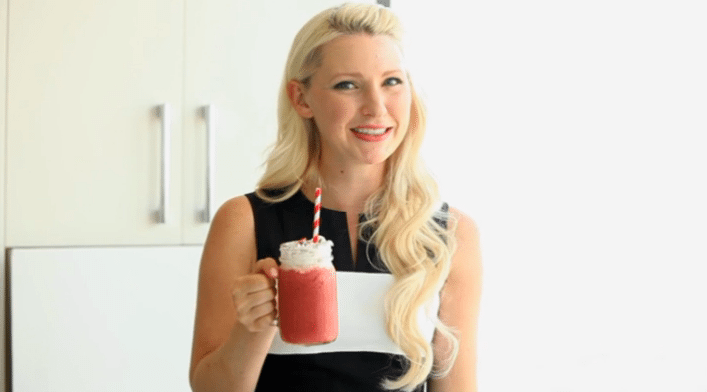
abbey holding homemade red velvet frappuccino

How to a Make Healthy Homemade Frappuccino

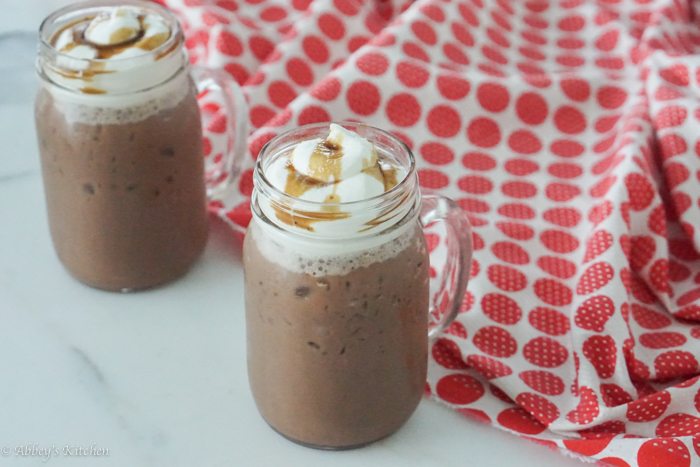
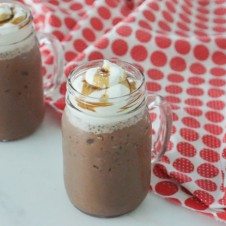
My first homemade frappuccino is a take on the Salted Caramel Mocha. This one requires a caramel which I make out of lite coconut milk and coconut sugar which is lower on the Glycemic Index than regular white or brown sugar.

healthy homemade salted caramel mocha frappuccinos topped with whipped cream

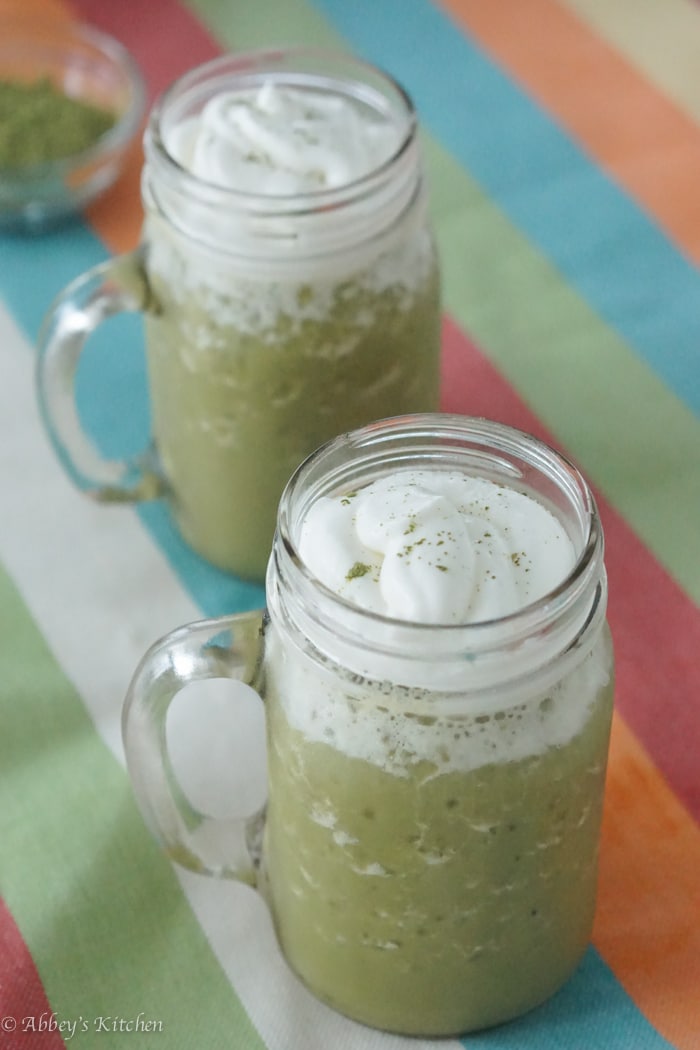
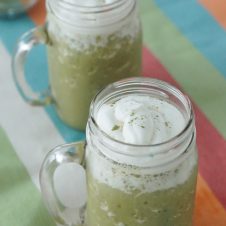
The next homemade frappuccino is my Green Tea Crème. This is ideal for those of you out there who like a frothy creamy cold drink but aren’t really interested in coffee. It’s cool, I got you’re back.

two homemade green tea frappucinos in tall glasses

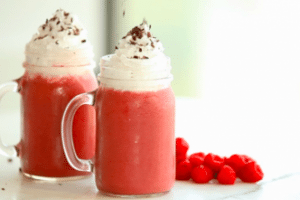
Finally, it’s all about my Red Velvet. Have you heard about Starbuck’s crazy new line up dessert-themed of frapps? Well, I got you covered for that too with way less sugar and fat than the original calorie bomb. You’re welcome.

More of a visual person? Check out our latest youtube video here!

https://youtu.be/fREOPsbqLFg

Become an Abbey’s Kitchen Subscriber

What are some of your homemade frappuccino recipes?

Do you have a guilty pleasure frapp flavour?

Leave a comment and I’ll try to lighten it up!

pinterest image of homemade healthy frappuccino recipes with text overlay
Print Recipe
5 from 7 votes

Salted Caramel Mocha Swappuccino

My first homemade frappuccino is a take on the Salted Caramel Mocha. This one requires a caramel which I make out of lite coconut milk and coconut sugar which is lower on the Glycemic Index than regular white or brown sugar.
Prep Time10 minutes mins
Cook Time20 minutes mins
Total Time30 minutes mins
Course: Drinks
Cuisine: American
Servings: 4 people
Calories: 290kcal
Author: Abbey Sharp

Ingredients

Salted Caramel Mocha Swappuccino:

  • 1/4 cup coconut sugar
  • 1 tbsp water
  • 2 tsp lemon juice
  • 1/2 cup lite coconut milk
  • 1/2 tsp vanilla
  • 1/4 tsp th sea salt
  • 2 1/2 cups Unsweetened Vanilla Almond milk
  • 2 tsp cocoa powder
  • 2 frozen ripe bananas
  • 1 cup Cold pressed coffee
  • 2 1/2 cups ice
  • Fleur de sel for garnish

Vegan Whipped Cream

  • 1 can coconut milk frozen or refrigerated
  • 1 tsp vanilla

Instructions

Vegan Whipped Cream

  • Open the can, remove the solid coconut cream and transfer to a bowl. Whip with the vanilla until thick and light and set aside.

Salted Caramel Mocha Swappuccino

  • In a small pot over medium saucepan, mix the coconut sugar, water, and lemon juice and bring to a boil.
  • Once bubbling, immediately add the coconut milk, sea salt, and vanilla. Simmer for about 15 minutes until the liquid becomes thick and dark. Be sure to stir occasionally and scrape the edges of the pot with a rubber spatula to avoid burning.
  • Remove from heat once it’s thick and cool it down to room temperature.
  • In a large blender mix together the almond milk, cocoa, coffee, ice and 6 teaspoons (or to taste) of the salted caramel. Pulse until the ice is a shaved consistency.
  • Pour into four cups. Top with a tablespoon of the coconut cream. Drizzle with additional salted caramel and finish with a little sprinkle of fleur de sel.

Nutrition

Calories: 290kcal
Print Recipe
5 from 6 votes

Green Tea Crème Swappuchino

The next homemade frappuccino is my Green Tea Crème. This is ideal for those of you out there who like a frothy creamy cold drink but aren’t really interested in coffee.
Prep Time20 minutes mins
Total Time20 minutes mins
Course: Drinks
Cuisine: American
Servings: 4 people
Calories: 280kcal
Author: Abbey Sharp

Ingredients

Green Tea Crème Swappuccino

  • 3 cups unsweetened Vanilla Almond Milk
  • 2 1/2 tsp Matcha Tea powder plus extra for garnish
  • 1 tsp vanilla extract
  • 2 1/2 cup ripe frozen bananas
  • 1 tsp tbsp honey
  • 2 1/2 tsp cups ice

Vegan Whipped Cream

  • 1 can coconut milk frozen or refrigerated
  • 1 tsp vanilla

Instructions

Vegan Whipped Cream

  • Open the can, remove the solid coconut cream and transfer to a bowl. Whip with the vanilla until thick and light and set aside.

Green Tea Crème Swappuccino

  • In a large blender, pulse the almond milk, matcha, vanilla, bananas, honey and ice until the ice reaches a shaved consistency.
  • Pour into four cups. Top with a tablespoon of the coconut whipped cream and sprinkle with a bit of matcha tea powder.

Nutrition

Calories: 280kcal
Print Recipe
5 from 6 votes

Red Velvet Swappuchino

Finally, it’s all about my Red Velvet. I got you covered for that too with way less sugar and fat than the original calorie bomb. 
Prep Time15 minutes mins
Total Time15 minutes mins
Course: Drinks
Cuisine: American
Servings: 4 people
Calories: 290kcal
Author: Abbey Sharp

Ingredients

Red Velvet Swappuccino

  • 1/2 cup Cold Pressed Coffee
  • 2 cups Unsweetened Vanilla Almond Milk
  • 1 1/4 cup frozen raspberries
  • 2 ripe frozen bananas
  • 4 tsp cocoa powder
  • 4 tsp honey
  • 2 1/2 cups ice
  • 1 tsp finely shaved dark chocolate
  • 1 tsp finely shaved dark chocolate

Vegan Whipped Cream

  • 1 can coconut milk frozen or refrigerated
  • 1 tsp vanilla

Instructions

Vegan Whipped Cream

  • Open the can, remove the solid coconut cream and transfer to a bowl. Whip with the vanilla until thick and light and set aside.

Red Velvet Swappuccino

  • In a large blender, pulse the coffee, Almond Milk, raspberries, bananas, cocoa powder, honey and ice until the ice reaches a shaved consistency.
  • Pour into four cups. Top with a tablespoon of the coconut vegan whipped cream and sprinkle with dark chocolate and freeze-dried raspberries.

Nutrition

Calories: 290kcal


Abbey Sharp

Abbey Sharp is a Registered Dietitian (RD), regulated by the Ontario College of Dietitians. She is a mom, YouTuber, Blogger, award winning cookbook author, media coach specializing in food and nutrition influencers, and a frequent contributor to national publications like Healthline and on national broadcast TV shows.
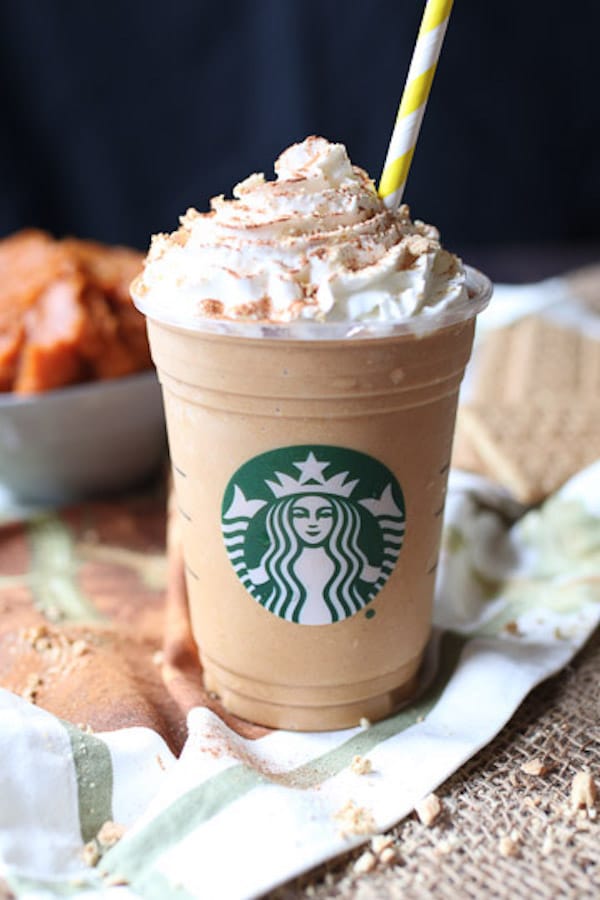
www.abbeyskitchen.com/about-abbey/
  • Previous Page
  • Go to page 1
  • Interim pages omitted …
  • Go to page 58
  • Go to page 59
  • Go to page 60
  • Go to page 61
  • Go to page 62
  • Interim pages omitted …
  • Go to page 89
  • Next Page

Get started with

Eight Free Recipe Books

From the co-founder of Neue Theory and creator of the Hunger Crushing Combo

Sign me up!
Abbey smiling at table
Abbey Sharp

“Foods may never be nutritionally equal. But we can make them morally equal by recognizing that our worth is never determined by what's on our plate.”

— Abbey Sharp, RD About Abbey ◥

Books

  • HCC™
  • Mindful Glow
  • Free E-Books

Blog

  • Nutrition
  • Recipes
  • Motherhood
  • Life

Explore

  • Neue Theory™
  • Bite Back
  • YouTube

Abbey

  • About
  • Coaching
YouTube TikTok Instagram Facebook X Pinterest
Abbey Sharp - The No BS Dietitian From Abbeys Kitchen

© Abbey's Kitchen 2026  All Rights Reserved •  ACCESSIBILITY STATEMENT •  Privacy Policy

This site uses cookies. By continuing to browse the site, you are agreeing to the use of cookies Accept Privacy Policy

Privacy & Cookies Policy

Privacy Overview

This website uses cookies to improve your experience while you navigate through the website. Out of these, the cookies that are categorized as necessary are stored on your browser as they are essential for the working of basic functionalities of the website. We also use third-party cookies that help us analyze and understand how you use this website. These cookies will be stored in your browser only with your consent. You also have the option to opt-out of these cookies. But opting out of some of these cookies may affect your browsing experience.
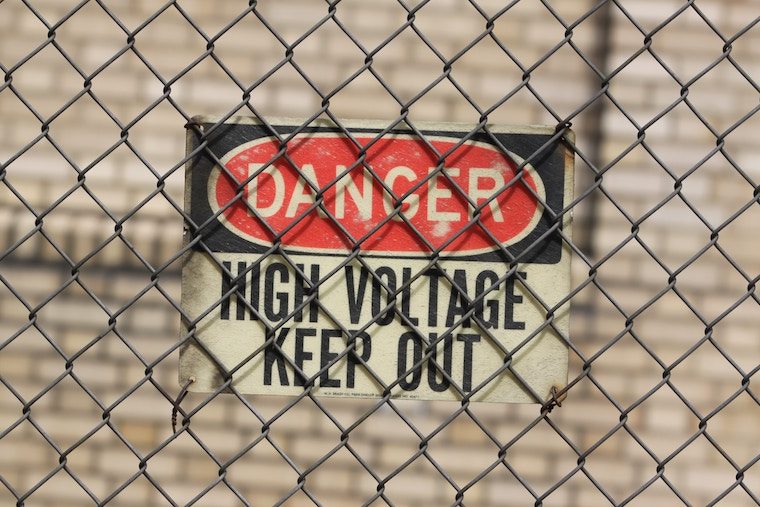
Necessary
Always Enabled
Necessary cookies are absolutely essential for the website to function properly. This category only includes cookies that ensures basic functionalities and security features of the website. These cookies do not store any personal information.
Non-necessary
Any cookies that may not be particularly necessary for the website to function and is used specifically to collect user personal data via analytics, ads, other embedded contents are termed as non-necessary cookies. It is mandatory to procure user consent prior to running these cookies on your website.
SAVE & ACCEPT

Rate This Recipe

Your vote:


A rating is required
A name is required
An email is required