In Part 2 of Diary Myths we cover the skim milk vs whole milk for weight loss debate and whether or not you should consume dairy for weight loss.
Last week, we introduced our topic in this multi-part series on milk and dairy and your health. Milk has garnered a really bad reputation over the past few years, and I wanted to look at the research to find out why and if it had any merit.

In Part 1 we discussed milk and bone health, and here we are moving on to discuss bones and weight management.
Milk for Weight Loss
Still living by the old adage that “fat will make you fat”? Maybe it’s time to change your thinking.
It’s true that fat adds calories (9 calories per gram!), but what does that look like in milk?
Let’s look at the difference in 1 cup of milk at different fat percentages:
Skim: 88kcal, 316mg Ca, Total fat 0.21g
1%: 108kcal, 322mg Ca, Total Fat 2.5g
2%:129 kcal, 309mg Ca, Total fat 5.1g
3.25% (Whole): 157kcal, 291mg Ca, Total fat 8.38g
You may have noticed that whole milk has almost twice the calories of skim milk, but is this necessarily a bad thing?
In a review by the European Journal of Nutrition, the authors stated that dairy fat is typically not associated with weight gain, cardiovascular disease or type 2 diabetes. That’s promising, but let’s dive deeper into the recent studies that have discovered some very important findings about the skim milk vs whole milk for weight loss debate.
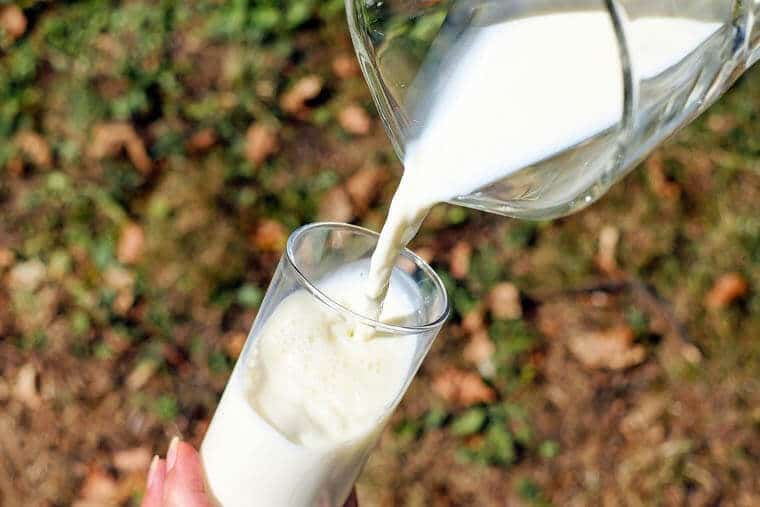
One study (Korean National Health and Nutrition Examination Survey) conducted on the Korean adult population discovered a link between calcium-intake and dairy products (e.g milk and yogurt), and obesity. The findings of this study found a correlation showing that the more frequent the intake of dairy products (particularly milk), the lower the prevalence of obesity (BMI≥25 kg/m2). Similarly, the higher the calcium intake from dairy product consumption and total dietary calcium intake, the lower the prevalence of obesity. The strength of these relationships were much stronger in women compared to men (yay!), although an inverse relationship in men was still suggested.
Calcium’s potential protective mechanism in combating weight gain may be due to its ability to regulate adipocyte (fat cell) metabolism by inhibiting lipogenesis (the generation of fat) and stimulating lipolysis (the break-down of fat). Additionally, calcium has also been found to increase excretion of fecal fat, rather than it being stored within our bodies.
Interestingly, when researchers analyzed the effects of non-dairy sources of calcium on obesity levels, there was no significant link found in both men and women. It has therefore been suggested that calcium may not have been the only contributor to the reduction in obesity rates, but also the other nutritional components in dairy such as branched chain amino acids (BCAAs), conjugated linoleic acid (CLA), vitamin D, medium-chain fatty acids, and various proteins (bioactive casein peptides, and whey protein).
Other correlational research has echoed these associations. One study in children and adolescents found that those with higher dairy intakes had reduced body fat percentages and lower risks of being overweight or obese. Another study found that adolescents who consumed a lot of high-fat dairy were more likely to have lower body weights and body fat percentages. However, in individuals with risk factors for metabolic syndrome (ie. Diabetes, obesity, high blood pressure etc.), the opposite was true. This suggests that the relationship is not as straight forward as we would like it to be, but rather, there are clearly other contributors at play.
Let’s look at cohort studies. Cohort studies performed on adults found that higher intakes of dairy was associated with lower risks of abdominal obesity and risk of becoming overweight, compared to lower intakes. Yogurt in was particularly related to reduced risks of obesity and weight gain.
Overall, the results of the aforementioned studies suggest that high fat milk (ie. whole milk) is inversely associated with obesity, which may potentially put an end to avoidance of high-fat dairy in fear of weight gain. Ahhh… but that would be too simple. Read on for the full-fat story.
Dairy fat is known to be a good source of fat-soluble vitamins (A,D,E and K), and unsaturated fats (e.g omega-3s). However, they are also predominantly made of saturated fats which dietary guidelines usually recommend to reduce in our diet. This recommendation is now being challenged by evolving research looking at the effect of saturated fats on our health. There are actually different types of saturated fats out there such as conjugated linoleic acids, butyric acid, palmitoleic acid, and phytanic acid– all of which are conveniently found in dairy. Contrary to what you’ve heard and probably believed over the years (especially regarding heart health), saturated fats may not be as bad as you had once thought. As we will discuss below, whole milk and high-fat dairy has been shown to be inversely related with weight gain in various situations.
But wait. Doesn’t whole milk contain a whole whoppin’ lot more fat and calories than skim?!
Now let’s compare this study to a recent literature review which examined various studies to determine the relationship between the consumption of high-fat dairy and obesity, metabolic syndrome and cardiovascular disease. The findings suggested that some minor types of fatty acids found in dairy have an effect on cardiometabolic risk factors and weight gain, along with some evidence indicating that pasture-raised cows and their feed play a great role in enhancing the quality of dairy fat.
What many of the studies found was a negative relationship between high-fat dairy or whole milk intake and obesity. They observed that those who initially had a higher intake of dairy fat (whole milk) were leaner or had less weight gain compared to those who increased their intake of dairy fat over time (and therefore gained more weight). However, this change in weight with dairy may have been associated with other diet and lifestyle changes so it’s really hard to say. When observing the link between high-fat dairy and metabolic health, studies were pretty inconsistent, either finding an inverse or no relationship at all, but overall, did suggest that high dairy fat may have some protective properties against weight gain. Generally, the studies did not support the claims against dairy being “obesogenic” (causing obesity), but found some evidence suggesting that it can be protective against weight gain. Also, the research was not able to support an idea that low fat dairy or skim milk helped avoid weight gain. Not convinced? Read on.
More Evidence in the Skim Milk vs Whole Milk for Weight Loss Debate
Similar to the cohort study conducted on men, in the Women’s Health study, a moderate inverse association was observed for consumption of high-fat dairy but not for total dairy intake or low-fat dairy intake in initially normal-weight middle-aged and elderly women.
Taken together, the conclusions were not in support of dairy fat increasing the risk of obesity, cardiovascular or metabolic disease (e.g type 2 diabetes), but that consuming high fat dairy (whole milk) with certain dietary patterns may help reduce the risk of obesity! Now we still need more research to confirm these findings, but this analysis sheds some light on the effect of the bioactive properties found in dairy fat for human health.
The Components of Whole Milk for Weight Loss
Now let’s look at the various components (particularly some unique fatty acids) in milk that may be beneficial for weight management.
- Conjugated linoleic acids (CLA)
The main type of CLA found in dairy fat is cis-9, trans 11 (a.k.a rumenic acid), followed by trans 10, cis-12. You may be familiar with CLA if you’ve visited a recent health supplement store recently, namely due to its potential effects on weight and fat loss. Some of the other health benefits that have contributed to its hype is its effect on blood lipid levels, insulin sensitivity, glucose tolerance, inflammation and liver triglyceride levels. However, total CLA concentrations are highly varied between dairy products. Existing studies have mostly been conducted using isolated or mixed CLA supplements (1-5 grams per day), with some results showing reduction in body fat. However, CLA was taken at high concentrations for a long period of time and the primary form of CLA in dairy fat (cis-9, trans 11) was not able to decrease fat levels as much compared to other types. Also, it’s important to mention that although CLA has shown to be beneficial for reduction of fat, other studies have found adverse effects on lipid profile and metabolism of glucose associated with CLA consumption. Overall, based on the available research, CLA’s potential health benefits on humans are not as evident compared to rodents, and more so, it is way too early to make recommendations for ingesting CLA, especially from dairy fat, because there is little to no scientific proof for its effect on body weight, insulin sensitivity, fat levels, blood lipid levels, inflammation or glucose tolerance.
- Butyric acid
Butyric acid makes dairy fat quite unique since it is a short-chain fatty acid found in only a few dietary sources. When produced in the gut or taken orally, butyrate has an important impact on gut health by providing energy to enterocytes and inhibiting pro- inflammatory pathways. In an older clinical study, patients who consumed 4 grams of butyrate daily for the duration of 8 weeks displayed reduced levels of pro-inflammatory cytokine expression in the GI and improved symptoms of Crohn’s disease, with some experiencing complete remission! From the research, it’s thought that butyrate in dairy fat (approximately 4%) may have great effects on maintenance of healthy body weight and metabolism because of its inhibitory effects on inflammation and effects on regulating energy expenditure, but research is still incredibly limited and we need more current evidence to show the potential benefits of this fatty acid in humans.
3. Palmitoleic acid
Rodent and in vitro experiments have showed phytanic acid to lower triglyceride (fat) levels and regulate blood sugar metabolism. However, there is no solid evidence of phytanic acid’s effect on humans, so this area definitely requires further investigation!
Taken together, while there has been much interest in CLA as a potential beneficial fatty acid in dairy fat, the existing evidence suggests that the amounts of CLA present in dairy fat is unlikely to have a significant effect on chronic diseases, liver fat, adiposity, energy expenditure, inflammation, insulin sensitivity, and glucose tolerance. For the other fatty acids in dairy fat, the research is still inconclusive.
Bottom Line on Skim Milk vs Whole Milk for Weight Loss
Milk and dairy products (both low and high-fat) can be included as part of a healthy, well-balanced diet, but the type of dairy you choose depends on your current health status in order to best suit your health needs. From the overall research, the evidence shows us that dairy, despite versions with higher fat content, will not hinder, but may actually help you achieve your weight-loss goals so feel free to enjoy it in moderation.
Don’t forget to check out Part 1 of this debate to get some background information on this skim milk vs whole milk for weight loss conversation! Check out Part 3, 4, and 5 where we cover milk and diseases as well as milk controversy, safety and alternatives!
What are your thoughts on the skim milk vs whole milk for weight loss debate?
What do you drink at home?
Do you avoid dairy?
Leave me a comment below- I would love to hear your thoughts!

Contribution By:
RD2B Rachel Shim
Updated on January 2nd, 2019

Abbey Sharp is a Registered Dietitian (RD), regulated by the Ontario College of Dietitians. She is a mom, YouTuber, Blogger, award winning cookbook author, media coach specializing in food and nutrition influencers, and a frequent contributor to national publications like Healthline and on national broadcast TV shows.






Amna says
Great information thanks
Abbey Sharp says
You’re welcome!
sunny says
Good work, much needed comparison between whole and skim milk. slim milk is what i also prefer apart from it less fat and calories it keeps me full for long hours which helps to avoid unnecessary munching..
Abbey Sharp says
Glad you found a milk that works for you! Thanks for sharing 🙂
J. Lance De Foa, MD says
In the studies, those who drank milk probably drank less fructose sweetened beverages (whether sucrose or HFCS). When the body’s 1 kg of glycogen stores are full (most of our awake lives) then fructose goes straight to triglycerides & VLDL & LDL. The galactose in lactose doesn’t do that. As for full fat milk being “heavier”, well, that is exactly the point. The fat quickly leaves one feeling fuller, the stomach takes longer to empty, and one is likely to take in less volume, meaning less lactose. Surplus glucose gets turned into triglycerides, etc.. and goes to storage. Fats, on the other hand, quickly find their way to cardiac muscle and RESTING skeletal muscle, as fat is those tissues preferred fuel. All those folks losing weight and controlling their hyperglycemia on a low carb HIGH FAT diet do so with whole milk, cream, full fat yoghurt, and feta cheese. An Inuit keeps warm in an igloo by eating a spoonful of lard, not pasta.
Abbey Sharp says
i like full fat milk myself. thank you for sharing.
Jill Conyers says
Well written Abbey. I drink almond milk. my body prefers non dairy. or maybe it’s non lactose.
Abbey Sharp says
that makes sense!
Cassandra @ powered by bling says
In our house we buy skim and whole. I drink both depending on what i’m using it for. typically, skim for my protein shakes. whole for cooking and hot cocoa
Abbey Sharp says
yummmm love cocoa
Angela @marathonsandmotivation.com says
This is great info! we don’t drink much milk here, due to preference. However, we only use whole milk when we do. It is what my kids use for cereal and what i put in my coffee.
Abbey Sharp says
yes love it
Ilka says
Thanks for all the info Abbey! I don’t drink milk that often, but my kids love chocolate milk!
Abbey Sharp says
thanks so much
Giselle Rochford says
Back when I drank milk (I’m lactose intolerant & vegan now) I was always a skim milk fan. Whole milk was just a little too rich for me but my decision wasn’t really based on weight loss or fat content.
Abbey Sharp says
totally!
chrissy says
Hmm. I’ve always drank skim milk. interesting info on skim and whole milk.
Abbey Sharp says
thanks chrissy!
Carmy says
Great post! I don’t really get what everyone has against milk (I grew up drinking it daily) and love that the study from Korea showed a lack of CORRELATION between increased obesity and milk consumption!
Carmy says
Not sure why correlation went full caps but it just happened. oops haha
Abbey Sharp says
all good! lol
Abbey Sharp says
lol yep.
Farrah says
Yay! :] Thanks for this! I never understood why there was so much hating on milk–it has so many awesome nutrients in it! I just so happened to stop by a farm today to pick some up (I like 2%)! :]
Abbey Sharp says
i like 2% too!
Kerri McGrail says
I guess i never even thought of this because i dont eat dairy, but i can see how low fat stuff can be filled with lots of icky chemicals/ additives.
Abbey Sharp says
Thanks Kerri!
Deborah @ Confessions of a mother runner says
This is really interesting! We do drink only skim milk over here partly bc of the fat and calories but also bc higher fat milk tastes very heavy to me
Abbey Sharp says
i hear ya. it can be heavy.
Sarah- A Whisk and Two Wands says
Interesting as I’ve never heard this myth or debate. It kind of makes me think of the fat free foods. the only one in our house that drinks dairy is my hubby but I do buy full fat yogurt for the girls, well one for now since the other one was told to cut out dairy but will go back if cutting it doesn’t help.
Abbey Sharp says
totally!!
Chrissa - Physical Kitchness says
SUch a great and informative post. WOW! I used to only consume low-fat dairy products, conventional wisdom always said that was a better alternative. But now if I do eat dairy (which is rare because it makes my PSORIASIS break out) it is only full-fat dairy products. LEt the debate continue 😉
Abbey Sharp says
yep, it’s a constant one