• Skip to main content

Abbey's Kitchen

Healthy Recipes, Nutrition Myth Busting, Healthy Eating Tips

  • Books
    • HCC™
    • The Mindful Glow Cookbook
    • Recipe eBooks
      • Family
      • Hypothyroidism
      • BLW
      • Vegan Week 1
      • Vegan Week 2
      • Vegan Week 3
      • Keto
      • Gluten Free Week 1
      • Gluten Free Week 2
      • Fitness
      • Paleo
  • Blog
    • Nutrition
    • Recipes
    • Motherhood
    • Life
  • Explore
    • Neue Theory™
    • Bite Back With Abbey Sharp
      • Apple Music
      • Spotify
      • Amazon Music
    • YouTube
  • Abbey
    • About
    • Coaching
    • Contact

Abbey Sharp

Last Updated July 29, 2020. Published February 14, 2020 By Abbey Sharp 24 Comments

2019 Update: Infertility, IVF, Miscarriage & BIG ANNOUNCEMENT

In this emotional post, I talk about my miscarriage and also the exciting news that I am pregnant with my second child via IVF. This blog post is largely a rough transcription of my YouTube video vlog here called “2019: The Year I Lost Two Babies and Found My Rainbow”. If you prefer to watch me speak through this, I recommend watching the video here.

The Good News FIRST

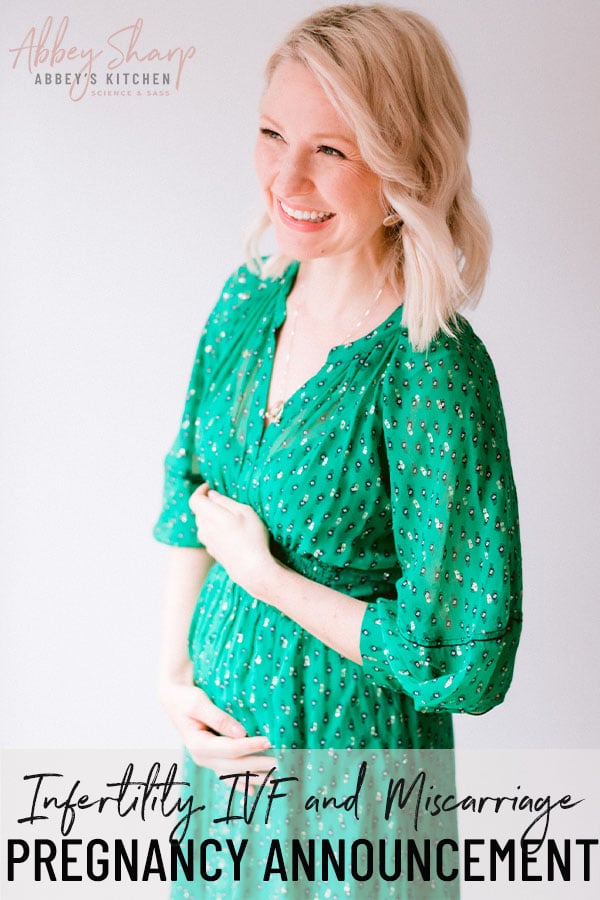
I don’t know about you but I’m usually a bad news first, good news second kinda girl. However, since you can probably tell from the thumbnail and title, I want to just tell you now that I am pregnant! It has been a really hard long road trying to get here, and I’ve fantasized about writing this blog and sharing this news with all of you for SO LONG because it means I am out of first trimester miscarriage pending hell. Here I am. I can hardly believe it.

Now of course the purpose of this blog post is to share this amazing news, but also because I really want to tell you about my infertility & miscarriage journey. Not for sympathy of course, but because people don’t ever talk about infertility and miscarriage, and yet as many as 1/6 couples deal with miscarriage and infertility, so I’m hoping to give you some hope if you’re struggling alone.

abbey wearing a green dress and showing her baby bump

My IVF Journey

My long time readers may know that my son was conceived via IVF after a difficult journey with infertility and PCOS. I was on the pill for 14 years and when I came off of it right after my wedding, I just never got a period. My first fertility doctor diagnosed me with PCOS, even though it was an atypical case that didn’t meet most of the criteria – I just didn’t ovulate and my ovaries were SLIGHTLY polycystic. In an effort to get me to ovulate, I started metformin and letrozole to get me to ovulate. When nothing worked (even at progressively higher doses), we moved onto IVF. I was really lucky to get a lot of healthy looking embryos after our retrieval, but when we tried to do a transfer, my uterine lining wouldn’t thicken. The uterine lining is that thing that shreds when you get a period. It’s also imperative that you get it to at least an 8 mm for the embryo to properly implant and stay put. Well I couldn’t get my uterine lining thicker than 5 mm- even on prolonged protocols and higher doses of estrogen to help out. My first embryo transfer resulted in a chemical pregnancy, which is like an early miscarriage. My second transfer, we could only get to 4.5 mm, but we went ahead with it anyway, and miraculously, my son, Baby E, took and stuck! So that was miracle number one.

my miscarriage story

Abbey holding baby E with balloons in the background

In April when he turned one, I weened and stopped exclusively pumping, and immediately started up on IVF again. Our first cycle was cancelled right before transfer because of fluid in my lining, which was so devastating. So many needles, hormones, money, emotions and time goes into the process and each cycle, so it’s horrible when it all gets scrapped and you don’t even get the hope of a transfer. The next cycle we got my lining to 6, which was really “good” by my standards. That pregnancy took, and I got to 6.5 weeks along. Then, I woke up on a Saturday morning completely soaked in blood.

I remember, that the night before that Saturday, my husband and I were out for dinner and we did a little cheers to our pregnancy. But in my head I was thinking, “I actually don’t think I am pregnant anymore.” Something just felt off. Gone. Over. I don’t know why. I found out a few days later when we could confirm in an ultrasound that I did indeed lose that one too.

So we tried again. This time, I got another “good” 6 mm lining, and yet another exciting positive pregnancy test. But then that weekend, I remember going to the Science Centre with my son and feeling the most horrible lower back pain. I literally could barely walk. My husband said, “oh yay, that’s a pregnancy sign!” but I just knew something wasn’t right. The next morning I went for another test to make sure my beta was progressing, and found out I lost that one too, just a few days before we were supposed to leave for Italy. Devastated, we decided to just take a break in Italy to hit a hard reset, hoping that I would come back in a better emotional and physical state. While we were away, we opted to have our clinic genetically test all of our embryos (PGS) to help us rule out that we weren’t just accidentally transferring bad embryos. That process involved thawing, biopsying and then refreezing our embryos which came with a lot of risk, but also a really huge bill. I have always regretted not PGS testing when we first did our retrieval, but our doctor at the time really believed that at my age, it wasn’t going to be helpful and the benefits wouldn’t outweigh the risks. At this point, I strongly disagreed.

When we returned from Italy, we found out all of our embryos were genetically normal, which is actually really rare and absolutely amazing. What that told us was that it was very likely that my thin lining was the reason I couldn’t hold onto these pregnancies. My doctor suggested we try a new protocol that instead of taking estrogen drugs to thicken my lining, we would stimulate me to create my own estrogen (by giving me the same drugs on a lower dose that I took to grow my follicles), hoping that may be more favourable “natural” environment to thickening my lining. This was such a long painful cycle. I was in the clinic for blood tests, ultrasounds, and nurse visits every day for about 1-2 hours a day, then I would wait around all afternoon for the news that my numbers went up a bit, then went down a bit, then up a bit, then down a bit. We were chasing the hormones every day, and the whole process was totally physically and emotionally exhausting. It completely consumed my life. Eventually after weeks of this, my doctor called me to tell me it was time to pull the plug on this one. At this point she wasn’t sure what was going to work and we all started to think about surrogacy. She referred me to speak to the head of the clinic I’m at (Dr. Hannam) who deals with all of the surrogacy patients.

The idea of surrogacy was super scary for me and I absolutely felt a real sense of failure. But I went to that meeting eager to get moving on my next steps, because I knew that finding a surrogate could be a really long journey.

trying an experimental “miracle” ivf procedure

abbey in floral dress with baby E running towards her

In my meeting with Dr. Hannam, we spent an hour going over all of the potential issues that could be going on. He agreed that with my age and situation, that the ratio of early miscarriages to live births was exceptionally low. Since we had ruled out a likely embryo issue with the PGS test, we both agreed that it was likely a lining issue, but possibly an immune issue as well.

While I am all for evidence based practice he asked me if I was willing to go into uncharted untested territory with him and at this point, I was desperate and would have done anything at all. We decided to give it one last shot, adding in a ton of experimental adjuncts and procedures to my already complicated regime. If you’re interested in hearing about the legitimate miracle experimental procedure that got me pregnant, leave me a comment below and I’ll do a whole post on my IVF protocol. But in short, he was suggesting an experimental procedure that had been done on 8 ppl in the world with no studies to back it up. I signed up in desperation to be number 9.

That experience deserves it’s own post, but to skip to the punchline, this miracle procedure got my lining to 8 mm, which was way thicker than my previous highest at 6 mm. I was honestly in shock. We transferred, I got a positive beta and everything was looking amazing. Until Christmas eve.

was christmas ruined?

The night before Christmas Eve I started having terrible back pain again. It was so bad I could barely stand or move for more than a few minutes so I spent most of that day laying on the couch. Christmas Eve morning, I woke up and I called my clinic concerned because I knew that every time I had miscarried, I had felt these back pains. My nurse assured me it was all normal and common, and to just continue with my drugs and enjoy my holiday. An hour after I got off the phone with them, I went to the washroom and saw blood in my underwear. Not just a little spotting, but a solid gush of blood. I started having PTSD of my earlier miscarriage that year and I immediately called my nurse crying. She told me to come in and we would do another blood test to make sure my HCG level was still rising correctly, as well as an early ultrasound to see what was going on.

I was only 5 weeks and a few days at this point, so it was too early to see a heart beat, but the ultrasound miraculously showed the yolk sac and the gestational sac, plus a subchorionic hematoma which is like a little bruise next to the uterus and can cause these scary bleeds. I was happy to see this, but still wanted the added reassurance from the blood test since I was supposed to fly to Florida the next day on Christmas. Unfortunately, since it was Christmas Eve (just my luck), all the staff went home early before I could get my HCG result. So in a panic to get some answers before I flew out of the country, I went down to a local life lab clinic and got my blood drawn there too since they post the results online by end of day.

I obsessively checked my online portal all day and all night, literally refreshing every 5 minutes to see if the “results pending” notification had been replaced with an actual value.

Meanwhile, I was so consumed by this stupid HCG issue plus the idea of Christmas morning and travelling the next day that I accidentally swallowed the progesterone drugs I had set out for myself that were supposed to be taken as a vaginal suppository. I didn’t know if I should take another two capsules the right way as a suppository, not worry about it, or if I totally f*cked everything up. I was literally freaking out. And of course, it’s 8:30 PM on freaking Christmas Eve. I’m frantically emailing everyone I know on my team including my doctor, nurse, after hours nurse, anyone, but no one is at the clinic to help me. I then tried posting in my Facebook mommy groups and infertility groups (everyone said “call your clinic!” – ugh duh, I did), and then I texted my naturopath. Collectively we decided the safest course of action is to take one more as a suppository in combination with the two orally taken, thinking it may equal the absorption of two suppositories. But really, who the F knows.

Anyway, knowing I had a busy day with my family in the morning and travelling in the evening, I eventually fell asleep. I woke up to pee at 12:05 AM and thought, hm I wonder if those blood test results are online. Now, the HCG number I needed based on my calculations for a healthy HCG progression was around 8700. When I opened my portal, the number on the report was just over 7000. I knew I was losing the pregnancy. I was crushed. I was so excited for this to be our little holiday surprise to our families, our little Christmas miracle, and now instead I would have to tell them horrible sad news, and then come back after my holiday to the stress of finding a surrogate and starting all over again. Not to mention, I was about to fly to States (and a Conservative one, at that), where none of my doctors have any authority to prescribe me the drugs to support the miscarriage. With my summer miscarriage I had to take pills to help ensure I expelled all of the tissue, and even here in Canada where abortion is very very legal, they were very hard to find. One pharmacist told me that people were buying them here, and selling them on the black market in the States where they’re unavailable. I was terrified of not having a life line if I needed help.

Sorry, getting worked up, so let’s do a recap – HCG was low. I was miscarrying. Christmas was ruined. Etc.

I woke up my husband and was crying like crazy all night long. Obviously, my insomnia remedies and strategies were not helping me out much. We decided to change our flight until we could see our doctor on boxing day to determine our next steps and any drugs I would need for the trip.

my christmas miracle
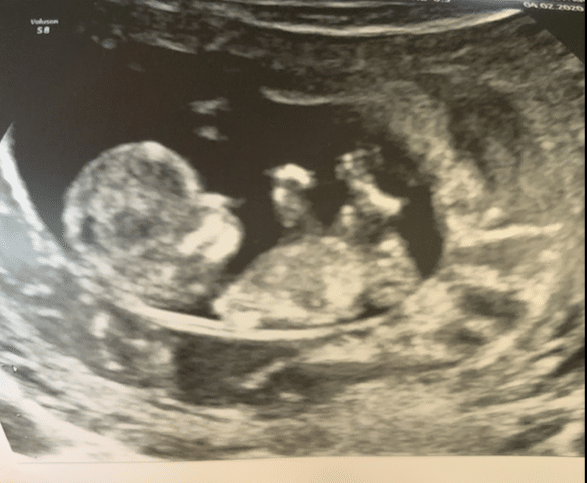
close up image of sonogram

When I walked in that morning, tears in my eyes, the nurse said, “well your HCG is perfect, 8900!”

I was shocked.

How can this even be possible?! Why were the numbers so so different?!

She explained that different labs use different solvents to process the blood so you cant compare betas from two clinics, it has to be apples to apples to be accurate. In other words, I was still pregnant. Very pregnant. Perfectly pregnant. It was literally a Christmas miracle.

My Rainbow Baby

The day we landed in Florida, it had rained and I went out to the beach to see an amazing full rainbow. In fact it was a double rainbow, it was so magnificent. That’s when I thought to myself, “finally, this hell is over, I’m on the other side, this is my rainbow baby”.

And that brings me here. I’ve had weekly ultrasounds both in Florida and Toronto, and everything has shown baby is measuring perfectly. I just did the early genetic screening so I’m awaiting those results, and then next after that will be the anatomy scan. Obviously I’ll be nervous until this kid is out but my mama gut is telling me this ones for keeps. I’ve been pretty nauseous this pregnancy and really crazy tired. But I just got to ween off my prednisone, estrogen and progesterone, so I am feeling so much better.

Abbey in a green dress with baby E and poppy

To close off this long winded post, I guess aside from me telling some of the trolls out there to not body shame me as I get bigger because hello, I’m growing a human, I want to give some hope to the people out there who are struggling with infertility, miscarriage, and their dream of growing their family. I know how absolutely heart breaking this process is, so if you’re struggling, feel free to reach out.

Also, if you have any questions or any topics you want me to explore with regards to infertility, IVF, miscarriage, pregnancy, supplements, drugs, anything, please leave me a comment. I will be doing a lot more of these posts and updates over the next little while so definitely stay tuned for that.

Become an Abbey’s Kitchen Subscriber

Have you or someone you known struggled with miscarriage or infertility? Let’s keep the comments respectful and support one another here!
Abbey in a green dress announcing pregnancy

Abbey Sharp

Abbey Sharp is a Registered Dietitian (RD), regulated by the Ontario College of Dietitians. She is a mom, YouTuber, Blogger, award winning cookbook author, media coach specializing in food and nutrition influencers, and a frequent contributor to national publications like Healthline and on national broadcast TV shows.
www.abbeyskitchen.com/about-abbey/

Last Updated July 21, 2020. Published February 12, 2020 By Abbey Sharp Leave a Comment

Korean Stuffed Sweet Potatoes | Vegan & Gluten Free

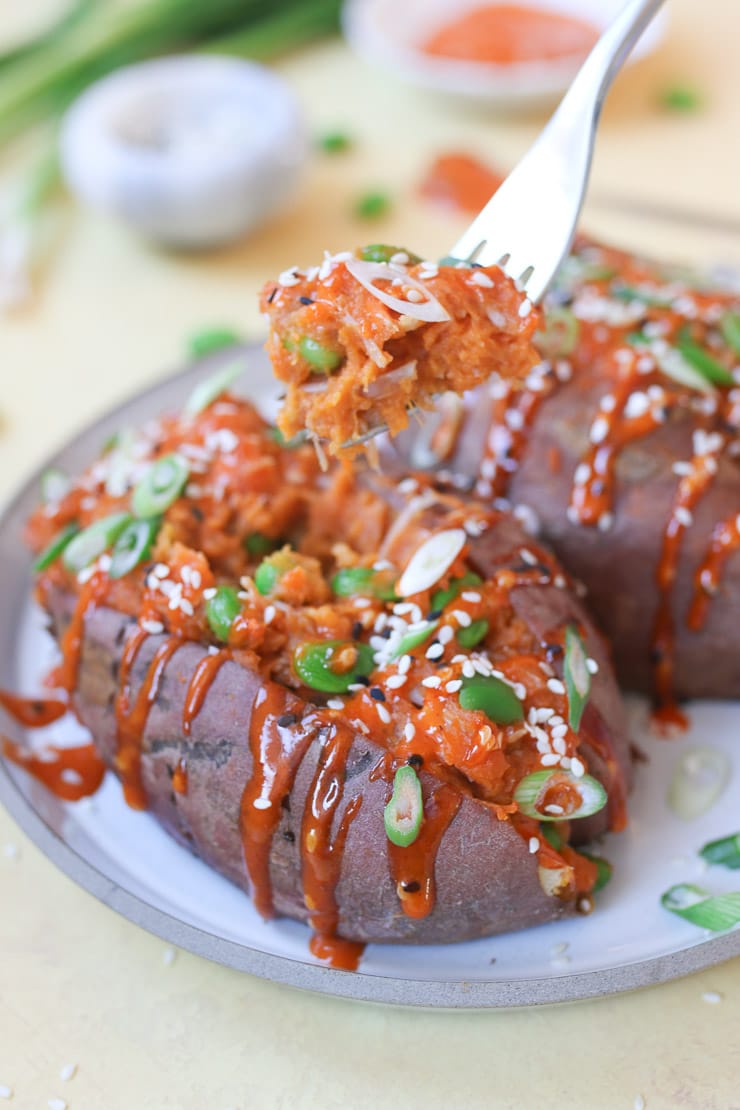
These Korean Vegan Stuffed Sweet Potatoes with Jackfruit & Edamame are naturally gluten free and loaded with Korean flavour thanks to the combination of sweet and spicy gochujang.

I don’t think it’s any secret that I’m sweet potato obsessed over here. As a Canadian where there isn’t a whole lot in season this time of year, our dry pantry is always stocked with sweet potatoes for a quick breakfast (omg like these PB & J Protein sweet potatoes), main (like these tasty guacamole stuffed sweet potatoes), or these apple crisp sweet potatoes for dessert. This recipe combines my favourite cold weather vegetable, sweet potatoes, with my new culinary obsession – Korean food into a Korean Vegan stuffed sweet potato, topped off with a super delicious gochujang vegan mayo.

What do i need to make these Korean Vegan Stuffed Sweet Potatoes?

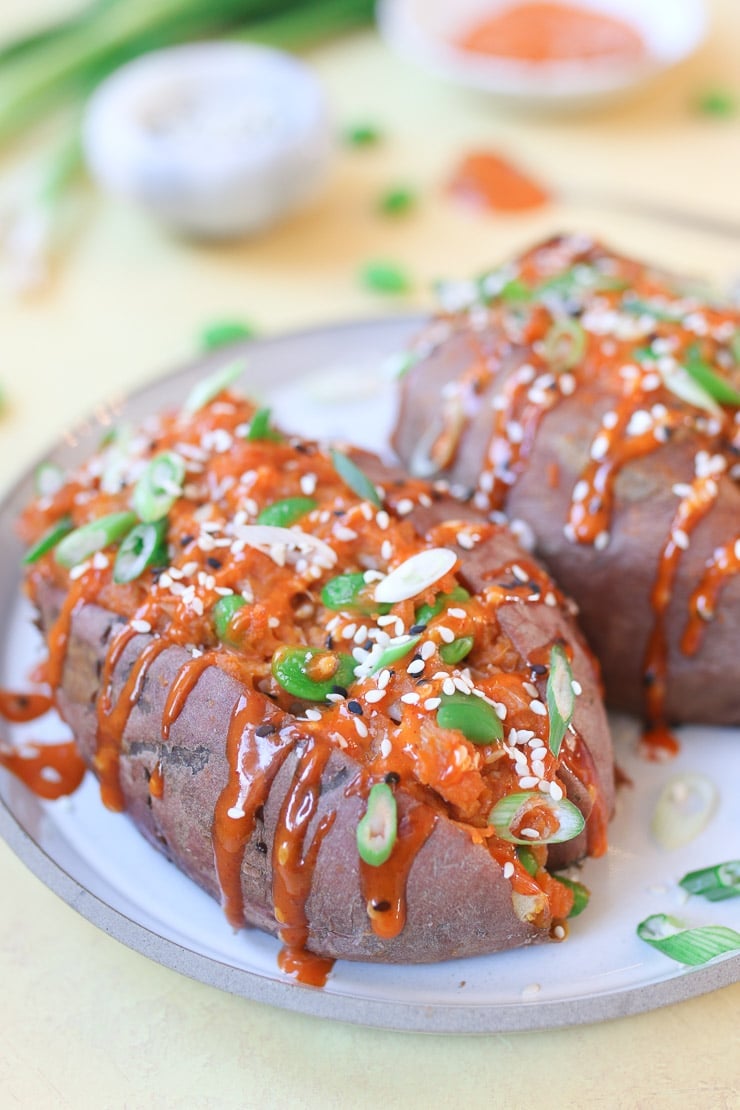
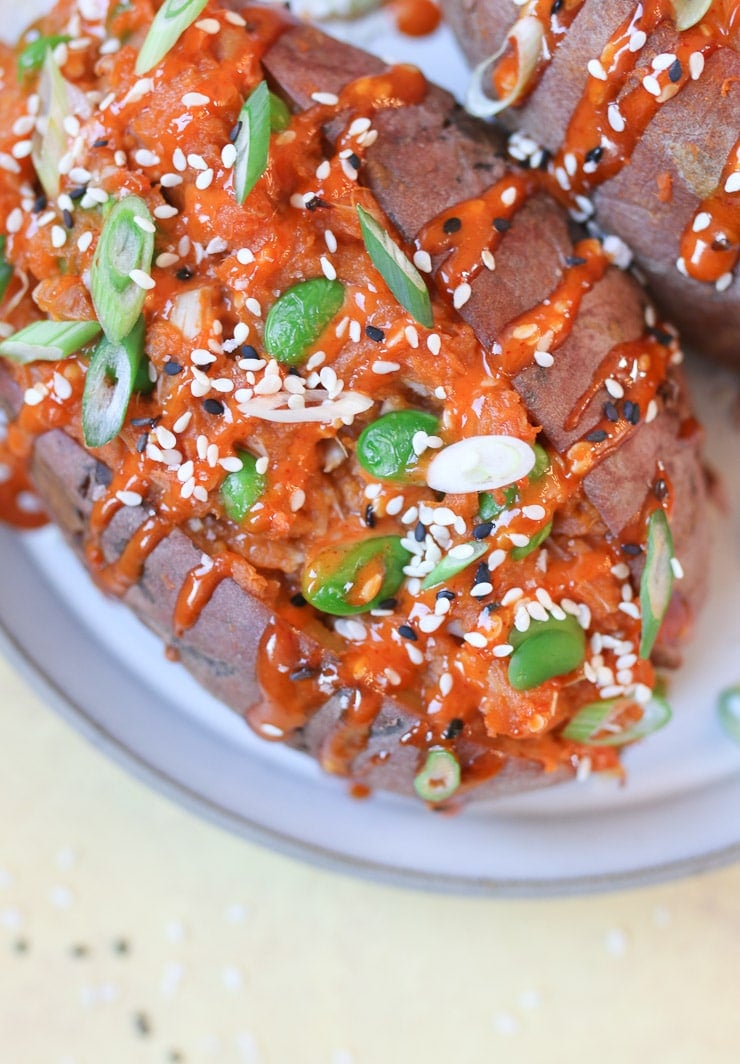
Korean stuffed sweet potato topped with green onion and sesame seed

This stuffed sweet potato recipe is super easy once you have all the pantry staples to make it.

  • Sweet potatoes
  • Maple syrup or brown sugar
  • Low sodium tamari
  • Gochujang
  • Grapeseed oil
  • Garlic
  • Ginger
  • Sesame oil
  • Jackfruit
  • Shelled edamame
  • Vegan mayo
  • Sesame seeds
  • Rice vinegar

what is gochujang?

I’ve got a real love affair going on with Korean gochujang and it’s become super trendy for a reason. It’s a red chili paste that’s sticky, spicy and pungent, and usually is made with glutinous rice, fermented soy beans, salt and some kind of sweetener. It’s a must in this gluten free vegan Korean stuffed sweet potato recipe.

Korean stuffed sweet potato topped with green onion and sesame seed

what is jackfruit and what’s it good for?

My vegan followers definitely know and love jackfruit for its “pulled meat” like consistency. But basically, you want to look for canned young jackfruit or green jackfruit which is made for savoury recipes like this. There is also sweet jackfruit for desserts but that won’t work here. Nutrition wise, one cup has about 150 calories plus:

  • Fiber: 3 grams
  • Protein: 2.7 grams
  • Vitamin A: 10% of Recommended Daily Intake (RDI)
  • Vitamin C: 18% of RDI
  • Riboflavin: 11% of RDI
  • Magnesium: 15% of RDI
  • Potassium: 14% of RDI
  • Copper: 15% of RDI
  • Manganese: 16% of RDI

How do I make a humble potato into a hearty vegan meal?

Start by baking your sweet potatoes at 400 F until they’re super soft (about 46-60 minutes. If you’re in a hurry (like I always am), you can also microwave them covered in plastic for 10-12 minutes. Meanwhile, to a bowl mix together the brown sugar or maple, tamari, gochujang, oil, garlic, ginger, and sesame oil. Slice down the middle (without cutting all of the way through) and scoop the insides out into the bowl into the sauce. Add in the jackfruit (pulled into strands) and the edamame. Stuff the sweet potato jackets back up and place back into the oven for 15 minutes.

Meanwhile, mix together the vegan mayo, gochujang, sesame oil, sesame seeds, rice vinegar, maple, salt and pepper. Drizzle the baked vegan stuffed sweet potatoes with the Korean spicy mayo sauce, top with additional sesame seeds and scallions. SO SO GOOD.

Korean stuffed sweet potato topped with green onion and sesame seed

what else can i use the Korean vegan mayo for?

This Korean vegan mayo would be delicious on a Buddha bowl, sandwich or even just on plain old rice.

can i meal prep these sweet potatoes in advance?

Yes, you can make the stuffing for the stuffed sweet potatoes 3 days ahead and the mayo 5 days ahead, and keep in sealed containers (separate) in the fridge. Then when you want to serve, stuff the sweet potatoes and bake them off until golden. Finish with the Korean mayo and enjoy!

do you have any other great vegan sweet potato recipes?

Oh you BET I do!!

VEGAN STUFFED SWEET POTATO WITH PB&J

VEGAN SWEET POTATO BREAKFAST BOWL

VEGAN PROTEIN GUACAMOLE STUFFED SWEET POTATOES WITH SPICY CHICKPEAS

Have you tried playing with gochujang yet? You totally need to get on it! Leave me a comment below with your thoughts!


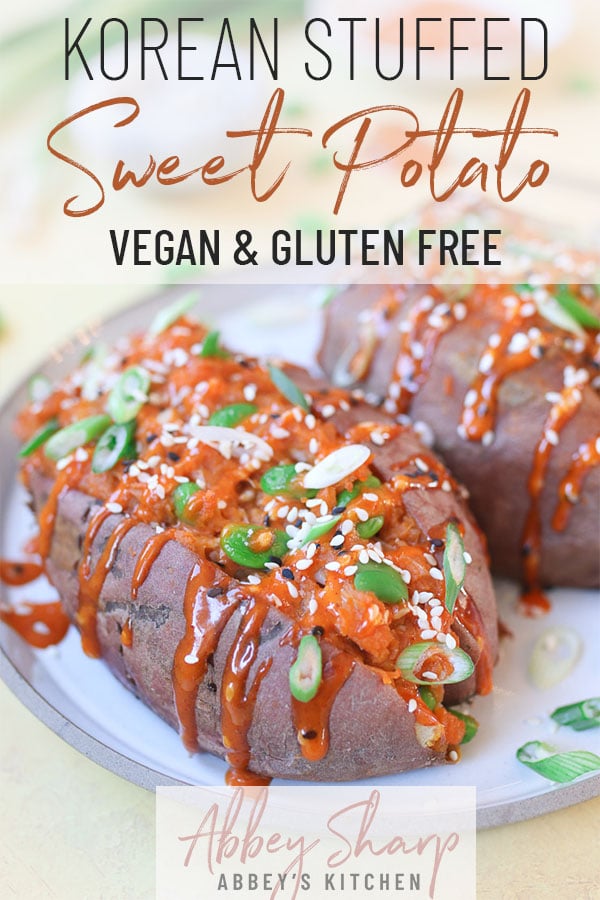
pinterest image of Korean stuffed sweet potato topped with green onion and sesame seeds with text overlay

Print Recipe
5 from 1 vote

Korean Stuffed Sweet Potato

These Korean Vegan Stuffed Sweet Potatoes with Jackfruit & Edamame are naturally gluten free and loaded with Korean flavour thanks to the combination of sweet and spicy gochujang.
Prep Time5 minutes mins
Cook Time30 minutes mins
Total Time35 minutes mins
Course: Main Course
Cuisine: korean
Servings: 4
Calories: 411kcal
Author: Abbey Sharp

Ingredients

  • 4 sweet potatoes pricked with a fork
  • 1 tbsp maple syrup or brown sugar
  • 2 tbsp low sodium tamari
  • 1 tbsp gochujang
  • 1 tsp grapeseed oil
  • 2 cloves garlic finely minced
  • 1 tsp ginger grated
  • 1 tsp sesame oil
  • 2 cups jackfruit pulled into shreds
  • 1 1/4 cup shelled edamame thawed

Topping:

  • ¼ cup vegan mayo
  • 2-3 tsp gochujang depending on your spice tolerance
  • 2 tsp sesame oil
  • 2 tsp sesame seeds plus more for garnish
  • 1 tsp rice vinegar
  • ½ tsp maple syrup or to taste
  • Salt and pepper to taste
  • Scallions thinly sliced

Instructions

  • Preheat oven to 400 F.
  • To bake sweet potatoes, pierce them with a fork, and place on a baking sheet lined with parchment paper. Bake for 45- 60 minutes or until very soft. Alternatively, you can place on a microwave safe dish covered in plastic wrap and microwave for 10-12 minutes until soft.
  • Meanwhile, to a bowl mix together the brown sugar or maple, tamari, gochujang, oil, garlic, ginger, and sesame oil.
  • Slice down the middle (without cutting all of the way through) and scoop the insides out into the bowl into the sauce. Add in the jackfruit and edamame.
  • Stuff the sweet potato jackets back up and place back into the oven for 15 minutes.
  • Meanwhile, mix together the vegan mayo, gochujang, sesame oil, sesame seeds, rice vinegar, maple, salt and pepper. Drizzle the baked sweet potatoes with the Korean spicy mayo sauce, top with additional sesame seeds and scallions.

Nutrition

Calories: 411kcal | Carbohydrates: 58g | Protein: 10g | Fat: 17g | Saturated Fat: 2g | Sodium: 661mg | Potassium: 1073mg | Fiber: 8g | Sugar: 27g | Vitamin A: 18534IU | Vitamin C: 19mg | Calcium: 107mg | Iron: 2mg
Abbey Sharp

Abbey Sharp is a Registered Dietitian (RD), regulated by the Ontario College of Dietitians. She is a mom, YouTuber, Blogger, award winning cookbook author, media coach specializing in food and nutrition influencers, and a frequent contributor to national publications like Healthline and on national broadcast TV shows.
www.abbeyskitchen.com/about-abbey/

Last Updated August 10, 2020. Published February 10, 2020 By Abbey Sharp 3 Comments

Female Bodybuilding Competition Prep Dangers (PART 2)

We discuss some of the unspoken dangers of female bodybuilding and fitness competition prep and post-show on a woman’s physical health, mental health and metabolism.

If you missed part one of this series on female bodybuilding, I discussed the typical recommendations when it comes to diet for competition prep. Before getting into part two on the effects of bodybuilding, I want to say that this post is in no way attempting to shame the bodybuilding community or the sport itself. The reality is, there are dark sides to any sport, especially sports where achieving an optimal weight is desired. I am in no way saying that these dangers will happen to anyone attempting a career as a bodybuilder or fitness competitor, however, I feel it is my duty to mention some of the potential risks, especially when this is done without proper supervision. I know when a bodybuilder has the right supervision and has an understanding of these dangers, they are better suited for not only a successful career in bodybuilding and fitness competitions, but also the ability to live a long and healthy life.

Let’s get into it.

Physical Dangers of Female Bodybuilding and Fitness Competition Prep

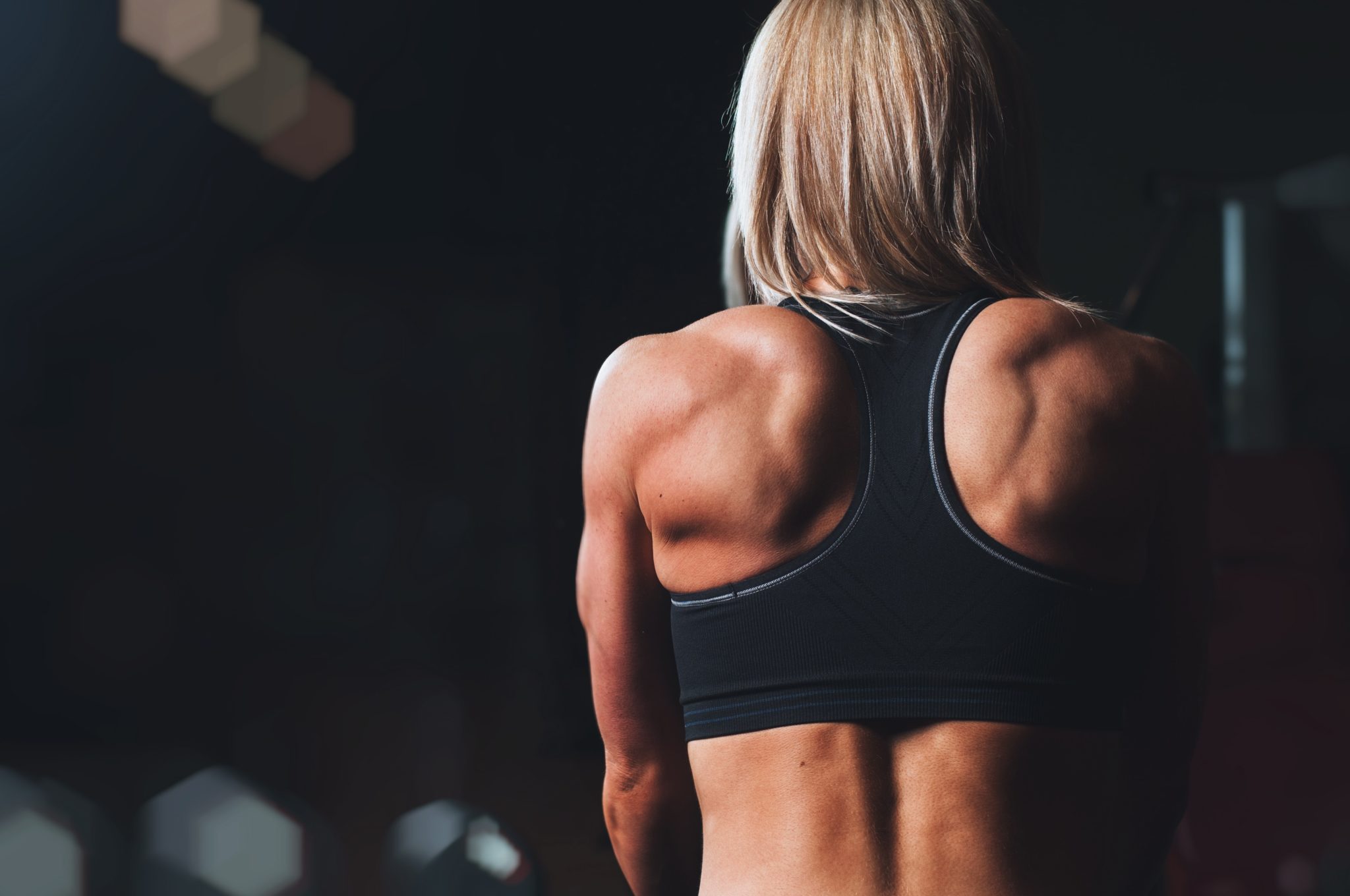
Female bodybuilder lifting a weight

Micronutrient Deficiencies

One of the concerns with bodybuilding and fitness competition prep is the risk for micronutrient deficiencies because of the tendency for some bodybuilders to severely restrict certain foods in their diet and only include a small range of repeated “safe” foods on their plan. Some studies on dieting bodybuilders observed deficiencies in micronutrients such as vitamin D, calcium, zinc, magnesium and iron. Having said that, a lot of this evidence is from the early days of bodybuilding, and it’s possible that these micronutrient deficiencies were more common due to the very premature understanding of bodybuilding nutrition and the drastic elimination diets. Fast forward twenty years later, it is currently unclear whether there is a prevalence of micronutrient deficiencies among competitive bodybuilders. Having said that, especially for women, it may still be useful to take a micronutrient supplement if you’re severely restricting calories or certain types of foods. Speak to a sports registered dietitian to determine your unique needs.

Fluid and Electrolyte Imbalances in female bodybuilding

In the final days and hours before a fitness competition (also known as “peak week”), many bodybuilders will attempt to manipulate their fluid and electrolyte levels to improve their muscularity and lean physique. In order to define their muscularity, during the final week, bodybuilders will dramatically increase their water intake – sometimes to as much as 10 L per day while also taking diuretics. Then a day before the competition, bodybuilders will dramatically cut their water intake in order to dehydrate the body- sometimes getting no water for 24 hours before showtime while continuing on their diuretic supplements. The goal of dehydrating before a competition is to increase vascularity so that a bodybuilder’s veins and muscles are clearly seen by the judges to achieve that “ripped” appearance.

Drinking excess amounts of water and then severely restricting water can cause a dangerous shift in a person’s fluid and electrolyte balance.

I know we’ve been conditioned to believe that more water is better, but drinking 10 L of water a day, and then flushing it out with diuretics can easily cause water intoxication, hyponatremia and hypokalemia, which taken together can be fatal.

Common signs and symptoms include:

  • Irregular heartbeat
  • Fatigue
  • Lethargy
  • Seizures
  • Nausea
  • Vomiting
  • Gastrointestinal distress
  • Muscle cramping (which is a problem on stage when you’re flexing and posing)
  • Muscle weakness
  • Headaches

Another side effect that bodybuilders may not be aware of is that in certain scenarios, an “imperfect” shift in electrolytes and fluid may actually impair their performance on stage and even their muscle size. Before going on stage, a common practice by bodybuilders is “pumping up”. This is where a bodybuilder will perform repetitive weight lifting prior to stepping on stage to increase their muscle size and definition. This practice of “pumping up” could be compromised if a bodybuilder is dehydrated or is experiencing an electrolyte imbalance. In other words, they may look “too flat”. Further, some studies have found that dehydrating prior to a competition will result in a decrease in muscle water content, meaning a decrease in muscle size which will negatively impact the appearance of muscularity once they hit the stage. Bottom line, you may be playing with fire from the perspective of your health (and it might not even benefit your results).

Risky Female Bodybuilding Supplements

Bottle of supplements with capsules pouring out

While the supplement industry’s market is worth as much as $37 billion a year, most researchers and health professionals caution their use because there isn’t clear evidence that they even work and are beneficial to our health. On top of that, because supplements are not regulated, there are a ton of illegal substances that make their way on store shelves and have killed people. According to a 2016 study, it is estimated that 23,005 emergency room visits a year were linked to supplements. Because of the lack of regulation, consumers don’t really know all of the ingredients in supplements and dosages could even vary from pill to pill. That’s really scary, and regulation needs to be done to prevent further deaths.

As mentioned in part one of this post where we discussed in more detail some of the major supplements used in female bodybuilding and fitness competitions, a lot of the supplements women take to get in shape come with real risks. From anxiety, insomnia, kidney and liver damage, infertility and even death, you have to really trust your “coach” to “prescribe” these cocktails of supplements and drugs in appropriate doses for you.

Psychological Dangers of competition prep FOR WOMEN

birds eye view of a white plate with a sad face on it with silver cutlery on a pink background

Body Dissatisfaction and Disordered Eating in Female bodybuilding

When combine with some of the psychological issues that evidence suggests are more prevalent in female fitness competitors, it’s not uncommon for bodybuilders to experience “post competition blues” or even depression after a competition.

In one study, 1/3 of a group of bodybuilders reported anxiety, short tempers or anger during competition prep. Furthermore, 81.5% of them in the group reported a preoccupation with food, a precursor of course to disordered eating. Because of the pressure to meet goal weights and physique goals, bodybuilders may become dissatisfied with their body and resort to unsafe weight loss methods like unregulated “fat burning” supplements or anabolic steroids.

This is especially a concern among female fitness competitors, as one study found that among female competitive bodybuilders, 42% used to be anorexic, 67% were terrified of becoming fat and 50% experienced uncontrollable urges to eat. Further, research gathered from the National Eating Disorders website found that among female high school athletes, 41.5% reported disordered eating while 62% of female athletes in aesthetic weight class sports reported disordered eating.

Anecdotally, I have been told by personal trainers in the industry that they often see young female fitness competitors bring suitcases of cookies, cupcakes, donuts and more “off limits” foods to their competition, and then once they get off the stage, fall into an uncontrollable binge.

This research (and the stories I’ve heard) is very concerning, and I feel this is a topic that needs to be communicated more openly in female bodybuilding and fitness competitor circles. It is clear from this research that competitors and coaches need to be aware of the signs and symptoms of unhealthy behaviours and ideally there needs to be more specialists that are trained in this area to help athletes in need.

Fertility Risks and Dangers FOR WOMEN IN FITNESS COMPETITIONS

Any time you’re severely restricting calories or increasing activity, you put a woman at high risk for hormonal imbalance which may in turn impact her fertility and overall health. This could lead to a medical condition known as Female Athlete Triad.

Female Athlete Triad

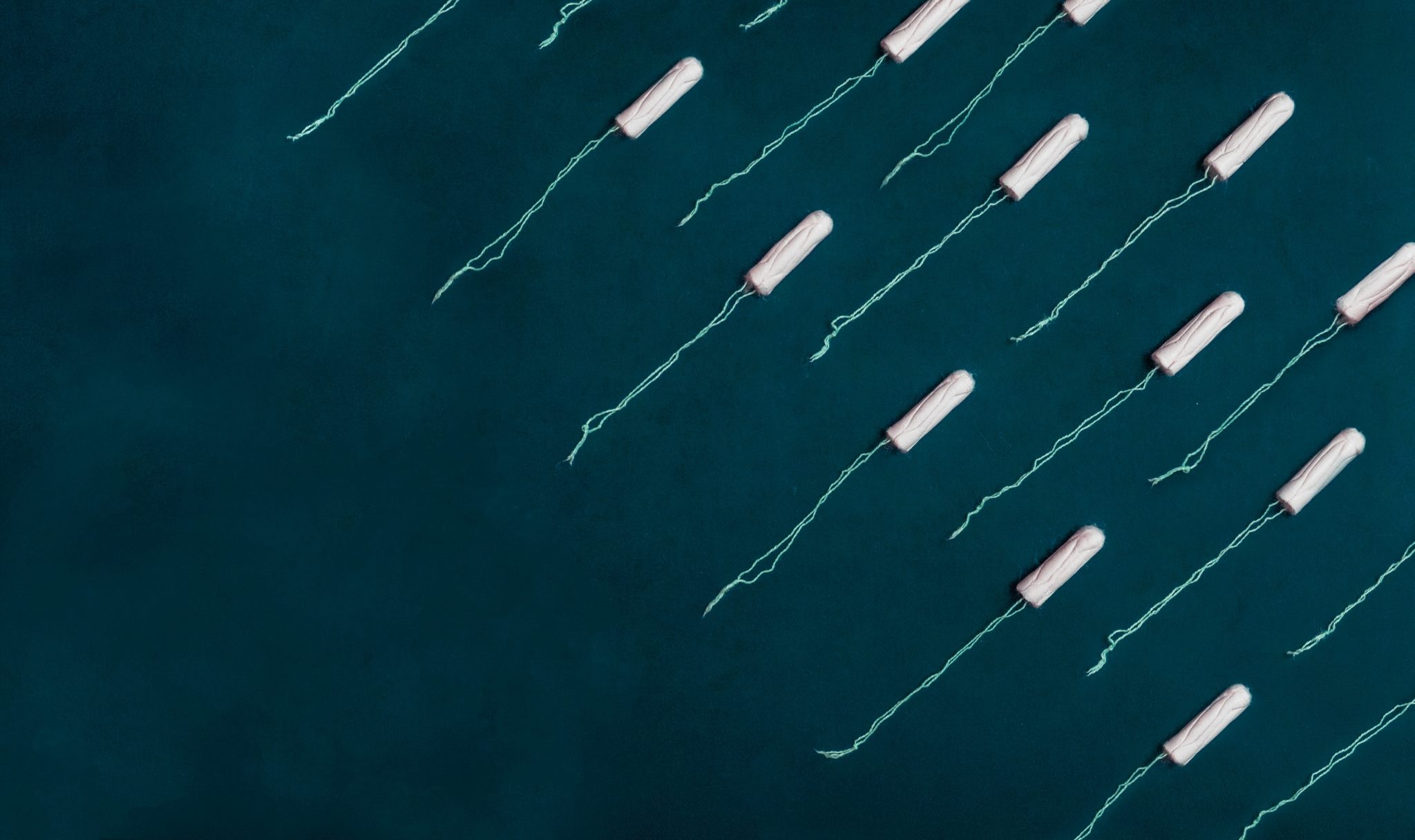
birds eye view of multiple tampons laid out on a dark background

Female athlete triad is a medical condition that is observed in physically active females and involves these three components:

  1. Low energy availability with or without disordered eating
  2. Menstrual dysfunction
  3. Low bone density

Restrictive diets, excessive exercise, low body weight and nutritional deficiencies from bodybuilding may be possible causes of female athlete triad.

Estrogen Deficiency

Research has also found

that both resistance training and energy restriction are associated with alterations in key reproductive hormones. Some of these alterations include an increase in estradiol and beta-endorphin which results in a decrease in gonadotropin releasing hormone and luteinizing hormone, and ultimately can cause estrogen deficiency.

Menstrual Dysfunction

In one study, 25% of female bodybuilding competitors reported abnormal menstrual cycles while another study reported that women complained of menstrual irregularity within the first month of competition prep. The researchers found that caloric restriction led to a decline in fat and body mass which resulted in a cessation of menses. In many cases, thankfully, their period returned over a year following the competition.

Low Bone Density

Healthy athletes tend to have higher bone mineral density than non-athletes, however female athletes with female athlete triad may be at risk for low bone density, stress fractures and even osteoporosis. Women with amenorrhea (lack of menses) have low levels of estrogen and estrogen is needed to inhibit osteoclast activity. Basically, without enough estrogen, this may cause a disruption in bone remodelling and may cause an acceleration in bone resorption. Sadly, because of the disruption in hormone activity from intense physical activity, female athletes may not be able to reap the beneficial effects of physical activity on bones.

Infertility

Not surprisingly as a result of these hormonal shifts, female athletes are also at risk for infertility. This is due to lack of ovarian follicular development, anovulation or luteal phase defects.

Metabolic Dangers FOR WOMEN DOING BODY BUILDING

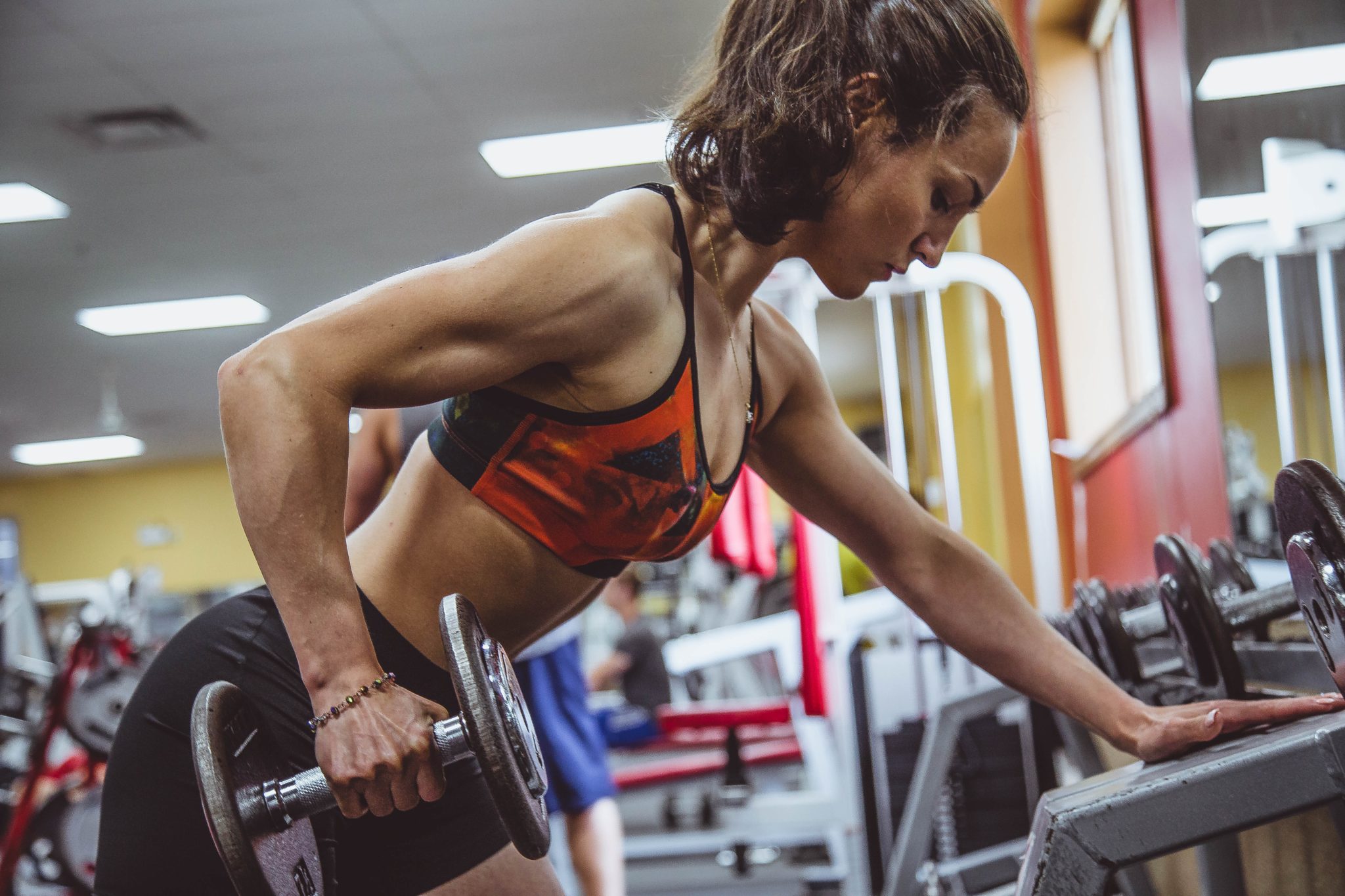
Female bodybuilder at the gym

In bodybuilding, the goal is to achieve low levels of body fat while retaining lean body mass. In some cases, bodybuilders are able to reduce their body fat to less than 5% of total body mass. Depending on the division a female bodybuilder is in, there are different body fat percentage ranges. Bikini bodybuilders are generally in the 10-14% body fat range. Figure bodybuilders are generally in the 8-12% body fat range. Physique bodybuilders are generally in the 8-10% body fat range. Finally, a female athlete in the bodybuilding division will aim for 6-10% body fat.

To strike that balance, many bodybuilders must make significant manipulations and put their body through significant metabolic stress. Undergoing those changes may pose a physiological challenge and potentially lead to metabolic damage. A 12 month case study tracked a male bodybuilder for 6 months before and after a competition to examine the physiological changes that occur. Sadly, I could only find this data for a male bodybuilder, so keep in mind that these numbers may be different in a female bodybuilder. For now this is the best data we have, and it does give us a small understanding of what might be going on in an athlete’s body at a cellular level.

Cardiovascular

The 12 month case study found that an athletes heart rate decreased significantly from 53 to 27 beats per minute during preparation and then increased to 46 beats per minute within one month after competition. Blood pressure dropped from 132/69 to 104/56 mmHg during preparation and then returned to 116/64 mmHg at 6 months after competition.

body Composition

Not surprisingly, the bodybuilder’s percent body fat decreased from 14.8% to 14.5% during preparation and returned to 14.6% during recovery.

Exercise Performance

The researchers

found that strength decreased during preparation and did not fully recover during the 6 months of recovery. Researchers believe the decline in strength and increase in fatigue was due to the energy deficit. The fatigue and decline in strength could be explained by a decrease in glycogen stores due to the decreased energy intake. The researchers also found that athletes may have difficulty returning to their exercise abilities and could take some significant time after the competition.

Blood Parameters

The last element measured was the athletes testosterone levels. The case study found that testosterone declined from 9.22 to 2.27 ng/mL during preparation and returned back to baseline level, 9.91 ng/mL after competition.

One of the main criticisms of rapid weight loss/low calorie diets is that it may slow down a person’s metabolic rate. This is turn makes it difficult (potentially even virtually impossible) to keep the weight off once a person stops dieting and resumes to normal eating – even if their normal eating is still very balanced and healthy. This could explain why a lot of bodybuilders experience extreme fluctuations in their weight and find it difficult to keep their weight off once the competition is over. While not exactly meant to be a bodybuilding or fitness competitor situation, we can learn from the participants for whom the amount of calories they would burn at rest after their weight loss was calculated to be 500 calories lower than what would be expected from their weight loss alone. In other words, they would have to continue to consume the extremely low calorie diet they were eating to get to their goal weight, minus another 500 calories, just to maintain that weight. An explanation for changes in a person metabolic rate could be due to the hormonal responses when weight loss takes place.

Hormonal Dangers of EXTREME Female FITNESS

Female bodybuilding lifting a weight

There are a number of hormones that play a role in regulating body composition, energy intake and energy expenditure, all of which may be negatively impacted by fitness competition prep and restriction.

Thyroid Gland Hormones

Triiodothyronine (aka T3) plays a direct role in regulating metabolic rate. Studies have found that a low calorie diet may decrease thyroid hormone levels which can decrease a person’s overall metabolic rate.

Leptin Hormone

Leptin in primarily synthesized in the adipocytes and tells us when we’re full. When we restrict food in the short term and lower our body fat levels, leptin levels are decreased. When there are high levels of leptin, a person will experience increased satiety and energy expenditure. Studies have shown that a low calorie diet with an effort to promote fat loss, may decrease leptin levels which results in former competitors always feeling hungry and never satisfied.

Ghrelin Hormone

This hormone plays opposite to leptin and stimulates appetite and food intake. Ghrelin is typically increased in the body when we fast and decreases after we eat. When we restrict, high levels of ghrelin circulate in the body screaming for food. A study found that a low calorie diet increased ghrelin which stimulated participants appetite and made them want to eat more.

Testosterone Hormone

Testosterone plays an important role in increasing muscle protein synthesis and muscle mass. It may even play a role in regulating adiposity. One study found that a low calorie diet decreased testosterone levels, ultimately interfering with protein synthesis.

Cortisol Hormone

Cortisol is a glucocorticoid that influences metabolism and has been shown to induce muscle protein breakdown. A low calorie diet can also increase cortisol which has been shown to increase proteolysis (protein breakdown) in healthy subjects.

It is clear that any attempt to severely manipulate body weight can cause unfavourable changes in our circulating hormone and these changes may remain even when the dieting ceases.

So why are our hormones responding this way to dieting?

Well, our body doesn’t like change. Especially sudden change, like rapid weight loss or suddenly restricting calories. Our body believes we’re in starvation mode and reacts by conserving energy through the action of these hormones so that we can get back to our preferred set point. The result? It slows our metabolism which lowers our energy expenditure and ultimately promotes weight regain.

Is there anything that female fitness competitors can do to reduce the risk of this happening?

Reverse Dieting to Prevent Metabolic Damage

Female bodybuilder at the gym lifting a weight

I want to finish up this post by discussing a post-show dieting trick that has become popular among physique athletes. It’s called reverse dieting. After a competition, some bodybuilders will be coached to do something called “reverse dieting” in an effort to restart their metabolism and increase their energy expenditure gradually again to prevent significant weight regain. I’ve already done a comprehensive video review of. For those of you who aren’t familiar with reverse dieting, it’s an eating plan that involves gradually increasing your caloric intake over a period of several weeks or months. This style of eating is popular among bodybuilders because it’s designed as a recovery diet after a heavily restricted diet like a bodybuilder’s pre-competition diet. Like I mentioned in the metabolism section of this post, bodybuilders are looking to normalize their eating patterns and prevent gaining excessive weight due to their slowed metabolism.

Here’s how it looks.

It starts by increasing a person’s calorie intake by 50-100 calories per week above your competition prep baseline until you’re back to your pre-competition baseline. This will last four to ten weeks. Another reason this diet has become popular among bodybuilders is to reduce the risk of binge eating, which is a common issue experienced by some bodybuilders.

Does Reverse Dieting Work?

The thing with reverse dieting is that in theory it sounds like it should help reduce the metabolic damage. Adding a small surplus of calories to your diet may restore circulating hormone levels and normalize your energy expenditure to ultimately (slowly) recover your existing metabolic rate. However, is that really the case? Sadly, we have very little evidence to support its use and the only evidence we do have are anecdotal reports, which have led to its increase in popularity. For now, we still need actual research to evaluate its efficacy.

Bottom Line on the Dangers FOR WOMEN IN EXTREME FITNESS SPORTS

Like I said at the beginning of this post, I by no means am trying to say that you shouldn’t become a female fitness competitor or bodybuilder. My job as a dietitian is to try to understand this athletic trend, dive into the culture and explore the possible concerns with following this type of lifestyle to give you the tools to do whatever you’re going to do in the safest way possible. While many sports can be demanding on the body and require you to fit into a certain weight class or reach optimal body composition, bodybuilding is a unique case because it involves making dramatic changes in a short period of time.

I whole heartedly believe that when done safely and in a responsible way, bodybuilding can probably be a rewarding sport for some people. Especially in the right hands with an experienced trainer, I can see how bodybuilding can make a person feel strong and in control of their body. That being said, there’s a dark side to this sport and coming from a background of orthorexia, I know that I would never be able to participate in a sport like this. Any sport that is centered around a preoccupation with food and weight carries significant physical and psychological risks that are ultimately not worth it for a lot of people.

I hope that these two posts gave you a better idea of what bodybuilding really is, and some of the psychological, physical and metabolic effects of this sport. If you’re a bodybuilder or was one reading this, please share your experience with the sport and why you love it or why it wasn’t for you.

pinterest image of female body building lifting weights with text overlay

Contribution By:

Sofia Tsalamlal, RD

Abbey Sharp

Abbey Sharp is a Registered Dietitian (RD), regulated by the Ontario College of Dietitians. She is a mom, YouTuber, Blogger, award winning cookbook author, media coach specializing in food and nutrition influencers, and a frequent contributor to national publications like Healthline and on national broadcast TV shows.
www.abbeyskitchen.com/about-abbey/

Last Updated July 22, 2020. Published January 17, 2020 By Abbey Sharp 16 Comments

Sweet Potato Waffle Latkes with Cranberry Compote

These Gluten Free Sweet Potato Waffle Latkes with Paleo Cranberry Apple Compote will become a cool-weather favourite brunch recipe your whole family will love!

These Gluten Free Sweet Potato Waffle Latkes with Paleo Cranberry Apple Compote will become a cool-weather favourite brunch recipe your whole family will love!

Guys, if you haven’t noticed, I’m officially OBSESSSSSSSED with my waffle iron. Like best $50 I ever spent on Amazon period- including that time I bought myself a black school girls skirt so I could dress up as Britney for my 90’s themed 30th birthday. But seriously guys, I have made Birthday Cake waffles that totally kicked ass, and loaded potato waffles that were out of this world good. Today I wanted to take the potato waffle game to a new level with these gluten free sweet potato waffle latkes. Yes, we’ve passed Hannukah, but latkes are bad ass any time of year and in waffle form? YES.

How to Make Gluten Free Sweet Potato Waffle Latkes

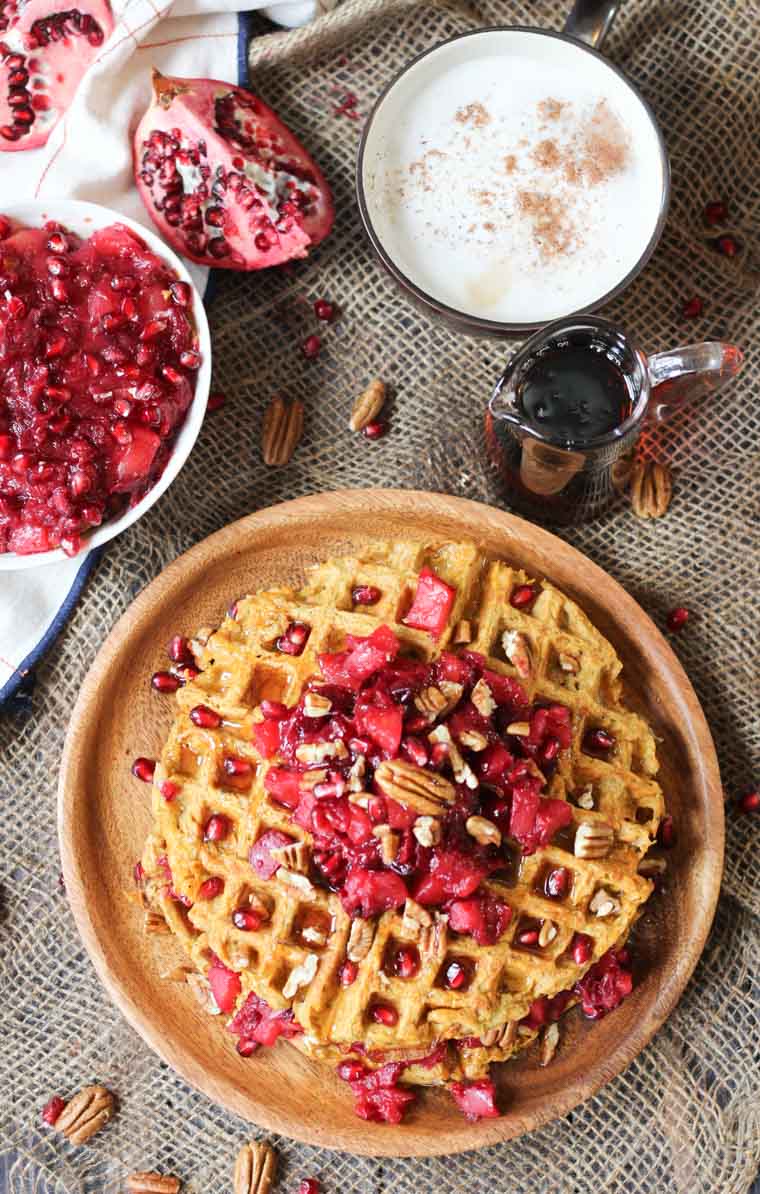
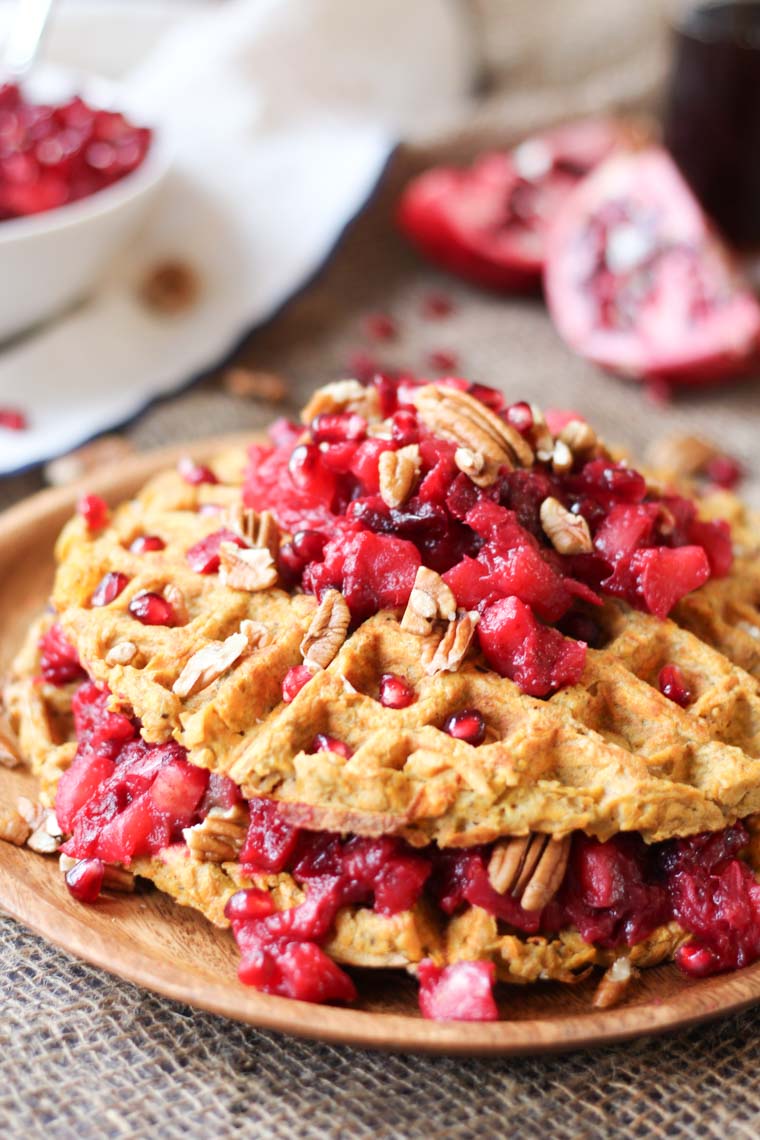
Large waffle served on wooden plate.

So when I was converting to Judaism I had to learn how to make latkes. No, that wasn’t official curriculum with the conversion, but my hubby’s bubbie showed me the ropes. There were two things I learned that day. One, latkes are fucking delicious. Two, your clothes will smell for DAYS and there is nothing you can do about it. The whole house smells from the amount of oil that you need to fry a few pounds of potatoes. It’s kind of insane. So I found a great way to eliminate that issue by making these Gluten Free Sweet Potato Waffle Latkes in my WAFFLE IRON! Waffle iron FTW!

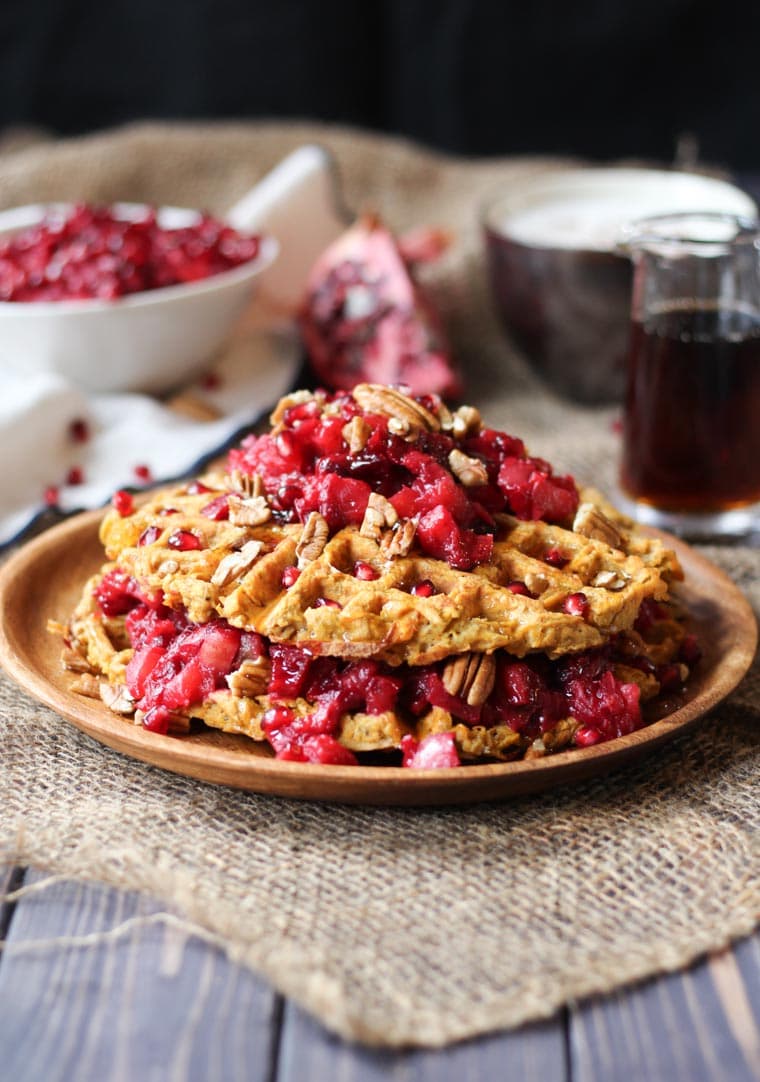
sweet potato waffle on a wooden plate.

So I based this recipe off of any classic sweet potato latke recipe and mixed together the potatoes, spices, some eggs and some gluten free brown rice flour to yield a nice batter that will hold up to the waffle iron. Then to add a little seasonal flavour to these Gluten Free Sweet Potato Waffle Latkes, I made a paleo cranberry and apple compote with no sugar added. It’s delicious AF on its own, so you might want to make a double batch.

Waffle on a wooden plate.

I’m obviously just getting started on the whole waffle thing so expect to see A LOT more waffle recipes from this mama to be.

Become an Abbey’s Kitchen Subscriber

Click Here to Make My Loaded Potato Waffle 

do you have other great waffle recipes?

Oh yes we do. Here are some of my faves:

Egg and Cheese Savory Protein Waffles

Vegan Orange Poppyseed Waffles 

Birthday Cake Protein Waffles

Loaded Potato Waffles


So now I want to know, have you tried this recipe for Gluten Free Sweet Potato Waffle Latkes with Paleo Cranberry and Apple Compote?
What would be your DREAM combination in a waffle iron? Get your ideas at me lovelies and I’ll make them healthier!

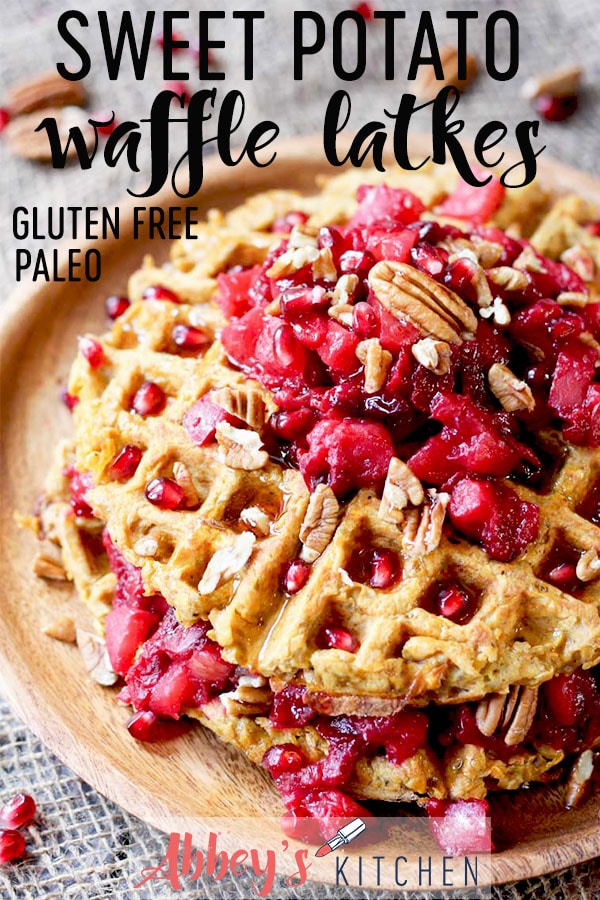
pinterest image of sweet potato waffle latkes topped with cranberry compote and nuts on a wooden plate with text overlay

These Gluten Free Sweet Potato Waffle Latkes with Paleo Cranberry Apple Compote will become a cool-weather favourite brunch recipe your whole family will love!
Print Recipe
5 from 2 votes

Gluten Free Sweet Potato Waffle Latkes

These Gluten Free Sweet Potato Waffle Latkes with Paleo Cranberry Apple Compote will become a cool-weather favourite brunch recipe your whole family will love!
Prep Time15 minutes mins
Cook Time20 minutes mins
Total Time35 minutes mins
Course: Breakfast
Cuisine: American
Servings: 4 (or 2 large waffles)
Calories: 369kcal
Author: Abbey Sharp

Ingredients

Waffles:

  • 1 lb sweet potatoes grated
  • 2 tbsp extra virgin olive oil
  • 1/2 tsp salt
  • 1/4 tsp pepper
  • 1 tsp cinnamon
  • 1/4 tsp nutmeg
  • 1/8 tsp ginger
  • 1/2 cup potato flour
  • 3 eggs beaten

Cranberry Apple Compote:

  • 8 oz cranberries
  • 2 apples finely diced
  • 1/2 cup apple cider
  • 3 dates minced
  • 1/4 tsp cinnamon
  • 1/2 tsp vanilla extract
  • Pecans crushed

Instructions

Sweet Potato Waffle Latkes:

  • Preheat waffle iron. In a strainer, squeeze out as much water from the grated potatoes as you can. Add to a large bowl. Add the remainder ingredients to that same large bowl. Using a ladle, add waffle batter to the waffle iron and cook for 3-5 minutes.

Cranberry Apple Compote:

  • Add all ingredients except vanilla to a small pot over medium high. Cook until thick, 10-15 minutes. Add vanilla and serve.

Nutrition

Calories: 369kcal | Carbohydrates: 62g | Protein: 8g | Fat: 11g | Saturated Fat: 2g | Cholesterol: 123mg | Sodium: 404mg | Potassium: 654mg | Fiber: 9g | Sugar: 23g | Vitamin A: 16349IU | Vitamin C: 15mg | Calcium: 68mg | Iron: 2mg


Abbey Sharp

Abbey Sharp is a Registered Dietitian (RD), regulated by the Ontario College of Dietitians. She is a mom, YouTuber, Blogger, award winning cookbook author, media coach specializing in food and nutrition influencers, and a frequent contributor to national publications like Healthline and on national broadcast TV shows.
www.abbeyskitchen.com/about-abbey/

Last Updated May 12, 2020. Published January 15, 2020 By Abbey Sharp 3 Comments

Is Tea for Bloating Relief, Detox & Weight Loss Healthy or Hype?

We look at the research on different herbal teas and look at the research on whether or not a detox tea for bloating relief and weight loss is healthy or total BS.

Tea is a super drink in the weight loss/alternative medicine community, and much of that is due to the claims that it helps with bloating, abdominal cramps and other digestive problems. While some people claim that tea helps them feel “lighter” and less bloated in the morning, I wanted to test out those testimonials and find out what the research says about alleged detox tea for bloating relief, and whether a cup of herbal tea can actually help treat indigestion and even lead to measurable weight loss.

Is Drinking Tea for Bloating Relief Legit?

Let’s take a look at some common herbal teas that are often associated with treating digestive problems or “detoxing”, and see what the research says on reducing bloating.

Peppermint Tea

Mug of detox tea on table for bloating

For centuries, peppermint has been used in traditional medicine. Peppermint oil is often used to treat digestive problems, headaches, the common cold, nausea and so much more. One of the most common ways most people consume peppermint is in tea. Peppermint is found in a variety of herbal teas and tisanes because it’s not caffeinated. With its massive popularity, I wanted to know whether it actually works as a “teatox” or bloating aid.

Can Peppermint Tea impact my bloat?

Peppermint tea is often touted as a de-bloating tool, because of the research that it may treat symptoms in people with Irritable Bowel Syndrome (IBS). In a 2014 systematic review and meta-analysis, people with IBS treated with peppermint oil for two weeks experienced significantly better symptom relief compared to the placebo group. In a smaller 2016 study, peppermint oil capsules reduced IBS symptoms after four weeks compared to the placebo group. While these results are promising, let’s remember two things. First, these studies used peppermint oil, not brewed peppermint tea. Peppermint oils are a much more concentrated version of peppermint compared to peppermint leaves. Second, these studies were only conducted in people with IBS, not healthy individuals without IBS.

Aside from IBS, there has been some test tube and animal studies that suggest the flavonoids found in peppermint may relax the gut and relieve intestinal spasms and treat bloating and abdominal pain. As a reminder these were only in vitro and animal studies using peppermint oil, not tea.

So far, there have been no studies on peppermint tea for bloating in healthy people.

Bottom Line: Research to date has not found that peppermint tea reduces bloating, but peppermint oil may have some promising effects in relieving symptoms in people with IBS. It is, however, inexpensive and tasty, so if it is soothing to you, go for it!

Lemon Balm tea


Mug of tea with lemon next to teapot.

Lemon balm comes from the mint family and is used in a variety of settings. From culinary to medical purposes. Lemon balm is often used today as a sleeping and digestive aid and can be found in tea, as a supplement, as an essential oil or applied to the skin as a lotion. So does lemon balm live up to its claims?

Lemon Balm Tea Reduce Bloating?

The “teatoxing” research is real spotty on lemon balm tea. The only suitable study I can include here that involves humans is this 2006 pilot study. The study included 32 people with IBS and they were given Carmint (which contains the extracts of Melissa officinalis, also known as lemon balm). The group given Carmint for eight weeks experienced lower severity and frequency of abdominal pain/discomfort compared to the placebo group. Other human studies evaluating lemon balm have only been studied in people with IBS, but they found that it may be effective in reducing abdominal pain and constipation. This is a starting point for IBS research, but definitely does not tell us much about lemon balm’s role in healthy people looking for general bloating symptoms.

Bottom Line: No research to date has found that lemon balm tea is effective at reducing bloating, but it may help to reduce constipating and abdominal pain in people with IBS.

Wormwood tea

Wormwood is an herb typically used in oils to treat digestive problems. It gets its unique name from traditionally being used to treat worm infestations and parasites, however there’s no evidence to support this use. In teas, wormwood is described as bitter tasting, which is why many claim it can enhance digestion.

Wormwood Tea for Bloating relief?

According to this human study, wormwood provided a bit of relief from indigestion by stimulating digestive activity, however bloating wasn’t looked at in this study. In some test tube studies, wormwood may carry some antiviral properties and is often used in combination with other therapies to treat drug-resistant malaria.

Bottom Line: While wormwood may be effective in some areas of health, there doesn’t seem to be any research to support its use in reducing bloating.

Ginger tea

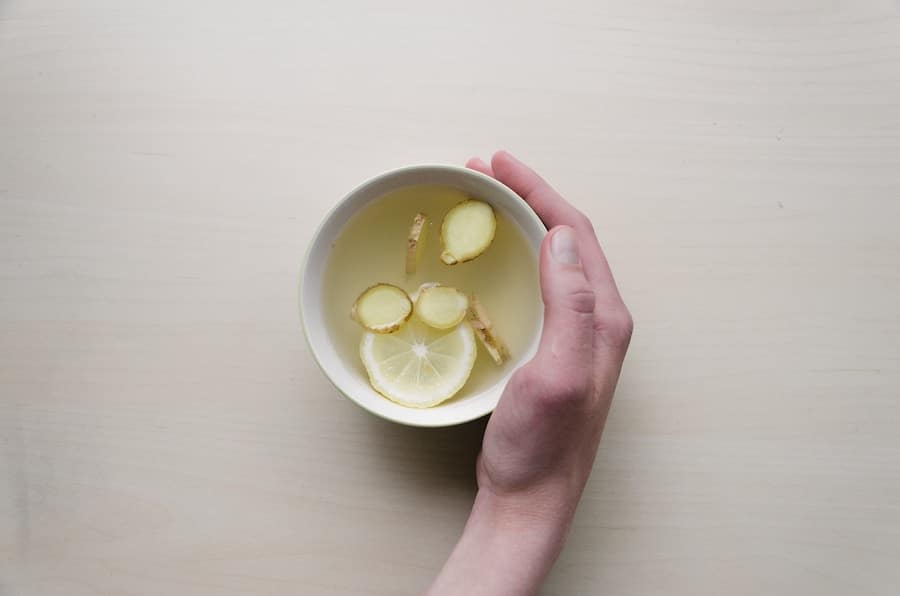
Hand holding mug of hot water with lemon and ginger.

Ginger is often one of the go-to ingredients for treating indigestion, nausea and even muscle pain. A recent 2019 study found that a daily dosage of 1500 mg of ginger is beneficial for nausea relief. Ginger comes in a variety of forms, like candies, dried, supplements and tea. If it’s so popular, it must work right? Let’s find out.

Does Ginger Tea Help relieve Bloating?

A 2015 study evaluated the use of Prodigest, which is a standardized combination of ginger extracts and artichoke extracts, on patients with functional dyspepsia. Dyspepsia is basically another word for indigestion. Symptoms include nausea, fullness, upper abdominal pain and bloating. The study found that patients with dyspepsia who took Prodigest for four weeks improved their symptoms compared to the placebo.

Bottom Line: Ginger could help with bloating relief in people with dyspepsia, and has been effective in reducing nausea, however in the general population it’s not clear that it can actually reduce bloating, and we don’t know much about how ginger tea would improve bloating symptoms.

Fennel tea

Fennel is a perennial herb that is a part of the carrot family and tastes a lot like licorice. Fennel tea is touted as a digestive aid, from treating bloating and gas to cramps. Fennel tea is made from the seeds of a fennel.

Can Fennel Tea relieve indigestion and bloating?

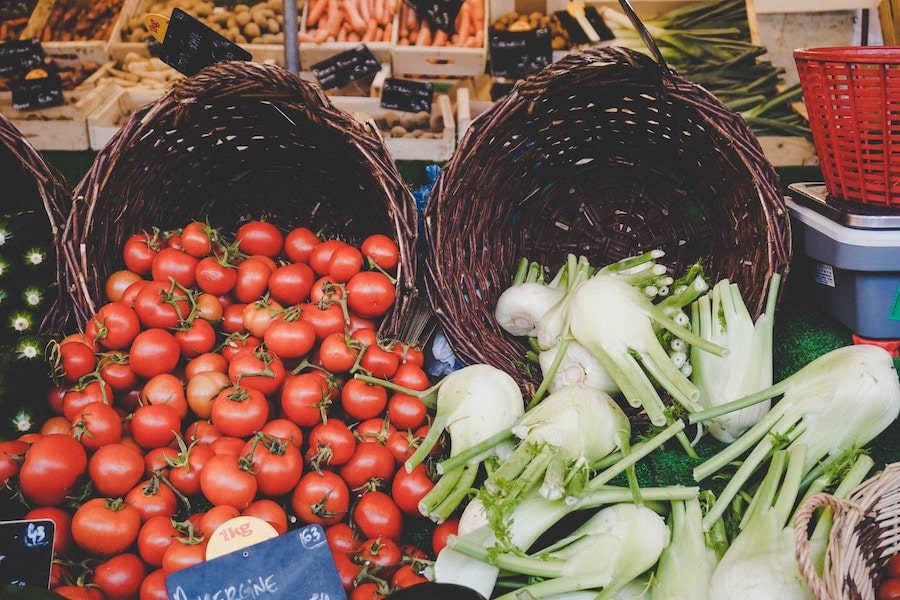
Tomatoes and fennel at a market.

Fennel is often associated with digestion because it can act as a diuretic, which means it can make you pee a lot and flush out water salts, metabolites and other “toxins” from the body. Fennel is often a common ingredient in weight loss supplements and detox teas (tea-toxes) for this specific reason.  In animal studies, fennel seeds showed a significant diuretic effect, and may also be effective in treating constipation, which may causing bloating.

Bottom Line: Fennel has been actively used in treating constipation which may appear to be one of the major causes of the apparent bloating. There are still not enough studies, however, to recommend the use of fennel tea for bloating relief.

Gentian Root tea

Gentian is an herb that belongs to a family of flowering plants. The root of gentian is used in medicine. Just like wormwood, gentian root is a bitter tasting plant which is often used in the treatment of digestive problems.

Is Gentian Root Tea good for reducing Bloating?

According to several European Medical Agency Assessment Reports, gentian may increase the secretion of gastric juice and bile to aid in digestion. However, researchers in this 2015 review suggest that this has not been proven, and bitters like gentian are understudied because we don’t have the tools to assess the levels of digestive secretions. For now, bitters like Gentian root seem to only be effective in people with impaired digestion and to date, it’s unclear gentian’s role in improving digestion and bloating in healthy people.

Bottom Line: Gentian root has not been scientifically investigated and the science community seems divided on its role in digestion, let alone bloating relief. So we’ll have to wait on more studies.

Chamomile tea

Chamomile tea in a mug for bloating

Chamomile is an herb that comes from daisy-like flowers. To make chamomile tea, the flowers are dried and infused into hot water. Traditionally, chamomile is used to treat digestive disorders like gas, ulcers or colic.

Can Chamomile Tea reduce gas and bloating?

Chamomile has been found to potentially prevent the development of gastric ulcers, however this was found when chamomile was combined with a bunch of other herb substances in the liquid supplement Iberogast. Some of these substances included lemon balm leaf, peppermint leaf and liquorice root. It’s difficult to really assess chamomile’s effectiveness in digestion when it’s used in combination with other substances. While it’s unclear whether chamomile tea improves bloating, research has found that chamomile tea may improve sleep quality and alleviate depression in postpartum women. Obviously this was only conducted in postpartum women, but it still may be worth having a cup of chamomile tea before bed if you’ve been having trouble sleeping. I know I do!

Bottom Line: The most evidence to support the use of chamomile tea for digestion is that it may prevent the development of gastric ulcers. These results were found when chamomile was combined with other herbs, so still unclear how effective chamomile tea is on its own.  Having said that, it’s generally healthy and uncaffeinated, and may have other benefits for sleep, so it’s not a bad way to sneak in some extra fluids.

Angelica Root tea

Angelica root is also known as wild celery and is described as bitter tasting. Like I mentioned in the chamomile section, Angelica root is often used in the liquid supplement Iberogast and STW 5 to promote healthy digestion. Let’s see what the research says.

Will Angelica Root Tea cure my digestive issues?

In a 2015 study, the herbal preparation STW 5 stimulated digestive juices to promote digestion and may be effective in treating constipation in the IBS population. Just like with chamomile, it is impossible to know the true effect of Angelica root on digestion, because it was in combination with other plant extracts like lemon balm leaves, peppermint leaves, caraway fruit, liquorice root, chamomile flower and milk thistle fruit.

Bottom Line: Angelica root in combination with other plant extracts may be effective at promoting digestion and treating constipation in people with IBS, but unclear what its effects are on its own, how it would impact digestion as a tea, and if any of this would reduce bloating.

Do Weight Loss detox Teas (ie. teatox) Actually Work?

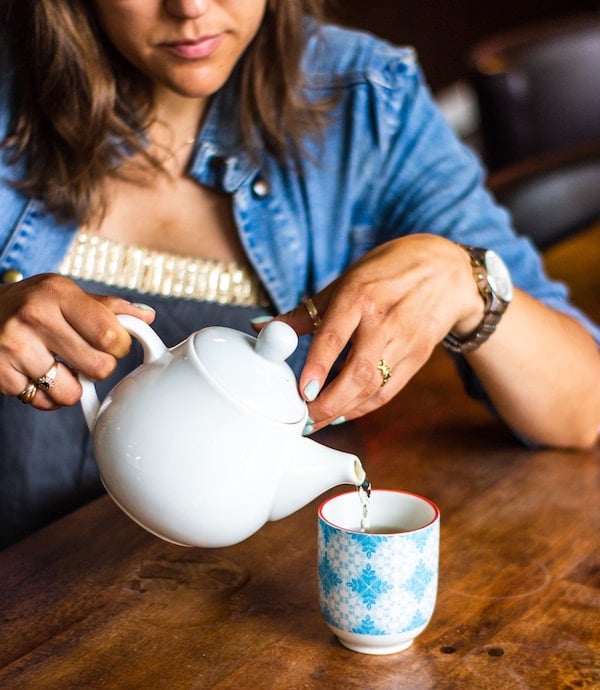
Person pouring tea into a mug.

Let’s briefly discuss weight loss teas, also often known as a teatox or a detox tea. These teas are often touted as having de-bloating effects to promote healthy digestion with the ultimate goal of leading to weight loss.

Let’s take a look at some popular weight loss detox teas.

Skinny Mint tea

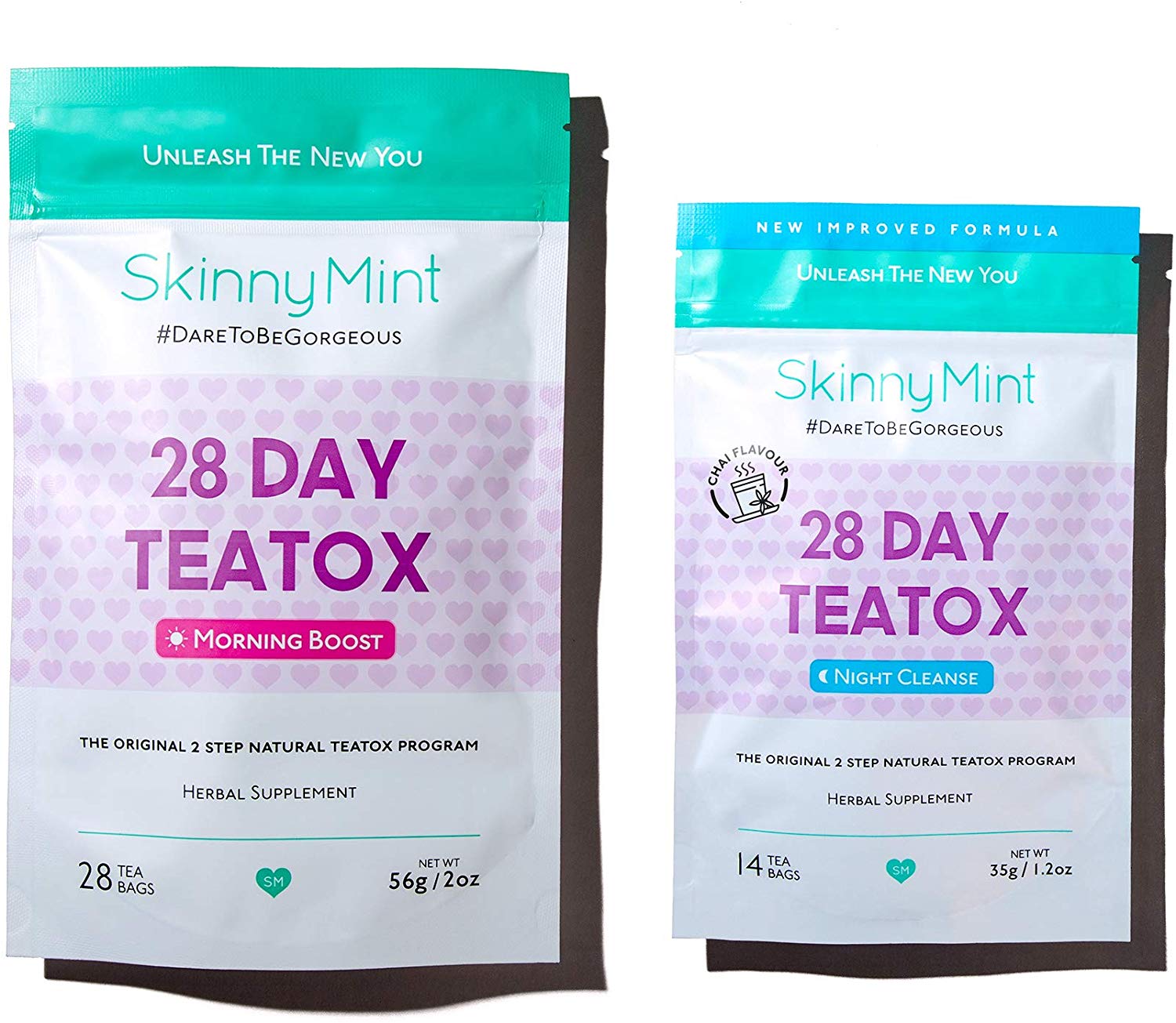
Bag of skinny mint tea

Skinny Mint describes their teas as part of a “tea detox program”. EYE ROLL. Their teas claim to reduce bloat and boost energy, curb cravings and drive fat loss. Some of the ingredients in this tea include Yerba mate, green tea, berries, ginger, peppermint, liquorice root, nettle leaves and dandelion. It’s important I single out the nettle leaves and dandelion because these are often used as diuretics. The idea here is that you pee out a lot of liquid, so it appears you’re losing weight, but in reality you’re just losing water weight, not fat mass. There’s quite a bit of caffeine in this tea (yerba mate and green tea), and while some research suggests caffeine may slightly increase your metabolism to promote fat burning, research suggests this effect would require high dosages of caffeine which can be dangerous. You can read more about fat burning foods here.

Teami tea

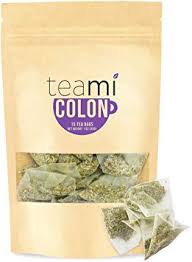
Bag of Teami tea for bloating

Teami has a wide range of detox teas but their most popular one seems to be their Colon tea. Their colon tea blend claims to “reset and cleanse your body”. Not suprisingly, the first and main ingredient in Teami Colon tea is Senna leaf which is one of the most common laxatives on the market. Just like with the diuretics present in Skinny Mint tea, the purpose of Senna leaf is to get rid of stool (and probably some associated fluids), so it looks like you’ve lost weight on the scale, but in reality you’ve just lost a lot of stool and water weight. To learn a bit more about Teami detox teas, I discuss it in greater detail in this video reviewing popular YouTuber Kalel.

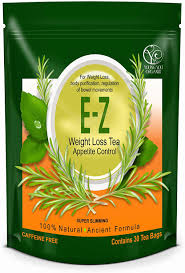
E-Z Weight Loss Tea

Bag of E-Z tea.

You can get E-Z on Amazon and it claims to “purify the body, control your appetite, lose weight, reduce weight and get rid of excess water”. The only true statement with this tea is that you will get rid of excess water. And even that is a maybe. This tea contains a few ingredients that we’ve mentioned in this post like fennel, ginger and chamomile. There’s still not enough evidence that any of these teas actually help with digestion, and the presence of fennel in this tea is to act as a diuretic so that you lost water weight, not actual fat loss.

Bottom Line on Teas for Weight Loss: There are so many of these detox weight loss teas on the market, and at the end of the day they all contain at least one diuretic or laxative. They’re not detoxing you in any way other than helping you pee or poop more, and they’re definitely not helping you lose weight. Water and fibre rich foods would also fit the bill.

Do Teas Help With Bloating or Weight Loss?

Person holding their stomach.

We’ve looked at a bunch of common herbs and detox teas for bloating, and the bottom line seems to be that there needs to be way more human studies that specifically look at these teas and bloating in healthy people. A lot of these claims are cherry picked from IBS studies, or use concentrated forms of these herbs as oils rather than the tea. Even if we did have research on teas, we would need standardized steeping times and tea to water ratios to get a clinical “dose”.

Ultimately, we can’t really trust the results of most research specifically on detox teas or teas for bloating because the amounts of these herbs used would likely not be the amount in your mug of tea.

Is there a big risk in trying these teas to improve your digestion? Of course not. Most (with the exception of the specific teatox programs and expensive detox teas for weight loss), are pretty low risk in terms of side effects and safety, and are also usually inexpensive. So if you like peppermint tea, drink it! If you like chamomile, go for it! I do all of the time. I see tea is a calming, soothing beverage and a flavourful way to sneak in extra liquids, especially in the winter. I wouldn’t, however, count on it for de-bloating or curing digestive woes, and definitely not for weight loss.

Want to learn more about what may actually be causing your bloating, gas, and digestive problems and what to do about it? Read up on our comprehensive post about gas and bloating here.
Want to learn more about teatoxes and skinny teas? We have the 411 on all things teatox here.
What are your thoughts on this? Any experience with using tea for bloating?

Person pouring tea into a mug.

Contribution By:

Sofia Tsalamlal, RD, MHSc Nutrition Communication

Abbey Sharp

Abbey Sharp is a Registered Dietitian (RD), regulated by the Ontario College of Dietitians. She is a mom, YouTuber, Blogger, award winning cookbook author, media coach specializing in food and nutrition influencers, and a frequent contributor to national publications like Healthline and on national broadcast TV shows.
www.abbeyskitchen.com/about-abbey/

Last Updated June 29, 2020. Published January 2, 2020 By Abbey Sharp 11 Comments

Cabbage Cheeseburger Casserole

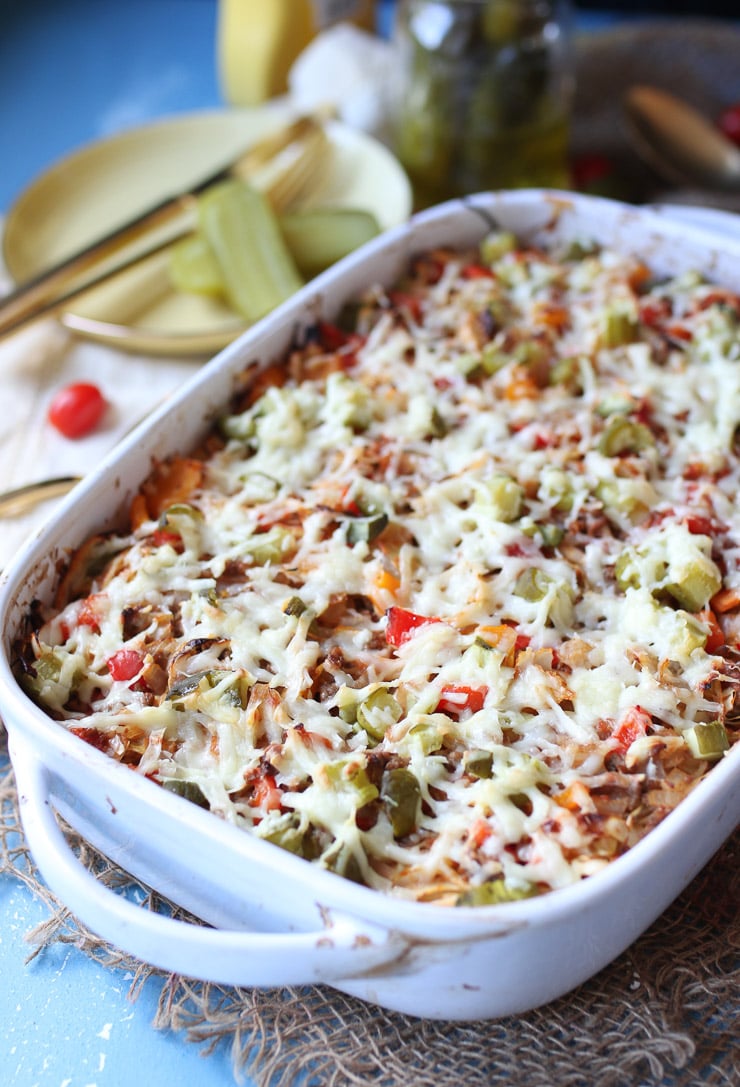
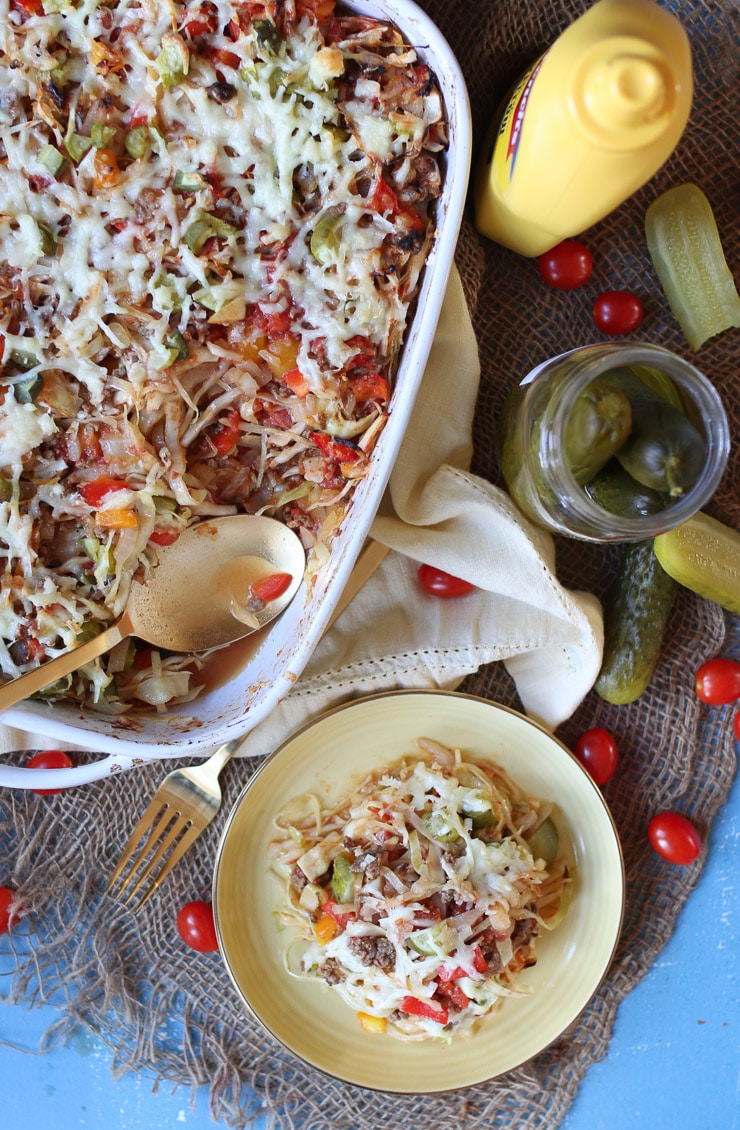
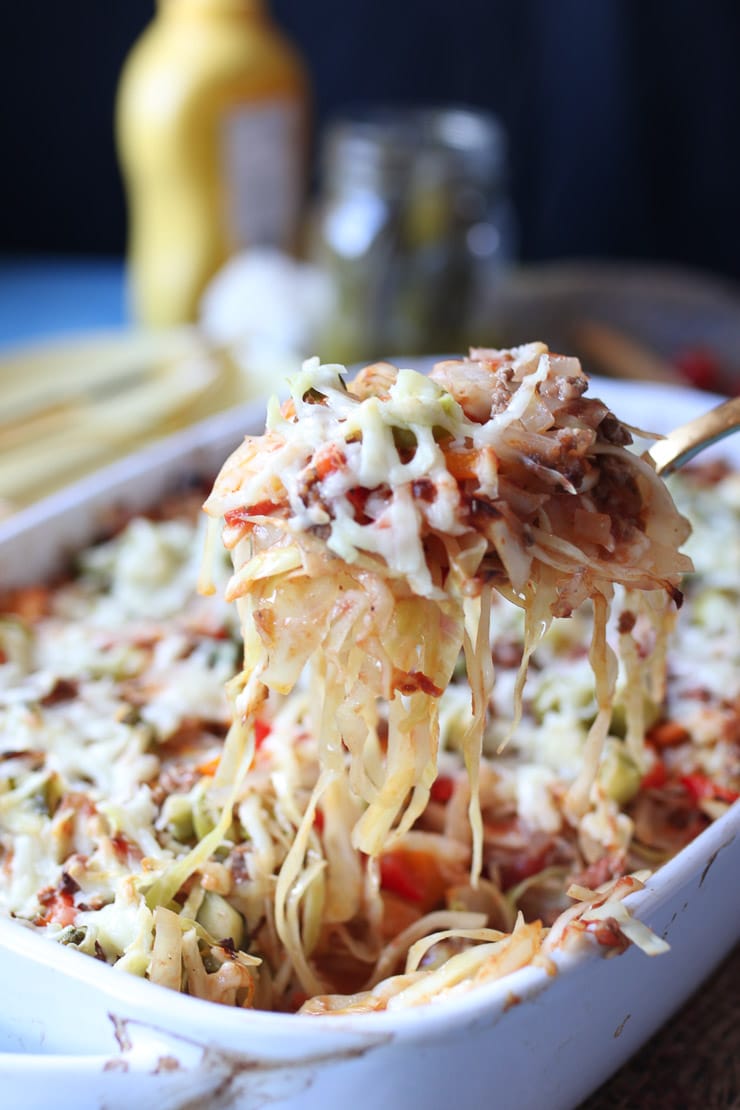
Craving a cheeseburger but trying to avoid your local fast food joint? This Keto Friendly Low Carb Cabbage Cheeseburger Casserole is a lightened up version that doesn't skimp on the pickles.

Craving a cheeseburger but want to avoid a fast food joint? This Cabbage Cheeseburger Casserole is a lightened up version that doesn’t skimp on the pickles.

I LOVE cabbage. One of my fave cabbage recipes from my new book The Mindful Glow Cookbook is a crazy delicious Cider-Braised Sausages and Cabbage with Fresh Apple Salsa. Sadly, that recipe isn’t on the blog and you’ll have to get your hands on my book to make it! (CLICK HERE to get your copy). Until then my Keto Friendly Cabbage Cheeseburger Casserole will fill that cabbage void. I’ve combined my two faves: cabbage and cheeseburgers to bring you a perfect low carb weeknight dinner for nights when you’re looking for something light but also have a serious hankering for a burger.

Cheeseburger casserole in a white dish.

Recently I’ve been on a cabbage kick because it’s cheap, easy to prepare and makes the perfect substitute when I’m craving something light. From my Cabbage Roll Enchiladas to my Egg Roll in a Bowl, there are so many ways to incorporate cabbage into your diet in a fun and creative way. But cabbage and cheeseburger? Sounds crazy right, but trust me, this cabbage casserole legit tastes like a cheeseburger and you won’t miss your local fast food joint.

How to make cabbage cheeseburger Casserole

A yellow plate with casserole dish and serving of casserole.

To whip up this cabbage cheeseburger casserole, I start by browning the ground beef and then adding in onions, peppers, garlic, cabbage, tomatoes, tomato paste and mustard. Let that cook down and then add half of it to a baking dish.

Spoon lifting out serving of cabbage casserole. Top with cheese and pickles, and then add the rest of the cabbage mixture. Finally finish with the remainder cheese and pickles. Bake in the oven until the cheese gets all melty and gooey.
A close up of a yellow plate with a serving of the cabbage dish.

And just like that, you’ve got cheeseburgers for dinner and you didn’t even have to hit the drive thru.

Enjoy lovelies.

Cabbage casserole served on a yellow plate.
Craving a cheeseburger but trying to avoid your local fast food joint? This Keto Friendly Low Carb Cabbage Cheeseburger Casserole is a lightened up version that doesn't skimp on the pickles.
Print Recipe
4.65 from 14 votes

Cabbage Cheeseburger Casserole | Keto Friendly, Low Carb

Craving a cheeseburger but trying to avoid your local fast food joint? This Keto Friendly Low Carb Cabbage Cheeseburger Casserole is a lightened up version that doesn’t skimp on the pickles.
Prep Time10 minutes mins
Cook Time30 minutes mins
Total Time40 minutes mins
Course: Dinner
Cuisine: American
Servings: 6 people
Calories: 548kcal
Author: Abbey Sharp

Ingredients

  • 2 tsp olive oil
  • 1 lb ground beef extra lean if not keto
  • 2 bell peppers diced
  • 1 onion diced
  • 3 cloves garlic minced
  • 1 head green cabbage finely shredded
  • 28 oz can diced tomatoes
  • 158 ml can of tomato paste
  • 1/2 cup yellow mustard
  • 2 tsp cornstarch or tapioca starch
  • 3 cups aged white cheddar cheese grated
  • 4 low sodium pickles diced
  • Pepper to taste

Instructions

  • Preheat oven ot 375 F.
  • To a large skillet over medium high heat, add the olive oil and beef. Cook until browned, then add in the onion, garlic and bell peppers. Saute for another 5-6 minutes, then add in the cabbage, tomatoes, tomato paste, and mustard. Toss until coated and allow the cabbage to slightly wilt, about 5-6 minutes.
  • Sprinkle the bottom of a 13×9 ” baking dish with cornstarch. Using a slotted spoon, transfer the mixture to the baking dish, leaving the liquid behind. Fill the pan half way up, then add half of the cheese and pickles, then finish with the remaining cabbage mixture, cheese and pickles.
  • Bake for 17-20 minutes until the cheese melts and browns and the mixture is heated through.

Nutrition

Calories: 548kcal | Carbohydrates: 27g | Protein: 33g | Fat: 36g | Saturated Fat: 18g | Cholesterol: 113mg | Sodium: 1469mg | Potassium: 1217mg | Fiber: 9g | Sugar: 15g | Vitamin A: 2607IU | Vitamin C: 127mg | Calcium: 572mg | Iron: 5mg
Abbey Sharp

Abbey Sharp is a Registered Dietitian (RD), regulated by the Ontario College of Dietitians. She is a mom, YouTuber, Blogger, award winning cookbook author, media coach specializing in food and nutrition influencers, and a frequent contributor to national publications like Healthline and on national broadcast TV shows.
www.abbeyskitchen.com/about-abbey/

Last Updated May 12, 2020. Published January 1, 2020 By Abbey Sharp Leave a Comment

Intuitive Eating Principle 3: Make Peace with Food

Neon sign about making peace with food.

In this blog post, we will be exploring the intuitive eating principle number 3. We learn how make peace with food through intuitive eating.

If you’ve been following my YouTube channel or my blog, you may have seen that I’ve been posting a lot about the intuitive eating principles and I’ve actually started a series called Enlightened By Intuitive Eating. Each piece of content I’ve been sharing reflects one of the intuitive eating principle, and my goal has been to walk through these principles with you and learn about the intuitive eating journey together. If you missed it check out my post covering principle one and my video covering principle two. In this blog post we will be exploring the intuitive eating principle number 3 and learn how to make peace with food.

Before we get started, I want to answer a frequently asked reader question.

Can I Be an Intuitive Eater Without Giving Up my Moral Values Around Veganism?

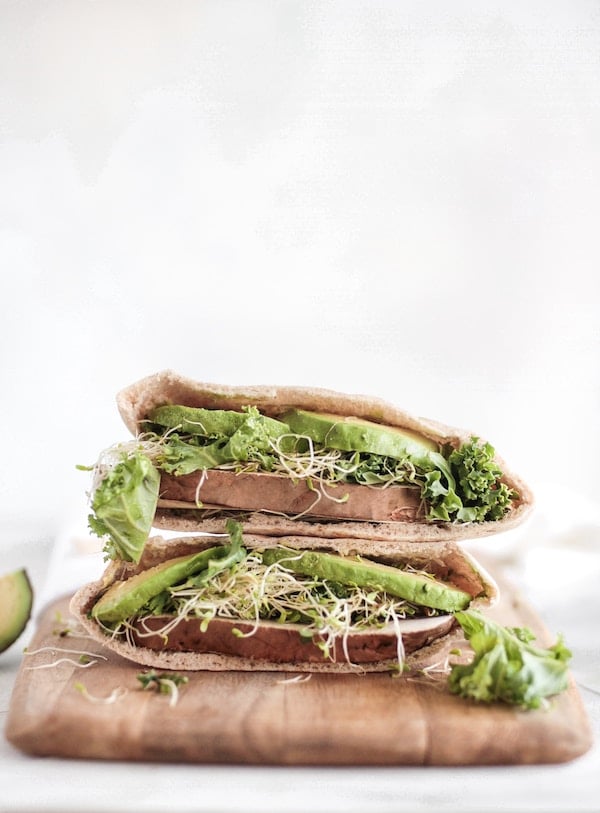
Two pita sandwiches packed with veggies.

The answer is absolutely. It’s important to first take a second to think about WHY you are choosing to live a vegan lifestyle.

Are you eating vegan to lose weight?

Are you trying to prevent yourself from eating “bad” foods?

These are reasons that aren’t obviously in line with the intuitive eating principles. Even if it’s not currently why you’re vegan, think back to determine if controlling food, “detoxing”, or restricting without “dieting” was part of the initial reason for going vegan.

I want you to ask yourself these questions and really do a deep dive to get to the root of how and why you’re living a vegan lifestyle to ensure it’s still there to support you and your wellbeing.

Most vegans who have a good relationship with food abstain from animal products for ethical, environmental, and/or spiritual reasons. As part of a vegan lifestyle, many vegans do not even identify animal products as food. Just like you wouldn’t call paper food, or dirt food, or poison as food, they would view animal products as inedible.

In this case, avoiding/restricting animal products isn’t the same as restricting food for the purposes of weight loss or “clean eating”. It’s simply that the person doesn’t see animal products as being part of their “food environment”, so limiting or restricting them is not an act of denial. It’s a similar experience for someone who eats Kosher, or someone with an anaphylactic allergy to peanuts. Their food environment does not include pork or peanuts, in those examples, so the dietary choice is not coming from the same sense of scarcity that one might experience with dieting.

It’s also important to note that veganism is not about restricting “food groups”. You can still have grains, you can still have vegetables and fruit, and you can still get your protein from amazing plant-based sources such as tofu, tempeh, nuts, seeds, etc.

How do i ensure intuitive eating gets me all the necessary nutrients I need without obsessing?

Two women sitting at a table discussing intuitive eating.

I think there’s a big difference between a meal plan and meal planning.

I think a good dietitian could definitely help take a look at your current habits and focus in on how those habits effect your micronutrient intake with some recipe ideas and meal planning support- not a strict rigid meal plan. This might involve keeping tabs on what you’re eating for a few days, not for ever, and then together, looking at that to see which staples contribute those important nutrients and what are some options to add in in the event things are lacking. Ideally we shouldn’t have to eat the same thing every single day to ensure you’re getting enough but I appreciate that we may need a bit of guidance here when you’re in the early days of transitioning to fully plant based.

So a vegan diet that is aligned with each intuitive eating principle would mean not restricting any particular type of food group, and allowing yourself permission to eat all foods that you identify with being “food”.

That leads us to the intuitive eating principle number three: make peace with food.

intuitive eating principle 3: make peace with food

Neon sign about making peace with intuitive eating.

This is a really important part of the IE series because the intuitive eating principle number three emphasizes the importance of rebuilding your relationship with food. As always, these coming from the intuitive eating principle book by Dietitians Evelyn Tribole and Elyse Resche.

When it comes to intentional weight loss diets, they all have one main thing in common: restricting certain foods or amounts of foods. And this is exactly why I  believe the research suggests that diets are not effective long-term. They force you to ban certain foods from your diet and assign a “good” or “bad” label to them.

Funny thing is, when we restrict food, we tend to want it more than anything and when we get it, the reward centre of our brain starts firing off. This principle actually applies to anything. Think about when you’re sick and you’re stuck in bed for a week. After a few days, all you want to do is go outside and breathe in some fresh air. When we can’t have something, we want it even more. We appreciate it even more Kids are notorious for this as well. If you tell them they can’t do something, let’s say go into your bedroom, you’ll eventually find them in your bedroom. Or when I was a teenager and my dad said I couldn’t wear the skimpy crop top which made me want to wear it even more. Why? Because as humans, we don’t like limitations. We don’t like being told no. And we certainly do not like feeling deprived.

So in general deprivation can actually increase our desire for something. The more you can’t have something, the more you want it because it’s now viewed as something super novel and special. As soon as you restrict food, you place it in a special box. It becomes special compared to any other type of food. Sure, you can go a while without it, but eventually just thinking about it all day every day makes the restriction unbearable and you crack.

A good example of this is chocolate. A lot of people say that they can’t have chocolate around them because they will eat it all in one sitting. So, what do they do? They don’t have it at all and they keep it out of their house. Quickly, chocolate is built up to be this magical forbidden food with an enormous amount of power over us. Once we finally come in contact with chocolate again, we can’t help but overindulge while it’s available because we know it’ll be gone for a long time again.

Another example is the days before starting a diet. Right before starting a diet full of deprivation, many people will go for a “last supper” and eat as much of the “bad” food as they want. But this really tends to backfire because we’re again telling ourselves that these foods will be missed. If you have to have a ceremonious dinner before you start a diet, chances are that is not the best diet to be on.

examples of food restriction

1. food competition

This is a “get it while you can” mentality. Good food marketers know that FOMO is a real thing. By making a food scarce, you will load up and eat as much as possible before it is gone. This can also apply to a favourite dish of yours or a bag of chips in the cupboard. Knowing it won’t be there long creates an intense desire to eat as much as you can.

2. Returning home

For anyone that goes away for school, you’ll know the amazing feeling of raiding your parents cupboards for food. If we go a long time without the foods we’re used to, we start to miss it. Then, once we have access to it again, we may go a bit overboard. This doesn’t just happen for sweets and treats, it can happen for other foods too. For example, a lot of people say they miss salad after being on a vacation. Remember my video on intuitive eating on vacation? UGH I wanted salad and fresh raw vegetables like crazy! Case in point, we don’t like restricting ourselves on either end of the spectrum!

3. Clear-your-plate mentality

This mentality was especially true during the Great Depression when food was scarce. Many families encouraged children to “clean their plate” as it was wasteful to throw out food. This has been passed on for generations. Unfortunately, this can also backfire. If you deprive yourself, you may feel guilty about “wasting” a dish while eating out and end up overdoing it. Instead, if you are in control of your eating and have a good relationship with food, you know that you can bring this food home for leftovers or perhaps share it with a friend. There are lots of options we can explore.

how is dieting possible?

If our biological and psychological aversion to dieting is so strong, then how do people diet?

Well, if you have watched previous episodes, you’ll know that I have a strong admiration for our brilliant body. It’s seriously so intelligent. People who diet all the time (aka Chronic Dieters) are able to adapt to long-term dieting through an adaptation process called “restrained eating”. They become accustomed to ignoring their internal hunger cues and over time, they just don’t hear them anymore.

These people tend to set up extremely strict rules and completely ignore anything their body (and friends) are telling them. They’re able to stay on the diet for quite some time until one of their strict rules eventually is broken or their “willpower” gives out. Essentially, they view their rules as all-or-nothing. They either have the “willpower” to follow them to a tee, or they cave and throw all of that out the window.

I used to be this person when I was struggling with orthorexia and even still, I’m not as comfortable in the grey.

is there research to back this up?

Shot of a library with research on intuitive eating.

Yes! There’s quite a bit of research to support the ineffectiveness of diets that promote deprivation.

In one study, researchers split female college students into three groups: 1) No milkshake, 2) One milkshake (8 oz), 3) Two milkshakes (8 oz x 2)

After they ate the milkshake, they were asked to enter a private room and sample different types of ice cream. They were encouraged to have as much as they wanted.

Two interesting things were found:

  1. Those who were classified as “dieters” ate significantly more ice cream than those who were classified as “non-dieters”
  2. The dieters that had milkshakes were much more likely to overeat ice cream, suggesting that a “preload” of “bad food” triggered them to forgo their diet and eat as much as possible knowing that restriction would soon be following.

The non-dieters easily regulated their eating and stopped when they were satisfied. On the other hand, the dieters were unable to regulate their intake, which is a process called “counter regulation”. The researchers determined that encouraging the dieters to overeat caused them to forgo their restrictive inhibitions and as a result, overeat.

This overeating effect by dieters is known as the “what the hell” effect. Essentially, the dieters believe that since they’ve broken the rules of their diet, they might as well overdo it.

In another study, researchers found that overeating was a combination of restraint and impulsivity. If a person restricted food and it exacerbated their drive for the food (i.e., increased impulsiveness) then they were more likely to overeat.

A good way to demonstrate this is the see-saw example.

On one end of the see-saw we have deprivation/restriction. On the other end we have guilt.

When we’re on a diet, we restrict and restrict which causes that end of the see-saw to go higher and higher. On the other hand, we feel less guilty because we’re not eating any “bad” foods. So, as deprivation goes up, guilt goes down.

But if you’ve ever been on a see-saw, you’ll know that it reaches a limit. Deprivation can only go so high before it comes crashing down. Once it does, we see guilt go flying up. In other words, you feel like shit because you “caved”. This is why dieting is hardly ever sustainable. It creates this up-down effect that causes chaos in our mind and body.

However, let’s say you balance out your deprivation/restriction. You don’t restrict anything, but you’re in tune with your body’s true needs. This also balances out your feelings of guilt because you’re no longer feeling bad about overindulging but you’re not flying high on the fact that you eat perfectly. As a result, you’re in balance.

how to make peace with food with intuitive eating principle 3

Neon sign about making peace with food in intuitive eating.

The answer is to give yourself 100% unconditional permission to eat. No restrictions. No rules. Just pure permission.

I also want to flag that while this sounds super scary and also like, how the hell can this be healthy? I’m going to just eat chips and ice cream all day, and a dietitian is saying that’s cool. Know that this isn’t all intuitive eating is. To believe that is completely misconstruing the concept and the research that supports it.

There are 10 intuitive eating principles that build on one another and we need to reject the diet mentality, and make peace with food so you can rekindle your TRUST in your body and food, before we can implement gentle nutrition guidelines. This is really important, and we will get there, but there are a few steps first.

Until you 100% believe that you’re allowed ANY food, you will always feel a sense of deprivation, even if there isn’t PHYSICAL deprivation happening.

So, what does this look like?

toss out the idea that there are morally “good” and “bad” foods

Yes, I will not deny that foods may be NUTRITIONAL unequal, I’m a dietitian, I know way too much about the fibre and fat content of foods. But if we make them MORALLY equal, we’re less likely to obsess over them and stay in control.

get rid of strict conditions surrounding food

For example, “I’ll eat this today, but I have to workout another hour tomorrow”

As soon as you start allowing yourself food freedom, you take away the power food has on you and you really decrease the chances of overeating. Will you overeat at first? Yes, probably as you are essentially going “off” the diet which we know from our experience tends to lead us to overeat.  But once you become accustomed to being around all types of foods, they actually start to lose their specialness.

What does the research say about this working?

At first this will seem like a challenge, but remember it takes time to dispel all the diet-culture BS that has been fed to us for years. As you start to take power away from food, you will naturally be less inclined to eat it all the time. In fact, even if you allowed yourself to eat a lot of Cheetos, you’re eventually going to get tired of them.

Research calls this habituation. Basically, the more a person is exposed to a food, the less appealing that food becomes. A good example is going on vacation. If you’re at a resort and you see a huge table of all-you-can-eat food, the first few days you’ll probably fill up your plate as much as you can. But as days go on, you may start to grab a salad or some fruit. You probably won’t create a mountain of food on your plate. It’s the novelty and excitement that causes us to overeat. But if we’re used to it, it becomes “normal” and less exciting. So, same thing with forbidden food. The more you normalize it, the less exciting it becomes.

Little cast iron pan with mac and cheese.

This was found in a 2011 study in which participants were given mac and cheese daily or weekly for 5 weeks. The research showed that participants that had the mac and cheese daily slowly started to eat smaller and smaller portions. On the other hand, those that were only given the mac and cheese weekly ate similar amounts. The authors attributed this to a phenomenon known as the Sometimes Opponent Processes (SOP) theory to habituation. Basically, when a food is introduced, a memory for this food is created and activated to a high level (called A1 state). However, the memory eventually starts to decay over time and enters an A2 state. If a food is introduced shortly after when it’s in the A2 state, the stimuli for this food won’t be as strong. However, if enough time has gone by that the person has limited memory of the food, then they go right back to the excited state of this food and there’s a higher drive to eat it.

Therefore, by allowing yourself regular access to all foods, they lose their novelty and you don’t feel such a drive to overeat them.

Also keep in mind that we constantly fall victim to self-fulfilling prophecies. Simply believing you’re going to fail almost always leads to that. So, believing that being around chocolate will cause you to overindulge may cause you to overindulge. You need to develop trust within yourself that you can do this. You are capable of listening to your body. This IE journey is about rebuilding your relationship with both food and yourself.

what if you only want to eat “junk” food?

Fast food restaurant sign for intuitive eating.

First of all, part of this exercise or step in intuitive eating protocol is to try to not think about it as junk food. The goal in this stage of intuitive eating principle training is to treat all food exactly the same. So, while I know it’s in our culture’s vocabulary, the best thing you can do is ditch that type of talk. When we get to gentle nutrition and honouring our health, we will be able to dive deeper into which foods best support our physical and mental wellbeing.

Second, when you’re given free choice, you may feel like you have an all-access ticket to eat “unhealthy” food. And you do. But as I mentioned earlier, the novelty does wear off. You may enjoy some extra fun foods for the first bit but overtime you’ll likely start to crave variety and what legitimately FEELS good to your body. We will be chatting more about this in an upcoming episode.

tackling each intuitive eating principle in baby steps

I know that this is super scary for people, so I sometimes recommend baby steps to help neutralize these “trigger” foods. Breaking it down into manageable bites sometimes feels more manageable than the lofty idea of just throwing caution to the wind on EVERYTHING.

So choose one food to start and lets’ attack this with some structure.

So in my book, Mindful Glow, I disclose that my “trigger” food used to be sugary cereal. If it was in the house, I would eat it mindlessly all day long so I wouldn’t buy it out of fear that I would lose “control”.

So my intuitive eating journey with it started with me buying the cereal.

image of fruit loop cereal.

I then told myself I could have cereal every day. And I did. The first day, I found I had my breakfast with cereal, and still wanted to snack on it later in the day. But soon enough, I didn’t have the desire to snack on it, and I wasn’t even that excited in the morning anymore to have my sugary cereal breakfast.  It very quickly became just another food. One I enjoyed, but not one I was obsessed over and I started to implement some gentle nutrition. I noticed I was hungry soon after having my cereal, so I started to mix it with a bran cereal or Greek yogurt to up the satiety factor.  The next time we ran out of the sugary cereal, I kinda just forgot to buy it again. It lost its power, it was no longer so enticing.

Once you’ve had “success” neutralizing your big trigger food, you’ll maybe have some new found confidence that this can be applied to other foods that you have consciously or unconsciously restricted or seen through a moral lens.

Your intuitive eating homework this week

Stack of sticky notes for intuitive eating homework.

Before you start this process, you may want to check out my first two videos on IE, which are the stepping stones to making peace with food. If you’re not in-tune with your hunger signals, then these steps may be hard to work through.

For this week’s homework, I want you to start reintroducing foods you previously restricted. Here’s how:

1) Write a list of foods that are appealing to you

2) Check off any foods that you actually allow yourself to eat regularly. Circle any foods that you have restricted in the past or present.

3) Plan to allow yourself to eat one of those forbidden foods, as much as you want, either at home from the store, or in a restaurant.

4) While you eat the food, check in with yourself. Think: Is this as good as I remember? If it is, then continue to allow yourself to have it from now on. If it’s not, then it could just be the history of deprivation that caused you to want it in the first place. This is how I feel personally about Halloween candy. I used to crave it when I was restricting sugar, but it just doesn’t taste good to me anymore and I can easily ignore it.

You can start with just one food if you’re more comfortable before tackling another on your list, or you can go “all in” if that feels easier. I want this to be your journey and to take it at the pace you’re comfortable with. And it gets too scary, and you need to take a step back. That’s okay too. you’re not failing. Even proving to yourself that you no longer are obsessed with cheese or cupcakes or cookies if usually really important data to prove that other foods also don’t deserve so much power either.

Careful of the trap

Before I finish, I just want to highlight something important.

A lot of criticism around IE is that it promotes overeating and overindulgence of food. The idea of IE is to make peace with food and welcome any food into your diet. It’s NOT about overdoing it and eating whatever you want, whenever you want, and however much you want. It’s about listening to your body’s needs. You have PERMISSION to eat whatever you want whenever you want, but doing so without listening to how your body feels won’t be a satisfying experience. Sometimes some emotional eating is normal, and the key here is not to punish yourself to fall into the binge restrict repeat cycle.

But if you’re eating beyond your needs all of the time, or relying too heavily on food as an emotional coping mechanism, that’s not supporting your health either. It’s not a fun experience to feel so full you’re sick to your stomach, and food will not solve all of our problems.

This is situation where I would suggest speaking to a therapist even if you’re not physically restricting food and just seemingly overeating. There may be some psychological restriction going on and trying to force your relationship with food into a neutral zone without addressing this will likely keep you trapped in the diet cycle.

bottom line

Remember that IE takes time to learn and it’s really about respecting your body’s natural cues. Continue to work on these steps throughout your IE journey and stay tuned for my next post on the intuitive eating principle number four: Challenge the Food Police.

Become an Abbey’s Kitchen Subscriber

Two pita sandwiches packed with veggies.

Contribution By:

Katey Davidson, RD, Taste of Nutrition

Abbey Sharp

Abbey Sharp is a Registered Dietitian (RD), regulated by the Ontario College of Dietitians. She is a mom, YouTuber, Blogger, award winning cookbook author, media coach specializing in food and nutrition influencers, and a frequent contributor to national publications like Healthline and on national broadcast TV shows.
www.abbeyskitchen.com/about-abbey/

Last Updated May 12, 2020. Published December 18, 2019 By Abbey Sharp 12 Comments

What Netflix’s The Game Changers Gets Wrong About a Vegan Diet

Hand picking up a bar bell.

We review Netflix’s popular food documentary The Game Changers and discuss what the film gets wrong about a vegan diet and what the research says.

Now when I heard that another vegan Netflix documentary called The Game Changers had surfaced, I immediately rolled my eyes and thought it would be just like What the Health (if you haven’t already, you can check out my review of What The Health here) . But after hearing a ton of positive reviews and having a lot of people directly ask me to review it, I knew it was time to give it a watch.

Before starting this review, I want to start off by saying I was pleasantly surprised with the film and overall, I think it was very well done. While I am not personally vegan, I think the research is very clear that we can all benefit from incorporating more plants into our diet. In part one of my review I discussed what Game Changers gets right about the vegan diet. Now in part two of this review, I’m going to be discussing what Game Changers gets wrong about a vegan diet.

Now let’s dive in.

What Is the Game Changers About?Hand picking up a bar bell.

For those of you that don’t know, Game Changers is a vegan documentary that was released in late 2019. It follows James Wilks, a UFC fighter and a military combat fighting trainer. A few years ago, James experienced a terrible knee injury that led to him having to take many months off of fighting to recover.

After reviewing hundreds of research studies during his time off, James stumbled upon a study about the “gladiator cemetery”, in which a total of 22 gladiator skeletons were analyzed. Side note, the movie says there were 68 skeletons, 31 of which were non gladiators but I digress. What the researchers found was that these men had tremendous bone mineral density and strength. After analyzing their bones, the researchers found that these men had very high levels of strontium, suggesting they ate a primarily plant-based diet. Note that the authors did say that the gladiators were not vegan and did consume some animal products, but that they ate mainly plants.

This is apparently the study that inspired James to turn to a vegan diet in effort to speed up healing and improve his overall health. So Game Changers follows James’ journey to healing and also checks in on the stories of other athletes who follow a purely plant-based diet.

So, now that you have a rough idea of Game Changers, let’s dive into what Game Changers gets wrong about a vegan diet.

What the Game Changers Gets Wrong About A Vegan Diet

Like with anything, if there’s good, there’s usually some bad too. Let’s start with some of the problematic claims I picked up on in the film.

Claim #1: Comparing peanut butter sandwiches to beef or eggs in terms of protein quality and quantity

Spoon of peanut butter next to peanuts

In the film, a Dr. Loomis compares the protein quality and quantity between some plant based foods and animal products. They mention that “1 cup of cooked lentils or a peanut butter sandwich has as much protein as 3 ounces of beef or three large eggs”. The doctor also mentions that the theory that plant-based proteins aren’t complete is false.

Now I love peanut butter and I eat it several times a week, but let’s take a look at how these things stack up.

One large egg has 6 grams of protein, so there are 18 grams of protein in three eggs.

One 3-ounce steak has around 17-21 grams.

If we assume that a peanut butter sandwich has 2 pieces of bread and 2 tablespoons of natural peanut butter, then 2 pieces of bread has around 8 grams of protein and 2 tablespoons of natural peanut butter has around 9 grams of protein for a total of 17 grams of protein.

So, yes, it’s around the same amount as eggs and a little bit less than steak.

Here’s the thing though, this peanut butter sandwich has around 371 calories. The steak has around 113 calories. The eggs have around 215 calories. Although having a peanut butter sandwich is totally awesome, we can’t ignore the fact that you have to have almost twice the amount of calories just to meet your protein needs through plants (at least for this example.)

This is usually the case with a lot of plant proteins. For example, to get 20 grams of protein from almonds, you’d need to eat two-thirds of a cup which also equals around 542 calories. Again, I’m not dissing plant-based proteins. I love them, and I love almonds, but if we look at this protein on a gram for calorie basis, some options are more “efficient” than others.

Another thing to keep in mind is that plant proteins tend to have lower bio-availability compared to animal proteins. What’s more, they’re not always a complete source of all essential amino acids – despite what Dr. Loomis says in the film. With that being said, you can totally get enough essential amino acids from plant-foods. You just have to make sure you’re getting different sources of plants so you cover all your amino acid bases.

Finally, in the specific instance of sports nutrition, you wouldn’t want to have a peanut butter sandwich after a workout because that fat will slow down the update of the protein. Ideally we want a low fat meal with a combination of carbs and protein after a workout for this reason.

Claim #2: The Burritos Centrifuge Experiment

Two burritos served on a wooden cutting board.

The documentary goes into great detail when discussing The Burritos Centrifuge Experiment, however there are a ton of flaws from the get-go. First their study participants. They have an NFL player that has been vegan for many years and then NFL players that are adamant about eating their processed food. So, right away, you don’t have apples-to-apples comparisons. What would be a better comparison is if you had a vegan, an omnivore that eats minimally-processed food, and then another person who eats a lot of processed food. Even that will be rife with confounders but still, it’s at least a bit more realistic.

We also don’t have apples-to-apples comparison with the burritos in the experiment. The vegan burrito uses black beans which are high in carbs and protein, but very low in fat. The meat burritos are much higher in fat content. This is a problem because after eating food, fats are packaged into chylomicrons and enter the blood. So, yeah, after eating a high fat meal you’re going to see higher levels of fat in the blood. Furthermore, research has shown that certain types of low-fat, lean animal products are linked with better endothelial function. So, while this experiment is eye-opening for people who eat a lot of high-fat, processed food, it’s not a good comparison for those who have a more whole food, balanced diet and who consume lean meats or poultry or seafood in moderation.

Finally, I just want to bring up the fact that there is an inherent problem with documentaries and claims that people are funded by the industry. The study they refer to for this experiment was actually funded by Hass Avocados. Also, not to mention it only had 11 subjects. Now, I love love love avocados and I also think research studies can be done very well even if they are sponsored. I don’t have an issue with it as long as its still good research which I mean, 11 participants, hm not really. But ultimately it’s only fair that if we’re going to dismiss research studies being funded by meat and dairy, we probably shouldn’t be using funded studies by plant based industries as our rebuttal.

Claim #3: Inflammation and Meat Consumption

We do know that we should reduce both our red meat and processed meat consumption, that’s nothing to argue about. However, I see so many people throwing around the word “inflammation” as if it’s a simple black-and-white process.

While I could go on forever on this topic, my biggest problem with the film is that they try to associate all animal products with an increase in inflammation, whether or not its highly processed.

In a recent 2017 meta-analysis and systematic review, researchers did find an association between meat and an increase in C-reactive protein – a type of inflammatory marker. However, they found that this association was mitigated when they controlled for BMI. The researchers suggested that a higher BMI or body weight had more to do with increased inflammatory markers than the meat did.

What’s more, a 2018 systematic review found that milk products did not increase levels of inflammation in healthy people or people with metabolic disorders. In fact, they found that most studies showed a protective effect against inflammation from milk products. Now, I’m not telling you to go chug a gallon of milk or eat 5 pounds of cheese. I’m just saying that we need to be careful with making widespread claims about nutrition and disease when that’s not always what the research is truly telling us, especially when consumed in moderation.

Again, we know that eating a diet high in plants is linked to so many health benefits and at this point, we need more research on animal products. Whether you’re vegan or a hard-core meat eater, we all benefit with more plants in our diet.

Claim #4: Animals are jacked on plant-based proteins, so we should be too

Cows grazing in a field.

Like I mentioned earlier, humans have different digestive systems than other animals. Cows have a four-chambered stomach which allows them to properly digest grass and extract a higher amount of amino acids from the grass. Humans, on the other hand, do not have the ability to digest grass. Therefore, arguing that we should be able to build muscle off of plants using that example just doesn’t make sense.

Also, we’re not like gorillas either. Gorillas have a larger colon than humans have, allowing them to break down plants significantly better. This is also why gorillas can digest a lot of stems and fibrous plants but humans can’t – or at the very least we need to cook it down and pulverize it.

Gorillas also eat upwards of 40 pounds of food per day. That would be a really big meal. So again, it’s not an apples to apples comparison to think of us like other animals.

Claim #5: Comparing processed animal food to whole plant food

If you notice in the film, they seem to always compare high fat highly processed meats to whole, unprocessed plant food. A good example is when they meet with the Miami Dolphin players. Here we see one of the players touting how he loves fried chicken and would never be able to give it up.

But fried chicken is literally dipped in a bath of fat to be cooked. So, no, it’s not going to be a healthy choice to choose every day. On the other hand, a chicken breast is quite low in fat and a high source of quality protein.

And then there’s Arnold’s diet. He used to eat 15 eggs a day and since adopting a plant-based diet, his cholesterol levels have dropped significantly. Sorry, but having 15 eggs a day is a bit over the top, and I wouldn’t expect or recommend anyone to be loading up on animal products like that.

Claim #6: Milk lowers testosterone in men

Milk spilling in a white mug.

I love the fact that they promote soy products and dispel the myth that soy products are high in estrogen.

However, they then took a weird turn and started talking about cherry-picked data.

Problem is, the research study they look at had 7 men, 6 prepubescent children, and 5 women. And even though that’s already a super small sample size, they only talk about the 7 men, making the sample size even smaller. In the men studied, estrogen secretion temporarily increased while testosterone secretion temporarily decreased. However, what James failed to mention was that these levels only changed temporarily and peaked around 1 hour. After that, it went back to normal. James words it a bit differently by saying “drinking a cup of cow’s milk can increase a male’s estrogen levels by 26% in just one hour, while dropping their testosterone levels by 18%”.

This suggests that in just an hour it increases to that much, with no mention of it going back down. Again, I’m not suggesting that these hormonal changes are a good thing and its your prerogative to eat whatever you feel comfortable with, but not discussing the full effect seems really misleading.

We definitely need more context.

Okay now let’s talk about some my other grievances with the film and some of the themes I didn’t love in Game Changers.

Themes I Didn’t Like in the Game Changers

Theme #1: The film makers had a clear agenda

Overhead image of an opened beige and brown filofax planner.

Just like any type of documentary, Game Changers had a clear agenda: to get you to follow a vegan diet.

It’d be the same for any keto, paleo, or any other documentary. The people who make these documentaries are making them for a reason and it’s their job to make their case as compelling as possible.

While I think that they navigated this pretty well, especially compared with some of the other shockumentaries out there, I think it would have been a good idea to really emphasize their own personal bias. All of the people who spoke on the film were either predominantly or completely plant-based, so obviously they’re going to be a little biased.

Now let’s be clear, it’s impossible to be completely Switzerland, even though, you know I’m trying. We all have our own unique experiences that put a certain biased lens on us. However, taking the time to reflect on our biases can help us make sure it doesn’t affect our professional opinions. That’s something I’ve been doing here at Abbey’s Kitchen and I think I would have trusted the content more if I had seen that happening.

If they wanted to appear more unbiased, they really should have included both sides. Instead, they only spoke to people who followed a plant-based diet and/or advocated for one.

Again, it’s not as biased as I’ve seen in other documentaries, but it’s still something they could have improved on and still made a point because the science in itself is compelling enough.

Theme #2: Conflict of Interests

As I just mentioned, the film had doctors, experts, and athletes that already follow a plant-based diet. So, there’s an inherent bias. Furthermore, a lot of the people that they interviewed had unmentioned conflicts of interest which I really don’t like such as:
James Cameron – Film maker of movies such as the Titanic and Avatar and also the founder and CEO of Verdiant Foods, a vegan pea protein company
Dr. Aaron Spitz – Author of “The Penis Book”, which is a plant-based book
Dr. Robert Vogel – Author of “The Pritikin Edge”, another plant-based book
Dr. James Loomis – Owner of a plant-based meal planning service
Dr. Ornish – Author of “Undo-it!” and seller of vegan retreats and online programs

Just to name a few.

Also, when you use celebrities such as Arnold Schwarzenegger to promote a lifestyle, they obviously will have a huge impact due to their celebrity card.

While these speakers are experienced and successful in their careers, they really should list their potential conflicts of interests if they’re going to try to call out other professionals and researchers for theirs.

Theme #3: Lack of professional representation

People in a meeting.

In the film, you see a number of plant-based doctors and athletes talking about plant-based eating, but that’s about it. They don’t interview dietitians, who are the experts in nutrition. Look, if you’re going to talk about nutrition, you should always have dietitians. It’s like talking about brain health and not having a neuroscientist or neurologist. They’re the experts!

Unfortunately, there was only ONE registered dietitian in the film and it was one they conveniently cherry-picked from a CNN interview in which the dietitian advocates for meat consumption.

Like they mention in other areas of the film, you can find anything to support your argument if you look hard enough. Taking a clip from one dietitian and generalizing it for all dietitians is completely unfair and inaccurate.

While the dietitian is correct in saying that we can’t establish a cause-and-effect relationship between meat consumption and cancer, I think that I can speak for a lot of dietitians here when I say we all would benefit from reducing our meat consumption. I think we need to meet people where they are and that may mean making leaner choices, or lower sodium choices, or swapping one meat meal a week with plant based protein etc. I’ve been pretty clear on my personal belief that all foods can fit, and it doesn’t have to be an all or nothing approach.

On a side note, I recently watched an interview by James in which he says that while they probably could have had more dietitians in the film, the Academy of Nutrition and Dietetics is sponsored by the meat and dairy industry.

Even though I’m Canadian and am part of a different professional body, I want to make this clear: We are not sponsored or controlled by any food industry. I’ve spoken about my personal involvement in one of my YouTube videos HERE.

And I agree, it’s unfortunate that ANY food industry has sponsoring conferences or events.  But I also know that learning opportunities like conferences require money. And while I’m going way off course here, I will note that even at conferences I’ve been to where let’s say a meat or dairy industry has signed on as a sponsor. I’ve never seen it impact the content or learning that takes place, and I’ve been to lots of great webinars and keynotes about the benefits of plant based eating. So for the same reason I don’t like that doctors’ conferences are sponsored by pharmaceutical companies, I also know that all of us dietitians are still capable of evaluating the research and making balanced realistic recommendations based on it.

Theme #4: Too many personal anecdotes

While personal stories are helpful and give examples of the benefits of a plant-based diet, they aren’t real science.

Sure, the athletes said they felt better and probably did, but we can’t just use their experience as solid evidence. In fact, a lot of their claims regarding sports performance lack any concrete evidence or require way more actual research before any conclusions can be made.

Although I’m really happy that these people found success on a plant-based diet, there are also many (arguably even more) successful athletes that follow an omnivorous diet. So, highlighting that veganism and athleticism are not mutually exclusive experiences is great, it doesn’t negate the idea that success as an athlete is also possible following an omnivore diet. Yet, because we don’t see that experience or any solid research comparing these, we don’t know that.

If we become too reliant on personal anecdotes, then we’re opening up a crazy can of worms where we can make any claim we want regarding health and believe it’s true. Could you imagine if someone said, “I started eating two bags of gummy bears a day and felt better” and decided that was enough to promote a gummy-bear diet? I know it’s an extreme example, but I see this shit happening all the time and it’s literally why I have a job.

Theme #5: Lack of attention to whole foods

Throughout the film, you see James touting the benefits of a plant-based diet and that many animal products have not-so-great ingredients. However, they fail to acknowledge that processed plant foods aren’t inherently healthy either. If we know anything about nutrition, it’s that whole, minimally processed foods are key to health.

For example, in a 2017 research study of 73, 710 women, researchers found that a whole food, plant-based diet was linked to a 25% decreased risk of coronary heart disease. On the contrary, a processed plant-based diet led to a 32% increased risk of coronary heart disease. This goes to show that the form the food comes in matters a lot, maybe more so then whether it’s plant based or not.

While I understand that they’re trying to sell the idea that plant foods can taste delicious, they’re also (perhaps unknowingly) selling the idea that overly processed vegan foods are still good for you. Thanks to really good marketing, vegan foods, like gluten free foods, tends to have a real health halo going on, that reduce its contents to a simple one word tag- vegan. But are copy cat vegan big macs or vegan cookies really the best option to eat every single day? If this was the alternative, I would way rather see someone have a chicken salad and yogurt parfait.

Bottom Line on The Game Changers

Person sitting watching Netflix

Overall, I’d give this film a positive rating.

No, I don’t love everything about it and I think their use of some of the research is faulty but they do bring up a lot of important points and I also think it’s kind of inspiring. It definitely helps dispel the myth that a vegan diet and athleticism are mutually exclusive. I also think even for us non athletes, it serves as a good reminder that we all would benefit from a plant-based diet, even if that means just introducing more plants to our diet in general.

Keep in mind that nutrition science is extremely complicated. It’s not black-and-white. If it was, we’d all be living well into our 100’s. Trying to jam in nutrition science into a hour and a half documentary is nearly impossible, so I commend Game Changers for the effort they made.

While there are quite a few flaws with this film, their overall message of eating more plants is something I can totally get on board with.

Become an Abbey’s Kitchen Subscriber

Have you watched The Game Changers?
What did you think The Game Changers gets wrong about a vegan diet?
Let me know in the comments!

Person sitting on coach watching netflix.

Contribution By:

Katey Davidson, RD, Taste of Nutrition

Abbey Sharp

Abbey Sharp is a Registered Dietitian (RD), regulated by the Ontario College of Dietitians. She is a mom, YouTuber, Blogger, award winning cookbook author, media coach specializing in food and nutrition influencers, and a frequent contributor to national publications like Healthline and on national broadcast TV shows.
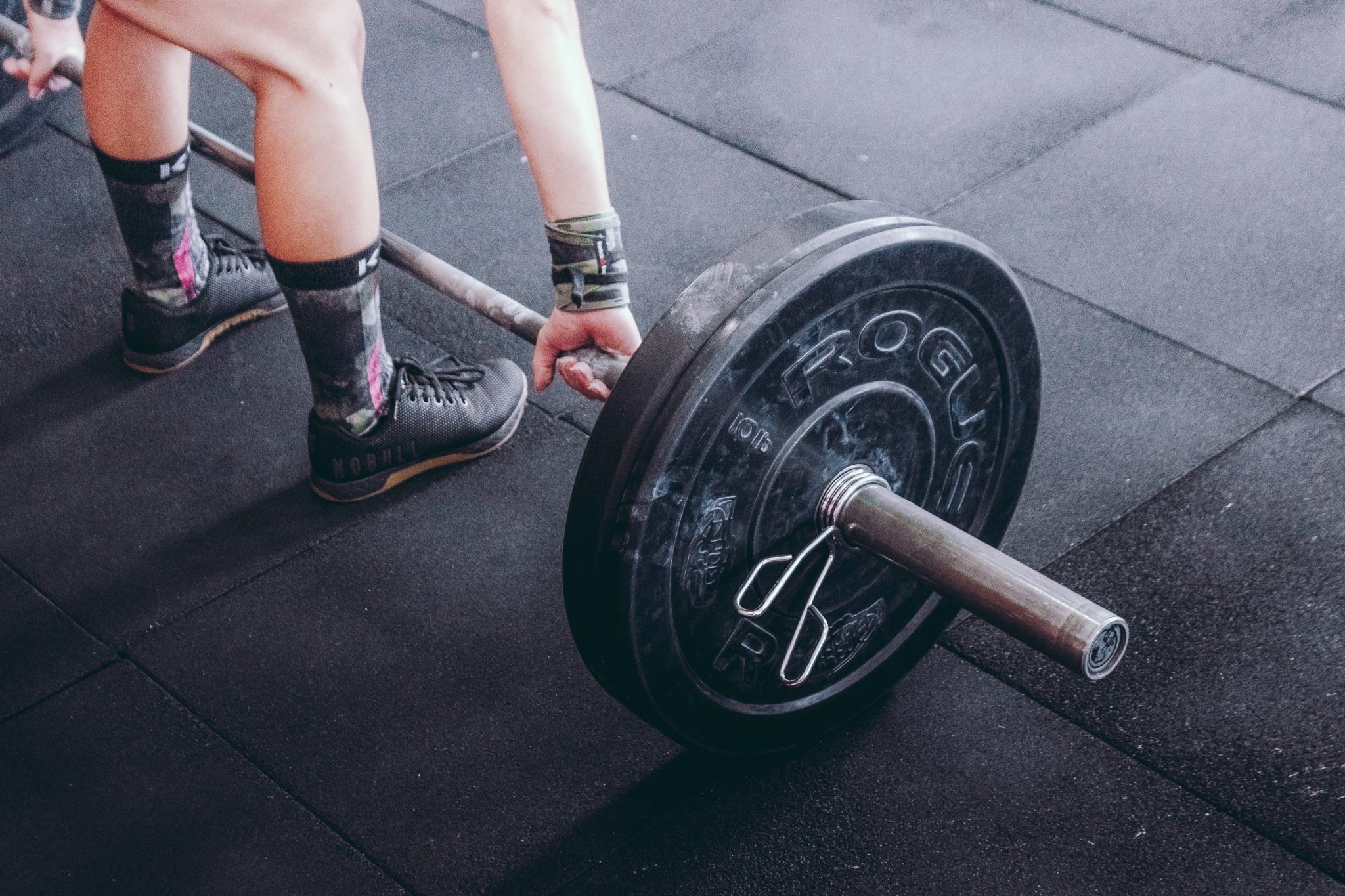
www.abbeyskitchen.com/about-abbey/

Last Updated June 29, 2020. Published December 16, 2019 By Abbey Sharp 2 Comments

What Netflix’s The Game Changers Gets Right About a Vegan Diet

The words plant based on a white background.

We review Netflix’s popular food documentary The Game Changers and discuss what the film gets right about a vegan diet and what the research says.

Now when I heard that another vegan Netflix documentary called The Game Changers had surfaced, I immediately rolled my eyes and thought it would be just like What the Health (if you haven’t already you can check my review of What The Health here). But after hearing a ton of positive reviews and having a lot of people directly ask me to review it, I knew it was time to give it a watch.

Before beginning this review, I want to start off by saying I was pleasantly surprised with the film and overall, I think it was very well done. While I am not personally vegan, I think the research is very clear that we can all benefit from incorporating more plants into our diet. This is part one of my review of this documentary and I will be discussing what Game Changers gets right about a vegan diet. In part two of this review, I discuss what Game Changers gets wrong about a vegan diet.

Now let’s dive in.

What Is Game Changers About?

Remote pointed at tv with the Netflix logo.

For those of you that don’t know, Game Changers is a vegan documentary that was released in late 2019. It follows James Wilks, a UFC fighter and a military combat fighting trainer. A few years ago, James experienced a terrible knee injury that led to him having to take many months off of fighting to recover.

After reviewing hundreds of research studies during his time off, James stumbled upon a study about the “gladiator cemeteryâ€, in which a total of 22 gladiator skeletons were analyzed. Side note, the movie says there were 68 skeletons, 31 of which were non gladiators but I digress. What the researchers found was that these men had tremendous bone mineral density and strength. After analyzing their bones, the researchers found that these men had very high levels of strontium, suggesting they ate a primarily plant-based diet. Note that the authors did say that the gladiators were not vegan and did consume some animal products, but that they ate mainly plants.

This is the study that inspired James to turn to a vegan diet in effort to speed up healing and improve his overall health. So Game Changers follows James’ journey to healing and also checks in on the stories of other athletes who follow a purely plant-based diet.

So, now that you have a rough idea of Game Changers, let’s dive into what Game Changers gets right about a vegan diet.

What the Game Changers Gets Right About A Vegan Diet

Because I give the film an overall positive rating, let’s start off with some of the claims I felt were pretty well represented and backed up by the literature.

Claim #1: Plant-based diets are good for health

The words plant based on a white background.Image credit: Vegan Liftz

We know from ample research (here, here, here, and here just to name a few) that plant-based diets improve heart health, decrease risk of mortality, and lower risk of other diseases. For example, higher adherence to a plant-based diet is linked to a 19% and 11% lower risk of cardiovascular disease mortality and all-cause mortality, respectively. It’s also linked to high intake of nutrients such as vitamins A and C, folate, potassium, iron, and polyunsaturated fats.

A really great 2018 study showed that people following a low-carb diet had an 18% higher risk of death if they replaced their carbs with animal fats and proteins while those that replaced their carbs with plant fats and protein saw an 18% decreased in risk of death.

So, this really drives in the importance of the SOURCE of protein, fat, and carbs we are getting in the diet. And just like the documentary talks about, the research is pretty clear that incorporating more plants into our diet has tremendously positive effects on our overall health.

Claim #2: We can’t produce vitamin C

oranges on a grey background

In the movie, they mention our inability to produce our own vitamin C which demonstrates how reliant upon plants we actually are.

During caveman times, they weren’t as lucky as us to have an abundance of different types of foods at their disposal. They ate whatever was available. Sometimes, that meant eating just plants for a long period of time. Other times, when the hunting was good, it was meat for days before it spoiled.

As the film mentions, humans do have different digestive tracts than other mammals – and I’ll touch on this again later. Compared to strict carnivores, we have a much better ability to digest carbohydrates and plant-based materials. This is due to many reasons, but one example is that humans have higher levels of glucose transporters and as a result, typically consume a much higher carbohydrate to protein ratio compared to meat-eating carnivores.

James Wilks, the main character in the film, also touches on the importance of vitamin C as a marker of our ancestral diet history, since vitamin C comes from plants. He’s right that plants are an excellent source of vitamin C and that we can’t produce our own vitamin C. He’s also right that we are highly dependent on plants for these nutrients– although to be fair, there are very few non-vegans that deny this fact.

Vitamin C is important for so many functions, such as collagen synthesis, non-heme iron absorption, and supporting the immune system.

The film is right. We need to be eating vitamin C-rich foods! Whether or not a non vegan can’t get enough vitamin C is not something I would agree with but I’ll get to the criticism in part two of this blog post.

Claim #3: Many people have a B12 deficiency

Injection syringe on a white background.

For this claim, I have both positive and negative things to say. But, to keep things organized, I’ll say them both right now and we can debunk bigger issues in part two of this blog post where I critique the film.

Let’s start with the positive. James is definitely right that most people can adequately thrive off of a plant-based diet because our body is able to produce necessary vitamins and minerals or we are able to get them through plant-based foods. It’s also true that vitamin B12 is really the only exception, as our body does not produce high amounts of it and there are no plant sources of B12 – except for nutritional yeast.

B12 is crucial to our health for so many reasons. It helps to make DNA, supports our metabolism, keeps our nervous system functioning, increases blood cell development, and so much more.

Most people get vitamin B12 through animal sources, supplements, and/or B12 injections, and we usually we don’t recommend supplements or injections unless there is still a deficiency with eating food sources of B12 OR a person follows a predominantly plant-based diet.

Food sources of B12 include:

  • Fish
  • Eggs
  • Cheese
  • Beef
  • Pork
  • Chicken
  • Milk, and other dairy products

Again, the only plant-based source of B12 is nutritional yeast. You can also get B12 from fortified cereals and grains, so that is also an option for those avoiding animal products as well.

While B12 deficiency is common, it’s probably less than what they list in the film. From the data I’ve looked at, it’s closer to 15%, although it really depends on the population you’re analyzing. Those who are at an increased risk of deficiency include elderly, those with malabsorption issues like Crohn’s disease or celiac disease, people with pernicious anemia, and of course, vegetarians and vegans.

James is also correct to suggest that B12 is produced by bacteria.

But here’s where he’s wrong.

B12 is produced by bacteria and then accumulates in animal tissues. However, that doesn’t mean animals being the “middleman†is necessarily a bad thing. For example, cow’s have a four-chambered stomach that contain B12-synthesizing bacteria. Essentially, these bacteria produce B12 in the cow’s stomach and then this is absorbed and stored in the liver, muscles, or is secreted into their milk.

James says that the best way to get B12 is through supplements, and I would have to disagree. In a recent 2019 review in the Frontiers of Nutrition, researchers concluded that milk was associated with the highest levels of B12, followed by animal meats and cheeses. They also noted that those who consumed a vegan or plant-based diet had much lower levels of B12 compared to omnivores. In fact, most omnivores had sufficient levels of B12.

Again, not everyone who follows an omnivore diet has adequate levels of B12, and in that case, a supplement may be needed. If you do follow a vegan or vegetarian diet, I would suggest getting your levels tested regularly and speaking to your doctor about a good B12 supplement.

Themes I liked in the Game Changers Documentary

Here are some of the themes I liked in this film.

Theme #1: Dispelling a long history of gender stereotypes

Salad served in a white bowl.

One of my favourite parts of this film is the genuine effort to dispel irrational gender stereotypes surrounding food and gender. The film includes quotes like: “Meat makes you toughâ€, “Meat is for menâ€, “Eat like a man and be full like a manâ€.

For decades we have seen commercials that promote meat as the ultimate fuel for men and salads for women. In order to be a man, you need to eat meat. In order to be a woman, you need to eat salads. This gendering of foods is truly damaging to all of our health and wellbeing.  The Game Changers does a fantastic job with convincing its viewers that men can still be “manly†and follow a plant-based diet.

They show tons of clips throughout the movie of strong, muscle-men that claim to eat a vegan diet. From Patrik Baboumian, a World Record-Holding Strongman, to Heavyweight Boxer Bryant Jennings, this documentary did a fabulous job at debunking the theory that in order to be strong, you must have meat.

They even discuss another taboo topic: men’s sexual performance.

In the film, they discuss an experiment done by Dr. Aaron Spitz, the author of The Penis Book. Essentially, the three men were fed animal-based burritos one night and then a plant-based burrito the second night. Both nights the men were connected to monitors that tested the intensity and length of erections that naturally occur over night.

They found that the plant-based burritos led to upwards of a 13.54% increase in penis girth during an erection and up to a 477% increase in erection minutes. Granted, this is not a scientifically validated study (and fortunately the doctor mentions this), but it really convinces these three guys that plant-based foods are not going to somehow take away their manhood.

Finally, they drive home the fact that plant-based soy proteins such as tofu will not increase estrogen levels and explain the science behind this really well. We know from the research that consumption of soy proteins does not alter men’s testosterone levels. This was shown in a robust 2010 meta-analysis as well as a recent 2017 study in 47 college men in which there was no major difference in testosterone or estrogen levels after consuming whey protein, soy protein, or a placebo.

So, kudos to this.

Theme #2: Less fear mongering, more science

Unlike What the Health, this documentary limited its biased fear-mongering and really just laid down the research.

I mean, yes there were still some occasional “out there†claim, such as the connection between tobacco and meat and the experiments were definitely not always high quality or reliable, but I didn’t feel threatened the same way I did after watching other shockumentaries.

One of the biggest problems with documentaries is their reliance on attention-grabbing claims. It’s really boring to listen to a person say “eat in moderationâ€, so a lot of producers cherry-pick data to get people talking.

Am I happy with all the research they used? No, but we will get to that in part two of this blog post.

Theme #3: Transparency in research

Close up of microscope.

Another issue with documentaries is their lack of transparency. They’ll take a study and make their own conclusions and very rarely will they actually share which research study they are talking about.

But Game Changers does a really good job listing each research study they used and even went as far as to show visuals of the research studies which included their names, the journals, and authors. This is really helpful for people like me that want to review the research they’re talking about.

The more transparency, the less there is to hide, and it really helps them argue their points.

Theme #4: Moderate approach to transitioning to a plant-based diet

Again, it’s hard to want to watch a vegan documentary because they always tend to be extreme and pushy. Coming from experience, it’s hard to convince someone to change their lifestyle that they’ve become accustomed to their entire life.

Telling someone to “eat vegan†honestly doesn’t help. For example, one of the athletes in the film said “People have this idea in their head that if they’re gonna do something, it’s an all or nothing approach and that’s not the case at all.â€

And they’re right.

An all-or-nothing approach is very hard for people. If you tell people “You must stop eating meat and dairy products†when they really like meat and dairy products and they’re something they’ve always had, you may lose them almost immediately.

Instead, the documentary emphasizes the importance of a vegan diet but also brings to light the benefits of just making small changes over time.

This type of balanced, reasonable approach is something that I also recommend to people. You don’t have to get rid of all animal products to make a difference. Slowly transitioning to more plants will tend to just crowd out some animal products in your diet. If all or nothing doesn’t work for you, as it doesn’t for me, some is a great place to be.

Bottom Line on what the Game Changers gets right about a vegan diet

Overall, I’d give this film a positive rating.

No, I don’t love everything about it and I think their use of some of the research is faulty but they do bring up a lot of important points and I also think it’s kind of inspiring. It definitely helps dispel the myth that a vegan diet and athleticism are mutually exclusive. I also think even for us non athletes, it serves as a good reminder that we all would benefit from a plant-based diet, even if that means just introducing more plants to our diet in general.

Keep in mind that nutrition science is extremely complicated. It’s not black-and-white. If it was, we’d all be living well into our 100’s. Trying to jam in nutrition science into a hour and a half documentary is nearly impossible, so I commend Game Changers for the effort they made.

While there are quite a few flaws with this film, their overall message of eating more plants is something I can totally get on board with.

Become an Abbey’s Kitchen Subscriber

Have you watched The Game Changers?
What did you think The Game Changers gets right about a vegan diet?
Let me know in the comments!

pinterest image mage of an arm holding a remote pointed at a TV with the netflix logo above of an image of a foot wearing a grey running show next to a barbell with text overlay

Contribution By:

Katey Davidson, RD, Taste of Nutrition

Abbey Sharp

Abbey Sharp is a Registered Dietitian (RD), regulated by the Ontario College of Dietitians. She is a mom, YouTuber, Blogger, award winning cookbook author, media coach specializing in food and nutrition influencers, and a frequent contributor to national publications like Healthline and on national broadcast TV shows.
www.abbeyskitchen.com/about-abbey/

Last Updated December 12, 2019. Published December 12, 2019 By Abbey Sharp 8 Comments

20 Healthy Vegan Christmas Desserts

Cap off your Holiday Dinner with these Healthy Vegan Christmas Desserts. Whatever the food intolerance or allergy around the table, these mouthwatering plant based desserts will be a total crowd-pleaser!

Cap off your Holiday Dinner with these Healthy Vegan Christmas Desserts. Whatever the food intolerance or allergy around the table, these mouthwatering plant based desserts will be a total crowd-pleaser!

It’s that time of year again! Desserts are my fave part of the holidays, which is why I’ve put together a delicious roundup of the best healthy vegan Christmas desserts. Whether your guests are vegan or not, there is something for everyone in this tasty line up, and these desserts are the perfect way to cap off a lovely evening.

vegan Christmas desserts

2-Ingredient Dark Chocolate Truffles – Minimalist Baker

Holiday vegan chocolate truffles.

Mini Chocolate and Raspberry Vegan Cheesecakes – Quite Good Food

Chocolate vegan dessert on a blue plate.

No-Bake Peppermint Bars – Oh She Glows

Holiday chocolate bar sitting on a glass of milk.

Cookie Dough Brownies – Vegan Richa

Dessert squares piled on top of each other.

Vegan Nanaimo Bars – Dreena Burton

Vegan nanaimo bars

Rich Chocolate Fudge Cake – One Green Planet

A close up of a piece of chocolate cake with chocolate frosting.

Peppermint Mocha Date Balls – Feasting on Fruit

Bowl of christmas chocolate balls.

Paleo and Dairy-Free Hot Chocolate – Joy Food Sunshine

Hot chocolate in a mug.

Vegan Chocolate Mint Cookies – Broke Foodies

Chocolate cookies piled on top of each other.

PB&J Graham Cracker Thumbprints – Minimalist Baker

Thumbprint cookies on a baking tray.

Pomegranate, Roasted Peanut, Dark Chocolate Bark – Vegetarian Gastronomy

Christmas chocolate bark.

Purple Sweet Potato Pie – Pretty Pies

A purple sweet potato lie in a baking dish with one slice cut out onto a plate.

Gingerbread Quinoa Coffee Cake – Strength & Sunshine

Two squares on a plate.

3-Ingredient Apple Strudel – Elephantastic Vegan

Slice of pie on a plate.

Spiced Vegan Christmas Cookies w/ Vanilla Almond Cream – Well and Full

Christmas cookie next to decorations.

Almond Crescent Cookies – Unconventional Baker

Christmas cookies on a platter.

Vegan Gluten-free Gingerbread Men – Minimalist Baker

Christmas gingerbread cookies.

Apple Chai Cinnamon Rolls – Love Me, Feed Me

Cinnamon buns with icing in a baking tray.

Vegan Eggnog Pound Cake – Vegan Richa

Vegan holiday loaf.

Vegan Candy Cane Skillet Cookie – Abbey’s Kitchen

Holiday cookie in a skillet topped with ice cream.

Now let’s get to the kitchen and make something all your guests will remember at your Christmas party this year! Happy Holidays!

Collection of the best healthy christmas desserts.

Compiled By:

Ina Benkova


Abbey Sharp

Abbey Sharp is a Registered Dietitian (RD), regulated by the Ontario College of Dietitians. She is a mom, YouTuber, Blogger, award winning cookbook author, media coach specializing in food and nutrition influencers, and a frequent contributor to national publications like Healthline and on national broadcast TV shows.
www.abbeyskitchen.com/about-abbey/
  • Previous Page
  • Go to page 1
  • Interim pages omitted …
  • Go to page 46
  • Go to page 47
  • Go to page 48
  • Go to page 49
  • Go to page 50
  • Interim pages omitted …
  • Go to page 89
  • Next Page

Get started with

Eight Free Recipe Books

From the co-founder of Neue Theory and creator of the Hunger Crushing Combo

Sign me up!
Abbey smiling at table
Abbey Sharp

“Foods may never be nutritionally equal. But we can make them morally equal by recognizing that our worth is never determined by what's on our plate.”

— Abbey Sharp, RD About Abbey ◥

Books

  • HCC™
  • Mindful Glow
  • Free E-Books

Blog

  • Nutrition
  • Recipes
  • Motherhood
  • Life

Explore

  • Neue Theory™
  • Bite Back
  • YouTube

Abbey

  • About
  • Coaching
YouTube TikTok Instagram Facebook X Pinterest
Abbey Sharp - The No BS Dietitian From Abbeys Kitchen

© Abbey's Kitchen 2026  All Rights Reserved •  ACCESSIBILITY STATEMENT •  Privacy Policy

This site uses cookies. By continuing to browse the site, you are agreeing to the use of cookies Accept Privacy Policy
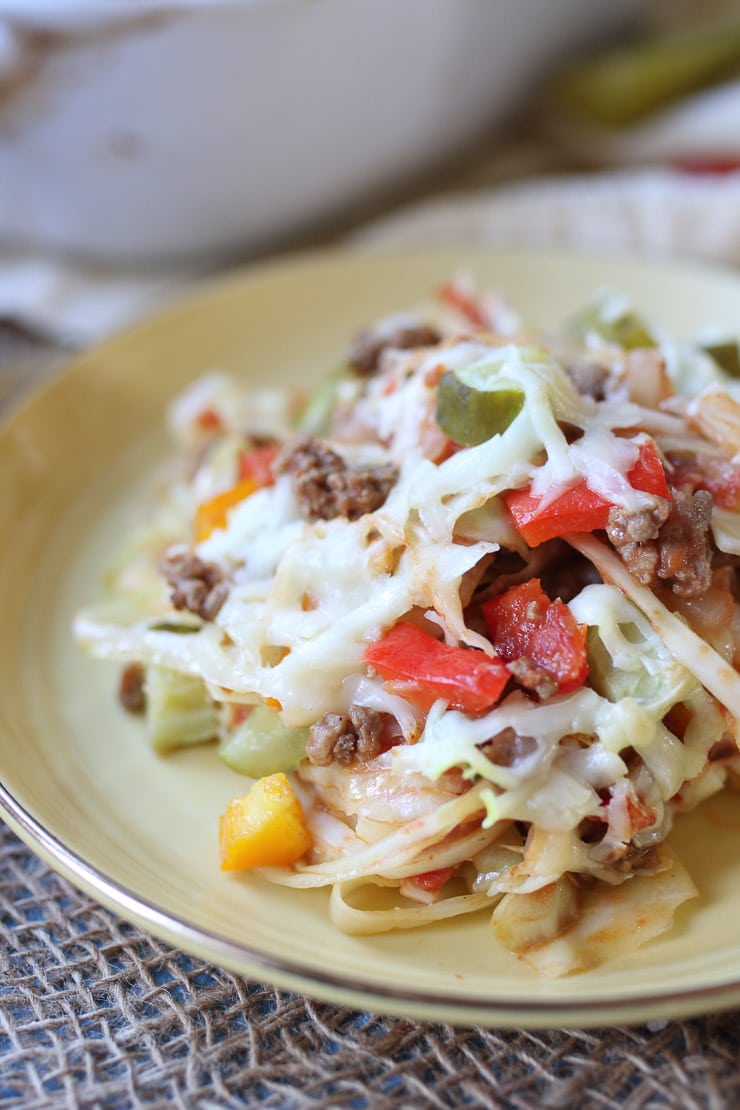
Privacy & Cookies Policy

Privacy Overview

This website uses cookies to improve your experience while you navigate through the website. Out of these, the cookies that are categorized as necessary are stored on your browser as they are essential for the working of basic functionalities of the website. We also use third-party cookies that help us analyze and understand how you use this website. These cookies will be stored in your browser only with your consent. You also have the option to opt-out of these cookies. But opting out of some of these cookies may affect your browsing experience.
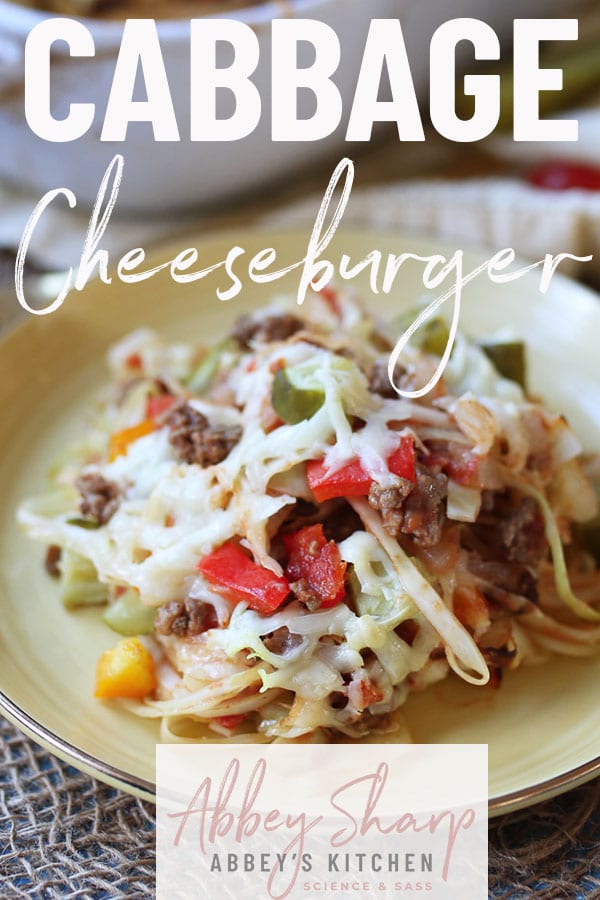
Necessary
Always Enabled
Necessary cookies are absolutely essential for the website to function properly. This category only includes cookies that ensures basic functionalities and security features of the website. These cookies do not store any personal information.
Non-necessary
Any cookies that may not be particularly necessary for the website to function and is used specifically to collect user personal data via analytics, ads, other embedded contents are termed as non-necessary cookies. It is mandatory to procure user consent prior to running these cookies on your website.
SAVE & ACCEPT

Rate This Recipe

Your vote:


A rating is required
A name is required
An email is required