• Skip to main content

Abbey's Kitchen

Healthy Recipes, Nutrition Myth Busting, Healthy Eating Tips

  • Books
    • HCC™
    • The Mindful Glow Cookbook
    • Recipe eBooks
      • Family
      • Hypothyroidism
      • BLW
      • Vegan Week 1
      • Vegan Week 2
      • Vegan Week 3
      • Keto
      • Gluten Free Week 1
      • Gluten Free Week 2
      • Fitness
      • Paleo
  • Blog
    • Nutrition
    • Recipes
    • Motherhood
    • Life
  • Explore
    • Neue Theory™
    • Bite Back With Abbey Sharp
      • Apple Music
      • Spotify
      • Amazon Music
    • YouTube
  • Abbey
    • About
    • Coaching
    • Contact

Abbey Sharp

Last Updated July 21, 2020. Published November 4, 2019 By Abbey Sharp 2 Comments

Halloumi Chickpea Vegetarian Sheet Pan Dinner | 20 Minute Meal!

This Halloumi Chickpea Vegetarian sheet pan dinner is the fastest, easiest 20 minute meal that requires you to only clean ONE pan.

You guys all know I am no stranger to delicious easy sheet pan dinners because let’s be real- sometimes there just is no time to make a full meal with multiple courses and steps. If I can get a balanced meal on the table in under 20 minutes, I am a happy girl. I have a ton of one pot or one pan meals on my blog for good reason- I MAKE THEM ALL THE TIME. This  Halloumi Chickpea Vegetarian sheet pan dinner is one of my all time favourites because, well, I am obsessed with Halloumi. It’s also made up of healthy vegetarian ingredients I almost always have on hand.

What ingredients do I need to make this fast weeknight dinner?
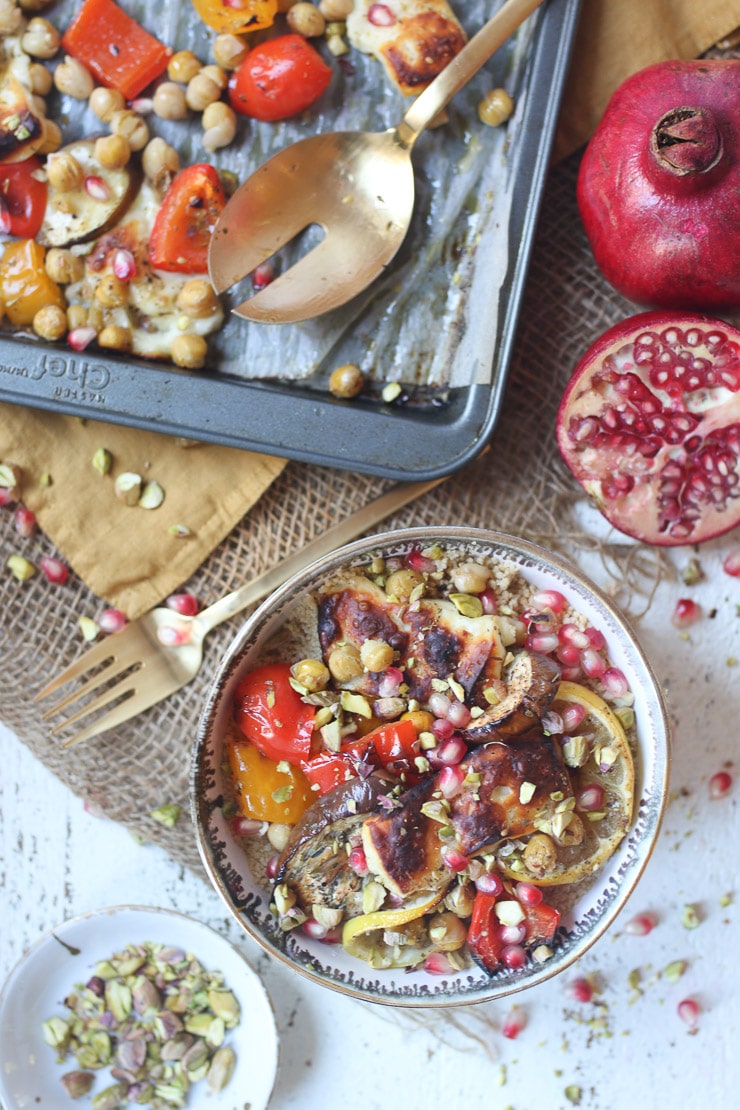
birds eye view of a variety of vegetables cooked on a sheet pan next to a bowl of vegetables garnished with fresh fruit.

Here’s what you need for this sheet pan meal:

  • Halloumi
  • Chickpeas (canned)
  • Eggplant
  • Bell Peppers
  • Za’atar
  • Olive Oil

The rest is just for serving so even if you don’t have pomegranates, pistachios or couscous, you can make this vegetarian meal.

How to Make Halloumi Chickpea Vegetarian Sheet Pan Dinner
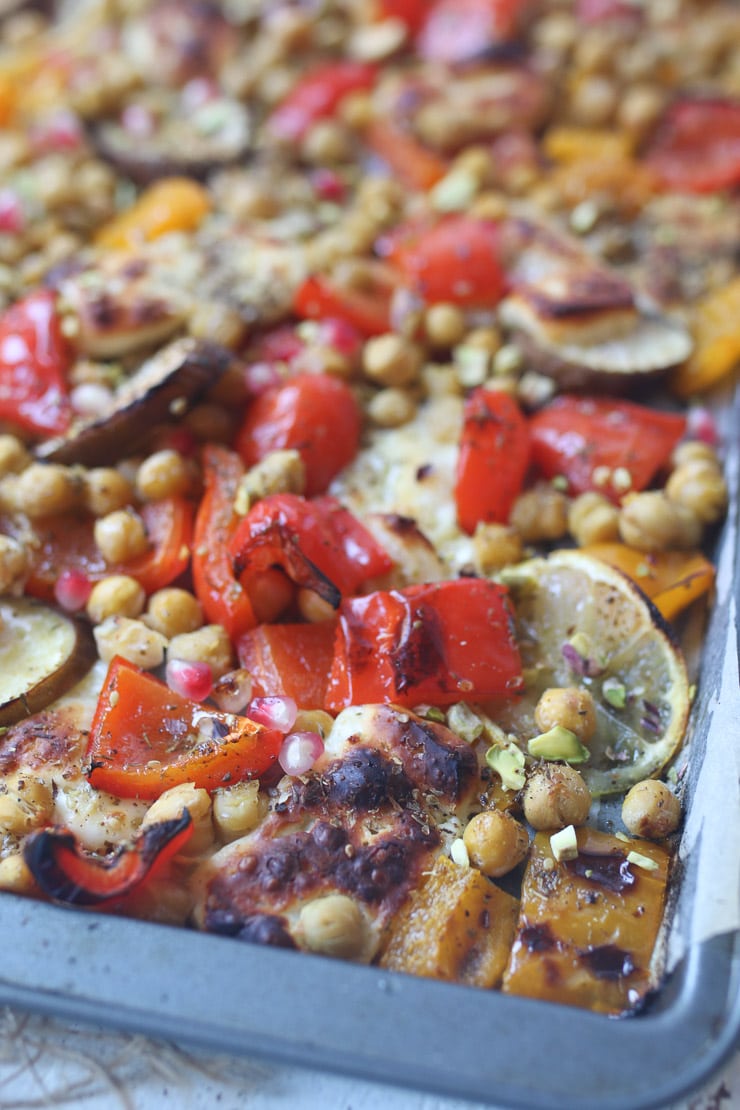
Close up of chickpeas and a variety of vegetables on a sheet pan.

Here’s the easiest set of instructions for dinner EVER. I just put all of the veggies, halloumi and chickpeas on a baking sheet. I then with olive oil, and za’atar and bake at 425 F until crispy and browned. If you want some extra browning, I like to pop the sheet pan under the broiler. I do recommend using a high quality sheet pan so that it doesn’t get warped – check out my affiliate link here.

What is Halloumi?

Halloumi is a semi firm brined cheese. I like to think of it as the love child of feta and cheese curds (like from poutine). Halloumi has a super high melting point so it’s great for grilling, frying or roasting at a high heat like in this vegetarian chickpea sheet pan dinner.

Is this Vegetarian Sheet Pan Dinner Gluten Free?

Of course! Assuming you don’t serve it with couscous and choose a gluten free grain like quinoa, this meal is a totally gluten free sheet pan meal.

Can i make this one pan recipe if I’m dairy free or vegan?

You can! I suggest you just swap out the halloumi for tofu and ta da, you’ve got a vegan sheet pan meal.

Is this 20 minute recipe toddler, baby and kid friendly?
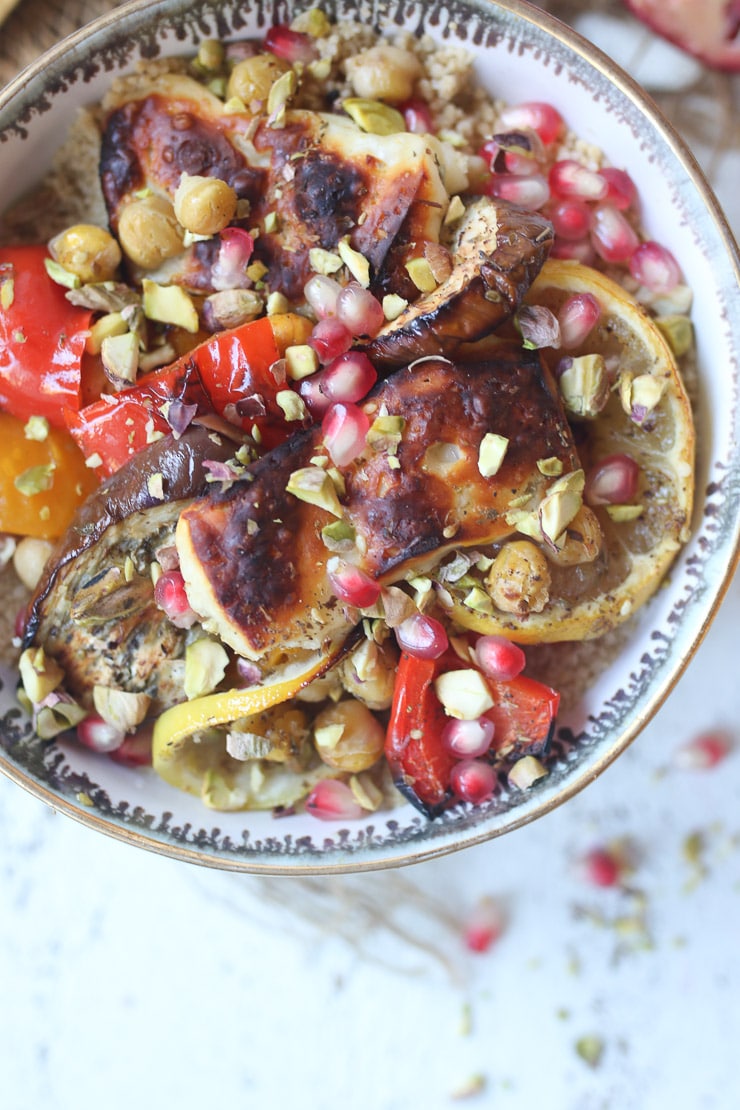
birds eye view of Halloumi and vegetables in a bowl garnished with pomegranate seeds

Yes! My 18 month old is also in love with halloumi cheese! I would probably not give him the crispy chickpeas at his age because they can be a choking hazard, but if you squish them a bit, you’re good to serve this to the whole family. It isn’t spicy so it’s super yum.

Can this vegetarian One Pan Meal be Made Ahead in Meal Prep?

Yes! This is why I love sheet pan dinners- they are perfect for meal prep! You can make this on a Sunday and divvy it up into containers that you can enjoy throughout the week.

How Long will this Vegetarian Sheet Pan Meal last in the fridge?

I would probably keep this for about 3-4 days maximum in the fridge, but trust me, it probably won’t last that long – it’s so good.

Do You have other recipes for easy Sheet pan dinners?
pinterest image of halloumi and chickpea sheet pan meal in a bowl garnished with pomegranate seeds with text overlay

A variety of vegetables cooked on a sheet pan.
Print Recipe
5 from 2 votes

Halloumi Chickpea Vegetarian Sheet Pan Dinner

This Halloumi Chickpea Vegetarian sheet pan dinner is the fastest, easiest 20 minute meal that requires you to only clean ONE pan.
Prep Time5 minutes mins
Cook Time15 minutes mins
Total Time20 minutes mins
Course: Main Dish, Dinner
Cuisine: Middle Eastern
Servings: 4 people
Calories: 351.86kcal
Author: Abbey Sharp

Ingredients

  • 1 Japanese eggplant sliced
  • 1 red bell pepper diced
  • 1 orange bell pepper diced
  • ½ lemon thinly sliced
  • 1 19 oz can chickpeas drained, rinsed and dried well
  • 160 g pack of halloumi cheese sliced
  • 2 tbsp extra virgin olive oil
  • 1 tbsp za’atar
  • Salt and pepper to taste
  • To Garnish:
  • Cooked couscous
  • Pomegranate Arils
  • Pistachios crushed

Instructions

  • Preheat oven to 425 F.
  • Arrange the veggies, chickpeas and halloumi cheese on a baking sheet. Toss with olive oil, za’atar and a pinch each of salt and pepper.
  • Roast for 15-18 minutes or until the vegetables are tender. If desired, pop it under the broiler for 2 minutes for extra browning and crispness. Serve with couscous if desired and garnish with pomegranate arils and pistachios.

Nutrition
Calories: 351.86kcal | Carbohydrates: 28.25g | Protein: 17.15g | Fat: 20g | Saturated Fat: 8.13g | Sodium: 878.53mg | Potassium: 477.68mg | Fiber: 9.93g | Sugar: 5.05g | Vitamin A: 1935.2IU | Vitamin C: 84.88mg | Calcium: 477.11mg | Iron: 3.44mg


Abbey Sharp

Abbey Sharp is a Registered Dietitian (RD), regulated by the Ontario College of Dietitians. She is a mom, YouTuber, Blogger, award winning cookbook author, media coach specializing in food and nutrition influencers, and a frequent contributor to national publications like Healthline and on national broadcast TV shows.

www.abbeyskitchen.com/about-abbey/

Last Updated July 23, 2020. Published October 30, 2019 By Abbey Sharp Leave a Comment

Healthy Baby and Toddler Meal Ideas for Travelling

After a trip to Italy, I share my top tips for healthy baby and toddler meal ideas, along with the supplies and food to pack, buy and prepare when you’re travelling.

For those who have followed my Instagram stories, you might know that I JUST got home from beautiful Italy. My husband, son, nanny and I stayed a few days at a working vineyard in the Chianti region before heading to Florence for the rest of our trip. While there is no shortage of delicious food (and wine) for us adults, I wanted to share some tips for some toddler meal ideas for travelling and vacation eating, and the best food to pack, buy and prepare when travelling with kids.

Healthy Baby & Toddler Supplies to Pack, Buy and Prepare when Travelling with Kids

We all know that the amount of stuff you need to bring for a baby or toddler when travelling is not reflective of their small size. Honestly, these kiddos need SO MUCH STUFF. But in an effort to pack light, here’s what I suggest.

Supplies to Pack for a vacation with toddlers or kids

Baby Plate and/or Bowl:

I like having my kiddos plate with us everywhere we go so that we have a clean surface to put food even if we’re at a restaurant, train or airplane. It’s also familiar and my kid loves it.

Bib: I mean, that’s key, and you can find some of my favourite ones here.

Fork and/or spoon: By the end of our trip, my 17 month old son was using our adult forks and spoons, but if you’re just starting with feeding, it’s a good idea to pack one with you.

Milk straw cups: My son has a specific cup (see here) that he loves for his milk, so we definitely made sure to bring it along.

Water cup(s): Ditto for his water cup. It’s different and he likes consistency.

Baby cup / straw brush: Because those skinny straws are SO HARD to clean sometimes!!

Supplies to Rent while travelling with kids

I suggest renting a high chair so you don’t have to schlep one around. I found a great company that dropped the high chair off at my Air BnB and picked it up at the end of our trip! So easy! Simply google “Baby rentals x [INSERT CITY]” to find some options near you before you go!

Healthy Baby & Toddler meal ideas and FOOD Pack, Buy and Prepare for your family vacation

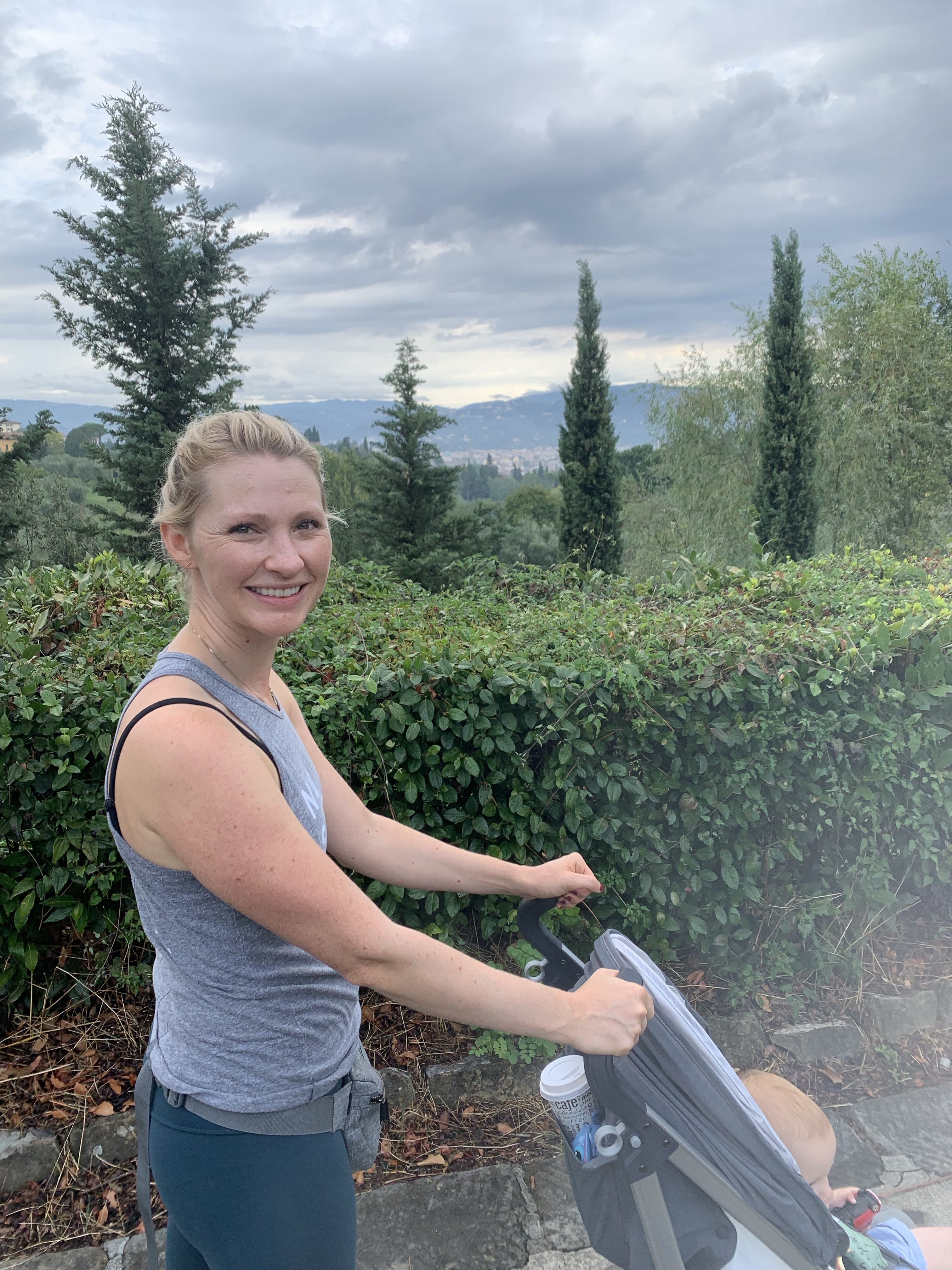
Women pushing her toddler in a stroller.

So you’re on holiday- I really don’t want you to have to stress over what kind of healthy baby and toddler food you need to prepare and pack every single day. So let’s make this simple with some healthy toddler meal ideas for travelling, shall we?

I tried to serve most of my son’s meals in our Air BnB – both for mess purposes and because I knew there would be more nutritious options for him. So breakfast was at home, and dinner was at home, and lunches would be about half and half. We liked to take him out with us for brunch so he sometimes would eat a combination of restaurant food, and snacks I packed on those days. No big deal.

For snacks, I really would try to make them low mess as possible because when you’re site seeing and travelling, it might mean having snacks in a stroller or on a train or plane. Either way, you don’t really have the luxury of stripping the babe down to hose him off so easily. So for that reason, I try to at least ensure the snacks I’m packing, preparing or buying are lower mess.

Here are some easy peasy healthy baby and toddler meal ideas for travelling.

Food to Pack for your family vacation

Most of the foods I packed for Baby E got consumed on the flight (they wouldn’t have stayed fresh long after anyway). Having said that, here’s what I made sure to pop in our diaper bag to bring with us for baby E to eat on the flight that was low mess and relatively shelf stable.

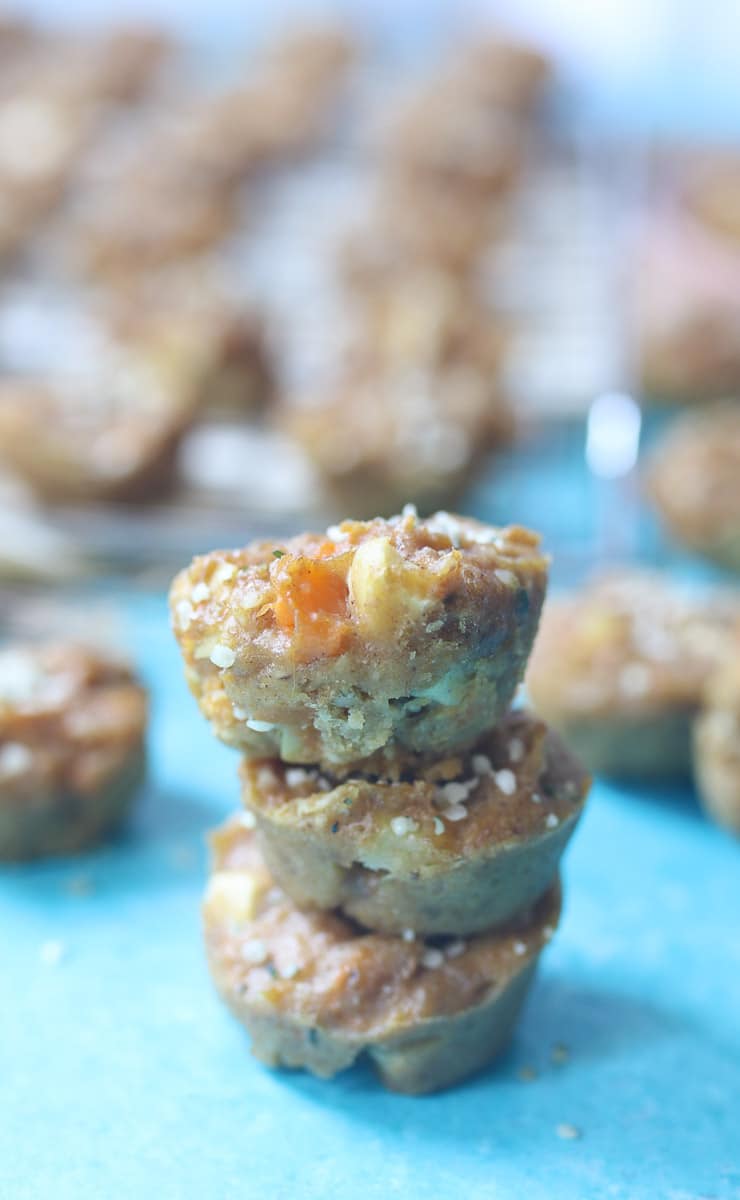
Mini muffins piled on top of each other.

These BLW Iron Rich Sweet Potato Apple Baby Muffins – because they are nutrient dense, have no sugar, are packed with iron and healthy fats and my kiddo LOVES them.

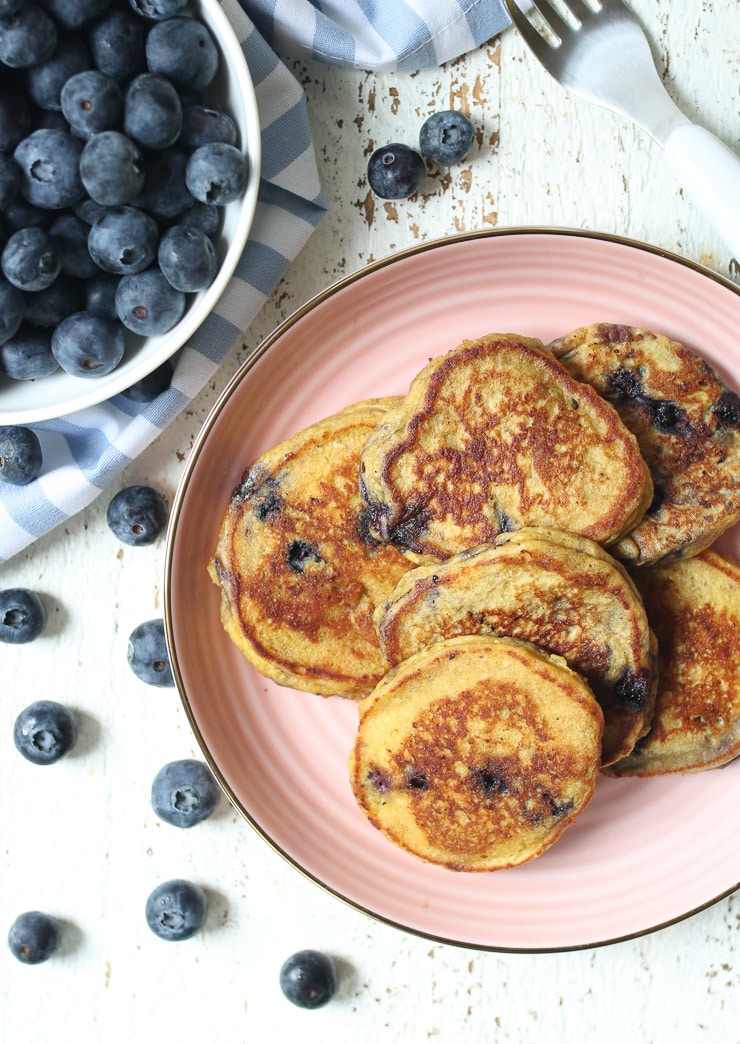
Baby cereal pancakes on a pink plate next to a bowl of blueberries.

These BLW Baby Cereal Protein Pancakes – I actually made them for the trip into waffle form. Again, I love these because they’re rich in protein, iron, and have no added sugar.

Bananas – Easy to eat, and low mess. Love it.

Formula – If you’re babe is on formula, you will obviously want to bring some- maybe even enough to get through your trip because I found that it was impossible to get the same brands in Italy of ANYTHING. If your kid is particular about brand (I assume most are), this may be a consideration for you.

Food to Buy on holiday

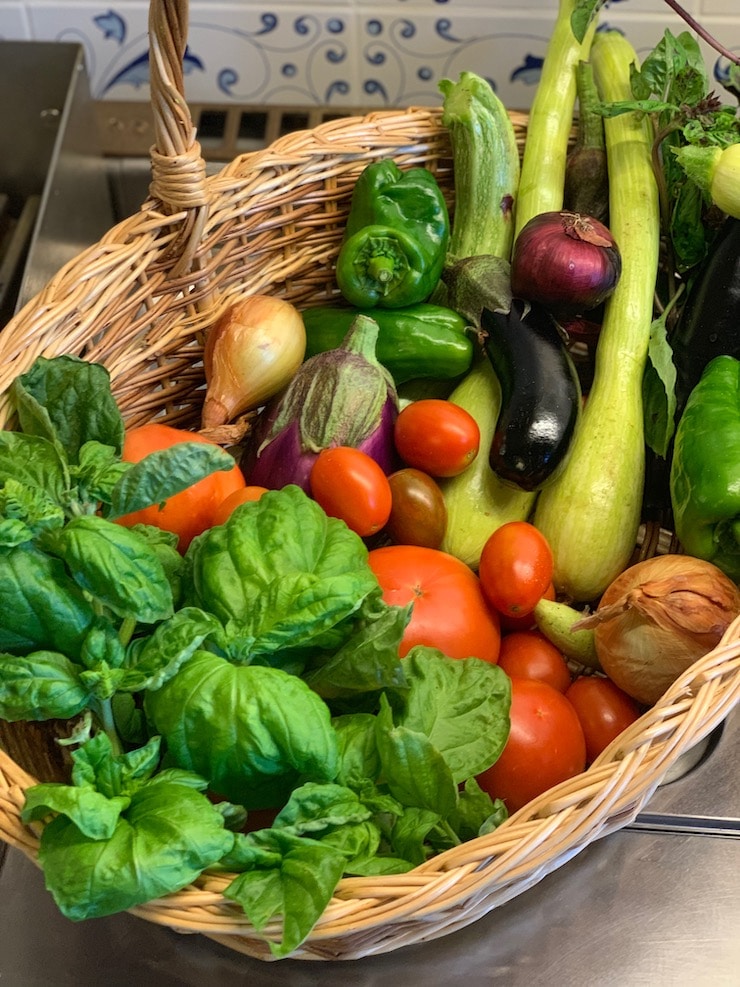
Basket full of vegetables and herbs.

So here’s my tip for travelling with kids and trying to just get through the day. Don’t stress so much about food. I mean, you’re on holiday. You yourself are going to drink more wine, eat more carbs, stay out later, and consume a lot more coffee than what you typically would do at home. The same will happen with your kid (well, hopefully not with the coffee and wine). Embrace it. Having said that, I still wanted to make SOME effort to make sure my kid was getting protein and veggies, and not just eating bread. So here’s a little list of foods I picked up at the local grocery store or any café’s that would be appropriate for BLW babies, and toddlers.

dairy

Milk – This was basically the most important thing for us HA. If your baby is off formula and/or breastmilk, it’s a good idea to make sure you can get yourself some whole milk as soon as you get in. On travel days my MOM HACK was to simply go to any café and ask for just plain steamed whole milk (this is their idea of a latte actually lol). It would be warm and ready to drink!

Cheese – Any cheese is great for snacks and if you want a low sodium option, go with a nice buffalo mozzarella.

Ricotta or Yogurt – Europe is all about full fat dairy so it shouldn’t be too hard to find a nice high fat, low sugar option for breakfasts. This became a staple for us.

fat

Butter or Olive oil – Because some foods need a little added fat (like steamed veggies).

fruits and vegetables

Fresh fruit – We always had bananas for travel days, strawberries and raspberries for breakfast, watermelon, figs (because they grew in our Air BnB’s garden) and clementines.

Fresh veggies – While most vegetables need to be cooked for babies and toddlers (see below), mine loves fresh tomatoes (cut into wedges or halved or quartered if cherry) and avocado.

protein

Rotisserie Chicken – A staple and so easy to just pull apart into pieces for baby to handle. If you’re worried about salt with a new eater, you can give it a little rinse first!

Nut Butter – Perfect for swirling into oats, yogurt or on toast.

Sugo (meat) Sauce – I was in Italy, and every grocery store had homemade meat sauce in the prepared food section. My kid LOVED this stuff.

Cooked Meatballs – So easy and again, pretty readily available in most grocery stores we went into.

Canned Tuna or Salmon – This is such an easy economical staple packed with omega 3 fats so we always have it in the house. I suggest buying LIGHT tuna rather than albacore for babies as it’s the lowest mercury choice.

Hummus or other bean-based dips – Hey, kids love to dip and as soon as I found a little juice bar making hummus bowls, my kid was SO EXCITED. Pretty sure he ate straight up hummus with his hands for lunch one day, and that was it.

Eggs- An essential for breakfasts.

carbohydrates

Whole grain bread – All kids like bread, and since they’re probably going to eat a lot of carbs on their trip, I say choose a really nice high fibre bread. I couldn’t recognize any of the brands there, but I just looked at all of the nutritional labels and chose one with the most fibre.

Roasted potatoes or sweet potatoes- Most of the grocery stores I was in had some sort of potato casserole or dish.

Plain Croissants- Hey, I had to let my kid experience a proper Italian breakfast (sans coffee). I tried to look for a plain croissant (or one place near our Air BnB had a nice multigrain option) that wasn’t stuffed with Nutella or pistachio cream (those were saved for mama).

Whole grain pasta – Compare labels and find a pasta that is fortified with iron and high in fibre.

Oats or oatmeal – A lot of restaurants and cafes will have oatmeal to purchase, but I also made sure to have plain oats in the house that just required some hot water and whatever fruit or nut butter add-ins the babe would like.

Food to Prepare or Cook while travelling

Whole Grain Short Cut Pasta – I would batch cook a whole box of short cut pasta so I not only could serve this for dinners with the sugo I bought (see above) but also it was so easy to put plain cooked pasta in a baggy for stroller snacks on the go.

Steamed Vegetables – My son is used to eating a lot of vegetables so we want to make sure we keep those bowels moving while on holiday! We did a lot of steamed baby carrots, cauliflower and broccoli.

Tuna or Salmon Salad Sandwiches – You got that bread already, so if you pick up a can of salmon or tuna and mix it with a little yogurt or mayo, you can make a super quick and delicious sandwich to pack for an on-the-go lunch. Want to get creative? Check out our baby finger sandwiches here.

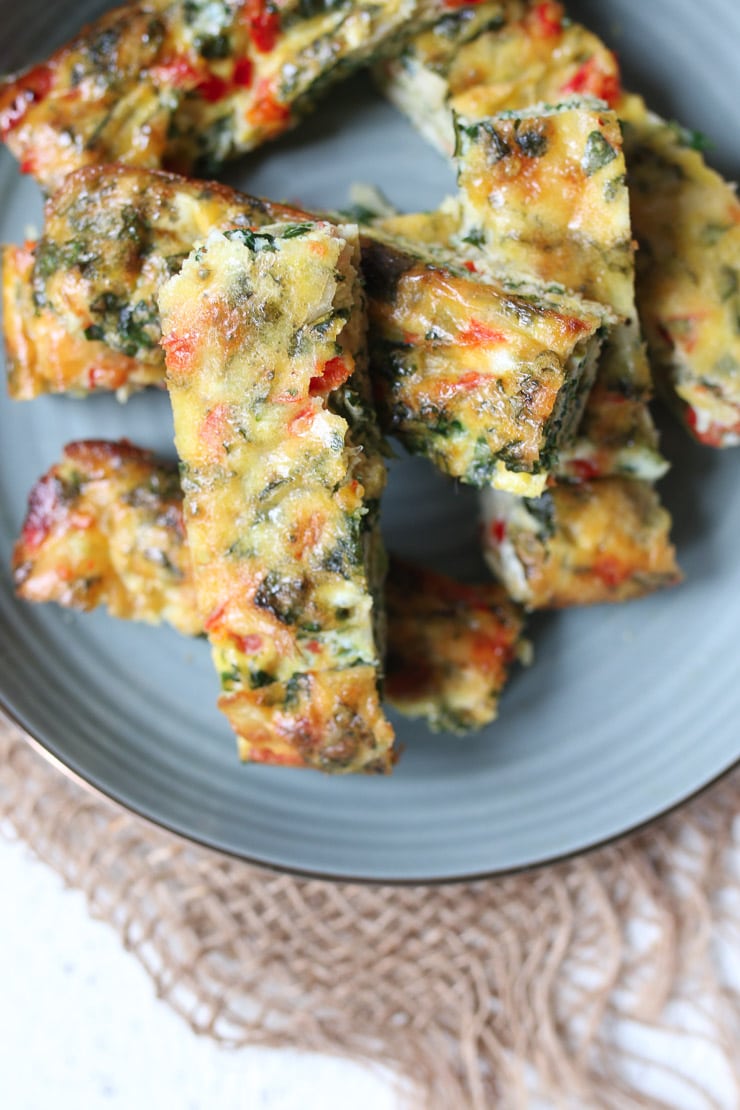
Frittata fingers on a teal plate.

Frittata Fingers- We love these for baby because they’re great for home breakfasts and meals on the go. They’re so easy and so delicious and a total breakfast staple for us while travelling. Of course, you can also make your eggs scrambled, over easy or any way you like!

Healthy Baby and Toddler Meal Ideas for Travelling and Vacation Eating


Let’s keep it simple, shall we?

Healthy Baby and Toddler Breakfast Ideas for Travelling

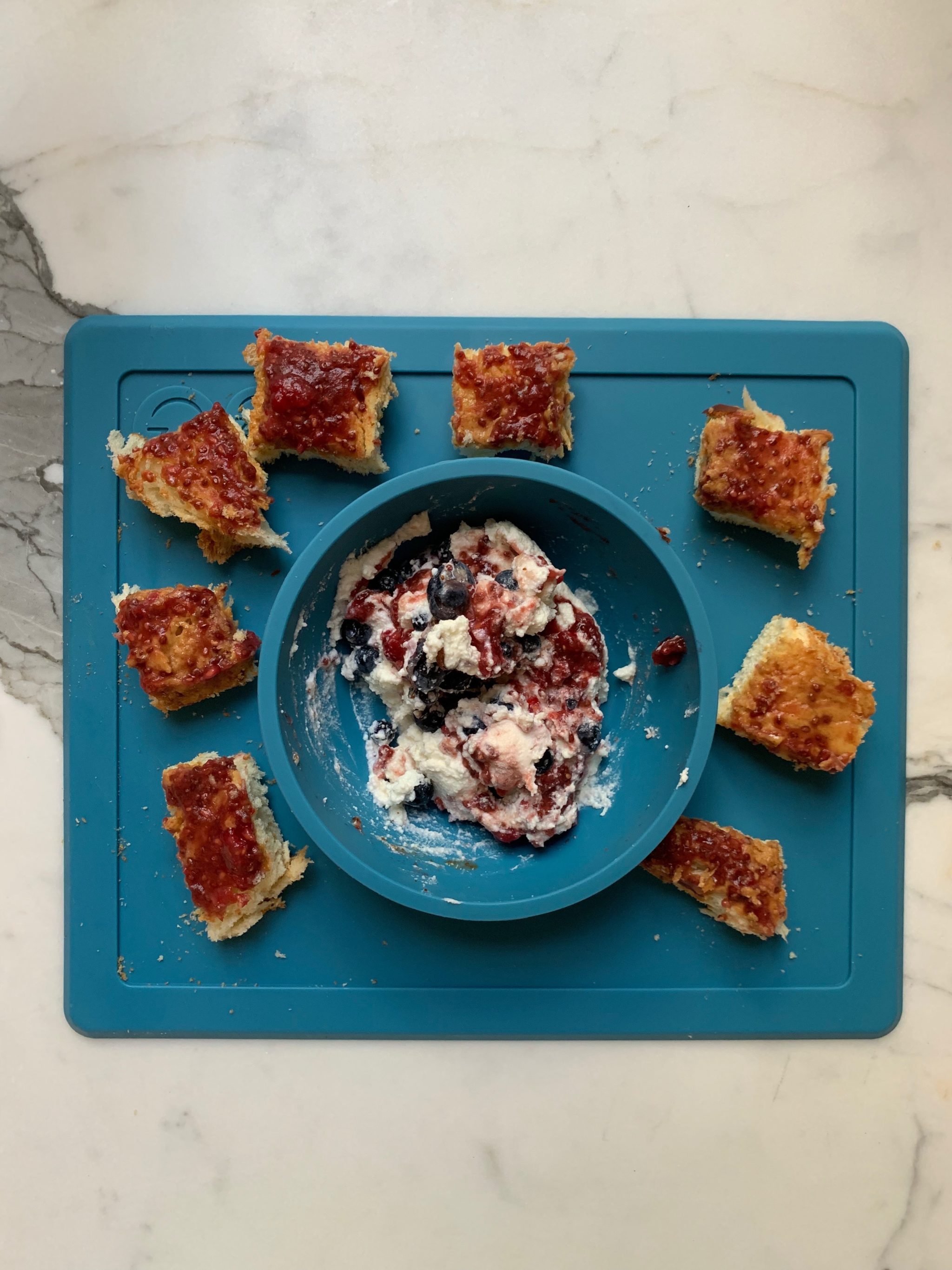
Yogurt and berries.

Yogurt or Ricotta with Smashed Berries

Oatmeal with berries and nut butter

Whole grain toast with nut butter

Buttered toast with eggs

Frittata fingers and berries

Croissant with sliced cheese and banana (for an on the go breakfast)

Healthy Baby and Toddler LUNCH AND DINNER Ideas for Travelling

Toddler plate filled with pasta and vegetables.

Cooked meatballs with pasta and steamed vegetables

Salmon or Tuna finger sandwiches

Hummus and tomato sandwiches

Rotisserie Chicken with roasted potatoes and veggies

Sugo with pasta and chopped up veggies

Meatball sliders (cooked meatballs between pieces of bread)

Sugo sloppy joes (sugo between pieces of bread)

Healthy Baby and Toddler SNACK Ideas for vacationing on the go

Toddler lunchbox filled with fruits and veggies.

Sliced cheese

Steamed baby carrots with hummus

Plain whole grain pasta

Plain croissants

Whole grain bread with peanut butter

Bananas

Clementines

Plums or peaches

Real talk. Your kid is probably not going to be eating as much veggies and protein as you want while you’re away. Some days will be so crazy and hectic, making sure your kids meals are nutritionally balanced will be the LAST of your concerns.

MOM CONFESSION. On our very long day of travel home, my kid ate a sugar coated croissant for breakfast, refused lunch, drank his milk, ate a bit of plain pasta and wouldn’t touch his veggies or meat. The closest thing to fruit and veggies my kid got was a store-bought smoothie that was loaded with sugar. IT’S GOING TO BE OKAY. We got home, and he was REALLY excited to eat his salmon and veg.

So now moms and dads, tell me – what foods did you pack, prepare and buy while you were on vacation with your toddler or baby to help you survive?
Leave me a comment below with your suggestions!

Pinterest image of toddler meals on a plate and lunchbox with text overlay

Abbey Sharp

Abbey Sharp is a Registered Dietitian (RD), regulated by the Ontario College of Dietitians. She is a mom, YouTuber, Blogger, award winning cookbook author, media coach specializing in food and nutrition influencers, and a frequent contributor to national publications like Healthline and on national broadcast TV shows.
www.abbeyskitchen.com/about-abbey/

Last Updated June 29, 2020. Published October 16, 2019 By Abbey Sharp 16 Comments

Persimmon Ginger Chicken One Pot Dinner| Easy Gluten Free Meal Recipe

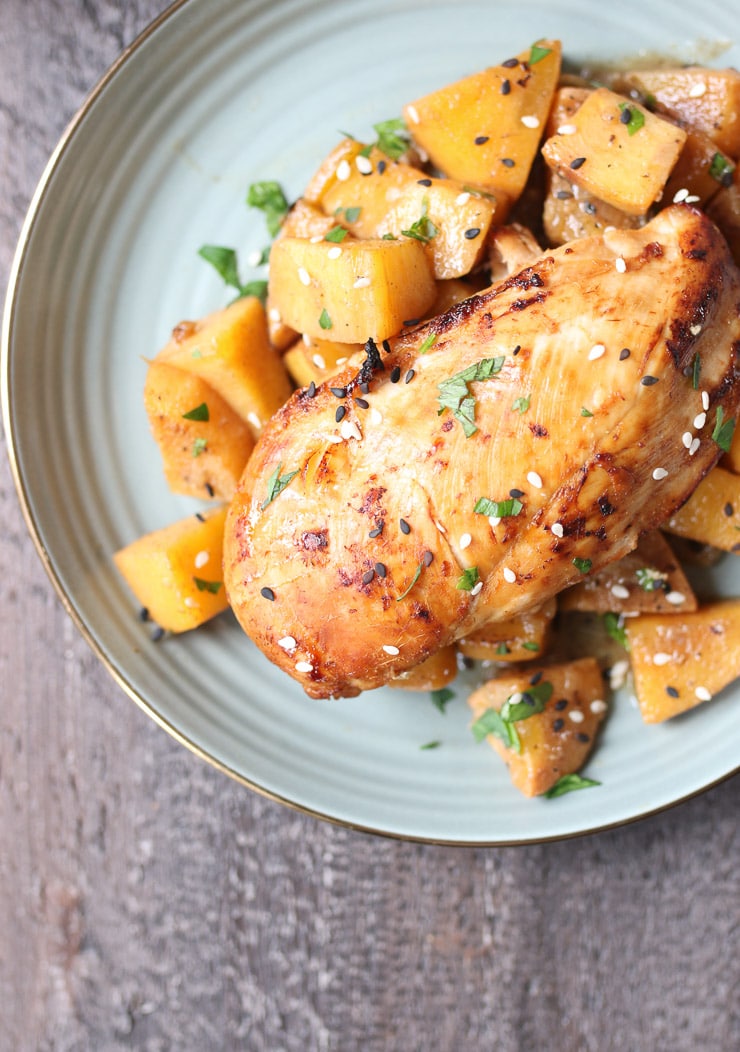
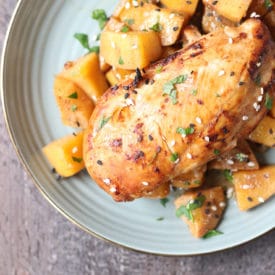
Chicken breast on plate.

This Persimmon Ginger Chicken One Pot Dinner makes the best easy gluten free meal that is ready in a half hour!

The day I brought home a bag of persimmons was the day I learned the true meaning of patience. I mean, you think avocado takes a while to ripen perfectly to make guacamole? Persimmons are even more finicky. Wait too long and you’re dealing with bruises and brown bits, but jump the gun and you’ve got an astringent mouth-puckering snack. The perfect persimmon is totally worth waiting for, and they really shine in this Persimmon Ginger Chicken One Pot Dinner.

A Note on Persimmons

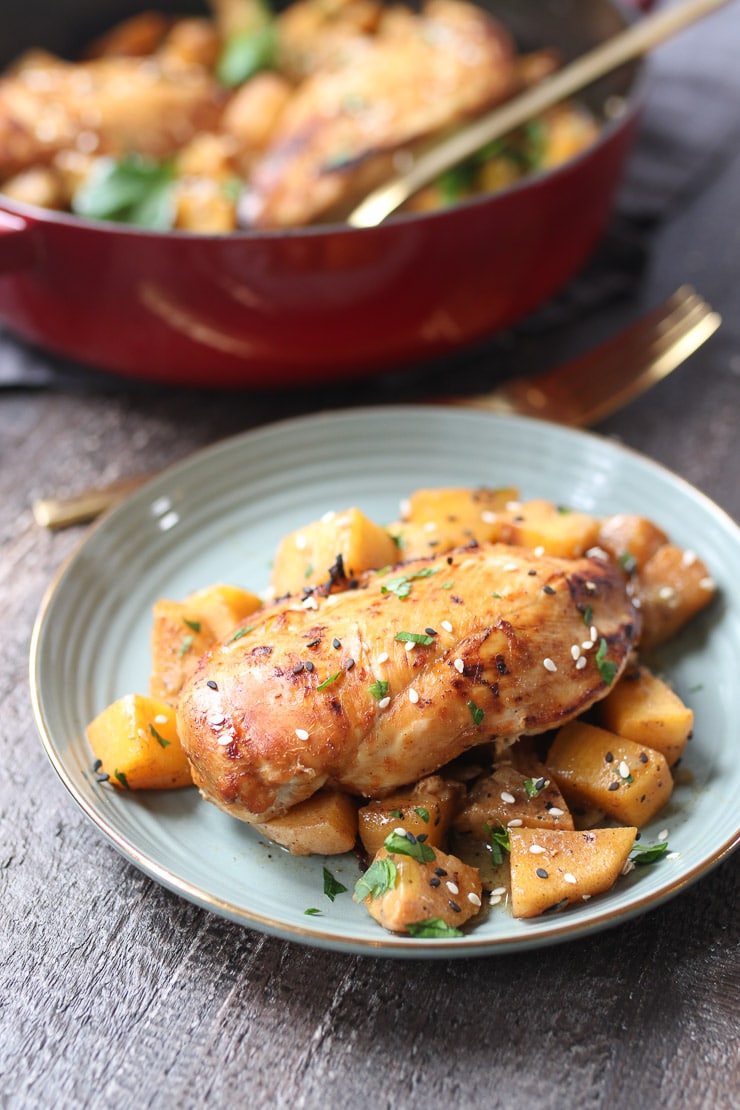
Persimmon and ginger chicken made in one pot served on a grey plate topped with seeds with a red pot containing additional chicken in the background

If you’re not super familiar with persimmons, there are generally two main types- the Hachiya and Fuyu. Hachiyas are acorn-shape with a longer pointier bottom, and should be glossy, bright and smooth when you choose them in the store. These ones need to be ripe to be edible, but when they are, they’re absolutely amazing and my choice for this persimmon ginger chicken one pot dinner. Fuyu, in contrast, are squash and round, and should feel and look like a perfect tomato. These can be enjoyed when they’re more firm so they’re a little easier for snacking.

How to Make this Persimmon Ginger Chicken One Pot Dinner

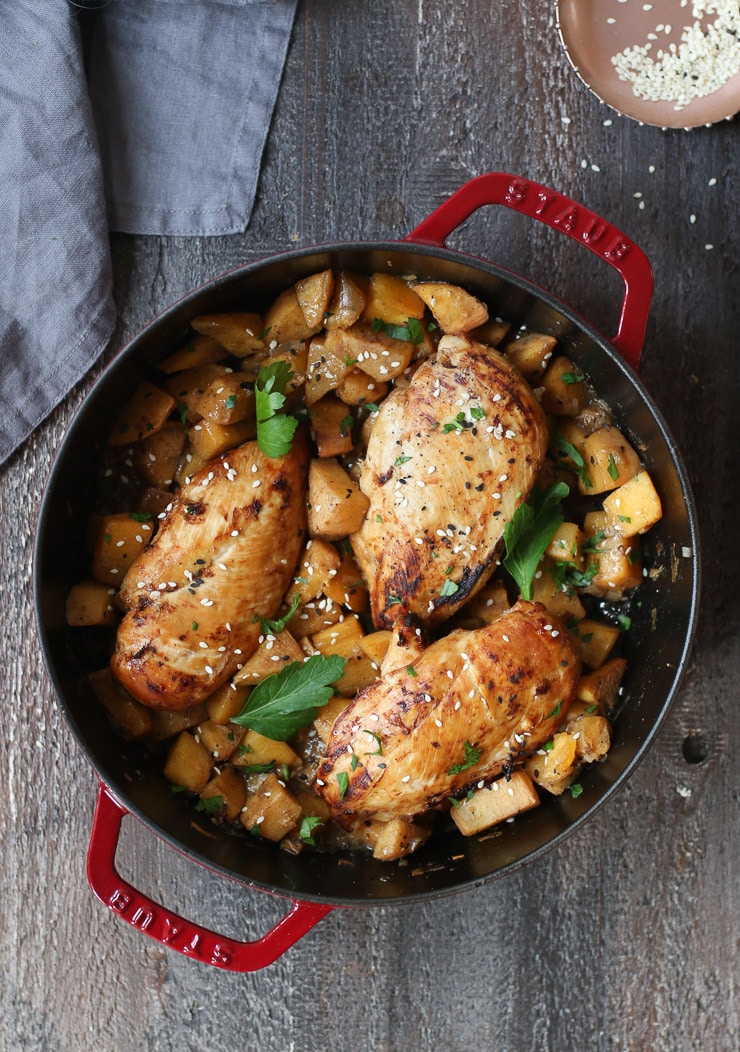
Birds eye view of one pot gluten free fruit flavoured chicken breasts in a red pot garnished with seeds

I’m really all about efficiency right now, so one pot dinners or one pan meals are totally my style. I’ve got some great ones for my buffalo chicken fingers, shrimp stir fry, and vegan cauliflower sheet pan dinners. I also am a little crazy for chicken breast recipes. Mainly because I know what a staple chicken breasts are in my house and I am always desperate to help myself out of the chicken breast rut.

So when I found myself with a crap ton of super ripe persimmons and a pack of chicken breasts, I gave my son a snack (he is OBSESSED with persimmons) and whipped up this persimmon ginger chicken one pot dinner.

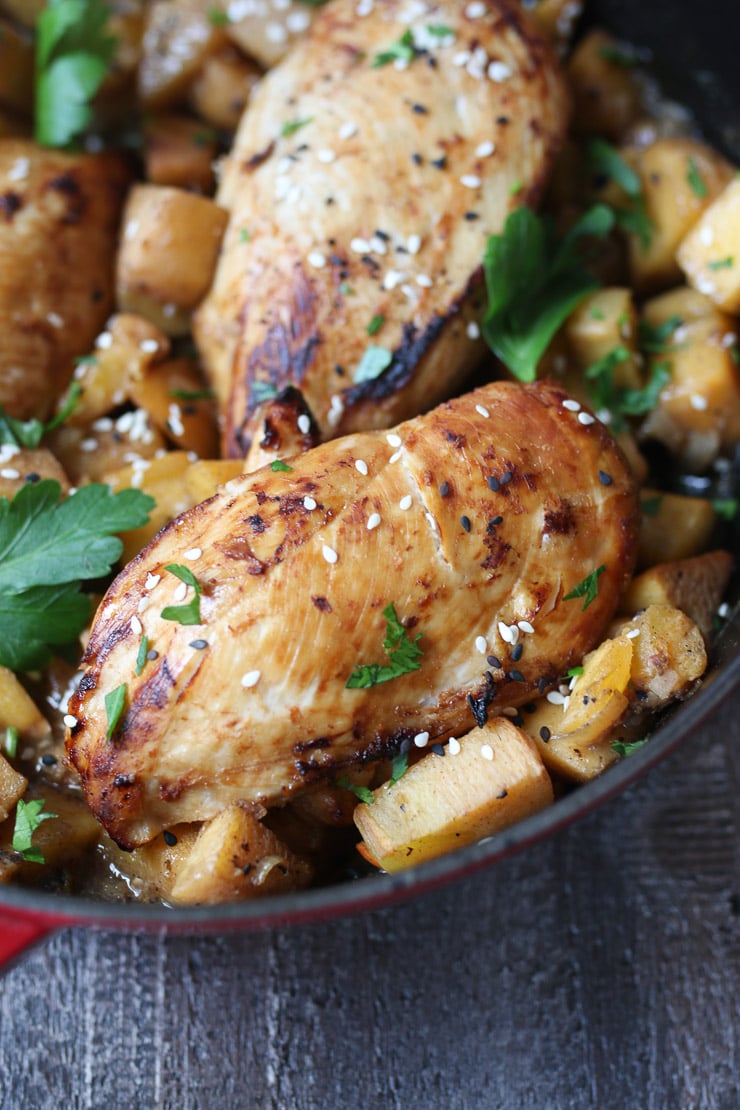
Close up of persimmon and ginger chicken in a red pot.

This one pot wonder starts with a quick gluten free ginger marinade for my chicken breasts, so I like to ideally put it together the night before. Then, when it’s go-time, I give the chicken breasts a quick sear to get some colour, then pop them into the pot with beautiful ripe persimmons and more ginger.

One pot fruity chicken breast on grey plate garnished with seeds and herbs

The result is a sweet, tangy and ginger chicken dish that is low in fat, high in protein, and naturally gluten free. From now on lets only eat chicken breast recipes that don’t suck, okay?

Now loves, I want to know – what are some of your go-to one pot dinners?
Have you tried this persimmon ginger chicken recipe?
 
If you liked this recipe, you may also like:
Mexican Street Corn Chili Chicken One Pan Meal
French Onion Chicken Breasts
Everything Bagel Chicken Breasts
Greek Sheet Pan Chicken Breasts
Rosemary Chicken Sheet Pan Dinner
Sticky Chicken Breast Sheet Pan Dinner
Baked Chicken Parmesan Foil Pack Dinner


Pinterest image of chicken breast on plate cooked with fruit with text overlay

Pinterest image of persimmon and ginger chicken breast made in one pot with text overlay

Chicken breast on plate.
Print Recipe
5 from 7 votes

Persimmon Ginger Chicken One Pot Dinner

This Persimmon Ginger Chicken One Pot Dinner makes the best easy gluten free meal that is ready in a half hour!
Prep Time2 hours hrs 20 minutes mins
Cook Time20 minutes mins
Total Time2 hours hrs 40 minutes mins
Course: Dinner
Cuisine: American
Servings: 4 people
Calories: 208kcal
Author: Abbey Sharp

Ingredients

  • Chicken:
  • 1 1/2 cup no salt added chicken broth
  • 3 tbsp low sodium tamari
  • 3 tbsp brown sugar
  • 2 tbsp tomato paste
  • 3 tbsp grated ginger
  • 3 garlic cloves minced
  • 1 tbsp seasoned rice wine vinegar
  • 1 1 lb skinless, boneless chicken breasts
  • 1 tbsp extra virgin olive oil
  • Salt and pepper
  • Sauce:
  • 2 tsp extra virgin olive oil
  • 2 shallots minced
  • 3 tbsp grated ginger
  • 3 large ripe Hachiya persimmons peeled, seeds removed and cut into 1 inch cubes
  • 1/3 cup no salt added chicken broth divided
  • 1 tsp cornstarch
  • 1 tsp seasoned rice wine vinegar
  • 2 tsp low sodium tamari
  • Salt and pepper to taste
  • Cilantro for garnish
  • White and black sesame seeds for garnish

Instructions

  • Preheat oven to 400 F.
  • Mix together the broth, soy sauce, sugar, tomato paste, ginger, garlic and vinegar and transfer to a resealable bag with the chicken. Allow to marinate in the fridge for at least 2 hours up to overnight.
  • Bring the chicken to room temperature and pat dry. Season with salt and pepper.
  • Heat the olive oil over medium high heat in a large cast-iron skillet. Brown on all sides then transfer to a plate.
  • Return the pan to the heat and add an additional tablespoon of olive oil over medium heat. Add the shallots and ginger and saute until soft and fragrant, about 2 minutes.
  • Add the persimmons, and nestle the chicken into the middle.
  • Mix the cornstarch with 1 tablespoon of the chicken broth.
  • Add the remaining chicken broth, vinegar, and tamari to the pan, along with the cornstarch broth mixture.
  • Transfer the pan to the oven and cook for 10-12 minutes or until an instant read thermometer inserted into the chicken reads 165 F.
  • Serve the chicken with the persimmon sauce, topped with cilantro and sesame seeds.

Nutrition

Calories: 208kcal | Carbohydrates: 18g | Protein: 17g | Fat: 8g | Saturated Fat: 1g | Cholesterol: 36mg | Sodium: 1089mg | Potassium: 518mg | Fiber: 1g | Sugar: 11g | Vitamin A: 139IU | Vitamin C: 5mg | Calcium: 28mg | Iron: 1mg
Abbey Sharp

Abbey Sharp is a Registered Dietitian (RD), regulated by the Ontario College of Dietitians. She is a mom, YouTuber, Blogger, award winning cookbook author, media coach specializing in food and nutrition influencers, and a frequent contributor to national publications like Healthline and on national broadcast TV shows.
www.abbeyskitchen.com/about-abbey/

Last Updated July 22, 2020. Published October 8, 2019 By Abbey Sharp 16 Comments

Vegan Candy Corn Overnight Oats | Halloween Gluten Free, Healthy Easy Breakfast Recipe

Vegan Candy Corn Overnight Oats These Vegan Candy Corn Overnight Oats is the perfect Halloween gluten free, healthy easy breakfast recipe for celebrating this candy-fueled holiday! Serves 4 1 cup rolled oats, gluten free 1 cup unsweetened vanilla almond milk 1/2 cup almond yogurt 2/3 cup diced mango 2/3 cup frozen ripe banana 2/3 cup cooked sweet potato Pinch salt Maple syrup, if desired Candy corn, for topping In a bowl, mix the oats, almond milk, almond yogurt and a pinch of salt. Stir and refrigerate overnight. The next morning, puree the mango and put in a bowl. Puree the banana and place in a bowl. Puree the sweet potato and place in a bowl. Divide the oats into each of the fruit bowls. Sweeten with maple syrup, if desired. Layer the banana, sweet potato and mango into glasses and top with candy corn.

These Vegan Candy Corn Overnight Oats is the perfect Halloween gluten free, healthy easy breakfast recipe for celebrating this candy-fueled holiday!

Halloween has always been one of my favourite holidays of the year. I guess it’s partially that I was raised in a super theatrical household, so I LOVE to dress up. But it’s also because I have a total sweet tooth and could eat those fun-size chocolate bars all day, err day.

While I’m typically more likely to sneak chocolate bars (Snickers, please!) out of my hypothetical future child’s loot, I also get pretty pumped about a few little pieces of candy here and there. And candy corn is the quintessential Halloween candy.

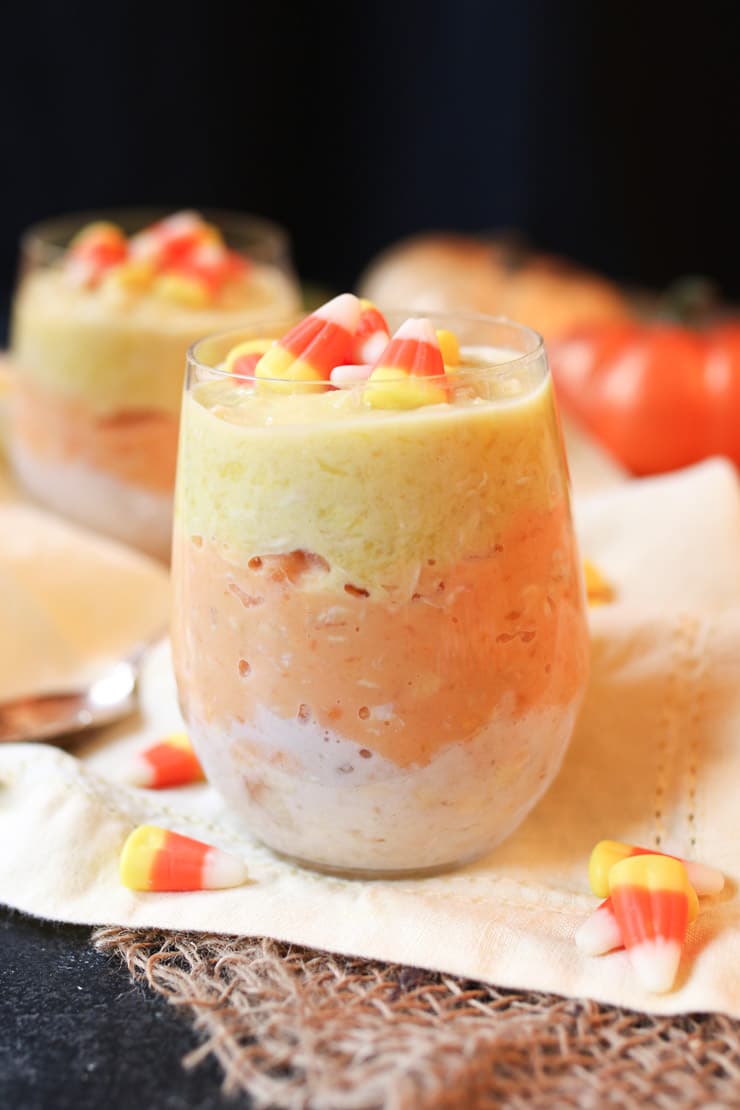
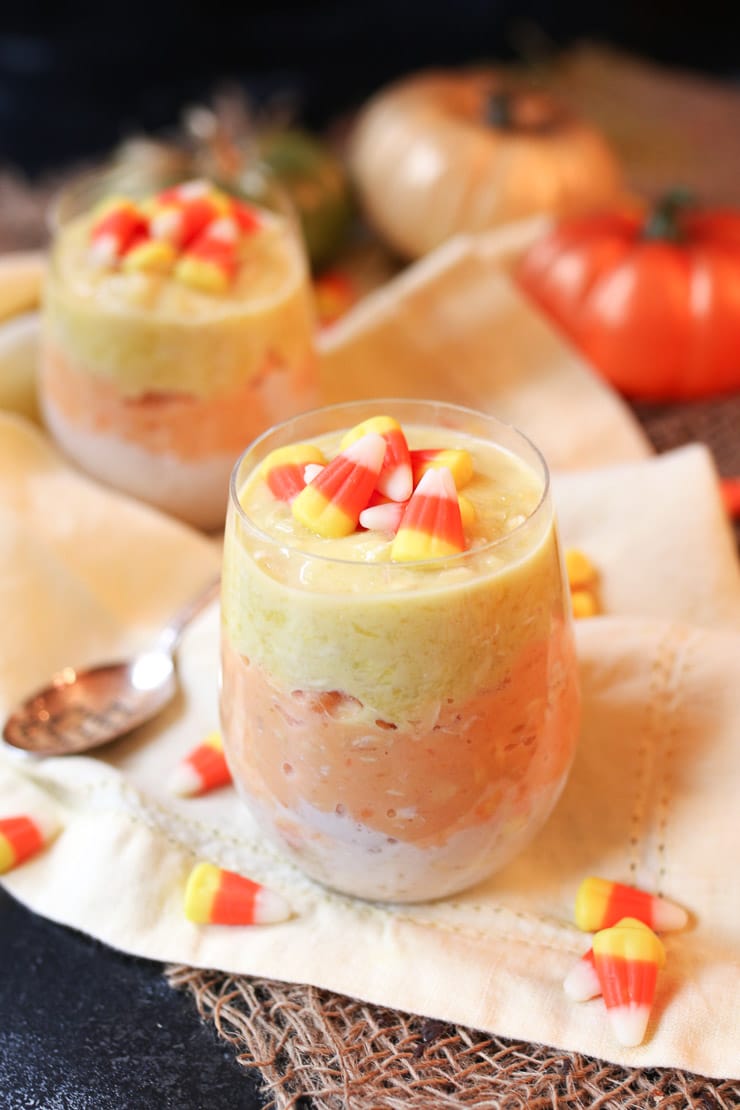
Glass jars filled with gluten free overnight oatmeal topped with candy corn on an orange cloth

Click HERE TO PIN this recipe.

Now, a lot of my friends with kiddos tend to get worried about their kids overdoing it on the Halloween candy and waking up on November 1st to eat candy for breakfast. To this concern, my recommendation is to not make a big deal out of the Halloween haul. I don’t recommend restricting candy, or making strict rules about it. Our job as parents is to decide when, where and what our kids eat, and our kids decide how much and whether they eat at all. If we remove the taboo and the novelty around Halloween candy, the desire to overdo it completely goes away. One day they may eat a bunch of pieces, the next, they might be over it and forget about it all together.

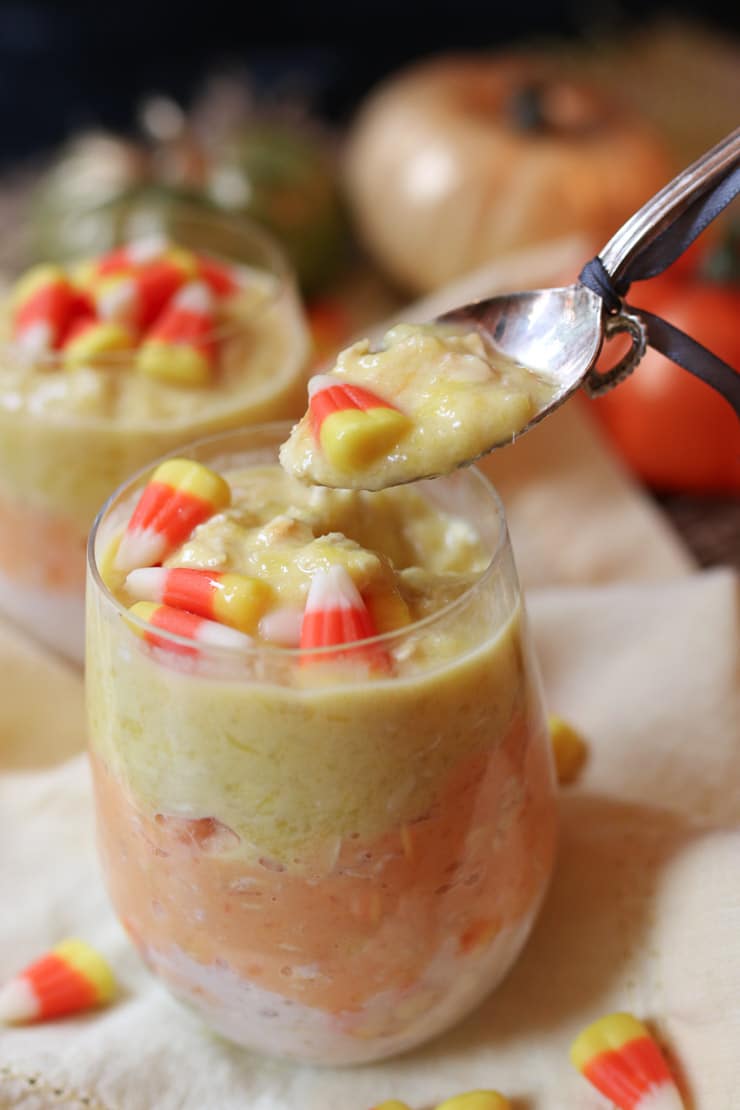
Silver spoon reaching into a clear glass filled with candy corn oatmeal topped with additional candy corn

Click HERE TO PIN this recipe.

So this recipe for Vegan Candy Corn Overnight Oats offers a little candy experience and feel like a total treat, but is super nourishing and satiating with its oatmeal, fruit and yogurt base. And when kids are satiated on wholesome foods, like adults, they may be less likely to want to snack on treats.

How to Make Vegan Candy Corn Overnight Oats

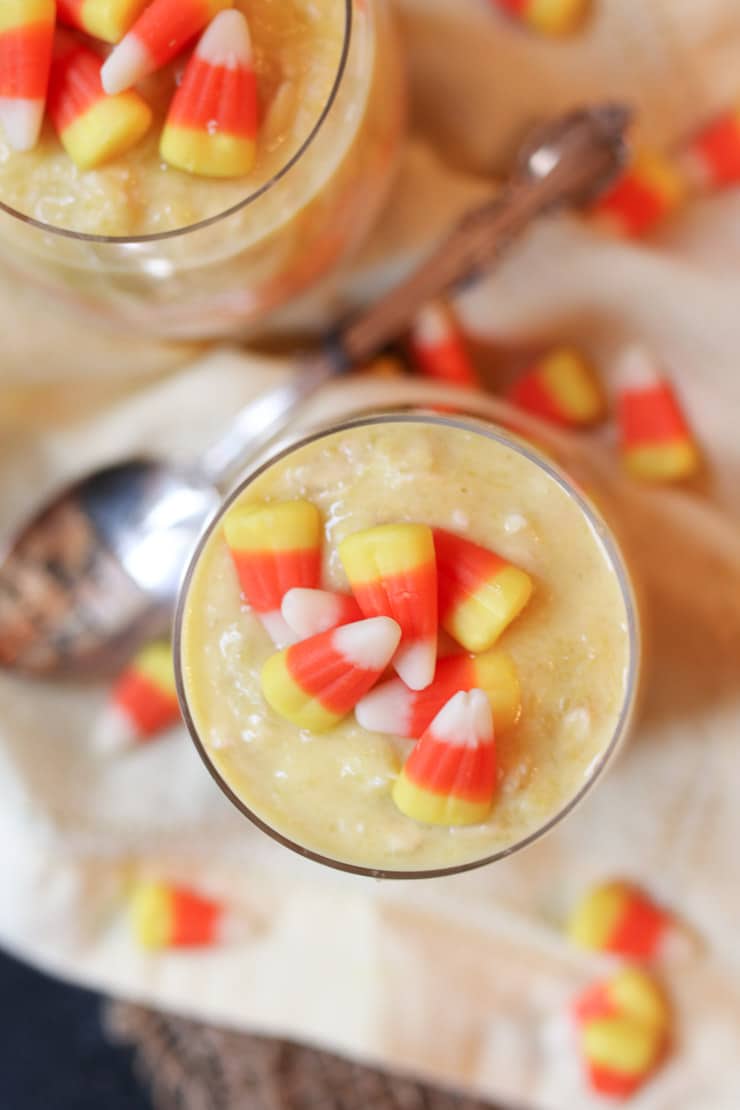
Birds eye view of candy corn flavoured overnight oats topped with candy corn

Click HERE TO PIN this recipe.

Now, first of all, this is just a simple recipe for overnight oats by combining oats, almond milk and almond yogurt. And I let that sit overnight.

Then, I puree up some mango, then banana, then sweet potato and set those in three separate bowls.

I divide my overnight oats into the three bowls with each of the fruits and give it a good stir.

Two clear glasses filled with candy corn flavoured oatmeal topped with candy corn on an orange cloth

Click HERE TO PIN this recipe.

Then, we layer! To make this Vegan Candy Corn Overnight Oats look like a piece of Candy Corn, we layer banana, sweet potato, and mango and top it off with a few little pieces of candy corn (you know, just for a little sweet). Sadly candy corn is not vegan, so if you’re vegan omit the candy corn topping. There is no added sugar in these Vegan Candy Corn Overnight Oats so I think there’s plenty of wiggle room for a little sweet!

Now lovelies, I would love to know:
What’s your favourite Halloween candy?
Have you tried this Vegan Candy Corn Overnight Oats?


Pinterest image of vegan candy corn overnight oats for halloween in a clear glass topped with candy corn with text overlay

Click HERE TO PIN this recipe.

These Vegan Candy Corn Overnight Oats is the perfect Halloween gluten free, healthy easy breakfast recipe for celebrating this candy-fueled holiday!
Print Recipe
5 from 4 votes

Vegan Candy Corn Overnight Oats

These Vegan Candy Corn Overnight Oats is the perfect Halloween gluten free, healthy easy breakfast recipe for celebrating this candy-fueled holiday!
Prep Time5 minutes mins
Cook Time7 hours hrs 55 minutes mins
Total Time8 hours hrs
Course: Breakfast
Cuisine: American
Servings: 4 people
Calories: 215kcal
Author: Abbey Sharp

Ingredients

  • 1 cup rolled oats gluten free
  • 1 cup unsweetened vanilla almond milk
  • 1/2 cup almond yogurt
  • 2/3 cup diced mango
  • 2/3 cup frozen ripe banana
  • 2/3 cup cooked sweet potato
  • Pinch salt
  • Maple syrup if desired
  • Candy corn (optional if not vegan) for topping

Instructions

  • In a bowl, mix the oats, almond milk, almond yogurt and a pinch of salt. Stir and refrigerate overnight.
  • The next morning, puree the mango and put in a bowl. Puree the banana and place in a bowl. Puree the sweet potato and place in a bowl. Divide the oats into each of the fruit bowls. Sweeten with maple syrup, if desired.
  • Layer the banana, sweet potato and mango into glasses and top with candy corn.

Nutrition

Calories: 215kcal


Abbey Sharp

Abbey Sharp is a Registered Dietitian (RD), regulated by the Ontario College of Dietitians. She is a mom, YouTuber, Blogger, award winning cookbook author, media coach specializing in food and nutrition influencers, and a frequent contributor to national publications like Healthline and on national broadcast TV shows.
www.abbeyskitchen.com/about-abbey/

Last Updated July 22, 2020. Published September 26, 2019 By Abbey Sharp 12 Comments

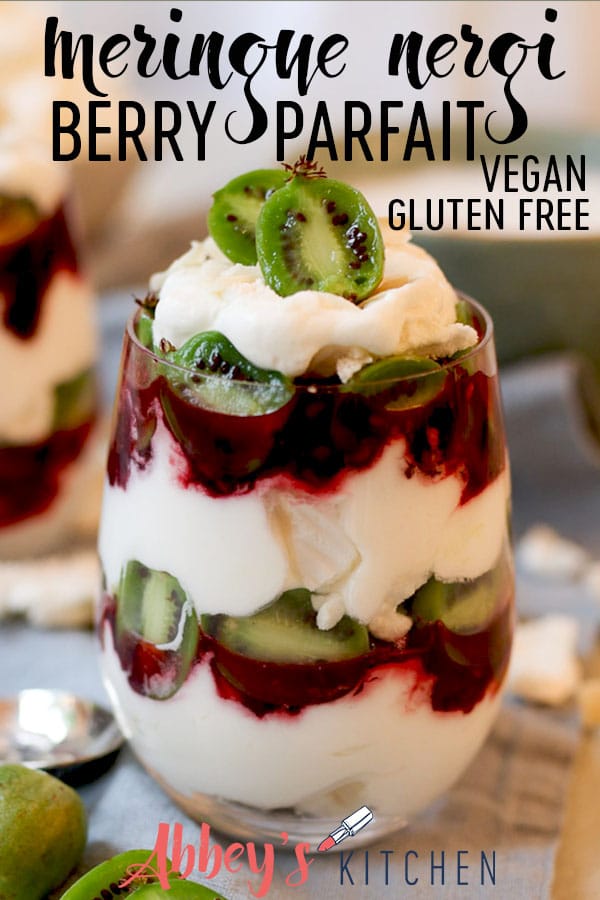
Vegan Meringue Nergi Berry Parfait | Gluten Free, Plant-Based, Aquafaba Dessert

This Vegan Meringue Nergi Berry Parfait is a delicious Gluten Free, Plant-Based, Aquafaba-based Dessert that would be elegant enough for entertaining a wide range of dietary restrictions.

DISCLAIMER: This post was developed in sponsored partnership with Nergi, however, as always, all opinions are genuine.

This Vegan Meringue Nergi Berry Parfait is a delicious Gluten Free, Plant-Based, Aquafaba-based Dessert that would be elegant enough for entertaining a wide range of dietary restrictions.

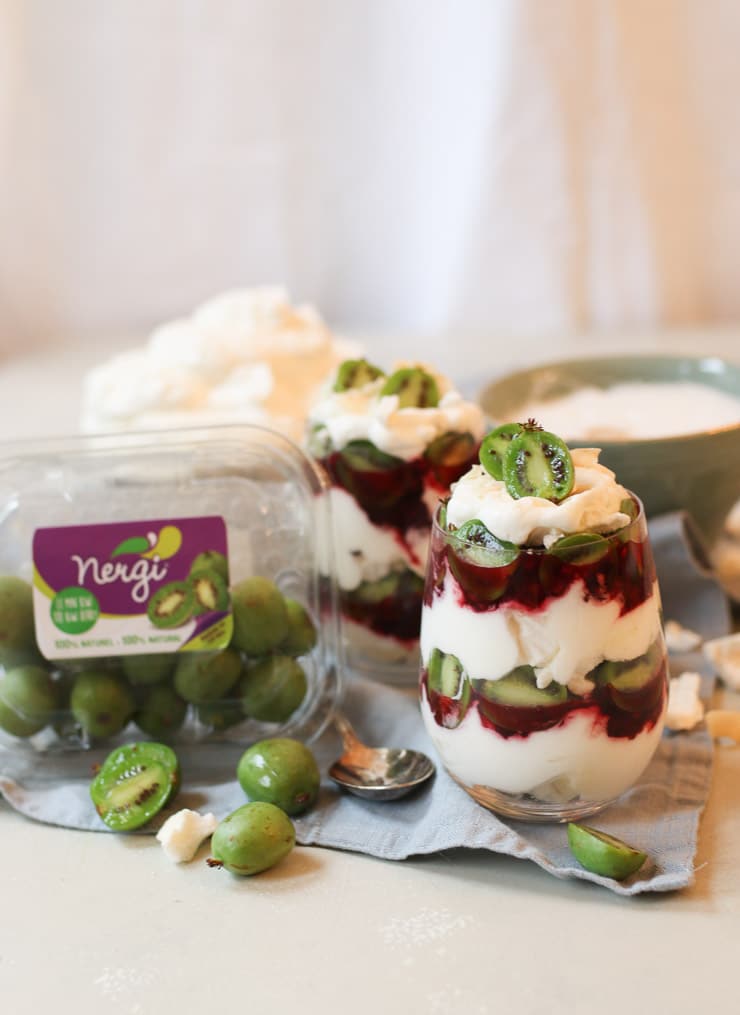
As a dietitian, I thought I knew a lot about fruits and veggies. But I was pleasantly surprised when I found a tasty new (to me) fruit that has now become a total snack-time staple. Friends, let me introduce you to my new BFF, the Nergi.

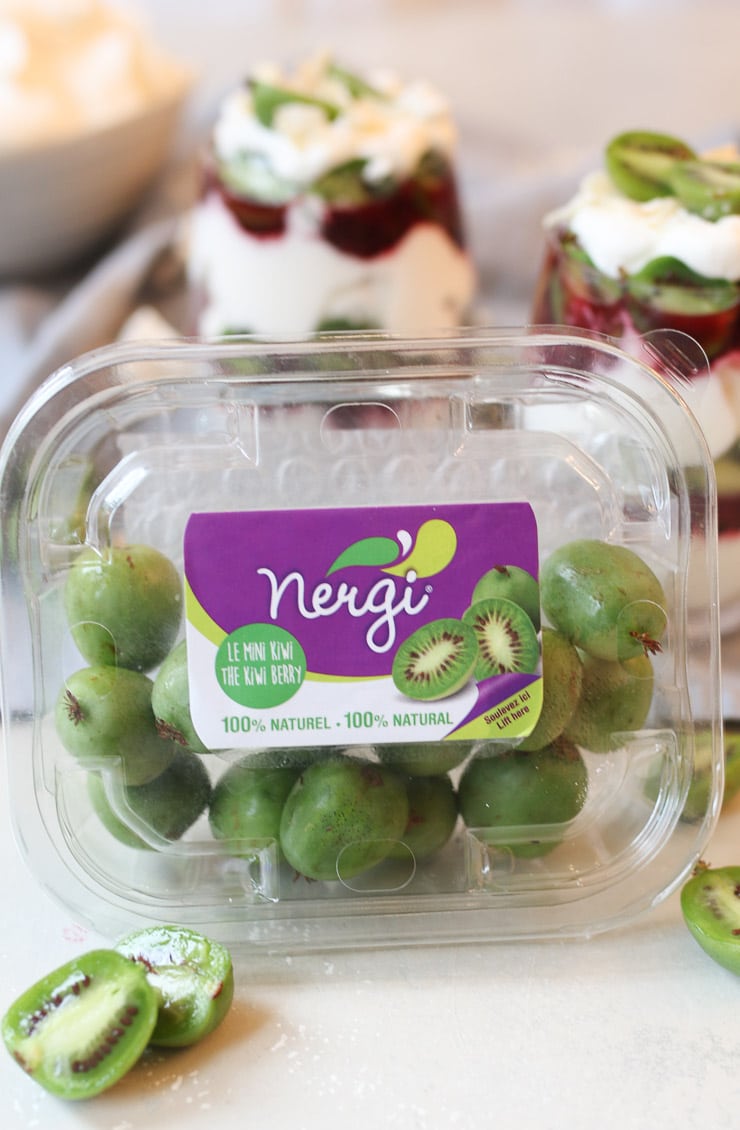
Box of nergi fruit.

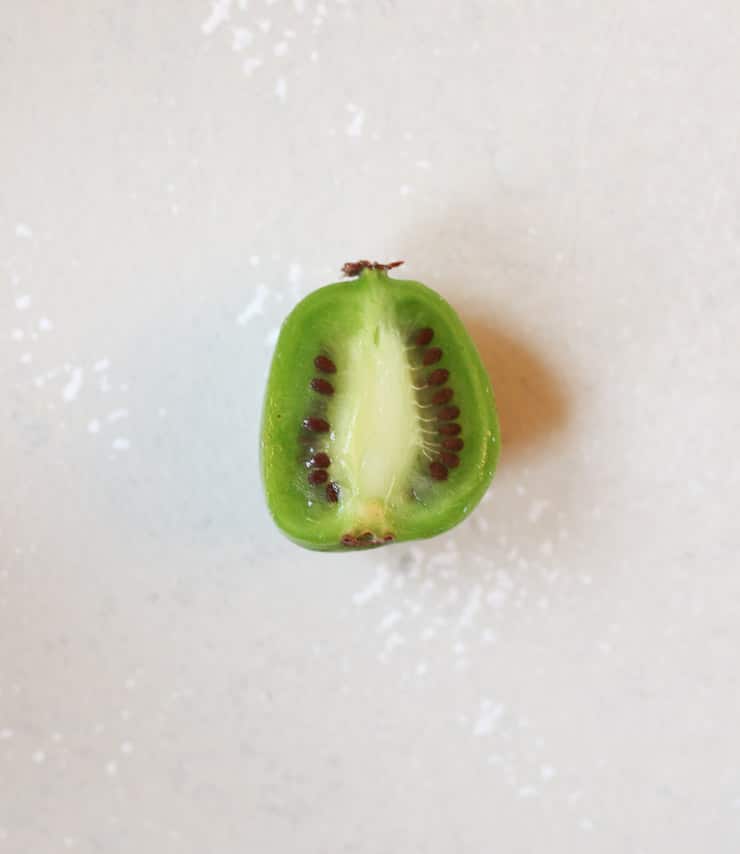
Originally from Asia, and now grown in France, Nergi are like cute baby kiwis – without the fuzz! Like a berry, they’re perfect for just popping back by the handful and are totally addictive, to boot. They also may be tiny, but they pack some serious nutrition with vitamin C, E, potassium, calcium, magnesium and phosphorus plus 3.66 grams of fibre for only 52 calories per serving! Man, the French know how to make great food.

One nergi cut in half.

While these little darlings have definitely become a favourite snack, their natural sweetness instantly sparked some dessert inspiration. This Vegan Meringue Nergi Berry Parfait was the result! Gluten free, plant-based and absolutely divine, with big juicy pieces of Nergi in every bite, this is definitely my new favourite way to end a meal.

How to Make this Vegan Meringue Nergi Berry Parfait with aquafaba

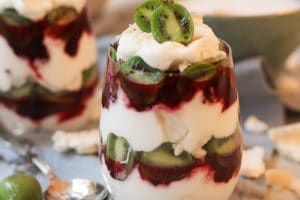
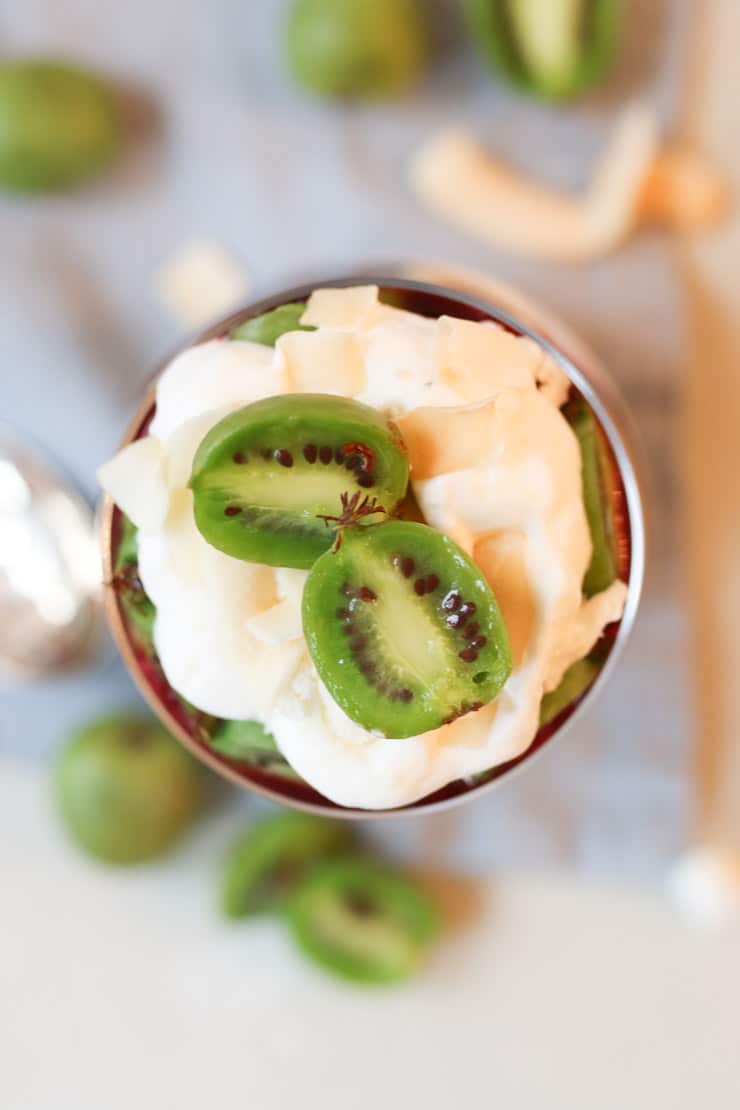
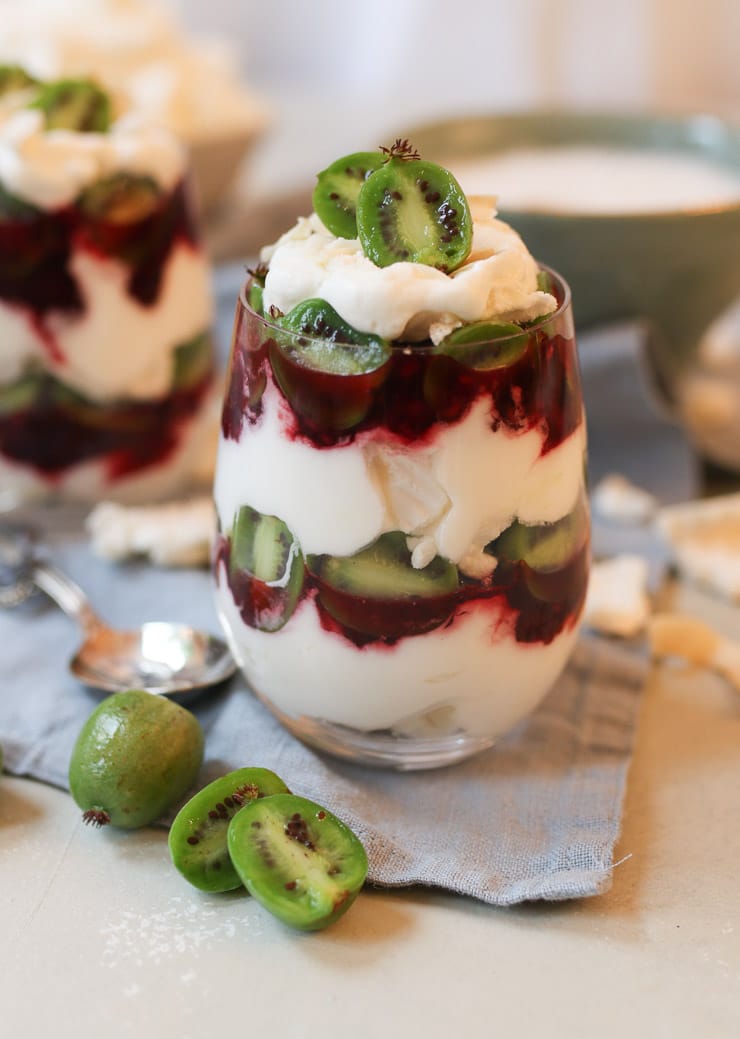
Nergi berry parfait.

So this dessert has a few steps but all of them are surprisingly simple and yield such a beautiful dessert for a crowd that it’s TOTALLY worth the investment

First we make a vegan meringue out of the strange liquid you find in the bottom of the can of chickpeas. Yes, you heard that right. You can actually make COOKIES out of the gloopy liquid you usually throw away from canned beans. If you haven’t tried this, get ready for your mind to literally be blown.

Two nergi berry parfait in a glass.

Next, I whip up some coconut cream and lighten it up with coconut yogurt. Easy peasy.

Third, we make a really quick berry chia jam. I’m obsessed with chia jam and use it on toast, in oatmeal and desserts like this, so feel free to make a triple or quadruple batch for the week!

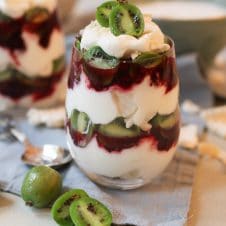
Nergi berry parfait served in a glass.

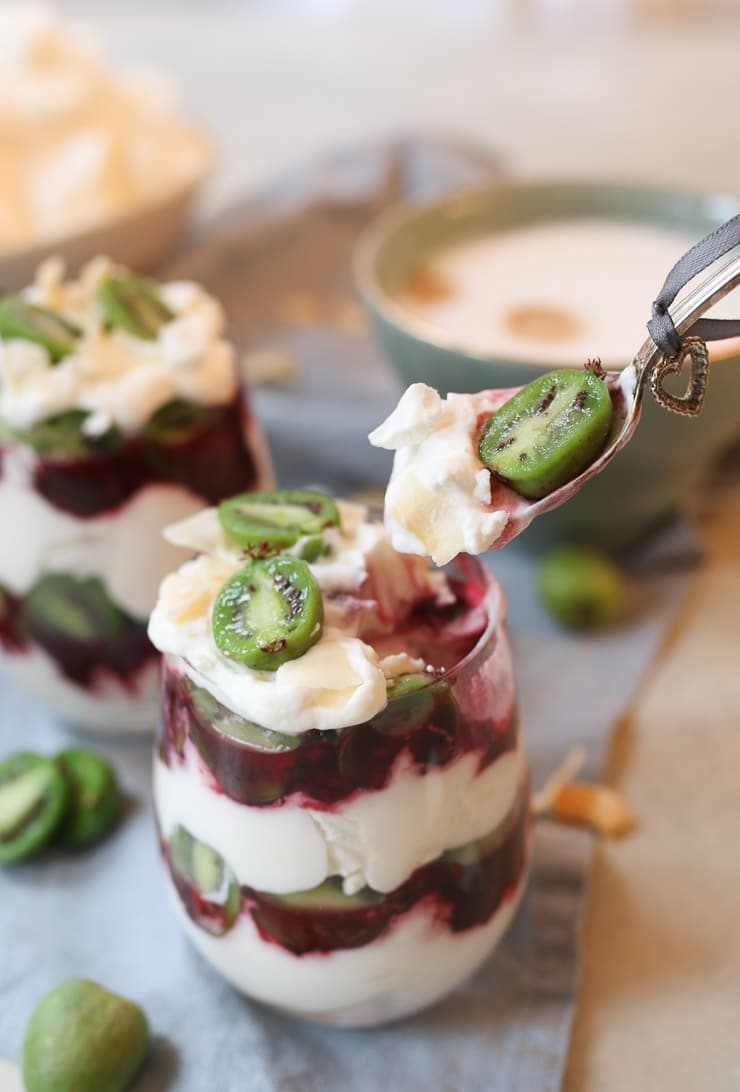
And then most importantly is the Nergi. I just love the supple pop and subtle sweetness of the juicy fruit, especially against the rich cream and crunchy meringue. You may want to get extra then what’s called for in this recipe since you’ll probably end up eating half of your stash before you’ve put together dessert.

Spoon scooping a bite of nergi berry parfait.

When assembled, this Vegan Meringue Nergi Berry Parfait is a perfect dessert for entertaining because it’s gluten free, plant-based, dairy-free, nut-free and egg-free, ideal for a group with a wide range of dietary restrictions.

Now lovelies, have you tried Nergi yet?
Have you tried making vegan meringues from aquafaba?
Have you tried making these Vegan Meringue Nergi Berry Parfaits yet?
Leave me a comment below with your thoughts!

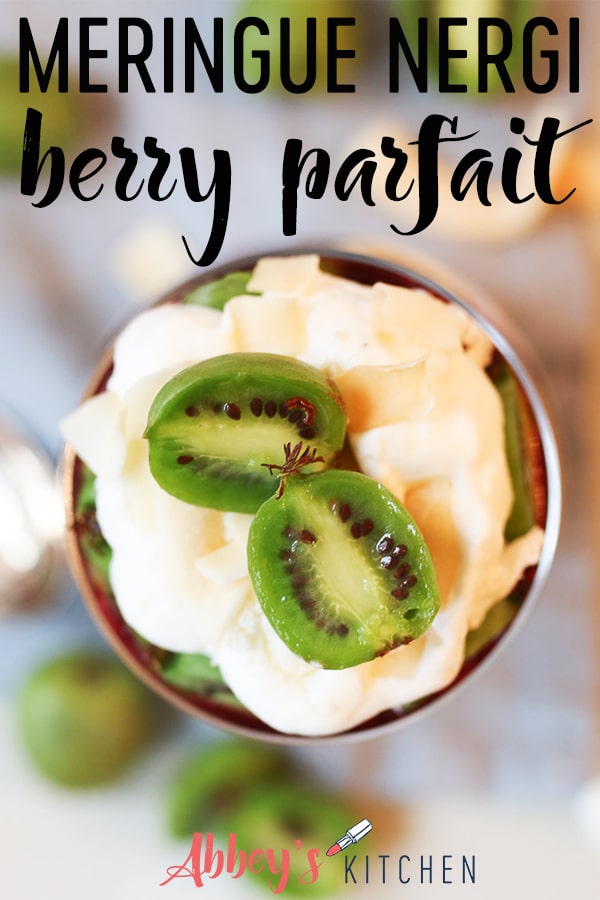
Disclaimer: This post was developed in paid partnership with Nergi, however all opinions are my own.pinterest image of Parfait topped with nergi with text overlaypinterest image of Nergi berry parfait in a glass with text overlay

This Vegan Meringue Nergi Berry Parfait is a delicious Gluten Free, Plant-Based, Aquafaba-based Dessert that would be elegant enough for entertaining a wide range of dietary restrictions.
Print Recipe
5 from 2 votes

Vegan Meringue Nergi Berry Parfait

This Vegan Meringue Nergi Berry Parfait is a delicious Gluten Free, Plant-Based, Aquafaba-based Dessert that would be elegant enough for entertaining a wide range of dietary restrictions.
Prep Time40 minutes mins
Cook Time1 hour hr
Total Time1 hour hr 40 minutes mins
Course: Dessert
Cuisine: American
Servings: 4 people
Calories: 445kcal
Author: Abbey Sharp

Ingredients

Vegan Meringue Cookies

  • 3/4 cup aquafaba the liquid from a 19 oz can of unsalted chickpeas
  • ½ tsp pure vanilla
  • ¼ tsp cream of tartar
  • ½ cup extra fine sugar

Coconut Cream

  • 1 cup coconut cream from a can of coconut cream or milk
  • 1 cup coconut yogurt

Berry Chia Jam

  • ½ cup diced Nergi
  • 1/2 cup frozen raspberries
  • 1/2 cup frozen blueberries
  • 1 tbsp lemon juice
  • 1 tsp maple syrup
  • 1 ½ tbsp chia seeds

Parfait

  • 1 cup Nergi halved
  • 3 tbsp toasted coconut chips

Instructions

  • Preheat oven to 200 F and line two baking sheets with parchment.
  • Add the aquafaba and cream of tartar into a bowl with electric beaters or in a standmixer. Beat on medium speed until billowy soft peaks form- about 3-5 minutes. Once soft, add the vanilla and start to slowly add in the sugar about a spoonful at a time until it’s all been added while continuing to beat. Beat until it reaches stiff peaks, likely another 5 minutes or so.
  • Dollop the meringue onto the baking sheet into 1 inch cookies and then bake for about 1 hour until dry. Cool and set aside.
  • Meanwhile, whip the coconut cream until soft, then fold in the yogurt. Set aside.
  • Finally, in a saucepot over medium heat, heat the nergi, raspberries, blueberries, lemon and maple syrup until bubbly and soft, about 7 minutes. Mash any big pieces then take off the heat. Add in the chia seeds and refrigerate for 20-30 minutes in the fridge until thick.
  • To assemble, break up 1 ½ cups of the meringues into smaller pieces and shards. Mix them the yogurt cream and place a layer on the bottom of a glass. Add a layer of the jam and a layer of the Nergi. Repeat with another layer of the meringue cream, jam, and Nergi. Finish with a few toasted coconut chips and enjoy!

Nutrition

Calories: 445kcal | Carbohydrates: 53g | Protein: 6g | Fat: 26g | Saturated Fat: 21g | Sodium: 15mg | Potassium: 509mg | Fiber: 7g | Sugar: 38g | Vitamin A: 60IU | Vitamin C: 77.9mg | Calcium: 136mg | Iron: 2.2mg

Abbey Sharp

Abbey Sharp is a Registered Dietitian (RD), regulated by the Ontario College of Dietitians. She is a mom, YouTuber, Blogger, award winning cookbook author, media coach specializing in food and nutrition influencers, and a frequent contributor to national publications like Healthline and on national broadcast TV shows.
www.abbeyskitchen.com/about-abbey/

Last Updated October 27, 2021. Published September 17, 2019 By Abbey Sharp 5 Comments

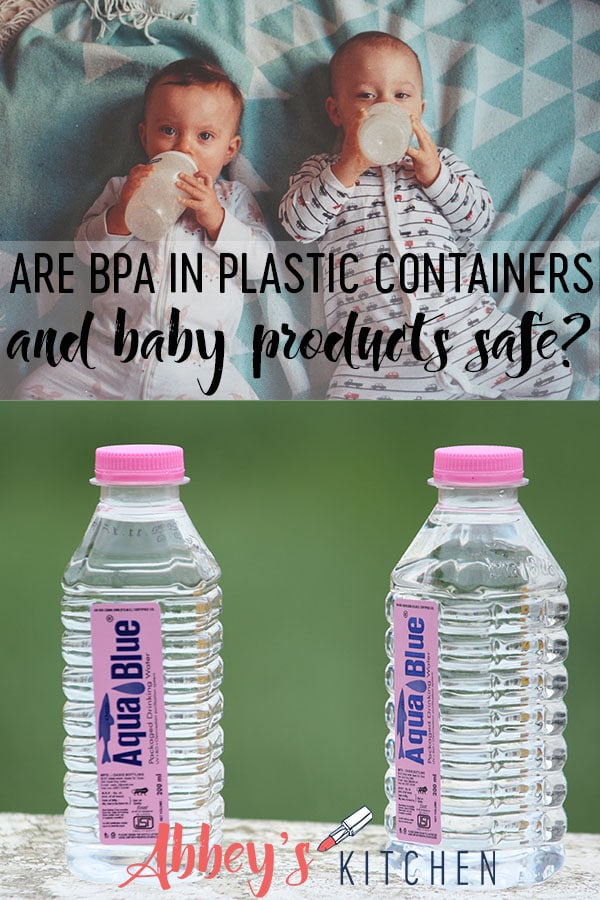
Are BPA and Other Endocrine Disruptors in Plastic Containers and Baby Products Safe? PART ONE

Two babies drinking from bottles while lying on a teal blanket.

We dive into the truth about BPA and other endocrine disruptors in plastic containers, baby bottles and household items to determine if they’re safe for your health.

Are there chemicals leaching into my food from the containers I store them in? Is it dangerous to microwave even my alleged ‘microwaveable’ plastics? What’s in plastic wrap anyway – is that toxic?! What about baby bottles and toys? These may be the questions you’ve asked yourself after witnessing the internet uproar over ‘endocrine disruptors’. I’m here to tease apart the scientific jargon to help you navigate this controversy and figure out what’s safe for you and your baby.

What are endocrine disruptors?

Endocrine disruptors are a class of industrial chemicals that have been found to mimic hormones in the body, specifically estrogen, altering our natural hormonal processes. The endocrine system involves the parts of the body that release and respond to hormones to keep our bodies in balance and guide healthy growth and development. Endocrine disruptors do just that – disrupt the system.

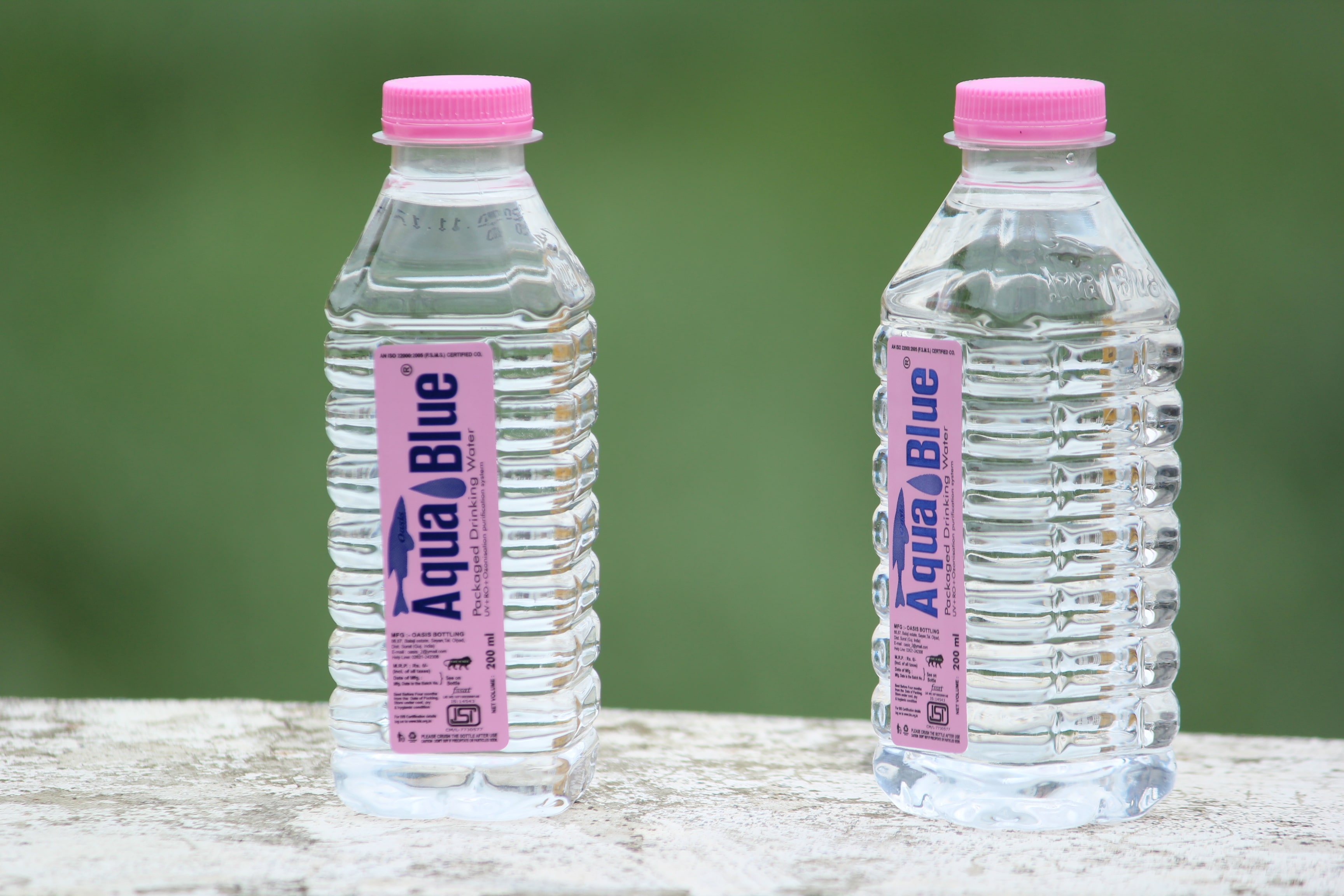
They are found in detergents, flame retardant materials/furniture, toys, cosmetics and you guessed it – food storage containers! These include plastic Tupperware, water bottles, baby bottles, soda cans, and even plastic wrap. A quick google search will leave you scared that these disruptors could cause infertility, cancer, diabetes, sexual dysfunction, thyroid problems, neurological delays – you name it! To say that using these products will lead to these diseases is a bit of a stretch, because research is still ongoing, is not consistent, and is often done on animals, which may not be applicable to humans. I’ll get back to that point shortly.

A two plastic water bottles with pink labels and lids.

First, let’s get the scientific jargon out of the way.

There are many different kinds of endocrine disruptors but before we get into them we should get some essential terminology down pat.

The food storage containers and baby product of concern are usually plastic. There are many different kinds of plastic made up of different components and chemicals. One of these kinds (a common one) is PVC – polyvynl chloride. In order to adjust the flexibility and durability of plastics made of PVC, materials called plasticizers are added. These plasticizers are made up of chemicals called phthalates. Phthalates are a large and diverse subset of chemicals that are further classified based on their influence on human health. One of the classifications are ‘endocrine inhibitors’. K. You still with me? Great. Now let’s dive into some of the types of endocrine inhibitors that have been hot topics in the media lately:

  1. BPA – Bisphenol A – An industrial chemical used to make clear, hard plastic, also known as polycarbonate. That means you can find it in food storage containers, water bottles, plastic cutlery, dish ware, baby toys and more! It also serves as a protective lining inside of soda cans. This is the endocrine disruptor that gets the most attention, and it seems that every few years people get up in arms about it over again.
  2. BPS – Bisphenol S – BPA’s relative. When people got upset about BPA and the market for BPA-free products started booming, BPS swooped in to take its place. Although, research like this started to emerge that BPS was fairly equivalent to BPA in terms of health risk.
  3. DEHP – Di(2-ethylhexyl) phthalate – Also an industry chemical, often found in food It used to be widely used in cosmetics, medical devices and children’s toys and clothes, but after it was found to be harmful, Health Canada imposed regulations to ban or restrict its use. Since it is not rid of completely, they advise people to use glass, stainless steel or food-grade plastic containers to heat or store hot food in order to avoid it. Health Canada engages in ongoing protective measures, and DEHP is one that they keep a close eye on.
  4. PFAS – Per- and polyfluoroalkyl – This is a chemical used to make materials that are grease, stain and water resistant, so it’s often found in food packages! It is most often found lining fast food packages, pizza boxes, and on-the-shelf goodies like bagged popcorn.

Endocrine Disruptors in Plastic Food Storage Containers

Plastic food containers.

 Much of the public upset right now is over fear that when we heat products that contain these chemicals, they can leach out and enter our food. That’s why so many people on the internet are scolding each other for microwaving lunch in a tupperware, or storing hot leftovers in plastic, or carrying hot coffee in a mug lined with PFAS. Apparently even putting your plastic items in the dishwasher could make for extra leakage!

When it comes to oily and fatty foods, people are even more freaked out. There may be some truth to the belief that leaching is more common in fatty/oily foods, but it’s not really related to the food itself, but more-so to the packaging it comes in. Packaging that acts as a sealant or grease resister, is even higher in phthalates (mostly the PFAS kind) than materials that are meant to simply cover or hold food. That means that heating up your big mac in its wrapping is likely to cause more chemical leakage than your homemade version wrapped in plastic wrap or covered with paper towel. This means that one way to reduce your exposure to phthalates is to eat less greasy take out food, and as a dietitian I can get behind that recommendation!

So back to heating up foods in plastic in general – is it actually dangerous? The answer really isn’t clear – it is much debated and has been for quite a while.

Endocrine Disruptors in Baby Products

Let’s be real here – we can talk about contaminants in food all day long but we must include toys in that category for our tiny humans, because after all, they put toys in their mouths just as often, or more so, than they do food! Children and babies are more susceptible to the potentially harmful effects of chemicals because their bodies, and their body’s defences, are still developing, and they put literally everything in their mouths. Let’s take a look at the research on endocrine disruptors in baby products.

BPA

The Toy Association is an association representing all businesses involved in toy manufacturing or selling. They advocate on behalf of businesses in North America and expand across all contents. They reassure parents that the amount of BPA in children’s toys do not exceed safe limits. It occurs in such small amounts that there are very little health risks involved. Also, since baby toys are not exposed to heat like our food storage containers thanks to microwaves and dishwashers are, the amount of BPA that leaches out is much less.

Recent studies of children’s products have found that the exposure to BPA is actually much less than we thought. Initially BPA exposure for infants was thought to be 2420 ng/kg, but based on the improved data that has since become available, it seems that exposure is only 200-400 ng/kg – below the level associated with health risks.

Phthalates

The FDA states that it really isn’t clear what effect phthalates have on our health. Here they reference research conducted by an expert panel in 2000 that tested numerous products for their phthalate content and corresponding health effects. Numerous baby products were tested like creams and lotions, wipes and oils. Products from big shot names like Johnson’s, Burts Bees and Huggies were all included. The conclusion was that the risks associated with exposure to these products were little to none. Some research out there like this study states that the urine concentration of chemicals like BPA are higher in children/babies than the adult population, but this seems to be more of a scare tactic than a health concern. Remember, the presence of substances in our urine means our body recognized them as things we didn’t need and it got rid of them effectively – this is a good thing! Therefore the FDA refers to this paper and reminds the public that despite its findings, no adverse health effects were noted.

Based on what we do know, Health Canada has put Phthalate Regulations on toys for children 3 and under. These restrictions are for 6 types of phthalates that may potentially pose harm. The toys must be less than 0.1% DEHP, DBP, BBP, DINP, DIDP or DNOP. In 2016, the US also placed restrictions. Theirs include DINP, DPENP, DHEXP, DCHP and DIBP. They also put restrictions on some other less-concerning phthalates like DEHP, DBP and BBP.

Keep in mind the research that we are basing these regulations on is really limited. Apparently, this study, published 2013 was the first to assess the effects of non-dietary sources of BPA and phthalates on baby and child health. They assessed the leachability of 5 common phthalates (including BPA) in children’s toys found in daycare centres in Philadelphia. They found that even the ‘most leachable’ toys had BPA amounts 10 times lower than the amount that is thought to pose health risk. Good news, right? Totally! But we still have to think critically here. If we combine all the exposures that our little ones have to chemicals like phthalates and BPA – coming from their toys, their food/food containers, and everyday products like lotions and creams – are they still below the level of risk? It’s really hard to say at this point with our limited research.

As is the case with much health related research, we need more of it to solve the mystery on this issue! This study contributes to the gap in the literature but we can’t base our beliefs from just one study – numerous others need to be conducted before we can know for sure.

Flame Retardants

Flame retardants are a host of chemicals that are added to everyday items to, you guessed it, prevent a fire and therefore protect us from getting burned. Sounds like a good idea but research is popping up everywhere about what affect these chemicals are having on human health. Research studies like this one have found that children have greater exposure to flame retardants. Since babies are more likely to put everyday items in their mouth, and because they are generally closer to the ground and closer to the carpet or vinyl flooring that often contain flame retardant and chemicals, this makes sense.

But don’t worry too much, the big guys have an eye on this issue as well and are assessing the research to make sure no harmful effects are seen in children.

Canada Bans BPA from Baby Bottles

Two babies drinking from bottles while lying on a teal blanket.

Time for a history lesson. Back in 2008, Canada became the first country to ban BPA from baby bottles . Of course, this reaffirmed to the public that their fears were true and that BPA must be dangerous! But is that the case?

Well let’s remember babies are, of course, much smaller than us, and much more susceptible to disease, illness, or contaminants, so whenever there is a public health risk it becomes even more of a concern for our tiny human population. That’s why when research came about that questioned the safety of BPA in our everyday products, baby bottles were scrutinized. Big name companies all over the world recognized consumer upset and, since the customer is always right, they started to re-formulate their bottles to exclude BPA and keep hold of their customer base. Of course other manufactures followed suit and soon BPA was scarcely found in baby bottles. The FDA therefore decided to exclude BPA from the list of additives allowed in baby bottles. This was because of the abandonment of manufacturers, not because of safety concerns.

That basically sums up this statement on the FDA’s website: “An amendment of the food additive regulations based on abandonment is not based on safety, but is based on the fact that the regulatory authorization is no longer necessary for the specific use of the food additive because that use has been permanently and completely abandoned. The safety of a food additive is not relevant to FDA’s determination regarding whether a certain use of that food additive has been abandoned.” The US also got on board after receiving a petition to ban BPA from baby bottles filed by the American Chemistry Council in July of 2012.

Now many people are thinking ‘if we banned these chemicals from baby bottles why are we exposing ourselves to them?’ A legitimate thought, but when I dug into it, there really is no evidence to support us even banning them from baby bottles – so are we just going into overkill here? It’s really up to interpretation. Let’s take a look at other baby products that may be a concern.

Endocrine Distruptors and Flame Retardants

A close up of a glass meal container.

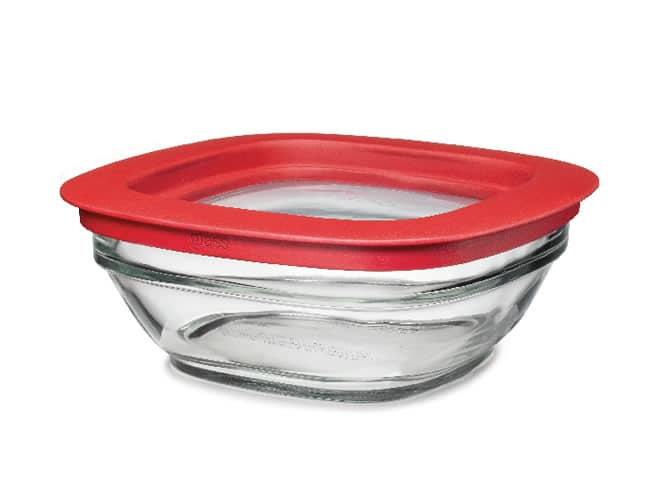
I mentioned flame retardants in baby products earlier so let’s dive into that deeper. There is a lot of research on flame retardants to assess out there because there are hundreds of types of flame retardants. Items that are affected include furniture, mattresses, electronics (laptops, phones, TVs!),  wires and cables, construction and insulation materials, fabric in clothing, and so much more. Similar to the endocrine inhibitors we talked about, these flame retardants chemicals are not chemically ‘stuck’ to the materials they are in, so they can ‘leach’ out over time, just the same as endocrine inhibitors can leach out of food storage containers. When this happens, these chemicals mostly build up in the dust in our environments, and can contaminate our food so we ingest them directly.

Research shows that some flame retardants are more dangerous than others, so some, like PBDEs have nearly been phased out and replaced with seemingly less harmful ones like Organophosphorus flame retardants. Though the research is ongoing, and harmful effects have been observed in animals, the chemicals in organophosphorus flame retardants are not considered carcinogenic to humans. Unlike PBDEs that build up in our bodies, organophosphorus flame retardants are not stable compounds, meaning our bodies can easily break them down and get rid of them quickly.

There has been concern that organophosphorus flame retardants can alter human thyroid function, but research studies like this one conducted just 3 months ago, will assure you that even high traces of these retardants in human urine is not related to higher chances of developing thyroid issues like thyroid cancer.

Thankfully, flame retardants are regulated by Health Canada so it’s worth checking out their stance here. They have, and are still, assessing all the research out there to make sure that the chemicals added to our every day items are safe for us. They’ve already put restrictions on some types of flame retardants like TBPP and TCEP, and promise that they will put more restrictions on others if needed. So it seems we can rest assured that they have our backs. In the meantime, they do provide some tips to reduce your exposure to flame retardants ‘just in case’.

So where do the authorities on health and safety stand on all of these issues? Should you be worried about BPA and other endocrine distruptors in your food storage containers and baby products? Stay tuned until next week for part two of this series where we will get into the official recommendations and where we stand on this controversial topic.

For now what are your thoughts on endocrine disruptors?
Do you avoid certain plastics or products with BPAs or other endocrine disruptors?

Pinterest image of plastic bottles in use.

Contribution by RD2B Acadia Puddester

Abbey Sharp

Abbey Sharp is a Registered Dietitian (RD), regulated by the Ontario College of Dietitians. She is a mom, YouTuber, Blogger, award winning cookbook author, media coach specializing in food and nutrition influencers, and a frequent contributor to national publications like Healthline and on national broadcast TV shows.
www.abbeyskitchen.com/about-abbey/

Last Updated June 15, 2020. Published September 12, 2019 By Abbey Sharp 24 Comments

Can the Keto Diet Cure Your Digestion Problems and IBD? We Evaluate the Research

We look at the research to determine if the keto diet can cure your digestion problems and IBD (irritable bowel disease).

We look at the research to determine if the keto diet can cure your digestion problems and IBD (inflammatory bowel disease).

It would probably be an understatement to suggest that there’s been a lot of buzz on the internet about the ketogenic diet. It seems to be a miracle diet that can cure almost any chronic disease.
Some claim that IBD (inflammatory bowel disease) can be managed or even put into remission on a ketogenic diet, a pretty strong claim to make. But is there really enough evidence to support this claim?

What’s the Keto Diet?

Before we get started, let’s define what exactly we are talking about. The ketogenic diet is an extremely low carbohydrate, high fat diet that consists of 80% fat, 10 to 15% protein and 5 to 10% carbs. It is also sometimes referred to as the specific carbohydrate diet.

Sounds appetizing, right?

The goal of the diet is to put your body into ketosis, which causes weight loss, among other side effects.
Our body’s preferred source of fuel is glucose (sugar) which is made from the carbs that we eat.
When we don’t eat enough carbs, our body goes into “starvation mode” and starts to make ketones from fat, which are used as a secondary energy source.

Two fried eggs in a cast iron skillet.

This process isn’t very efficient (at first, at least), which can leave keto dieters feeling tired and moody.
The ketogenic diet does have evidence for managing certain health conditions such as epilepsy has also been used with cancer patients, and is sometimes use under medical supervision for weight loss, but there little evidence for treating any other health condition. We’ve gone into extreme detail on the research here.

What is IBD?

IBD (Inflammatory bowel disease) is a general term for several autoimmune diseases (including Crohn’s and colitis) of the small and/or large intestine that is chronic and can go into periods of remission.
It is often flared up by stress and irritants in the diet such as alcohol, and symptoms include pain, bloating and chronic diarrhea, sometimes with blood and/or mucous. As a result, many people with IBD are underweight as they can’t absorb enough calories from their diet.

Toilet in a washroom.

For those with IBD, their quality of life is greatly reduced; they often worry when they’re in public whether they will have access to a washroom and hope that they won’t have an accident.
On top of that, they are often tired, and feel generally unwell. The most common treatments, steroids and drugs that suppress the immune system, can have severe side effects.

So the news that diet can help is very promising for sufferers, but it’s important not to jump to conclusions without examining the science behind the claims.

Can the Keto Diet Cure Your Digestion Problems and IBD?

There is emerging evidence that the underlying cause of IBD is a bacterial imbalance in the gut. This is the reasoning behind the ketogenic diet being used to manage symptoms – gut bacteria love sugar and carbs, so by starving them, you can essentially restore balance to your gut bacteria which may reduce symptoms. This is the same argument made for the use of low carb diets for cancer patients.

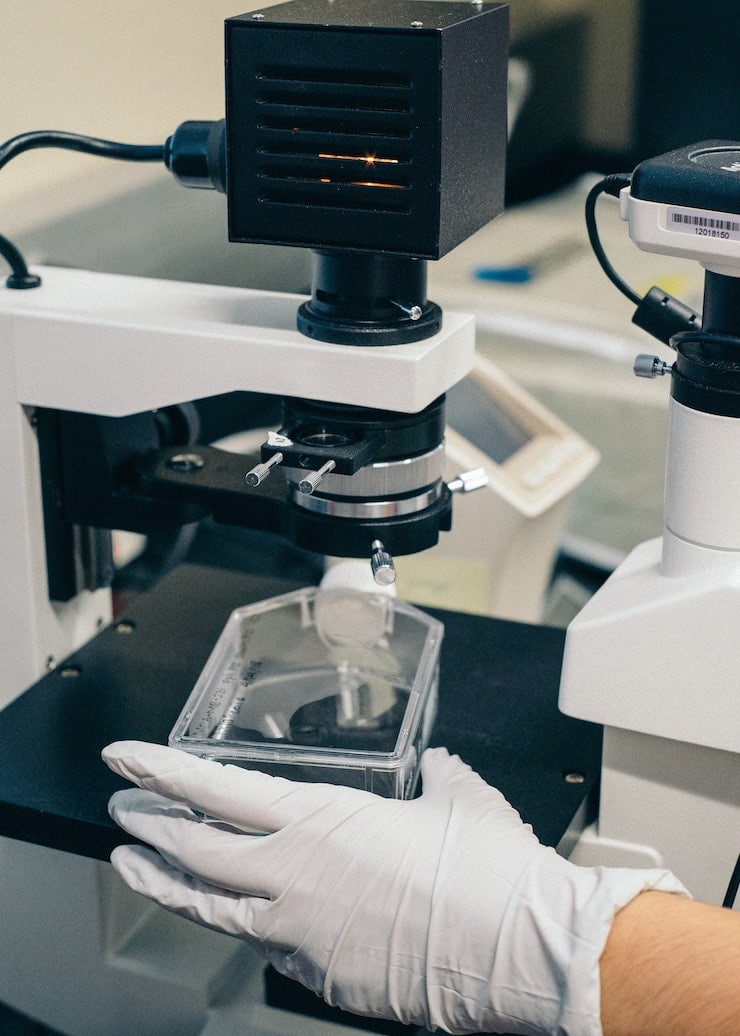
Hand working with a microscope.

The claims that a keto diet can cure your digestive problems and IBS are mostly based on one study from the Journal of Clinical Gastroenterology which showed that participants on the ketogenic diet for 12 weeks had remission from symptoms as well as changes in their gut bacteria.

The researchers noticed an effect of the ketogenic diet on IBD symptoms, but we have to be careful to jump to conclusions. Why?

1. There may be other explanations for the reduced symptoms.

The ketogenic diet is naturally low in FODMAPS (fermentable fibres in carbohydrates which can trigger gas, bloating in those with IBD and IBS). Thus, one of the reasons the ketogenic diet may reduce IBD symptoms is possibly due to the reduction of fermentable carbohydrate foods. Less fermentation means less gas and bloating. One study found that this diet also reduced inflammatory markers in the blood (suggesting reduced intestinal inflammation). The researchers claim that this reduction in inflammation could be due to changes in bacteria which could have resulted in reduced symptoms.

Over time, eating less carbohydrates, and more protein, vegetables and fats will naturally change the composition of your gut bacteria. So dieters may have fewer symptoms, but it will also reduce the diversity of bacterial species in their gut. It is generally understood among researchers in gut health that more variety of good bacteria in your gut means better intestinal health. Thus it is unknown what impact this reduction in diversity of bacterial species would have on long term health.

2. In scientific research, just because one study found an effect of their treatment doesn’t mean that is “scientifically proven”.

Yep. It takes many studies to come to the same conclusion in order to prove to health practitioners such as doctors and registered dietitians that the diet is a safe and effective treatment that they can use with patients.

Most importantly, as with any diet, the question you must ask yourself is, “is this diet sustainable for the long term? Can I see myself on this diet several years from now, and possibly for the rest of my life?”

For the vast majority of people, likely not.While the diet may have less side effects than medication, it is very difficult to adhere to long term.

Why?

Our bodies require carbohydrates for energy; when you eat very little carbs you will be tired and likely experience mood changes, at least in the beginning as your body gets used to running on ketones.
We are a carb based society, and most social events are based around food, so it can be very difficult for someone to resist the urge to eat carbohydrates.

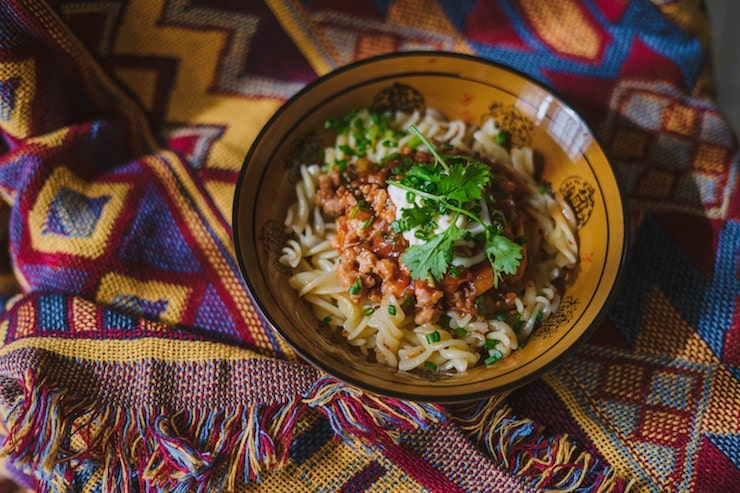
Bowl of pasta with tomato sauce.

The diet requires a ton of planning, food preparation and cooking so someone with a busy lifestyle would not be able to rely on convenience foods. Most people would have to completely change their lifestyle and start cooking everything from scratch. That’s not necessarily a bad thing, but may not be realistic for all.

It is not an enjoyable diet to a lot of people. Honestly, it’s hard to eat a diet of 80% fat; who wants to sit down to a meal of veggies and meat smothered in oil? Most people would have a hard time digesting this much fat, and may experience indigestion and nausea.

People with IBD already have a poor food intake due to symptoms, and may be underweight. Low carbohydrate diets often result in significant weight loss, so this would not be safe for someone with IBD.

Hand holding measuring tape.

So, what can we take from this? If you are suffering from IBD, IBS or digestive problems in general, and you are looking to reduce your symptoms with diet, you can try the following under the guidance of a registered dietitian:

  • Reduce FODMAPS, then reintroduce them one at a time. You may be able to tolerate some FODMAPS in small portions.
  • Instead of cutting out carbohydrates altogether, choose mostly whole grain carbs that are lower in FODMAPS such as quinoa, brown rice and sweet potato.
  • Reduce or avoid refined sugars (sugary drinks and desserts) which feed bad bacteria and cause gas and bloating.
  • Balance your gut bacteria with both diet (fermented foods) and probiotic supplements
  • Try ginger or peppermint tea (or peppermint oil capsules) to reduce symptoms
  • Manage stress: stress can flare up symptoms so manage your stress through exercise, chatting with a friend or loved one, and participating in hobbies and activities you find enjoyable

Bottom Line

It can be tempting to dive into a trendy diet that promises relief from the horrible IBD or IBS symptoms you experience, but the research is still fairly young. If you want to learn more about how to manage your IBD or IBS with diet, see a registered dietitian for information you can trust.

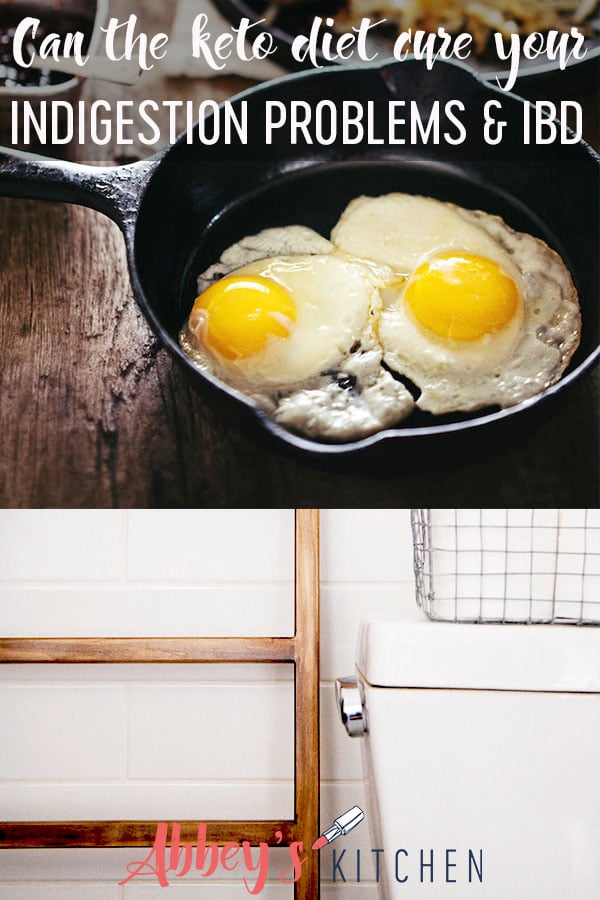
Eggs in a skillet and toilet.

Contribution By: Holly Bradich

Abbey Sharp

Abbey Sharp is a Registered Dietitian (RD), regulated by the Ontario College of Dietitians. She is a mom, YouTuber, Blogger, award winning cookbook author, media coach specializing in food and nutrition influencers, and a frequent contributor to national publications like Healthline and on national broadcast TV shows.
www.abbeyskitchen.com/about-abbey/

Last Updated August 30, 2022. Published September 11, 2019 By Abbey Sharp 10 Comments

Why the WW Kurbo App for Children & Teens Will Do More Harm Than Good

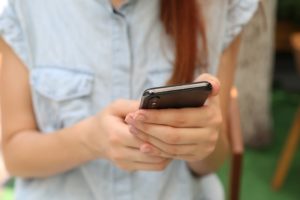
Hands holding a cellphone

With the launch of WW’s Kurbo app for children, I shed some light on why you should be way more worried about weight loss apps and dieting in general than your kid gaining weight.

I’m reeling right now, I’m not going to lie. But I’m going to try my DAMN best to keep my cool while writing this blog post. No guarantees. It’s time I finally break my silence on this WW Kurbo app for children and teens.

If you’re unaware of this app, I’ll give you the 411. WW, formally known as Weight Watchers, just released their new kid-centric app directed at 8 to 17 year olds. Yup, as young as 8 years old. Ready to riot yet?! Their new app promises to help our little ones with goals like “lose weight”, “boost confidence” or the most cringeworthy: “Make parents happy”.

SO. F*CKING. GROSS.

Before I put on my dietitian hat, I want put on my mom hat for a hot minute. As a fellow parent, I absolutely empathize with parents who feel that they want to do whatever they can do to help their kids live a healthy and happy life. Especially since the research tells us that “overweight” kids are more likely to experience anxiety and depression compared to other kids. This is all because of the way our society views weight and significantly stigmatizes “overweight” and “obese” persons. Children then have to carry these burdens as their grow up, which not only affects their personal relationships, but also translates to poorer sleep, psychological stress and lower academic performance. These are scary facts, and I can understand why parents want to do everything they can to protect their children, but this app will not do that, and may actually do more harm than good.

Let’s take a look at some of the reasons why we need to BOYCOTT the F out of this WW Kurbo app today.

Why the WW Kurbo App for Children & Teens Will Do More Harm Than Good


Food Cannot be Categorized as Good, Bad, or Sometimes Okay

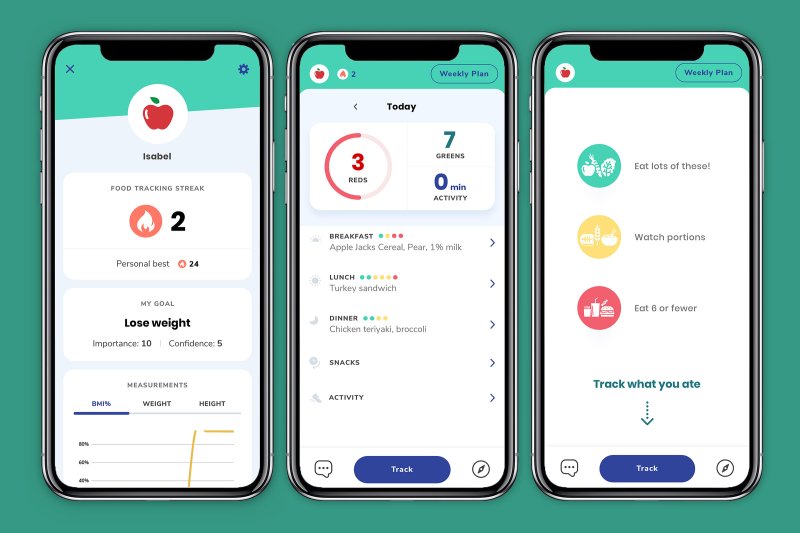
Screen captures of a calorie counting app

Screenshots from Kurbo by WW

Kurbo uses a “Traffic Light” system to categorize different foods. Green light foods include vegetables and you can enjoy those freely, while yellow light foods include pasta which you can enjoy in moderation, and finally red light foods include soda and candy which should be limited as much as possible.

WW has described the Kurbo app as a “holistic tool”, not a diet. But what they’re actually doing is creating a more preschool-friendly calorie counting strategy. In fact, I would argue that categorizing foods into three discrete categories is even MORE damaging and detrimental than calorie or points counting, while teaching kids legit NOTHING about nutrition.

I mean, if you label a food like almond butter (which is a RED food by WW;s F***ed up standards) as a red light food, they;re never going to eat almond butter again. Alternatively, labelling foods as “bad” may make kids want them more. Research suggests that foods we associate with guilt like chocolate cake, are harder to resist overeating. Do we really need a whole generation of kids binging on not only chocolate cake, but now ALMOND BUTTER AS WELL?! What the actual F.

The Nutrition Recommendations Themselves are BUNK

As a Dietitian, I have a hard time understanding the criteria for the categorization system. Under the traffic light system, my son’s breakfast of full fat plain yoghurt with banana, plus a slice of fresh sourdough bread toast with almond butter would likely rack up to THREE red strikes. How insane is that? From a nutritional standpoint, his breakfast is balanced, nutritious and satiating. Instead, Kurbo is teaching our children to fear basically all food that contains fat, salt and flavour and that FUEL their body with anything more than air. NO THANK YOU.

Dieting in Children Increases Eating Disorder Risk

WW’s CEO, Mindy Grossman, sees the Kurbo app as an opportunity “to change the health trajectory of the world”. If researchers still haven’t found a way for the majority of adults to lose weight, how can we expect growing children to be able to full it off? The fact is, the words “diet” and “children” should NEVER (that deserves CAPS) be said together and research has told us why, many times. Diets don’t work in the long term, and even if you do in the short term, evidence tells us 90-95% of people regain the weight and then some.

What Kurbo also fails to realize is that diets lock people into a life time of weight cycling, also known as yo-yo dieting. The evidence suggests that constantly going up and down in weight is actually worse for health than having a consistent higher BMI. Weight cycling puts a significant amount of stress on the body and has been shown to increase one’s risk of high blood pressure, inflammation and even early death. It also puts a lot of stress on us emotionally. The constant battle between feeling ashamed for your body and eating behaviours, the short lived satisfaction of losing a few pounds, and then devastating guilt and shame when the weight piles back on. It’s totally bad news bears.

Most problematically, adults and children that go on diets are at a much higher risk of developing eating disorders. However, even given that strong evidence, the people behind the WW Kurbo app refuse to believe it.

In an article by The Atlantic, WW’s chief science officer cited an analysis that found no increased prevalence of eating disorders among “overweight” and “obese” minors in weight-loss programs. However, the study did not examine internet-based weight loss methods like an app. Furthermore, the Kurbo app isn’t professionally monitored and if you pay beaucoup bucks for the premium package to get one-on-one coaching, you’ll find that the coaches don’t need any background in nutrition or dietetics. WTF? Such massive space for error!

The reality is that dieting interferes with our innate ability to listen to our body and hunger cues, and severe restriction is bound to be followed by a binge when we accidentally “slip up”. This inevitably leads to a lifetime of the restrict, binge, repeat cycle which significantly increases a person’s risk of life threatening disordered eating behaviours. I say life threatening because eating disorders have the highest mortality rate among all mental illnesses, even higher than depression. THAT is why I’m so pissed about the WW Kurbo App. Apps like these are the gateway drug to this all.

Preteens and Teens NEED to Gain Weight and Fat

Multiple children sitting with their backs to the camera in a field

First, the way our bodies store fat is largely genetic. Some people hold genes that promote greater fat storage than others, even when their food environment is the same. Some people hold more fat in their legs, while others hold more in their stomach. Considering we all have our own unique genetic makeup; we really should appreciate the fact that we are going to have our own unique body composition, too.

Enough fearing fat because it’s extremely important for our health. Body fat is key for keeping our organs protected temperature regulation, cell signalling and for maintaining hormone levels.

For children, body fat plays a vital role in growth and development. During our teenage years, we begin to make hormones (testosterone for boys and estrogen/progesterone for girls) that cause our bodies to go through dramatic transformations, such as getting taller, developing breasts for girls, menstruation, body hair etc. For these important physiological changes to happen, we need to have adequate fat stores so our bodies can produce these hormones. For girls, having sufficient fat stores is essential for starting and maintaining a healthy period. If a young girl does not have adequate nutrition and fat stores, this may stunt growth and delay sexual maturation. Unfortunately, young girls that try to prevent natural weight gain are at a higher risk of a delayed period and may take a long time to resume normal growth.

Promotes Fat Phobia

One of the most disturbing parts of the Kurbo app are the before and after photos and the kid’s “success stories”, all of which look really creepy to me. Reading the quotes from parents on their website totally freaked me out. Diet culture makes it seem like manipulating the body is as easy as having greater will power, but in reality these poor kids are probably fighting so hard and falling so deep into disorderly thoughts that they no longer know how to trust their body or food.

Weight Stigma and Weight Cycling is a Much Bigger Problem Than Weight

Birds eye view of a diet detox book on a wooden surface

It’s really important to mention that the pressure of losing weight and attaining unrealistic beauty standards isn’t going to help a person achieve good health. Research suggests that weight is NOT associated with mortality rates as much as fitness is, regardless of how thin (or not thin) it makes your body. This is also true for diet. A meta-analysis found that dietary interventions like eating more fiber and following a Mediterranean diet, reduced the risk of diabetes, improved blood pressure, blood sugar and cholesterol levels, even without accompanying weight loss. In other words, body weight is not an effective marker of good health.

In contrast, weight stigma is. When a person experiences weight stigma (that is, being judged for their size), they are more likely to engage in unhealthy eating behaviours, avoid visiting the doctor and disengage in social activities. In contrast when someone feels confident in their body, they’re more likely to engage in healthy lifestyle behaviours and feel more in control of their health, regardless of the number on the scale.

A systematic review found that interventions that focused on positive health behaviours, like healthy eating behaviours, intuitive eating and increased physical activity, were more successful in improving health and reducing their risk for health issues like heart disease and depression. In that same study, they found that diets that were restrictive and focused on body weight showed little to no improvement on health.

Bottom line: We need to pay attention to our behaviours, not our body size, when it comes to health.

Kurbo Puts Blame on the Child

One of the major qualms with apps like Kurbo is they put all the blame and responsibility on the child for being in a larger body. In reality, there are a lot of other factors that may play a role in their body weight. Factors include their demographics, where they live and their family’s socio-economic status. The app tells them that they should eat green light foods like fresh fruits and vegetables, but what if the child doesn’t have access to these foods because they live in a food desert? What if their family can’t afford fresh produce? What if they can’t even afford to see a doctor for regular check ups? These are questions a weight loss app can’t answer, and apps like these will never address those fundamental social determinants of health that shape their health outcomes.

Diets Don’t Work

I feel like I need to yell this bottom line from the rooftops. DIETS DON’T WORK. Weight loss companies love to show “before and after” photos, but did you notice that they never show follow-up photos a year later? Sure when people start a diet, they may start to lose weight suddenly, but the evidence has shown that 90-95% of these diets fail and most of the weight lost is regained and then some a few months or years later. Let’s talk about The Biggest Loser, for example. In a 2016 study, researchers found that participants gained almost all their weight back and that their restrictive diet severely ruined their metabolism. In other words, even though they ate less food, they still ended up gaining their original weight back. While many people change their lifestyle to improve their health, the research continues to show us that weight loss diets are not the solution and can do more damage than good.

What Should We Do if Our Kid is “Fat�

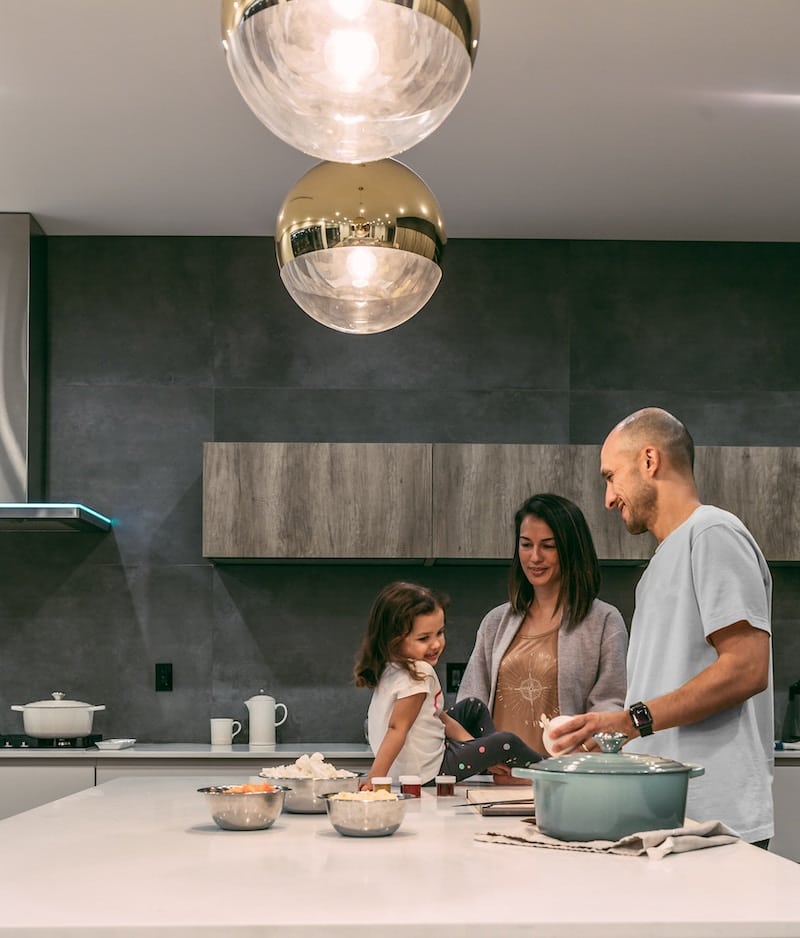
Family cooking in kitchen

If the WW Kurbo App isn’t the solution, what is a concerned parent to do when they, their family members or their child’s doctor points out that their kid is “fat” and needs to lose weight?

Do Nothing at All

Research tells us

when when we talk about weight and dieting with our kids, our kids are at a higher risk for both obesity and eating disorders so don’t. The idea that by informing your child that they’re “heavy” they’ll all of a sudden get motivated for behaviour change is ridiculous. In reality, weight stigma does the opposite and prevents kids from being motivated or capable of making changes. So this may be hard to hear as a parent, but the best thing you can do is: nothing. Instead, your work as a parent should be focused on modelling healthy eating habits, positive body image and promoting an intuitive eating environment.

Promote an Intuitive Eating Environment

Instead of focusing on restricting food and vilifying it, work with your child on promoting intuitive eating. Avoid playing moral judgement on food with “good food” or “bad food” dichotomies and find more neutral language to use.

Instead of saying: “eat your broccoli, it’s good for you”
Say: “we love broccoli because it’s delicious and helps us grow”

Emphasize Body Positivity

Kids playing

Teach your kids to appreciate the amazing things their body can do, such as running, jumping, climbing and lifting. This helps to show them that their bodies – regardless of size – are capable of doing lots of great things.

Change How You Talk About Food & Your Body

Children learn how to have a healthy relationship with food by watching how their parents relate to food. That means it’s really important that you never associate certain foods with your body or worth.

Avoid phrases like: “oh I have been so bad, I ate cake” or “I’m too fat as is to eat pie today.”

These phrases not only perpetuate fat phobia and weight stigma, but also teach kids that our worth is derived from the food we eat and the size or shape of our body.

Instead, try out something like: “Grandma baked this pie with love, I’m sure it’s going to be delicious, let’s enjoy it as a family together.

Research shows that if a parent openly expresses dissatisfaction for their body, their child is more likely to diet into the future. As a very influential role model, it’s important to never criticize your body, theirs, or anyone else’s in their presence, and remind your children that we all come in different shapes and sizes.

This Dietitian’s Thoughts on the WW Kurbo App for Children & Teens

Smart photo with social media icons.

Moms and dads (and anyone else who cares for or loves a child) – let’s call Kurbo out for what it truly is – a money hungry attempt to hook customers for life with fat phobia and disordered eating thoughts and behaviours. We need to start breeding a new generation of people that respect and love all bodies, rather than teaching them to fear and loathe themselves when they’re not a size 2.

Wake up Weight Watchers. Take the WW Kurbo App off the market TODAY.

pinterest image of a variety of images relating to children and weight loss with text overlay

Contribution By: Katey Davidson, RD from https://tasteofnutrition.com/

Edits By: Sofia Tsalamlal, RD, MHSc Nutrition Communication

Abbey Sharp

Abbey Sharp is a Registered Dietitian (RD), regulated by the Ontario College of Dietitians. She is a mom, YouTuber, Blogger, award winning cookbook author, media coach specializing in food and nutrition influencers, and a frequent contributor to national publications like Healthline and on national broadcast TV shows.
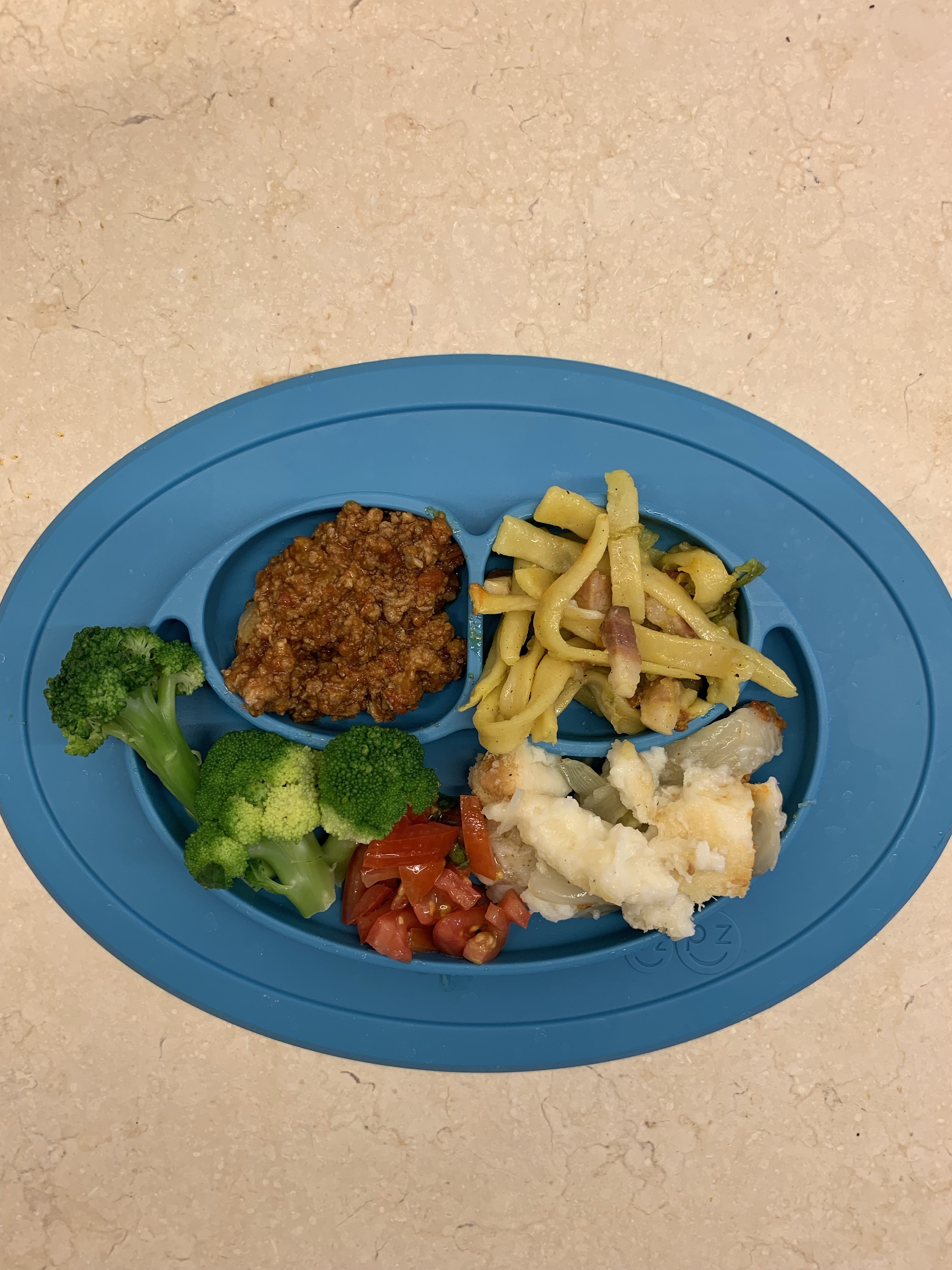
www.abbeyskitchen.com/about-abbey/

Last Updated July 29, 2020. Published September 5, 2019 By Abbey Sharp 67 Comments

PCOS Diet Part 2 – What to Eat to Manage Your Polycystic Ovary Syndrome

I discuss the research on the PCOS diet and what to eat if you want to better manage your polycystic ovary syndrome symptoms without dieting.

Thanks for joining us back for part 2 of this PCOD Diet tell all. In part 1, we covered what PCOS is, the medications for it, and the persistent notion that losing weight is the only management strategy. In this part, we will critique that perception and look at the types of foods to focus on without dieting instead.

Can Dieting Worsen PCOS?

Julie Dillon, a pretty rad RD that specializes in PCOS, makes a strong case that the more dieting attempts we do, the further away we get from managing our PCOS symptoms.

An image of a scale with measuring tape on top.

First, a little background on dieting for weight loss in general. It doesn’t work. Evidence, you ask? Along many (including the Biggest Loser studies I spoke about here), there’s a classic Finnish study that was conducted on twins that concluded that dieters were more likely to gain weight compared to non-dieters (dieting was defined as the number of times an individual intentionally lost 5kg in their lifetime). Here are a few explanations for this result:

1. Restriction = Overeating

The minute we restrict something in our diet, we become preoccupied with it and are more likely to binge on it. This theory was originally discovered in a famous 1940s study known as the Minnesota Starvation Experiment. Subjects were basically starved, then given a restricted diet and then an unrestricted diet. During the restricted diet phase, subjects became obsessed with food and during the unrestricted phase, subjects would binge which resulted in some subjects re-gaining more weight compared to their pre-study weight. You don’t need a classic study to prove that- we all do it, every time we go on a new trendy cleanse. We get hangry and we binge.

A close up of multiple chocolate cupcakes with rainbow sprinkles on top.

2. Slows Metabolism

As soon as we restrict calories, our body goes into starvation mode, and our metabolism slows down, so instead of burning calories, our body tries to conserve as many calories as possible. The result? We gain weight. Not just some weight, but usually all of it right back again.

3. Set Point Theory

Our bodies have a happy place where they feel most comfortable- we call it homeostasis. This is called the set point theory which states that our body has a specific weight range, and no matter what we do, our body will fight to stay in that range. When we diet (to lower our body weight), our body produces hormones to make us go ga-ga over food and increase our hunger. It fights like hell to get us back to homeostasis. Sadly, we tend to gain MORE weight than we lose so set point only ever goes up.

Dillon purports that continually restricting calories promotes a state of inflammation, which spikes our insulin response. With more insulin in our body, two main things happen: a) it perpetuates the PCOS symptoms by interfering with our menstrual cycle (again), and b) we crave carbs, binge, and gain weight (aka. exactly what we were trying so hard to avoid!)


Non-Weight Loss Driven Diet Recommendations for the PCOS Diet

So knowing that long term weight loss is not a FEASIBLE response to any problem (and in fact, may WORSEN the condition), I wanted to look at some lifestyle to managing your PCOS symptoms.

PCOS and Vitamin D

It has been estimated that the prevalence of vitamin D deficiency in women with PCOS is close to 60-80%. Due to this statistic, there have been a handful of studies that have looked at the association between PCOS and vitamin D. Some studies have attempted to make the association that vitamin D deficiencies may cause increased insulin resistance and menstrual cycle irregularities. In a small sample size of eleven women with PCOS, a short duration of vitamin D supplementation improved insulin resistance. In another small trial study, 13 women who were deficient in vitamin D had their menstrual cycles resume when given vitamin D supplementation, and some were even able to get pregnant. However, in another study, women were given vitamin D for 6 months and there were no significant results. More research is needed to make the case for vitamin D supplementation to improve PCOS symptoms. Regardless of whether or not it has a significant impact on PCOS, according to a 2013 report by Statistics Canada, one third of Canadians are deficient in vitamin D. Some foods that are rich in vitamin D that may be great additions to your diet include salmon, cod liver oil, tuna, and fortified cheese, eggs and milk and you can also speak to your doctor about taking a supplement.

Fish oil supplements

PCOS and Inositol Supplements

Inositol is a member of the B vitamins – it is naturally found in fruits, beans, grains and nuts and is also made by the body. Inositol acts by improving glucose metabolism, thereby requiring less insulin secretion. An RCT that involved 281 women found that those who took the inositol supplement experienced increased ovulation frequency (23%) compared to those on a placebo (13%). Individuals taking inositol also saw an increase in circulating HDL (good cholesterol) in the blood compared to the placebo group. Finally, individuals taking inositol experienced significant weight loss compared to the placebo group. Weight loss aside, the supplement does show some promise at improving ovarian function for women with PCOS so it may be worth speaking to your doctor about an appropriate dose.

Pills coming out of a bottle.

Fighting Cravings with Protein, Fibre & Fat

Adding lean protein, high fibre carbs and healthy fats in every meal helps keep us satiated for longer which may help you curb your cravings for refined carbs caused by soaring insulin. For example, pair that piece of bread with peanut butter or an egg to boost the protein and healthy fats.

Eat Regularly and Don’t Diet

When we let ourselves get too hungry, our blood sugars get too low, and then spike up when we finally do let ourselves eat. Restricting also sends us into a binge and restrict cycle which results in weight gain and metabolic disorders.

Get in your daily exercise

Exercise can moderate insulin levels and help us better acknowledge our hunger cues. Aim to get in at least a half hour of movement each day, and choose something you love!

Image of a person wearing running shoes walking up stairs

Quit Smoking

One study looked at the association between smoking, testosterone and insulin levels in women with PCOS. They found that women with PCOS that smoked had higher androgen levels and insulin resistance compared to non-smokers so put the smoke out!

Pile of cigarettes

Stress Less

Research has shown that stress can have a serious impact on our reproductive system, causing menstrual irregularities which compromises fertility. When we get stressed, one of the many hormones we release include adrenal androgens, and as we know, some women with PCOS have an increased level of androgens in our body which contributes to those unfavorable symptoms. As mentioned earlier, women with PCOS experience higher levels of anxiety and depression, so stress management can be a key tool to manage symptoms. So find something that gives you peace in the day. Maybe it’s meditating for twenty minutes or going for a walk to clear your head.

Avoid the Dirty Dozen

While the research in this area is certainly controvercial, and my honest opinion is if it comes down to conventional produce or less produce in your diet, I would say conventional all the way, cutting back on pesticide and hormone exposure may be helpful. Some research suggests that excessive pesticide consumption may be linked to fertility and ovulation dysregulation, so if you’re trying to conceive, you may want to focus on at least buying the “dirty dozen” organic. That means apples, peaches, nectarines, strawberries, grapes, celery, spinach, bell peppers, cucumbers, cherry tomatoes, snap peas and potatoes.

Variety of fruits in a while dish.

Where I’m at with my PCOS

As mentioned, I was diagnosed after coming off the pill and waiting months for my period to come back with no avail. After a bunch of tests, a fertility specialist told me I had PCOS and I assumed they made a mistake. I’m not overweight, I don’t have a hairy face, my blood sugars are perfect. I’m healthy! I had so many questions and a world of misinformation online. But alas, many weeks and meds later, and I’m still struggling to ovulate and get a period. I’m on a wack load of supplements – prenatals, inositol, vitamin D, omega 3, co Q 10, and also lots of meds.

I tried metformin. Lots of morning sickness and blood sugar lows but no period.

I tried metformin + a low dose of letrozole. Almost (I got SO excited), but nope (I cried. A lot).

Metformin + double the first dose of letrozole. Nothing except even worse GI issues.

Now I am on metformin + triple the original letrozole + dexamethasone. I’ve almost vommed more than once but I’m riding it out.

The bottom line is, PCOS is frustrating. It doesn’t make sense and it’s no ones fault. You and I haven’t done anything wrong. Nutrition is just a very small piece of the puzzle (and the PCOS diet shouldn’t be stressful), along with basic stress management and medicine. I hope you now feel like you’ve got a bit more information to help you manage your PCOS symptoms and know that weight loss isn’t the only solution. Remember that this post is in no way a replacement for treatment by a healthcare practitioner. To get tailored dietary advice that is individualized for you, speak with a registered dietitian that specializes in the management of the PCOS diet. And don’t forget to head over to Part 1 for the background scoop.

IN THE MEANTIME, I WANT TO KNOW:

HAVE YOU STRUGGLED WITH PCOS OR INFERTILITY?

WHAT ARE YOUR THOUGHTS ON LOSING WEIGHT FOR PCOS?

LEAVE ME A COMMENT BELOW WITH YOUR THOUGHTS!

pinterest image of Two plates filled with food on a blue background with text overlay

Photo Credit: https://www.freshnlean.com/vegan-b12-sources/

pinterest image of a person walking up stairs above an image of fruits and vegetables with text overlay

In collaboration with Sofia Tsalamlal, RD

Abbey Sharp

Abbey Sharp is a Registered Dietitian (RD), regulated by the Ontario College of Dietitians. She is a mom, YouTuber, Blogger, award winning cookbook author, media coach specializing in food and nutrition influencers, and a frequent contributor to national publications like Healthline and on national broadcast TV shows.
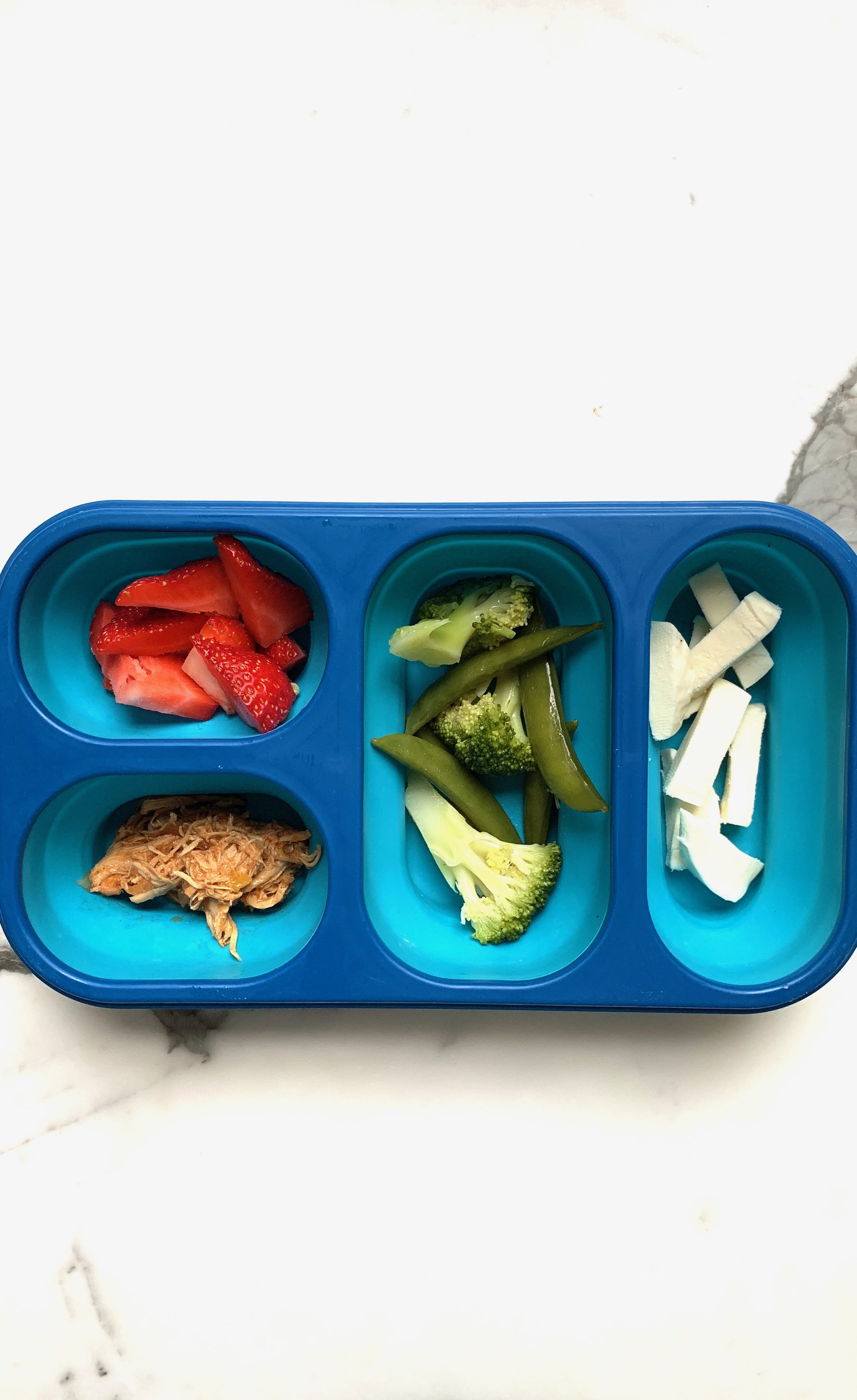
www.abbeyskitchen.com/about-abbey/

Last Updated July 24, 2020. Published September 3, 2019 By Abbey Sharp 41 Comments

Going ALL IN to Gain Weight to Get Pregnant and Get Back Your Period with HA vs PCOS

tampons on a blue background

We answer the questions do I need to gain weight and go all in to get pregnant and get back my period with hypothalamic amenorrhea (HA) and how does it differ from PCOS?

Having children is a lifelong dream for many people. It’s something some of us have dreamt of since we were children ourselves. Unfortunately for some of us, by the time we actually want to get pregnant, we realize it’s not as simple as having unprotected sex. In fact, a full-term pregnancy can seem like an actual miracle.

Infertility is a heartbreaking struggle that many people experience. In fact, 1 in 6 couples have difficulty getting pregnant. While there is no official definition of infertility, it’s commonly defined as the inability to conceive after a reasonable period of unprotected sex. For women under 35, this is about a year of trying and for women over 35, it’s about 6 months.

There are several reasons for infertility and both women AND men can experience it (sometimes both partners at the same time.)

Unfortunately, women’s fertility begins to decline in their mid-30’s (although this is very individual!) So, simply being older is a common reason why women struggle to get pregnant. Previous STIs, hormone imbalances, endometriosis, uterine polyps or fibroids, blocked fallopian tubes, and menstruation difficulties are other common causes of infertility.

Why your Period is Important to Getting Pregnant

tampons on a blue background

Although we sometimes wish didn’t get our period, it’s actually a very important indication of health.

A female menstrual cycle lasts between 28-30 days and involves a variety of important reproductive hormones. To be brief, the hypothalamus in our brain releases a hormone called Gonadotropin-releasing hormone (GnRH) which works on another part of our brain called the pituitary gland. This causes a release of two hormones called luteinizing hormone (LH) and follicle-stimulating hormone (FSH). Together, LH and FSH act on our ovaries to release estrogen and progesterone, which allow for our uterus to prepare for pregnancy by creating a thick sticky lining. Around week 4 of the cycle and no sperm in sight, this lining begins to shed and is what we know as our period.

If there are irregularities or no period at all (known as amenorrhea), then this can be a sign of a health problem.

Amenorrhea is defined as the lack of a menstrual cycle for 3 or more months in women that have previously had menstrual cycles. While birth control and genetics may play a role in amenorrhea, the most common causes of amenorrhea include polycystic ovarian syndrome (PCOS) and hypothalamic amenorrhea (HA).

For more information on hypothalamic amenorrhea, I highly recommend this book: No Period, Now What?

Here’s the problem: these two very different conditions are often misdiagnosed for one another, yet the treatment and recommendations are completely opposite. If you’ve lost your period and are wondering if you need to gain weight to get pregnant or perhaps lose weight to get pregnant, you’ll want to get a clear understanding of the differences between HA and PCOS. In this post we break it down.

What is PCOS? Who’s at risk?

Women holding hands in a line.

PCOS is one of the most common endocrine disorders in pre-menopausal women and affects a whopping 1.4 million Canadian women or about 12% to 18% of the female population.

Unfortunately, researchers aren’t sure why women develop PCOS, but it has three main features and you must have at least two to be diagnosed:

  1. High levels of androgen (male) hormones such as testosterone
  2. Irregular or missing periods
  3. Numerous cysts in the ovaries (“polycystic” translates to “many cysts”), usually diagnosed as 25 or more cysts.

Insulin resistance and genetics appear to play a role in PCOS. When insulin levels are high, this can lead to an increased production of male hormones. While many believe that weight loss helps with PCOS, it often ignores the risk of disordered eating and weight cycling that follows. Instead, focus should be on healthy eating habits that are designed to fuel your body, rather than depriving it. This may include working with a dietitian to review how your body responds to certain foods.

Usually women who present with PCOS have lower female hormones, such as luteinizing hormone (LH) and follicle-stimulating hormone (FSH), and higher levels of male hormones. This leads to a disruption in ovulation and can prevent a complete menstrual cycle from happening.

In the chart below, you can see how women with PCOS have altered hormone levels.

Chart with PCOS information Common signs of PCOS include:

  • Weight gain, especially around stomach
  • Higher body weight – over 50% of women diagnosed with PCOS have a BMI over 30
  • Insulin resistance
  • Excess hair in uncommon areas such as the face, chest, abdomen, and back
  • Hair loss on scalp
  • Acne
  • Dark patches of skin in body creases (e.g., groin, neck, under breasts)

When it comes to physical symptoms (see below), it can vary from person to person.

Chart with PCOS informationIt’s important to note that not all women present with these symptoms and not all women with PCOS are overweight. In fact, many are of normal weight and still have PCOS (oh hi there, that’s me- you can read all about my PCOS journey here).

What is Hypothalamic Amenorrhea (HA)? Who’s at risk?

Melting red popsicle

Hypothalamic amenorrhea (HA) is defined as loss normal menstruation for 3 months or longer and is usually due to low calorie intake, excessive exercise, psychological stress, genetic predisposition, or a combination.

Remember earlier when I mentioned our menstrual cycle heavily relies on the hypothalamus? Well, that’s why this condition is called hypothalamic amenorrhea! Since it describes the symptom (aka no period) and the reason for it (the hypothalamus).

While both HA and PCOS can result in loss of period, the main difference is that HA is usually related to lifestyle influences, while PCOS is an endocrine disorder.

HA affects approximately 1.62 million women in the US or about 17.4 million women worldwide, although it’s likely much higher in women who participate in sports that require leanness, such as ballet, figure skating, and physique competitions (or bodybuilding).

The main driver of HA is a large energy deficiency, which comes either from extreme exercise, undereating, or both. This also means that ANY woman can experience HA, regardless of their body size since we all have our own unique set points. In other words, you don’t have to look like a fitness model to lose your period and have a difficult time getting pregnant.

According to an expert review in The Journal of Clinical Endocrinology and Metabolism, decreasing daily calories by 470 – 810 calories (or less than 30 calories per kilogram body weight per day) has been linked to a higher risk of HA. This paired with excessive high intensity exercise places you at an even greater risk.

Psychological stress can also lead to HA. In fact, research has shown that women with HA tend to have “”perfectionist” tendencies. Our body’s menstrual cycle is heavily influenced by stress. Stress can be psychological, such as ongoing stress at work, home, in our relationships, and so on. Stress can also be physical, meaning over-exercising or not providing enough calories can cause significant stress on the body. This stress heavily influences activity of the HPA axis (aka. hypothalamic-pituitary-adrenal axis) which is one of our main stress response systems.

Ongoing stress causes the body to release high levels of cortisol, a stress hormone which decreases levels of GnRH (Gonadotropin-releasing hormone), which if you remember is responsible for LH and FSH.

When these levels are low, we may lose our period and as a result, may have a difficult time ovulating and getting pregnant.

Common signs of HA include:

  • Amenorrhea (lack of period)
  • Digestive problems
  • Impaired immune system
  • Brittle hair & nails
  • Always cold
  • Extreme hunger

When it comes to HA, women do not present with the same physical symptoms as women with PCOS. This is outlined in the chart below:

Chart with HA and PCOS informationA common concern among women with HA is the risk of weak bones. Although many women with HA do weight-bearing exercise, which is important for building strong bones, they may still have bone loss due to their restrictive eating habits and/or being underweight. Furthermore, women with HA also have high circulating levels of cortisol, which is linked to increased bone loss. This is especially concerning for women in their teens and early twenties, as this is when we reach our peak bone mass. If the body does not achieve an ideal bone mass by this age, it puts the woman at greater risk of osteoporosis later in life.

HA is usually a diagnosis of exclusion, meaning your doctor will rule out other disorders first, such as thyroid issues, PCOS, and ovarian insufficiency. Usually, HA is defined as lack of a period for at least 3 months and low female reproductive hormones, usually accompanied with extreme energy restriction.

Again, women with HA have different hormone levels than women with PCOS, which is outline in the chart below.

Chart with PCOS and HA information

How does treatment differ for HA and PCOS?

Doctor crossing their arms holding stethoscope

When it comes to HA and PCOS, treatment is VERY different, which means it is crucial that you get a proper diagnosis.

For PCOS, especially in women who have a high BMI, weight loss is usually recommended along with medications to normalize your estrogen levels, stimulate your ovaries, and/or improve insulin levels (like metformin). This means that your doctor may recommend eating fewer calories and exercising more. However, diets usually lead to a cycle of weight loss and weight gain, which can make PCOS symptoms even worse. Fortunately, lifestyle changes such as moderate exercise and intuitive eating can be effective in managing PCOS and doesn’t require you to fall victim to diet culture. You’re better off focusing on foods that fuel and satisfy you, which can still keep insulin levels in check without depriving yourself.

Unlike with PCOS where I feel that purposeful weight loss below one’s set point should not be the goal, with HA weight gain is often necessary. This is done through increasing calories and decreasing exercise frequency and/or intensity. This can be very scary for most women, since our society unfortunately paints weight gain as the worst thing that could happen to us (reality check: it’s not!)

Do I Need to Gain Weight to Get Pregnant with HA?

According to Dr. Nicola Rinaldi, leading expert in HA, very likely yes. If the goal is to get a period and get pregnant, many experts recommend drastically increasing caloric intake to wake your hypothalamus into action, a method sometimes referred to as going “All In”.

How do I Go All In to Gain Weight with HA?

Women standing on a scale.

Now, before you think this idea is crazy and overwhelmingly scary, too much so to even entertain, hear us out. There is real evidence behind  going all in to gain weight to get pregnant.

During periods of calorie restriction, the body tries to protect itself from starvation by slowing its metabolic rate so that it burns fewer calories. So, for women with HA, they’re likely metabolically inefficient. This means that their body requires more calories than normal to restore body weight and maintain regular body function. Considering most women need somewhere around 2,000 calories per day, a person with HA will need to eat well over this to restore their metabolism just back to baseline, so most experts recommend somewhere between 2500-5000 calories.

By gaining weight, you are taking your body out of metabolic stress, which allows hormone levels to normalize and resume a regular period. In fact, many doctors state that a BMI of 20-24 is the “fertility zone” and increases your likelihood of getting pregnant. This means that if your BMI is 19 or lower, you may have difficulty conceiving a child.

Decreasing exercise intensity and frequency is also crucial to HA recovery. The body needs to be in an energy surplus to gain weight, which is difficult if you’re still exercising at high levels. Furthermore, we want to decrease the level of stress on the body. Since exercise is a type of stress, this doesn’t give the body enough of a chance to recover properly. I know for a lot of us we think that exercise is actually a stress reliever- and it can be! But when your body is under metabolic stress, as is the case with HA, the impact exercise has on cortisol is counterproductive to recovery.

Finally, treatment usually involves working with a team of trained professionals who specialize in disordered eating. In addition to diet and exercise, many people also undergo Cognitive Behavioural Therapy to help identify positive coping strategies to replace unhealthy and harmful behaviours.

Extreme Hunger, HA and Going All In

Plate setting with a floral plate and blue utensils.

When our bodies are deprived of calories for a long period of time and we experience extreme weight loss, it goes into survival mode. One of the most common survival mechanisms is extreme hunger. Basically, the body begins to release high levels of ghrelin, a hormone that tells us that we are hungry. Very VERY hungry. At the same time, it decreases levels of leptin, a hormone that suppresses our appetite. This can lead to extreme hunger even if we begin to eat more calories. Since HA causes our metabolism to become inefficient, many people require high volumes of food to satisfy their hunger and ultimately, gain weight.

While many body competitors with HA try to reverse diet, which involves slowly increasing calories over weeks to return to a normal weight, it doesn’t address extreme hunger. As a result, many women have turned to going “All In”.

Going “All in” involves eating a high number of calories each day (sometimes upwards of 5,000 calories) to gain weight and restore one’s metabolism back to normal while also resolving extreme hunger. This may involve reaching an “overshoot” weight, which means gaining more weight than the person’s natural set point. To be brief, set-point theory suggests that the body works to maintain a predetermined weight through regulation of metabolism. Essentially, the body will slow the metabolism when underfed and increase metabolism when overfed to minimize large changes in one’s weight.

People that go “All in” will continue to eat this way until their weight gain plateaus.  At this point, you may start to feel more satisfied on fewer calories and potentially may lose a bit of “overshoot” weight as your body settles into its natural set point. This overshoot weight may or may not happen, so I recommend not going into the process of All In for fertility thinking that you will lose the weight you gained. You MAY lose some, but likely if you found yourself with HA, you likely were well below your natural set point weight.

What Can I Expect to Happen with my Weight when I Go all In?

Variety of foods in bowls.

Every person will have a different experience when going “All in” because we all have different bodies and different set points.

As mentioned, going “All in” involves eating a high number of calories to restore your metabolism and resolve your extreme hunger. Although 5,000 calories sounds like A LOT, you may not need this much to feel satisfied. This is just a ballpark and Dr. Rinaldi recommends 2500 as a MIMIMUM with no maximum. The goal of going “All in” is to eat to fullness, which is a stepping stone to retraining yourself to eat intuitively. Instead of worrying about a certain number of calories, you simply eat until your body tells you you’re done.

When recovering from HA, your body may ask for more calories than what you may perceive as “normal” in order to help you return to a healthy weight and kick start that metabolically inefficient hypothalamus. You may gain weight quickly or slowly, but your body will naturally direct you to what it views as a healthy weight for you.

Does Going All In Mean I Have to Eat 5000 calories a Day Forever to Cure my HA?

No, you won’t! You may need to eat a lot of calories for a while until your metabolism and hunger are back to normal, but after a while, your body won’t require as many calories to feel full and you can slowly return to eating a regular diet.

The Bottom Line on Gaining Weight to Get Pregnant and Get Your Period Back with HA

Two hands touching women's stomach.

Infertility is devastating to a family looking to grow. In many cases, your doctor can help find solutions to improve your chances of conceiving, some of which may include treating your PCOS or HA.

PCOS and HA are both treatable conditions that can usually lead to pregnancy if managed properly. However, it is important to visit your doctor to ensure you have a proper diagnosis because, as we have talked about, treatment is VERY different. It’s also important to openly and honestly communicate with your doctor about your lifestyle habits to make sure they have the whole picture. If your doctor isn’t listening to your concerns (which unfortunately is the case for women’s health too often) then it may be best to find a new doctor.

As for the idea of gaining weight to get pregnant and get your period back, I get that this may be an anxiety provoking thought – especially if your diet or exercise regime are a big part of your identity and life. As a society, we have been spoon-fed the idea that having body fat is bad. Yet, research continues to tell us that body fat is a natural and crucial part of overall health, especially reproductive health. Of course, the diet industry can’t make money on this and will continue to do anything to convince us of the opposite.

I encourage you to take a minute to evaluate your priorities. Do you really want to spend your life striving to reach an unattainable and unstainable standard of beauty that puts your health and family in jeopardy? Diet culture says yes, but we need to say no. While pregnancy is the goal for many of you, I want you to think long-term. Changing your values towards long-term metabolic health will not only help you get pregnant, but will ensure you live a long, energized, happy life to enjoy that child with, too.

Now tell me, do you or someone you know suffer from HA or PCOS that is impacting your fertility and ability to get pregnant?
Have you found that gaining weight has helped you get pregnant?
Leave me a comment below!

Pinterest image of two people holding a pregnant stomach above a photo of tampons with text overlayPinterest image of women holding hands in a line above a photo of tampons with text overlay

Contribution by Katey Davidson, RD of a Taste of Nutrition

Abbey Sharp

Abbey Sharp is a Registered Dietitian (RD), regulated by the Ontario College of Dietitians. She is a mom, YouTuber, Blogger, award winning cookbook author, media coach specializing in food and nutrition influencers, and a frequent contributor to national publications like Healthline and on national broadcast TV shows.
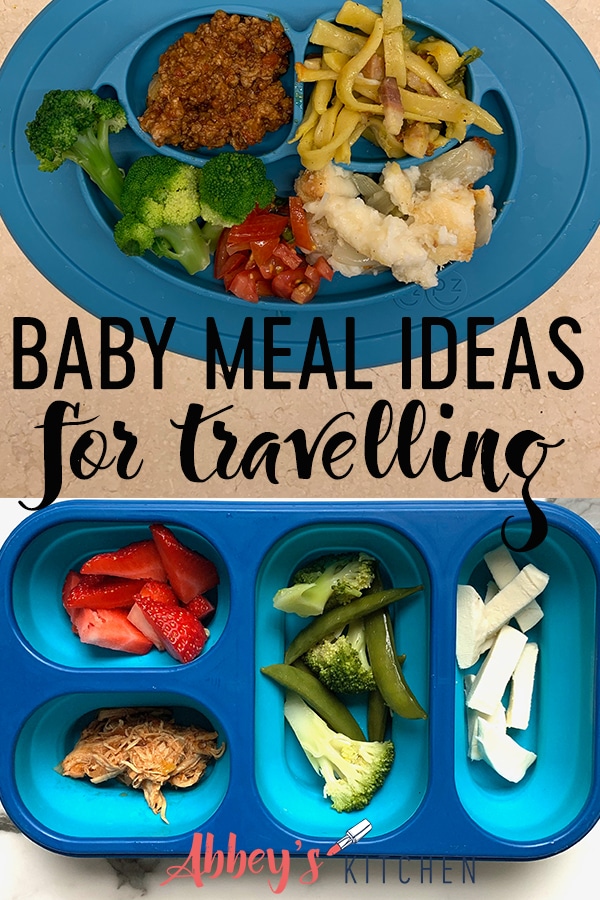
www.abbeyskitchen.com/about-abbey/
  • Previous Page
  • Go to page 1
  • Interim pages omitted …
  • Go to page 48
  • Go to page 49
  • Go to page 50
  • Go to page 51
  • Go to page 52
  • Interim pages omitted …
  • Go to page 89
  • Next Page

Get started with

Eight Free Recipe Books

From the co-founder of Neue Theory and creator of the Hunger Crushing Combo

Sign me up!
Abbey smiling at table
Abbey Sharp

“Foods may never be nutritionally equal. But we can make them morally equal by recognizing that our worth is never determined by what's on our plate.”

— Abbey Sharp, RD About Abbey ◥

Books

  • HCC™
  • Mindful Glow
  • Free E-Books

Blog

  • Nutrition
  • Recipes
  • Motherhood
  • Life

Explore

  • Neue Theory™
  • Bite Back
  • YouTube

Abbey

  • About
  • Coaching
YouTube TikTok Instagram Facebook X Pinterest
Abbey Sharp - The No BS Dietitian From Abbeys Kitchen

© Abbey's Kitchen 2026  All Rights Reserved •  ACCESSIBILITY STATEMENT •  Privacy Policy

This site uses cookies. By continuing to browse the site, you are agreeing to the use of cookies Accept Privacy Policy
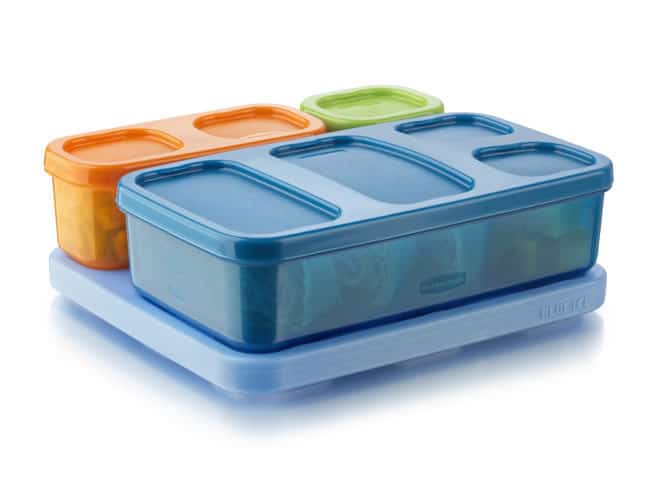
Privacy & Cookies Policy

Privacy Overview

This website uses cookies to improve your experience while you navigate through the website. Out of these, the cookies that are categorized as necessary are stored on your browser as they are essential for the working of basic functionalities of the website. We also use third-party cookies that help us analyze and understand how you use this website. These cookies will be stored in your browser only with your consent. You also have the option to opt-out of these cookies. But opting out of some of these cookies may affect your browsing experience.
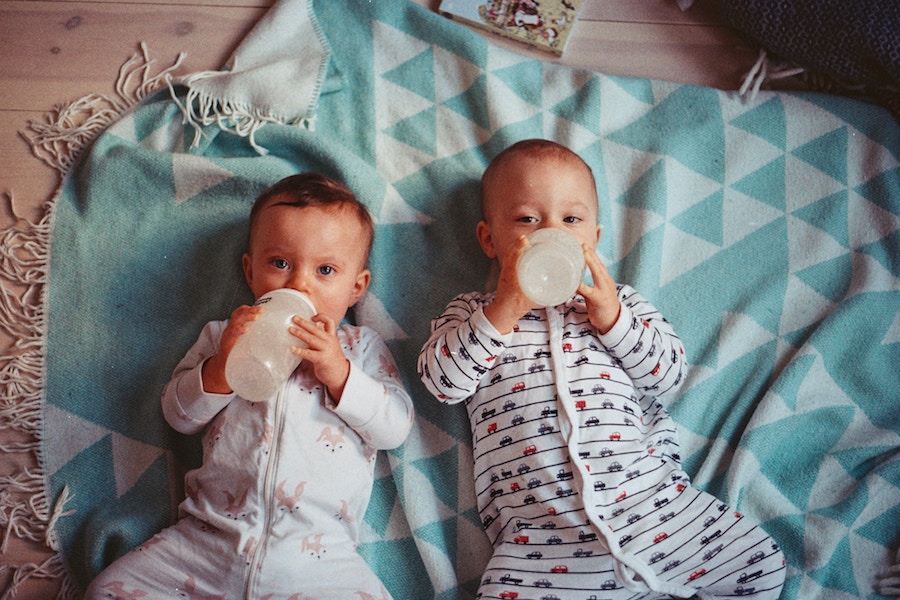
Necessary
Always Enabled
Necessary cookies are absolutely essential for the website to function properly. This category only includes cookies that ensures basic functionalities and security features of the website. These cookies do not store any personal information.
Non-necessary
Any cookies that may not be particularly necessary for the website to function and is used specifically to collect user personal data via analytics, ads, other embedded contents are termed as non-necessary cookies. It is mandatory to procure user consent prior to running these cookies on your website.
SAVE & ACCEPT

Rate This Recipe

Your vote:


A rating is required
A name is required
An email is required