• Skip to main content

Abbey's Kitchen

Healthy Recipes, Nutrition Myth Busting, Healthy Eating Tips

  • Books
    • HCC™
    • The Mindful Glow Cookbook
    • Recipe eBooks
      • Family
      • Hypothyroidism
      • BLW
      • Vegan Week 1
      • Vegan Week 2
      • Vegan Week 3
      • Keto
      • Gluten Free Week 1
      • Gluten Free Week 2
      • Fitness
      • Paleo
  • Blog
    • Nutrition
    • Recipes
    • Motherhood
    • Life
  • Explore
    • Neue Theory™
    • Bite Back With Abbey Sharp
      • Apple Music
      • Spotify
      • Amazon Music
    • YouTube
  • Abbey
    • About
    • Coaching
    • Contact

Abbey Sharp

Last Updated July 21, 2020. Published December 11, 2019 By Abbey Sharp 2 Comments

Vegan Chocolate Eggnog | Egg Free, High Protein, Low Sugar

Egg nog drink in a clear mug.

This Vegan Chocolate Eggnog is 100% Egg Free & High Protein and naturally lower in sugar compared with the traditional holiday drink.

I know its December when my hubby starts begging me to go to Starbucks for his all time favourite festive drink – an eggnog latte. Personally, I agree they taste pretty amazing, but I also think they’re crazy sweet and I can’t seem to manage more than a few sips before I need some water. But in honour of my sweet hubby and his eggnog obsession, I decided to develop an egg free and high protein version that’s also lower in sugar.

what is eggnog?

Eggnog is a festive, holiday drink that is made with milk, cream, sugar, eggs, spices and either bourbon or rum. Traditionally, it’s pretty sweet and also really high in fat, calories and sugar, so it’s not something I usually have a lot of. That’s why I was inspired to make a lower sugar, high protein, egg free vegan eggnog and to do it with the addition of chocolate! HELLO LOVER.

how could you possibly make eggnog vegan and egg free?
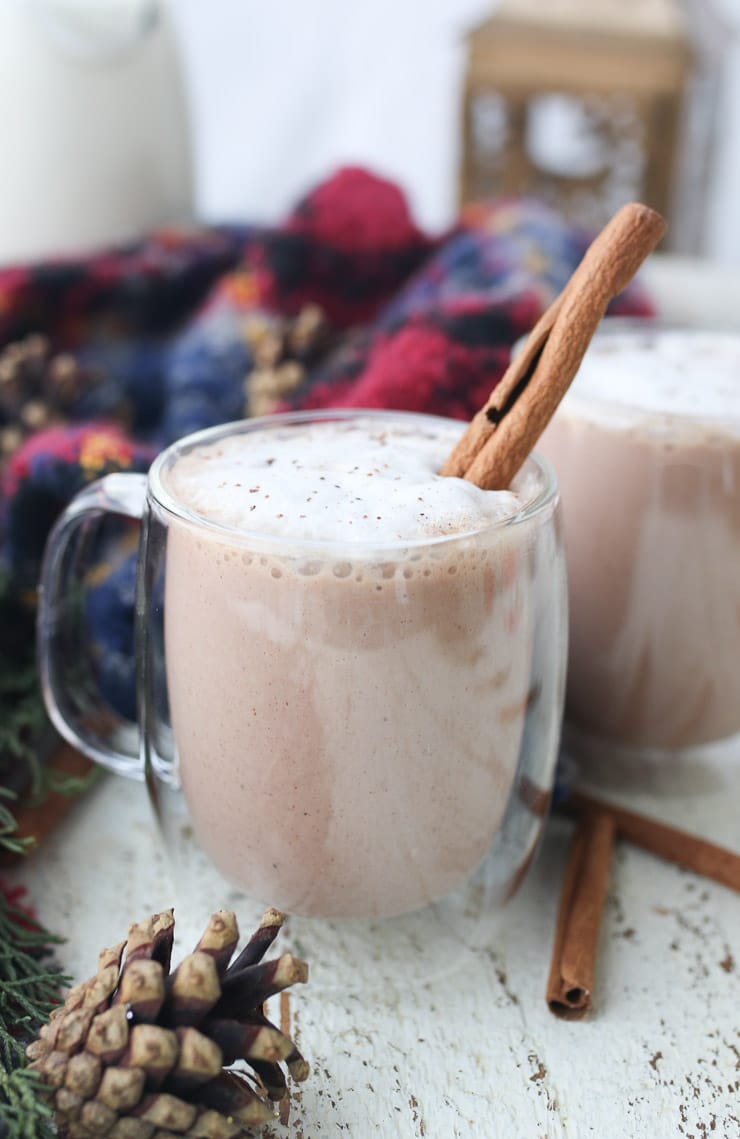
Egg nog in a glass mug topped with a cinnamon stick.

Here’s the secret- vegan buttermilk and silken tofu. Both add that rich creamy consistency without a ton of fat.

To make the vegan buttermilk, you simply mix together the soy milk with some lemon juice and let it sit in the fridge for 30 minutes. Then to a blender, I puree the buttermilk, silken tofu, cocoa, maple syrup, spices and salt.

If you choose to heat up your vegan eggnog (more on this below), then you can add the vanilla and alcohol right as you remove it from the heat. We want that booze, so let’s not cook it out, mmkay?

what do i need to make vegan chocolate eggnog?
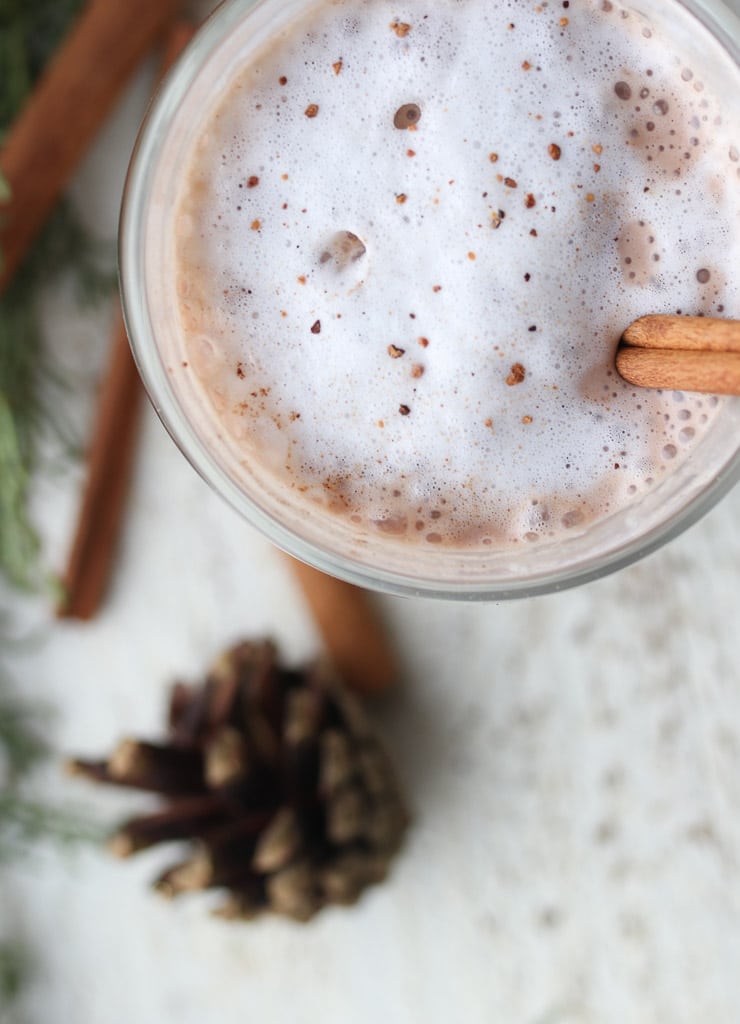
birds eye view of Egg nog in a mug garnished with cinnamon sticks.

This n-eggnog (ha, see what we did there?) is made up of a handful of common vegan ingredients. Here’s what you need:

  • Barista blend soy milk
  • Silken tofu
  • Lemon juice
  • Maple syrup
  • Cocoa powder
  • Cinnamon
  • Nutmeg
  • Cloves
  • Salt
  • Vanilla extract
  • Bourbon or rum

can i make this boozy eggnog without chocolate or without alcohol?

I mean, you could, but what fun would that be? Kidding! Of course, it’s totally delish without the chocolate or booze, so you can make this vegan eggnog totally kid friendly!

do you serve this vegan eggnog hot or cold?

I LOVE it both ways. If you want it cold, then just add the booze and vanilla to the blender and you’re done. If you want to serve it hot, then I suggest very VERY gently heating it on low heat JUST until it simmers. You don’t want this eggnog to come to a boil because the tofu will cook and curdle, so it should just be enough to warm it up.

what happens if i accidentally overheat the eggnog and the tofu “cooks” and looks curdled?
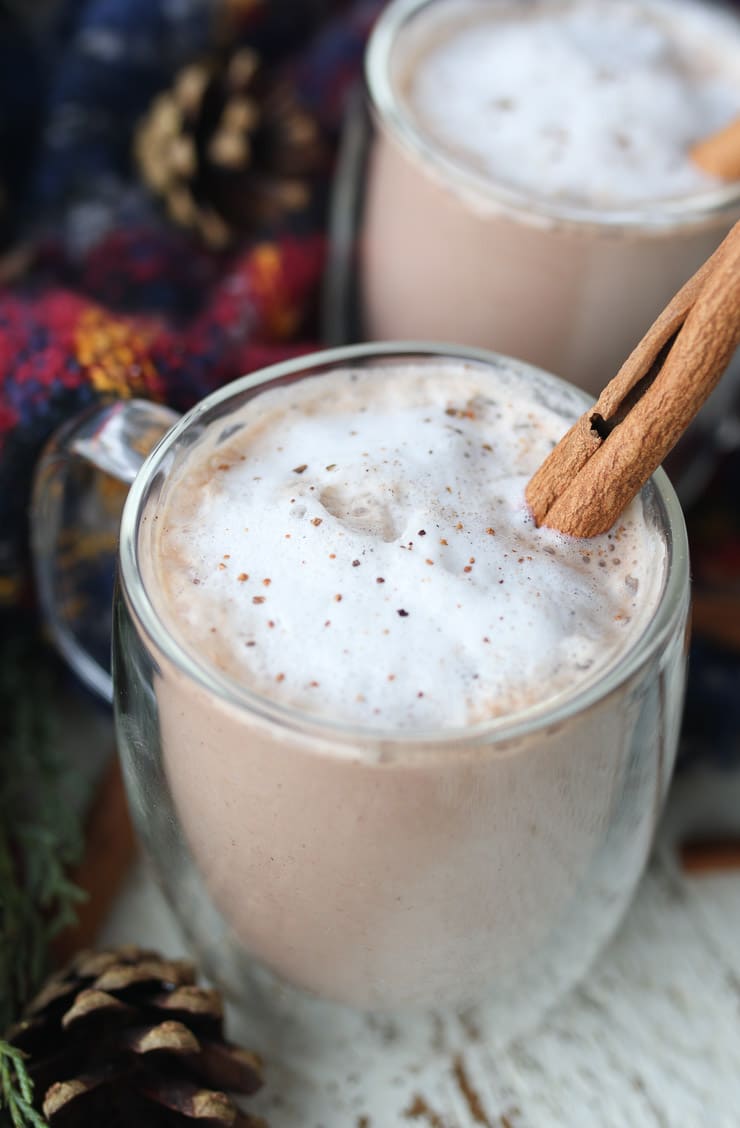
Chocolate Egg nog drink in a clear mug garnished with a cinnamon stick

Don’t panic!! It happens so quick so if you let your vegan eggnog cook a little too long or get too hot, just pop it back into the blender and puree until smooth again.

All better!

can i use another non dairy milk instead of soy milk in this chocolate eggnog?

You can, though I do recommend a good quality nondairy milk that is thicker then your typical 30 calorie almond milk. I love the barista blends because they are a bit more naturally sweet and they thicken and froth up nicely.

Do you have any other holiday drinks or recipes to serve with this plant based n-eggnog?

Dirty Chai Tea Cocktail
Pumpkin Spice Cider Punch
Cozy Coconut Rum Cocktail
pinterest image of Hands holding homemade eggnog in a glass mug with text overlay

Egg nog in a glass mug topped with a cinnamon stick.
Print Recipe
4.50 from 4 votes

Vegan Chocolate Eggnog

This Vegan Chocolate Eggnog is 100% Egg Free & High Protein and naturally lower in sugar compared with the traditional holiday drink.
Prep Time35 minutes mins
Cook Time3 minutes mins
Total Time38 minutes mins
Course: Drinks
Cuisine: American
Servings: 2 people
Calories: 252kcal
Author: Abbey Sharp

Ingredients

  • 1 cup barista blend soy milk plus more for foam
  • 300 g package of silken tofu
  • 1 tbsp lemon juice
  • 6 tsp maple syrup or more to taste
  • 1 tsp cocoa powder
  • 1 tsp cinnamon
  • 1/2 tsp nutmeg plus extra for serving
  • 1/8 tsp cloves
  • Generous pinch salt
  • 1 tbsp vanilla
  • 1 oz bourbon or rum

Instructions

  • In a bowl, combine soy milk and lemon juice. Place bowl in the fridge for 30 minutes.
  • To a blender, puree the soy milk lemon mixture, tofu, maple, cocoa, cinnamon, nutmeg, cloves, and salt. If serving cold, add the vanilla and bourbon here.
  • If serving hot, add the mixture to a saucepan and heat the mixture on medium high heat until it reaches a VERY gentle simmer. About 2-3 minutes, not more. We just want to warm it up, not cook the tofu. Immediately remove from heat.
  • Stir in vanilla and bourbon and transfer to two mugs.
  • Top with extra foamed soy milk and nutmeg.

Nutrition
Calories: 252kcal | Carbohydrates: 25g | Protein: 11g | Fat: 7g | Saturated Fat: 1g | Sodium: 70mg | Potassium: 484mg | Fiber: 1g | Sugar: 19g | Vitamin A: 464IU | Vitamin C: 11mg | Calcium: 245mg | Iron: 2mg

Abbey Sharp

Abbey Sharp is a Registered Dietitian (RD), regulated by the Ontario College of Dietitians. She is a mom, YouTuber, Blogger, award winning cookbook author, media coach specializing in food and nutrition influencers, and a frequent contributor to national publications like Healthline and on national broadcast TV shows.
www.abbeyskitchen.com/about-abbey/

Last Updated July 21, 2020. Published December 10, 2019 By Abbey Sharp 11 Comments

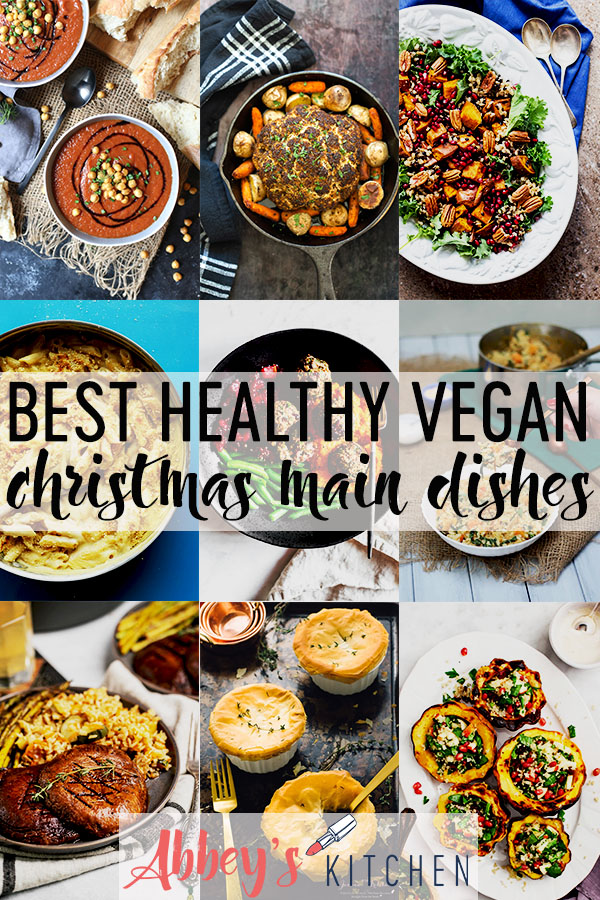
15 Best Vegan Christmas Main Dishes

A delicious collection of healthy vegan christmas main dishes to satisfy whoever is at your table this holiday season!

A delicious collection of the best healthy vegan christmas main dishes to satisfy whoever is at your table this holiday season!

Thanksgiving and Halloween have passed and the snow has started falling (sadly) which means it’s time to start thinking about Christmas! Aside from family, friends and Christmas trees, if you’re anything like me your favourite part of the holidays is menu planning! Whether you’re a vegan yourself, have guests coming for dinner or just want to try something new, I have gathered 15 of the best vegan holiday main dishes for you to try. Sharing a feast is the best way to celebrate Christmas with your loved ones and it’s super important that you can accommodate everyone’s dietary habits. Holiday dishes typically feature meat as the star of the show, and often lots of butter but with a few simple modifications you can make some holiday favourites vegan while just as delicious! Try some of these recipes to make sure everyone you’re feeding this Christmas will be happy!

Vegan Christmas Main dishes

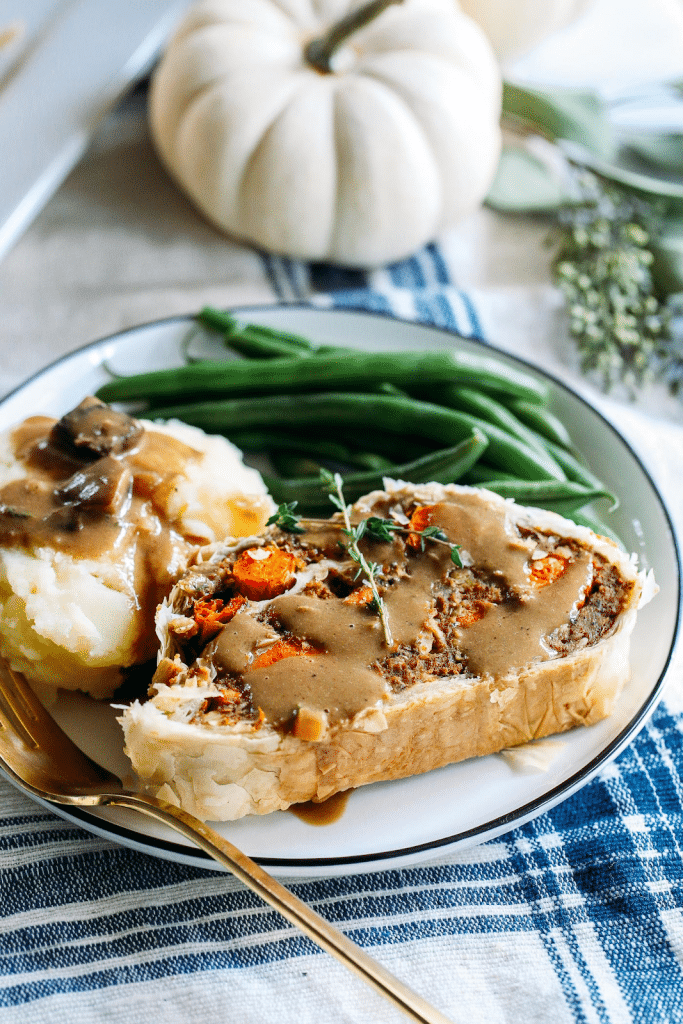
Vegan Wellington – Making Thyme for Health

holiday vegan main dish on a white plate garnished with fresh herbs.

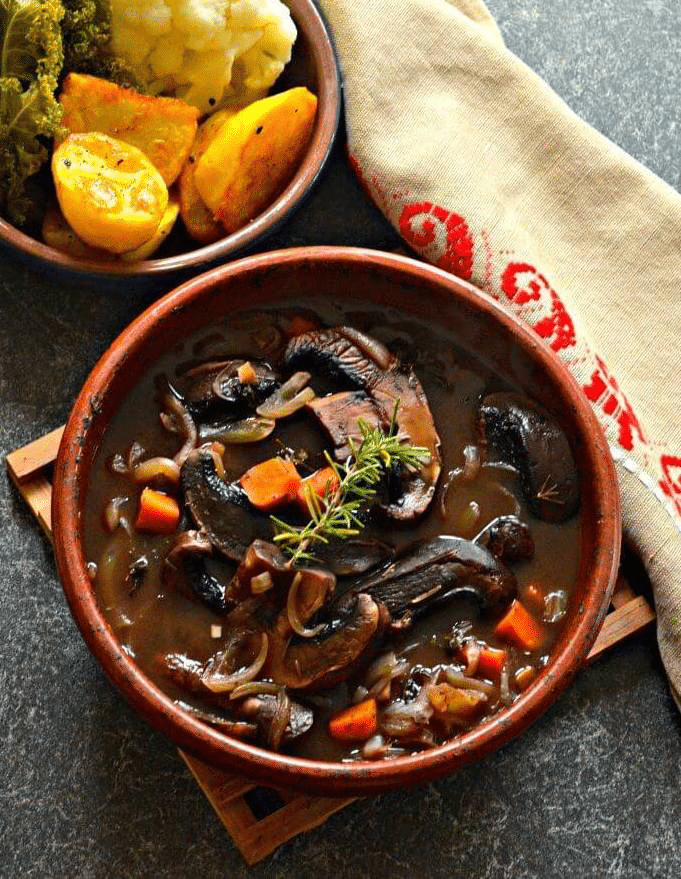
Vegan Portobello Pot Roast- A Virtual Vegan

Hearty soup in a brown bowl garnished with fresh herbs.

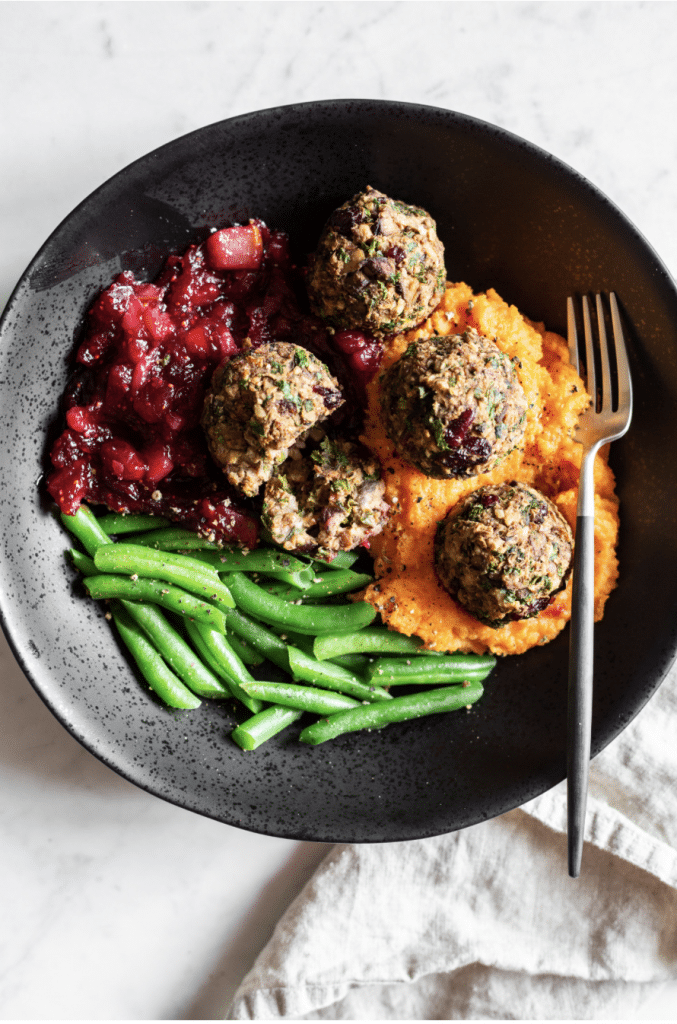
Bread Free Stuffing Balls – Oh She Glows

Holiday vegan meal served on a black plate.

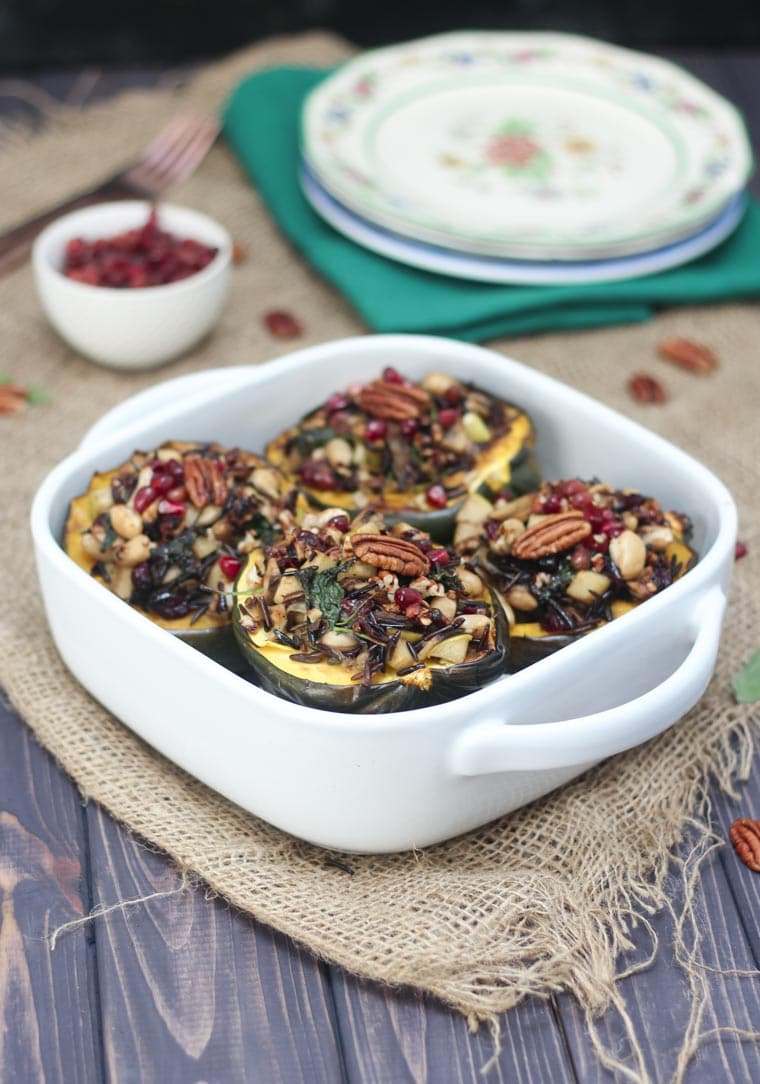
Vegan Stuffed Acorn Squash with Wild Rice and Caramelized Onions – Abbey’s Kitchen

Stuffed acorn squash in a white casserole dish.

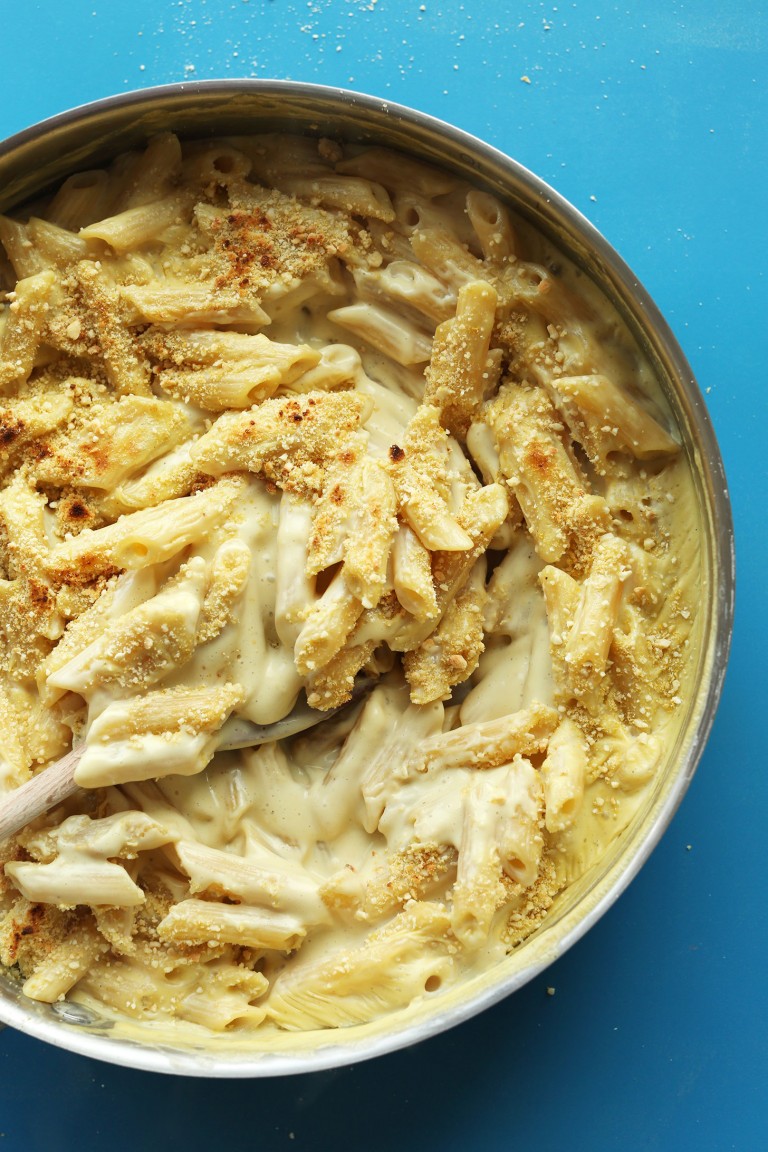
The Best Vegan Gluten Free Mac ‘N’ Cheese – Minimalist Baker

close up shot of Penne mac and cheese in a pan.

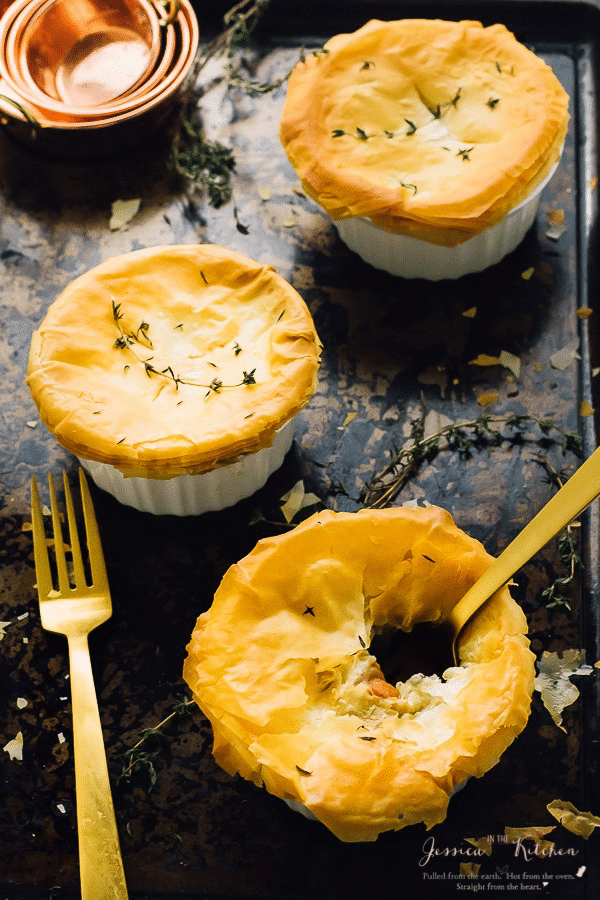
Vegan Pot Pies – Jessica in the Kitchen

three Christmas pastries on a baking tray next to gold coloured cutlery

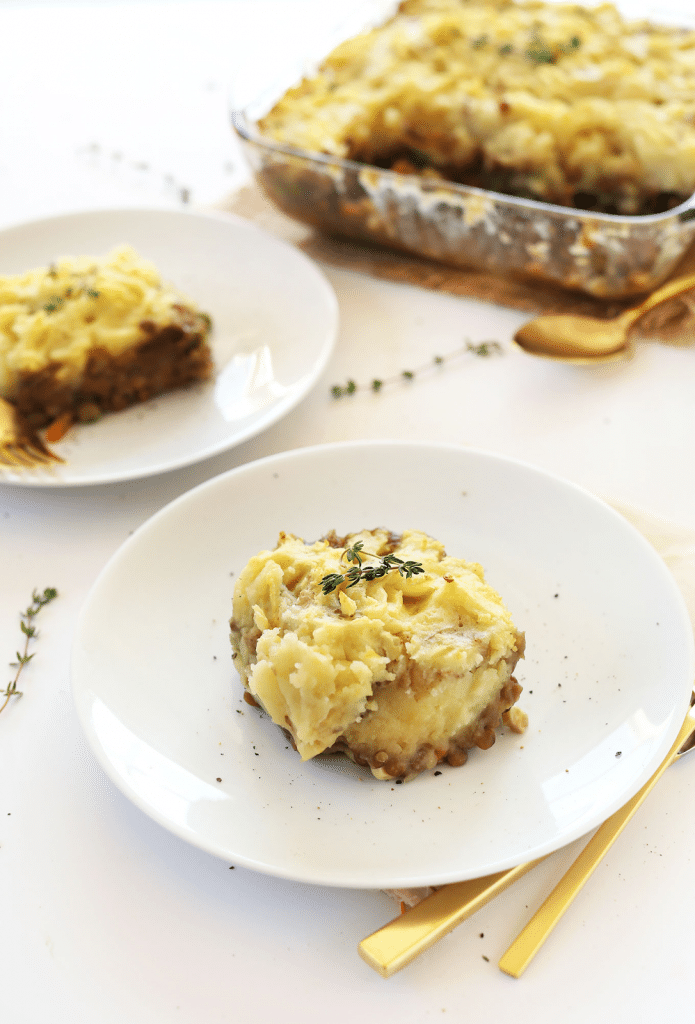
1 Hour Vegan Shepherd’s Pie – Minimalist Baker

Vegan christmas casserole served on a white plate.

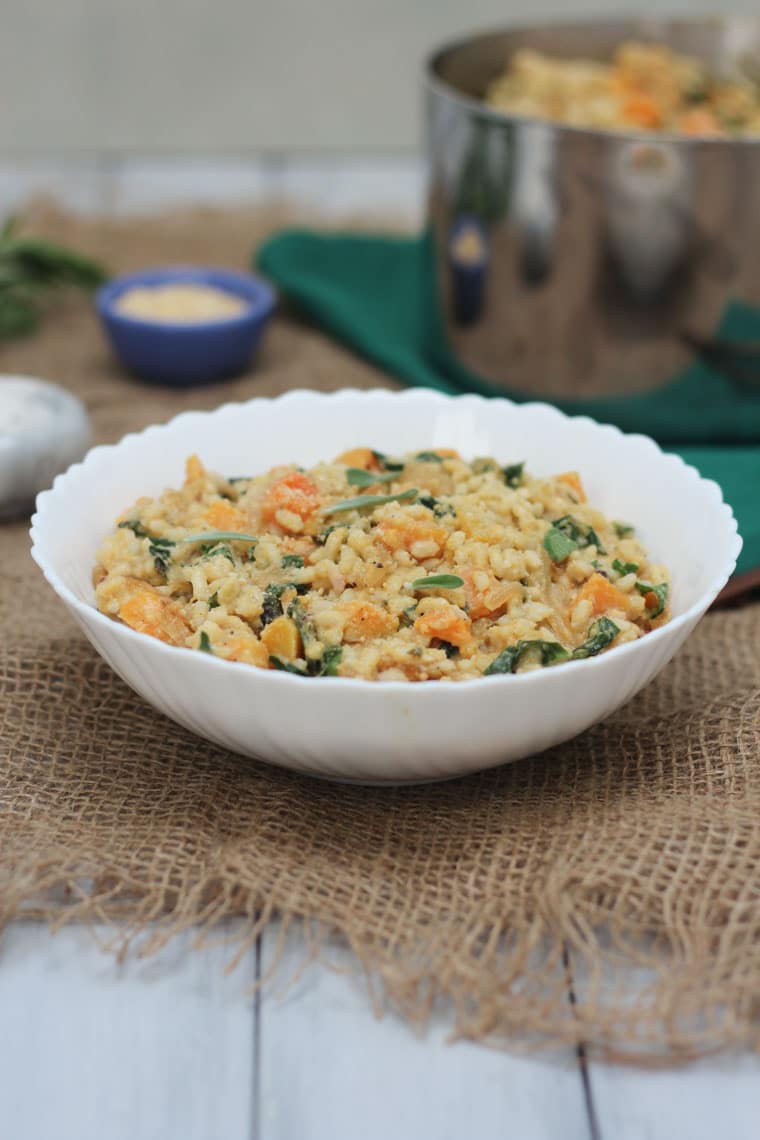
Butternut Squash Vegan Risotto with Caramelized Onions – Abbey’s Kitchen

Squash risotto served in a large white bowl.

Butternut Squash Shells with Sage Cashew Cream – Abbey’s Kitchen

birds eye view Vegan holiday pasta in a white casserole dish with a golden spoon inside.

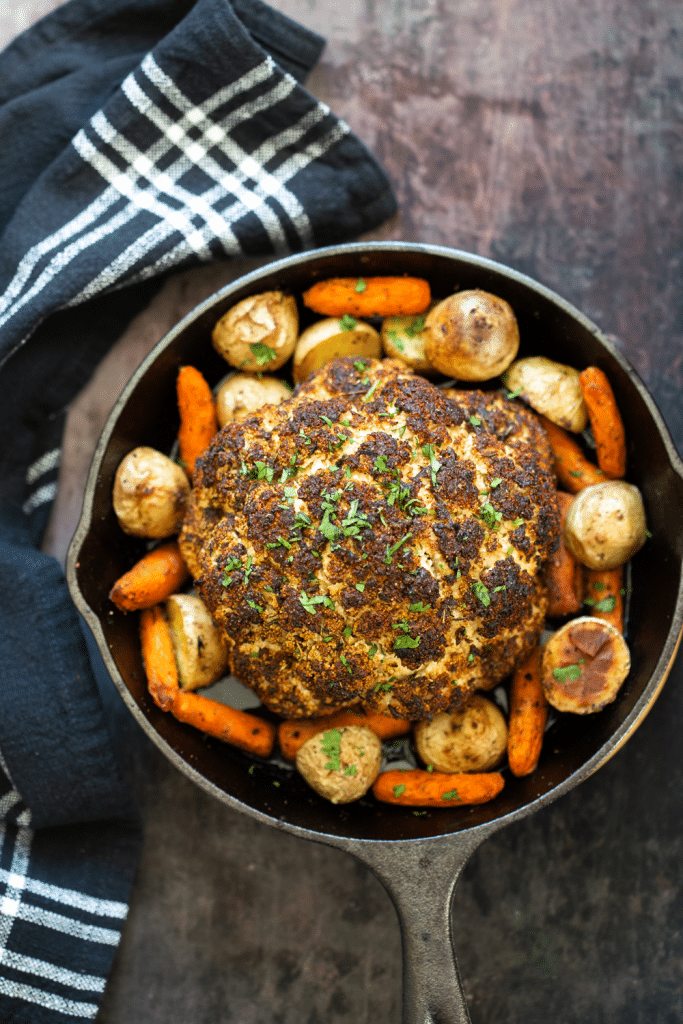
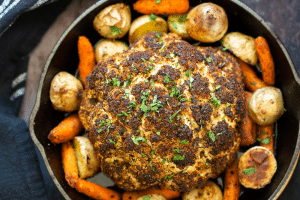
Baked Whole Roasted Cauliflower – Vegan Richa

birds eye view of Roasted cauliflower with carrots and potatoes garnished with fresh herbs in a cast iron skillet.

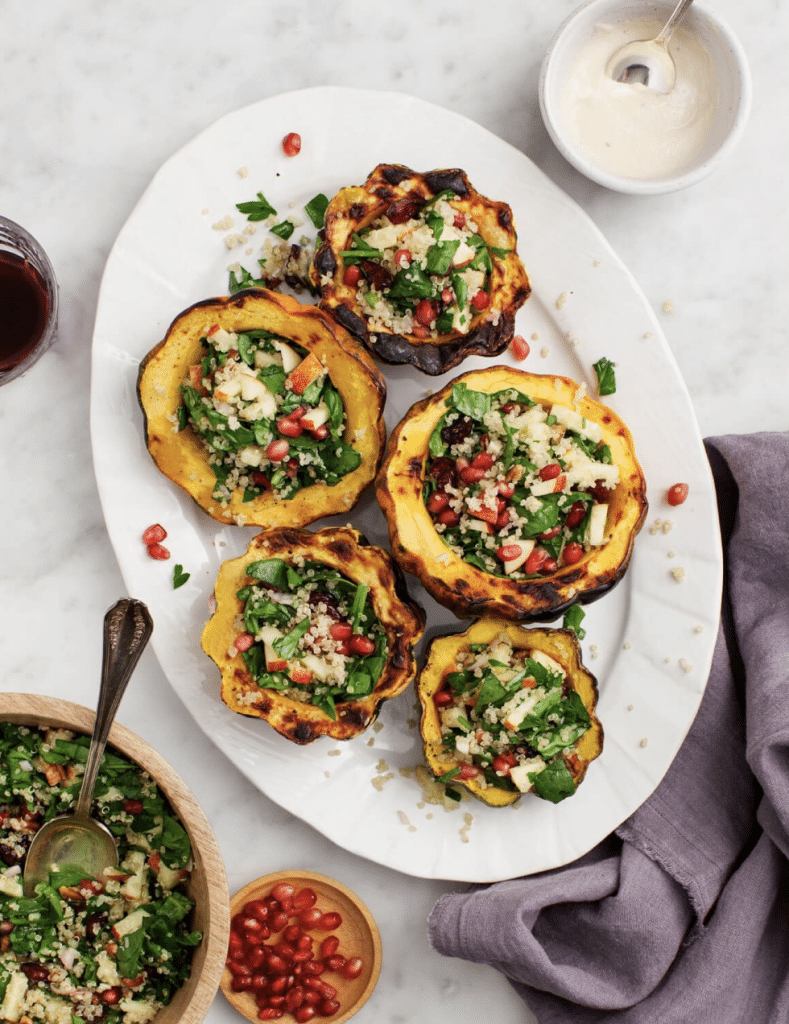
Quinoa Salad Stuffed Acorn Squash – Love and Lemons

birds eye view of Stuffed squash served on a white platter.

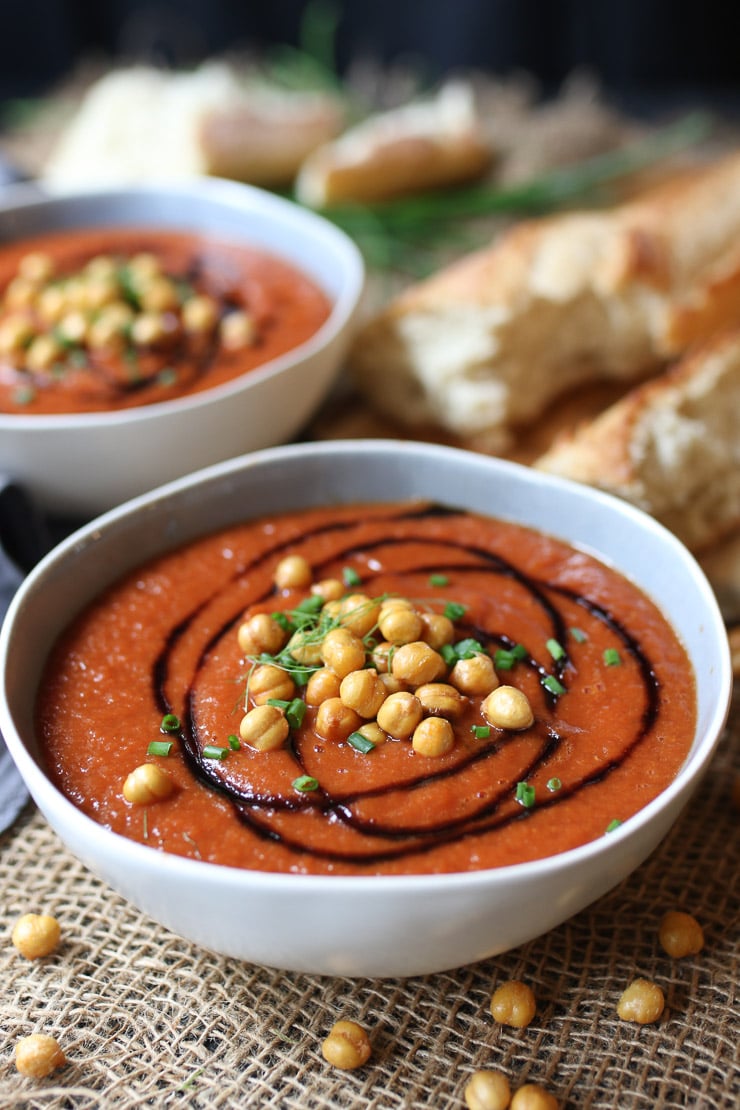
Roasted Fennel Tomato Soup – Abbey’s Kitchen

close up of Tomato soup served in a white bowl topped with chickpeas.

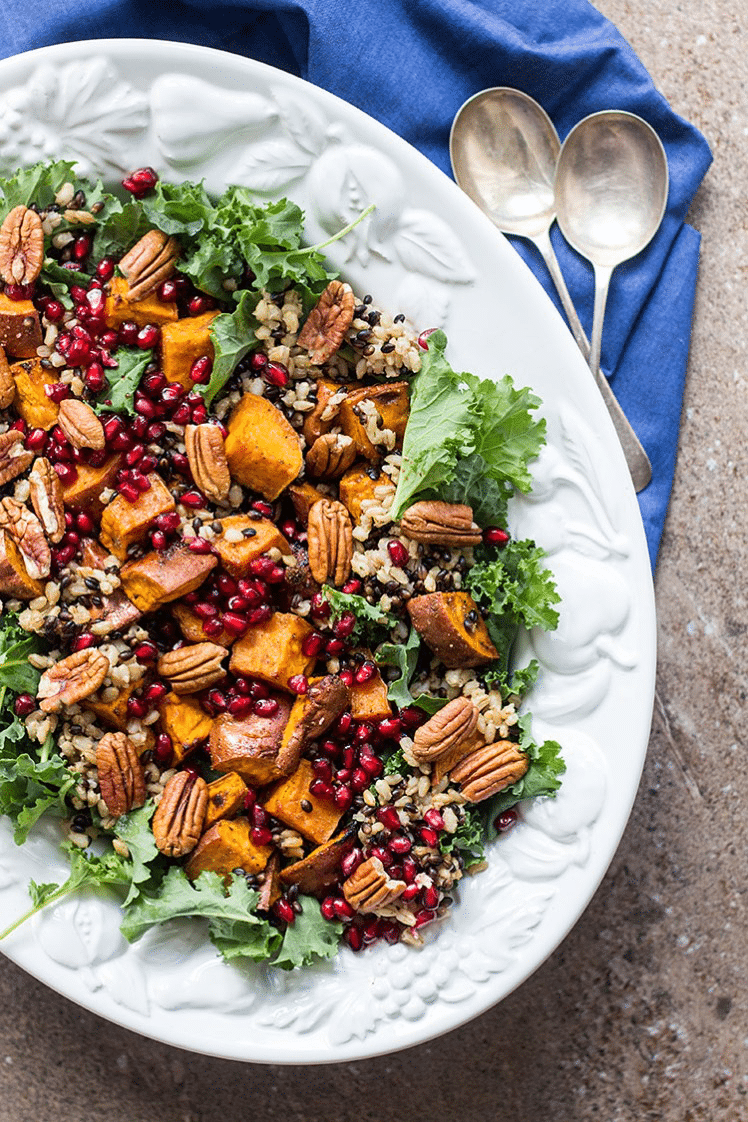
Sweet Potato Salad with Pomegranate, Pecans and Barley – Quite Good Food

birds eye view of Sweet potato salad served on a white platter.

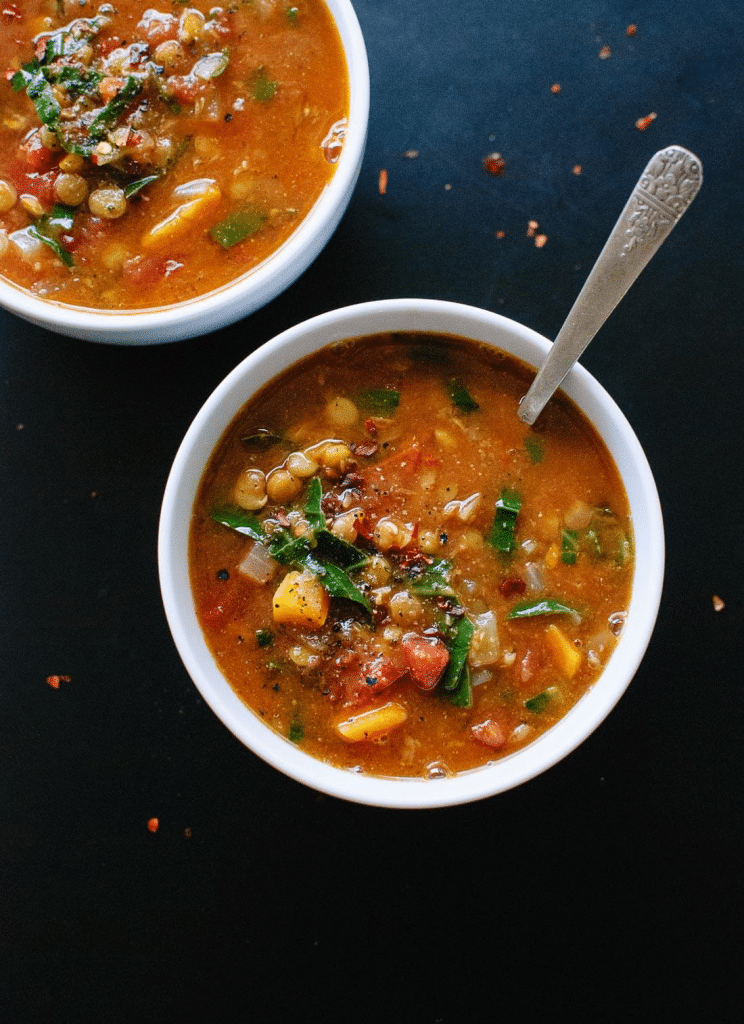
Spiced Vegan Lentil Soup – Cookie and Kate

birds eye view of vegan Lentil soup served in two white bowls.

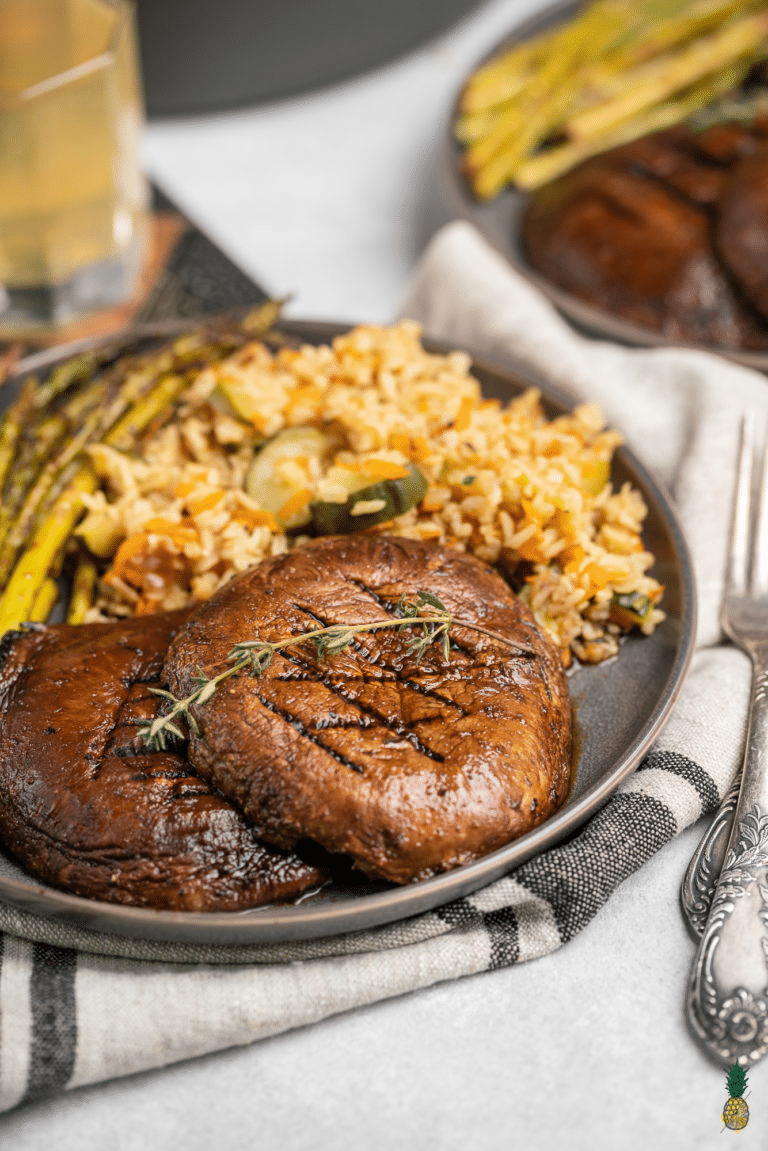
Vegan Portobello Mushroom Steaks – Easy Simple Vegan

Grilled portobello mushrooms with a side of additional vegetables on a grey plate.

Hopefully now you know that Christmas dinner doesn’t have to feature a plate of meat, and that not every dish needs to contain butter. Hopefully these recipes have given you some good ideas and you can start menu planning for the holidays! Abbey’s Kitchen would like to wish you a Merry Christmas and happy holidays and we hope you share some great food with your loved ones.

Have you tried any of these vegan Christmas main dishes before?
What vegan dishes will you be serving up this holiday season?
Share them with me in the comments below!

pinterest image of Collection of vegan Christmas main dishes with text overlay

Contribution By:

Abi Sims

Abbey Sharp

Abbey Sharp is a Registered Dietitian (RD), regulated by the Ontario College of Dietitians. She is a mom, YouTuber, Blogger, award winning cookbook author, media coach specializing in food and nutrition influencers, and a frequent contributor to national publications like Healthline and on national broadcast TV shows.
www.abbeyskitchen.com/about-abbey/

Last Updated July 1, 2022. Published December 6, 2019 By Abbey Sharp 2 Comments

Pear Crisp with Oats and Ginger (Vegan & Gluten Free)

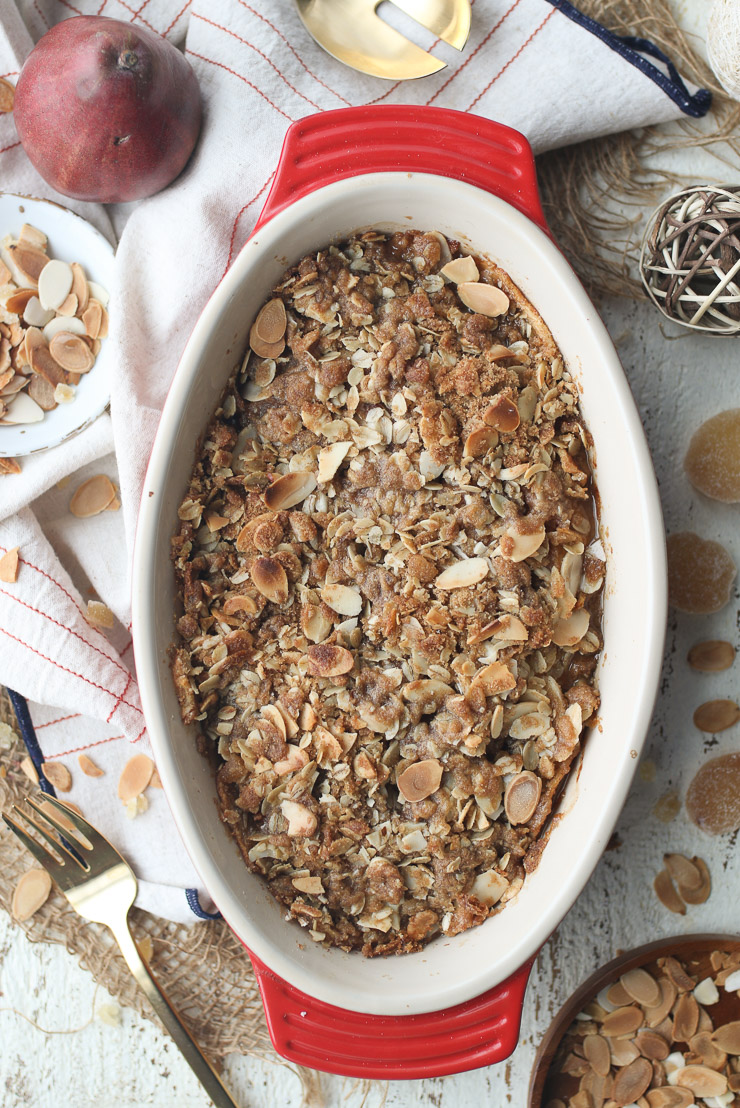
Fruit crisp in a casserole dish.

This Vegan Gluten Free Ginger Pear Crisp with Oats is packed with flavour but is completely gluten free, lower in sugar and packed with fibre!

Fruit crisp in a casserole dish.

Everyone has that special meal or dish that reminds them of their childhood. If I were to only choose one, I would say that for me that dish was apple crisp. My grandma used to make the best apple crisp ever, and I’m pretty sure her secret was just lots and lots of brown sugar. Omg it was really really good.

Table of contents

  • Why This Recipe Works
  • Key Ingredients
  • How To Make This Recipe
  • Expert Tips
  • Recipe FAQs
  • More Recipe You Might Like

Why This Recipe Works

While I love a good classic apple crisp, I am also all for switching this up and my vegan gluten free ginger pear crisp totally hits the spot. I also love this recipe because it’s

  • Packed with fibre (4 grams)
  • So sweet and delicious, and really pairs (ha, see what I did there) well with ginger!
  • Got a little zippy kick from the ginger

Key Ingredients

Large flake oats: Oats are a great source of healthy carbohydrates and packed with fiber. Make sure to purchase gluten free if you have dietary restrictions.

Gluten free flour: Another ingredient to swap for if you have dietary restrictions. This recipe could also totally work with whole wheat flour.

Firm Pears: pears are packed with vitamin c, potassium, and copper. They also add the perfect amount of natural sweetness to this recipe.

Ground Ginger: As mentioned above, ginger adds a bit of tang which makes this pear crisp with oats recipe absolutely delicious.

How To Make This Recipe

Step 1: Preheat oven to 375 F and lightly grease an 8×8 inch square baking pan.

Step 2: Combine the flour, Quaker old fashion oats, brown sugar, almonds, cinnamon, ginger, and salt. Add in pieces of the butter and squeeze them into the flour oat mixture. Stir in the crystallized ginger and set aside.

Step 3: Meanwhile, combine the pears, brown sugar, maple syrup, cornstarch, lemon juice, cinnamon, ginger and vanilla. Toss to coat. Put into the baking dish and top with the crisp.

Step 4: Bake for about 35-40 minutes or until the pears are tender and the topping is golden brown. Serve warm or cold with ice cream.

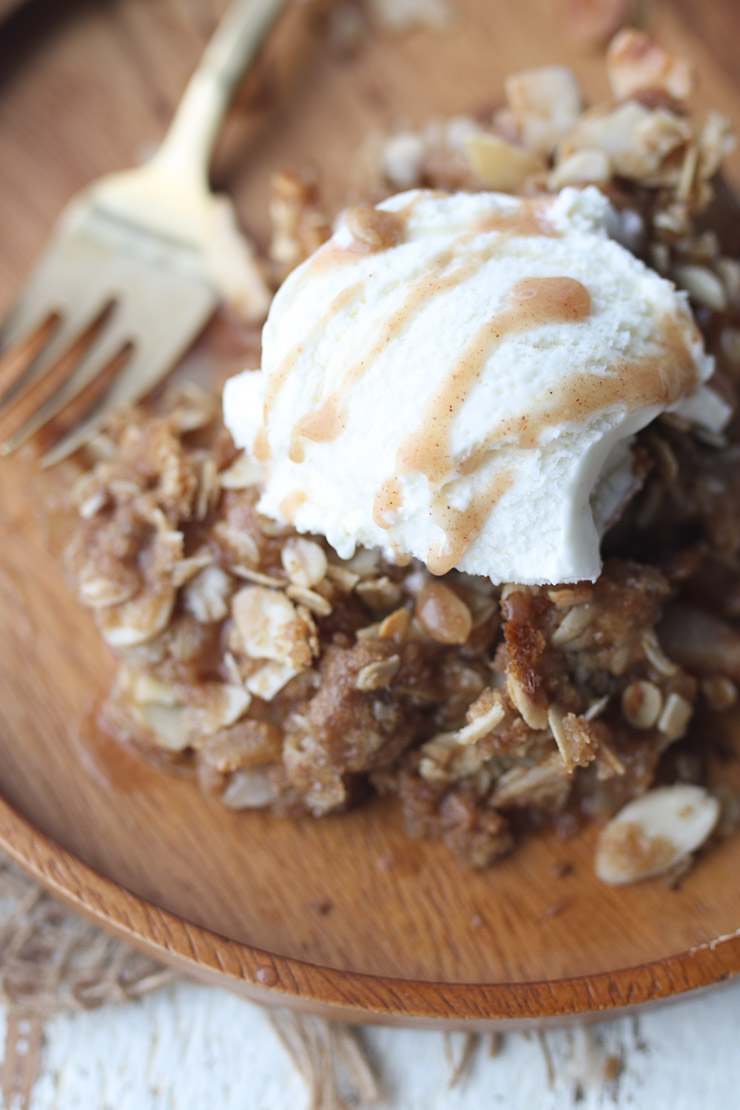
Pear crisp with scoop of ice cream on top.

Expert Tips

Looking to make this pear crisp with oats recipe gluten free and vegan? This healthy dessert recipe is super easy and has mainly ingredients you likely already have at home. I start by making the oat crisp topping with flour (gluten free if needed), oats (gluten free if needed), brown sugar, and spices and then mashing in some cold butter (vegan or regular) until you have little bits of butter mixed in with the sugar and flour.

If you can’t get enough of this recipe, but looking to switch it up a bit, you can easily make this into a vegan gluten free apple crisp recipe!

Recipe FAQs

What kind of pears should I use?

I love anjou pears in this because they’re semi firm, but if you find a firm bartlett those would also work well! I would save any super soft pears for snacking because you don’t want the filling to be mush before the crisp topping browns.

Could this pear crisp with oats recipe be made in the slow cooker?

I haven’t tested this gluten free ginger pear crisp in my slow cooker but I have made a berry crisp in the slow cooker and it turned out amazing! The secret is in this post about the berry crisp here.

Can I make mini individual portions of this gluten free pear ginger crisp?

I love making individual fruit crisp desserts for dinner parties in little ramekins. I would reduce the cooking time to 20-25 minutes and just check on the pear texture by spearing a little piece out of the corner.

How long will this crisp last in the fridge?

It’s so tasty as a decadent breakfast topping on yogurt for days later, even though it will lose its crunchy crisp topping after being stored. But it will stay good to eat for 4 to 5 days.

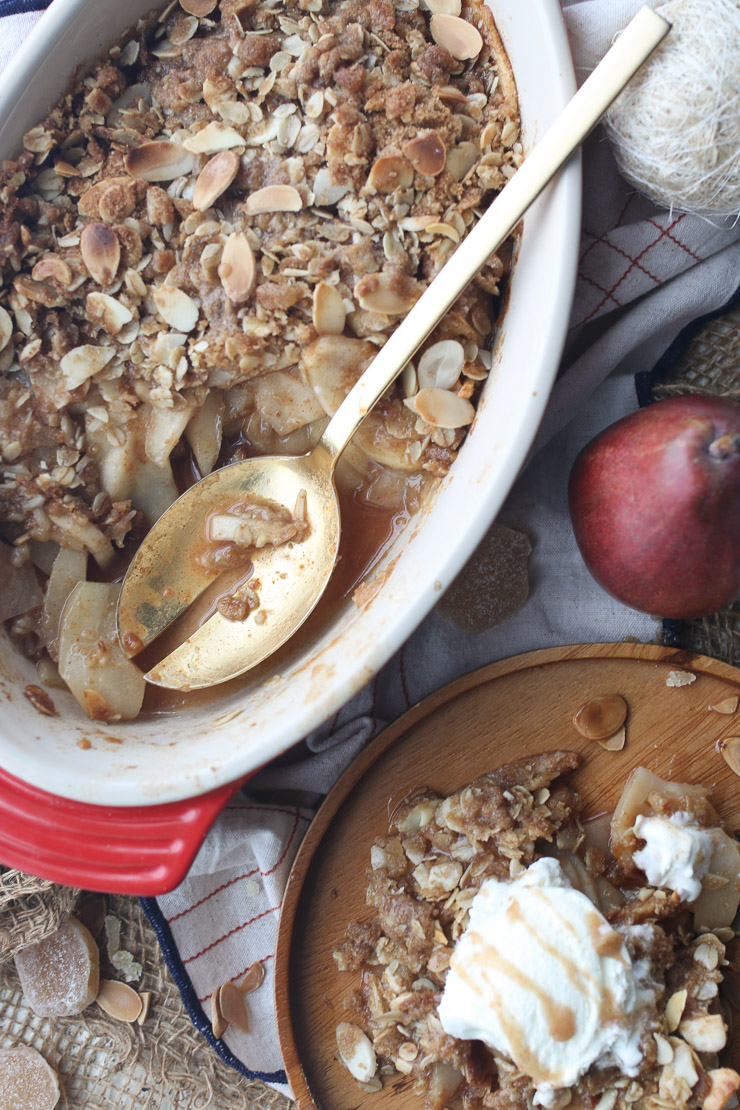
Pear and ginger crisp in a casserole dish next to a plate with a serving of crisp.

More Recipe You Might Like

If you loved this pear crisp with oats recipe, you’re gonna LOVE some of these other sweet vegan desserts below –

  • WATERMELON CAKE (VEGAN SUMMER DESSERT!)
  • VEGAN PECAN PIE (GLUTEN FREE THANKSGIVING DESSERT RECIPE)
  • VEGAN MAPLE ROASTED PERSIMMONS AND FIGS
  • VEGAN BANOFFEE PIE POPSICLES | GLUTEN FREE SUMMER DESSERT RECIPE

Tell me, are you team crisp, crumble, cobbler, pie or something else? What is your favourite childhood food memory?

Fruit crisp in a casserole dish.
Print Recipe
5 from 1 vote

Vegan Ginger Pear Crisp

This Vegan Gluten Free Ginger Pear Crisp is packed with flavour but is completely gluten free, lower in sugar and packed with fibre!
Prep Time20 minutes mins
Cook Time40 minutes mins
Total Time1 hour hr
Course: Dessert
Cuisine: American
Servings: 12
Calories: 198kcal
Author: Abbey Sharp

Ingredients

  • Crisp:
  • 1/3 cup gluten free flour or whole wheat flour
  • ½ cup large flake oats gluten free if desired
  • 1/3 cup brown sugar
  • ½ cup finely sliced almonds
  • 1/2 tsp cinnamon
  • ¼ tsp ground ginger
  • Pinch salt
  • 1/3 cup cold vegan butter or regular butter cut into pieces
  • 2 tbsp minced crystallized ginger
  • Filling:
  • 6 cups firm Anjou pears peeled, cored and sliced into ½ inch slices
  • 1 tbsp lemon juice
  • ¼ cup brown sugar
  • 2 tbsp maple syrup
  • 3 tbsp cornstarch or gluten free flour
  • 1 tsp cinnamon
  • ¼ tsp ground ginger
  • 2 tsp vanilla extract

Instructions

  • Preheat oven to 375 F and lightly grease an 8×8 inch square baking pan.
  • Combine the flour, Quaker old fashion oats, brown sugar, almonds, cinnamon, ginger, and salt. Add in pieces of the butter and squeeze them into the flour oat mixture. Stir in the crystallized ginger and set aside.
  • Meanwhile, combine the pears, brown sugar, maple syrup, cornstarch, lemon juice, cinnamon, ginger and vanilla. Toss to coat. Put into the baking dish and top with the crisp.
  • Bake for about 35-40 minutes or until the pears are tender and the topping is golden brown. Serve warm or cold with ice cream.

Nutrition

Calories: 198kcal | Carbohydrates: 34g | Protein: 2g | Fat: 7g | Saturated Fat: 1g | Sodium: 45mg | Potassium: 159mg | Fiber: 4g | Sugar: 22g | Vitamin A: 260IU | Vitamin C: 4mg | Calcium: 37mg | Iron: 1mg
Abbey Sharp

Abbey Sharp is a Registered Dietitian (RD), regulated by the Ontario College of Dietitians. She is a mom, YouTuber, Blogger, award winning cookbook author, media coach specializing in food and nutrition influencers, and a frequent contributor to national publications like Healthline and on national broadcast TV shows.
www.abbeyskitchen.com/about-abbey/

Last Updated February 13, 2021. Published December 5, 2019 By Abbey Sharp 46 Comments

Dangers of Soy | Breast Cancer & Heart Health

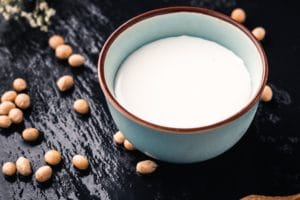
Bowl of soy milk.

I answer the question, is soy bad for you? A look at the research on the dangers of soy and menopause, breast cancer and heart health!

With the popularity of kale salads, juice cleanses and smoothie bowls, it’s no surprise that vegetarianism and veganism have become the diet du jour this year. And since a girl can’t live on produce alone (well unless you’re Freelee the Banana girl), plant-based sources of protein have become all the rage. Without meat, fish, eggs, or dairy, soy products (think edamame, tofu, miso, soy milk, and soy cheese) are now a more mainstream staple in the health-conscious foodies diet, but with them have come a lot of questioned about their impact on health. So is soy bad for you? Does it cause breast cancer? Let’s dig into the research.

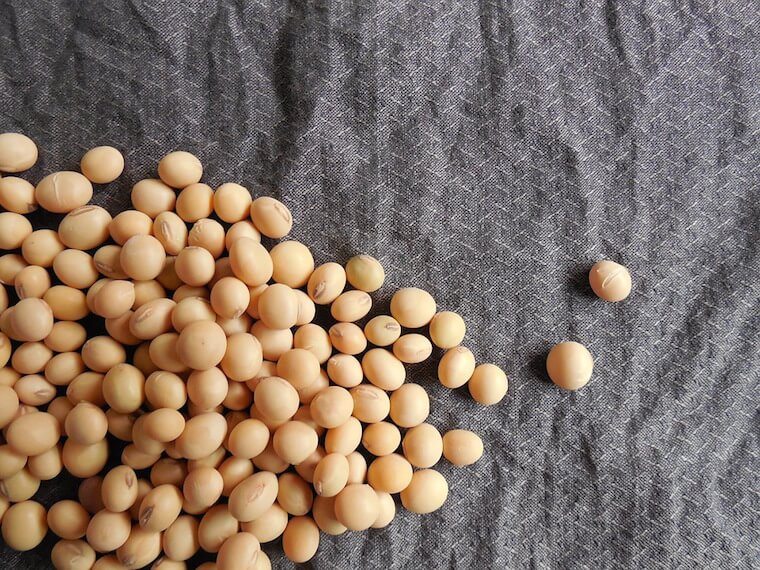
image of Soy beans against a dark background.

Why Do People Think Soy is Bad for You?

It all comes down to the fact that soy contains compounds called isoflavones (a phytoestrogen) that mimics our body’s natural (endogenous) estrogen, so many people wonder what this so-called “artificial” hormone does in our body. Let’s start by looking at how estrogen works in our body. First of all, we have two types of receptors specific to endogenous estrogen in our human cells – estrogen receptor-alpha and estrogen receptor-beta. Different parts of our body have different amounts of each receptor. The isoflavones found in soy are selective estrogen receptor modulators (SERMs), which means that sometimes they act like estrogen and sometimes they do not. One study found that our natural hormone estrogen will bind to both receptors but isoflavones prefer to bind to the beta receptors. This study found that there is competition between the isoflavones and endogenous estrogen for the receptors. Interestingly, while isoflavones can mimic the effects estrogen and bind to estrogen receptors, they also have a weaker estrogen effect than the estrogen our bodies makes.

two hands with a heart waves in between them

OKAY. So now that we know soy contains plant-estrogens (isoflavones) that sometimes act like estrogen, sometimes don’t, and sometimes even inhibit endogenous estrogen from binding to estrogen receptors. What does that mean for helping us answer the question is soy bad for you? There are three main areas that we will look at where isoflavones and soy may play a role: menopause, breast cancer, and cholesterol.

dangers of soy and menopause

Hot flashes, night sweats, dry vaginas, OH MY! These common symptoms of menopause sound pretty brutal but early research suggests that including soy in our diets may help us find relief!

While women no longer have to deal with their periods during menopause, this also means that our ovaries make less estrogen. These hormonal changes cause the uncomfortable side effects. The Journal of Obstectrics and Gynaecology Canada’s have created guidelines on managing menopause, which include estrogen hormonal therapy as one way to deal with these dreadful symptoms. There are, however, some risks involved with long-term use of hormonal therapy including increased breast cancer risk. Your doctor would be able to discuss these risks with you before prescribing any of these treatments.

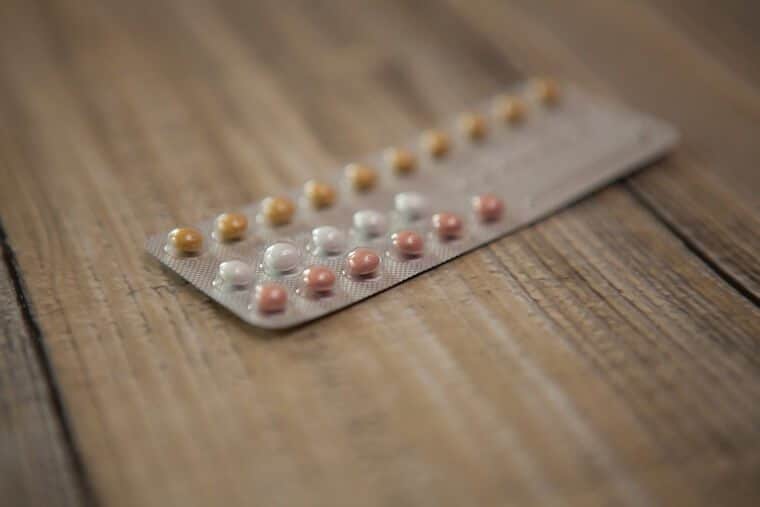
A close up of multi-coloured pills in a pack.

A meta-analysis of 15 randomized control trials found that dietary isoflavones decreased the number of hot flashes with no serious side-effects. Another meta-analysis, that included 62 different studies and over 6000 women, found that phytoestrogen ingestion reduced hot flashes and vaginal dryness but did not have any effect on night sweats. The study also found similar results using dietary soy isoflavones and isoflavone supplements. However, it is very important to note that soy has not been found to be effective replacement to hormone therapy and there are mixed and limited data on the effectiveness of isoflavones for menopausal relief. Sorry ladies.

It looks like while there might be some good news in the future for some of us women on soy protecting against some of the uncomfortable side-effects of menopause, but there still needs to be more research before we know for sure.

dangers of soy and Breast Cancer

The American Cancer Society suggests that estrogen plays a role in breast cancer. Similar to how estrogen-replacement/hormonal therapy can increase the risk of breast cancer in post-menopausal women, women who have had more exposure to estrogen over their lives (due to having their periods early in life or starting menopause later, for example) are at increased risk of developing breast cancer. This leads us to question the safety of consuming estrogen-like compounds (isoflavones) in soy.

One of the drugs that is used to treat breast cancer works by binding to estrogen receptors, much like how isoflavones bind to selective estrogen receptor modulators (SERMs). Here comes the potential role of isoflavones. If you recall, isoflavones compete with endogenous estrogen for the estrogen receptors, are more likely to bind to some of the receptors but have weaker effects, and act somewhat like the drugs used in treatment.

One research review looked at 24 different studies examining the link between soy and breast cancer. Eight of the studies found no link between eating soy foods and risk of breast cancer while 12 of the studies found that there was an inverse association between consuming soy and breast cancer risk. In other words soy may lower the risk of breast cancer. One of the studies included over 36 000 post-menopausal women from the Multiethnic Cohort Study and they found that those who ate a diet with lots of soy products, and subsequently isoflavones, had a reduced risk of post-menopausal breast cancer. The authors of the review concluded that soy seems to play some sort of protective role in reducing the risk of breast cancer.

Another review had similar findings suggesting that a diet high in soy (defined as 13 grams soy protein per day) compared with diets with a low soy did not change the risk of initial breast cancer but does decrease the risk of death by 15% and recurrence by 25%. Another group of researchers found that moderate soy protein (5-10 grams everyday) was the most beneficial for people who already have been diagnosed with breast cancer.

So in conclusion, is soy bad for you if you’re prone to breast cancer? At this point, it seems that soy is safe for consumption after a breast cancer diagnosis (unless otherwise instructed by your doctor), but we need more research before there are recommendations about soy preventing future incidents of breast cancer. Part of the reason for this is because a number of studies found no link between soy consumption and breast cancer. The American Cancer Society recommends that as long as soy is consumed from food in moderation (3 servings per day), it is safe to eat/drink. However, there is not enough research to know whether soy supplements are safe for use following breast cancer and in fact, the American Cancer Society recommends avoiding high supplement doses. We also do not know exactly how much soy protein is beneficial. Clearly more research is certainly needed to answer questions on how much and whether soy is actually protective against breast cancer risk.

dangers of soy and Heart Health?

There was recently an article in the Financial Post talking about the growing soy industry in Canada due to a newly approved Health Canada Health Claim. The claim explains that products containing at least 6 g of soy protein can claim that their product helps lower cholesterol levels. If you are looking for the benefits of lowering cholesterol by eating soy protein you want to aim to eat at least 25 grams of soy protein per day.

Other Dietary Concerns and Soy

If you are following the Paleo diet, soy is technically a legume and is not paleo-approved. You can read more about the ins and outs of Paleo here.

If GMOs are a concern, we know from our first article on GMOs that soybeans are one of the most commonly found GMO crops in Canada. The good news is: there are both GMO and non-GMO soy products out there, so no matter your GMO preferences (or lack thereof), you can reap the benefits of soy protein!

Where to get Soy Protein?

Now that we know soy has some health benefits and does not increase our risk of breast cancer, let’s talk about where we can find soy protein in our diets!

Some people may say soy makes us fat, but they are not talking about WHOLE foods, they are talking about processed foods that use soy as an additive. So stick with whole foods instead of anything overly processed. Want some suggestions? Check out this easy infographic to find out the best whole food sources of soy protein to add to your diet.

How to incorporate soy into recipes

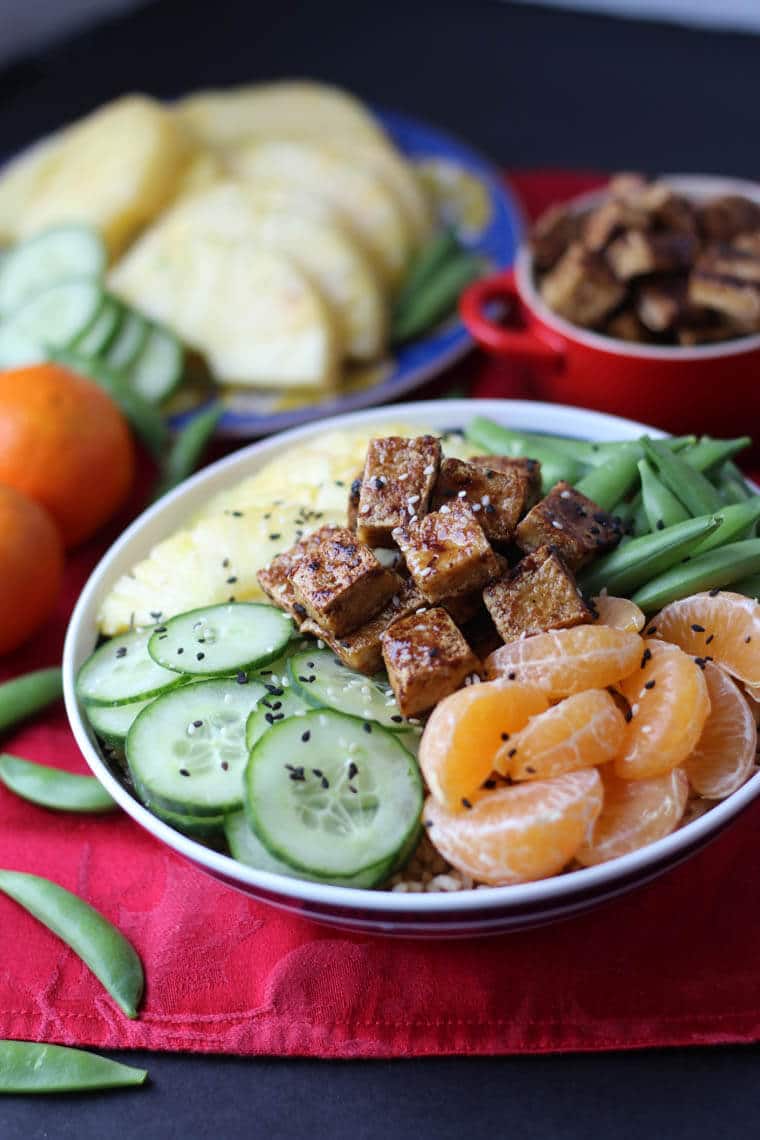
Vegan Crispy Tofu Poke Bowl

Poke bowl with cripsy tofu.

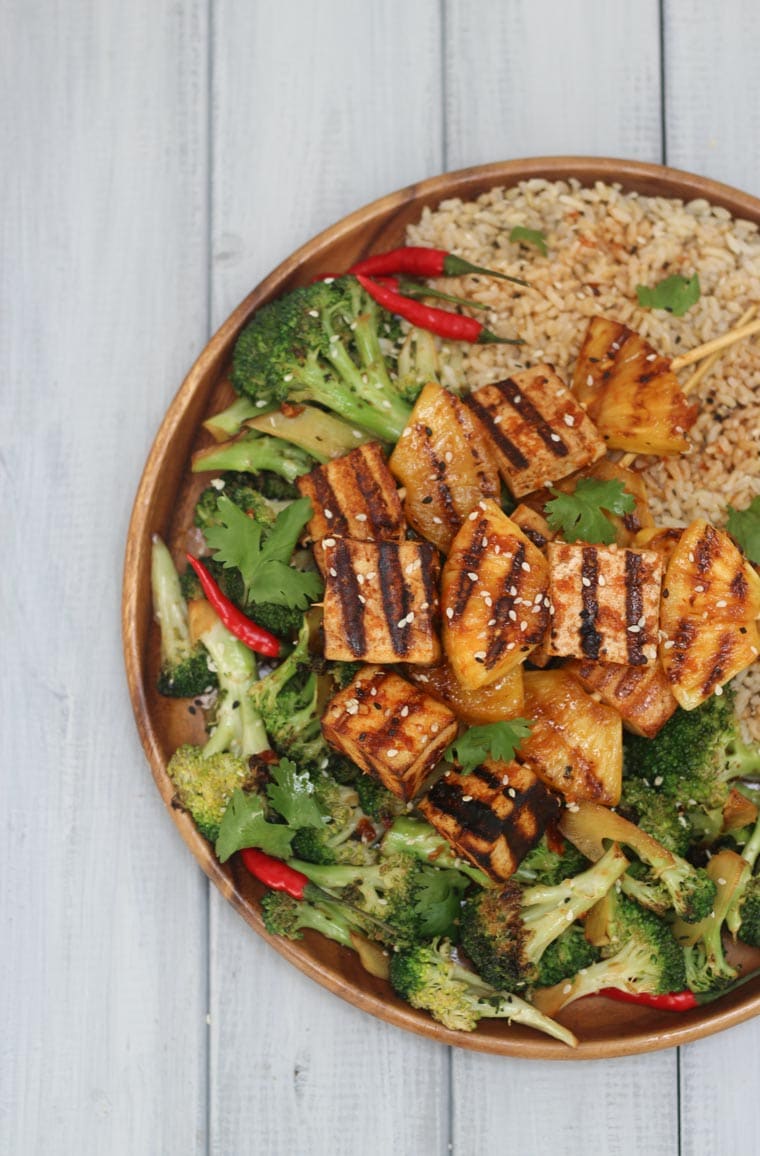
Vegan Sriracha Grilled Tofu and Pineapple Skewers

Grilled tofu skewers on top of rice and vegetables.

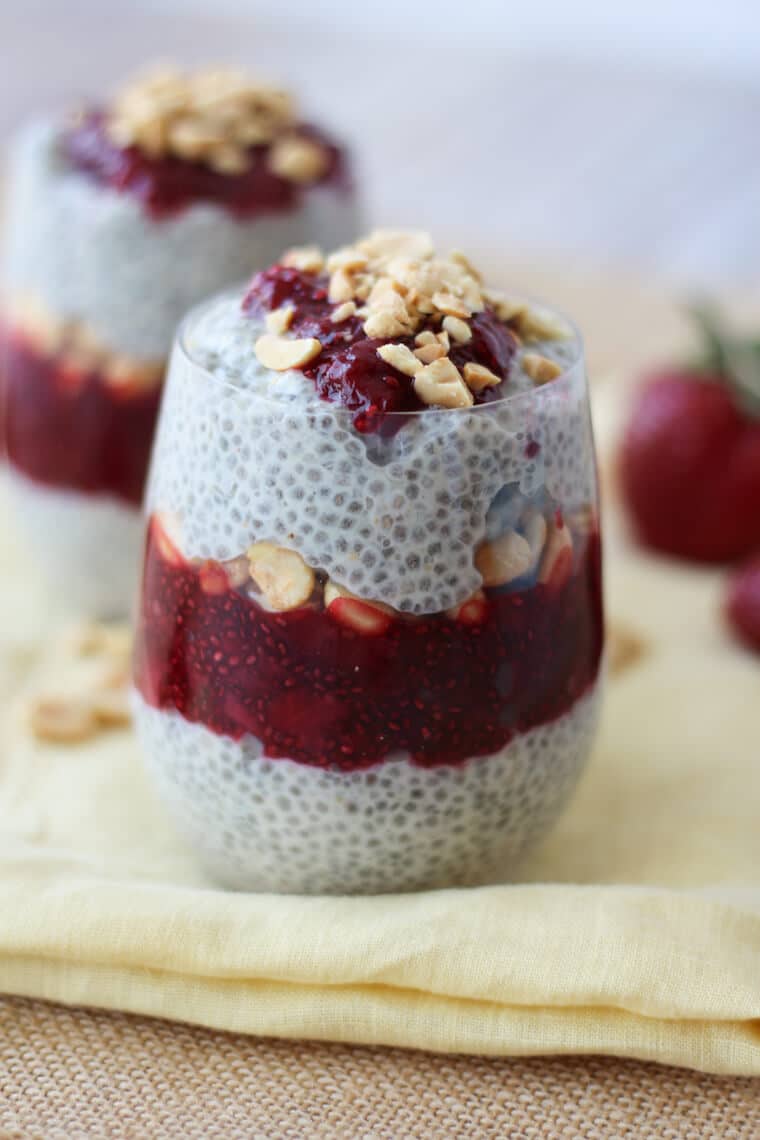
Soy PB & Jelly Chia Pudding

Layers of chia pudding and jam in a glass jar.

 
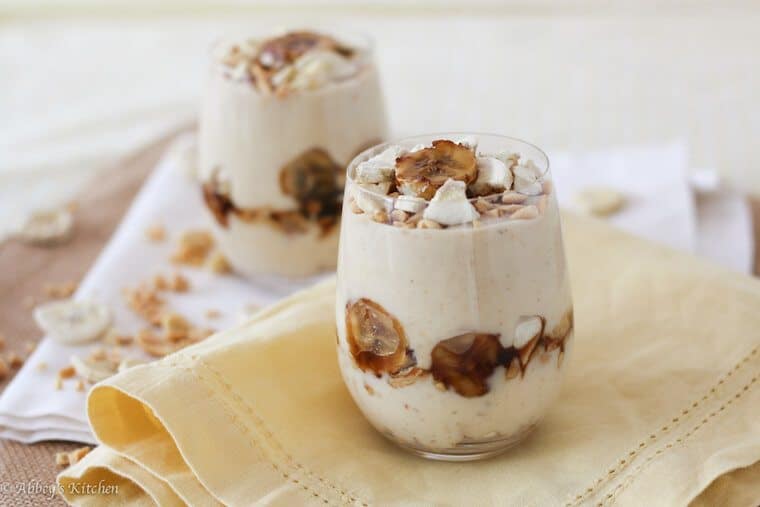
PB & Banana Protein Pudding

Banana pudding in a glass cup.

research on the dangers of soy on breast cancer and heart health?

  1. Soy contains a compound called isoflavones, a plant estrogen, which competes with endogenous estrogen for receptors.
  2. Eating or taking a soy supplement may reduce frequency of hot flashes and vaginal dryness for menopausal women though more research is needed.
  3. Eating soy protein may potentially reduce risk of getting breast cancer and recurrence, and it is also likely safe to eat in remission -though more research is needed.
  4. 25 grams of soy protein daily can help reduce cholesterol. This Health Claim will now be found on food products in Canada.
  5. Try to get soy protein from minimally processed foods rather than ultra-processed foods and supplements
What are your thoughts on soy?
Do you like soy based products?
Is soy bad for you in your books?
Leave me a comment below – I would love to hear your thoughts!

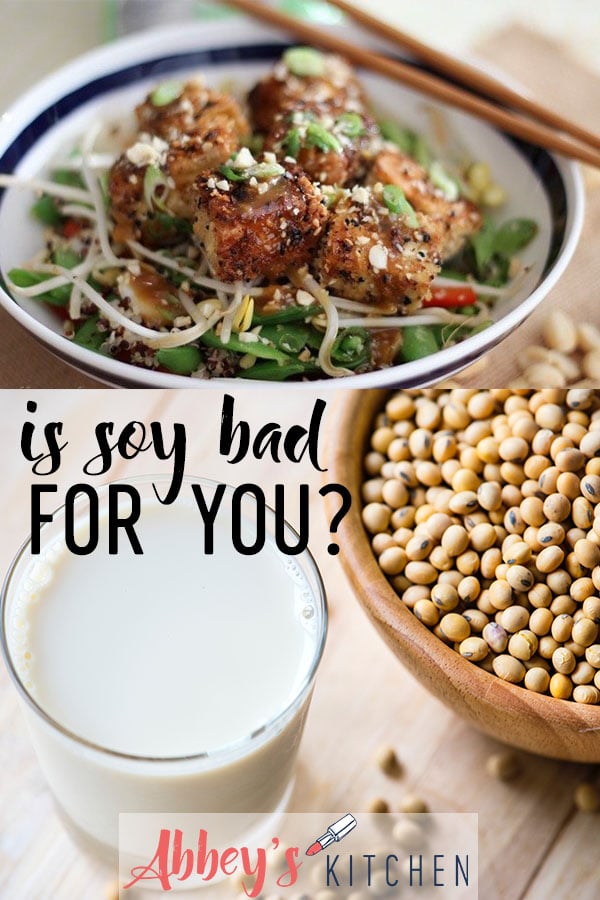
pinterest image of Crispy tofu in a bowl and soy milk in a glass with text overlay.


Contribution by RD2B Maxine Seider

Abbey Sharp

Abbey Sharp is a Registered Dietitian (RD), regulated by the Ontario College of Dietitians. She is a mom, YouTuber, Blogger, award winning cookbook author, media coach specializing in food and nutrition influencers, and a frequent contributor to national publications like Healthline and on national broadcast TV shows.
www.abbeyskitchen.com/about-abbey/

Last Updated May 12, 2022. Published November 20, 2019 By Abbey Sharp 13 Comments

MSG Effects and Claims Debunked | Does MSG Cause Headaches?

DISCLAIMER: This post was developed in sponsored partnership with Ajinomoto, however, as always, all opinions are genuine.

We debunk the idea that MSG is dangerous and evaluate claims like, “Does MSG cause headaches?” along with other concerns.

Of all the seasonings commonly found in restaurant and prepared foods, there isn’t one that is as polarizing and controversial as MSG (aka monosodium glutamate). From Chinese Restaurant Syndrome (which is, let’s be real, just plain racist) to neuron damage, to weight gain, headaches and of course, autism, you can pretty much find “evidence” that MSG causes EVERYTHING if you google long enough. However, considering that the U.S. Food and Drug Administration considers MSG completely safe, it’s still a very common and popular seasoning to use in food products. So today, we decided to look into the research and debunk some popular MSG myths.

What is Monosodium Glutamate?

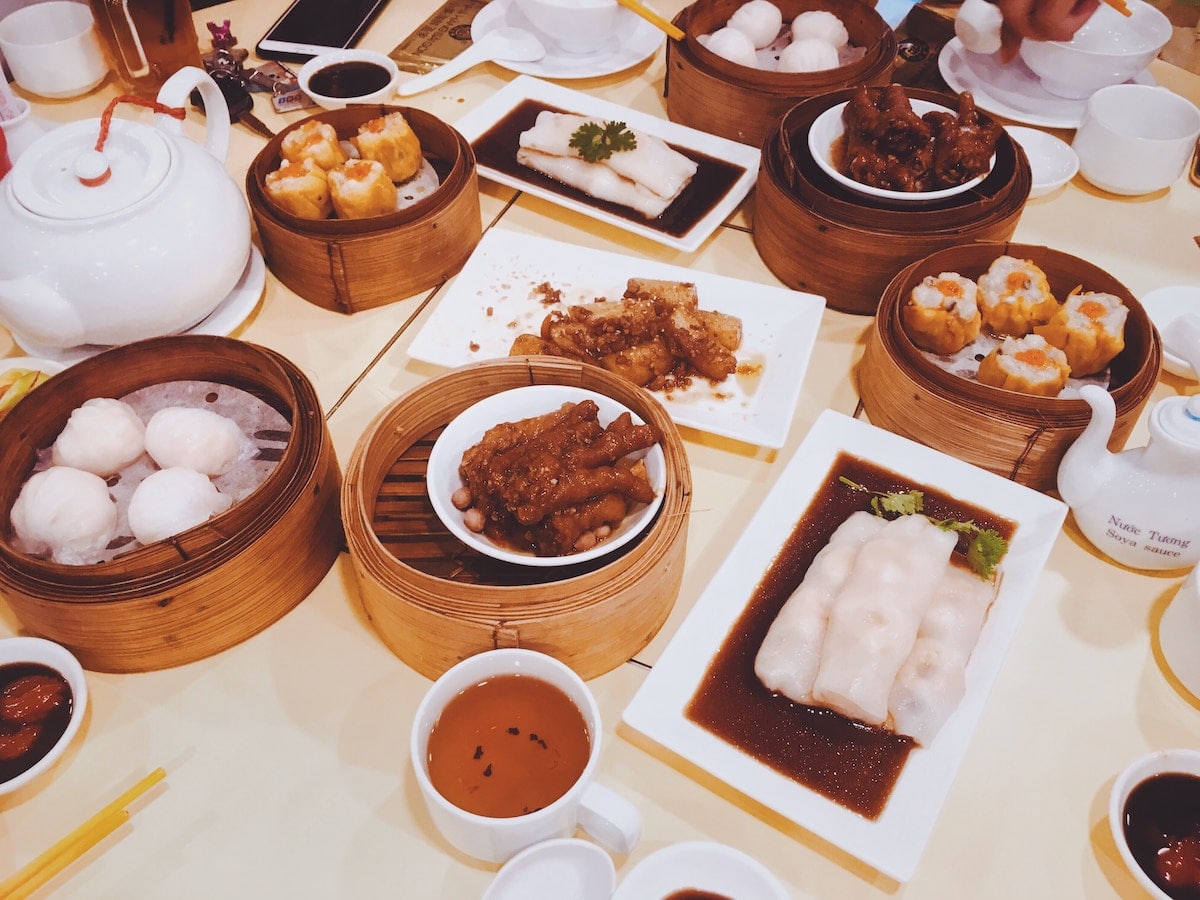
Chinese food on a table.

MSG is used as a seasoning to improve the taste of food. MSG is made up of glutamic acid or glutamate, which is an amino acid found inherently in many foods, and sodium. Back in the 60s many people claimed MSG was only used in Chinese food (hence the racist and fictitious condition: Chinese Restaurant Syndrome which was originally based on one man’s experience that he couldn’t even confirm was traced to MSG). Anyway, in reality, MSG is added to many processed foods like canned meats, prepared foods, potato chips, and frozen foods. MSG is also not just a seasoning. But rather, some foods inherently contain MSG including corn, green peas, mushrooms, some cheese, and tomatoes.

MSG EFFECTS CLAIM #1: Excess Dietary Glutamate is Toxic and Causes Neuron Damage

Photo of a plastic brain.

The idea behind this claim is that when we consume MSG, the glutamate from the MSG enters our bloodstream and our brain which leads to an excess of glutamate leading to neurological damage. This in turn affects our concentration and can cause permanent damage to our neurological system. This is one of the major claims of the war against MSG but here’s the bottom line on the subject: the MSG that we eat does NOT have any impact on glutamate in the brain because it cannot cross the blood brain barrier. (Background story: the blood brain barrier is a semipermeable border that separates our circulating blood from our brain. This barrier protects our brain from foreign substances that may injure the brain and maintains a constant environment for the brain.)

While the glutamate from MSG cannot cross the blood brain barrier, research has also found that the MSG we consume doesn’t even make it into our bloodstream!

Furthermore, the FAO/WHO Expert Committee and the Commission of the European Communities Committee both confirmed that in humans, up to 10g of MSG in a bolus of food does NOT increase blood levels of glutamate or impact the brain at all. Considering that the average individual consumes approximately 11 grams of glutamate each day (from natural sources) and the average food seasoned with MSG only contains 0.5 grams of MSG, it is very unlikely that we would ever consume enough to cause problems.

So yeah, that MSG claim is totally bunk.

MSG EFFECTS CLAIM #2: Excess Dietary Glutamate Exacerbates Autism and Impairs Concentration in Adults

Through anecdotal accounts, it has been argued that MSG may worsen symptoms in children with autism, and by removing MSG from their diet entirely (that’s pretty difficult to do), those symptoms disappeared. However, given that we now know that MSG in food does not impact glutamate levels in the brain because it cannot cross the blood brain barrier, it is unclear how MSG could even theoretically interfere with a child’s brain.

It has been further confirmed in two different publications that there is NO evidence that MSG worsened autism or mental problems in children with autism. Based on the available evidence and just what we know about the metabolic pathways of MSG, there is absolutely no physiological reason for this to be true.

MSG EFFECTS CLAIM #3: Excess Dietary Glutamate Causes Brain Damage

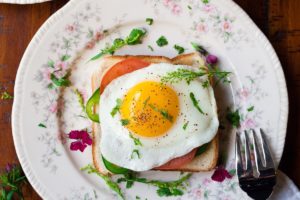
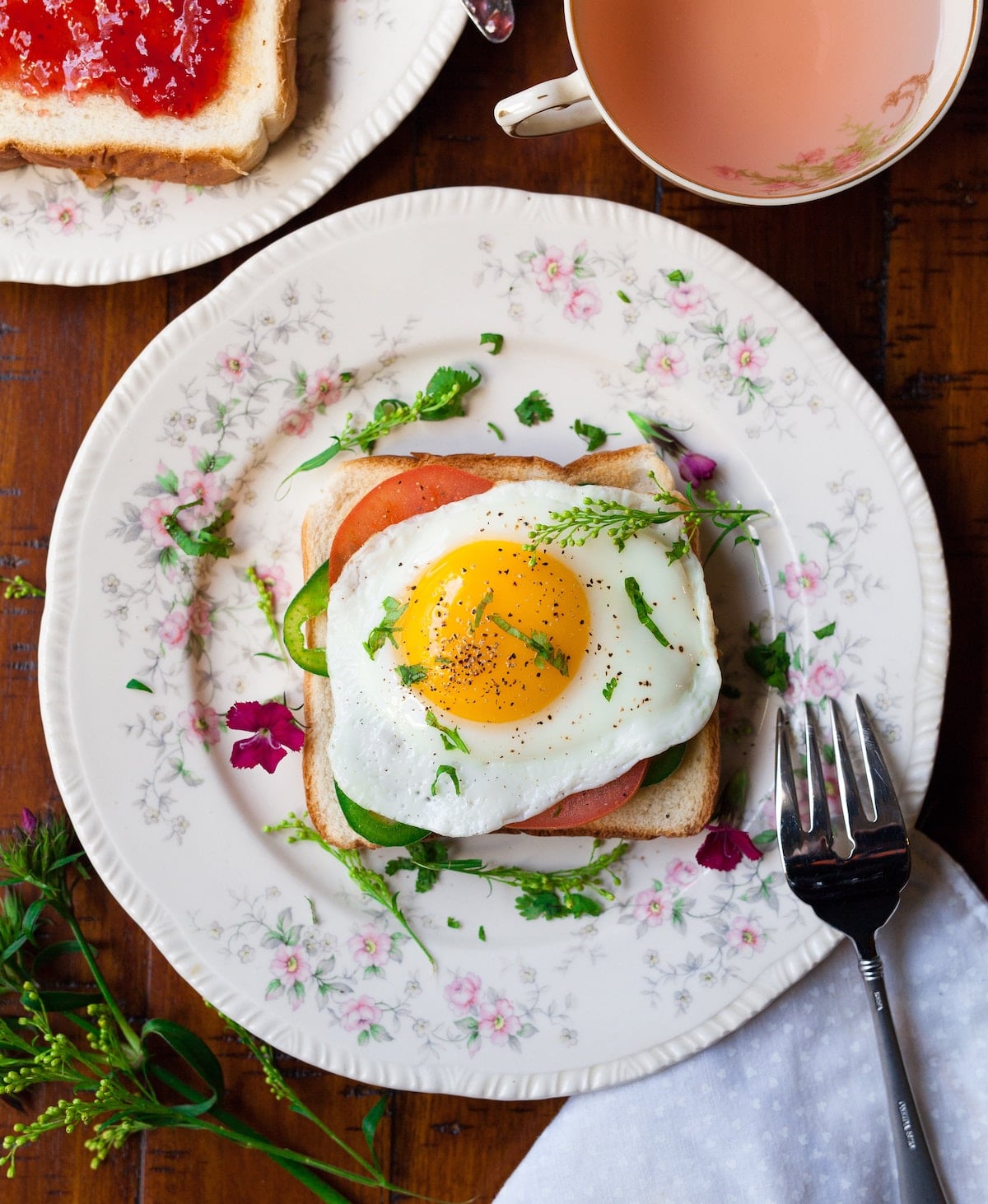
Fried egg on top of toast.

This claim is based on a theory named: excitotoxicity. It sounds made up, but it’s actually a real condition. Excitotoxicity is a pathological process by which neurons are damaged and killed by the over-excitation of receptors for the excitatory neurotransmitter glutamate. So glutamate is an excitatory neurotransmitter just like other neurotransmitters such as acetylcholine, norepinephrine and serotonin.

Excitotoxicity isn’t a common occurrence. It can happen after a brain injury or stroke, but no evidence has found that excitotoxicity can happen as a result of dietary intake of any neurotransmitters. No evidence has found that ingesting foods with glutamate or choline like seafood and eggs, respectively (which makes acetylcholine) or tryptophan like turkey (which makes serotonin) causes an excitotoxicity response.

The bottom line is: excitotoxicity is a response to a brain trauma, not to what we eat.

MSG EFFECTS CLAIM #4: Excess Dietary Glutamate Prevents the Absorption of Other Nutrients

The theory behind this claim is that when you consume too much glutamate, the glutamate competes with other amino acids and reduces their absorption.

Here’s the cool deal on absorption. 95% of glutamate, free or bound – is actually NEVER absorbed in the intestines, but is actually utilized by the gut where it gets converted within the cells that line the GI tract into energy or other amino acids. In other words, there is no scientific evidence to suggest that dietary glutamate reduces absorption of other amino acids.

MSG EFFECTS CLAIM #5: MSG Causes Migraine Headaches

Women with a headache.

It’s often been cited that MSG causes headaches, also known as ‘Chinese Restaurant Syndrome”. A lot of people cite feeling almost like you’ve had too much caffeine. But there is no scientifically established link between MSG and migraine headaches and the International Headache Society removed it from its list of triggers in 2018. In fact, if MSG triggered headaches, then the majority of people would suffer on a daily basis when eating foods like tomatoes, mushrooms, and cheese – foods that are all rich in glutamate. In fact, breastmilk is VERY high in glutamate and babies who are exclusively fed it aren’t struggling with bad migraines every day.

For people who do experience migraine symptoms, we have to consider if these are more a correlation than a causation. Eating large amounts of any processed foods could leave you feeling a little less than stellar. But bottom line is that is likely more to do with the types of foods we associate with MSG, not the seasoning itself.

What we do know is that the FDA has concluded that only some people observe mild transient symptoms (think headache, flushing, tingling, palpitations, drowsiness and numbness) and that is with a dose of 3 grams at once – without FOOD. That’s a mega dose! To put that in perspective, to get the equivalent in food, you would have to drink over a cup of soy sauce or 9 ounces of parmesan cheese! I love cheese, but that’s a lotta cheese! Otherwise, evidence suggests that those symptoms aren’t evident when people don’t know they’re eating MSG. Yep, we call that the no-cebo effect and it is VERY real.

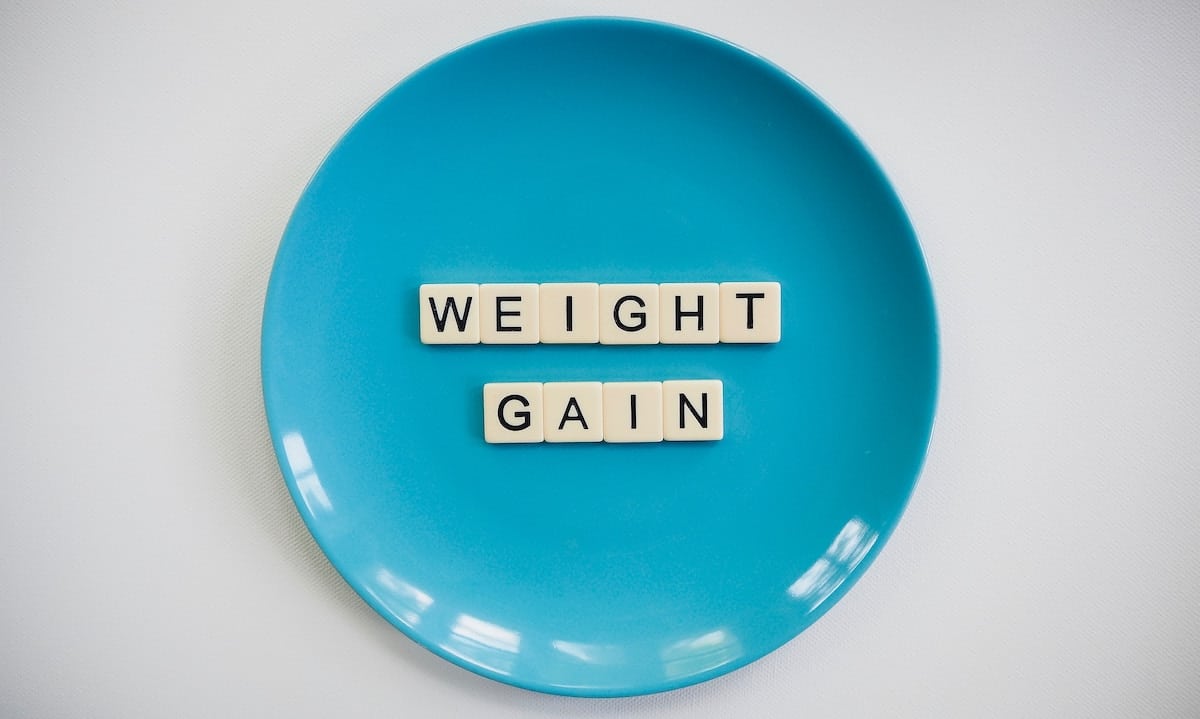
MSG EFFECTS CLAIM #6: MSG Makes You Eat More and Gain Weight

Plate with tiles that spell the word the word: weight gain.

Image Credit: https://totalshape.com/

The theory behind this claim is that since MSG makes food taste good, you end up eating more of it and you gain weight. Here’s the deal. Animal studies on MSG found that injecting high doses of MSG into the brains of rats and mice caused them to gain weight. Before I continue, let’s remember we’re not mice and we also don’t inject anything into our brains. So what about human studies on actual food consumption?

One 2008 study on healthy individuals in South China did find an association between those who ate more MSG and body weight, but there are several variables at play here – and actual intake of MSG in the study was difficult to quantify. This study did not consider the consumption of restaurant meals or processed foods (which would inevitably increase calorie intake and potentially cause weight gain), but rather, the data on MSG intake was only gathered from a controlled environment at home. Further, because it was done in very small rural villages, it may not be so easily extrapolated to the reality of most people living in the western world. This study oversight doesn’t give us a full picture of their total MSG intake or other factors that may increase BMI.

In contrast, a more recent 2013 study from Vietnam found that MSG intake in Vietnamese adults was not associated with body weight.

So what about MSG making food taste so good that we can’t stop eating? MSG is added to a ton of foods because it adds that desirable unique savoury umami flavour. We find this same flavour in foods like seaweed, aged parmesan, anchovies and miso. It’s savoury, earthy and undoubtedly delicious. But is it making food “addictive” and forcing you to override your eating intuition? Of course not. Salt also makes food taste good. As does fat or sugar. These are all just tools in the chef’s toolbox, and we don’t need to explicitly demonize any of them or claim them to be “toxic”. The research actually shows that it may in fact have benefits for improving satiety, which I will explore more below!

Here are a few reasons why there can be a place for MSG in a healthy diet.

Can MSG be Leveraged for Better Health?

MSG May Help To Reduce Sodium Intake

Spoonful of salt.

Currently, 9 out of 10 Americans are consuming more sodium then they should. The American Heart Association recommendation is to limit sodium below 2300 mg per day, and move towards a limit of 1500 mg over time. This is in stark contrast with the average intake of 3400 mg of sodium. Most processed and restaurant food is very high in sodium, so one of the recommendations is to swap our salt for MSG because it’s lower in sodium. One gram of table salt has 390mg of sodium while the same amount of MSG has 120mg of sodium – in fact, in 2019, the National Academies of Sciences, Engineering and Medicine referenced MSG as one tool to reduce sodium in the diet. So a lot of households find they can cut back on salt by replacing some of it with a pinch of MSG.

May Help us Eat More Vegetables

I believe that the same reason we associate Thanksgiving turkey with a food coma from the alleged “tryptophan”, we may associate an Americanized Chinese take out dinner with adverse effects and blame it on a neurotransmitter effect. When in fact, we maybe just ate more carbs, fat and salt then our body is accustomed to. If we were to in fact utilize the power of MSG at home in balanced cooking as a flavour agent, I strongly doubt we would have the same association. Adding a pinch of MSG to brussel sprouts or broccoli can give it a boost of flavour without overloading it with salt. This can make these foods more desirable (especially for the picky eaters in your life) and may help you choose them more often. Win win!

MSG May Help Increase Fullness

Some claim that because MSG makes food taste good, you eat more of it, but a lot of the current the research contradicts this theory. Instead, research suggests that MSG may actually help to increase satiety (fullness) and satisfaction. One study found that after participants ate a carrot soup with MSG added, their subjective appetite was significantly lower compared to the group that ate soup without added MSG. When you have a healthy relationship with food, food that tastes good and feels good is just inherently more satisfying, which may reduce the likelihood of overeating.

MSG May Improve Nutritional Status in the Elderly

People walking outside.

MSG critics claim that MSG makes you eat too much, while simultaneously insisting that increases the risk of malnutrition. Seems contradictory, no? The truth is that evidence has found that glutamate in MSG can actually provide significant nutritional benefits to certain populations who are at risk of malnutrition like the elderly or ill. One study found that elderly individuals who were struggling to eat due to loss of taste and smell improved their nutritional status when MSG was added to their food because it made it more enjoyable and flavourful. What an amazing and important tool for hospitals and long term care facilities to lean on for this population!

Bottom Line on MSG Effects & Safety

So here’s the deal on MSG. The safety of glutamate, whether it’s naturally in food or added to food as a seasoning has been WELL researched and the evidence is pretty darn clear. It’s safe, and for most people, highly unlikely to cause any adverse effects. MSG has been used in households in many cultures for centuries and while we may not even know it, we also consume around 20-40 times more naturally occurring glutamate than we do added MSG. It’s time we stop calling our food hangovers “Chinese Restaurant Syndrome” because there is absolutely NO evidence to back it up. If you don’t feel good after eating fried rice, then don’t order it, or make your own version at home with less fat or salt.

Like most things, more of our attention should be focused on eating foods in moderation instead of demonizing or trying to cut them out of our diet.

https://www.youtube.com/watch?v=4wdgdatqhbk&t=2s

Become an Abbey’s Kitchen Subscriber

pinterest image of Toast with a fried egg on top with text overlay.

Abbey Sharp

Abbey Sharp is a Registered Dietitian (RD), regulated by the Ontario College of Dietitians. She is a mom, YouTuber, Blogger, award winning cookbook author, media coach specializing in food and nutrition influencers, and a frequent contributor to national publications like Healthline and on national broadcast TV shows.
www.abbeyskitchen.com/about-abbey/

Last Updated August 30, 2022. Published November 14, 2019 By Abbey Sharp Leave a Comment

Vegan Maple Roasted Persimmons and Figs | Healthy Holiday Dessert

Vegan maple roasted persimmons make the ultimate gluten free holiday dessert that is equally nutritious and delicious.

Vegan maple roasted persimmons and figs make the ultimate gluten free holiday dessert that is equally nutritious and delicious.

Here’s what I know about dessert. We all love it, and we can never get enough of it. Amiright? When I’m entertaining, I see dessert as the most important meal because since it’s the last dish, it’s likely the dish your guests will remember, so I suggest ending a meal with my vegan maple roasted persimmons and figs dessert.

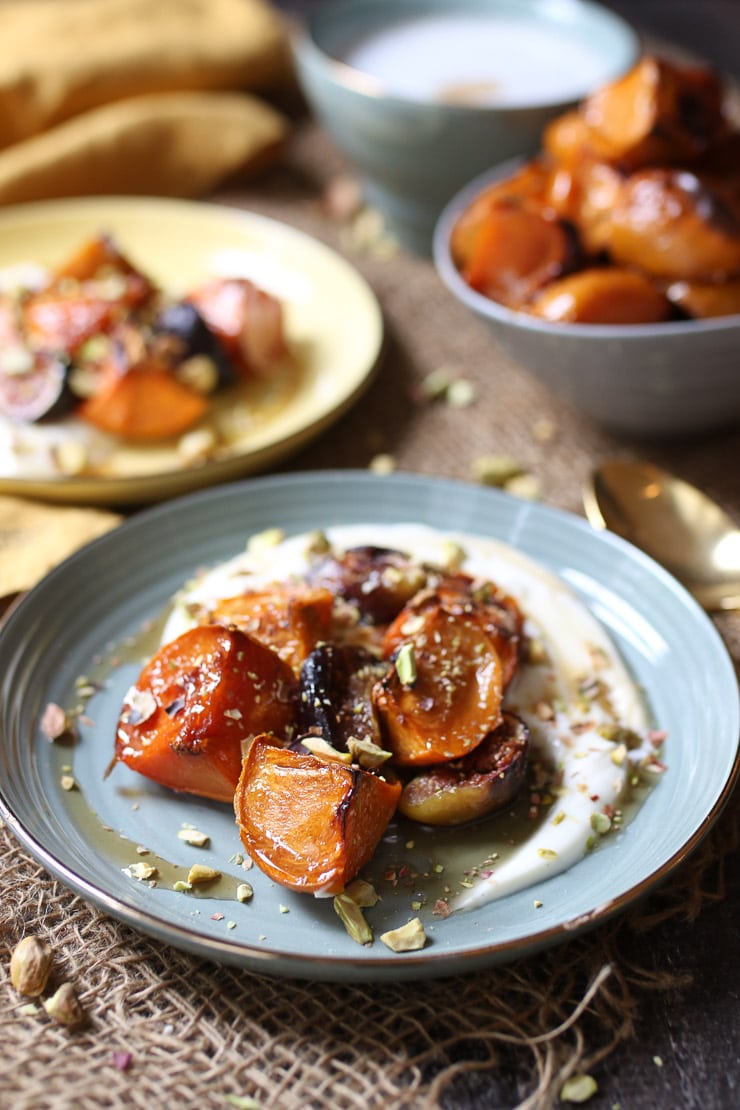
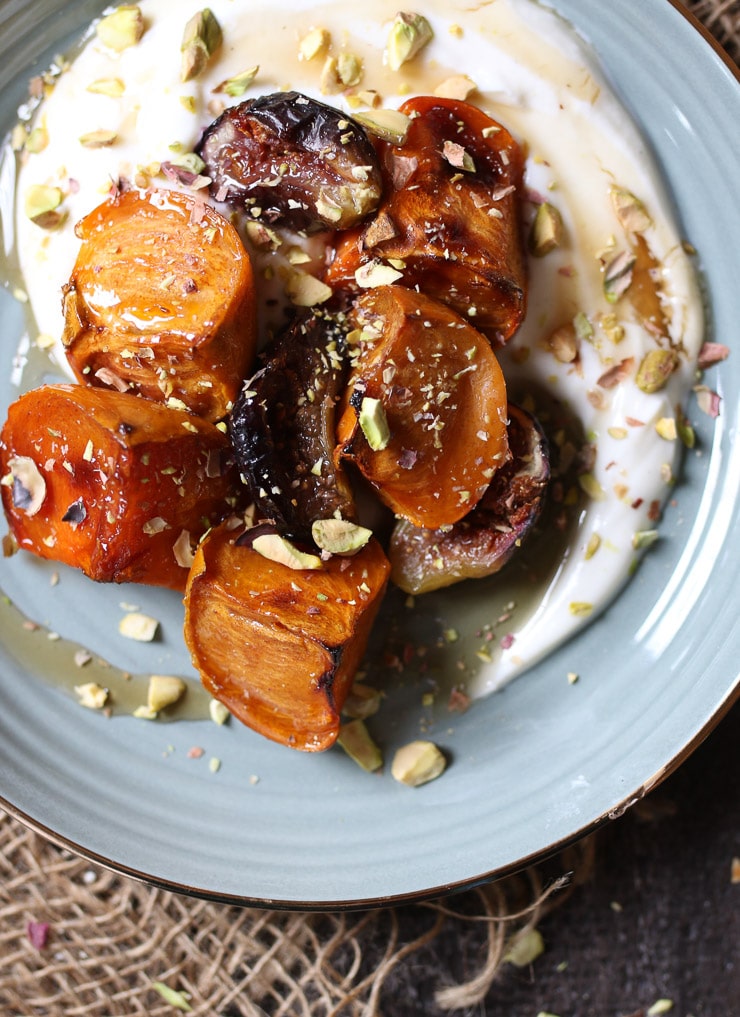
Roasted persimmons and figs on a teal plate with additional dessert in the background

CLICK HERE TO PIN

The best thing about this persimmon gluten free holiday dessert? It’s SO EASY, REALLY TASTY and actually NUTRITIOUS. Have I sold you yet?

how to make vegan maple roasted persimmons and Figs

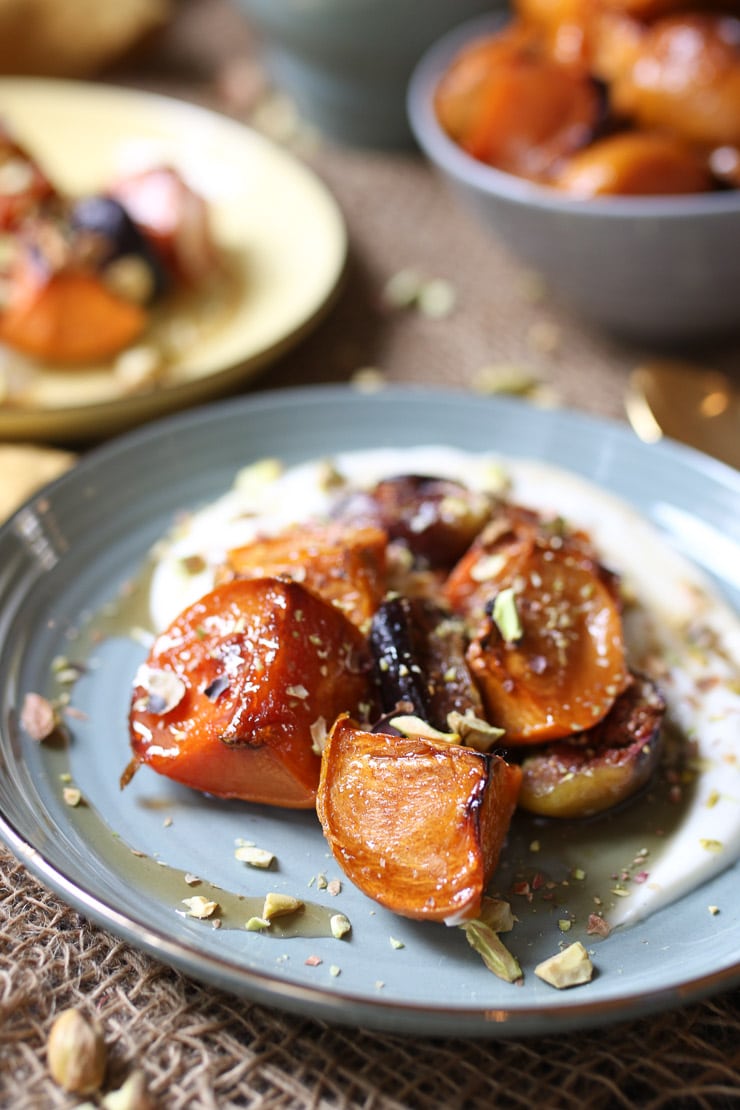
Holiday fruit dessert served on a teal plate.

CLICK HERE TO PIN

Have you tried persimmons yet? They’re one of my fave winter fruits and they’re known for their sweet, honey-like flavor. Sounds divine doesn’t it? Another bonus is that persimmons are chalk full of nutrients. One persimmon contains a rich source of vitamin A as well as vitamin C, E, K, B6, potassium, copper and manganese. They’re low in calories and packed with fibre making it the perfect dessert candidate. Throw in some delicious plump figs and you’ve got a nutritious powerhouse!

Roasted persimmons and figs on teal plate with crushed nuts.

CLICK HERE TO PIN

To make this vegan persimmon dessert, I roast quartered persimmons and figs with a generous drizzle of maple syrup, water and vanilla bean seeds. After they’re done roasted, you end up with a beautifully caramelized treat. Top it with coconut yogurt and pistachios and it’s time to dig in!

Now, tell me, have you tried persimmons?
Have you tried roasting them?
Share your fave ways of eating persimmons!

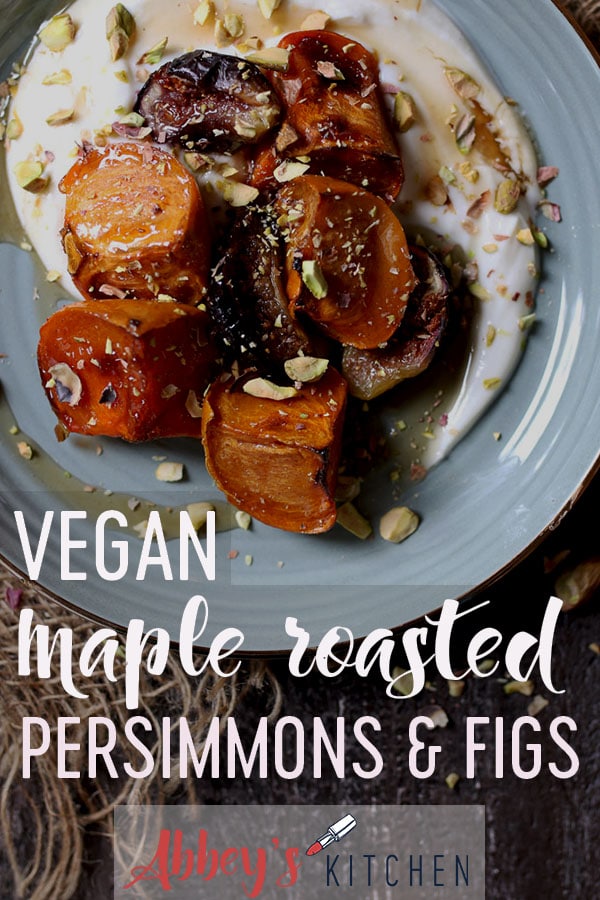
pinterest image of Roasted persimmons on a teal plate with text overlay

CLICK HERE TO PIN

Vegan maple roasted persimmons make the ultimate gluten free holiday dessert that is equally nutritious and delicious.
Print Recipe
5 from 1 vote

Vegan Maple Roasted Persimmons & Figs

Vegan maple roasted persimmons make the ultimate gluten free holiday dessert that is equally nutritious and delicious.
Prep Time8 minutes mins
Cook Time45 minutes mins
Total Time53 minutes mins
Course: Dessert
Cuisine: Chinese, American
Servings: 4 people
Calories: 65kcal
Author: Abbey Sharp

Ingredients

  • 4 fuyu persimmons quartered
  • 4 figs halved
  • 2 tbsp maple syrup
  • 2 tbsp water
  • Seeds from 1 vanilla bean
  • Coconut yogurt for serving
  • Pistachios minced, for serving

Instructions

  • Preheat oven to 425 F. Place persimmons and figs into a small baking dish.
  • Mix together the maple syrup, water and vanilla bean seeds. drizzle over the persimmons and figs.
  • Cover with foil and roast for 45 minutes, or until very soft.
  • Serve on top of coconut yogurt and topped with pistachios.

Nutrition

Calories: 65kcal | Carbohydrates: 17g | Protein: 1g | Fat: 1g | Saturated Fat: 1g | Sodium: 2mg | Potassium: 139mg | Fiber: 1g | Sugar: 14g | Vitamin A: 70IU | Vitamin C: 1.7mg | Calcium: 28mg | Iron: 0.2mg

Abbey Sharp

Abbey Sharp is a Registered Dietitian (RD), regulated by the Ontario College of Dietitians. She is a mom, YouTuber, Blogger, award winning cookbook author, media coach specializing in food and nutrition influencers, and a frequent contributor to national publications like Healthline and on national broadcast TV shows.
www.abbeyskitchen.com/about-abbey/

Last Updated May 12, 2022. Published November 13, 2019 By Abbey Sharp 1 Comment

Health at Every Size (HAES) Explained by an Ex-Dieter Dietitian

Today’s post we dive into Health at Every Size (HAES) as explained by an Ex-Dieter Dietitian with a history of orthorexia and a new outlook on the relationship between weight and health 

If you have been following my Youtube channel, you may have seen my latest video series on intuitive eating. I’ve also recently shared my a prelude post to this where I chat about some commonly asked questions related to intuitive eating and mindful eating.

My introduction to Health at Every Size started in undergrad from the amazing Jacqui Gingras. Jacqui taught me so much about HAES, intuitive eating, mindfulness and body positivity. While I was still in the throws of my eating disorder at the time, and wasn’t really in a place to fully embrace it, I was definitely fascinated by the topic and aspired to one day be able to fully embrace it myself.

I’m still on that journey.

But I have come a long way in my understanding of HAES and intuitive eating. I wanted to share some introductory teachings with you in case you have some questions and criticism of the field.

What is HAES (Health at Every Size)?

Women standing in a park.

Health at every size (HAES) is a series of principles designed to acknowledge that weight does not determine ones health. It’s a framework that supports people of all sizes in finding a compassionate way to care for themselves and achieve optimal health. HAES includes three basic components.

Respect:

  • Celebrates body diversity;
  • Honors differences in size, age, race, ethnicity, gender, dis/ability, sexual orientation, religion, class, and other human attributes.

Critical Awareness:

  • Challenges scientific and cultural assumptions;
  • Values body knowledge and lived experiences.

Compassionate Self Care:

  • Finding the joy in moving one’s body and being physically active;
  • Eating in a flexible and attuned manner that values pleasure and honors internal cues of hunger, satiety, and appetite, while respecting the social conditions that frame eating options.

Principals of the HAES movement

The Health At Every Size philosophy simply acknowledges that well being and healthy habits are more important than the number on the scale. Linda Bacon’s book is an amazing place to start and discusses the five major principals of HAES. These were pulled from Size Diversity and Health’s website.

1. Weight Inclusivity: Accept and respect the inherent diversity of body shapes and sizes and reject the idealizing or pathologizing of specific weights.

2. Health Enhancement: Support health policies that improve and equalize access to information and services, and personal practices that improve human well-being, including attention to individual physical, economic, social, spiritual, emotional, and other needs.

3. Respectful Care: Acknowledge our biases, and work to end weight discrimination, weight stigma, and weight bias. Provide information and services from an understanding that socio-economic status, race, gender, sexual orientation, age, and other identities impact weight stigma, and support environments that address these inequities.

4. Eating for Well-being: Promote flexible, individualized eating based on hunger, satiety, nutritional needs, and pleasure, rather than any externally regulated eating plan focused on weight control.

5. Life-Enhancing Movement: Support physical activities that allow people of all sizes, abilities, and interests to engage in enjoyable movement, to the degree that they choose.

Health at every size vs Healthy at every size

Women sitting on a park bench.

It’s important to reiterate that HAES stands for Health At Every Size, not HEALTHY at any size. It’s subtle, but different. As we discussed, the first principal of HAES is that no weight should be pathologized. While I know a lot of you are saying, well what about someone who is 70 lbs and anorexic, or someone who is 500 lbs and bedridden, and to respond, I would quote size diversity and health’s website which states:

HAES shifts the focus to acknowledging and respecting an individual’s circumstances, and works to investigate and support options that are available to help make choices that benefit health and well-being. [In both of these circumstances] using a HAES approach puts the focus on their behaviors, unique sets of abilities, and available resources, and places them in the context of their life as the primary areas of concern and consideration.

The HAES framework is based on the research that shows that intentional weight loss diet don’t work. Through the common restrict binge cycle we see with the diet mentality, can often result in more weight gain. HAES also points to evidence suggesting that yo-yo dieting, and weight stigma, two common outcomes of being in a larger body, may be able to explain the a lot of the health disparities we see in people in larger bodies.

Finally, HAES is also grounded in evidence that a person’s body size and weight is NOT a very good reflection of their health, compared to health-promoting behaviours. So for example, a 2012 study found there were four behaviours that were associated with a lower risk of mortality (regular exercise, a diet rich in vegetables and fruit, moderate alcohol intake and avoiding our quitting smoking). None of which included specifically changing your body size. These are behaviours we can actually control. Furthermore, a series of randomized controlled trials found that a HAES approach was associated with improvements in blood pressure and blood lipids and that these health outcomes were more successful than weight loss treatment.

So HAES is not about telling people hey, just go gain weight, any weight is healthy. It’s about finding the healthiest weight for you and your body! It’s about moving the focus away from the pursuit of just being one specific socially celebrated size. Instead focusing on eating a healthful diet, engaging in physical activity, sleep, stress management, pleasure in life and intuitive eating, all while working with your body wherever it lands in terms of size and shape.

But Isn’t Being Overweight Unhealthy? Don’t “obese” people need to lose weight?

Women sitting in a park.

First of all, I know we see a lot of research linking higher weights to disease, but theres a big difference between correlation, which is what that is, and causation, which we cannot prove. There is a growing number of studies suggesting that healthy behaviours, not body weight alone, may be a major contributor. So for example, a meta-analysis found that incorporating more fruits, veggies and fibre reduced the risk of diabetes, improved blood pressure, blood sugar and cholesterol levels even when no weight loss occurred.

There are also a lot of other challenges that people in larger bodies face that may also be able to explain these disparities.

For one, there is the problem of weight cycling or yo yo dieting which is common in larger body people who are constantly on and off weight loss diets. Research has found that when people repeatedly lose weight and regain weight, which we know is pretty much inevitable based on set point theory and weight loss prevention mechanisms in the body, it increases their risk of disease. So for example, one study found that larger bodied women who had dieted had high blood pressure, while larger bodied women who had never dieted had normal blood pressure. In other words, it seems it may be the dieting and associated weight cycling that puts an individual at a higher risk of health issues, like hypertension, rather than the static body size alone.

Second, there is the issue of weight stigma. People think that telling fat people to lose weight will motivate them- news flash, it often has the opposite effect! Research suggests that those who experience weight discrimination have twice the physiological stress as people who don’t. This is associated with type 2 diabetes, hypertension and heart disease. Studies on weight stigma have found that people who are fat shamed are less likely to make changes to improve their health. This is because they’re less likely to go to the doctor or participate in physical activity, and are at more likely to overeat. This is particularly troubling in the medical community. Research has found that weight bias in doctors can cause binge eating disorder, lower motivation for exercise, increased blood pressure and blood sugar, less trust of health care providers and a reduced engagement with health care services leading to advanced and poorly controlled chronic disease and low quality of life.

On the flip side of that, research has found that when people are supported and feel secure and comfortable in their skin, they are more likely to make healthy lifestyle behaviour changes and put their health first, regardless of the number on the scale.

Third, there’s also the social determinants of health which significantly influence the health of populations. These are a range of personal, social, economic and environmental factors that determine the health of individual. Some of the main ones include income and social status, employment and education- all of which research suggests play a massive role in health disparities.

So while we can’t always control those social factors, and we definitely cant always control our genetics, let’s focus on what we can control – our behaviours – and less on shaming ourselves and others over the natural shape and size of our body.

Why do HAES EXPERTS say “obesity” is a bad word?

The word obesity is everywhere in medical literature and yes, it is an official medicalized term. However, there is a lot of reasons why some people find it derogatory and stigmatizing. First, the origin of the word itself feels insensitive as it is literally translated to mean to eat oneself fat. Second, pathologizing a person based on their body shape perpetuates weight stigma and simplifies someone’s identity based on their body weight. This is why the medical community now uses “person first” language when discussing an individual and their illness. So for the same reasons, when I was in school to become a dietitian we were taught to no longer call people “diabetic” and instead saying “person with diabetes” so as not to label someone as their disease.

For those of you with a though love approach, you should also know that shaming someone for their weight is actual counterproductive. Evidence actually suggests that people will engage in healthy behaviour changes when they’re encouraged to achieve a “healthier weight” rather than being labelled as “obese”. I am not in larger body so my role as an ally is really just to listen. If more neutral terms like fat or larger body feels less stigmatizing, it certainly shouldn’t be an inconvenience to respect that.

What is thin privilege? Isn’t a thin body earned?

Thin privilege isn’t about how much exercise one person does to maintain his or her physique. It also isn’t the idea that thin people will never get body shamed for being too small and therefore will never face body image issues or body shaming. We’re all susceptible to that.

It’s simply an acknowledgement that having a socially accepted body size and shape affords you benefits, access and less discrimination in society that larger bodied folk don’t have. Like the idea that any clothing store will carry my size. And an airline seat will fit my body. Or even equal access to employment or health care. That is a privilege!

I mean, there are all sorts of privilege that I think we should reflect on in our life. Thin privilege, white privilege, heterosexual privilege, gender privilege etc. I truly believe we all need to look inwards and see our privilege.

Are you a Health at every size dietitian?

Women laughing outside in a park.

I know this is controversial so I will simply say this. I am HAES supporter and a HAES learner. I’m not a HAES expert. I too am sorting through the research and evidence and trying to make honest sense of it all.

I DO believe the research linking body weight alone to disease is flawed, correlation-based and therefore difficult to tease apart from behaviours. And I also think the research supporting HAES is promising and convincing to me that behaviours play a bigger role, but not extensive enough yet to explain everything. I am evidence based, and I believe that there is legitimate evidence linking body weight to higher risks for some diseases or conditions.

Having said that, is dieting the answer? Of course, there’s a real risk benefit analysis that has to happen here, and more often than not, the risks associated with dieting outweighs the benefits of some modest weight loss. So no, in most cases, I don’t believe that it is. I believe that the world would be better without dieting. We would likely not see our weights increasing beyond their natural set points (aka. we wouldn’t be gaining a lot of weight). Also we wouldn’t be obsessing over sugar, or feeling addicted to food, or shaming ourselves into poorer health behaviours. We would probably be generally healthier as a society- physical and psychologically.

Having said that, I also respect that everyone’s journey is different and I’m not discounting that weight loss may or may not be part of that journey. This is so nuanced and while I may consider myself “anti diet”, I’m not “anti dieter” (as my colleague Christy Harrison once said).

I don’t want you to feel shamed for wanting to lose weight. It is normal to want to lose weight- no matter what your size or shape. Diet culture does makes it overwhelmingly enticing.

But I want to offer people who are struggling with their sense of self worth as a result of that diet culture know that physical and emotional deprivation is not the road to health. And that we all deserve love, respect and nourishment regardless of size.

If you’re curious about health at every size, or intuitive eating, I strongly suggest watching my YouTube channel for my new series. I will be walking through the principals of intuitive eating and also talking a lot about the body positive movement and size acceptance.

In the meantime, leave me a comment if you have any burning questions about health at every size or HAES?

pinterest image of abbey standing and laughing in a park with text overlay

Abbey Sharp

Abbey Sharp is a Registered Dietitian (RD), regulated by the Ontario College of Dietitians. She is a mom, YouTuber, Blogger, award winning cookbook author, media coach specializing in food and nutrition influencers, and a frequent contributor to national publications like Healthline and on national broadcast TV shows.
www.abbeyskitchen.com/about-abbey/

Last Updated July 21, 2020. Published November 11, 2019 By Abbey Sharp 8 Comments

Vegan Florida OJ Ginger Sweet Potato Soup

Orange soup in a bowl.

DISCLAIMER: This post was developed in sponsored partnership with Florida Department of Citrus, however, as always, all opinions are genuine.

This vegan Florida OJ Ginger Sweet Potato Soup is plant based, dairy free, gluten free, and loaded with antioxidants.

Fall to me screams soup season and I’m always looking for ways to naturally brighten my morning and day. This Vegan Florida OJ Ginger and Sweet Potato Soup is loaded with natural sweetness and colour, and a great way to warm up on a cool day.

How to Make Florida OJ Ginger Sweet Potato Soup

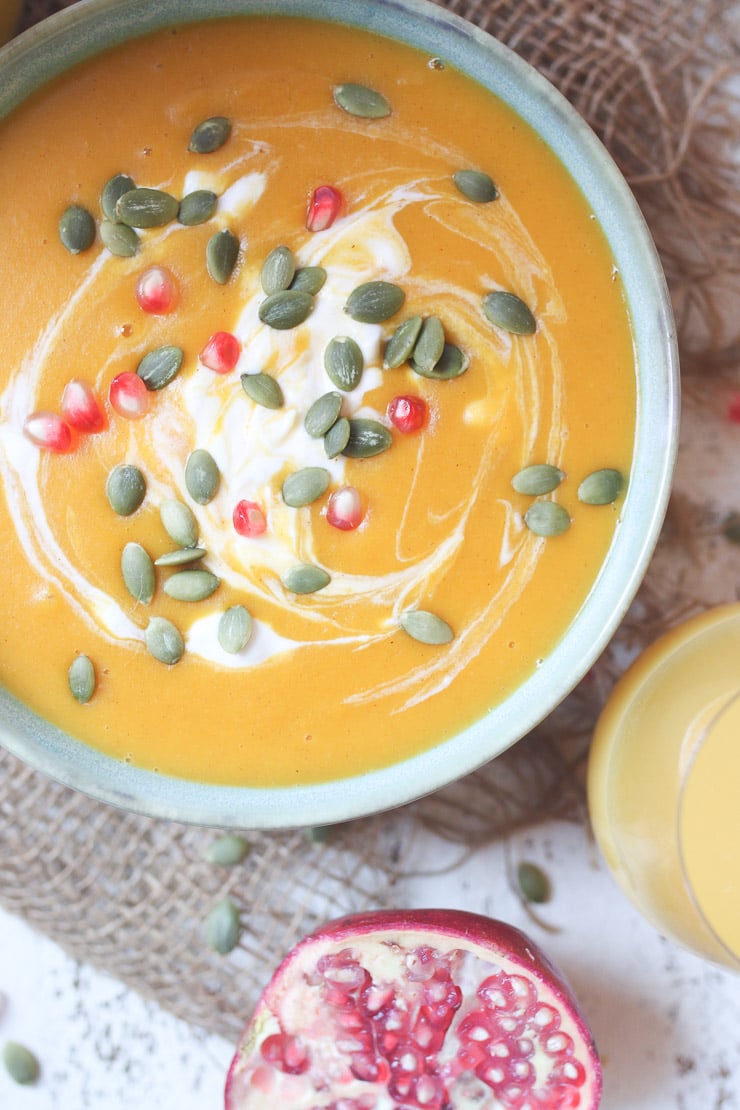
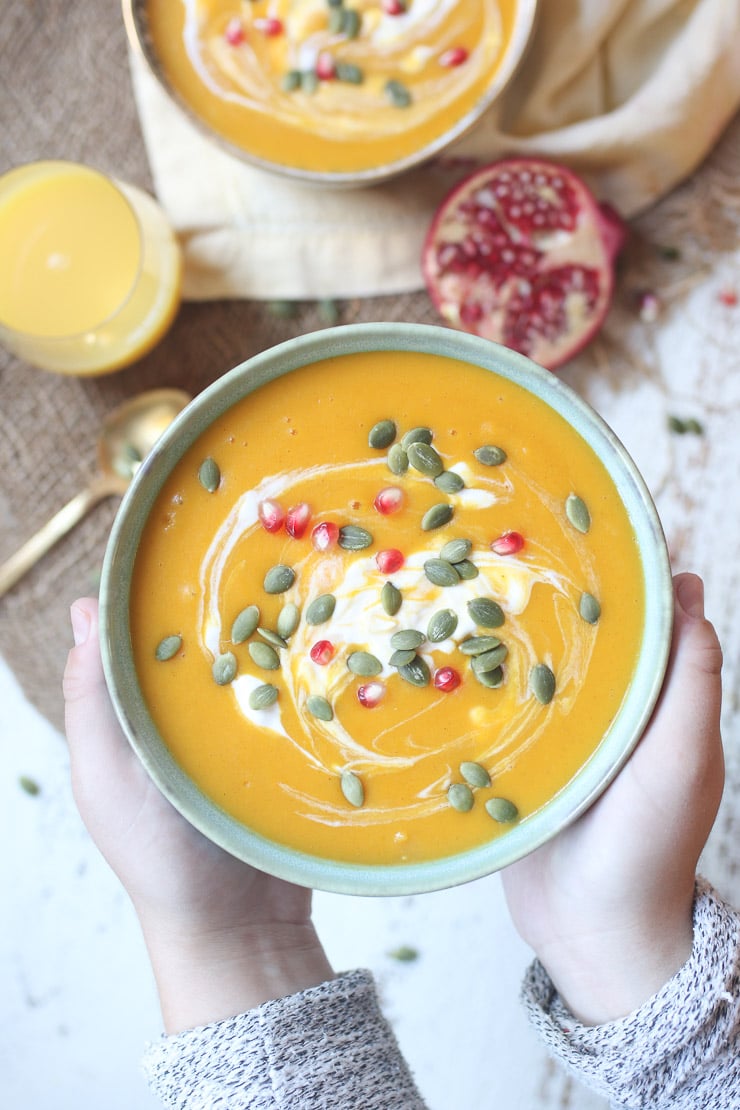
birds eye view of Orange soup in a bowl topped with pomegranates and pumpkin seeds.

This recipe is surprisingly simple. I simply sauté off some onion, garlic and ginger along with some sweet potatoes and then add vegetable broth and Florida Orange Juice.

I finish this Sweet Potato Soup with a little coconut milk but if you want to keep it lighter, you can also leave this out and just add more 100% Orange Juice.

What Makes this Orange Juice Sweet Potato Soup Nutritious?

There’s lots to love in this recipe. Sweet potatoes are loaded with fibre and vitamin A, and they pair beautifully with anti-inflammatory garlic and ginger. I also love using 100% Orange Juice in my recipes because it adds natural sweetness and tang, is loaded with vitamins C, folate and potassium, and has no added sugar. In fact, ½ cup of 100% orange juice has just 55 calories and 11.5 grams of naturally occurring sugar. Since only one in ten Canadians are meeting their recommended daily intake for fruits and veggies, I use every opportunity I can to sneak more in.

Can I Freeze this easy winter Vegan Soup?

You can freeze this soup! Simply let it cool completely, then transfer the soup to freezer bags and lay flat to freeze in a uniform shape.

Is this Vegan Florida OJ Ginger Sweet Potato Soup Gluten Free?

This soup is definitely gluten free. Just make sure to serve this soup with gluten free bread.

Is there any added sugar in this vegan Soup?

Sweet potato orange soup served in a bowl.

No! That’s why I love this recipe and love using the natural sweetness of 100% Orange Juice in this Vegan Florida OJ Ginger Sweet Potato Soup.

Is this easy Soup baby led weaning and Toddler Friendly?

Baby E loved this soup. I simply made sure to keep it pretty thick (so I used ½ of a can of coconut milk instead of a full can) so it’s easier for him to keep it on his spoon and not make a huge mess. Also remember to serve the soup at a warm or room temperature so they don’t scald their mouth.

Can I Make this sweet potato soup recipe in the slow Cooker or Instant Pot?

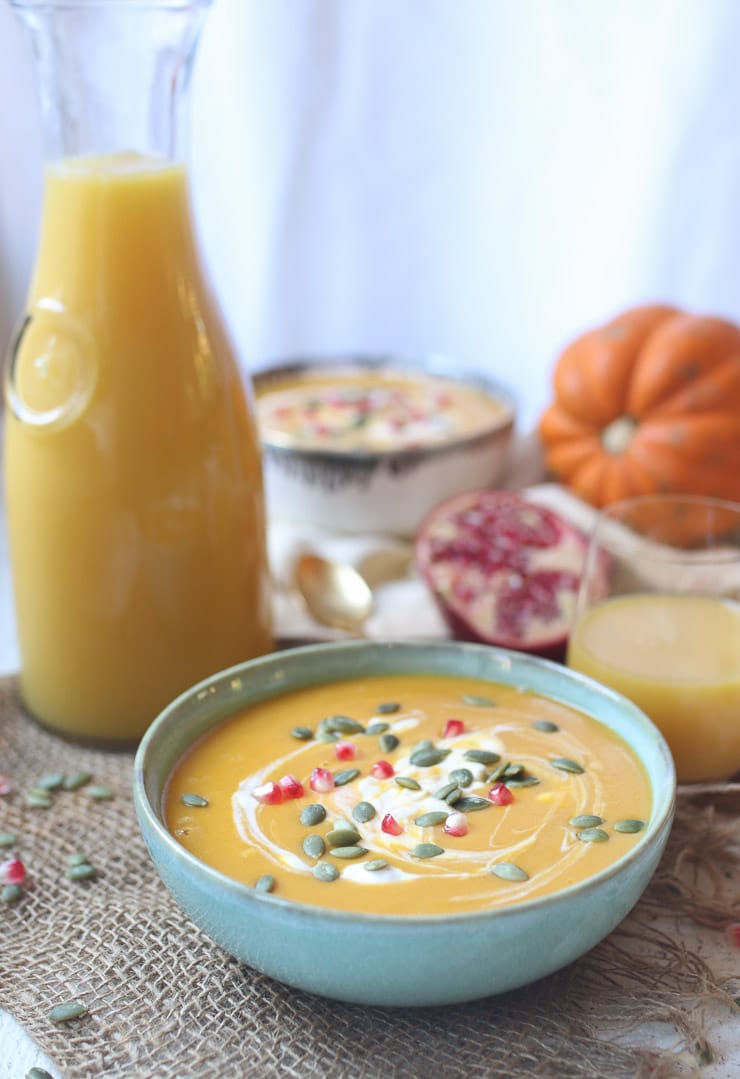
Orange soup served in a bowl garnished with pumpkin seeds and pomegranate seeds.

I love using the instant pot or slow cooker for this soup recipe. I recommend removing the broth when you cook it in the slow cooker (for 5-7 hours on low or 3-4 on high) or instant pot (use the soup function). Then add the coconut milk when you puree to yield your desired thickness.

What are some of your favourite fall soups?
Leave me a comment below and send this to someone who will LOVE this Sweet Potato Soup!
 

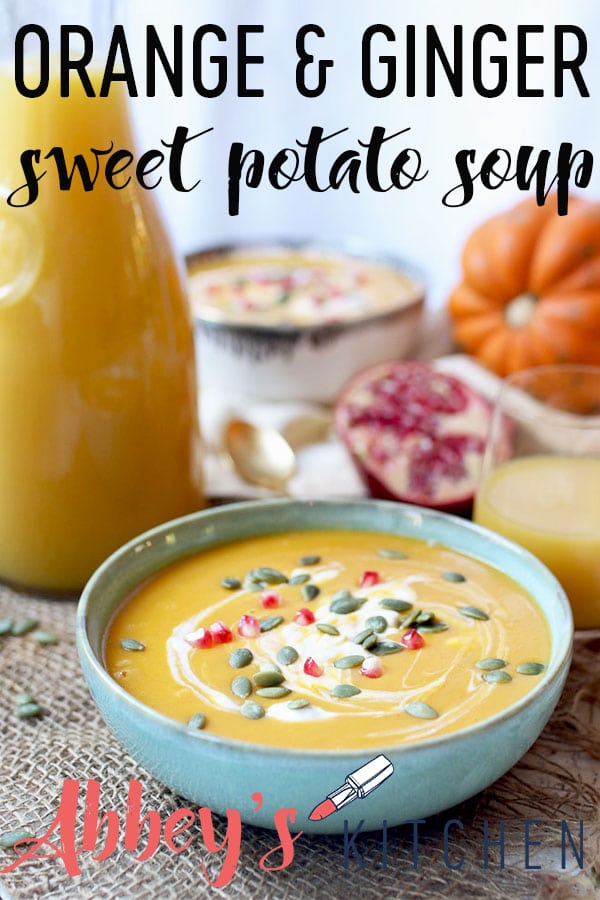
pinterest image of sweet potato and ginger soup soup served in a bowl garnished with pumpkin seeds and pomegranate seeds with text overlay.

Disclaimer: This post was developed in paid partnership with Florida Department of Citrus, however all opinions are genuine.

Orange soup in a bowl.
Print Recipe
4.67 from 3 votes

Vegan Florida Orange OJ Sweet Potato Soup

This vegan Florida OJ Ginger Sweet Potato Soup is plant based, dairy free, gluten free, and loaded with antioxidants.
Prep Time5 minutes mins
Cook Time17 minutes mins
Total Time22 minutes mins
Course: Appetizer, Main Course
Cuisine: American
Servings: 4 people
Calories: 313kcal
Author: Abbey Sharp

Ingredients

  • 1 tbsp extra virgin olive oil
  • 1 small onion diced
  • 3 tbsp ginger minced
  • 3 cloves garlic minced
  • 6 cups about 3 sweet potatoes, peeled and small diced
  • 2 tsp cumin
  • 1 tsp cinnamon
  • 1 ½ cups Florida Orange Juice
  • 1 cup low sodium vegetable broth
  • 1 cup lite coconut milk or more for a thinner soup
  • Salt and pepper to taste
  • To garnish:
  • Coconut milk
  • Pumpkin seeds
  • Pomegranate arils

Instructions

  • Heat the olive oil over medium heat in a large soup pot. Add the onion and sauté until it begins to soften, then add in the ginger and garlic and cook for 1-2 minutes until fragrant.
  • Add in the sweet potatoes, cumin and cinnamon along with the Florida Orange Juice, and broth. Bring to a boil, then reduce to a simmer. Put the lid on and cook for 15 minutes or until the sweet potatoes are very soft and fall apart when pricked.
  • Add in the coconut milk, and then transfer to a blender or puree with a hand blender. If you want it thinner, add in extra coconut milk. Season with salt and pepper, to taste.
  • Garnish with a swirl of coconut milk, pumpkin seeds and pomegranate arils.

Nutrition

Calories: 313kcal | Carbohydrates: 57g | Protein: 5g | Fat: 7g | Saturated Fat: 4g | Sodium: 391mg | Potassium: 947mg | Fiber: 7g | Sugar: 18g | Vitamin A: 28627IU | Vitamin C: 54mg | Calcium: 95mg | Iron: 2mg
Abbey Sharp

Abbey Sharp is a Registered Dietitian (RD), regulated by the Ontario College of Dietitians. She is a mom, YouTuber, Blogger, award winning cookbook author, media coach specializing in food and nutrition influencers, and a frequent contributor to national publications like Healthline and on national broadcast TV shows.
www.abbeyskitchen.com/about-abbey/

Last Updated July 21, 2020. Published November 8, 2019 By Abbey Sharp 6 Comments

4 Greek Yogurt Parfait Recipes for When You’re Feeling Savory vs Sweet

DISCLAIMER: This post was developed in sponsored partnership with General Mills, however, as always, all opinions are genuine.

I share my favourite 4 Greek yogurt parfait recipes for those days when you’re just feeling way more savory vs sweet and want the benefits of a yogurt rich in protein at breakfast or snack without  fruit or granola on top.

 We are big yogurt eaters in my house. As a dietitian, I love that Greek yogurt is a convenient source of bone-supportive protein, calcium and in some cases (where fortified)- vitamin D!  The fermentation and some have probiotics amazing for digestive health, and the natural carbohydrates help fuel our busy days. As a mom, I love that it’s also a nutritious food that my little kid actually loves! I put yogurt in smoothies, popsicles, overnight oats and just serve it straight up for him for breakfasts and snacks.

 How to Make Savory Greek Yogurt Parfait Recipes

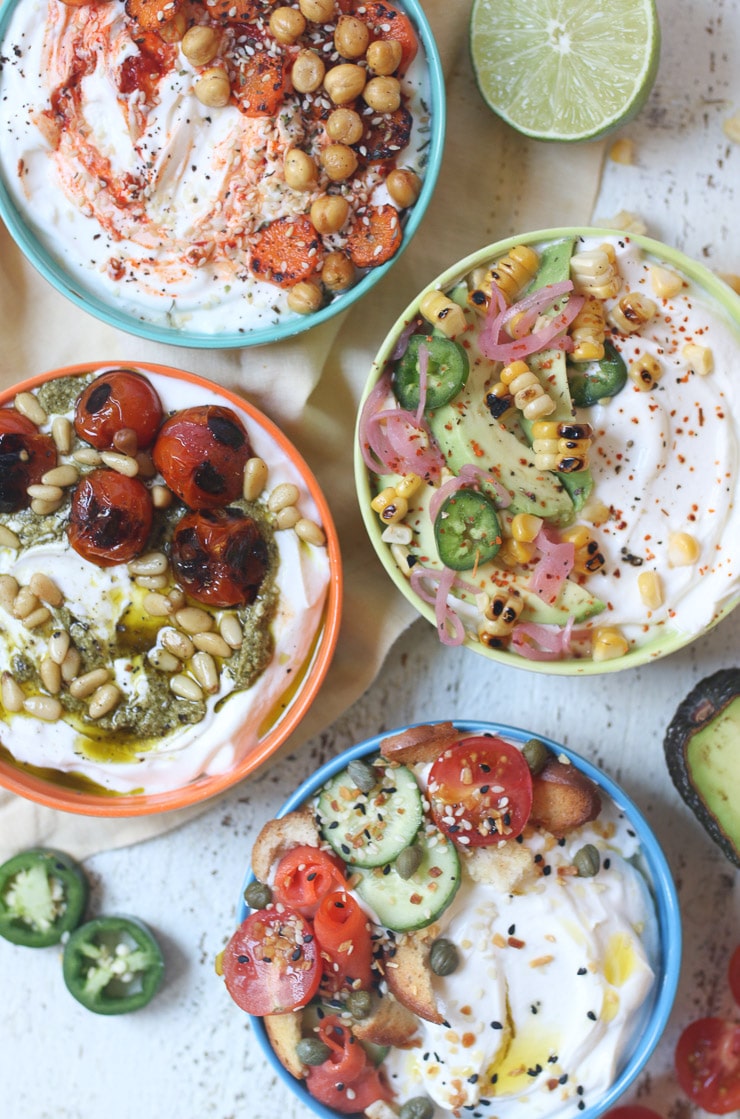
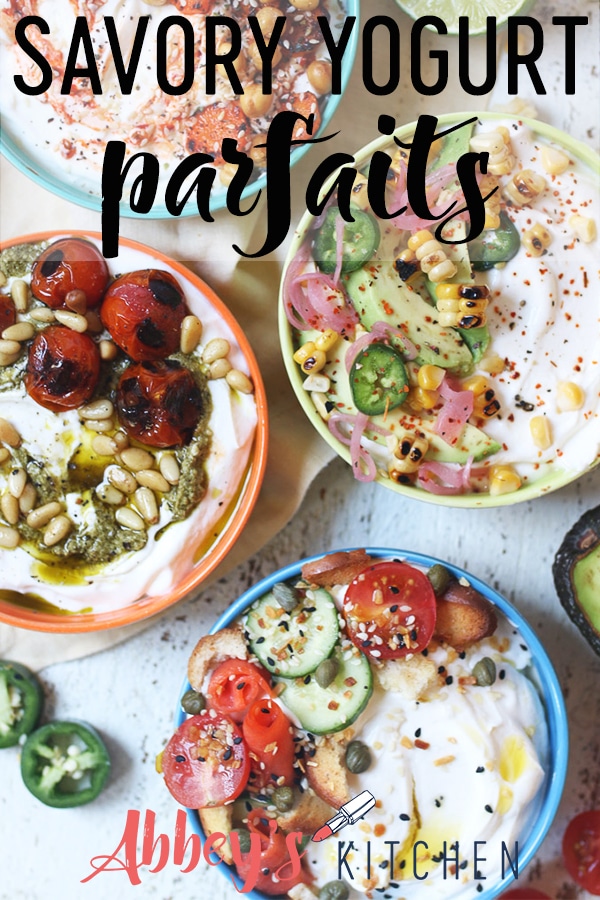
Four yogurt bowls with various savoury toppings.

There are SO many yogurt options out there, but I recommend looking for an option with no added sugar (especially if you’re making a savory yogurt parfait like this). I also prefer a higher milk fat option (especially for kids), and of course, a higher protein Greek yogurt, but you can definitely use whatever your family enjoys! Here are some of my favourite protein rich yogurt parfait combinations.

What do I need for these Greek Yogurt Parfait Recipes?

These high protein snacks are so versatile, you can use whatever you have in your fridge. Here are some of our go-to toppings and ingredients:

  • Greek yogurt
  • Veggies
  • Seeds
  • Nuts
  • Hot sauce
  • Olive oil
  • Spices and seasonings

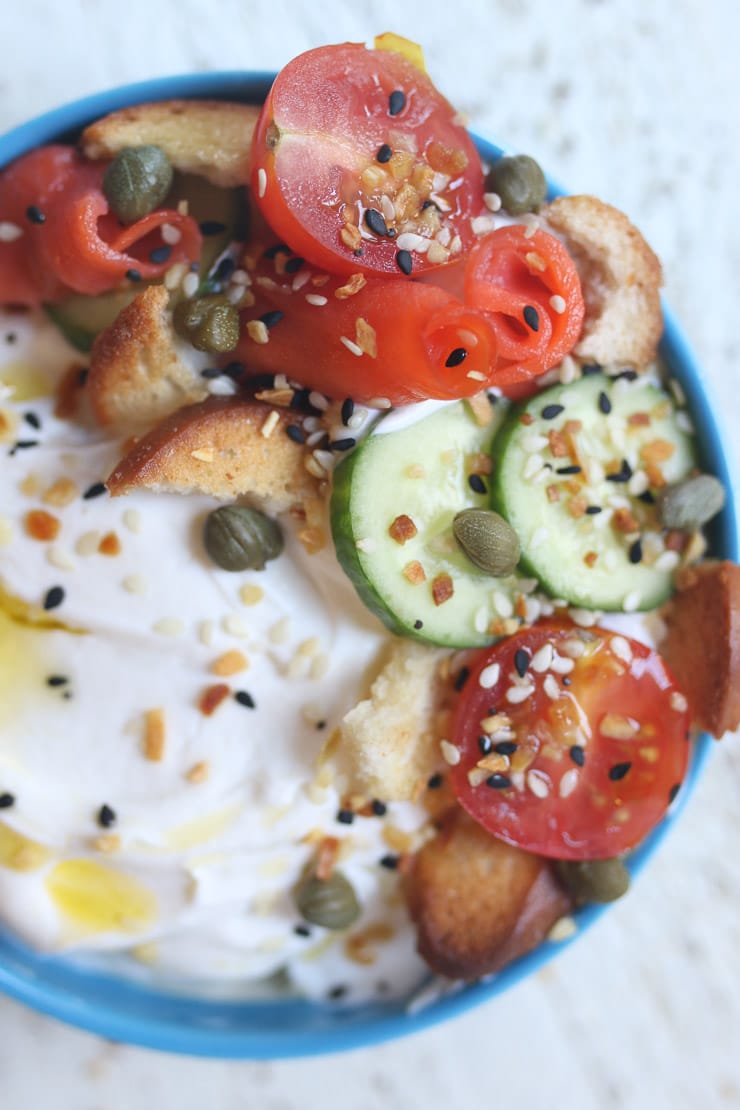
Everything Bagel Savory Greek Yogurt Bowl

Yogurt bowl topped with smoked salmon and bagel chips.

It’s like a Jewish everything bagel fest without the bagels!! I combine some smoked salmon, tomatoes, cucumbers, bagel chips, tomatoes, capers, and OF COURSE some everything bagel spice. Y’all know I am obsessed with this stuff in my breakfast parfait. 

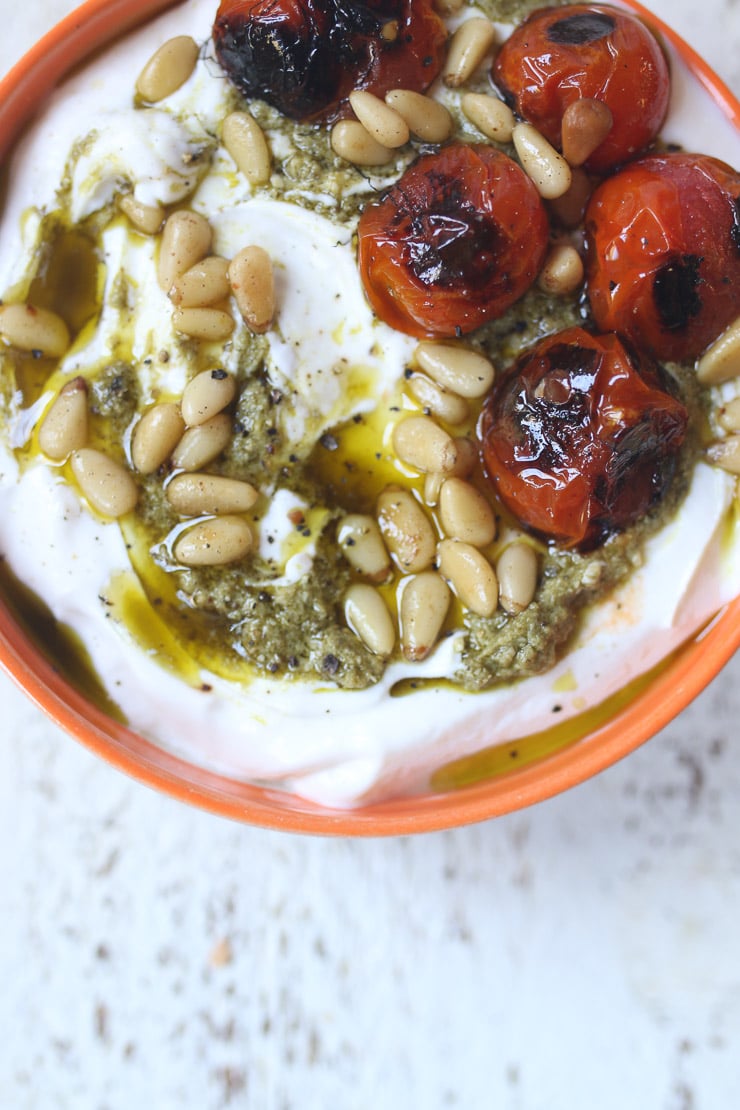
Tomato Pesto Protein Packed Yogurt Parfait

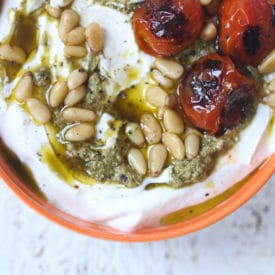
greek Yogurt bowl topped with pesto and tomatoes.

I still have a huge batch of pesto from my bumper crop of basil this past summer, but of course, you can grab your favourite store-bought bread and swirl in it. I then roasted some cherry tomatoes and topped the Greek yogurt bowl off with toasted pine nuts. So so good. 

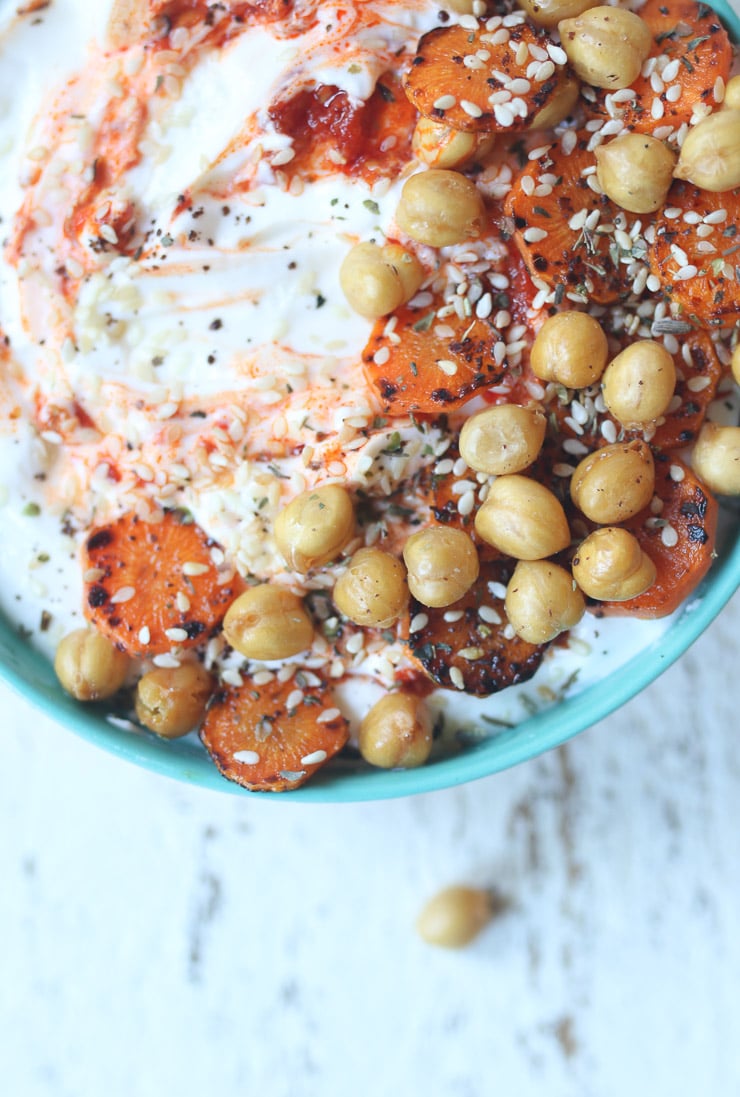
Middle Eastern Savory Yogurt Cups

greek Yogurt bowl topped with chickpeas and spices.

Have you ever tried harissa? It’s legit one of the tastiest hot sauces ever and a traditional Middle Eastern condiment. I swirl a little of that in, and top it off with some pan roasted carrots, crispy chickpeas, za’atar and extra sesame for a super savory yogurt bowl.


Spicy Summer Greek Yogurt Parfait

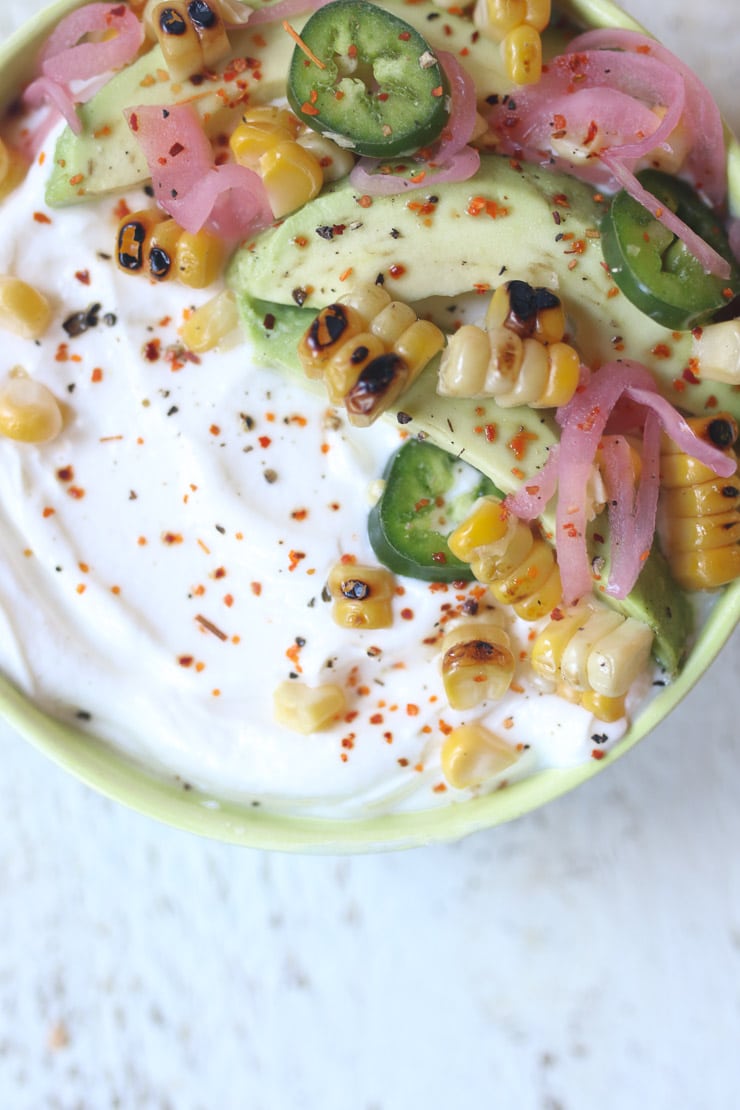
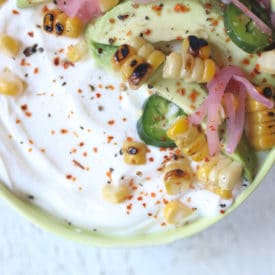
greek Yogurt topped with with avocado and corn.

Summer might be officially over but I still love to revisit the flavours with this summer savory Greek yogurt parfait. I combine some roasted corn, avocado, pickled shallots and jalapeño, and top it off with lots of my favourite seasoning, tajin. 

Can I make savory yogurt bowls with ANYTHING?

Yep. LEGIT anything. These Greek yogurt bowls are a great way to clear out the fridge with whatever veggies, protein or sauces you’ve got kicking around.

Can these breakfast parfaits be made ahead of time?

Yes, most of the ingredients will stay fresh if you pop them on there the night before, but there are a few items I prefer to leave separate and add last minute. Think crunchy dry foods like nuts, seeds, and crispy chickpeas. Also, avocado will brown, so if you want to make your yogurt parfait Instagram worthy, you may want to leave that out too.

Why is Greek yogurt high in protein?

If you haven’t yet noticed, Greek yogurt is definitely thicker and creamier then regular strained yogurt. Most Greek yogurts have about 10 grams of protein per 100 gram serving or more. There are other high protein yogurt options as well like Skyr or some plant based Greek yogurt (check the label for protein amount).

Are there any ingredients that don’t work with Greek yogurt?

The sky is the limit! Of course, you may want to avoid super sweet ingredients like fruit or jam, and save that for your sweet yogurt bowls. But otherwise, have fun with it and experiment!

What are other recipes I can make with yogurt?

Yogurt Breakfast Ideas
Yogurt Carrot Cake Cupcakes
Watermelon Fries with Yogurt Dip
Easy Toddler Dips 


What are some of your favourite savory yogurt bowl combinations? What are you adding to keep your yogurt parfaits high in protein and super satiating?
Leave me a comment below and send this to someone who LOVES yogurt!

pinterest image of four greek yogurt bowls with various toppings with text overlay

Disclaimer: This post was developed in paid partnership with General Mills, however, all opinions are genuine.

Print Recipe
5 from 3 votes

Everything Bagel Greek Yogurt Parfait

I share my favourite 4 Greek yogurt parfait recipes for those days when you’re just feeling way more savory vs sweet and want the benefits of a yogurt rich in protein at breakfast or snack without fruit or granola on top.
Prep Time5 minutes mins
Total Time5 minutes mins
Course: Breakfast, Snack
Cuisine: American
Servings: 1 person
Calories: 128.49kcal
Author: Abbey Sharp

Ingredients

  • ½ cup plain Greek yogurt
  • 1/2 oz Smoked Salmon
  • 2-3 slices cucumber sliced
  • 2-3 cherry tomatoes halved
  • 2-3 bagel chips crushed
  • 1 tsp capers
  • ½ tsp Everything Bagel Seasoning
  • 1 tsp extra virgin Olive oil

Instructions

  • Put the yogurt into a bowl and top with desired toppings.
  • Serve and enjoy!

Nutrition

Calories: 128.49kcal | Carbohydrates: 6.72g | Protein: 13.52g | Fat: 5.4g | Saturated Fat: 0.85g | Cholesterol: 8.26mg | Sodium: 228.75mg | Potassium: 215.12mg | Sugar: 4.43g | Vitamin A: 166.26IU | Vitamin C: 7.75mg | Calcium: 110mg | Iron: 0.23mg


Print Recipe
5 from 3 votes

Middle Eastern Greek Yogurt Parfait

I share my favourite 4 Greek yogurt parfait recipes for those days when you’re just feeling way more savory vs sweet and want the benefits of a yogurt rich in protein at breakfast or snack without fruit or granola on top.
Prep Time5 minutes mins
Total Time5 minutes mins
Course: Breakfast, Snack
Cuisine: Middle Eastern
Servings: 1 person
Calories: 155.4kcal
Author: Abbey Sharp

Ingredients

  • ½ cup plain Greek yogurt
  • 1-2 tsp harissa or to taste
  • 3 tbsp crispy roasted chickpea snacks
  • 3 tbsp carrot sliced pan-fried in olive oil until browned
  • Pinch za’atar
  • Pinch toasted sesame seeds

Instructions

  • Put the yogurt into a bowl and top with desired toppings.
  • Serve and enjoy!

Nutrition

Calories: 155.4kcal | Carbohydrates: 21.06g | Protein: 14.67g | Fat: 1.67g | Saturated Fat: 0.26g | Cholesterol: 5mg | Sodium: 137.06mg | Potassium: 414.09mg | Fiber: 4.93g | Sugar: 8.03g | Vitamin A: 7517.7IU | Vitamin C: 2.66mg | Calcium: 146.59mg | Iron: 1.28mg

Print Recipe
5 from 4 votes

Tomato Pesto Greek Yogurt Parfait

I share my favourite 4 Greek yogurt parfait recipes for those days when you’re just feeling way more savory vs sweet and want the benefits of a yogurt rich in protein at breakfast or snack without fruit or granola on top.
Prep Time5 minutes mins
Total Time5 minutes mins
Course: Breakfast, Snack
Cuisine: Italian, Greek
Servings: 1 person
Calories: 228.89kcal
Author: Abbey Sharp

Ingredients

  • ½ cup plain Greek yogurt
  • Pesto
  • 1-2 tbsp pesto
  • 3-4 cherry tomatoes roasted in olive oil at 400 F until blistered
  • 1 tbsp toasted pine nuts
  • 1 tsp extra virgin Olive oil

Instructions

  • Put the yogurt into a bowl and top with desired toppings.
  • Serve and enjoy!

Nutrition

Calories: 228.89kcal | Carbohydrates: 8.16g | Protein: 12.76g | Fat: 16.84g | Saturated Fat: 2.13g | Cholesterol: 6.2mg | Sodium: 182.14mg | Potassium: 311.88mg | Fiber: 0.73g | Sugar: 5.35g | Vitamin A: 551.79IU | Vitamin C: 11.63mg | Calcium: 134.15mg | Iron: 0.9mg

Print Recipe
5 from 3 votes

Spicy Summer Greek Yogurt Parfait

I share my favourite 4 Greek yogurt parfait recipes for those days when you’re just feeling way more savory vs sweet and want the benefits of a yogurt rich in protein at breakfast or snack without fruit or granola on top.
Prep Time5 minutes mins
Total Time5 minutes mins
Course: Breakfast, Snack
Cuisine: American, Greek
Servings: 1 person
Calories: 267.49kcal
Author: Abbey Sharp

Ingredients

  • ½ cup plain Greek yogurt
  • ¼ avocado sliced
  • 3 tbsp roasted corn
  • 1 tbsp pickled shallots
  • 3 slices jalapeno
  • Pinch tajin seasoning

Instructions

  • Put the yogurt into a bowl and top with desired toppings.
  • Serve and enjoy!

Nutrition

Calories: 267.49kcal | Carbohydrates: 36.43g | Protein: 15.41g | Fat: 9.44g | Saturated Fat: 1.53g | Cholesterol: 5mg | Sodium: 49.26mg | Potassium: 1151.01mg | Fiber: 12.31g | Sugar: 17.49g | Vitamin A: 3100.63IU | Vitamin C: 327.69mg | Calcium: 142.4mg | Iron: 1.16mg
Abbey Sharp

Abbey Sharp is a Registered Dietitian (RD), regulated by the Ontario College of Dietitians. She is a mom, YouTuber, Blogger, award winning cookbook author, media coach specializing in food and nutrition influencers, and a frequent contributor to national publications like Healthline and on national broadcast TV shows.
www.abbeyskitchen.com/about-abbey/

Last Updated July 21, 2020. Published November 7, 2019 By Abbey Sharp 6 Comments

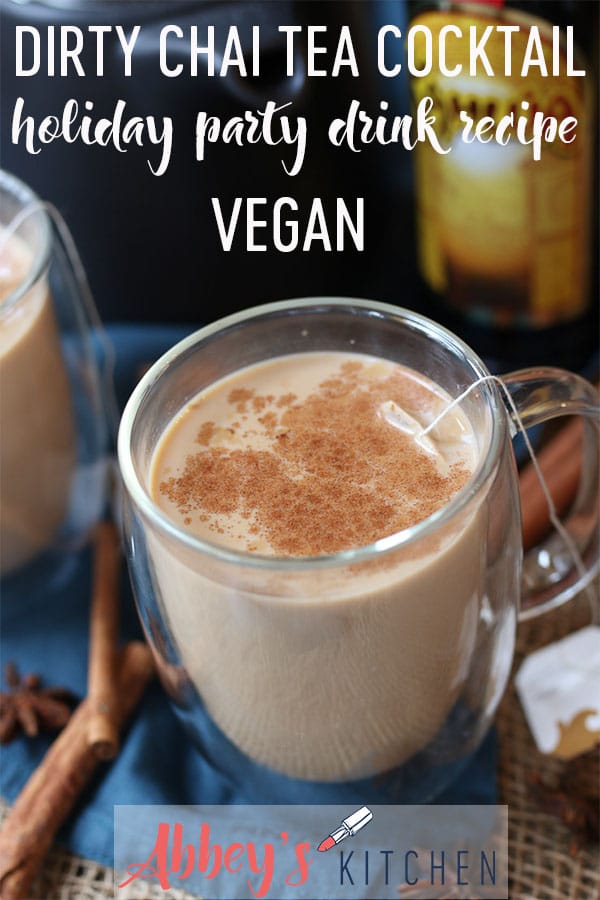
Vegan Dirty Chai Tea Cocktail | Holiday Party Drink Recipe

This Vegan Dirty Chai Tea Cocktail is the perfect holiday party drink recipe for entertaining, or for cuddling up around a fire on a chilly winter night!

This Vegan Dirty Chai Tea Cocktail is the perfect holiday party drink recipe for entertaining, or for cuddling up around a fire on a chilly winter night!

Chai tea is my favourite of all the teas. It’s spicy, sweet, and remarkably complex, exactly what I’m looking for when I need a little mid-afternoon pick me up on a chilly day. But for days you need a little extra somethin’-somethin’ (*cough* booze *cough*), this vegan dirty chai tea cocktail is my jam.

close up of dirty Chai tea cocktail in a glass mug for the holidays.

CLICK HERE TO PIN

I’m all for after-dinner drinks that double as dessert, and this holiday party cocktail totally ticks all the boxes. It’s warm, cozy, comforting, and blessedly alcoholic. All the things a busy mama needs to wind down at the end of a cold Canadian winter day.  It’s also completely vegan, dairy free and gluten free, so if you’re entertaining a group, or just have a bunch of mom-friends over after a park play date, you know you can satisfy them all.

How to Make Vegan Dirty Chai Tea Cocktail

birds eye view of dirty Chai tea cocktail in a glass mug topped with cinnamon for the holidays

CLICK HERE TO PIN

It starts with a couple Chai tea bags steeped in a few cups of good quality almond milk. I prefer to use a good creamy version (ideally fresh pressed) so you really get that almond aroma, but feel free to use whatever brand you like. I also add in a few cinnamon sticks and star anise to compliment the tea bag’s flavours. After I let the flavours really marry, I remove the tea bag (you don’t want to over-heat it or it might explode on you), and I add in my almond creamer, vanilla, and of course – my booze.

dirty Chai cocktail in a glass mug topped with cinnamon sprinkle

CLICK HERE TO PIN

I’m using Kahlua because it’s vegan, yet tastes really rich so it really compliments the tea nicely, but feel free to switch things up with your favourite liqueur. You can even get creative on the tea flavour if there’s something else out there that you really fancy.

Now loves, let me know – what is your favourite warm and cozy (BOOZY) cocktail?
What do you want to drink on a cold winter night?
Leave me a comment below with your favourites!


pinterest image of Chai cocktail in a glass mug garnished with cinnamon with text overlay

CLICK HERE TO PIN


This Vegan Dirty Chai Tea Cocktail is the perfect holiday party drink recipe for entertaining, or for cuddling up around a fire on a chilly winter night!
Print Recipe
5 from 2 votes

Vegan Dirty Chai Tea Cocktail

This Vegan Dirty Chai Tea Cocktail is the perfect holiday party drink recipe for entertaining, or for cuddling up around a fire on a chilly winter night!
Prep Time5 minutes mins
Cook Time20 minutes mins
Total Time25 minutes mins
Course: Drinks
Cuisine: American
Servings: 2 people
Calories: 190.81kcal
Author: Abbey Sharp

Ingredients

  • 2 cups almond milk
  • 2 tea bags
  • 2 Cinnamon sticks
  • 2 whole Star anise
  • 1 tsp vanilla extract
  • ¼ cup almond creamer
  • 2 oz Kahlua
  • Maple syrup to taste
  • Cinnamon for garnish

Instructions

  • To a small saucepot, heat the almond milk to a simmer. Add the tea bags, cinnamon, and star anise, cover and allow to steep for 15 minutes.
  • Remove the tea bags, cinnamon and star anise, and heat just until warm. Then add in the vanilla, almond creamer, kahlua, and maple syrup to taste.
  • Pour into two mugs and serve warm garnished with cinnamon.

Video

Nutrition

Calories: 190.81kcal | Carbohydrates: 21.26g | Protein: 1.9g | Fat: 6.28g | Saturated Fat: 0.63g | Sodium: 351.66mg | Potassium: 57.3mg | Fiber: 2.76g | Sugar: 17.27g | Calcium: 341.53mg | Iron: 0.66mg

Abbey Sharp

Abbey Sharp is a Registered Dietitian (RD), regulated by the Ontario College of Dietitians. She is a mom, YouTuber, Blogger, award winning cookbook author, media coach specializing in food and nutrition influencers, and a frequent contributor to national publications like Healthline and on national broadcast TV shows.
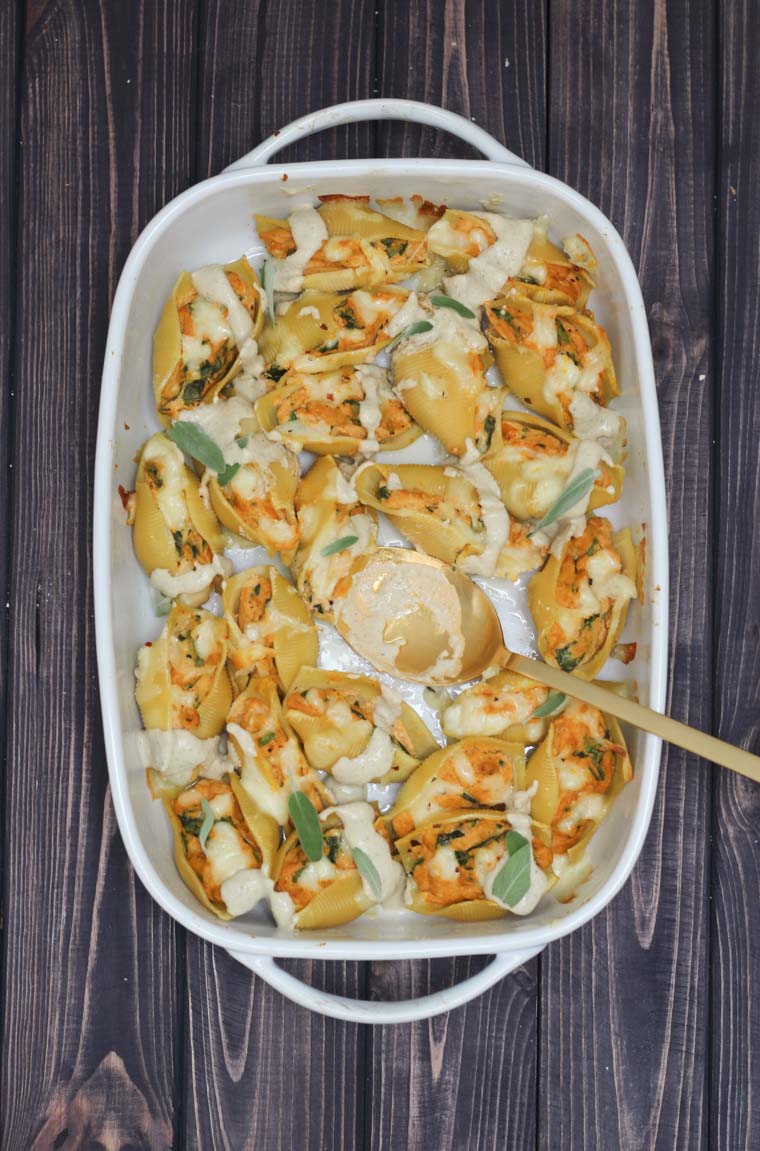
www.abbeyskitchen.com/about-abbey/
  • Previous Page
  • Go to page 1
  • Interim pages omitted …
  • Go to page 47
  • Go to page 48
  • Go to page 49
  • Go to page 50
  • Go to page 51
  • Interim pages omitted …
  • Go to page 89
  • Next Page

Get started with

Eight Free Recipe Books

From the co-founder of Neue Theory and creator of the Hunger Crushing Combo

Sign me up!
Abbey smiling at table
Abbey Sharp

“Foods may never be nutritionally equal. But we can make them morally equal by recognizing that our worth is never determined by what's on our plate.”

— Abbey Sharp, RD About Abbey ◥

Books

  • HCC™
  • Mindful Glow
  • Free E-Books

Blog

  • Nutrition
  • Recipes
  • Motherhood
  • Life

Explore

  • Neue Theory™
  • Bite Back
  • YouTube

Abbey

  • About
  • Coaching
YouTube TikTok Instagram Facebook X Pinterest
Abbey Sharp - The No BS Dietitian From Abbeys Kitchen

© Abbey's Kitchen 2026  All Rights Reserved •  ACCESSIBILITY STATEMENT •  Privacy Policy

This site uses cookies. By continuing to browse the site, you are agreeing to the use of cookies Accept Privacy Policy
Privacy & Cookies Policy

Privacy Overview

This website uses cookies to improve your experience while you navigate through the website. Out of these, the cookies that are categorized as necessary are stored on your browser as they are essential for the working of basic functionalities of the website. We also use third-party cookies that help us analyze and understand how you use this website. These cookies will be stored in your browser only with your consent. You also have the option to opt-out of these cookies. But opting out of some of these cookies may affect your browsing experience.

Necessary
Always Enabled
Necessary cookies are absolutely essential for the website to function properly. This category only includes cookies that ensures basic functionalities and security features of the website. These cookies do not store any personal information.
Non-necessary
Any cookies that may not be particularly necessary for the website to function and is used specifically to collect user personal data via analytics, ads, other embedded contents are termed as non-necessary cookies. It is mandatory to procure user consent prior to running these cookies on your website.
SAVE & ACCEPT

Rate This Recipe

Your vote:


A rating is required
A name is required
An email is required