• Skip to main content

Abbey's Kitchen

Healthy Recipes, Nutrition Myth Busting, Healthy Eating Tips

  • Books
    • HCC™
    • The Mindful Glow Cookbook
    • Recipe eBooks
      • Family
      • Hypothyroidism
      • BLW
      • Vegan Week 1
      • Vegan Week 2
      • Vegan Week 3
      • Keto
      • Gluten Free Week 1
      • Gluten Free Week 2
      • Fitness
      • Paleo
  • Blog
    • Nutrition
    • Recipes
    • Motherhood
    • Life
  • Explore
    • Neue Theory™
    • Bite Back With Abbey Sharp
      • Apple Music
      • Spotify
      • Amazon Music
    • YouTube
  • Abbey
    • About
    • Coaching
    • Contact

Abbey Sharp

Last Updated July 1, 2020. Published April 11, 2019 By Abbey Sharp 16 Comments

Gluten Free Apple, Fig and Caramelized Onion Cauliflower Pizza Flatbread

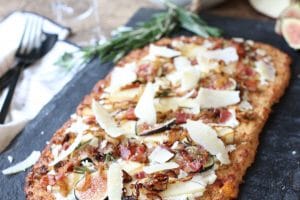
This Gluten Free Apple, Fig and Caramelized Onion Cauliflower Pizza Flatbread is a perfect low carb, nutrient-packed party snack for entertaining any time of year!
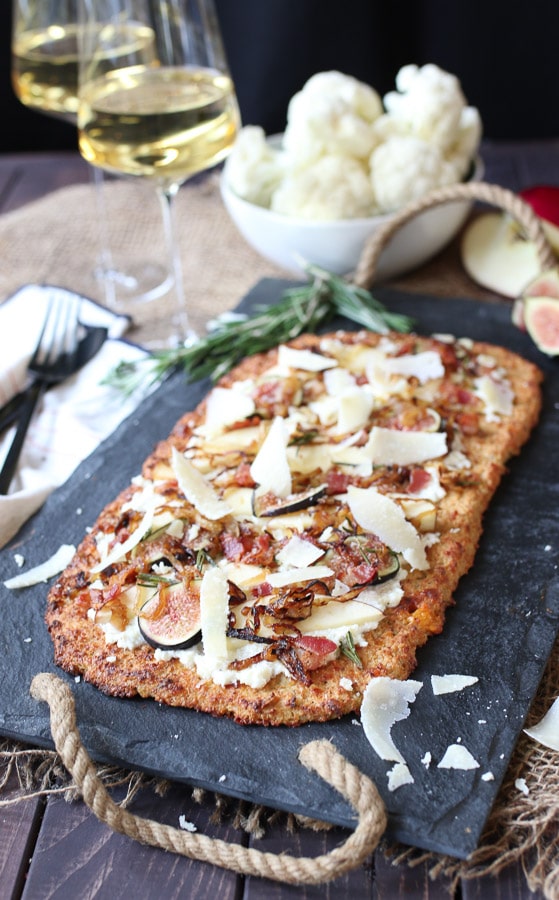
This Gluten Free Apple, Fig and Caramelized Onion Cauliflower Pizza Flatbread is a perfect low carb, nutrient-packed party snack for entertaining any time of year!

Fig, apple and onion cauliflower pizza on a serving platter.

There are a handful of really great go-to recipes I turn to when I’m entertaining and flatbread is pretty much always one of them. Everyone loves a good flatbread. It feels like the more refined version of pizza, and while I’m no food snob, I’m always down with that. Thisgluten free apple, fig and caramelized onion cauliflower pizza flatbread is always a hit because it’s low carb, gluten free and LOADED with yummy flavour. Who doesn’t like the natural sweetness of caramelized onions and fruit alongside some salty bacon and cheese? And who doesn’t like feeling GREAT about said cheese when it’s loaded onto a low carb, nutrient-rich cauliflower crust.
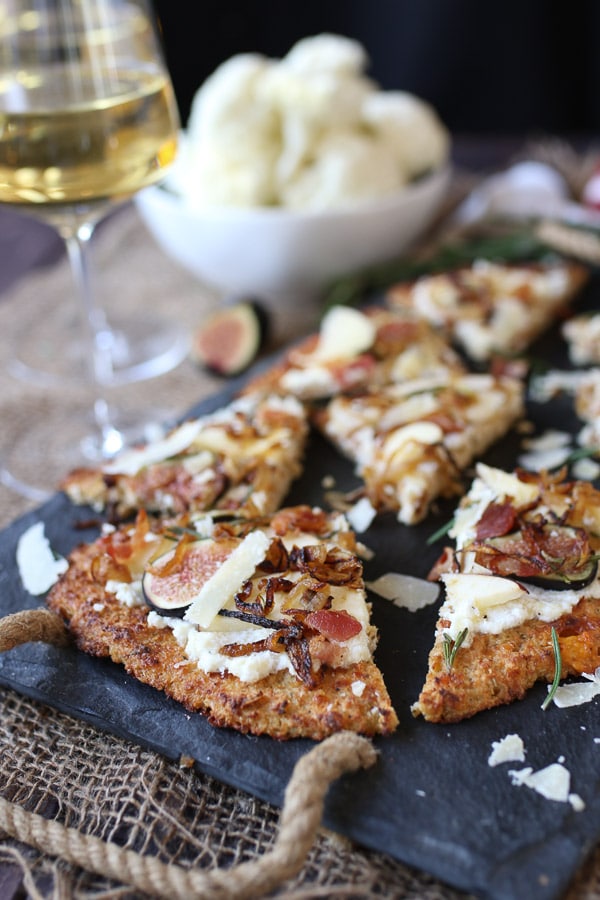
Apple, fig and onion cauliflower pizza flatbread cut into slices.

How to Make Gluten Free Apple, Fig and Caramelized Onion Cauliflower Pizza Flatbread
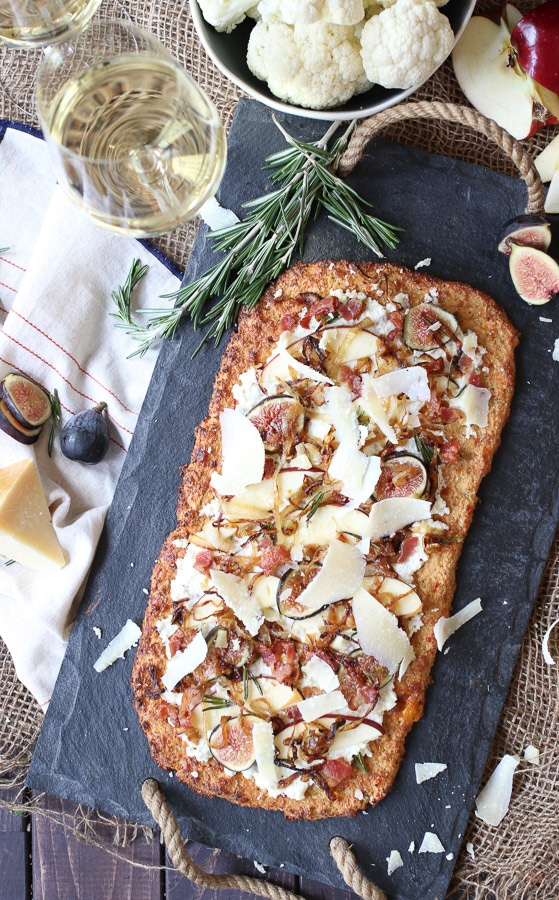
Fig, apple and onion cauliflower pizza flatbread on a serving platter.

It all starts with a killer cauliflower pizza crust. I’ve made a SWEET chocolate cauliflower pizza before (check that bad boy out here), and it was so good, I couldn’t stand not to want to make a savoury cheesy version. You basically just need to start by pulsing your cauliflower in a food processor until it reaches a rice like consistency. Then, you’ve got to squeeze the living daylights out of it to ensure there’s no moisture left. I get that cauliflower is like 90% water, or something, but roll your sleeves up and do your best. I then combine the cauliflower with some cheese, flour and Italian themed herbs and roll it into a long pizza flatbread shape. Bake it until it’s golden brown and then we get to decorate.
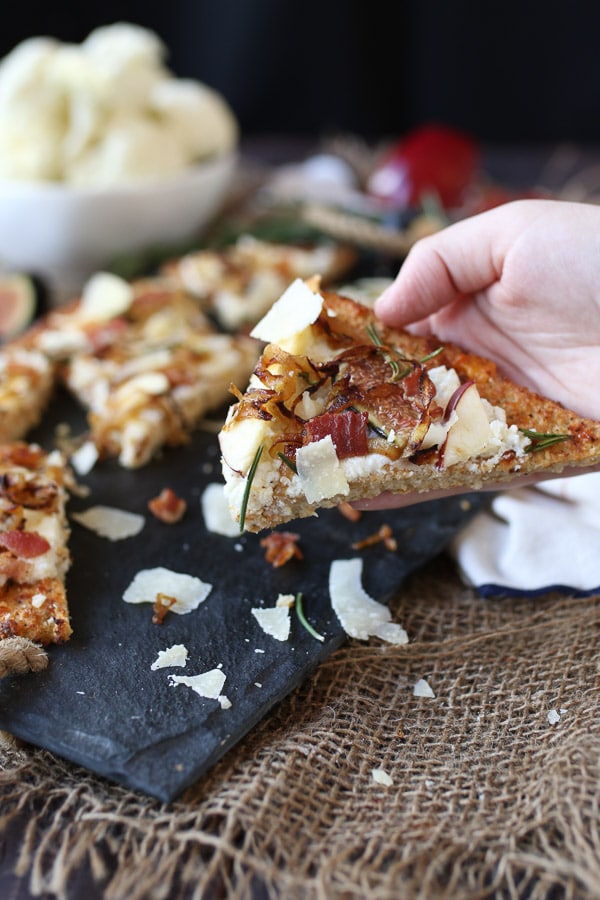
Hand holding a slice of apple, fig and onion cauliflower pizza flatbread.

This is where you get your own creative license. Personally, I love this gluten free apple, fig and caramelized onion cauliflower pizza flatbread combination, but you can totally cut the bacon, add some veggies, or just keep things simple with sauce and cheese. As long as it’s delicious (and ideally, uses up some of the leftover ingredients you’ve got going on in the crisper), you’re making a bad ass flatbread that is easy enough for a weeknight but elegant enough to serve to guests.

Now lovelies, tell me, have you tried making this gluten free apple, fig and caramelized onion cauliflower pizza flatbread?

What are your go-to toppings for flatbreads?

Have you ever attempted to make cauliflower pizza or flatbread?

Leave me a comment below with your thoughts!
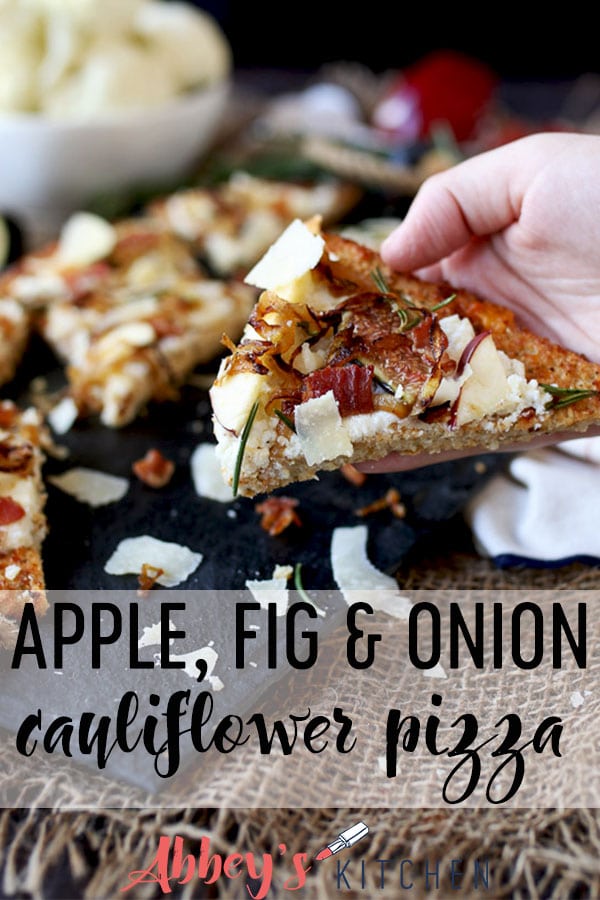
pinterest image of hand holding a slice of apple, fig and onion cauliflower pizza flatbread with text overlay
Fig, apple and onion cauliflower pizza on a serving platter.
Print Recipe
5 from 3 votes

Gluten Free Apple, Fig and Caramelized Onion Cauliflower Pizza Flatbread

This Gluten Free Apple, Fig and Caramelized Onion Cauliflower Pizza Flatbread is a perfect low carb, nutrient-packed party snack for entertaining any time of year!
Prep Time15 minutes mins
Cook Time1 hour hr 20 minutes mins
Total Time1 hour hr 35 minutes mins
Course: Main Course
Cuisine: American
Servings: 8 people
Calories: 224kcal
Author: Abbey Sharp

Ingredients

Caramelized Onion:

  • 1 tbsp extra virgin olive oil
  • 1 sweet small onion thinly sliced
  • 1 sprig rosemary needles only
  • Salt and pepper to taste

Flatbread Crust:

  • 1 medium head cauliflower cut into florets
  • 1 large egg
  • ½ cup aged cheddar grated
  • ½ cup parmesan grated
  • 2 tbsp. lite cream cheese
  • 6 tbsp. oat flour gluten free, if needed
  • ½ tsp garlic powder
  • 1 tsp oregano
  • ½ tsp salt
  • ¼ tsp pepper

Toppings:

  • 1 oz. pancetta or bacon diced
  • ½ cup light ricotta cheese
  • ½ cup parmesan cheese grated
  • ¼ red apple thinly sliced
  • 2 figs thinly sliced
  • Honey for serving
  • Parmesan shavings for serving

Instructions

  • Preheat a medium nonstick skillet over medium low heat along with the oil. Stir in the onions and caramelize low and slow until sweet and golden brown- about 40- 50 minutes. In the last 10 minutes, add in the rosemary, and a pinch each of salt and pepper. Set aside.
  • Place the cauliflower in a food processor and pulse until it reaches a rice like consistency.
  • Transfer to a microwave safe bowl and microwave on high for 5 min.
  • Remove and allow to cool to room temperature, then squeeze out all of the moisture using a cheesecloth.
  • Meanwhile, preheat oven to 425 F and place a baking sheet in the oven to preheat.
  • To the squeezed out cauliflower, add in the egg, cheddar, parmesan, cream cheese, flour, garlic, oregano, salt and pepper. Mix until combined. Pack into a roll-like shape.
  • Lightly grease the baking sheet and press the cauliflower crust onto the baking sheet. Press it into ½” thick long rectangle. Bake for 20-25 minutes or until golden brown on the outsides.
  • Meanwhile, cook the bacon over medium heat in a small non-stick skillet until crispy. Drain in a piece of paper towel and set aside.
  • In a bowl, mix together the ricotta and parmesan.
  • Remove the pizza from the oven and spread with the cheese. Top with the apple, caramelized onion, bacon, and figs. Return to the oven for an additional 5 minutes just to warm everything through and lightly melt the cheese.
  • Garnish with a drizzle of honey and shaved parmesan.

Nutrition

Calories: 224kcal | Carbohydrates: 19g | Protein: 12g | Fat: 11g | Saturated Fat: 5g | Cholesterol: 43mg | Sodium: 481mg | Potassium: 382mg | Fiber: 3g | Sugar: 7g | Vitamin A: 235IU | Vitamin C: 37.1mg | Calcium: 269mg | Iron: 1.2mg
Abbey Sharp

Abbey Sharp is a Registered Dietitian (RD), regulated by the Ontario College of Dietitians. She is a mom, YouTuber, Blogger, award winning cookbook author, media coach specializing in food and nutrition influencers, and a frequent contributor to national publications like Healthline and on national broadcast TV shows.

www.abbeyskitchen.com/about-abbey/

Last Updated July 21, 2020. Published April 10, 2019 By Abbey Sharp 12 Comments

Veggie Packed Keto Deli Roll Ups 3 Ways | Easy Low Carb High Protein Snack Ideas

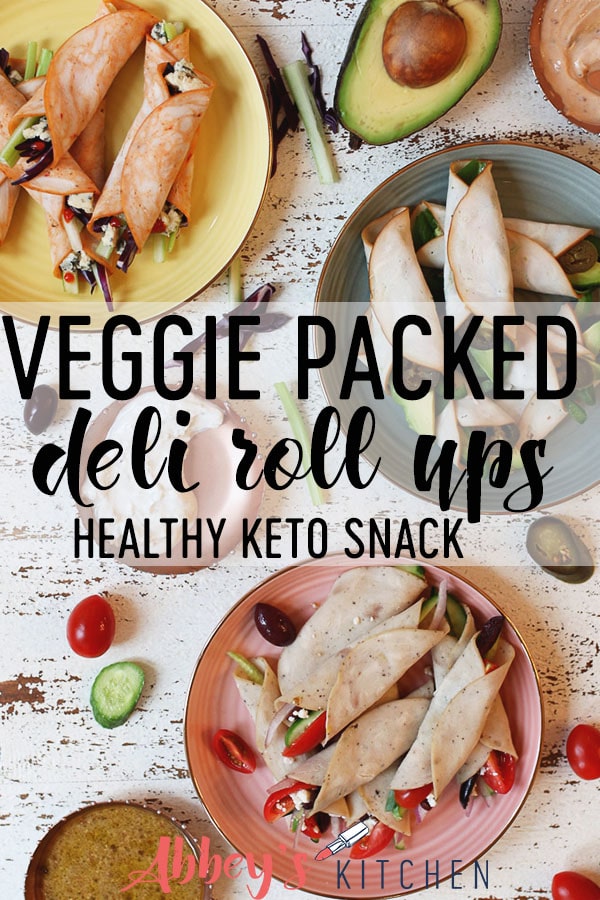
California keto deli roll up, buffalo style deli roll up and greek deli roll up on plates with dip.

DISCLAIMER: This post was developed in sponsored partnership with Maple Lodge , however, as always, all opinions are genuine.

These three veggie packed Keto Deli Roll Ups make for easy low carb high protein snacks that you can grab and take with you on the go.

Real mom talk here – I spend a LOT of time meal prepping for Baby E, and I eat most of my meals from the scraps he chucks on the floor (5 second rule!) and a strange smorgasborg of fridge remnants that I think KINDA go together. Ugh I know, I know, not exactly a mindful meal, but intuitive eating isn’t perfect eating, and when you’re a busy working mom, CONVENIENCE IS KING.

As embarrassing as it is to admit, I sometimes don’t even take the time to put meat onto bread to make a proper sandwich, or eat salad with a fork, so that’s basically how these keto deli roll ups were born – out of convenience, hunger and a desire to eat something really tasty really REALLY fast. These easy low carb keto friendly deli roll ups are packed with protein and fibre-rich veggies and are perfect for an on the go snack.

How to Make these Veggie Packed Keto Deli Roll Ups

California keto deli roll up, buffalo style deli roll up and greek deli roll up on plates with dip.

So basically all you need to make keto deli roll ups is some of your favourite deli meat and veggies. I like to use Maple Lodge Farms new Natural From The Farm deli because it’s made with 25% less sodium compared with other natural deli brands, and it still packs a ton of flavour. Like I said, sometimes I just don’t have time to meal prep and cook a lot of meat for the week, so if I’m going to enjoy it in moderation, I choose a deli option that’s natural, low in sodium, and lean (like poultry). I mean, I love prosciutto and salami, but those are definitely more special treats.

I also like that it’s 21% protein, is made with natural ingredients and for my celiac and gluten intolerant friends, it’s gluten free. They have a wide range of really tasty flavourful options which inspired me to get a little fancy with my deli roll ups this week.

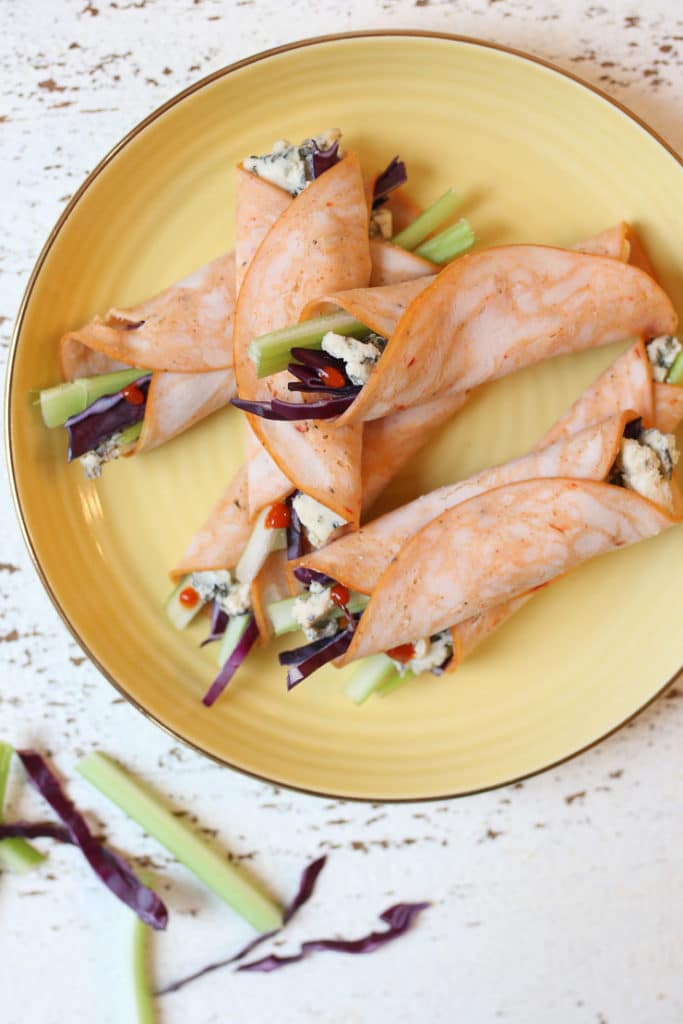
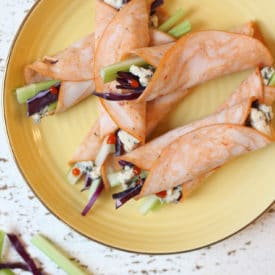
First, I went Buffalo style with their Spicy BBQ Chicken Breast and loaded it up with celery, shredded cabbage and a little blue cheese. Delish au natural or with this easy blue cheese dip.

Buffalo style keto deli roll up on a yellow plate.

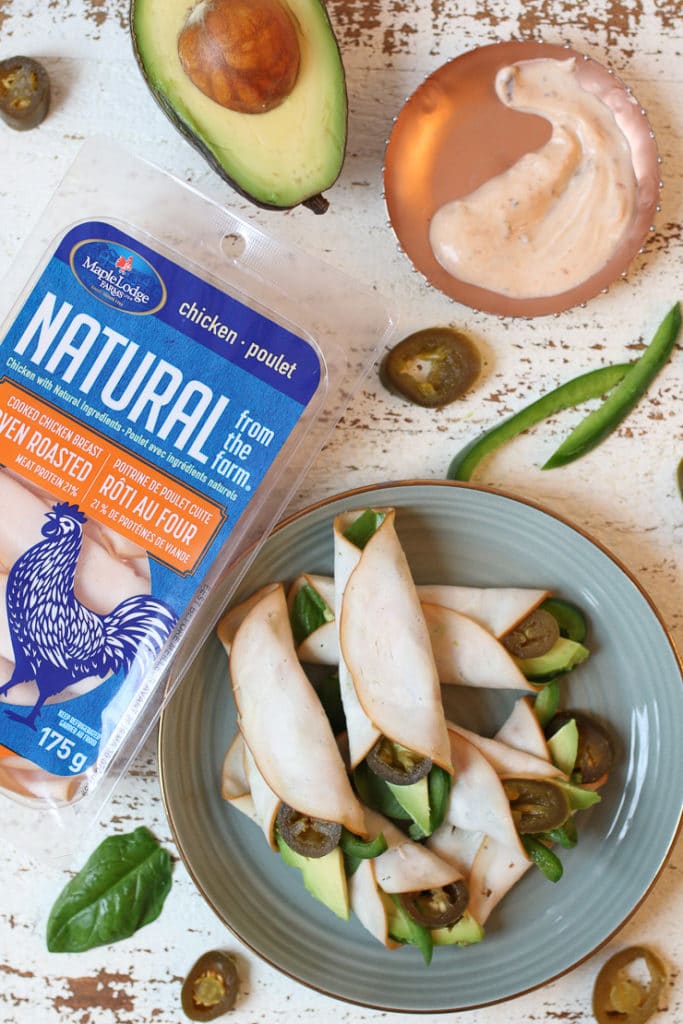
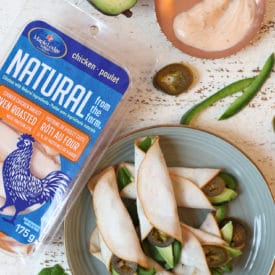
Next, I made a lean green California inspired roll up using the Oven Roasted Chicken Breast filled with avocado, spinach, pickled jalapenos and bell pepper and a tasty chipotle aioli dip.

California deli roll up on a plate with dip.

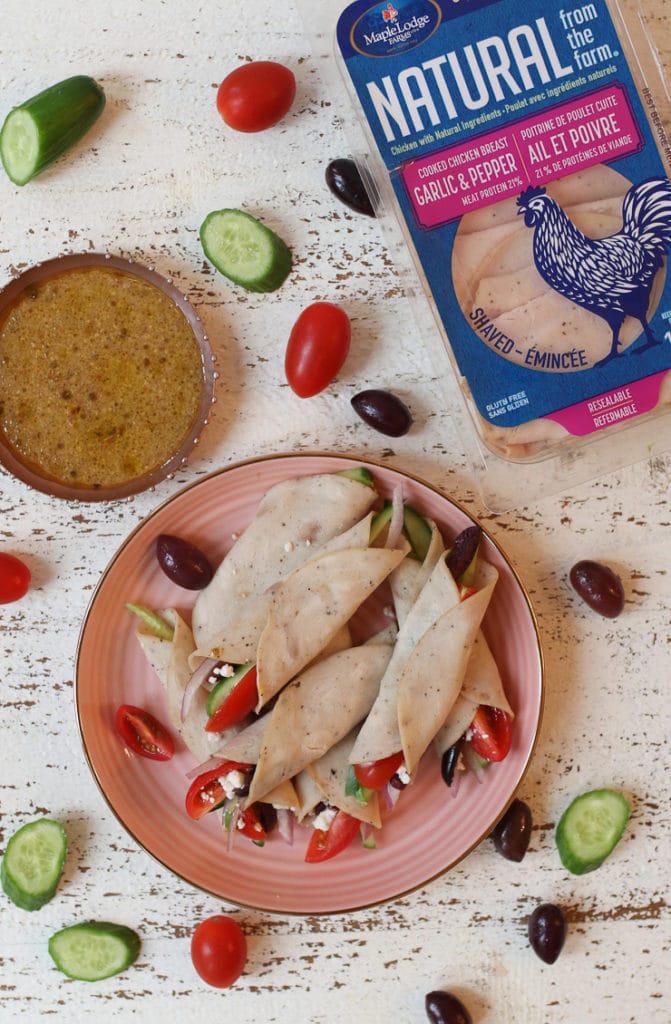
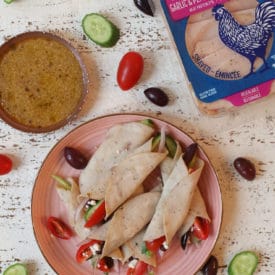
Finally, I made a Greek inspired roll up using the Garlic and Pepper Chicken Breast, sliced cucumber, tomato, olives, onions, oregano, and a little feta cheese. You can enjoy these on their own or dunk them in a quick red wine vinegar dressing.

Greek style deli roll up snack on a pink plate next to oil vinegar dip.

You can try Maple Lodge Farms new Natural From The Farm deli for yourself and save $2.00 here and share your roll-up creations on social using the hashtag #NFTFDontBeSalty!

deli brand package on a wooden table
https://www.youtube.com/watch?v=HV6q2kmUGuo

Become an Abbey’s Kitchen Subscriber

So lovelies, I would love to hear what your super quick high protein snacks are?
Have you tried any of these keto friendly deli roll ideas?
What would be your go-to fillings and combinations?

Buffalo style keto deli roll up on a yellow plate.
Print Recipe
5 from 3 votes

Buffalo Deli Roll Up

These three veggie packed Keto Deli Roll Ups make for easy low carb high protein snacks that you can grab and take with you on the go.
Prep Time10 minutes mins
Total Time10 minutes mins
Course: Snack
Cuisine: American
Servings: 1 person
Calories: 170kcal
Author: Abbey Sharp

Ingredients

  • 2 slices Maple Lodge Farms Natural from the Farm Spicy BBQ Chicken Breast
  • 4 thin slices celery
  • 1 cup finely shredded red cabbage
  • 1 tbsp blue cheese
  • Hot sauce to taste

Dip:

  • ¼ cup sour cream or Greek yogurt
  • 2 tbsp crumbled soft blue cheese
  • Salt and pepper to taste

Instructions

  • Place the celery, shredded red cabbage, blue cheese and hot sauce in the centre of the Farm Spicy BBQ Chicken Breast. Roll up.
  • To make the blue cheese dip, puree the sour cream or greek yogurt, blue cheese and salt and pepper in a small food processor or blender until smooth.
  • Serve your deli roll up with its dip.

Video

Nutrition

Calories: 170kcal | Carbohydrates: 14g | Protein: 14g | Fat: 6g | Saturated Fat: 4g | Cholesterol: 23mg | Sodium: 653mg | Potassium: 738mg | Fiber: 4g | Sugar: 8g | Vitamin A: 1870IU | Vitamin C: 55.7mg | Calcium: 270mg | Iron: 1mg
Greek style deli roll up snacks on a pink plate next to a oil vinegar dip.
Print Recipe
5 from 3 votes

California Green Deli Roll Up

These three veggie packed Keto Deli Roll Ups make for easy low carb high protein snacks that you can grab and take with you on the go.
Prep Time10 minutes mins
Total Time10 minutes mins
Course: Snack
Cuisine: American
Servings: 1 person
Calories: 168kcal
Author: Abbey Sharp

Ingredients

  • 2 slices Maple Lodge Farms Natural from the Farm Oven Roasted Chicken Breast
  • 1/2 avocado sliced
  • 1 cup baby spinach leaves
  • 4 pickled jalapenos rings
  • 4 thin slices green bell pepper

Dip:

  • ¼ cup sour cream or Greek yogurt
  • 1 chipotle chili in adobo sauce
  • Salt and pepper to taste

Instructions

  • Place the avocado slices, baby spinach, pickled jalapenos and green pepper in the centre of one of the Farm Oven Roasted Chicken Breast. Roll up.
  • To make the California dip, puree the sour cream/greek yogurt, chipotle and salt and pepper in a small food processor or blender until smooth.
  • Serve your deli roll up with its dip.

Video

Nutrition

Calories: 168kcal | Carbohydrates: 16g | Protein: 10g | Fat: 8g | Saturated Fat: 1g | Cholesterol: 7mg | Sodium: 1430mg | Potassium: 701mg | Fiber: 8g | Sugar: 6g | Vitamin A: 4875IU | Vitamin C: 67.3mg | Calcium: 98mg | Iron: 2.8mg
Print Recipe
5 from 3 votes

Greek Deli Roll Up

These three veggie packed Keto Deli Roll Ups make for easy low carb high protein snacks that you can grab and take with you on the go.
Prep Time10 minutes mins
Total Time10 minutes mins
Course: Snack
Cuisine: American, Greek
Servings: 1 person
Calories: 284kcal
Author: Abbey Sharp

Ingredients

  • 2 slices Maple Lodge Farms Natural from the Farm Garlic and Pepper Chicken Breast
  • 4 thin slices cucumber
  • 4 thin slices red onion
  • 1 cup finely shredded romaine
  • 4 cherry tomatoes quartered
  • 4 tbsp sliced Kalamata olives
  • 1 tbsp feta cheese
  • Pinch dried oregano

Dip:

  • 1 tbsp red wine vinegar
  • 2 tbsp extra virgin olive oil
  • 1 tsp Dijon mustard
  • 1/8 tsp oregano
  • Salt and pepper to taste

Instructions

  • Place the cucumber, red onion, romaine, tomatoes, olives, feta cheese and oregano in the centre of one of the Farm Garlic and Pepper Chicken Breast. Roll up.
  • To make the Greek dip, simply mix together the red wine vinegar, olive oil, mustard, oregano and salt and pepper in a small bowl.
  • Serve your deli roll up with its dip.

Video

Nutrition

Calories: 284kcal | Carbohydrates: 13g | Protein: 7g | Fat: 23g | Saturated Fat: 5g | Cholesterol: 20mg | Sodium: 951mg | Potassium: 508mg | Fiber: 4g | Sugar: 6g | Vitamin A: 4730IU | Vitamin C: 24.3mg | Calcium: 137mg | Iron: 1.2mg
pinterest image of Veggie packed keto deli roll ups on a plate three ways with dip with text overlay


Abbey Sharp

Abbey Sharp is a Registered Dietitian (RD), regulated by the Ontario College of Dietitians. She is a mom, YouTuber, Blogger, award winning cookbook author, media coach specializing in food and nutrition influencers, and a frequent contributor to national publications like Healthline and on national broadcast TV shows.

www.abbeyskitchen.com/about-abbey/

Last Updated July 1, 2020. Published April 8, 2019 By Abbey Sharp 18 Comments

Vegan 1st Birthday Cupcake for Baby | No Sugar Added, Nut Free, Dairy Free, Gluten Free, Egg Free

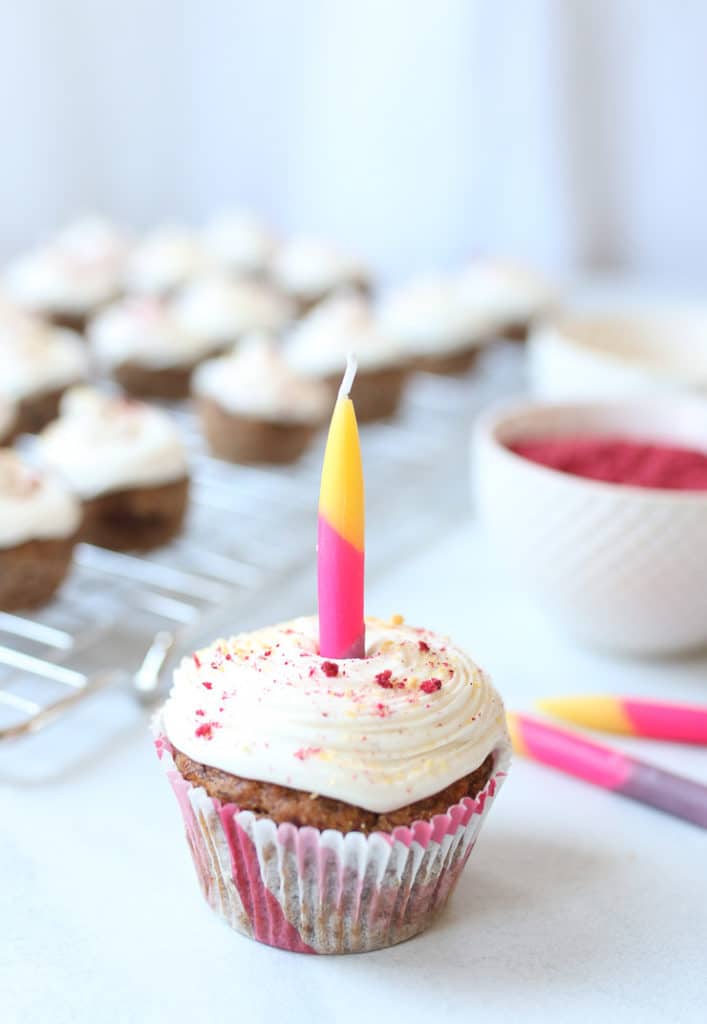
Mini vegan cupcake with one lit candle in the middle.

This Vegan 1st Birthday Cupcake for Baby is Nut Free, No Sugar Added, Dairy Free, Gluten Free, Egg Free and perfect for a BLW and a wide range of baby dietary restrictions, intolerances and allergies.

HOW IS IT BABY E’s FIRST BIRTHDAY THIS WEEKEND?! On this day, a year ago, I was a day away from my due date (April 9), and I was feverishly trying EVERYTHING to put myself into labour. I was eating spicy food, doing squats, walking up hills (for hours), eating dates, pumping/ nipple stimulation, I WAS DOING ALL THE THINGS. And guess what, Baby E was quite content in there getting yummy ice cream treats and pizza.

I was induced a few days later (you can read all about how my birth plan did not go the way I intended), and delivered a healthy, very vocal little boy on April 13th.

Fast forward to today, and I am planning his first birthday party this weekend and that means – his first cake! Now, I’m going to be totally honest. I’m pretty lax about the whole sugar thing. Baby E eats REALLY well and balanced (I cook all his meals from scratch), so I’m okay for him to have a little sugar on his birthday.

Mini vegan cupcake with one lit candle in the middle.

Having said that, I’ve gotten a lot of requests from moms who want a cupcake that has no sugar added, and also are free of common allergens incase they’re serving it to other kiddos with allergies. This Vegan 1st Birthday Cupcake for Baby is Nut Free, No Sugar Added, Dairy Free, Gluten Free, Egg Free and perfect for a BLW.

How to Make this Vegan 1st Birthday Cupcake

Mini cupcake with one lit candle in the midle.

You’ve probably tried my amazing BLW peanut butter banana cherry muffins, which to this day are one of Baby E’s favourites, so you know the importance of having a fruit base to add sweetness and moisture. Instead of just using banana here, I took it up a notch to make these mango flavoured inside, giving these vegan 1st birthday cupcakes a bit of a tropical flavour.

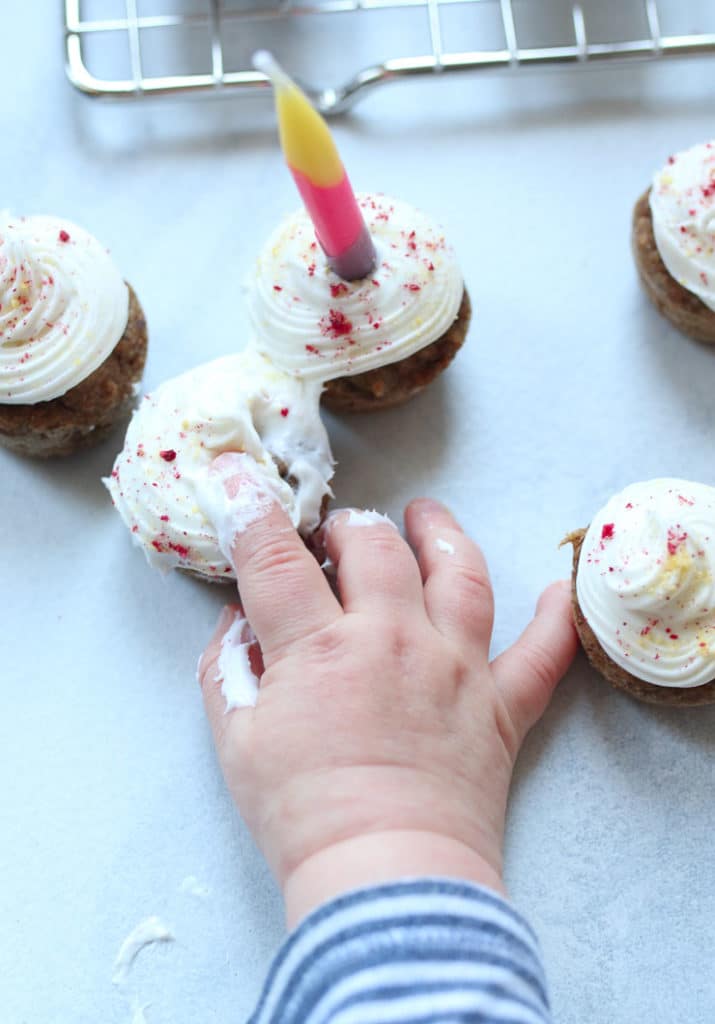
Baby's hand poking at vegan mini birthday cupcakes.

The cake is made of gluten free flour (or regular flour), and freeze dried mango which I pulverized into a sweet flour-like consistency. I also use a flax egg instead of a regular egg which adds moisture and also healthy Omega 3s, fibre and protein.

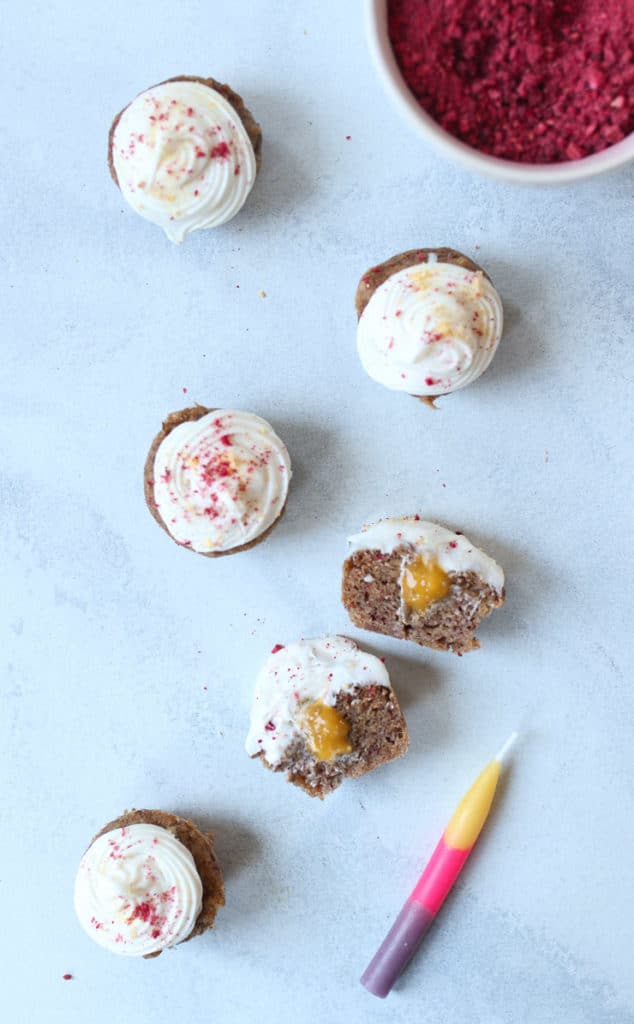
Then I make a little mango chia jam, which has become a baby led weaning staple for us. Any chia jam is a great way to add tons of nutrition and also some natural no sugar added sweetness to oatmeal, yogurt, ricotta and toast. This get squirted into the middle for a fun sweet surprise of flavour in every bite.

Mini vegan cupcakes cut open to show chia mango jam filling.

Then we get to the topping, and you have a few options here. To keep this vegan 1st birthday cupcake completely plant-based, you can use coconut whipped cream. You can also do regular whipped cream. Your other option is to make aquafaba meringue which is the technique I used to make this amazing vegan lemon mousse. All of that can get a little dusting of pulverized freeze dried raspberries and mango instead of sugary colourful sprinkles to keep this no sugar added.

How adorable is this vegan 1st birthday cupcake? I am excited (but also SO EMOTIONAL) about the thought of baby E shoving one (or two) into his face (*cue the mom waterworks*)

So loves, tell me – what did you serve your baby on his or her first birthday?

Are you going to try these no sugar added vegan 1st birthday cupcakes?

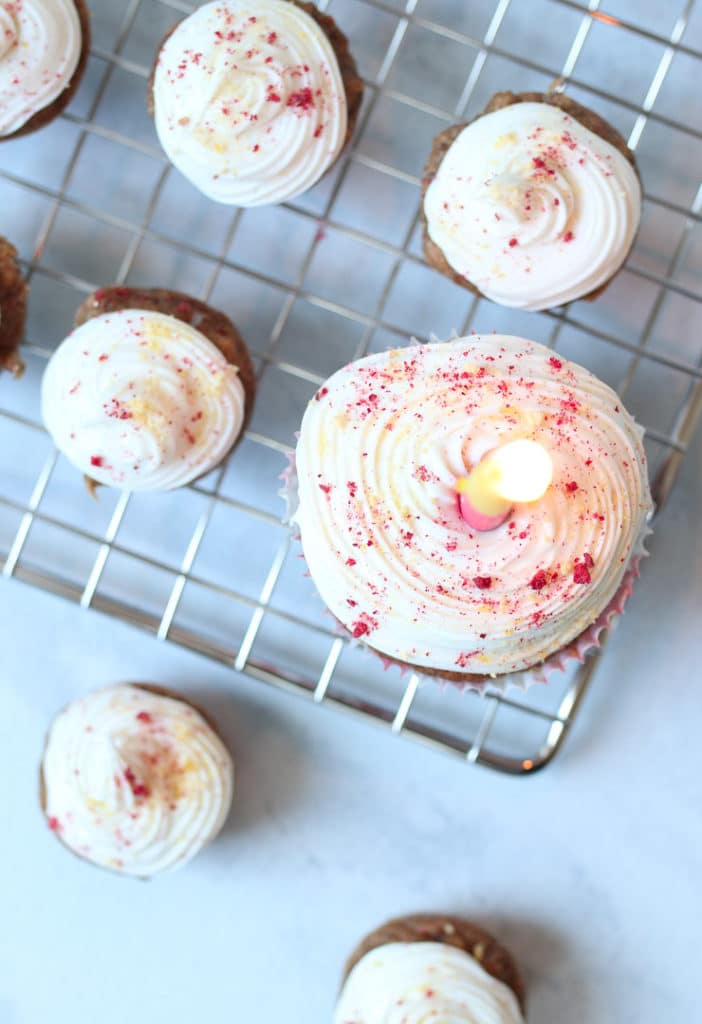
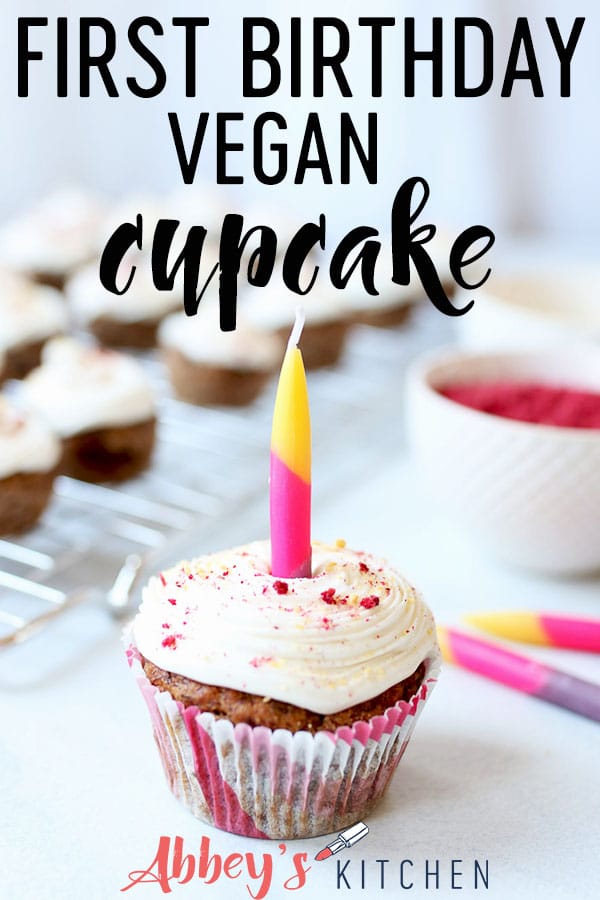
First birthday vegan cupcake with a lit candle.
Mini vegan cupcake with one lit candle in the middle.
Print Recipe
5 from 3 votes

Vegan 1st Birthday Cupcake for Baby

This Vegan 1st Birthday Cupcake for Baby is Nut Free, No Sugar Added, Dairy Free, Gluten Free, Egg Free and perfect for a BLW and a wide range of baby dietary restrictions, intolerances and allergies.
Prep Time20 minutes mins
Cook Time20 minutes mins
Total Time40 minutes mins
Course: Dessert
Cuisine: American
Servings: 24 mini cupcakes
Calories: 104kcal
Author: Abbey Sharp

Ingredients

Mango Chia Jam:

  • 1 cup ripe fresh or frozen mango
  • Juice of 1/4 lime
  • 1 tbsp chia seeds
  • Zest of 1/2 lime

Cupcakes:

  • 1 1/4 cup Gluten free flour or regular all purpose flour
  • ¼ cup freeze dried mango processed into a powder
  • 1 tbsp cinnamon
  • 1 tsp baking soda
  • Pinch salt
  • 2 cups of very ripe mashed bananas about 4 medium
  • ¼ cup coconut oil melted
  • ¼ c unsweetened mango puree
  • 2 tsp vanilla extract
  • ¼ cup coconut milk full fat
  • 2 flax eggs 2 tbsp ground flax with ¼ cup water

Topping:

  • 4 cans coconut cream solids whipped (for vegan)
  • 1 tsp vanilla extract
  • OR
  • 1/2 cup whipping cream whipped (for not vegan)
  • 1 tsp vanilla extract
  • OR
  • 1 19 oz can of no-salt-added chickpeas liquid only (aquafaba)
  • ¼ tsp cream of tartar
  • 2 tsp vanilla
  • Optional 3/4 cup white sugar if not sugar free
  • 2 tbsp freeze dried mango processed into a powder
  • 2 tbsp freeze dried raspberries processed into a powder

Instructions

  • In a food processor or blender, puree the mango for the chia jam until smooth. Mix with the lime juice, zest and chia and place in the fridge overnight.
  • Preheat oven to 350 F. Prepare 2 x 24 mini muffin tins or 12 large muffin tins (with cupcake liners).
  • To a large bowl, mix together the flour, freeze dried mango powder, cinnamon, baking soda, and salt.
  • In another bowl, mix together the mashed banana, coconut oil, mango puree, vanilla, coconut milk and flax eggs.  Mix the wet into the dry.
  • Fill ¾ of the way up in the large muffin tins or pretty well to the top of the minis.
  • Bake for 20 minutes for minis, and 30 minutes for regular size.
  • Allow to cool on a cooling rack.
  • Transfer the mango chia jam to a piping bag with a very small star tip. Insert the tip into the centre of the muffin and add a small amount of jam.
  • Whip the coconut cream, or dairy whipping cream until fluffy, then add in vanilla. If using aquafaba, whip the chickpea liquid with the cream of tartar until very fluffy, then add in the vanilla. You can add sugar, if you don’t mind added sugar in this recipe, which will obviously make the icing have sweetness and flavour, and make it stable enough that it will hold.
  • Whatever topping you choose,  pipe onto the tops of the muffins. Top with a sprinkle of the powdered freeze-dried mango and raspberries. Enjoy!

Nutrition

Calories: 104kcal | Carbohydrates: 13g | Protein: 1g | Fat: 5g | Saturated Fat: 3g | Cholesterol: 6mg | Sodium: 55mg | Potassium: 109mg | Fiber: 2g | Sugar: 5g | Vitamin A: 450IU | Vitamin C: 5.6mg | Calcium: 19mg | Iron: 0.6mg
Abbey Sharp

Abbey Sharp is a Registered Dietitian (RD), regulated by the Ontario College of Dietitians. She is a mom, YouTuber, Blogger, award winning cookbook author, media coach specializing in food and nutrition influencers, and a frequent contributor to national publications like Healthline and on national broadcast TV shows.

www.abbeyskitchen.com/about-abbey/

Last Updated October 8, 2020. Published April 5, 2019 By Abbey Sharp 8 Comments

11 Things I’m Excited to do When I Quit Exclusively Pumping Breastmilk for My Baby

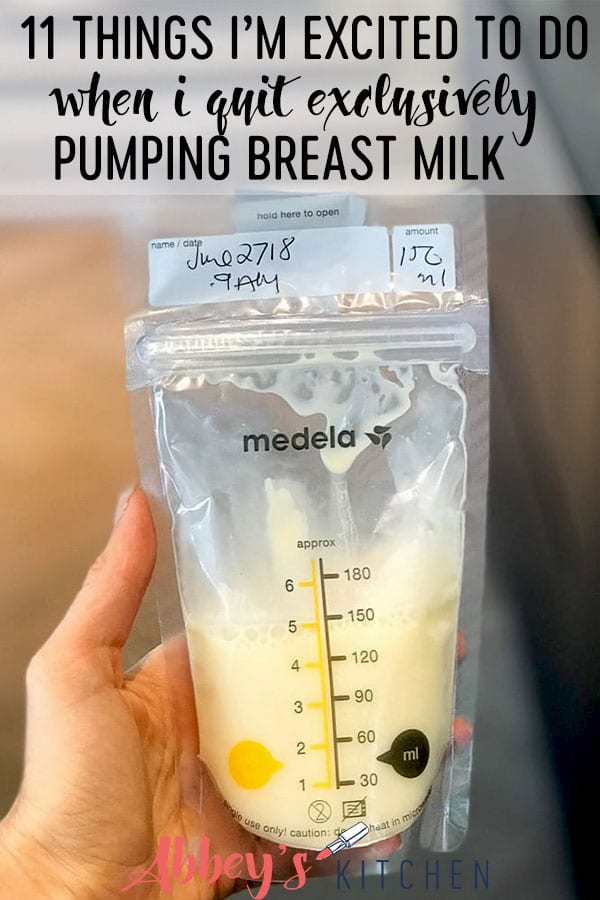
Breast milk in a bag.

One week away from my goal of 12 months of exclusively pumping, I daydream about the 11 things I’m excited to do when I quit exclusively pumping breast milk for my baby.

Ladies, I almost made it. I can count on my two hands the number of days before I’m done exclusively pumping breastmilk for at LEAST another 9 months (HA! DEFINITELY not pregnant, don’t worry). But seriously, I cannot tell you how excited I am to sterilize that last flange and put that breast pump away in storage.

Exclusively pumping full time has been one of the hardest things I’ve ever done, and while some days I feel like a total failure for not getting the breastfeeding thing down (read about that here), other days I feel really proud. I made the damn best situation I could out of a really, really shitty one.

I recently calculated (while pumping, obvs) that I have spent 37 DAYS of my life attached to that pump.

37 FULL 24-HOUR DAYS. Days I could have been sleeping, cuddling my baby, working, getting back in shape, ANYTHING other than having my nips tugged. This doesn’t even take into consideration all of the additional time I’ve spent washing pumps and bottles.

Having said that, I’m actually really proud. I have almost 100 L of breastmilk frozen in the freezer and my son has been fed amazing nourishing milk by me, my husband, my nanny, my parents, my in laws, and legit anyone else you is willing to hold a hungry child. It takes a village, and I do believe that relinquishing some of the responsibility of feeding has helped us grow an amazing village.

So to make light of this rewarding, yet challenging motherhood experience in my life and commemorate 12 months feeling like a dairy cow, I wanted to share what I’m most excited about in this next free stage of my life.

11 Things I’m Excited to do When I Quit Exclusively Pumping Breastmilk for My Baby

If you’ve ever pumped (or in a lot of cases, breastfed), you know these struggles far too well.

11. Wear a REAL Bra

woman's back with brastrap

I’m so so SO excited to retire my frumpy pumping bras. If anyone wants to invent a product that us exclusively pumping mamas will buy by the dozen, please put out a sexy hands-free pumping bra. Thank youuuuuu.

10. “Sleep In” Until 6 AM

white bed sheets

For months I was getting up at 11 AM, 2 AM and then 5 AM to pump. Then I got down to one middle of the night pump at 12:30 AM, and then finally dropped that too. But alas, I have been getting up at 5 AM every day for the last 12 months, even if I’m completely wiped. Sometimes just the thought of having to get up early gives me so much anxiety at night that it prevents me from falling asleep. UGH. I cannot tell you how THRILLED I am to even THINK about sleeping in until 6 AM on a Saturday.

9. Stay Up Past 9 PM

night sky with moon

I’m tired AF most days, and honestly, I will always love an early bedtime, but I would love NOT to feel total utter anxiety about rushing home from a party, or nice dinner out just out of fear that I’ll throw off my night pumping schedule, or be exhausted when I wake up at 5 AM. Honestly, I won’t even finish an episode of the Office with my hubby on Netflix if it goes past my strict 9 PM bedtime. It will be SUCH a beautiful thing to have the flexibility to stay up even a little later when I can also wake up later, too.

8. Leave the House for the Day Without a Heavy Pump Bag, Ice Pack and Dish Soap etc. etc. etc.

Going anywhere for more than a few hours is more of an ordeal when you are exclusively pumping. It means I usually have to bring two sets of pumps and flanges, my pump, my back up pump (because I have had my pump malfunction in a time of dire need before), another insulated bag with a few ice packs, dish soap for washing, and a bottle brush. All of that just so I can go get my hair done and grab lunch over the course of a few hours in the middle of the day. That means that it’s really annoying to be out and about walking anywhere for the day because I have to carry ALL of that with me. It also means going out for the day on a bike is completely impossible. I cannot wait for the freedom to be able to go anywhere without the physical and emotional baggage of my breast pump.

7. Go Through Airport Security Without a Hassle

person walking in a large building

Since beginning my exclusively pumping journey, my bags have gotten pulled aside EVERY single time I go through security. Male TSA agents like to ask me what the “device” is (okay, so it does look kinda suspicious), and they end up having to test every single bottle and bag of breastmilk for traces of drugs. I mean, I’m glad they’re being thorough with these things to keep our skies safe, but it does mean that I always have to give myself lots of extra time when I fly. One time at the airport I even had to give a newbie male TSA agent a lecture when he told me I would have to dump the breastmilk since my baby wasn’t with me. Noooooooooope.

6. Run Without Wearing TWO Sports Bras

woman running outside

Seriously, unless I’ve JUST pumped, I can’t even pick up a brisk power walk in a single bra without wanting to die feeling like I’ve got two full jugs of milk sloshing around on my chest. Like I can HEAR the milk and it makes me cringe. I’m really excited to just be able to pick up a modest 6 mph jog and feel secure in one sexy sports bra.         

5. Let the Shower Water Run on my Nipples Without Crying

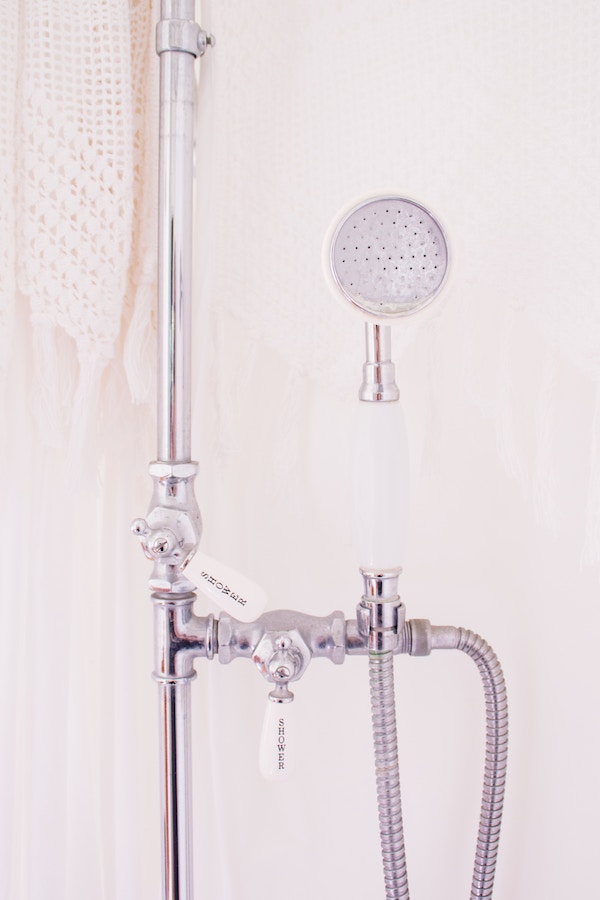
A shower head.

No but seriously, I’ve never thought weak water pressure was a desirable thing, but after a long pump, my nips are so sore and tender, anything touching them with a pressure lighter than a feather makes me whimper. I’m excited to be able to face INTO the water for like a hot second when my pumping journey comes to a close and my breasts get a chance to love life again.

4. Hug My Husband from the Front Without Caving my Back In to Protect my Nips

Ok that was specific, but I KNOW I’m not the only one. Honestly, I’m not a Duggar daughter. I shouldn’t have to be limited to loveless side hugs out of fear of my tender, sore nipples pressing into something hard and hurting like a bitch. But alas, here I am, rounding my back when I hug anyone front-on to protect my sore, battered breasts. I’m sorry for how I hugged you when I was pumping.

3. Wear a Top WITHOUT Buttons Down the Front

I have developed a mom uniform and I’m getting MIGHTY bored of it. Since giving birth, I realized that I only could wear shirts that zip or button up all the way up the front so that when it’s pump time, I can easily get in there to insert my flanges. I cannot wait to wear a simple slim fit sweater, or a tight top or a dress without buttons and to retire my mom uniform blouses for at least a year.

2. To Take a Conference Call, or Phone Media Interview without Someone Asking “What’s that Sound?”

large conference room

To be clear, it’s pretty much always a man who asks this question, especially because my pump is surprisingly quiet. It would also be nice to not be asked DAILY when I’m pumping under my nursing cover in public “is there a baby under there?” I get the confusion, but no, most babies don’t come with tubing and make a noise like a dishwasher.

1. Not Be Referred to as My Husband’s “Prized Holstein”

Cute, right? Um… for some reason it never really feels that way to me. It’s also not cute when family members make “mooooo” noises when I’m doing my thing. Here’s an insider tip: if someone in your life has made the decision to have their nipples literally yanked for hours of every day out of a selfless decision to feed their child, don’t be a dick about it.

Hey, exclusively pumping for the past 12 months has not been an easy ride and while I feel proud I made it this far (and have over 75 L of breastmilk in the freezer for his second year, I’m excited to put this chapter to bed.

To my moms who exclusively pumped, partially pumped, breastfed, or formula fed, what do you NOT miss about the experience?

What were you most looking forward to after you weened?

You May Also Like:

The Mom Guilt of Breastfeeding Failure

How I Went from Supplementing to Freezing 33 L of Breastmilk

How to Increase Breastmilk Supply

Breast vs Bottle and Pumping on Obesity Risk

pinterest image of hand holding a bag of breast milk with text overlay


Abbey Sharp

Abbey Sharp is a Registered Dietitian (RD), regulated by the Ontario College of Dietitians. She is a mom, YouTuber, Blogger, award winning cookbook author, media coach specializing in food and nutrition influencers, and a frequent contributor to national publications like Healthline and on national broadcast TV shows.

www.abbeyskitchen.com/about-abbey/

Last Updated July 21, 2020. Published March 29, 2019 By Abbey Sharp 9 Comments

Vegan Lemon Mousse Parfait | Gluten Free Easter & Passover Recipe with Aquafaba

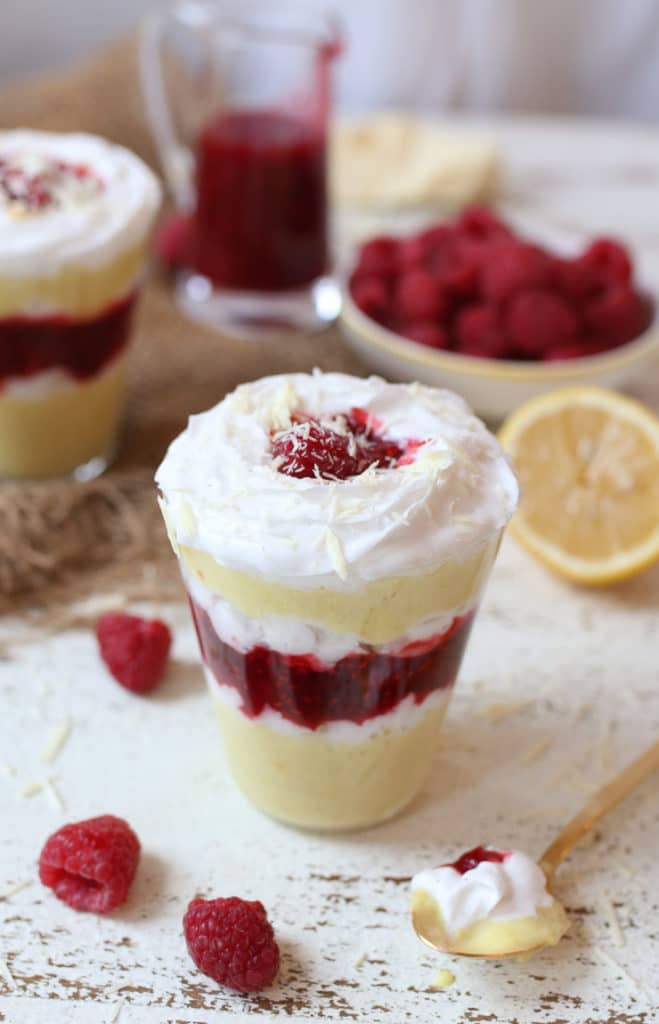
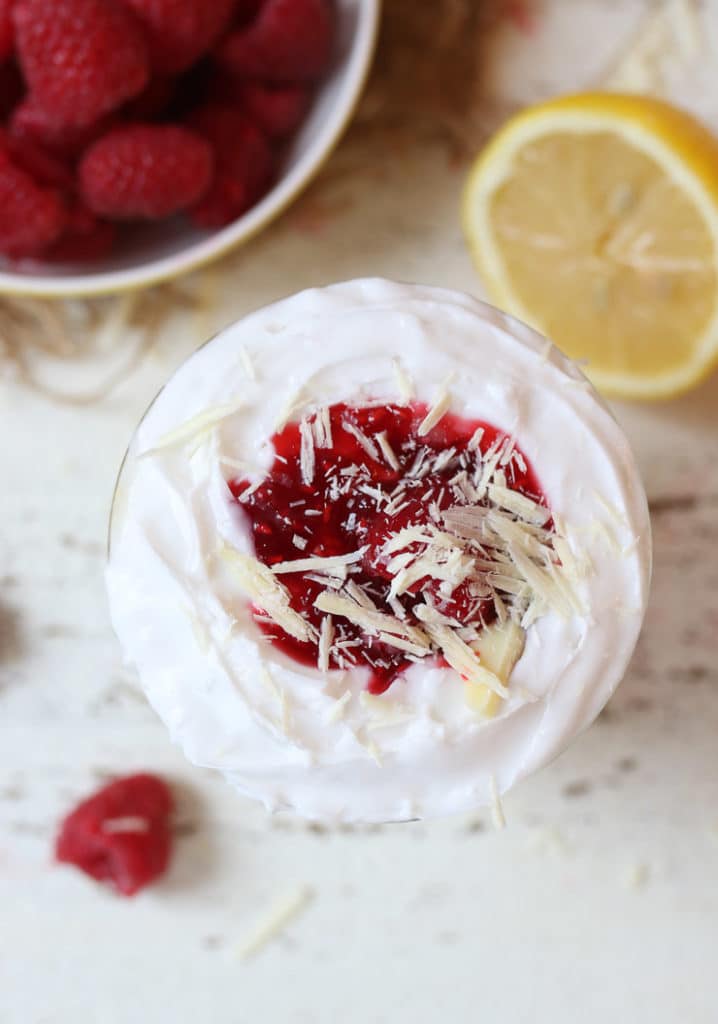
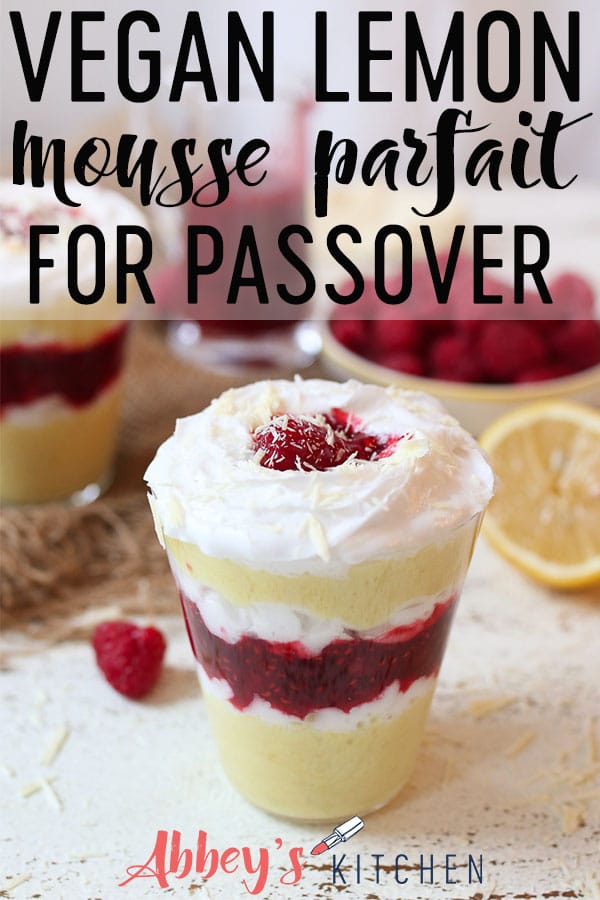
Vegan lemon mousse parfait layered with raspberry chia jam in a glass.

This Vegan Lemon Mousse Parfait will make a perfect plant based gluten free Easter or Passover recipe using aquafaba!

Spring is here, my friends, and that means it’s time for light and airy citrus desserts! Two big food holidays – Easter and Passover – are also around the corner and if you’re entertaining with anyone that has dietary restrictions, you might need a little inspiration. This vegan lemon mousse parfait is PERFECT for Spring entertaining and holidays like Passover or Easter because it’s naturally gluten free, dairy free, vegan, and totally Kosher for Passover.

Why this Vegan Lemon Mousse Parfait for Easter or Passover?

Vegan lemon mousse parfait layered with raspberry chia jam in a glass.

In my family, we celebrate Passover, and I am always tasked with making dessert, probably because it’s hardest. The reason is that when you have a “meat” based meal, you can’t have dairy, so your dessert has to AT LEAST be gluten free and dairy free. If you have any one at the seder who is plant-based, that takes eggs out of the equation too. While the rules aren’t in place at Easter, I expect a lot of you still have friends or family at the dinner table with dietary restrictions. So with that in mind, I wanted to experiment with AQUAFABA in this vegan lemon mousse parfait!

WTF is Aquafaba?!

Vegan lemon mousse parfait topped with vegan whip cream.

It’s vegan magic, that’s what it is. Basically if you take the liquid from a can of chickpeas and beat it with sugar, it turns into meringue like the egg-whites. And honestly, it’s EASIER and CHEAPER than egg whites AND you get to eat the beans after. WIN WIN.

Ironically, I read that aquafaba was invented as a way to make vegan meringues for Passover, so I guess this recipe for vegan lemon mousse was just meant to be.

How to Make this Vegan Lemon Mousse Parfait

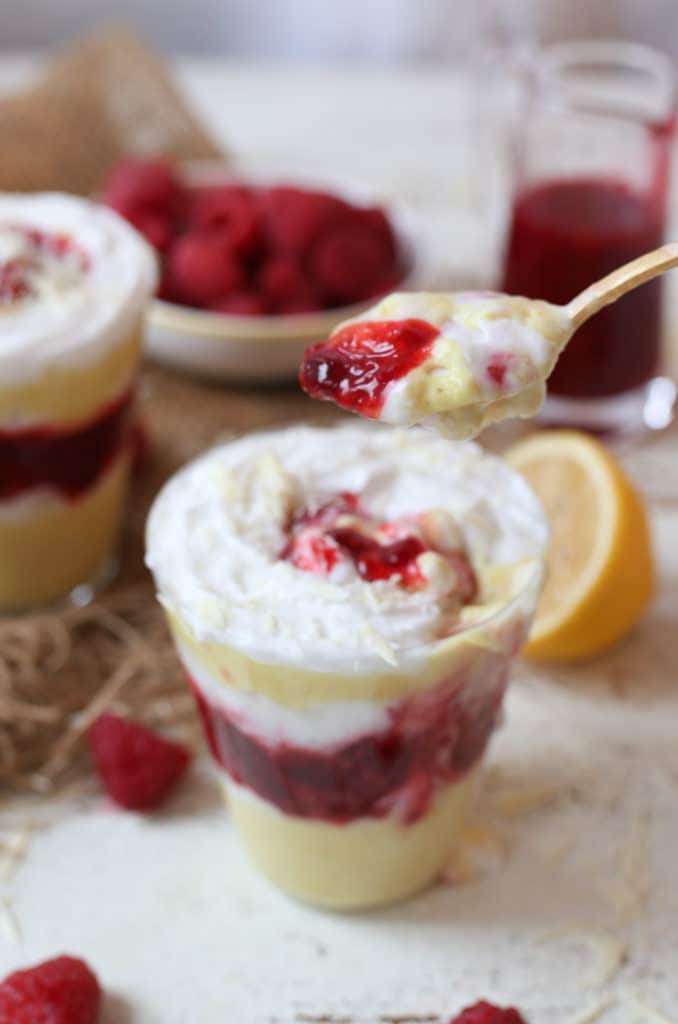
Spoonful of vegan lemon mousse parfait with raspberry chia jam.

So this recipe takes a few steps but I promise you it will be worth it.

I start by whipping the can of chickpea water to stiff peaks with cream of tartar, then adding in sugar until it’s glossy and stiff.

Then I make a quick pudding with lemon juice, zest, coconut milk and cornstarch. You then fold the meringue into the pudding to yield a super light lemon mousse. It’s creamy, airy, with just the right level of sweetness.

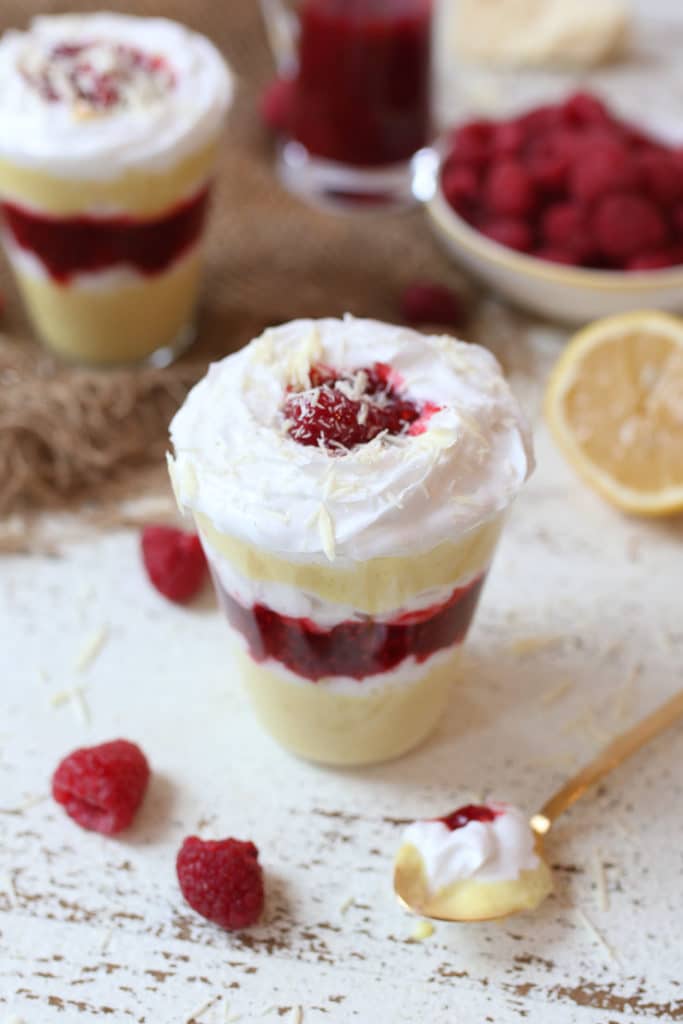
Vegan lemon mousse parfait layered with raspberry chia jam in a glass.

Next, a quick little raspberry sauce is made, and coconut cream is whipped. Then all you need to do is assemble!

You could totally assemble this vegan lemon mousse parfait in a large trifle dish to feed a crowd, but if you are serving this at an intimate dinner party, I think plating them individually is always nice.

Elegant, light, and perfect for Spring, I cannot wait to bust this out for my friends and family this Passover and Easter!

Now let me know loves, what are you serving for Passover or Easter for dessert?

Do you have dietary restrictions to consider this holiday?

Leave us a comment below with your thoughts on this vegan lemon mousse parfait!

pinterest image of vegan lemon mousse parfait layered with raspberry chia jam in a glass with text overlay
Vegan lemon mousse parfait layered with raspberry chia jam in a glass.
Print Recipe
5 from 1 vote

Vegan Lemon Mousse Parfait

This Vegan Lemon Mousse Parfait will make a perfect plant based gluten free Easter or Passover recipe using aquafaba!
Prep Time1 hour hr 10 minutes mins
Cook Time20 minutes mins
Total Time1 hour hr 30 minutes mins
Course: Dessert
Cuisine: French, American
Servings: 6 – 8 people
Calories: 500kcal
Author: Abbey Sharp

Ingredients

Aquafaba:1 19 oz can of no-salt-added chickpeas, liquid only (aquafaba)

  • ¼ tsp cream of tartar
  • 2 tsp vanilla
  • ¾ c sugar

Lemon Mousse:

  • 1 14 oz can of coconut milk shaken
  • 2 tbsp maple syrup
  • ¼ cup fresh lemon juice
  • Zest of 2 lemons
  • 1/4 tsp turmeric
  • Pinch salt
  • 3 tbsp cornstarch
  • 3 tbsp water
  • 2 tsp vanilla artificial, if for Passover
  • 2 cups of whipped prepared aquafaba

Raspberry Layer:

  • 1 1/2 cup raspberries fresh or frozen
  • 1/2 cup sugar
  • 2 tsp cornstarch
  • 1 tbsp lemon juice
  • 1/2 cup fresh raspberries
  • 1 cup whipped coconut cream
  • Cocoa butter shaved for garnish

Instructions

  • In a small saucepan, combine the coconut milk, maple, lemon juice, zest, turmeric, and salt until combined over medium low heat until simmering. Cook, whisking, for 4-5 minutes.
  • In a small ramekin combine the water and cornstarch and add to the saucepan. Whisk constantly and cook until thick, about 5-7 minutes. Continue to whisk until there are no lumps and it’s very thick. Remove from the heat and stir in the vanilla.
  • Transfer to a bowl and place plastic wrap directly on top of the pudding. Transfer to the fridge for an hour.
  • Meanwhile, add the chickpea water to a stand mixer along with the cream of tartar. Beat on high until it reaches a stiff peak.
  • Start to add the sugar in while you continue to beat until it gets glossy and holds the peaks. Add the vanilla and set aside.
  • Once the lemon pudding has cooled a bit, uncover it and fold in 2 cups of the aquafaba whip. Set aside.
  • To make the raspberry sauce, heat the 1 1/2 cups of raspberries in a small saucepan with the sugar until saucy. In a small ramekin, mix the cornstarch and lemon juice and then add it to the sauce. Cook until thickened, about 5-6 minutes. Cool and then refrigerate until ready to serve.
  • To assemble, layer the lemon mousse with coconut cream, raspberry sauce, and raspberries and garnish with shaved cocoa butter. Enjoy!
  • Note: The lemon mousse can be prepared up to 2 days ahead. The chia sauce can be prepared 5 days ahead. It’s best to assemble within a few hours of serving.

Nutrition

Calories: 500kcal | Carbohydrates: 61g | Protein: 3g | Fat: 29g | Saturated Fat: 25g | Sodium: 13mg | Potassium: 392mg | Fiber: 3g | Sugar: 48g | Vitamin A: 10IU | Vitamin C: 17.2mg | Calcium: 34mg | Iron: 3.6mg
Abbey Sharp

Abbey Sharp is a Registered Dietitian (RD), regulated by the Ontario College of Dietitians. She is a mom, YouTuber, Blogger, award winning cookbook author, media coach specializing in food and nutrition influencers, and a frequent contributor to national publications like Healthline and on national broadcast TV shows.

www.abbeyskitchen.com/about-abbey/

Last Updated August 12, 2019. Published March 28, 2019 By Abbey Sharp 21 Comments

Science Based Detox Cleanse Tips

Glasses of juices with the fruit on top.

Everyone’s jumping on the old  Detox Cleanse bandwagon, but the truth is there is no decent evidence to suggest it’s doing anything except draining your wallet. I busted that popular myth in my YouTube video below, and wrote all about it here.

So today I’m back with an evidence based how to on the detox cleanse. Spoiler alert- there will be no unpalatable lemon, cayenne and maple concoctions. Just try my 5 easy ways to detox cleanse your body using your every day body bits. Yes,  you can use real body parts to cleanse your body. You’ve got a liver, kidneys, lungs, skin,  and a digestive track for this purposes. Use them. Go pee. You’ll cleanse.

How to Detox Cleanse

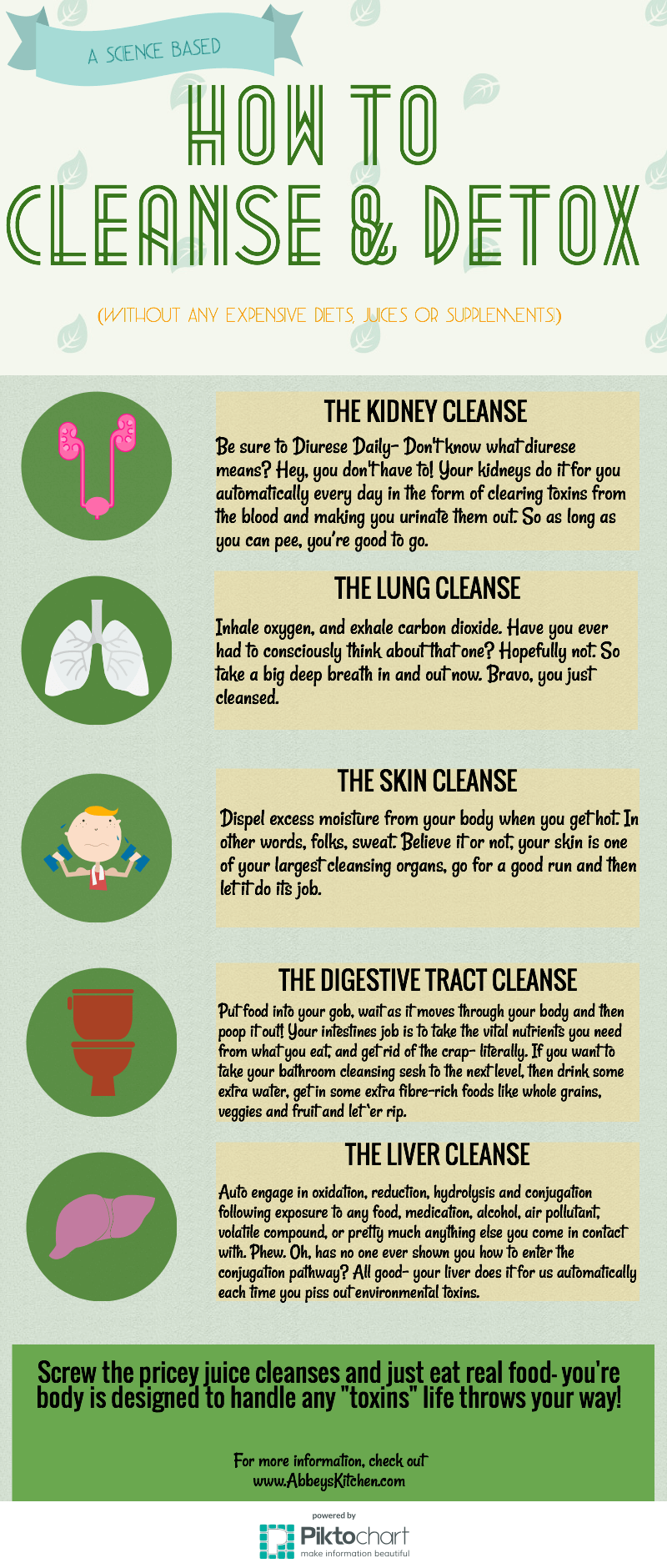
KIDNEY DETOX CLEANSE: Your kidneys cleanse you automatically every day in the form of clearing toxins from the blood and making you urinate them out. So as long as you can pee, you’re good.

LUNG DETOX CLEANSE: Inhale oxygen, and exhale carbon dioxide.  Bravo, you just cleansed.

SKIN DETOX CLEANSE: Sweat! Now I know massive sweat circles can be embarrassing, and dry cleaning is no small expense for silk blouses, but consider those stains a trophie of a good healthy detox. Believe it or not, your skin is one of your largest cleansing organs, go for a good run and then let it do its job.

DIGESTIVE TRACT DETOX CLEANSE: Poop. Yep. Your intestines job is to take the vital nutrients you need from what you eat, and get rid of the crap– literally. Yes you heard me – pooping may seem dirty but it’s actually inherently cleansing. And if you want to take your bathroom cleansing sesh to the next level, then drink some extra water, get in some extra fibre-rich foods like whole grains, veggies and fruit and let ‘er rip.

LIVER DETOX CLEANSE: Yep, your liver’s job is to filter out toxins and help you piss them out, so as long as that is in good shape, you are too.

Detox Cleanse infographic
You’re going to want to print that out and hand it over to a friend next time she talks about going on a crazy detox cleanse. Ew- green juice. Just don’t.
If you’re more of a visual person, you’ll want to check out my How To video on the ubiquitous detox cleanse!
 What do you think of going on a detox cleanse?
What nutrition myth do you want busted?
Leave me a message below and Ill be sure to answer it in an upcoming video or blog post!
Abbey Sharp

Abbey Sharp is a Registered Dietitian (RD), regulated by the Ontario College of Dietitians. She is a mom, YouTuber, Blogger, award winning cookbook author, media coach specializing in food and nutrition influencers, and a frequent contributor to national publications like Healthline and on national broadcast TV shows.

www.abbeyskitchen.com/about-abbey/

Last Updated August 6, 2020. Published March 27, 2019 By Abbey Sharp 3 Comments

Breastfeeding vs Formula or Bottle Feeding and the Risk of “Obesity” and Weight Gain

Mom picking up baby next to a baby bottle.

We review the literature looking at breastfeeding vs formula or bottle feeding and how it impacts the risk of weight gain and “obesity” later on in adulthood.

I have learned a hell of a lot since becoming a mom to Baby E, but one of the biggies is that he is an absolute MASTER at regulating his food intake. It’s usually quite obvious when my son is hungry (he will literally grab his bottle and shove it into his mouth) and it’s equally obvious when he is full (he will seal his lips so damn tight not a drop can pass through.) Man, if only we were that in tune with our hunger and satiety cues.

Why We Need to Trust That Babies KNOW How Much to Eat

Newborn baby on mom's shoulder.

Even though babies are born with this innate ability, there’s a growing concern that parents can manipulate and sabotage these skills. New research suggests that how we feed our babies can have significant consequences on their weight potential as they get older. Researchers have found that 20% of adult “obesity” is caused by over-feeding in infancy and this is even before solids are introduced.

While the stat was alarming, being a “Jewish mother”, it doesn’t surprise me. Research has found that moms of babies who are smaller tend to pressure them to eat more out of their bottle, while moms with larger babies tend to restrict. The concern is that this control may “raise the risk of weight gain by undermining the child’s ability to self-regulate food intake”. And all that out of our desire to nourish and love!

I first heard about the idea that breastfeeding vs formula or bottle feeding could impact baby’s weight gain or risk of “obesity” in a mom group I was reading threads from at 2 in the morning (#pumpinglife). One mom was trying to make a point that “breast is best”, and considering my struggles with breastfeeding, I couldn’t help but react. I had to look into the literature to get the whole story, and of course, I figured we would share what we learned with all of you in the process.

As always, I want to make it clear that this article is NOT meant to shame moms for choosing breastfeeding vs formula feeding vs bottle feeding pumped milk for their babes. We all just do what we can (or want) to do, and honestly, so much of their physical destiny has nothing to do with ANYTHING we can control. But still, knowledge is power, they say, so let’s dive in.

Breast Milk vs Formula and the Risk of Obesity

Mom picking up baby next to a baby bottle.

When discussing infant feeding before 6 months we are often talking about breast milk vs formula so let’s take a moment to discuss their differences and how their play a role in baby’s growth.

According to a recent 2018 study, breastfeeding was associated with lower BMI and lower risk of rapid weight gain compared to formula supplementation. This link was most significant for moms of babies who were exclusively breastfed. This study findings are supported by the American Academy of Pediatrics statement that breastfed infants have a 26% reduced risk of “obesity” later in life.

In contrast, research has found that formula fed babies at 12 months were three times more likely to be “overweight” compared to exclusively breastfed babies. Researchers even found that at 12 months, an infant’s risk of becoming “overweight” was twice as high when they were fed a combination of breast milk and formula at six months compared to exclusive breastfeeding.

What does all this mean? Well it seems as though breast milk MAY carry some benefits that go beyond just immediate nutrition and may play a significant role in your baby’s weight and appetite.

Breast Milk vs Formula Composition & Satiety

Mother breastfeeding baby in a park.

Breast milk carries some very unique properties. For one thing, each baby’s breast milk is unique to just them, whereas there are a variety of different formula brands, but they aren’t tailored to you or your babe. Some experts theorize that because of the variation in consistency and contents of breast milk from day to day, month to month, and even hour to hour, babies can better learn to adapt and self-regulate their intake.

Research studying the components of breast milk have found that it contains a hormone known as leptin which is associated with appetite regulation. This study found that the leptin in breast milk appeared to provide moderate protection to infants from excess weight gain because of its role in decreasing appetite.

In contrast, research has found that infant formula contains higher levels of the hormone ghrelin compared to breast milk. For those of you who aren’t familiar with ghrelin, it works in opposite of leptin, and instead stimulates our appetite so we eat more.

Another interesting thing is that the fat content in breast milk is higher toward the end of each breastfeeding episode (the hind milk) which may act as a signal for infants to stop drinking the milk due to fullness. This becomes a teaching lesson for infants on listening to their satiety cues and knowing when they’re finished eating. In contrast, the nutritional composition of formula is consistent throughout a feed so formula fed babies don’t get that cue.

So what’s the long term effect? Well, one study found a significant association between breastfeeding and increased children’s satiety response among children aged three to six years. On top of that, another study found that breastfeeding was associated with increased satiety responsiveness in children aged 18 to 24 months.

Is it because of breast milk vs formula’s unique and different compositions? It’s something we don’t know for sure. But I guess if this is true, you could compare the experience to eating intuitively and allowing yourself a wide variety of foods every day compared to following a regimented diet where you eat the same thing at the same time every day. When you’re on a diet, you don’t really need to listen to your body’s needs because you’ve already calculated your “macros” and are just eating the preset amount that you know works for you. It’s routine. I’m not necessarily saying that’s how formula fed babies operate (I don’t know, I’m not a baby), I’m just trying to create an analogy to explain this popular expert theory.

Bottle Feeding Pumped Breast Milk vs Breastfeeding & the Risk of “Obesity”

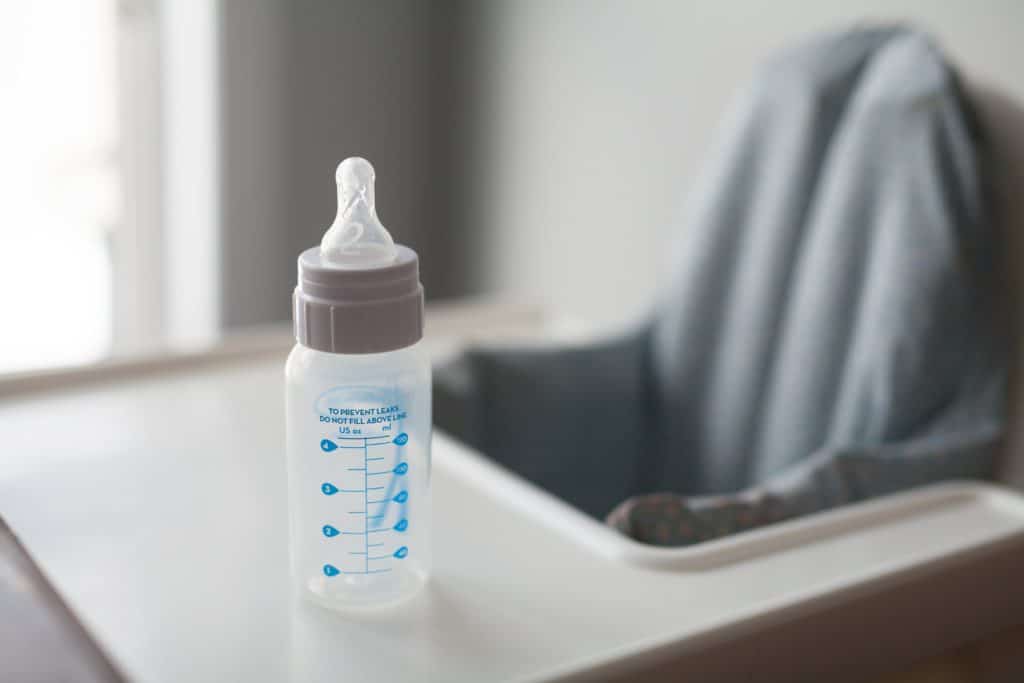
Baby bottle on a high chair table.

Aside from the ingredients in breast milk vs formula, another proposed theory to explain the differences in “obesity” rates is that bottle feeding in general might cause overfeeding. This would also theoretically affect babies who are fed pumped breast milk in a bottle (like Baby E).

Now, I don’t know a lot of moms who exclusively pump by choice. Most of us either had a bad latch, low supply, or went back to work early. Or you’re me and had all of those problems. So in these scenarios, pumping and bottle feeding is really the only way to give baby the benefits of breastmilk.

So what does the research say? Well, it’s not the best news for those of us who are slaves to our pump, but it’s also not reason to throw in the towel.

One 2018 study suggested that babies fed breastmilk from the bottle didn’t get the EXACT same benefits as those who were exclusively breastfed from the breast. By 12 months, infants fed breast milk in a bottle had intermediate BMI scores and their risk of weight gain was higher than infants fed breastmilk from a breast, but still lower than formula fed babies. Based on this, the researchers concluded that direct breastfeeding from the breast provides the greatest protection against rapid weight gain, while bottled breast milk provides intermediate protection.

So what’s going on with the breast milk in the bottle?

It may Interfere with Self Regulation

With bottle feeding, there’s more responsibility on the parent to regulate consumption since they’re the one filling the bottle with a pre-determined amount and putting (and potentially keeping) the bottle in their baby’s mouth. The baby still can turn away, yes, but it’s not that hard to override them. They are, after all, just babies. In contrast, the baby has much better control when they’re putting their mouth to the breast (I guess unless you literally shove your boob in their face).

Not surprisingly, one study found that moms who cued their baby to empty the bottle interfered with their baby’s hunger and satiety cues. However, this research did not measure the impact this has on and infant’s weight. That being said, several studies have found that a less controlling feeding style usually promotes healthier eating behaviours and weight later on as the child grows. This sentiment has been echoed in other studies linking food pressure and restriction with “obesity”, and totally makes sense from a mindful eating perspective, too.

Freshness

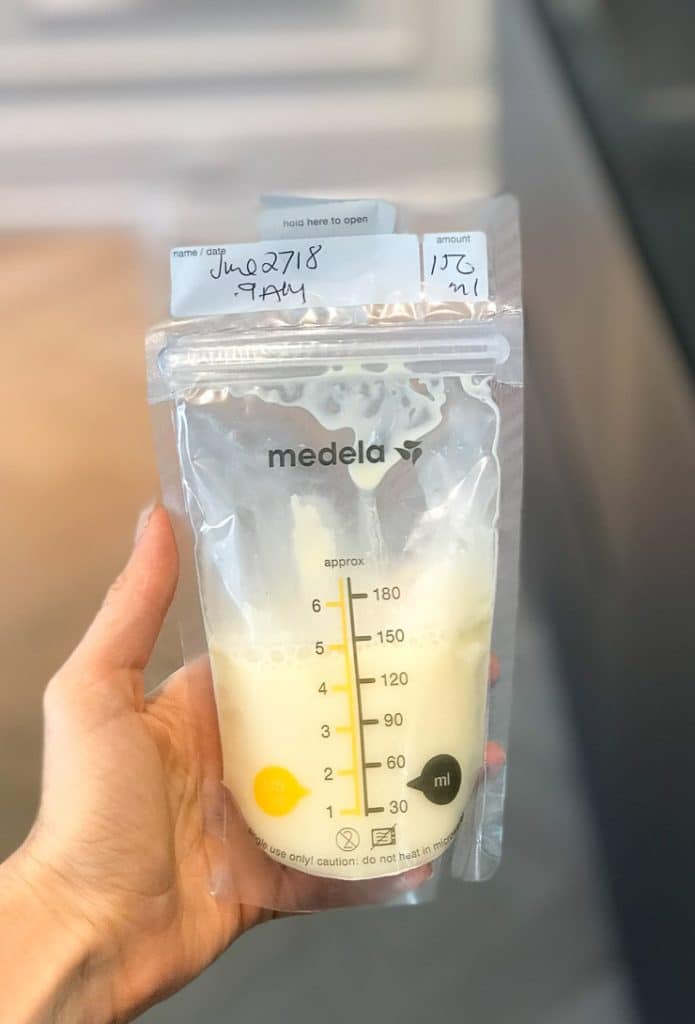
Breast milk in a bag.

When breastfeeding, all of the healthy components of breast milk (enzymes, hormones, antibodies, live bacteria and stem cells) are provided directly to your baby while it’s fresh from the breast. However when you’re pumping, moms will often refrigerate or freeze the pumped milk to be used at a later time. Researchers are suggesting that changing the temperature and even the consistency of the breast milk may affect these components in the breast milk, potentially rendering them not as effective. One 2012 study found that breastmilk that had been frozen for just three months saw a reduction in milk fat and energy concentration. Like we mentioned earlier, one of the satiety effects of breast milk is the presence of the fat content at the end of the breastfeeding session, so without that high fat content, a baby may still be hungry for more. Another study found that the storage, freezing and thawing process of breast milk decreased the fat content, however there was no significant decrease in energy content.

The shift in breastmilk composition is definitely interesting, but we don’t yet know if or how it impacts baby’s weight. In fact, it’s very likely that a baby drinking a lower calorie breastmilk bottle would simply drink more of it to get enough. But again, we don’t have a comprehensive enough study to iron these details out. 

Well How Does Overfeeding Milk Influence Overfeeding Food?

So if you’re all in a tizzy worrying that you might have inadvertently influenced your kid’s future relationship with food just because you were worried about them falling off their growth curve, take a breath. Keep in mind that the breastmilk vs formula or bottle feeding stage is SO short in the context of their entire life. How we talk about (solid) food and our bodies, and how we serve food as our kids grow up surely plays a more substantial role. The key is to not continue the food pushing trend down the road. Unfortunately, it’s hard to teach an old dog new tricks.

One 2014 study found that when moms who encourage their baby to empty their bottle also tend to pressure their kids to eat later on when they’re six years old. Research has found that the more we pressure our kids to finish their plate or try to restrict food, we may be indirectly promoting problematic eating styles and shifting our kid’s internal set point. One study on teens found that up to 2/3 of parents still pressure their teens finish the food on their plate. Another 2015 study confirmed this finding and found that this relationship also was linked with increased risk of “obesity” later on in life.

But let’s get back to bottlefeeding for a hot minute. If you’re going this route (either with formula or breastmilk), what can you do to reduce the risk of overfeeding baby? Well moms and dads, it starts by paying attention to their satiety cues.

How to Know when Baby is Full

black and white image of a baby

You may be in control of how much formula or breastmilk you put in the bottle, but you still want to pay close attention to baby’s hunger and satiety cues to tell you when they’ve had enough. Here are some things you should be looking for to determine your baby is full.

Closing Lips

Just like when a baby sucks on their fist and smacks their lips when they’re hungry, they will also close their lips which translates to: “No more food, thanks”.

Turning Head Away

When your baby is done eating, they will often turn their entire head away from the food source, whether that be the breast or bottle.

Decreasing or Stopping Sucking

While some babies may stay latched on the nipple of a breast or the nipple of a bottle for comfort, if they’re full they’ll stop sucking and swallowing the milk.

Spit Out the Nipple

You will know when your baby has had enough milk if they spit out the nipple.

Losing Interest

Even if there’s a few distractions around them while their eating (aka Poppy, our dog), a baby will still find a moment to eat because they’re hungry. When they’re full, they’ll start to lose interest with their food and instead take interest in their surroundings instead. Are they looking around and trying to grasp at things nearby? They might actually be full!

Tricks and Techniques to Prevent Overfeeding Baby Formula or Pumped Breast Milk in the Bottle

pinterest image of woman lying next to her baby and a bottle on a high chair table with text overlay

If you’re looking at all those satiety cues, but still need some support trusting that your baby has had enough to eat, here are some great tricks and techniques to prevent overfeeding with the bottle.

Opaque Weighted Bottles

One study used a weighted opaque bottle to see if it would impact how much moms fed their babies. These unique bottles prevented the caregiver from seeing or feeling the amount in the bottle, leaving it more up to the baby to determine how much to eat. The study found that infants consumed less formula when fed from an opaque bottle compared to when fed from a clear bottle. To date, there are a few opaque bottles on the market like Philips Avent opaque bottles.

Bottle Design

There is some interesting new research suggesting that the design of our bottle can impact baby’s weight and eating behaviours. One 2012 study compared two bottle designs.

Bottle A contained a one-way air valve where air flows into the bottle to replace milk when the infant sucks. This is described as “partial anti-vacuum”.

Bottle B contained an internal venting system where air flows continuously into the bottle when inverted. This is described as “complete anti-vacuum”. You can find this bottle on the market by the brand Dr. Brown’s.

The author’s hypothesis is that Bottle A would require more effort to obtain milk because of the flow of air into the bottle and would result in lower rates of milk intake leading to slower growth which would be more similar to breast fed infants. Sadly because of the small sample size the authors of the study could not draw any conclusions and this is currently only based on theoretical hypotheses. This is really exciting research, especially for mothers who rely on bottle feeding for their baby’s nutrition so we’ll have to keep an eye on this in the future.

Paced Feeding

Paced bottle feeding is a method of bottle feeding that is designed to better mimic breastfeeding. With this style of feeding you let the baby choose the pace of feeding and let them decide how much milk they would like. Here are some steps on how to do this:

  1. Hold the baby upright instead of flat on their back.
  2. Use the bottle to tickle the baby’s upper lip and the baby should reach up and latch on to the bottle.
  3. Encourage the bottle to be far into the baby’s mouth and encourage the baby’s lip to be relax around the outside of the bottle.
  4. Rather than tip the bottle up, hold the bottle horizontal.
  5. The baby will begin to drink milk.
  6. Allow them to drink for 20-30 seconds.
  7. Pull the bottle down but leave the nipple in the baby’s mouth.
  8. Wait until the baby begins to suck on the nipple again.
  9. When the baby begins to suck, lift the bottle up horizontal again.
  10. Wait another 20-30 seconds and pull the bottle down again without pulling them out and wait for the baby to re-engage to suckle again.
  11. Continue to do this again and again. At some point when the bottle is down, the baby won’t start sucking again.
  12. End the feeding.

Video Credit: https://www.youtube.com/watch?v=UH4T70OSzGs&feature=youtu.be

Baby Led Weaning

Baby's hand grabbing chickpea peanut butter baby biscuits.

When it’s time to introduce solids, my go-to method of feeding is baby led weaning. Baby led weaning is where parents offer a variety of baby-friendly solid finger foods and it is up to the baby to choose what they would like to eat using their own hands. This method gives the infant the control and allows them to learn how to self-regulate their intake. Trusting your infant to make those decisions provides them with independence and can help in re-enforcing their relationship with food.

Bottom Line on Breastfeeding vs Formula or Bottle Feeding and the Risk of “Obesity” and Weight Gain

woman and her baby lying in bed together

Here’s the truth from one Type A control-freak mama to all of you. Infant-led feeding (whether with breastmilk, formula, or solids) can be really hard when you want to micromanage everything, but consider it one of the many major learning curves of parenting 

Another important thing I want to point out is that this article is in no way attempting to shame mothers for choosing one feeding method over another. The information shared in this article is only one piece of a VERY LARGE puzzle when it comes to forming our child’s relationship with food. To say that bottle feeding for 6 months is the sole factor involved in your child’s weight is ABSOLUTELY FALSE. This research I’ve discussed is correlational and in many cases, very preliminary, and the honest truth is that bottlefeeding alone DOES NOT make your kid “fat”. If we’re letting them guide the way, and following that up with healthy modelling of solids at meal times, we’re setting them up for a healthy happy relationship with food. Trust those little humans. Their amazing intuition and skills will surprise you and likely teach us something, too.

So mamas and dads, what was your experience growing up and how you were fed? Do you think it impacted your relationship with food?

Did you bottlefeed or breastfeed your baby? Did you find it had any impact on their weight throughout childhood, adolescence or adulthood?

Leave me a comment below with your thoughts on this!

Contribution By:

Sofia Tsalamlal, RD, MHSc

Abbey Sharp

Abbey Sharp is a Registered Dietitian (RD), regulated by the Ontario College of Dietitians. She is a mom, YouTuber, Blogger, award winning cookbook author, media coach specializing in food and nutrition influencers, and a frequent contributor to national publications like Healthline and on national broadcast TV shows.

www.abbeyskitchen.com/about-abbey/

Last Updated July 21, 2020. Published March 19, 2019 By Abbey Sharp 24 Comments

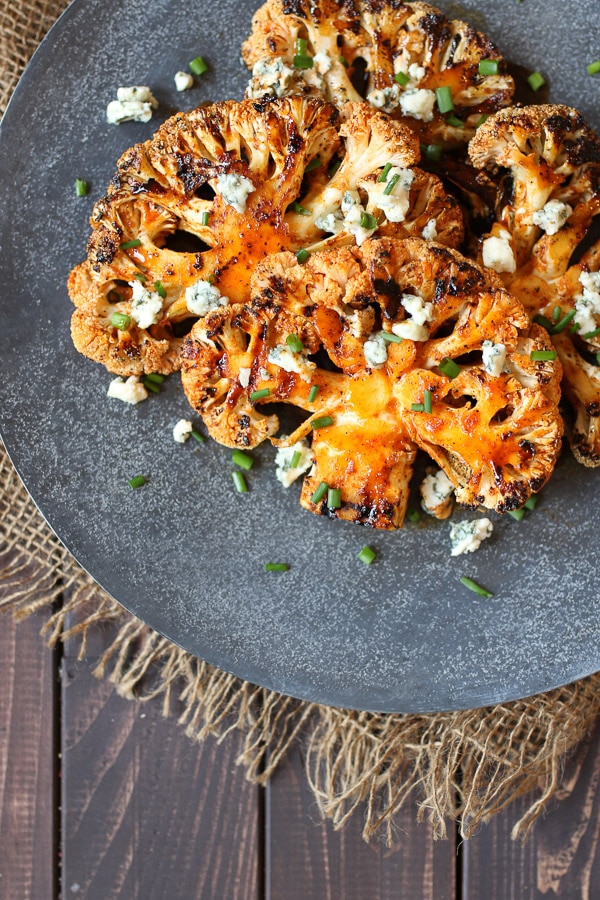
Vegetarian Gluten Free Buffalo Cauliflower Steaks

These easy vegetarian gluten free buffalo cauliflower steaks are the perfect dish for a healthy meatless dinner option. 

These easy vegetarian gluten free buffalo cauliflower steaks are the perfect dish for a healthy meatless dinner option. 

I’m not the type of gal to pass up a nice steak dinner, but with the weather finally getting warmer, I’ve been craving lighter options for dinner without compromising flavour. Well ever since I discovered cauliflower steaks, my calls have been answered. Not only does a recipe like my vegetarian gluten free buffalo cauliflower steaks perfectly imitate the meatiness of a steak, but it’s so simple to slather on your fav sauces to easily switch up whatever you’re into any night of the week.

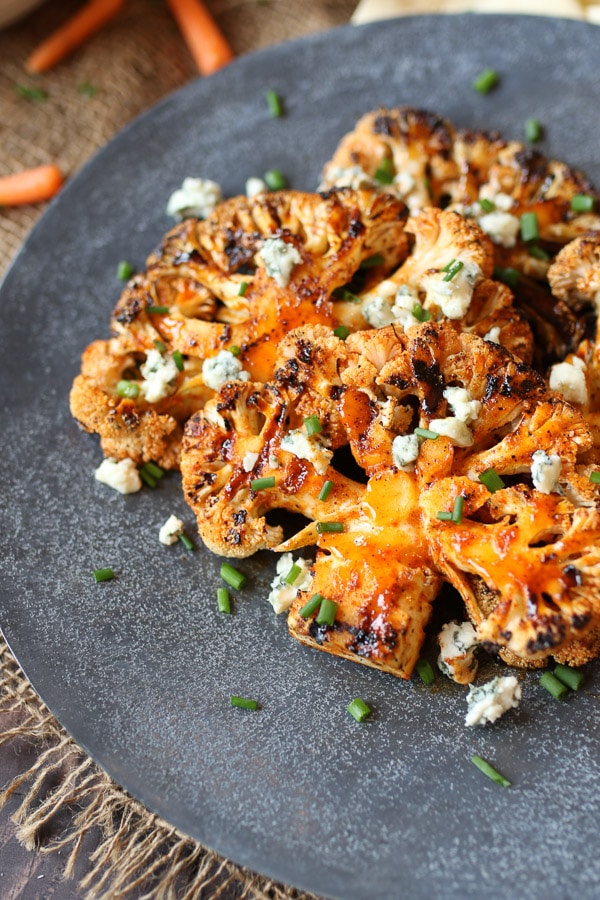
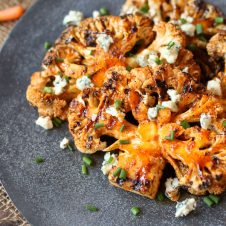
Buffalo cauliflower steak on a grey serving plate topped with blue cheese and chives.

But let’s talk about sauces for sec. Specifically buffalo sauce.

I mean, I’d put this stuff sauce on everything if it was socially acceptable and I’m pretty sure my babe is going to love it too because it’s basically a staple in my diet. If you’re also a fan of buffalo sauce, you NEED to check out my Vegan Buffalo Cauliflower and Chickpea Hard Tacos. They’re amazingly tasty and also vegan for all my lovely plant-based friends.

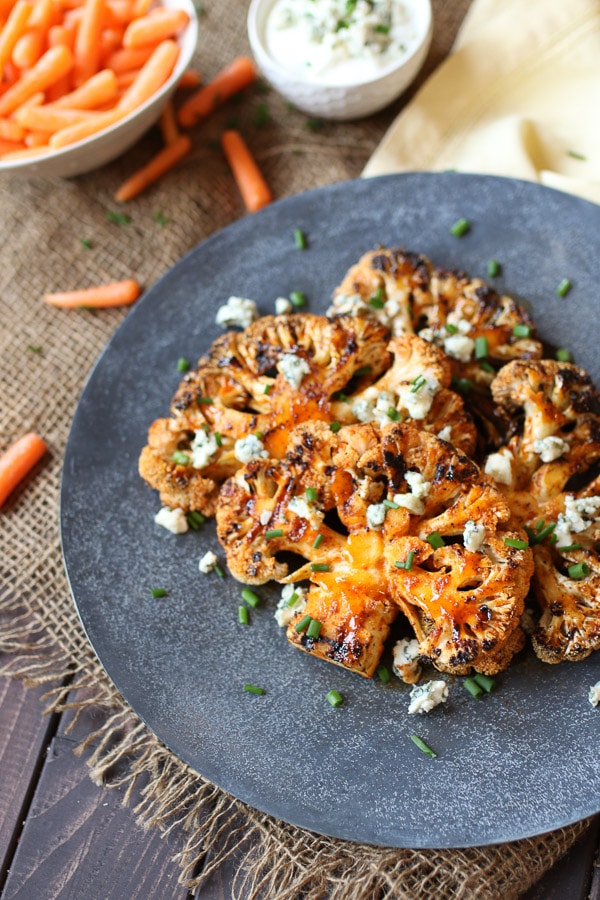
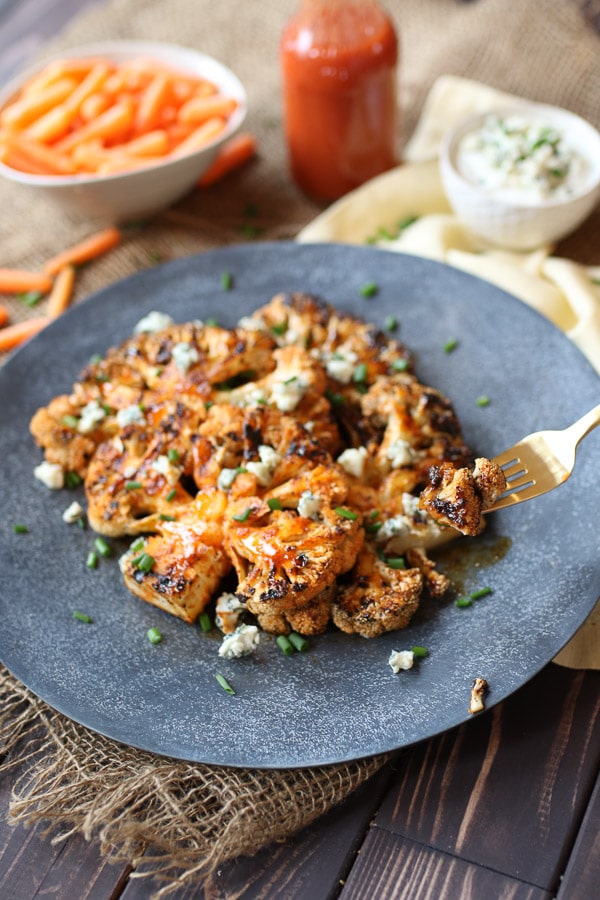
Buffalo cauliflower steaks on a grey serving plate topped with blue cheese and chives next to a bowl of carrots.

Let’s get cooking.

How to Make Gluten Free Buffalo Cauliflower Steaks

Buffalo cauliflower steaks topped with blue cheese and chives on a grey serving platter.

Now the best way to showcase these cauliflower steaks is to cook them on a grill. That way you get the perfect grill marks and really the best flavour. So be sure to get that preheated, while you make the buffalo seasoning. The goal with cauliflower steaks is to keep the cauliflower stem intact, so you can cut thick “steak” pieces instead of a bunch of florets. Next I sprinkle the buffalo seasoning on the gluten free buffalo cauliflower “steaks” and then cook them on a grill until cooked. I transfer the steaks to a baking sheet and slather on the hot sauce glaze and return to the grill for a few minutes. Then I garnish the steaks with blue cheese, ranch and chives.

You can totally make these vegetarian gluten free buffalo cauliflower steaks completely vegan simply by swapping out the honey for maple or agave, omitting the blue cheese and drizzling it all in a vegan ranch dressing, instead. You do you, either way, it will be tasty AF.

Gold fork digging into buffalo cauliflower steaks.

How easy was that, lovelies? And it’s surprisingly low in calories, gluten free and a super healthy way to get in your veggies!

Now I want to hear from you.

Have you tried these gluten free buffalo cauliflower steaks?

Are you a buffalo sauce fan?

What’s the weirdest thing you’ve put buffalo sauce on?

Let me know by commenting below! 

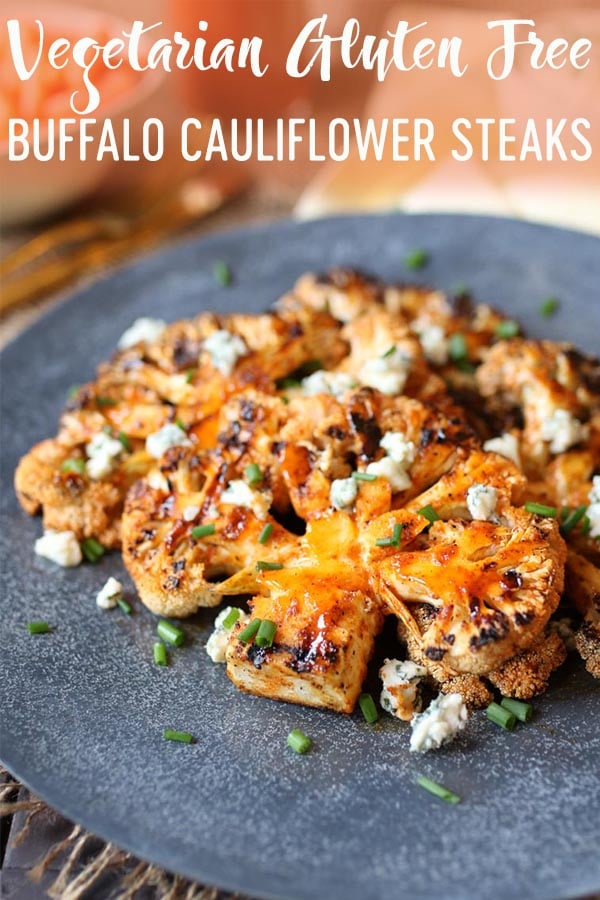
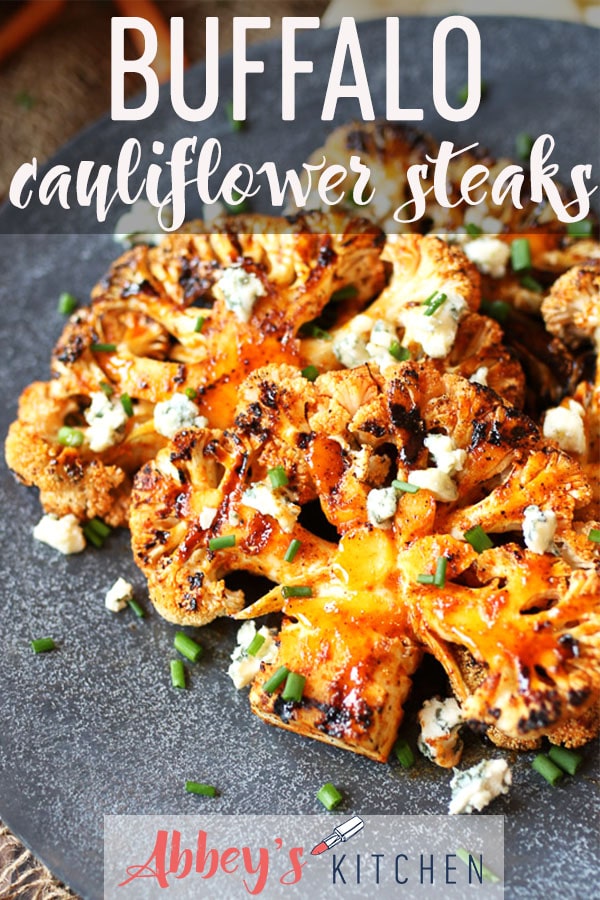
Buffalo cauliflower steaks on a grey plate topped with blue cheese and chives.pinterest image of Buffalo cauliflower steaks topped with chives and blue cheese with text overlay

These easy vegetarian gluten free buffalo cauliflower steaks are the perfect dish for a healthy meatless dinner option. 
Print Recipe
5 from 4 votes

Vegetarian Gluten Free Buffalo Cauliflower Steaks

These easy vegetarian gluten free buffalo cauliflower steaks are the perfect dish for a healthy meatless dinner option.
Prep Time10 minutes mins
Cook Time10 minutes mins
Total Time20 minutes mins
Course: Dinner
Cuisine: American
Servings: 4 people
Calories: 320kcal
Author: Abbey Sharp

Ingredients

Buffalo seasoning:

  • 1 tsp chili powder
  • 2 tsp smoked sweet paprika
  • 1/2 tsp cayenne pepper omit if you don’t want it too spicy
  • 1 tbsp garlic powder
  • 1 ½ tsp mustard powder
  • 1/8 tsp salt
  • ½ tsp black pepper
  • ¼ tsp onion salt

Cauliflower:

  • 2 heads cauliflower
  • 2 tbsp extra virgin olive oil
  • 3 tbsp hot sauce like Frank’s Red Hot Sauce
  • 3 tbsp honey

Garnish:

  • ¼ cup crumbled blue cheese
  • Ranch dressing optional
  • 2 tbsp chives minced

Instructions

  • In a small bowl, mix together the chili, paprika, cayenne, garlic, mustard, salt, pepper, and onion salt. Set aside.
  • Remove the leaves from the bottom of the cauliflower. Cut each head in half right down the middle, then cut a thick 1 ¼” slice on one side of the cauliflower half, and then another thick 1 ¼” slice on the other side of the cauliflower half. Be careful to keep the stem intact so that you can get a thick “steak” rather than a bunch of florets.
  • Preheat a grill to medium high on one side, and brush the cauliflower steaks with olive oil. Sprinkle with the buffalo seasoning on all sides. Grill on direct heat (over the flames), lid closed, on each side for about 6 to 9 minutes, or until tender-crisp when poked with a fork and lightly charred. If you find your cauliflower is charring faster than it is cooking through, transfer to the indirect heat, and cover with the lid to finish cooking through. Once tender-crisp, transfer to a baking sheet and glaze generously on both sides with the glaze.
  • Return to the grill over direct heat for one minute per side, or until the glaze just
  • To serve, top with cauliflower with the crumbled blue cheese, ranch (if using) and chives.

Nutrition

Calories: 320kcal

Abbey Sharp

Abbey Sharp is a Registered Dietitian (RD), regulated by the Ontario College of Dietitians. She is a mom, YouTuber, Blogger, award winning cookbook author, media coach specializing in food and nutrition influencers, and a frequent contributor to national publications like Healthline and on national broadcast TV shows.

www.abbeyskitchen.com/about-abbey/

Last Updated July 21, 2020. Published March 11, 2019 By Abbey Sharp 9 Comments

Vegan Carrot Cake Lactation Cookies | Gluten Free Recipe to Increase Breast Milk Supply

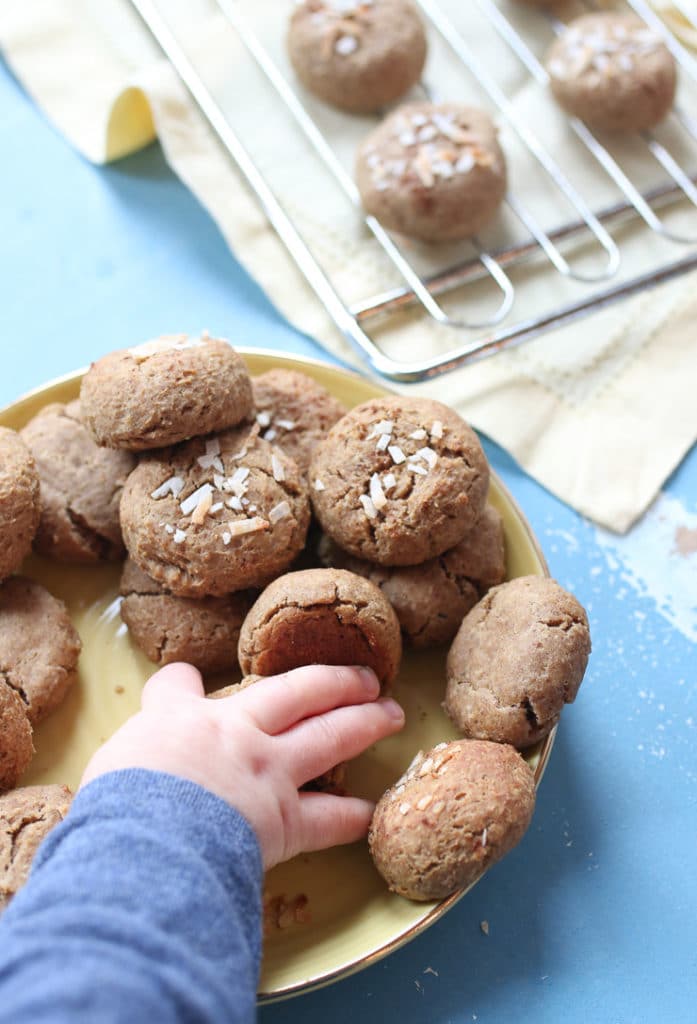
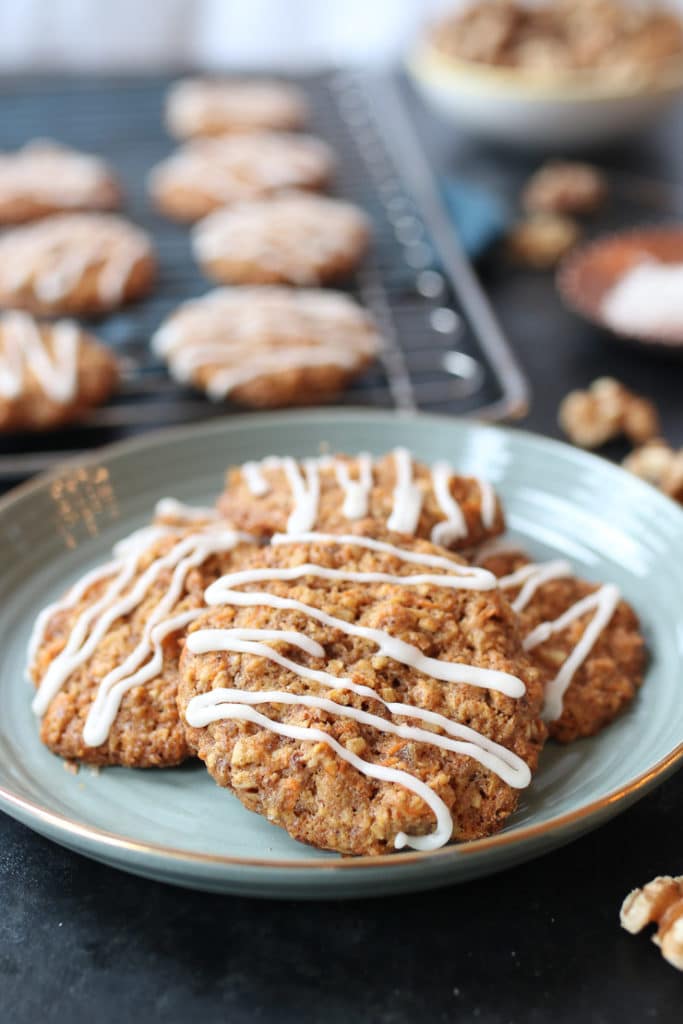
Pile of vegan carrot cake lactation cookies on a teal plate with cookies on a rack in the background.

These Vegan Carrot Cake Lactation Cookies are a perfect gluten free recipe to satisfy your momma sweet tooth and increase breast milk supply!

Breastfeeding is hard. I know, I struggled with both supply issues, and latching issues, and ended up exclusively pumping to feed my son breastmilk within the first year. As I near the one-year mark and the end of my pumping and breast milk journey, I’m so proud to announce that I have a whopping 75 L of breast milk in the freezer ready to go. It wasn’t easy to get here. I worked DAMN hard with pumping around the clock, took a ton of supplements, and ate right. I know how many of you have been asking me for more great lactation cookies after my salted chocolate chip almond cookies were such a hit (as was the carrot smoothie!), so I went back to the drawing board with these bad boys. Introducing my gluten free vegan carrot cake lactation cookies with a cream cheese drizzle. Honestly, I don’t care if you’re not breastfeeding – I don’t even care if you’re a man and DEFINITELY not breastfeeding, these carrot cake lactation cookies will quickly become a family favourite.

Why will these Vegan Carrot Cake Lactation Cookies potentially increase my breast milk supply?

Pile of vegan carrot cake lactation cookies on a teal plate with cookies on a rack in the background.

There’s a lot of talk in mom groups about what foods increase breast milk supply, so we dove deep into the research on it here. While a lot of these so-called galactagogues don’t have a whole lot of research to support their benefits, they’re also pretty much all really healthy ingredients and that in itself is really important when you’re breastfeeding or pumping.

These vegan carrot cake lactation cookies contain a number of helpful ingredients for increasing breast milk supply. These include:

  • Flax
  • Ginger
  • Brewers Yeast
  • Oats
  • Carrots
  • Nuts
  • Apricots

Most importantly though, they’re a REALLY tasty treat and did you know that breastfeeding and pumping burns some serious calories?! You totally need to fuel up!

How to Make these Vegan Carrot Cake Lactation Cookies

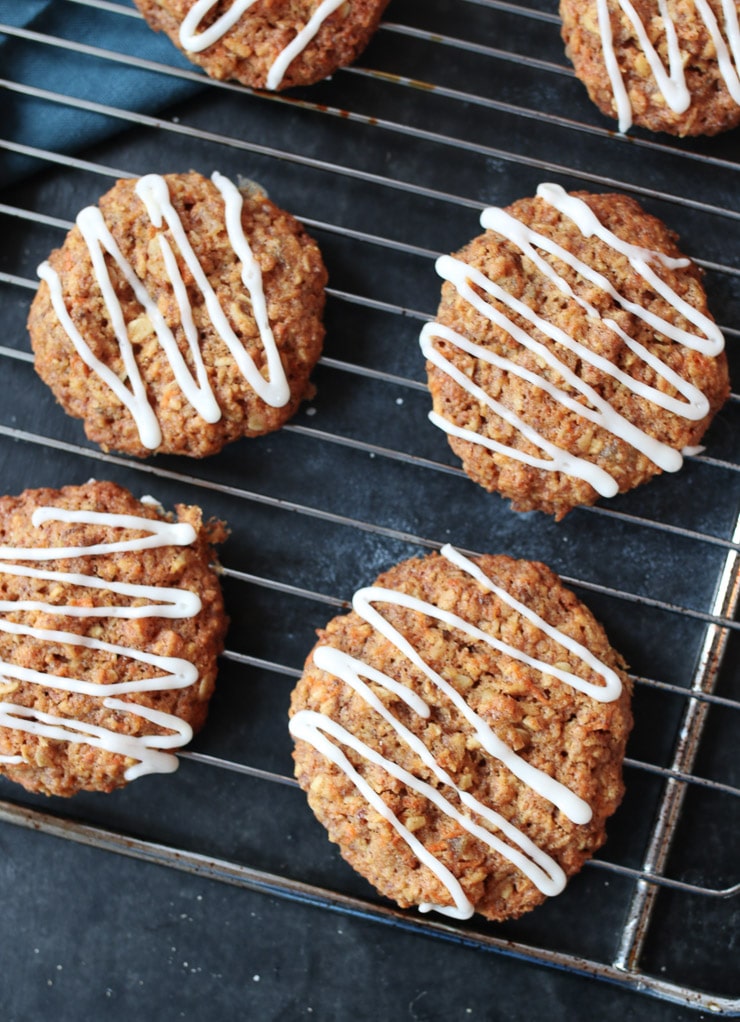
Vegan carrot cake lactation cookies on a rack.

These carrot cake flavoured lactation cookies are so easy and also just happen to be vegan and gluten free, but I can ASSURE YOU, you would never know. You basically just cream together some vegan butter and sugar, add in some flour, spices, and your flax egg, then fold in all the good stuff – carrots, oats, coconut, walnuts, apricots and ginger.

You can totally stop there and have an irresistible cookie, but if you want the full out carrot cake experience you need some cream cheese frosting.

Do I have to make these Carrot Cake Lactation Cookies vegan or gluten free?

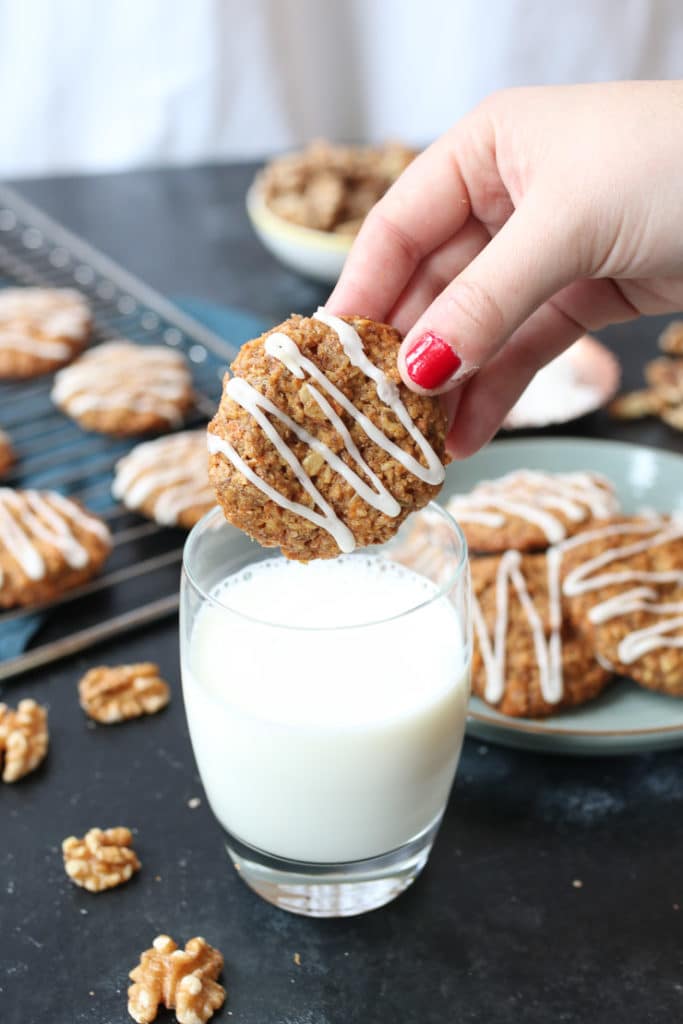
Hands dipping vegan carrot cake lactation cookies in a glass of milk.

Nope. Just trying to be inclusive to a wide range of pumping and breastfeeding mamas. You can totally make the drizzle non-vegan by using regular cream cheese, but I actually find a lot of vegan cream cheeses pretty good these days too. You can also use a real egg instead of the flax egg, but since flax is so healthy for breastfeeding mamas, I prefer it for its nutritional benefits.

As for the gluten, totally go ahead and use regular all purpose flour and oats! It will absolutely work out fine!

will eating BREAST MILK COOKIES SAFE FOR NON BREASTFEEDING PEOPLE

ABSOLUTELY. These are healthy vegan cookies packed with nutrition that are great for the whole family, breastfeeding moms and non breastfeeding dads. You will not produce breast milk if you’re not lactating. 

So loves, I promise you I’ll have even more yummy lactation cookies on the way to help fuel you through your breastfeeding or pumping journey and make it as delicious (and pleasurable) as it possibly can be.

Have you tried lactation cookies to increase your breast milk supply?
What flavour lactation cookies would you like me to come up with!
Have you tried these gluten free vegan carrot cake lactation cookies?
Leave me a comment below with your thoughts!
pinterest image of Vegan carrot cake cookies on a plate with text overlay.
pinterest image of Vegan carrot cake cookies on a cooling rack with text overlay
Pile of vegan carrot cake lactation cookies on a teal plate with cookies on a rack in the background.
Print Recipe
5 from 2 votes

Vegan Carrot Cake Lactation Cookies

These Vegan Carrot Cake Lactation Cookies are a perfect gluten free recipe to satisfy your momma sweet tooth and increase breast milk supply!
Prep Time20 minutes mins
Cook Time20 minutes mins
Total Time40 minutes mins
Course: Snack
Cuisine: American
Servings: 30 cookies
Calories: 129kcal
Author: Abbey Sharp

Ingredients

Cookies:

  • ½ cup plus 2 tbsp unsalted vegan butter at room temperature
  • ½ cup brown sugar
  • ½ cup white sugar
  • 1 flax egg 1 tbsp ground flax with 2 tbsp unsweetened almond milk
  • 2 tsp vanilla extract
  • 1 cup gluten free flour
  • ½ tsp baking soda
  • ½ tsp baking powder
  • 1 tsp cinnamon
  • ¼ tsp ginger
  • ¼ tsp salt
  • 3 tbsp brewers yeast
  • 1 1/2 tbsp ground flax
  • 1 cup rolled oats gluten free if needed
  • 1/2 cup unsweetened coconut
  • 2/3 cup grated carrots
  • ½ cup chopped walnuts
  • ¼ minced apricots
  • ¼ cup minced candied ginger

Drizzle:

  • 1 oz vegan cream cheese
  • 1 cup powdered sugar
  • 1 tbsp unsweetened almond milk
  • ¼ tsp vanilla extract

Instructions

  • Preheat oven to 350 F and line two baking sheets with parchment paper or a silpat.
  • To a stand mixer fitted with the paddle attachment (or a bowl with electric beaters), beat the vegan butter until softened. Add the brown and white sugar and beat until creamed.
  • Add in the flax egg and vanilla and beat until combined.
  • In another bowl, mix the flour, baking soda, powder, cinnamon, ginger, salt, brewers yeast, and ground flax. Add the dry ingredients to the stand mixer and beat on low until just combined.
  • Using a spatula, fold in the rolled oats, coconut, carrots, walnuts, apricots and ginger.
  • Roll one heaping tablespoon into a ball and place on the baking sheet. Gentle press down just a bit (they will flatten out in the oven). Repeat with the remaining cookies, spacing them an inch apart.
  • Bake for 20 minutes or until golden brown, rotating the baking sheet once half way through. Cool on a cooling rack.
  • Meanwhile, in the standmixer, beat the vegan cream cheese until soft, then add in the powdered sugar, almond milk and vanilla. Transfer to a piping bag.
  • Once the cookies have cooled to room temperature, drizzle with the cream cheese. Enjoy!

Nutrition

Calories: 129kcal | Carbohydrates: 18g | Protein: 2g | Fat: 5g | Saturated Fat: 1g | Sodium: 76mg | Potassium: 95mg | Fiber: 1g | Sugar: 12g | Vitamin A: 620IU | Vitamin C: 0.2mg | Calcium: 19mg | Iron: 0.7mg
Abbey Sharp

Abbey Sharp is a Registered Dietitian (RD), regulated by the Ontario College of Dietitians. She is a mom, YouTuber, Blogger, award winning cookbook author, media coach specializing in food and nutrition influencers, and a frequent contributor to national publications like Healthline and on national broadcast TV shows.
www.abbeyskitchen.com/about-abbey/

Last Updated August 13, 2020. Published March 8, 2019 By Abbey Sharp 1 Comment

Why Weight Loss Diets that Work are a Diet Industry Lie & Losing Weight doesn’t Mean Gaining Health

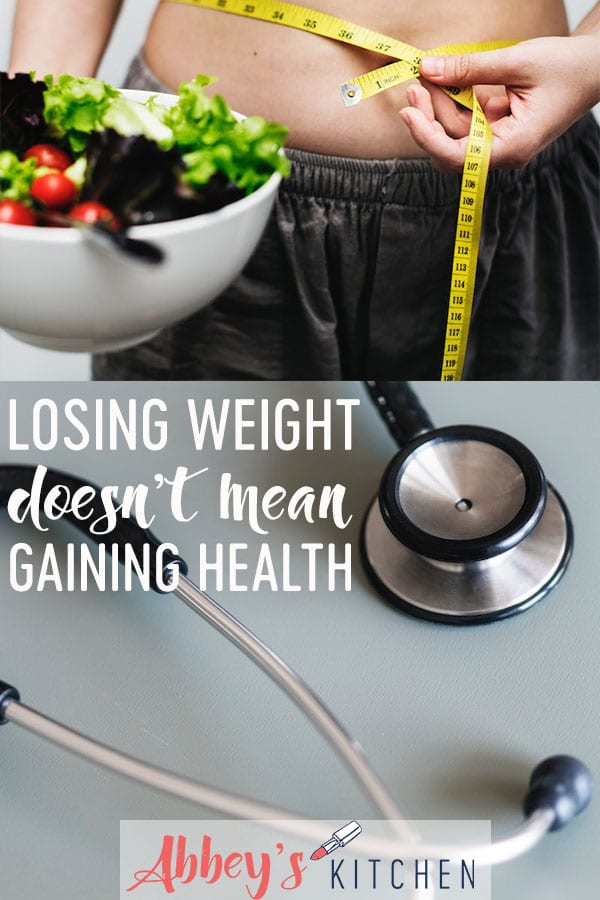
Person measuring their weight circumferance with measuring tape holding a bowl of salad.

We talk about why weight loss diets that work are a mystical diet industry lie and dive into the idea that losing weight isn’t the key to improving your health.

Do a quick Google search for “Top 10 New Year’s Resolutions” and you’ll find that three resolutions top the charts on almost every survey: eating better, exercising more, and – drumroll – weight loss. It goes without saying that as a society, we’re all about appearances, and we have a special fascination with body weight. The great weight loss diet has become a spectator sport, with shows like The Biggest Loser and Extreme Weight Loss capturing our attention on major television networks; the personal transformation story is always a sure-fire hit. And while everyone loves a success story, many of us might secretly admit to a little morbid curiosity when it comes to shows like My 600-lb Life. As of 2013, Wikipedia had 22 entries under the category “Fitness Reality Television Series” but it’s safe to assume that number has likely doubled in the last few years.

logo for weight loss TV show

It can be easy to assume that thinner people are simply healthier than those who are “overweight” or “obese”: this message is everywhere in our society. After all, “obesity” is considered risk factors for virtually every chronic disease, from osteoarthritis and sleep apnea to Type 2 Diabetes, heart disease, stroke, and even some types of cancer. So it’s a logical assumption that losing weight will result in better health outcomes. But the truth, it turns out, is much less cut-and-dry, and the assumption that weight loss is a straight path to better health could actually be a dangerous one. We’re at that time of the year when New Year’s resolutions start to go south, so let’s examine the science behind weight loss and see whether it’s a good resolution in the first place!

Does Losing Weight Make You Healthy?

Person measuring their weight circumferance with measuring tape holding a bowl of salad.

First off, let’s talk about how scientists measure “healthy” In health sciences, it’s all about risk – it’s understood that “healthy” behaviours decrease the risk of certain diseases. And researchers love to compare groups! For example, they might choose to look at the risk of heart disease in “overweight” people. To do that, we first need to create a reference group. For our example, let’s use people who fall into the “normal” category of body mass index (BMI). We start by looking at the incidence of heart disease in this group, and then compare it to the incidence of heart disease in a group of “overweight” people to come up with a measure of relative risk. Researchers can make these comparisons will all of kinds diseases and between all kinds of groups (vegetarians vs. meat-eaters, smokers v.s non-smokers, (you get the idea), and they can go further by examining morbidity and mortality rates. Morbidity simply means your risk of getting a condition, while mortality is your risk of dying from it. “All-cause mortality” refers to the risk of dying from any chronic health condition.

What The Research Says on Weight Loss, Health and alleged diets that work

A series of microscopes on a counter in a laboratory.

So, surely, being “overweight” must increase your risk of all-cause mortality? It’s actually not so simple. Let’s first take a look at a study from 1999, which compared cardio fitness and mortality in men of either “normal” BMIs, “overweight” BMIs or “obese” BMIs. The study examined a number of risk factors for disease, such as high blood pressure, smoking, and high cholesterol, but the most interesting risk factor they looked at was a lack of fitness. In fact, the study found that “normal-weight” men who weren’t physically fit had a higher risk of all-cause mortality than “overweight” and even “obese” men who were physically fit! In fact, “normal-weight”, unfit men had twice the risk of all-cause mortality than fit, obese men! So what this study seems to suggest is that being physically active and fit, at any weight, is a far greater contributor to overall health than just being thin. It’s also important to note that the study also found “overweight” and “obese” men were more likely to engage in poor health behaviours, such as smoking and staying sedentary, when compared to “normal-weight” men. Unfortunately, this study, like so many others in nutrition research, was carried out in mostly Caucasian men, so we can’t be 100% sure these results apply to women, or those from different ethnic backgrounds.

Taking a blood sample from a person's arm.

Not convinced? Let’s look at another study, the Look AHEAD Trial. This tracked “overweight” and “obese” individuals with Type 2 Diabetes, over 9 years, to determine their risk for heart disease. The participants were put into one of two groups. The first group received an intensive intervention focusing on weight loss, through calorie restriction and exercise. They met regularly with dietitians, psychologists and specialized physical trainers, to help keep them on track. The second group received the usual, standard support provided to diabetic patients, and continued on as usual. At the end of the 9 years, the study found no significant difference in the prevalence of heart disease between the weight-loss group and the group that kept on going with their regular lifestyle! In fact, the study was supposed to run for 10 years, but stopped a few months early, since the intervention was deemed futile.

Is a Weight Neutral Approach to Wellness a Healthier Approach?

Beyond the risk of getting a specific disease, health can be assessed according to certain lab measures. Often, researchers look at high LDL cholesterol (the “bad” cholesterol), low HDL cholesterol (the “good” cholesterol), high fasting blood sugar or high blood pressure as indicators of less-than-optimal health, and consider improvements in these measures a sign of improving health. So, consider this study, which examined the possible benefits of a “weight-neutral” approach to health. The study divided 80 adult women into two groups. One group got weekly support in a weight-loss-centered approach to improving their health, while the other was given a weight-neutral approach. At the end, the researchers found the women given a weight-neutral program had lower LDL cholesterol, and better intuitive eating habits than those in the weight-loss program! In other words, adopting a healthier lifestyle without worrying about weight loss leads to better improvements in certain aspects of overall health. But, we never want to look at just one study, and that’s where systematic reviews of a whole bunch of studies come in. In a review of 21 studies looking at weight loss and health outcomes, researchers found no correlation between weight loss and improvements to cholesterol, blood pressure or fasting blood sugar!

Why Weight Loss Diets that Work are a Big Fat Diet Industry Lie

Alright, so perhaps losing weight isn’t the golden ticket to better health, but surely, there’s nothing wrong with shedding those “extra” pounds, right? Turns out there may be a danger in weight loss, particularly if it leads to weight cycling (which it typically does). A large Finnish survey of 6,860 people found that 29% of women and 18% of men could be classified as “weight cyclers”, meaning they had lost weight and regained it all at least twice in their lives. In addition to the psychological toll of weight cycling, there could potentially be some related health problems to boot. Consider this study, which followed 1,160 men over a total of 30 years, to see what impact weight loss had on mortality. Researchers found that those men whose weight fluctuated intensely had a significantly higher risk of all-cause mortality, while those who remained obese, or kept the weight off, did not. Another study took “normal-weight” women and put them through a 74 day program of weight loss, followed by weight gain, and finally more weight loss, mimicking the effects of weight cycling. At the end of this study, the woman had significantly higher triglycerides (bad!) and blood pressure (also bad!), along with decreased lean body mass (yah, probably not what they were going for!). It’s worth noting that this was a very small study, but points to some possible health issues associated with losing weight only to gain it back. A systemic review of publications on weight loss and weight cycling found that around half the studies the researchers examined showed a correlation between weight cycling and an increased likelihood of future weight gain; in other words, weight cycling may lead to: more weight cycling. This review also found that 58% of the 19 studies examined reported links between weight cycling and increased body fat. And the stats on actually achieving weight loss are dismal: a recent study looking at thousands of medical records in the UK found that obese men had a 1 in 210 chance annually of attaining a “normal” weight. Women in this study didn’t do a whole lot better, with an annual probability of 1 in 124. So even if losing weight did improve health, do weight loss diets that work even exist? Probably not if they just lead to weight regain and weight cycling.

Weight cycling might also have an effect on the chemistry that keeps us full or makes us hungry. There are a number of hormones that influence our appetite, but the two biggies are leptin and ghrelin. Leptin is released by our fat cells, and it tells our brain that we’ve got plenty of fuel and don’t need to eat. Ghrelin is produced in the stomach, whenever it’s empty, and its job is prepare our digestive system for food, by triggering the production of stomach acid and movement of the muscles in our gut. Once we eat and our stomachs stretch out, ghrelin production stops. (Incidentally, I have a little trick to help tell leptin and ghrelin apart: ghrelin is what gets released when your stomach is growlin’!) It turns out that frequent weight loss or weight cycling might actually increase your production of ghrelin, and may decrease your production of leptin, increasing your appetite, possibly forever!

It’s Not ACTUALLY the Weight Loss that Improves Health

So here’s the skinny: it looks like staying physically fit is key, even if that doesn’t involve any weight loss. And, weight loss, if it leads to weight cycling, could be changing your biochemistry, and not for the better. But although we are increasingly aware of the negative effects of idealizing thin bodies in the media, the weight loss market in 2016 brought in $168 billion worldwide, and is expected to increase to $279 billion in the next 4 years.

Why Health At Every Size Makes Sense

logo for health at every size

So people are still frantically fighting the battle of the bulge, but given that this may well be a losing battle, who’s out there telling us to step off the scales and stop wasting our hard-earned dollars? Enter the Association for Size Diversity and Health (or ASDAH), who have developed a Health At Every Size (HAES) approach! The HAES approach includes principles such as weight inclusivity, support for physical activities that can be enjoyed by people of all sizes, and the idea of “eating for well-being”. This means eating to satisfy your nutritional needs, but also to satisfy your hunger, and – gasp! – eating for pleasure! Time for a shameless plug of my book The Mindful Glow Cookbook because eating for pleasure is the crux of my book and you can learn more about it here. And, most importantly, the ASDAH recognizes that people’s weight can be impacted by so many factors outside of an individual’s control: socio-economic status, race, gender, age or life stage. Taking that all into consideration, it should be possible to see that being “overweight” or “obese” isn’t a sign of laziness, lack of self-control, or failure to stick to a diet. In fact, it’s these assumptions that form the basis of weight bias and weight stigma, both so prevalent in our society.

Weight Bias in Healthcare

Healthy practitioner folding white sheets.

Last year, a Canadian woman named Elizabeth Maud Bennett made headlines, with her obituary that exposed the fat shaming she had endured at the hands of medical professionals. Before her death from cancer, she had complained to a number of doctors that she was feeling ill, but was continually dismissed and just told to lose weight. When it was finally determined she had cancer, it was too late, and she died soon after. This just one heartbreaking example of the bias against “overweight” people who seek healthcare, and highlights the need for education and compassion within all aspects of our society.

Bottom Line on Weight Loss, Health and alleged diets that work

Health encompasses many things, and includes our mental, emotional and even spiritual well-being. Looking at health through that lens, maybe the best thing we can do for ourselves is to love our bodies, whatever their shape or size. As anyone who has taken a biochemistry or physiology class can tell you (and I’ve taken a bunch!), our bodies are absolutely miraculous and worthy of our highest praise and love! The best thing we can do may well be to replace restrictive diets and target weights with small changes to improve our overall health: a few more greens here, a quick jog around the block or morning walk there.

To me, the problem with weight loss is that it’s a temporary thing, focusing on a specific, “acceptable” number, rather than on a life, a set of experiences, or a person. So, what if we turn “healthy living” from an act of self-denial to an act of self-love? What if we exercise more and eat better food to nourish and care for our bodies, rather than forcing them down to a specific weight? And what if, next New Years, we resolve not to lose weight, but to love and accept our bodies as they are? I suspect this might be the key to becoming truly healthy.

I would love to hear your thoughts on this.
Do you think weight loss diets that work actually exist for long term weight loss?
Have you embraced the concept of health at every size?
I would love to hear your thoughts!
pinterest image of Person measuring their waist circumference with measuring tape and a stethescope with text overlay

Contribution By:

RD2B Adam Weinmann


Abbey Sharp

Abbey Sharp is a Registered Dietitian (RD), regulated by the Ontario College of Dietitians. She is a mom, YouTuber, Blogger, award winning cookbook author, media coach specializing in food and nutrition influencers, and a frequent contributor to national publications like Healthline and on national broadcast TV shows.
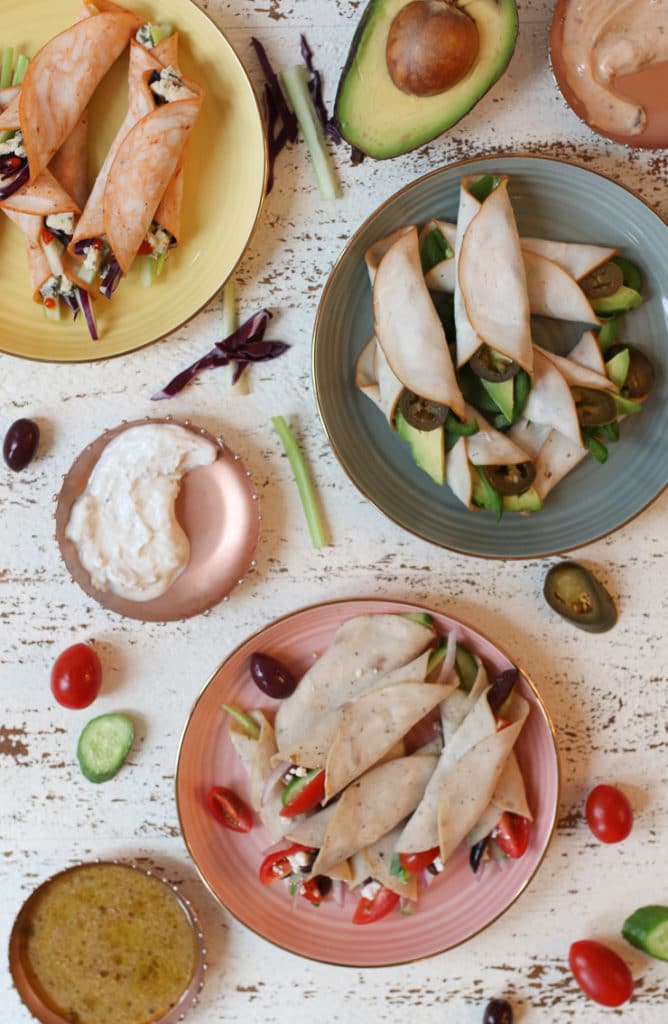
www.abbeyskitchen.com/about-abbey/
  • Previous Page
  • Go to page 1
  • Interim pages omitted …
  • Go to page 53
  • Go to page 54
  • Go to page 55
  • Go to page 56
  • Go to page 57
  • Interim pages omitted …
  • Go to page 89
  • Next Page

Get started with

Eight Free Recipe Books

From the co-founder of Neue Theory and creator of the Hunger Crushing Combo

Sign me up!
Abbey smiling at table
Abbey Sharp

“Foods may never be nutritionally equal. But we can make them morally equal by recognizing that our worth is never determined by what's on our plate.”

— Abbey Sharp, RD About Abbey ◥

Books

  • HCC™
  • Mindful Glow
  • Free E-Books

Blog

  • Nutrition
  • Recipes
  • Motherhood
  • Life

Explore

  • Neue Theory™
  • Bite Back
  • YouTube

Abbey

  • About
  • Coaching
YouTube TikTok Instagram Facebook X Pinterest
Abbey Sharp - The No BS Dietitian From Abbeys Kitchen

© Abbey's Kitchen 2026  All Rights Reserved •  ACCESSIBILITY STATEMENT •  Privacy Policy

This site uses cookies. By continuing to browse the site, you are agreeing to the use of cookies Accept Privacy Policy
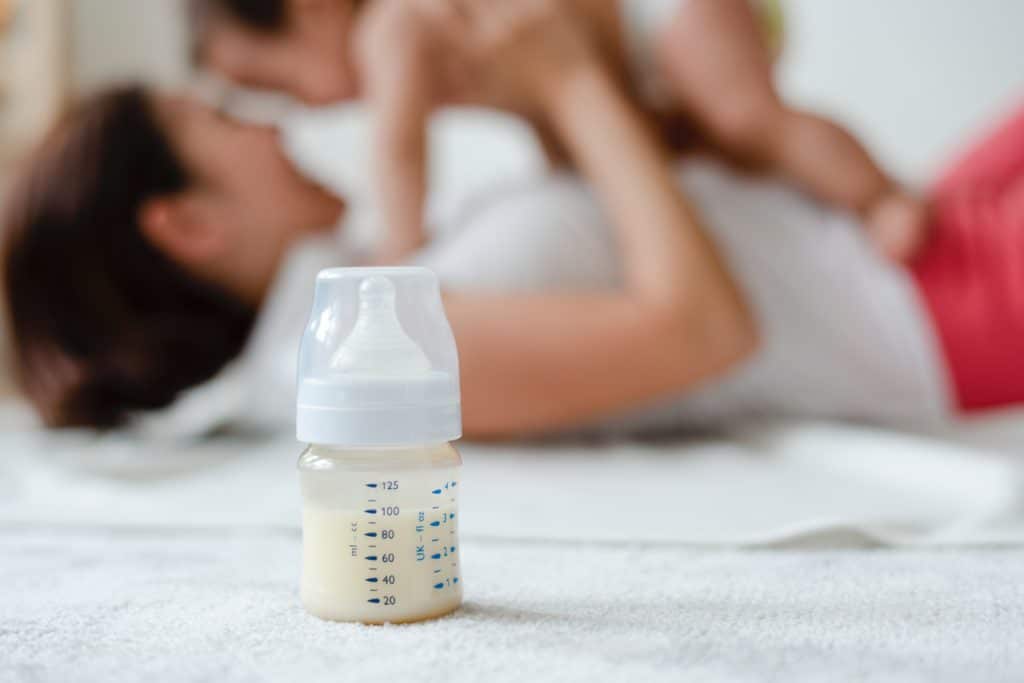
Privacy & Cookies Policy

Privacy Overview

This website uses cookies to improve your experience while you navigate through the website. Out of these, the cookies that are categorized as necessary are stored on your browser as they are essential for the working of basic functionalities of the website. We also use third-party cookies that help us analyze and understand how you use this website. These cookies will be stored in your browser only with your consent. You also have the option to opt-out of these cookies. But opting out of some of these cookies may affect your browsing experience.

Necessary
Always Enabled
Necessary cookies are absolutely essential for the website to function properly. This category only includes cookies that ensures basic functionalities and security features of the website. These cookies do not store any personal information.
Non-necessary
Any cookies that may not be particularly necessary for the website to function and is used specifically to collect user personal data via analytics, ads, other embedded contents are termed as non-necessary cookies. It is mandatory to procure user consent prior to running these cookies on your website.
SAVE & ACCEPT

Rate This Recipe

Your vote:


A rating is required
A name is required
An email is required