• Skip to main content

Abbey's Kitchen

Healthy Recipes, Nutrition Myth Busting, Healthy Eating Tips

  • Books
    • HCC™
    • The Mindful Glow Cookbook
    • Recipe eBooks
      • Family
      • Hypothyroidism
      • BLW
      • Vegan Week 1
      • Vegan Week 2
      • Vegan Week 3
      • Keto
      • Gluten Free Week 1
      • Gluten Free Week 2
      • Fitness
      • Paleo
  • Blog
    • Nutrition
    • Recipes
    • Motherhood
    • Life
  • Explore
    • Neue Theory™
    • Bite Back With Abbey Sharp
      • Apple Music
      • Spotify
      • Amazon Music
    • YouTube
  • Abbey
    • About
    • Coaching
    • Contact

Abbey Sharp

Last Updated January 23, 2018. Published January 23, 2018 By Abbey Sharp 37 Comments

Sausage Strata with Spinach and Swiss Cheese | Healthy Brunch Recipe with Eggs!

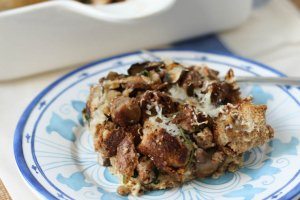
A plate of food on a table, with Sausage and Strata

This Sausage Strata with Spinach and Swiss Cheese has a perfect balance of protein from eggs and high fibre carbs to make brunch entertaining easy and healthy!
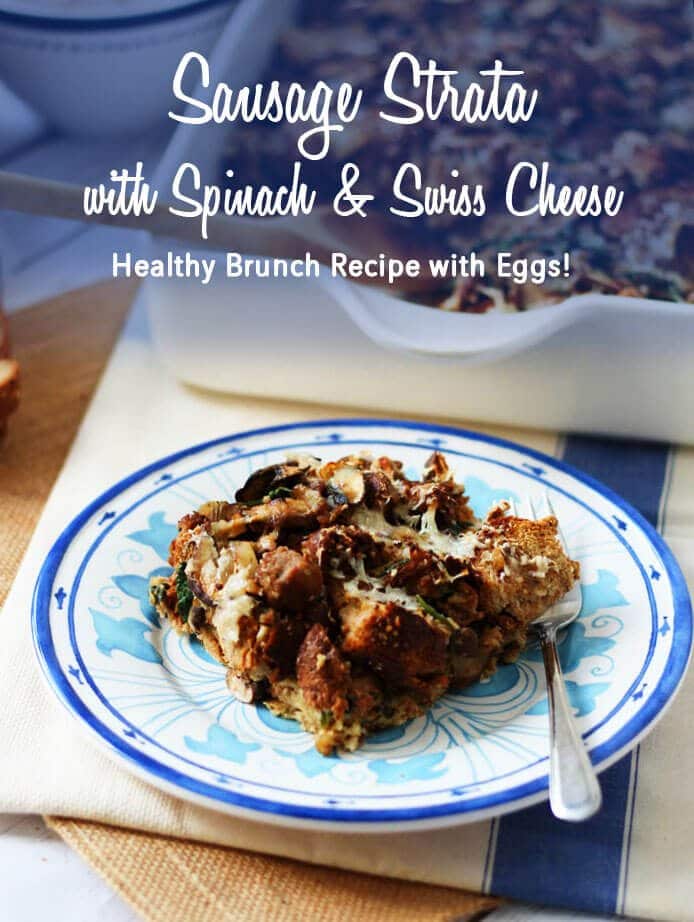
A pinterest image of a serving os sausage strata with the text overlay \"Sausage Strata with Spinach & Swiss Cheese Healthy Brunch Recipe with Eggs!\"

Baby it’s cold outside.

And yes, I’m human so that means I often don’t want to leave the house in the cold to get groceries (if it doesn’t fit in my arms on the way home from another errand, it’s probably not happening.) So that’s why I am kinda obsessed with these super easy whatever-you-have-in-the-fridge recipes for easy and fast meals. Strata is no exception.
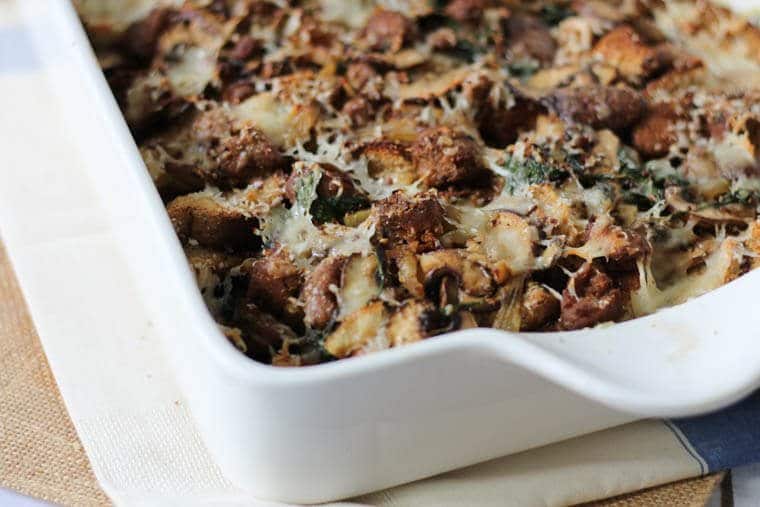
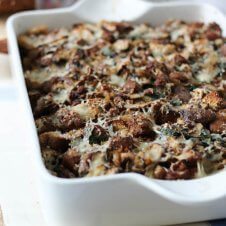
A close up of a corner of a white baking dish with sausage strata.

Sausage Strata FTW!

Strata is a traditional brunch dish made with a combination of baked eggs and day old bread. It’s always been something I make when I’m in a super pinch and need to get something on the table STAT and trust me, no body ever minds.
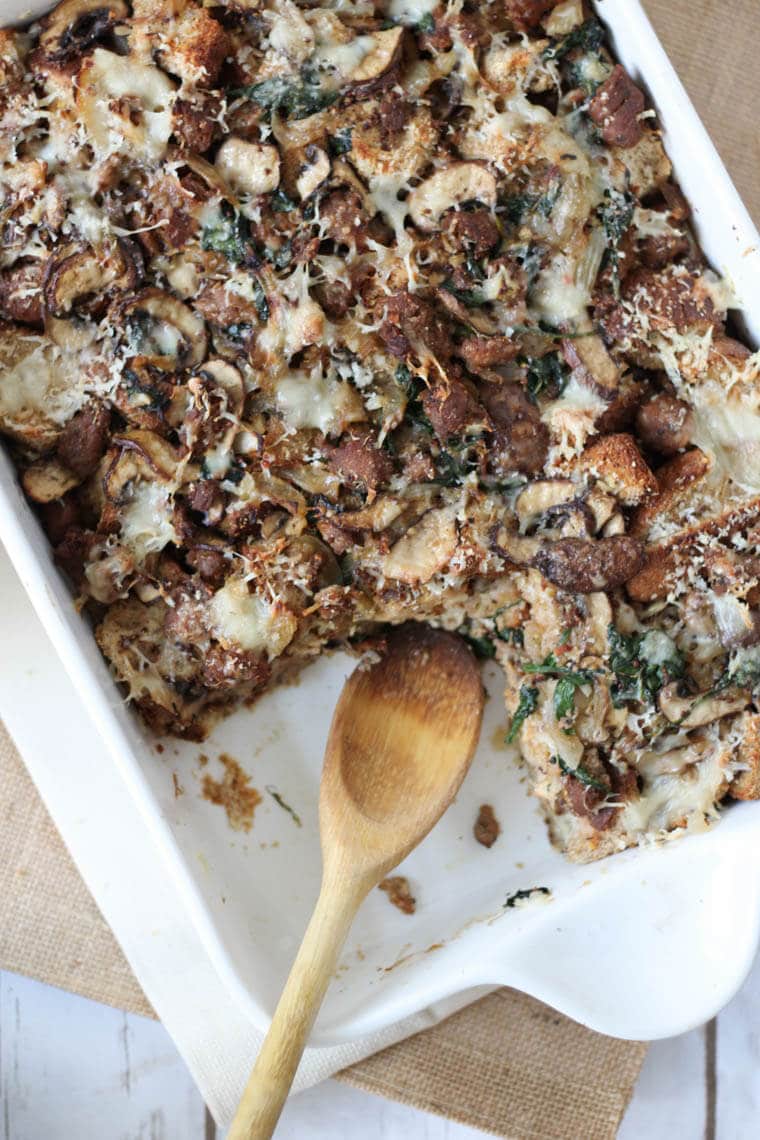
Overhead photo of a white baking dish containing sausage strata with a wooden spoon inside.

This Sausage Strata with Spinach and Swiss Cheese is made a bit more dinner friendly by throwing in some extra savoury vegetables and hearty turkey sausage.

Sausage strata is like if holiday stuffing and quiche had a love child and named it something sassy. Sta-ta. Cha, cha, cha. It sounds like a dance move so I just like saying it. (I know you’re saying it in your head a lot too).
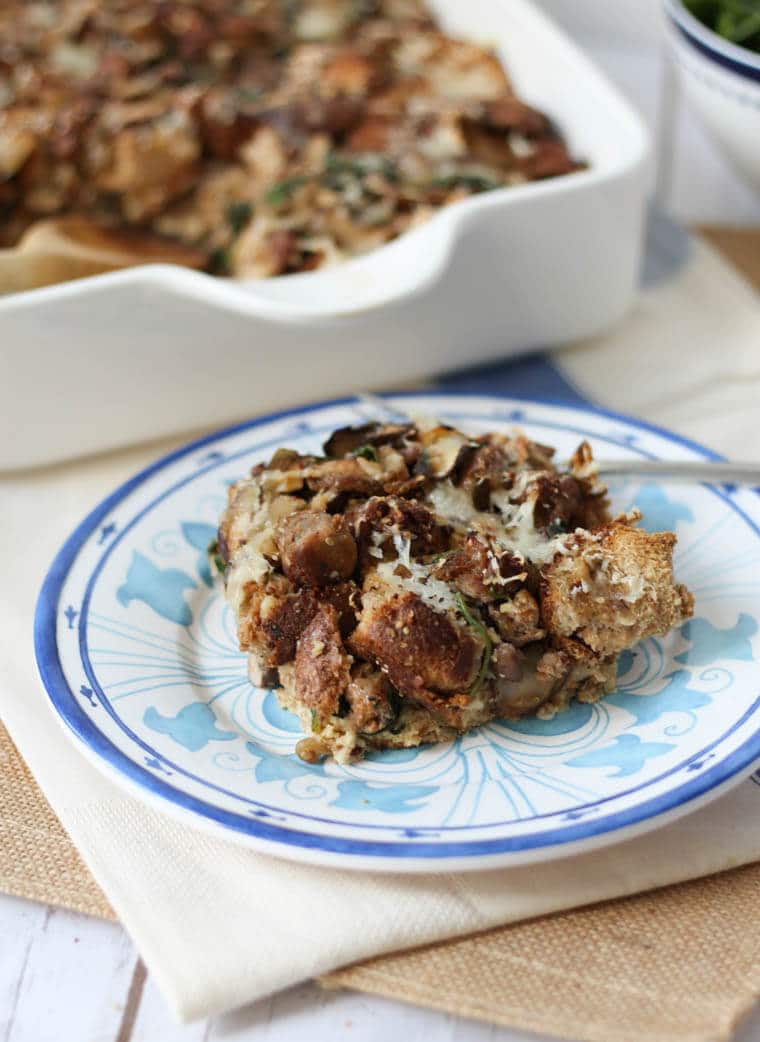
A plate of food on a table, with Sausage and Strata

So this sausage stata recipe can easily be mucked about with to add in whatever your favourite ingredients may be. If you’re having guests over, this dish can easily be made ahead and simply rewarmed covered in tin foil at 300 F for 15 minutes. It’s easy, light, and protein packed- perfect for keeping us warm during these blue winter times.

What are your favourite strata add ins?

Have you tried this sausage strata?

Leave me a comment below with your thoughts and suggestions!
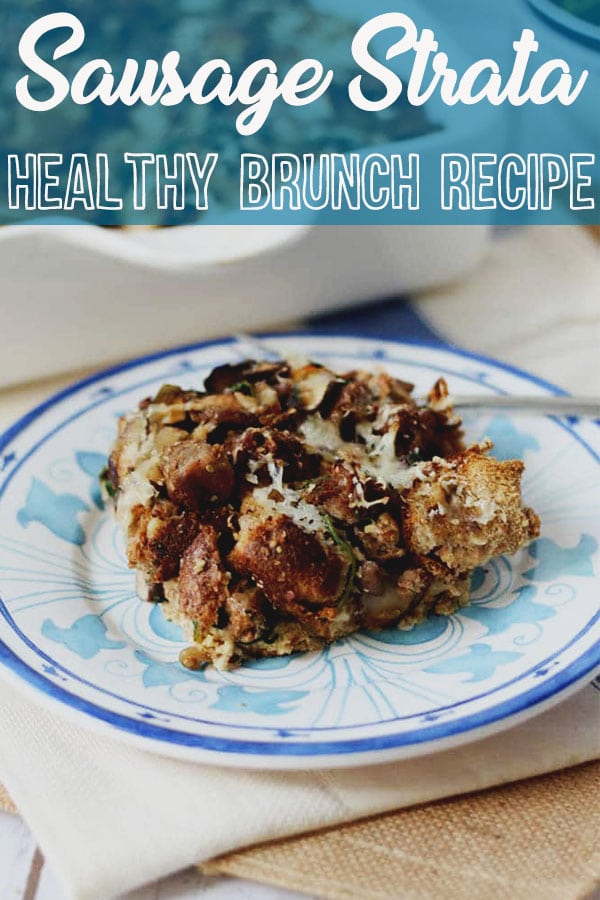
A pinterest image of a blue and white plate with a serving of sausage strata with the text \"Sausage Strata Healthy Brunch Recipe.\"

Print Recipe
5 from 6 votes

Sausage Strata with Spinach and Swiss Cheese

This Sausage Strata with Spinach and Swiss Cheese has a perfect balance of protein from eggs and high fibre carbs to make brunch entertaining easy and healthy!
Prep Time1 hour hr 10 minutes mins
Cook Time1 hour hr 20 minutes mins
Total Time2 hours hrs 30 minutes mins
Course: Main Course
Servings: 12 people
Calories: 420kcal
Author: Abbey Sharp

Ingredients

  • 1 Tbsp olive oil divided
  • 1 lb turkey sausage casing removed
  • 1 onion thinly sliced
  • 8 oz cremini mushrooms sliced
  • 1 tsp dried savory
  • 4 cloves garlic minced
  • 5 cups baby spinach
  • Pinch each of salt pepper and nutmeg
  • 8 large eggs
  • 1 3/4 cups 1% or 2% milk
  • 3 tbsp Dijon mustard
  • Pinch each of salt and pepper
  • 6 cups old whole grain bread cut into cubes
  • 1 cup Swiss cheese grated
  • 1/4 cup parmigiano reggiano cheese finely grated

Instructions

  • Lightly grease a 9x13 inch casserole or gratin dish.
  • Add a teaspoon of oil to a large nonstick skillet over medium high heat, and add in the sausage. Saute until the meat browns and is broken into small bite-size pieces, about 7-8 minutes. Remove the sausage to a bowl and set aside.
  • Return the pan to the stovetop and add in the additional 2 teaspoons of oil. Add in the onions and cook on a medium low heat until golden brown, about 30 minutes.
  • Add in the mushrooms and savory, and sauté until the mushrooms begin to brown, about 5 minutes. Then stir in the garlic, and stir for 1 minute before adding the spinach and the cooked sausage. Saute until the spinach begins to wilt. Season with salt, pepper and nutmeg and set aside.
  • In another bowl, mix together the eggs, milk, mustard and a pinch each of salt and pepper.
  • Arrange half of the bread into a casserole dish, then add in half of sausage mixture, half of the eggs and half of the Swiss cheese. Repeat with the bread, sausage, eggs and cheese again. Finish with the parmigiano reggiano. Cover and refrigerate for 1 hour or up to overnight.
  • Preheat oven to 350 F.
  • Bake uncovered for 40 min or until golden brown. Enjoy warm.

Nutrition
Calories: 420kcal


Abbey Sharp

Abbey Sharp is a Registered Dietitian (RD), regulated by the Ontario College of Dietitians. She is a mom, YouTuber, Blogger, award winning cookbook author, media coach specializing in food and nutrition influencers, and a frequent contributor to national publications like Healthline and on national broadcast TV shows.
www.abbeyskitchen.com/about-abbey/

Last Updated October 23, 2020. Published January 11, 2018 By Abbey Sharp 20 Comments

Should You Quit Sugar? Is Sugar Making You Fat and Sick?

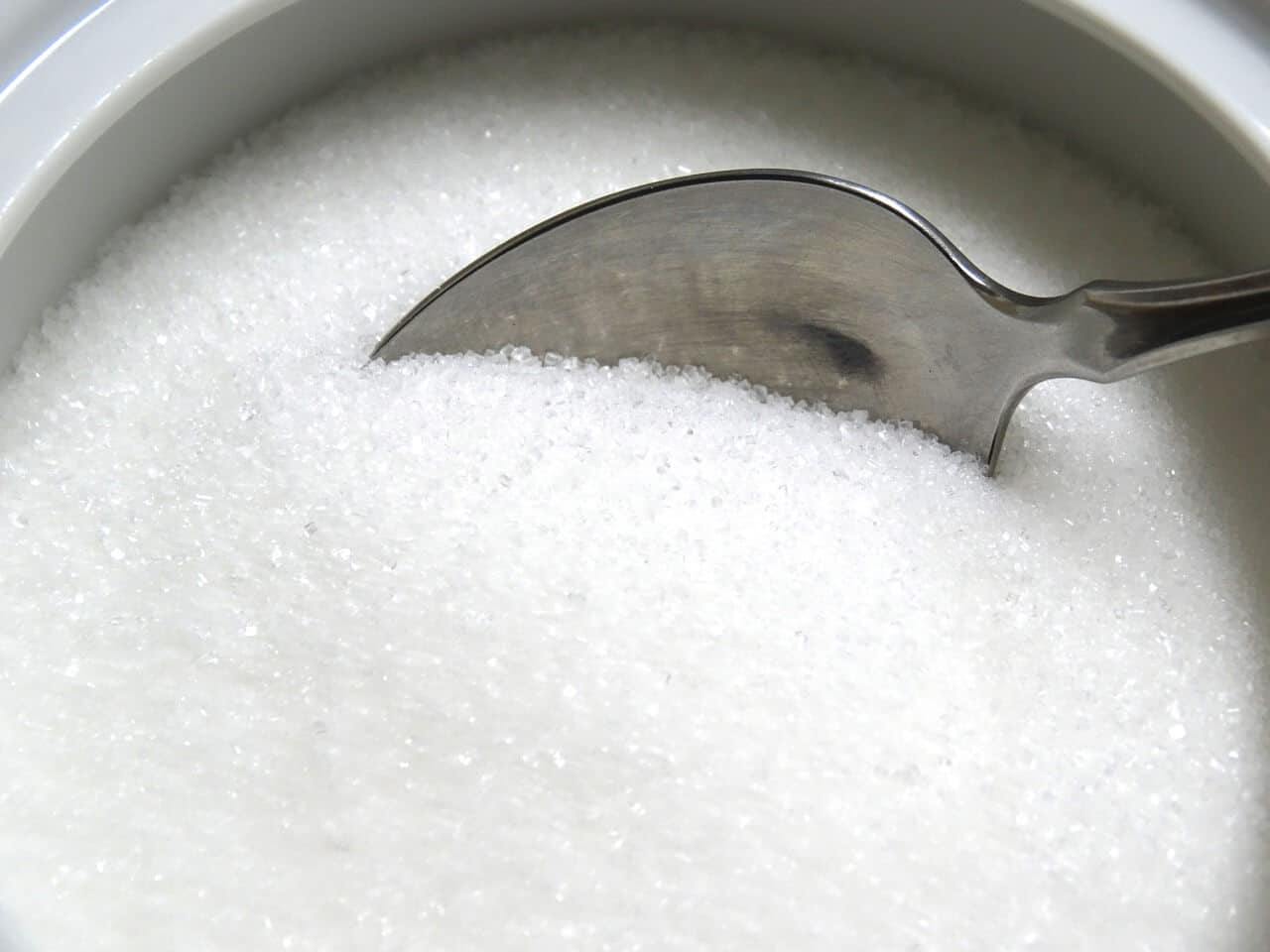
Close up of sugar.

We dig into the research on whether or not you should quit sugar and if sugar is making you fat and sick enough to cut it out permanently from your diet.

Should You QUIT sugar?

With some of the trendy diets promoting a “sugar detox” and even scares in the media about how sugar can “feed cancer,” it’s no wonder we may start to question if we really want to have sugar in our diets at all! We’ll talk about what sugar is, and look beyond just the little packets we pour into our morning coffee. We’ll answer the questions on what sugar means for our health and answer the big question about whether or not we should quit sugar for good.

Close up of sugar.

What is Sugar?

First off, I want to define sugar, because I have heard a lot of folks talking about lumping ALL carbohydrates into the umbrella term “sugar”, and while they’re the same in some cases, they aren’t in others.

Sugar is basically just a form of carbs along with starches and fibres. There are a few types of carbohydrates depending on how many sugar molecules there are in the compound. One sugar molecule or two sugar molecules together are considered SUGARS (think sucrose, lactose, maltose, glucose, etc.). More than two sugars held together are considered STARCHES and FIBRES (like sweet potatoes, and breads). Aside from fibres (which we lack the proper enzymes to break down), all carbohydrates eventually break down into the most usable form for us – super simple sugars like glucose. When we consume starches (like a potato) that have multiple sugars combined, our body has to break them down which takes time, so it keeps us fuller longer and raises our blood sugar slower. When we consume sugars (like a spoonful of honey), there’s not a lot of work for your body to do to them so they spike our blood sugar quickly and leave us hungry soon after.

Where are Sugars vs Other Carbohydrates Found?

Sugar Sources:

  • Dairy and alternatives
    Cow’s milk, soy milk, rice milk, yogurt
  • Fruits
    Apples, bananas, berries, pears, etc
  • Added sugars (simple)
    Honey, molasses, brown rice syrup, agave, maple syrup, white sugar, brown sugar

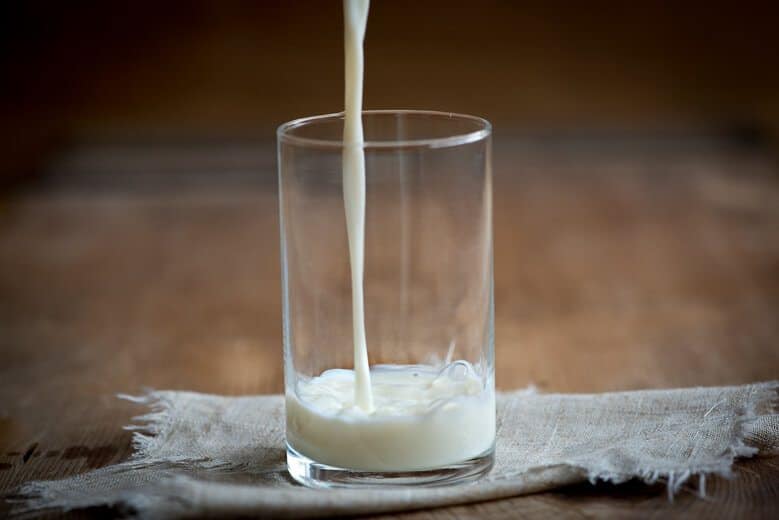
A glass cup with milk being poured in.Starch & Fibre Sources:

  • Starchy veggies
    Potatoes, sweet potatoes, corn, winter squash
  • Grains & other starches
    Rice, quinoa, pasta, breads, noodles, etc.
  • Fruits
    Apples, bananas, berries, pears, etc

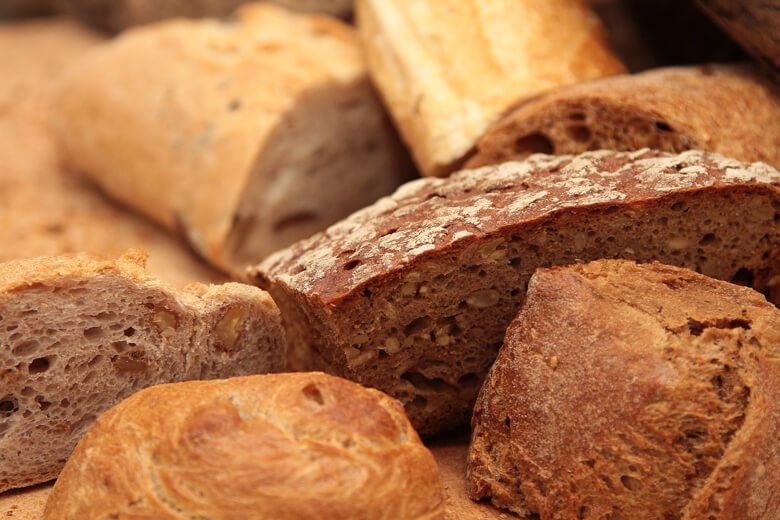
A close up of pieces of bread.

As you can see, there are BOTH simple and starchy/ fibre carbs in fruits – so does this make fruit a YAY or a NAY if you cut out sugar?

Also, what about dairy that is loaded with protein and healthy fats shown to help slow the absorption and reduce blood sugar spikes? Is that out too because it’s SUGAR?

Let’s Talk About FREE Sugar

This is where talk about free sugar comes into play.

When it comes to food products we typically buy, there are naturally occurring sugars, like the sugar found in fruits (fructose) and dairy (lactose).  But as soon as you take that sugar away from the naturally occurring source, it becomes a  “free sugar”.  The WHO recommends to keep our added sugar to 10% of our energy intake daily. So if you eat 2000 calories a day that would mean up to 50 grams of free sugar, or 10 teaspoons would be a-okay.

So where do you find free sugar?
  • Added sugars like white sugar, brown sugar, honey, agave, maple syrup (or other syrups) etc.
  • Fruit juice

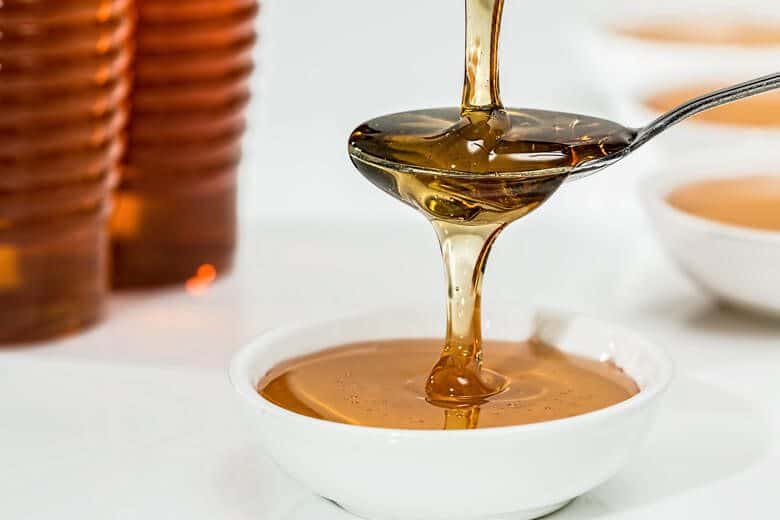
Honey being poured into a white container.

Fruit juice is FREE, but whole fruit is not because it comes equipped with fibres that slow down its absorption. For more information on some of the different added sugars as well as some artificial sweeteners, check out this article!

So to recap, the WHO recommends you cap the “free” or added sugars in your diet to 10% of your caloric intake, but that DOES NOT include sugars in dairy or fruit OR general carbohydrates in foods like whole grains, pulses or starchy veggies.

If these “Free sugars” are a serious no no, aren’t all sugars kind of bad too? Can’t we just quit all sugar and thrive?

I don’t know if thriving is the term I would use to associate myself if I quit sugar or cut out carbs. Here’s why:

  1. They contain FIBRE!

    Some sources of carbohydrates (whole grains, pulses, starchy veg) and yes, even sources of sugar (fruits) contain fibre, which is actually a type of carbohydrate that we don’t digest. Fibre simply passes through our digestive system and helps keep our bowels healthy. Fibre can help prevent constipation, diarrhea, promote weight loss, manage blood sugar and high cholesterol. It can also help reduce the risk for certain cancers and heart disease. Fibre generally is found in vegetables, fruits and whole grains. Women should aim to get 25 grams every day and men should aim for 38 grams according to Health Canada. You can read more about healthy bathroom visits and fibre here or check out the Toilet Talk. Let’s keep the constipation away with some high-fibre carbs.

  2. Brain Function

    The Institute of Medicine and Canadian Diabetes Association found that our brains need sugar. In fact, they need 130 grams of sugar per day! This is because the number one source of energy for our brains is glucose (which is the purest source of simple sugar). You don’t have to eat pure glucose to get the benefits and actually we wouldn’t recommend that. But any carbs will eventually be broken down into their building blocks to help feed our brain and other muscles. Carbs are brain food!

  3. Risks of a Low-Carb Diet

    While a low-carb diet has been shown to be effective for weight loss in this Meta-Analysis, we don’t know what the long term-effects and safety of these diets or if people can stay on them for long periods of time (remember – the best diet is one you can stay on forever). You may also remember from this infographic some of the not so good things about low-carb diets. I’m talking about grumpiness and bad breath due to ketosis, low fibre and constipation, stress on the kidneys, and even nutrition deficiencies (because carbohydrate-containing foods like whole grains, veggies and fruit have a lot of important vitamins and minerals too!).

  4. Sports Nutrition

    If you’ve checked out this article on sports nutrition, you may remember how important carbohydrates are for both cardio and strength training workouts. We need some carbs before an intense cardio, and after and in some cases depending on your exercise regime, going straight for the simple sugars is best! So if you exercise, you DO need carbs!

  5. Healthy Eating Habits

    There has been some research that’s suggested that food restrictions can lead to binge eating, disordered eating behaviours, and clinical eating disorders. This even extends to those who have had to follow strict diets (type 1 diabetes or strictly kosher diets, for example) having higher incidence of eating disorders. Restrictions, including cutting out carbohydrates or quitting sugar cold turkey, are not ideal for our mental or physical health, even if it is perceived to be healthy. You can read more on disordered eating and orthorexia.

  6. Impact on Social Life

    Okay, so let’s say you’re still eating dairy, fruit, and whole grains but have decided to eliminate ALL free sugar.
    You can FORGET about:

    • Having a cocktail or wine filled girls’ night– those cocktails pack in a TON of extra sugar (for lighter cocktail options check out these recipes!).
    • Restaurant dinners, take-out meals, or lunch on the go – sugar has a sneaky way of being in all these foods, even if they don’t taste sweet. It can be found in sauces, dips, salad dressings, and marinades.
    • Dessert. And why would you not want to eat dessert? I mean having dessert everyday all day maybe is not so ideal but a cookie with coffee or a slice of cake at a birthday sounds like a must to me.
    • Coffee shops. Those drinks have a TON of sugar. Check out these made over ones that are lighter and more delish.

Guys. This is JUST added sugar. We’re not even talking about a total sugar or carbohydrate elimination. Imagine cutting out fruit, all noodles, breads, grains, dairy and starchy veggies?!? Um, nope.

So Should You Quit Sugar? Bottom Line

  1. Sugar is just basically just a type of carbohydrates that get broken down in our bodies to use as fuel and energy.
  2. Carbs can be found in all kinds of foods: dairy, fruit, some veggies, grains/starches, and added sugars
  3. Our bodies NEED sugar (and other carbs like fibre) for so many reasons including brain function and sports recovery.
  4. Don’t cut out sugar or carbs entirely, you’ll be missing some major food groups and nutrients, probably get grumpy, and it’s not sustainable! If you’re trying to cut down on your processed food or added sugar intake, talk to a Registered Dietitian for some guidance and try to focus on choosing unprocessed, whole grain, and fruit varieties of carbohydrates more often!
  5. Having a balanced diet for your body and your mind includes eating carbs, so enjoy that slice of cake! Keeping our eating habits healthy and in-check means a healthy body AND a healthy mind.

So tell me:

Have you quit sugar?

Are you thinking of cutting back on carbs? Why or why not?

Pinterest image of sugar and weight loss with the text overlay \"Should You Quit Sugar? Is Sugar Making You Fat and Sick?\"

Contribution by RD2B Maxine Seider

Abbey Sharp

Abbey Sharp is a Registered Dietitian (RD), regulated by the Ontario College of Dietitians. She is a mom, YouTuber, Blogger, award winning cookbook author, media coach specializing in food and nutrition influencers, and a frequent contributor to national publications like Healthline and on national broadcast TV shows.
www.abbeyskitchen.com/about-abbey/

Last Updated January 5, 2018. Published January 5, 2018 By Abbey Sharp 25 Comments

Pregnancy Lessons I’ve Learned About My Body, Weight Gain and Nutrition While Growing a Baby

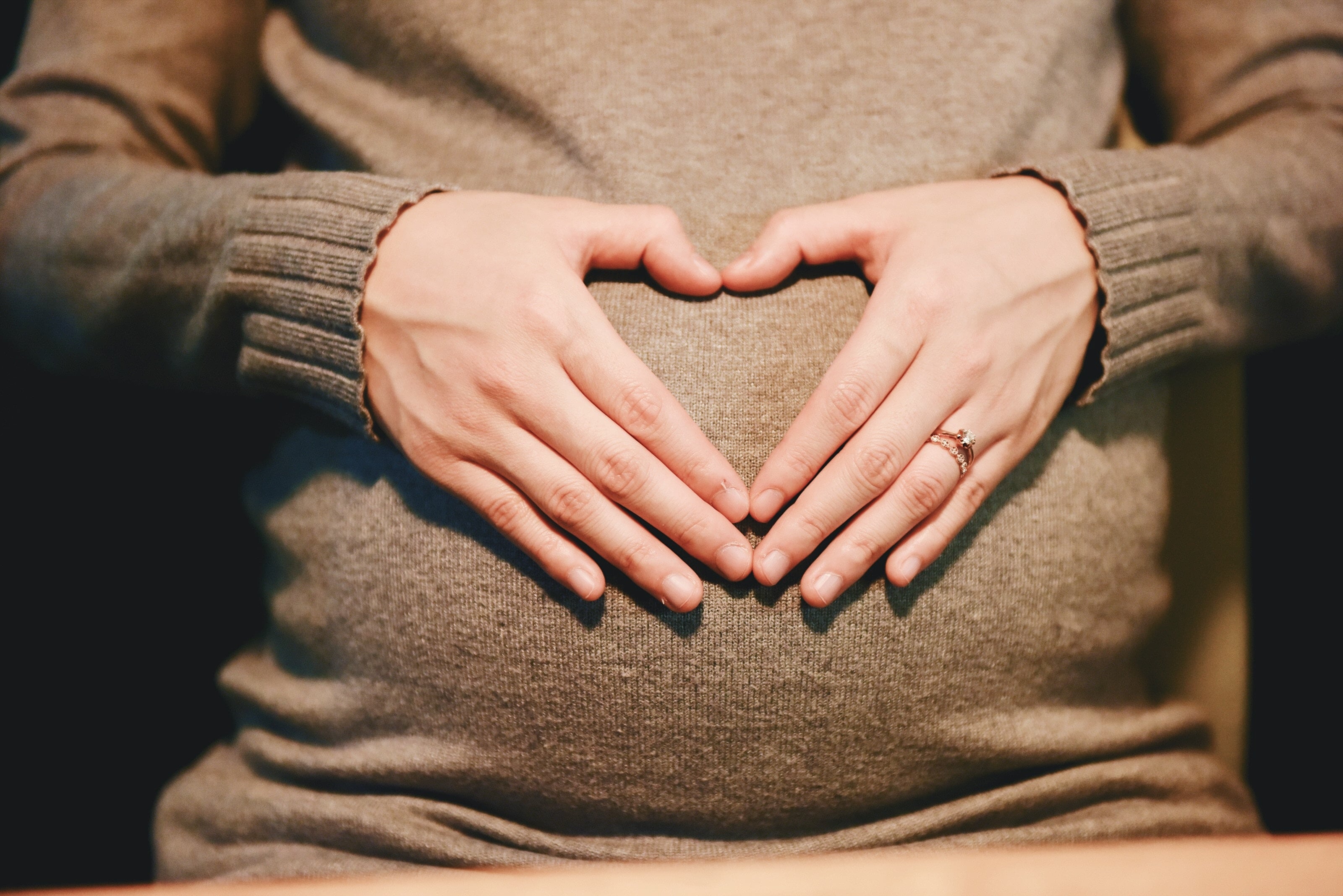
Hand making a heart over a pregnant stomach.

I share some of the hard and personal pregnancy lessons I’ve learned about my changing body, weight gain and nutrition through this journey of growing a baby.

Once upon a time I had dreams of being that woman that fucking loves those special nine months. I assumed I would relish in every moment and would mourn the end when that baby finally came. Well, let me cut to the chase and tell you that pregnancy hasn’t lived up to my expectations. It’s hard, exhausting and fucking uncomfortable sometimes. But if I can take some good out of the experience (aside from of course the fact that I cannot WAIT to meet this little Button we have growing), it’s the pregnancy lessons I’ve learned about my body, weight gain and nutrition that I hope to carry with me post-partum. I wanted to share a few pregnancy lessons with you that you can apply today- and you don’t even need the morning/ afternoon/evening/all the live-long day sickness to learn them. Lucky little devils. Let’s jump in.

Hand making a heart over a pregnant stomach.

Pregnancy Lessons I’ve Learned These Past Few Months


  1. Your Body Tells You What it Needs (if You’re Actually Listening)

A headphone on a wire.

You all know I’m a big proponent of mindful eating and listening to your body. Well, in my non-pregnant state I never really had “cravings” or “aversions”, so most of my personal experience with this “listening” was to my hunger and satiety cues. Wow, things change in pregnancy. In my first trimester, I pretty much couldn’t eat any meat, I was totally turned off cooked vegetables of any type (I know, a total dietitian sin) and it was hard to eat foods high in fat like nut butter or avocado. I couldn’t even enjoy dessert like I usually do! WHAT KIND OF CHILD IS THIS?! So basically that meant I legit lived off of all bran cereal, mango, and crunchy raw salads with straight-up balsamic vinegar (omg acid was my saviour). So yah, I ate vegetables and lots of carbs. Considering that nothing catastrophic happened to my body, I am confident that I was craving those foods for a reason. I was nauseous, so bland foods like cereal were my BFF. I was probably dehydrated so salads and juicy fruit like mango and pineapple were my go-tos. And I probably off fatty foods or protein since these are typically harder on the body to digest and my digestive tract was a bit on the fritz. My body knew what it needed and because I just went with it rather than sticking to my usual diet routine, it all turned out okay. I’m sure this isn’t limited to the unique state of pregnancy, as well, so I’m going to make sure I make extra effort to tune in.

  1. Don’t Stress the Macros

Close up of 6 eggs in a carton.

Okay, so I’m not going to lie, at the beginning of my pregnancy I was really worried about not getting enough protein considering all of my aversions.  Pre-pregnancy, I had a pretty high protein diet, about 150 grams a day for my 125 lb body. That’s the amount that in the past helped me maintain my lean muscle mass with my exercise routine, so I’ve just gotten used to making sure I get enough. But when I was feeling morning/evening sick, and couldn’t stomach another chicken breast or egg, I worried I was going to gain a shit ton of fat and lose muscle mass QUICK. Spoiler alert: that just didn’t happen. In fact, in my entire first trimester (3 whole months), I only gained about 3-4 lbs. I also was able to keep up my usual workout routine (with obviously making some pregnancy-safe modifications). My point? I’m not suggesting that macros don’t matter and that you can just eat carbs all day and not see a shift on the scale, but I think that for most people, it’s not something we need to over-stress about. See my lesson 1 on knowing what your body needs and trust that some days that may mean more fat, more carbs or more protein. All good.

  1. Your Body will Gain Weight at its Own Perfect Pace

Multiple measuring tapes in different colours.

I may strongly believe in body positivity, but I have to confess –seeing my body change so quickly during pregnancy was admittedly tough at times. One day I would worry I was gaining weight too fast, and the next, I would worry I’m not gaining enough and that something was wrong with baby. I’ve spoken with so many of my friends and I came to realize that this is just one of the brutal realities of being a woman, not just in pregnancy when body changes come fast and furious, but pretty much all throughout the life cycle. But as I near the end of my second trimester, I’ve learned to make peace with the chaos. My body will gain weight at its own perfect pace. It may not be the precise 0.5-1 lb each and every week that all the apps talk about. It may not be as slow or as fast as your best friend. You may get ass hole comments about being “so small” or “ready to pop” (when um, you’re not). I know that for me, some weeks I gain nothing, and others I’ll jump 2 or 3 lbs on the scale. But if you’re listening to your body (see pregnancy lessons 1 and 2), just know that your body is doing what’s best for you and baby and your weight will find its happy place  in the end.

  1. Hormonal Weight is REAL

Mix of colourful pills.

In my first trimester, I was taking progesterone supplements to help promote a strong pregnancy. Once I came off around 10 weeks, I dropped like 10 lbs instantly. Obviously then I started to put in on as baby weight, but talk about a quick shift on the scale! I’ve talked about the role of some of these hormones with regards to birth control here, and while the research is sketchy and unclear, my personal experience tells me that yes, hormones do wonky things to our body and that’s okay. Nothing was personally more important to me than maintaining a healthy pregnancy, so I didn’t care what those hormones did, but I’ve learned that, at least in my experience, weight gain is not just about calories in and calories out.

  1. Your Body Doesn’t Just Change Overnight When You Skip the Gym

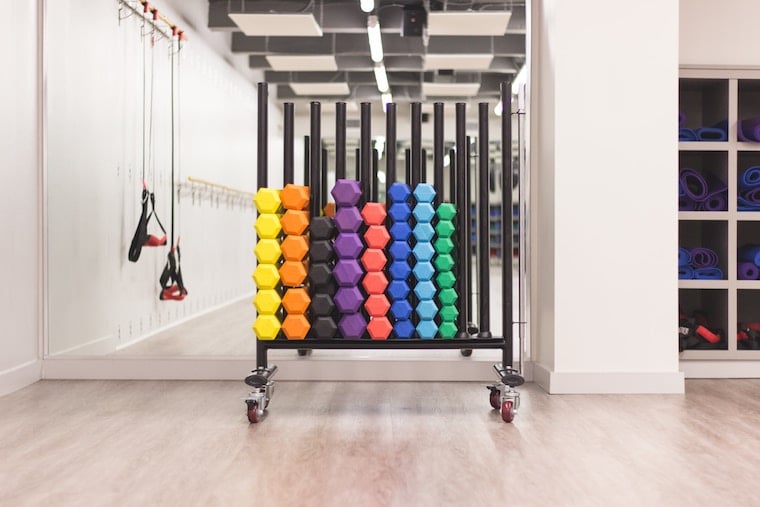
Photo of a rack of multiple colourful small weights.

I’m a gym rat, I can’t deny that. I work it out hard in the gym for at least an hour almost every day and I love it. But I was just so anxious at the beginning of my pregnancy that I took about 2 months off the gym. Not two days. Not two weeks. Two whole months. Obviously, it was all worth it, even if it never played a role in my successful pregnancy at all, but at the time, the thought of taking that much time off kind of freaked me out. Would I lose all of the strength I had worked so hard to build and have to start from scratch? Would I gain a shit ton of fat and lose muscle? Would I just fall out of the habit for good and never go back? My gym bunnies probably can relate to at least one of those concerns. But I’m happy to report that I came out the other side pretty much unscathed. OK, so my first day back on the weights was a bit of a struggle and picking up 12 lbs felt like a hefty set of 25. But after a week at it, I was pretty much back to where I was, and like I mentioned earlier, my body didn’t all of a sudden go to shit. OBVIOUSLY I gained a few pounds but come on, I had a baby growing inside me, so I was hoping to gain AT LEAST what I did. So the next time you make yourself feel guilty because you took a few extra days off the gym just remember that I took a long vacation and got back to it with gusto. It doesn’t have to be all or nothing. Just listen to your body, and when you’re ready get back in there with renewed energy and strength.

  1. It’s Okay to Feel Like SHIT About Your Body One Day, and Totally in Love Another

Neon light of the word \"love.\"

This has been the hardest pregnancy lesson for a hormonal pregnant woman to learn because my emotions are often all over the place. But trust me, this one is worth taking to the grave. Being body positive doesn’t need to mean that I ALWAYS love my body. It doesn’t mean I always dance naked in the mirror singing along to Whitney, take countless selfies in the buff, or buy sexy lingerie just for me. There may be days when I do all of these things but there are other times I just want to put on a moo moo and hide. Like that time I split my zipper on my winter parka and had to rush to the store to buy a new one. Or that time I couldn’t find a bra in my drawer that didn’t make my boobs spill out on all sides. Or when I legit had to unbutton AND unzip my pants after lunch just so that I could walk home without pain. I wasn’t loving my body then. But there are nights I get into bed and my husband tells me how much he loves my belly and baby that I feel like the sexiest woman in the world. Loving your body, whatever it looks like, is an ongoing process. It’s messy, it’s emotional, it’s confusing at the best of times, but it’s definitely worth the struggle because those highs outlast every little confidence blip. I’m going to try to hold onto those feelings and the gratitude I feel that my body is able to sustain and grow a life as I transition into my post-pregnancy body. And that, my friends, will deserve a whole other blog post.

Now mommas and mommas-to-be, can you tell me, what are some of the pregnancy lessons you’ve learned along the way that have helped you through your journey? Leave me a comment below and help a fellow mom to be out!

Pinterest image of a pregnant belly and measuring tape with text overlay \"Pregnancy Lessons I\'ve Learned About My Body.\"

Abbey Sharp

Abbey Sharp is a Registered Dietitian (RD), regulated by the Ontario College of Dietitians. She is a mom, YouTuber, Blogger, award winning cookbook author, media coach specializing in food and nutrition influencers, and a frequent contributor to national publications like Healthline and on national broadcast TV shows.
www.abbeyskitchen.com/about-abbey/

Last Updated January 15, 2018. Published January 1, 2018 By Abbey Sharp 30 Comments

Chocolate Zucchini Bread Oatmeal Zoats | Gluten Free and Vegan Breakfast Recipe

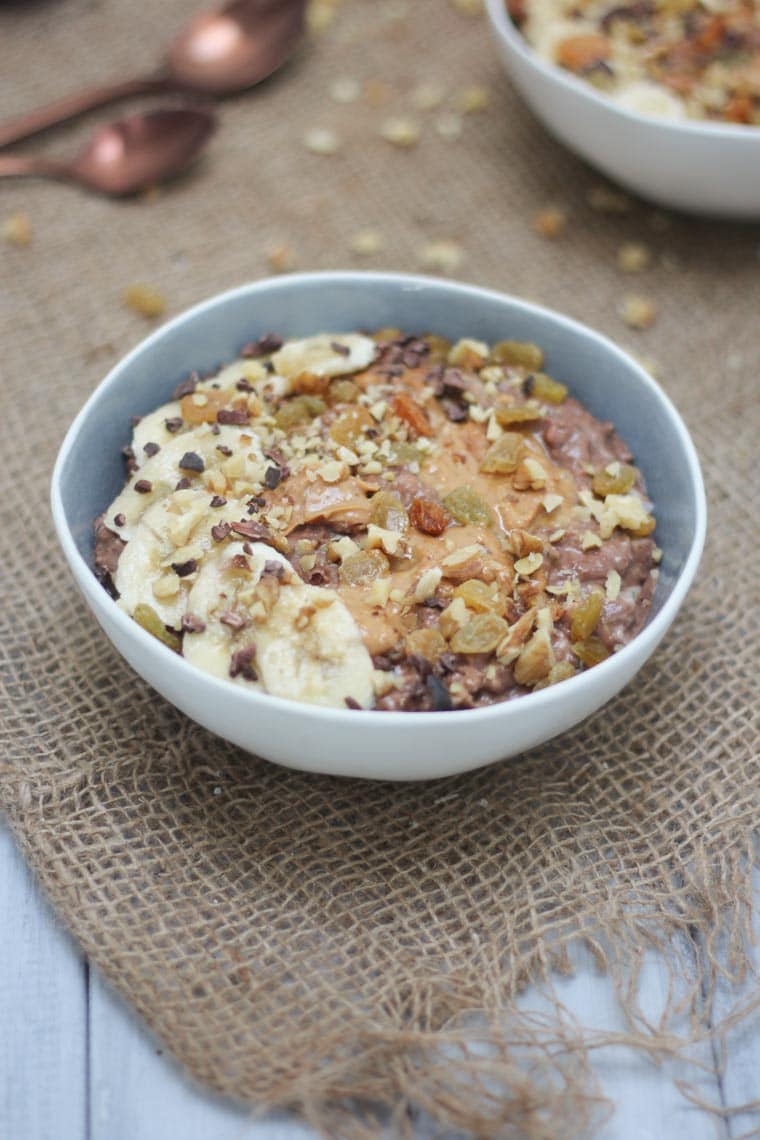
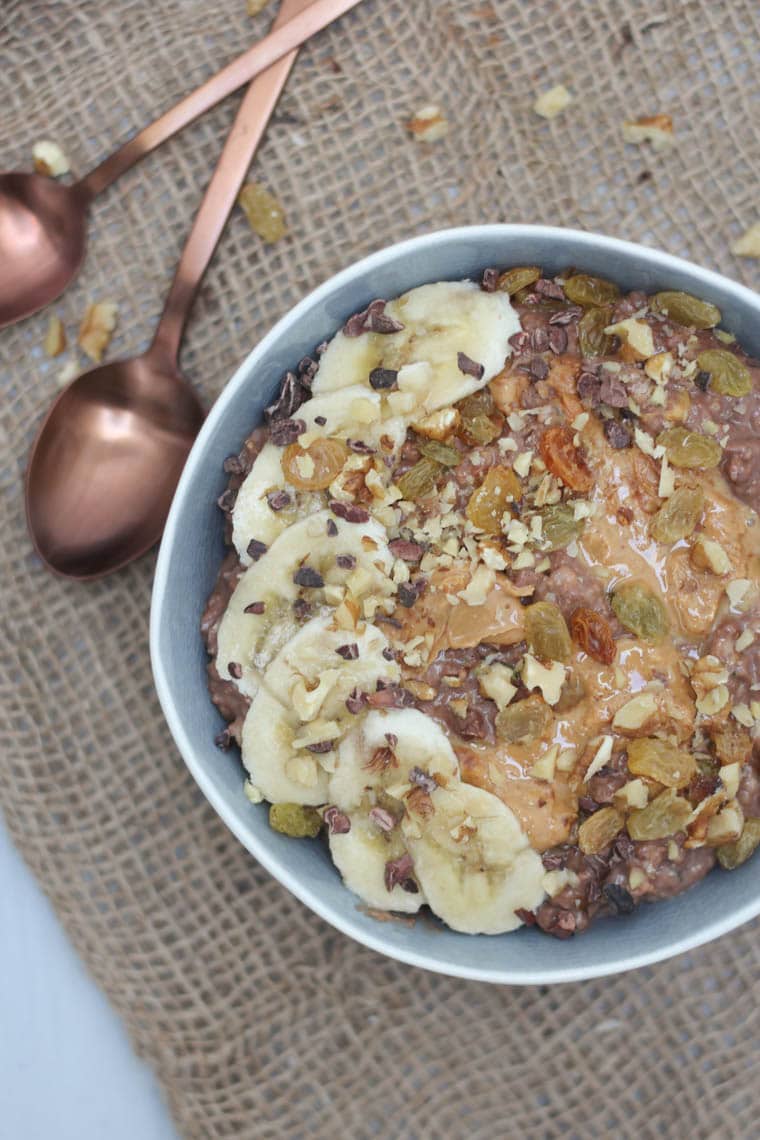
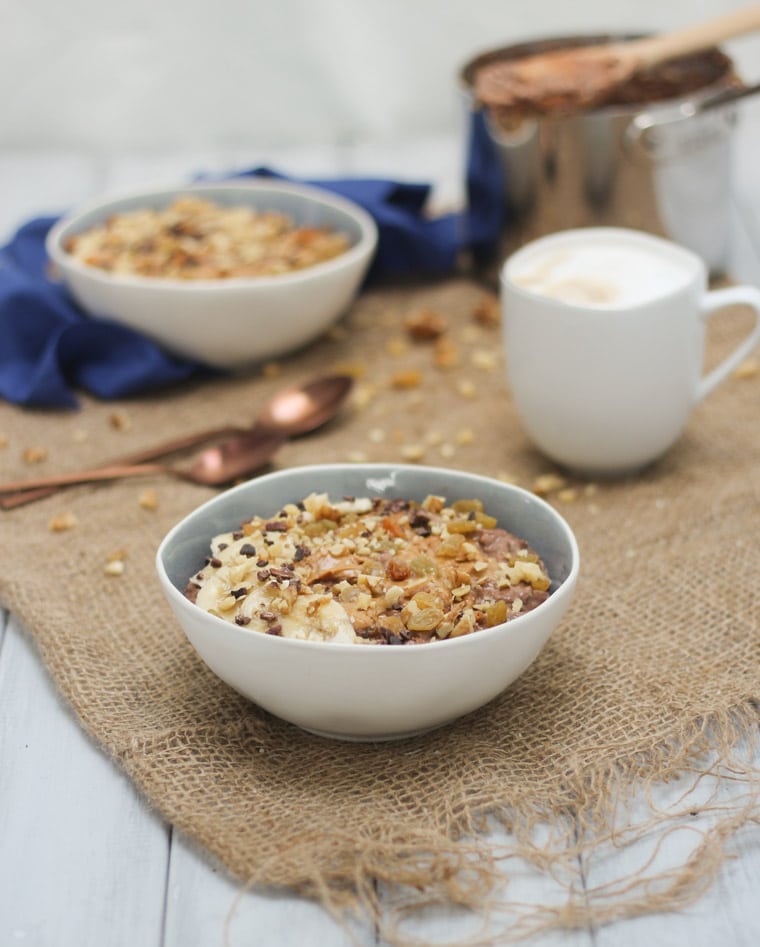
A bowl of chocolate zucchini bread oatmeal zoats in a grey bowl on a brown background.

This Chocolate Zucchini Bread Oatmeal Zoats is the most delicious Gluten Free and Vegan breakfast recipe you’ll need this year!

Guys, there’s a new oatmeal hybrid in town and as usual, it has a cheeky little pet name. It’s not my beloved Proats (protein oats), it’s my veggie packed zucchini-laced ZOATS! I was skeptical at the idea, but then I realized OMG, what a damn GENIUS way to get in your veg!

A bowl of chocolate zucchini bread oatmeal zoats in a grey bowl on a brown background.

And what pairs better with zucchini than chocolate so it made sense we made a Chocolate Zucchini Bread Oatmeal Zoats that will LEGIT blow your mind.

How to Make Chocolate Zucchini Bread Oatmeal Zoats

An overhead photo of a bowl of chocolate zucchini bread oatmeal zoats with two spoons beside it.

This is surprisingly simple and you can also make a huge batch and rewarm them throughout the week. The combination is as simple as some chewy rolled oats cooked in unsweetened almond milk, ripe bananas for natural sweetness, cocoa powder, vanilla, cinnamon, grated zucchini and a big heaping spoonful of walnut butter. I love walnut butter in these Chocolate Zucchini Bread Oatmeal Zoats because it gives the most authentic zucchini bread flavour, but if you can’t find it, any nut butter will totally work.

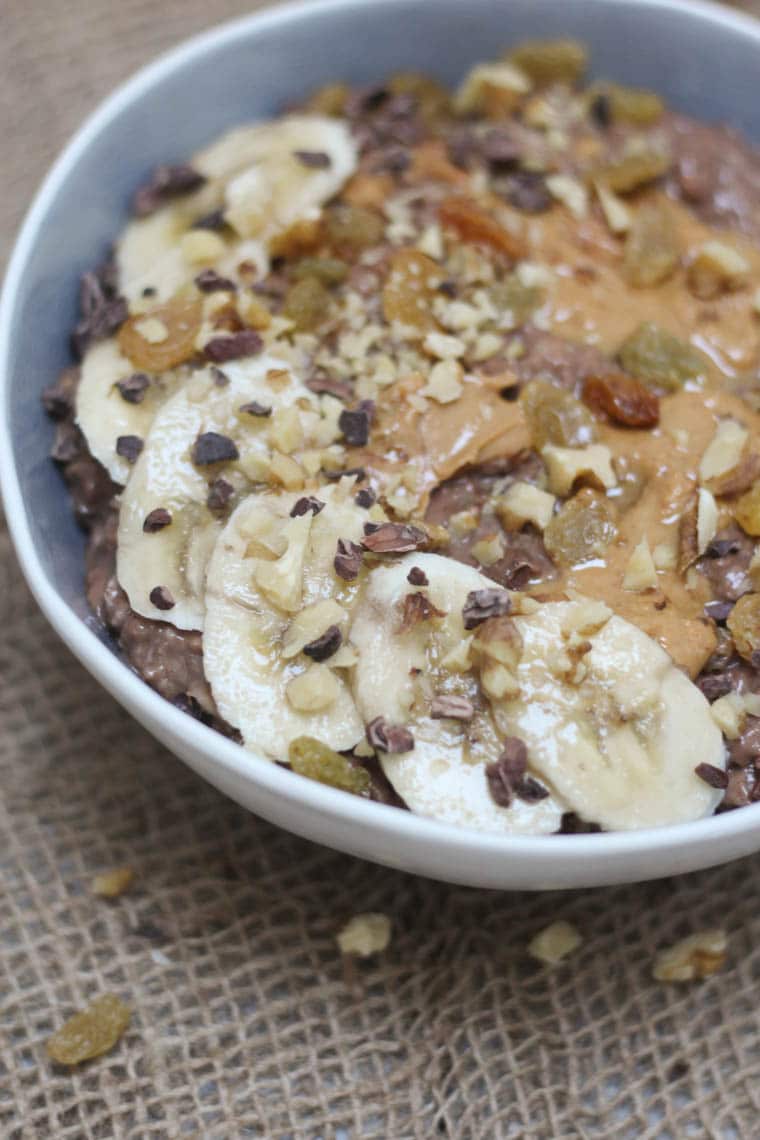
A close up photo of a bowl of chocolate zucchini bread oatmeal zoats with bananas and chocolate chips on top.

I also like lots of texture in my oats so I added in some walnuts and raisins for some crunch and chew. If you’re making a big batch of these Chocolate Zucchini Bread Oatmeal Zoats, now is when you would simply pop it in the fridge until morning.

An overhead photo of a bowl of chocolate zucchini bread oatmeal zoats with bananas and chocolate chips on top with spoons around it.

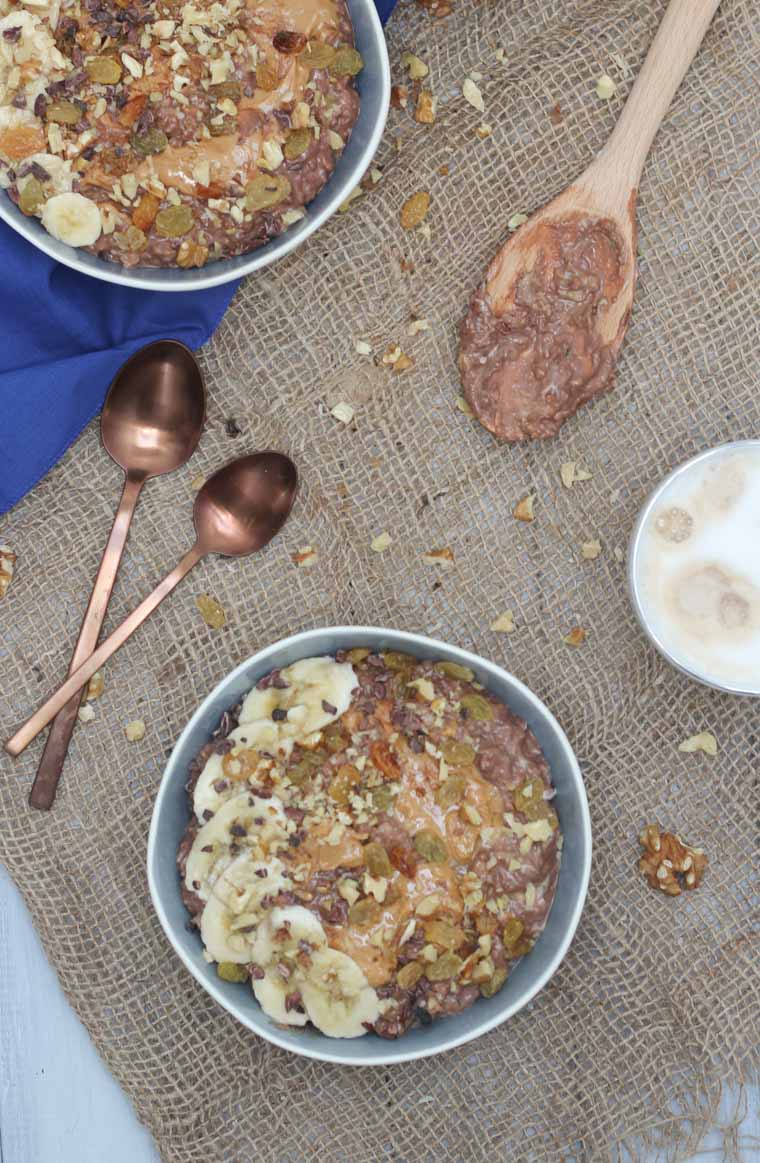
Then, it’s time to decorate! You can play with whatever toppings you’ve got in your pantry and fridge, but to stay on theme with the zucchini bread, I add sliced bananas,  walnuts, walnut butter, cacao nibs, and more golden raisins. You do you- hell, a handful of sprinkles would be fine by me.

An angled photo of a bowl of chocolate zucchini bread oatmeal zoats with bananas and chocolate chips on top on a dining room table with a mug of coffee in the background.

I PROMISE you that no one in your family will taste or detect the zucchini because it literally just melts into your mouth in a pool of chocolately goodness.

I would love to know what your family thought of these Chocolate Zucchini Bread Oatmeal Zoats! Leave me a comment and let me know what baked good you would LOVE to see turned into a healthy breakfast!!

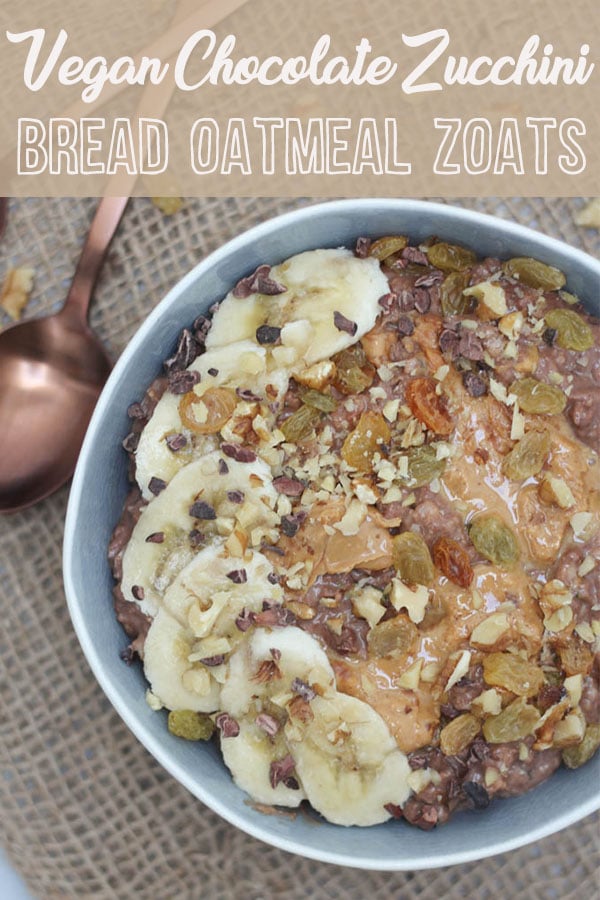
A pinterest image of a bowl of oatmeal zoats with text overlay \"Vegan Chocolate Zucchini Bread Oatmeal Zoats.\"

A bowl of chocolate zucchini bread oatmeal zoats in a grey bowl on a brown background.
Print Recipe
5 from 3 votes

Chocolate Zucchini Bread Oatmeal Zoats

This Chocolate Zucchini Bread Oatmeal Zoats is the most delicious Gluten Free and Vegan breakfast recipe you'll need this year!
Prep Time5 minutes mins
Cook Time10 minutes mins
Total Time15 minutes mins
Course: Breakfast
Cuisine: American
Servings: 4 people
Calories: 289kcal
Author: Abbey Sharp

Ingredients

  • 1 cup rolled oats gluten free if desired
  • 2 cups unsweetened vanilla almond milk
  • 2 ripe bananas mashed
  • 2 tsp cocoa powder
  • 1 tbsp vanilla
  • 1 1/2 tsp cinnamom
  • 1/4 tsp nutmeg
  • 1/2 tsp salt
  • 2 tbsp walnut butter or any nut butter
  • 1 cup grated zucchini
  • 1/4 cup walnuts crushed
  • 1/4 cup golden raisins

To garnish:

  • Sliced banana
  • Cacao nibs
  • Walnut butter
  • Walnuts crushed
  • Golden raisins

Instructions

  • In a medium saucepot, add the oats, almond milk, banana, cocoa, vanilla, cinnamon, nutmeg and salt. Bring to a boil, then reduce the heat to a simmer. Cover and allow to cook until the milk has been absorbed and the oats are tender.
  • Stir in the walnut butter and zucchini and take off the heat. Stir in the walnuts and raisins.
  • Divide between four bowls and garnish with banana, cacao nibs, walnut butter, walnuts and raisins.

Nutrition

Calories: 289kcal | Carbohydrates: 40g | Protein: 8g | Fat: 12g | Saturated Fat: 1g | Sodium: 460mg | Potassium: 541mg | Fiber: 7g | Sugar: 15g | Vitamin A: 104IU | Vitamin C: 11mg | Calcium: 217mg | Iron: 2mg

Abbey Sharp

Abbey Sharp is a Registered Dietitian (RD), regulated by the Ontario College of Dietitians. She is a mom, YouTuber, Blogger, award winning cookbook author, media coach specializing in food and nutrition influencers, and a frequent contributor to national publications like Healthline and on national broadcast TV shows.

www.abbeyskitchen.com/about-abbey/

Last Updated May 20, 2020. Published December 28, 2017 By Abbey Sharp 33 Comments

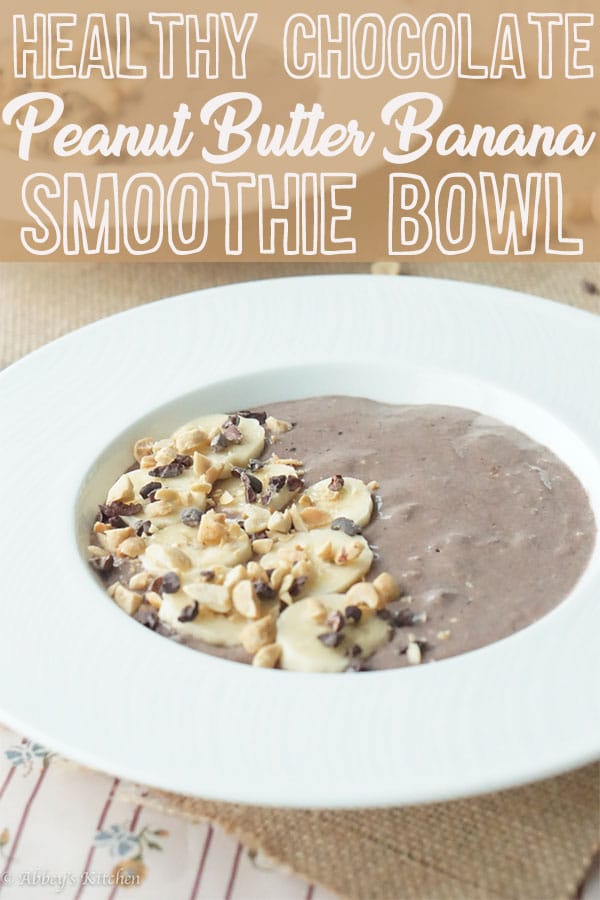
Healthy Smoothie Bowl with Chocolate, Peanut Butter & Banana

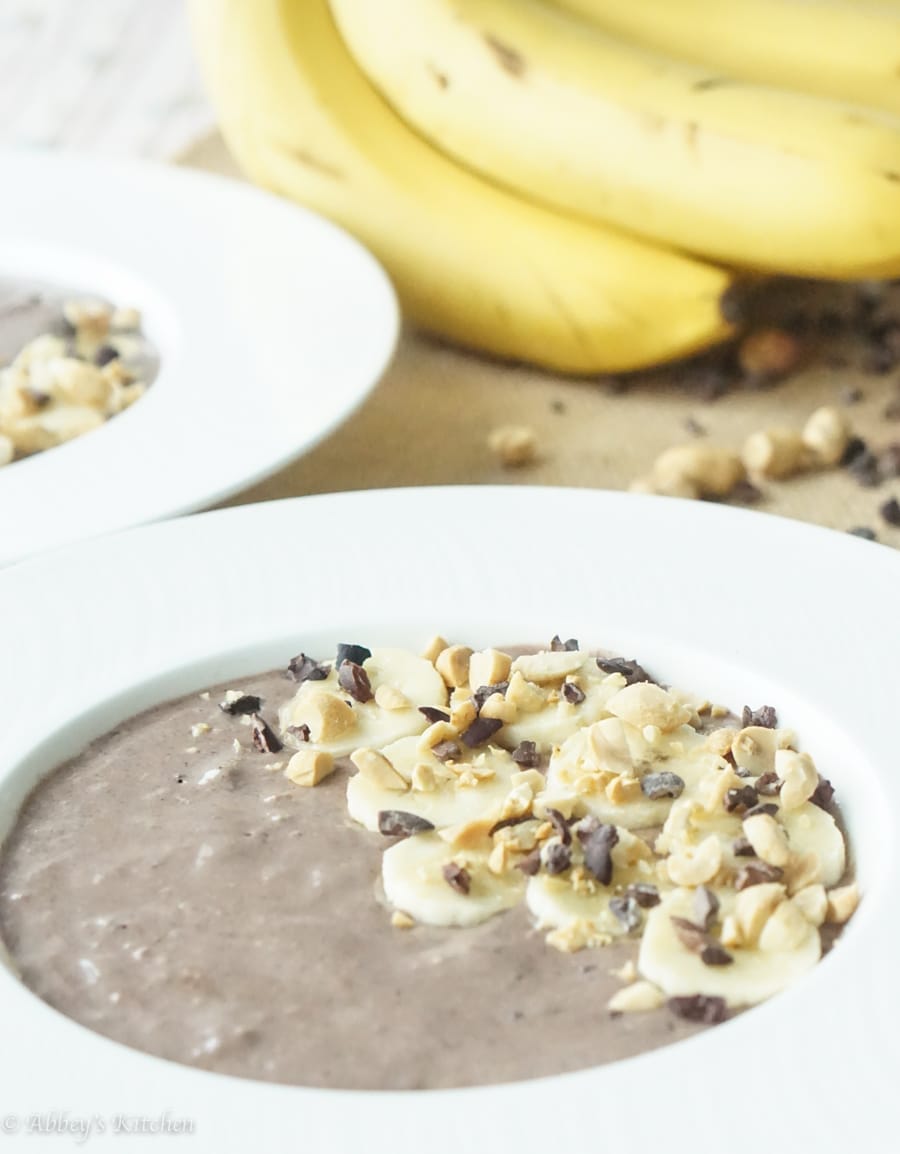
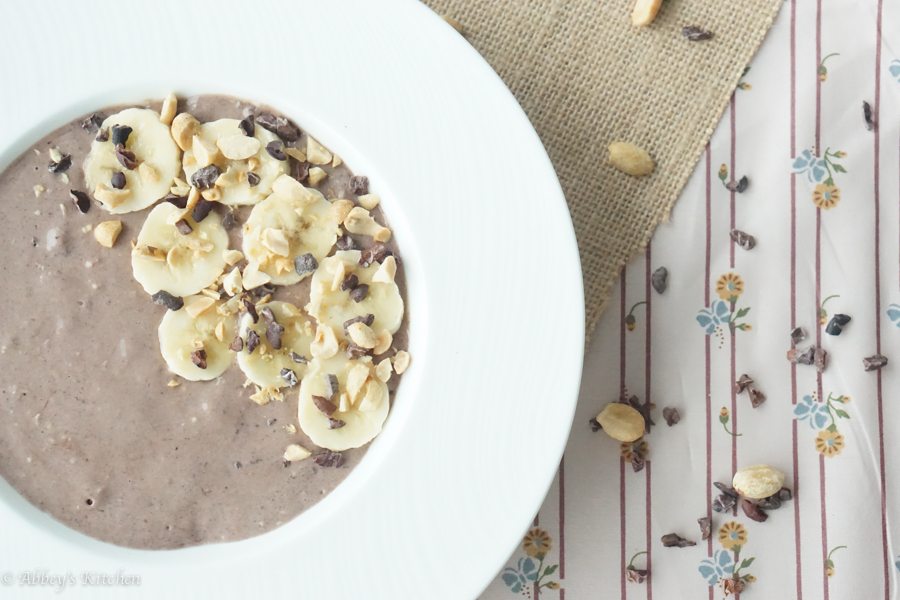
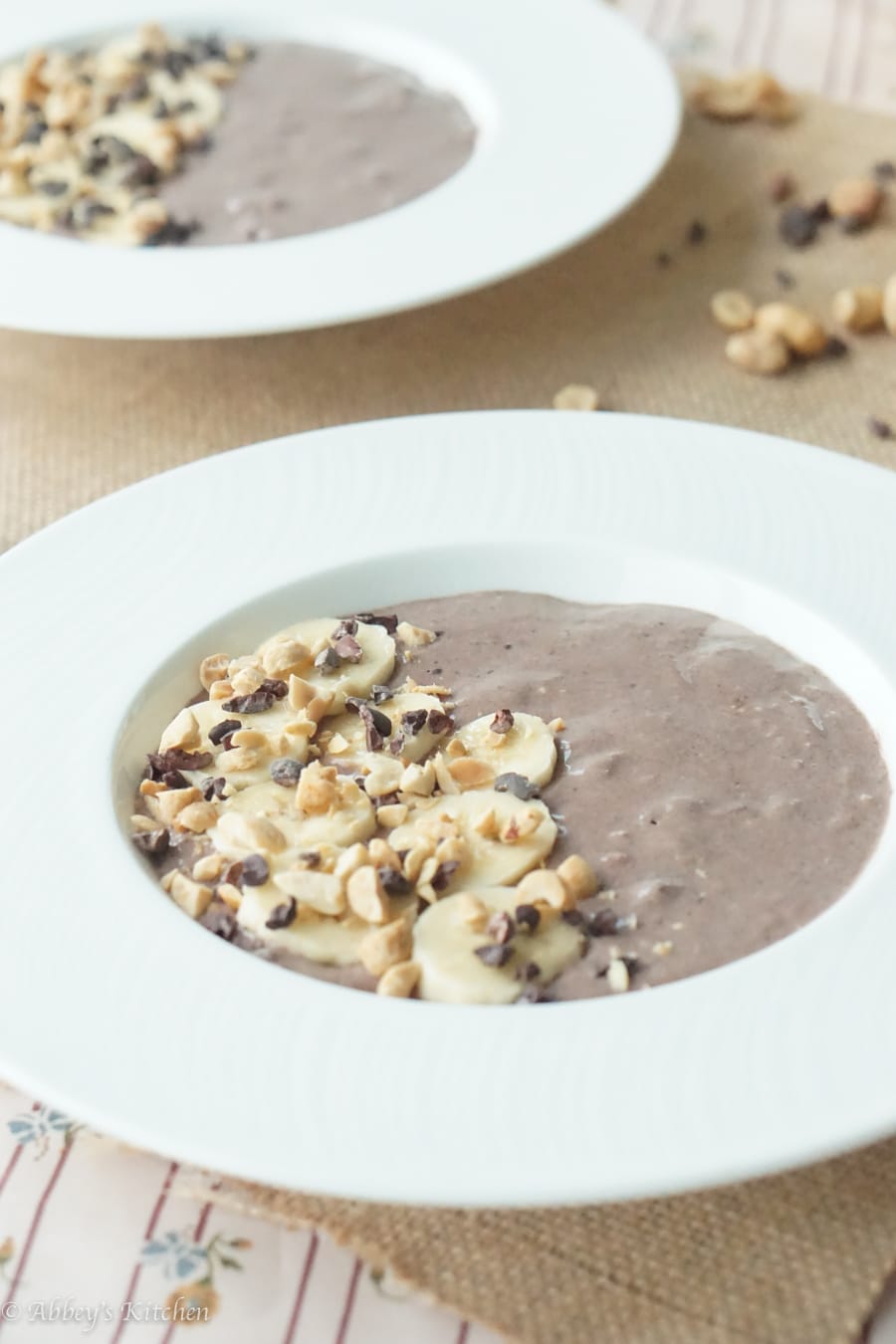
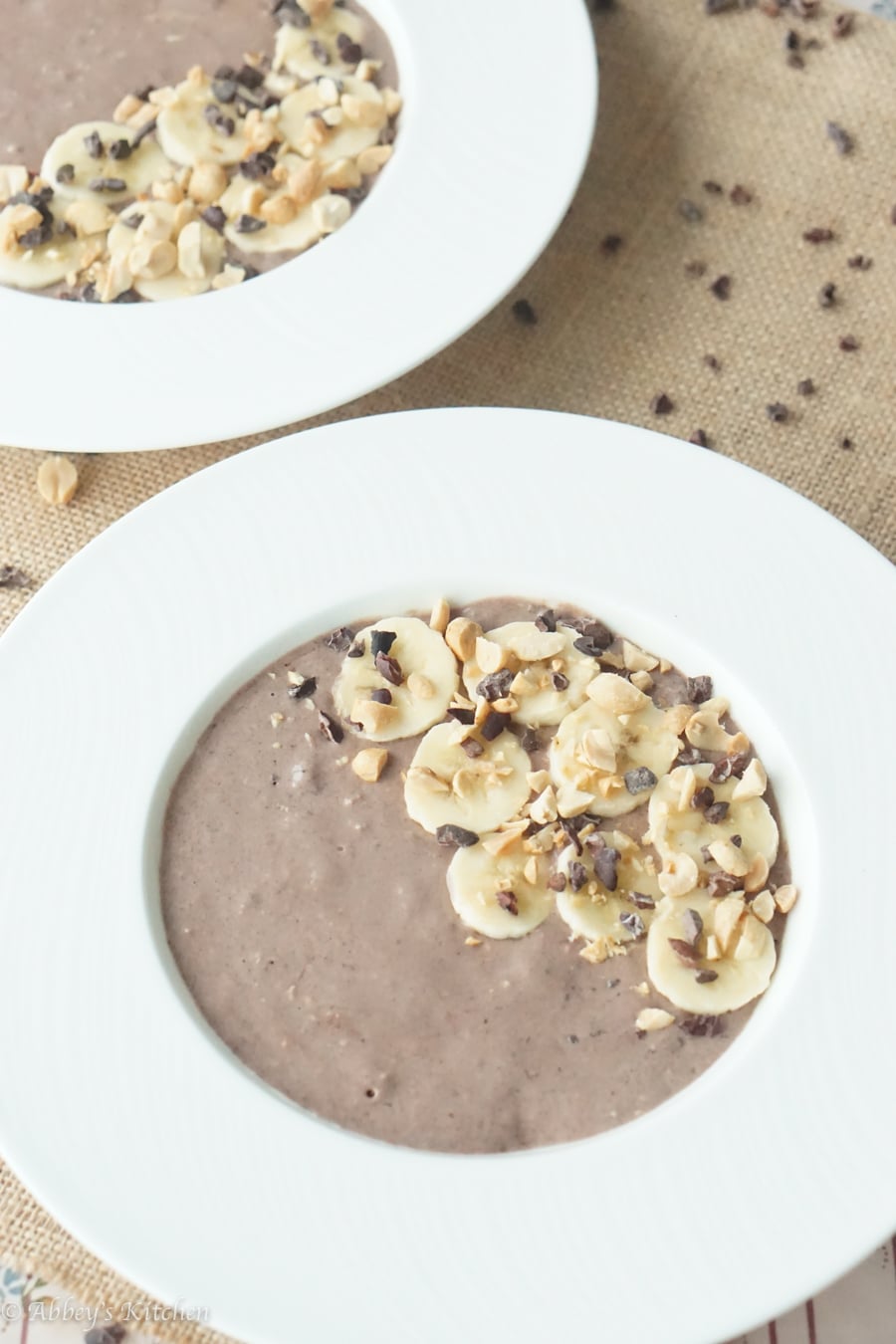
This healthy smoothie bowl with chocolate, peanut butter and banana is the perfect breakfast that may sound decadent, but is packed antioxidants and protein. 

I love breakfast. It’s the one meal of the day where sweet things like French toast, pancakes and waffles, are for some reason totally legit. No one questions you or your morals when you eat sweets for breakfast.  But let’s be honest. I don’t think anyone really feels great after an 8 AM carb-load like that, and in my experience, when I start the day off with a little too much decadence, it can be hard to get back on track. That’s where the smoothie bowl comes into play pretty nicely.

chocolate_pb_smoothie_bowl_2_of_7.jpg


The Ultimate Elvis Smoothie Bowl

I set out to make a sweet- themed breakfast that I can totally feel great about. Introducing my Chocolate Peanut Butter & Banana Smoothie Bowl. Elvis would have died for this. Seriously, there are few flavour combinations that I crave more often than peanut butter, banana and chocolate.

chocolate_pb_smoothie_bowl_5_of_7.jpg
 

I know it sounds crazy decadent, but it’s actually surprisingly healthy thanks to the protein-packed greek yogurt, antioxidant-loaded unsweetened cocoa powder and cocao nibs, protein and fibre rich peanuts and fibre-licious oats. LOVE THIS SMOOTHIE BOWL.

chocolate_pb_smoothie_bowl_1_of_7.jpg
 
A smoothie bowl is a great alternative to your usual smoothie breakfast because I find that they help you enjoy the morning meal much more mindfully than when you’re on the run. Often times, we don’t always feel very satiated from liquid meals, which is why I prefer to sit down and actually eat/chew mine instead.
 
chocolate_pb_smoothie_bowl_6_of_7.jpg

Check out two more yummy smoothie bowl recipes that I developed here, and here & for more peanut filled snacks check out my YouTube video below!

Become an Abbey’s Kitchen Subscriber

A pinterest image of a bowl of smoothie with the text \"Healthy Chocolate Peanut Butter Banana Smoothie Bowl.\"
Print Recipe
4.75 from 4 votes

Healthy Smoothie Bowl with Chocolate, Peanut Butter & Banana

I know it sounds crazy decadent, but it’s actually surprisingly healthy thanks to the protein-packed greek yogurt, antioxidant-loaded unsweetened cocoa powder and cocao nibs, protein and fibre rich peanuts and fibre-licious oats.
Prep Time5 minutes mins
Total Time5 minutes mins
Course: Breakfast
Cuisine: American
Servings: 1 smoothie
Calories: 320kcal
Author: Abbey Sharp

Ingredients

  • 1/4 cup skim milk
  • 1/2 cup plain 0% Greek yogurt
  • 1 frozen banana diced
  • 1 tbsp natural peanut butter
  • 1 tbsp cocoa powder
  • 1/4 cup rolled oats
  • 1 tsp honey to taste
  • 1/4 tsp vanilla
  • Sliced banana
  • Cocao nibs
  • Crushed peanuts

Instructions

  • Blend the milk, yogurt, banana, peanut butter, cocoa powder, oats, honey and vanilla in a blender or food processor. Pour into bowl.
  • Top the breakfast bowl with sliced bananas, cocao nibs and crushed peanuts. Enjoy!

Nutrition

Calories: 320kcal | Carbohydrates: 59g | Protein: 20g | Fat: 4g | Saturated Fat: 1g | Cholesterol: 6mg | Sodium: 113mg | Potassium: 809mg | Fiber: 8g | Sugar: 27g | Vitamin A: 200IU | Vitamin C: 10mg | Calcium: 195mg | Iron: 2mg
Abbey Sharp

Abbey Sharp is a Registered Dietitian (RD), regulated by the Ontario College of Dietitians. She is a mom, YouTuber, Blogger, award winning cookbook author, media coach specializing in food and nutrition influencers, and a frequent contributor to national publications like Healthline and on national broadcast TV shows.

www.abbeyskitchen.com/about-abbey/

Last Updated October 23, 2020. Published December 22, 2017 By Abbey Sharp 18 Comments

Vegan Pumpkin Pie Butter | 5 Ingredient Healthy Winter Breakfast Spread or Dip

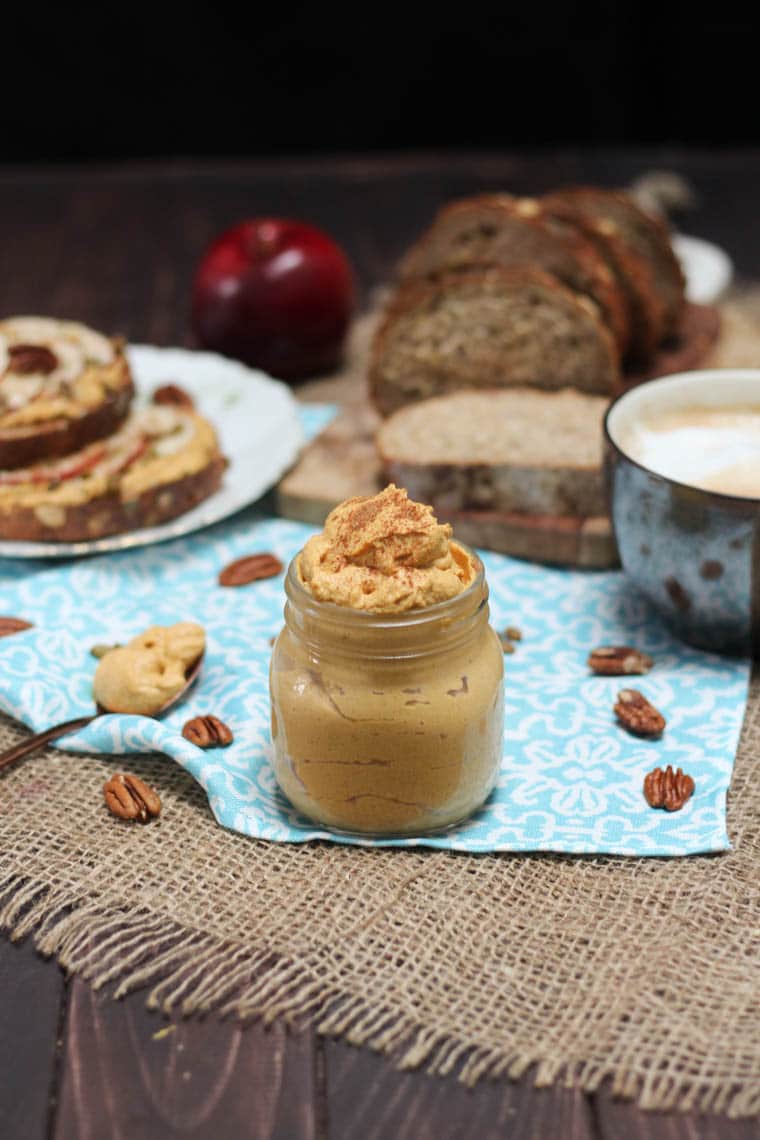
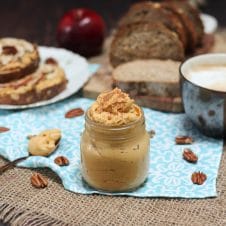
A table with a blue tablecloth with a mason jar filled with pumpkin pie butter inside.

This Vegan Pumpkin Pie Butter is the perfect 5 ingredient Healthy Winter Breakfast Spread or Dip for toast, crackers, yogurt, oats or fruit!

I’m a bread girl. Is any woman NOT a bread girl??! Gd bless you if you’re not, but man you’re missing out. I can eat a good loaf of bread au natural, but we all know everything always tastes better with a good spread. I don’t discriminate either. I’ll take butter, nut butter, jam, honey, cream cheese or compote. But when I want to get a little more festive in this winter vibe and bust out everyone’s favourite pumpkin spice flavours, I make this bad ass vegan Pumpkin Pie Butter.

A table with a blue tablecloth with a mason jar filled with pumpkin pie butter inside.

How to Make Vegan Pumpkin Pie Butter

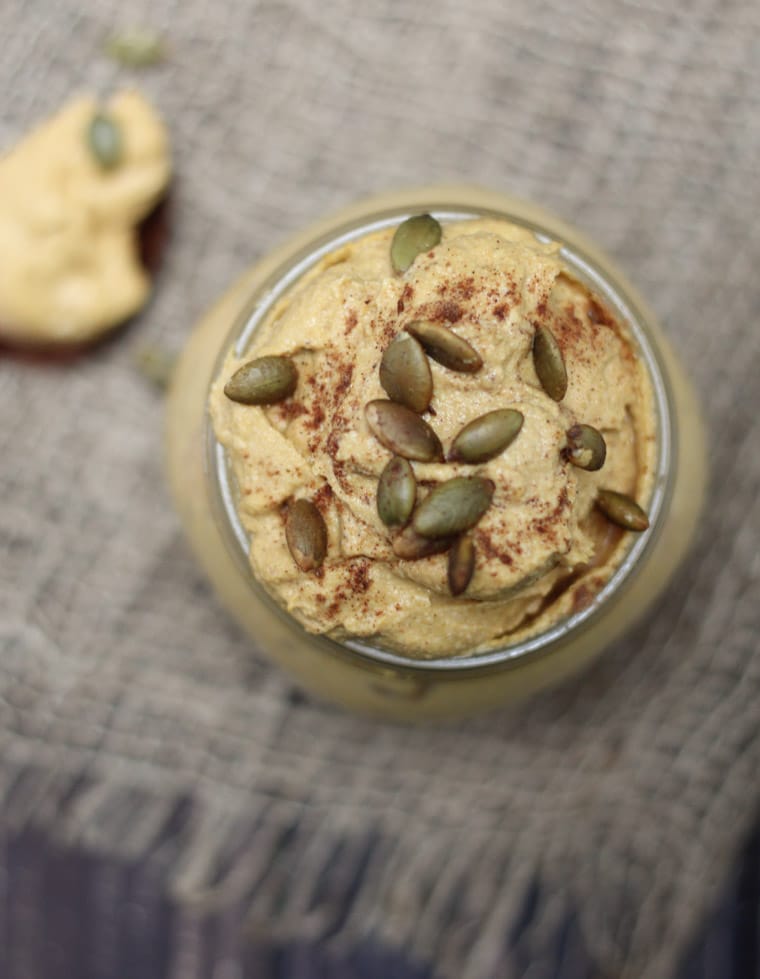
Overhead image of a jar of pumpkin pie butter with some pumpkin seeds on top.

Okay, so Vegan Pumpkin Pie Butter is kind of an oxymoron, no? It’s also a bit of a misnomer, but I can’t help what the rest of the culinary world would call a spread like this.  First of all, there’s no butter in this Vegan Pumpkin Pie Butter. In fact, there’s no dairy at all. Rather, it’s a tasty combination of pumpkin puree, soaked cashews, coconut sugar, vanilla and of course, pumpkin pie spice.  It couldn’t be more simple, yet it tastes like eating the pumpkin pie filling right out of the crust.

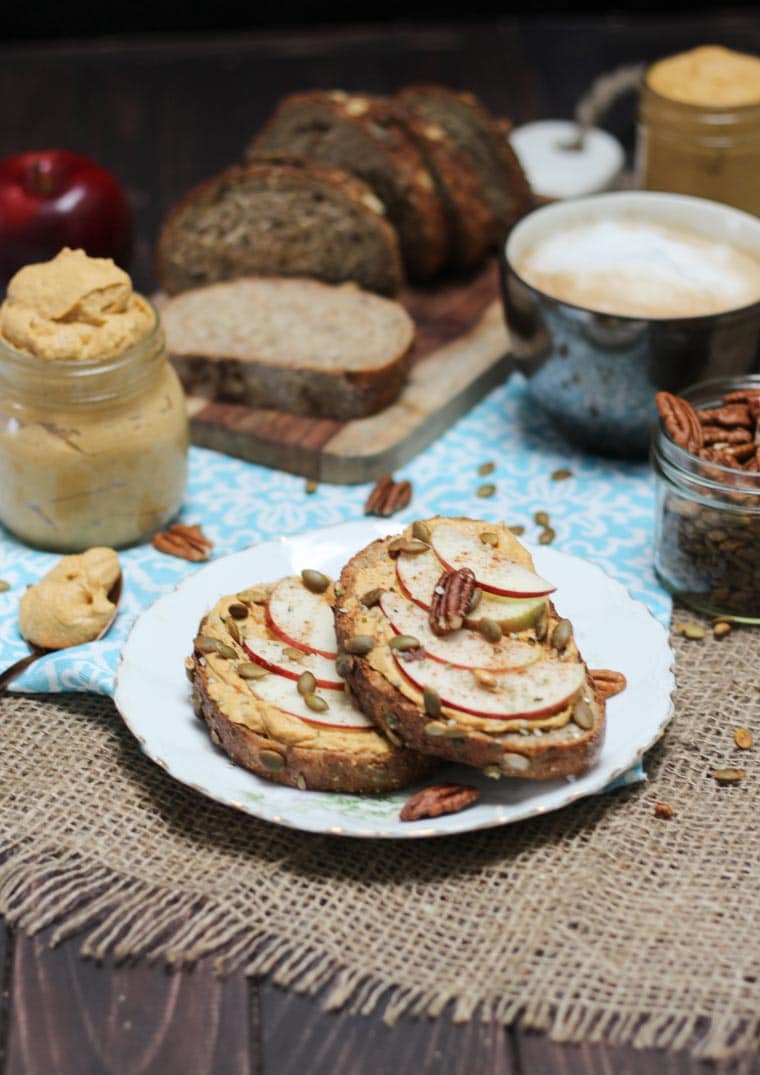
A plate with two pieces of toast with pumpkin pie butter spread on and topped with sliced apples and nuts.

The key is that you have to soak your cashews over night so that they’re easy to puree in the blender the next day. If you forget (or just want to make this on the fly as I do sometimes), you can easily boil some water and simmer them for a 5-10 minutes until soft. No stress, you got this.

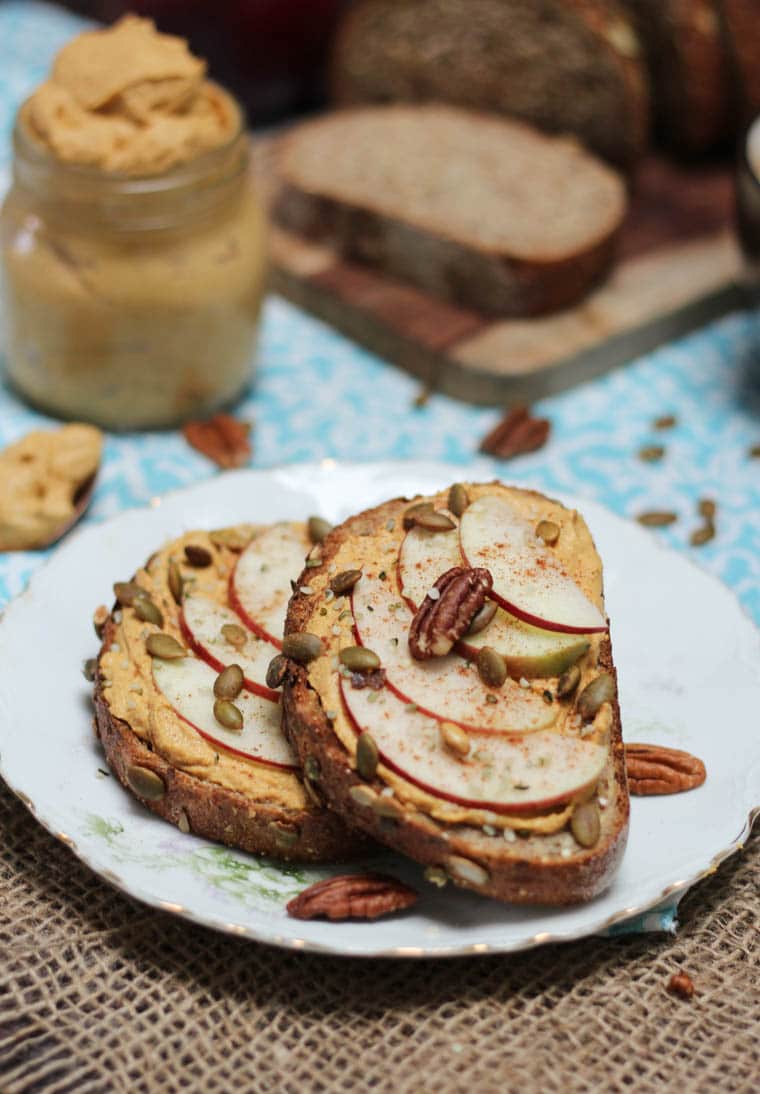
A close up of plate with two pieces of toast with pumpkin pie butter spread on and topped with sliced apples and nuts.

Then I puree the cashews with the pumpkin, sugar and spices and smear that Vegan Pumpkin Pie Butter all over everything. It’s delicious on a thick slice of good quality whole grain toast, but it’s equally yummy on crackers, used as a dip for fruit or swirled through yogurt or oatmeal. You’ll definitely want to make a big batch of this stuff and put it on everything. Because, come on, pumpkin spice everything is LIFE.

Now I want to know, have you tried this Vegan Pumpkin Pie Butter?

What would you envision it going really well on or with?

Leave me a comment below with your thoughts!

Pinterest image of toast with pumpkin pie butter with the text \"Vegan Pumpkin Pie Butter.\"

A table with a blue tablecloth with a mason jar filled with pumpkin pie butter inside.
Print Recipe
5 from 4 votes

Vegan Pumpkin Pie Butter

This Vegan Pumpkin Pie Butter is the perfect 5 ingredient Healthy Winter Breakfast Spread or Dip for toast, crackers, yogurt, oats or fruit!
Prep Time5 minutes mins
Total Time5 minutes mins
Course: Breakfast
Cuisine: American
Servings: 16 people
Calories: 95kcal
Author: Abbey Sharp

Ingredients

  • 2 cups soaked cashews
  • 2 cups pumpkin puree not pumpkin pie filling!!
  • 4-5 tbsp coconut sugar or to taste
  • 1 tsp pumpkin pie spice
  • 2 tsp vanilla extract
  • Big pinch of salt

Instructions

  • In a high speed blender, puree the cashews until they're grainy but broken down. Add in the pumpkin, sugar, spice, vanilla and salt and continue to puree until very smooth and creamy.
  • Serve on toast, crackers, yogurt, oatmeal or with fruit!

Nutrition

Calories: 95kcal
Abbey Sharp

Abbey Sharp is a Registered Dietitian (RD), regulated by the Ontario College of Dietitians. She is a mom, YouTuber, Blogger, award winning cookbook author, media coach specializing in food and nutrition influencers, and a frequent contributor to national publications like Healthline and on national broadcast TV shows.

www.abbeyskitchen.com/about-abbey/

Last Updated May 17, 2023. Published December 20, 2017 By Abbey Sharp 18 Comments

Do Babies NEED Cows Milk ? | Is Raising an Infant VEGAN Safe and Healthy?

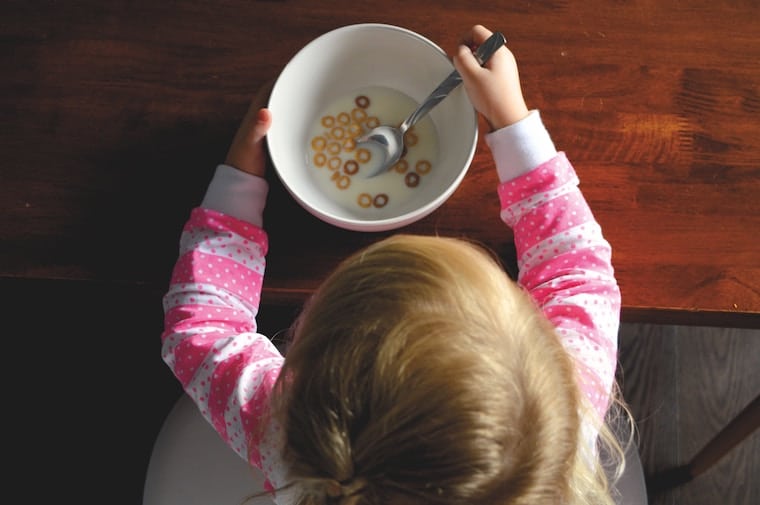
A girl sitting with a bowl of milk and cereal.

Do babies need cows milk after weaning from breast milk or formula? Is raising an infant vegan safe and healthy? We dig into the challenges and offer tips to do it right.

Nutrition is complicated and CONTROVERSIAL. While scientists are still trying to understand the role of nutrition in human physiology, there is research out there to help guide policies and professional recommendations. Recently, Dietitians of Canada and the Canadian Paediatric Society released a statement about the rise in plant-based beverages for children as an alternative to cows milk for babies. While the article does provide sound, research-informed recommendations, controversy ensued. In fact, people from both sides were going back and forth on many news comment forums.

Now, I understand that nutrition is a touchy subject, and everyone has the right to their opinion,  however, as a Dietitian, it’s important for me to put on my research hat and go through the facts.

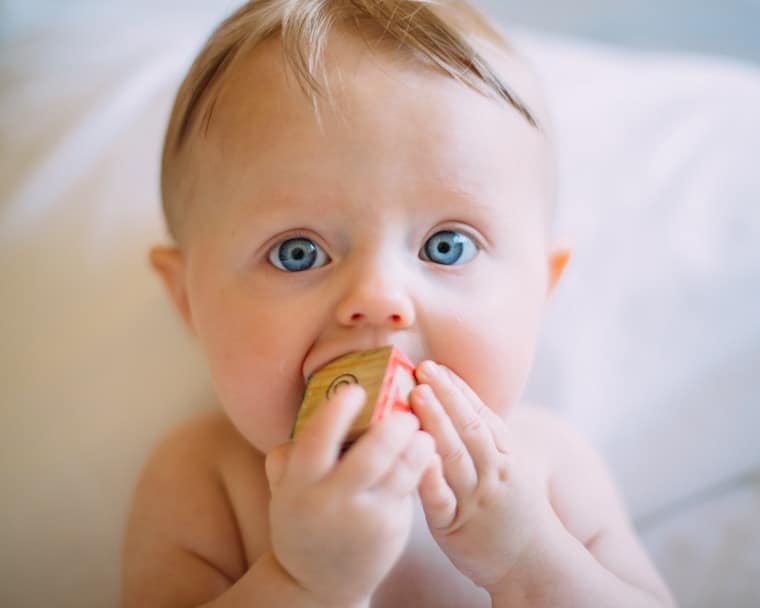
A baby with a block in his mouth.

meet sarah remmer, Rd

So, I decided to speak with a fellow colleague, Sarah Remmer, RD, who’s an Alberta-based Registered Dietitian that specializes in child and family nutrition. This kind of stuff is right up her alley. She will provide a wealth of information about about plant-based food and beverages. She’ll discuss whether or not babies need cows milk. Finally she’ll share how to do vegetarianism or veganism the right and healthy way.

Let’s dive in!

Dietitians of Canada and Canadian Position Statement

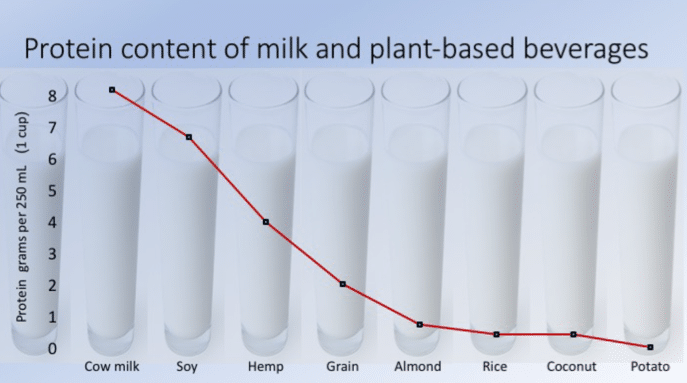
With the rise in plant based beverages, this state was released. As well, there has been an increase in nutrition deficiencies, and even a death. Becky Blair, a spokesperson for Dietitians of Canada, states this.  “The challenge for parents is conflicting messages. They read that these drinks are considered ‘healthier’ on social media or hear misinformation about cows milk or fortified soy beverage…The reason children can become malnourished is that these beverages contain very little protein and are very low in fat and calories.” And yes, this is true. Besides fortified soy and pea beverages, plant-based beverages such as almond, coconut, hemp, rice, and potato milk are very low in protein.

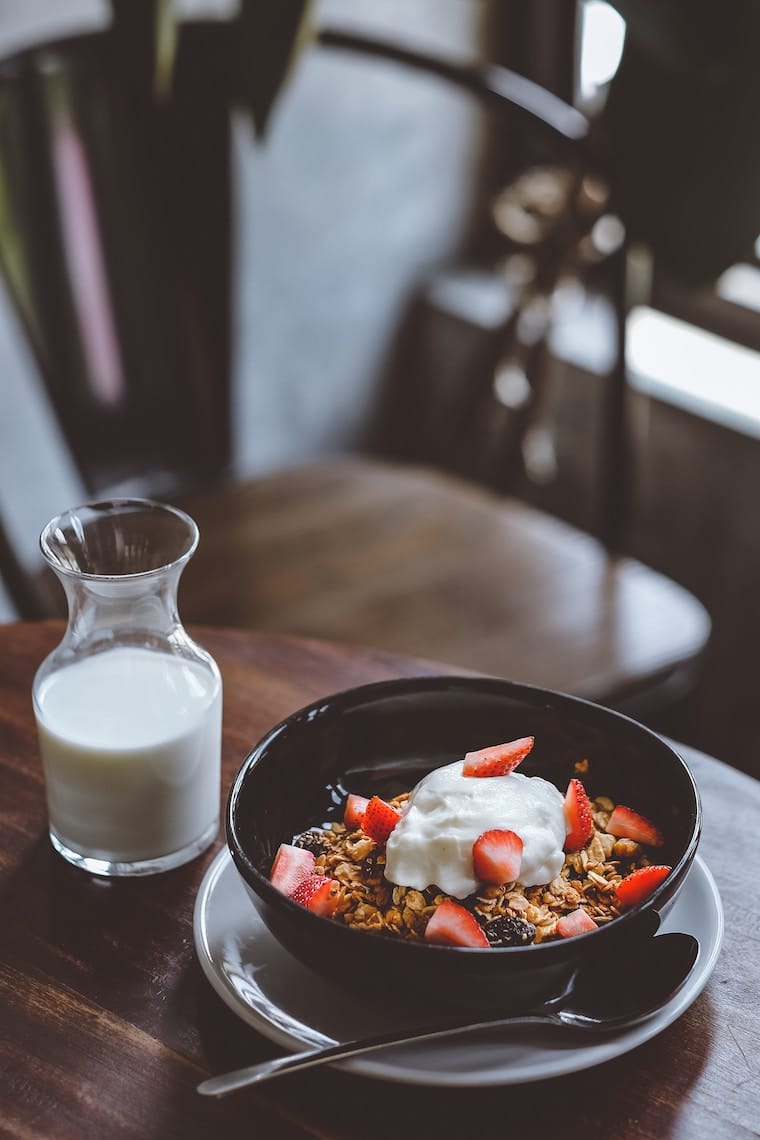
A table with breakfast on it and a glass of milk.

Paediatric Society Position Statement

Catherine Pound, a paediatrician and spokesperson for the Canadian Paediatric Society, stated “What parents often don’t realize is that some plant-based beverages are not fortified with any minerals or vitamins; these drinks are low in all nutrients except carbohydrate, in fact sugar is often the second ingredient after water…in the case of allergies, or other concerns, I recommend that parents speak with a dietitian to ensure all nutrient needs, including protein, fat and calories are being met with an age-appropriate diet.”

This sugar piece CAN also be true if we’re talking about sweetened (called “Original”) non dairy vegan milk alternatives. We’ve gone into detail analyzing, comparing and contrasting unsweetened versions of non dairy vegan milk alternatives here.

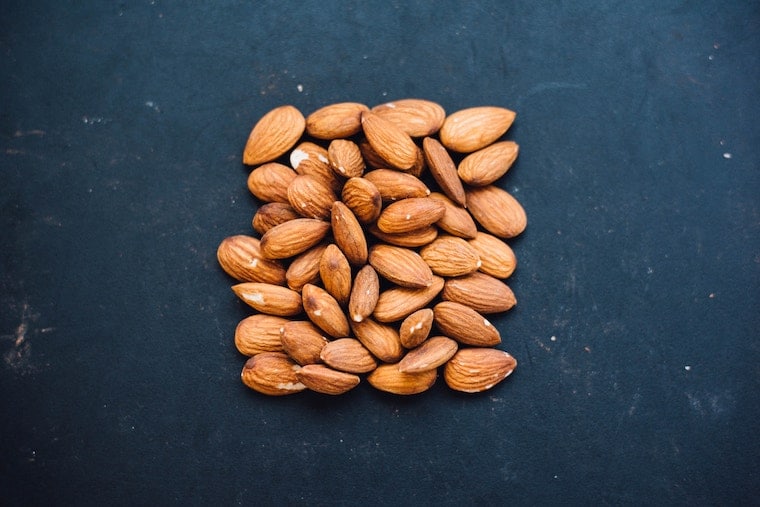
Almonds.

I understand, however, that parents who are themselves following a plant-based diet, may want to find an alternative that best works for them and their family. So here we will take a look at what the research says on whether babies need cows milk to thrive.

Nutrition Basics for Baby

First, let’s start out by understanding what a growing child needs. According to a systematic review on vegetarian and vegan diets in children, vegetarians and vegans (in particular) need to pay attention to important nutrients such as protein, iron, vitamin B12, calcium, vitamin D, omega-3 fatty acids, and iodine. Because infants, children, and adolescents have higher calorie and nutrient needs based on their size, they are particularly vulnerable to nutritional inadequacies.

protein

Protein is important for the development of basically everything in our body, from muscles and  enzymes to even the tiniest of cells. Amino-acids, the “building blocks” of protein, are chained together to make different protein structures in the body. There are 20 amino acids, 11 of which our body can make (called “nonessential” amino acids) and 9 our body cannot make (called “essential” amino acids). While animal-based proteins have a complete amino-acid profile, the amino-acid profile in plant-based proteins is generally not complete, except for soy, hemp, quinoa, and buckwheat. As long as you eat a diet with a lot of variety, you should have no problems getting all the amino-acids you need.

iron

Iron is important for the development of the central nervous system, especially in the first few years of life because of its role in brain and spine development, such as myelination (a coating around nerve cells to help with delivering signals). As well, iron is important for the development of red blood cells, which carry oxygen throughout our bodies. This delivery of oxygen is important for brain health. Some studies reported that vegetarian and vegan children consumed more iron than the control groups. However, the authors noted that it is important to understand that iron from plant sources have lower bioavailability of iron and therefore would need to consume more than those who eat meat.

Therefore, this does not mean that they have better iron stores. In fact, studies showed that over half of vegetarians had low iron stores. Health Canada recommends feeding your child iron-rich sources of food, such as iron-fortified cereals and meat/meat-alternatives (e.g., legumes) a few times a day starting at 6 months, since an infant’s iron stores become depleted around this time. Check out our full Iron Guide with lots of ideas on how to get enough iron for baby here!

A baby lying in bed.

vitamin d & calcium

Vitamin D and calcium are important for bone health. The authors noted that those on vegetarian and vegan diets are at risk of low vitamin D and calcium. Some studies reported that children on these diets had lower osteocalcin levels. However, vitamin D is hard to obtain through food alone and most people rely on the sun for vitamin D synthesis. The authors recommend supplementation for those who live in Northern areas or are of darker pigment.

It is important to note that there are two types of vitamin D available via supplements: vitamin D2 and D3. If you choose to refrain from animal products, vitamin D2 would be your choice. It’s unclear if vitamin D2 is as effective as vitamin D3. Health Canada recommends a vitamin D supplement (400 IU) for young children that are receiving breastmilk.

vitamin b12

Vitamin B12 is important for human metabolism, and deficiencies can lead to issues with blood and brain development. For infants and toddlers, deficiency can result in failure to thrive (insufficient growth), movement disorders, and developmental delays. Studies from the systematic review showed that most children were provided supplements to help with vitamin B12 intake since this vitamin primarily comes from animal products. The authors stressed that if the child is not supplemented, then serious developmental consequences could arise. Therefore, children should be screened for B12 deficiencies if vegetarian or vegan.

iodine

Iodine plays an important role in thyroid hormone production and can therefore have an impact on mental and physical development. In Canada, table salt must have iodine added to it. Therefore, this should not be an issue unless you strictly avoid all foods with added salt and use non-iodized salt.

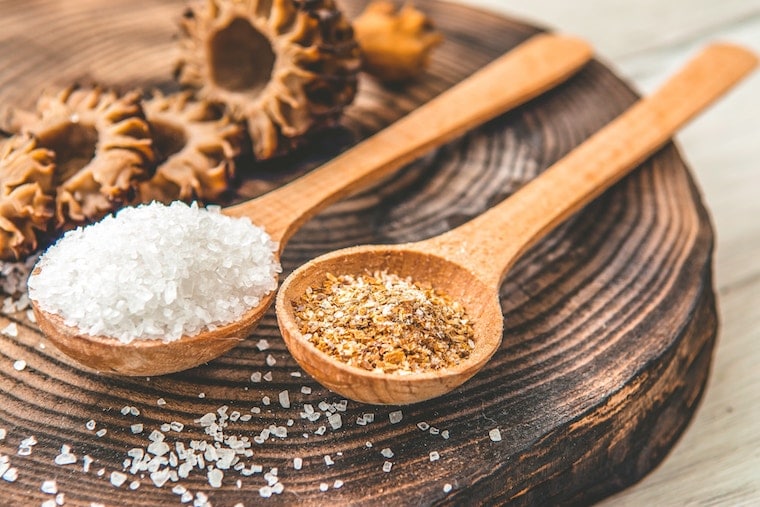
Seasoning in two spoons.
This image is sourced from Wooden Earth Stainless Cutlery.

fatty acids

Long-chain polyunsaturated fatty acids (PUFA) are important for visual and cognitive development, blood pressure, and the immune system. The two most well-known PUFAs are omega-3 and omega-6. Most people get plenty of omega-6 in their diet, but omega-3 can be a little trickier. There are 3 types of omega-3’s: ALA, EPA, and DHA. ALA is found in nuts and seeds (try grinding them up first to increase absorption), legumes, and animal products. This omega-3 is used to create EPA and DHA, which are found to have the most beneficial effect on our health.

However, this conversion of ALA to EPA and DHA is limited, therefore it is important to get these in your diet as well. EPA and DHA are mainly found in fish sources which can be an issue for those avoiding animal products but you can also find them in other marine based algae products, (and there are vegan supplements you can buy- like this one I like).

getting enough omega-3s

If you choose to eat fish, then try to get at least 2 servings a week. If you avoid this, speak with a Registered Dietitian or doctor to discuss other ways to get these important nutrients.

The authors noted that vegetarian diets (in particular) and vegan diets can provide an array of benefits. These groups tend to consume more vegetables and fruit. This provides antioxidants, fibre, and more monounsaturated and polyunsaturated fatty acids.

Vegetables on display.

Nutritional Content of Cow’s Milk vs. Plant-based Beverages

Based on the position statement, cow’s milk is recommended after the age of 9-12 months of age. Infants should be consuming solely breast milk until 6 months of age and then slowly introduced to solid foods. The reason cow’s milk is the “go-to” drink is because of its nutritional composition. Per cup, cow’s milk (3.25% milk fat, recommended for children under 2) contains about 8 grams of protein, 300 mg of calcium, and half the RDA of vitamin B12. It also is a good source of magnesium, vitamin A, riboflavin, vitamin B6, and iodine.

Okay, what about the other beverages?

Fortified soy beverage is your next best option in terms of protein. In one cup of unflavoured fortified soy beverage, you get about 7.4 grams of protein, half the RDA of vitamin B12, and 319 mg of calcium. It also has similar nutrients to cow’s milk and is fortified with vitamin D. A new option, Pea Milk, is also a comparable choice IF you are purchasing in the USA. Canadian Ripple is not fortified the way it is in USA. We go into DETAIL outlining the different vegan milk alternatives here. So, why isn’t it recommended in the position statement? Well, for adults, this is definitely a great alternative to milk to meet your protein needs.

However, children need fat and calories! Sarah Remmer, RD stated “The problem here is that, because it’s high in protein, it fills precious space in a toddler’s stomach (which is really small), and without having the fat, depending on how much a toddler is drinking, it could maybe contribute to that toddler not getting enough fat overall. One of the benefits to whole cow’s milk is the fat content, which growing toddlers need. I would say, instead, to continue with a soy-based, vegan infant or toddler formula vs. soy milk until two years and offer [it] via a cup with meals, just like you would milk.”

By using this formula, you are still providing your child with the important healthy fats they need for proper growth and development until the 2 year mark when it’s acceptable to cut back on the fat.

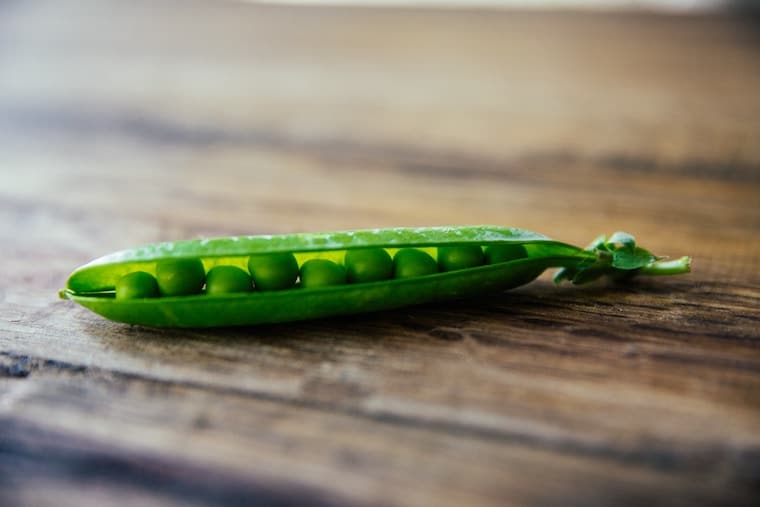
A close up of a green pea pod.

If you’re curious about how other plant-based vegan milk substitutes stack up, I suggest checking out the breakdown we did here.

In this post I also spoke to another colleague who suggested that if you really want to give fortified soy milk or Ripple pea milk (again, USA followers only) instead of dairy or soy formula, then you must ensure you’re amping up the fat and calories elsewhere in baby’s diet.

Chart with glasses of milk.

So is Raising an Infant Vegan Safe and Healthy?

Yes, of course it CAN be. However, you must be diligent in your meal planning and ensure baby’s growth is being tracked by her doctor. Recently, a Belgian couple were sentenced to a 6-month suspended jail sentence for feeding their child an “alternative” milk diet which led to the unfortunate death of their child. Alternative diets can be life-threatening when it’s not handled with caution, education and care.

Another example is a case study from Spain. An 11-month-old was brought to hospital and diagnosed with scurvy from low vitamin C as well as low vitamin D. The child had osteopenia, cortical thinning, Wimberger ring, Frankel line, fracture, and periosteal reaction. These are all issues with bone development. An x-ray also showed there were vertebral fractures and wide intervertebral spaces. This means his spine was weak.

vitamin c

Vitamin C is an important antioxidant and also plays a crucial role in collagen synthesis. When plant-based beverages are processed the biological activity of vitamin C disappears. The authors suggest that complementary feeding of fruits (e.g., orange, peppers, kiwi) with the plant-based beverage would have helped avoid this. They also noted that intake of vitamin C and D, calcium, zinc, and iron were much lower than the recommended amounts for this age. The infant was immediately switched off of the almond-milk infant formula.

Eventually, his nutrient deficiencies improved and there was improvement in his leg pain. After 8 weeks, he was able to start walking. There is no information about neurological impacts, however.

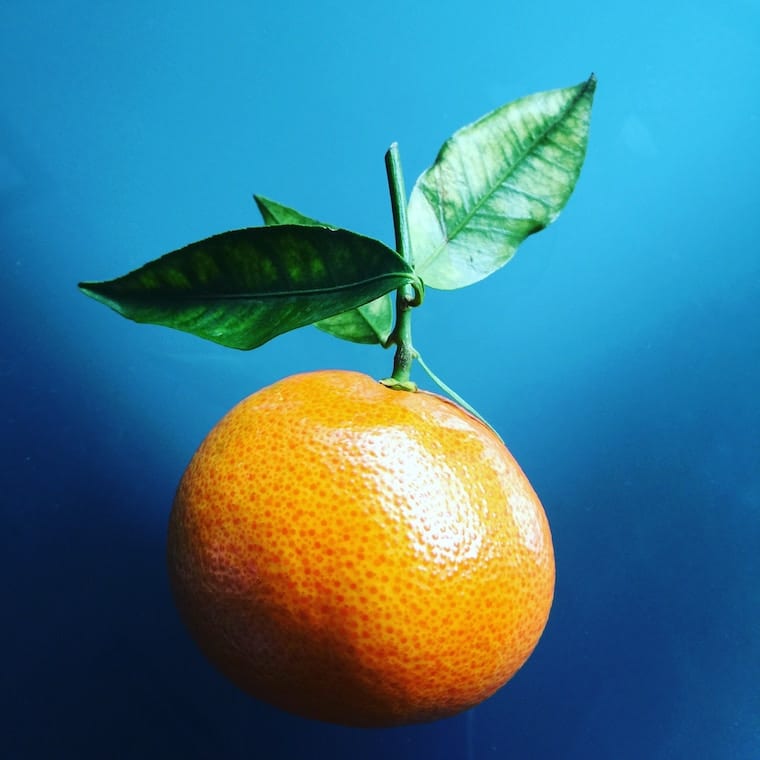
Orange with a stem and leaf.

These are EXTREME cases, so I don’t want to start fear mongering and mom shaming here. I truly believe children CAN thrive on a plant-based diet. I just also believe that it’s important to go into it well informed and with a flexible attitude that might mean deviating from you (as a parent)’s own ideals in the event the diet isn’t going so well for your child.

So Do Babies NEED Cows Milk?

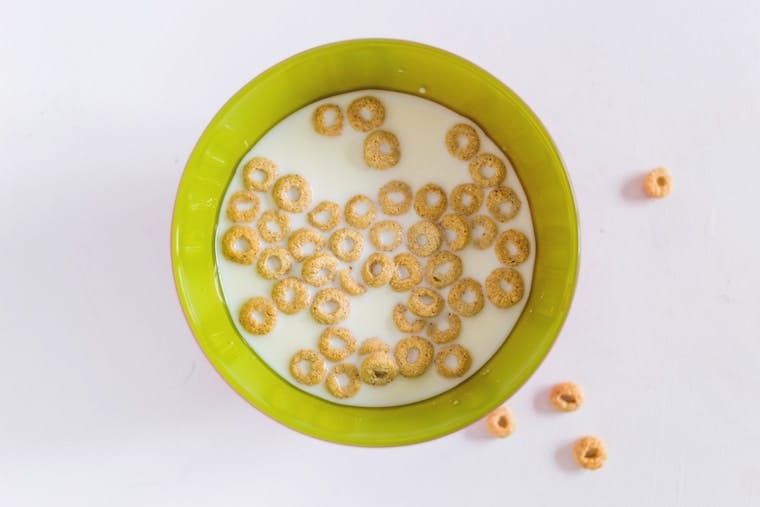
A green bowl with milk and cereal.

When asked if veganism fits into an infants diet, Sarah Remmer, RD responded with this. “It can, although it can be very challenging. Parents need to be extremely vigilant in making sure that the important nutrients that kids would be otherwise getting largely from animal sources (protein, iron, calcium, B12, etc.) are met through plant sources. Because more selective eating (picky eating) typically happens between the ages of 2 and 7, it can be very challenging to ensure that all nutrient requirements (and energy requirements) are met, with a strict vegan diet.”

If the child is under 1 year, “it would be very important that the baby was still receiving breastmilk or formula until the age of one. This will be where the baby would be getting the majority of his/her nutrition. I would then focus on plant-based nutrient-dense foods. Some of these foods include beans, lentils, nut and seed butters, avocado, fruits, veggies and whole grains. If vegetarian, eggs and dairy provide a lot of nutrition too.” If nut allergies are of concern for your child, she suggests seed butters.

nutritional concerns with vegan/vegetarian diets

We asked Sarah if she thought there were any nutritional concerns with feeding a child a vegan or vegetarian diet. Her response: “Unless a parent was extremely careful about ensuring that their baby was meeting all nutrient requirements through plant-based foods (and supplements), it’s challenging (vegan). Vegetarian is a lot easier, especially if both eggs and dairy are included.” 

To make sure you’re providing your child (over 6 months) with adequate nutrition while consuming a vegetarian or vegan diet, be sure you’re able to check off everything on this list.

meeting nutrition check list

  • They continue to breastfeed OR is taking a soy-based, vegan infant or toddler formula OR 3.25% milk until 2 years of age
  • Baby is trying different vegetables and fruit
  • My kid is getting a variety of whole grains (e.g., whole grain bread, rice, quinoa, buckwheat)
  • They eat various plant-based proteins, such as legumes, tofu, and nut/seed butters. If vegetarian, my child also eats dairy products (e.g., cheese, yogurt) and eggs, unless there is an allergy.
  • I provide my child with different sources of omega-3’s. These include ground chia, hemp seeds, oil, ground nuts/nut butters, and fortified products (e.g., eggs, margarine)
  • If my child is breastfeeding, he/she is getting 400 IU of vitamin D through vitamin D drops
  • My child eats protein-rich foods (e.g., beans or lentils, fortified cereals, tofu, eggs) with a source of vitamin C (e.g., red peppers, oranges, kiwi) to increase absorption
  • I am in communication with a Registered Dietitian and/or doctor continues to monitor my child’s growth and development and screens for any deficiencies

So are dietitians in bed with the meat and dairy industry?

No. As a regulated health professional, Registered Dietitians must disclose any conflicts of interest, such as being sponsored by a company or industry. In this case, we cannot say ‘This product is better than that product’ and must give balanced, evidence-informed advice. So, for example, for vitamin D, we cannot say “buy X-company’s products instead of Y-company’s products” if they both provide equivalent nutrition. We must also abide to a code of ethics that refrains us from misusing scientific research to benefit a cause.

This means that we must review scientific evidence and use our professional opinion in a non-biased manner. This protects you and the public. If you have any questions, please visit College of Dietitians.

 do babies need cows milk? can infants thrive while vegan?

A girl sitting with a bowl of milk and cereal.

Everyone has a right to eat what they choose and we need to stop diet shaming. At the same time, we want to make sure that children get the proper nutrition they need to grow properly. As Sarah Remmer, RD mentioned, a vegetarian or vegan diet can fit, but it does take work.

bottom line

Always consult with a Registered Dietitian and/or doctor who is trained to deal with special diets such as this. They will not judge you for your decision to feed your child according to your values and beliefs. At the end of the day, we want to children to thrive and grow up to be healthy, long-living adults.

If you liked this post, you may like:
ARE VEGAN MILK SUBSTITUTES SAFE FOR PLANT BASED BABIES WHO DON’T DRINK COW’S MILK?
GOAT MILK VS COW’S MILK VS SHEEP MILK FOR BABIES
Pinterest image of a close up of a pea pod and a bowl of milk and cereal with the text overlay \"Do Babies Need Cows Milk?\"

Contribution by RD2B Katey Davidson

Abbey Sharp

Abbey Sharp is a Registered Dietitian (RD), regulated by the Ontario College of Dietitians. She is a mom, YouTuber, Blogger, award winning cookbook author, media coach specializing in food and nutrition influencers, and a frequent contributor to national publications like Healthline and on national broadcast TV shows.

www.abbeyskitchen.com/about-abbey/

Last Updated April 30, 2020. Published December 11, 2017 By Abbey Sharp 29 Comments

Gluten Free Birthday Cake Protein Waffles | Healthy High Protein Breakfast

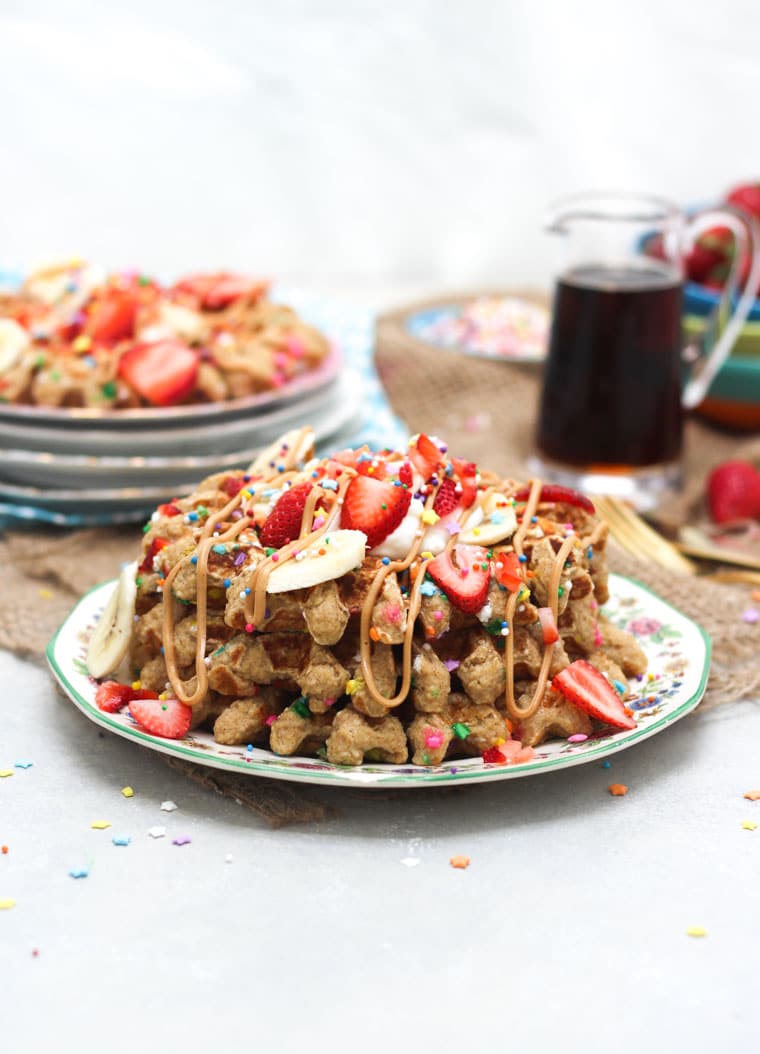
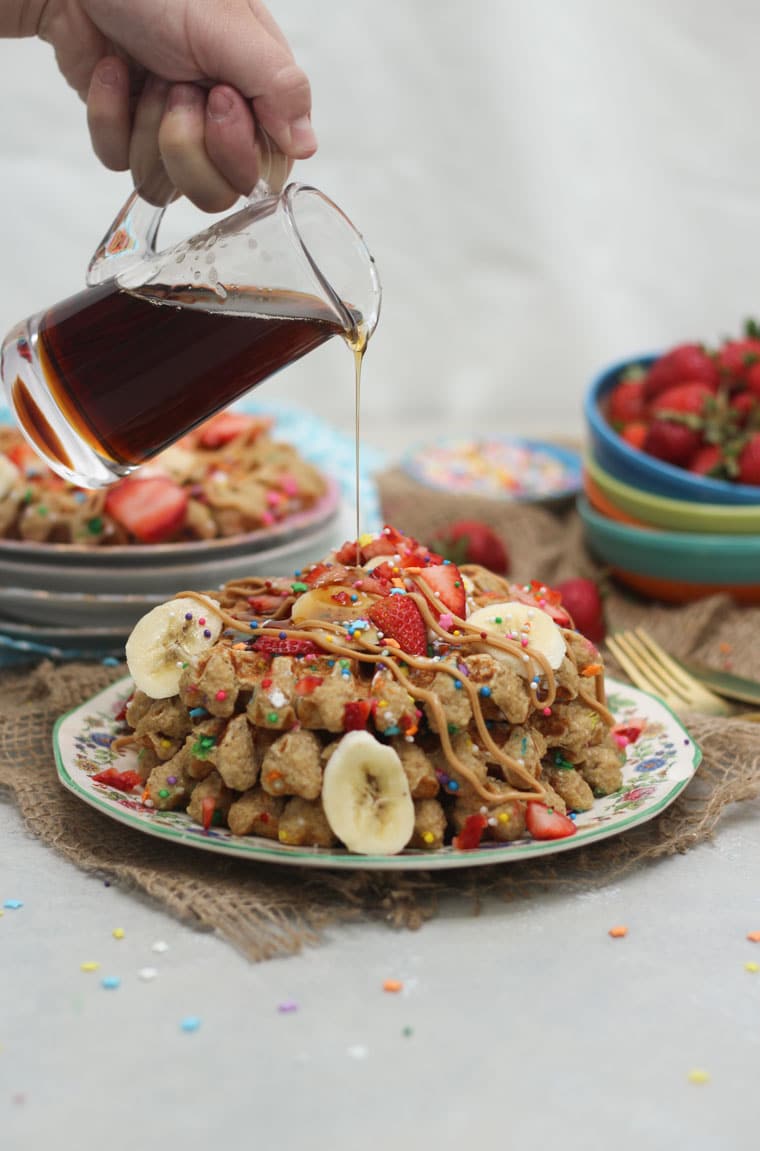
A stack of birthday cake protein waffles on a white plate with strawberries on top with a bottle of syrup being poured on.

It doesn’t have to be your birthday to start your day off right with these healthy gluten free birthday cake protein waffles that are made from scratch and totally easy.

Guys, I’m excited because it’s my birthday in 3 DAYS! Even more exciting, I’m turning 30! It’s a big year and I plan on celebrating loud and proud. To kick off the festivities I plan on whipping up these gluten free birthday cake protein waffles. I FINALLY got myself a waffle iron, and now I want to waffle all day, err day! So get ready for a ton more waffle recipes. For now, let’s focus on one of my fav flavs: birthday cake (insert googley eyes here).

A stack of birthday cake protein waffles on a white plate with strawberries on top.

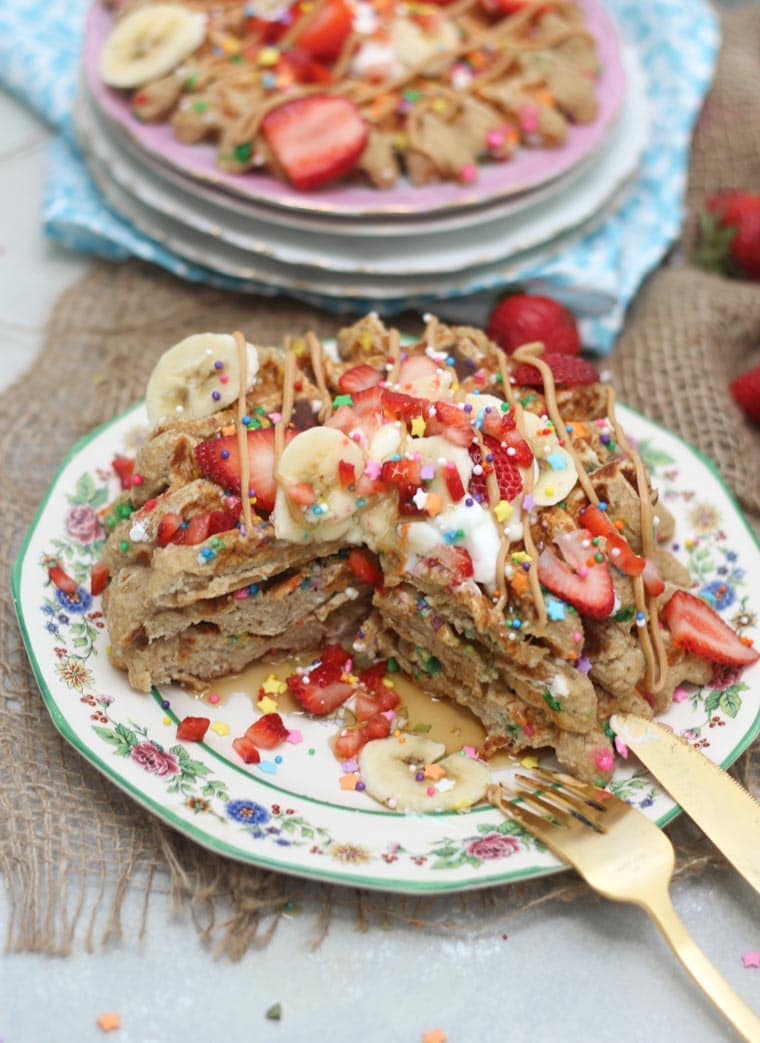
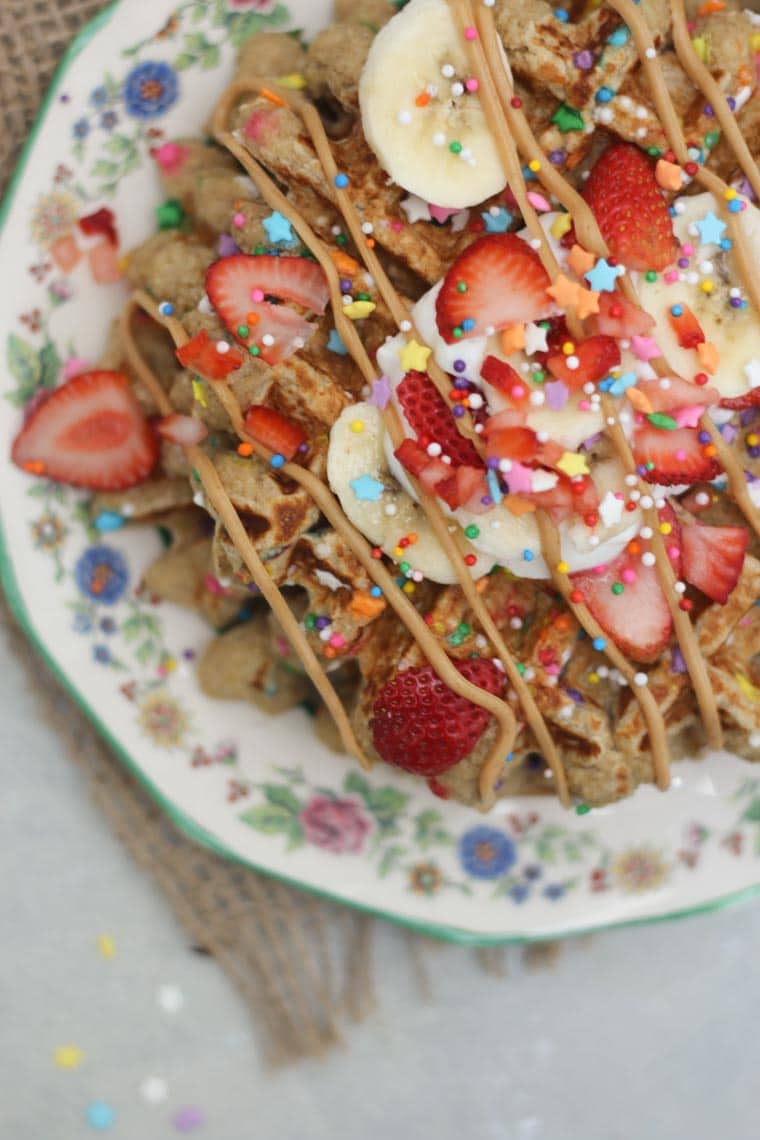
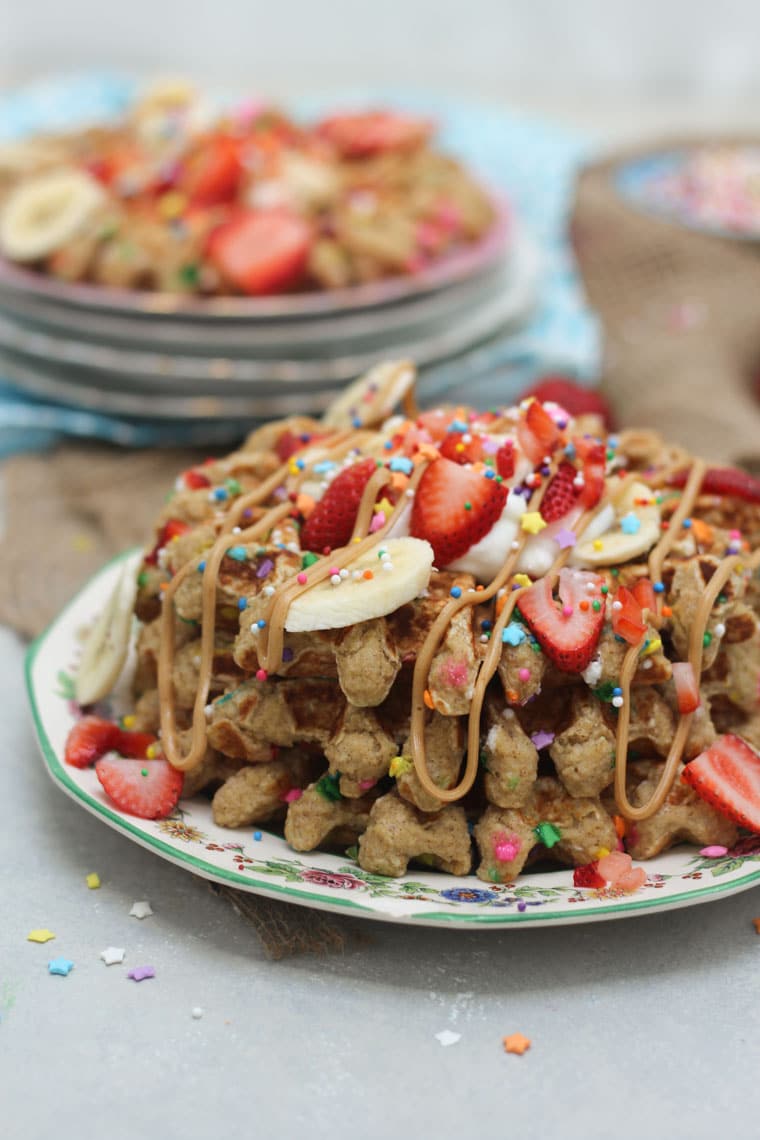
These birthday cake protein waffles are probably the prettiest stack I’ve ever made (or consumed). Not only are they super insta-worthy but also are made without the use of artificial ingredients. On top of that, they pack a protein punch! Each waffle clocks in with a whopping 22 grams of protein and that’s without the use of protein powder! Um.. YES. I always depend on a high protein breaky to get through my day and usually refuel after a long workout.

A stack of birthday cake protein waffles on a white plate with strawberries on top cut opened.

Want to make this stack of these birthday cake protein waffles ASAP? Here’s how you make em.

How to Make Birthday Cake Protein Waffles

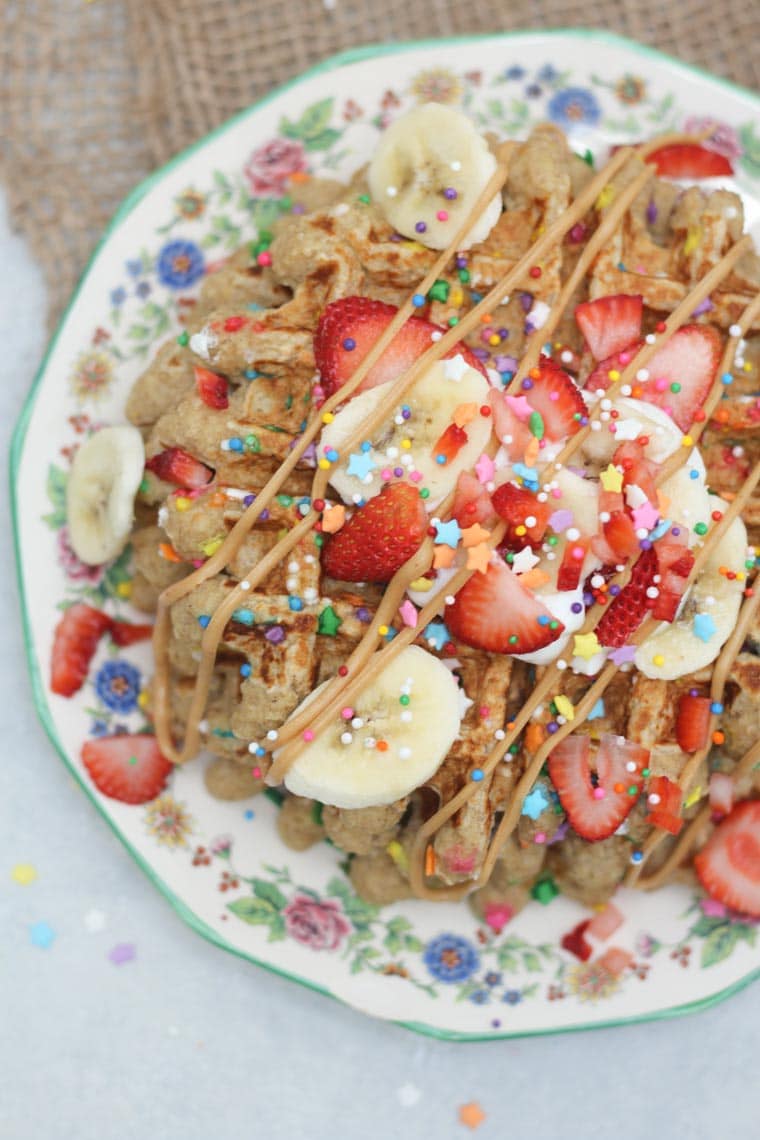
A close up overhead view of a stack of birthday cake protein waffles on a white plate with strawberries and sprinkles on top.

I wanted to develop a recipe that was as easy as pie (or should I say waffle?), so I chose ingredients that you would typically find in your pantry and fridge. Basically, I want you guys to be able to whip up a stack of these bad boys ASAP whenever you need a pick me up. And any day (not just your birthday), can be birthday cake protein waffle day.

A stack of birthday cake protein waffles on a white plate with strawberries on top with a bottle of syrup being poured on.

To make the batter, I use gluten free oats (pulsed in a food processor), cottage cheese, banana, eggs, cinnamon, and vanilla. Once my waffle iron is fully heated, I add 1 cup of the mixture and MAKE IT RAIN with an assortment of sprinkles.

A close up overhead view of a stack of birthday cake protein waffles on a white plate with strawberries and sprinkles on top.

Once the waffles are cooked, I finish them off with a generous dollop of greek yoghurt, strawberries, bananas, almond butter and obv MORE sprinkles!


There you have it lovelies. All that’s left is to chow down on this stack, but before you do, be sure to snap an insta and tag me in it so I can see your lovely creations!

A stack of birthday cake protein waffles on a white plate with strawberries and sprinkles on top.

Guys I am TOTS making this again on my 30th birthday! I legit cannot WAIT to dig in (oh and to celebrate with family and friends, of course).

Now tell me, what breakfast do you want on your birthday?

Have you tried these gluten free birthday cake protein waffles?

Leave me a comment below with your thoughts!

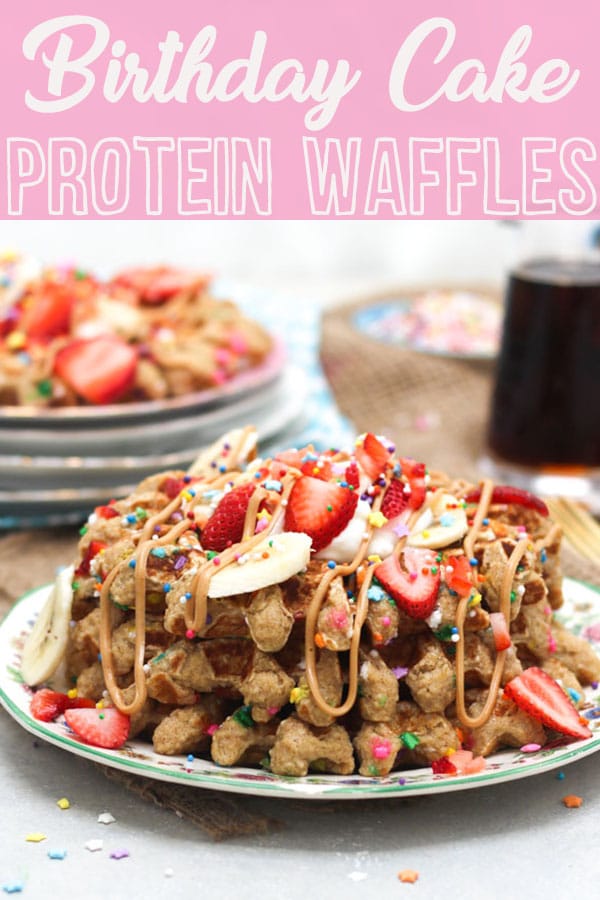
Pinterest image of a stack of birthday cake protein waffles on a white plate with strawberries and sprinkles on top with the text overlay \"Birthday Cake Protein Waffles.\"

A stack of birthday cake protein waffles on a white plate with strawberries on top.
Print Recipe
4.80 from 5 votes

Gluten Free Birthday Cake Protein Waffles

It doesn't have to be your birthday to start your day off right with these gluten free birthday cake protein waffles.
Prep Time5 minutes mins
Cook Time5 minutes mins
Total Time10 minutes mins
Course: Breakfast
Cuisine: American
Servings: 8 waffles
Calories: 226kcal
Author: Abbey Sharp

Ingredients

  • 2 cups cottage cheese
  • 2 cups gluten free oats
  • 1 ripe large banana
  • 4 whole eggs
  • 4 egg whites
  • 1 tsp vanilla
  • 1 tsp cinnamon
  • 1/8 tsp salt
  • Rainbow sprinkles

Toppings:

  • Rainbow sprinkles
  • Greek yogurt
  • Sliced strawberries
  • Sliced banana
  • Natural Almond Butter

Instructions

  • In a food processor, puree the oats until they reach a flour like texture. Transfer to a large bowl.
  • Add the cottage cheese and banana to the processor and puree until smooth. Add to the bowl.
  • Add the eggs and egg whites, vanilla, cinnamon and salt to the bowl and stir until combined.
  • Preheat a waffle iron and add 1 cup of mixture to the centre. Sprinkle with assorted sprinkles and cook to desired doneness.
  • Top with a dollop of yogurt, a drizzle of almond butter, strawberries, bananas and extra sprinkles. Enjoy!!

Video

Nutrition

Calories: 226kcal
Abbey Sharp

Abbey Sharp is a Registered Dietitian (RD), regulated by the Ontario College of Dietitians. She is a mom, YouTuber, Blogger, award winning cookbook author, media coach specializing in food and nutrition influencers, and a frequent contributor to national publications like Healthline and on national broadcast TV shows.

www.abbeyskitchen.com/about-abbey/

Last Updated December 5, 2017. Published December 5, 2017 By Abbey Sharp 28 Comments

The Alkaline Diet Review | Does PH Balance Help You Lose Weight?

pH Value chart.

The official The Alkaline diet Review and answering the question does PH Balance actually help you lose weight and fight disease?

Lose weight, have more energy, look great, and fight disease! If you read gossip magazines or nutrition blogs, you’ve surely heard about the alkaline diet. It’s become a favourite amongst beautiful celebrities and has even inspired full lines of lucrative snacks and drinks.

But What is the Alkaline Diet Anyway?

The alkaline diet is based on a theory suggesting that eating certain foods will interfere with your body’s natural pH balance, making it more acidic. This acidic environment is bad for your health, and will make us more vulnerable to chronic disease, kidney stones, osteoporosis, arthritis, and even cancer. On the flip side, by eating foods that promote a more alkaline (and less acid) environment you apparently will just instantly lose weight and protect yourself from disease.

It sounds science-y right? And science-sounding stuff is always right, right? Let’s take a closer look.

pH Value chart.

First thing’s first: what is pH and how does it impact the Alkaline Diet?

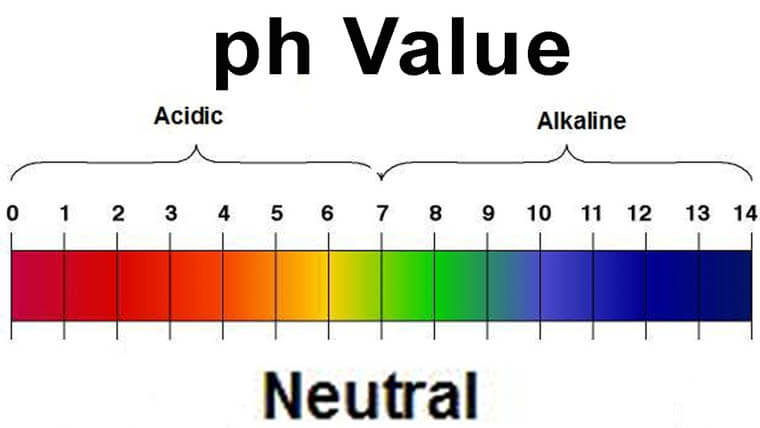
Dust off those textbooks, folks, we’re heading back for a little Chemistry 101 (Gd help me!).   Power of hydrogen (pH) is a scale between 0 and 14 used to measure how acidic or basic something is. A value of 7 is neutral and is the same as water. Values below 7 are considered acidic and above 7 are alkaline. The natural internal environment of our cells has a slightly alkaline pH of about 7.4.

Foods themselves have a pH range, too but proponents of the Alkaline Diet aren’t as concerned with the pH of food before you eat, but with the supposedly damaging ‘acid residue’ produced as certain foods are digested. This ‘acid residue’ is said to promote the creation of fat reserves, cause skin breakouts, and leach minerals from your bones and muscles, eventually causing arthritis, osteoporosis, chronic disease and cancer.

Okay… so what kind of food can I eat on the Alkaline Diet?

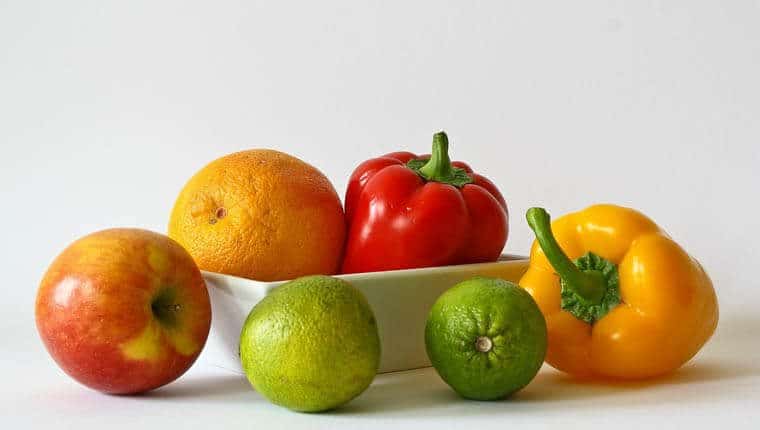
The Alkaline Diet cuts out all animal products including meat, dairy, and eggs. All processed foods are out, too. Different versions of the diet have different rules when it comes to grains, but most grains are not allowed either.   The rationale for cutting these food specifically on the basis these foods will leave behind ‘acid residue’, putting stress on your internal environment in order to neutralize the acid, making you more susceptible to disease and weight gain, among other things.  I hope you really like legumes, vegetables, fruits, and some nuts because they’re pretty much the only foods you get on the Alkaline Diet.

A bowl with bell peppers and oranges with limes around it.

What does the science say?

You guys know that since I’m a dietitian I don’t “do” woo so let’s get real here. There are currently no scientific studies exist to back any of the claims of the Alkaline Diet (spoiler alert). The body’s innate ability to maintain its optimal internal environment (homeostasis) is actually very tightly regulated. Tightly regulating our internal environment is essential to our survival- if our cellular environment changed drastically every time we ate a snack, we would be in serious trouble.   organs of our digestive tracts maintain certain environments to ensure proper digestion, absorption, and metabolism of nutrients. So while your stomach is an acidic environment, the cells themselves producing and releasing gastric acid are not, and are protected from this acid by mucus. Nothing you eat is going to change the internal pH of your cells once it begins to be digested! again- this is kind of a catchall- and would involve completely explaining the process of digestion and absorption and ultimately metabolism?

So what happens when I pee on the litmus paper?

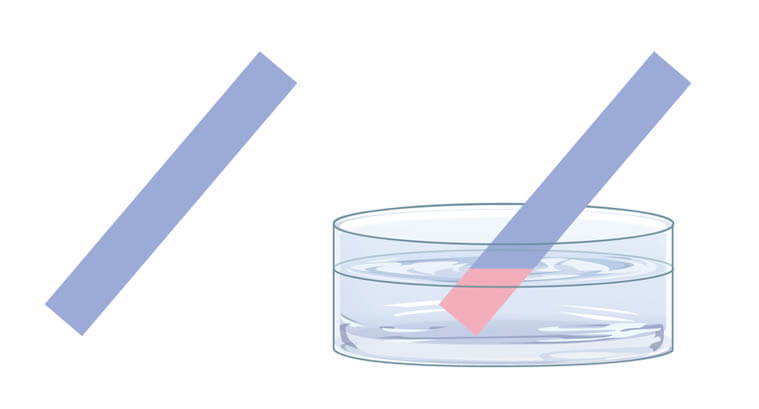
One point of ‘evidence’ the Alkaline Diet suggests to support its claims is to monitor the pH of your urine. Peeing on a piece of litmus paper will turn red under acidic conditions and blue under alkaline conditions.

A strip of pH testing in use.

Urine pH does change with diet, and changes throughout the day, depending on how much and when you eat certain foods.   Excess acidity is eliminated through your kidneys and that is reflected in your urine- but this has nothing to do with blood pH or the your cells. There isn’t enough solid evidence to suggests that pH of your urine is directly associated with an increase in chronic disease, osteoporosis, or cancer.

What about my bones?

Lots of studies (here and here) have been done in an attempt to prove that eating too much animal products may create an acidic environment resulting in a higher chance of osteoporosis. The theory suggests that these ‘acid-promoting’ foods cause minerals like calcium and magnesium to be leached from the bones in order to neutralize the environment, thereby reducing bone density. We actually went into great detail on that in this milk myth post here. While it has been shown that fruit and vegetable intake is associated with lower bone loss over four years, higher protein intake is associated with even less bone loss over the same time. Protein, like calcium and vitamin D, is an important building block in bone health.

Bones.

The Bottom line?

Though the pseudo-science may not add up, there are health benefits to eating the plant-powered diet that is promoted by the Alkaline Diet. I’m all for encouraging people to eat more heart-healthy high-fibre, nutrient-dense foods like veggies, fruits, nuts, and legumes and removing highly processed foods.

However, as with any diet, cutting out certain foods (particularly if it’s whole food groups) and eating fewer calories will lead to weight loss so if this works, it’s not due to any magic acid-neutralizing powers. It’s because you’re eating fewer things, and maybe you’re also by default now eating fewer crappy things like fast food and booze. Is this a magic pill? Nope. Is this healthy? In my opinion, not necessarily- especially if you develop an obsession with restricting food (see my post on orthorexia here).

A better option is to simply cut back on some of the more processed foods in your diet, stretch your meals with lots of fresh veggies and plant-based protein and mindfully enjoy the rest.

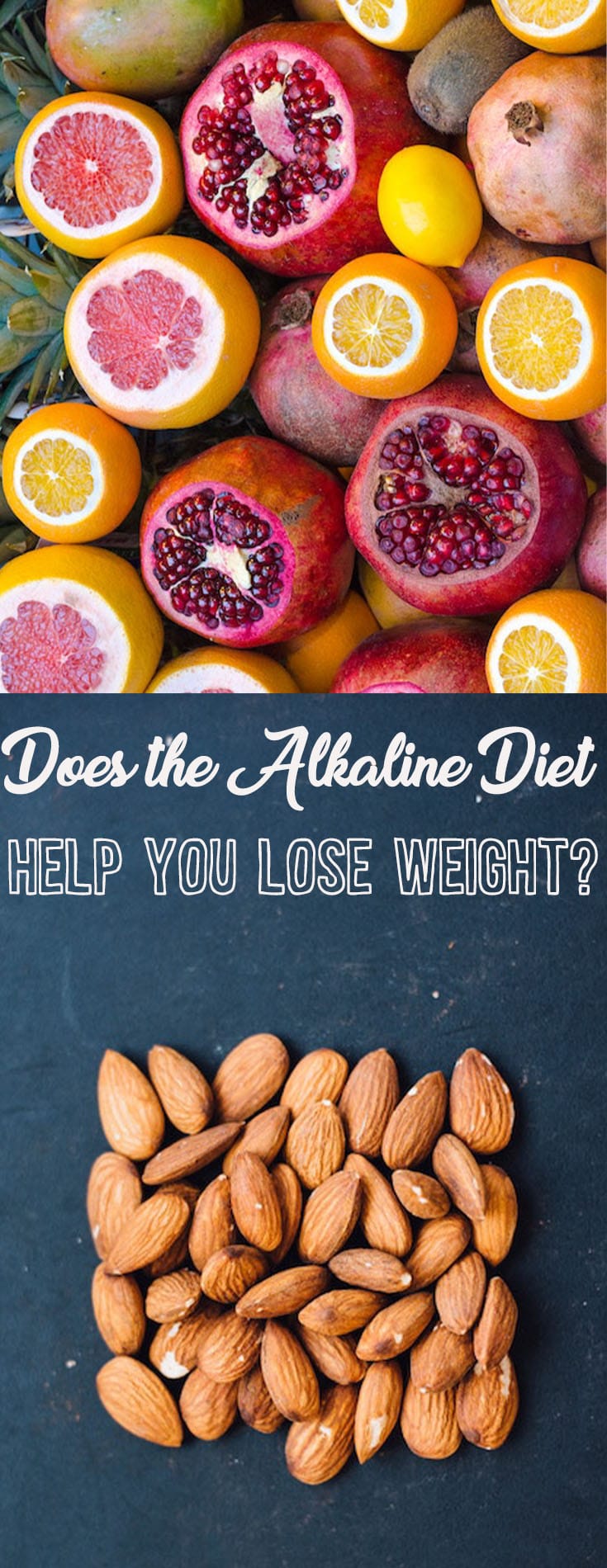
Fruits and nuts pinterest image with the text \"Does the Alkaline Diet Help You Lose Weight?\"

Contribution by RD2B Kourtney Gordon

Abbey Sharp

Abbey Sharp is a Registered Dietitian (RD), regulated by the Ontario College of Dietitians. She is a mom, YouTuber, Blogger, award winning cookbook author, media coach specializing in food and nutrition influencers, and a frequent contributor to national publications like Healthline and on national broadcast TV shows.

www.abbeyskitchen.com/about-abbey/

Last Updated May 12, 2020. Published December 1, 2017 By Abbey Sharp 39 Comments

3 VEGAN Hemp Hearts Recipes | Falafel, Breakfast Cookies, No-Oats Porridge

A plate of hemp heart falafels.

DISCLAIMER: This post was developed in sponsored partnership with Manitoba Harvest Hemp Hearts, however, as always, all opinions are genuine.

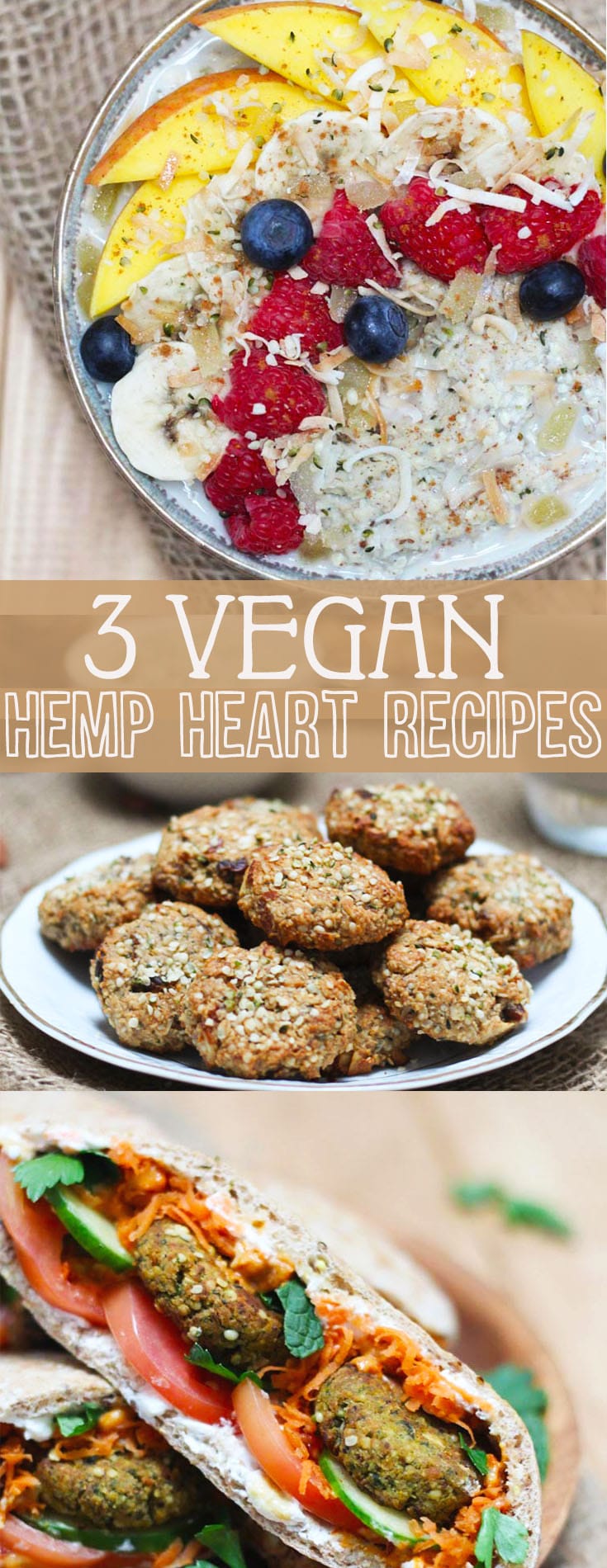
I share my three favourite vegan hemp hearts recipes including a healthy falafel, power cookies, and hemp hearts no-oats porridge!

Okay so I know the holidays are around the corner, and I’ve been sharing a lot of indulgent desserts and holiday brunches. But in between stuffing my face with monster cookies, I’m trying to balance everything out with really nutritious well-balanced meals. Hemp has become a go-to super plant stable in my home because they’re an easy way to boost the nutrition in literally any meal. But first of all, let’s get one thing straight. This is a totally PG blog post, so no, I’m not talking about illicit drugs.

If you’re not familiar with Manitoba Harvest hemp hearts, get ready to meet your new BFF. Hemp hearts are packed with protein, fibre and healthy omega 3 fats so they’re pretty much a vegan, gluten free, low carbers dream. For a three tablespoon serving, you’re looking at a whopping 2.5 grams of omega 3s, 1.5 grams of monounsaturated fats, 3 grams of fibre and 10 grams of protein. They also supply 30% of your daily iron needs, so this is a great vegan way to get your fill without meat or dairy.

How to Make 3 VEGAN Hemp Hearts Recipes

The best part about hemp hearts is that they’re incredibly versatile. I add a handful to my oats or yogurt every day, throw them into any baked goods for a little extra nutrition, and let them stand in for oats or flour in savoury goodies, too. So I wanted to share my three favourite vegan hemp hearts recipes for showcasing this plant based superfood!

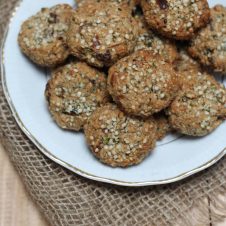
Hemp Hearts Power Cookies A plate of hemp heart falafels.

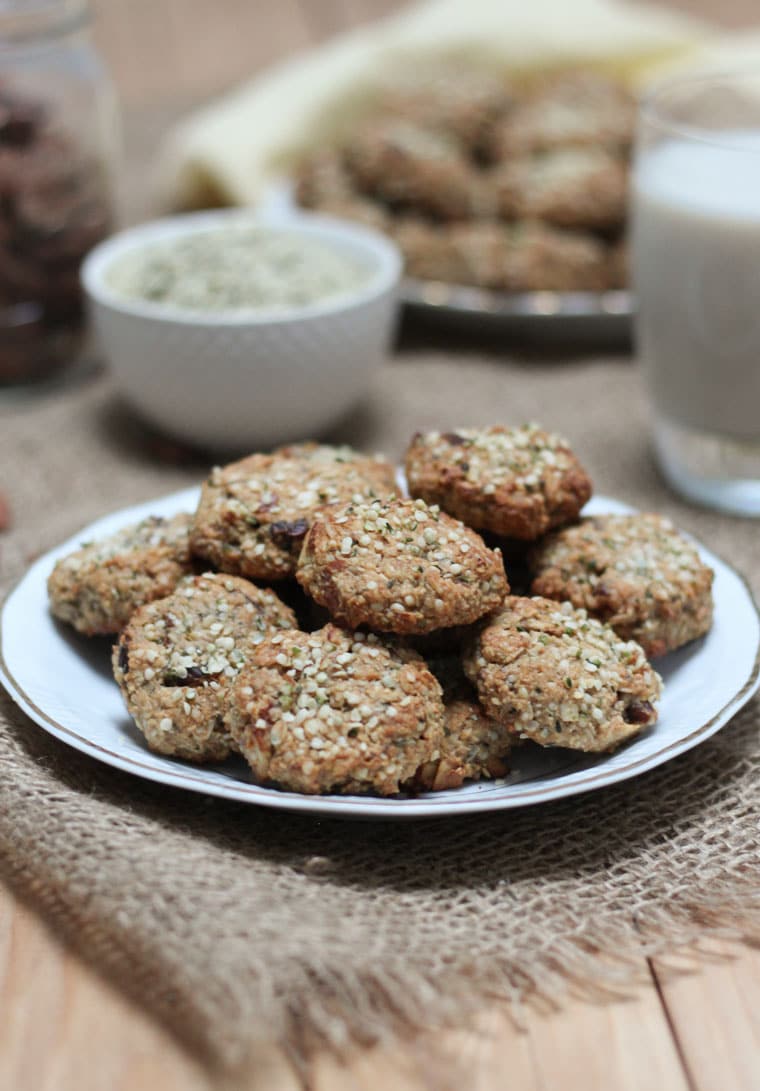
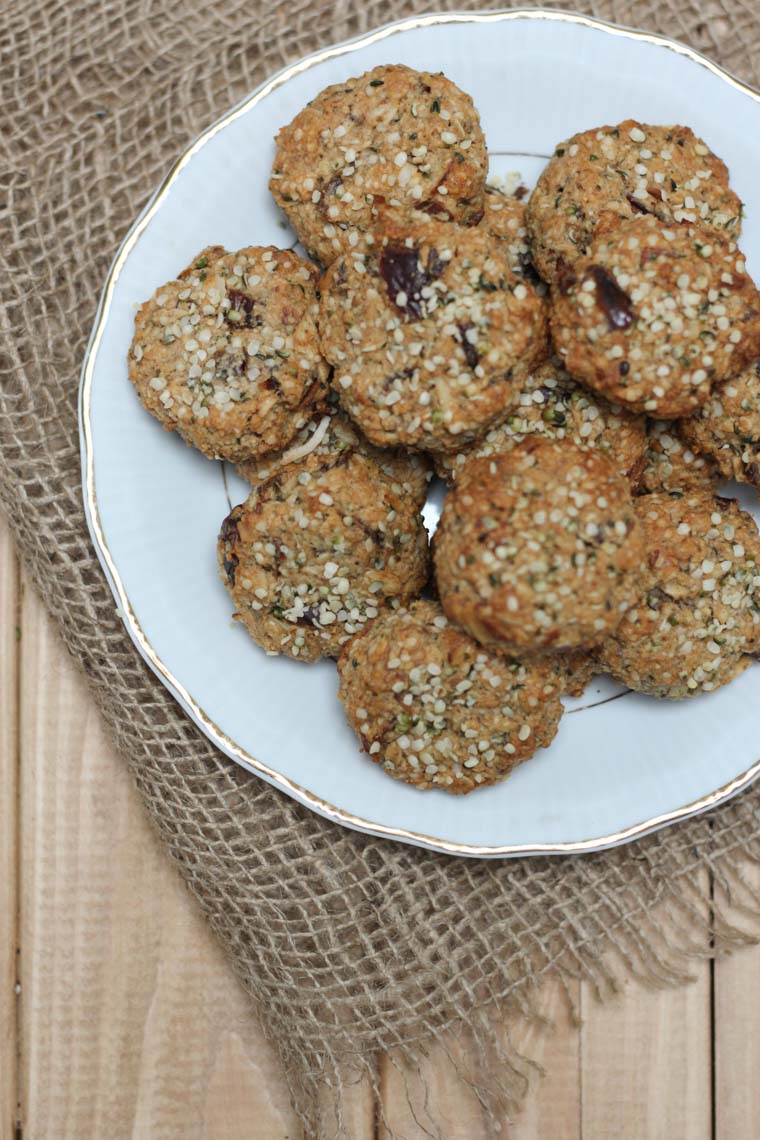
Because cookies should always come first in life. These hemp hearts power cookies are tasty enough for dessert, but healthy enough for breakfast (and who doesn’t want to eat cookie for breakfast?)  They’re packed with healthy fats from almonds and hemp hearts and natural sweetness from bananas and dates. It doesn’t matter if you’re a total carnivore, this will become one of your go to vegan hemp hearts recipes.

A plate of hemp heart breakfast cookies. Hemp Hearts Baked FalafelA pita sandwich with hemp heart falafels inside.

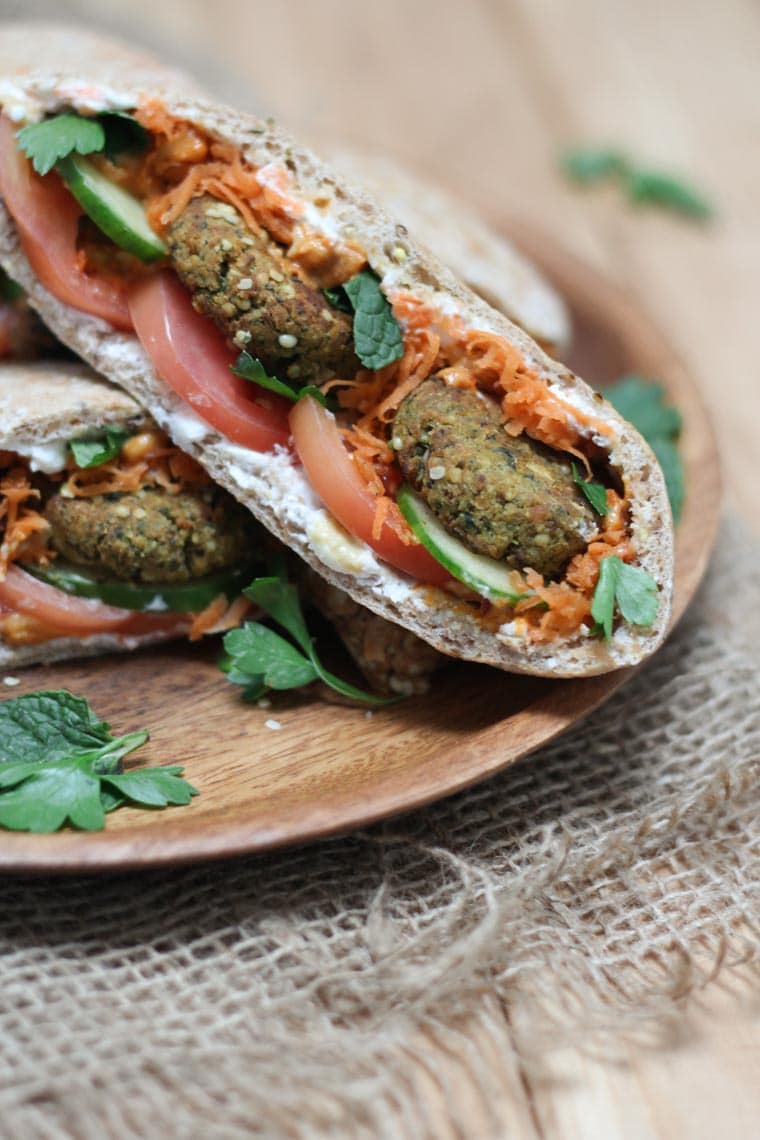
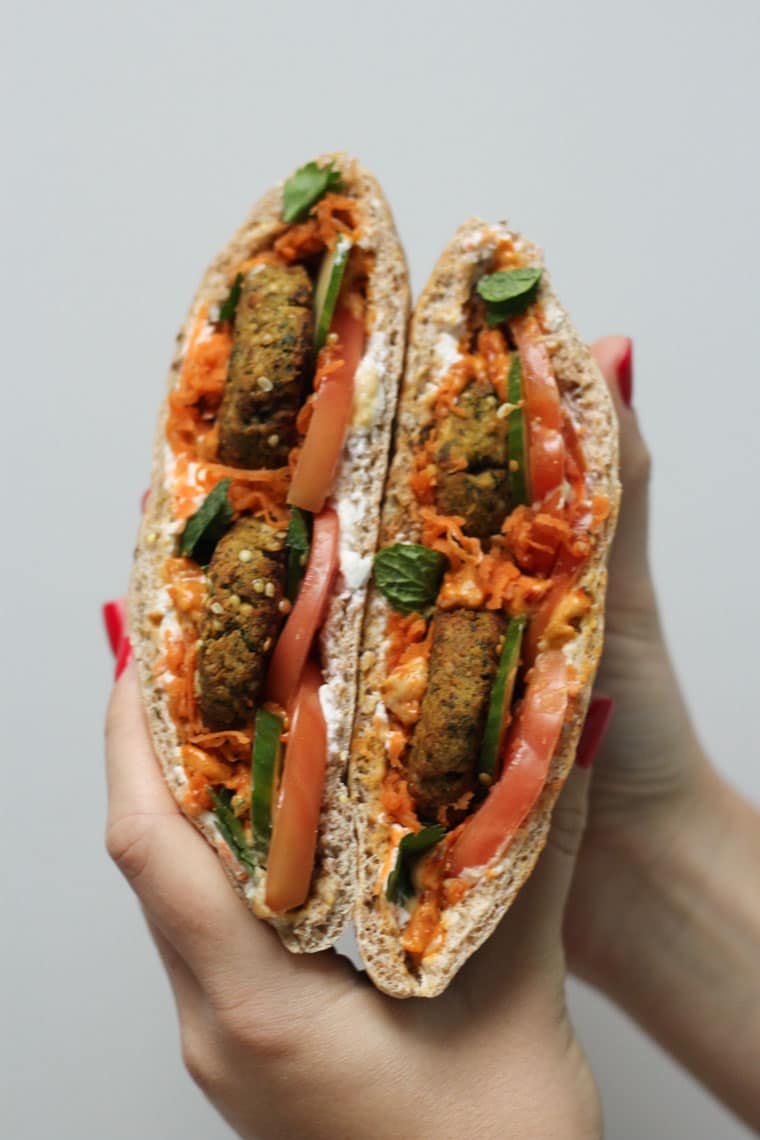
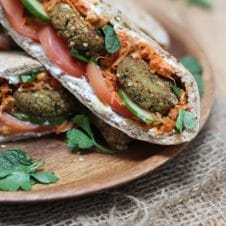
So I fell in love with falafel in Israel and have been making it at home ever since. The recipe itself is so nutritious, and since we bake ours, they’re even healthier. I combine protein-rich chickpeas with hemp hearts, herbs and spices and form them into sweet little patties. I like to serve these hemp hearts baked falafel stuffed into pita with grated veggies, hummus and tzatziki, but you can totally serve them as an appetizer dipped into hummus, too. A pita sandwich with hemp heart falafels inside.

Hemp Hearts No-Oat Porridge

A bowl of hemp hearts no oats porridge.

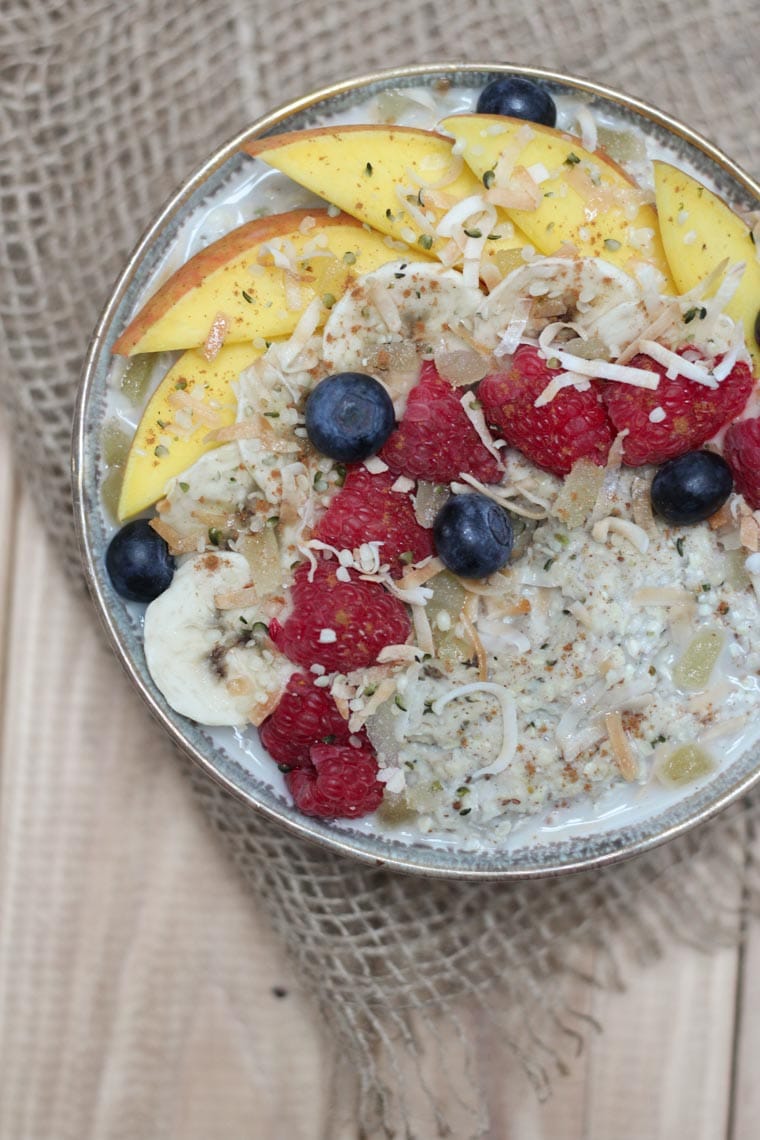
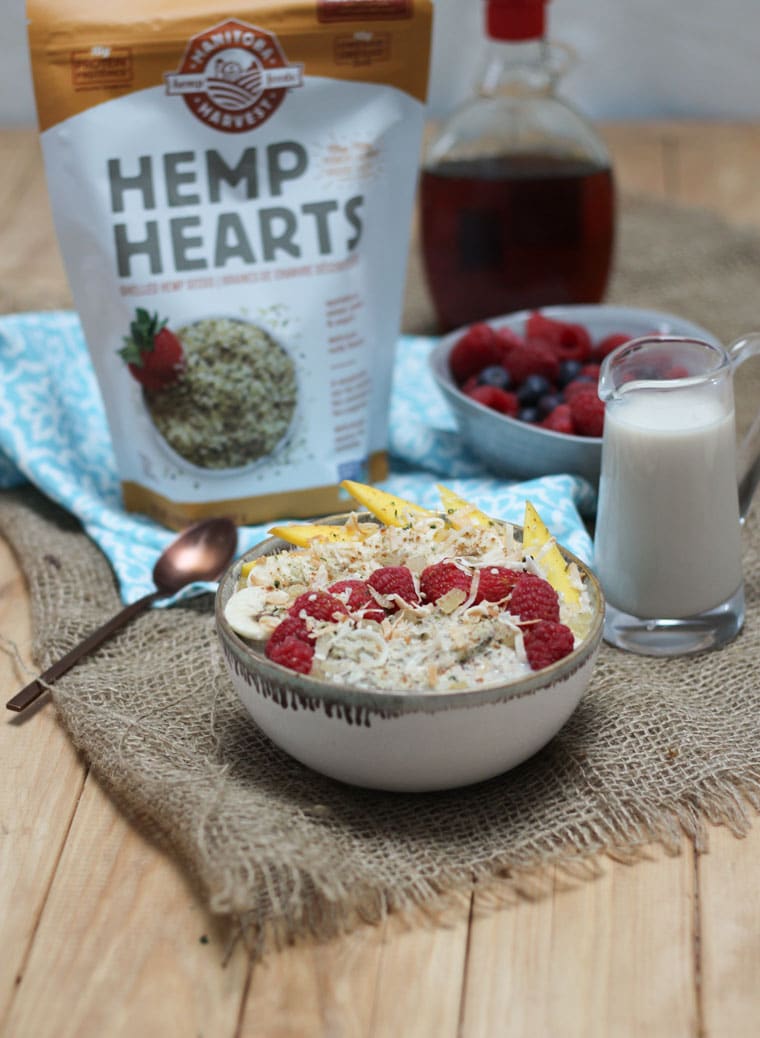
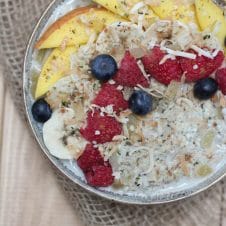
I have nothing against oats, but I know a lot of my followers and readers who are on paleo or keto diets try to limit their oats. Friends, this Hemp Hearts No-Oat Porridge is the warm winter breakfast you’re craving!! I mix together hemp hearts with almond flour, coconut, flax, chia and spices to yield a super creamy, naturally sweet porridge. It’s like cream of wheat but packed with more flavour and nutrition! This is one vegan hemp hearts recipe that you’re going to keep in your back pocket for all of these cold winter mornings.

A bowl of no oats porridge with a bag of hemp hearts in the back.

Hemp Hearts Giveaway!!

So now that I’ve shared my go-to vegan hemp hearts recipes, I would love to hear about yours and by doing so, you could win a Manitoba Harvest Prize Pack!

To enter, you can:

Leave a Blog Post Comment about how you like to use hemp hearts

Subscribe to my Meal Plan Mailing List

Subscribe on YouTube

Follow on Instagram

Like on Facebook

Follow on Pinterest

 The more of these you do, the more chances you have at winning!

a Rafflecopter giveaway

Hopefully these three vegan hemp hearts recipes will get you started, but if you’re looking for some more inspiration, check out ManitobaHarvest.com!

So what’s your favourite way to use hemp hearts?

How do you want to experiment with hemp hearts in the future?

Which of these three vegan hemp hearts recipes do you want to try first?

Leave me a comment below and happy snacking!

A pinterest image of no oats porridge and a plate of breakfast cookies with the text overlay \"3 VEGAN HEMP HEART RECIPES.\"

Disclaimer: This post was developed in paid partnership with Manitoba Harvest, however, all opinions are genuine.

I share my three favourite vegan hemp hearts recipes including a healthy falafel, power cookies, and hemp hearts no-oats porridge!
Print Recipe
4.78 from 35 votes

Hemp Hearts Power Cookies

Packed with almonds, hemp hearts and dates, these naturally sweetened hemp hearts power cookies will be a vegan favourite for breakfast or snack.
Prep Time1 hour hr
Cook Time15 minutes mins
Total Time1 hour hr 15 minutes mins
Course: Snack
Cuisine: Canadian
Servings: 12 cookies
Calories: 255kcal
Author: Abbey Sharp

Ingredients

  • 1 tbsp ground flax seed
  • 2 tbsp unsweetened vanilla almond milk
  • 1 cup almond flour
  • 1 cup rolled oats gluten free if needed
  • 1 ½ tsp cinnamon
  • ½ tsp baking powder
  • ¼ tsp salt
  • 1 very ripe banana mashed
  • 2 tbsp coconut oil melted
  • ¼ cup almond butter
  • ¼ cup plus 1 tbsp maple syrup
  • ½ tsp vanilla extract
  • ½ cup dates minced
  • ½ cup sliced almonds
  • ½ cup Manitoba Harvest Hemp Hearts plus more for topping

Instructions

  • To make a flax egg, combine the flax and the almond milk in a small bowl and let sit in the fridge for an hour.
  • Meanwhile, preheat oven to 350 F and place a silpat on a baking sheet.
  • In one bowl, mix together the almond flour, oats, cinnamon, baking powder and salt.
  • In another, mix the banana, coconut oil, almond butter, maple, vanilla and flax egg. Mix the dry into the wet until combined, then fold in the dates, almonds and Manitoba Harvest hemp hearts.
  • Roll into small 2 tbsp balls and flatten them out on the baking sheet so they’re 1/2 inch tall. Sprinkle generously with more hemp hearts and bake for 12-15 minutes until golden brown.

Nutrition

Calories: 255kcal | Carbohydrates: 21g | Protein: 8g | Fat: 17g | Saturated Fat: 3g | Sodium: 55mg | Potassium: 212mg | Fiber: 4g | Sugar: 10g | Vitamin A: 50IU | Vitamin C: 0.8mg | Calcium: 91mg | Iron: 2.3mg

Only Eats

A pita sandwich with hemp heart falafels inside.
Print Recipe
4.68 from 25 votes

Hemp Hearts Baked Falafel

Packed with plant based vegan protein, these hemp hearts baked falafel are a super flavourful meal or snack.
Prep Time10 minutes mins
Cook Time20 minutes mins
Total Time30 minutes mins
Course: Sandwiches
Cuisine: Middle Eastern
Servings: 4 people
Calories: 156kcal
Author: Abbey Sharp

Ingredients

  • 1 can chickpeas drained and rinsed
  • ½ cup parsley leaves
  • ½ cup mint leaves
  • 1 garlic clove minced
  • ½ small onion minced
  • 5 tbsp Manitoba Harvest Hemp Hearts plus more for sprinkling
  • 3 tbsp almond flour
  • 1 tsp dried coriander
  • 1 ½ tsp cumin
  • ¼ tsp paprika
  • 1 tsp salt
  • ¼ tsp pepper
  • Olive oil in oil atomizer

Instructions

  • Preheat oven to 450 F and line a baking sheet with parchment paper or a silpat.
  • In a food processor, pulse the chickpeas, parsley, mint and puree until grainy but well broken down.
  • Add in the onion, garlic, Manitoba Harvest Hemp Hearts, flour, coriander, cumin, paprika, salt and pepper and pulse until fairly smooth.
  • Roll into 2 tablespoon balls and form into ¼ inch patties. Sprinkle generously with more Manitoba Harvest Hemp Hearts on both sides, then spritz with olive oil. Bake for 15-20 minutes until golden brown, flipping once half way through.
  • Serve in a pita or dipped into hummus.

Nutrition

Calories: 156kcal | Carbohydrates: 6g | Protein: 9g | Fat: 11g | Saturated Fat: 1g | Sodium: 590mg | Potassium: 107mg | Fiber: 2g | Sugar: 1g | Vitamin A: 1040IU | Vitamin C: 13.9mg | Calcium: 71mg | Iron: 4.1mg

A bowl of hemp hearts no oats porridge.
Print Recipe
4.84 from 24 votes

Hemp Hearts No Oats Porridge

A keto or paleo friendly version of oatmeal, this hemp hearts no oats porridge is packed with healthy fats, protein and fibre and is totally vegan.
Cook Time10 minutes mins
Total Time10 minutes mins
Course: Breakfast
Cuisine: Canadian
Servings: 2 people
Calories: 721kcal
Author: Abbey Sharp

Ingredients

  • 1 1/2 cup unsweetened vanilla almond milk
  • 2/3 cup Manitoba Harvest Hemp Hearts
  • ¼ cup plus 2 tbsp almond flour
  • ¼ cup plus 2 tbsp unsweetened shredded coconut
  • 2 tbsp flax seed
  • 2 tbsp white chia seeds
  • 1/2 tsp cinnamon
  • 1/8 tsp nutmeg
  • 1/8 tsp salt
  • 1 very ripe banana mashed
  • 1 tsp vanilla extract
  • Maple syrup to taste

Topping:

  • Sliced fruit
  • Toasted coconut
  • Manitoba Harvest Hemp Hearts

Instructions

  • Bring the almond milk to a boil in a medium saucepot and add in the Manitoba Harvest Hemp Hearts, almond flour, coconut, flax, chia seeds, cinnamon, nutmeg, salt and banana. Reduce to a simmer and stir until the porridge is thick. Sweeten with maple syrup, if desired.
  • Serve in two bowls and top with sliced fruit, toasted coconut and a generous sprinkle of Manitoba Harvest Hemp Hearts.

Nutrition

Calories: 721kcal | Carbohydrates: 36g | Protein: 33g | Fat: 51g | Saturated Fat: 7g | Sodium: 424mg | Potassium: 379mg | Fiber: 13g | Sugar: 13g | Vitamin A: 385IU | Vitamin C: 5.1mg | Calcium: 455mg | Iron: 11.7mg
Abbey Sharp

Abbey Sharp is a Registered Dietitian (RD), regulated by the Ontario College of Dietitians. She is a mom, YouTuber, Blogger, award winning cookbook author, media coach specializing in food and nutrition influencers, and a frequent contributor to national publications like Healthline and on national broadcast TV shows.

www.abbeyskitchen.com/about-abbey/
  • Previous Page
  • Go to page 1
  • Interim pages omitted …
  • Go to page 64
  • Go to page 65
  • Go to page 66
  • Go to page 67
  • Go to page 68
  • Interim pages omitted …
  • Go to page 89
  • Next Page

Get started with

Eight Free Recipe Books

From the co-founder of Neue Theory and creator of the Hunger Crushing Combo

Sign me up!
Abbey smiling at table
Abbey Sharp

“Foods may never be nutritionally equal. But we can make them morally equal by recognizing that our worth is never determined by what's on our plate.”

— Abbey Sharp, RD About Abbey ◥

Books

  • HCC™
  • Mindful Glow
  • Free E-Books

Blog

  • Nutrition
  • Recipes
  • Motherhood
  • Life

Explore

  • Neue Theory™
  • Bite Back
  • YouTube

Abbey

  • About
  • Coaching
YouTube TikTok Instagram Facebook X Pinterest
Abbey Sharp - The No BS Dietitian From Abbeys Kitchen

© Abbey's Kitchen 2026  All Rights Reserved •  ACCESSIBILITY STATEMENT •  Privacy Policy

This site uses cookies. By continuing to browse the site, you are agreeing to the use of cookies Accept Privacy Policy
Privacy & Cookies Policy

Privacy Overview

This website uses cookies to improve your experience while you navigate through the website. Out of these, the cookies that are categorized as necessary are stored on your browser as they are essential for the working of basic functionalities of the website. We also use third-party cookies that help us analyze and understand how you use this website. These cookies will be stored in your browser only with your consent. You also have the option to opt-out of these cookies. But opting out of some of these cookies may affect your browsing experience.
Necessary
Always Enabled
Necessary cookies are absolutely essential for the website to function properly. This category only includes cookies that ensures basic functionalities and security features of the website. These cookies do not store any personal information.
Non-necessary
Any cookies that may not be particularly necessary for the website to function and is used specifically to collect user personal data via analytics, ads, other embedded contents are termed as non-necessary cookies. It is mandatory to procure user consent prior to running these cookies on your website.
SAVE & ACCEPT

Rate This Recipe

Your vote:


A rating is required
A name is required
An email is required