• Skip to main content

Abbey's Kitchen

Healthy Recipes, Nutrition Myth Busting, Healthy Eating Tips

  • Books
    • HCC™
    • The Mindful Glow Cookbook
    • Recipe eBooks
      • Family
      • Hypothyroidism
      • BLW
      • Vegan Week 1
      • Vegan Week 2
      • Vegan Week 3
      • Keto
      • Gluten Free Week 1
      • Gluten Free Week 2
      • Fitness
      • Paleo
  • Blog
    • Nutrition
    • Recipes
    • Motherhood
    • Life
  • Explore
    • Neue Theory™
    • Bite Back With Abbey Sharp
      • Apple Music
      • Spotify
      • Amazon Music
    • YouTube
  • Abbey
    • About
    • Coaching
    • Contact

Abbey Sharp

Last Updated May 12, 2022. Published October 14, 2020 By Abbey Sharp 4 Comments

What’s the Best Time to Take Probiotics?

We discuss the best time to take probiotics to reap the most benefits of these healthy gut bacteria.

With the world obsessed with gut health, it’s not surprising that probiotic supplements have become so popular. But is there a specific time to take probiotics to make sure you’re getting all of those gut protecting benefits? And should you take them separately from other foods or supplements? We look at the evidence.
Woman in a brown shirt touching her stomach with both hands.

Table of contents

  • What Are Probiotics?
  • What Are Probiotics Used For?
  • When Is the Best Time of Day to Take Probiotics?
  • Other Considerations for Taking Probiotics
    • Should You Take Probiotics with Food or on an Empty Stomach?
    • Can You Take Probiotics with Other Supplements or Vitamins?
    • Do Probiotics Interact with Medications?
    • Can You Take Probiotics with Tea and/or Coffee?
    • Does Drinking Hot or Cold Water with Probiotics Help or Hinder Their Efficacy?
    • How Often Should You Take Probiotics?
  • Bottom Line

What Are Probiotics?

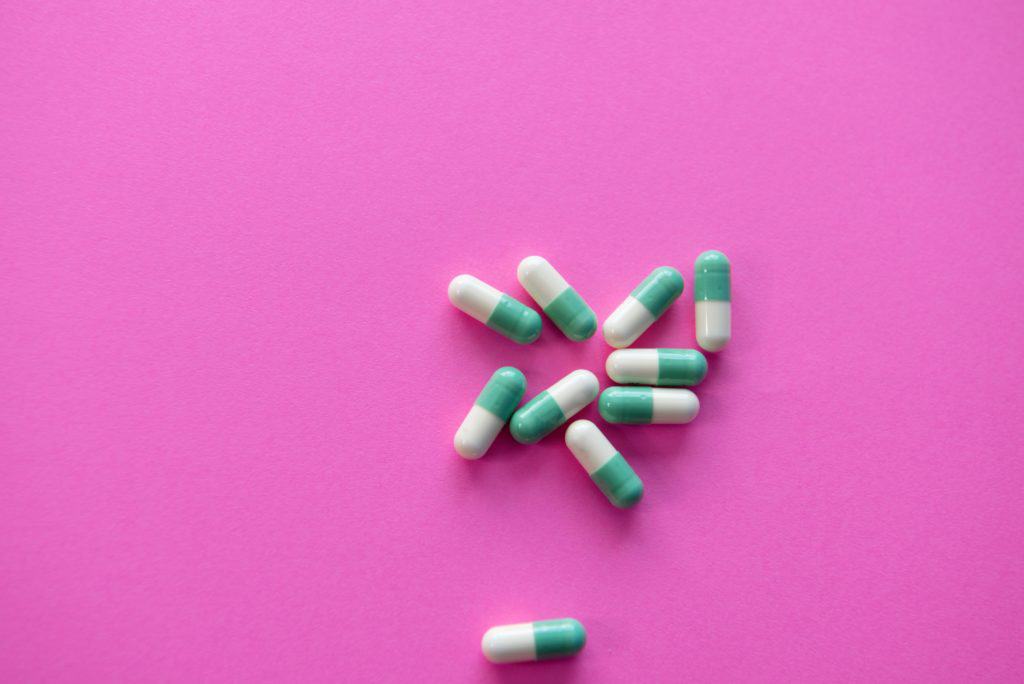
a variety of probiotic capsules against a pink background.

First let’s start with the basics. Our intestines are a home to over 100 trillion microorganisms, including a lot of bacteria. Most of these bacteria are beneficial to our health, helping us to break down substances, improve digestion and absorb nutrients from the food we eat. Research has shown that having a strong population of these good bacteria helps us prevent harmful bacteria from taking over and contributing to conditions like irritable bowel syndrome (IBS), diabetes, obesity and allergies.

To help populate one’s gut with these good critters, a lot of adults and kids are now taking various probiotic supplements or eating more probiotic (fermented) foods. Probiotics are defined by the World Health Organization (WHO) as a microorganism that is introduced into the body for its beneficial qualities.

What Are Probiotics Used For?

Probiotics are used to improve the supply of good bacteria to the gut. When consumed, some of the organisms survive and pass through the digestive system to the intensities. Research has shown that taking probiotics can help with digestive issues such as IBS, diarrhea, and constipation. There has been recent emerging evidence that probiotics also have potential benefits for weight loss and anxiety, but these research studies are fairly new and there needs to be more high-quality research conducted to determine if probiotics are effective for these health concerns.

Since probiotics are acquired through food or supplements, when you stop taking them, they can be washed out of the intestines, after 3 weeks. Probiotics thrive and promote a healthy population growth when they are fed prebiotics aka the food supply for the bacteria. You can find prebiotics in fibre-rich foods like asparagus, garlic, onions, and artichokes.

When Is the Best Time of Day to Take Probiotics?

Hand holding up a small white alarm clock.

There isn’t concrete evidence to support the one and only best time of day to take probiotic supplements. Having said that, the goal of taking a supplement is to ensure that more healthy bacteria can survive and thrive in the gut to help improve digestive health.

The best time of day to take probiotics will depend on the type you are taking! Some manufactures recommend taking the supplement on an empty stomach, for example, first thing in the morning. Whereas others recommend taking it with a meal.

When it comes to probiotics, it is all about survival of the most bacteria and getting in as much as possible. The number of microorganisms (called probiotic colony forming units aka CFU), the strain, and even the coating of the supplement should be considered.

For example, supplements that are enteric-coated can travel through the stomach to the small intestine before being released. Meaning that more probiotics will travel to the intestines, enteric-coated probiotics are then delayed in releasing the probiotics. This means that you will need to account for the time it will take your probiotics to be released. Checking the manufacturing packaging of your probiotics can help you understand how long the release may take.

Talking to your doctor, dietitian or health care professional can help you understand the strain you should be taking (for your specific needs), and the best time of day to fit your lifestyle and dietary needs.

Other Considerations for Taking Probiotics

Here are some big questions and answers on the best way to take probiotics.
Several probiotics tablets on a white surface.

Should You Take Probiotics with Food or on an Empty Stomach?

This will depend on the strain you are taking.

Research has shown that Lactobacillus and Bifidobacterium strains work best when probiotics are taken 30 minutes before, or with a meal with fat. Even having a 1% fat content in the meal seemed to preserve the bacteria as the probiotic approached the intestines. The reason for this is that fat seems to provide some protection in the stomach and increases the number of bacteria that arrive in the intestines.

Alternatively, probiotics with Saccharomyces boulardii microorganisms do not seem to be affected by the timing of the meal.

It also appears that taking probiotics 30 minutes after a meal or after a beverage (including water), results in the poorest survival rate of these good bacteria.

Can You Take Probiotics with Other Supplements or Vitamins?
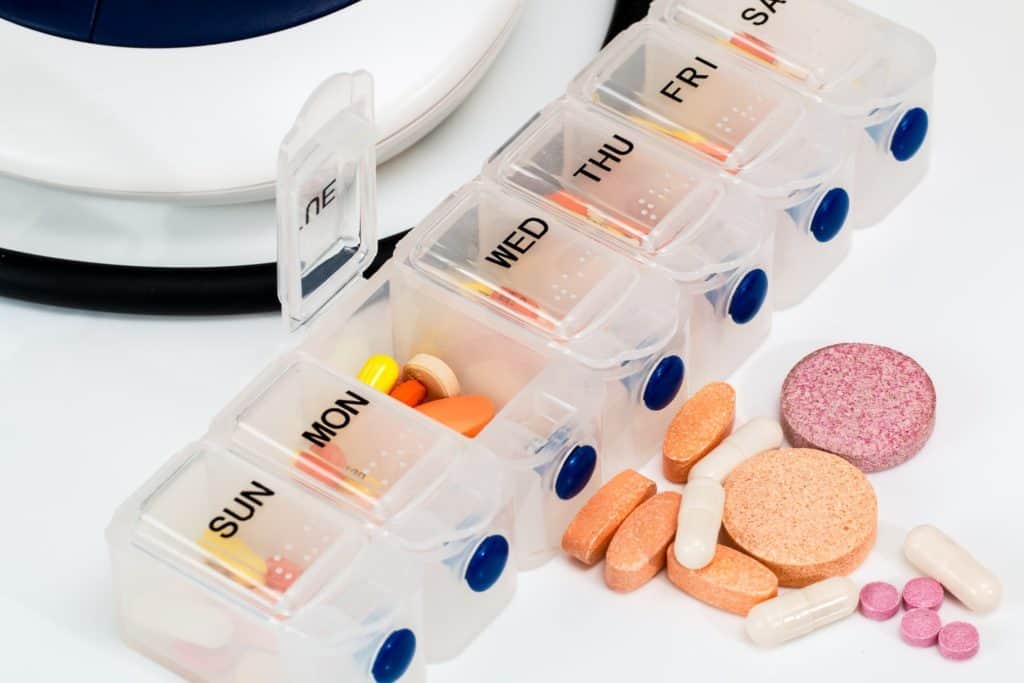
Several vitamins and probiotics in a vitamin dispenser.

Since eating fat with probiotics helps some of the microorganisms survive the journey from the mouth to the digestive system, there is evidence to show that taking omega-3 with the probiotic can also help keep more microorganisms alive longer.

Otherwise, there are no other known interactions with taking probiotics and other supplements.

Do Probiotics Interact with Medications?

Probiotics are full of live microorganisms that need to make their way down to your intestines. Research shows that taking probiotics with antibiotics at the same time can reduce the effectiveness of some strains. When taking antibiotics, you should take your probiotic at least two hours before or after you take your medication to prevent the drug from wiping out the bacteria. The same rule also applies when taking antifungal medications since some antifungal medications can reduce the effectiveness of certain probiotic strains. 

Can You Take Probiotics with Tea and/or Coffee?
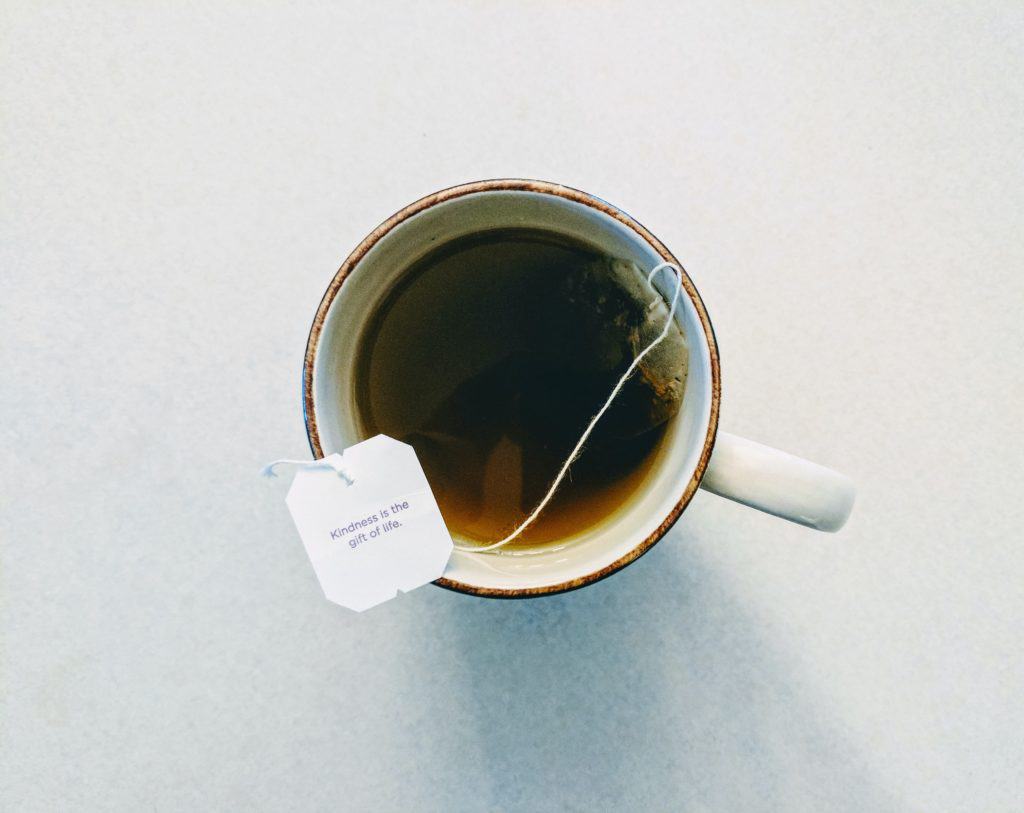
birds eye view of a tea bag steeping in a white mug.

A 2018 research study examined probiotics and their effect in tea and coffee where researchers found that probiotic strains remained in powdered tea and coffee for up to 24 months in room temperature conditions. There was also a recent 2020 study suggesting that certain coffee types, like Arabica, can actually help to improve the growth of probiotics, by acting as the prebiotics.  So it’s unlikely that caffeine itself will impact the probiotics. And while there isn’t a lot of strong evidence to determine the effect of drinking coffee with probiotics, the general consensus is that by the time coffee or tea are cool enough to drink, they’re close enough to the internal temperature of the body, in which the bacteria are accustomed to anyway.

Does Drinking Hot or Cold Water with Probiotics Help or Hinder Their Efficacy?

There is a lot of confusion when it comes to drinking probiotics with hot or cold water. Some people believe that probiotics will die in hot water, because you are killing these live microorganisms. It all depends on the strain of probiotic!

While some strains are more heat sensitive than others, there is research from 2009 that suggests that probiotics may not have to be live to be effective. Also, as we just said, by the time hot water is cool enough for drinking and inside you, it’s at a temperature comparable to what the bacteria is used to surviving in. You probably don’t want to put your probiotic supplement INTO a cup of water, but drinking it is probably no big deal.

Ultimately, this new field of probiotics has many unanswered questions. Having higher level studies and research need to be conducted to make concrete claims about the survival of probiotics in the gut with different substrates and temperatures.

As stated earlier, it seems that taking probiotics 30 minutes after a beverage (including hot or cold water), results in the poorest survival rate of these good bacteria. So it might be a good idea to take it before your meal and according to the manufactures packaging.

How Often Should You Take Probiotics?

The World Gastroenterology Organization (WGO), states that the optimal dose of probiotics will depend on the strain, the product and the goal. Checking with your health care professional and the manufacturers guidelines can help you decide how often you need to be taking this supplement.

A probiotic should typically contain several billion organisms to increase the likelihood of the microorganisms reaching the gut.

Bottom Line

Probiotics are important for gut health, and taking a probiotic supplement may play a role in the management of certain digestive issues such as diarrhea, constipation and IBS. The WGO has done research on many probiotic strains and has concluded that common probiotic species are unlikely to cause any harm, so the risk of taking a supplement is likely low.

Ultimately, the best time to take probiotics will depend on:

  • The strain you are taking
  • How many microorganisms (CFUs) are in your supplement
  • The reason you are taking the supplement
  • If you are taking the probiotics with prebiotics

At the end of the day, you should always consult your health practitioner before starting a new supplement to determine if probiotics are right for you or your family.

Written by RD Student Nadina Villacis

 

Abbey Sharp

Abbey Sharp is a Registered Dietitian (RD), regulated by the Ontario College of Dietitians. She is a mom, YouTuber, Blogger, award winning cookbook author, media coach specializing in food and nutrition influencers, and a frequent contributor to national publications like Healthline and on national broadcast TV shows.

www.abbeyskitchen.com/about-abbey/

Last Updated October 2, 2020. Published October 5, 2020 By Abbey Sharp 3 Comments

How to Make Easy Homemade Playdough

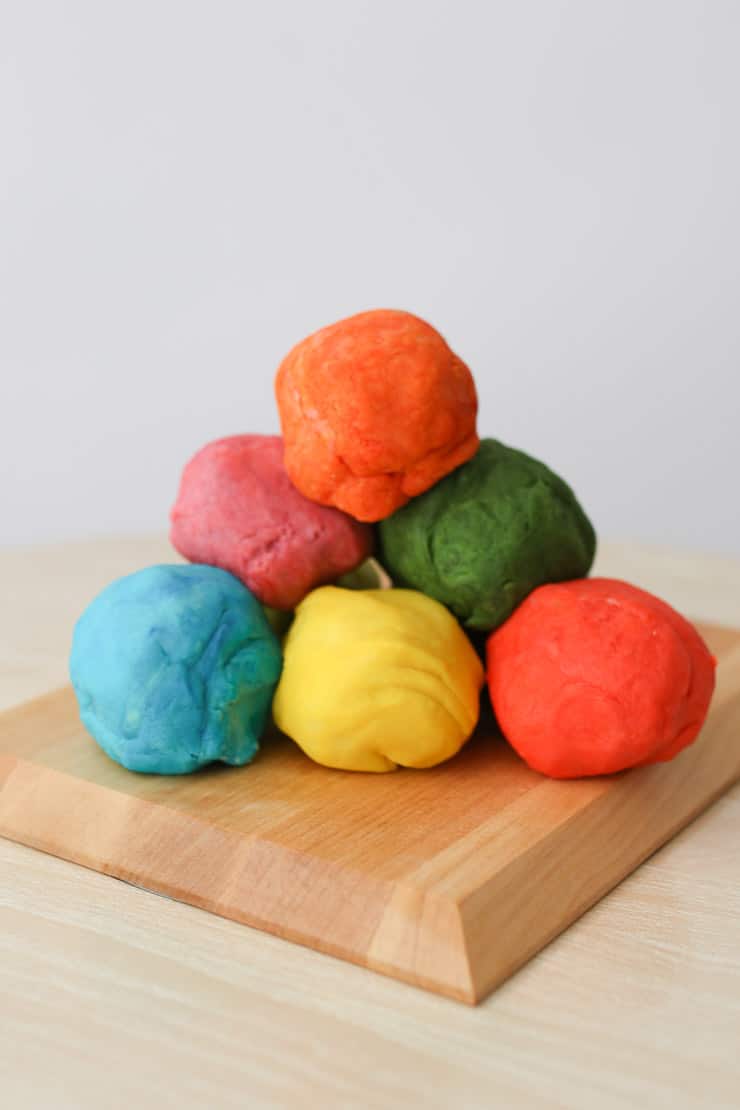
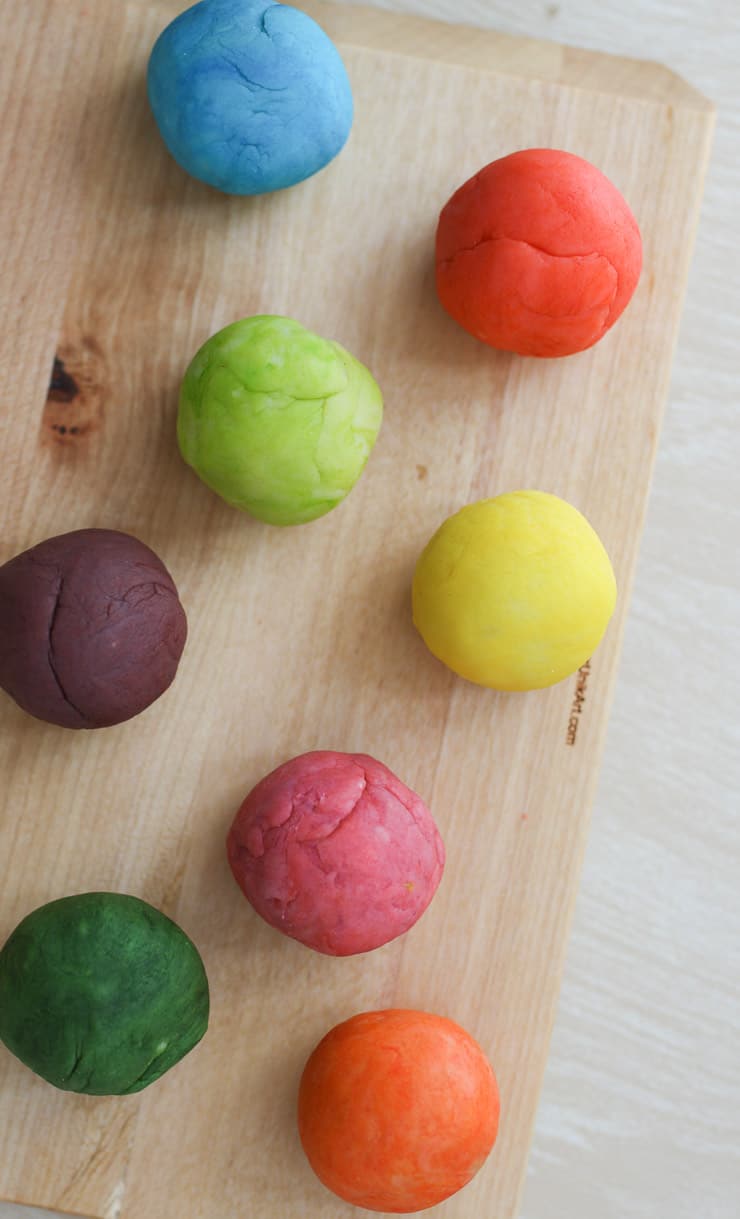
several balls of homemade playdough on a wooden board

I share how to make easy homemade playdough that stays soft much longer than the storebought version and it’s totally edible and non-toxic!

Parents know what a struggle this past year has been, and by this point, if you’re still hanging on, you’re probably looking for some easy and cheap activities to do with your kids. When I was a kid, my mom regularly made homemade playdough. It was never something she would buy for us because as a Montessori principal and teacher, she always said the homemade stuff lasted so much longer. It just didn’t make sense to keep buying the storebought only for it to dry right out.  She also said that making the playdough was an activity in itself, and let’s be real – WE NEED ALL THE ACTIVITIES WE CAN DREAM UP (I also wrote a whole blog post of toddler activity ideas while social distancing for coronavirus which you can read right here).

So this week, big boy E and I decided to whip up our own homemade playdough using a recipe my mother gave me. 

several rolls of homemade play dough stacked on top of one another

Key Ingredients for this DIY playdough recipe

The ingredients for playdough is pretty straight forward.

  • All purpose flour
  • Salt
  • Cream of tartar
  • Oil
  • Water
  • Food colouring

You probably have most, if not all, of these ingredients in your pantry, so it’s pretty easy to whip up a batch on the fly.

How to Make Easy Homemade Playdough in multiple colours

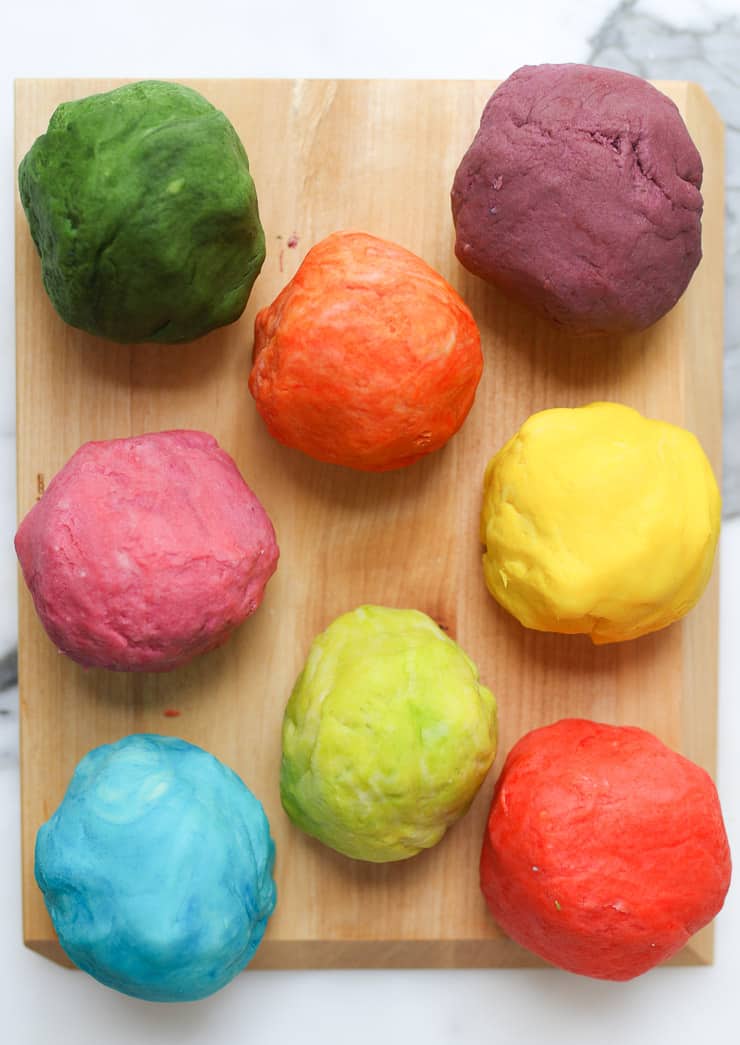
several balls of homemade playdough on a wooden board

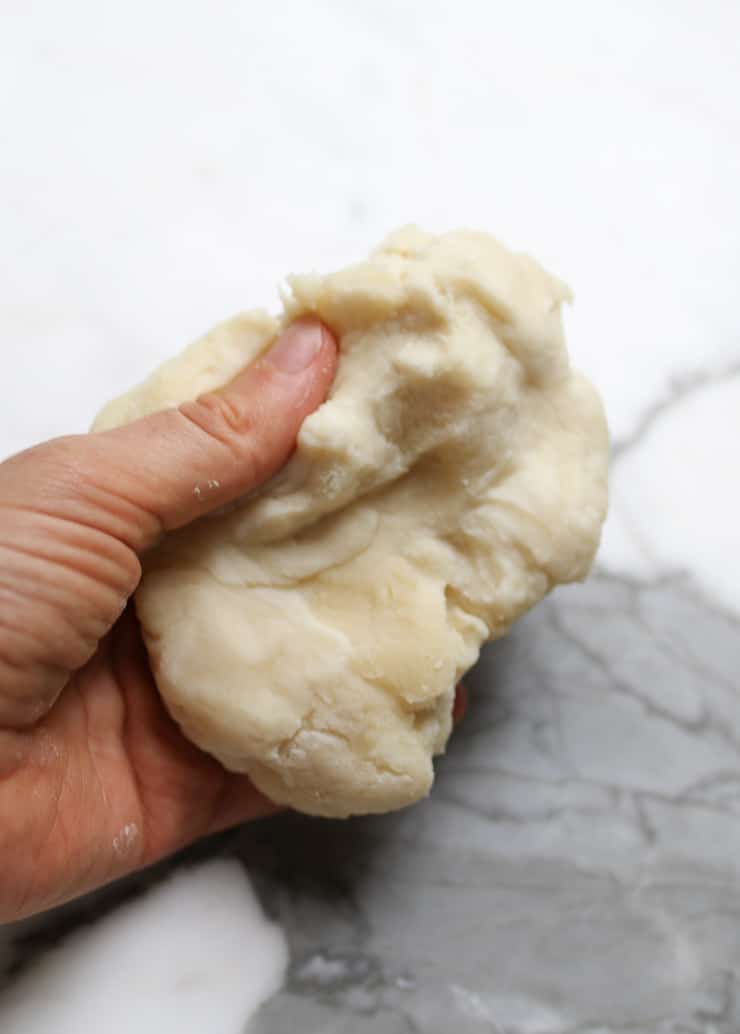
My mom always made one batch with one colour, putting the dye right into the pot. But that meant we would be limited to a huge batch of one colour and I feel like half the fun of playdough is the colours! So to combat that, I make the playdough first COLOURLESS, then divvy it up into bowls and kneed a little colour into it. Yes, it means my hands get some food dye on them, but you know what? That is part of the fun.

ways to get your kids involved and learning

Put your kiddos painting smock on (or at least take off their clothes) and let them help you kneed in some of the dye (see below for how to remove the dye from hands). 

You can also use this opportunity to teach your kids about secondary and primary colours. So for example, if you mix a little blue and yellow dye into the playdough, massage it around, you will get GREEN! 

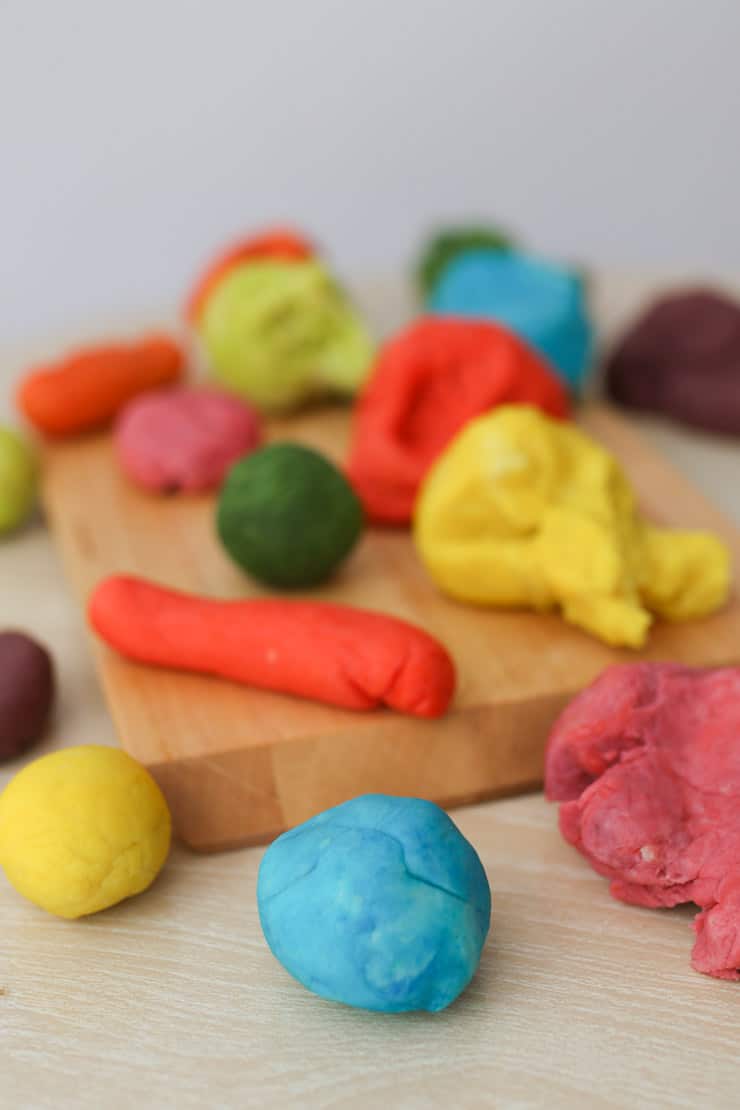
homemade playdough in a variety of different colours and shapes

FAq about this recipe

Here are some commonly asked questions about this recipe.

How to Store this Playdough

 I pop each colour into a resealable baggy and leave them in the fridge until I’m ready to use. Well stored homemade playdough will last a few months in the fridge.

Colour combinations from primary colours

If you’re working just with primary colour food dyes (red, yellow, blue), you can make other colours by mixing as follows:

Dusty Rose – 1 blue : 3 red

Minty green – 2 yellow : 1 blue

Orange–  1 red: 3 yellow

Mauve –  2 blue : 3 red

Turquoise–  1 yellow : 3 blue

Green – 1 blue : 1 yellow

Liquid vs Gel Food colouring

I experimented with both and while liquid is convenient, you need SO MUCH OF IT to colour your playdough, so I do suggest using gel if possible. A little goes a long way and you get more vibrant colours.

a piece of dough in abbeys hand

should you use natural food colouring?

It’s up to you. If you think your kid will put this in their mouth and you’re concerned about food dyes, sure! The awesome thing about this playdough is that it’s completely edible (though, kinda gross). But if your kid is old enough to know not to put it in their mouth, I personally wouldn’t spend extra on the pricey natural food dye.

How many colours will this make?

This makes about 3/4 cup of each colour and I made 8 colours. But you can make smaller amounts of more colours, or larger amounts of fewer colours! Your call! 

what happens if it dries out?

Sometimes we forget to put the playdough back into the fridge or the plastic baggy and it sits outside all day. You can revive it with a little bit of water and a little kneading action.

several colourful balls on a wooden board

how to remove food dye from your hands

If you get in there and massage in that dye, you’re probably going to be left with pretty colourful hands. I experimented with a bunch of ways to remove food dye from your hands and this is what I found works best.

  1. Rinse skin and wash with a washcloth.
  2. Soak the cloth in white vinegar and then rub your skin with the cloth. Rinse again.
  3. Make a paste with baking soda and a bit of water (should look like a thick paste) and rub your hands in that. Rinse your skin. 
  4. If it’s still dyed, repeat the steps as needed.

What are some fun homemade DIY activities you’re doing with your kids? Have you tried this playdough recipe? Leave me your thoughts below!

pinterest image of easy homemade playdough

several balls of homemade playdough on a wooden board
Print Recipe
5 from 2 votes

Easy Homemade Playdough

I share how to make easy homemade playdough that stays soft much longer than the storebought version and it's totally edible and non-toxic!
Prep Time25 minutes mins
Cook Time15 minutes mins
Total Time40 minutes mins
Course: playtime
Cuisine: playtime
Servings: 8 cups
Calories: 294kcal
Author: Abbey Sharp

Ingredients

  • 4 cups flour
  • 4 cups water
  • 8 tsp cream of tarter
  • 1 1/3 cup salt
  • 1/4 cup vegetable oil
  • Food colouring

Instructions

  • Mix together all the ingredients, except the food coloring, in a medium saucepan.
  • Cook over medium low heat, stirring with a wooden spoon. Continue to stir until the mixture is very thick, sticks to the spoon, and hard to stir. This will all take about 10-15 minutes and will become a bit of a workout!
  • Feel the dough. It should not feel wet, but should easy get imprints in it if you squeeze it or press into it.
  • Transfer the dough to a piece of wax paper for 5 minutes.
  • Divide up into sections (I did 8 colours so I split it into 8). Add a section to a bowl and add a bit of food colouring. I suggest starting with the lightest colours (ie. yellow) so you don't have to keep washing the bowl out. Kneed the colour into the dough.
  • Transfer to a plastic bag and refrigerate.

Nutrition

Calories: 294kcal | Carbohydrates: 50g | Protein: 6g | Fat: 7g | Saturated Fat: 6g | Sodium: 18871mg | Potassium: 562mg | Fiber: 2g | Sugar: 1g | Calcium: 25mg | Iron: 3mg
Abbey Sharp

Abbey Sharp is a Registered Dietitian (RD), regulated by the Ontario College of Dietitians. She is a mom, YouTuber, Blogger, award winning cookbook author, media coach specializing in food and nutrition influencers, and a frequent contributor to national publications like Healthline and on national broadcast TV shows.
www.abbeyskitchen.com/about-abbey/

Last Updated October 23, 2020. Published September 30, 2020 By Abbey Sharp 2 Comments

5 Easy Ways to Plan for Your Children’s Financial Future and Education

DISCLAIMER: This post was developed in sponsored partnership with CST Spark Inc., however, as always, all opinions are genuine.

Now that I’m a mom of two, we discuss the 5 easy ways I am planning for my kids’ financial future and education and why a Registered Education Savings Plan (RESP) should be on your back to school list this fall.

Since the day I got my junior bank account and my first job as a grocery clerk at the local store, I have always been a saver. I guess I have generally always been a forward thinker, so a desire to think about my financial future, education and career path has just come naturally. While I may have been motivated by a special toy in my childhood, a handbag in my teens, and a girl’s trip in my early 20s, as a mom of two, it’s all about my kids and what their future holds.

With back to school season in full swing, I know a lot of you might be thinking seriously about pencil cases, backpacks and cool masks to buy. But I think we wouldn’t be really ready for this back to school season if we weren’t also thinking ahead about what schooling might look like as our kids get older and whether we can afford their post-secondary education costs.

So today on the blog, I thought I would share the simple pain-free ways I am trying to prepare for my kids’ education and financial future.

5 easy ways I’m planning for my children’s financial future and education

Big Boy E sitting on Abbey's lap

Saving Consistently

I am all about consistency and making little changes in my life that I feel confident I can uphold in the long run. So each year, once I see how my business financials are going, I make a commitment to save a certain amount of money each month for my kids. This could go towards family trips, their education, future big expenses (like weddings – AH cue the waterworks), or just a rainy day as a family. The key is that I am committed to saving it for them.

Sell, Don’t Hoard

There are so many baby and kids things that cost a lot of money, and get used for such a short period of time. While I am not sure if I’m done having kids quite yet, once I make that decision, I plan to sell the big-ticket items and save those earnings for my kids. Think about the money you spent on the crib, stroller, snow gear, sports equipment – all of which have such a short life. All of those little sales and savings can definitely add up!

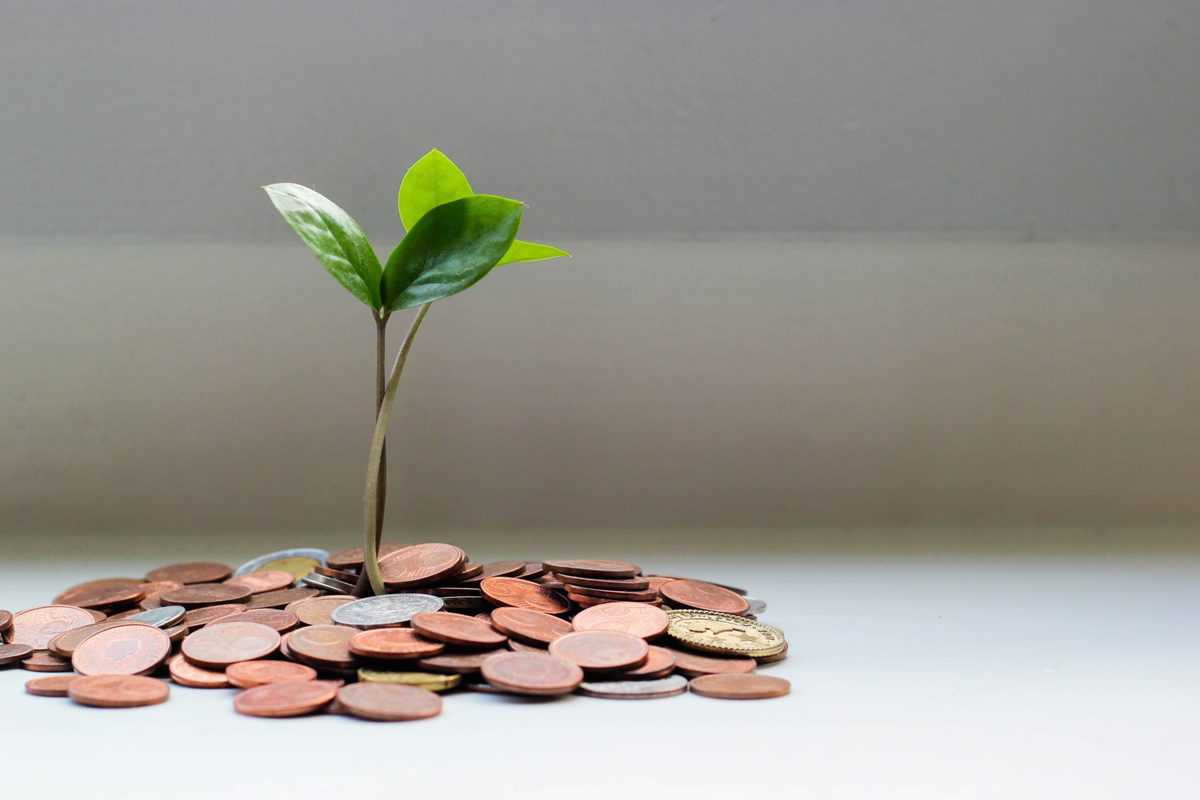
image of a plant growing from a pile of coins to plan for financial future

Budget Your Child Expenses

In the age of Amazon Prime, it is really easy to overspend on kids’ things without even noticing – every purchase is just a simple click away. Working on a spreadsheet on Google Sheets (which is easily accessed from my phone), I’ve started to create buckets of expenses for our household and kids – think clothes, toys, etc. Each time I buy something online, I just plug the cost into my spreadsheet on my phone, so I see how much I’m left with for the month. If a purchase will set me over my monthly budget for that bucket, I will try my best to wait until next month. Otherwise, it can be way too easy to go overboard on cute baby button ups and new teddies for the nursery and be left in the red by the end of the year.

The CST Bright Plan™

Education is really REALLY important to me, and I want to make sure I have a plan in place to ensure E and O have a post-secondary education that will help them thrive. The CST Bright Plan from CST Spark Inc. is an innovative digital RESP that makes it easier for families like mine to save. It can be opened easily and digitally from home and rebalances investments as kids get closer to graduation (as crazy as that thought is), which helps reduce risk and maintain any gains. It also provides flexibility in how much and how often we can invest. In other words, we can add as little as $10 every month or contribute more as it suits us! The benefit of an RESP is that it allows investments to grow tax free, and when the kids start school, the money gets taxed at the student’s income level. It also provides the kids access to government grants like the Canada Education Savings Grant, which can add up to $7,200 per child over the lifetime of an RESP, by matching 20 per cent of annual contributions to a maximum of $500 per year. Low income families may be eligible for the Canada Learning Bond, which can provide up to an additional $2,000. Some provinces provide additional provincial grants. Plus an RESP can remain open for up to 36 years! I know CST Spark’s parent company (Canadian Scholarship Trust Foundation) has been around since 1960 as a key player in the evolution of education savings here in Canada, and this is a much-needed solution for a lot of family’s needs.

a pink piggy bank to plan for financial future

Investing in Life Insurance

It’s a funny thing to have to think about life insurance when you still feel so young at heart. Isn’t that something that only old people have to do? But investing in my kids’ future means planning for me not being part of it (I know, kinda morbid, but very important!) As soon as my husband and I started having kids, we made sure to sit down with our financial advisor to determine the best insurance policy to protect one another and our kids should anything happen to either of us. I feel good knowing my two sons will be taken care of financially even if I’m not around.

So fellow moms and dads, as you adapt to this year’s back to school routine (whatever that’s looked like for your family this year), what are some of the ways you’ll be thinking ahead for this future education and financial wellbeing? Leave me a comment below with your thoughts!

Disclosure: This post was developed in paid partnership with CST Spark Inc., but all opinions are my own.  CST Bright Plan is only sold by Prospectus and distributed by CST Spark Inc.

pinterest image of Big Boy E and Abbey

Abbey Sharp

Abbey Sharp is a Registered Dietitian (RD), regulated by the Ontario College of Dietitians. She is a mom, YouTuber, Blogger, award winning cookbook author, media coach specializing in food and nutrition influencers, and a frequent contributor to national publications like Healthline and on national broadcast TV shows.
www.abbeyskitchen.com/about-abbey/

Last Updated September 29, 2020. Published September 29, 2020 By Abbey Sharp Leave a Comment

Pumpkin Waffles with Protein | BLW & Toddler Friendly

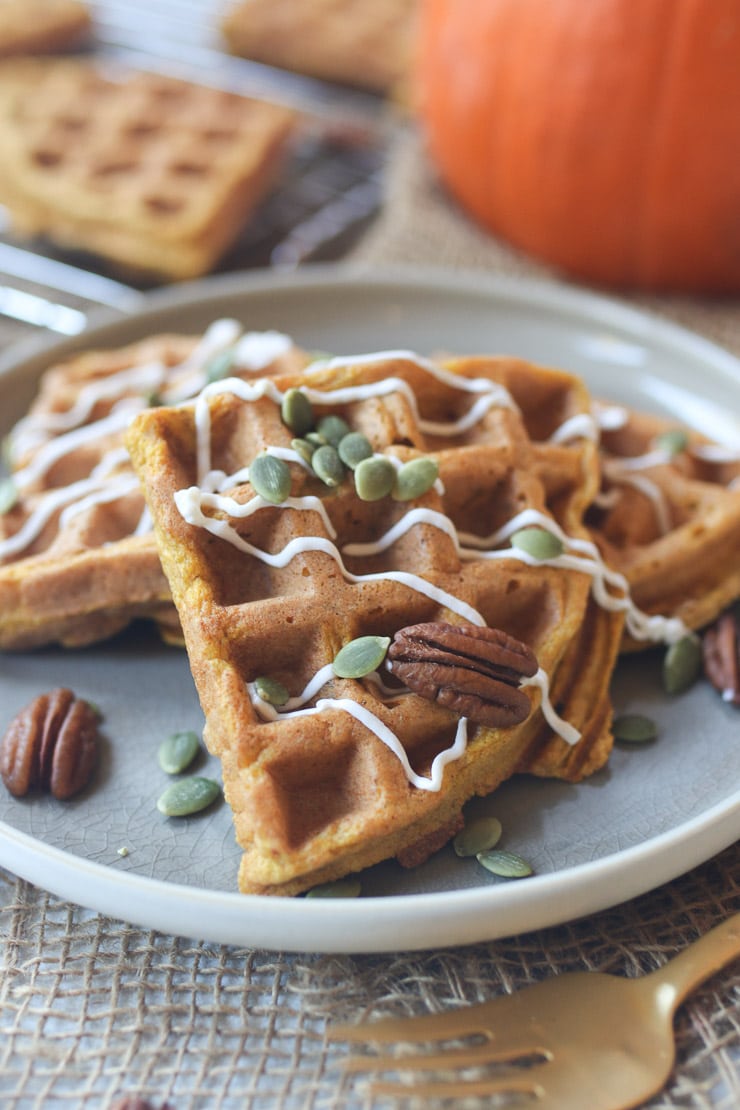
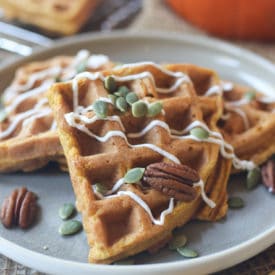
Waffles on a grey plate topped with pumpkin seeds and pecans.

These Gluten Free Protein Pumpkin Waffles is BLW, Kid and Toddler Friendly, packed with fibre, protein and good fats, is naturally low in carbs and has no sugar added!

It’s that time of year again. Pumpkin EVERYTHING. You know we’re feeling in the spirit here at Abbey’s Kitchen when we have made a pumpkin spiced latte, pumpkin pancakes, pumpkin pie, pumpkin parfaits, and SO MUCH MORE. OMG I just realized I have a million pumpkin recipes on my site. Apparently, I’m so BASIC.

Alas, pumpkin is DELICIOUS. It’s also super nutrient dense and high in fibre. So when you throw a little pumpkiny love into your breakfast routine, you can’t help but do a little happy dance at 6 AM (#amiright?!) These gluten free protein pumpkin waffles are perfect for the whole family. Baby E loves them (as would other kids and toddlers) and I love them because they’re packed with fibre, protein, and good fats.

key ingredients to make these pumpkin waffles 

Eggs – I prefer to use omega 3 eggs to add in some healthy fats!

Almond Flour – I like to use almond flour to keep these gluten free, but if you don’t need to make these gluten free then feel free to use any flour you have on hand 

Canned Pumpkin – the star ingredient, of course!

Pumpkin Pie Spice – also very important for that festive pumpkin flavour

Toppings – for this recipe, I like to top these pumpkin waffles with yogurt, pumpkin seeds and pecans

How to Make Gluten Free Protein Pumpkin waffles

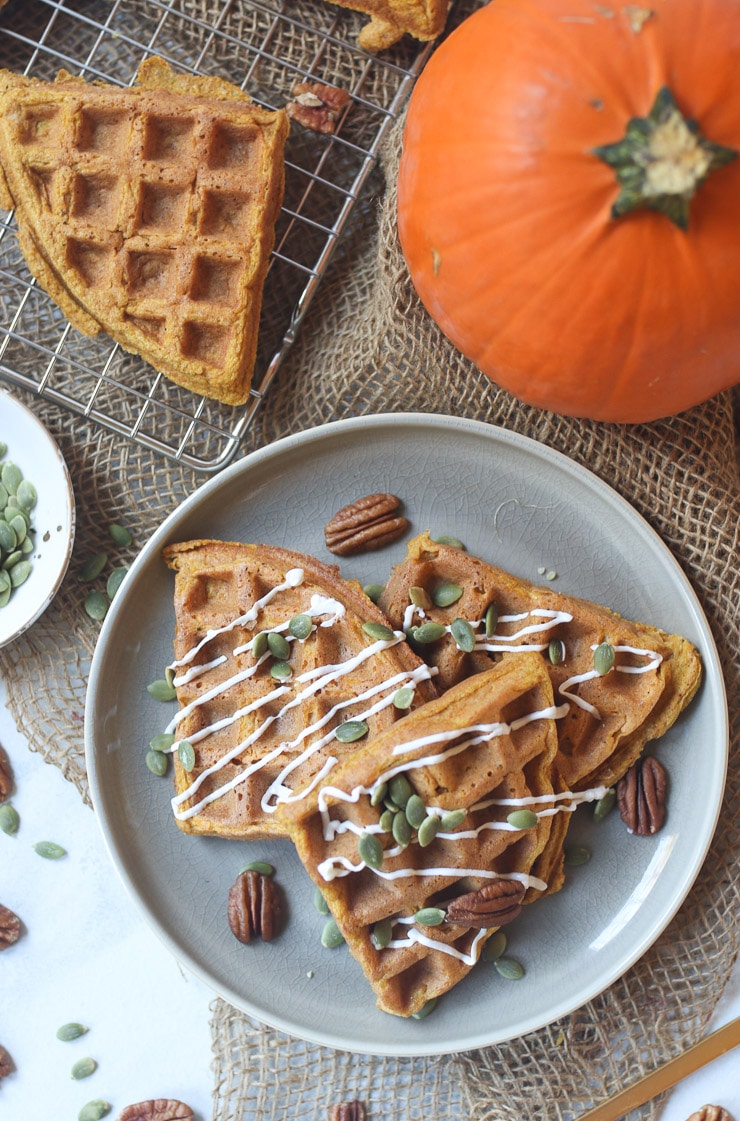
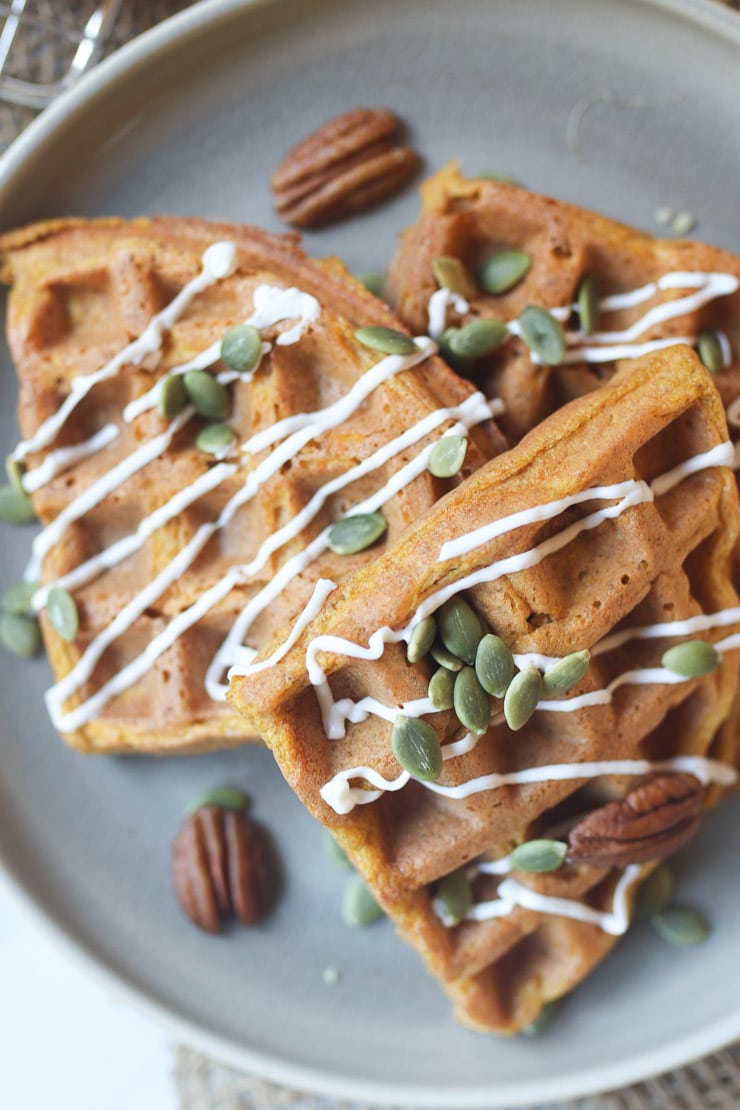
Multiple protein pumpkin waffles on a grey plate garnished with pumpkin seeds and pecans.

I first start by beating some egg whites with a hand mixer until fluffy, and then carefully folding in my yolks, pumpkin, a little almond flour, spices etc. The result is a super light and airy waffles that are really easy for new eaters who are practicing BLW to eat them.

faq about this recipe


Waffles on a grey plate topped with pumpkin seeds and pecans.

Can I Freeze these Gluten Free Protein Pumpkin waffles?

You bet! These freeze super well. Simply let the pumpkin waffles cool on a cooling rack and transfer them to a baking sheet to freeze for about 30 to 60 minutes. Then you can transfer them to a freezer bag for 3 months. Trust me, they won’t last that long. Also, make a double batch for SURE.

Can I Make these as Gluten Free Protein Pumpkin PANCAKES?

You bet! If you don’t have a waffle iron, you can totally make gluten free protein pumpkin pancakes. I also have another awesome pumpkin protein pancake recipe here.

Do these waffles have sugar?

Nope, I have purposefully not added sugar to this recipe so you can keep these as low carb as you want, and also not be giving your baby or toddler a hit of refined sugar in the morning. Now, if you want to smother these in maple syrup, this Canadian girl definitely will not judge. GO. FOR. IT.

Are these Gluten Free Protein Pumpkin waffles BLW, toddler and kid friendly?

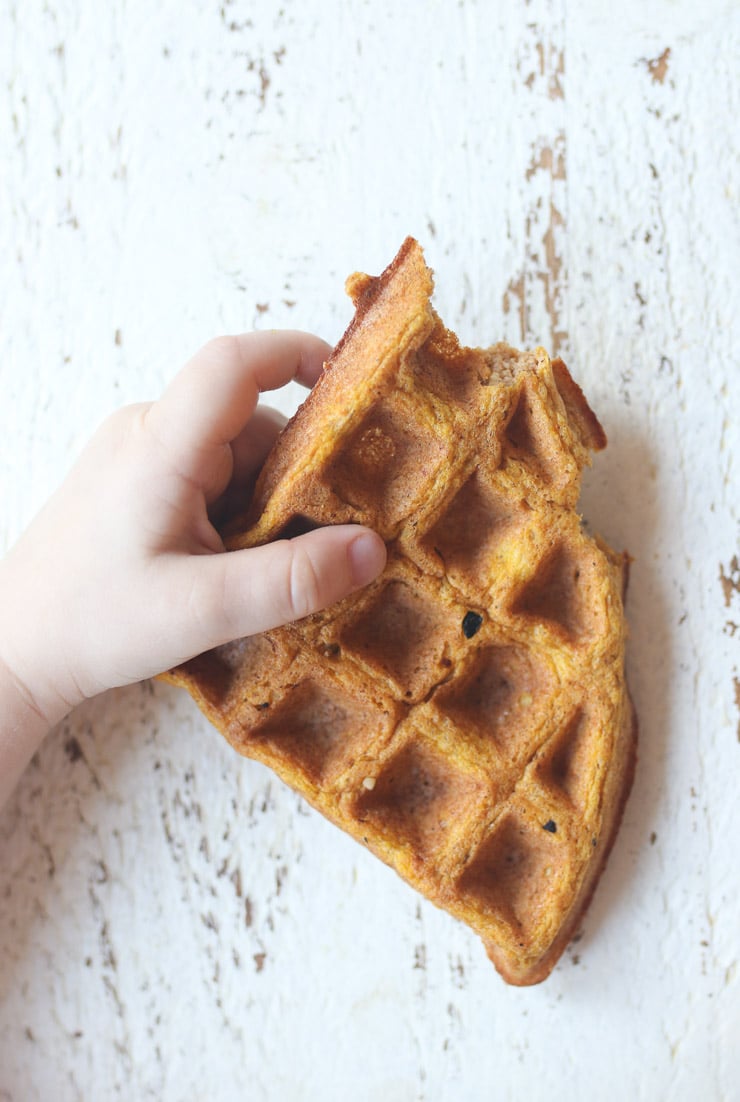
Toddler holding waffle.

YES! Baby E ADORES these and they’re amazing for new eaters too since the texture is very fluffy and easy to eat. I also love that they have some healthy fats from almond flour, and lots of protein and iron from the eggs. These protein pumpkin waffles are also amazing for taking on the go because they are a great hand-held snack!

How long will these Gluten Free Protein Pumpkin waffles last?

In the fridge, they’re good for 3 days, and in the freezer you can keep these protein pumpkin waffles for 3 months.

Are these Pumpkin waffles DAIRY FREE?

Waffles on a grey plate topped with pumpkin seeds and pecans.

Yes! While a lot of protein waffles or pancakes rely on cottage cheese, yogurt or protein powder for protein, these are completely dairy free!

Are these Gluten Free Protein Pumpkin waffles LOW CARB?

Yep! The main source of carbs in these protein waffles is coming from the pumpkin, since there’s no added sugar in these babies. The net carbs for those who need to count is five grams.

Here are some more waffle recipes you might like

BLW Toddler Carrot Cake Waffles

BLW Cheesy Spinach Egg Waffles

Birthday Cake Protein Waffles

Loaded Potato Waffles

Now mamas and papas, I want to know what are some of your go-to pumpkin recipes to celebrate the change in season?  Leave me a comment below and let me know how you and your kids love these gluten free protein pumpkin waffles!

pinterest image of pumpkin waffles


Waffles on a grey plate topped with pumpkin seeds and pecans.
Print Recipe
4.72 from 7 votes

Gluten Free Protein Pumpkin Waffles

These Gluten Free Protein Pumpkin Waffles is BLW, Kid and Toddler Friendly, packed with fibre, protein and good fats, is naturally low in carbs and has no sugar added!
Prep Time10 minutes mins
Cook Time10 minutes mins
Total Time20 minutes mins
Course: Breakfast
Cuisine: American
Servings: 6 waffle quarters
Calories: 96kcal
Author: Abbey Sharp

Ingredients

  • 6 omega 3 egg whites
  • 2 omega 3 egg yolks
  • 1/2 cup almond flour
  • 1 tsp gluten free baking powder
  • 1/2 cup canned pumpkin
  • 1 tsp pumpkin pie spice
  • 1/8 tsp salt
  • Optional:
  • Yogurt for drizzling
  • Pumpkin seeds
  • Pecans

Instructions

  • In a bowl, whip the egg whites using electric beaters until light and fluffy, about 5 minutes.
  • In another bowl, mix together the almond flour, baking powder, salt and pie spice. Stir in the egg yolks and pumpkin. Starting with a spoonful, carefully gold the pumpkin mixture into the whites, a bit at a time in a figure 8 motion.
  • Heat and grease your waffle iron and add a generous spoonful to each quarter side. Cook according to your manufacturers directions.
  • Serve immediately, or top with yogurt, pecans and pumpkin seeds, if desired.

Nutrition

Calories: 96kcal | Carbohydrates: 5g | Protein: 6g | Fat: 6g | Saturated Fat: 1g | Cholesterol: 65mg | Sodium: 55mg | Potassium: 182mg | Fiber: 2g | Sugar: 1g | Vitamin A: 3264IU | Vitamin C: 1mg | Calcium: 73mg | Iron: 1mg
Abbey Sharp

Abbey Sharp is a Registered Dietitian (RD), regulated by the Ontario College of Dietitians. She is a mom, YouTuber, Blogger, award winning cookbook author, media coach specializing in food and nutrition influencers, and a frequent contributor to national publications like Healthline and on national broadcast TV shows.
www.abbeyskitchen.com/about-abbey/

Last Updated October 4, 2021. Published September 25, 2020 By Abbey Sharp 3 Comments

Healthy Chicken Chop Suey (Easy, Gluten Free)

This healthy chicken chop suey is packed with protein and veggies and makes an easy batch cooked meal prep dinner!

I haven’t eaten in a restaurant since Covid hit in mid-March, which is kinda surreal considering how much I love Toronto dining and restaurants. What this has meant though is that we try to support restaurants other ways and order delivery or take-out once or twice a week. It’s kinda been fun to explore new take-out restaurants I otherwise would have never heard of, and trying new types of cuisines each week. Chinese food is still one of our family’s favourites and chicken chop suey has been a go-to that E can enjoy as well (since it’s not spicy). But since a lot of restaurant food is really high in sugar, salt and fat, I wanted to recreate some of my family’s favourites at home – including this healthy chicken chop suey.

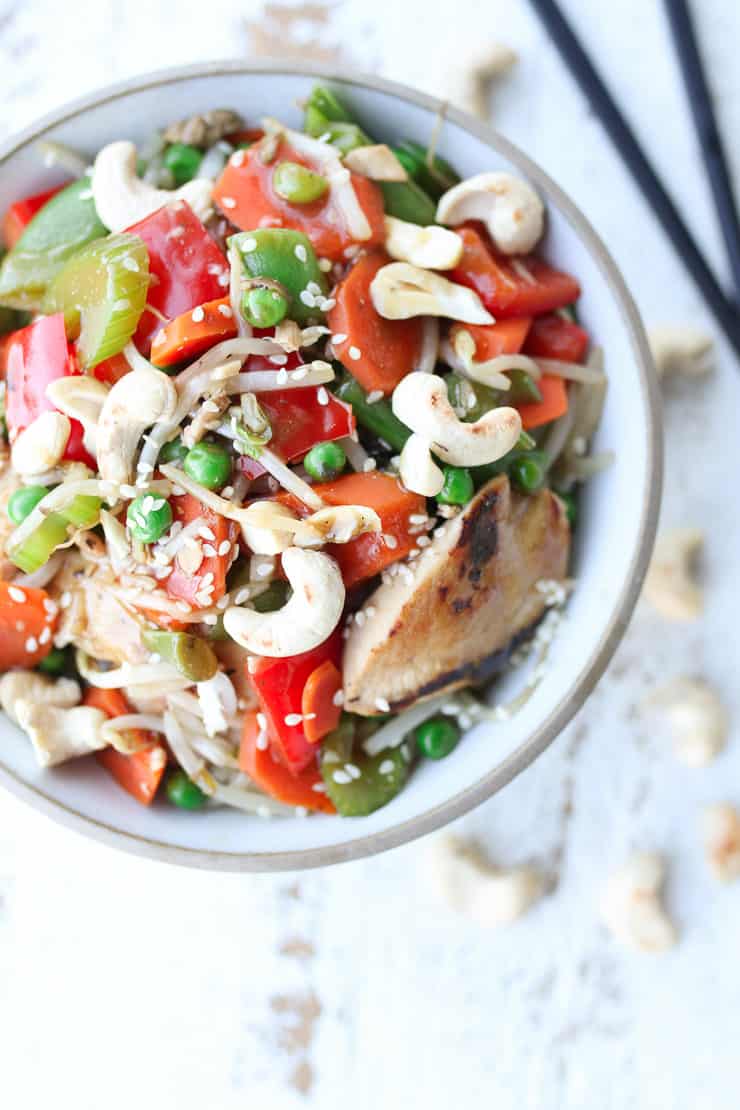
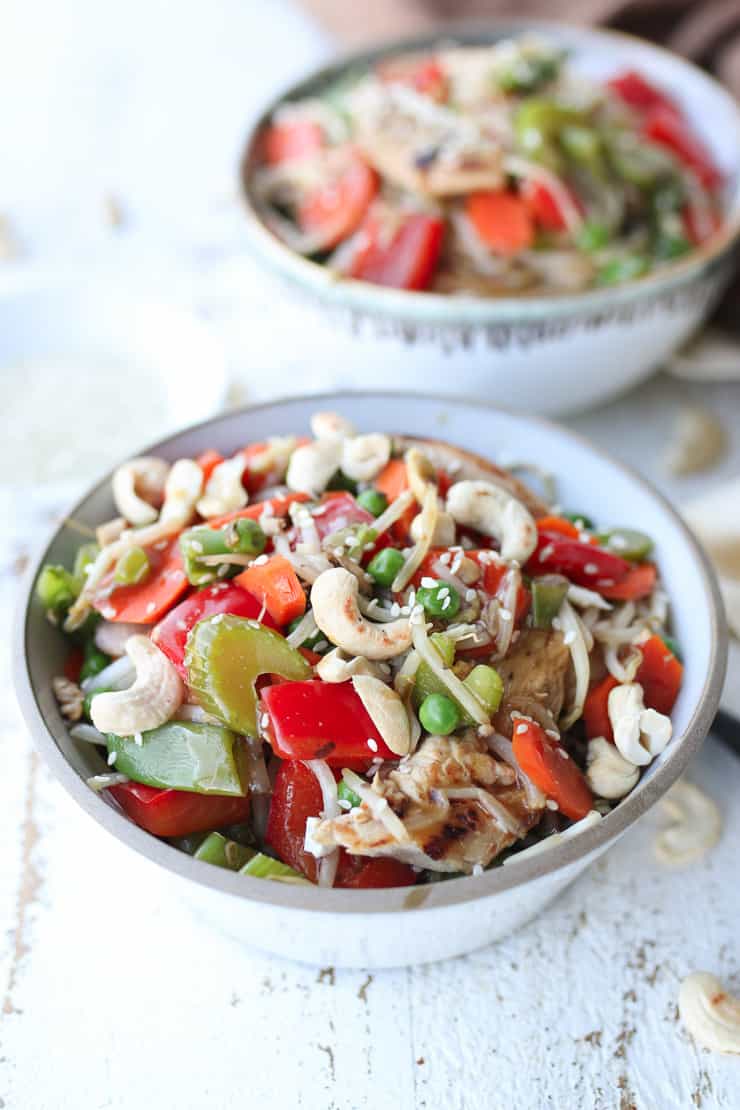
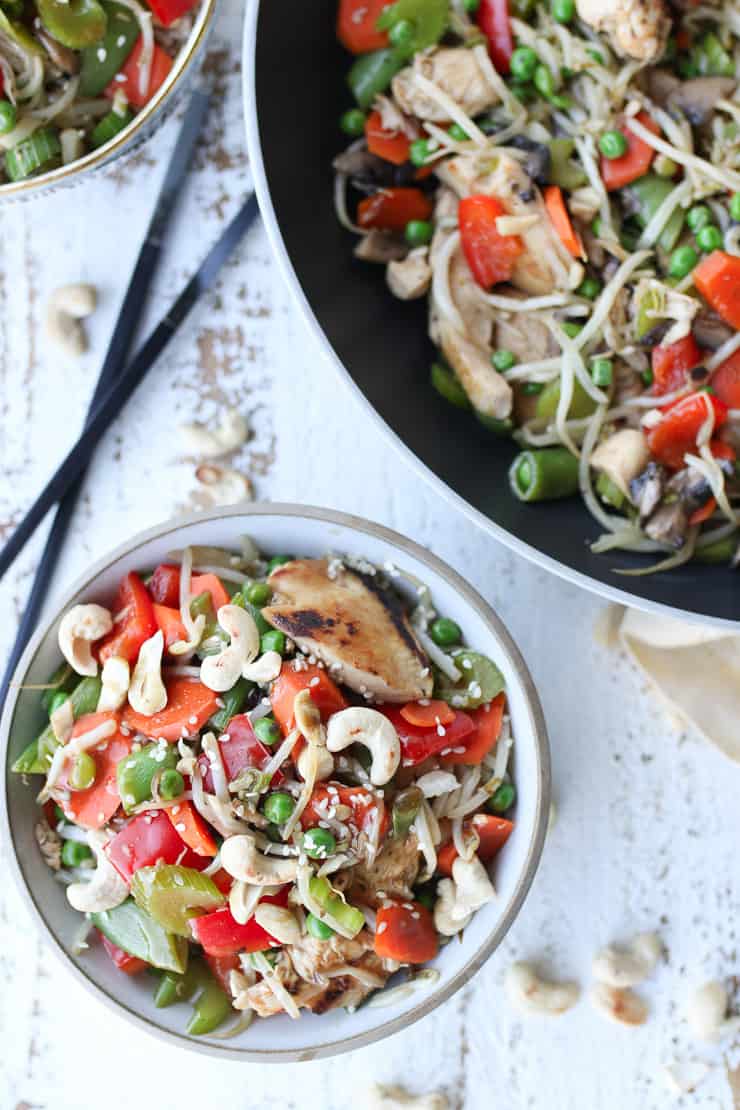
birds eye view close up of chicken chop suey

What is Chop Suey?

Chop suey is an American Chinese dish that consists of some kind of meat and/or sometimes eggs, and lots of veggies, cooked in a starch thickened sauce. It’s often served on some kind of noodle or rice.

Key Ingredients to Healthy Chicken Chop Suey

This is a relatively simple and versatile recipe, so you can easily switch this up based on what you have on hand.

Low sodium chicken broth – The base of the sauce is low sodium chicken broth which offers a nice neutral, yet flavourful chickeny flavour.

Low sodium gluten free tamari – This adds the umami and salty element. You can use soy sauce or tamari (if you need gluten free), but I do prefer to go low sodium so you can control the salt.

Maple syrup or honey– You need a little sweetness to balance out the salty element.

Oyster sauce– No, this sauce will not taste “fishy” but it will add some characteristic umami to this sauce. Oyster sauce has tons of flavour yet less salt than soy sauce, so it’s a nice way to add more flavour without more salty soy or tamari. If you can’t find oyster sauce, you can mix soy sauce with hoisin sauce in a 1:1 ratio.

Sesame oil – I love a little sesame oil to add a little more savoury richness.

Cornstarch or tapioca starch – This is key to thickening your sauce, and it also keeps this recipe gluten free.

Skinless, boneless chicken breasts – To keep this version super lean, I like using chicken breasts, but you could easily also use skinless thighs, or throw in a rotisserie chicken at the end.

Veggies– Throw in any of your family’s favourites! That’s the beauty of a stir-fry! I like to make this recipe towards the end of the week when I have a bunch of little bits of veggies I need to use up.

birds eye view of chicken chop suey on a bowl with chop sticks on the side

What to Serve with Healthy Chop suey

The easiest and most traditional options is to serve this with rice or chow mein noodles. I like using brown rice for a bit more fibre. Other less traditional options include:

  • Quinoa
  • Cauliflower rice (for low carb)
  • Zucchini noodles (for low carb)
  • Whole wheat spaghetti
  • Chickpea spaghetti (to keep it low carb and higher fibre)

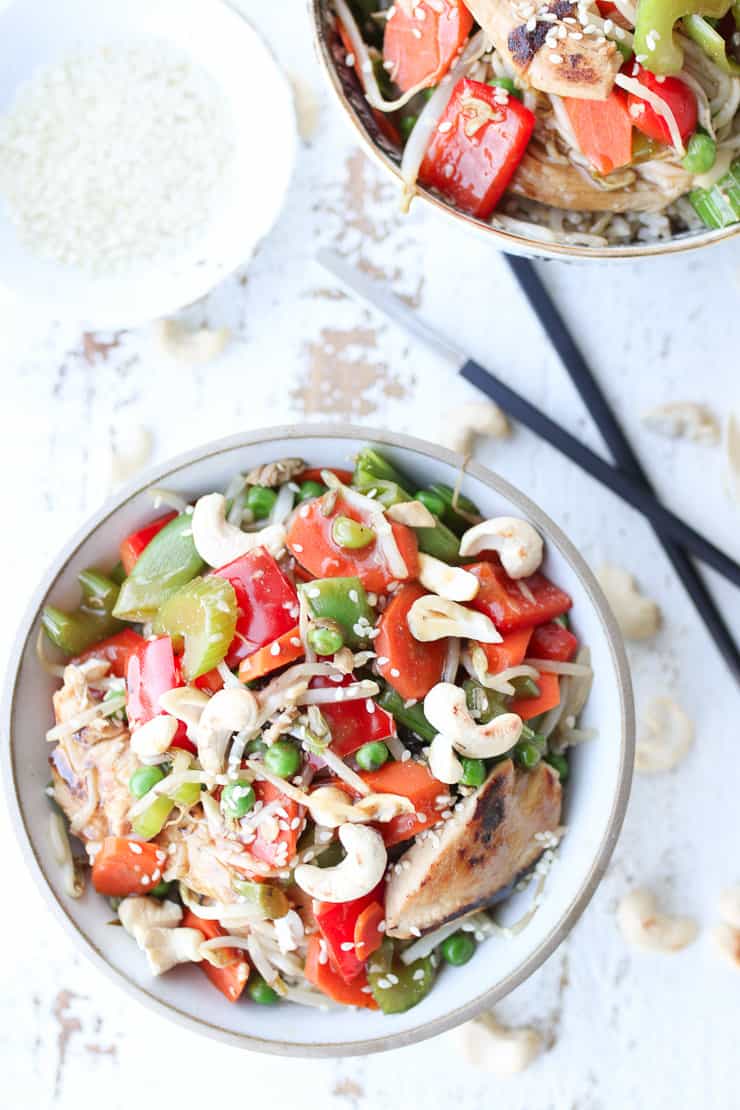
two bowls of chicken stir fry

easy Recipe variations

In addition to switching up the accompanying grain or starch, you can totally make this recipe your own with whatever you have on hand. Here are some ideas!

Instead of chicken breasts, you can use:

  • Chicken thighs
  • Ground meat or chicken
  • Tofu
  • Edamame
  • Shrimp
  • Stir-fry steak strips
  • Pork loin
  • 3/4 cup low sodium chicken broth

Other veggies that would work here:

  • Cauliflower
  • Baby corn
  • Water chestnuts
  • Green beans or long beans
  • Broccoli
  • Bok choy
  • Cabbage
  • Eggplant
  • Zucchini

FAQ about this recipe

Here are some of the most commonly asked questions about this recipe.

Can I make this healthy chop suey vegan?

You absolutely can use tofu, tempeh or a vegan meat swap instead of chicken here. You could also simply keep it mainly veggies and add in some edamame for extra protein.

birds eye view of chicken cop suey in a bowl

Is this gluten free?

Yes, as long as the tamari, soy, oyster sauce and starch you choose are gluten free, this recipe will be completely gluten free.

Is chicken chop suey kid-friendly?

I have a kid who is averse to a lot of heat and spice but loves this recipe because it’s inherently mild, yet well balanced. This is a great recipe for making veggies more flavourful, and and easy one pan meal to make clean up easier!

Can I batch prep this for meal prep in the week?

Yes, this makes a great meal for meal prep and batch cooking. It will last about 3 days in the fridge.

Can you freeze this recipe?

You actually can freeze this, and I did when I was prepping meals for postpartum life. I recommend letting it cool, then transferring it to a freezer-safe container. When ready to eat, thaw in the fridge overnight and pop it into a large skillet to warm through. This will last in the freezer for 3 months.

Do you have other easy stir-fry recipes?

We love stir-fries and other homemade takes on take-out classics. Check out some of our favourites right here:

Chinese Five Spice Shrimp Stir Fry 

Hawaiian Chicken Meatballs 

Sticky Chicken Breast Sheet Pan 

Orange Chicken & Cauliflower 

What are some of your go-to take-out meals that you would like to see me recreate but healthier?  Have you tried this healthy chicken chop suey yet? Leave me a comment below with your thoughts!

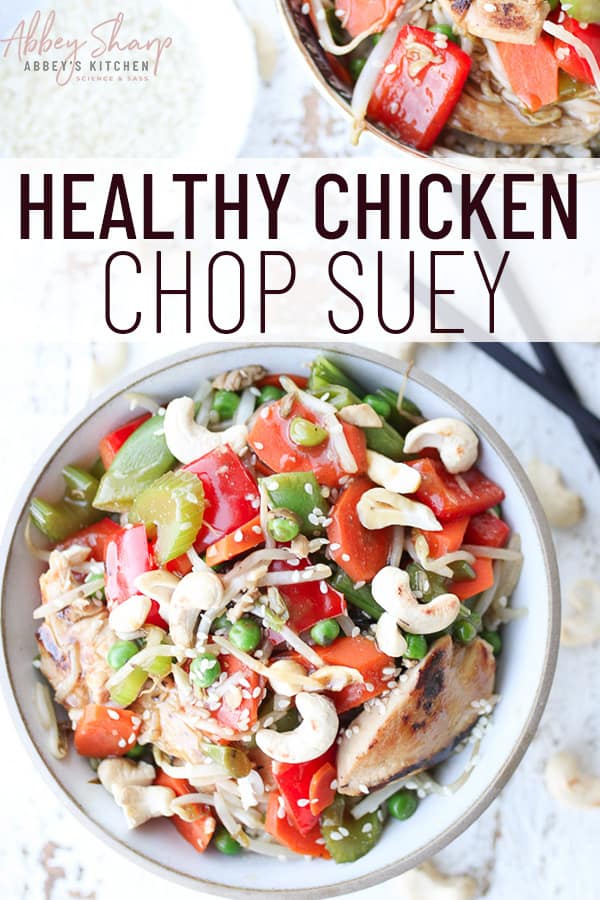
pinterest image of chicken chop suey

Print Recipe
5 from 1 vote

Healthy Chicken Chop Suey

This healthy chicken chop suey is packed with protein and veggies and makes an easy batch cooked meal prep dinner!
Prep Time10 minutes mins
Cook Time15 minutes mins
Total Time25 minutes mins
Course: Main Course, Dinner, Lunch
Cuisine: Chinese, American
Servings: 4
Calories: 359kcal
Author: Abbey Sharp

Ingredients

  • 3/4 Cup Low sodium chicken broth
  • 1/4 cup plus 2 tbsp low sodium tamari
  • 2 tbsp maple syrup or honey
  • 3 tbsp oyster sauce gluten free if needed
  • 1 tsp sesame oil
  • 2 tbsp cornstarch or tapioca starch
  • 4 tsp extra virgin olive oil
  • 1 lb skinless boneless chicken breasts, cut into thin strips
  • Pinch each salt and pepper
  • 4 cloves garlic minced
  • 1 cup sliced carrots about 3 medium
  • 1 cup sliced celery about 2-3 stalks
  • 1 cup snap peas halved on the bias
  • 1 red bell pepper diced
  • 2 cups sliced cremini mushrooms
  • 1 cup frozen peas
  • 450 g bag bean sprouts

For serving:

  • Cashews toasted
  • Sesame seeds
  • Cooked brown rice optional

Instructions

  • In a bowl, mix together the broth, tamari, maple, oyster sauce, sesame oil and cornstarch.
  • In a large wok or nonstick skillet, heat half of the oil over medium high heat. Season the chicken with salt and pepper and add to the pan. Cook until lightly browned on all sides and pretty much cooked through. Remove from the pan to a large bowl.
  • Add the garlic and cook for 30 seconds, then add in the carrots and celery. Saute for 5 minutes or until al dente. Add the bell peppers, snap peas, and mushrooms and cook until lightly browned and slightly softened. Transfer to the bowl with the chicken.
  • Add in the sauce to the pan and cook over medium heat until it bubbles and thickens, about 5-8 minutes.
  • Add back the chicken and vegetables, along with the peas and sprouts. Toss everything in the sauce.
  • Serve on top of rice if desired and top with cashews and sesame seeds.

Nutrition

Calories: 359kcal | Carbohydrates: 37g | Protein: 31g | Fat: 11g | Saturated Fat: 2g | Cholesterol: 108mg | Sodium: 1058mg | Potassium: 1016mg | Fiber: 7g | Sugar: 20g | Vitamin A: 6985IU | Vitamin C: 86mg | Calcium: 84mg | Iron: 4mg
Abbey Sharp

Abbey Sharp is a Registered Dietitian (RD), regulated by the Ontario College of Dietitians. She is a mom, YouTuber, Blogger, award winning cookbook author, media coach specializing in food and nutrition influencers, and a frequent contributor to national publications like Healthline and on national broadcast TV shows.
www.abbeyskitchen.com/about-abbey/

Last Updated September 24, 2020. Published September 24, 2020 By Abbey Sharp 18 Comments

BLW Carrot Cake Waffles for Toddlers (Gluten Free)

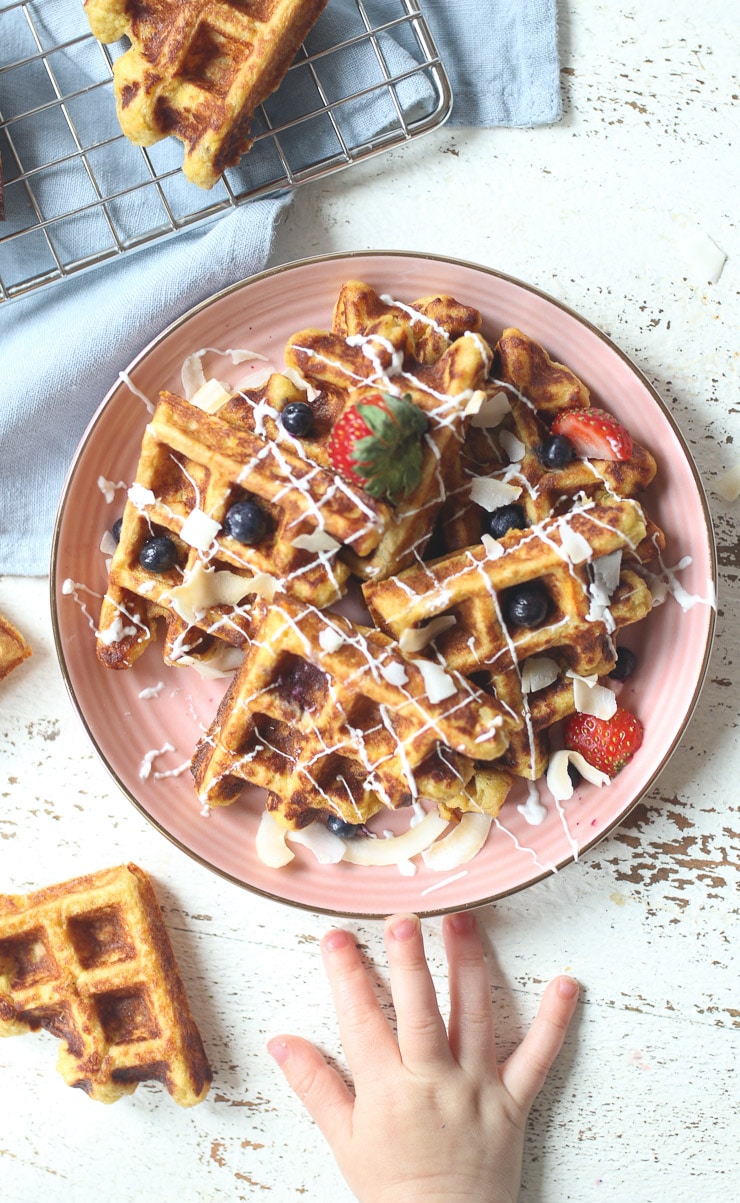
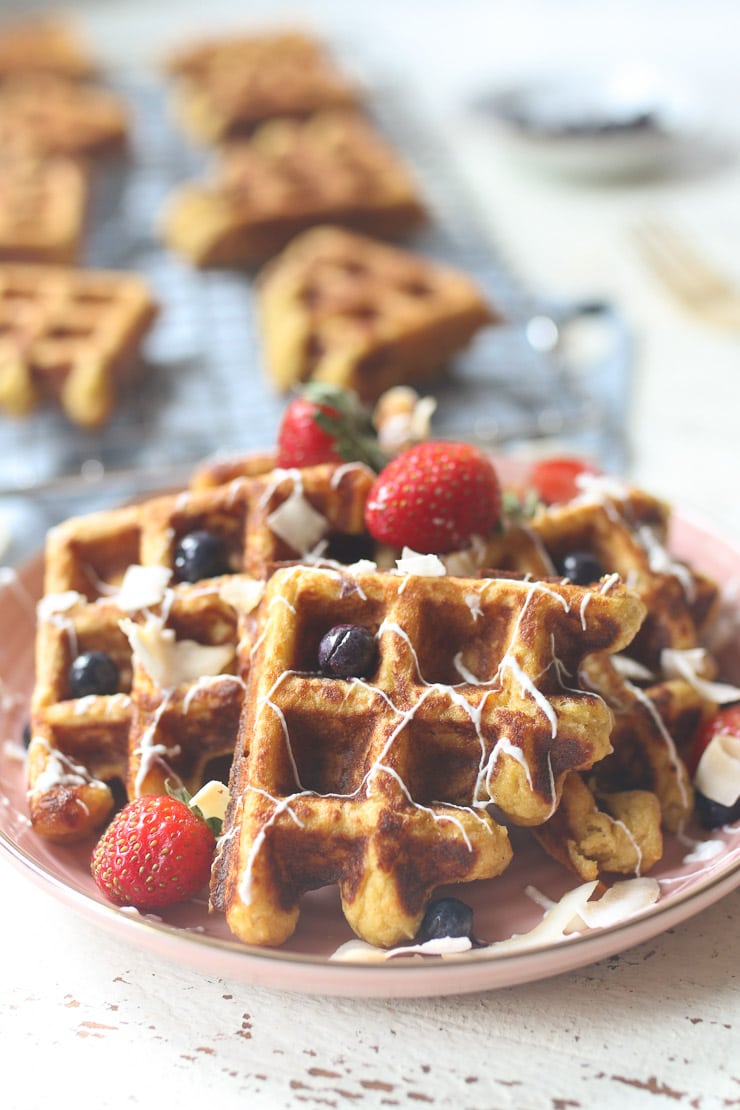
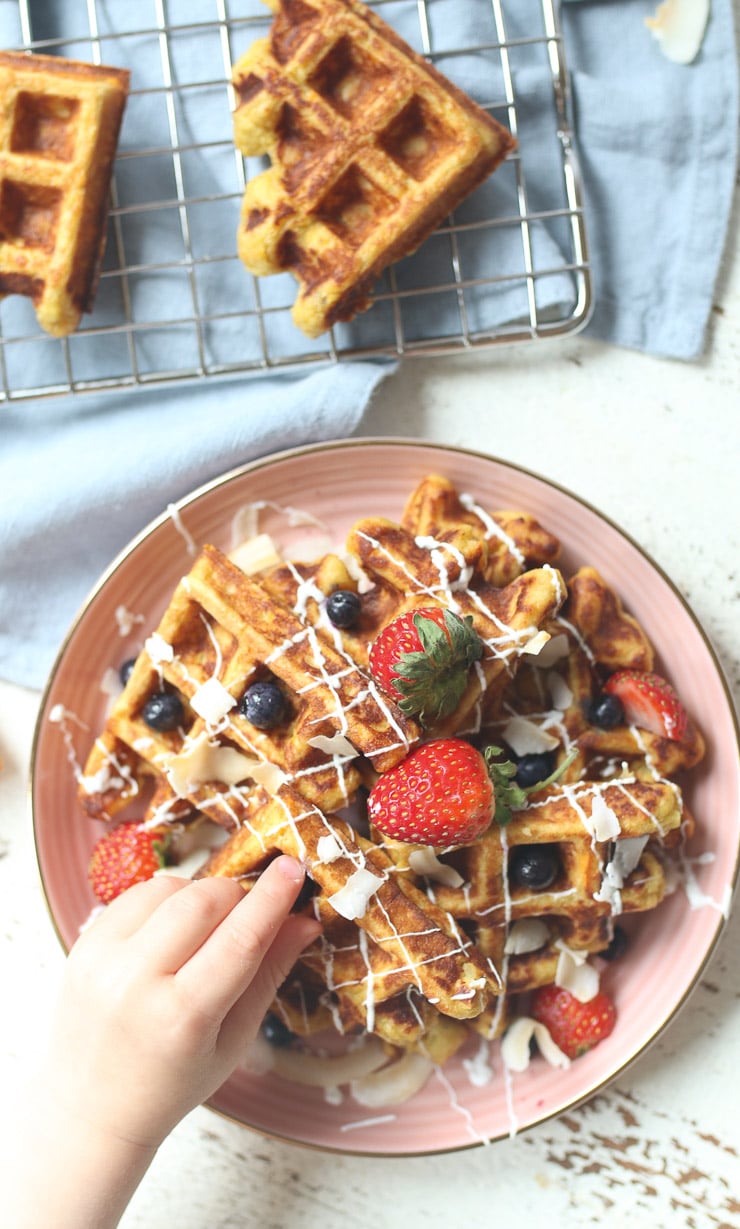
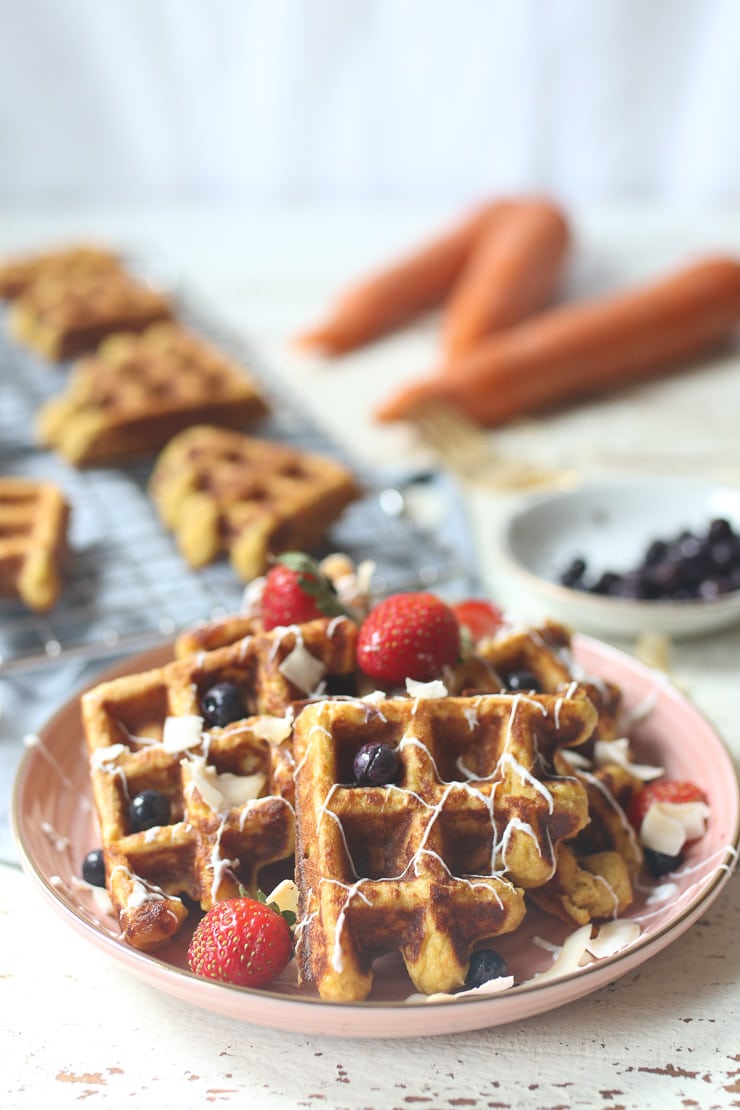
Waffles served on a pink plate topped with berries.

These BLW Toddler Carrot Cake Waffles will become one of your favourite delicious gluten free iron rich baby recipes.

Moms and dads, here’s an important question:

Do your kids like cake?

Do they like waffles?

Are you struggling to get enough iron rich or high protein foods into your kiddo since they just want to eat straight up CARBS? Then these BLW Toddler Carrot Cake Waffles are going to be for you. I am all about the baby pancakes and make a batch almost every week. However, one week I was going to make my standard iron baby pancakes for Baby E and I realized that making pancakes is kinda annoying when you have to babysit them all day long. Waffles, on the other hand, are kinda foolproof, because the waffle iron beeps at me when its done so I legit don’t have to think about them burning. And that’s how these BLW Toddler Carrot Cake Waffles were born!

key ingredients to make these blw carrot cake waffles 

  • Oat flour 
  • Iron fortified baby cereal 
  • Ricotta 
  • Banana 
  • Eggs 
  • Shredded carrots 
  • Coconut Oil 
  • Apple 

How to Make BLW Toddler Carrot Cake Waffles

Waffles served on a pink plate topped with berries.

These toddler carrot cake waffles have become one of Baby E’s favourites along with his pancake obsession. He’s always been a huge carrot lover, and I love the idea of sneaking veggies into breakfast. Simply combine the oat flour, iron cereal, ricotta, eggs, banana, carrots and other ingredients until very smooth. I lightly grease and preheat my waffle iron and then add about 1 cup of the batter to the center of the waffle iron. Don’t worry too much about spreading it out, it will disperse when you close the waffle iron!

I like to let the toddler carrot cake waffles cool, and then just separate them into quarters to serve as amazing BLW finger foods.

faq about this recipe 

where is the iron in these toddler waffles?

Carrot cake waffles served on a pink plate topped with berries.

I used iron fortified baby cereal (I like ancient grains or oat based, rather than rice which is higher in arsenic). I like to use good quality omega 3 eggs which are iron rich! It’s great to find ways to sneak iron into carb-like foods since let’s be real, toddlers like carbs. So even if I’m not able to get meat into his breakfast (let’s be real – WHEN DOES THIS HAPPEN?), I can get iron into his morning meal.

Are these Carrot Cake Waffles sugar free?

Of course there are natural sugars from the banana and ricotta, but there is NO added sugar in these toddler carrot cake waffles, making them a great choice for babies under 1!

Are these BLW Waffles gluten free?

Carrot cake waffle topped with berries on a pink plate.

Depending on which baby cereal you use, and if your oats are gluten free, these toddler carrot cake waffles can be gluten free and therefore safe the the whole family (who may or may not be sensitive to gluten).

How can i freeze them?

I recommend letting these toddler carrot cake waffles cool completely, then pop them onto a baking sheet in a single layer to freeze for an hour. Once they’re frozen separately, you can transfer them to a freezer bag and freeze for up to 3 months!

Can I use something else other than ricotta in these Waffles to make them dairy free?

Carrot cake waffles topped with berries on pink plate.

I haven’t experimented, but you could try using a coconut or almond based yogurt in the place of ricotta in these BLW waffles.

do you have any other waffles recipes on the blog? 

Oh yeah baby! Fire up that waffle iron because these delicious waffle recipes are bound to keep you busy (and satisfied).

Cheesy Spinach Egg Waffles 

Protein Pumpkin Waffles 

Egg and Cheese Savoury Waffles 

Vegan Orange Poppyseed Waffles 

Now mamas, let me know – what are some of your favourite ways to sneak more iron into your kids morning and breakfast recipes? Leave me a comment below with your ideas!

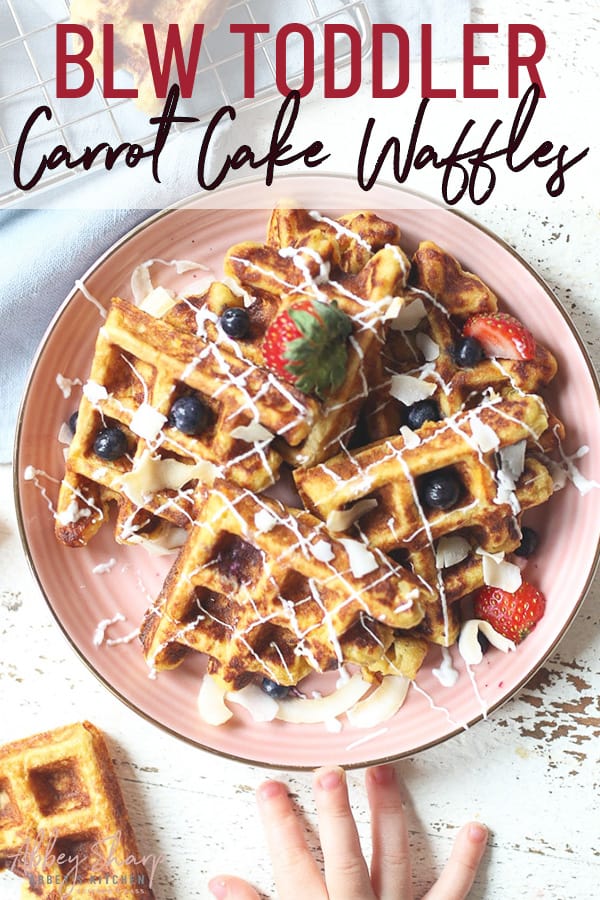
pinterest image of carrot cake waffles


Carrot cake waffles served on a pink plate topped with berries.
Print Recipe
4.60 from 5 votes

BLW Toddler Carrot Cake Waffles

These BLW Toddler Carrot Cake Waffles are so delicious! These are going to become one of your favourite delicious gluten free iron rich baby recipes to put in rotation on the regular!
Prep Time15 minutes mins
Cook Time5 minutes mins
Total Time20 minutes mins
Course: Breakfast, Snack
Cuisine: American, Belgium
Servings: 6 waffles
Calories: 393kcal
Author: Abbey Sharp

Ingredients

  • 3/4 cup oat flour
  • 1 cup iron fortified baby cereal
  • 1 cup ricotta
  • 1 cup mashed ripe banana
  • 6 large omega-3 eggs
  • 1 cup shredded carrots
  • 5 tbsp melted coconut oil
  • 1 apple peeled and minced
  • 2 tbsp shredded unsweetened coconut
  • 2 1/2 tsp baking powder
  • 1 tsp lemon zest
  • 1/2 tsp cinnamon
  • Pinch salt
  • Coconut oil for greasing
  • For topping:
  • Full fat Greek yogurt for drizzling
  • Berries

Instructions

  • To a bowl, mix together the oat flour, baby cereal, banana, ricotta, eggs, coconut oil, apple, coconut, baking powder, lemon zest, cinnamon and a pinch of salt.
  • Preheat your waffle iron and lightly grease. Add 1 cup of batter to the centre of the waffle iron and cook according to manufacturers directions.
  • To serve, top off the waffles with a drizzle of greek yogurt and a sprinkle of berries, if desired.

Nutrition

Calories: 393kcal | Carbohydrates: 34g | Protein: 14g | Fat: 24g | Saturated Fat: 16g | Cholesterol: 185mg | Sodium: 158mg | Potassium: 663mg | Fiber: 5g | Sugar: 11g | Vitamin A: 4192IU | Vitamin C: 7mg | Calcium: 225mg | Iron: 4mg

Abbey Sharp

Abbey Sharp is a Registered Dietitian (RD), regulated by the Ontario College of Dietitians. She is a mom, YouTuber, Blogger, award winning cookbook author, media coach specializing in food and nutrition influencers, and a frequent contributor to national publications like Healthline and on national broadcast TV shows.
www.abbeyskitchen.com/about-abbey/

Last Updated January 19, 2022. Published September 23, 2020 By Abbey Sharp Leave a Comment

Keto Cheat Days – Do They Cause Weight Gain or Health Risks?

a sign that says "keto"

We examine whether or not having a high carb keto cheat day while on the ketogenic diet is smart, healthy and safe and if there are any negative health risks or weight gain associated with temporarily going out of ketosis.

By now, everyone and their mother has heard of the keto diet. What was once a therapeutic diet for the treatment of epilepsy, has now evolved into a diet trend powerhouse. I swear, I can’t walk through the natural food store or browse the cookbook section without seeing the words “KETO” displayed loud and proud somewhere. If you want to know my honest evidence based thoughts on the keto diet, you can read all about it in my blog post right here.

What is the Keto Diet?

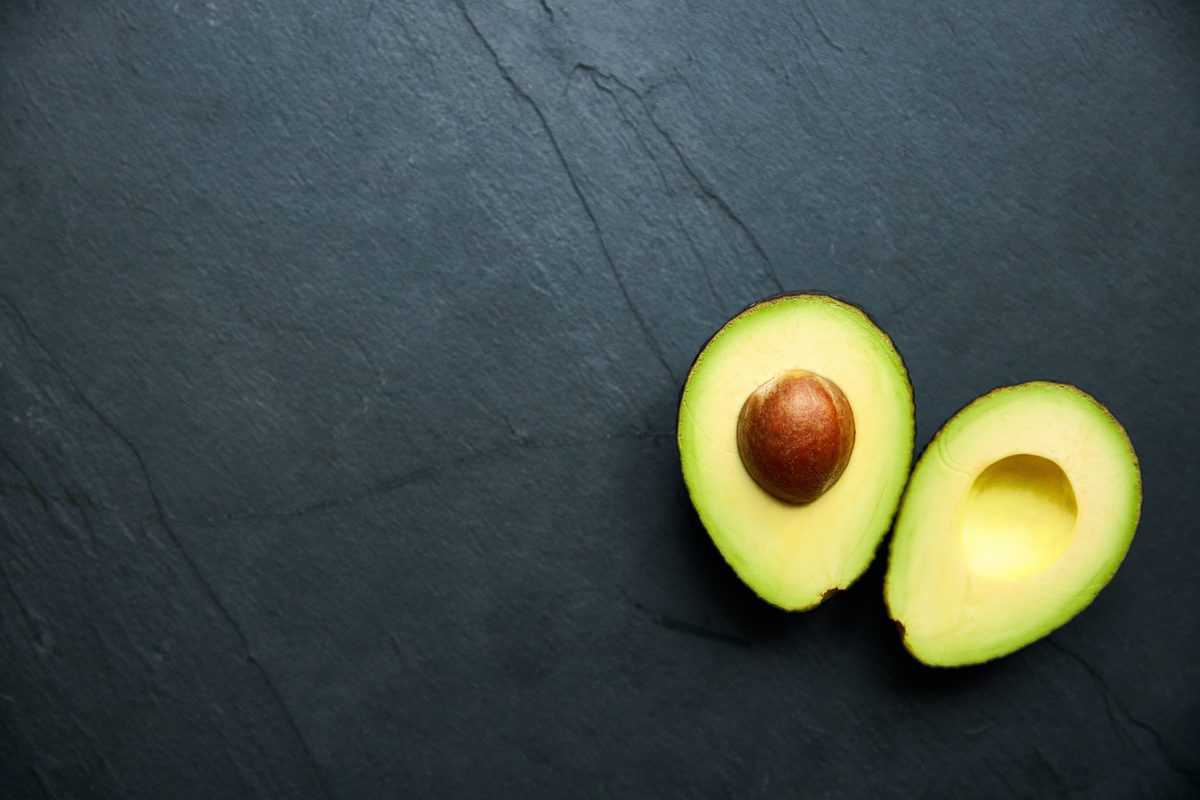
an avocado split in half

But for those of you unfamiliar with the keto diet, it is a very low-carb high-fat diet that consists of consuming 70% calories from fat, 20-25% calories from protein, and 5-10% calories from carbs. Carbohydrates are drastically restricted on the keto diet in order for the body to establish a state of ketosis.

Ketosis is a metabolic state in which the body no longer uses glucose from carbs as its main fuel source. Instead, the body uses fat as an alternative for energy by producing ketones. In order for a person to achieve and maintain ketosis, their net carbohydrate intake must remain under approximately 50 grams per day. Net carbs are the amount of carbohydrate in food MINUS its fibre content, since fibre isn’t absorbed by the body. So, to give you some examples, some sources of carbohydrates that are less than 50 grams would include foods like 2 medium sized apples (40g of net carbs), one cup of white rice (45g of net carbs), or one cup of baked sweet potato (35g of net carbs).

With that said, the keto diet may feel particularly restrictive especially for us carb lovers who simply can’t live without our morning bagel or fruit smoothie. This seems to be the case for some individuals who find that the only way they can actually stick to the keto diet is by having a keto cheat day. But what does a keto cheat day mean for ketosis and weight loss? And are there any negative health implication for regularly going in and out of ketosis to indulge in some tasty carbs? Let’s find out.

Cheat Day 101

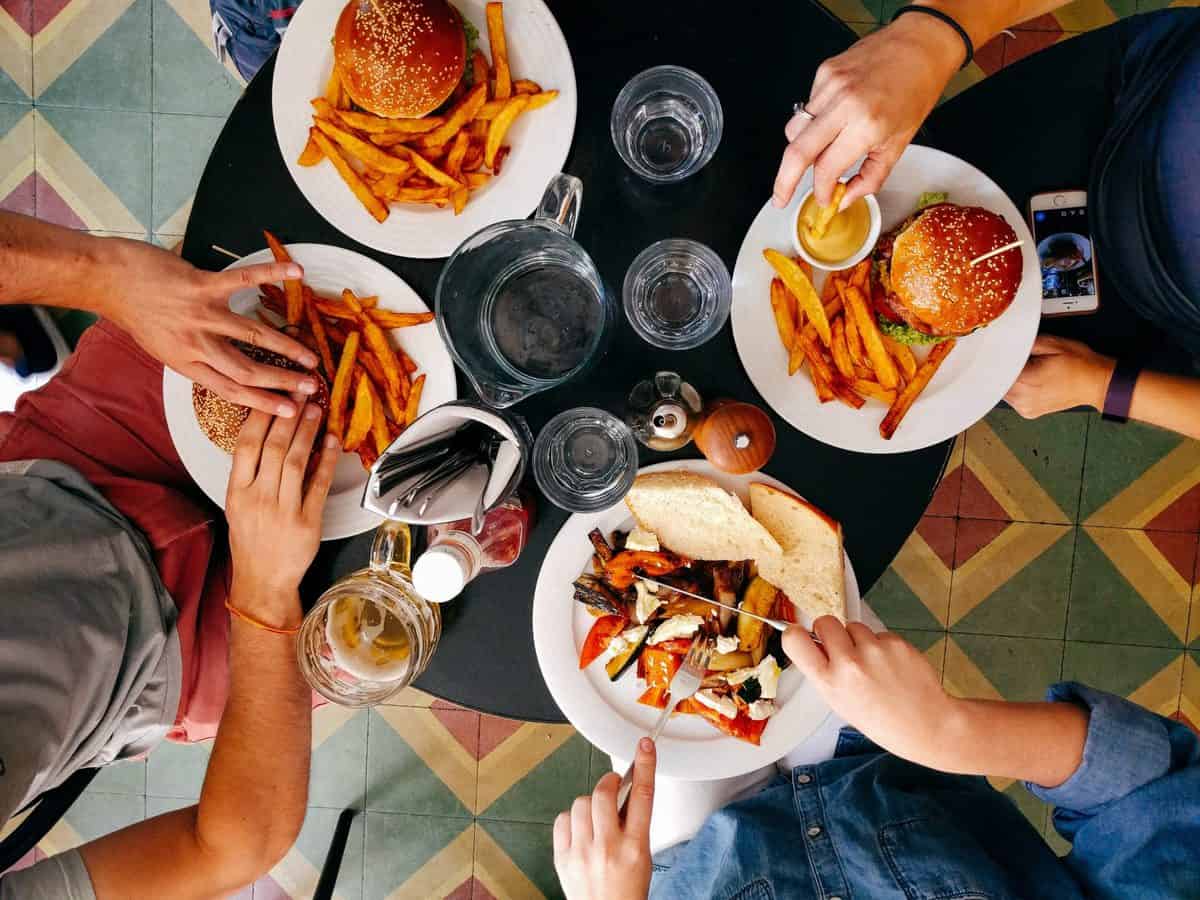
birds eye view of friends having keto cheat days

These days, cheat days are extremely common in wellness culture. Whether it’s our favorite fitness influencer or gym buddy, at one point or another we have all heard of someone saying say the words “cheat day”. Cheat days are typically known as the one day a week that an individual will give themselves permission to steer from their usual “strict” or “clean” way if eating in order to indulge in all of the “forbidden” foods they’ve restricted during the week.  Despite how common and normalized cheat days have become (especially in the fitness world), are there any risks to having regular cheat days?

What Are The Risks Of Having A Cheat Day?

There is a common belief that cheat days have the power to boost metabolism and increase leptin (our satiety hormone) which can help to decrease appetite post-cheat day. While there is minimal evidence to support these claims, one older study on “short-term overeating” showed that it can result in a slight increase in metabolism between 3-10% the following day. However, this increase in metabolism appeared to only last about 24 hours following “overfeeding”, which is considered negligible in the context of sustainable weight loss. It’s also likely that the huge hike in calories on a cheat day will easily negate any metabolic benefit. It is also important to note that individuals with chronic health conditions like diabetes, high cholesterol, or high blood pressure may want to steer clear of cheat days as it can have negative implications for important health markers.

Do Cheat Days Impact Our Relationship with Food?

 Some research shows that cheat days may make it easier for some individual to stay motivated to stick to their diet by permitting themselves one day a week to satisfy cravings. However, solely relying on cheat days to satisfy food cravings while restricting these “forbidden” foods the rest of the week, can fuel the diet mentality of “good” vs “bad” foods. This “all of nothing” approach to cheat days may make it more likely for someone to overeat or binge on “cheat foods” past the point of satiety because they know they will be unable to enjoy these foods the rest of the week. This mentality can prevent someone from listening to their body by bypassing their internal hunger and satiety cues in order to satisfy all the cravings that have built up during the week. In addition, the idea of “cheating” on your diet via a cheat meal can also incite feelings of guilt and shame associated with these foods which further contributes to the perception of good vs bad foods. This is not to say that all individuals who participate in cheat days or cheat meals go ham. It is very possible to have a modest “cheat meal” that falls outside your usual diet while giving yourself permission to mindfully enjoy yourself without feeling the need to go balls to the wall.

Keto Cycling vs Keto Cheat Day

Let’s clear up the difference between these two similar, yet different keto strategies.

Keto Cycling

a sign that says "keto"

Keto cycling involves rotating between following a standard keto diet while also intermittently increasing carbohydrate intake. This would usually mean following the keto diet 5-6 days a week and then consuming a higher amount of carbs for 1-2 days. One of the major downsides of the keto diet is that it has been shown to be difficult to follow long term. Therefore, some people may choose to keto cycle to help them adhere to this way of eating and make it more sustainable in the long term. Another benefit to keto cycling is that by including more carbohydrate-rich foods a few times a week, it lowers the risk of common nutrient deficiencies seen on the keto diet like calcium, vitamin D (from from dairy), magnesium (from whole grains & nuts) potassium (from fruit and veggies). There is also some research  showing that keto cycling may help to boost athletic performance due to the strategic rise in insulin levels which may help to optimize the anabolic effects of insulin on muscle growth. However, more research is needed to really understand the effects of keto cycling vs the standard keto diet on athletic performance. Overall, there is very little research on keto cycling, so we definitely need more evidence to really understand the long-term benefits of this style of keto dieting and whether or not it’s more beneficial than the standard keto diet.

Keto Cheat Day

Now that we’ve covered keto cycling – what’s the difference between keto cycling and a keto cheat day? Well, they are similar in the sense that they can both kick your body out of ketosis from the reintroduction of higher intakes of carbohydrates. An individual’s motivation may also be similar in the sense that it may help them stay motivated to continue on the keto diet. However, carbohydrate reintroduction on keto cycling is typically more structured than keto cheat days, in the sense that they don’t necessarily promote the consumption of otherwise “forbidden foods”. While it is certainly possible (and definitely okay) to include these foods while keto cycling, this isn’t the main goal of keto cycling, On the other hand, keto cheat days tend to be accompanied by an  “all or nothing” mentality with food which often leads to including high carb “bad foods” that you typically wouldn’t consume during the week. Moreover, keto cheat meals don’t always necessarily need to include high carb meals that kick you out of ketosis, as it is very possible to have “keto friendly” cheat meals – but more often than not, “cheat days” often put an emphasis on more indulgent high carb foods.

Will A Keto Cheat Day Kick You Out of Ketosis?

The time it takes to achieve ketosis can vary from person to person, but on average it can typically take 2-4 days. However, this may take longer for some people depending on factors such as daily carb intake, glycogen stores, exercise, age, and metabolism. With that said, a keto cheat day can certainly take someone out of ketosis if their net carbohydrate intake exceeds the 50-gram limitation. On the other hand, if an individual has a keto cheat day but keeps their carbohydrate intake below 50 grams, they would remain in ketosis.

salmon on a cutting board for keto diet

How Long Does It Take To Get Back Into Ketosis?

The time it takes to get back into ketosis after a cheat day varies from person-to-person but can range anywhere from one day to one week. It may also depend on how long they were in ketosis prior to their cheat day, and the total amount of carbohydrates consumed during their cheat day.

This is because consuming carbohydrates replenishes our glycogen stores – the bodies storage form of glucose (aka energy). In order to get back into ketosis, the body will first have to deplete its glycogen stores in order to shift into using ketones for energy instead. The best way to deplete glycogen stores in order to get back into ketosis is through very low carbohydrate intake (below the 50 gram limitation) and physical activity.

Individuals who have been keto for a longer period are more fully adapted to using ketones for energy compared to someone who is new to keto. This difference in metabolic adaptation may determine how long it takes to bounce back into ketosis. However, more research is needed in this area to really understand factors that may influence going in and out of ketosis. An individual can confirm that their body is back in ketosis by testing their urine using an indictor strip (less accurate but more inexpensive option) or by using a blood testing meter (more accurate but more expensive option). An individual is in ketosis if their blood ketones are within the 0.5-3.0 mmol/L range. Other signs that an individual may be in ketosis include – bad breath, weight loss, decreased appetite, and short-term fatigue.

 Do Keto Cheat Days Lead To Weight Gain?

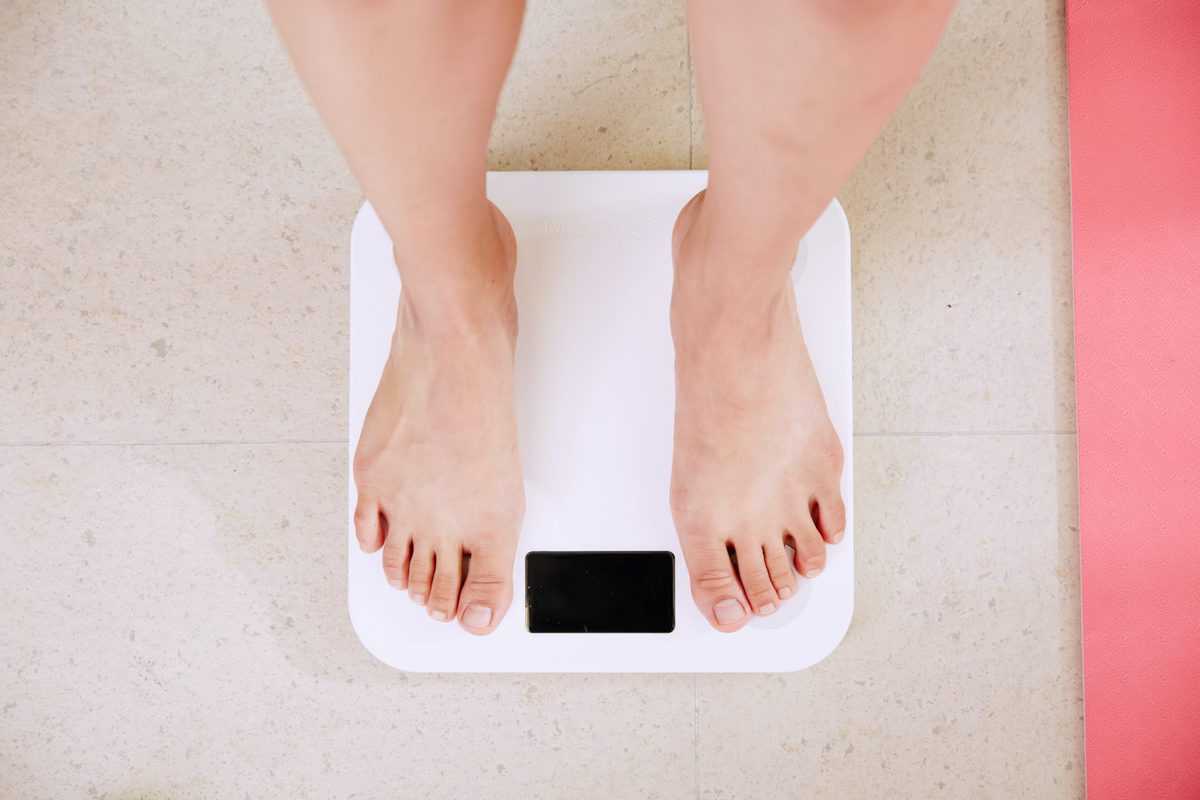
image of a person weighing themselves after going having keto cheat days

 The majority of people who go on a keto diet may do so for weight loss purposes. While it is true that short term weight loss is commonly achieved while on the keto diet, the initial weight loss is likely attributed to losing water weight. This is because for every 1 gram of carbohydrates that is stored in your body, around 2-4 grams of water is being retained. So, when carbohydrates are restricted on a keto diet, your body no longer stores water (or as much water) which can result in modest weight loss from losing water weight (not necessarily body fat).

Beyond just losing water weight, by considering that a major food group (carbs) is being restricted on the keto diet, less food options are available which may naturally result in less calories consumed. Research has also shown that the keto diet may decrease overall appetite by suppressing the hunger hormone, Ghrelin. As a result, some individuals may feel less hungry on the keto diet and naturally consume less calories.

With that said, one day of consuming carbs (like on a keto cheat day) is not likely to throw off someone’s weight loss goals on the keto diet. Any modest weight gain that occurs following a keto cheat day is likely a result of water retention from the increased carbohydrate intake. However, like any diet, weight may increase again over time depending on the frequency and quantity of the keto cheat days.

do Keto Cheat Day increase health risks?

Let’s look at some of the health concerns of doing regular cheat days on keto.

Blood Sugar Spikes

 When you “cheat” on the keto diet and reintroduce a larger amount of carbohydrates, blood sugar levels will naturally spike. This will cause the body to switch back to using glucose as the main source of energy. The spike and crash in blood sugar levels take a toll on the body because it can damage tissues and cells, which can trigger an inflammatory response. Repeated spikes in blood sugar levels can also increase the risk of stroke, heart attack, diabetes and even dementia.  

Keto Flu

kleenex box and tea from someone who has the keto flu from having keto cheat days

Having a cheat day while on a keto diet is different than having a cheat day on any other diet due to the metabolic shifts that occur from reintroducing carbohydrates and going in and out of ketosis. A common side effect of putting your body into ketosis is the “keto flu”, which can appear roughly 2-7 days into starting a keto diet.  Symptoms of the keto flu include nausea, fatigue, headaches, weakness, and irritability. Since research in this area is limited, it’s unclear whether keto cheat days increase or decrease symptoms of the keto flu. However, there is some research to show that some people have more metabolic flexibility and can easily transition between using glucose and fat as fuel without experiencing the keto flu. So, it may just be the case that some people are more metabolically adapted to going in and out of ketosis vs others, and may just depend on the individual. You can prevent the keto flu by consuming higher quality foods (i.e. nutrients dense instead of calorie dense), drinking enough fluids, and gradually easing yourself into the diet vs “jumping” right into it.

Refeeding Syndrome

There are some concerns that continuously going in and out of ketosis might make someone susceptible to refeeding syndrome, which is a dangerous and even fatal condition that can occur from the rapid reintroduction of carbohydrates after a period of malnourishment and/or starvation. When we are in a state of starvation, our body will naturally enter into a state of ketosis due to the lack of energy (calories) it is receiving. When carbohydrates are not available, fat is used as a source of energy as a means to spare protein and prevent muscle degradation.  When carbohydrates are reintroduced after a prolonged amount of time, electrolytes shift in response to increased insulin levels. These electrolyte shifts can put one at risk for high blood pressure, seizures, difficulty breathing, weakness, fatigue, heart failure, coma, or even death.

Even though refeeding syndrome involves transitioning from a state of ketosis to glucose metabolism, it is unlikely that an individual going in and out of ketosis will experience refeeding syndrome. This is because refeeding syndrome is more likely to occur in individuals who are malnourished, have low body weight and/or have underlying health conditions (i.e cancer, chronic alcoholism, or anorexia). Someone in ketosis would not automatically fit into these criteria, assuming they are eating adequate calories and are not underweight. With that said, to be safe, it is best to work with a qualified health professional to monitor for any signs and symptoms of refeeding syndrome and ensure they gradually reintroduce calories from carbohydrates.

Cardiovascular Risk

a paper heart hanging on a string

There is some research to show that consuming carbohydrates after a period of ketosis may have negative implications for heart health. A small 2019 study found that consuming a 75 gram dose of carbohydrates after a period of ketosis caused blood vessel damage. Researchers found that the short-term impact of “breaking ketosis” was consistent with levels found in people with poor heart health. Although more research on larger study samples is needed in this area, this study provides some insight on the short-term impacts of keto cheat days on heart health. But, like we mentioned previously, we still don’t know if the negative health effects of going in and out of ketosis are the same for everyone and whether or not those who are more adapted to using fat for energy may have an advantage.

Bottom Line on “Cheating” on Your Keto Diet

While having a keto cheat day or keto cycling may make it easier for some individuals to follow the keto diet, more research is needed to fully understand the health implications of going in and out of ketosis on a consistent basis and what factors may make this metabolic shift easier in certain individuals. What we do know is that the metabolic shifts of keto cheat days may lead to short term health effects like blood sugar spikes, keto flu, possible cardiovascular risk, and possible refeeding syndrome in susceptible individuals. Considering that the popularity of the keto diet is still relatively new, the jury is still out on the long term impacts of following the ketogenic diet and going in and out of ketosis – whether it be for keto cycling or keto cheat days.

Have you tried having a keto cheat day? What was the impact on your weight and how you felt? Did it help you sustain the diet longer?

pinterest image of keto cheat day


Contribution by Brooke Porter
Edited by Giselle Segovia RD MHSc

Abbey Sharp

Abbey Sharp is a Registered Dietitian (RD), regulated by the Ontario College of Dietitians. She is a mom, YouTuber, Blogger, award winning cookbook author, media coach specializing in food and nutrition influencers, and a frequent contributor to national publications like Healthline and on national broadcast TV shows.

www.abbeyskitchen.com/about-abbey/

Last Updated September 22, 2020. Published September 22, 2020 By Abbey Sharp 11 Comments

Easy Toddler Dip Recipes for Picky Eaters

These Easy Toddler Dip Recipes for Veggies & Fruit are essential BLW recipes for helping your kid eat more fruits and vegetables to get their fibre in!

HELP! My kid used to eat broccoli, pate, and fish, and now he only wants pasta and bread!

Sound familiar? I hear you. My kid also was a superstar eater, and then he got his molars in and went through a picky phase where he barely ate anything other than toast. The first things to go, of course, were the veggies – he went from broccoli being a favourite to being despised.

What do I do about picky eaters who don’t want to eat vegetables?

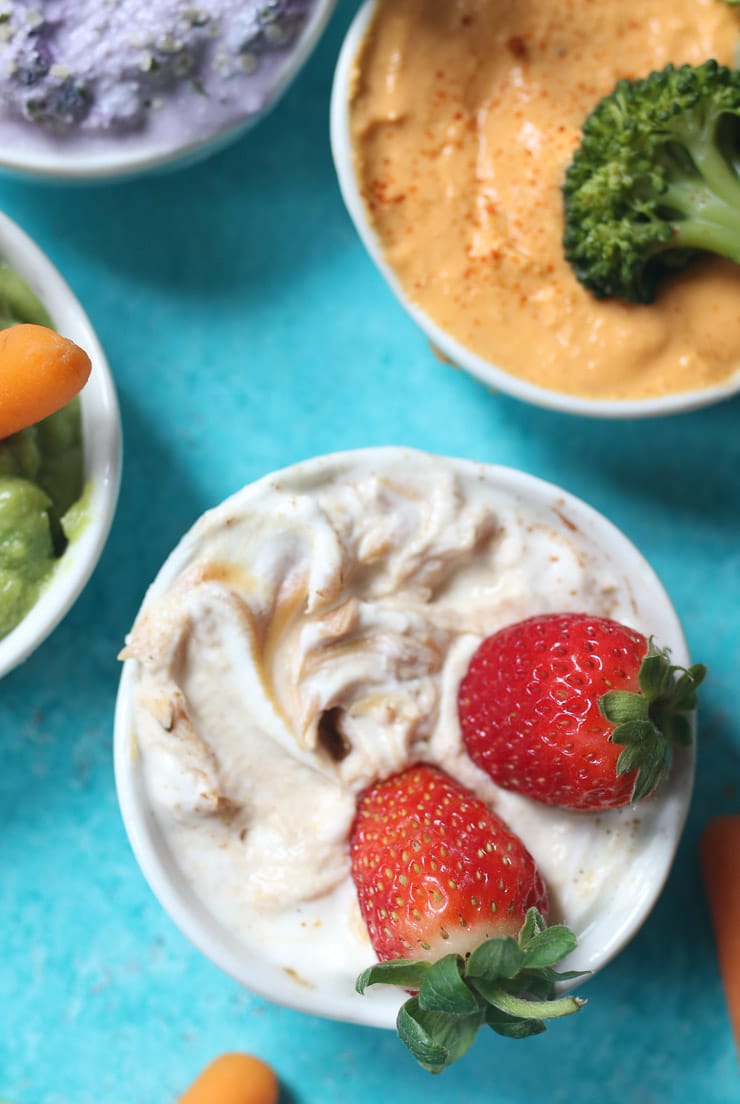
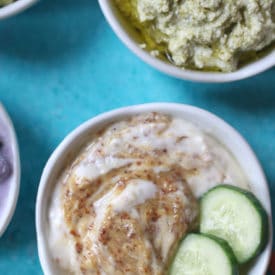
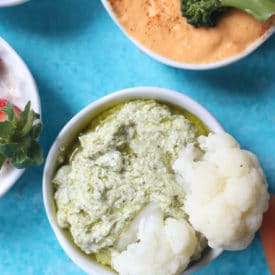
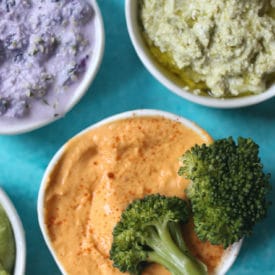
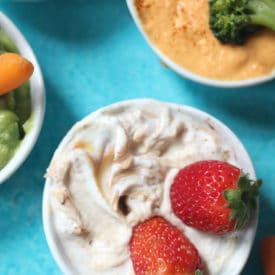
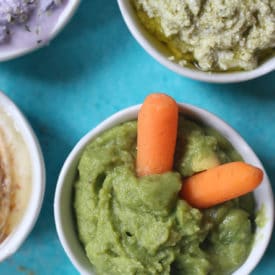
close up image of three varieties of dips for toddlers garnished with fruits and vegetables in small white bowls on a blue background

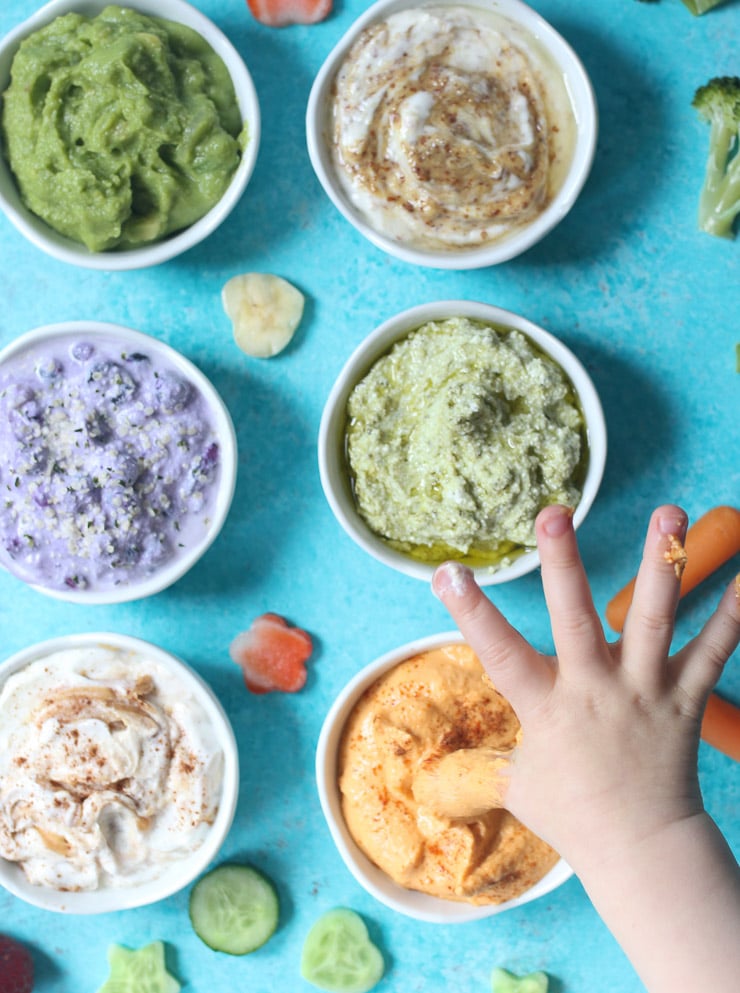
You make these easy toddler dip recipes. Trust me. They work! My kiddo LOVES the dip. He will dip anything in anything (sometimes just his hands because YOLO). But seriously, pairing his basic steamed broccoli with an exciting new dip has been a really great way to encourage him to eat his veggies.

Dips add flavour, fun, and something NOVEL and NEW. Mamas, if you’re struggling with picky eaters trying to get them to eat their vegetables, you need to try out these 6 healthy easy toddler dip recipes.

what are the best toddler dip recipes for picky eaters

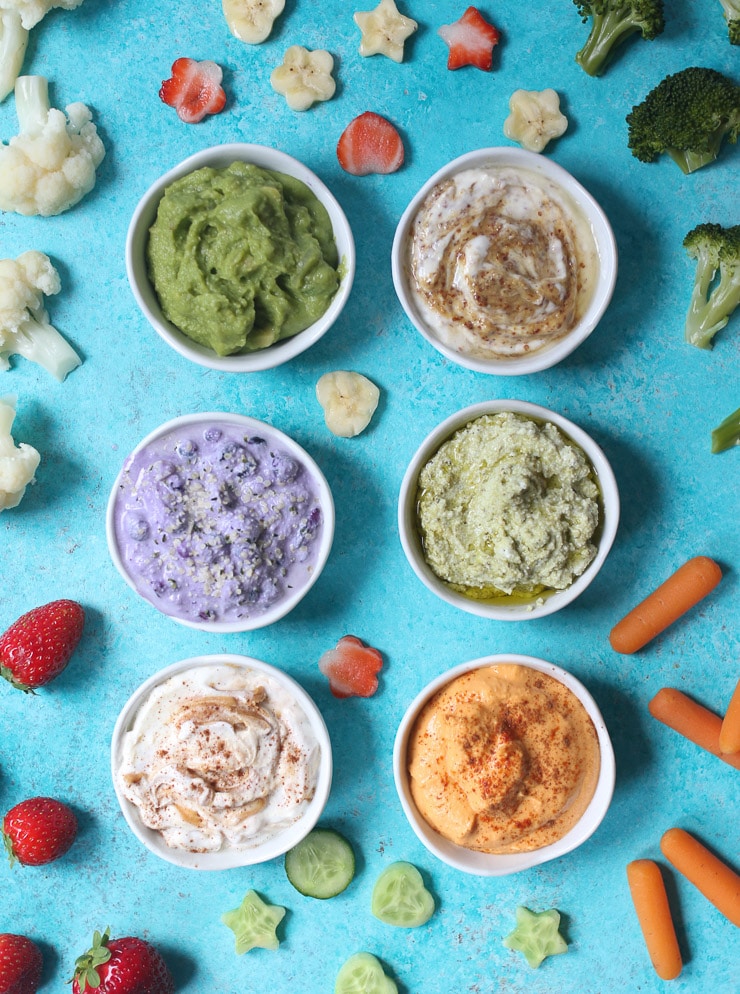
birds eye view of a variety of different dips in small white bowls for toddlers surrounded by fruits and vegetables

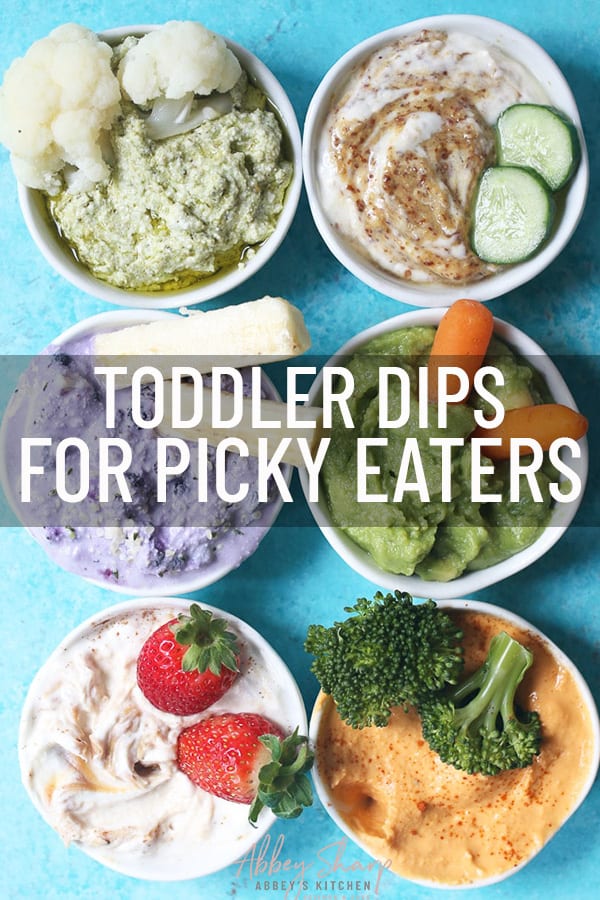
The possibilities are endless when it comes to dips, but these 6 easy healthy toddler dip recipes have proven to be Baby E’s favourites and also my favourites (because they’re a sinch to pull off).

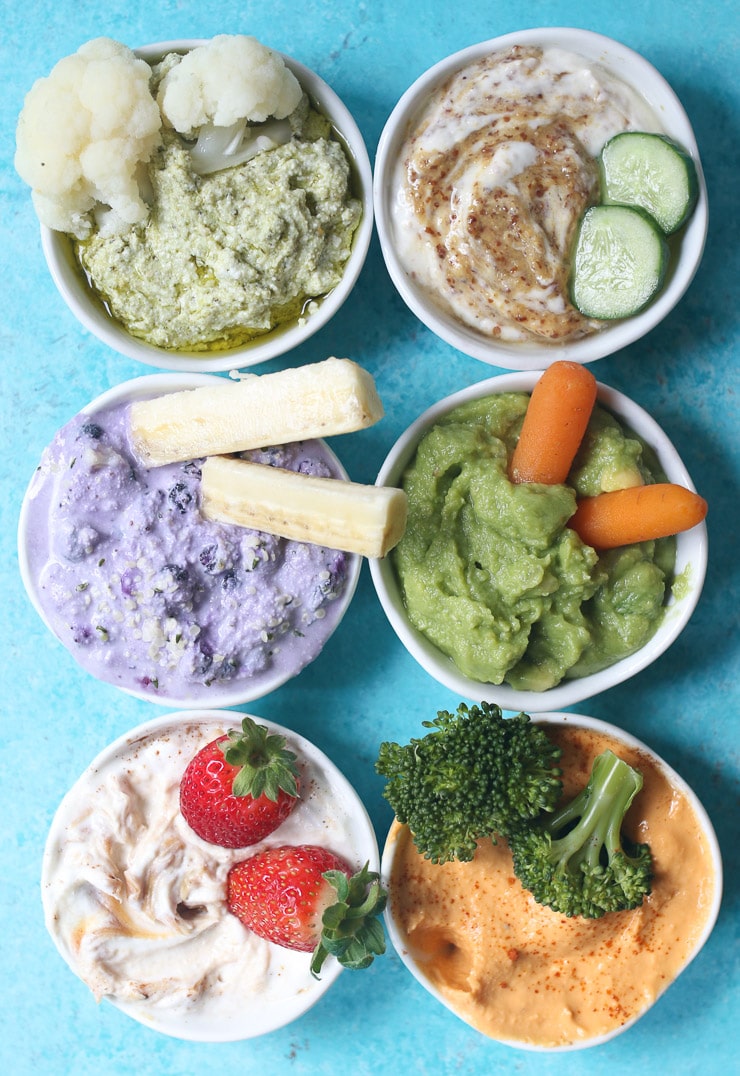
For dipping fruit, we have a Berry Protein dip with cottage cheese, cream cheese and your kiddo’s favourite fruit. There’s also a Yogurt Peanut Butter dip which is amazing with strawberries or bananas.

For dipping vegetables, I’ve got even more options (because let’s be real, its the veggies that are a hard sell). There’s a honey mustard yogurt dip that is sweet, tangy and delish. For the kiddos who are under 1, just swap in a hint of maple syrup for the honey. If your kid is an avocado lover like mine, try my white bean avocado dip. Hummus lovers will love the familiar sweetness of my CARROT hummus. And for the cheese lovers, try the creamy pesto dip!

Make one of these toddler dip recipes each week and keep the experience of eating vegetables and fruit fun!

What if the kids just eat the Dips and don’t eat the vegetables?

toddler hands dipping into a variety of dips.

Ha sometimes my kid gets so excited about the dip, he just shoves his hand in there and dips his fingers in! It happens. But because these toddler dips are so nutrient dense, I’m totally fine with it too. They’ll be getting lots of healthy fats, protein, calcium and more – even if they don’t eat the vegetables with the dip!

How Do I teach my kid how to dip vegetables and fruit?

birds eye view of six different dips for toddlers in small white bowls garnished with fruits and vegetables

Modelling! I take a vegetable (try a baby carrot, for example) and dip it into one of these dips. Show babe how to lift it up and bring it to their mouth. The first time I introduced a dip with baby E’s carrots, I stuck one into the avocado dip and turned my back for a second to grab a fork. When I looked back, he had stuck four other carrots into the dip and then I watched him pick them up to eat. Now this kid LOVES to dip!!

So mamas and papas, what are some of your fool proof ways to get your kiddos to eat their veggies?
Have you tried these easy toddler dip recipes for picky eaters?
Leave me a comment below with your thoughts!


If you liked this post, you may also like:
Toddler Finger Sandwiches
High Iron Sweet Potato Apple Muffins
Peanut Butter Banana Mini Muffins
Mini Broccoli and Cheese Egg Muffins
BLW Chickpea Peanut Butter Biscuits


pinterest image of toddler dips


Print Recipe
5 from 5 votes

Berry Protein Dip

These Easy Toddler Dip Recipes for Veggies & Fruit are essential BLW recipes for helping your kid eat more fruits and vegetables to get their fibre in!
Prep Time5 minutes mins
Total Time5 minutes mins
Course: Snack
Cuisine: American
Servings: 1
Calories: 126kcal
Author: Abbey Sharp

Ingredients

  • 1/4 cup cottage cheese
  • 3 tbsp frozen thawed blueberries
  • 1 tbsp cream cheese

Instructions

  • In a food processor, puree the cottage cheese, blueberries and cream cheese.
  • Serve with fruit and enjoy!

Nutrition

Calories: 126kcal | Carbohydrates: 9g | Protein: 7g | Fat: 7g | Saturated Fat: 4g | Cholesterol: 25mg | Sodium: 238mg | Potassium: 55mg | Fiber: 1g | Sugar: 6g | Vitamin A: 268IU | Vitamin C: 4mg | Calcium: 58mg


Print Recipe
5 from 4 votes

Honey Mustard Yogurt Dip

These Easy Toddler Dip Recipes for Veggies & Fruit are essential BLW recipes for helping your kid eat more fruits and vegetables to get their fibre in!
Prep Time5 minutes mins
Total Time5 minutes mins
Course: Snack
Cuisine: American
Servings: 1
Calories: 54kcal
Author: Abbey Sharp

Ingredients

  • 1/4 cup plain full fat Greek yogurt
  • 1 tsp grainy mustard
  • 1 tsp honey or maple syrup for babies under 1

Instructions

  • Mix together the yogurt, mustard and honey.
  • Serve with veggies and enjoy!

Nutrition

Calories: 54kcal | Carbohydrates: 8g | Protein: 5g | Fat: 1g | Saturated Fat: 1g | Cholesterol: 3mg | Sodium: 75mg | Potassium: 71mg | Sugar: 7g | Calcium: 55mg

Print Recipe
5 from 4 votes

Creamy Pesto Dip

These Easy Toddler Dip Recipes for Veggies & Fruit are essential BLW recipes for helping your kid eat more fruits and vegetables to get their fibre in!
Prep Time5 minutes mins
Total Time5 minutes mins
Course: Snack
Cuisine: Italian, American
Servings: 1
Calories: 223kcal
Author: Abbey Sharp

Ingredients

  • 1/4 cup ricotta
  • 2 tbsp prepared pesto

Instructions

  • Mix together the ricotta and pesto.
  • Serve with veggies and enjoy!

Nutrition

Calories: 223kcal | Carbohydrates: 4g | Protein: 8g | Fat: 19g | Saturated Fat: 7g | Cholesterol: 34mg | Sodium: 332mg | Potassium: 65mg | Fiber: 1g | Sugar: 1g | Vitamin A: 878IU | Calcium: 176mg | Iron: 1mg

Print Recipe
5 from 5 votes

Carrot Hummus Dip

These Easy Toddler Dip Recipes for Veggies & Fruit are essential BLW recipes for helping your kid eat more fruits and vegetables to get their fibre in!
Prep Time5 minutes mins
Total Time5 minutes mins
Course: Snack, Dip
Cuisine: American, Middle Eastern
Servings: 4 cups
Calories: 107kcal
Author: Abbey Sharp

Ingredients

  • 1 cup cooked very soft carrots
  • 1 15 ounce can garbanzo beans (chickpeas, rinsed and drained
  • ¼ cup tahini
  • 2 tablespoons lemon juice
  • 2 cloves garlic quartered
  • ½ teaspoon sweet paprika
  • 1/4 tsp cinnamon
  • Salt to taste

Instructions

  • To a food processor or blender, puree the cooked carrots, chickpeas, tahini, lemon, garlic, paprika, cinnamon and salt to taste.
  • Serve with veggies and enjoy!

Nutrition

Calories: 107kcal | Carbohydrates: 8g | Protein: 3g | Fat: 8g | Saturated Fat: 1g | Sodium: 28mg | Potassium: 171mg | Fiber: 2g | Sugar: 2g | Vitamin A: 5469IU | Vitamin C: 6mg | Calcium: 34mg | Iron: 1mg

Variety of dips with fruits and vegetables.
Print Recipe
5 from 4 votes

PB Yogurt Dip

These Easy Toddler Dip Recipes for Veggies & Fruit are essential BLW recipes for helping your kid eat more fruits and vegetables to get their fibre in!
Prep Time5 minutes mins
Total Time5 minutes mins
Course: Snack
Cuisine: American
Servings: 1
Calories: 52kcal
Author: Abbey Sharp

Ingredients

  • 1/4 cup plain full fat Greek yogurt
  • 1 tbsp natural peanut butter

Instructions

  • Mix together the yogurt and peanut butter.
  • Serve with fruit and enjoy!

Nutrition

Calories: 52kcal | Carbohydrates: 4g | Protein: 8g | Fat: 1g | Saturated Fat: 1g | Cholesterol: 3mg | Sodium: 65mg | Potassium: 71mg | Fiber: 1g | Sugar: 2g | Calcium: 55mg

Print Recipe
5 from 4 votes

Protein Avocado Spread

These Easy Toddler Dip Recipes for Veggies & Fruit are essential BLW recipes for helping your kid eat more fruits and vegetables to get their fibre in!
Prep Time5 minutes mins
Total Time5 minutes mins
Course: Snack
Cuisine: American
Servings: 4 cups
Calories: 163kcal
Author: Abbey Sharp

Ingredients

  • 1 can no salt added cannelini beans drained and rinsed
  • 2 avocados ripe
  • 2-3 tbsp lemon juice to taste
  • Salt to taste

Instructions

  • In a food processor or blender, puree the beans, avocado and lemon juice with salt to taste.
  • Serve with veggies and enjoy!

Nutrition

Calories: 163kcal | Carbohydrates: 9g | Protein: 2g | Fat: 15g | Saturated Fat: 2g | Sodium: 7mg | Potassium: 487mg | Fiber: 7g | Sugar: 1g | Vitamin A: 147IU | Vitamin C: 13mg | Calcium: 12mg | Iron: 1mg
Abbey Sharp

Abbey Sharp is a Registered Dietitian (RD), regulated by the Ontario College of Dietitians. She is a mom, YouTuber, Blogger, award winning cookbook author, media coach specializing in food and nutrition influencers, and a frequent contributor to national publications like Healthline and on national broadcast TV shows.
www.abbeyskitchen.com/about-abbey/

Last Updated September 10, 2020. Published September 10, 2020 By Abbey Sharp 9 Comments

Healthy Toddler Finger Sandwiches | 4 BLW Recipes

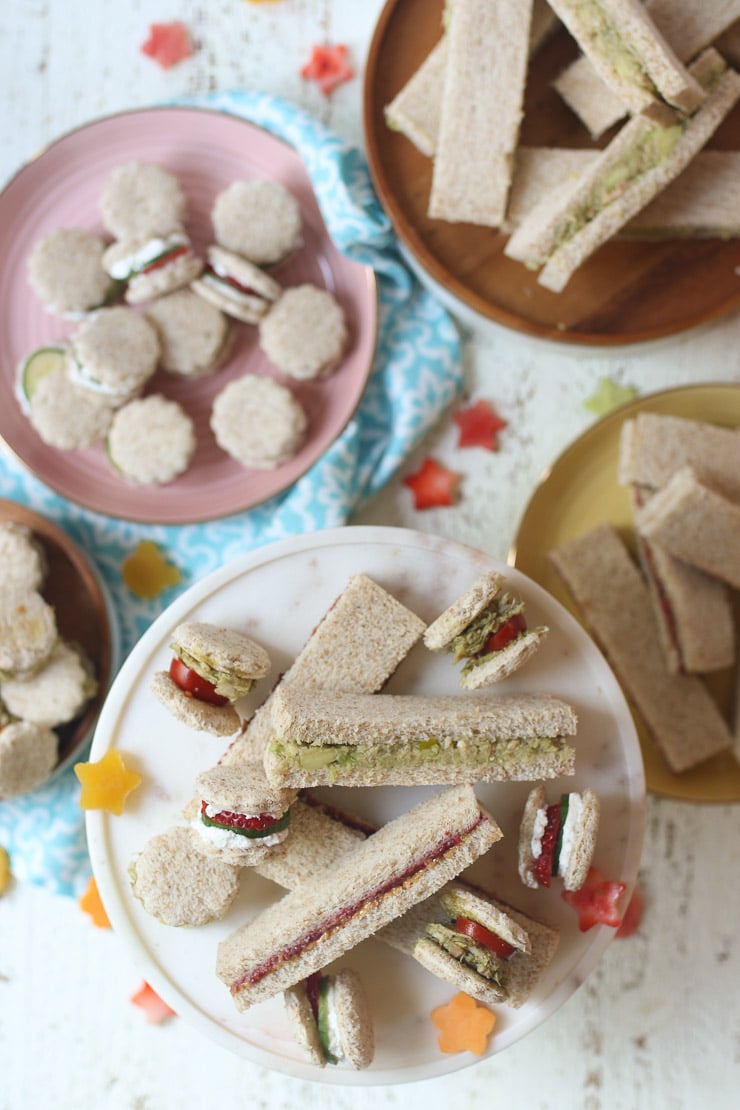
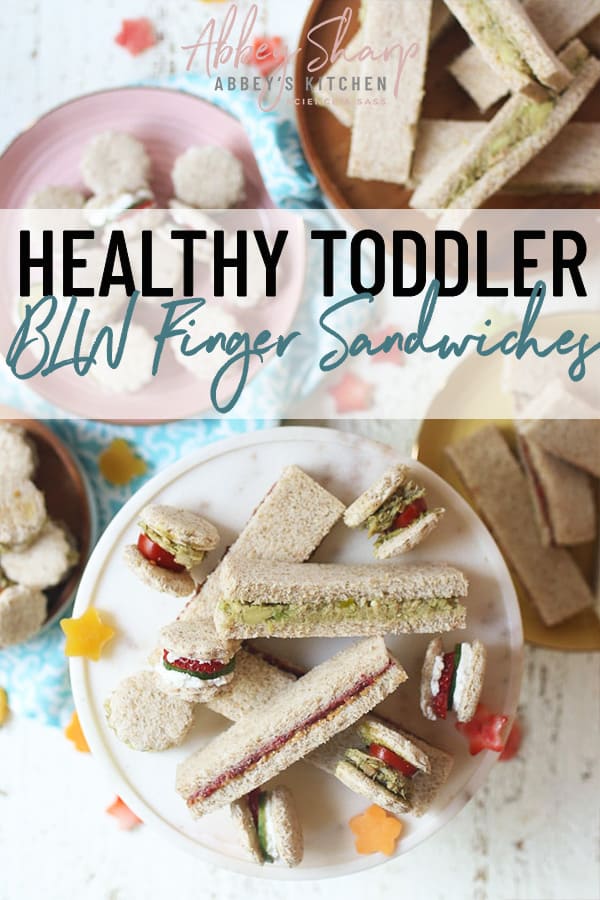
Finger sandwiches on several plates.

These Four Healthy Toddler Finger Sandwiches are perfect for perfecting Baby Led Weaning (BLW) or for packing for on the go snacks or meals.

What food do ALL picky toddlers and kids love? BREAD! How do we make bread more nutritionally balanced? SANDWICHES! And how do we make sandwiches more kid friendly? FINGER SANDWICHES! Yes, mamas, that’s pretty much all you need to know about motherhood.

No but seriously, I do batch prepping legit every single weekend and these healthy finger toddler sandwiches ALWAYS are in rotation. I like to switch up the varieties to keep Baby E’s attention, so that’s why I’m sharing his (and my) four favourite finger sandwich fillings.

How to Make the best healthy toddler finger sandwiches on the fly

Finger sandwiches on several plates.

A lot of people ask me how I have my shit together enough to feed Baby E such a vibrant variety of foods. Well, let me tell you- BATCH.PREP. It’s all about the batch prep. I usually make a bunch of healthy toddler finger sandwiches each week (usually two varieties), and keep them in the fridge separated by a paper towel or wax paper in a tubberware. I mean, obviously it is not as good as fresh, but Baby E has NEVER complained and I then have something healthy that we can easily grab and take with us everywhere we go. It’s a great way to get a nice combination of energizing carbohydrates, plus some protein and often iron, too. Here are some of my favourite combinations.

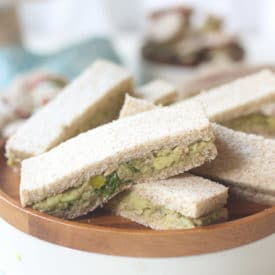
Avocado Salmon Salad 

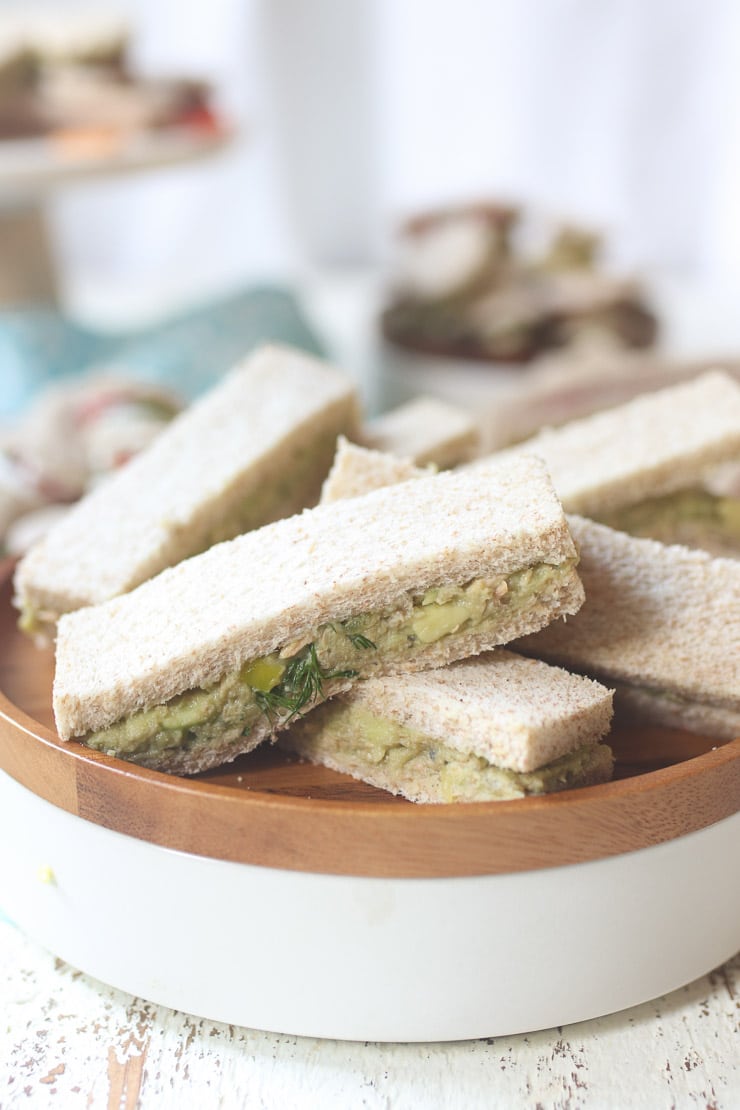
Avocado and salmon finger sandwiche on a wooden plate.

Instead of using mayo in my salmon salad, I mash up some avocado with lemon juice and dill. Super easy and nutrient dense! You can also do this with tuna (I go for light tuna for the lowest mercury options). As for salmon, I often look for WITH bones and skin and no salt added which adds beneficial calcium! PS: Baby E used to HATE salmon no matter what I did, but as soon as I started to make these finger sandwiches (with a squirt of relish for a tiny bit of sweetness), he became obsessed.

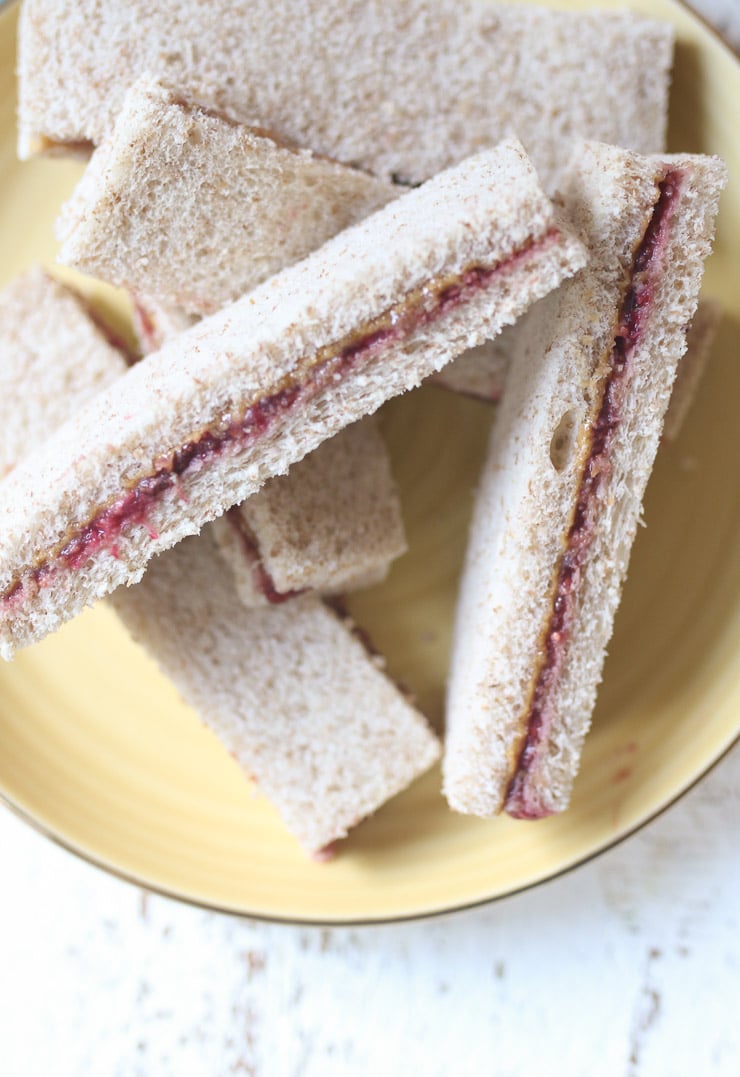
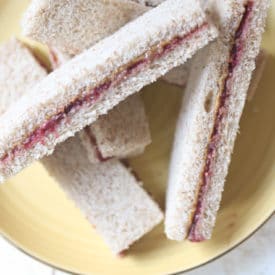
Peanut Butter Chia Jelly 

Peanut butter and jelly finger sandwiche on a yellow plate.

These are Baby E’s FAVOURITES and they’re stupid simply. In a bowl, mix one package of baby food (any flavour- fruit, veggie, whatever you have) with a tablespoon of chia seeds and let it sit overnight. Then spread it onto bread, along with the peanut butter, smash together and slice! I make this cheater chia jam every week and use it on toast, in yogurt, ricotta, sandwiches and more.

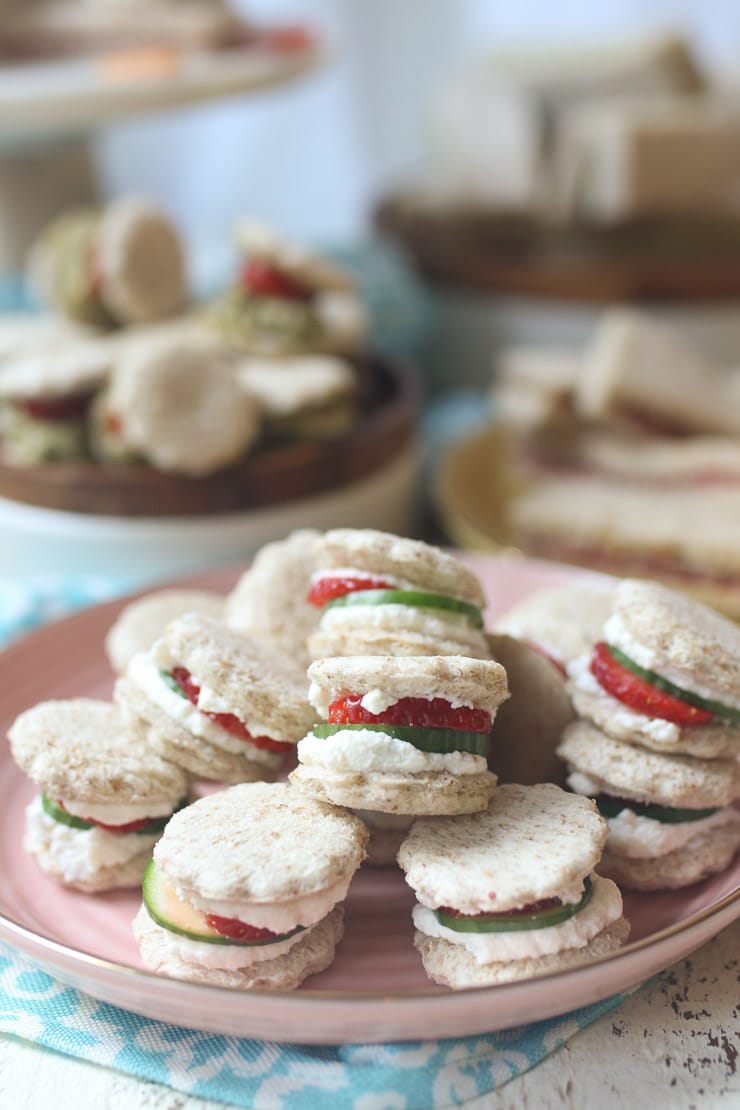
Ricotta Strawberry & Cucumber 

Strawberry and cucumber finger sandwiche on a pink plate.

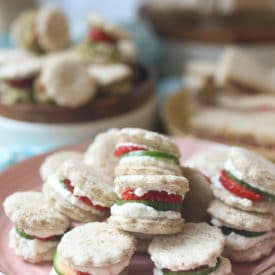
These are like fancy high tea sandwiches, but are actually totally kid and toddler friendly. The combination of creamy ricotta and cream cheese with strawberries and cucumber is such a treat that is great for breakfast, lunch or snack.

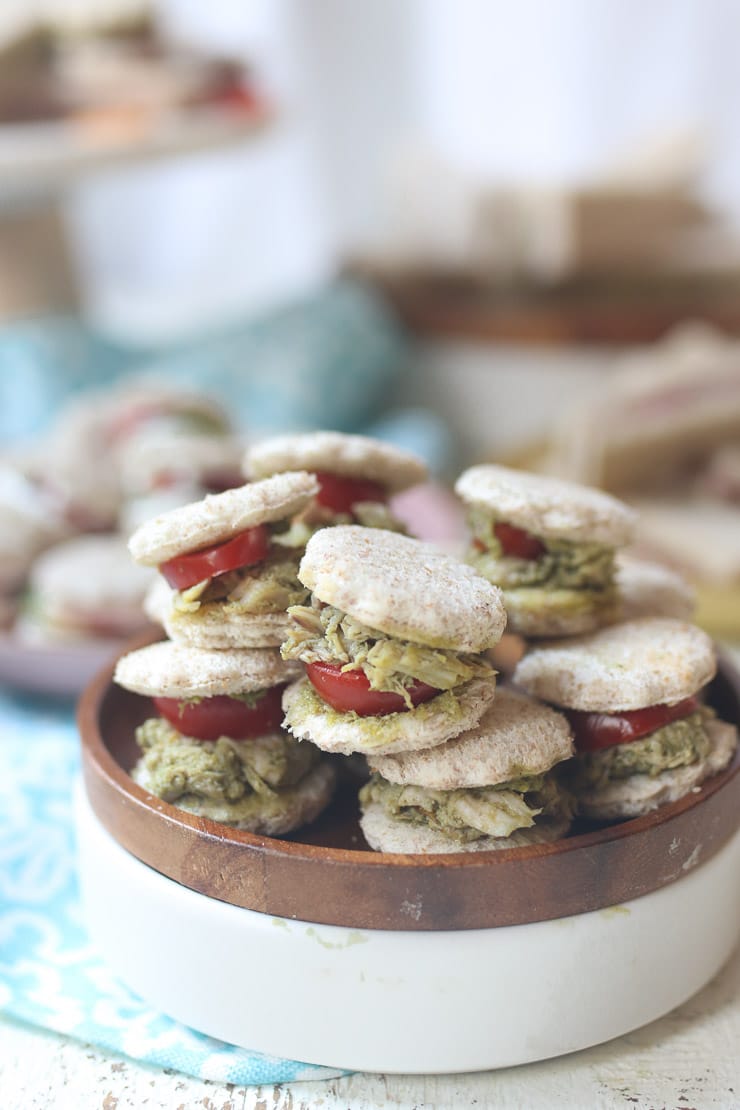
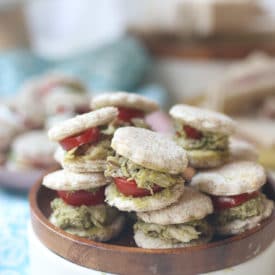
Chicken Pesto and Tomato 

Chicken and pesto finger sandwiche on a wooden plate.

This is a great way to use up any leftover chicken or rotisserie chicken. Just add a little pesto (homemade or store bought), layer with tomatoes and cut into fingers.

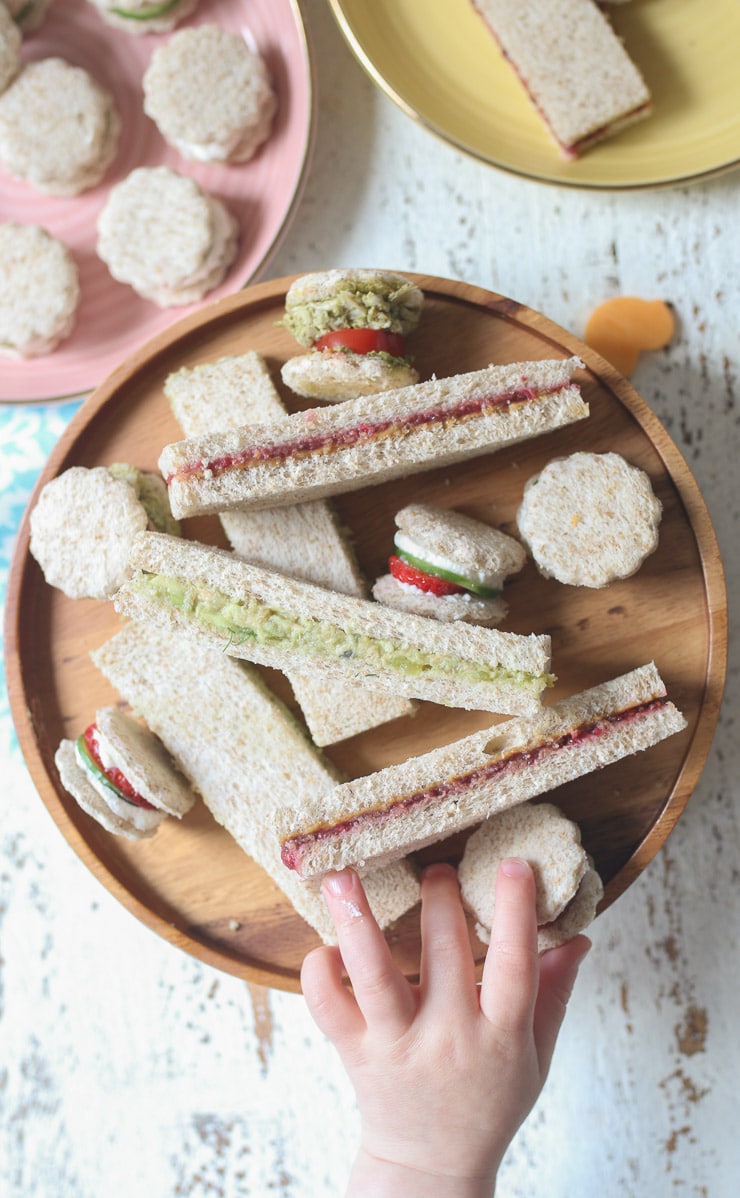
What’s the Best Bread for making healthy toddler finger sandwiches?

Toddler hand reaching for a finger sandwich on a wooden plate.

Honestly, it’s a bit of a balance. The softer bread is best but it’s not as nutritious, so I usually serve a simple whole grain bread for finger sandwiches and choose a heartier, seedier bread for breakfasts. If you or your kiddo are gluten free, you can of course use a gluten free bread.

So friends, tell me – what kind of healthy toddler finger sandwiches do your kids like?
Leave me a comment below with your favourite!

pinterest image of toddler finger sandwiches


Peanut butter and jelly finger sandwiches on a yellow plate.
Print Recipe
5 from 1 vote

Peanut Butter Chia Jelly

These Four Healthy Toddler Finger Sandwiches are perfect for perfecting Baby Led Weaning (BLW) or for packing for on the go snacks or meals.
Prep Time8 hours hrs 5 minutes mins
Total Time8 hours hrs 5 minutes mins
Course: Lunch
Cuisine: American
Servings: 8 sandwiches
Calories: 85kcal
Author: Abbey Sharp

Ingredients

  • 1 squeeze pack of baby fruit puree your choice
  • 1 tbsp chia seeds
  • ¼ cup natural peanut butter
  • 4 thin slices whole grain bread

Instructions

  • Put the baby fruit puree into a bowl with chia seeds and allow to sit overnight.
  • Spread onto the bread with the peanut butter and cut into strips or cut into shapes.
  • Serve and enjoy!

Nutrition

Calories: 85kcal | Carbohydrates: 16g | Protein: 4g | Fat: 1g | Saturated Fat: 1g | Cholesterol: 1mg | Sodium: 83mg | Potassium: 91mg | Fiber: 3g | Sugar: 7g | Vitamin A: 182IU | Vitamin C: 1mg | Calcium: 30mg | Iron: 1mg


Chicken and pesto finger sandwiches on a wooden plate.
Print Recipe
5 from 1 vote

Chicken Pesto and Tomato

These Four Healthy Toddler Finger Sandwiches are perfect for perfecting Baby Led Weaning (BLW) or for packing for on the go snacks or meals.
Prep Time5 minutes mins
Total Time5 minutes mins
Course: Lunch
Cuisine: Italian, American
Servings: 8 sandwiches
Calories: 59kcal
Author: Abbey Sharp

Ingredients

  • 2 rotisserie chicken legs skin removed and shredded
  • 3 tbsp basil pesto
  • 5 cherry tomatoes halved
  • 4 thin slices whole grain bread

Instructions

  • In a bowl, mix together the chicken with the pesto. Spread onto the bread, and top with tomatoes.
  • Sandwich together and cut into strips or shapes.

Nutrition

Calories: 59kcal | Carbohydrates: 7g | Protein: 2g | Fat: 3g | Saturated Fat: 1g | Cholesterol: 1mg | Sodium: 111mg | Potassium: 58mg | Fiber: 1g | Sugar: 1g | Vitamin A: 165IU | Vitamin C: 2mg | Calcium: 24mg | Iron: 1mg

Avocado and salmon finger sandwiches on a wooden plate.
Print Recipe
5 from 2 votes

Avocado Salmon Salad Finger Sandwiches

These Four Healthy Toddler Finger Sandwiches are perfect for perfecting Baby Led Weaning (BLW) or for packing for on the go snacks or meals.
Prep Time5 minutes mins
Total Time5 minutes mins
Course: Lunch
Cuisine: American
Servings: 8 sandwiches
Calories: 143kcal
Author: Abbey Sharp

Ingredients

  • 1 150 g can of wild salmon with bones and skin no salt added
  • 2 ripe avocados
  • 2 tsp lemon juice
  • 1 tsp dill
  • Salt and pepper optional
  • 1-2 tbsp relish optional
  • 4 thin slices whole grain bread

Instructions

  • To a bowl, mix together the salmon, avocado, lemon, dill, salt and pepper, and relish if desired (to sweeten it up).
  • Spread onto bread and cut into strips or cut into shapes.
  • Serve and enjoy!

Nutrition

Calories: 143kcal | Carbohydrates: 11g | Protein: 7g | Fat: 9g | Saturated Fat: 1g | Cholesterol: 16mg | Sodium: 152mg | Potassium: 341mg | Fiber: 4g | Sugar: 1g | Vitamin A: 86IU | Vitamin C: 6mg | Calcium: 74mg | Iron: 1mg


Strawberry and cucumber finger sandwiches on a pink plate.
Print Recipe
5 from 1 vote

Ricotta Strawberry & Cucumber

These Four Healthy Toddler Finger Sandwiches are perfect for perfecting Baby Led Weaning (BLW) or for packing for on the go snacks or meals.
Prep Time5 minutes mins
Total Time5 minutes mins
Course: Lunch
Cuisine: American
Servings: 8 sandwiches
Calories: 68kcal
Author: Abbey Sharp

Ingredients

  • ¼ cup ricotta
  • 2 tbsp cream cheese
  • 2 tsp lemon zest
  • 6 strawberries thinly sliced
  • 1-2 mini cucumber thinly sliced
  • 4 thin slices whole grain bread

Instructions

  • In a bowl, mix together the ricotta, cream cheese and lemon zest. Spread onto the bread, and top with strawberries and cucumber.
  • Sandwich together and cut into strips or shapes.

Nutrition

Calories: 68kcal | Carbohydrates: 8g | Protein: 3g | Fat: 3g | Saturated Fat: 1g | Cholesterol: 8mg | Sodium: 75mg | Potassium: 113mg | Fiber: 1g | Sugar: 2g | Vitamin A: 110IU | Vitamin C: 7mg | Calcium: 41mg | Iron: 1mg
Abbey Sharp

Abbey Sharp is a Registered Dietitian (RD), regulated by the Ontario College of Dietitians. She is a mom, YouTuber, Blogger, award winning cookbook author, media coach specializing in food and nutrition influencers, and a frequent contributor to national publications like Healthline and on national broadcast TV shows.

www.abbeyskitchen.com/about-abbey/

Last Updated October 23, 2020. Published September 8, 2020 By Abbey Sharp 10 Comments

25 Kid Friendly Healthy School Lunches

I share 25 of the best kid friendly healthy school lunch recipes that are nutritionally balanced and the perfect fuel your child needs to get through the day.

I share 25 of the best kid friendly healthy school lunch recipes that are nutritionally balanced and the perfect fuel your child needs to get through the day.

So I know most parents can relate to the sentiment that packing lunches can be a real pain, BUT, they don’t have to! Stay with me parents. Since giving birth to my beautiful babe, I’ve actually gotten really excited about packing my little kiddo’s lunch and now I want to get you guys excited. As you all know, I’m a planner, so I’ve gathered 25 of the best kid friendly healthy school lunch recipes that will totally change your mind that packing your kid’s is boring.

Let’s get into it!

Vegan Butter Chickpeas – Pamela Fergusson

Bowl of white rice and curry with lime wedges.

No Cook Picnic Snacks – Simple Swaps

Mini sandwiches on a skewer with strawberries.

Four Ingredient Cheesy Zucchini Bites – How to Eat

zucchini patties on parchment paper.

Mexicreamy Chicken Pinwheels – Salubrious RD

Pinwheel sandwiches on a green plate served with veggies.

Healthy Homemade Hot Pockets – Holley Grainger

Hot pockets on a plate.

Make-Ahead Beans and Greens Quesadillas – Holley Grainger

Quesadillas served in a lunch box.

BLT Skewers – Holley Grainger

mini BLT sandwiches on a skewer.

Hummus Quesadilla with Pomegranate & Feta – Abbey’s Kitchen

Veggie quesadilla on a wooden cutting board.

Tomato and White Bean Naan Pizza – Amy Gorin Nutrition

Pizza on naan bread.

Raw Mexican Zucchini Roll Ups with Veggie Walnut Meat – Veggies Don’t Bite

Zucchini roll ups on a plate.

Vegetable Tortilla Roll Ups – Culinary Hill

Tortilla roll up.

Caprese Wrap – Weelicious

Pinwheel sandwiches served on a wooden board.

5-Ingredient Sweet Potato & Sage Egg Muffins – Edwina Clark

Mini egg muffins.

Tuna Cutlets – Desilicious RD

Tuna patties on a white plate.

Egg Cups Five Ways – Abbey’s Kitchen

Egg muffins.

Broccoli Cheddar Quinoa Cups – Haut & Healthy Living

Quinoa mini cups.

Sausage & Tomato Skewers – My Fussy Eater

Sausage and tomato skewers.

Spinach Strawberry Salad Wrap – The Organic Kitchen

Tortilla wrapped sandwich.

VEGAN BAKED QUESADILLAS – abbey’s kitchen

Toddler hand reaching for quesadilla from a yellow plate.

Ham and Cheese Egg Muffins – Jessica Ivey

Mini egg muffins.

Make Ahead Turkey and Cream Cheese Wraps – Jessica Ivey

Tortilla pinwheel sandwiches.

Lunch Box Bagel Kabobs 4 Ways – Mom’s Kitchen Handbook

Bagel sandwich skewers.

Lunchbox Tomato, Pepper & Tortellini Skewers – It’s a Veg World After All

Tortillini and veggies skewers.

Chicken & Hummus Plate Lunch Meal Prep – Project Meal Plan

Chicken and veggies with hummus in lunch boxes.

Chicken Pepperoni Pasta Salad – Carmy Run Eat Travel

Pasta and veggies in four lunch boxes.

See, packing your kid’s lunch can be FUN! 25 delicious kid-approved school lunches to give you the extra inspiration when you’re sitting in your kitchen wondering what to pack for your kid’s lunches.

Now I want to hear from you!
What are your go-to school lunch combinations for your child?
Have you tried any of these recipes yet?
Let me know in the comments below!

pinterest image for back to school lunch ideas

Compiled By:

Sofia Tsalamlal, RD, MHSc

Acacia Puddester, RD2B

Abbey Sharp

Abbey Sharp is a Registered Dietitian (RD), regulated by the Ontario College of Dietitians. She is a mom, YouTuber, Blogger, award winning cookbook author, media coach specializing in food and nutrition influencers, and a frequent contributor to national publications like Healthline and on national broadcast TV shows.

www.abbeyskitchen.com/about-abbey/
  • Previous Page
  • Go to page 1
  • Interim pages omitted …
  • Go to page 40
  • Go to page 41
  • Go to page 42
  • Go to page 43
  • Go to page 44
  • Interim pages omitted …
  • Go to page 89
  • Next Page

Get started with

Eight Free Recipe Books

From the co-founder of Neue Theory and creator of the Hunger Crushing Combo

Sign me up!
Abbey smiling at table
Abbey Sharp

“Foods may never be nutritionally equal. But we can make them morally equal by recognizing that our worth is never determined by what's on our plate.”

— Abbey Sharp, RD About Abbey ◥

Books

  • HCC™
  • Mindful Glow
  • Free E-Books

Blog

  • Nutrition
  • Recipes
  • Motherhood
  • Life

Explore

  • Neue Theory™
  • Bite Back
  • YouTube

Abbey

  • About
  • Coaching
YouTube TikTok Instagram Facebook X Pinterest
Abbey Sharp - The No BS Dietitian From Abbeys Kitchen

© Abbey's Kitchen 2026  All Rights Reserved •  ACCESSIBILITY STATEMENT •  Privacy Policy

This site uses cookies. By continuing to browse the site, you are agreeing to the use of cookies Accept Privacy Policy
Privacy & Cookies Policy

Privacy Overview

This website uses cookies to improve your experience while you navigate through the website. Out of these, the cookies that are categorized as necessary are stored on your browser as they are essential for the working of basic functionalities of the website. We also use third-party cookies that help us analyze and understand how you use this website. These cookies will be stored in your browser only with your consent. You also have the option to opt-out of these cookies. But opting out of some of these cookies may affect your browsing experience.
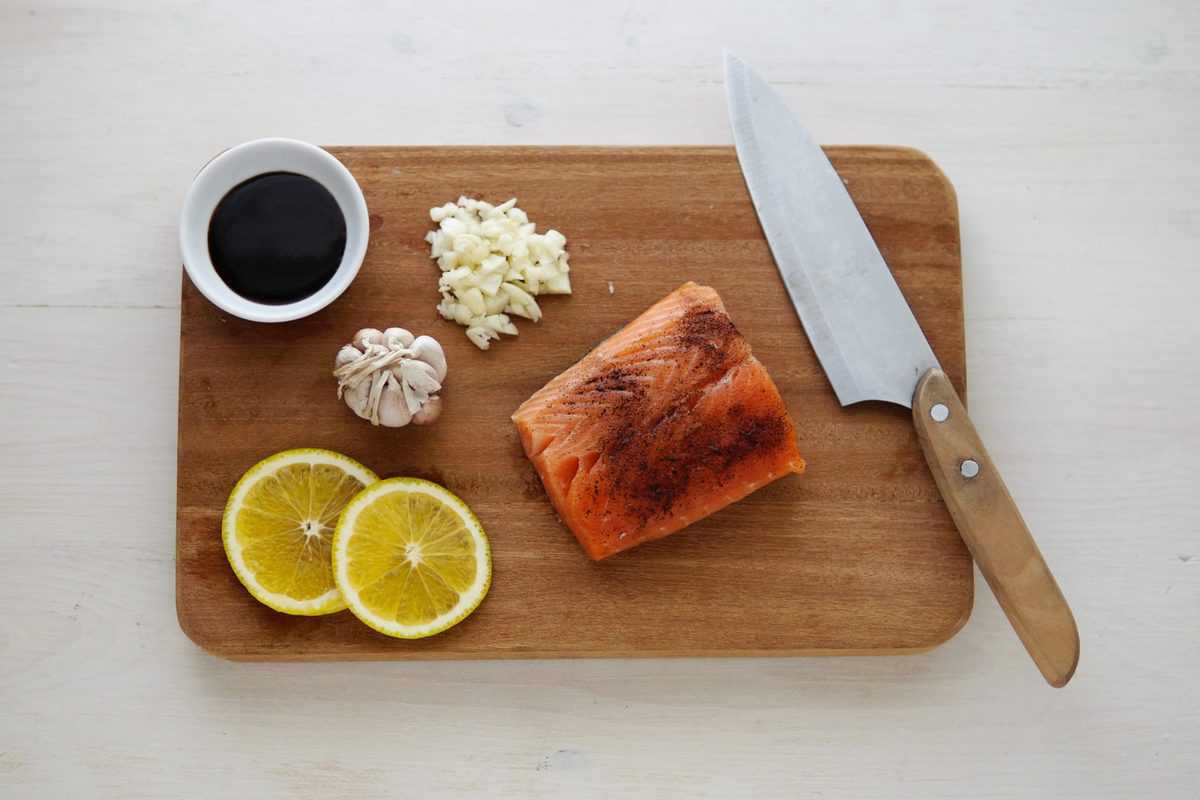
Necessary
Always Enabled
Necessary cookies are absolutely essential for the website to function properly. This category only includes cookies that ensures basic functionalities and security features of the website. These cookies do not store any personal information.
Non-necessary
Any cookies that may not be particularly necessary for the website to function and is used specifically to collect user personal data via analytics, ads, other embedded contents are termed as non-necessary cookies. It is mandatory to procure user consent prior to running these cookies on your website.
SAVE & ACCEPT

Rate This Recipe

Your vote:


A rating is required
A name is required
An email is required