• Skip to main content

Abbey's Kitchen

Healthy Recipes, Nutrition Myth Busting, Healthy Eating Tips

  • Books
    • HCC™
    • The Mindful Glow Cookbook
    • Recipe eBooks
      • Family
      • Hypothyroidism
      • BLW
      • Vegan Week 1
      • Vegan Week 2
      • Vegan Week 3
      • Keto
      • Gluten Free Week 1
      • Gluten Free Week 2
      • Fitness
      • Paleo
  • Blog
    • Nutrition
    • Recipes
    • Motherhood
    • Life
  • Explore
    • Neue Theory™
    • Bite Back With Abbey Sharp
      • Apple Music
      • Spotify
      • Amazon Music
    • YouTube
  • Abbey
    • About
    • Coaching
    • Contact

Ashlyn

Last Updated August 25, 2024. Published May 29, 2024 By Ashlyn 1 Comment

Healthy “Junk Food” Snacks | A Dietitian’s Rules for Choosing Healthier Options

Today I’m going to be walking you through my rules for choosing healthy “junk food” snacks and how to navigate the grocery store.
Chips falling into a blue bowl

You’ve probably heard the advice, shop the perimeter of the store and avoid all the packaged food in the middle. And sure, unprocessed whole foods should ideally make up the bulk of your diet. But for most busy working folks, this is BS advice that fails to accommodate how most people eat and shop.

I’m a realistic RD and also very busy women myself, and I am vehemently against fearmongering packaged food. So today I’m going to walk you through some key categories and help you understand what I ideally look for in healthy “junk food” snacks.

I want to point out that snacks or foods that don’t meet all my criteria are not bad. Sometimes the “best” option is one that ticks only one of my boxes. Sometimes it will tick none of the boxes and the “best” option is the one that’s on sale or that I’m craving.  Price and pleasure are important and valid choice determinants too. But when choices can be freely made, these are some things I look for in the store.

HEALTHY JUNK FOOD SNACKS #1: CRACKERS

I’ve never met a cracker I didn’t like, but let me show you what makes a cracker a dietitian’s fave. So first of all, let’s talk ingredients. The first ingredient should be a whole grain like wheat or oat, or if it’s gluten free or grain free, a nutrient-dense base like nuts or seeds. And we will always give bonus points for any nutritious additions like flax, chia, sesame seeds, hemp seeds, crushed nuts, etc, all of which will help bump up the satiety factor, and hunger crushing compounds.

For the nutritional aspect, I like to think about the rule of threes. In an ideal world, I like to see at least 3 grams of fibre, 3 grams of protein, and less than 3 grams of sugar per serving. And I’m looking specifically for added sugars, not total carbohydrates which we would expect would be much higher in a grain-based cracker. Here are some of my faves:

Marys Gone Crackers- Mary’s are one of the OG dietitian-approved crackers. They have a super simple ingredient list, they’re pretty easy to find in most stores, and they have lots of healthy fats, protein, and fiber. 

Hippie Snacks Almond Crisps – Hippie Snacks almond crisps have almonds as the first ingredient, plus they have banana bread flavour that is crazy delicious too, but these have an impressive 5 grams of protein, and they’re thin and crunchy.

Nud Everything Flax Crackers – I really like the flavour of these, and they’re jam packed with nutritious ingredients with 5 g each of protein and fibre, and lots of healthy fats.

Triscuit Low Sodium – Triscuit doesn’t meet all my criteria, but if you don’t like all the nuts and seeds and you just want a simple inexpensive cracker,  these are simple and nutritious. I always have these on hand.

Crunchmaster Protein Snack Crackers- for my Costco lovers, these have 5 g protein, 3 g fibre, and they are absolutely crunchy.

HEALTHY JUNK FOOD SNACKS #2: CEREAL
Picture of a bowl of cereal with milk being porn inside.

Anyone who knows me knows I am a cereal fiend. It is my lifelong adhd fixation and my favorite healthy “junk food” snacks. Sometimes what I do is mix a more nutritious cereal like what we’re about to go through with a more fun cereal so I get the satisfaction of whatever I’m craving, with the power to keep me full.

So first of all, again, I’m looking for whole grains, or legumes with a special shoutout to wheat bran which has unique benefits for regularity and gut health. I am generally looking for at least 4 grams of fibre, 3 grams of protein, and less than 9 grams of added sugar. The more sugar there is, the higher my expectation for the fibre, so these two things need to do a little dance for it to present like a nutritious choice. So these are some of my staples:

All Bran Flakes- call me a grandma but look luck prying my all bran flakes out of my 37 year old hands. These are a classic for a reason. I always have all bran flakes in my house because it has just a hint of sweetness, and pack 5 grams of protein and 4 grams of fibre per serving.

Grape Nut Flakes- Grape nut flakes are similar to all bran, with a super simple ingredient list and also 5 grams protein and 4 grams fibre.

Puffins- Anyone who knows me, knows that Puffins are one of my favourite cereals of all time and I think they’re a good beginner “healthy” cereal because they don’t taste branny. But I love them because they have a whole 6 grams of fibre and only 6 grams of added sugar per serving, so these are great for the kiddos too. 

Love Grown Power O’s- Love grown power O’s are a great one for mixing with a sweeter cereal. They’re made with just beans, brown rice, salt, and vitamins, with an impressive 6 grams protein , 5 g fibre and no added sugar.

Kashi Organic Autumn Wheat- I grew up in a British home eating those huge tasteless shredded wheat bricks that required so much sugar to make palatable, if you know, you know. So the Kashi organic wheat cereal tastes amazing to me, plus they have with 7 grams each of protein and fibre and only three ingredients. Glorious. Just glorious.

HEALTHY JUNK FOOD SNACKS #3: FROZEN PIZZA

Okay kids let’s talk frozen pizza because door dash these days is getting tragically expensive and Mama still needs her no cook night. So not surprisingly, a thin crust pie is typically your best bet because it’s going to give you more topping bang for your refined carb buck, so to speak.

There are a lot of interesting pie crusts now to explore with added nutrition benefits, some whole grain, legume-based, and veggie-based are now more commonplace. I also typically go for either a simple margarita that you can then add your own veggies and protein to, or something that has vegetables added as well. A lot of meat-topped pies just add a lot of sodium and saturated fat, so you’re better off just throwing on some leftover chicken or whatever you have on hand. Also, since frozen food is typically very high in salt, I try to look for something under 750 mg of sodium per serving.

As for the rest of the nutrition, go for a pie of around 300 kcal per serving or less, with at least 10 grams of protein, 2 grams of fibre, and less than 4 grams of added sugar. Sauces can be an unexpected source of added sugars in pizza, so its something to keep an eye on. Lets take a looksy at some faves:

Banza margarita- Banza now makes a margarita pizza that has a chickpea based crust which is why it has an impressive 16 grams of protein and 7 grams of fibre per serving.

Newmans Own Thin Crust Harvest Vegetable- Newmans Own makes a variety of thin crust pizzas that are pretty readily available including their harvest vegetable with 11 grams of protein and only 1 gram of added sugar. They also make a cauliflower crust version which has an extra gram of fibre if you’re looking for gluten free.

Amy’s Spinach Pizza- Amy’s has been around for a long time, and I think their products are really good. And their spinach pizza has 12 g of protein, 2 grams, of fibre and just 2 grams of added sugar.

Alex’s Awesome Sourdough Mushroom- I have seen a bunch of ads for this pizza by Alex’s Awesome Sourdough but I haven’t tried it yet. But the crust is sourdough-based which we love since the slow fermentation process generally makes the nutrients more bioavailable and easier to digest. This mushroom one also has 12 g protein, 5 g fiber, and no added sugars, and they also make a vegan version too.

Caulipower Veggie- I’m not usually a fan of cauliflower masquerading as carbs, but Caulipower does make some good products that are pretty readily available now, especially for our gluten free friends. And their veggie pizza has 11 grams of protein and 3 grams of fibre per serving.

HEALTHY JUNK FOOD SNACKS #4: SNACK BARS

Okay, so there are lots of subcategories of snack bars, there are those that are straight up protein bars and those that are designed for athletes needing fast energy. My criteria for those would be really different because in the former I would be mostly looking for almost a full dose of protein, and in the latter, I’d expect to see a lot more fast-burning carbs. But when you’re looking for a simple balanced snack bar that is physically satisfying and delicious, that can help get you from one meal to the next, this is my general criteria. 

First of all, I would be trying to stick to under 6 grams of added sugar per bar, with most of the carbs, if not all of the carbs coming from whole food sources like dried fruit over syrups. I’d want at least 5 grams of protein, 3 grams of fibre, and ideally, some whole food healthy fats from things like nuts, seeds, nut butter, hemp, chia, and flax. And here are some of my go tos:

RX Bar- RX bars are a great fairly accessible option that you can find in most stores. These have a really short ingredient list of just dates, nuts, egg whites and flavours with around 12 grams of protein and 5 grams of fibre. These bars are higher in sugars, but these come from a natural whole food source like dates..

Skout Organic Bars- These Skout bars are definitely one of the best options out there. I love them for me and the kids because they’re made with dates, nuts, or seeds, and freeze-dried fruit with no added sugars, 5 grams of fiber and 10 grams of protein each. 

Kind Minis- Kind has a lot of really delicious bars packed with different nuts and other delicious things. But when I need a little wee snack, I love their minis. They have under 100 calories, 3 grams each of fibre and protein and 2 grams of added sugar.

Made with Local Bars- I discovered these years ago when they first launched and I’m so proud that this company has really taken off.   These have a really simple ingredient list, with 7 grams of protein and 4 grams of fibre per bar, and they’re really delicious.

Nakd Bars- I first discovered these in a UK country gas station, and I think they’re really good. They have an ingredient list a lot like RX bars without the eggs making them fully vegan, they’re basically just dried fruit, nuts, salt, and flavour, with 5 grams of protein and 2-3 grams of fibre per bar.

Larabar- Larabar is another option that’s pretty easy to find. They have minis and full-sized bars, made with just dates, fruit, nuts and flavour. A full-sized bar has about 5 grams of protein, 4 grams of fibre and 4 grams of added sugar.

HEALTHY JUNK FOOD SNACKS #5: CRUNCHY SNACKS
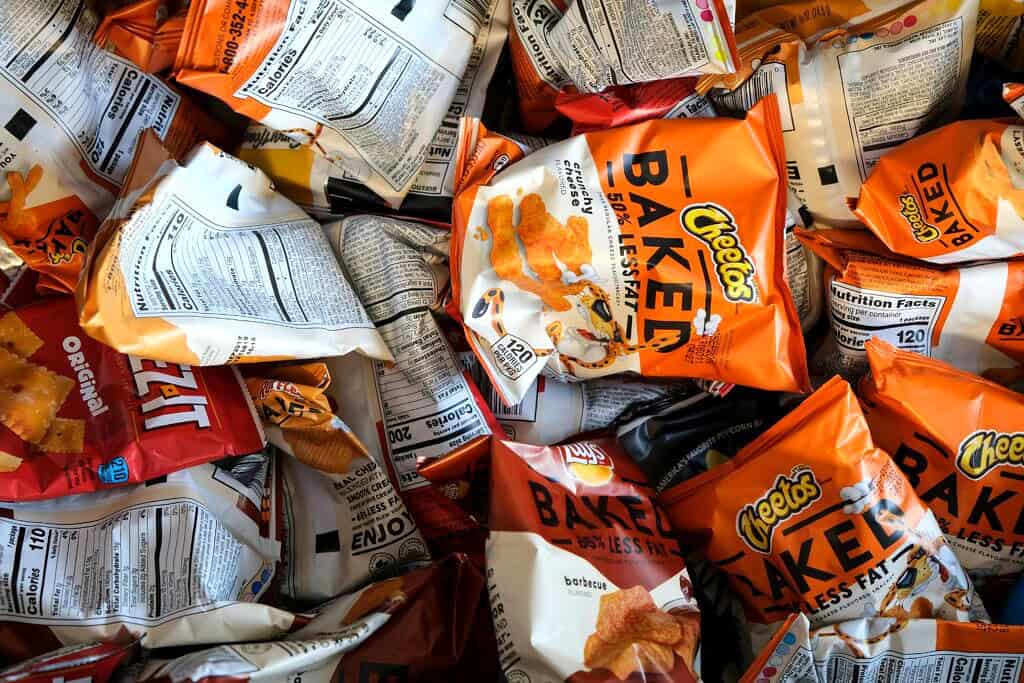
birds eye view of a bunch of bags of chips including cheez its and baked cheetos.

I’m never gonna tell you to give up on your favourite chips, but there are a lot of innovative new chip-like snacks that offer some additional benefits for the obligatory crunch. So generally what I’m looking for is something that is whole grain or legume-based, with less than 15% of your DV for sodium. And basically we’re going back to the rule of threes, at least 3 grams of protein, 3 grams of fibre, and less than 3 grams of added sugar. Some of these new chip like products will be higher in protein or fibre but not both, so if that’s the case, I would want to see at least 6 grams of whichever is the focus nutrient. Here are some of my favourite crunchy snacks:

Hippeas Nacho Vibes – These Hippeas nachos are chickpea flour based and fully vegan with 3 grams each of fibre and protein.  

Peacasa Chickpea chips – These Peacasa chips are also chickpea based, and the honey dijon is elite, but these have an impressive 8 grams of protein and 4 grams of fibre per serving.

Lesser Evil Himalayan Popcorn – Anyone who knows me knows I basically keep this company in business. And they have lots of puffs and other snacky foods too but I am forever a fan of their simple Himalayan popcorn which tastes so buttery and salty but it’s actually fully vegan with 4 grams of fibre and 2 grams of protein per 3 cups. And let’s be real I eat way more than that per sitting.

Iwon Protein Puffs –These Iwon protein puffs are also pretty good with an impressive 10 grams of protein and 5 grams of fibre per serving.

Harvest Snaps Peas- These crispy peas are a staple in my house, I can even find them at my local dollar store for super cheap. These are literally made of peas, and they have an impressive 9 grams of protein and 7 grams of fibre per serving. Awesome for kiddos too.

BOTTOM LINE

A reminder that packaged foods that don’t meet these criteria are not BAD. They just might not be as nutritious or keep you satiated as long as healthy “junk food” snacks. That doesn’t mean we shouldn’t eat them if we love them. This is simply to serve as a guideline for what to look for when you choosing snack foods to incorporate more often into your daily diet.

MORE BLOG POSTS YOU MIGHT LIKE

  • DOES DIET COKE CAUSE CANCER? THIS AND OTHER HEALTH MYTHS YOU CAN IGNORE
  • THE TRUTH ABOUT ARTIFICIAL SWEETENERS & WEIGHT GAIN 
  • NO MORE BLOATING (THE REAL REASON WHY YOU’RE BLOATED)

What are some of your favorite healthy “junk food” snacks? Leave me a comment below with some of your favourite brands in these categories!


Ashlyn

Last Updated July 29, 2024. Published May 15, 2024 By Ashlyn 1 Comment

Should You Buy Raw Milk? A Dietitian’s Deep Dive

Today we will be talking about the internet’s seemingly new obsession with raw milk and tackling the biggest question – should you buy raw milk?

Glass of milk while someone is pouring milk missing the glass so the milk is splashing

What started as a few dairy farmers innocently sharing the fruits of their labor, has become a full blown social media epidemic, with tons of health-focused influencers, trad wives, and self proclaimed “crunchy moms” spreading misinformation about save pasteurized dairy. I don’t know why I’m always surprised by these trends but yet, I do find myself scratching my head at this one. There are very few foods that America has full out made completely illegal in 20 states, but here we are, raw milk made that exclusive list. And I’m sure a lot of you have consumed or even buy raw milk on occasion, and you’re thinking “What is the big deal? I’m totally fine”. And yes, most people will be fine. But that’s not how public health recommendations are made. 

Raw milk is a known vessel for deadly bacteria like E. coli, salmonella, staph aureus, campylobacter, listeria, burnetti, and even tuberculosis. Raw milk and raw milk products are 150 times more likely than their pasteurized counterparts to sicken those who consume them. In one CDC study, they looked at all dairy related outbreaks between 1993 and 2006, and they found 121 dairy-related illness outbreaks resulting in 4,413 illnesses, 239 hospitalizations, and three deaths. While raw milk products account for only 1% of dairy production in the U.S., raw milk dairies were linked to 60 percent of those dairy-related outbreaks and 85 % of all dairy hospitalizations. 

Now, a lot of the crunchy and/or natural health community online will swear that raw milk is infinitely healthier than pasteurized. This trend has ended up in bed with the general anti-authority anti-conventional health care movement that encourages distrust in some of the most basic public health initiatives of our generation. Things like pasteurizing milk. The message is always cryptic, always vague, a simple “do your own research” is the mantra of a lot of misinformed grifters. But here’s the problem- this is the “research” we are directed to. Biased websites like rawmilkinstitute.org compile their “facts” from “first hand accounts and surveys”.  GREAT.

Anecdotes are not science. And it is dangerous to recommend that people do their own research by reading anti science Reddit threads, blogs, and watching creators with no healthcare credentials dominate TikTok. 

Claim 1 – Raw milk is better for your gut

Lets talk bacteria. The bacteria found in raw milk are almost exclusively not probiotics, in other words, they’re not the good kind of bacteria you want in your gut. One study found a small amount of probiotic activity in raw milk but you would need around 10,000 times what’s found in raw milk to see any gut health benefits. Most of the Bacteria that are present in milk come from infected udder tissues aka mastitis which i know a lot about because I had it 5 f*ing times, plus contamination with soil, water and cow manure, and contaminated milking equipment. A lot of raw milk advocates will claim that raw milk contains bifidobacterium, which is in fact a beneficial probiotic. But since bifido is found in a cow’s GI tract, not their milk, it comes out in their fecal matter, so the presence of bifidobacteria in raw milk actually indicates fecal contamination and an enhanced risk of all sorts of other pathogenic bacteria. So if you’re looking for good bacteria, its a hell of a lot safer to consume probiotic enriched PASTEURIZED dairy like yogurt or kefir, or take a probiotic supplement like this one that I just launched *wink*.

Claim 2 – If You’re Lactose Intolerant, You Can Still Digest Raw Dairy

Clear glass of milk on a table with a vase of flowers behind it.

You can gather this little nugget of misinformation straight from rawmilkinstitute.org but it’s also all over the dark web. Folks, if you’re lactose intolerant, and milk gives you the runs, good luck with the raw milk trend. Lactose is found in all bovine cow’s milk- both raw and pasteurized in a concentration of about 4.8%. Raw milk enthusiasts often claim that it’s easier to digest because raw milk contains beneficial probiotic bacteria that secrete lactase to help you break down the lactose. But as we’ve already uncovered, that is not evidence based 

As for the idea that raw milk contains indigenous lactase which is the enzyme that helps you digest lactose is not substantiated in the literature. The only mention I see of this “fact” is from surprise surprise from raw milk websites.

When we look at the large meta-analysis comparing raw milk with pasteurized, only one study reported on lactose intolerance, and they found no difference in symptoms. In another more recent small cross-sectional study they found that folks who were lactose intolerant experienced just as many digestive symptoms when consuming raw milk compared to pasteurized milk. And this makes complete sense because there is lactose in ALL MILK. Our lactase capacity comes from our body. The reason why yogurt for example is easier to digest than milk is because the added bacteria that is necessary in the yogurt making process yields the enzyme lactase. 

So bottom line, if you are lactose intolerant and want to buy raw milk, it’s not going to help nor is it beneficial to your gut. If anything, getting a bad case of salmonella is probably going to do a real number on your digestion and wipe out the beneficial microbiome colonies you do have.

Claim 3: Raw Milk is Easier to Digest

So to recap on digestive enzymes, lactase helps break down the milk sugar lactose, and as we’ve established, there is no evidence that it exists naturally in raw milk products. We do however know that all milk naturally contains proteases AKA the digestive enzymes that break down protein. Plasmin is one of the main proteases found in milk and it happens to be heat stable so we find it in pasteurized milk too. But even if it was killed off when we heat it, it would make no difference to our digestion of the milk proteins since any indigenous proteases from milk get denatured in our gut. The proteins in dairy like whey and casein get digested by our own human proteases when you drink the milk.

As for lipase, which is the fat digestive enzyme, the main lipase enzyme in cow’s milk is lipoprotein lipase or LPL. And while LPL does get inactivated through pasteurization, it again, wouldn’t matter, as it doesn’t actually play a role in our human dairy digestion. We have our own gastric lipase and pancreatic lipase  which is what helps us digest the fats in milk. It’s actually a good thing to inactivate the cow’s indigenous lipoprotein lipase because its that enzyme that can cause milk to get rancid and gross really f*ing fast.

So basically what I’m saying is that the enzyme action in milk, pasteurized or raw, doesn’t really matter, since it’s the human enzymes, whether indigenous or supplemental, that help do the job.

Claim 4- Raw milk cures or prevents milk allergies and asthma

picture of an asthma inhaler and chapstick on a bedsheet

So this myth has emerged from the PARSIFAL study which has been misquoted and misused by raw advocates to confirm their beliefs. But basically, the PARSIFAL study found an inverse association with FARM milk consumption, not raw milk consumption, with asthma and allergy. Even the authors make it clear that their study “does not allow for the evaluation of the effect of pasteurized vs raw milk because no objective confirmation of the raw milk status from farm milk was available.” In reality, about half of the farm milk used in the study was boiled. And the findings from this aren’t really that surprising considering that living on a farm, in general, is associated with lower rates of allergy and asthma, by creating early life opportunities for allergen exposure. Fresh air and exposure to nature are good for you, who would have thought? 

As for milk allergies specifically, research has shown that raw milk and pasteurized milk do not differ in their anaphylactic sensitizing capacity. Pasteurization does not change the allergenicity of milk protein. So if you’re allergic to store-bought milk, I would avoid the raw stuff too. 

Claim 5- Pasteurized milk is stripped of all of its nutrients

So this is one of the major messages from the pro raw community – that the key nutrients in raw dairy get boiled away when pasteurized. Thankfully actual scientists from here in Canada published a whole systematic review and meta analysis of 40 studies to get to the answer.  The results found that milk pasteurization did decrease its concentrations of vitamin B1, B2,B12, C and folate. But even after pasteurization, milk is still a source of B1, an excellent source of B12, and an excellent source of B2. The Vitamin C and folate of raw milk isn’t anything to write home about anyway, so the loss here isn’t exactly a tragedy. 

Otherwise, they’re basically the same. Same fat, same carbs, same protein content, same protein bioavailability, and both a source of 15 essential nutrients. It’s just that one will potentially make you shit your pants for days. A tiny bit of vitamin c…. Food borne illness. I mean, everyone has to make that risk benefit analysis for themselves.

Claim 6 – You should be drinking raw milk while pregnant and giving it to your kids.

Wow. HARD STOP. Half of illnesses linked to raw milk are in children. And there have been sadly a number of cases where kids have gotten so sick they died. Everything we give our kids, whether it is food, supplements, medication etc, comes down to a risk benefit analysis. And there is zero question in my professional mind that the risks here far outweigh the benefits. This isn’t fearmongering, this is facts. And if you want to take that risk for yourself because you love your farmer, or you love your own cow, and you love your raw milk, then you do you. I mean, we all take calculated risks every single day for our health, whether it’s eating raw sushi or bagged salad. But I do urge everyone to really think about that risk for vulnerable kids, and hold it against the truly insignificant nutritional benefit of going raw. There are a lot of ways to help your kids meet their nutrient needs that don’t come with the same level of concern.

Bottom Line

In summary, this post is not meant to shame anyone who has chosen to buy raw milk, or even to give it to their children. But I would not be doing my job as a science communicator if I didnt at least break down some of the misinformation there is out there so that you can make the most informed health choices for you and your family.

milk splashing

More Blog Posts You Might Like

Interested in debunking more crazy wellness influencer claims? Check out some of my favorite science based blog posts below!

  • DIETITIAN DEBUNKS HEALTH AND WELLNESS TRENDS | AG1, GREENS POWDERS AND OATS
  • DOES DIET COKE CAUSE CANCER? THIS AND OTHER HEALTH MYTHS YOU CAN IGNORE
  • A DIETITIAN’S REVIEW ON CELEBRITY HEALTH AND WELLNESS BRANDS

Have you been wanting to buy raw milk? What has your experience been if you’ve tried raw milk before? I’d love to hear your thoughts below!

Ashlyn

Last Updated June 2, 2024. Published March 27, 2024 By Ashlyn Leave a Comment

A Dietitian’s Review on Celebrity Health and Wellness Brands

Today I’m going to be reviewing a handful of popular celebrity-owned health and wellness brands to give you my honest thoughts on if they’re a good buy or total bunk.

Birdseye view of half of an orange with pills on half of one side.

So according to a report by JLL research, celebrities have been busy doing things some say they’re not technically qualified to do. But nearly 60% of celebrity brands on the market today were founded in the last 6 years. And I mean, it makes sense. With the rise of social media and a marketer’s ability to use the user data, celebs went from being paid by a brand to endorse their brand or appear in their commercials, to then realizing, why endorse someone else’s products when I can use my celebrity status and be the face of my own? I mean it’s a great move in my books. IYKYK.

Even though we sometimes see BTS marketing content suggesting these celebrity health and wellness brands, it’s impossible to know if this is just a show or if they’re legitimately heavily involved. Remember the time that Kylie Jenner got called out for “staging” pictures of her creating makeup magic? Ya cute photo op, but it didn’t bode well for her legitimacy and trust. I’m sure they’re on the important calls and are testing to give the final thumbs up, but unless they’re hiding their chemistry degree on the CV, there’s a good chance their R&D involvement is low. And how could it not be?

Like I’m sure the Kardashians know what probiotics are but do they understand how different unique strains perform in different mediums? Do they know how many CFUs you need? Do they know how to interpret high quality research on ingredients?

This stuff matters. So now lets take a look at some of the most popular celebrity health and wellness brands on the market right now.

LEMME BY KOURTNEY KARDASHIAN

Kourtney is quickly expanding her health and wellness brand with a variety of different products. There are way too many to get into here, so I thought I would zone in on one of their alleged best sellers, the LEMME PURR AKA a probiotic for your lady flower. I mean, whether or not Kourtney was actually hands on, this one definitely feels on-brand. But with a zippy pineapple flavour, PURR promises to support healthy vaginal pH balance and improve the smell and taste of little Ms Minky.

One serving of gummies contains 1 billion CFUs of bacillus coagulans SNZ 1969, 20 mg of vitamin C, and some pineapple powder, assumedly for flavour. Fun fact, it was allegedly Kim K who started the bunk rumour that pineapples make your kitty taste sweet. But believe it or not, there is no evidence that it works, nor should we want our lady flower to smell like flowers.

As for the active ingredients- SNZ 1969 is a really great spore based probiotic largely studied for IBS and digestion, but there’s only one study to my knowledge evaluating its efficacy for vaginal health. This study looked specifically at women with a yeast infection and found that a combination of the probiotic plus an antibiotic improved symptoms faster than the antibiotic alone. This makes total sense, antibiotics can be tough on our microflora and probiotics can help. But if you don’t have a yeast infection and are not taking antibiotics for it, I wouldn’t count on your basic carnation miraculously blossoming into a fragrant summer rose.

It also contains 20 mg of vitamin C, which is kinda associated with improved vaginal microflora, but the dose needed is over 10x what’s in the gummies, and you’re supposed to insert it like a suppository, not chew it like a piece of candy. So again, not sure this will do anything.

Generally speaking, I don’t love gummy vitamins since most gummies need to be sprayed with the vitamins, which can lead to huge inconsistencies and stability challenges. This is one of the reasons why when tested, gummy multivitamins tend to score poorly. The reality is, I don’t think these gummies can harm, like I said I love bacillus coagulan probiotics. But in my books, the probiotic is the only functional ingredient and functional for reasons completely unrelated to a nicer smelling vag. And to pay $42 for literally just 1 Billion CFUs which is not a lot, and may or may not be super stable in gummy form, seems honestly quite criminal to me. So no, the Lemme Purr does not pass my sniff test. 

An angry striped cat sitting on a table.

GOODLES BY GAL GADOT

If you’re a Kraft mac and cheese lover or what we Canadians call KD, this “healthier” boxed mac from founder Gal Gadot sounds like an answered prayer. But is it too good to be true? Let’s take a look.

Goodles is made from a combination of wheat and chickpea protein, along with whole food vitamins from a wide range of fruits, veg, and seeds. The cheese is made from real dairy in the original, and cashews and nutritional yeast in the vegan. The final result is a boxed mac and cheese with 270 calories, 7 grams of fiber, and 15 grams of protein per serving, along with a range of micronutrients.

It’s not a complete multivitamin but I’d say it’s a pretty good start. I especially love that we have some calcium, vitamin D, and iron. The OG, KD has an extra 100 calories, and only 2 grams of fiber and 11 grams of protein per serving. It doesn’t offer nearly as many nutrients, but interestingly, some of the nutrients it does contain are offered in slightly higher amounts – for example, 46% riboflavin in KD vs 25% in the Goodles. But generally speaking, these aren’t nutrients that are of particular concern, so the Goodles have an obvious nutritional edge. I’ve also tried these and I do think they are legitimately really good. So Goodles are definitely an Abbey-approved health and wellness brand.

KIN EURPHORICS BY BELLA HADID

If you went a bit crazy on the festive cocktails this holiday season, and are resolving to cut back on your alcohol consumption, you might be looking for some non-alcoholic bevvies to switch things up.

Bella Hadid’s Kin Euphorics claim to be non-alcoholic functional beverages designed using adaptogens to help you manage stress, nootropics for brain cognition, and spirit centering botanics to elevate taste. Some lofty claims for a virgin drink mix, so let’s take a look. There are a number of products now in their lineup, but let’s focus on the OG high rhode which is described as helping you “conjure captivating conversation and release contagious energy that flows out to those around you and reverberates beyond.” OKAY.

Naturally, all of the functional ingredients and piled together in a proprietary blend. And while these ingredients have powerful benefits, I’m skeptical of their efficacy in a product like this. According to their website, they add GABA to reduce stress, even though a systematic review found very limited evidence that it had any stress-relieving benefits. And if it does, studies are using doses up to 100 mg or more. 

Kin also includes the adaptogen Rhodiola to apparently boost energy and vibrancy. Yes, the vibrancy is just marketing BS. Rhodiola has been shown to have benefits for stress and fatigue, though the research we do have requires pretty high doses of 400 mg. 

And then 5-HTP is in there to apparently elevate joy? I don’t know who wrote this website copy, but I assume this is a super woo-y non scientific way to say it increases serotonin and reduces symptoms of depression, which 5-HTP is actually very effective at doing. But again, the dose is usually between 300-500 mg. Plus if we look at this 595 mg proprietary blend that contains these three active ingredient plus an ADDITIONAL 5 ingredients in the mix, and compare it to the combined 1000 mg clinical dose, it’s very likely none of the active ingredients are anywhere close to their clinical doses. Translation? It’s probably not going to do anything. That said, if you like the taste and are trying to cut back on booze, maybe it’s worth the $40 USD for 8 servings. But if you’re looking for legitimate stress, energy, and mood boosting benefits, you’re much better off buying these supplements at full dose, and/or experimenting with non supplement options like exercise and meditation. So yeah, this is getting a pass from me.

Birdseye view of a smiley face painted on a street.

InBLOOM BY KATE HUDSON

I love the branding, and I mean, Kate is a natural beauty so it’s not surprising her products do well. But let’s take a look at her best selling immune defense blend.

First off, dont love the dishonest marketing; nothing will BOOST your immune system. If it did, all these celebrities would have debilitating autoimmune disorders because that is what happens with your immune system is working on overdrive.

But moving on, InBloom’s immune blend basically consists of a handful of antioxidant-rich “vital ingredients” including acerola, astragalus, elderberry, licorice, and ginger. Honestly, I think these are all pretty great picks for immune support. Acerola largely contributes antioxidants and the mega dose of vitamin C, which you’re mostly just going to pee out. Astragalus and elderberry do offer some evidence for immune support but at relatively high doses. Less is known in high-quality human research on licorice and ginger for immune and infection protection. Data on mice,  fish, and test tubes show licorice offers some powerful immune support, and while the human research suggests it may improve upper respiratory tract infections, patients were given a high dose IV drip, not an oral supplement. Same with ginger. Ginger is packed with anti-inflammatory and antioxidants that enhance immune responses in test tubes and animals, but we don’t actually have any quality human evidence that it actually prevents infections or illness. That doesn’t mean they don’t work, they probably all help.

But if I were to add up the clinical doses of all of these potential immune modulators, you’d be looking at between 7000 and 13,000 mg which might be significantly less than what’s in the proprietary blend. The better immune supporting bang for your buck is in the trio of immune supporting nutrients: vitamins C, D, and zinc. Honestly, she could have just sold a supplement with those three vitamins for a fraction of the price and it probably would work the same.

So ya, I’ll technically call this Abbey approved because I think it’s a good product that probably does help support a healthy immune system, but at $69 per small jar, I do think it would have been better to have more clinical doses of fewer functional ingredients.

Final Thoughts

As a no BS dietitian, I’m usually pretty skeptical about reality TV starts trying to enter the health and wellness brands realm. However, not all of them out there are horrible products! As always, I recommend researching each product you’re interested in to ensure it would be a good fit for you and your lifestyle.

More Blog Posts You Might Like

Did you find these reviews of health and wellness brands helpful? Check these posts out next:

  • Dietitian Debunks Health and Wellness Trends | AG1, Greens Powders and Oats
  • Sugar Bear Hair Gummies | Do they work?
  • The Unregulated World of Health and Wellness Supplements
  • Can Collagen Supplements Tighten Skin?

Have you tried any of these celebrity health and wellness brands? Which ones do you love? I’d love to hear your thoughts in the comments!

Ashlyn

Last Updated May 5, 2024. Published February 28, 2024 By Ashlyn Leave a Comment

Are All Calories Equal? A Dietitian’s View on Healthy Calorie Intake

What if everything you thought you knew about weight loss was a lie? Today we’ll review factors that influence a healthy calorie intake and dive deep into our gut health’s influence.

Birdseye view of a salad on a blue plate on a wooden table.

For decades we have known that weight loss comes down to a simple equation of calories in minus calories out. Everyone just needs to follow the laws of thermodynamics to have an equal chance of losing weight. Well, what if that was all a lie? What if 100 calories of chocolate had a different effect on the energy equation than 100 calories of broccoli? What if the calories in an apple to me were different than the calories in the apple to you? The math just ain’t gonna math. Also a quick thank you to Erin Davis, my RD colleague, for supporting me on this research!

Factors That Influence Calorie Needs

There are several factors that influence a healthy calorie intake beyond those that go into the formulas or calculators we have access to online, things like muscle mass, climate, hormonal status, weight history, ethnicity, and more. There’s also the thermal effect of food and changes to the calorie count with cooking and chewing, not to mention the whole calorie calculation is based on a ridiculously small study and the research was flawed. But further complicating this already complicated flawed science is the role of our gut. That is what we’re going to focus on today.

So we have ample research at this point that links specific gut microbiome profiles or characteristics to obesity and metabolic syndrome. In other words, fat people’s guts just look different than thin people’s. We tend to see specific bacterial species in the gut of folks who are overweight, and other species that are found in folks who are lean, with the most prominent observation being that obese patients have a high firmicutes to bacteroidetes ratio. This high F to B ratio is one example of gut dysbiosis. Neither of these are bad bacteria but disrupting the ratio can cause trouble. 

But the question is what comes first, the bad microbiome or the diet-related obesity? In other words, is our diet to blame for ruining our gut microbiome which then becomes a MARKER of obesity, or does our gut microbiome inherently destine us to obesity despite healthy calorie intake?

Well, we don’t totally know. But its probably a bit of both. Genetics can alter the microbiome. We also know that a mom’s gut microbiome influences a baby’s microbiome in utero, as can breastmilk in that first year of life. But if your mom had a bad microbiome or “bad” diet it doesn’t necessarily mean you’re destined to be overweight. How we nurture our own microbiome through diet is key.

Healthy Calorie Intake & The Gut Microbiome

What we eat has a direct and important impact on which bacteria species can grow and flourish. And fibre, aka pre-biotics, is the fuel that feeds the good bacteria, which is one of many reasons why fibre is an integral part of my Hunger Crushing Combo. Interestingly, in contrast, one review of the literature found that people whose diet was low in fibre and high in animal protein had guts with that obesogenic ratio of high bacteroidetes to low levels of firmicutes. So no, the carnivore diet is not good for your gut.

Another diet that might not be good for the gut, depending on how it is interpreted is something like “if it fits your macros”. Now, this could be done in a super balanced gut-friendly way. But remember when fitness bros on TikTok were promoting eating Pop Tarts and Little Debbies for weight loss just because it fits their macros and calorie goals? I mean, this might work just fine for some folks to some extent for some period of time, but it’s certainly not the best practice for weight loss. We used to think this was just because foods like Pop Tarts are low in Hunger Crushing Compounds, making a calorie deficit more difficult because you’re gonna get hungry. But new research suggests we may absorb more calories from those pop tarts vs the equivalent number of calories of apples or peas.

Are All Calories Equal?

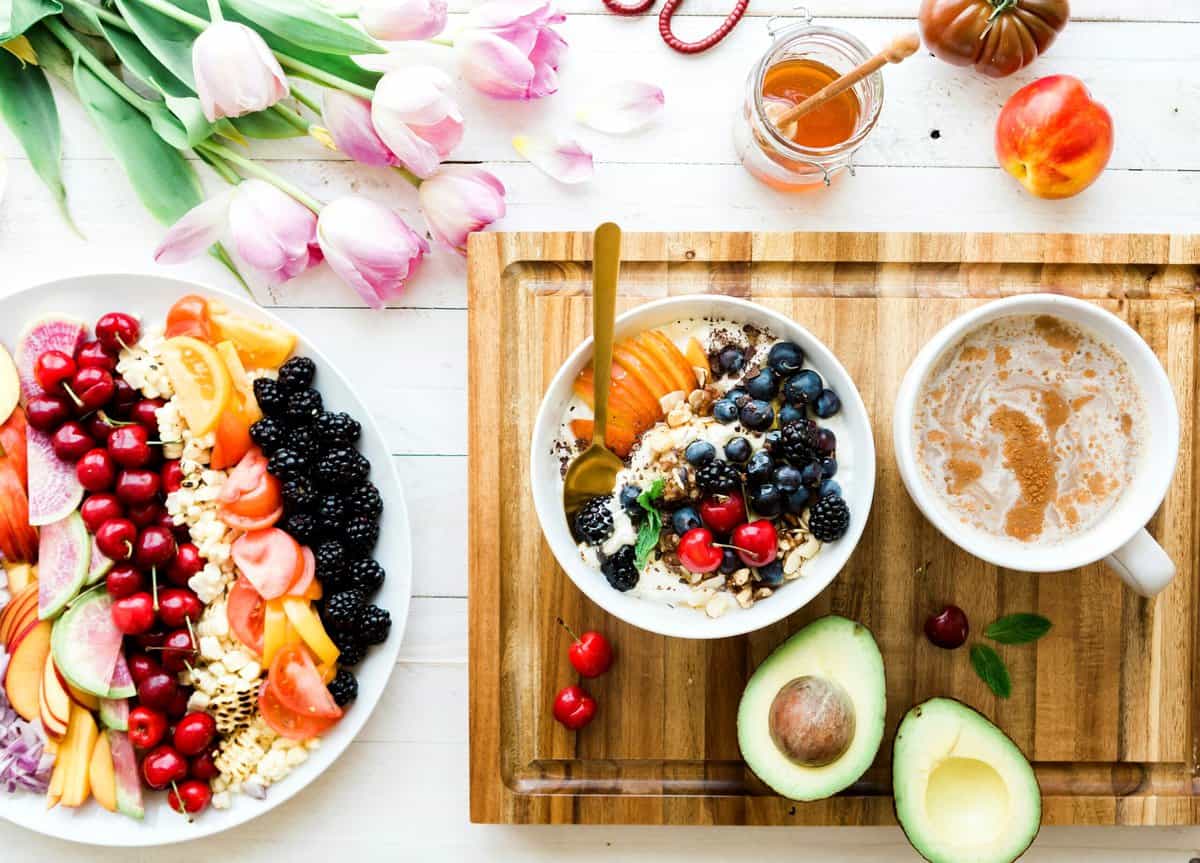
Birds eye view of a breakfast layout including fresh fruits, a yogurt bowl, and a latte on a wooden cutting board.

A recent 2023 study proposed that a calorie is not just a calorie. It’s not about how many calories are available to us, it’s how many our unique body uses and absorbs. And that depends on our gut. Ultra-processed foods like those Pop Tarts are quickly absorbed in the upper gastrointestinal tract, which means we can squeeze more energy out of them. But higher fibre foods make their way into the large intestine, where bacteria await their feast. The bacteria digest and absorb some of the available calories, leaving fewer excess calories to be potentially stored as fat. Our body and our microbes are fighting over this energy- the more processed the food, the more likely we are to win, and the less likely we are to share. RUDE. As my justice-obsessed kiddo would say, sharing means caring.  

But anyway, in this study, they gave one group a fibre-rich diet with lots of resistant starch, fruits, veg, beans and whole grains that was designed to make the microbes happy, and they gave the other group a diet rich in ultra-processed foods with things like white bread, ground beef, American cheese, cheese puffs, cookies, deli meats etc. This was a small study but super rigorous in design, because the participants had to live in a metabolic ward where every single calorie was accounted for.  And it wasn’t just the inputs they were controlling, but they were collecting the outputs too- aka everyone’s poop. And when they looked at the poop, they were able to measure the “lost calories”.

The fibre group “lost” on average 217 calories per day, while the processed food group only lost about half of that. Some people even lost around 400 calories in the fibre-rich group, which alone could create a calorie deficit resulting in almost a pound lost per week. This likely came down to the existing health and diversity of each participant’s microbiome. The more “good” bacteria, and the more diverse the party down there, the more calories they can gobble up. And if you’re thinking, well wouldn’t losing calories just make you hungrier for more calories? Actually, no. The study found that the fibre group didn’t experience any increase in hunger despite losing the fight for more of those calories.

And that’s not even the most interesting part. Not only did the fibre group not absorb or utilize as many calories, but feeding the gut bacteria also produced short-chain fatty acids and increased levels of GLP-1. If GLP-1 sounds familiar, it’s because people are paying upwards of $1000 per week to inject themselves with this to suppress their appetite. This is all part of the package deal when you eat more fibre and consume a healthy calorie intake. 

Obviously, this is a small study, and we need more research to confirm these findings on a bigger scale. But it may offer some insight into the why behind what we know about a predominantly whole food plant-heavy high-fibre diet and weight management. So for example, research has associated a reduction in short-chain fatty acids we just mentioned with obesity. Short chain fatty acids are the byproduct of bacteria fermenting resistant starches and fibres that act as signalling molecules to reduce appetite hormones like PYY and ghrelin and increase metabolism and calorie burn. We now are exploring how fibre supplementing can increase these SCFAs in the gut on a dose dependent basis to have all of these potential weight management effects.  

I know it’s a lot so to recap: dysbiosis is linked with obesity. We know that our diet can play a role in feeding the good bacteria to correct this dysbiosis, while also feeding our bacteria instead of our fat cells more calories. All of these play into healthy calorie intake and weight management.

So What Should We Focus On?

Diet

So obviously it starts with diet, prebiotics and probiotics. Prebiotics are the bacteria food,  which as we established is predominantly fibre. Dietary fiber consensus recommends 14 g/1000 kcals/day, so that is generally anywhere from 25-38 grams per day. But just like you might like broccoli, and I might like Brussels sprouts, different bacterial strains can be picky about their preferred fuel. So if we want a diverse and plentiful microbiome we need different fibre sources. Every fibre promotes its own unique microbiota action. Bacteroidetes like soluble fibre like oats, barley and apples. Actinobacteria like insoluble fibre like wheat bran and nuts. Etc.  

Now, Probiotics are sources of bacteria themselves aka fermented foods like sauerkraut, kombucha, kimchi, kefir, and yogurt. We also know that probiotic supplements can help restore the optimal firmicutes to Bacteroidetes ratio – the most well-studied for this is lactobacillus and bacillus strains, and saccharomyces yeasts.

While fibre will help you better manage your appetite and hunger, we still want to be mindful of overconsumption. One study found that Increasing calories from 2400 to 3400 increased the “bad” Firmicutes by 20% and decreased the good Bacteroidetes by 20%, which is the same ratio associated with risk of obesity. 

Exercise

Exercise can also modulate gut bacteria by effectively promoting bacteria diversity, improving that Firmicutes/Bacteroidetes ratio, increasing the proliferation of bacterial species that can improve gut barrier functions, and stimulating bacterial species that produce SCFAs. Remember, those SCFAs help suppress hunger and improve metabolism.

Silhouette of a women running outdoors while the sun is setting.

Bottom Line

This is a complicated subject but the solution is quite simple. Add more high fibre, colourful whole foods to your diet. It’s also a good reminder of why my Hunger Crushing Combo works over something extreme or restrictive like keto or carnivore. It encourages variety, which as we’ve established is key to keeping a varied diverse microbiome happy. It also encourages you to add fibre which not only contributes to satiety, but it also increases SCFA production which helps manage appetite and an overall healthy calorie intake.

More Blog Posts You Might Like

Looking for more blog posts about healthy calorie intake or diet reviews? Check out some of my favorites on the blog!

  • FOOD COMBINING DIET: THE SHOCKING TRUTH ABOUT THE DIET FOR WEIGHT LOSS, BLOATING, & IBS
  • HOW TO FIX A SLOW METABOLISM | REVERSE DIETING VS. ALL-IN
  • INTUITIVE FASTING – IS IT REALLY INTUITIVE OR JUST ANOTHER DIET?
  • VEGAN DIET AND BLOATING | HOW TO IMPROVE GUT HEALTH

Did you know that gut health plays a role in healthy calorie intake? I’d love to hear your experiences with gut health in the comments below!

Ashlyn

Last Updated April 21, 2024. Published February 14, 2024 By Ashlyn 1 Comment

Does Diet Coke Cause Cancer? This and Other Health Myths You Can Ignore | A Registered Dietitian’s Review.

The truth is about to come out, and a lot of wellness Influencers are going to be mad. In this 2 part series, I share all of the crazy health myths you can ignore.

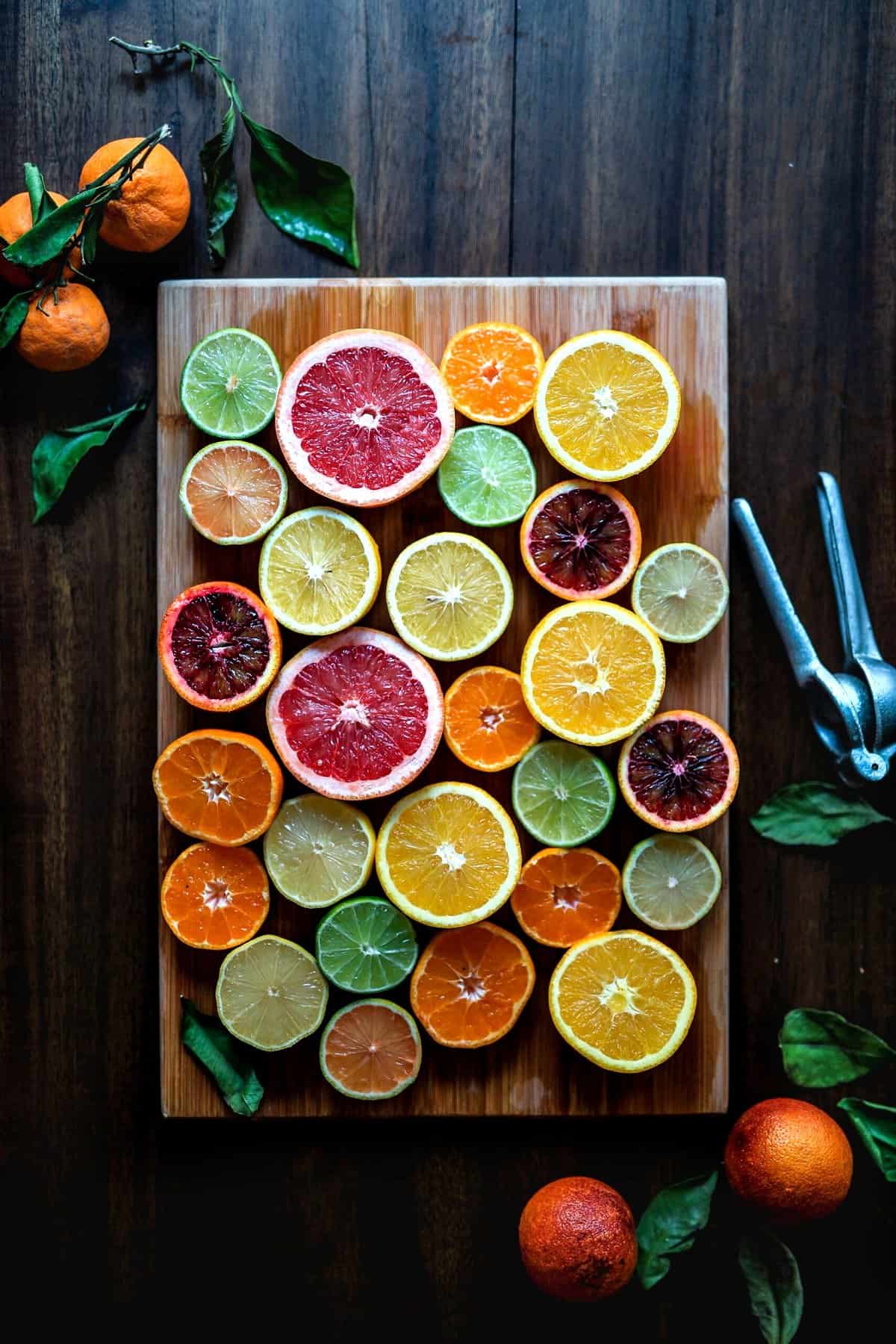
Slices of colorful fruit on a wooden board

There is no shortage of misinformation on social media right now, largely perpetuated by content creators with huge platforms and zero education or training in the field. So I thought we would play a little game called let’s make wellness influencers who are profiting off of Pseudoscience super duper mad by discussing all of the health myths that you can ignore.

Diet Coke Causes Cancer

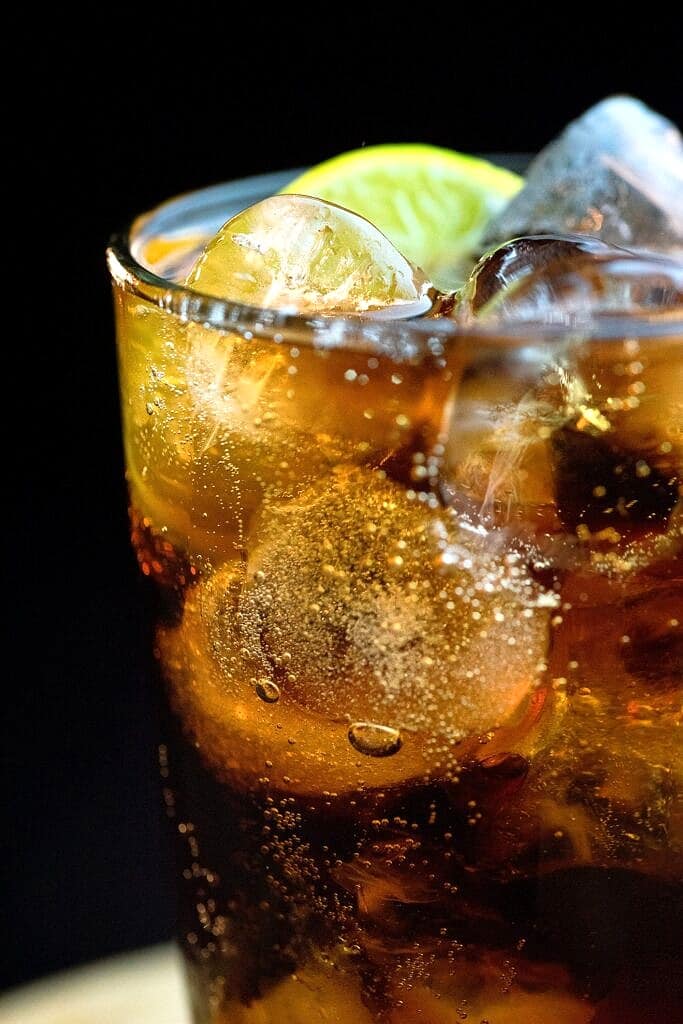
Upclose photo of soda in a clear glass

Starting strong with health myths you can ignore, the huge Diet Coke and cancer debate. Recently the WHO came out with an inflammatory recategorization of aspartame as a carcinogen, which the media interpreted as Diet Coke causing cancer. But this fails to understand what the data and classification system actually means. So tobacco is a group 1 carcinogen, which means that it is carcinogenic to humans, similar to alcohol and asbestos. Red meat appears in group 2A along with air pollution and shift work, which means it’s probably carcinogenic. And yes, I said shift work. And then aspartame falls into group 2B aka possibly carcinogenic to humans. In case you’re wondering what else is classified in group 2B like aspartame, consider aloe vera, pickled vegetables, progesterone-only contraceptives, and electromagnetic fields that your cell phones emit all around you all day. Now for aspartame to meet the criteria for 2B there has to be limited evidence of cancer association in humans and insufficient experimental evidence in animals OR if there’s no human evidence at all, but there’s enough evidence that there is a mechanism in animals that could apply to humans. In other words, it’s far from causation.

What makes this classification even more confusing and in some ways kinda useless is that it just tells us about the strength of the evidence, not how risky it is in real life or how much of the substance would be needed to cause harm. All of these substances just get lumped into one category as if spending your entire life breathing in asphalt is the same as having an occasional can of Diet Coke. We may have updated recommendations in the future, but right now, the FDA has suggested a daily intake of 50 mg per k g of body weight, or like 19 cans of diet coke a day, which would be under the safe amount. 

So, friends, the dose makes the poison, which is why this is one of the biggest health myths you can ignore. I don’t personally drink Diet Coke but I think you should treat aspartame like sugar and enjoy it in moderation. it’s not a health food, but its probably not going to the the primary reason for anyone’s decline.

Six Pack Equates Health in Women

This next part of the health myths you can ignore saga will definitely make the fitness influencer girlies mad. Because spoiler alert, it does not equate health. Here’s the thing, some women naturally have more visible abs without having to put themselves through an outrageous restrictive diet or overexercising protocol. And hormonally, they may appear completely healthy.  But the vast majority of us women are just not meant to be that lean. To see visible ab definition like a tight 6 pack, most women need to get down to 14-20% body fat. Yet most of us need around 26-28% body fat to regulate our cycle, and reproductive hormones, and support natural fertility. Again, bodies come in all different shapes and sizes and there are a lot of women who can maintain low body fat percentages, have a 6 pack, and still get a period, ovulate, and get pregnant. But typically, the behaviors taken to get said 6 pack aka extreme caloric restriction, overexercising, or both, with or without a low body fat percentage, are also huge risk factors for anovulation, amenorrhea and hormonal irregularities. So despite what social media may make you believe, a 6 pack should not be the goal.

You Need to Avoid the “Dirty Dozen”

Close up photo of a variety of beries.

The Dirty Dozen is a list that is released annually by the EGW or the environmental working group where they list the fruits and vegetables with the greatest pesticide residues. If you haven’t heard of the EWG, lucky you, but in short, they market themselves as being these unbiased truth crusaders going head to head with big food, the FDA, USDA, and other major health authorities. They rank food products based on how clean they are, loudly opposing conventionally grown or GMO crops. While they are super vague about their sponsors and donors, they list several organic food brands and “clean beauty” brands which many claim may affect how these brands are ranked without proper disclosure.

Transparency issues aside, I’m personally more concerned by some of their dubious anti-science board members and the fact that they have published blatant disinformation including a 2004 article linking vaccines to autism. The way they come up with their dirty dozen list is by looking at the Pesticide Data Program which samples more than 10,000 food samples for pesticide residues. Their findings remind us just how safe our food is seeing as over 99% of samples tested had residues below the tolerances set by the EPA, and 42% had no detectable pesticide residues at all. The residues here are so low that we would reach toxicity levels from the fruit or vegetable before we would reach the toxicity levels of the pesticides. The Alliance for Food and Farming developed a calculator to show you how many servings of a dirty dozen fruit or veg you would need to eat in one day to reach beyond the no adverse effects level (NOAEL). And here are the results. You’d have to eat almost 2000 peaches and over 2300 nectarines, nearly 7500 servings of kale, 340 apples, or almost 7500 servings of celery. You would be shitting your pants all day for days if you eat this, not from the pesticides, but because of the fodmaps and fibre. So obviously folks, the dose makes the poison.

The other issue with The Dirty Dozen is similar to the issue of how carcinogens like aspartame are classified. It doesn’t incorporate risk assessment into the calculations- all of the pesticides are weighted equally and we don’t factor in the levels deemed acceptable by the EPA. In other words, this list is based solely on residue count, not what the chemical is, what concentration it is in the food, and how those levels compare to the EPA’s tolerance levels for specific chemicals. They also never mention the fact that organic foods contain pesticides, which may or may not be safer than synthetic. Does anyone remember the natural organic pesticide rotenone? We thought that was super safe because it was “all natural”, but it ended up attacking the mitochondria and causing Parkinson’s disease in rats. My point here is not that organic foods are also bad. It’s that assuming you’re not eating thousands of peaches a day, conventional produce is safe.. And fearmongering wellness information like the dirty dozen does actual harm. One study found that fearmongering pesticide messaging resulted in low-income families who couldn’t afford organic to purchase LESS produce all together. We don’t need to further the health disparities in this country with misinformation like this. So organic, conventional, buy what you can afford, wash it well, and consider the “dirty dozen” a health myth you can ignore.

Bottom Line

With that being said, I recommend avoiding jumping on the bandwagon with internet health claims and always promote doing your research and doing what is best for YOU and your body. Obviously there are a lot more misinformed wellness influencer claims to unpack. So, make sure to keep your eyes open for part 2 of this series about health myths you can ignore coming to the blog next week!

More Blog Posts You Might Like

Do you enjoy debunking diet and health myths just as much as me? Check out some of my favorite posts on the blog!

  • IS VEGETABLE OIL BAD FOR YOU? | THE VEGAN OIL FREE DIET
  • FOOD COMBINING DIET: THE SHOCKING TRUTH ABOUT THE DIET FOR WEIGHT LOSS, BLOATING, & IBS
  • BEACHBODY SHAKEOLOGY: IS IT WORTH IT?
  • VITAMIN INFUSIONS | IS IV VITAMIN THERAPY THE KEY TO GOOD HEALTH?
Ashlyn

Last Updated April 2, 2024. Published January 24, 2024 By Ashlyn Leave a Comment

How to Calculate Macros for Weight Loss | A Dietitian’s Review on How Much Protein, Carbs, & Fat You Should Eat

It’s time we set the record straight on the perfect macro split to meet your wellness goal. In this post, we discuss how to calculate macros for weight loss , muscle gain, endurance, and more!

A bowl of lettuce, vegetables, eggs, and protein

General Health Goals

Major health authorities have crafted a recommended macro split for the general population called the  Acceptable Macronutrient Distribution Ranges (AMDRs).  This split has some flexibility because these things don’t need to be exact, but it’s loosely:

  • 45-65% of calories from carbohydrates
  • 10-35% of calories from protein
  • 20-35% of calories from fat

These ranges are based on what is “associated with reduced risk of chronic disease”. However, when you dive in, our absolute minimum needs are pretty low for carbohydrates and fat, and you could argue that we do not have minimal needs for carbohydrates, considering our bodies can enter a state of ketosis to keep us alive in the absence of carbs. Fat needs are also quite low, excluding minimal needs for essential fatty acids such as Omega 6s and Omega 3s. 

That said, going below the AMDRs can increase the risk of hormonal dysfunction. So consuming below 20% of energy from fat can increase the risk of reduced testosterone in men and reduced estrogen in women. And going below 35% of energy needs from carbs has also been shown to increase the risk of low testosterone in men and amenorrhea in active women, particularly when accompanied by a low-calorie diet. 

A large reason for this macronutrient split recommendation is not just about the fat, protein, and carbs themselves, but about the micronutrients this dietary pattern encourages. For example, although vitamin and mineral deficiencies leading to disease are rare, carbohydrate restricted diets can result in suboptimal intakes of thiamine, folate, vitamin C, Magnesium and fiber. On the other hand, a fat restricted diet can result in suboptimal intakes of vitamin E and omega 3s. So this is why we generally recommend balance over restriction.

but that leaves us with protein. Aside from water, we have a greater need for protein than any other macronutrient because a large proportion of our body is made up of protein. The recommended protein intake in government guidelines is 0.8 g/kg as the minimum to prevent disease. But we don’t just want to survive, we want to thrive, so the OPTIMAL intake of protein for general health is at least 1.2 g/kg per day, or around 15% of calories. This is particularly important for helping prevent muscle loss as we age, and it’s basically what people on non-restrictive diets are getting anyway. 

So to quickly recap this section, if the goal is to maintain good health, a varied diet consisting mostly of whole foods, 45-65% carbohydrate, 20-35% fat, and a protein intake of at least 1.2 g/kg or around 15-35% will be ideal for most adults.

picture of 6 assorted toasts

WEIGHT LOSS

Now let’s discuss how to calculate macros for weight loss. Although the ketos and the frugavores could argue all day on whether we should be limiting carbs or fat, respectively, the reality is, it doesnt actually matter when it comes to fat loss rate. The differences have been described as “physiologically meaningless”.

Not just that, but according to the DIETFITs trial there was no difference in fat loss rates regardless of whether someone had the genetics to supposedly present as more “fat responsive”, or “carb responsive”, or how insulin sensitive someone was. Some people will just find low fat easier, some find low carb easier. Long term tolerance and adherence are what matter most for weight loss success. 

So now that we know that specific amounts of carbs and fat are less important for weight loss, let’s talk about what IS important- protein.

Protein is the one main macronutrient that can make a difference in fat loss rates. Higher protein intakes have been shown to result in more weight loss and less lean mass loss, leading to as much as a 3x greater effect on fat loss when going from a diet that is about 10-15% protein to one that is 20-30% protein.

There are a few reasons for this when wanting to calculate macros for weight loss:

  1. Protein is the king in the satiety hierarchy in my hunger-crushing combo so it helps with appetite control and diet adherence better than any other food component. So for example, one study found that people spontaneously ate over 400 calories less when they increased calories from protein from 15% to 30%. 
  2. Protein uses more energy for processes such as protein synthesis, which burns calories and can therefore contribute to the caloric deficit.
  3. You need more protein to stimulate protein synthesis when you’re in a caloric deficit, so a higher protein intake helps spare muscle mass from being broken down as fuel.

So protein is king for weight loss, but how much is enough?  Ultimately this will depend on the size of the calorie deficit. The greater the percentage of energy deficiency for weight loss, the more protein is recommended. If we consider that most people should be aiming for 0.5-1% weight loss per week, a rate that also allows for optimal retention of muscle mass, then that coincides with about a 20% deficit and at least 1.8 g/kg of protein. 

In summary, the percentage of carbs and fat matter a lot less than protein when it comes to weight loss, but while we are in a calorie deficit, we want to push our protein intake towards around the 30% range-at least 1.8 g/kg while maintaining the general AMDRs for carbs and fat. Also, remember that weight loss is both difficult and poses a risk to your relationship with food, so work with a dietitian like one from Unlocked if this one is your goal to both reduce this risk and increase your chances of keeping it off.

MUSCLE GAIN

Woman in gym looking at herself in the mirror.

As we’ve now seen, there’s a baseline for protein that unless you’re on an extreme frugavore diet, you’re almost surely meeting. Needs increase when in a calorie deficit, and they can potentially increase on a per kg of body weight basis even further when the goal is muscle gain. As this systematic review found, optimal muscle mass gains come at 1.6 to 2.2 g/kg/d of protein intake so that’s about 0.75-1 gram per lb of body weight.  But because only so much protein can be used for muscle protein synthesis in one sitting, research like this review paper from our friend Eric at Unlocked Nutrition shows that it’s important to spread out your intake with at least 0.3 g/kg in 4-5 meals or snacks. Usually, this is around the 20-35 gram per meal mark.

Again, the other macronutrients, fat and carbs, are less important for muscle gain. BUT there is evidence that a low carb diet can result in lower performance during strength workouts, which would impact your rate of muscle and strength gain over time, giving it a slight edge over fat in terms of importance.

To summarize, if muscle gain is the goal, you’re not going to be in the same caloric deficit that you would be for weight loss. You might even be in a caloric surplus. So even though the total grams per kilogram of protein could potentially be the same or higher, around 1.6-2.2g/kg, the percentage of calories from protein is lower than seen with weight loss when we have to be mindful of sparing muscle. So generally this looks like around 20% of calories from protein per day spread out between several meals, and again staying within ADMR range for carbs and fat.

Endurance

Finally, let’s talk about endurance exercise goals, things like moderate to vigorous longer sessions of running, biking, swimming etc. Here, the tables turn and carbohydrates start to really matter. As you can see in this chart, the higher the intensity and the longer the workout, the more carbohydrate is needed to help fuel activity and refill those glycogen stores.  

IntensityTimeCarbohydrate recommendation
Low-moderate≤1 hr3-5 g/kg1.36-2.27 g/lb
Moderate-vigorous1 hr5-7 g/kg2.27-3.18 g/lb
Moderate-vigorous1-3 hr5-10 g/kg2.27-4.55 g/lb
Moderate-vigorous>4 hr8-12 g/kg3.64-5.45 g/lb
https://pubmed.ncbi.nlm.nih.gov/26920240/

We also need to consider protein. This one may surprise you but folks who are endurance training for 1-2 hours of at least moderate intensity training need 1.8 g of protein/kg, which is on par with the recommendations for weight loss and muscle gain. This is because protein is used as a fuel source during endurance exercise and what you burn off, needs to be replaced afterward. Also, don’t forget that protein is important for more than just muscle size. There are many adaptations to endurance exercise that involve proteins in our body like mitochondria, blood vessels, and the heart. This was part of Eric from Unlocked’s PhD thesis who suggests that if you’re exercising for over an hour of at least moderate intensity, you should be aiming for 1.8g/kg or 15% of energy needs from protein, whichever one is higher. 

Interestingly, endurance is the only scenario where macros differ between the sexes. Women use more fat as fuel and less carbohydrates, but the difference only ends up being an average of less than 10 grams of carbohydrates used per hour by women compared to men. That’s like 3 spoons of rice. Definitely not enough to stress over. Interestingly, women have lower protein needs in the follicular phase of their menstrual cycle, but their needs during the luteal phase are the same as men so again, we keep protein recommendations steady across the cycle to prevent deficiency. 

So to summarize, protein and carbs are particularly important for endurance. Your calorie needs will be high when doing intense endurance exercise, so even though protein needs are quite high, around  1.8g/kg, it amounts to the general health average of around 15% of your calories from protein. A higher proportion of calories should be coming from carbs depending on your intensity so around the 60-65% mark, and filling the rest of the gaps with fat.  

Bottom Line

Depending on your goals, your caloric needs and macro splits will be very different. Whether you are looking to calculate macros for weight loss, muscle gain, or endurance, these needs are highly individualized. So if you have specific goals, I highly recommend working with a dietitian like my colleagues at Unlocked.

Up close shot of the back of someones shoes while walking in the street.

More Blog Posts You Might Like

Interested in all things nutrition & wellness? Check out some of my favorite posts on the blog!

  • SIMPLE LIFE CHANGING HEALTH AND WELLNESS TIPS FROM A REGISTERED DIETITIAN
  • BEST FOODS FOR HEART HEALTH | TOP 10 FOODS ACCORDING TO A DIETITIAN
  • WELLNESS TIPS + MISTAKES TO AVOID FROM A REGISTERED DIETITIAN | SHOULD YOU WEIGH YOURSELF DAILY?
  • INTUITIVE EATING PRINCIPLES | HOW TO REJECT THE DIET MENTALITY

Have you found a macro split that works best for you? Have you tried to calculate your macros for weight loss, muscle gain, or endurance? I would love to hear your stories!
Ashlyn

Last Updated January 14, 2024. Published January 15, 2024 By Ashlyn Leave a Comment

Breakfast Pizza Rolls Recipe | BLW Recipe

This breakfast pizza rolls is a high-protein, easy BLW recipe that the whole family can enjoy. This recipe is also budget friendly with only 4 staple ingredients!
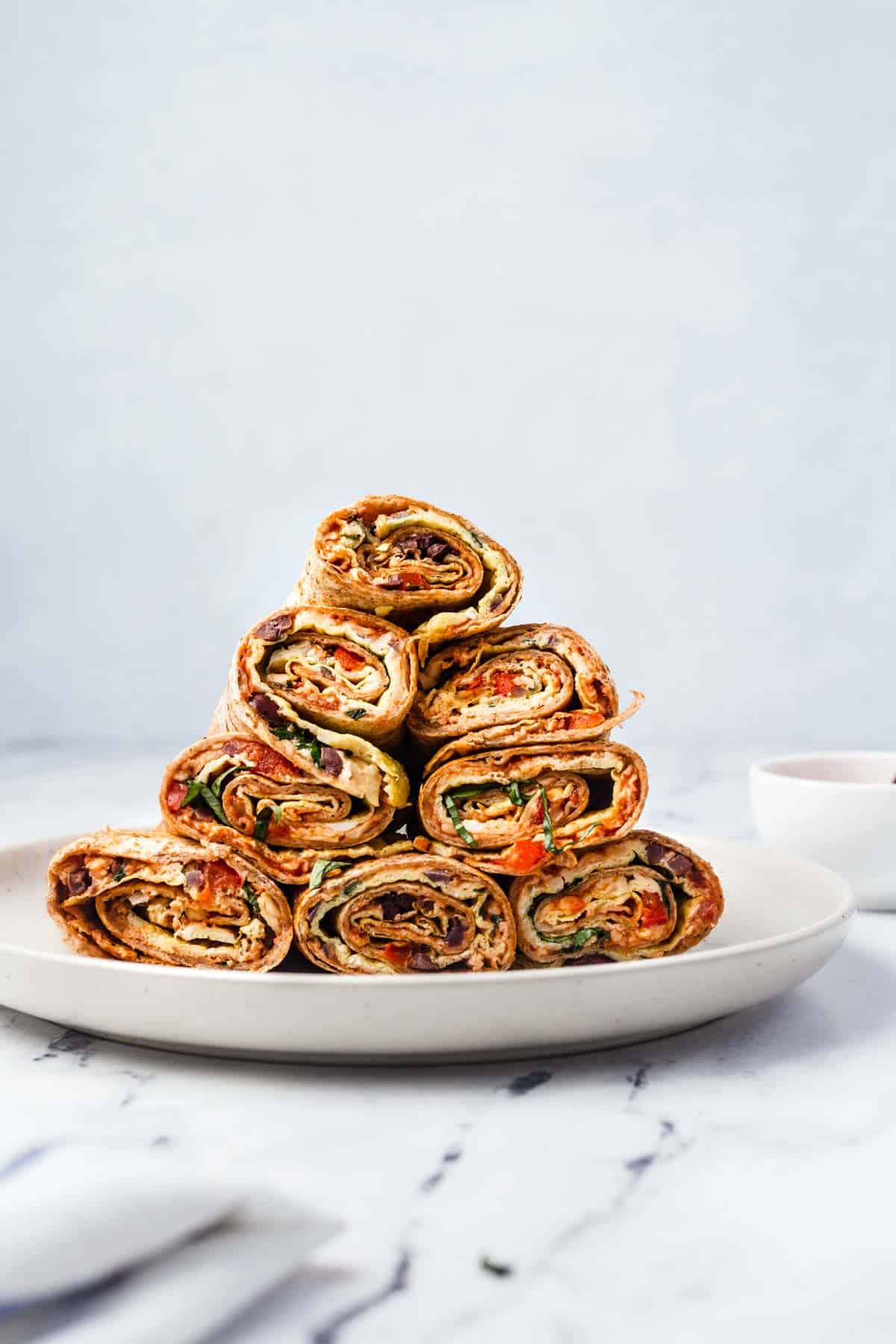
8 breakfast pizza rolls stacked on a white plate with a white bowl in the background.

As a mom, I understand how crazy busy mornings can be. Between waking the kids up, getting them ready for the day, AND trying to make sure they have a balanced meal to start the day, things can get pretty hectic pretty fast. With very limited time in the morning, I need a foolproof recipe that I know my kids will love (and something I can munch on too!). This is why I created this delicious breakfast pizza rolls recipe that has quickly become heavily requested in my household.

Table of contents

  • Why This Recipe Works
  • Key Ingredients
  • How To Make This Recipe
  • Expert Tips
  • Recipe FAQs
  • More Recipes You Might Like

Why This Recipe Works

Facts are facts – everyone loves pizza. And if you don’t then…. I don’t know if I can trust you. With that said, I will take any excuse to enjoy pizza in the morning and my boys have followed in their mama’s footsteps and are always down for some sauce cheesy goodness. Here are a few more reasons why this breakfast pizza rolls recipe is on heavy rotation in my household these days.

  • Easy to take on the go – perfect for those busy mornings!
  • Completely customizable (for picky eaters or kids who like different toppings)
  • High in protein (~22 grams per serving)
  • Budget friendly – only requires 4 staple ingredients!

Key Ingredients

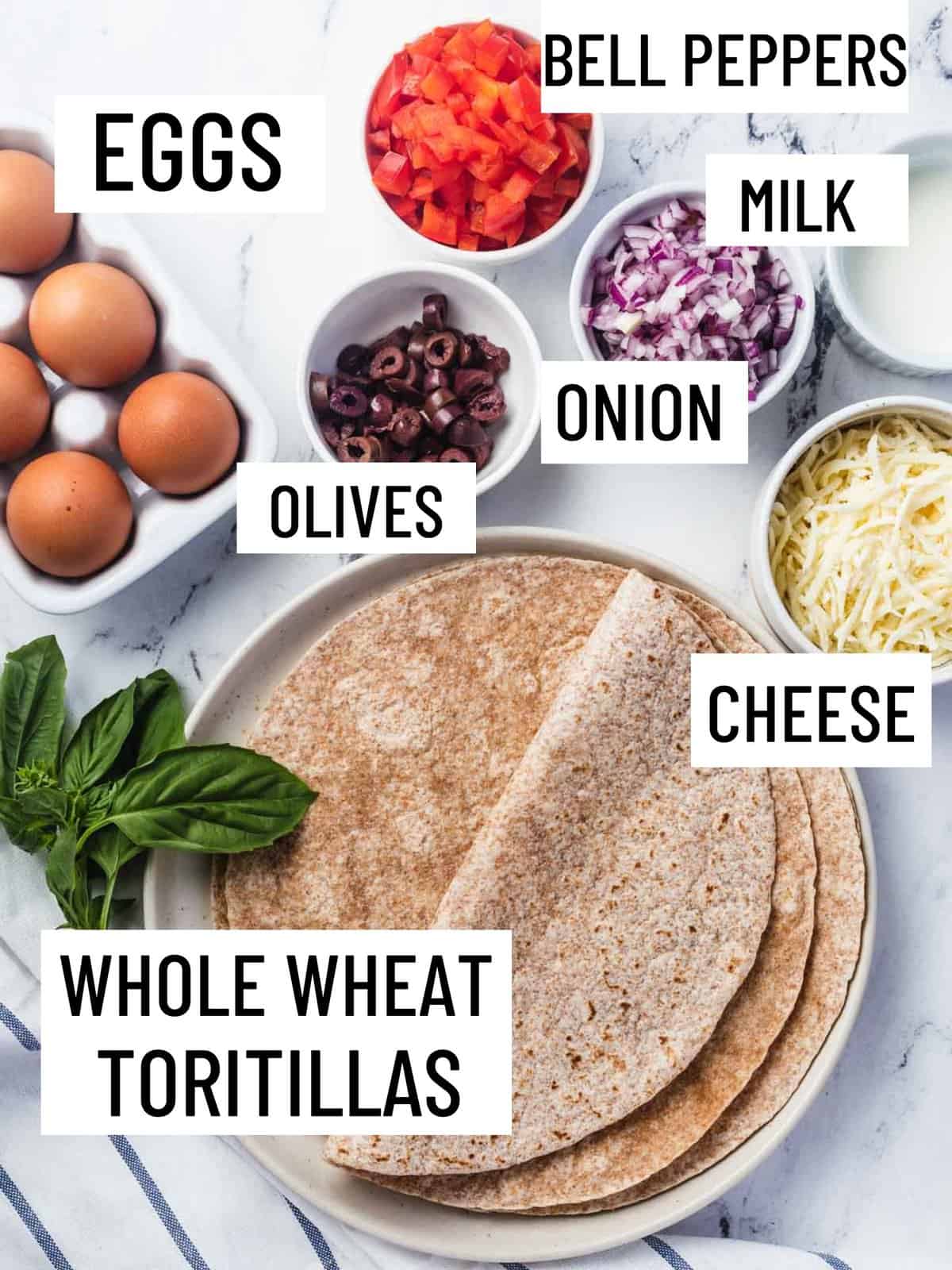
Birds eye view of the ingredients for breakfast pizza rolls.

Whole Wheat Tortillas – The tortillas are going to act like the “crust” for our breakfast pizza rolls reipce. While you can totally enjoy these breakfast pizza rolls open faced, turning them into bite-sized roll-ups makes them baby led weaning friendly and easy to take on-the-go.

Pizza Sauce – Because obviously. But heres a fun little nutrition fact – the vitamin C in the tomato sauce actually helps to enhance iron absorption in the egg. So its a win-win on the nutrition and flavour front.

Eggs – Eggs are the star of the show in these breakfast pizza rolls. I usually like to opt for omega-3 eggs, but any egg that is accessible to you is absolutely fine.

Toppings – For this pizza-inspired recipe we are topping things off with familiar favourites – chopped veggies (red onions, bell peppers), olives, chopped basil, and cheese (mandatory, obviously). But feel free to have fun with the toppings and make it your own with whatever you have on hand.

How To Make This Recipe

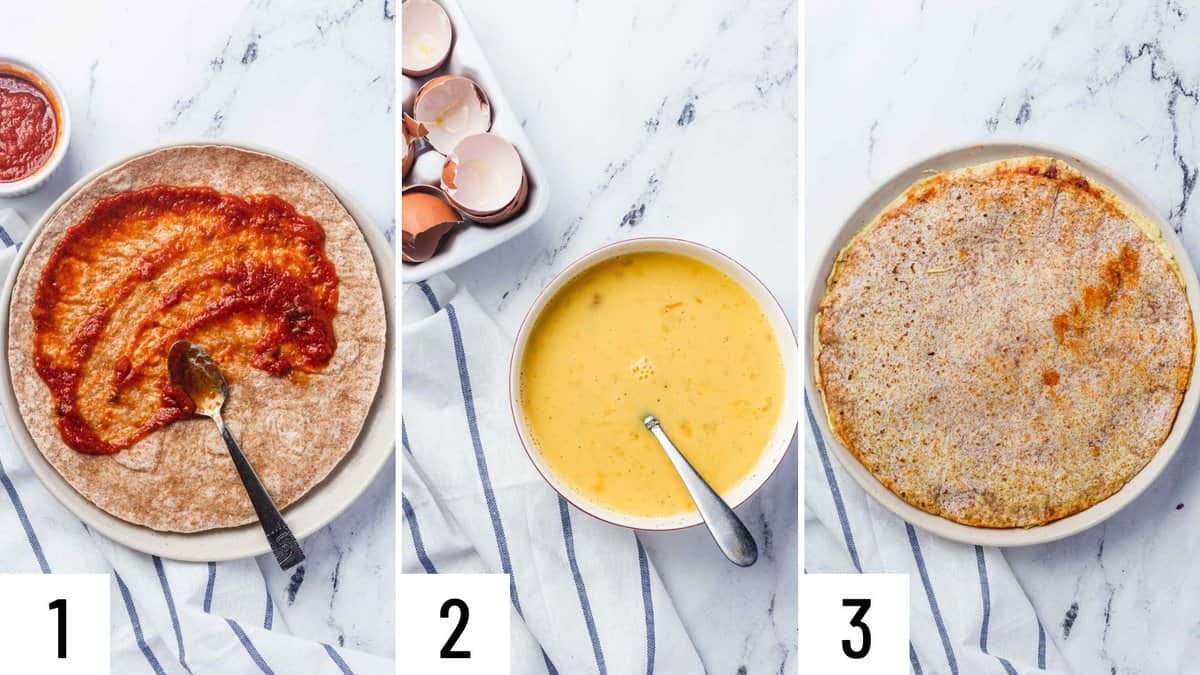
Birds eye few of first 3 steps to make breakfast pizza rolls.

Step 1: Spread 3-4 tbsp of pizza sauce onto each tortilla and set aside. In the meantime, Preheat a 10” nonstick skillet over medium low heat with enough olive oil to lightly coat the pan.

Step 2: Whisk the eggs, milk and salt and pepper together in a bowl.

Step 3: Add ¼ of the egg mixture to the pan and spread out to a thin omelet. Top with 3-4 tbsp pizza toppings and 3- 4 tbsp of cheese. Place the tortilla on top (sauce side down).

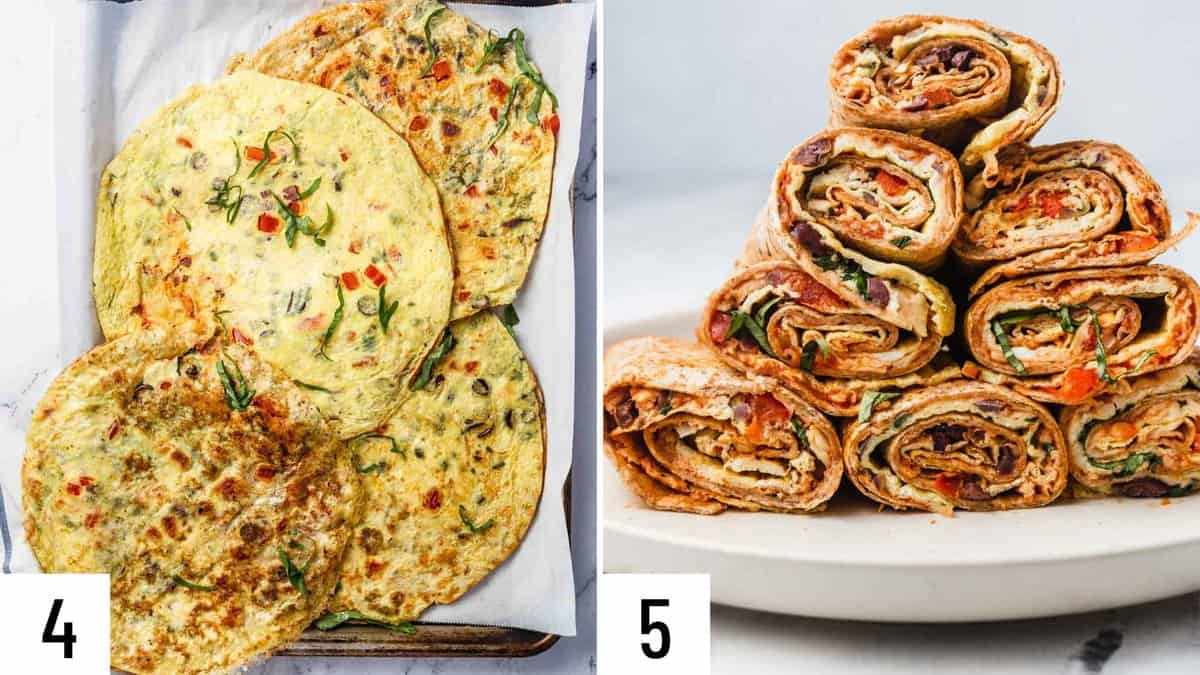
Two side by side images showing how to prepare recipe.

Step 4: Swirl the tortilla in the pan until the egg has finished cooking and the tortilla is glued to the egg. Slide out onto a plate or cutting board and then slide back into the pan, tortilla side down. Cook for another 30 seconds.

Step 5: Slide the egg tortilla onto a plate and wait until it’s cool enough to touch. Roll up (tortilla side out).

Expert Tips

Even though this is a great BLW recipe, it’s important to acknowledge that it does contain a few common allergens — milk, wheat (tortilla), and eggs. I would make sure your little one has trialed each of these foods beforehand before serving them all together at once. I also have a whole blog post on how to safely introduce allergen while practicing baby led weaning.

Recipe FAQs

How can I prep this recipe to serve throughout the week?

You can make this recipe ahead of time and freeze them flat between wax or parchment paper. When you are ready to eat, you can warm them up in the microwave for 30 seconds then roll them up.

What toppings go well inside this breakfast pizza rolls recipe?

Just about anything you can top a pizza with! I personally love bell peppers, mushrooms, onions, pepperoni, and olives.

How can I make this recipe gluten-free?

All you would need to do is sub out the regular whole wheat tortilla for a gluten free alternative. Also, just be sure to check grocery store ingredient labels to make sure there is no gluten added.

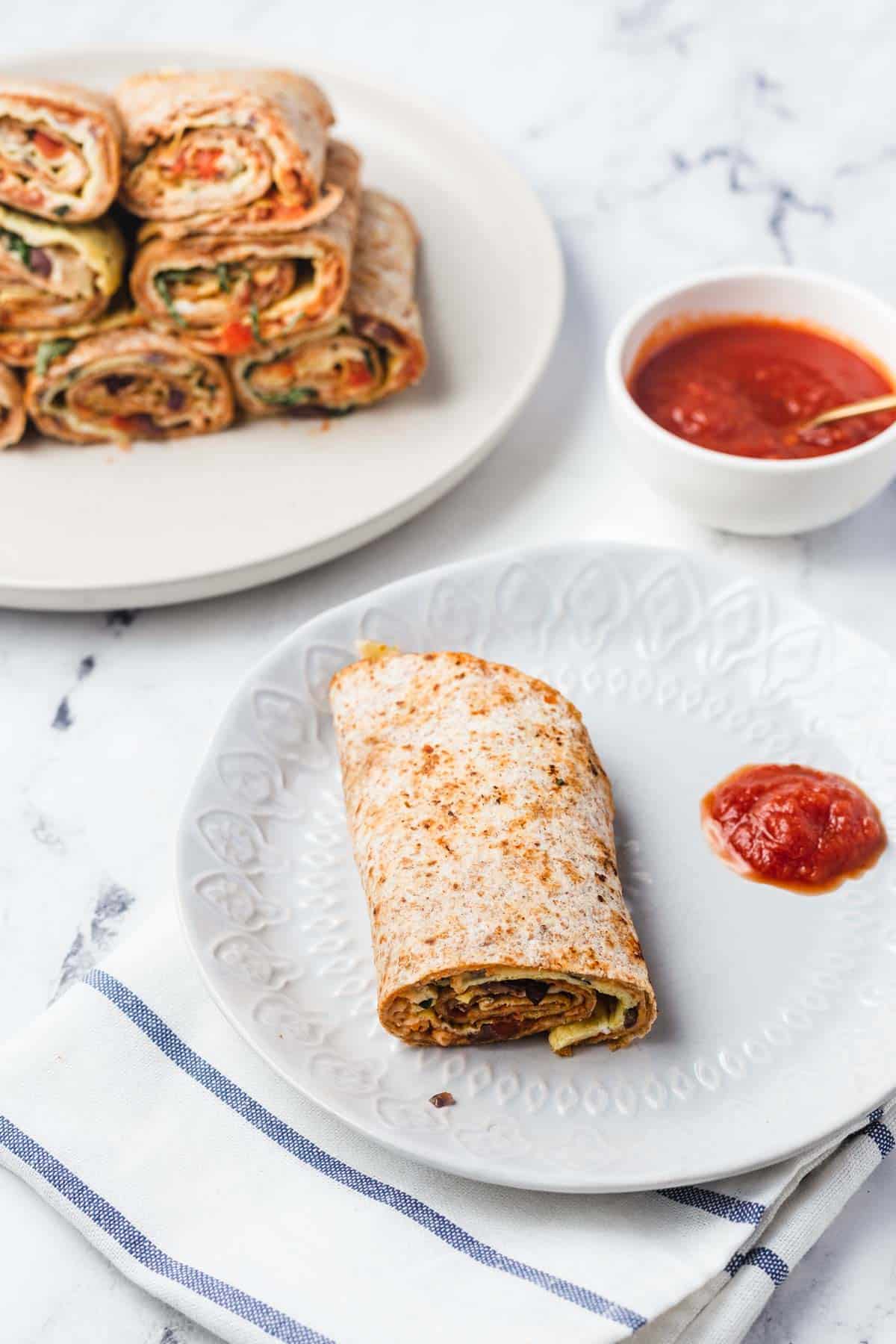
Birds eye view of a pizza roll on a white plate with pizza sauce on the side. There is another white plate with 7 pizza rolls stacked and a bowl of pizza sauce to the right of it.

More Recipes You Might Like

Looking for other BLW breakfast ideas like this breakfast pizza rolls recipe? Check out some of my favorites below!

  • BANANA BAKED OATMEAL FINGERS WITH CHERRIES (BLW & TODDLER FRIENDLY)
  • CHEESE OMELETTE WITH VEGGIES (TODDLER & BLW RECIPE)
  • GREEN PANCAKES WITH SPINACH & AVOCADO (BLW & TODDLER FRIENDLY)
  • FRENCH TOAST STICKS FOR BLW (VEGAN)

What are some of your go-to BLW breakfast recipes? Have you tried this recipe yet? I would love to hear what your kids are loving right now!

Print Recipe
5 from 3 votes

Breakfast Pizza Rolls Recipe

This breakfast pizza rolls recipe is a high-protein, easy BLW recipe that the whole family can enjoy. This recipe is also budget friendly with only 4 staple ingredients!
Prep Time10 minutes mins
Cook Time15 minutes mins
Total Time20 minutes mins
Course: Breakfast
Cuisine: Amecian
Diet: Vegetarian
Servings: 4
Calories: 395kcal
Author: Abbey Sharp

Ingredients

  • 4 8" Whole Wheat Tortillas
  • 1 cup Pizza Sauce
  • 8 Omega 3 Eggs
  • 1 cup Shredded Mozzarella
  • 1 tbsp Olive oil (for cooking)
  • 3 tbsp Milk (if desired)
  • Salt & Pepper (to taste)

Instructions

  • Spread 3-4 tbsp of pizza sauce onto each tortilla and set aside.
  • Preheat a 10” nonstick skillet over medium low heat with enough olive oil to lightly coat the pan.
  • Whisk the eggs, milk and salt and pepper together in a bowl.
  • Add ¼ of the egg mixture to the pan and spread out to a thin omelet. Top with 3-4 tbsp pizza toppings and 3- 4 tbsp of cheese. Place the tortilla on top (sauce side down).
  • Swirl the tortilla in the pan until the egg has finished cooking and the tortilla is glued to the egg. Slide out onto a plate or cutting board and then slide back into the pan, tortilla side down. Cook for another 30 seconds.
  • Slide the egg tortilla onto a plate and wait until it’s cool enough to touch. Roll up (tortilla side out).

Nutrition

Serving: 4g | Calories: 395kcal | Carbohydrates: 28g | Protein: 22g | Fat: 22g | Saturated Fat: 8g | Polyunsaturated Fat: 2g | Monounsaturated Fat: 8g | Trans Fat: 0.03g | Cholesterol: 351mg | Sodium: 881mg | Potassium: 342mg | Fiber: 4g | Sugar: 5g | Vitamin A: 948IU | Vitamin C: 4mg | Calcium: 295mg | Iron: 3mg
Ashlyn

Last Updated November 23, 2023. Published September 27, 2023 By Ashlyn 1 Comment

The Victoria’s Secret Diet | A Dietitian’s Review of Past Angel’s Diets

In this post, we will be talking about the Victoria’s Secret Diet and the experiences of former Victoria’s Secret models’ lifestyles throughout the years.

Victoria Secret models walking down a runway.

Raise your hand if your relationship with your own body has been personally victimized by a Victoria’s Secret angel or runway show. Whether you looked up to the OGs like Tyra Banks or Gisele Bündchen, or the younger VS queens like Lily Aldrige, Gigi or Bella Hadid, the culture of VS has left deep marks on our generations. And if it hurt us to watch it, it probably did even more damage to walk it, which is why we’re now seeing so many former Angels speak up.

So despite the magical show sets, celebrity performances, mile long legs and those sought after ethereal wings, a dark underbelly of this company and its immense power in shaping young women’s psyche is now being revealed. Spoiler alert, this ain’t good.

The Victoria Secret Angel Body

For Nearly 50 years, Victoria’s Secret was the only bra brand in young people’s underwear drawers. With nearly 8 million in sales and a third of the market share in its core category during its peak, it played a pivotal role in defining the “feminine body”. And that body has traditionally been tall, very thin, with large voluptuous breasts and usually, not surprisingly, white. 

One study from the Boston University School of Medicine found that over the past 20 years, VS models have gotten skinnier despite the average size of women in the U.S. trending up. Trigger warning for specific body measurement numbers here, but according to an article in the Globe, the average Victoria’s Secret model today has an average waist size of 23.6-inches and average hip measurement of 34.4 inches, which is in stark contrast to the size 16-18 body of the average American. 

Do Victoria Secret Angels have Eating Disorders?

Even if these models are genetically or “naturally” more inclined to be tall and slim, they’re often met with crippling pressure to shrink their bodies even more. Unfortunately, it’s hard to measure how this converts to clinically diagnosed eating disorders, since the fashion industry traditionally normalizes and celebrates this behaviour. As a result, EDs largely go undiagnosed, untreated, and virtually unseen.

But here are some shocking evidence based stats. 81% of models have a BMI in the “underweight” category. Over 60% of models have been told to lose weight and 21% have been threatened to be dropped by their agent if they don’t. 54% of models report skipping meals, 25% report self induced vomiting, and 40% report using IV drips to offset malnourishment from lack of food. 

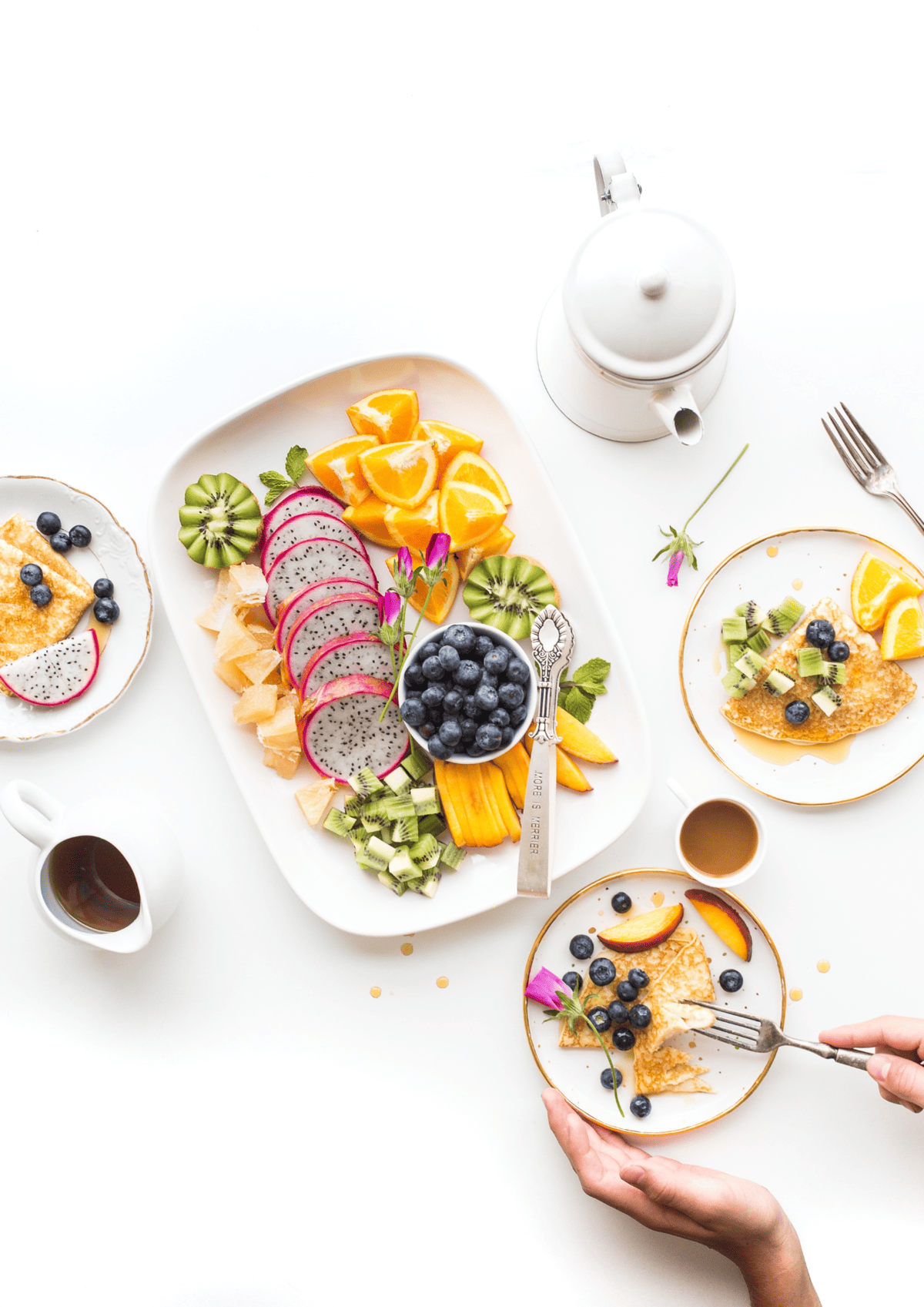
Birds eye view of a 4 plates of fruit and crepes and 2 tea cups.

The Victoria Secret Diet

And speaking of lack of food, let’s review some of the worst diet Victoria’s Secret diet secrets I’ve seen reported about online.

According to The Cut, American angel Adriana Lima famously revealed that before putting on those wings, she would cut out all solid food, live off protein shakes and water, and work out multiple times a day. Georgia Fowler told Women’s Health magazine that 80 percent of her pre-show diet is produce- with no carbs at all up to 5 days before the show. Also, Hungarian angel Barbara Palvin told W mag that in preparation for the show, she would watch videos of food or watch her boyfriend eat instead of eating herself. Wow. just wow. 

Diet Culture in Victoria Secret

We also have to talk about the revelations from industry whistleblower and former Aussie angel, Bridget Malcolm. Bridget’s personal TikTok is full of stories about the mental and emotional abuse she suffered at the hands of the company’s executives. She described a culture of toxicity and misogyny, in which models were treated as mere objects with no regard for their health or well-being. She also revealed the strict diet and exercise regimen she maintained to stay unimaginably thin. At one point she described herself as feeling as though she had “failed” because she was living off water for more than three days and she kept fainting on the job.

Should Models Have To Be Thin?

One of the comments I anticipate whenever I talk about industries that reinforce problematic body standards is that these models signed up for the gig. They’re basically “athletes” and part of an athlete’s job is to maintain a specific physique through diet and exercise. And my response to that is two fold. 

One, living on water, produce, protein shakes, or food network food porn, is NOT an athlete’s diet. Even athletes in aesthetic sports or sports that have “weight restrictions” like ballet or gymnastics would never be advised to eat a diet like that. It would compromise their ability to do the sport, which is goal number one.

But two, models are more than just athletes or actors. They’re prototypes for an image that we as a society are buying. We see these bodies as an apparent “standard” upon which we are held because we are supposed to be buying the same clothes, walking in the same shoes, carrying the same purses, etc. We aren’t met with images of Olympians everywhere we look, and if we were, there would at least be some acknowledgment of their body’s role in their performance.

As evidenced by Bridget Malcom’s experience, being emaciated doesn’t support a model’s performance, it makes it a dangerous game of Russian roulette where someone could faint, fall, become injured, or even die from an electrolyte depletion at any moment of any day.

Woman running on a treadmill .

So it’s one thing that Victoria’s Secret, and the fashion industry at large, is serving to perpetuate unrealistic body standards for young women. But the celebrity that VS has made of its angels brings with it a whole other dangerous trend. And that is, young girls are dying to emulate exactly what these women eat. I mean, look no further than YouTube to see a number of first hand examples of girls following VS models diets. This is why when I do an “eating like” video, I build on problematic trends to ensure nutrient and caloric adequacy based on my needs. I dont just blindly eat like someone else as a “challenge”.

The Downfall of Victoria Secret

But like with most problematic industries, people eventually wake up and see it for what it is. And man, did VS’s bubble ever burst fast.

Between 2014-2021 Victoria’s Secret began fielding a ton of major controversies including Les Wexner’s connection with Jeffry Epstein which allegedly gave him access to VS models, countless allegations of company misogyny, abuse, sexual assault, and push back over transphobic comments made by the then-CEO. Ya.. it was not good.

The fallout from these revelations has been astounding. Victoria’s Secret has seen a significant loss of market share, a 6% percent decline in sales, and about 300 store closures since 2020. To compound these business-specific controversies, their brand just started to feel really stale. We are by no means out of the woods with diet culture in 2023, but we’ve come a long way in discussions around body positivity, inclusivity, and diversity. But it’s as if the marketing team at VS had been coasting on the “if it’s not broken don’t fix it” train since the early 2000s, and didn’t know what to do when it became broken beyond repair. 

Suddenly, brands like Aerie’s #aerieREAL campaign, Savage X Fenty’s iconic inclusive fashion show made the VS fashion show look so old school and dated. We also watched fellow competitor ThirdLoves CEO pen a spicy open letter to VS, and Kim K’s SKIMs launch a line specifically for those with physical disabilities. These brands embraced a more diverse and inclusive image of beauty and femininity by including people of colour, plus size models, transgender models, and folks with disabilities.

So in a recent attempt to refresh the brand’s stained image and hop aboard the “inclusion revolution”, VS brought on a whole new female exec team, and replaced the angels with the VS Collective, a group of 7 diverse-looking women serving as an advisory for the company. They also have been involved in philanthropic endeavors like starting The Victoria’s Secret Global Fund for Women’s Cancers. Of course, I am hopeful and appreciative of these efforts, but I’m still not fully convinced.

Bottom Line

If you go on Victoria’s Secret’s website, we’re still looking at almost exclusively straight-sized women. Some have the classic super toned VS look, and others may have a softer look or a tiny role on their backs or stomachs, but this is hardly an inclusive representation of most women’s bodies. It’s like rebrand light, so it does feel a bit like performative inclusion to me. 

In conclusion, the old Victoria’s Secret Diet appeared to be an extreme, toxic, and unhealthy lifestyle that many of their models lived through. However, the iconic VS fashion show is allegedly making its comeback soon, so we’ll have to wait and see what changes (if any changes) VS really followed through with.

Empty model runway.

More Blog Posts You May Like

Did you find this blog on the Victoria’s Secret diet interesting? Check out some of my other favorite blogs on my page right now!

  • THE UNREGULATED WORLD OF NATURAL HEALTH SUPPLEMENTS 
  • THE TRUTH ABOUT OZEMPIC | A REGISTERED DIETITIAN’S PERSPECTIVE
  • INTUITIVE EATING FOR WEIGHT LOSS? | ADVICE FROM A REGISTERED DIETITIAN + COMMON FAQS

But I would love to hear your thoughts on the Victoria’s Secret diet. Is their rebrand genuine? Is it too late to regain your interest and trust? Do you miss the old angel look? Let me know below!

Ashlyn

Last Updated April 3, 2023. Published April 5, 2023 By Ashlyn 2 Comments

The Truth About Ozempic | A Registered Dietitian’s Perspective

Today we will be discussing the notorious TikTok-endorsed weight loss drug, Ozempic, and its lesser-known cousins, Mounjaro, and Wegovy. We dive into the research about these medications and discuss potential risks and benefits.

Picture of a hand with a blue latex glove holding an injection with a pink background.

It’s finally time I talk about Ozempic. It’s been called the not-so-secret miracle weight loss drug of the Hollywood elite. It’s been rumored to be linked to the Kardashians’ recent body transformations and celebrities like Mindy Kaling.

But some media reports haven’t been so kind. The Guardian, for example, coined it “an eating disorder in an injection”, or the “clockwork orange for junk food”.  On the other hand, body positive activists like Aubrey Gordon see it as society’s last-ditch effort to “get rid of fat people” for good.

Regardless of the backlash, its quickly become one of the hottest hashtags on TikTok. Aside from Botox and maybe Viagra, it seems like Ozempic is quickly becoming one of the most recognizable pharma brand names of our generation. Honestly, most of us are more attuned to Ozempic than local politics, worldwide disasters, a global pandemic, or the weather in our own backyard.

Not surprisingly, the social media buzz alone is now believed to be the lead cause of the shortage in the United States. And this shortage has people fired the fuck up.  It feels scary to even be talking about this as a straight sized anti diet culture dietitian, but I’m ready to finally clear the air.

Folks, let’s talk about Ozempic.

Also a huge thank you to Eric Williamson, who is a dietitian and PhD who specializes in sports and weight management. If you’re not already following him, check out his Instagram here and get in touch for one on one support that I can personally endorse. 

What Is Ozempic?

So let’s start with some cold hard facts. First of all, as many of you may know, Ozempic is not even a medication for weight loss, it’s currently only approved for diabetes. But the active ingredient in ozempic, semaglutide, is also found in a drug that IS approved for obesity called Wegovy. And when Wegovy demand outdid supply earlier on in the year, doctors started to prescribe Ozempic off-label for weight loss because the active ingredient was the same.

But then like the great toilet paper gate of March 2020, news reports claimed that Ozempic also became hard to get- not only for folks now using it for obesity but also for those with diabetes who had been taking the drug for years.

The final player is Mounjaro, which is another close cousin of Ozempic. The active drug here is something called tirzepatide which has slightly different properties that I’ll discuss in a moment. But like Ozempic, at this time, it’s also only approved for diabetes though is also being prescribed off-label for obesity. So why the sudden spike in demand in these new age weight loss drugs? Well, probably partially celebrities, partially TikTok testimonials, partially lingering Covid pounds, and mostly the fact that they honestly really do work.

Effectiveness of Weight Loss Medications

Before we had semaglutide or tirzepatide, we had a bunch of other weight loss drugs with less than stellar track records. Most resulted in about 5-8% weight loss on average, but came with a laundry list of not-so sexy side effects like loss of voice, difficulty breathing, anxiety, insomnia, or the dreaded orlistat anal leakage.

Previous Medications% weight loss
Orlistat6%
Lorcaserin6%
Phentermine-topiramate8%
Naltrexone-bupropion5%

On the flip side, most studies on semaglutide suggest it results in about 15% loss of body weight when paired with healthy lifestyle interventions like diet and exercise, which is a pretty dramatic leap.

Black = Lifestyle with professional support
Blue = Semaglutide

Tirzepatide ,which is the active ingredient in Mounjaro, is potentially even more promising, and while it hasn’t been directly compared to the dose of semaglutide typically provided for weight loss, preliminary evidence suggests it may result in up to 20% to 25% body weight loss. Possibly even more for some folks. 

Black = Lifestyle with professional support
Blue = Semaglutide
Orange = Tirzepatide

How These Weight Loss Drugs Works

Wegovy, Ozempic and Mounjaro are all GLP-1 agonists aka glucagon-like peptide 1 agonists. The word agonist means it acts similarly to our bodies natural hormone GLP-1. This hormone has a multitude of benefits, but in short, it helps slow down food absorption in the stomach so you feel fuller longer, it regulates insulin and blood sugars, and most importantly, it helps tell your brain that you are full.

Mounjaro is not only a GLP-1 agonist, but its ALSO a GIP agonist aka glucose dependant insulinotropic polypeptide as well. The combo of the 2 very long words seems to have synergistic effects, making Mounjaro more powerful than a GLP-1 agonist alone. And this is why it seem to be more effective and is sited to overtake the Ozempic and Wegovy craze, though research is still in its infancy.

But back to why Ozempic and its cousins are causing rapid weight loss in so many folks. Ultimately, these drugs significantly suppress hunger, and this tends to make achieving a calorie deficit a lot easier. In fact, its been shown to reduce calorie intake by 35% without changing people’s perceived hunger levels in the day. In other words, you can eat less, and not feel hungry. 

And this unique mechanism is arguably the essential key to long term weight loss success. This drug is essentially suppressing the body’s natural compensatory mechanisms that kick into high gear whenever we’re in a calorie deficit. Normally, when on a diet, our body fights to maintain body weight homeostasis by increasing hunger hormones, and decreaming satiety hormones in a desperate effort to make us eat more. And as I discussed in my video on weight loss right here, this is one of the main reasons why long-term weight maintenance is really hard. Without a medication like Ozempic, the body is programmed to ramp up your appetite with every extra pound of body weight you lose. Some research even suggests that these hunger adaptations persist for years after the diet ends.

Aside from physical hunger, Ozempic, Wegovy and Mounjaro also reduce cravings and help people feel more in control of their food intake. Again, this is revolutionary in the weight loss world because typically people who have lost weight experience more cravings and less satisfaction after eating, which in turn can derail long term efforts. So bottom line – these weight loss drugs are not magic, they still require a calorie deficit to work. But because of the impact on physical satiety and psychological satisfaction, they make obtaining that deficit much much easier. 

So those are the facts. But we haven’t even touched on the juicy controversies surrounding this drug and the great shortage of 2023.

A person standing barefoot on a weight scale.

Ozempic Controversy

Let’s start with the million-dollar question that rocked people’s worlds- who is worthy of obtaining this drug? Should we prioritize folks who have a disease like diabetes, when people in larger bodies should just be “putting the work” in at the gym?

You’ve all seen the horror stories on TikTok and other news outlets from folks prescribed Ozempic for diabetes needing to cross state lines to find a single dose of their life-saving meds. When you imagine the stress and anxiety of being unable to fulfill a prescription because it’s going to an unofficial demographic, I can empathize with the anger, frustration, and fear.

On the flip side, it’s worth pointing out that obesity, not unlike diabetes, is also officially recognized as a chronic disease worthy of medical support by authorities like Obesity Canada, the Canadian Medical Association, the American Medical Association, and the World Health Organization. So I know this is in stark opposition to the teachings of HAES, but you guys know I don’t personally identify with all aspects of that movement. I think for some folks, weight loss may help support their physical health and their psychological well-being. I also try to follow science as objectively as possible. And science tells us that like someone with diabetes needing pharmaceutical support for blood sugar management, many folks with obesity may need medical intervention to override some of the genetic factors responsible for differences in reward response, hunger and fulness cues and propensity to gain weight in todays environment.  

Which brings me to the importance of genetics and why some folks may not be able to dramatically shift their set point weight without some medical intervention. Weight gain and weight loss capabilities are genetically determined. Some people will naturally experience higher appetite, greater dopamine spikes from food, lower reward stimulation from exercise, greater relief from stress from overconsumption, a stronger drive to eat when experiencing negative emotions, or a lower sense of fullness from calorie consumption alone. Research on twins separated and raised by two different families has found that obesity is 70% genetically determined, and only 30% environment.  Hence the adage, genetics loads the gun and the environment pulls the trigger. 

Likewise, some people are going to experience more negative health outcomes when living with obesity than others. This is not a homogenous group so we need to look at the individual to determine if adding in medication to complement a healthy lifestyle is right for them.

And its worth emphasizing that even with medication, the recommendations do still focus on a nutrition, exercise and lifestyle intervention as first line of defense, both before, during and of course after medical obesity treatment.  So no one here is suggesting that taking a weight loss drug like Ozempic is a free ride.

Side Effects of Ozempic

Speaking of free ride, these medications are not without side effects. The most common side effect is nausea, followed by the other usual GI suspects. Thankfully, most report the nausea declines pretty steadily over time. But for a lot of folks, it’s completely debilitating with a lot of users describing being suddenly repulsed by even seeing their favourite foods. Some even reported being turned off or filled up too quickly by water, which can potentially put one at risk for dehydration as well. There are more potential side effects like thyroid cancer seen in animal research, plus pancreatitis or gallstones. 

Highlighted pink text of the word "nausea" in a textbook

But not unlike a birth control pill, antidepressant, or even an antibiotic, medicine is all about risk and benefit. It’s all about weighing the potential discomforts or risks with the potential benefits, both immediate and long-term. Different people are also going to react differently, and for some those risks or discomforts won’t outweigh the benefits of the drug. This is why it’s important to work with your healthcare team to determine if an intervention like this is right for you.

Ozempic for Life?

But lets move along to talk about the elephant in the room – if you started taking ozempic to lose some weight, do you now need to stay on it for life?

If you want to keep the weight off for life, probably yes. Research suggests that one year after coming off Ozempic or Wegovy, participants gained an average of ⅔ of the weight right back.  And this really isn’t a surprise because as we established earlier on, the main reason why we see such success with this medication beyond just lifestyle habits is because it helps counteract the increased appetite associated with weight loss. But if we go off the drug, at a now lower body weight, our appetite drastically rages – not only to its normal pre-drug levels, but even higher as our body fights to get us back to its preferred set point weight. There may be some patients who can slowly wean while maintaining a pretty strict diet and exercise regimen, but I would expect it will feel like a real struggle after having this pharmaceutical boost.

First of all, I believe in body autonomy. I say it all the time. And I don’t think one chronic disease cohort is more “worthy” than another of access to a potentially life saving or life changing drug. It’s a shame that we need to triage patients or turn getting a prescription into a modern hunger games. Especially because there’s already so much stigma and shame for folks in larger bodies trying to access supportive care. If a medication can help them regain their mobility, metabolic health, happiness, confidence, whatever- I am all for it.

Fears on Ozempic

For one, I am worried that social media and Hollywood culture are being positioned as an easy solution for fast weight loss. That they’re something you can just take to into a certain gala dress for a night or bikini vacation, and then go off again when you want to have a cheat day with your girls. 

I also worry that due to shortages and desperation, people will seek out unregulated compounded cocktails underground. For completely bogus reasons, generic semaglutide is exempt from normal FDA approval, so a lot of pharmacies, and medi-spas are offering their own “weight loss” cocktails that they compound themselves, often for much cheaper than brand name. But experts are warning that because it’s unregulated and untested, these compounded prescriptions could be ineffective at best, and dangerous at worst, so it’s really not worth the risk.

I also fear that people will see this as a REPLACEMENT for physical activity and a balanced nutrient-dense diet. The research suggests that a large proportion of weight loss while taking these medications is lean muscle mass – around 39% of the weight loss according to one study. So if we are not supporting the pharmaceutical regimen with a protein-rich diet, and resistance exercise, we run potentially make ourselves more metabolically healthy in one way at the expense of another.

I’ve also been focusing on health here, but not surprisingly, the internet has been focusing on the Ozempic aesthetic, most notoriously the now stigmatized Ozempic face. This is a whole other topic worth unpacking related to agism, classism and access. But from a nutritional perspective, its a good reminder that nutrition really does matter. Ozempic users do need to focus on high quality diet to maintain muscle mass with rapid weight loss. 

Finally, this is a massive topic that needs a whole other video to unpack. But I’m honestly terrified about the long term implications on general body dysmorphia and what is considered a normal healthy weight. I wouldn’t have concerns if these drugs were only being used as intended- for folks with chronic obesity or diabetes. But when every already slim celebrity and influencer is now another 20 lbs smaller, how are we as a society going to feel about “healthy” sized women like me. Will this be the new obese of 2025? Of course on an extreme end I’m concerned about these drugs being abused in ED communities as a not so secret  weight loss “hack”. But even without a history of dieting or disordered eating, when we start to only see Ozempic bodies represented in the media, the goal post for an acceptable body gets further and further away.

Obviously, this is me going down the doomsday rabbit hole, and I’m hoping that none of these things occur. But we all live in a social media echo chamber, where the small snippet of the world that we see is typically what we perceive to be fact and true. So I just hope that celebrity Ozempic bodies don’t become the unofficial “true” look of wellness.

Woman standing sideways with outline of weight loss around her.

Final Thoughts on Ozempic

So in conclusion, I think there is absolutely an important role for medications like Ozempic, specifically for folks with obesity whose weight puts them at health risks, and for whom lifestyle changes alone have not been successful. But this is not to help people drop the last bit of baby weight. This is not to help you fit into your wedding dress. This is nutrition medical therapy for a chronic disease intended to be utilized for life. And even if you do fit the target criteria and demographic, taking Ozempic is not a quick fix invitation to never exercise or eat a vegetable again. Lifestyle support is critical for long term success and muscle preservation, so I strongly suggest working with a registered dietitian on your journey. 

If you’re seeking one on one support yourself, whether it’s for weight loss with or without pharmaceutical support, I strongly recommend Eric Williamson for one on one coaching. You can check him out at here and follow him on Instagram and TikTok (@UnlockedFitnessAndNutrition). I expect the research and recommendations around drugs like Ozempic will quickly grow. Diabetes drugs will be approved for obesity, new competing drugs will be developed, and the price of everything will inevitably fall, making these medications more accessible to the layperson. So I’ll be keeping my finger on the pulse for an updated post.

More Blog Posts You Might Like

If you liked this post, check out these for more diet reviews!

  • INTERMITTENT FASTING AND WORKING OUT | THE PROS AND CONS FOR WEIGHT LOSS
  • HOW TO FIX A SLOW METABOLISM | REVERSE DIETING VS. ALL-IN
  • DO DIGESTIVE ENZYMES HELP WITH BLOATING?

What are your thoughts on Ozempic and similar medications? Leave me a comment below!

Ashlyn

Last Updated September 7, 2022. Published August 10, 2022 By Ashlyn Leave a Comment

Best Metabolism Booster | Can Food and Exercise Boost Our Metabolism?

Is it possible to boost metabolism? We take a deep dive look at the evidence to see if food and exercise are really the best metabolism boosters.

Close up of a blender with smoothie contents inside with a women smiling and holding the blender in the background.

Every wellness influencer under the sun has probably made some kind of claim about a magic elixir or supplement that promises to be the best metabolism booster. Whether that’s taking a shot of apple cider vinegar on an empty stomach or drinking lemon water – there is no shortage of misinformation on the world wide web on how to apparently get your metabolic juices flowing and lose weight in the process. But are any of these “metabolism hacks” really a quick fix for boosting metabolism or is it just a lot of hype and pseudoscience? In today’s post, we are breaking down the evidence on some of the most common recommendations for boosting your metabolism.

Resistance Training

Research suggests that resistance training may help to boost metabolism by increasing metabolically active muscle. For example, one study found that resistance training increased muscle mass and resting metabolic rate by an average of 5%. Similarly, one review of the literature concluded that resistance training was significantly effective at reducing body fat. Muscle mass also requires more energy to maintain than fat, which naturally increases energy expenditure in order to preserve lean muscle. So if weight lifting isn’t your thing, it’s no biggie as lower-intensity exercises that activate the muscle are still effective.

Woman turned around holding a dumbbell.

Green Tea

Some research suggests that green tea may have metabolism boosting properties, however the research in this area is mixed and inconclusive. For example, one review article found that drinking caffeinated green tea increases energy expenditure by up to 8%, which may be attributed to its thermogenic properties. However, another small study found that green tea did not have a thermogenic effect. So we definitely need stronger research in this area to get a better understanding of the metabolism boosting properties of green tea. However, some of the differences may be attributed to the concentration of the antioxidant EGCG, which is thought to be the most active compound of green tea. But given that there is a lot of variability in the amounts used in research studies, it is difficult to draw conclusions about how much is actually needed in order to see any possible effect on metabolism.

Apple Cider Vinegar

It wouldn’t be the best metabolism booster blog post without mention of apple cider vinegar. However, the research in this area is not as convincing as your favourite wellness influencer makes it out to be. For example, one 2020 systematic review concluded that there is insufficient evidence to suggest that apple cider vinegar has any effect on metabolism. However, we do have some research showing that it may help to promote weight loss by increasing feelings of fullness. But the research here is mixed and often confounded by the fact that participants are simultaneously on a calorie restricted diet. Plus, most of the studies are small, short term, and don’t show significant results.

Picture of 2 apples on the left and a clear bottle of apple cider vinegar on the right.

Spicy Food

Hot peppers contain the compound capsaicin, which research suggests may play a role in boosting metabolism. In fact, one study found that capsaicinoids may decrease body fat by up to 5%. However, it’s important to note that most studies provide participants with an isolated dose of capsaicinoids rather than a whole chili pepper. So the amount of whole peppers required to observe any effect on metabolism is unclear. Plus, keep in mind that eating large quantities of hot peppers may not be well tolerated for folks who are particularly sensitive to spice. But if you enjoy adding a bit of spice to your food, then live your best spicy life, but it is unclear the extent to which it will impact metabolism.

Lemon Water

Does lemon water in the morning “kickstart your metabolism”? In short, no. There is some research to suggest that drinking water before a meal may help to increase feelings of fullness and thereby reduce the amount of calories consumed at the meal. However, these effects are not exclusive to just lemon water and there is no research to suggest that lemon water, specifically, plays any role in boosting metabolism. However, there is some research that has found that water may temporarily boost metabolism by 30% for about an hour after consumption. Yet another study found that drinking water does not have any metabolism boosting effects. So while the verdict is still out on whether or not water has any impact on metabolism, any effects would be the same with or without a squeeze of lemon juice.

Quality Sleep

Getting enough quality sleep is essential for regulating our hunger and fullness hormones, which is why poor sleep quality has been associated with an increased appetite. We also have research looking at ““circadian misalignment” – which is what happens when we sleep during the day. The study found that participants burned 12-16% fewer calories when they slept during the day, which is equivalent to about a 3% decrease in energy expenditure over 24 hours. We also have research to suggest that front loading calories to earlier in the day may benefit metabolism, as metabolic rate appears to be more active in the morning and early afternoon. In fact, participants who ate more calories earlier in the day also experienced improvements in blood sugar control, lipid levels, and lost more weight. In other words, getting enough quality sleep and waking up with the sun may help to regulate appetite and benefit metabolism.

Woman laying in bed on her side with a black eye mask on.

Coffee

Some research has shown that coffee may temporarily boost metabolism due to its thermic effects. For example, one review of the literature found a greater thermic effect from caffeinated coffee compared to decaf and it may increase energy expenditure by 16% over a 2-hour period. However, any effect that coffee may have on metabolism appears to be short-lived and peak in the few hours after consumption. Any impact may also vary from person to person depending on caffeine sensitivity and frequency of consumption.

Protein Intake

Eating more protein may help to boost metabolism as it actually takes more energy (aka calories) to break down and absorb protein compared to other macronutrients. This is known as the thermic effect of food which is about 20-30% for protein, 5-10% for carbs, and 0-3% for fat. On top of that, eating a protein-rich meal also helps to increase feelings of fullness by lowering our hunger hormone, ghrelin. Due to its impact on satiety, we also know that eating a protein-rich breakfast helps to regulate appetite throughout the day which may result in less energy intake overall. Protein intake is also essential for muscle protein synthesis which, as mentioned, is important for building metabolically active muscle. So if there was one food that was the “best metabolism booster”, it would arguably be protein-rich foods as it is a triple threat for metabolism boosting.

Birds eye view of a variety of protein sources as examples of best metabolism boosters.

Bottom Line

In conclusion, while some foods, beverages, and exercise may have a mild impact on metabolism, there is certainly no “best metabolism booster” that will take your metabolism from zero to one hundred. But your metabolism may benefit from the additive effects of resistance training, eating meals that are balanced with protein to build muscle and boost satiety, prioritizing your sleep, and enjoying coffee, green tea, and water in amounts that you would normally consume.

Contribution by: Christina Iaboni, RD
Edited by: Giselle Segovia RD

More Blog Posts You Might Like

If you enjoyed this blog post discussing the best metabolism boosters, you might enjoy some more posts discussing metabolism:

  • HOW TO FIX A SLOW METABOLISM (REVERSE DIETING VS ALL IN)
  • HOW TO GAIN WEIGHT WITH A FAST METABOLISM
  • PROTEIN FOR WEIGHT LOSS & METABOLISM (PROTEIN PART 1)
Ashlyn
  • Go to page 1
  • Go to page 2
  • Next Page

Get started with

Eight Free Recipe Books

From the co-founder of Neue Theory and creator of the Hunger Crushing Combo

Sign me up!
Abbey smiling at table
Abbey Sharp

“Foods may never be nutritionally equal. But we can make them morally equal by recognizing that our worth is never determined by what's on our plate.”

— Abbey Sharp, RD About Abbey ◥

Books

  • HCC™
  • Mindful Glow
  • Free E-Books

Blog

  • Nutrition
  • Recipes
  • Motherhood
  • Life

Explore

  • Neue Theory™
  • Bite Back
  • YouTube

Abbey

  • About
  • Coaching
YouTube TikTok Instagram Facebook X Pinterest
Abbey Sharp - The No BS Dietitian From Abbeys Kitchen

© Abbey's Kitchen 2026  All Rights Reserved •  ACCESSIBILITY STATEMENT •  Privacy Policy

This site uses cookies. By continuing to browse the site, you are agreeing to the use of cookies Accept Privacy Policy
Privacy & Cookies Policy

Privacy Overview

This website uses cookies to improve your experience while you navigate through the website. Out of these, the cookies that are categorized as necessary are stored on your browser as they are essential for the working of basic functionalities of the website. We also use third-party cookies that help us analyze and understand how you use this website. These cookies will be stored in your browser only with your consent. You also have the option to opt-out of these cookies. But opting out of some of these cookies may affect your browsing experience.
Necessary
Always Enabled
Necessary cookies are absolutely essential for the website to function properly. This category only includes cookies that ensures basic functionalities and security features of the website. These cookies do not store any personal information.
Non-necessary
Any cookies that may not be particularly necessary for the website to function and is used specifically to collect user personal data via analytics, ads, other embedded contents are termed as non-necessary cookies. It is mandatory to procure user consent prior to running these cookies on your website.
SAVE & ACCEPT

Rate This Recipe

Your vote:


A rating is required
A name is required
An email is required