• Skip to main content

Abbey's Kitchen

Healthy Recipes, Nutrition Myth Busting, Healthy Eating Tips

  • Books
    • HCC™
    • The Mindful Glow Cookbook
    • Recipe eBooks
      • Family
      • Hypothyroidism
      • BLW
      • Vegan Week 1
      • Vegan Week 2
      • Vegan Week 3
      • Keto
      • Gluten Free Week 1
      • Gluten Free Week 2
      • Fitness
      • Paleo
  • Blog
    • Nutrition
    • Recipes
    • Motherhood
    • Life
  • Explore
    • Neue Theory™
    • Bite Back With Abbey Sharp
      • Apple Music
      • Spotify
      • Amazon Music
    • YouTube
  • Abbey
    • About
    • Coaching
    • Contact

Abbey Sharp

Last Updated February 28, 2022. Published February 28, 2022 By Abbey Sharp 3 Comments

Banana and Peanut Butter Chocolate Bars (Vegan & Gluten Free)

Banana chocolate bars served on a yellow plate.

Need a quick sugar fix? Try these vegan banana and peanut butter chocolate bars that take only five ingredients and make the perfect no sugar added healthy treat.
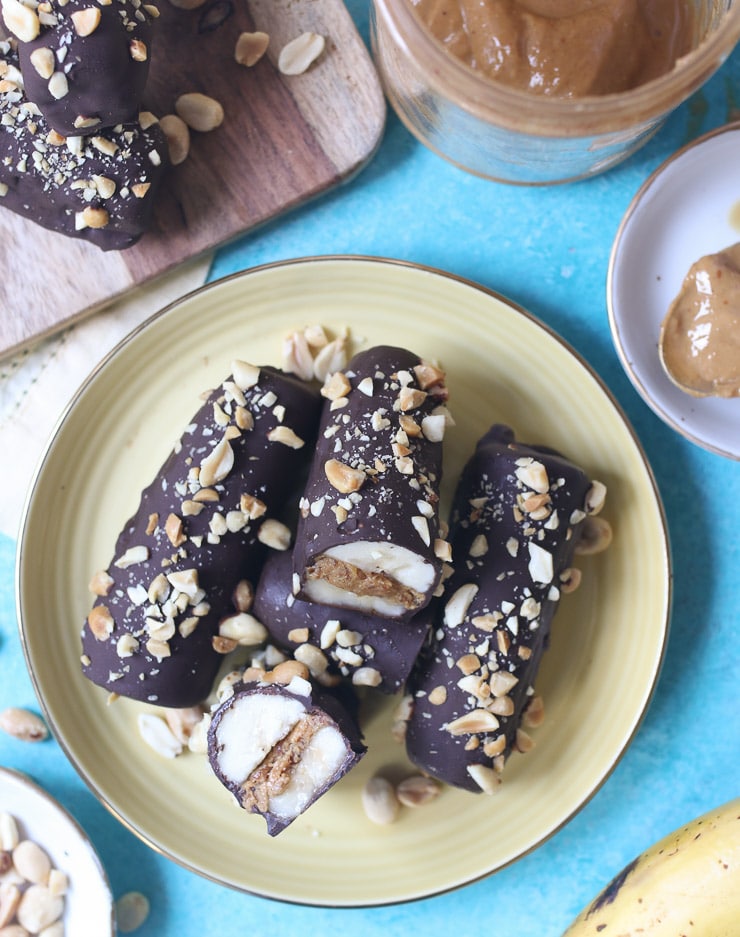
vegan Banana peanut butter chocolate bars served on a yellow plate.

It’s no secret that I LOVE making my own version of classic nostalgic chocolate bars. In the past I’ve re-created my own version of a Snickers bar and a Twix bar. So this time, I’m taking it a step further by using bananas as my chocolate bar vehicle. If you don’t like bananas, you’re crazy. If you do, read on to find out what is up.

Table of contents

  • Why This Recipe Works
  • Key Ingredients
  • How to Make This Recipe
  • Expert Tips
  • Recipe FAQs
  • More Recipes You Might Like

Why This Recipe Works

You know what they say, It’s 3 PM somewhere! You know, the time of day when the cravings hit and you start picking through old coins and bobbypins on the bottom of your purse trying to find a random candy. Well, I’m saving you a trip to the vending machine and arming you with these ah-maz-ing vegan banana and peanut butter chocolate bars. I also love these bars because:

  • They require no added sugar
  • They’re vegan
  • They’re gluten free
  • Only require 5 ingredients to prepare
  • And they are the PERFECT sweet snack

Key Ingredients

 Medjool dates – Medjool dates are naturally sweet in nature, making it a perfect way to sweeten up any recipe. They are also a great source of fiber and provide around 3 grams of fiber for only 2 dates!

Bananas – Bananas are the perfect afternoon snack when you need a pick me up because they’re a great source of carbohydrates which provide us quick and sustainable energy to get us through the day.

Dark Chocolate – Did you know dark chocolate is vegan? Dark chocolate is more bitter in taste, since it’s only made with cacao, but pairing it with these bars gives it the perfect sweetness.
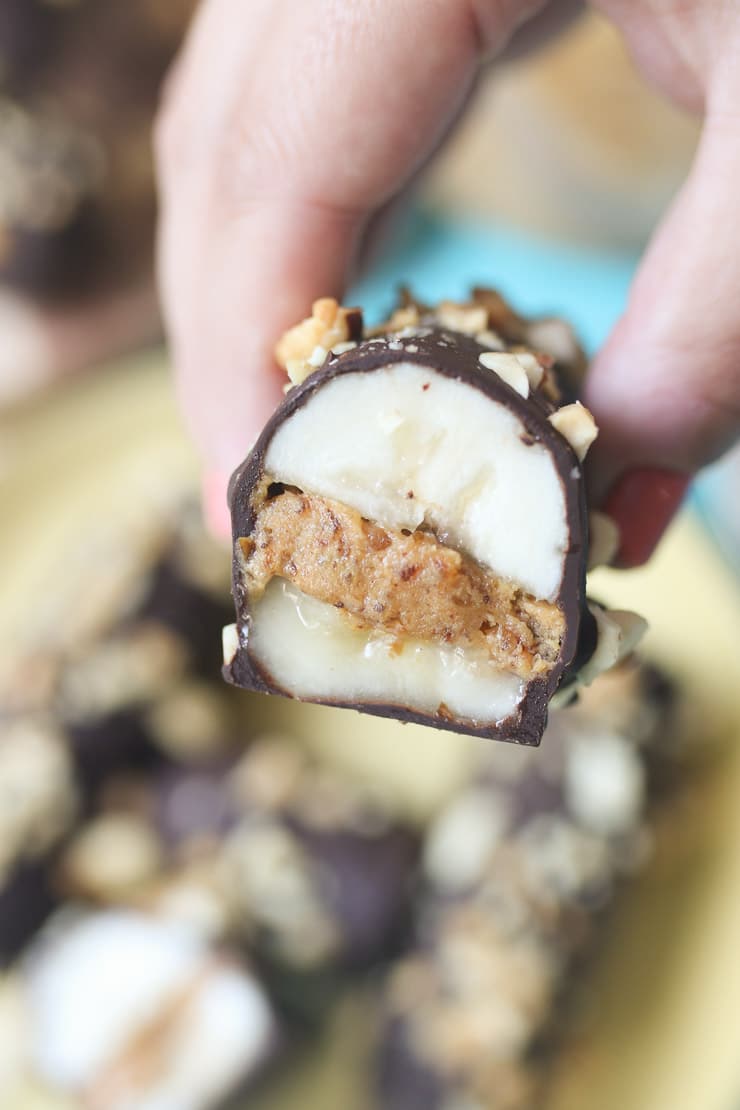
Hand holding vegan banana peanut butter chocolate bar.

How to Make This Recipe

Step 1: To a food processor, puree the dates and peanut butter until relatively smooth.

Step 2: Cut the bananas in half horizontally, then in half lengthwise. Spread the peanut butter mixture onto each banana half and top with the other banana half. Transfer to the freezer for 30-60 minutes.

Step 3: Meanwhile, heat the chocolate and coconut oil in the microwave at 50% power in 30 second intervals, stirring between each interval.

Step 4: Carefully dip the bananas in the chocolate and sprinkle generously with crushed peanuts. Transfer back to the freezer until ready to eat.

Expert Tips

If you find your bananas are not sitting up perfectly and they are sliding around in the freezer, slice a teeny bit off the bottom of one so it sits straight, and you can also use toothpicks to keep them together until frozen.

If you want to guarantee these bars stay gluten free, you’ll want to use a sun butter product and avoid sprinkling the peanuts on top! That way these bars are a healthy and great option for a whole range of people.

Recipe FAQs

How are these bars made without added sugar?

I wanted to try to make these banana peanut butter chocolate bars with as little sugar as possible and with only natural minimally processed sugars. The star in these bars are sticky medjool dates and natural unweetened peanut butter. These two ingredients work in perfect harmony together and make the creamiest gooey chocolate bar centre, plus bananas are also naturally sweet!

Are These Bars Freezer Friendly?

Surprised you have leftovers? No need to fuss. Throw these bars in a freezer bag and keep them stored safely for the next time those cravings strike. They’re actually delicious frozen (kinda like a frozen ice cream bar!!)You’re welcome.

Are these Chocolate Bars safe for kids?

Totally! They’re not school safe (nut butter) and not great for young toddlers as whole peanuts can be a choking hazard. However, you can easily make a batch without the peanuts to serve to your littles.
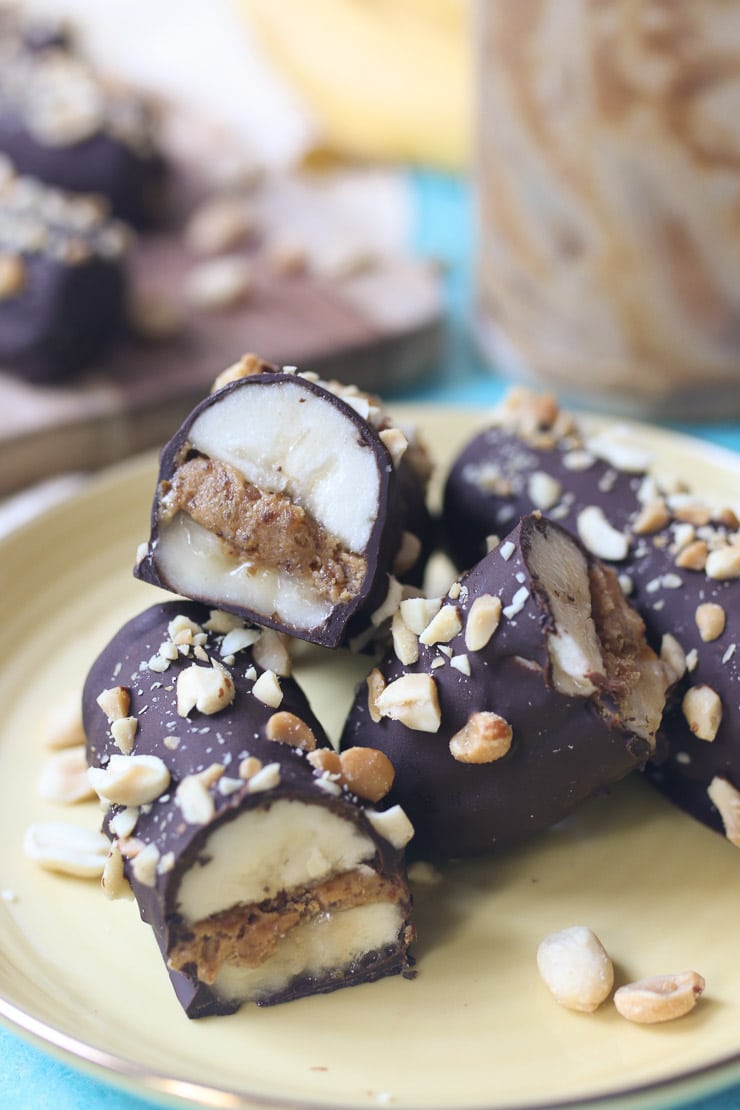
vegan Banana chocolate bars served on a yellow plate.

More Recipes You Might Like

If you’re looking for more vegan dessert recipes like these banana and peanut butter chocolate bars, here are some really yummy ones I have on the blog. 

  • CHOCOLATE DIPPED PINEAPPLE WITH SPICY SALTY CRUST
  • HEALTHY TWIX BARS
  • HOMEMADE SNICKERS BARS (HEALTHY VEGAN COPYCAT RECIPE)
  • NO BAKE NUTELLA CHEESECAKE CUPS (VEGAN & GLUTEN FREE)

What are your favourite chocolate bars that you want me to give a makeover? Let me know by leaving a comment below!
Banana chocolate bars served on a yellow plate.
Print Recipe
5 from 4 votes

Banana and Peanut Butter Chocolate Bars (Vegan & Gluten Free)

Need a quick sugar fix? Try these vegan banana and peanut butter chocolate bars that take only five ingredients and make the perfect no sugar added healthy treat.
Prep Time1 hour hr
Cook Time2 minutes mins
Total Time1 hour hr 2 minutes mins
Course: Dessert
Cuisine: American
Servings: 8 bars
Calories: 291kcal
Author: Abbey Sharp

Ingredients

  • 1/2 cup medjool dates minced
  • 1/2 cup natural peanut butter
  • 4 long bananas
  • 200 grams dark chocolate finely chopped
  • 1 tbsp coconut oil
  • 1/4 cup peanuts crushed

Instructions

  • To a food processor, puree the dates and peanut butter until relatively smooth.
  • Line a baking sheet with a silpat.
  • Cut the bananas in half horizontally, then in half lengthwise. To help them sit up straight, you can shave a little off of one half so they will sit up on a baking sheet.
  • Spread the peanut butter mixture onto each banana half and top with the other banana half. Transfer to the freezer for 30-60 minutes.
  • Meanwhile, heat the chocolate and coconut oil in the microwave on 50% power in 30 second intervals, stirring between each interval.
  • Carefully dip the bananas in the chocolate and sprinkle generously with crushed peanuts. Transfer back to the freezer until ready to eat.

Nutrition

Calories: 291kcal | Carbohydrates: 35g | Protein: 6g | Fat: 16g | Saturated Fat: 8g | Cholesterol: 1mg | Sodium: 54mg | Potassium: 488mg | Fiber: 6g | Sugar: 20g | Vitamin A: 86IU | Vitamin C: 5mg | Calcium: 37mg | Iron: 3mg
Abbey Sharp

Abbey Sharp is a Registered Dietitian (RD), regulated by the Ontario College of Dietitians. She is a mom, YouTuber, Blogger, award winning cookbook author, media coach specializing in food and nutrition influencers, and a frequent contributor to national publications like Healthline and on national broadcast TV shows.

www.abbeyskitchen.com/about-abbey/

Last Updated May 12, 2022. Published February 23, 2022 By Abbey Sharp 2 Comments

No More Bloating (The Real Reason Why You’re Bloated)

Is it possible to have no more bloating? In the first part of a 2 part series, we’re going to discuss some of the common causes behind bloating.

Person lying on a bed with stomach pain discussing no more bloating.

I want to begin by saying very clearly that all digestive issues, including bloating, are remarkably complex. It was really hard for me to write this post because the cause of people’s bloating, and therefore the appropriate treatment, will therefore be highly individualized. So for example, the recommendations for folks with bloating from constipation would possibly make bloating from SIBO far worse and vice versa. So ALWAYS speak to a Registered Dietitian who specializes in digestive health about your unique case. In fact, I consulted with not one, but FOUR of my GI RD colleagues to get their clinical insight. So a big thank you to Dasha Agoulnik, Amber Gourley, Caitlin Self and Lacey Dunn for their help.

Next I want to flag that diet culture has kinda co-opted the term bloating to be a more PC term for fat. It’s also pathologized the very normal experience of your stomach expanding and contracting throughout the day. This is BS. Its normal to experience daily gas, and its normal for your bowel habits to change in response to certain foods or times of the month. But if you’re experiencing bloating that is painful, linked to other side effects like nausea, you’re visibly distended to the point that you look pregnant and these symptoms seem to be chronic and persistent every day, then it’s worth reaching out for help.

So in this part 1 we’re going to discuss top reasons why you may be experiencing bloating, and in part 2 we will get into what to do to achieve no more bloating.


Reason #1: Food Intolerances

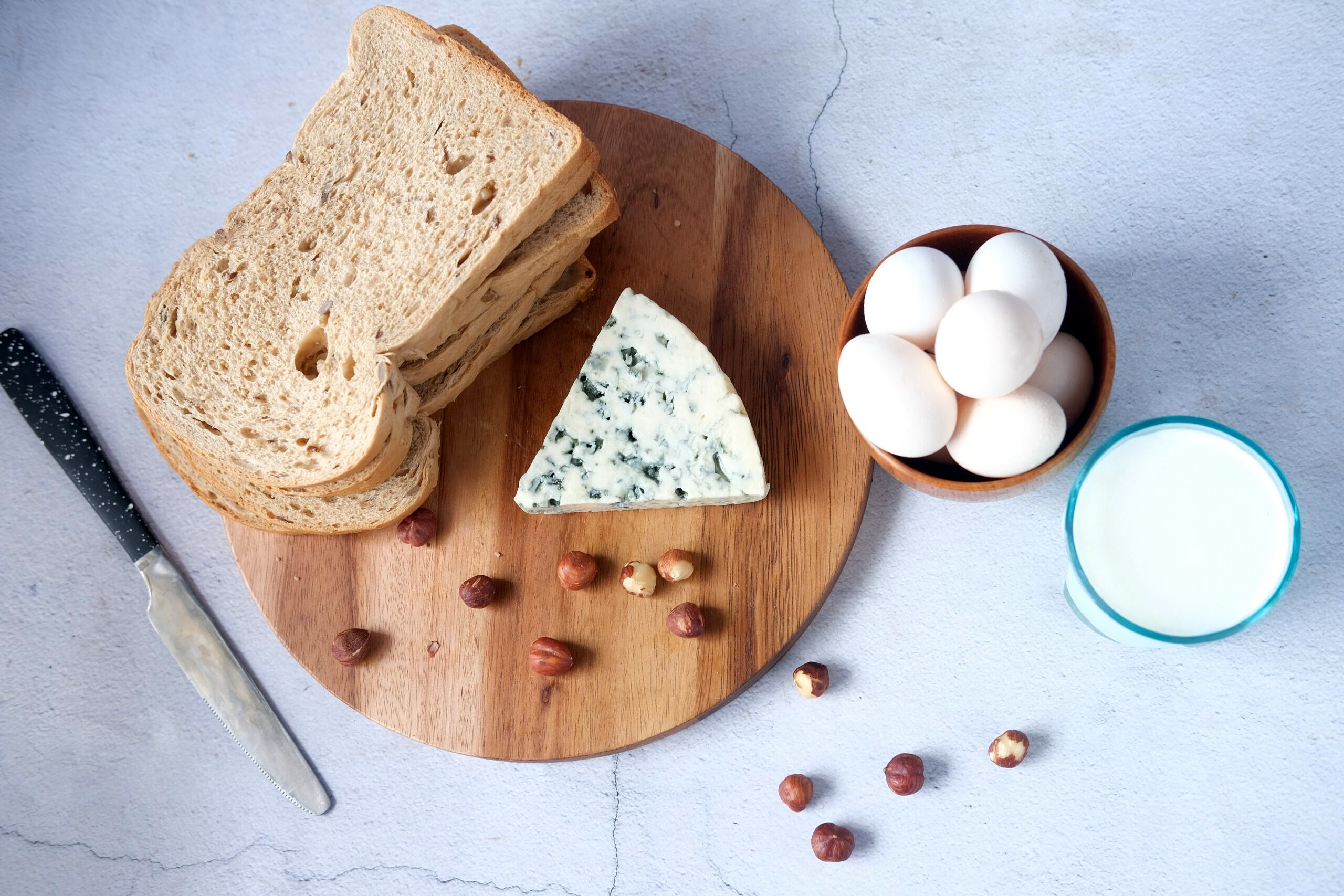
Undiagnosed food intolerances to things like dairy, gluten or literally any other food that are being being poorly digested, and therefore fermenting in the gut, can cause excess gas production and bloating. Allergies can also occasionally cause bloating because the histamine response can increase mast cell production, which may elevate estrogen, which causes constipation, which ultimately results in bloating. But generally speaking, bloating is more of an intolerance than allergy symptom. Unfortunately, while food allergies can be reliably diagnosed, intolerances are a little more hit and miss. Those food sensitivity tests you see all over Instagram are NOT evidenced based, so an elimination diet which should be supervised by a registered dietitian is really the gold standard of care.

Bread and cheese on a board with nuts.

Reason #2: Sensitivity to High FODMAP Foods 

FODMAPs are short chain carbohydrates that are poorly absorbed in the small intestine, leaving them to be fermented by bacteria which then causes gas. Some of the more common offenders include foods like cruciferous veggies, beans & legumes, dairy, wheat as well as some non-calorie sweeteners. However, It’s important to note that sensitivity to high FODMAP foods is highly individualized – meaning that you could be sensitive to certain high FODMAP foods in specific quantities but be able to tolerate others in higher quantities. Again, this is why it’s important to work with a dietitian to help you eat the greatest variety of foods with the fewest amount of symptoms for no more bloating.

Reason #3: You’re Swallowing Too Much Air 

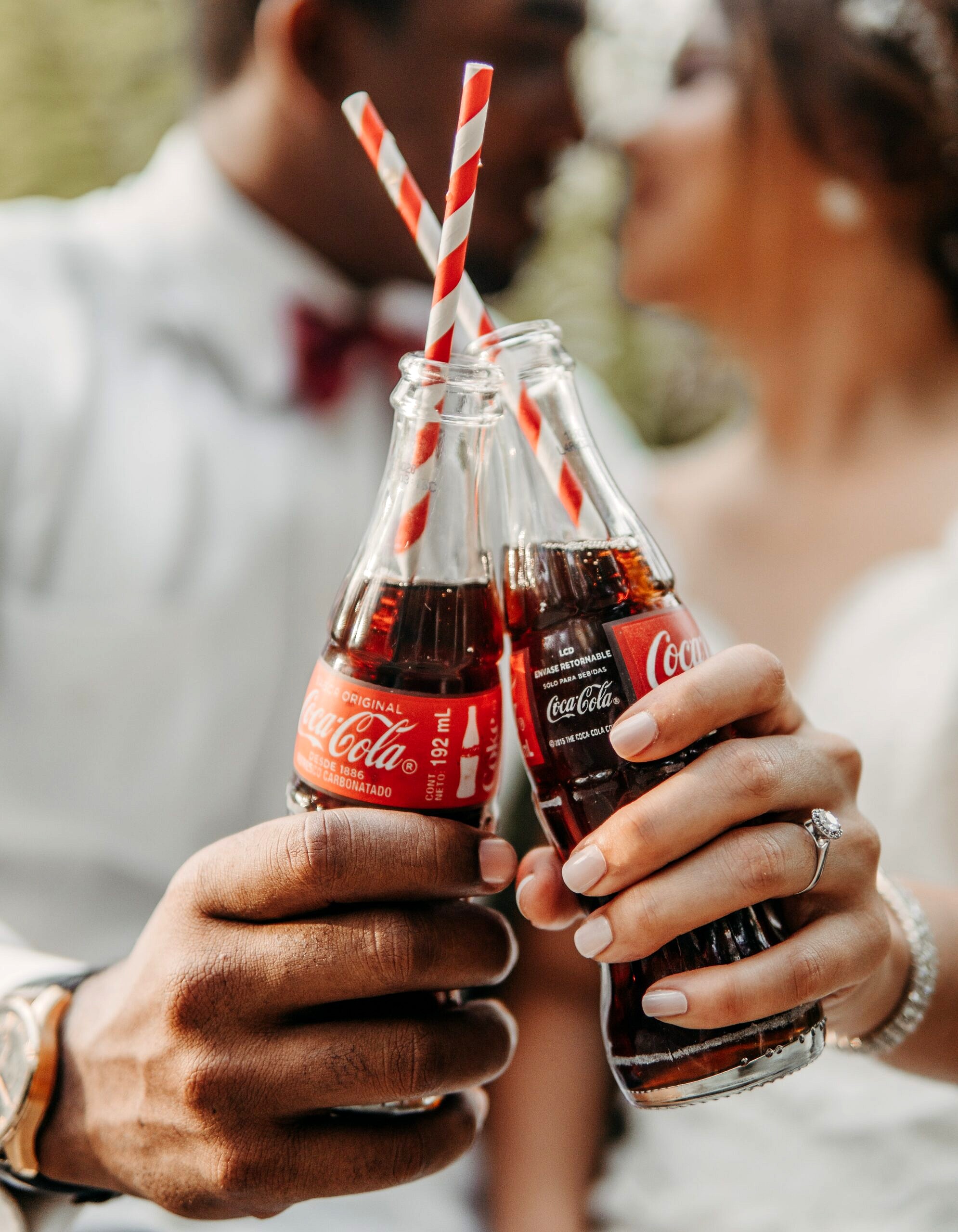
What we consume and how we consume it can increase the amount of air we swallow which can build up in the digestive tract and lead to uncomfortable gas. Things like drinking carbonated beverages, drinking through a straw, chewing gum, eating while talking or eating in a hurry – can all contribute to the amount of air entering our bodies and subsequent bloating.

Two glass coke bottles with straws discussing no more bloating.

Reason #4: You’re Undereating or Suffering From an Eating Disorder

There’s a strong correlation between disordered eating and bloating for a variety of reasons. In short, chronically under eating can reduce stomach acid production and serotonin levels which slows motility, and can cause a sluggish thyroid and gastroparesis, which slows digestion. This often can perpetuate further disordered eating because people wrongfully assume they have food intolerances because they have symptoms when they do eat, so they are fearful of eating, and then even less. And this actually just makes the digestive symptoms worse.

Reason #5: You’re Not Getting Enough Fibre and Hydration

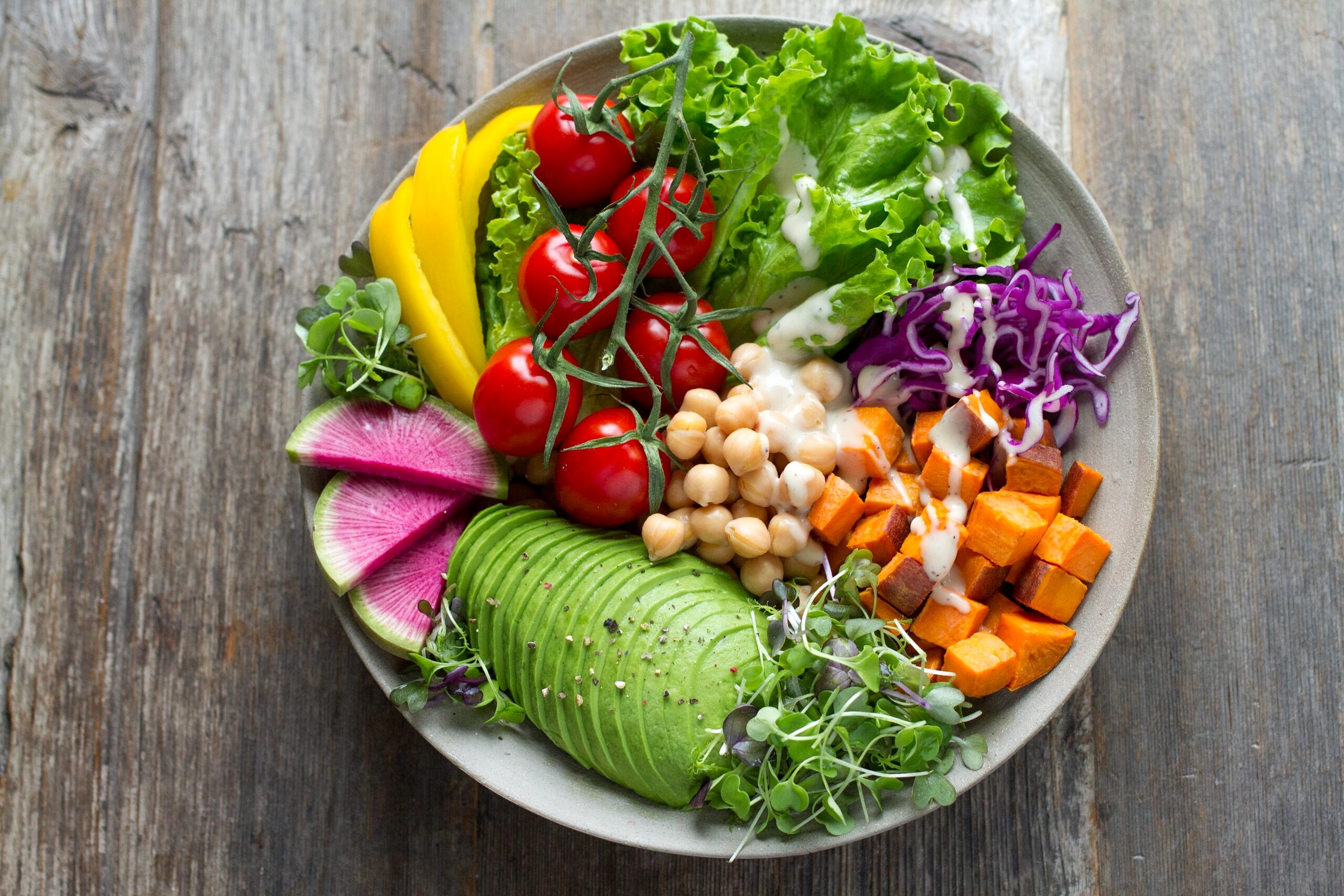
One of the major causes of bloating is actually constipation or poor motility. If you’re not consuming enough fibre and water to help move stool through the bowels, you’re going to get backed up, which means more fermentation and the result is more gas, bloating and distention. You’ll want to aim for at least 25 to 38 grams a day, depending on sex, size and tolerance, and a mix of soluble and insoluble from fruit, veggies, whole grains, and other plants. And don’t forget that with any fibre, you need enough water to help propel that bulk through the bowel, so make sure you’re hydrating to prevent getting even more backed up for no more bloating.

Colourful salad with vegetables and beans.

Reason #6: You’re Eating Too much Fibre

Speaking of backed up, fibre is a really delicate balance when it comes to digestion. It’s a real goldilocks and the three little bears situation – the porridge can easily to be too hot or too cold. It’s sometimes hard to get it just right. But consuming an excess of fibre is usually is accompanied by a heavy load of FODMAPs, which can cause fermentation which leads to gas. This is specifically an issue if you’re not used to consuming fibre, and you suddenly consume a huge load of it, and perhaps aren’t consuming enough water to support it. This is why it’s worth working with a professional for any constipation related issues because there can be some really careful trial and error to ensure you’re getting enough fibre, but not too much, to help move the bowels without excessive bulk.

Reason #7: Inadequate Digestive Outputs

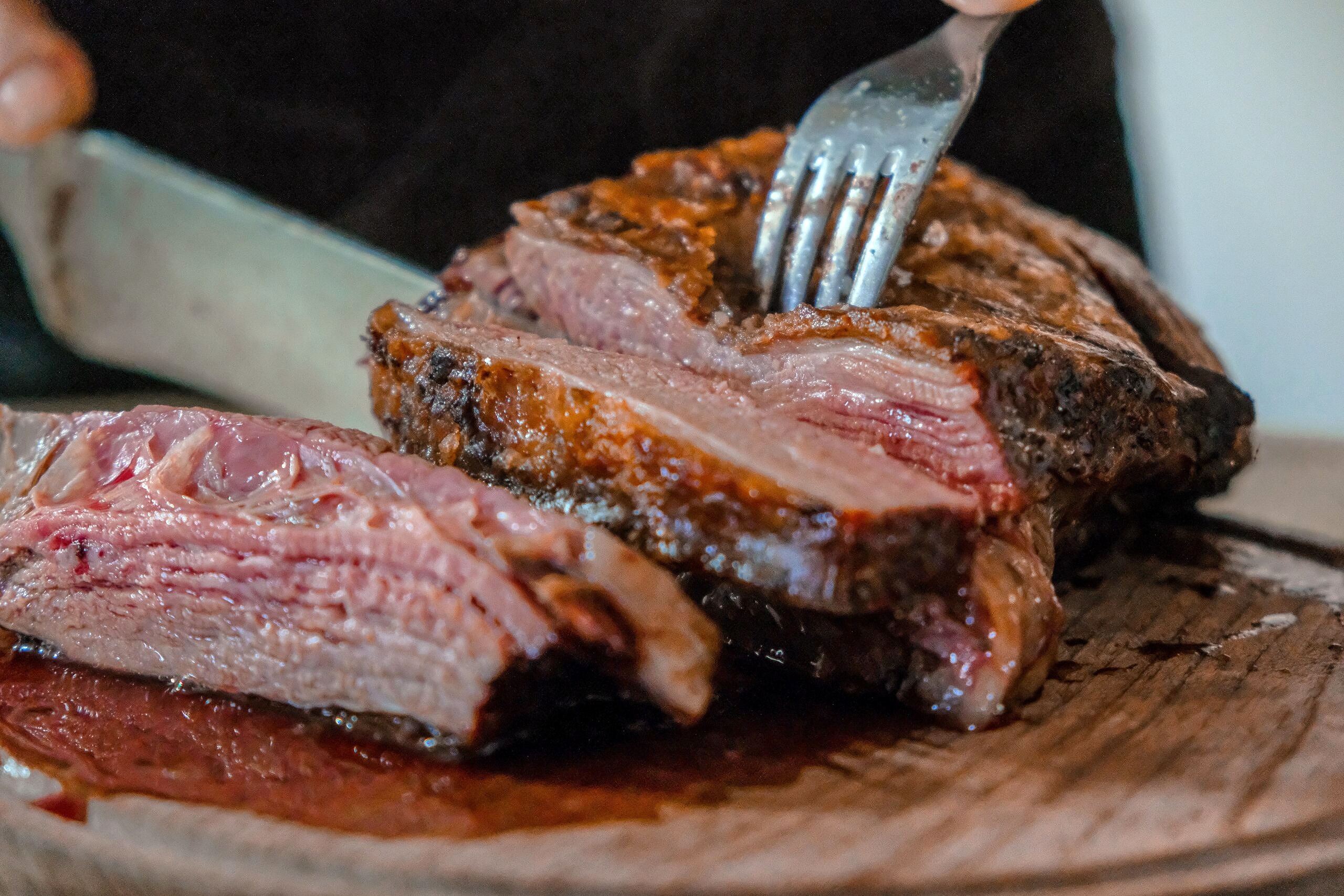
Any time we see someone make any drastic quick changes to their diet, whether its a crash weight loss diet, unsupervised elimination diet, eating disorder etc., theres a risk of normal digestion going south. Major and fast changes to diet don’t allow your body the time it needs to catch up on digestive outputs like creating the right enzymes or stomach acid amounts. So for example, if you’ve been dairy free for years and suddenly have a bowl of ice cream, your body has gotten used to not having to produce the lactase enzyme to break that down. So ya, it’s going to hurt. Ditto for folks who have gone vegan, and who suddenly have a 16 oz steak. Their body didn’t get the urgent memo in time to produce enough of the protease enzymes and stomach acid to break that porterhouse down. So we need to go really slow to train your gut to up-regulate the enzyme and stomach acid production to meet the bodies changing demands.

Close up of a steak being cut.

Reason #8: Hormones

The rise in progesterone hormone leading up to that time of the month can not only contribute to a feeling of bloating from some water retention, but often results in constipation which can further exacerbate symptoms of gas, bloating and abdominal discomfort. I’m simplifying because hormones is another massively complicated topic, especially in terms of creating no more bloating, so lets just leave it at that.

Reason #9: You Have a Functional GI Disorder 

If you ruled out all of the above and you are still experiencing bloating, it could be a sign that there may be a more serious gastrointestinal disorder going on. Some common digestive disorders that can cause bloating include things like irritable bowel syndrome, inflammatory bowel disease, celiac disease, hypochloridia, histamine intolerance and pancreatic insufficiency. I’m not going to get into the nitty gritty on each of these, but if you do suspect there is a medical issue, be proactive and pushy with your primary health provider to get the appropriate tests run.

Black and white image of a person with stomach pain discussing no more bloating.

Reason #10: Infection, Overgrowth or Dysbiosis

There are a number of potential infections and overgrowths that can contribute to digestive symptoms like bloating. Things like H pylori, SIBO, SIFO, C. Diff, Candida, worms, parasites, or just general dysbiosis in the gut. The diagnostic tools we have for these include breath tests, or GI Mapping or other stool samples that your doctor can order from a lab. In any case, do not follow some TikToker’s protocol and assume you have an infection or overgrowth without the proper tests run, because there are pharmaceutical and herbal treatments for these that are very specific to the cause.

Reason #11: Thyroid Dysfunction

The thyroid is so important. Not only is it your metabolic epicenter, but its also in charge of communicating with every other system to produce enough bile acid, pancreatic acid, enzymes, stimulate motility – you name it. Folks with hypothyroidism or hashimotos often experience severe digestive distress and bloating because the thyroid receptors in the abdomen are not getting enough thyroid hormone so the gut isn’t getting those digestive signals. As a result we see poor motility which leads to constipation which means the food has more time to ferment, and therefore lots of gas and bloating which also predisposes these folks to other conditions like SIBO and candida. In any case, these symptoms usually improve dramatically once we get the thyroid hormone up.

 #12: Trauma to the Gut Brain Axis

I have briefly spoken about the brain gut axis before, but in short this is the bidirectional communication between the central and enteric nervous system that links cognitive centres of the brain with intestinal functioning. It’s the concept behind the idea of having butterflies in your stomach. Any physical or emotional trauma that damages this brain gut axis has the power to cause bloating. So this could be actual physical trauma like a football players head injury, or more psychological trauma related to PTSD, depression or anxiety which is also often related to low serotonin. 

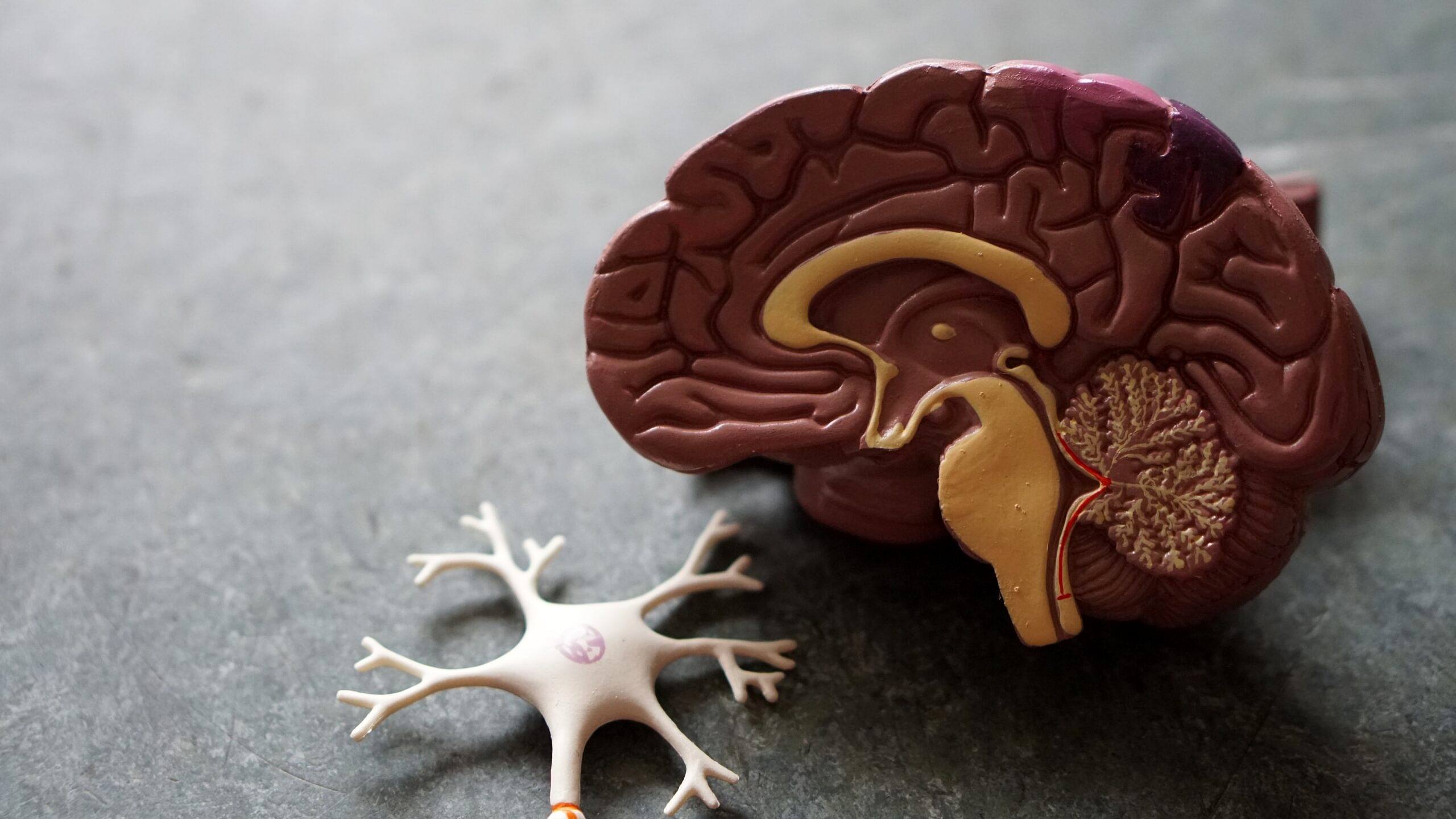
Model of the inside of a brain.

What About Excess Sodium and Sugar?

So often we use the term “bloated” to describe a feeling when we eat a really salty meal or a huge sugar load. But this puffy feeling is more accurately described as water retention. In the case of salt, high sodium foods can cause our bodies to retain excess water which can also contribute to feeling puffy or in colloquial terms, bloated. With carbohydrates, when consumed in excess, the energy we don’t immediately need gets stored as glycogen along with 3 grams of water for every gram stored. So this explains why people who go on low carb diets drop a lot of weight quickly – it’s a lot of their water storage weight from the glycogen depleting. This also explains why people who do not consume carbohydrates claim to experience no more bloating.

Baking ingredients with sugar and salt.

The Bottom Line

I want to remind everyone that this isn’t an exhaustive list of causes, and everyones bloating experience will be unique and often multifactorial. But I do hope this gives you all a bit of insight on your own digestive patterns and if its time to bring your case to a skilled practitioner for advice. Make sure you keep an eye out for part 2 of this series where we will discuss what to do about bloating and how to alleviate symptoms of bloat!

More Blog Posts You Might Like:

If you liked this blog post discussing no more bloating and common causes behind stomach upset, then you might also enjoy more blog posts on gut health:

  • How to Stop Stomach Cramps and Pain
  • Do Digestive Enzymes Help With Bloating?
  • Vegan Diet and Bloating | How to Improve Gut Health
  • Anti Candida Diet – Helpful or Hype (According to a Dietitian)
  • Evidence on the Best Probiotics for Weight Loss, IBS, Constipation & More
  • Tips to Avoid Holiday Heartburn and Indigestion
Abbey Sharp

Abbey Sharp is a Registered Dietitian (RD), regulated by the Ontario College of Dietitians. She is a mom, YouTuber, Blogger, award winning cookbook author, media coach specializing in food and nutrition influencers, and a frequent contributor to national publications like Healthline and on national broadcast TV shows.

www.abbeyskitchen.com/about-abbey/

Last Updated February 22, 2022. Published February 22, 2022 By Abbey Sharp 28 Comments

No Bake Granola Bar Recipe (Healthy + Kid & Toddler Friendly)

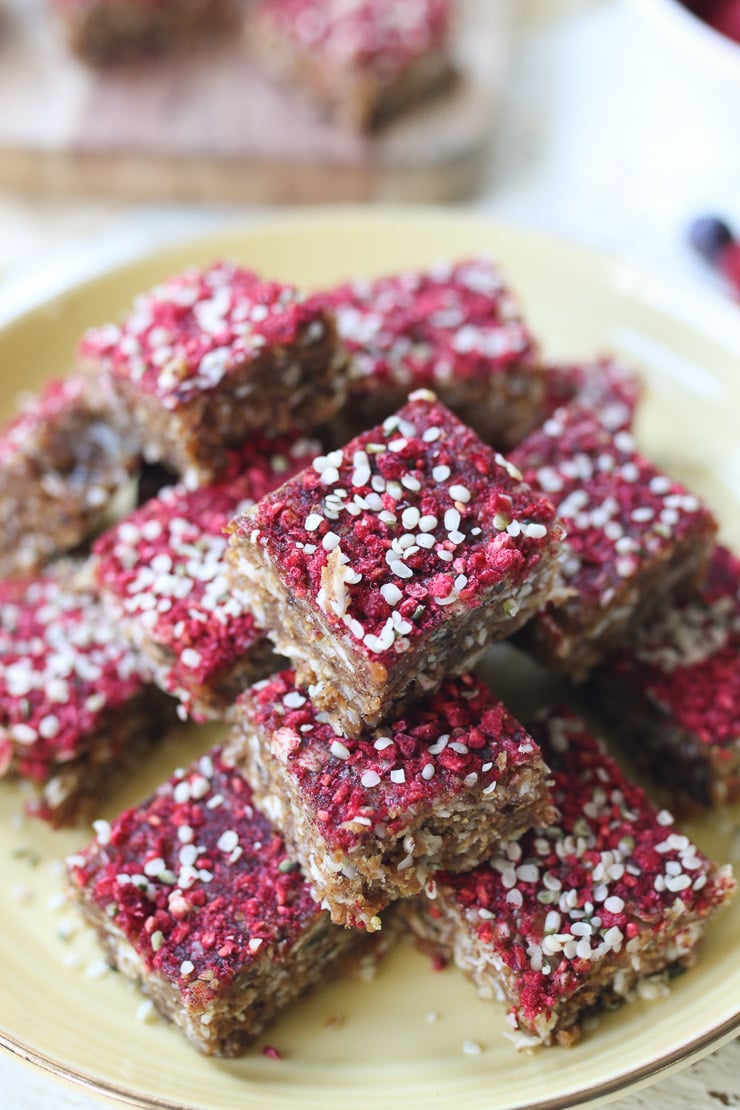
This healthy no bake granola bars recipe for baby led weaning is completely vegan, made with no added sugar, and is also a toddler friendly snack.

Close up of granola bars on a yellow plate.

I don’t know about you, but I get super overwhelmed in the grocery store when I get to the granola bar aisle. Endless choices, and a majority of the time they’re packed with sugar and very little nutrition. So I set out to create my very own toddler friendly no bake granola bar recipe. These bars make the perfect healthy snack for your little one without spending hours in the grocery store aisle trying to pick a healthy option.

Table of contents

  • Why This Recipe Works
  • Key Ingredients
  • How to Make This Recipe
  • Expert Tips
  • Recipe FAQs
  • More BLW Recipes You Might Like

Why This Recipe Works

This baby led weaning recipe not only tastes, looks, and feels like a granola bar but it is way healthier than any store-bought version and is surprisingly easy to make! Once you get this recipe in the books, you’ll save so much time and money in the grocery store aisle (you can thank me later).

This no bake granola bar recipe is great for baby led weaning because they are packed with nutrition for your little one. One square provides 9 grams of protein, 4 grams of fibre, and 2 mg of iron. Ha! I’d like to see store-bought granola bars do that!

Not only that – but if your babe is dealing with constipation troubles, this no bake granola bar recipe will help to speed things along.

Key Ingredients

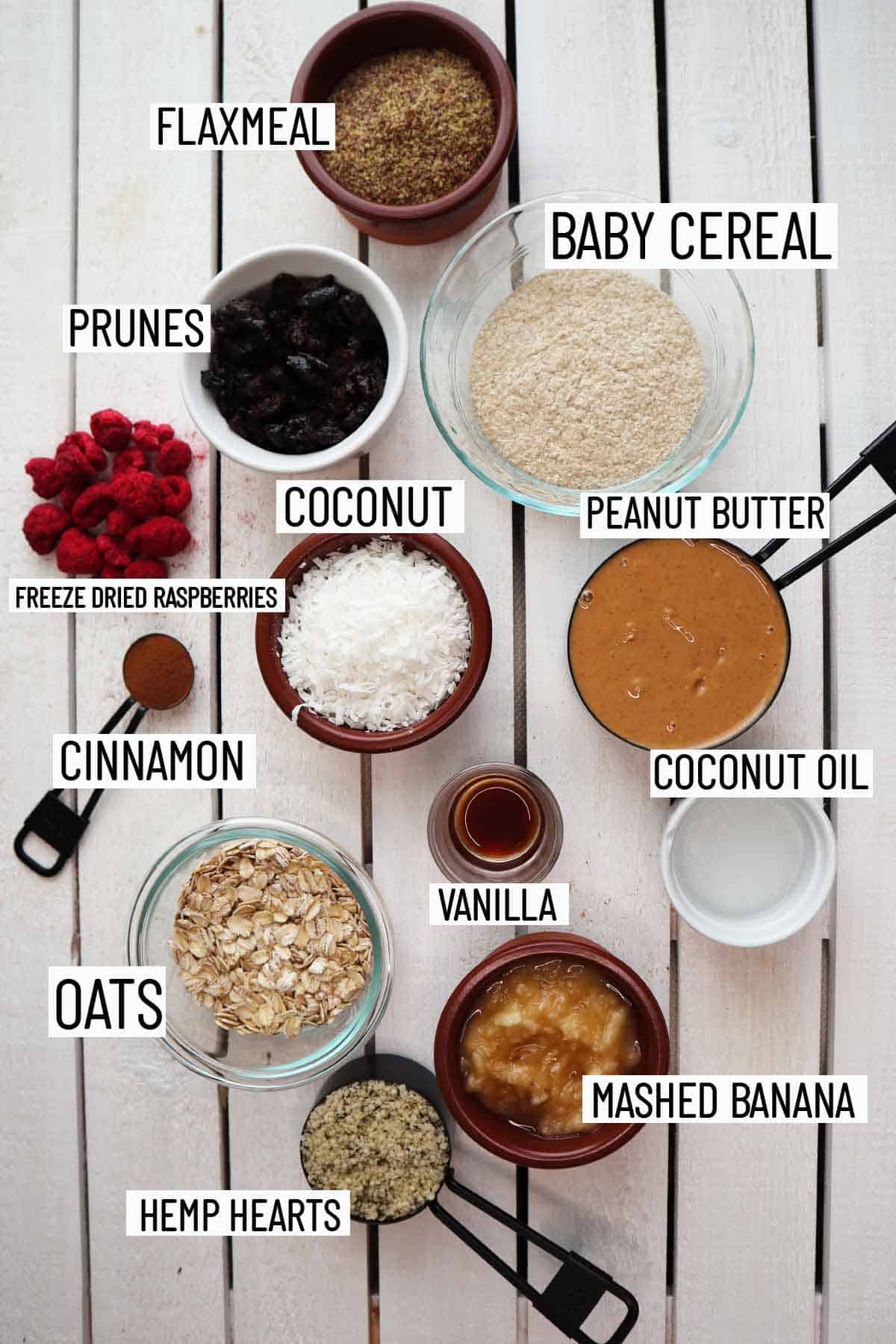
Flat lay image of portioned recipe ingredients.

Ripe banana – to make this no bake granola bar recipe with no added sugar, we use ripe banana’s instead as they add some natural sweetness.

Natural peanut butter – the peanut butter will help to hold everything together while also adding in some tasty nutty flavour and protein.

Prunes – While I normally use dates for granola bar recipes like this one, here we are switching things up and using prunes instead. Prunes are a natural laxative so they are great to use in baby led weaning to help with baby constipation.

Flaxmeal – Flax not only bumps up the omega 3 fats of this healthy no bake granola bar recipe, but they will also help to bump up the fibre content as well. One square provides around 4 grams of fibre!

Old fashioned rolled oats – I like to use large flake rolled oats for this recipe but you can use any rolled oat you prefer. If you want to make this recipe gluten free, you can also use gluten free oats.

Iron fortified baby cereal – these healthy no bake granola bars are a great opportunity to bump up the iron for baby led weaning. So I like to throw in some iron-fortified baby cereal like rice, ancient grains, or oat. If you are just making these for yourself, you can omit this step (obviously).

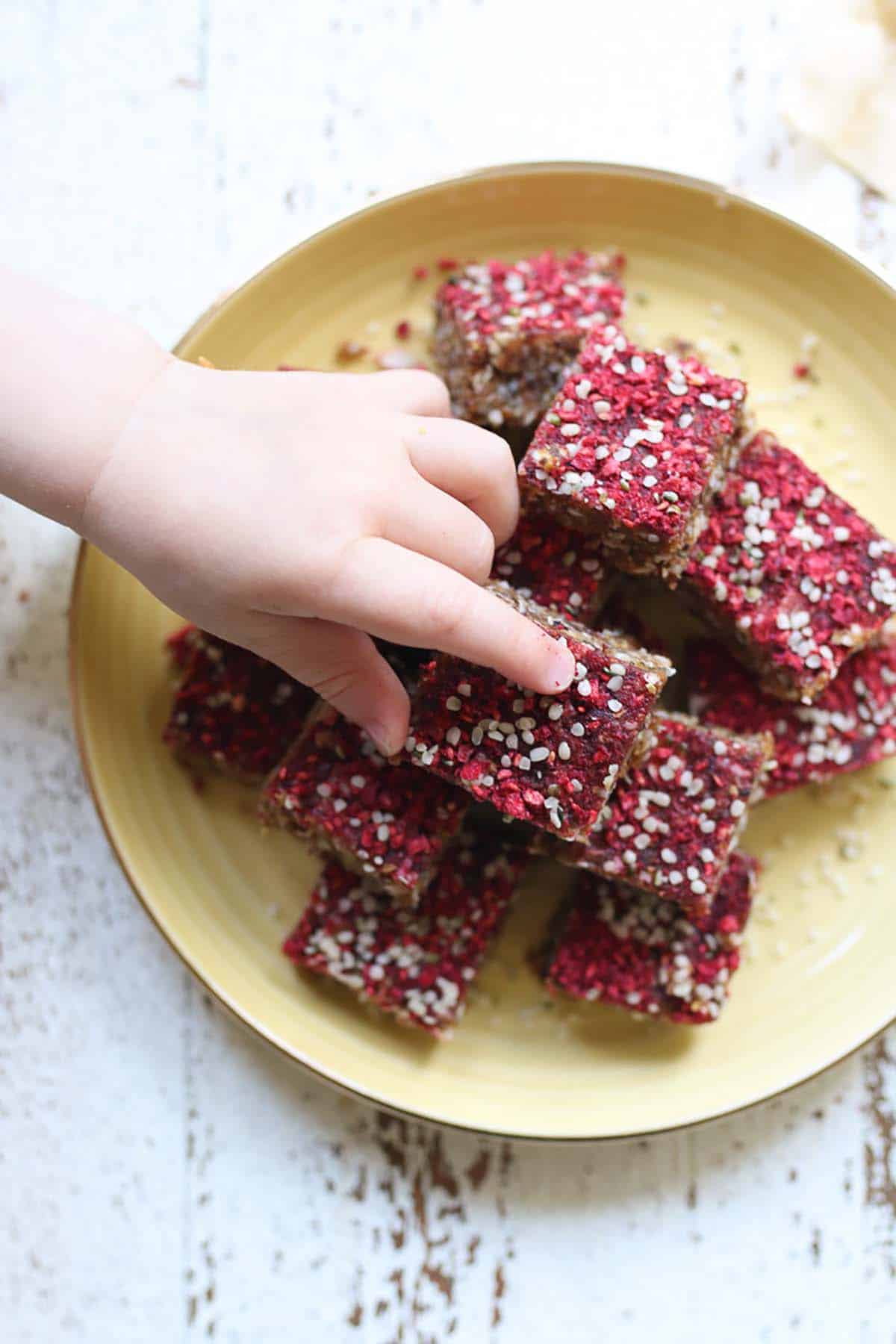
Toppings – I use freeze dried raspberries and hemp hearts to top these off because those are my personal favs. But the world is your oyster here! You can top off with chia seed, shredded coconut, drizzled chocolate, etc!

How to Make This Recipe

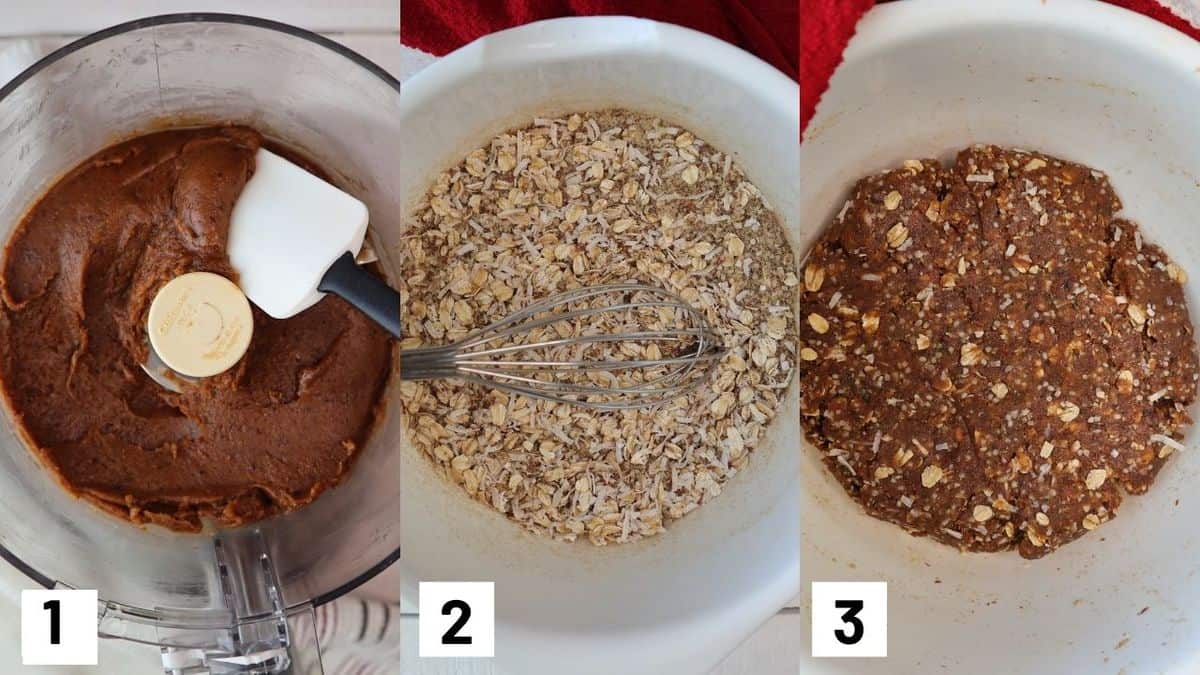
Three side by side images showing how to make granola bar mixture including how to prepare the wet and dry ingredients.

Step 1: To a food processor, puree the banana, peanut butter, coconut oil, prunes, and vanilla until smooth.

Step 2: To a bowl, mix the cinnamon, flax, hemp, oats, cereal, and coconut.

Step 3: Add the wet ingredients to the dry until incorporated.

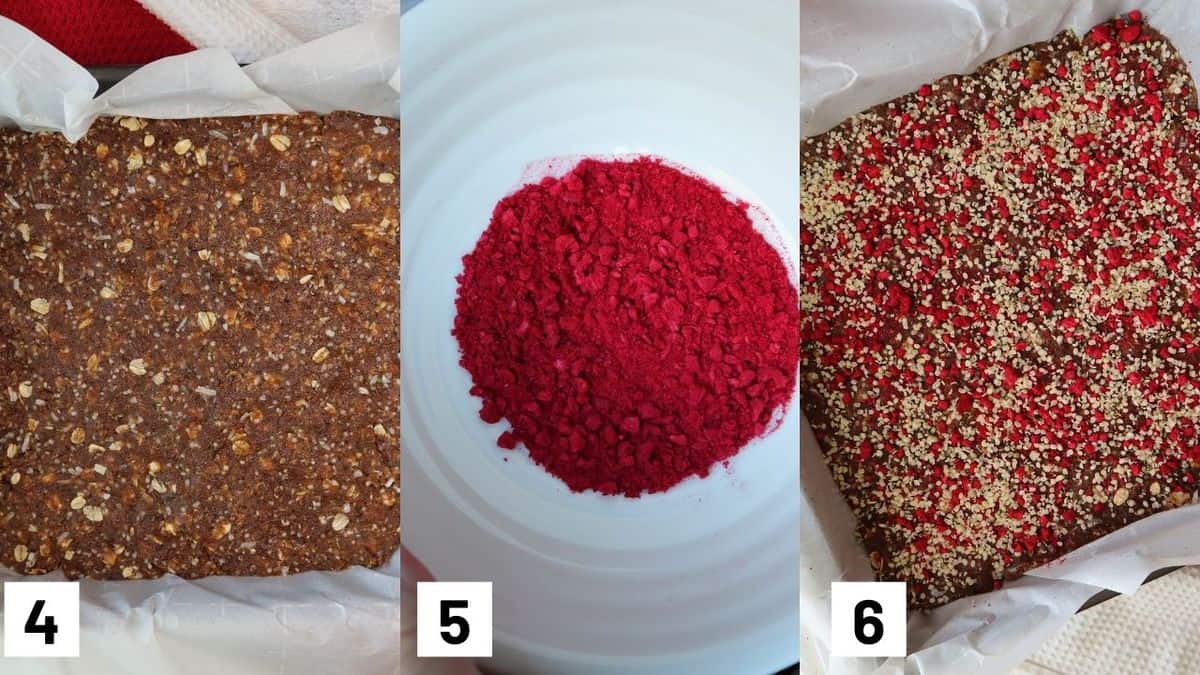
Three side by side images showing how to press the granola bar mixture into the pan and adding freeze dried strawberries.

Step 4: Line a 9×9″ pan with parchment paper in both directions and press mixture into the bottom of the pan.

Step 5: To a food processor, or blender, pulse the freeze dried raspberries until they turn into a fruity powder.

Step 6: Sprinkle on top of the mixture, along with the hemp hearts. Pack down tight. Freeze for one hour before cutting into bars.

Expert Tips

I’d suggest using ripe bananas for this recipe (you know, the ones that are starting to get brown spots). These bananas will not only be softer and easier to work with, but they are sweeter than bananas that are less ripe.

I prefer to use all natural peanut butter for this recipe but if you have not yet introduced peanuts to your little one (or they are allergic), you can use an allergy friendly nut butter like sun butter, instead.

Recipe FAQs

Can this recipe help with baby constipation?

Oh YES! The secret ingredient in these toddler homemade granola bars are…. PRUNES. The prunes in this recipe are a great alternative to dates because they’re naturally sweet while helping promote regularity and reduce baby constipation.

Where do I find freeze dried fruit for these bars?

I buy my freeze dried fruit online, and we go through a lot of it. It’s a great way to add a ton of flavour and pretty colour without added sugar (aka. no food colourings, and no sprinkles/candies). You can find all sorts of flavours, so buy a few (check out my amazon affiliate link here) and you can mix and match.

Can you make a big batch of this recipe and store them for later?

Yep. That’s how I roll. I like to make a lot of ANYTHING I’m cooking, and then I have these in the freezer in a freezer bag to pull out when Baby E needs an on the go snack. They thaw out in moments, so by the time you bring them wherever you’re headed, they’re ready for snacking.

Birds eye view of granola bars on a yellow plate with a babies hand reaching for one.

More BLW Recipes You Might Like

Here are a few of my favourite baby led weaning recipes from the blog!

  • Baby Led Weaning Homemade Popsicles
  • BLW Chickpea Peanut Butter Baby Biscuits
  • BLW Peanut Butter Banana Mini Muffins
  • Cherry Almond Baked Oatmeal Finger Food

So now mamas and dads, what are some of your baby’s favorite on the go snacks? Let me know in the comments below! 

Homemade granola bars on a yellow plate.
Print Recipe
5 from 8 votes

Healthy No Bake Granola Bars (Kid & Toddler Friendly)

This healthy no bake granola bars recipe for baby led weaning is completely vegan, made with no added sugar, and is also a toddler friendly snack.
Prep Time1 hour hr 20 minutes mins
Total Time1 hour hr 20 minutes mins
Course: Snack
Cuisine: American
Servings: 14
Calories: 257kcal
Author: Abbey Sharp

Ingredients

  • 1/2 cup mashed ripe banana
  • 1 cup creamy natural peanut butter
  • 3 tbsp melted virgin coconut oil
  • 1/2 cup prunes chopped
  • 2 tsp vanilla extract
  • 1 tsp cinnamon
  • 1/3 cup flaxmeal
  • 1/3 cup hemp hearts
  • 1/2 cup old fashioned rolled oats gluten free if desired
  • 1/2 cup iron fortified baby cereal rice, ancient grains, or oat
  • 1/2 cup unsweetened shredded coconut

Topping:

  • 1/4 cup freeze dried raspberries
  • 2 tbsp hemp hearts

Instructions

  • To a food processor, puree the banana, peanut butter, coconut oil, prunes, and vanilla until smooth.
  • To a bowl, mix the cinnamon, flax, hemp, oats, cereal, and coconut. Add the wet ingredients to the dry until incorporated.
  • Line a 9×9″ pan with parchment paper in both directions and press into the bottom of the pan.
  • To a food processor, or blender, pulse the freeze dried raspberries until they turn into a fruity powder. Sprinkle on top of the mixture, along with the hemp hearts. Pack down tight. Freeze for one hour before cutting into bars.

Nutrition

Calories: 257kcal | Carbohydrates: 15g | Protein: 9g | Fat: 19g | Saturated Fat: 7g | Sodium: 96mg | Potassium: 265mg | Fiber: 4g | Sugar: 6g | Vitamin A: 125IU | Vitamin C: 1mg | Calcium: 35mg | Iron: 2mg

Have you tried making this healthy no bake granola bar recipe for your little one? Let me know your thoughts!

Abbey Sharp

Abbey Sharp is a Registered Dietitian (RD), regulated by the Ontario College of Dietitians. She is a mom, YouTuber, Blogger, award winning cookbook author, media coach specializing in food and nutrition influencers, and a frequent contributor to national publications like Healthline and on national broadcast TV shows.
www.abbeyskitchen.com/about-abbey/

Last Updated February 18, 2022. Published February 18, 2022 By Abbey Sharp 19 Comments

Easy Cassoulet Recipe with White Beans and Garlic Breadcrumbs

vegan cassoulet

This easy cassoulet recipe is the epitome of healthy cool weather comfort food without any meat!

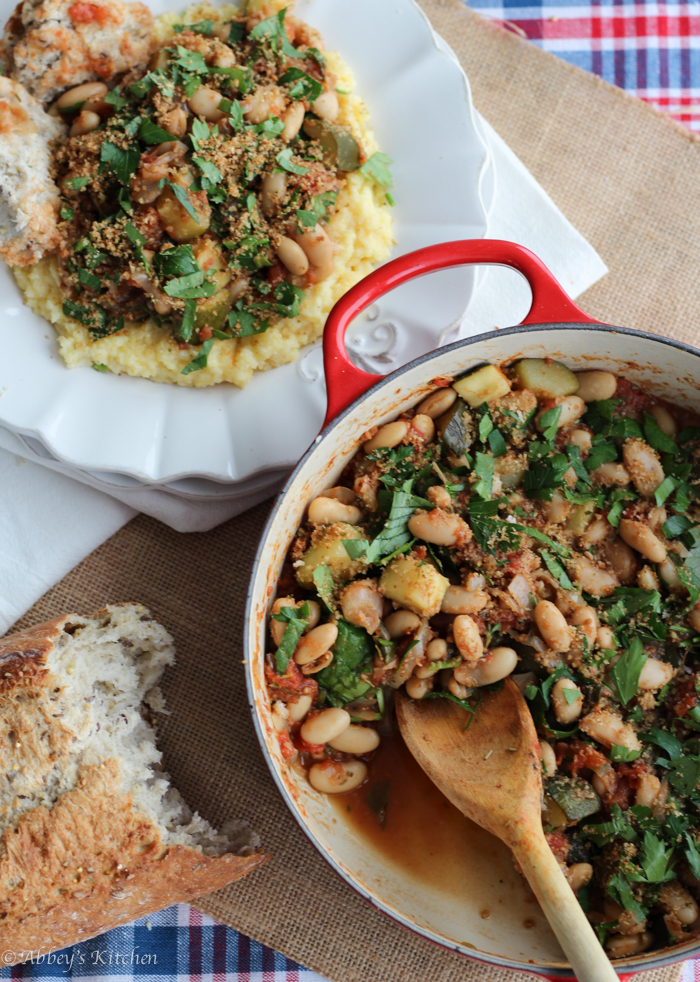
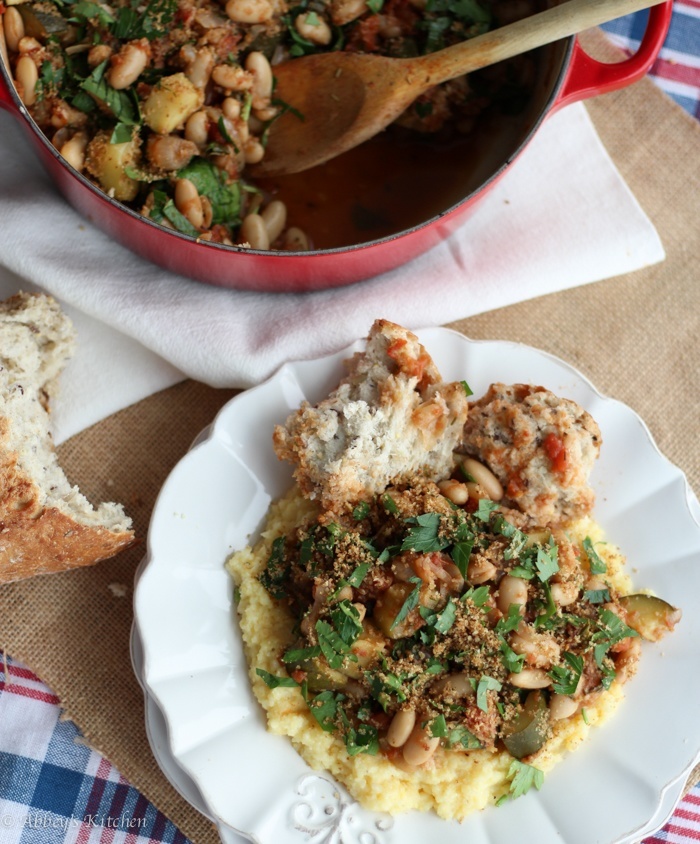
Birds eye view of cassoulet on a bed of polenta at top, cassoulet in a dutch oven on the right, and a baguette on the left.

Let’s talk about Cassoulet. It’s the dish that I fell in love with in France and have been making at home ever since (albeit quite a bit lighter than the French likely would). Traditionally, Cassoulet is a luscious white bean stew with lots of rich pork sausages and fatty braised meats. I love it, obviously, but it’s not exactly the kind of cheap healthy meal I try to make part of the usual rotation. Now, the truth is, vegan cassoulet isn’t really a thing in France. But I don’t see the harm in omitting the meat and just enjoying the plant based protein from all those beans!

Table of contents

  • Why This Recipe Works
  • Key Ingredients
  • How To Make This Recipe
  • Expert Tips
  • Recipe FAQs
  • More Recipes You Might Like

Why This Recipe Works

I’m all for trying to incorporate more plant-based recipes into one’s diet, which is why I created this easy cassoulet recipe. White beans are not only a great source of plant-based protein, they are also packed with fiber. In fact, white beans contain 11 grams of protein for only 1 cup. I also love this easy cassoulet recipe because it’s:

  • Completely vegan
  • Budget friendly
  • A great family friendly meal

Key Ingredients

White Beans – As mentioned above, these white kidney beans are a great source of plant-based protein and fiber and are traditionally part of any French cassoulet.

Canned Tomatoes – This is an easy and inexpensive pantry staple that makes this easy cassoulet recipe something you can easily make all year round.

Herbs de Province- A traditional spice blend of thyme, savory, oregano, lavender, rosemary, marjoram, and parsley. You can make your own, but it’s also easy to buy now!

Breadcrumbs – I love adding breadcrumbs on top of this easy cassoulet recipe because it gives it the perfect crispy crunch on top. I personally like to use garlic breadcrumbs for a bit more flavor.

How To Make This Recipe

Step 1: Heat 2 tsp of olive oil in a Dutch oven over medium heat. Add in the breadcrumbs and garlic, and a pinch each of salt and pepper. Stir until combined and crumbly, mix with the parsley and then set aside.


Step 2: Return the pot to low heat, add in a teaspoon of oil and then add in the onions. Sauté over low heat until caramelized and golden, about 45-50 minutes. Add in the zucchini and cook 2 minutes, until lightly golden. Add in garlic and cook for another 30 seconds. Add in the herbs, bay leaf, thyme, and the tomatoes with their juice, and season with a pinch each of salt and pepper.


Step 3: Bring the mixture to a boil. Reduce the heat to medium low, add in the white beans and balsamic, and simmer for about 15-20 minutes, until the sauce thickens.


Step 4: Meanwhile, bring the polenta water to a boil in a small saucepot. While whisking gently, pour in the polenta in a steady stream and whisk until thickened. Reduce the heat to low for about 30 minutes, whisking very hard every 5-10 minutes to make sure you get all the bits off the corners and bottom of the pan. Add in the olive oil and season with salt and pepper to taste.


Step 5: Five minutes before you’re ready to serve, stir the spinach leaves into the cassoulet until wilted. Then divide the polenta between four bowls, top with the bean cassoulet and a generous sprinkling of garlic breadcrumbs.

Birds eye view of bean cassoulet.

Expert Tips

Caramelize those onions. Like, take the time – the 45-50 minutes it may take- to get them golden brown and sweet. This will add SO MUCH flavour to your cassoulet, even without the meat.

I also recommend not skipping the garlic breadcrumbs for this easy cassoulet recipe. They add such a nice textural contrast and are really super yummy on top of the beans.

Recipe FAQs

Can I serve this easy cassoulet recipe on noodles or rice instead of polenta?

100%. I like polenta, but cassoulet is delicious without anything at all (well, maybe some crusty bread), or on another starch or grain of choice.

Can I make this ahead of time for meal prep?

The cassoulet stew actually keeps really well if you make it ahead and will last for 4-5 days if you want to eat it for lunch. My recommendation would just be to wait until you’re ready to serve to make the polenta as it will harden in the fridge quickly it cools.

Can I add chicken or duck or sausage if I’m not vegan?

Definitely. Just make sure they’re pretty well cooked through before you add them back to the dutch oven and let the sauce finish cooking.

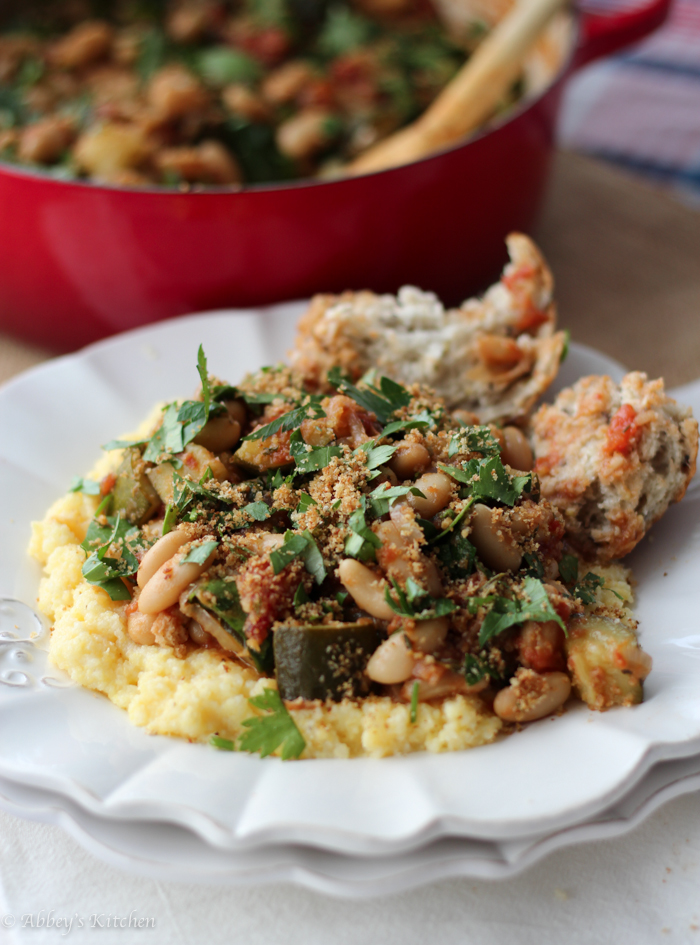
up close view of cassoulet on a bed of polenta on a white plate with a red dutch oven with cassoulet inside in the background

More Recipes You Might Like

If you love vegan dishes like this easy cassoulet casserole recipe, check out some of these vegan casserole recipes:

  • MEXICAN PASTA CASSEROLE (VEGAN & FAMILY FRIENDLY)
  • TACO PASTA CASSEROLE (VEGAN & FAMILY FRIENDLY)
  • VEGAN BREAKFAST CASSEROLE (GLUTEN FREE)

Have you ever had an authentic cassoulet? Would you be into a vegan cassoulet? Try this super easy cassoulet recipe and let me know what you think in the comments section below!

vegan cassoulet
Print Recipe
4.56 from 9 votes

Easy Cassoulet Recipe with White Beans and Garlic Breadcrumbs

This easy cassoulet recipe is the epitome of healthy cool weather comfort food without any meat!
Servings: 4 servings
Calories: 305kcal
Author: Abbey Sharp

Ingredients

Topping:

  • 2 tsp extra virgin olive oil
  • 1/4 cup vegan breadcrumbs
  • 1 clove small garlic minced
  • 2 tbsp parsley finely chopped
  • Pinch salt and pepper pinch of each

Casserole:

  • 1 tsp extra virgin olive oil
  • Pinch each of salt and pepper
  • 1 1/2 cups of thinly sliced onions
  • 2 zucchini diced
  • 2 cloves garlic minced
  • 1 tsp dried herbs de Provence
  • 1 bay leaf
  • 4 leaves sprigs of thyme only
  • 14 1/2 oz can of diced tomatoes
  • Pinch each of salt and pepper
  • 2 cans white beans Cannellini, Navy or Great Northern, 19 oz cans, drained and rinsed
  • 2 tbsp balsamic vinegar
  • 1 cup baby spinach leaves finely chopped

Polenta:

  • 4 cups water
  • 1 cup polenta or yellow cornmeal
  • 2 tsp extra virgin olive oil
  • Salt and pepper to taste

Instructions

  • Heat 2 tsp of olive oil in a Dutch oven over medium heat. Add in the breadcrumbs and garlic, and a pinch each of salt and pepper. Stir until combined and crumbly, mix with the parsley and then set aside.
  • Return the pot to the low heat, add in a teaspoon of oil and then add in the onions. Sauté over low heat until caramelized and golden, about 45-50 minutes. Add in the zucchini and cook 2 minutes, until lightly golden. Add in garlic and cook for another 30 seconds. Add in the herbs, bay leaf, thyme, and the tomatoes with their juice, and season with a pinch each of salt and pepper.
  • Bring the mixture to a boil. Reduce the heat to medium low, add in the white beans and balsamic, and simmer for about 15-20 minutes, until the sauce thickens.
  • Meanwhile, bring the polenta water to a boil in a small saucepot. While whisking gently, pour in the polenta in a steady stream and whisk until thickened. Reduce the heat to low for about 30 minutes, whisking very hard every 5-10 minutes to make sure you get all the bits off the corners and bottom of the pan. Add in the olive oil and season with salt and pepper to taste.
  • Five minutes before you’re ready to serve, stir the spinach leaves into the cassoulet until wilted. Then divide the polenta between four bowls, top with the bean cassoulet and a generous sprinkling of garlic breadcrumbs.

Nutrition

Calories: 305kcal | Carbohydrates: 55g | Protein: 7g | Fat: 7g | Saturated Fat: 1g | Polyunsaturated Fat: 1g | Monounsaturated Fat: 4g | Cholesterol: 3mg | Sodium: 82mg | Potassium: 673mg | Fiber: 5g | Sugar: 9g | Vitamin A: 1333IU | Vitamin C: 39mg | Calcium: 95mg | Iron: 3mg
Abbey Sharp

Abbey Sharp is a Registered Dietitian (RD), regulated by the Ontario College of Dietitians. She is a mom, YouTuber, Blogger, award winning cookbook author, media coach specializing in food and nutrition influencers, and a frequent contributor to national publications like Healthline and on national broadcast TV shows.
www.abbeyskitchen.com/about-abbey/

Last Updated March 12, 2024. Published February 16, 2022 By Abbey Sharp 12 Comments

What Are Adaptogen Foods and Do They Reduce Stress?

Are you wondering what are adaptogens? We help you understand if these hot new foods can actually reduce stress and balance your hormones.

Are you wondering what are adaptogen foods? We help you understand if these substances can actually reduce stress and balance your hormones.

March 12/2024 Update: This post was originally written in 2018 before we had access to some of the big systematic reviews on Ashwagandha. As always, nutrition research is always evolving and as a result, our interpretation of said research is always changing. We have updated our section to reflect the greater body of evidence.

What Are Adaptogen Foods?

True to their name, adaptogens are foods that help us adapt. Specifically, this trendy group of natural products work to control the stress response through hormonal regulation. One important thing to remember when reading this is that there is no equivalent in western medicine. Adaptogens are a term solely used in Ayurvedic and Traditional Chinese Medicine and are not recognized as a therapeutic agent in evidence-based western medicine.

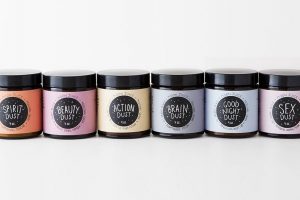
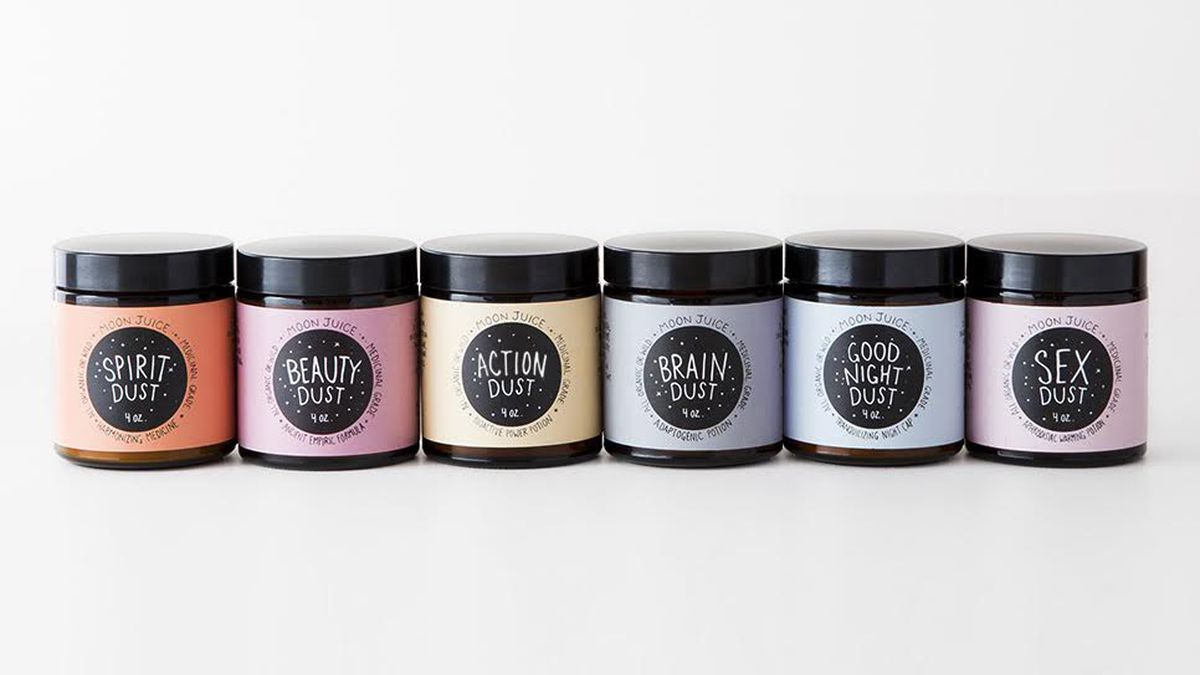
Packaged adaptogen powders

Adaptogens can be consumed in many forms including pills, tea, dried powder and many more. There are a TON of adaptogen products on the market right now, a lot of which you’ve probably seen. Moon Juice, Taproot Adaptogen Tea, Sun Potion Adaptogen Powder. If it sounds mystical, apparently, it’s an adaptogen.

Before we discuss details regarding what are adaptogen foods, let’s first chat about stress and the hormones that surround stress.

The Stress Response

The stress response is an adaptive “fight or flight” mechanism that leads humans to either fight the danger, or take flight and get the heck out of there! The stress we face today compared to the stress our early ancestors faced is, well, pretty different. Though day-to-day stress for us now typically doesn’t come in the form of life threatening events, we still experience this fight or flight reaction. So whether you’re stressed out because you’re running from a wild animal or you’re stressed because you got caught in a brutal traffic jam, a similar stress response often occurs. Considering most of us are not hit with the intermittent fear for our lives, most of our modern stressors are more persistent and long term, such as financial stress, job stress or relationship stress. These types of events prolong the physiologically intense stress reaction which can lead to very detrimental health effects over time.

Physiological Changes During Stress

When we encounter a stressful stimulus, our body up-regulates certain processes and down-regulates other processes to help us respond best. For example, the hormone cortisol is up-regulated which prepares the body for action by mobilizing blood sugar to act as an energy source. If the flight or fight response is not ensued, cortisol can keep building up in the bloodstream leading to metabolic disturbances, later affecting hunger and energy levels. Additionally, cortisol suppresses the immune system which is why we often get sick during exam season, or in times of extreme job stress, for example. Similar to immune function, digestion and absorption of nutrients is also down-regulated. In a time of stress, your body must prioritize what it’s going to spend its energy on, and assuming you won’t be sitting down for a feast during this time, digestion isn’t one of these priorities. Among these metabolic changes, other effects of stress include muscle tension, increased blood pressure and even impaired sexual function.

Symbol of person walking.

As you can imagine, with all of this physiological arousal taking place, a prolonged period of time in this state can be exhausting for your body. Chronic stress is a contributing factor to many diseases and conditions such as heart disease, heart attack and stroke. Since the body is in an elevated state, ready to react to danger, more energy is used up and thus exhaustion can result quickly during chronic stress. However, even when you’re exhausted, you may be familiar with being stressed out and not being able to sleep, leading to even more exhaustion. It’s pretty much a lose-lose situation.

Now let’s talk about how adaptogens work.

What Are Adaptogen Foods and How Do They (Apparently) Work

Since we can’t always control our own stress, this is where adaptogens come into play. The exact mechanism by which adaptogens work is largely unknown, however some elements of their potential pathway are understood. One way they supposedly work is by protecting the mitochondria (the powerhouse of the cell) from stress induced damage. Therefore, even during prolonged stress the engine of the cell will keep running smoothly. Additionally, adaptogens are said to regulate the immune system which is suppressed during stress, and balance out the nervous system. As previously mentioned, being constantly stressed out puts a huge physiological toll on your body. Adaptogens are potentially able to neutralize some of the metabolic consequences of these processes, such as high blood sugar and increased blood pressure. Similar to a vaccine, adaptogens wait to protect your body until called into action by the virus, or in this case, the stress. In other words, if you are taking adaptogens on a daily basis, don’t think it will infinitely keep chilling you out even if you aren’t stressed in that time. These are the theoretical pathways, at least, how they play out in real life is yet to really be clearly determined. Read on to find out more about what are adaptogen foods.

Adaptogen Classes

Everyone has their comforts that calm them down, whether it’s a cup of warm chamomile tea before bed or a glass of red wine after work, not all of these are necessarily adaptogens.

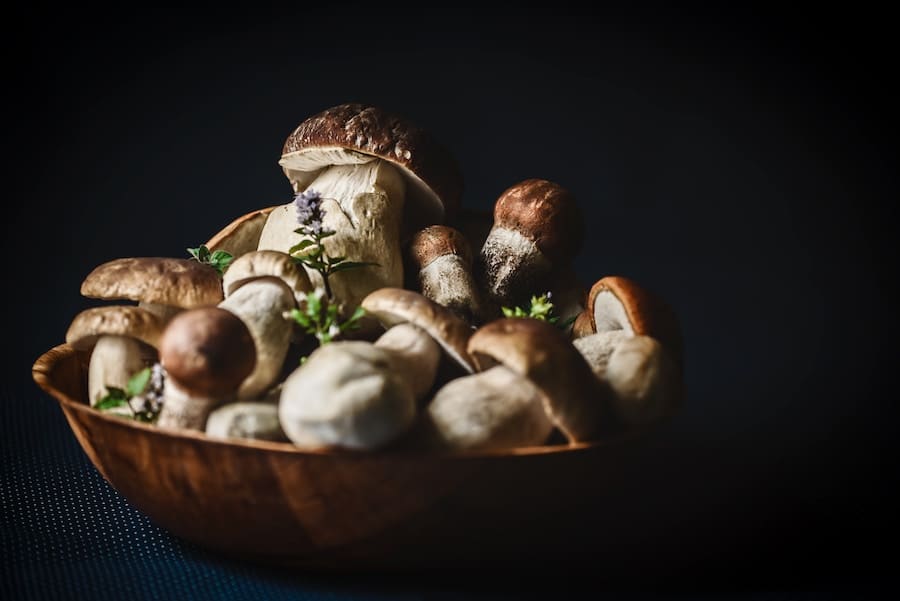
Close up of adaptogenic mushrooms.

Adaptogens can be classified in three major groups:

  1. Mushrooms (maitake, cordyceps, reishi)
  2. Herbs (licorice root, milk thistle, cat’s claw, astragalus, rhodiola, pan ginseng etc.)
  3. Foods (garlic, ginger and green tea)

Any adaptogen products that you see on the market will likely contain either of these groups, or a combination of these groups.

Now let’s talk find out what the research is saying about some common adaptogens.

Ashwagandha

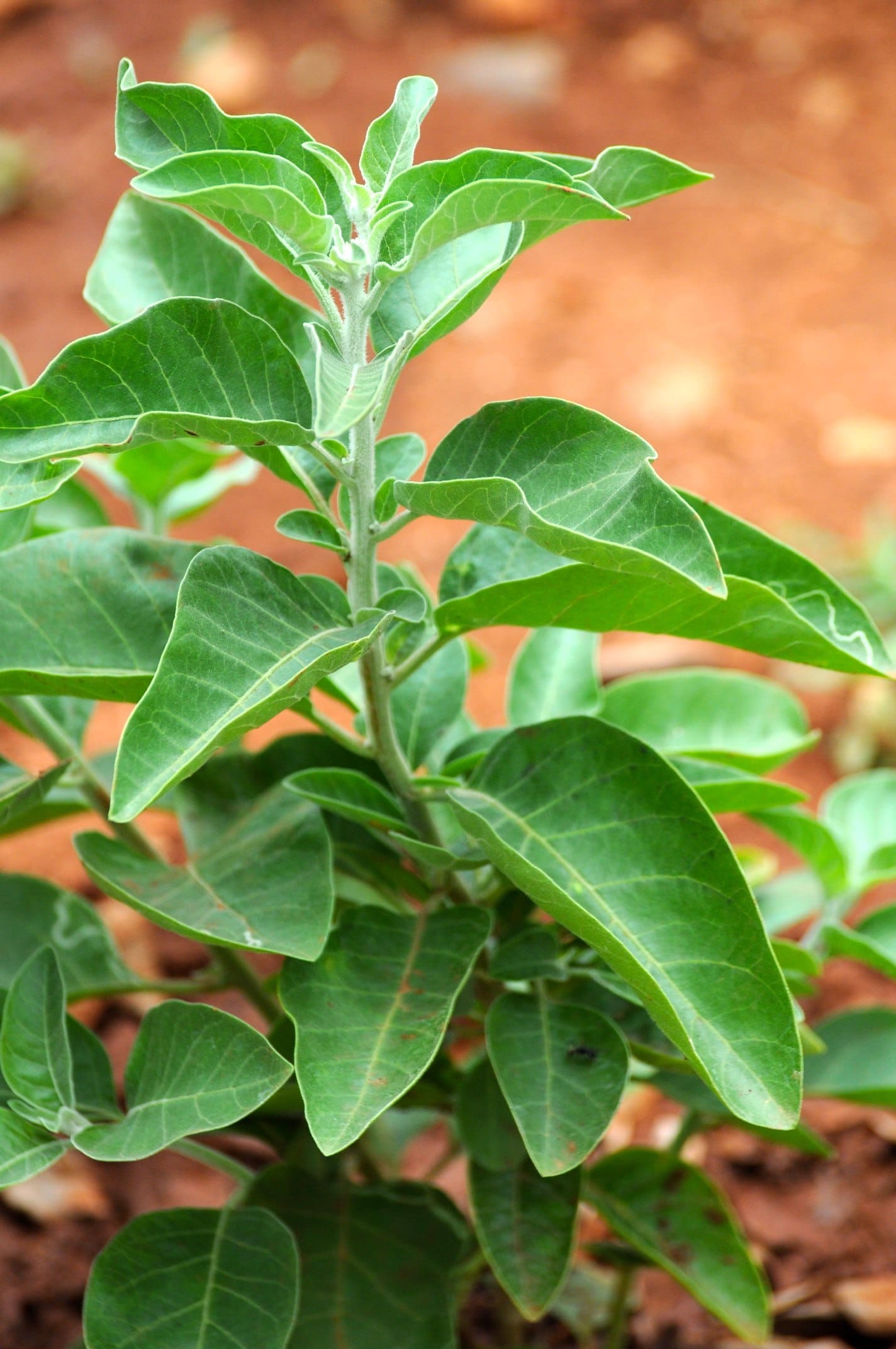
Ashwagandha is an ancient herb which has been used for over 5,000 years in Indian healing and traditional medicine. It is usually sold as a powder either loose or in capsule form. A great way to enjoy this adaptogen is to mix the powder with warm milk and honey or hot water as a soothing drink. Alternatively, ashwagandha can be found in liquid or powdered supplements, which is easily added to water or juice.

Close up of green adaptogen plant.

What the research says:

Ashwagandha is one of the most common adaptogens and has been studied the most. A randomized control trial tested the effectiveness of ashwagandha on participants with chronic stress. After 60 days of taking tablets, the treatment group showed significant reductions on the stress assessment compared to the placebo control group. The study also measured cortisol levels which is a good physiological marker of stress. Researchers found that the ashwagandha group had almost a 30% reduction in cortisol levels compared to baseline. It’s important to note, however, that this study was only conducted on 64 participants and participants were only followed for 60 days in this experiment.

In another study published in the Journal of Evidence Based Complementary and Alternative Medicine, ashwagandha reduced serum cortisol, body weight and BMI. There are significant links between chronic stress and body weight, and the hypothesis is that adaptogens may be effective at improving our health. Again, this was a small study with only 52 subjects over 8 weeks.

Clearly, these studies are a starting point, but do not tell us confidently that adaptogens improve our health and reduce our stress.

MARCH 12 EDIT: Thankfully, we now have a massive array of data to draw on, enough for a number of different systematic reviews of the literature. This review of human trials on anxiety found all five studies suggested participants improvements in anxiety and stress scores when taking ashwagandha. This meta-analysis found significant improvements in VO2 max in athletes and non-athletic groups (suggesting usage for exercise support). This review suggested its expensive potential as neuroprotective in various brain disorders. And another study proved the safety and efficacy of ashwagandha in the treatment of insomnia, anxiety and stress. This is just scratching the surface. The research in support of ashwagandha in various areas of practice is consistently mounting.

Rhodiola Rosea

Rhodiola is a medicinal plant with many beneficial uses. The root of this plant is used for its adaptogenic properties while the stems can be used as a cooking ingredient. Through its effects on the central nervous system, rhodiola is best known for its mentally rejuvenating effects while reducing fatigue.

Close up of yellow and green adaptogen plant.

What the research says:

In a scientific trial, the effectiveness of rhodiola was evaluated on the fatigue of physicians working night shifts. After a two week period of consuming daily rhodiola extract, participants showed significantly less fatigue and increased concentration while reducing the negative effects of heightened cortisol. Participants did not report any negative side effects when taking regular rhodiola pills. However, a two week study is not a long enough study to truly know its effectiveness or if there are negative side effects from prolonged use.

Eleuthero

Eleuthero, also known as Siberian ginseng, is a plant historically used in Russia and Korea as a medicinal herb to help with arthritis, heart disease, and the common cold.

Green adaptogen plant.

What the research says:

In a scientific study, eleuthero was evaluated to determine its effects on chronic fatigue. Changes in fatigue were measured throughout the study to compare to baseline. At the one and two month follow ups, both the placebo and the eleuthero groups saw decreases in their fatigue. However, differences between the two groups was not significant meaning eleuthero didn’t show very promising effects in this trial. There were significant results seen in those who were classified as moderately fatigued at baseline, showing that eleuthero may be more effective at managing less severe fatigue. It is also possible that higher doses of this adaptogen would be effective on more chronic fatigue, but whether that is safe is another thing.

Panax Ginseng

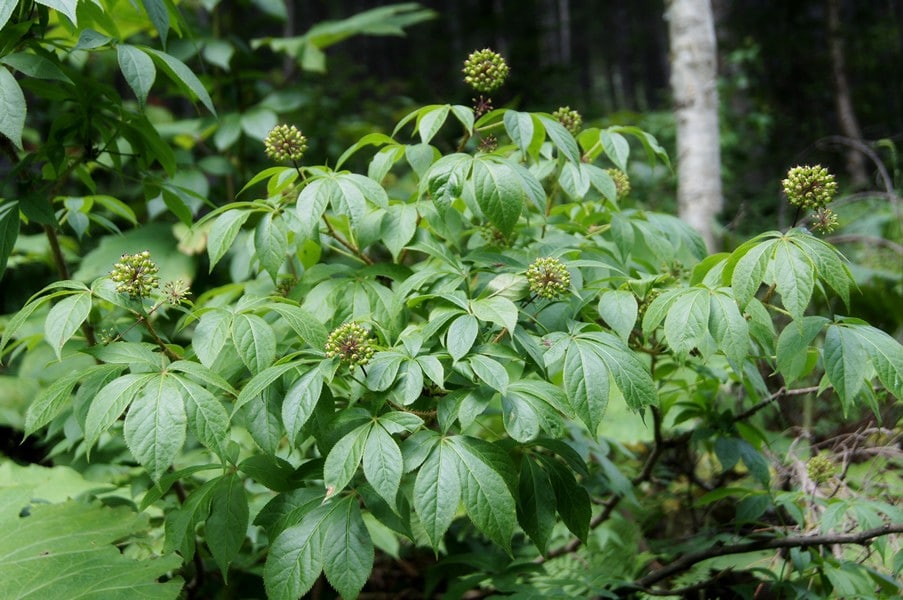
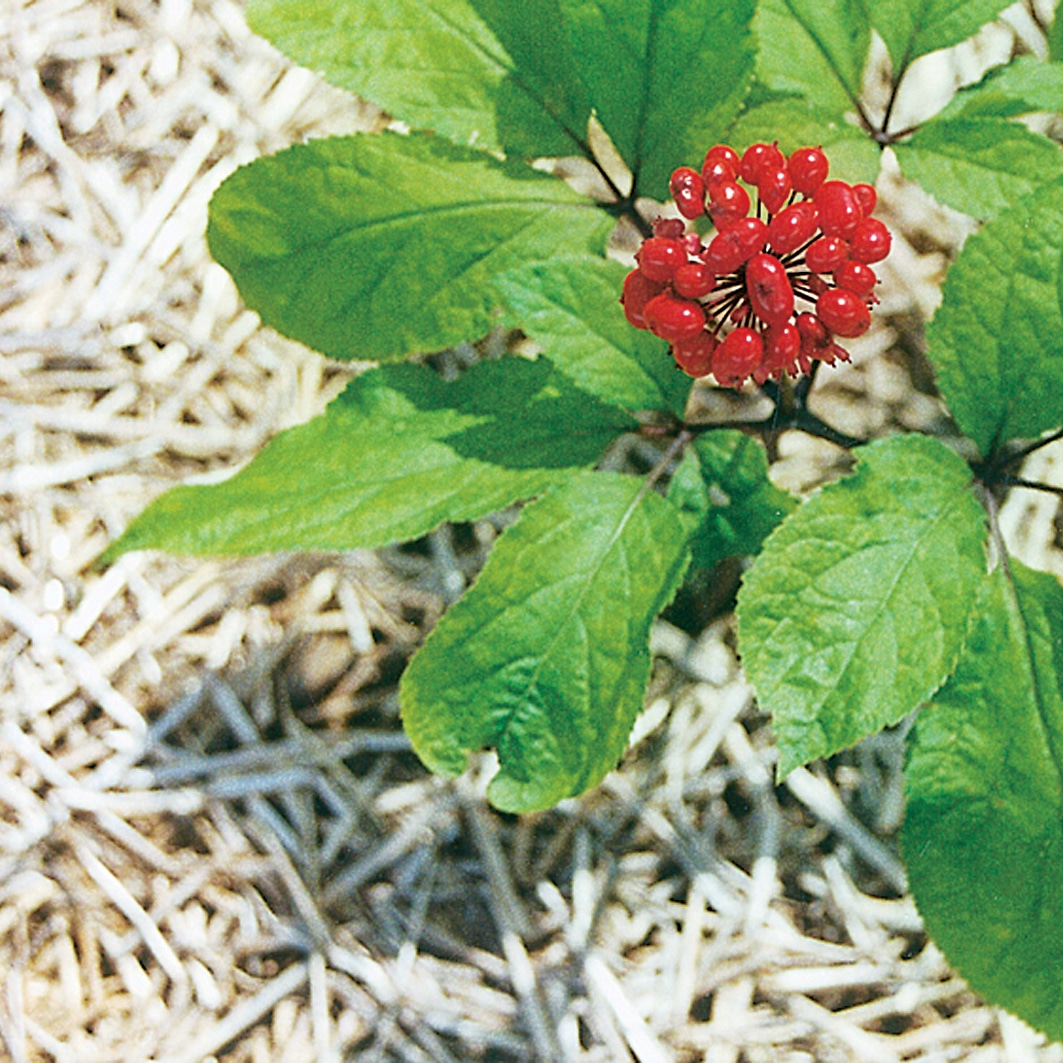
This adaptogen is also known under the name Asian ginseng. Though there are many types of ginseng, Asian ginseng has long been used for its adaptogenic capabilities and specifically to boost the immune system and revive energy levels.

Birds eye view of red and green adaptogen plant.

What the research says:

Let’s cut to the chase. A Cochrane Review evaluated the effectiveness of ginseng for cognition and concluded that there is a lack of convincing evidence to show any cognitive enhancing effect in healthy participants. There was also NO EVIDENCE to demonstrate that ginseng is effective in patients with dementia. Another study on the use of panax ginseng on healthy subjects concluded that its use is safe over a 4 week period, but didn’t report on any benefits of this adaptogen.

Safety of Adaptogens

Any type of supplement should also be used cautiously because many of them have very little information about what they actually contain and how or if they work. This 2015 study found that supplement misuse leads to 23,000 emergency room visits each year, so natural does not always mean safe.

Side Effects of Adaptogens

Before adding adaptogens to your diet, remember that even if they are marketed as a natural substance, they may carry some serious side effects. A 2018 study found that common herbal supplements can interact negatively with prescription medications and this may be because patients are not always disclosing their herbal medicine intake to their doctors because they see it as a natural substance and not a medication. That could be a potentially fatal mistake.

Who Should Take Adaptogens?

Currently, it’s believed that it’s generally safe for most people to take adaptogens, however many experts recommend getting at the root cause of the stress instead of buying expensive supplements and depending on their use. Obviously it’s easier for people take a pill instead of changing your lifestyle, but in the end changing your lifestyle may be safer, more effective, and less expensive. Although most of the research to this point suggests that adaptogens are safe, studies have been done primarily on healthy subjects. Those with conditions such as diabetes or thyroid problems should be especially careful when adding adaptogens to their daily routine. Adaptogens also haven’t been studied in all life stages such as for children or pregnant women. Due to the intense hormonal changes taking place during pregnancy, it may be detrimental to take adaptogens which are thought to regulate and minimize these changes.

Many people feel different effects from the same adaptogens, so like medications, it’s not a one size fits all! We will need better quality longer studies to really assess its effectiveness.

The Bottom Line on What Are Adaptogen Foods

It is important to remember that adaptogens are not regulated like drugs and some other natural health products are. Be especially conscious if you are opting for an adaptogen supplement in pill form. Research and ask your doctor about the appropriate dosage to ensure you are getting what you hoped for.

Now I want to hear from you. Have you tried adaptogens? Did they work for you? Would you recommend any?
Let me know in the comments below!

Contribution By:
Abi Sims, RD2B & Sofia Tsalamlal, RD

More Blog Posts You Might Like:

If you liked this blog post discussing what are adaptogen foods, then you might also enjoy more blog posts on health and wellness:

  • Do Digestive Enzymes Help with Bloating?
  • Is Shakeology Worth It?
  • Goop Detox Diets You Need to Avoid
  • Intuitive Fasting – Is It Really Intuitive or Just Another Diet?
  • Are Supplements Safe? How to Choose the Right Supplement
  • Is Lemon Water Good for You?


Abbey Sharp

Abbey Sharp is a Registered Dietitian (RD), regulated by the Ontario College of Dietitians. She is a mom, YouTuber, Blogger, award winning cookbook author, media coach specializing in food and nutrition influencers, and a frequent contributor to national publications like Healthline and on national broadcast TV shows.
www.abbeyskitchen.com/about-abbey/

Last Updated February 14, 2022. Published February 14, 2022 By Abbey Sharp 10 Comments

Chocolate Protein Pancakes with Cherries (Gluten Free)

These crazy yummy stacked black forest chocolate protein pancakes are totally gluten free, low in fat and packed with high quality fermented whey protein.

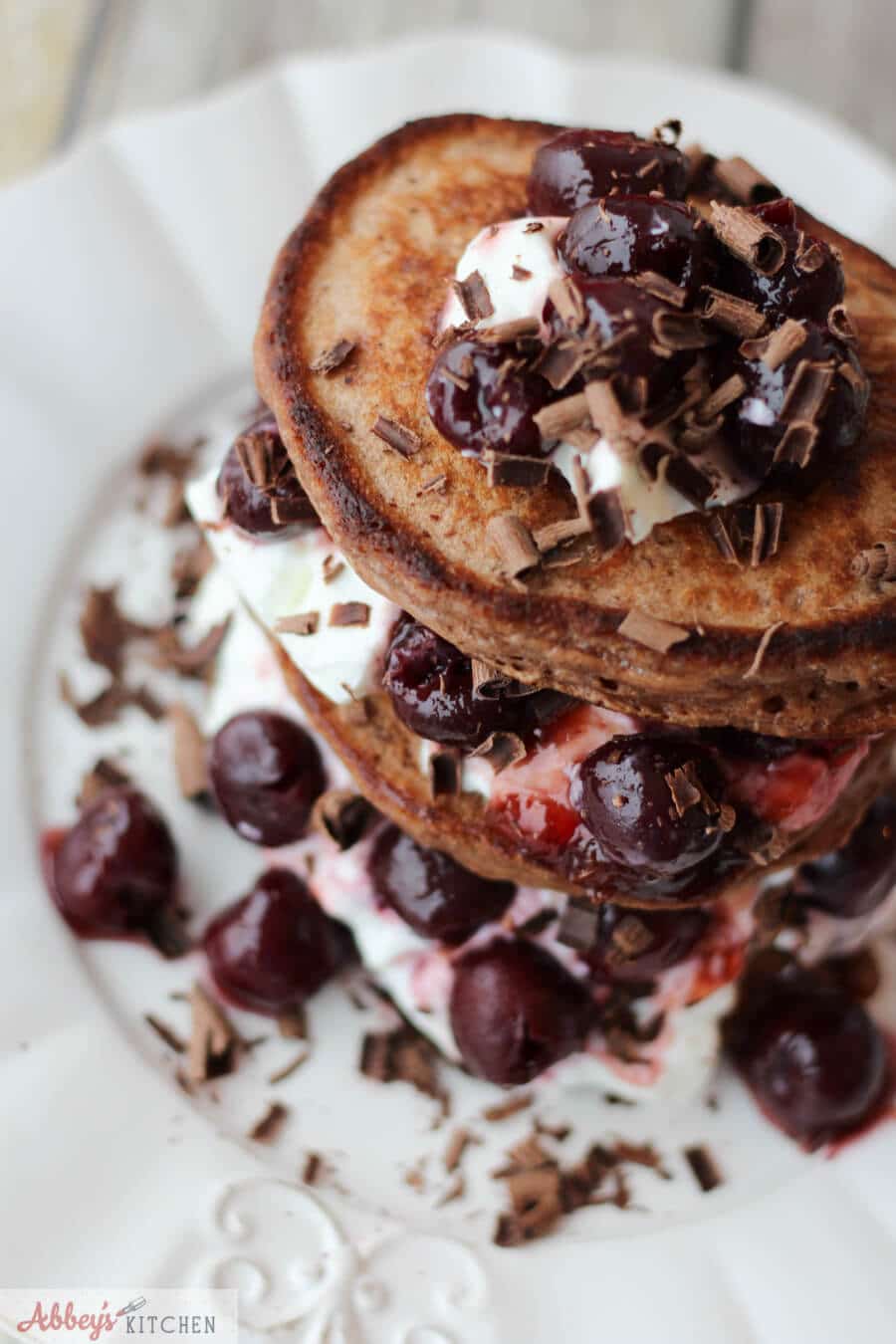
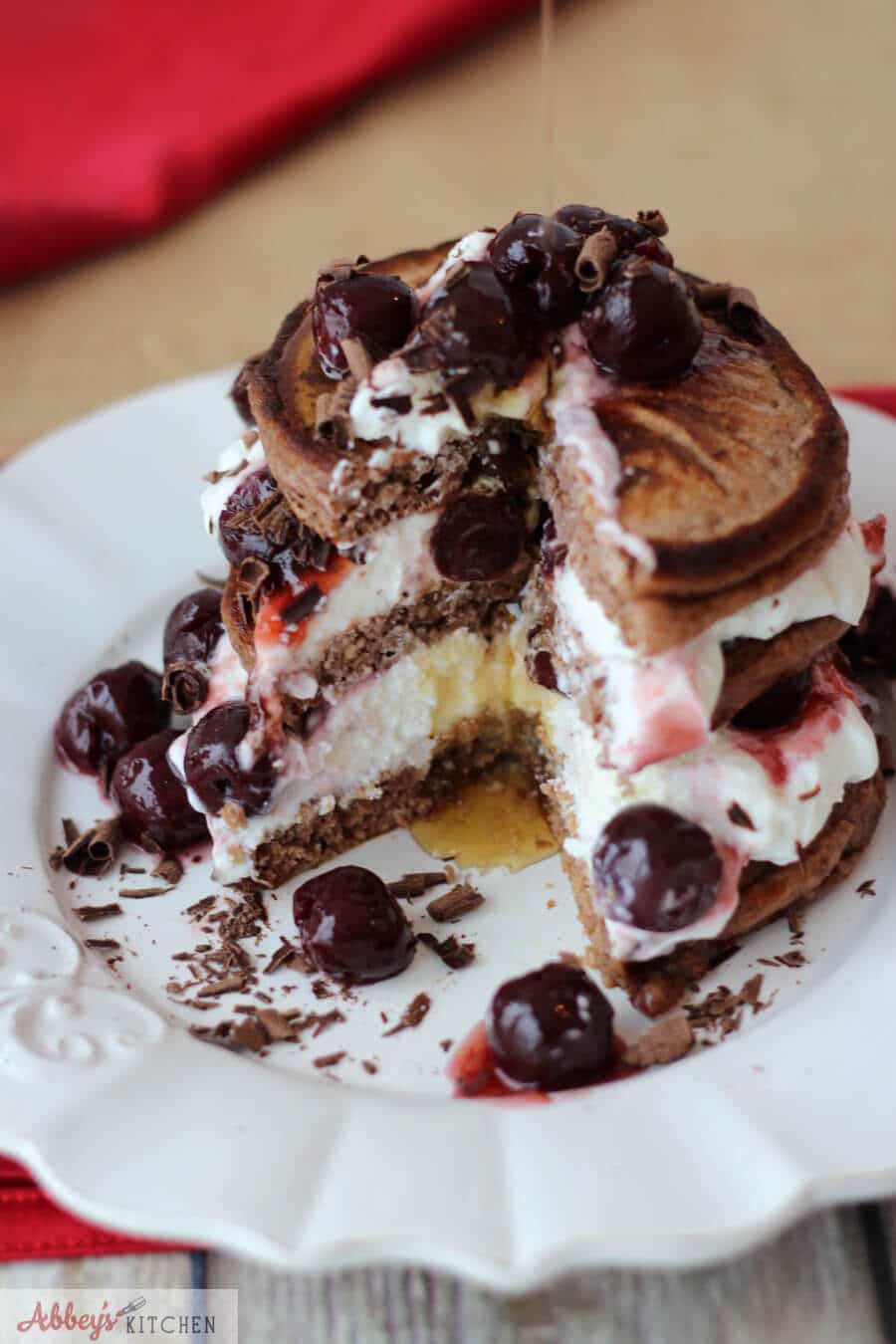
We’re kind of going crazy over pancakes over here. These stacked & stuffed Chocolate Protein Pancakes with Cherries are gluten free, low in fat, and packed with protein. Suddenly, I’m actually looking forward to my workout!

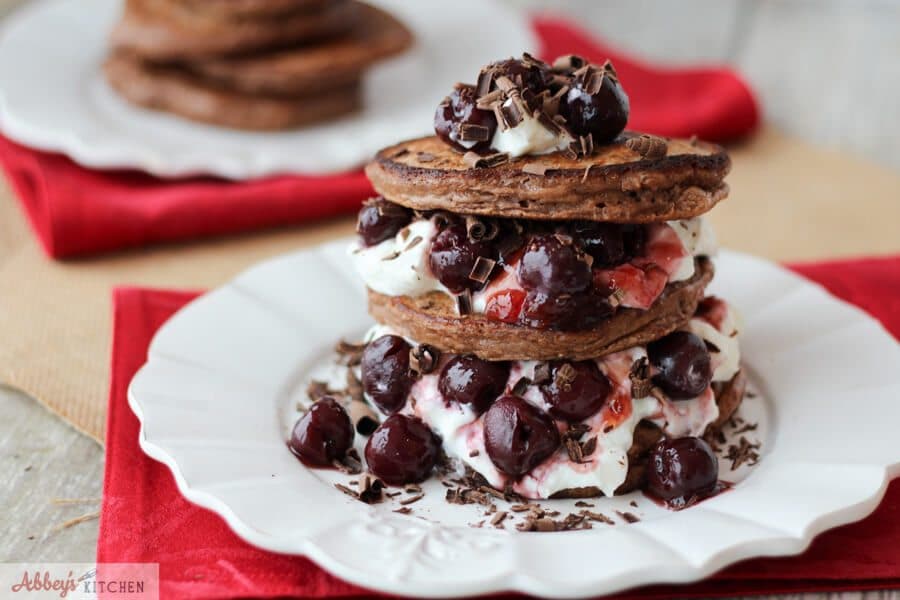
Stack of protein pancakes with whipped cream and cherries on a white plate.

If you’ve been following along on Abbey’s Kitchen, you’ve surely seen my love affair with all things protein pancakes. First, I wooed you with my Strawberry Cheesecake Protein Pancakes layered with a cheesecake yogurt cream and a delicious strawberry sauce. Then, came my crazy delicious Peanut Butter Banana Protein Pancakes (holy moly- they are good). But then I thought I would hit you with one more – chocolate protein pancakes with cherries.

Table of contents

  • Why This Recipe Works
  • Key Ingredients
  • How To Make This Recipe
  • Expert Tips
  • Recipe FAQs
  • More Recipes You Might Like

Why This Recipe Works

Other than being the perfect excuse to enjoy dessert for breakfast, here are a few more reasons why you need these chocolate protein pancakes in your life:

  • Contains 22g of protein per serving
  • Gluten free
  • Freezer friendly
  • Made in 20 minutes

Key Ingredients

Gluten-Free Oats – Pure oats are gluten-free, however, more oats sold in stores are manufactured within facilities that also use gluten containing products such as wheat, barley, or rye. If you want to keep this recipe gluten-free make sure to look for the term “gluten-free” on the package.

Greek Yogurt – Greek yogurt is not only a source of probiotics but is also higher in protein compared to other yogurt varieties. In fact, 1 cup of Greek yogurt contains approximately 20 grams of protein, making it an excellent post-workout snack.

Dark Cherries – Dark cherries are rich in micronutrients, antioxidants, and fiber and make for a perfect topping to this protein pancake recipe.

Close up of protein pancakes with whipped cream, cherries, and shaved chocolate.

How To Make This Recipe

Step 1: Add the oats to a food processor or blender and pulse until they turn into powder. Mix the cinnamon and protein powder together in the food processor.

Step 2: In another bowl, mix together the remaining pancake ingredients. Gently mix the dry ingredients into the wet and allow the batter to rest for 10 minutes.

Step 3: Heat a large nonstick skillet over medium heat and grease with nonstick cooking spray, oil, or butter. Pour the 1/4 cup circles of batter into the pan. Once you see bubbles form around the edges, flip and continue to cook until golden brown on both sides. Keep pancakes warm on a plate tented with foil.

Step 4: Meanwhile, mix together the yogurt and honey. Set aside.

Step 5: In a small saucepan, heat the frozen cherries with the water and any additional honey, if desired. Cook until bubbly, saucy, and warmed through.

Step 6: To assemble, dollop a few spoonfuls of cream filling between the protein pancakes and garnish with the cherry sauce and shaved chocolate.

Expert Tips

As mentioned earlier, 100% pure oats are naturally gluten-free, if you are making this for someone with dietary restrictions, make sure to buy certified gluten-free oats for this recipe.

Like with many of my other protein pancake creations, I knew the key was to start with the best quality protein. Any vanilla flavored protein of your liking will do, although I highly recommend choosing a third-party testing powder which you can read more about here.

Stack of chocolate protein pancakes with whipped cream, cherries, and shaved chocolate on a white plate.

Recipe FAQs

Can these chocolate protein pancakes be frozen and made ahead?

Yes! I actually like to make a big batch of these, then store them in these reusable freezer bags to pull out throughout the week. I swear, I cannot wait to get out of bed when I know these are waiting for me for breakfast.

What ingredients make this recipe rich in protein?

These chocolate protein pancakes are packed with ~22 grams of protein per serving thanks to the protein powder and the greek yogurt!

Can I make this recipe dairy free?

If you prefer to make these chocolate protein pancakes dairy-free, you can always sub out the milk and yogurt for your favorite non dairy alternative.

More Recipes You Might Like

Looking for more chocolatey goodness breakfast ideas like these chocolate protein pancakes, check out these fun recipes below!

  • NUTELLA STUFFED PANCAKES (VEGAN & HIGH PROTEIN)
  • CHOCOLATE PEANUT BUTTER BANANA PROTEIN PANCAKES | GLUTEN FREE & HEALTHY
  • RED VELVET PANCAKES (VEGAN, GLUTEN FREE, FOOD DYE FREE)
  • SHEET PAN CHOCOLATE CHIP PANCAKES WITH BANANA & PB (HIGH PROTEIN)

Have you tried these chocolate protein pancakes with cherries? What are your favourite pancake combinations? I’m always dreaming up new ideas so let me know what protein pancake combination YOU are dreaming of and I’ll put those wheels into motion!

These crazy yummy stacked black forest chocolate protein pancakes are totally gluten free, low in fat and packed with high quality fermented whey protein.
Print Recipe
5 from 5 votes

Protein Pancakes with Chocolate and Cherries (Gluten Free)

These stacked & stuffed Protein Pancakes with Chocolate and Cherries are gluten free, low in fat, and packed with protein.
Prep Time10 minutes mins
Cook Time10 minutes mins
Total Time20 minutes mins
Course: Breakfast
Cuisine: American
Servings: 4 people
Calories: 342kcal
Author: Abbey Sharp

Ingredients

Pancakes:

  • 1 1/2 cups gluten free oats
  • 1 tsp cinnamon
  • 1/4 cup Genuine Health Vanilla fermented Greek Yogurt proteins+ protein powder
  • 1 tsp pure vanilla extract
  • 1 tbsp unsweetened cocoa powder
  • 1 cup plain 0% Greek Yogurt
  • 1/3 cup skim milk
  • 3 tbsp honey
  • 1 egg
  • 1/2 tsp baking powder
  • Pinch salt
  • Nonstick spray oil or butter (for cooking)

Filling:

  • 2 cups plain 0% Greek Yogurt
  • 1 tbsp honey or to taste

Sauce:

  • 2 cups frozen dark cherries
  • 1/4 cup water
  • Honey if desired, to taste
  • Dark chocolate shaved

Instructions

  • Add the oats to a food processor or blender and pulse until they turn into a powder. Mix the cinnamon and protein powder together in the food processor.
  • In another bowl, mix together the remaining pancake ingredients. Gently mix the dry ingredients into the wet and allow the batter to rest for 10 minutes.
  • Heat a large nonstick skillet over medium heat and grease with nonstick cooking spray, oil or butter. Pour the 1/4 cup circles of batter into the pan. Once you see bubbles form around the edges, flip and continue to cook until golden brown on both sides. Keep pancakes warm on a plate tented with foil.
  • Meanwhile, mix together the yogurt and honey. Set aside.
  • In a small saucepan, heat the frozen cherries with the water and any additional honey, if desired. Cook until bubbly, saucy and warmed through.
  • To assemble, dollop a few spoonfuls of cream filling between the protein pancakes and garnish with the cherry sauce and shaved chocolate.

Nutrition

Calories: 342kcal | Carbohydrates: 57g | Protein: 22g | Fat: 4g | Saturated Fat: 1g | Cholesterol: 49mg | Sodium: 83mg | Potassium: 605mg | Fiber: 5g | Sugar: 33g | Vitamin A: 145IU | Vitamin C: 4.9mg | Calcium: 254mg | Iron: 2.2mg
Abbey Sharp

Abbey Sharp is a Registered Dietitian (RD), regulated by the Ontario College of Dietitians. She is a mom, YouTuber, Blogger, award winning cookbook author, media coach specializing in food and nutrition influencers, and a frequent contributor to national publications like Healthline and on national broadcast TV shows.
www.abbeyskitchen.com/about-abbey/

Last Updated August 30, 2022. Published February 9, 2022 By Abbey Sharp 39 Comments

What Not to Say to a Pregnant Woman About Her Body

A woman holding her pregnancy bump.

Here’s a list of what not to say to a pregnant woman about her body, plus some some sassy responses for my parents-to-be!

A pregnant woman holding the hand of her partner and a pair of baby shoes in between, discussing what not to say to a pregnant woman about her body.

I gotta rant about something. What the actual F is up with everyone needing to make comments to pregnant people about their bodies? Does every meal with an expectant parent need to revolve around the size or shape of their belly? Is that kind of information that imperative to your relationship with the parent or their unborn child?

Would you make the same comment to someone who wasn’t pregnant?

When I was in my third trimester with my boys, I can attest that people LOVE to say shit to pregnant people about their bodies. They also like to touch, pat, and squeeze them like they would a grapefruit at Whole Foods. Even when it comes from a loving place, comments about pregnant people’s bodies are unsolicited, inappropriate and often just downright rude. Hello, it’s someone’s ACTUAL growing body, not dinner table talk. Even when you’re thrilled to be pregnant (trust me, I WAS!), it can be really hard to watch your body grow and change so rapidly. Hearing comments, even well-intentioned ones, can really hurt.

Well if you’ve never been pregnant (or even if you have and you’ve forgotten how annoying this kind of stuff is), I wanted to share a few wee pieces of advice that will help you navigate what not to say to a pregnant woman about her body. And for my fellow parents-to-be, next time you get one of these remarks, here’s how to respond to them.

What Not to Say to a Pregnant Woman About Her Body

“How much weight have you gained so far? Is that normal?!”

Why this line sucks: Do you ask non-pregnant people how much weight they’ve gained in a short period of time? No, because you’re not a total dick. Maybe the person feels bad about the pace that they’ve gained that weight, whether it’s been faster or slower than what all of the apps suggest is “normal”. You really don’t know where that person sits in their relationship with their body, and for all you know, they could be BARELY holding on.

How to reply: This is at the top of the list of what not to say to a pregnant woman for a reason. My response was always, “Oh I don’t even know, the doctor says baby is all good and I’m just listening to my body’s needs. That’s all that matters to me!”

A scale.

“OMG you’re so tiny for X weeks!”

Why this sucks: I know people mean well when they tell you you’re small since being skinny is still seen as socially desirable (apparently even while pregnant!), but again, what if this parent is worried about the small size of their belly? What if they’re unsure if this means their babe is not growing well or there’s something physically wrong? What if something IS physically wrong and they really doesn’t want to have to get into it with you?

How to reply: You can divert to the prior answer, or if you’re feeling sassy say, “Oh I didn’t know you were looking so closely at my body!” Ta da, the trolls have been officially shut down.

“Oh wow, are you sure you’re due in X weeks? You already look like you’re going to pop!”

Why this sucks: Yes, OBVIOUSLY we know our due date. And yes, we OBVIOUSLY are not wanting to hear that we look like a Mack Truck well before our time.

How to reply: You can go with a polite, “Ha, yep, we’re going to have a big baby!” or a quick and dirty “STFU” with a smile. Your choice.

A pregnant belly, discussing what not to say to a pregnant woman about her body.

“Are you sure it’s not twins?”

Why this sucks: Oh lord, again, this is ridiculous. No one has thankfully ever said this to me, but I know a lot of people who have heard it. If we were having twins and knew it, we would definitely tell you so you wouldn’t be such a total douche. Even if the offender means well, asking if you’re having twins is telling someone that they’re OBVIOUSLY looking huge. Just no.

How to Reply: This one is easy, I would say, “NOPE, just one bad ass baby!”

“Your boobs are HUGE! Do you love it?”

Why this sucks: Don’t assume that all people want big boobs. Honestly, it might make some women (oh HEY THERE) uncomfortable to have to constantly be buying bigger bras, wondering if it will ever stop or slow down. Boobs may be a socially acceptable place for people to gain fat, but that doesn’t mean it’s open season to comment.

How to Reply: “Ha, well thanks for looking so carefully at my chest!” You 1: body shamers 0.

“How far along are you? You must be about X weeks!”

Why this sucks: Don’t try to guess how far along someone is. I see this “game” get played on a ton of my pregnancy Facebook groups and I cringe every single time I see someone guess a week that is really off. If you tell me I look full term, when I’m legit only 23 weeks, I’m probably going to want to punch you in the face.

How to Reply: “Nope, I’m only X weeks, but everyone is different in how they carry. I have still got a lot longer to enjoy the free foot massages and ice cream. By the way, can you get me… [insert favourite snack].”

“Wow”

Why this sucks: Ugh, I have heard this word a lot from certain family members and I just roll my eyes a little every single time. We’re not freak show exhibits, we’re just pregnant people doing something that is VERY natural to do. Unless that wow is going to be followed by “- you’re glowing!” just stop the sentence before it slips out.

How to Reply: Just cut them off before they can say anything else rude and reply, “I know right?! My body is BANGING!” Then strut away.

“Oh wow, well I guess you’re eating for two with a meal like that.”

Why this sucks: See why I put this on the list of what not to say to a pregnant woman? It rarely ends well. People love to watch pregnant people stuff their face, as if it’s some kind of Olympic spectator sport with non-stop commentary. The same way you wouldn’t (hopefully) make a bitchy comment about how much someone else is eating when they’re not expecting, you should really just zip it when there’s a baby growing inside. While no, pregnant people don’t usually need to double their caloric intake, they do need to eat more and they shouldn’t be shamed for doing what is best for babe. If this is consistently an issue, see this article on a wide range of comments and responses related to food shaming.

How to Reply: “Isn’t it amazing that I’m able to listen and pay attention to my body to help nourish my baby? It’s definitely a skill more people need to practice.”

An overhead photo of a brunch spread with waffles, eggs on avocado toast, and fruit.

As you can see, pregnant people put up with a hell of a lot more than just sore backs, bad sleep and morning sickness. And asshole remarks don’t make it any easier. I’ve written about my own experience gaining weight while pregnant here, and whenever I hear these statements I worry about how women may react. Those who have maybe struggled with body image or disordered eating in the past may have a particularly hard time dealing with the bodily changes associated with pregnancy. So when you make a comment, even a well-intentioned one, you may be setting her off on a dangerous path. So please, stop and think before you speak, and memorize this list (and consider any other associated statements) before visiting a pregnant friend or family member and just stop saying shit to pregnant women about their bodies.

For my mommas and momma-to-be’s out there, what shit have you heard said to pregnant women about their body that you think is rude?

Leave me a comment below with your thoughts!

More Blog Posts You Might Like:

If you liked this blog post discussing what not to say to a pregnant woman, then you might also enjoy more blog posts on pregnancy:

  • Low Carb Pregnancy: Can it Cause Birth Defects?
  • Not Losing Weight Breastfeeding? Does Breastfeeding Cause Weight Loss or Weight Gain?
  • Mom Guilt | My Breastfeeding Story
  • Pregnancy Lessons I’ve Learned About My Body, Weight Gain and Nutrition While Growing a Baby
  • 6 Pregnancy Nutrition Myths That are Total BS: Part 1
  • Even More Pregnancy Nutrition Myths That We’re Sick of Debunking: Part 2

What is the worst thing someone has said to you while pregnant about your body?

Abbey Sharp

Abbey Sharp is a Registered Dietitian (RD), regulated by the Ontario College of Dietitians. She is a mom, YouTuber, Blogger, award winning cookbook author, media coach specializing in food and nutrition influencers, and a frequent contributor to national publications like Healthline and on national broadcast TV shows.

www.abbeyskitchen.com/about-abbey/

Last Updated February 7, 2022. Published February 7, 2022 By Abbey Sharp 13 Comments

Protein Muffins for BLW with Chicken and Spinach

These BLW Spinach Chicken Protein Muffins are perfect finger foods for toddlers & babies because they’re rich in protein and iron and easy to eat!

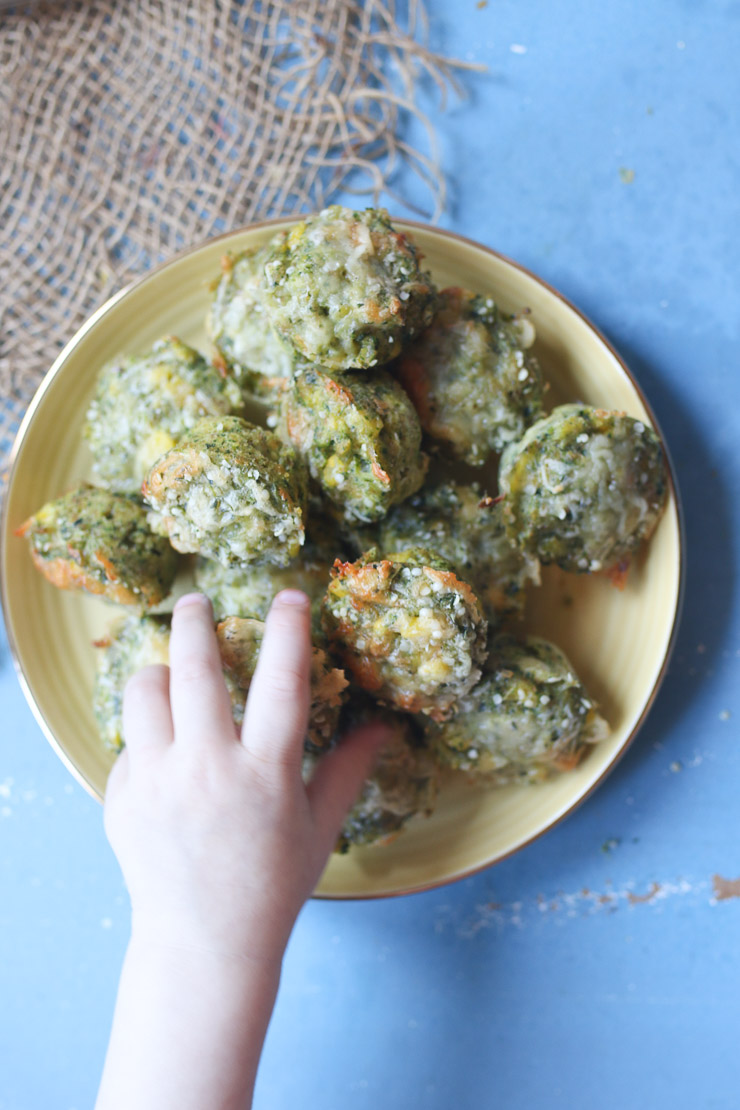
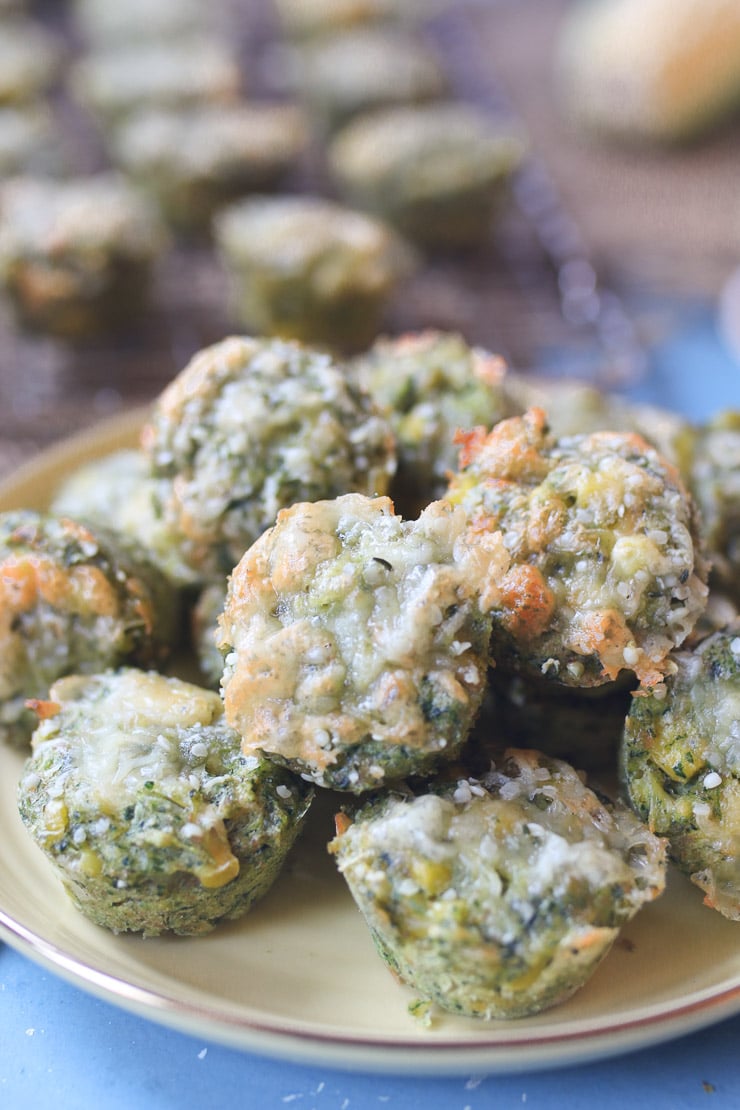
up close birds eye view of protein muffins on a yellow plate with a toddler's hand reaching for one

I get asked a lot in my mom and baby family feeding Facebook group – WHAT DO I DO IF MY KID DOESN’T LIKE MEAT? HOW WILL THEY GET ENOUGH IRON AND PROTEIN? I get it. There were days/weeks when E was still a baby where he said HELL to the NO to meat, poultry, or fish. Even though I knew he would easily make it up through his hummus consumption alone, I kinda freaked out. This is why I created this recipe for BLW spinach chicken muffins. Kids love muffins. They love all carbs! So these toddler and baby friendly spinach chicken muffins are a hit every time.

Table of contents

  • Why This Recipe Works
  • Key Ingredients
  • How To Make This Recipe
  • Expert Tips
  • Recipe FAQs
  • More Recipes You Might Like

Why This Recipe Works

If you are struggling to serve your baby or toddler meat, but want to ensure they’re getting enough iron and protein, these protein muffins are perfect. They have lots of iron from chicken, spinach, iron-fortified baby cereal, and eggs! A few other reasons why I love these protein muffins is because:

  • They are soft to chew
  • They help baby practice grasping skills
  • They help introduce vegetables in a fun way
  • They are easy to prep in large batches

Key Ingredients

Spinach – Spinach is an excellent source of micronutrients including vitamin K, folate, and iron. I love sneaking in spinach to recipes like these protein muffins since it has a pretty neutral flavor while also adding in vital nutrients.

Chicken – Chicken is a great source of lean protein. 1 cup of chicken alone has roughly ~38 grams of protein.

Iron-Fortified Baby Cereal – Did you know that around the 6 month mark, babies’ iron stores are depleted? Which is why I always try to incorporated iron-fortified baby cereal whenever I can, specially baking!

Hemp Hearts – Hemp hearts (aka hemp seeds) are packed with plant-based protein and omega-3 fatty acids. Just like spinach, they have a pretty overall neutral flavor with a delicate crunch, making it easy to incorporate into recipes or use as a topping.

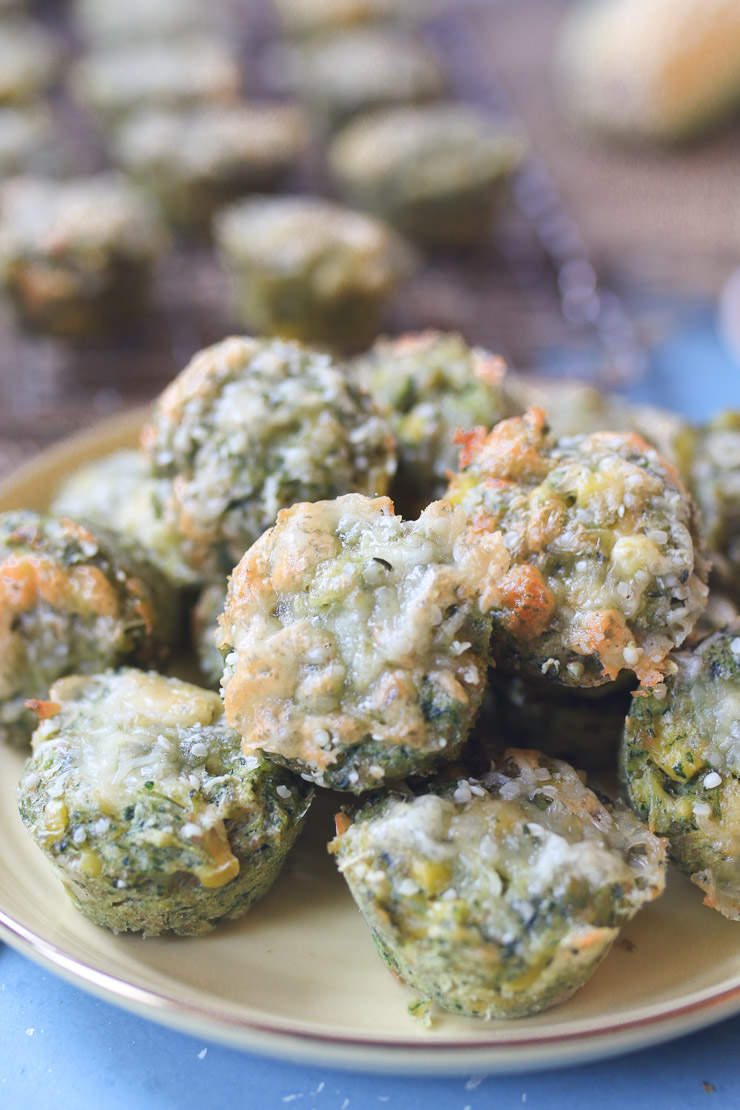
An up close picture of the protein muffins

How To Make This Recipe

Step 1: To a food processor, add 1 1/2 cups of corn and spinach and process until fairly smooth. Add to a bowl with the remaining corn kernels, butter, eggs, chicken, and 1 cup of cheese.

Step 2: To another bowl, mix the flour, baby cereal, baking powder, flax, hemp hearts, and a pinch of salt. Add the wet to the dry and mix until smooth.

Step 3: Fill the muffin tins with the mixture and top with the remaining 1/2 cup of cheese and a sprinkle with additional hemp hearts. Bake for 14 minutes or until golden brown on top.

Expert Tips

I mix all the veggies, chicken and cheese together along with some flour, iron fortified baby cereal, and some flax and hemp hearts for healthy fats and bake them into mini muffins in order to make a larger batch. Making them into mini muffins also is easy for baby to grasp and eat.

I strongly suggest using a silicone mini muffin tin for easy removal. You can also totally do this as regular sized muffins but I prefer the minis for easy packing and snacking.

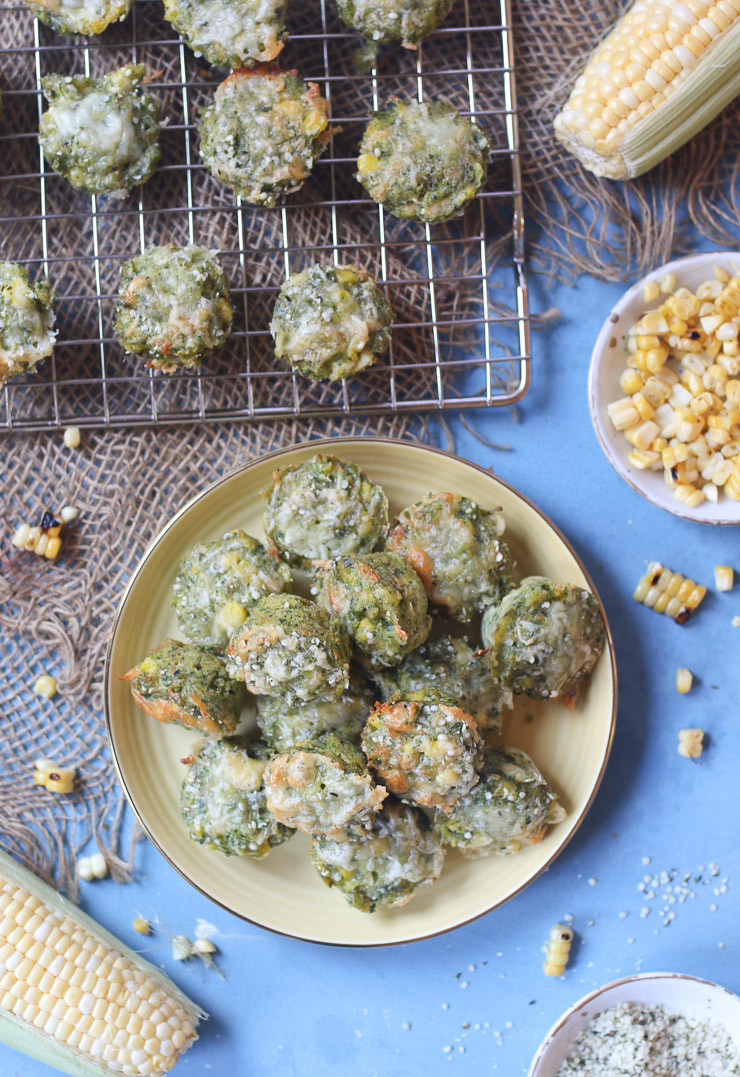
birds eye view of protein muffins on a yellow plate, some protein muffins on a cooling rack, and corn on the sides

Recipe FAQs

Can I make these protein muffins dairy-free?

If your little one can’t tolerate dairy and you need to make these dairy-free you could definitely use vegan butter and non-dairy cheese in place of the regular cheese. Otherwise, you can omit the cheese all together (but the protein muffins would be admittedly way less fun).

Can I make these protein muffins gluten-free?

You can! Just make sure to use gluten-free flour and a gluten-free baby cereal if your infant or toddler can’t tolerate gluten.

Can these protein muffins be frozen and made ahead?

You bet! This is so easy! These protein muffins freeze beautifully. I suggest popping them out of the muffin tin and letting them cool, then transferring them to a baking sheet to freeze for 30 minutes. Once frozen, then add them to a freezer bag so they don’t all stick together.

Close up of mini spinach muffins on a yellow plate.

More Recipes You Might Like

Looking for more nutrient-packed BLW recipes? Check out these below:

  • TODDLER MEATBALLS WITH HUMMUS (IRON RICH BLW RECIPE)
  • SESAME PEANUT NOODLES | BLW ALLERGEN INTRODUCTION
  • MINI EGG MUFFINS WITH CHEESE & BROCCOLI (BLW & TODDLER FRIENDLY)
  • FRENCH TOAST STICKS FOR BLW (VEGAN)
  • CHEESE OMELETTE WITH VEGGIES (TODDLER & BLW RECIPE)

I want to know what some of your strategies are for days when your kiddos aren’t getting a lot of protein! Leave me a comment below with your kids’ favorite high iron and high protein snacks!

Close up of mini spinach muffins on a yellow plate.
Print Recipe
5 from 8 votes

BLW Protein Muffins with Chicken and Spinach

These BLW Spinach Chicken Protein Muffins are perfect finger foods for toddlers & babies because they’re rich in protein and iron and easy to eat!
Prep Time10 minutes mins
Cook Time14 minutes mins
Total Time24 minutes mins
Course: Snack
Cuisine: American
Servings: 24 muffins
Calories: 149.97kcal
Author: Abbey Sharp

Ingredients

  • 2 1/2 cups frozen thawed or fresh corn kernels, divided
  • 150 g frozen spinach thawed
  • 5 omega 3 eggs
  • 1/2 cup melted butter
  • 1 cup whole wheat flour
  • 1 cup iron fortified baby cereal
  • 1 3/4 cups cooked chicken meat chopped finely
  • 1 1/2 tsp baking powder
  • 1 1/2 cups finely grated cheddar cheese divided
  • 3 tbsp ground flax
  • 3 tbsp hemp hearts plus more for topping
  • Pinch of salt

Instructions

  • Preheat oven to 350 F and grease 24 mini muffin tins.
  • To a food processor, add 1 1/2 cups of corn and spinach and process until fairly smooth. Add to a bowl with the remaining corn kernels, butter, eggs, chicken and 1 cup of cheese.
  • To another bowl, mix the flour, baby cereal, baking powder, flax, hemp hearts and a pinch of salt. Add the wet to the dry and mix until smooth.
  • Fill the muffin tins with the mixture and top with the remaining 1/2 cup of cheese and a sprinkle with additional hemp hearts. Bake for 14 minutes or until golden brown on top.

Nutrition

Calories: 149.97kcal | Carbohydrates: 9.9g | Protein: 6.94g | Fat: 9.83g | Saturated Fat: 4.7g | Cholesterol: 57.86mg | Sodium: 112.48mg | Potassium: 167.26mg | Fiber: 1.79g | Sugar: 0.43g | Vitamin A: 1034.24IU | Vitamin C: 1.71mg | Calcium: 85.15mg | Iron: 1.48mg
Abbey Sharp

Abbey Sharp is a Registered Dietitian (RD), regulated by the Ontario College of Dietitians. She is a mom, YouTuber, Blogger, award winning cookbook author, media coach specializing in food and nutrition influencers, and a frequent contributor to national publications like Healthline and on national broadcast TV shows.
www.abbeyskitchen.com/about-abbey/

Last Updated January 21, 2022. Published January 21, 2022 By Abbey Sharp 29 Comments

Vegan Stuffed Sweet Potatoes with PB&J | High Protein Breakfast

These Breakfast Protein Vegan Stuffed Sweet Potatoes with Peanut Butter and Chia Jam are a fun new high protein way to start your day!

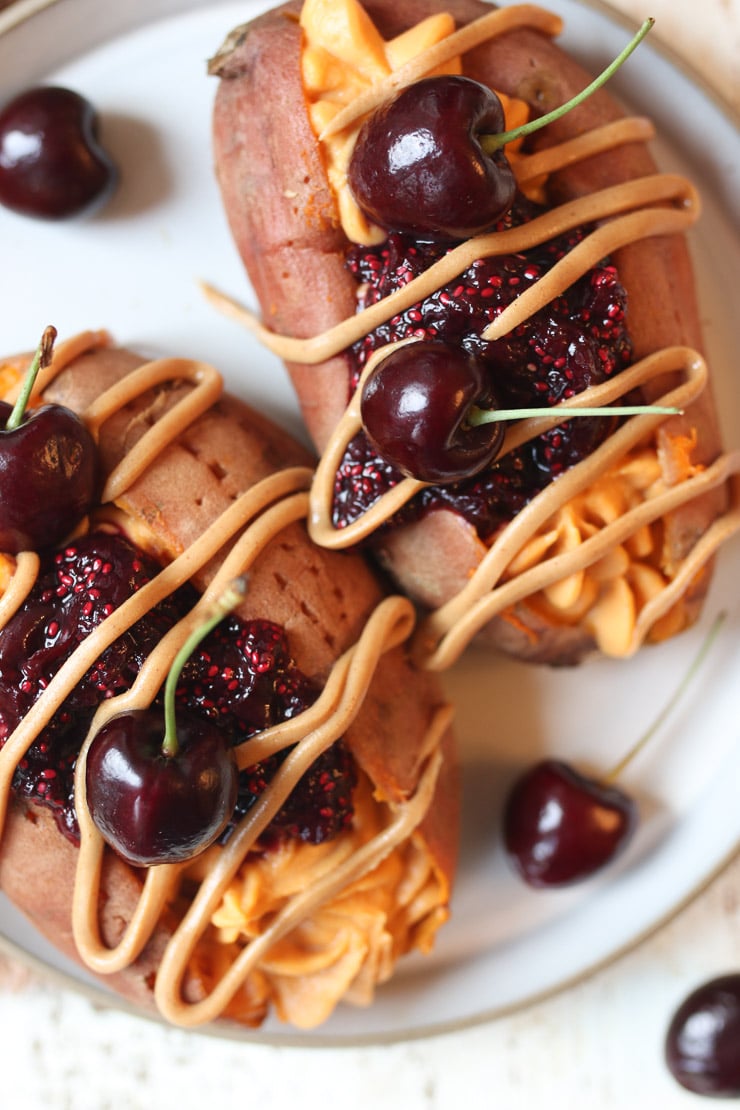
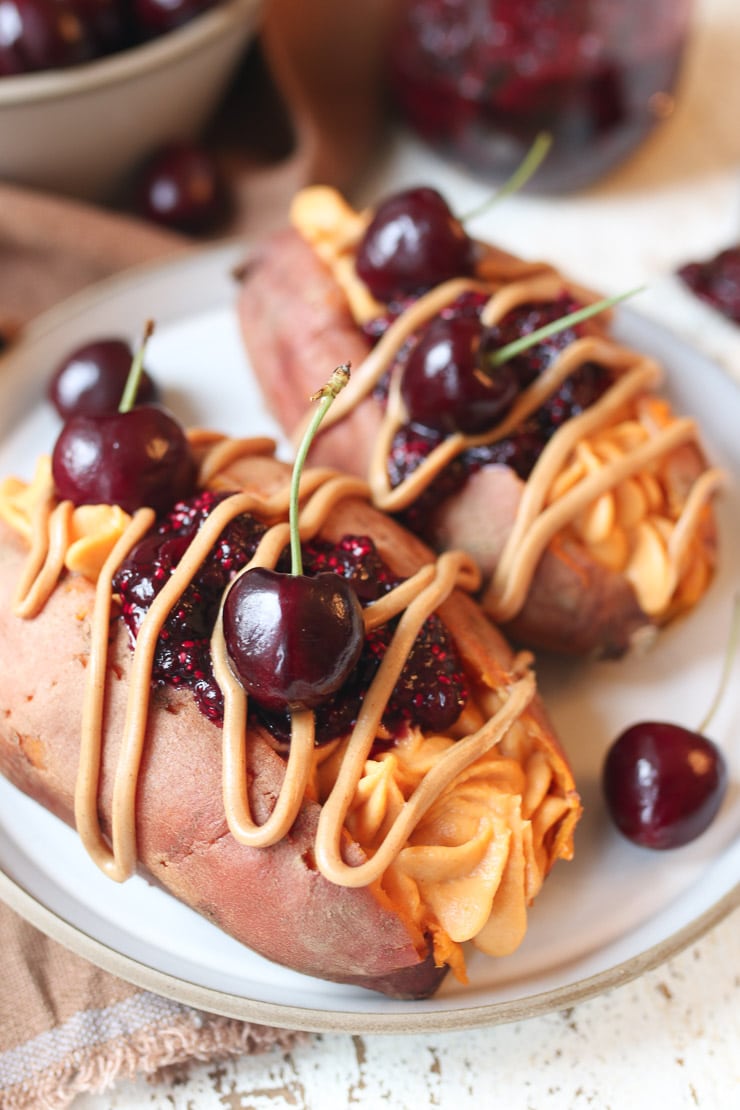
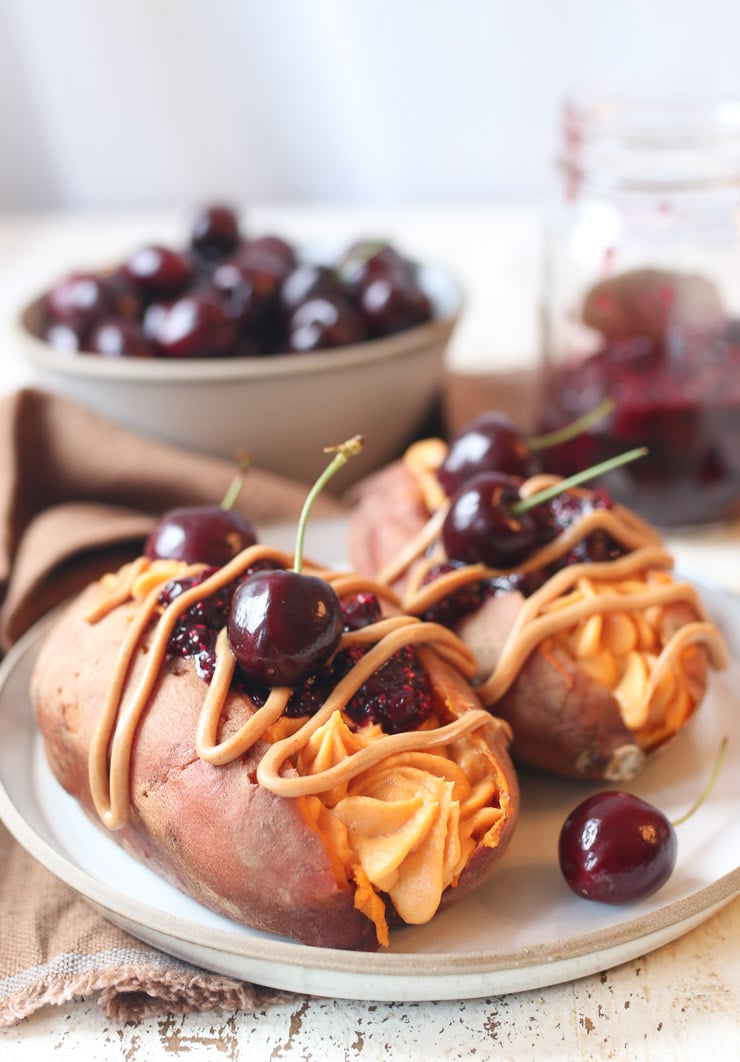
Birds eye view of vegan stuffed sweet potatoes with PB&J on top and cherries on a white plate.

As I resolve to try to incorporate more plant-based protein into my diet, I have been thinking a lot about easy healthy vegan breakfast options that don’t involve smoothies or vegan protein powder. I already created a super delicious vegan breakfast burrito that is NO JOKE, insanely good, but sometimes, I’m feeling more sweet than savoury. That was the inspiration for these breakfast protein vegan stuffed sweet potatoes, made even more nutrient dense with peanut butter and naturally sweet chia jam because let’s be real, PB&J is life.

If you’re looking for a delicious way to start the day with a nutrient-packed breakfast, these vegan stuffed sweet potatoes are calling your name! Here are a few reasons I love this recipe:

Table of contents

  • Why This Recipe Works
  • Key Ingredients
  • How To Make This Recipe
  • Expert Tips
  • Recipe FAQs
  • More Recipes You Might Like

Why This Recipe Works

If the words “PB & J” and “sweet potato” don’t incentivize you enough to give these vegan stuffed sweet potatoes a go and need a little more convincing, here are a few more reasons why this recipe needs to be part of your breakfast repertoire!

  • Totally plant-base
  • Gluten-free
  • Kid friendly
  • Packed with 10 grams of protein and 8 grams of fiber
  • Peanut butter & jam…. enough said.

Key Ingredients

Up close picture of 2 vegan stuffed sweet potatoes with PB&J and a cherries on top.

Sweet Potatoes – Sweet potatoes are a holy grail nutrient-dense food, they are packed with vitamin A, vitamin C, and fiber. They are also super versatile meaning you can use them at almost any meal or snack!

Soft Tofu – Soft tofu is such a versatile high protein vegan option because it makes these vegan stuffed sweet potatoes super creamy and rich in protein. One 190 g serving has 10 grams of protein, so it’s one of my go-to’s any time I need to add protein to smoothies, soups, or sauces.

Cherry Chia Jam – Check out my homemade cherry chia jam (you have got to make this), but in a pinch, you can also use a low sugar fruit preserve.

Natural Peanut Butter – Natural peanut butter tends to be runnier/thinner in texture, making it easier to drizzle on top, but for this recipe any nut buter you have on hand is fine!

How To Make This Recipe

Step 1: Bake or microwave sweet potatoes until soft

Step 2: Split the cooked sweet potatoes down the middle and very carefully scoop out the insides into a food processor. Add in the soft tofu, peanut butter, cinnamon, salt, and maple syrup, to taste. Puree until smooth.

Step 3: Spoon the filling into the sweet potato jackets.

Step 4: Top with cherry chia jam, a drizzle of natural peanut butter, and cherries. Enjoy at room temperature.

Expert Tips

I usually will cook the sweet potatoes the night before by putting them in the microwave (pierced and covered in plastic wrap for 10 minutes), or baking them at 400 F wrapped in foil for about an hour (also pierced with a fork). That way this step is out of the way, and the rest is super fast.

two stuffed sweet potatoes on a plate with PB&J on top.

Recipe FAQs

Can I make the vegan protein sweet potato filling without re-stuffing the sweet potato skins?

Yes! Any leftover vegan sweet potato stuffing can be enjoyed as is or as an alternative to yogurt or cottage cheese with some fruit or nuts on top. I also like to swirl it into yogurt or oatmeal. SO GOOD.

Are these vegan stuffed sweet potato breakfast bowls gluten-free?

These vegan stuffed sweet potatoes are completely vegan and plant-based with no dairy, eggs, or grains at all making them suitable for a wide range of dietary restrictions.

More Recipes You Might Like

If you needed more breakfast inspo, we are no shortage on the blog. But here are some of my FAVS…

  • VEGAN BREAKFAST BURRITO WITH TOFU SCRAMBLE 
  • VEGAN OATMEAL BREAKFAST BARS 
  • VEGAN BREAKFAST SAUSAGE
  • ORANGE BERRY VEGAN DUTCH BABY

What are some of your go-to plant based breakfast recipes? Have you tried to make this Breakfast Protein Vegan Stuffed Sweet Potatoes with Peanut Butter & Chia Jam? Leave me a comment below with your thoughts!

Print Recipe
5 from 14 votes

Breakfast Protein Vegan Stuffed Sweet Potatoes with PB&J

These Breakfast Protein Vegan Stuffed Sweet Potatoes with Peanut Butter and Chia Jam are a fun new high protein way to start your day!
Prep Time10 minutes mins
Cook Time15 minutes mins
Total Time25 minutes mins
Course: Breakfast
Cuisine: American
Servings: 4
Calories: 265kcal
Author: Abbey Sharp

Ingredients

  • 4 medium sweet potatoes baked or microwaved until soft
  • 1 X 300 g pack soft tofu
  • ¼ cup natural peanut butter
  • ½ tsp cinnamon
  • Generous pinch of salt
  • Maple syrup to taste

For topping:

  • Cherry chia jam
  • Cherries
  • Natural peanut butter

Instructions

  • Split the cooked sweet potatoes down the middle and very carefully scoop out the insides into a food processor. Add in the soft tofu, peanut butter, cinnamon, salt and maple syrup, to taste. Puree until smooth.
  • Spoon the filling into the sweet potato jackets.
  • Top with cherry chia jam, a drizzle of natural peanut butter and cherries. Enjoy at room temperature.

Nutrition

Calories: 265kcal | Carbohydrates: 51g | Protein: 10g | Fat: 3g | Saturated Fat: 1g | Cholesterol: 1mg | Sodium: 187mg | Potassium: 897mg | Fiber: 8g | Sugar: 11g | Vitamin A: 32088IU | Vitamin C: 5mg | Calcium: 99mg | Iron: 2mg
Abbey Sharp

Abbey Sharp is a Registered Dietitian (RD), regulated by the Ontario College of Dietitians. She is a mom, YouTuber, Blogger, award winning cookbook author, media coach specializing in food and nutrition influencers, and a frequent contributor to national publications like Healthline and on national broadcast TV shows.
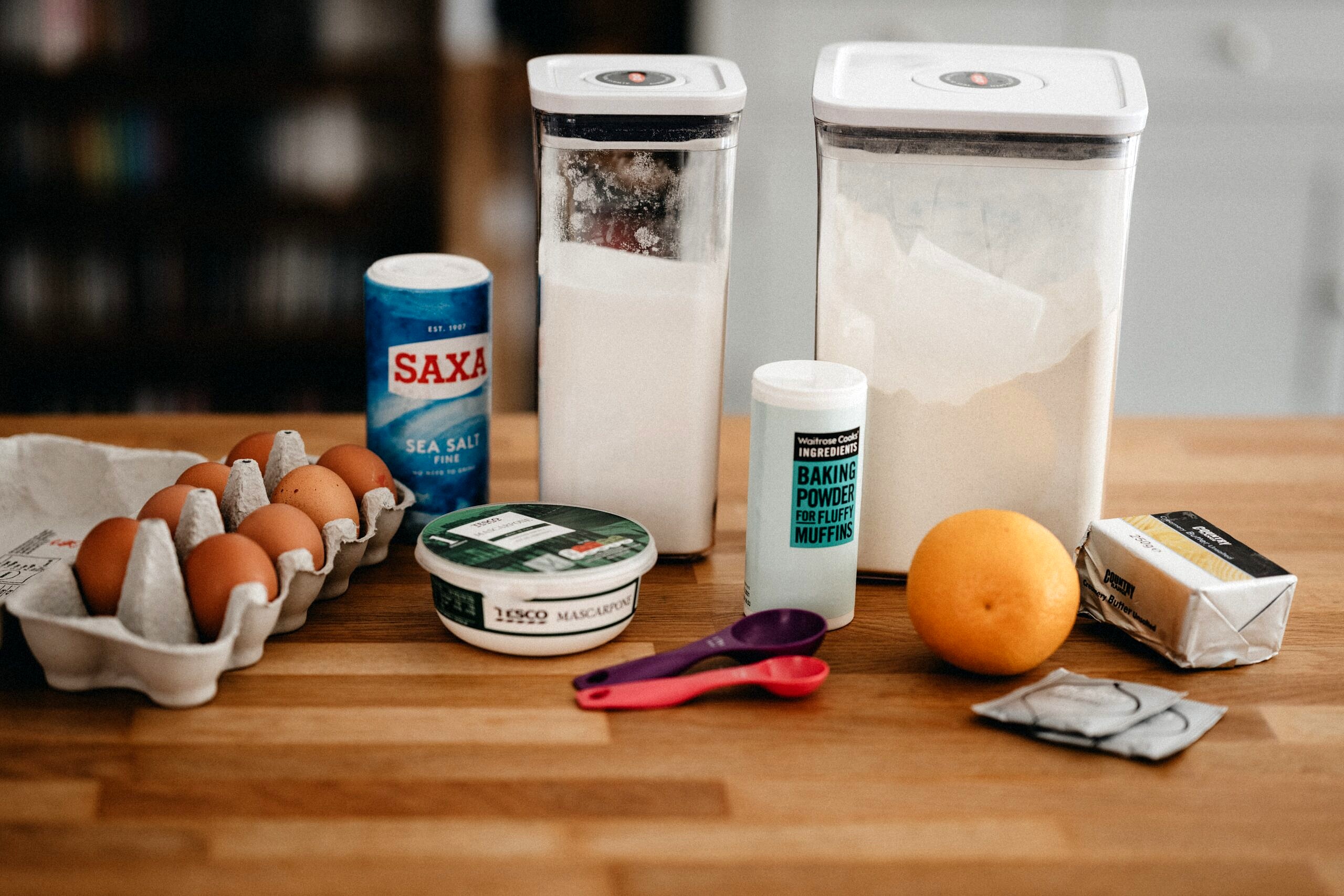
www.abbeyskitchen.com/about-abbey/

Last Updated October 20, 2022. Published January 12, 2022 By Abbey Sharp 62 Comments

Mom Guilt | My Breastfeeding Failure Story

I share my own mom guilt associated with breastfeeding failure and discuss the horrible myth that nursing comes naturally to all women (when anyone who has ever tried it knows that's total BS).

I share my own mom guilt associated with breastfeeding failure and discuss the myth that nursing comes naturally to all women.

I’ve watched a lot of women breastfeed. It never looked fun, but it did look relatively easy. My girlfriends would so effortlessly pick their kids up, blindly pop them under their nursing cover, and carelessly prop them up with a single arm, using the other to sip coffee or eat their lunch. I assumed there would be a bit of a learning curve, sure. But breastfeeding is always celebrated as being natural and inherent, both for baby and for mom, it couldn’t possibly take too much effort and mom guilt to figure it out. Until it took everything in me and more.

My Mom Guilt and Breastfeeding Failure Story

Abbey Sharp holding a baby discussing mom guilt.

Before baby arrived, I was prepared AF. I spent all of my time listening to podcasts, reading books, texting my doula a MILLION questions, and watching YouTube videos on latching. I dreamt about that first latch after baby and my skin to skin (see my story on my birth plan here), and had built it up to be a magical, beautiful moment suspended in time. Baby looking into my eyes, nestled tightly against my breast, solidifying a bond I had built and dreamed about for the past 9 months and beyond (AKA, no mom guilt in the picture). But that’s not really what happened.

Our first “latch” right after delivery wasn’t effortless, at all. Cue the mom guilt. It was awkward, quick and I guess just “good enough” since baby wasn’t expected to need any real nourishment from me right away after birth. And honestly, because I had lost so much blood (and was TOTALLY delirious), I barely remember it at all. What I do remember are all of my (MANY) my attempts at breastfeeding in the days and weeks to come.

After my doula went home, I was basically left to try to figure out breastfeeding myself every time E cried. Let’s just say it didn’t go so well. Poor E screamed the ENTIRE night at the hospital (kudos to my hubby for holding the little bean so mom over here could sleep), probably because he was hangry AF. Every attempt I made to put him on the breast was met with a total meltdown. I ended up having to have the nurse hand-express my breast at 2 AM, meaning she had to forcefully squeeze my nipple for about 40 minutes at a time. FML. All that pain for about a teaspoon of the coveted colostrum for babe (aka. the early thick breast milk). Parents reading this right now can probably relate to this level of mom guilt.

A baby's hand on an arm.

It was already such a struggle, but I had high hopes for my breastfeeding potential. We had a group breastfeeding class the next day and I was an eager student!

Fast forward to the hospital tutorial where we were all told a kitchy story about the boob being a restaurant (the “breastaurant”) and the milk being the waiter and when the waiter takes his sweet ass time, the customer (my baby) gets pissed. Talk about mom guilt! The lactation consultant then came around and attempted to get everyones baby latched but when she got to me, she said, “your baby is too mucus-y to want to eat.” Yes, E did sound like a English bull dog for the first few weeks of life because he was congested to the max. She then gave him a little saline in his nose and moved onto the next kid. So yah, I still didn’t know what the fuck I was doing.

You got this, Abbey, I told myself constantly, he’s just a little congested. This will get easier once that clears up. Until, again, it didn’t.

We went home later that day and after dealing with terrible mom guilt, super bad nipple pain and a very distraught hangry baby, I picked up my phone and called the first lactation consultant on my list. Yes, I had a pre-meditated list. Being super prepared and type A, I had gathered a list of recommended LC’s from my mom Facebook group for these exact types of emergencies. Miraculously, the LC agreed to come out and see me first thing the next morning, even driving through a terrible ice storm (yes, in April – #Canada).

Abbey Sharp holding a baby.

That night, I was up constantly trying (and failing) to breastfeed little E. He just wasn’t latching. He just wouldn’t stop crying. And while the nurse showed me how to hand-express, I just could never get enough.

I gave into the mom guilt and I ended up having to supplement using formula. My heart broke a bit. Okay, so it broke a lot.

A woman holding a baby.

Publicly ask me if there’s any shame in formula feeding and I will scream out, “HELL NO, FED IS BEST!” But when I was left feeling like yet again, my body was failing to do what it was designed to do (echoes from my infertility IVF experience), I couldn’t help but feel a wave of mom guilt. But it was just night two, and my milk wasn’t even expected to be “in” quite yet. It was surely just a matter of time. Plus, help was on the way!

My first LC session started with news I truly feared – poor E had a tongue and lip tie, and they were pretty severe. If you’re not familiar with these terms, open your mouth and feel the little frenulum (piece of tissue) that connects the bottom of your tongue to the bottom of your mouth. When you have a tongue tie, this tissue is so tight that it can prevent proper movement of the tongue (something that’s really important during breastfeeding). Ditto for the lip tie except it keeps the lip from flaring out (again, a key element of a good solid breastfeeding latch). I was definitely upset by the news, but not all that surprised. I had a lip tie that had to be cut when I was 13 and about to get braces, so I knew this was something I planned to get checked out even before I was experiencing breastfeeding struggles.  After the diagnosis, we then spent about 2 1/2 painful (literally, really fucking painful) hours trying to get E to latch using different holds. After hours of listening to him scream and fuss, we gave up, and just hand expressed. It was completely miserable and totally exhausting, but the worst was yet to come. I told the LC I had had to supplement with formula to get us through the previous night, and I got the response I feared most – “Oh…” Talk about mom guilt!

Abbey Sharp playing with a baby discussing mom guilt.

I felt like the worst mom ever and I was only a day in.

Between the hormones, exhaustion, the pain and the mom guilt of feeling like I was failing at breastfeeding, I literally just cried the whole night. I cried multiple times over the next week as well, all because I just couldn’t seem to do what I believed was supposedly so “natural” for me to do. I couldn’t get the baby to latch, so I was pumping every hour and a half and bottle feeing. But even with all of that effort, I couldn’t even seem to make enough milk. My femininity and role as a woman and mother was in question. My whole sense of self-worth was quickly slipping away.

And while I was busy judging myself, I had additional mom guilt about what people would think. The first time I went out with E and brought his (pumped milk) in a bottle, I was sure I was being judged by every other woman around me. Every time someone would congratulate me on the little one and ask me how I was, the next question in line was always “are you breastfeeding?” It would take everything in me to try not to cry as I had to admit that we were doing our best. Would they think I’m lazy? Vain? Selfish? Unmotherly?

My Personal Challenges with Breastfeeding and Mom Guilt

Abbey Sharp holding a baby.

It turns out that I was set up for challenges with breastfeeding from the start. Not only was baby E’s lip and tongue tie an issue (which still caused issues after their release due to an arched palate formed in utero because of the ties), but having PCOS and a postpartum hemorrhage meant a reduced (and delayed) milk supply.

When I was finally able to pump enough milk for E (with three days where I was even able to bank about 3 oz a shot), he would go through another growth spirt and cluster feed all day long. I found find myself, yet again, drowning (and supplementing) again. My hubby would remind me what an amazing job I was doing and how insignificant that little bit of supplemented formula was, but I felt an overwhelming wave of mom guilt and shame every single time.

Over the course of just three weeks I had spent 8 hours with two different LCs, had taken E for two separate oral surgeries (one to release the tongue, and then another for the lip), and spent 2 more hours with an osteopath in hopes of improving his latch. Yet E wasn’t properly on the breast.

Abbey Sharp holding a baby next to a window.

I also was doing everything I possibly could on my end to improve my milk supply. I was taking fenugreek, garlic and Mother’s Milk supplements twice a day, drinking Mother’s Milk tea three times a day, pumping every 1 1/2 hours until my nipples were red and raw, eating all the boob foods (oatmeal, flax, carrots, apricots, almonds, asparagus, brewers yeast and more) and going to weekly acupuncture. Still I couldn’t keep up to my little hungry hippo. It wasn’t until I started taking Domperidone that I started to see some improvements in my supply (and even my dose of that had to be increased to keep up).

When I wrote this blog post, I was still feeling so much mom guilt. I was barely keeping a float on the supply (and still working my ass off every day and night just to stay out of the weeds), and only managing a few minutes per breast before the pain became unbearable and I would have to swap out the bottle for the boob. Some days, it would be a real struggle to not get down on myself, but here’s what I’ve learned in the process.

Learning the Hard Way About Mom Guilt and the Myth That Nursing Comes Naturally to Moms

Close up of baby feet.

We spend so much time preparing women for child birth, but what I’ve learned is that is literally the easy part. It’s also just like a few hours to a day worth of work. Breastfeeding, on the other hand, I have learned is CONSTANT work. Days, weeks, maybe months. We need to start investing in our preparation for those potential challenges and it starts with recognizing the myth that breastfeeding comes naturally to all of us parents. That is BS. Here are some things I’ve learned about mom guilt that have helped me and may also help you get through when you feel like your failing at breastfeeding.

Don’t Ask Someone If They Are Breastfeeding Their Child

You never know what their story is, and what their rationale is for how they choose to feed their baby. It’s also none of your damn business.

Fed is Truly Best

Photo of a baby's feet.

There were days when I felt like I was getting behind on my milk and part of me was trying to mom guilt myself into believing that maybe he needed less (so I wouldn’t have to supplement with formula). But had I did that, E wouldn’t have grown as beautifully as he has (our pediatrician was THRILLED with his weight gain), and ultimately, that’s what really matters.

Remember: Happy Healthy Mom, Happy Healthy Baby

What’s “best” for baby is not just about probiotics and the nutrient composition of their diet. It’s also about the parents being in a good place too. There were days that trying to breastfeed and pumping every hour on the hour was NOT what was best for my wellbeing and mental state. It often meant I wouldn’t leave the house out of mom guilt that I wasn’t pumping as much as I “could”. Letting go of the reigns a bit and allowing myself to just do what I comfortably could meant a happier mom who could more effectively take care of her baby.

Remind Yourself How Amazing Science and Technology Is

Much the same way I had to come to terms with the idea that modern science was going to enable me to conceive and carry this child, I had to ignore my mom guilt and remind myself that that same amazing technology was going to help me support the growth of my child. Despite what crunchy granola parents may have you believe on forums and Facebook groups, formula isn’t poison. It saves millions of babies lives and may be the key to helping yours thrive. We are so amazingly lucky to have these options.

Know That Breastfeeding is a Relationship That Takes Time (and Sometimes Just Doesn’t Work Out)

Breastfeeding doesn’t come naturally, even if it is supposedly a natural phenomenon (and pretty amazing once you really know all of the mechanics of it). It may take days, weeks, or even months to find your groove (I’m still trying to keep this in mind myself), and if you don’t, then that is totally okay too. Our relationship with our babe is made up of millions of little tiny relationships, breastfeeding is just one small piece of the pie.

Reframe Your Situation as a Positive

While I definitely had to grieve the loss of my expectation that I would have this special easy “natural” breastfeeding experience with my son, bottle-feeding actually has some SERIOUS perks. It meant that I could leave my child with a caregiver, family member or (shocker!!), my VERY capable husband without the mom guilt that he won’t get fed because he will only take a breast. Honestly, I cannot imagine the anxiety I would have had if I had to be tethered to E all day and night. It also meant my husband not only can split the childcare responsibilities with me 50/50 (and not to brag, but he’s amazing and he does), but it also meant that he got to bond with E just as much as I did in those early months. A lot of dads describe feeling really useless and left out when mom exclusively breastfeeds their babe so I was so happy I could give him that experience.

Be Compassionate

Be compassionate to yourself and other parents who may be experiencing mom guilt. I will say that one of the beautiful things that came out of my own struggle with breastfeeding is that I was able to recognize my own deep-seeded prejudice against the choices mothers make on how they choose to feed their babies. While I used to see a woman buying a box of formula and unconsciously judge that choice, I now look at her with compassion, comradery and just so much respect. We’re all just doing the best we can for our babies and we do that because we love them.

Become an Abbey’s Kitchen Subscriber

I would love to hear your own thoughts about mom guilt and breastfeeding failure. Leave me a comment below and share this with a mom who is struggling with her own breastfeeding and mom guilt journey!

MORE BLOG POSTS YOU MIGHT LIKE:

If you liked this blog post discussing mom guilt and my breastfeeding story, then you might also enjoy more blog posts on pregnancy and motherhood:

  • Can You Diet While Pregnant?
  • Is Soy Formula Bad for Babies That Are Vegan or Allergic to Dairy?
  • Cow’s Milk Protein Allergy in Infants | Should Breastfeeding Moms Go Dairy Free?
  • Pregnancy Food Safety | Foods to Avoid While Pregnant
  • Do Certain Foods Really Help Morning Sickness
  • Not Losing Weight Breastfeeding? Does Breastfeeding Cause Weight Loss or Weight Gain?
Abbey Sharp

Abbey Sharp is a Registered Dietitian (RD), regulated by the Ontario College of Dietitians. She is a mom, YouTuber, Blogger, award winning cookbook author, media coach specializing in food and nutrition influencers, and a frequent contributor to national publications like Healthline and on national broadcast TV shows.
www.abbeyskitchen.com/about-abbey/
  • Previous Page
  • Go to page 1
  • Interim pages omitted …
  • Go to page 28
  • Go to page 29
  • Go to page 30
  • Go to page 31
  • Go to page 32
  • Interim pages omitted …
  • Go to page 89
  • Next Page

Get started with

Eight Free Recipe Books

From the co-founder of Neue Theory and creator of the Hunger Crushing Combo

Sign me up!
Abbey smiling at table
Abbey Sharp

“Foods may never be nutritionally equal. But we can make them morally equal by recognizing that our worth is never determined by what's on our plate.”

— Abbey Sharp, RD About Abbey ◥

Books

  • HCC™
  • Mindful Glow
  • Free E-Books

Blog

  • Nutrition
  • Recipes
  • Motherhood
  • Life

Explore

  • Neue Theory™
  • Bite Back
  • YouTube

Abbey

  • About
  • Coaching
YouTube TikTok Instagram Facebook X Pinterest
Abbey Sharp - The No BS Dietitian From Abbeys Kitchen

© Abbey's Kitchen 2026  All Rights Reserved •  ACCESSIBILITY STATEMENT •  Privacy Policy

This site uses cookies. By continuing to browse the site, you are agreeing to the use of cookies Accept Privacy Policy

Privacy & Cookies Policy

Privacy Overview

This website uses cookies to improve your experience while you navigate through the website. Out of these, the cookies that are categorized as necessary are stored on your browser as they are essential for the working of basic functionalities of the website. We also use third-party cookies that help us analyze and understand how you use this website. These cookies will be stored in your browser only with your consent. You also have the option to opt-out of these cookies. But opting out of some of these cookies may affect your browsing experience.
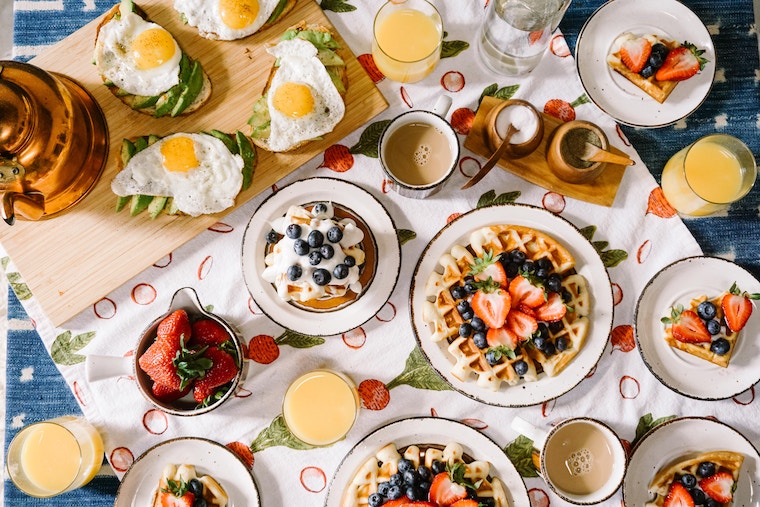
Necessary
Always Enabled
Necessary cookies are absolutely essential for the website to function properly. This category only includes cookies that ensures basic functionalities and security features of the website. These cookies do not store any personal information.
Non-necessary
Any cookies that may not be particularly necessary for the website to function and is used specifically to collect user personal data via analytics, ads, other embedded contents are termed as non-necessary cookies. It is mandatory to procure user consent prior to running these cookies on your website.
SAVE & ACCEPT

Rate This Recipe

Your vote:


A rating is required
A name is required
An email is required