• Skip to main content

Abbey's Kitchen

Healthy Recipes, Nutrition Myth Busting, Healthy Eating Tips

  • Books
    • HCC™
    • The Mindful Glow Cookbook
    • Recipe eBooks
      • Family
      • Hypothyroidism
      • BLW
      • Vegan Week 1
      • Vegan Week 2
      • Vegan Week 3
      • Keto
      • Gluten Free Week 1
      • Gluten Free Week 2
      • Fitness
      • Paleo
  • Blog
    • Nutrition
    • Recipes
    • Motherhood
    • Life
  • Explore
    • Neue Theory™
    • Bite Back With Abbey Sharp
      • Apple Music
      • Spotify
      • Amazon Music
    • YouTube
  • Abbey
    • About
    • Coaching
    • Contact

Abbey Sharp

Last Updated June 20, 2022. Published June 20, 2022 By Abbey Sharp Leave a Comment

Vegan Oatmeal Pancakes | Pink with No Added Sugar or Food Dye!

These pink vegan oatmeal pancakes have no added sugar or food dye, and are perfect for Mother’s Day and other themed parties.
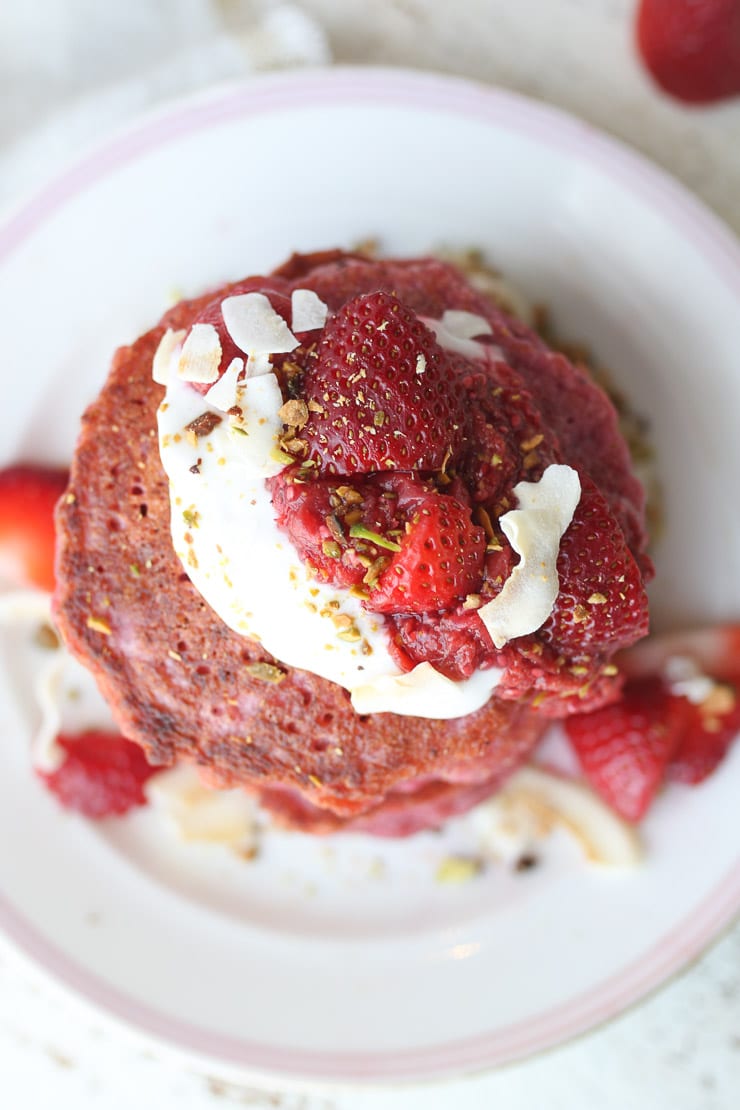
Birds eye view of pink vegan oatmeal pancakes topped with strawberries and yogurt.

As a mom to a busy toddler, I am well aware of the importance of making sure foods LOOK appetizing and fun. I first made these pink vegan pancakes for my neighbours 4-year old girls for a Valentine’s Day brunch and since my son took a huge liking to them, I thought – WHY NOT FOR MY BOY TOO?! So for Mother’s Day this year, I figured I would make these pink oatmeal vegan pancakes and freeze the extras for a quick healthy breakfast for my son for weeks to come.

Why This Recipe Works

I love this recipe for a number of reasons. First, they’re such a beautiful pink colour. Second, they come together with only a few easy steps, and you probably have most of the ingredients on hand already (keep reading for pitaya powder replacements). Third, these vegan oatmeal pancakes are so easy to batch prep and freeze for weeks of delicious pancakes mornings. What’s not to love?

Key Ingredients

Quick Oats – I am a big oat person and it’s such a common pantry staple that is rich in fibre. I prefer the quick oats in this recipe but if you only have rolled/ old fashioned, you can pulse them in the food processor to break them up a bit.

Whole Wheat Flour – You can also use gluten free flour if you want to keep these gluten free, and if flour is just not available in your grocery stores, you can pulverize the oats to make an oat flour.

Pitaya Dragon Fruit Powder- I love this stuff because it’s naturally vibrant pink and is packed with antioxidants, yet it is artificial food dye free, and has no added sugar. See below for substitutions.

Carbonated Water- Yes, this may seem strange. BUT if you want to make pancakes (or other baked goods) vegan without an egg, carbonated water actually provides a solid lift and fluffy texture. I love flax eggs, but I do find that sometimes they can create a more dense baked good, so if you want that fluffy texture, carbonated water works.

Ripe Bananas – These also stand in for some of the egg, but also add natural sweetness so honestly, these do not even need any maple syrup!
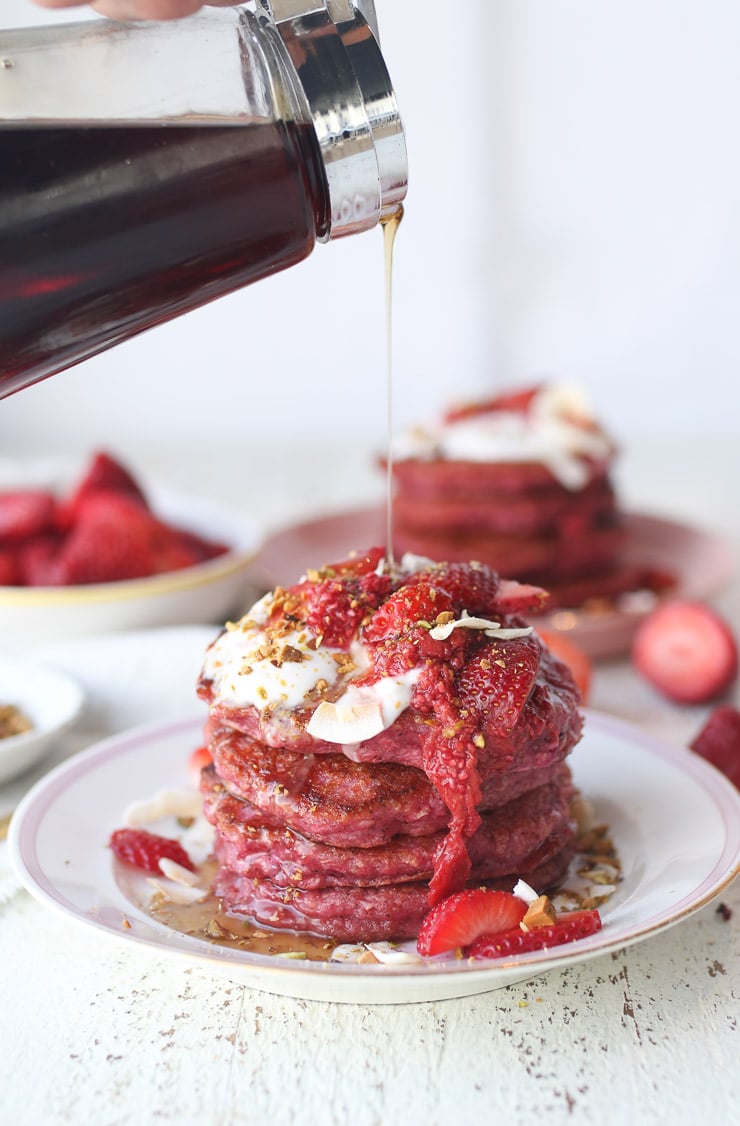
A stack of pink oatmeal pancakes topped with strawberries and drizzled with maple syrup.

How to Make This Recipe

Step 1: Mix together the oats, whole wheat flour, baking powder, salt and pitaya powder.

Step 2: Mix together the banana, vegan butter, maple syrup, vanilla and almond milk. Mix the dry ingredients into the wet until combined. Then add in the carbonated water and mix until well combined.

Step 3: Heat some oil or vegan butter in a frying pan over medium heat. Add about 3 tablespoons of the batter to the pan and pan fry until bubbles start to form around the edge. Flip and cook on the other side.

Step 4: To serve, top the pancakes with yogurt, chia jam, strawberries, maple syrup, pistachios and coconut, as desired. Enjoy!
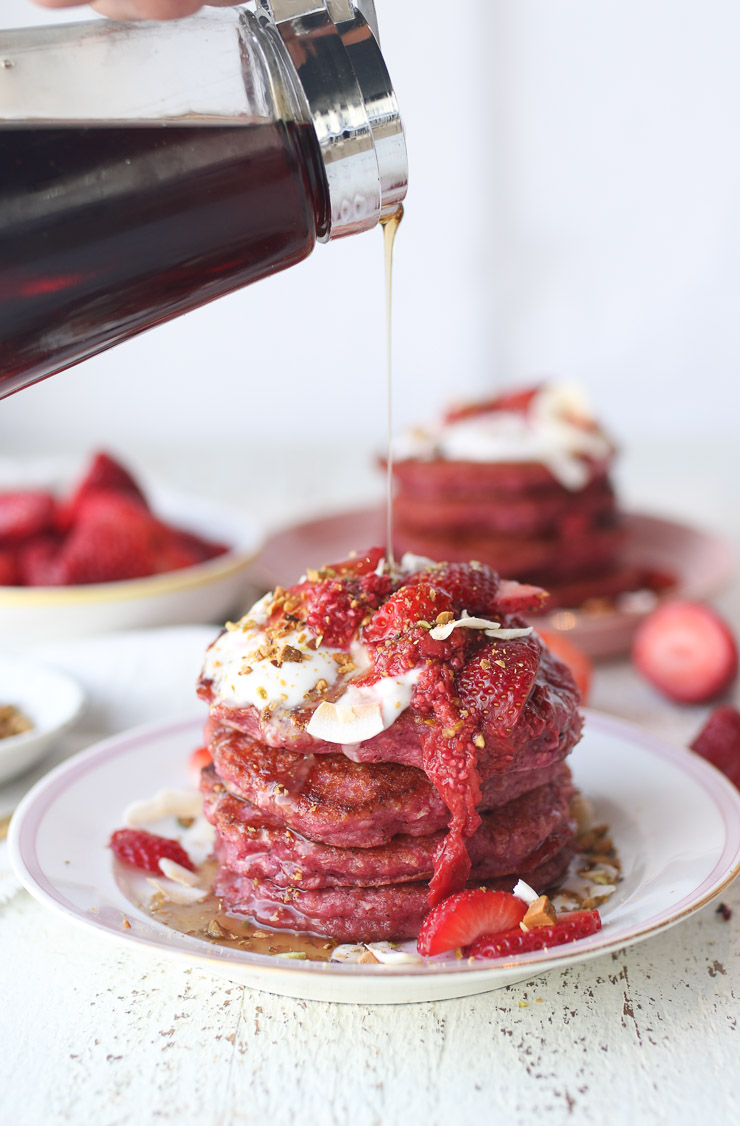
Maple syrup being poured onto pink vegan oatmeal pancakes.

Expert Tips

One of my favourite parts of making pancakes for brunch is that each person at the table can customize them to their own tastebuds. For example, If you’re serving these pancakes for brunch for the whole family (like for a little Mother’s Day brunch or breakfast), you could totally serve with fruit, chia jam, or yogurt.

You could also serve these eggs with some scrambled eggs (or scrambled tofu) on the side to make for the ultimate nutritious brunch feast!

Recipe FAQs

What can I use instead of the pitaya powder?

This is a specialty ingredient, but there are other options. You could use ground up freeze dried berries, or a natural food dye for the pink colour. Alternatively, you could skip the pink colour in the batter and just add in some frozen raspberries or diced strawberries.

If I have eggs, can you use them instead of the carbonated water?

Yes, just use one egg in place of 1/4 cup of the carbonated water.

How should I batch freeze these vegan oatmeal pancakes if I want to prep them?

I would ideally let them cool, then freeze them on a baking sheet lined with parchment or a silpat for an hour, then transfer to a freezer bag for up to 5 months. When you want a pancake for a snack or breakfast, just pull it out and thaw in the fridge or put it right into the microwave until warm.
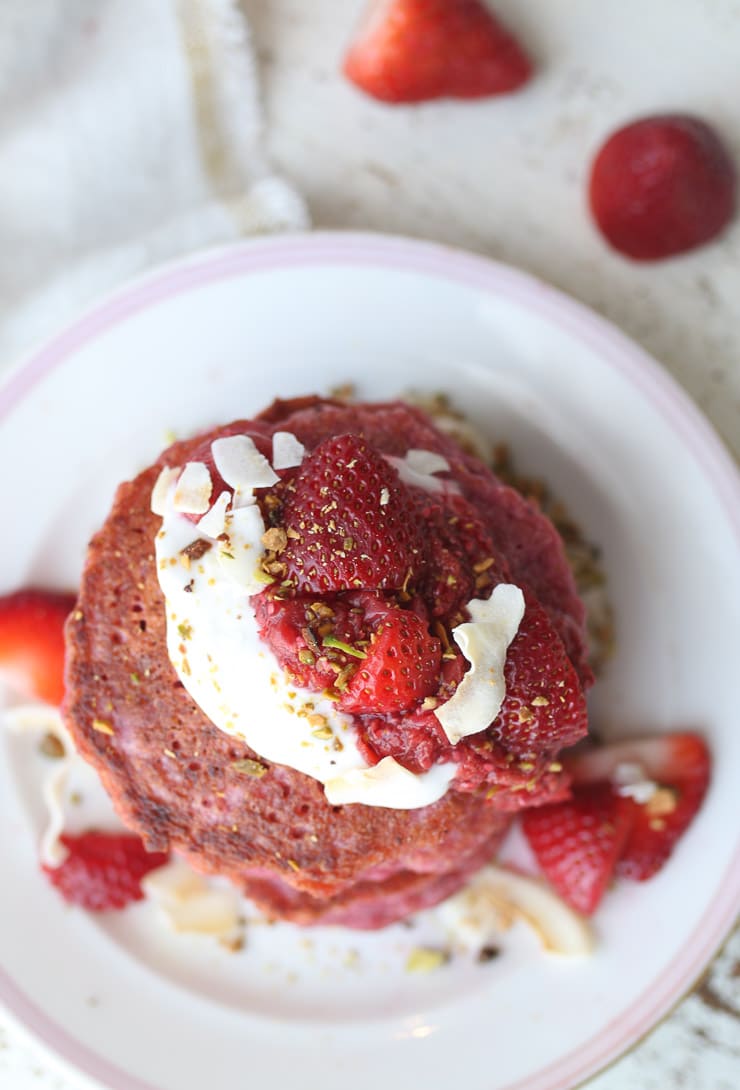
birds eye view of vegan pink oatmeal pancakes garnished with fresh berries and chopped nuts on a white plate

Have you tried these pink vegan oatmeal pancakes? Leave me a comment below with your thoughts!

More Recipes You May Like

If you liked this recipe for vegan oatmeal pancakes, you might enjoy some of the other brunch recipes on the blog!

  • Apple Caramelized Onion Strata
  • Vegan PB&J Stuffed Sweet Potatoes
  • Vegan Breakfast Sausages
  • Greek Yogurt Parfaits
  • Egg Cups 5 Ways
  • Vegan Lemon Bar Frappuccinos
Print Recipe
5 from 1 vote

Vegan Oatmeal Pancakes | Pink with No Added Sugar or Food Dye!

These pink vegan oatmeal pancakes have no added sugar or food dye, and are perfect for Mother's Day and other themed parties.
Prep Time10 minutes mins
Cook Time20 minutes mins
Total Time30 minutes mins
Course: Breakfast
Cuisine: American
Servings: 12 pancakes
Calories: 72kcal
Author: Abbey Sharp

Ingredients

  • 1 cup quick oats
  • 2/3 cup whole wheat flour
  • 2 tsp baking powder
  • ¼ tsp salt
  • 4 tsp pitaya powder
  • 1/2 c mashed ripe banana
  • 1 tbsp vegan butter melted
  • 1 tbsp maple syrup
  • 2 tsp vanilla extract
  • ¾ cup unsweetened vanilla almond milk
  • ¼ c carbonated water like Club Soda or Perrier
  • oil or vegan butter for greasing pan

For serving:

  • Strawberries sliced
  • Strawberry Cherry chia jam
  • Almond yogurt
  • Maple syrup
  • Pistachios crushed
  • Coconut toasted

Instructions

  • In a bowl, mix together the oats, whole wheat flour, baking powder, salt and pitaya powder.
  • In another bowl, mix together the banana, vegan butter, maple syrup, vanilla and almond milk. Mix the dry ingredients into the wet until combined. Then add in the carbonated water and mix until well combined.
  • Heat some oil or vegan butter in a frying pan over medium heat. Add about 3 tablespoons of the batter to the pan and pan fry until bubbles start to form around the edge. Flip and cook on the other side. Keep pancakes warm in a 200 F oven while you finish the remaining pancakes.
  • To serve, top the pancakes with yogurt, chia jam, strawberries, maple syrup, pistachios and cocout, as desired. Enjoy!

Notes

One of my favourite parts of making pancakes for brunch is that each person at the table can customize them to their own tastebuds. For example, If you’re serving these pancakes for brunch for the whole family (like for a little Mother’s Day brunch or breakfast), you could totally serve with fruit, chia jam, or yogurt.
You could also serve these eggs with some scrambled eggs (or scrambled tofu) on the side to make for the ultimate nutritious brunch feast!

Nutrition

Calories: 72kcal | Carbohydrates: 13g | Protein: 2g | Fat: 2g | Saturated Fat: 1g | Sodium: 79mg | Potassium: 170mg | Fiber: 2g | Sugar: 2g | Vitamin A: 51IU | Vitamin C: 1mg | Calcium: 62mg | Iron: 1mg
Abbey Sharp

Abbey Sharp is a Registered Dietitian (RD), regulated by the Ontario College of Dietitians. She is a mom, YouTuber, Blogger, award winning cookbook author, media coach specializing in food and nutrition influencers, and a frequent contributor to national publications like Healthline and on national broadcast TV shows.
www.abbeyskitchen.com/about-abbey/

Last Updated June 17, 2022. Published June 17, 2022 By Abbey Sharp 12 Comments

Vegan Stuffed Sweet Potatoes with High Protein Guacamole (Gluten Free)

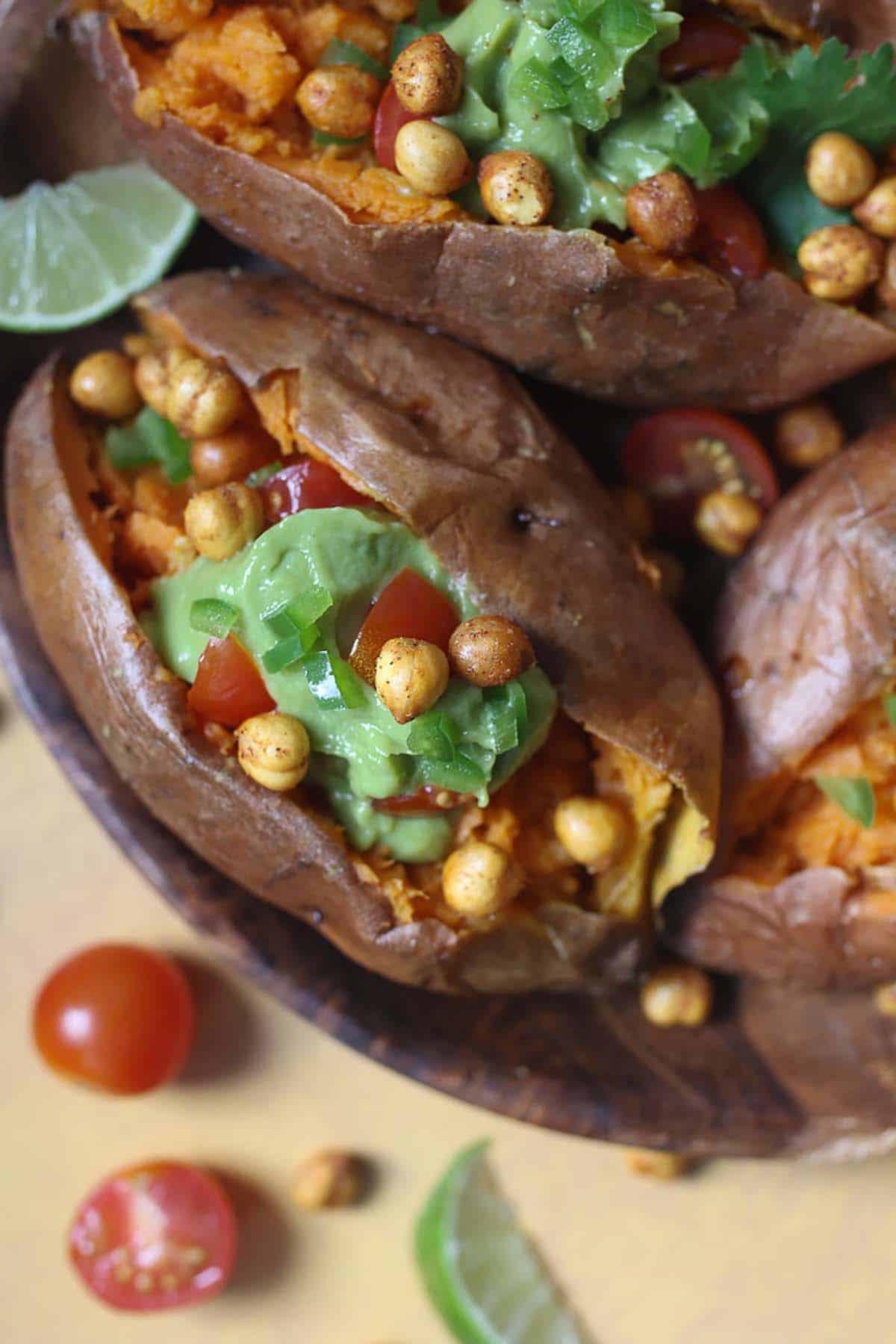
Guacamole and chickpeas stuffed sweet potato served on a wooden plate.

These vegan stuffed sweet potatoes with high protein guacamole are a perfectly balanced vegan meal with protein, fibre, healthy fat and carbs!

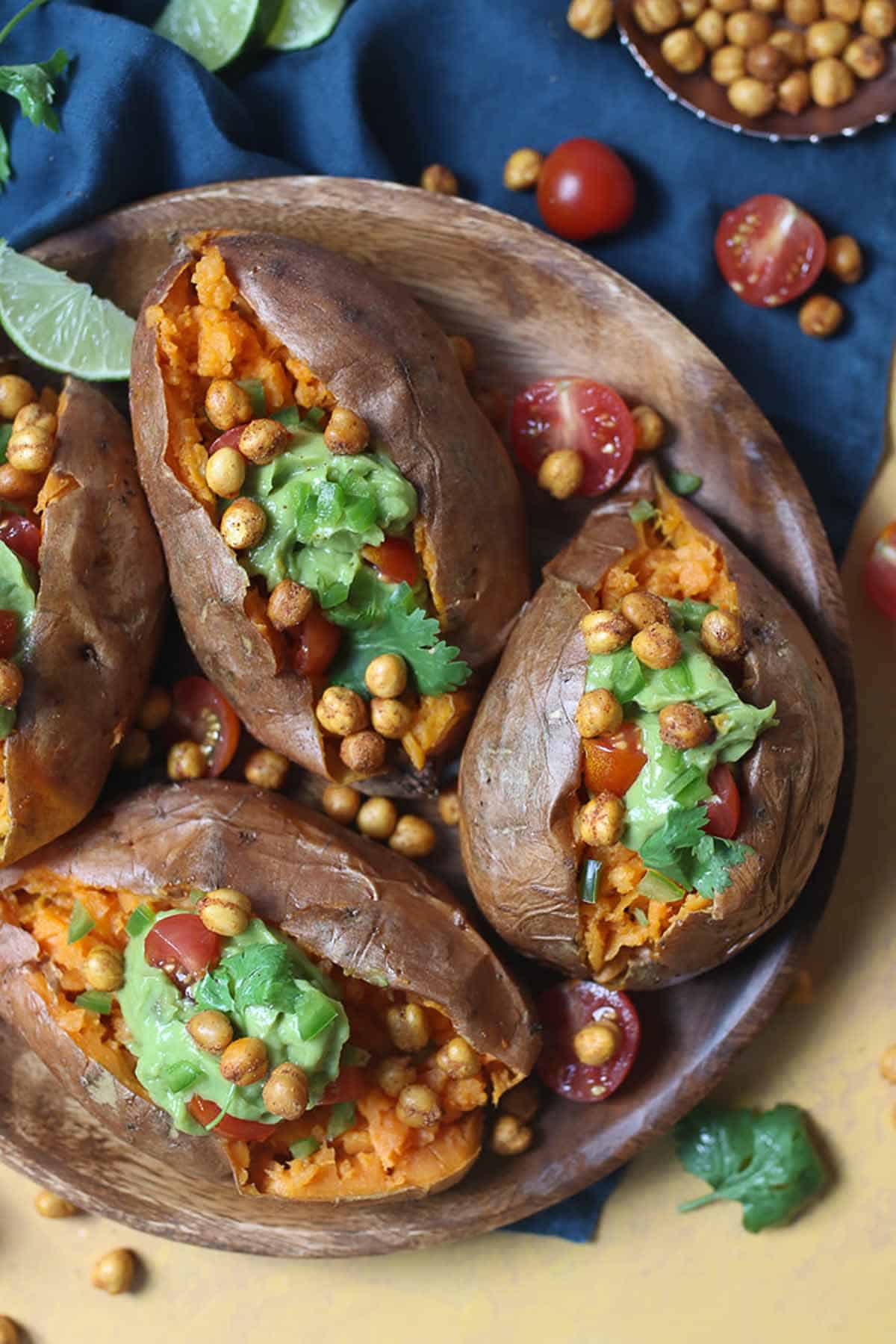
Birds eye view of four avocado stuffed sweet potatoes with guacamole and crispy chickpeas and garnished with cilantro.

I think it’s pretty clear right now that I’m a big sweet potato fan. Roasted, grilled, baked, mashed – Imma eat ALLLLL the sweet potatoes. However, under usual circumstances, sweet potatoes are served as a side dish – not a main!

Not anymore. I wanted to switch things up and turn sweet potatoes into a main dish by stuffing them with a vegan protein guacamole and topping them with spicy crispy chickpeas.

Table of contents

  • Why This Recipe Works
  • Key Ingredients
  • How to Make This Recipe
  • Expert Tips
  • Recipe FAQs
  • More Recipes You Might Like

Why This Recipe Works

These vegan stuffed sweet potatoes are made for guacamole lovers! It’s also hearty enough to have as a main, and is the perfect Meatless Monday dish that can be enjoyed by vegans and carnivores alike.

This recipe is not only loaded with protein, but it also provides a hefty dose of fibre and healthy fats making it a nutrient packed and satiating meal.

Key Ingredients

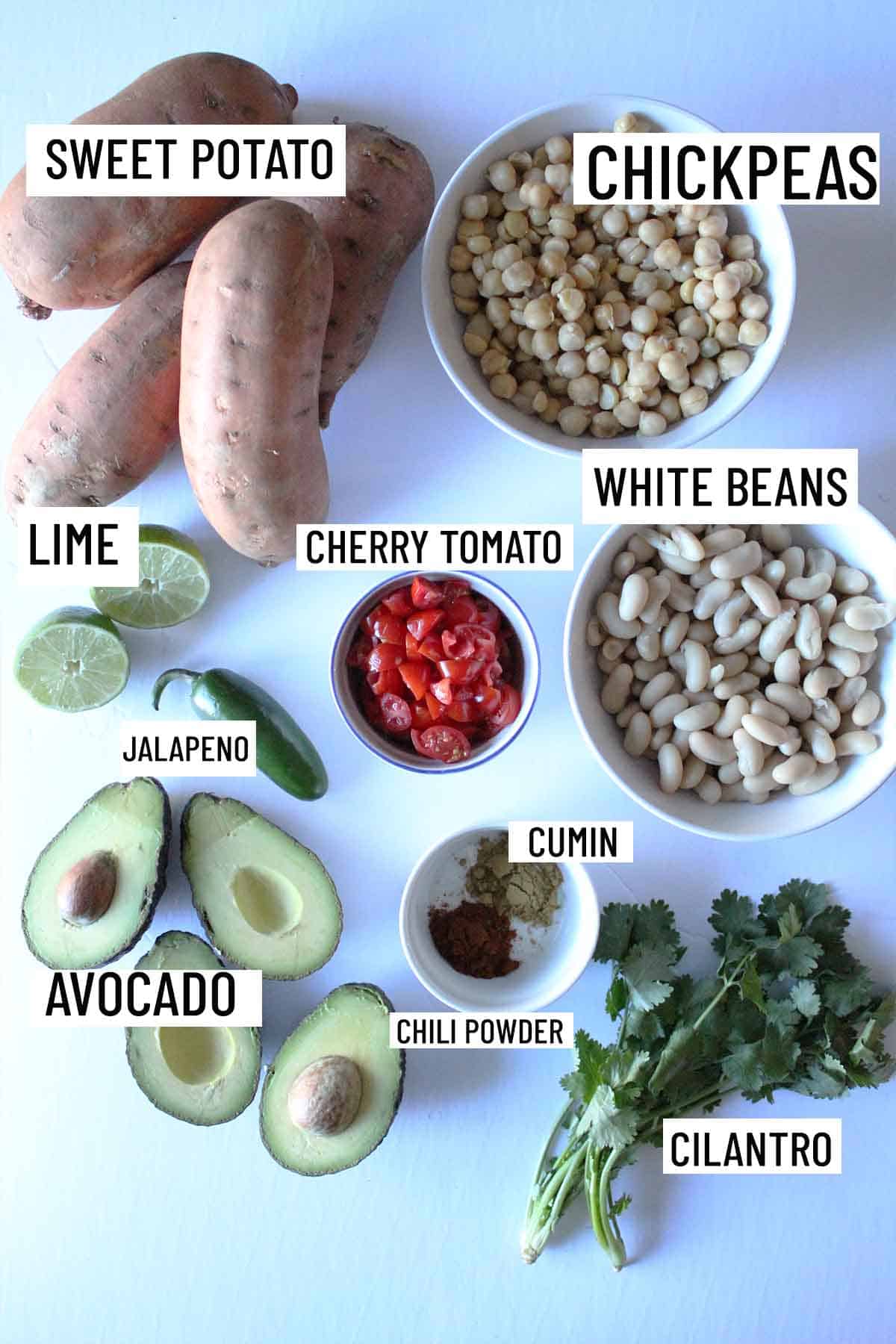
Birds eye view or portioned ingredients for guacamole stuffed sweet potatoes including sweet potato, avocado, cilantro, chili powder, cumin, white beans, cherry tomato, chickpeas, lime, and cilantro.

Protein Guacamole – The secret ingredient to making the protein guacamole is to add white beans. White beans are not only loaded with protein and fibre, but they don’t alter the flavour profile at all while also adding an extra dose of creaminess to the guac. With the addition of lime juice, jalapeño, cherry tomatoes and cumin – we are in guacamole heaven!

Spicy Chickpeas – to make the spicy chickpeas all you’ll need are canned chickpeas, olive oil for roasting, as well as cumin and chili powder for some extra spice and Mexican flavour!

How to Make This Recipe

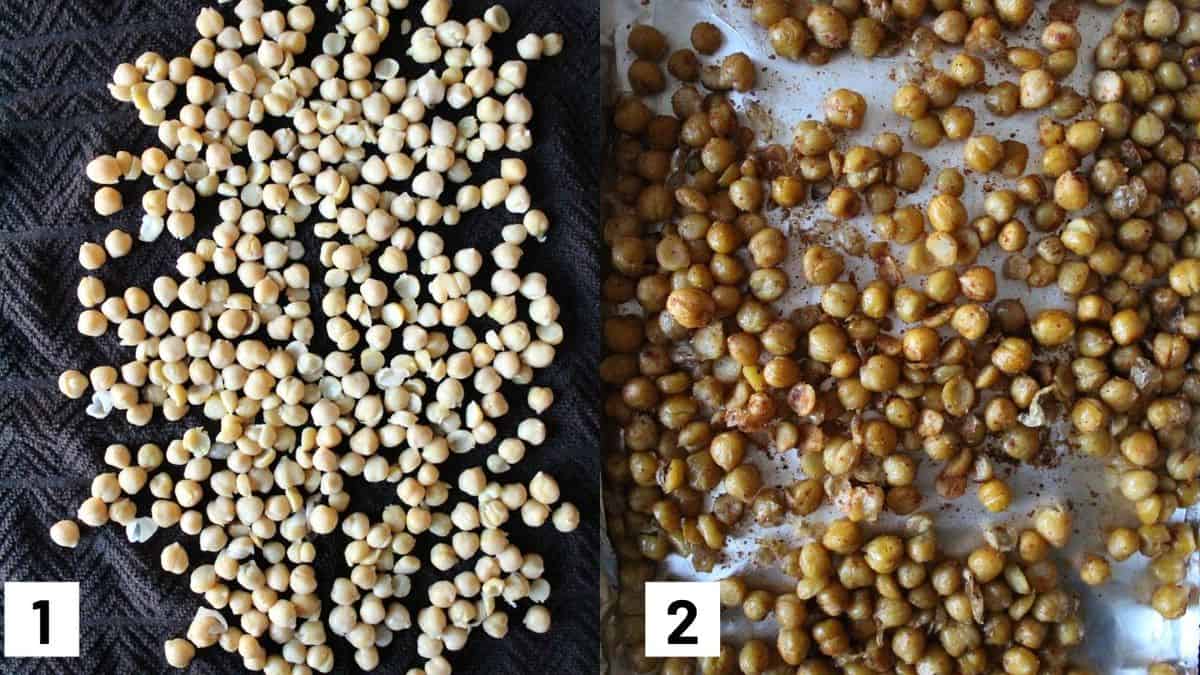
Two images showing how to prepare crispy chickpeas by rubbing them between two towels, and roasting them in the oven with spices.

Step 1: While sweet potatoes are baking in the oven, spread the chickpeas on a kitchen towel, top with another towel and rub the chickpeas until they pop out of their skins. Transfer the dried chickpeas to a baking sheet and toss with olive oil. Bake for 20-22 minutes.

Step 2: Toss with chili powder, cumin, and fleur de sel and return the baking sheet to the oven with the temperature off and leave the chickpeas in the oven, with the door closed until the pan is cool to touch, about 1 hour.

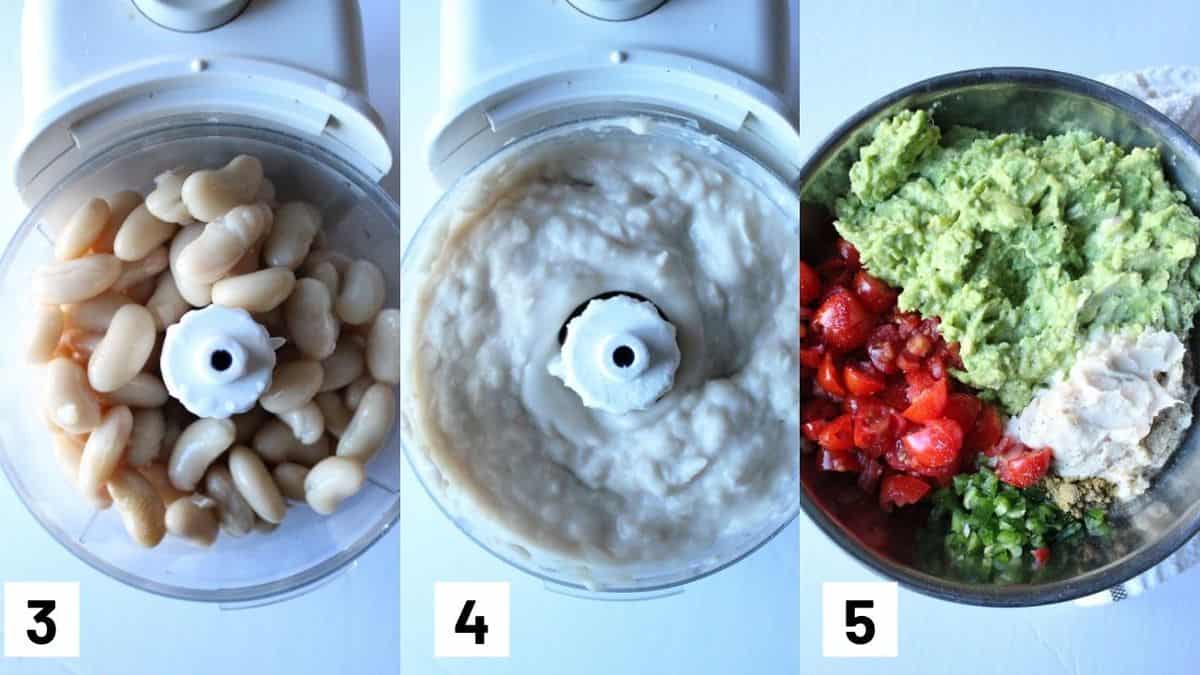
Three images showing how to make protein guacamole including blending the white beans and combining with mashede avocado, tomato, jalapeno, and cumin.

Step 3-4: Puree the cannellini beans with the lime juice in a food processor.

Step 5: Transfer to a bowl and mash in the avocado. Gently stir in the tomatoes, jalapeno, cumin, salt and pepper to taste.

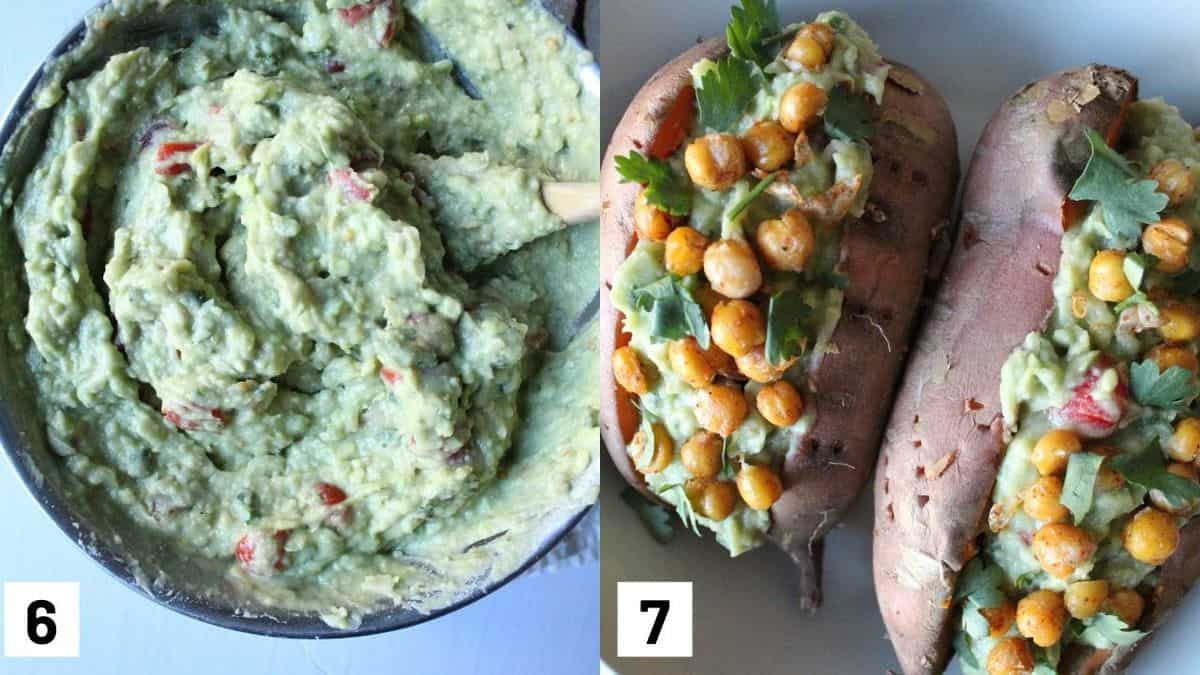
Two images showing the final guacamole mixture and two avocado stuffed sweet potatoes with crispy chickpeas.

Step 6-7: To serve, split the sweet potatoes in half lengthwise and fluff the insides. Top with a generous dollop of the guacamole and the crispy chickpeas. Garnish with cilantro and serve with lime wedges, if desired.

Expert Tips

These vegan stuffed sweet potatoes are based on my usual avocado hack where I like to add beans to my avocado toast to bulk up the protein and fibre. I basically just puree some white beans together with avocado, and limes, then stir in some tomatoes, jalapenos and cumin. That alone is so delish, you’re going to want extra protein guacamole for eating with veggies and chips.

There are no hard and fast rules when it comes to guacamole so you can totally make it your own depending on how you like it to taste. If you want it a bit more on the spicy side you can add more jalapeño, chili powder, paprika or sriracha. You can also add in more lime juice for more of a citrus kick or you can also take things to the next level by throwing in some garlic, chopped cilantro, or red or green onion. If you don’t need to make this recipe vegan, you can also throw in some feta cheese which would taste totally bomb in this recipe!

When it comes to baking the sweet potato, you can roast it in the oven for about an hour or so. But if you want to make this recipe quick and easy, you can also cook the sweet potato in the microwave. Using a fork, simply poke a few holes in the sweet potato and pop it in the oven for 10 minutes. If its not yet soft, heat for 2 minute intervals until cooked through. Keep in mind larger sweet potatoes will take longer to cook.

Close up of avocado stuffed sweet potato garnished with cilantro and tomato.

Recipe FAQs

How do I make spicy crispy chickpeas?

The key to getting spicy chickpeas super crispy is to rub the chickpeas really well to pop them out of their skins. You don’t have to get all of them off, but this will help them get super dry enough to crisp up.

What other flavour combination can I add to the chickpeas?

You could add one of my all time favourite Mexican chili-lime seasonings, tajin. You can also do paprika and cumin, or lime (juice + zest) and black pepper.

Can I make the protein guacamole ahead of time?

You bet! I recommend just putting plastic wrap directly on top of the avocado to prevent browning.

Is this recipe gluten free?

Yes! This recipe is completely gluten free, dairy free, nut free and vegan and therefore safe for people with a variety of diet restrictions.

More Recipes You Might Like

If you like these vegan stuffed sweet potatoes, you might also like these!

  • Korean Stuffed Sweet Potatoes 
  • PB&J Stuffed Sweet Potatoes
  • Apple Crisp Stuffed Sweet Potatoes
  • Peanut Satay Stuffed Sweet Potatoes 

Now tell me – what are your favourite stuffed sweet potato recipes? Have you made protein guacamole before? Have you tried these vegan stuffed sweet potatoes? Let me know your thoughts down in the comments!

Print Recipe
5 from 5 votes

Avocado Stuffed Sweet Potato (Vegan, GF, High Protein)

These avocado stuffed sweet potato with high protein guacamole are a perfectly balanced vegan meal with protein, fibre, healthy fat and carbs!
Prep Time20 minutes mins
Cook Time2 hours hrs 20 minutes mins
Total Time2 hours hrs 40 minutes mins
Course: Main Course, Dinner
Cuisine: American, Mexican
Diet: Gluten Free, Vegan
Servings: 4 people
Calories: 610kcal
Author: Abbey Sharp

Ingredients

  • Protein Guacamole:
  • 1 can cannellini beans drained and rinsed
  • 3 tbsp lime juice or more to taste
  • 2 ripe avocados
  • 1/2 jalapeno pepper finely minced
  • 1/2 cup diced cherry tomatoes
  • 1/4 tsp cumin or more to taste
  • Salt and pepper to taste
  • Spicy Chickpeas:
  • 1 can chickpeas drained and rinsed
  • 1 tbsp extra virgin olive oil
  • 1/4 tsp cumin
  • 1/4 tsp chili powder or more to taste
  • 1/2 tsp fleur de sel
  • Sweet Potatoes:
  • 4 sweet potatoes pierced with a fork
  • Cilantro for serving
  • Lime wedges for serving

Instructions

  • Preheat oven to 425 Line two baking sheets with parchment paper.
  • Place the sweet potatoes on a baking sheet and bake for 45-60 minutes or until tender.
  • Meanwhile, spread the chickpeas on a kitchen towel, top with another towel and rub the chickpeas until they pop out of their skins. Transfer the dried chickpeas to a baking sheet and toss with olive oil. Bake for 20-22 minutes.
  • Toss with chili powder, cumin, and fleur de sel and return the baking sheet to the oven with the temperature off and leave the chickpeas in the oven, with the door closed until the pan is cool to touch, about 1 hour.
  • Finally, before serving, puree the cannellini beans with the lime juice in a food processor. Transfer to a bowl and mash in the avocado. Gently stir in the tomatoes, jalapeno, cumin, salt and pepper to taste.
  • To serve, split the sweet potatoes in half lengthwise and fluff the insides. Top with a generous dollop of the guacamole and the crispy chickpeas. Garnish with cilantro and serve with lime wedges, if desired.

Notes

This recipe is based on my usual avocado hack where I like to add beans to my avocado toast to bulk up the protein and fibre. I basically just puree some white beans together with avocado, and limes, then stir in some tomatoes, jalapenos and cumin. That alone is so delish, you’re going to want extra protein guacamole for eating with veggies and chips.
There are no hard and fast rules when it comes to guacamole so you can totally make it your own depending on how you like it to taste. If you want it a bit more on the spicy side you can add more jalapeño, chili powder, paprika or sriracha. You can also add in more lime juice for more of a citrus kick or you can also take things to the next level by throwing in some garlic, chopping cilantro, or red or green onion. If you don’t need to make this recipe vegan, you can also throw in some feta cheese which would taste totally bomb in this recipe!
When it comes to baking the sweet potato, you can roast it in the oven for about an hour or so. But if you want to make this recipe quick and easy, you can also cook the sweet potato in the microwave. Using a fork, simply poke a few holes in the sweet potato and pop it in the oven for 10 minutes. If its not yet soft, heat for 2 minute intervals until cooked through. Keep in mind larger sweet potatoes will take longer to cook.

Nutrition

Calories: 610kcal | Carbohydrates: 95g | Protein: 20g | Fat: 21g | Saturated Fat: 3g | Sodium: 802mg | Potassium: 1497mg | Fiber: 26g | Sugar: 11g | Vitamin A: 32390IU | Vitamin C: 25mg | Calcium: 208mg | Iron: 7mg
Abbey Sharp

Abbey Sharp is a Registered Dietitian (RD), regulated by the Ontario College of Dietitians. She is a mom, YouTuber, Blogger, award winning cookbook author, media coach specializing in food and nutrition influencers, and a frequent contributor to national publications like Healthline and on national broadcast TV shows.
www.abbeyskitchen.com/about-abbey/

Last Updated March 14, 2023. Published June 16, 2022 By Abbey Sharp Leave a Comment

Food Myths and Food Labels – Are “Scary” Ingredients Bad for Your Health?

Close up of candy in colourful wrapping.

Are the ingredients listed on food labels really a cause for concern? We took a deep dive into the research to discuss the most common food myths on ingredient labels.

Close up image of colourful packed candy.

Alright, folks. Its time to put my food scientist hat on today and address all of the food myths we see in those scary Instagram Reels and TikToks we’ve seen. You know, the ones put out there by the uneducated influencers with bogus professional titles like “expert food coach” telling you that if you eat ingredients you don’t recognize, your body doesn’t recognize it either. Well according to “experts” on food myths, all those seemingly harmless ingredients lingering in every corner of your neighbourhood grocery store are causing: inflammation, bloating, gut disruption, cancer, leaky gut, headaches, fatigue and literally every other disease.

I know it sounds scary, and I personally understand this fear. This is precisely the type of fear-mongering pseudoscience language that drove me into an eating disorder as a young adult. But here at Abbey’s Kitchen, you know we are all about facts, not fear. There are a lot of so called poisonous ingredients so I could talk all day on these but let me start with a few of the popular ones and break them down into actual science.

Person with a headache.

Natural Flavours

So according to the FDA, “natural flavours” derive their aroma and flavour from naturally occurring plant or animal sources, including fruit, meat, fish, spices, herbs, roots, leaves, buds or bark. These ingredients are then distilled, fermented, and manipulated to yield the desirable flavour. This is in contrast to artificial flavours which derive their flavour profile from a synthetic chemical source. But it’s important to note that regardless of their source, natural foods and artificial foods all come from chemicals and most of the time, these chemical structures are indistinguishable from each other regardless of whether they were derived from a man-made or a natural source. So to me, this is a food myth, not a concern.

Image of chilis and limes on a table.

The controversy around these substances is that natural flavours can have stabilizers or preservatives aka artificial ingredients added to them like to help them perform better in food. The FDA also doesn’t require companies to disclose all of the ingredients in a flavour blend. So while research suggests that natural flavours are safe to consume for the vast majority of people, if you have dietary restrictions, or rare allergies, there may be some reason to avoid. So a vegan may want to avoid flavours derived from animals, and folks with a certain fruit allergy may want to avoid flavours derived from such fruit.

The good news about these food myths is that if any of the top common 8 allergens were used as a natural ingredient they must be declared on the packaging. Sesame currently isn’t currently including in that legislation, but updated labeling regulations are on the fast track to include sesame as the 9th allergen to be listed. And thankfully, some companies like Hershey’s and General Mills, have pre-emptively taken initiative to identify it on the label anyway.

Cookie with chocolate in the middle.

So should you be concerned about “natural flavours” on your ingredient list? When I spoke to Erin at Food Science Babe, who is an actual food scientist combatting food myths everyday, she assured me that food flavours are some of the most well regulated ingredients in food. The flavour extract manufacturers association panel aka FEMA compiles scientific data on different flavours that are ‘generally recognized as safe’ or GRAS, and they share this information with the FDA, and international scientific and regulatory bodies. Flavour companies don’t have to disclose the application of flavour ingredients that have already passed this review, but anything new and novel would need to go through this rigorous testing procedure to demonstrate their safety before it can be used.

Now if you have a random food allergy that may not be listed under the top 8 rule, I understand the desire to avoid these foods. But for the general population, these natural flavours are considered safe, and can make nutritious foods more palatable and accessible for more people. And even if we were to be extra skeptical and assume that down the road we were to discover a concerning element, remember that the dose always makes the poison. So my opinion is that if you’re enjoying ultra processed foods in moderation, and the words “natural flavours” aren’t the first and therefore biggest ingredient on every ingredient list of every food you eat, the amount consumed is almost certainly benign and safe for folks- assuming again no food allergies. So go ahead drink your damn La Croix. Flavoured water you like is better than plain water you don’t.

Artificial Food Colour or Dye

So this one comes up a lot regarding food myths, and it’s actually one of the only food stuffs that I personally avoid for no other reason than if I consume a lot, it gives me hives. But that doesn’t mean it’s universally toxic or bad. The most common food dyes in the US are Red 40, yellow 5 and yellow 6. When I asked Food Science Babe why some food dyes are banned in some countries and approved in others, she told me it comes down to differences with regulations and interpretation of data. One country’s laws are not necessarily more “protective” than another, because often a food may be approved in one country but banned in an another, and then vice versa. 

Close up of colourful candy.

One of the big food myths and concerns around food dyes is their role in increasing hyperactivity in children. A 2004 analysis of 15 studies did find that artificial food dyes did slightly increase hyperactivity in children, but other research suggests that the effect is genetically determined and not all children react the same. In other words, this is largely inconclusive, and anecdotally is often confounded by the fact that with artificially coloured foods, often comes novel fun experiences like birthday parties or holidays.

What about the risk of cancer? Well pretty much all of our research here is done on rats, which of course doesn’t always apply to humans. And even still, the only dyes with any concerning data are Blue 2 and Red 3. While most research found no adverse effects of Blue 2 on rodents, one study found a statistically significant increase in brain tumours in rats given a high dose of blue 2 though the researchers warned it wasn’t clear if that was even a result of the dye. Red 3, on the other hand, is definitely the most controversial food dye, with research on rats showing an increase in thyroid tumours. This resulted in a partial ban on the product which was later reversed when it was concluded that the thyroid tumours were not directly caused by red 3. Regardless, if you read enough packages today, you’ll find that with the exception of some super old school maraschino cherries, candies and random popsicles, red 3 has almost completely been replaced by Red 40.

So is food dye a concern or a food myth? Well, like I said before, the dose makes the poison. And if maraschino cherries are making up a significant portion of your diet, then we probably have bigger fish to fry.

MSG

Next up on food myths, everyone’s flavourful frenemy – Monosodium Glutamate aka MSG. You probably know of MSG as the umami-flavoured food additive that is present in a lot of ultra processed foods and Chinese take-out cuisine. But it’s really just a sodium salt of an amino acid called glutamic acid. Despite being used for hundreds of years to enhance palatability thanks to its umami like flavour, this ingredient received a bad reputation in the 1960’s thanks to a doctor who wrote a letter to the New England Journal of Medicine claiming that he got sick from Chinese food. Despite no clear association between his sickness and MSG consumption, this letter sparked a cascade of misinformation and poorly conducted studies on MSG which fuelled the fear around this common food additive. However, one review of the literature found that the majority of the studies pointing to the harmful effects of MSG were highly flawed and based on doses that would never be reasonably consumed by humans or present in food products. So once again, the dose makes the poison. 

Its also worth pointing out that a ton of whole foods naturally contain glutamate and this naturally occurring glutamate is indistinguishable to the body from the glutamate in added MSG. So vegetables like tomatoes, mushrooms, corn, broccoli, spinach, and green peas as well as cheese and animal-based protein like chicken, beef, salmon and shrimp all contribute to the approximate 13 grams of glutamate adults eat each day. Even mothers breastmilk, a food that wellness culture has long deemed the “perfect” food is VERY high in glutamate. In other words – we have been consuming the stuff since we came out of the womb and likely every other day since.

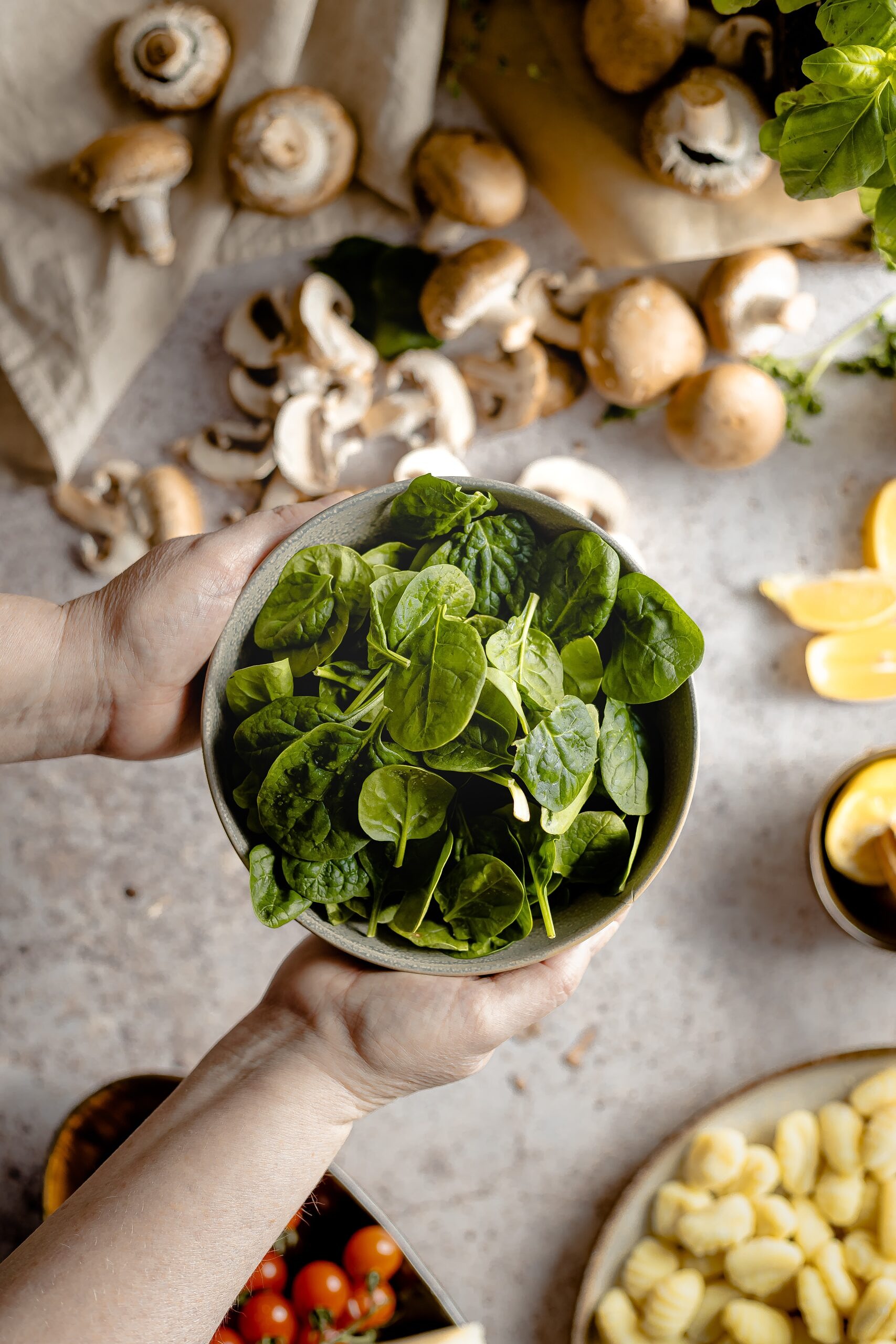
Hands holding a bowl of spinach with vegetables in the background.

Having said all that, MSG sensitivity is not a food myth, it is a real thing – but the research suggests it only affects roughly 1% of the general population and that it takes on average 3 grams of MSG to cause any of these transient symptoms. And the key here is the word transient, this does not cause  permanent damage since MSG cant even cross the blood brain barrier. Otherwise, double blind placebo multiple challenge research suggests that the rest of the population don’t experience symptoms when they don’t KNOW they’re consuming MSG. And since the average MSG-enriched food contains only about 0.5 grams, I would say this is a safe additive that can enhance the palatability of nutritious foods for the general population. And if you’re experiencing excessive symptoms from take-out and ultra processed food, again, i think it makes more sense to focus on adding more fresh meals to your diet, rather than making the one additive the scapegoat to blame. 

High Fructose Corn Syrup

So we know high fructose corn syrup is a common additive in a wide range of processed foods, but what makes it unique from table sugar or honey? Well, chemically speaking, not much. While there are super high fructose versions that can contain up to 90% fructose, the most common variety used, HFCS 55 has roughly the same fructose to glucose ratio as table sugar aka sucrose, and it isn’t far off honey either. 

One of the only noticeable differences between sucrose and high fructose corn syrup 55, is that the syrup is 24% water making it liquid, while table sugar is dry and granular. Chemically, the fructose and glucose in the corn syrup and honey are not bound together as they are in sucrose, but they get broken apart in the body anyway so they end up looking the same. And as we established, HFCS 55 has slightly higher fructose than sucrose and honey. But despite these minor differences, research suggests they all ultimately have the same metabolic effects. 

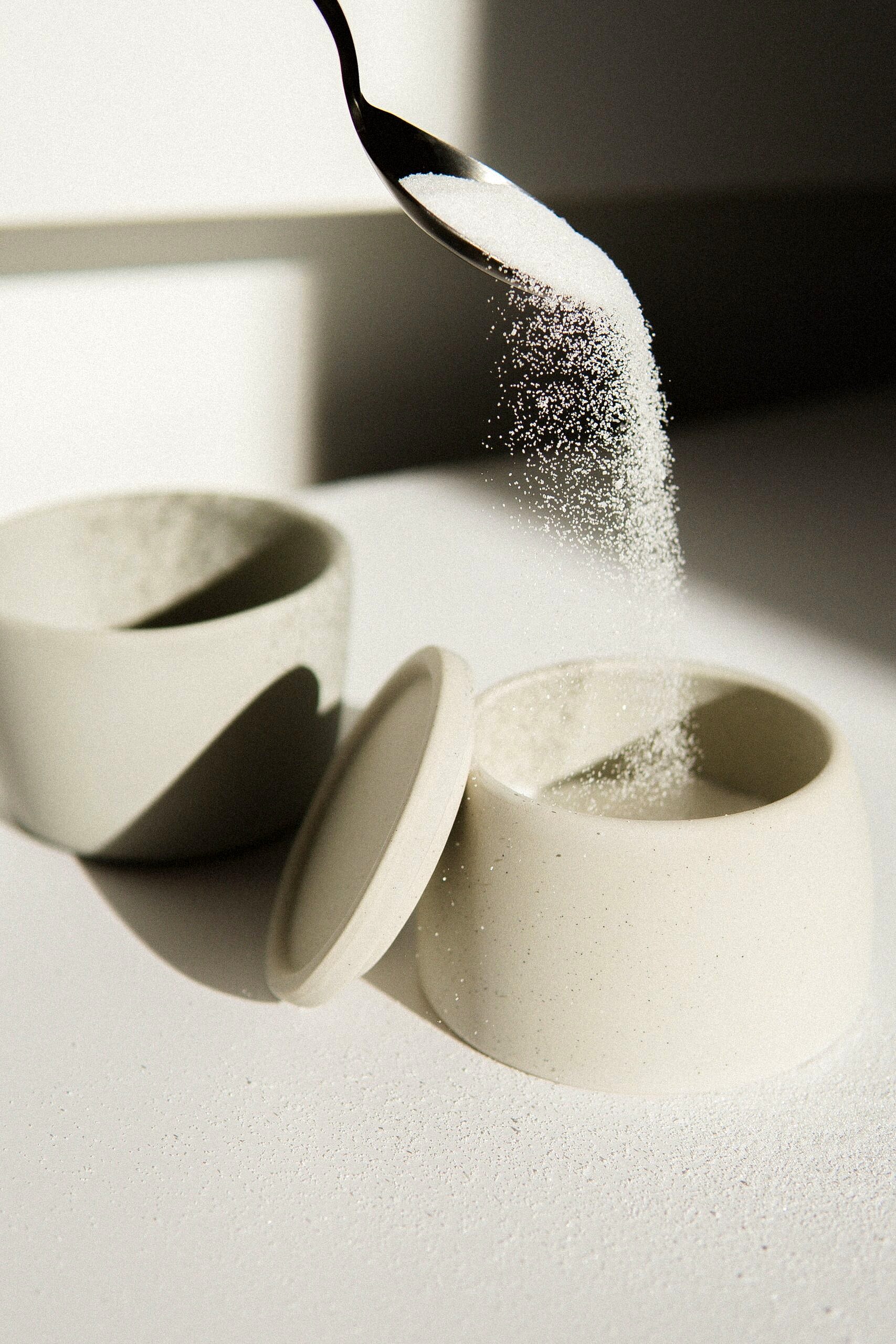
Table sugar being poured into a bowl to represent a common food myth.

So what’s to blame for the bad rep for food myths? Well, back in the 1980’s, HFCS consumption increased as it began to be used more often in food production as a cheaper alternative to sucrose. At the same time, obesity rates in the US began to climb. Many were quick to point the finger at HFCS as the culprit, however, correlation does not equal causation and we don’t have evidence to suggest that HFCS caused the obesity epidemic. In fact, one study tested the effects of 4 calorically restricted diets containing different amounts of sucrose and HFCS and found that all participants were able to lose weight. Other research has confirmed that when comparing equal parts of high fructose corn syrup to sucrose, there have been no differences in fullness, insulin response, leptin levels or weight change.

Sure, we could say that something like honey may have a slight nutritional advantage to both of these sweeteners because it contains small amounts of antioxidants. But you’d need to consume a shit ton of honey to meet your antioxidants and micronutrient needs, and that is just as problematic for your health as consuming an excess of HFCS. And actually, if we’re gonna play dirty, honey has more calories than table sugar per tablespoon. But anyway, most of us aren’t putting high fructose corn syrup on our oatmeal or berries the way we might honey, we’re getting it from ultra processed foods.

So, my tip is focus on moderating your consumption of ultra processed foods containing ANY kind of sweeteners, rather than obsessing over which specific sweetener it contains. Let’s not lose sight of the forest from the trees here when addressing food myths; its the dietary pattern, not the sweetener that REALLY matters.

Hydrogenated Oils 

Hydrogenated oils are commonly used in food manufacturing to increase the shelf life of processed foods and enhance their flavour and texture. Now, it’s important to note that there are two types of hydrogenated oils – fully hydrogenated oils and partially hydrogenated oils. And while they are similarly used in food manufacturing, they result in two different types of fats. Unfortunately, most “food label experts” on Instagram don’t seem to understand this. I see people call out “hydrogenated oils” as trans fats all the time and this is factually INCORRECT in the realm of food myths. Fully hydrogenated oils are saturated fats –  PARTIALLY hydrogenated oils are trans fats. And its TRANS fats that are pretty indisputably regarded as bad for your health. 

The good news is that trans fat consumption from processed foods is not something you even need to actively worry about in North America at least, since Canada and the US have implemented a trans-fat ban and eliminated the use of partially hydrogenated oils in food manufacturing.

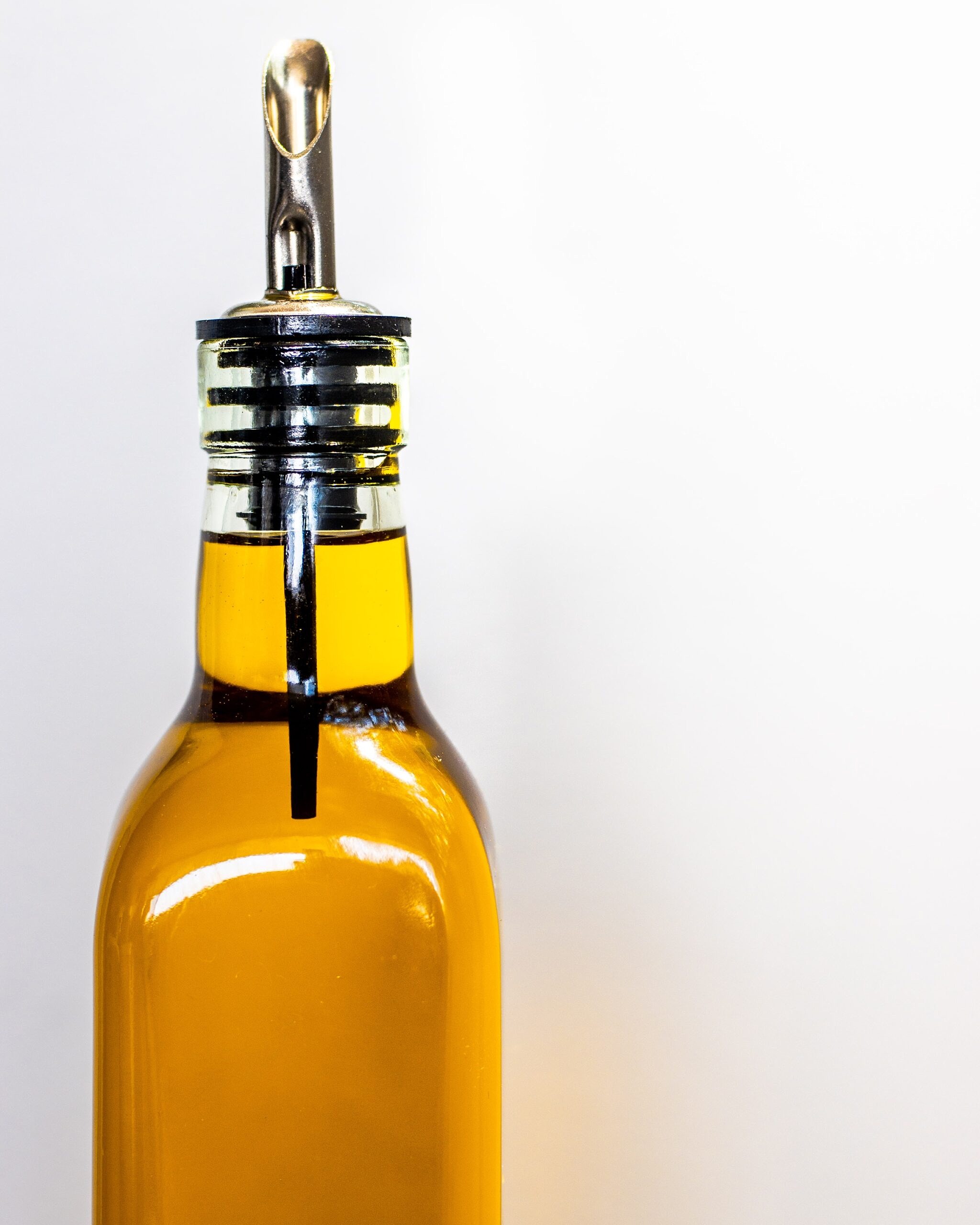
Close up of a bottle of oil as a common food myth.

Hydrogenated saturated oils on the other hand, do not carry the same risk to our health which is why it they’re still used in food manufacturing to this day. This is not to say that saturated fats should be consumed in excess, especially because the jury is still out on the relative health risk of saturated fats. But while its unclear if sat fats are bad, good, or neutral, it does seem that replacing them with UNSATURATED fats is advantageous or “better” for health. So where does that leave us with our consumption of unsaturated fats and food myths? Say it with me folks – when it comes to food myths, the dose makes the poison. I don’t see any major risks with enjoying a snack food with hydrogenated oils in the context of a balanced day.

The Bottom Line

To sum up, it’s important that when discussing food myths, we don’t lose sight of what’s truly important. I hope this article was a good reminder in the general safety of our food system, and that our focus should be on the overall diet pattern, not on specific nutrients in a single food.

Contribution by: Giselle Segovia RD, MHSc

More Blog Posts You Might Like

If you liked this blog post discussing food myths, then you might enjoy more posts discussing food science:

  • 411 on Intermittent Fasting for Athletes and Exercise: Will It Help or Hinder Your Performance?
  • Intermittent Fasting for Weight Loss? The Evidence Based Pros and Cons
  • Caffeine and Breastfeeding – Is It Safe?
  • Can You Drink Coffee While Intermittent Fasting?
  • Teen Weight Loss – Are Diets Safe for Growing Kids?
  • Is Lemon Water Good For You?
Abbey Sharp

Abbey Sharp is a Registered Dietitian (RD), regulated by the Ontario College of Dietitians. She is a mom, YouTuber, Blogger, award winning cookbook author, media coach specializing in food and nutrition influencers, and a frequent contributor to national publications like Healthline and on national broadcast TV shows.
www.abbeyskitchen.com/about-abbey/

Last Updated June 13, 2022. Published June 13, 2022 By Abbey Sharp Leave a Comment

Lemon Raspberry Dessert Trifle | Gluten Free & Fast!

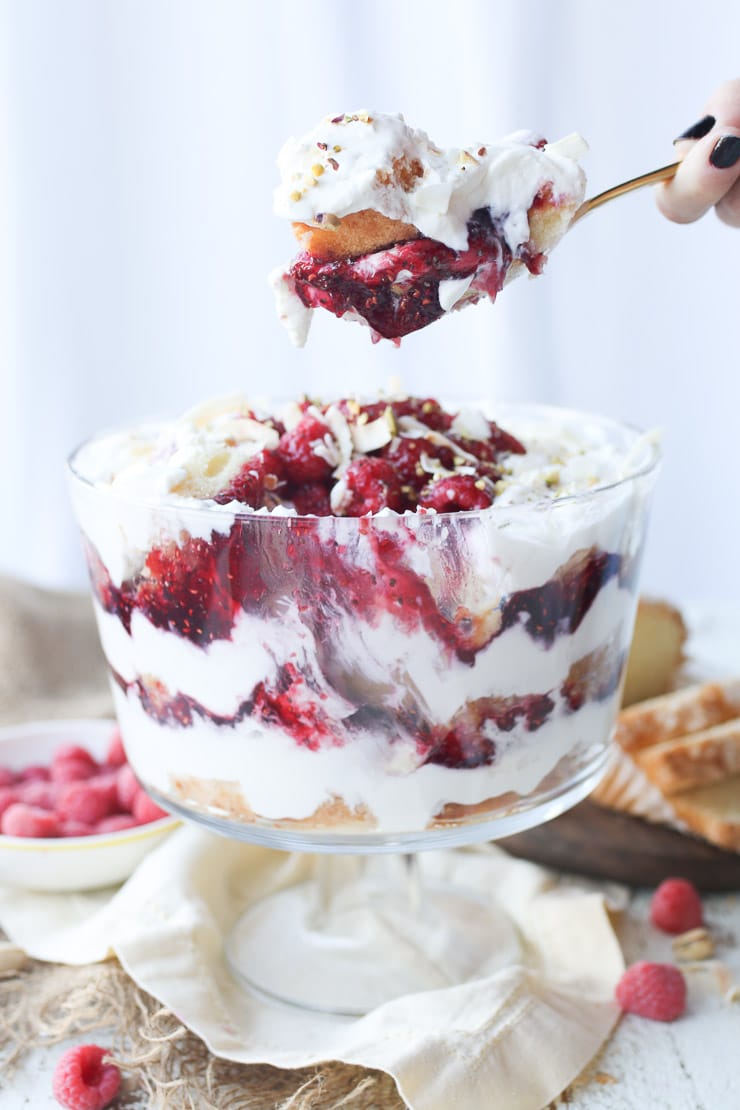
Hand scooping out serving of trifle.

This easy gluten free lemon raspberry dessert trifle is a healthy and fast dessert, perfect for last minute entertaining or even a weeknight treat.

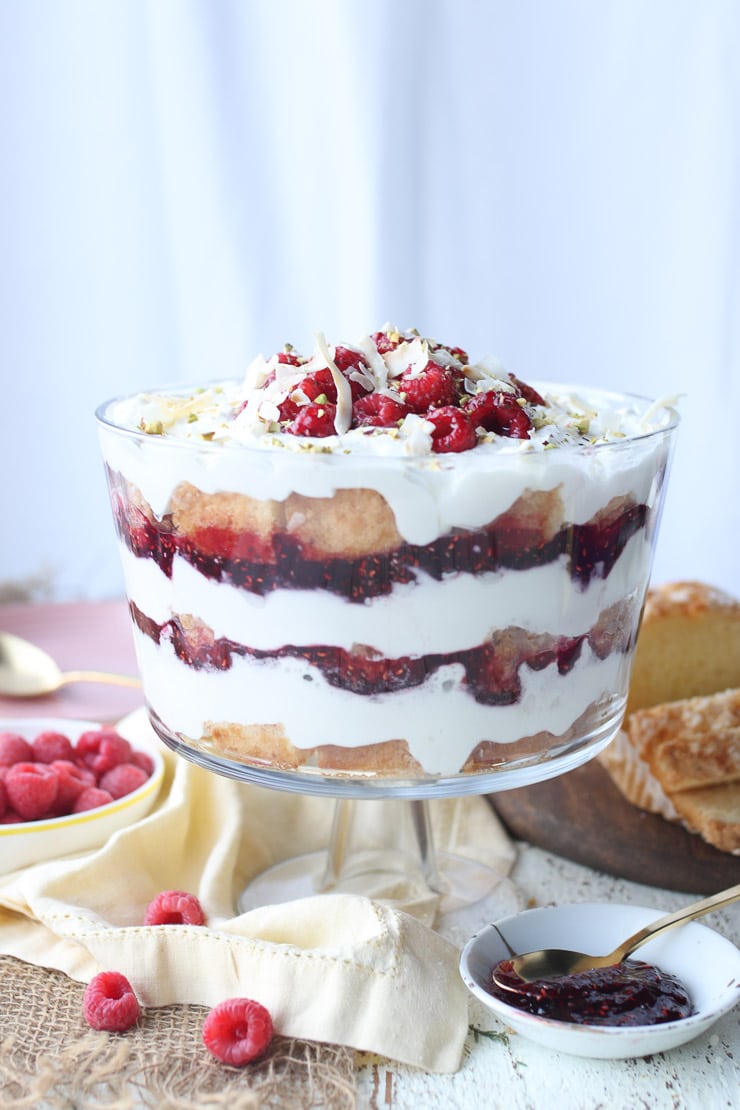
Berry trifle served in a large glass dish.

If you’re scrambling trying to figure out what to make as a quick holiday dessert, this easy gluten free lemon raspberry dessert trifle will totally fit the bill. I’m totally not always super jazzed about baking, so I always appreciate an easy assembly dessert that doesn’t require any baking on my part. Traditionally, trifle is an English dessert made out of fruit, sponge cake soaked in liquor, custard and cream. In my world, however, it’s a mish-mash of some store-bought cake, something creamy, crunchy, and fruity and sweet. Bonus points if it still looks impressive. Trifle is my go-to for that reason because you literally can use up odds and ends from your fridge and pantry, assemble it into a beautiful layered dessert and blow your guests away.

Table of contents

  • Why This Recipe Works
  • Key Ingredients
  • How To Make This Recipe
  • Expert Tips
  • Recipe FAQs
  • More Recipes You Might Like

Why This Recipe Works

This easy and lightened up gluten free lemon raspberry dessert trifle is so easy it hurts and yet it looks crazy impressive on any holiday (or weeknight) spread. I also love this recipe because it’s

  • Simple to throw together – only takes ~35 minutes to throw together
  • Packed with antioxidants from the raspberries
  • Gluten free – perfect for those with dietary restrictions!
  • Family friends – I promise this trifle will win anyone over.

Key Ingredients

Chia seeds – By incorporating chia seeds to make the delicious chia jam, it adds healthy omega-3 fatty acids to up the nutrient density of this recipe

Lemon Loaf Cake (Gluten free, if desired) – This is the secret on how to keep this recipe insanely simple, buy a premade cake from the store! They should be available in the bakery section of your nearest grocery store.

Plain Greek yogurt – By using greek yogurt to layer this cake, it helps pack this lemon raspberry dessert trifle with protein! The sweetness from the jam and cake helps mask the sour-ish taste of the greek yogurt!

Hand scooping out serving of trifle from a clear glass dish.

How To Make This Recipe

Step 1: In a saucepot, heat the berries until they start to bubble. Mash with a fork.

Step 2: Add in the lemon juice, maple and transfer to a bowl.

Step 3: Mix in the chia seeds and allow the mixture to set for 20 minutes to set up.

Step 4: Layer the Gluten Free Lemon Cake with the yogurt, chia jam, and raspberries. Garnish with pistachios and toasted coconut.

Expert Tips

Looking for other fruit or cake flavors in this recipe instead of lemon raspberry? Depending on what is in season, or even just what you have on hand, you can easily switch up the ingredients in this easy assembly gluten free trifle recipe. If you don’t want to do lemon raspberry, some other ideas are:

  • Banana + chocolate chip banana bread
  • Strawberry + angel food cake
  • Apple + gingerbread cake
  • Blueberry + ginger cake

Recipe FAQs

Where can i get gluten free lemon cake to make this easy trifle?

Here in Canada, there is a store-bought gluten free brand called Promise Gluten Free, but you can go to any allergy-friendly bakery and pick up a store-bought loaf cake that meets your dietary restrictions (vegan and/or gluten free). If you find a lemon cake or loaf cake you love, then buy a few and pop them in the freezer for making this dessert last minute!

How far in advance can i make this gluten free trifle?

I recommend getting all of the elements ready ahead of time. Cut the fruit, (make the chia jam up to 5 days ahead) and then an hour before you want to serve you can assemble. I can assure you that this gluten free lemon raspberry trifle tastes so great the next day but doesn’t look as pretty as the colour starts to bleed.

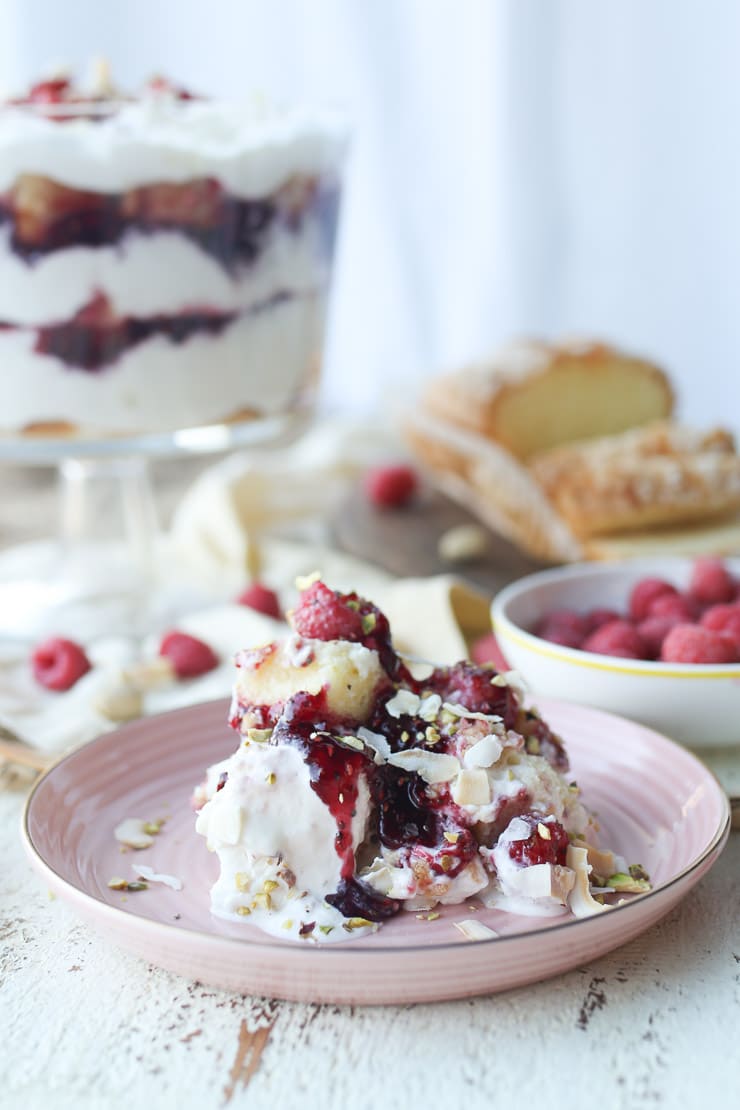
Serving of lemon raspberry trifle on a pink plate.

More Recipes You Might Like

Need more recipe ideas like this lemon raspberry dessert trifle for your next event/holiday? Here are some of my favorites!

  • Easy No Bake Matcha Cheesecake Parfaits
  • Vegan Coconut Rice with Mango & Kiwi 
  • Gluten Free Ginger Pear Crisp 
  • Caramel Apple Raw Cheesecake 
  • Apple Crisp Stuffed Sweet Potatoes
  • Frozen Vegan Peanut Butter Pie 
Berry trifle served in a large glass dish.
Print Recipe
4.50 from 2 votes

Lemon Raspberry Dessert Trifle | Gluten Free & Fast!

This easy gluten free lemon raspberry dessert trifle is a healthy and fast dessert, perfect for last minute entertaining or even a weeknight treat.
Prep Time30 minutes mins
Cook Time5 minutes mins
Total Time35 minutes mins
Course: Dessert
Cuisine: American
Servings: 12 servings
Calories: 262kcal
Author: Abbey Sharp

Ingredients

  • 3 cups frozen raspberries
  • 2 tbsp lemon juice
  • 2 tsp maple syrup
  • 3 tbsp chia seeds
  • 2 store-bought Gluten Free Lemon Cake cut into cubes
  • 750 g Plain 2-5% Greek yogurt
  • 1 pint fresh raspberries
  • ¼ cup minced pistachios
  • ¼ cup toasted coconut

Instructions

  • In a saucepot, heat the berries until they start to bubble. Mash with a fork.
  • Add in the lemon juice, maple and transfer to a bowl.
  • Mix in the chia seeds and allow the mixture to set for 20 minutes to set up.
  • Layer the Gluten Free Lemon Cake with the yogurt, chia jam, and raspberries. Garnish with pistachios and toasted coconut.

Nutrition

Calories: 262kcal | Carbohydrates: 44g | Protein: 11g | Fat: 5g | Saturated Fat: 2g | Cholesterol: 54mg | Sodium: 292mg | Potassium: 291mg | Fiber: 6g | Sugar: 25g | Vitamin A: 111IU | Vitamin C: 19mg | Calcium: 144mg | Iron: 2mg
 
Abbey Sharp

Abbey Sharp is a Registered Dietitian (RD), regulated by the Ontario College of Dietitians. She is a mom, YouTuber, Blogger, award winning cookbook author, media coach specializing in food and nutrition influencers, and a frequent contributor to national publications like Healthline and on national broadcast TV shows.
www.abbeyskitchen.com/about-abbey/

Last Updated June 5, 2022. Published June 6, 2022 By Abbey Sharp 13 Comments

Samoa Cookies Brownie Recipe (Vegan & Gluten Free)

Samoa girl scout vegan brownies on a wooden plate topped with chocolate and coconut.

This samoa cookies brownies recipe with coconut caramel are full of fudgy flavour! They are also vegan, no bake and totally gluten free.

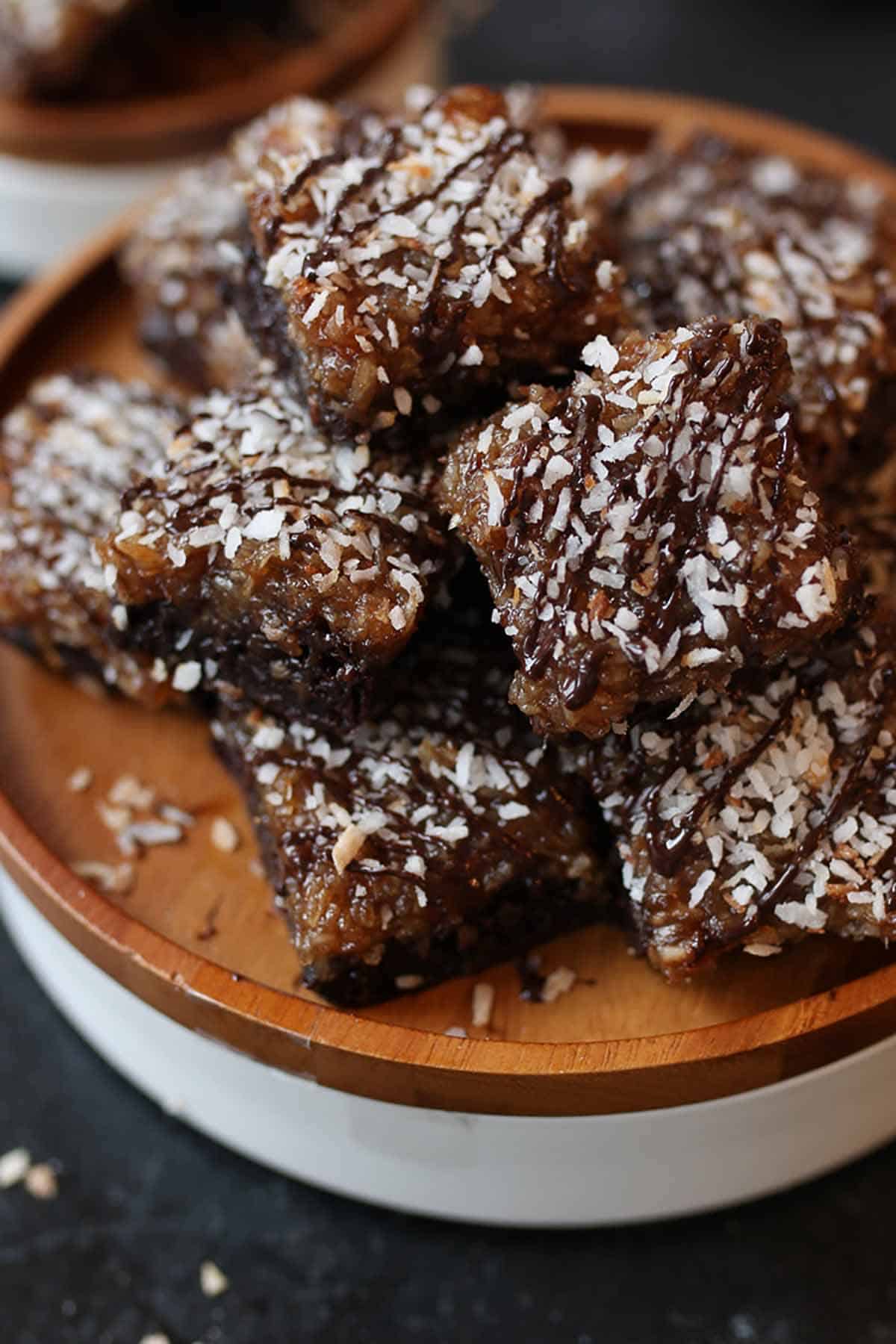
Close up of samoa brownies stacked on a wooden plate.

Christmas may be over, but I am not ready to stop with the chocolatey desserts quite yet. Especially ones that are no bake, easy to whip up, and taste like literal heaven in my mouth.

Well let me tell you, folks. These super FUDGY samoa brownies are nothing short of amazing. They can be made gluten free and vegan, or not. Either way, they’re insanely good. I admittedly ate like 5 of them in the course of two days, and I ain’t mad about it.

Table of contents

  • Why This Recipe Works
  • Key Ingredients
  • How to Make This Recipe
  • Expert Tips
  • Recipe FAQs
  • More Recipes You Might Like

Why This Recipe Works

If you’ve ever been a girl scout, you know the iconic samoa cookies well and you don’t need me to tell you how good they are. So to pay homage to these timeless cookies, we are putting our own spin on things and blessing you with this samoa cookies brownie recipe.

This recipe for samoa cookies brownies combine caramel, coconut and chocolate flavours to make one EPIC treat. It really is such an awesome combination I can’t help but let it inspire other desserts. I used this as inspiration in my book, the Mindful Glow cookbook, to make the most amazing gluten free donuts (you need that recipe NOW), and these samoa brownies are equally divine.

Key Ingredients

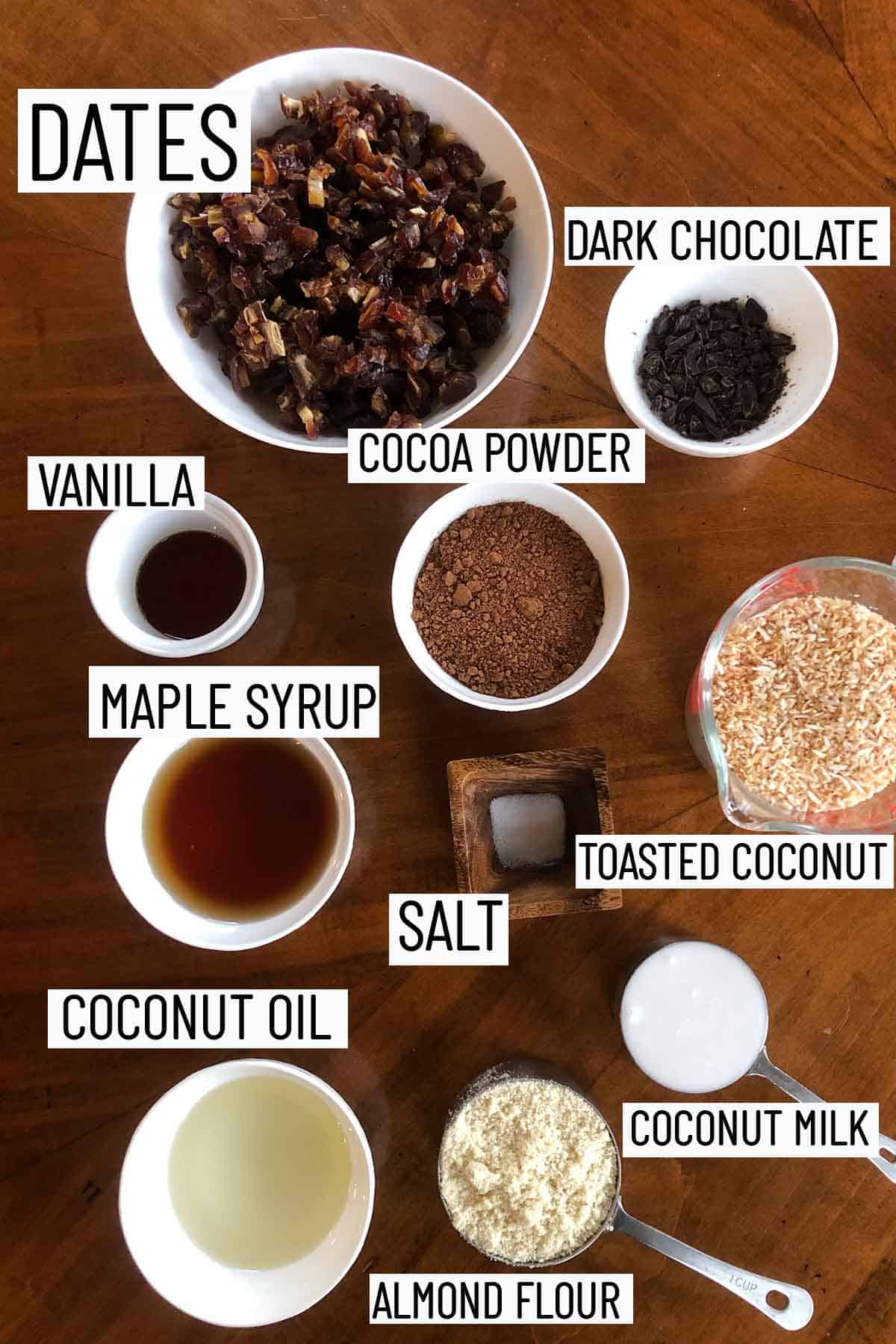
Flat lay of portioned recipe ingredients including almond flour, coconut milk, coconut oil, salt, maple syrup, toasted coconut, cacao powder, vanilla, chocolate, and dates.

Caramel – to make a homemade caramel that will seriously blow your socks off, we combine dates and coconut with a hint of maple syrup. I promise it will be hard to NOT like the spoon.

Brownie Base – The key to making the most FUDGY samoa cookies brownies of LIFE is that there’s very little starch in there. It’s mainly just cocoa powder for chocolate flavour, dates to sweeten, and some almond flour to bind.

Topping – we top off these samoa cookies brownies with a bit of chocolate drizzle and left over toasted coconut.

How to Make This Recipe

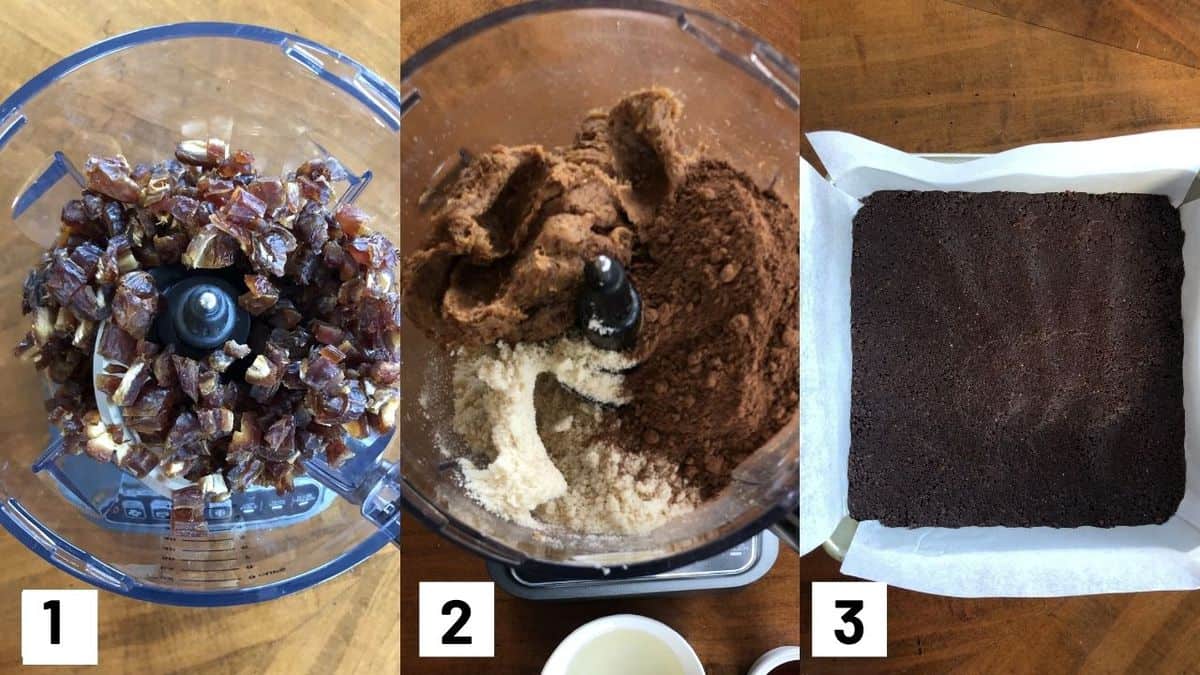
Three side by side images showing how to make first layer of brownie recipe.

Step 1: In a food processor, puree the dates until they reach a thick paste.

Step 2: Add in the almond flour, cocoa powder, coconut oil, salt, and vanilla. 

Step 3: Add mixture to a parchment lined baking dish and refrigerate.

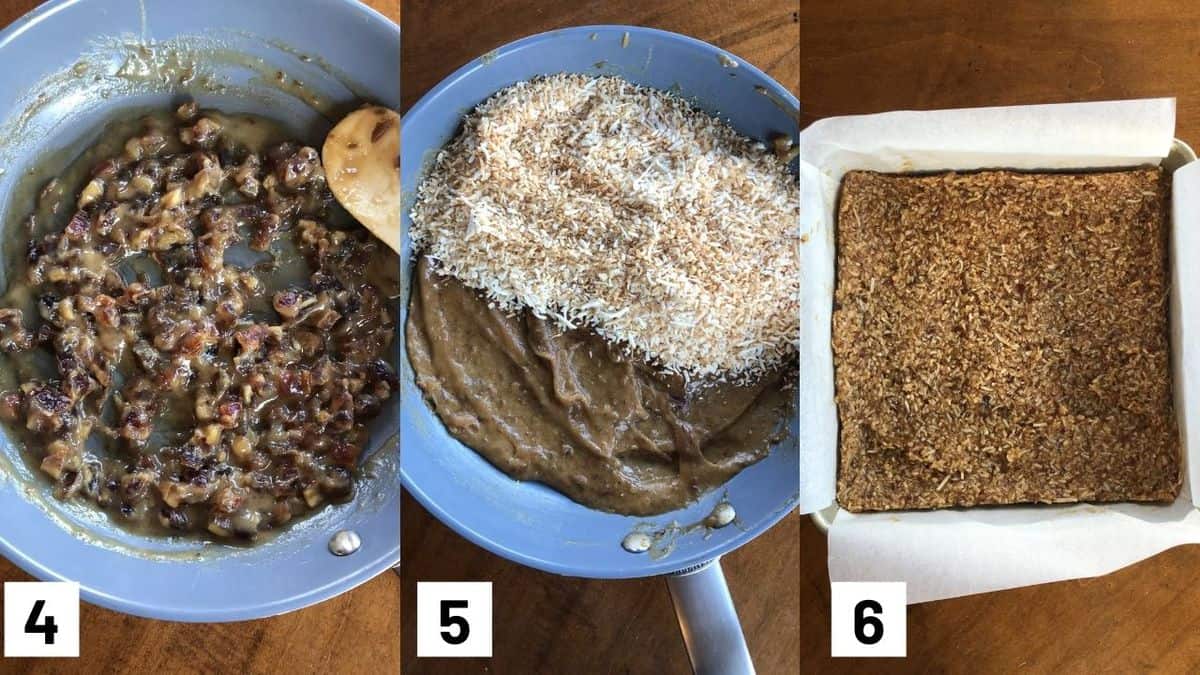
Three side by side images showing how to make recipe including heating up the date mixture, adding coconut flakes, and pressing mixture into baking dish.

Step 4: Heat the dates and coconut milk in a small sauce pot over medium heat. Cook for 4 minutes or until the dates soften, then transfer to a food processor or blender. Puree until smooth. Add the maple and salt and puree again until incorporated.

Step 5: Transfer back to the sauce pot and cook over medium low heat for 4 minutes until bubbling and thick. Add all but 2 tbsp of the toasted coconut to the date caramel.

Step 6: Spread mixture on top of the cooled refrigerated brownies. Top with the remaining toasted coconut.

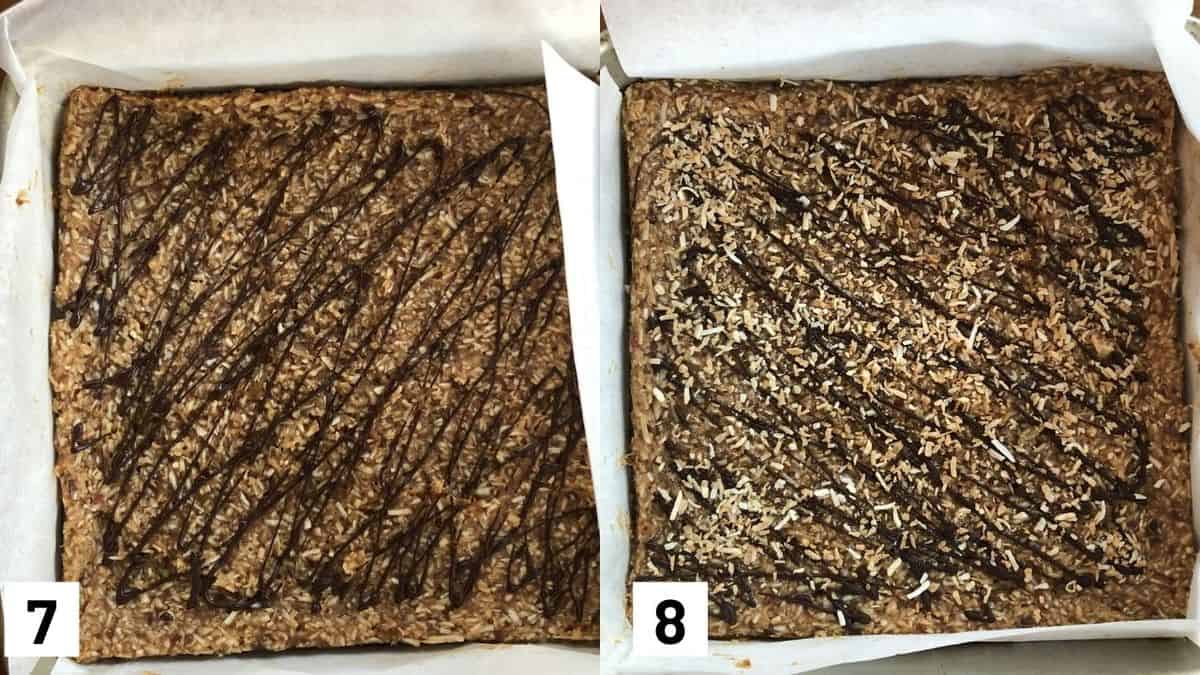
Two side by side images of brownies in a baking dish and drizzled with chocolate, topped with shredded coconut.

Step 7: Melt the remaining ½ oz of chocolate for 30 seconds in the microwave on 50% heat until fully melted. Transfer to a piping bag and drizzle the brownies.

Step 8: Top with remaining shredded coconut and cut into squares.

Expert Tips

To make a super rich and creamy caramel, I highly recommend using full fat coconut milk instead of the “lite” version. After all, this is a dessert recipe, so if we’re gonna do it, we’re gonna do it right.

To make these samoa cookies brownies vegan, we use maple syrup and vegan chocolate. But if you don’t have these on hand you can use agave, honey (if you don’t need to make them vegan) or regular non-vegan chocolate chips.

Recipe FAQs

Can these samoa cookies brownies be made ahead?

Absolutely! They can be made ahead, frozen and then thawed out and served. I recommend making sure you let them come completely to room temperature before serving, since the chocolate will harden and they will lose their fudge factor if they’re served just a tad too cold.

What can I use instead of almond flour to keep them GF?

If you can’t find almond flour at the store, you can make homemade gluten free oat flour at home by pulsing up gluten free oats in the food processor until fine.

Can I use honey instead of maple syrup?

If you don’t need to make these vegan, you can certainly use honey. Otherwise, a vegan sweetener alternative like agave also works.

How long do these samoa cookies brownies keep in the fridge?

These brownies stay fresh for up to 4 days in the fridge in an air tight container.

Are these brownies kid friendly?

Oh yes 100%! My son absolutely loves them. They are also allergy friendly and pack on some nutrition like protein and fibre.

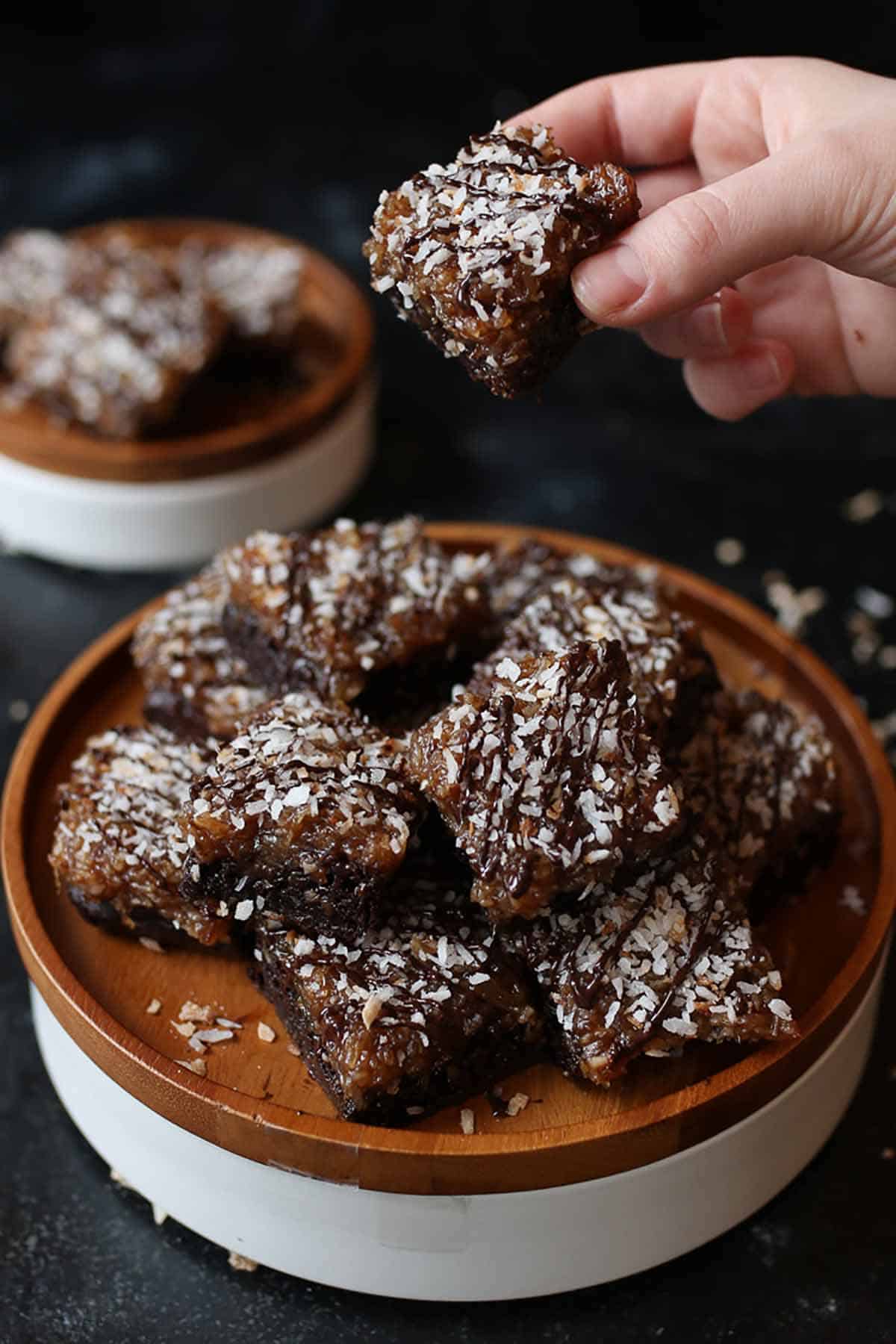
Hand picking up a brownie from a stack of brownies on a wooden plate.

More Recipes You Might Like

If you enjoyed this samoa cookies brownie recipe, here are some of my favourite no bake snack recipes on the blog!

  • BEST No Bake Brownies (Vegan & Gluten Free)
  • Healthy No Bake Granola Bars
  • No Bake Cheerios Bars
  • Peanut Butter Blondies with Caramel Popcorn
  • Vegan Key Lime Pie
  • No Bake Nutella Cheesecake Cups

What are some of your favourite no bake recipes these days?

Print Recipe
5 from 1 vote

Samoa Brownies (Vegan + Gluten free)

These samoa brownies with coconut caramel are full of fudgy flavour! They are also vegan, no bake and totally gluten free.
Prep Time20 minutes mins
Cook Time30 minutes mins
Total Time50 minutes mins
Course: Dessert
Cuisine: American
Diet: Gluten Free, Vegan
Servings: 16 squares
Calories: 297kcal
Author: Abbey Sharp

Ingredients

  • 3 cups soft dates pitted and diced
  • 1 cup almond flour
  • 3/4 cup unsweetened cocoa powder
  • 2 tbsp melted coconut oil
  • 1/2 tsp salt
  • 2 tsp vanilla extract artificial for passover

Topping:

  • 1 cup chopped pitted dates
  • ½ cup coconut milk
  • ½ cup maple syrup
  • Pinch sea salt
  • 200 gram pack of coconut toasted about 1 ¾ cup
  • 1/2 oz dairy free vegan dark chocolate chopped

Instructions

  • Line an 9×9″ baking dish with 2 overlapping pieces of parchment, leaving overhang like wings.
  • In a food processor, puree the dates until they reach a thick paste. Add in the almond flour, cocoa powder, coconut oil, salt, and vanilla. Refrigerate.
  • Meanwhile, heat the dates and coconut milk in a small sauce pot over medium heat. Cook for 4 minutes or until the dates soften, then transfer to a food processor or blender. Puree until smooth. Add the maple and salt and puree again until incorporated.
  • Transfer back to the sauce pot and cook over medium low heat for 4 minutes until bubbling and thick.
  • Add all but 2 tbsp of the toasted coconut to the date caramel and spread on top of the cooled refrigerated brownies. Top with the remaining toasted coconut. Place in the fridge to fully set up for at least an hour. Before serving cut into 16 bars.
  • Melt the remaining ½ oz of chocolate for 30 seconds in the microwave on 50% heat until fully melted. Transfer to a piping bag and drizzle the brownies.
  • Store in a container in the fridge for up to 4 days.

Nutrition

Calories: 297kcal | Carbohydrates: 42g | Protein: 4g | Fat: 16g | Saturated Fat: 11g | Cholesterol: 1mg | Sodium: 81mg | Potassium: 415mg | Fiber: 7g | Sugar: 31g | Vitamin C: 1mg | Calcium: 50mg | Iron: 2mg

Have you tried making these samoa cookies brownies? Let me know your thoughts down in the comments below!

Abbey Sharp

Abbey Sharp is a Registered Dietitian (RD), regulated by the Ontario College of Dietitians. She is a mom, YouTuber, Blogger, award winning cookbook author, media coach specializing in food and nutrition influencers, and a frequent contributor to national publications like Healthline and on national broadcast TV shows.
www.abbeyskitchen.com/about-abbey/

Last Updated June 5, 2022. Published June 5, 2022 By Abbey Sharp 16 Comments

Dairy and Cancer? Myths and Facts Discussed (Early Puberty, Obesity, Diabetes)

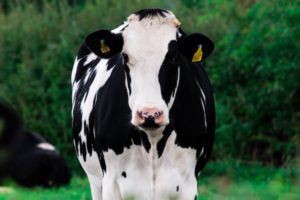
Black and white cow in a fied.

We look the myths and truths about dairy and cancer, IGF-1, dioxins and calcium and answer the question does dairy cause early puberty, childhood “obesity” and diabetes?

A few months ago, a fellow plant-based dietitian posted some disparaging remarks about dairy and children citing a number of potential unwanted side effects of drinking milk, including referencing dairy and cancer. The dietitian made a series of claims (sometimes sharing citations), all of which seemed really concerning for any mama who has decided to feed their kid milk.

I was curious about the claims she was making, so I’ve taken a deep dive into all things milk related, to bring you some clarity and hopefully eliminate the hysteria around dairy.

Introduction on IGF-1

Glass of milk.

IGF-1 stands for Insulin-Like Growth Factor and it is found naturally in your blood. The main job of IGF-1 is to regulate the effects of growth hormones in your body, meaning it regulates tissue and bone growth. Because IGF-1 regulates growth, after we reach adulthood, secretion of IGF-1 declines continuously to very low levels as we age.

Let’s look at growth hormones used in milk.

The most common growth hormone added to milk is rBGH or rBST. This is a manmade bovine hormone that is used to increase milk production in cows. rBGH triggers the hormone IGF-1 which some claim is harming our health (we’ll see). Our intake of these growth hormones through milk actually vary depending on where you live, like Canada versus the USA.

Regulation of Milk Products in Canada vs USA

Before we discuss topics such as dairy and cancer, It’s important to note the differences between dairy farming in Canada and the United States. In the US, dairy farmers are allowed to administer their dairy cows with growth hormones BST or rBGH, while that is illegal in Canada. However, things will soon change with the new and improved NAFTA agreement.

How Does the US-Mexico-Canada Agreement Affect Canadian Dairy?

Canadian flag.

Canada allows US dairy farmers to access 3.5% of the annual domestic dairy market, meaning US milk is entering the Canadian market. And some of that milk will contain varying levels of growth hormones. We will have to wait and see how this agreement will change the Canadian dairy landscape and how this will be communicated to the public. For Canadian parents who are concerned, you will of course want to look out for the blue dairy cow on products to ensure you’re choosing 100% Canadian dairy products. So if you buy milk from the United States, you will not know whether the milk contains growth hormones or not because currently there are no labelling requirements for American dairy products.

Does Milk Intake Lead to “Obesity” in Children?

Kids lined up side by side.

Myth or Truth: “Obese” Children Have Been Shown to Have Higher IGF-1 Levels

There have been claims that milk intake leads to “obesity” in children. This is rooted in the notion that some “obese” children have been shown to have higher IGF-1 levels. This was found in a 2018 study that only involved forty seven children participants.

Other studies have showed the opposite.

One study found that in both men and women, IGF-1 concentrations were lower in those who were considered “obese” compared to those who were not.

According to researchers from this study, research looking at circulating levels of IGF-1 in “obese” humans is conflicting. Some studies show normal levels, low and even high levels of IGF-1, making it difficult to find a clear connection between IGF-1 levels and “obesity”.

So does drinking milk cause “obesity” in children?

The evidence says NO and in fact, it might actually play a role in preventing “obesity”.

A recent 2017 study found that higher milk fat consumption is associated with lower odds of severe “obesity” among preschoolers.

These effects were also seen in adults. A 2016 prospective cohort study from the Women’s Health Study found that greater consumption of total dairy products may be effective in the prevention of weight gain in middle-aged and elderly women.

So this mama is still getting her dairy fix!

Does Dairy Cause Early Puberty in Girls?

Young girl next to flowers.

Myth or Truth: Higher IGF-1 Levels From Milk are Found in Girls with Early Puberty

Okay, so the first thing we need to discuss about IGF-1 and early puberty is that in normal puberty, IGF-1 and other growth hormones are increased because sex hormones are secreted at this time. So yes, it is normal that during puberty your IGF-1 levels are increased. The possible myth here is that milk intake is causing early puberty because of the growth hormone, IGF-1. This has been studied for a while, and seems like we still haven’t gotten a clear answer on the topic.

Let’s look at the research.

A very large study from 2011 assessed childhood milk intake from 1999 to 2004. The first limitation I want to share is that because this is a cross-sectional study, NO CAUSAL RELATIONSHIP CAN BE DETERMINED. That being said, the primary finding of the study was a weak negative association between the frequency of milk intake during childhood and age at menarche. There was no difference in the risk of early menarche among women reporting different frequencies of milk intake during childhood. Among nine and twelve year old girls, there was no relationship between frequency of milk intake in the past thirty days and early menarche. The study also found that greater dairy fat intake was associated with a lower risk of early menarche.

Another interesting finding from this study was that higher weight and height was associated with higher probabilities of early menarche. The study found that “overweight” girls had roughly twice the risk of early monarch than those of lower BMIs.

These findings suggest that body size and weight may play a stronger role in predicting early puberty than milk intake would.

Does Milk Intake Lead to Diabetes in Children?

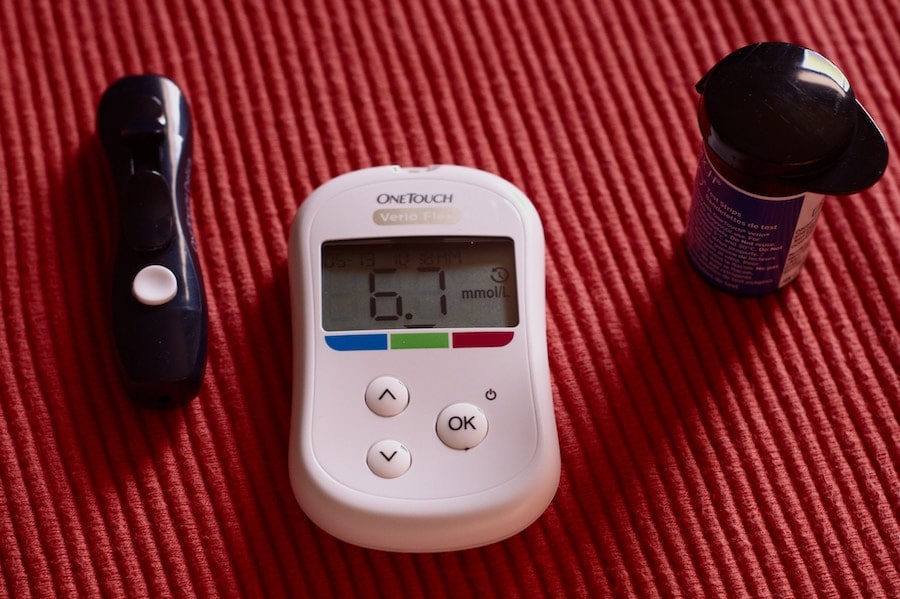
Blood sugar monitor device

Myth or Truth: Milk Increases Risk of Insulin Resistance and Diabetes in Children

There is lots of evidence to suggest that IGF-1 plays an important role in glucose metabolism, which is why there are claims that milk can potentially increase insulin resistance, and lead to diabetes in children. However, evidence also shows that we also need adequate levels of IGF-1 for healthy blood glucose control. One study found that low levels of IGF-1 were associated with impaired glucose tolerance and type 2 diabetes. This was confirmed in another study that found that lower circulating IGF-1 levels in adults led to the progression of impaired glucose tolerance during a five year follow up study. These results tell us that IGF-1 may actually play a protective role against the development of glucose intolerance.

Back in the 1980s it was proposed that early exposure in infancy to cow’s milk may increase their risk of developing type 1 diabetes. However, that theory has since been refuted. More recently, a 2018 randomized controlled trial compared two groups of newborns given different milk formulas. One newborn group was given cow’s milk formula and the other group was given a hydrolyzed casein formula. Children were observed and monitored for ten years and the results showed that fewer children in the cow’s milk formula group developed type 1 diabetes than those in the casein formula group but there was no significant difference in type 1 diabetes development between groups. Bottom line, there’s no need for parents to avoid giving their children cow’s milk during infancy.

One of the popular claims behind milk and diabetes is that milk increases the branched chain amino acid level in the bloodstream, causing an increased risk of insulin resistance. However, research tells us that dairy is likely not the cause. A 2018 randomized controlled trial found that any change to person’s dairy intake (reduced, maintaining or increased intake) did not have any effect on circulatory branched chain amino acids and insulin sensitivity in healthy populations.

To play devil’s advocate, evidence suggests that dairy products may actually help REDUCE or even prevent the risk of type 2 diabetes. In a collection of epidemiological studies, yogurt actually helped to  prevent type 2 diabetes in healthy individuals. A systematic review also found that in four studies, dairy had a positive effect on insulin sensitivity. Researchers in this review only found one study where dairy had a negative effect on insulin sensitivity, so I think it’s safe to say that we’re more than likely safe.

What About Dairy and Cancer?

Machine in a hospital.

Myth or Truth: Milk Consumption is Associated With an Increased Risk of Prostate Cancer

Now this claim about dairy and cancer is a hefty one, and based on my own experience in nutrition research, it is doubtful that one single food or food group can “cause” cancer. Keeping that in mind, let’s look at the research behind dairy and cancer.

A 2017 systematic review found that dairy intake was associated with breast cancer risk. However it seems that the type of dairy plays more of a role in breast cancer risk. The study found that yogurt and low fat dairy reduced the risk of breast cancer, while others did not (high fat dairy). Researchers speculate that the difference lies in the fatty acid content. High fat dairy contains saturated and unsaturated fat, while low fat dairy contains only unsaturated fat. When it comes to the yogurt, researchers believe the probiotic content may play a protective role against breast cancer, but it is still unclear how.

A more recent 2019 study looked at milk and yogurt intake and breast cancer risk regarding dairy and cancer. The meta-analysis found no associations with breast cancer risk for intake of low fat/skim milk, whole milk and yogurt.

One other thing that might play more of a role in breast cancer risk is vitamin D and calcium. Studies have found that vitamin D and calcium may have a protective role in breast cancer. This was further theorized in the 2017 review that found that in the United States (where they fortify their milk with vitamin D) dairy consumption was associated with a lower risk of breast cancer. The review also found that this association regarding dairy and cancer was not found in Europe (where vitamin D fortification is not found in most European countries).

Another important note to mention is that researchers found that people who consumed high amounts of milk products tended to also consume large amounts of meat and other high fat foods. So even if some correlational studies were to find an association between milk products and cancer risk, it is practically impossible to separate the milk intake from other dietary factors that could contribute to cancer risk. That’s what makes most nutrition research often unreliable for making conclusive statements about dairy and cancer.

To seal the deal, a 2018 report published by the World Cancer Research Fund and American Institute for Cancer research concluded that there is no strong evidence that dairy products or any foods high in calcium increase the risk of prostate cancer. This updated 2018 report further confirmed their prior report back in 2007 which had the same conclusion.

But let’s talk about calcium for a hot minute while we’re discussing dairy and cancer because there’s lots of conflicting evidence on whether calcium for dairy and cancer plays a role in cancer risk. Some observational studies like this one found associations between calcium rich foods and supplements with the risk of colorectal and breast cancer. While at the same time, studies like this one have found that calcium supplementation may have a protective effect against prostate cancer. The very famous Nurses Health Study found that individuals who had more than 700 mg of calcium per day had a 35 to 45% reduced risk of cancer of the lower colon compared to those who had 500 mg or less of calcium a day. There was no association between calcium intake and risk of cancer in the middle and upper part of the colon. Clearly from these studies you can see that this is a widely misunderstood area, and there are still numerous questions that need to be asked and addressed. We still need to know whether calcium rich foods have a different effect compared to supplements, and whether high calcium intake impacts particular cancer sites more than others.

When it comes to whether IGF-1 from milk may be the culprit for causing cancer, research has found that our IGF-1 levels are increased by the intake of ANY protein, not just milk. In fact, our IGF-1 levels can be increased by plant or animal protein. Given this, it doesn’t seem fair to just be pointing our finger at milk when it comes to increased IGF-1 levels, considering that protein of ALL types may play a role.

Does Milk Impair Children’s Cognitive Health?

Brain model.

Myth or Truth: Milk Contains Toxic Pollutants (Also Called Dioxins, Which are Shown to Impair Children’s Cognitive and Verbal Abilities)

One of the sexy words we hear a lot in the media right now is DIOXINS. It rhymes with toxins, so it sounds scary, right? The World Health Organization describes dioxins as a group of chemically related compounds that are environmental pollutants. Dioxins are found throughout the environment and majority of the time end up in our food chain, specifically in the fatty tissue of animals. The majority of human exposure to dioxin is through food, mainly meat, dairy, fish and shellfish.

Can Dioxins Impair a Child’s Cognitive Health?

The best study I could find was one from 2018 that looked at infants exposed to environmental chemicals, including dioxins in breast milk and formula, and then analyzed whether they experienced any health effects. Based on the available evidence, their findings found no conclusive evidence that environmental chemicals like dioxins caused any clinically adverse health consequences to a child’s cognitive and verbal abilities.

Are Dioxins in Milk Harmful to Humans?

Dioxins have been studied extensively because of their presence in our food supply. Back in 2003, researchers collected 45 nationwide samples from dairy farms throughout the USA and found that dioxin levels were below the detection limits in all samples. Meaning the trace amounts found in dairy would have little to no impact on human health. Interestingly, this study found that the dioxin levels in milk were about 50% lower than those reported in a 1996 study.

Could this mean that dioxin levels in milk are decreasing?

Maybe. Another study re-reviewed the 2003 study data and found that dioxin levels were not 50% lower than the 1996 study, but the evidence still suggests that dioxin levels are tracking downwards and not increasing.

What about in Canada?

According to Health Canada, the Joint Expert Committee on Food Additives has set a tolerable monthly intake level for dioxins. This tolerable level means no serious health effects are expected. The level is: 2.3pg/kg body weight per day. To make sense of this number, studies done between 1998 and 1999 in two Canadian cities showed that the average dietary intake of dioxins was 0.62pg/kg body weight per day.

Just like with studies conducted in the USA, Health Canada’s last inventory shows a 60% decrease since 1990 in the overall release of dioxins from sources within Canada. This is expected to decline due to ongoing pollution prevention and control activities.

Finally, on the world stage, evidence shows there is a consistent trend of dioxin concentrations decreasing.

The fact is, food pollution is real and affects all foods, not just milk. It happens based on how we grow our food, how we process it, handle it and package it. In all foods you will find trace amounts of toxins. In fact, there are “toxins” in virtually every aspect of life. But we shouldn’t walk around every day worried that we’re consuming or coming into contact with them in doses that would cause physical or mental harm.

Final Thoughts: Dairy and Cancer, Childhood “Obesity”, Early Puberty & Diabetes?

Kid eating cereal.

Dairy has become the new villain in the nutrition world, and based on the current available evidence, it’s not clear why. Dairy products, like milk, provide us with rich sources of calcium, vitamin D and an abundant amount of other vitamins and minerals that our body can benefit from. Whether you choose to include dairy products in your diet is up to you, but if you’re avoiding it because of some of the myths mentioned in this post, the evidence just doesn’t support it.

Contribution By:

Sofia Tsalamlal, RD, MHSc Nutrition Communication

MORE BLOG POSTS YOU MIGHT LIKE

If you liked this blog post discussing dairy and cancer, then you might enjoy more posts discussing diet myths:

  • 411 on Intermittent Fasting for Athletes and Exercise: Will It Help or Hinder Your Performance?
  • Intermittent Fasting for Weight Loss? The Evidence Based Pros and Cons
  • Caffeine and Breastfeeding – Is It Safe?
  • Can You Drink Coffee While Intermittent Fasting?
  • Teen Weight Loss – Are Diets Safe for Growing Kids?
  • Is Lemon Water Good For You?
Abbey Sharp

Abbey Sharp is a Registered Dietitian (RD), regulated by the Ontario College of Dietitians. She is a mom, YouTuber, Blogger, award winning cookbook author, media coach specializing in food and nutrition influencers, and a frequent contributor to national publications like Healthline and on national broadcast TV shows.
www.abbeyskitchen.com/about-abbey/

Last Updated June 5, 2022. Published June 5, 2022 By Abbey Sharp 6 Comments

Keto Bagel Recipe with Eggs (Everything, Sesame, Poppyseed & Cheese)

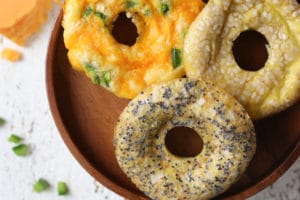
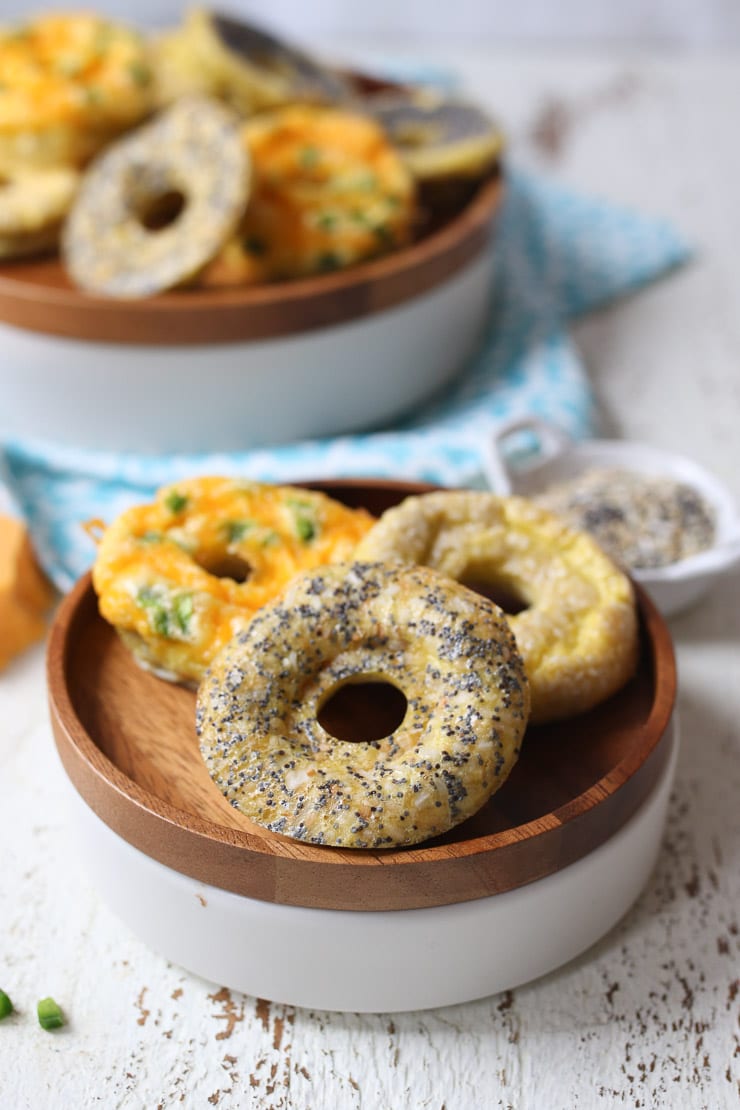
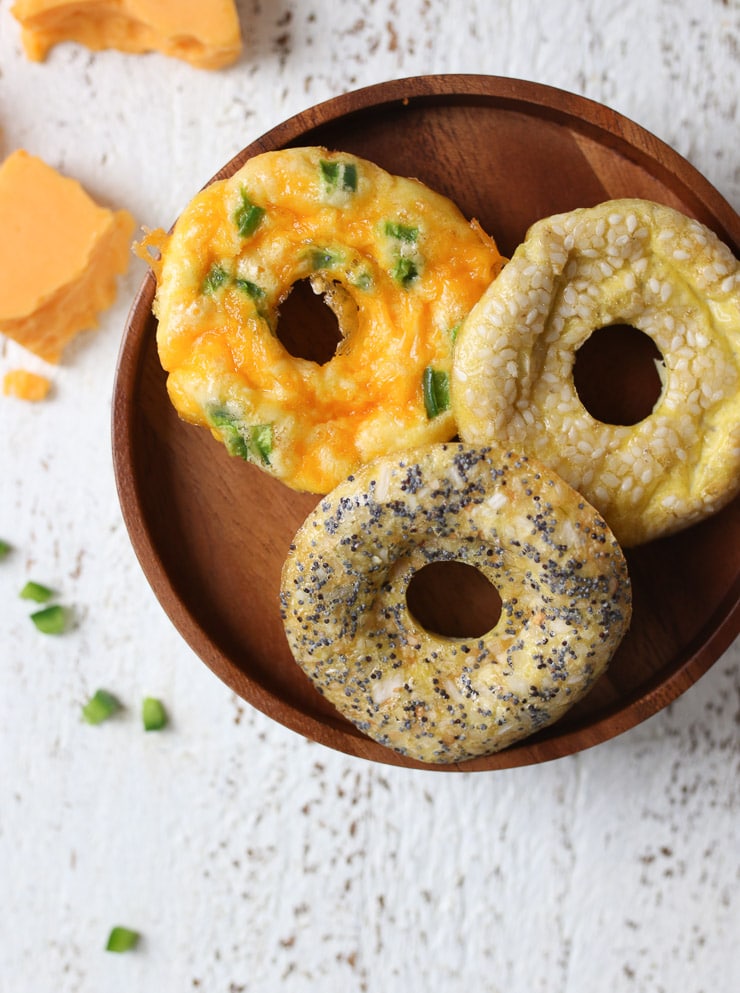
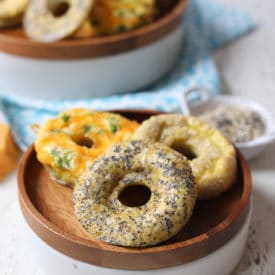
Keto everything bagel, jalepeno cheddar and poppyseed bagels on a wooden plate.

This easy Breakfast Keto Bagel Recipe is made with Eggs are flavoured like your favourite bagels including Everything Bagel seasoning, Sesame, Cheese and Jalapeno & Poppyseed.

Keto everything bagel, jalepeno cheddar and poppyseed bagels on a wooden plate.

I married into a Jewish family, so guess what, I’m culturally required to love bagels. Well I have a big, fat Jewish-convert secret: I don’t really care for them. They’re dense, doughy, and they tend to sit in my stomach like a ton of bricks and leave me hungry again hours later. Eggs on the other hand really fuel my morning, so I sought out to make this keto bagel recipe with EGGS and dress them up JUST like our favourite Jewish eggs.

Table of contents

  • Why This Recipe Works
  • Key Ingredients
  • How to Make This Recipe
  • Expert Tips
  • Recipe FAQs
  • More Recipes You Might Like

Why This Recipe Works

This easy bagel recipe is SO easy to make a big batch for a crowd or even to prep for the week ahead as a make ahead grab-and-go breakfast. I also love this recipe because it’s

  • Super customizable (I included a few of my favorite different topping options below)!
  • Quick to make, only takes about 15 minutes
  • Gluten Free
  • Only requires 3 main ingredients – Eggs, oil, and salt/pepper.

Key Ingredients

Eggs – Eggs are the key ingredient to keep this recipe low carb and still absolutely delicious. They are packed with protein from the egg whites with just a little fat in the yolk.

Toppings – My personal favorite type of bagel is the iconic everything spice. I love everything bagel EVERYTHING (I put it on mac and cheese, devilled eggs, and chicken breasts), so that’s my go to breakfast keto bagel, but I have also made poppyseed, sesame seed and a jalapeno cheddar flavour.

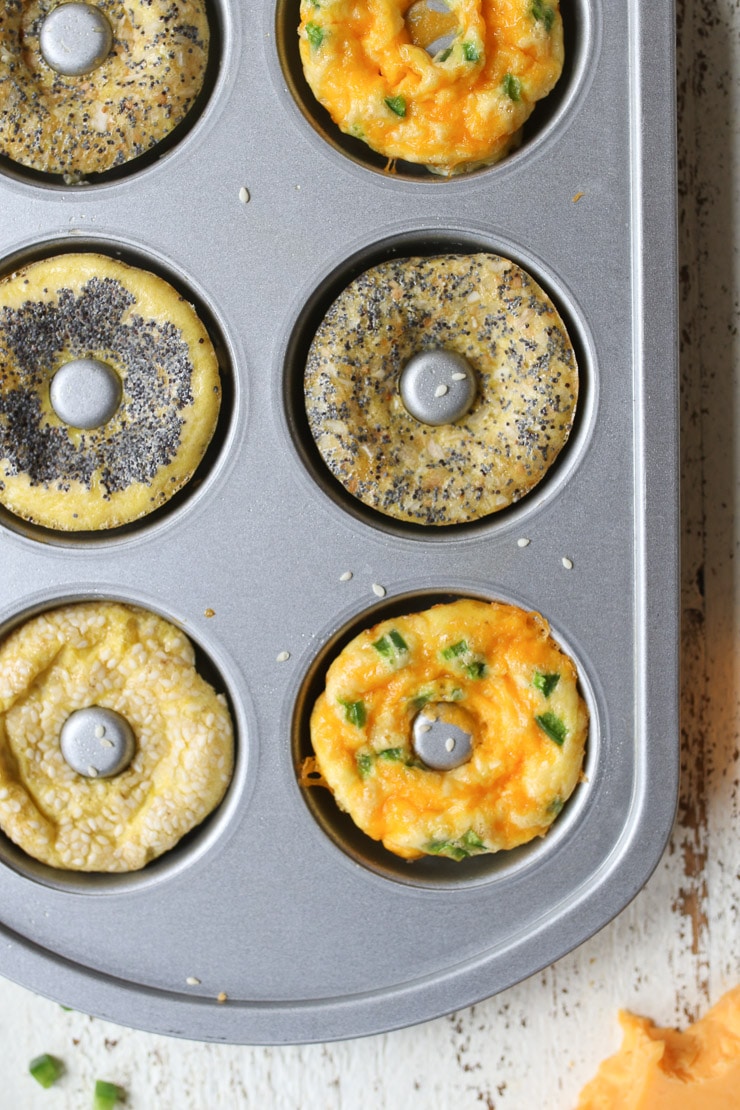
Keto everything bagel, jalepeno cheddar and poppyseed bagels in a baking pan.

How to Make This Recipe

Step 1: Whisk the eggs in a large bowl with a pinch each of salt and pepper.

Step 2: Lightly grease 12 donut molds and divide the egg mixture between the molds.

Step 3: Top with your choice in bagel toppings and bake at 350 F for 15 minutes until the eggs puff up and are cooked through.

Expert Tips

This recipe for breakfast keto bagels is more about the tool (aka the donut pan) than it is about the actual recipe because it’s embarrassingly easy. You can find a donut pan at many local stores or you can use this one linked here.

Recipe FAQs

How do I store this bagel keto recipe?

These bagels can be stored in the fridge in an airtight container for up to 7 days.

What can I top these bagels with?

To jazz up this recipe you could totally add whatever herbs or veggies you’ve got in the house. You could even make this JUST like a real bagel by smearing it with a little cream cheese.

Keto everything bagel, jalepeno cheddar and poppyseed bagels on a wooden plate.

More Recipes You Might Like

Looking for other keto recipes like this keto bagel recipe? Check out some of my favorite keto recipes below!

  • ZUCCHINI LASAGNA ROLL UPS (LOW CARB & KETO FRIENDLY)
  • EGG ROLL IN A BOWL (KETO FRIENDLY)
  • CREAMY PUMPKIN ZUCCHINI NOODLES WITH SPICED PUMPKIN SEEDS
  • KETO GRILLED AVOCADO BRUSCHETTA

So loves, have you tried making this keto bagel recipe? What is your FAVOURITE bagel flavour? Leave me a comment below with your thoughts!

Keto everything bagel, jalepeno cheddar and poppyseed bagels on a wooden plate.
Print Recipe
4.86 from 7 votes

Breakfast Keto Bagels with Eggs

These easy Breakfast Keto Bagels made with Eggs are flavoured like your favourite bagels including Everything Bagel seasoning, Sesame, Cheese and Jalapeno & Poppyseed.
Prep Time10 minutes mins
Cook Time15 minutes mins
Course: Breakfast
Cuisine: American
Servings: 12 bagels
Calories: 42kcal
Author: Abbey Sharp

Ingredients

  • Oil for greasing
  • 8 large omega-3 eggs
  • Pinch each of salt and pepper
  • Toppings:
  • Sesame Seeds
  • Poppyseeds
  • Grated cheddar
  • Minced jalapeno
  • Everything bagel spice see note* for recipe

Instructions

  • Whisk the eggs in a large bowl with a pinch each of salt and pepper.
  • Lightly grease 12 donut molds and divide the egg mixture between the molds.
  • Top with your choice in bagel toppings and bake at 350 F for 15 minutes until the eggs puff up and are cooked through.

Notes

Note: Everything bagel spice mix is 1 tbsp poppyseeds +1 tbsp sesame seeds + 1 tbsp dried garlic flakes +1 tbsp dried onion flakes + 1 tsp kosher or sea salt.

Nutrition

Calories: 42kcal | Carbohydrates: 1g | Protein: 4g | Fat: 3g | Saturated Fat: 1g | Cholesterol: 109mg | Sodium: 42mg | Potassium: 40mg | Sugar: 1g | Vitamin A: 160IU | Calcium: 16mg | Iron: 0.5mg
Abbey Sharp

Abbey Sharp is a Registered Dietitian (RD), regulated by the Ontario College of Dietitians. She is a mom, YouTuber, Blogger, award winning cookbook author, media coach specializing in food and nutrition influencers, and a frequent contributor to national publications like Healthline and on national broadcast TV shows.
www.abbeyskitchen.com/about-abbey/

Last Updated August 30, 2022. Published May 26, 2022 By Abbey Sharp 8 Comments

Things to Avoid While Breastfeeding & Pregnant (Activities + Foods That I Love!)

I share a list of the not-so-obvious things to avoid while breastfeeding & pregnant that I was really excited to do lots of when I became free!

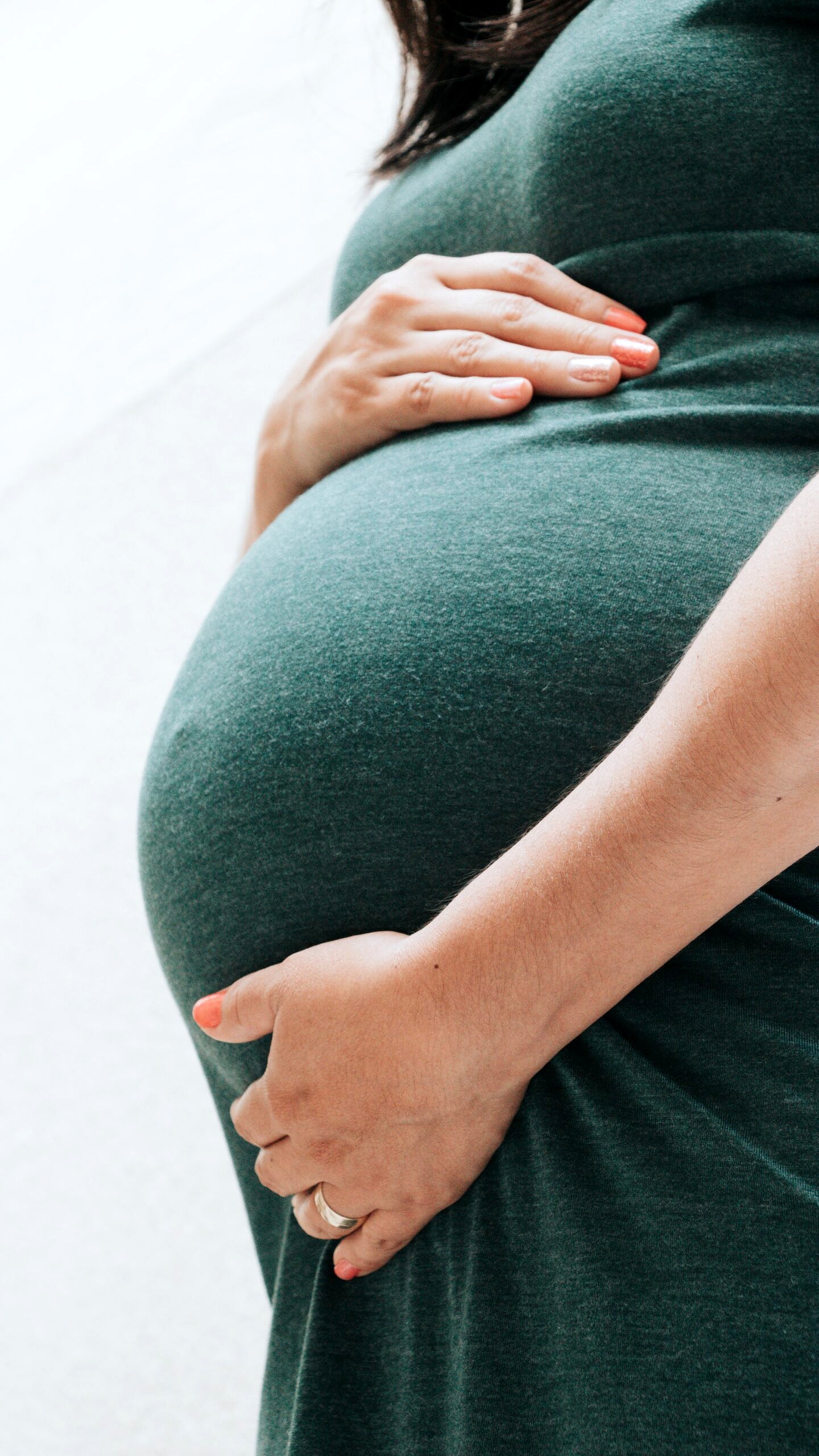
Person holding their pregnant stomach to discuss things to avoid while breastfeeding.

Motherhood is an amazing blessing, but it’s also a crazy sacrifice! Honestly, if I were to write a blog post about all of the little things we give up, or all of the ways our lives change as women when we get pregnant, give birth and then nourish our little ones, it would be a never ending post. If you head over to Dr. Google, there are apparently SO MANY every-day things to avoid while breastfeeding & pregnant. Even if some of them are BS (NOTE: MOST OF THEM ARE BS), I get that it’s hard not to feel a tinge of anxiety or guilt when you indulge.

So as I enter this very exciting (and potentially) short lived period of my life where I am no longer pregnant and no longer breastfeeding (AKA MY BODY IS SOMEWHAT MY OWN), I created a bucket list of things I COULDN’T WAIT to do.

Things to Avoid While Breastfeeding & Pregnant that I COULDN’T WAIT to Do Lots of When I Became FREE!

Let’s kick things off with a bang:

Get High (With Something Tasty, Obvs)

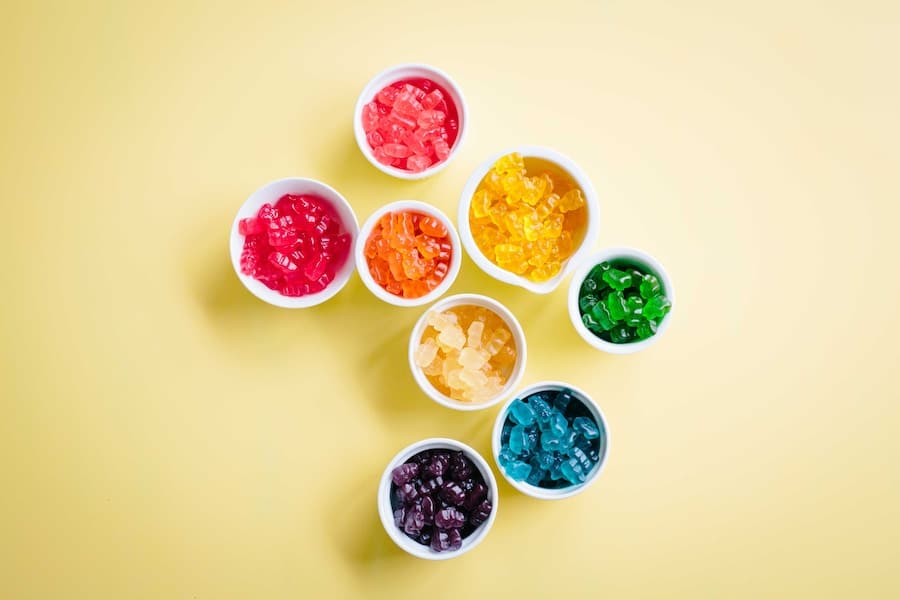
A bunch of bowls of different coloured gummy candies.

OK so I haven’t even thought about weed brownies since high school, but now that Marijuana is legal here in Canada, there are so many cool edibles on the market. Like forget your grandma’s home-made brownie (if your grandma ate weed brownies, she sounds pretty bad ass), I actually want to try some kind of lollipop, chocolate bar or fruit-flavoured gummy. Like even just a teeny tiny ear of a gummy is more excitement than I’ve had in the past two years! Honestly, I’m boring AF, so I don’t expect I would ever enjoy this, and I have no interest in making marijuana part of my usual routine, but I was really just curious to SEE what it feels like to get a little bit stoned as an adult.

Get a Spray Tan!

Back in the day when I was young, fit and childless, I was a regular spray-tan fanatic. It definitely makes me feel more confident to have a nice glow, and I am a total SPF 50 kinda girl over here. But the fumes from a spray tan are not the best for baby while baking in utero, and I wouldn’t dream of ruining a good spray with my pump flanges. HA, I can just imagine a massive ring around my nips and the milk turning a subtle orange hue – neither are good scenarios. But right in time for short-season, I was definitely ready to get my tan on STAT.

Go Rollerblading on the Boardwalk

Two women rollerblading.

While this is technically not one of the things to avoid while breastfeeding or pregnant, I do not know how to stop on rollerblades, so this would for sure be considered an extreme sport and therefore NOT advised during pregnancy. And while I was exclusively pumping, I would have to schlep my pump everywhere with me, basically preventing me from ever participating in any biking, rollerblading, or even long walks without my massive pump bag. GUYS, THE WORLD IS MY OYSTER! SO MANY POSSIBILITIES! I WAS SO HAPPY TO BE FREEEEEEEEE.

Get a Solid 8 Hour Sleep

Women sleeping in a bed to discuss things to avoid while breastfeeding.

The hormones associated with breastfeeding and pregnancy have REALLY cramped my sleep style. As soon as I weaned, my sleep was more restful and I didn’t wake up before my alarm went off in discomfort from rock-hard breasts. I also no longer have to get up at 5 AM to pump every day so it will be nice to maybe get to “sleep in” until 6 on the weekends and stay up past 9. Pregnancy, on the other hand, was even worse! Waking up early to vom, tossing and turning all night in discomfort, and general insomnia (without any ability to take any meds). UGH I AM NOT LOOKING FORWARD TO DOING THAT AGAIN. Mama’s going to enjoy her sleep.

Get a Facial

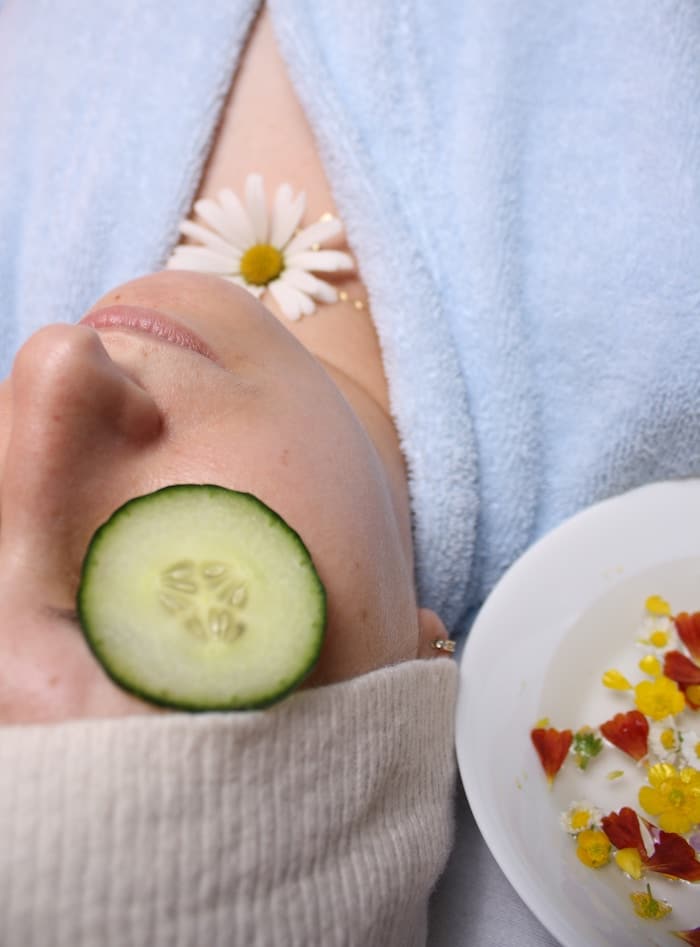
Women relaxing at a spa.

This is unfortunately one of the things to avoid while breastfeeding and pregnant, as there are a lot of questionable ingredients in beauty and spa products that may not be safe. While I have been feeling pretty haggard since becoming a mom, my dermatologist suggested I wait until after pregnancy and breastfeeding to get a facial, likely because of the risk of retinol-based products. I can’t say I was looking forward to the extractions which hurt like a MF, but I’m hopeful that it might help me not feel like I’ve aged 5 years in 12 months.

Drink Alcohol Without Guilt

A group of women drinking alcohol.

Okay, so I’ve already written about and established that drinking in moderation while breastfeeding is A-OK and the whole pump and dump thing is a total myth when it comes to things to avoid while breastfeeding. However, alcohol IS an issue in pregnancy, so it is recommended that mom significantly limit their intake (or abstain completely) during those 9 months. It also can have some small impacts on breastmilk supply, so while I was an oversupplier by the second half of my son’s first year, in the early days, I couldn’t spare a single drop! Any time I would have a drink, I would see a small decline in my output, which of course, made it hard to enjoy a good drink without guilt. So here’s to patio day-drinking while grandma has Baby E – totally care-free.

Wear a Fitted Dress without Buttons

By the very last few months of my last pregnancy, I was ALL ABOUT rocking the bump in my tight fitted dresses, but the first half of pregnancy I was just uncomfortable. Not to mention, I also was kinda trying to hide the bump until I was ready to disclose, meaning I can look forward to baggier, more forgiving tops in the early days of round 2. Then of course, while I was exclusively pumping or breastfeeding, the girls ALWAYS had to be easily accessible, so my “mom uniform” included a pumping tank, a basic button up blouse, and lululemons (because, you know, comfort). I was totally filling my online shopping cart for MONTHS now, dreaming of some sexy fitted dresses and tops to help me shake up my current look, and I was definitely looking forward to FINALLY “checking out”.

Leave the House without a Million Snacks

Blonde women standing outside.

When I was pregnant, I got into this grandma habit of collecting little candies anywhere I saw a candy dish so that I would have something to pop in my mouth when I got nauseous. Well, that same habit became VITAL while breastfeeding because I would be HANGRY AF no matter how much I ate. Honestly, I love to eat, but a girl also has to get shit done and the hunger that comes along with both pregnancy and breastfeeding can sometimes be a burden. And if I am calling the need to EAT even slightly annoying, it’s probably cumbersome AF.

Drink Any Tea Without Googling it’s Safety

Hand pouring tea into a mug to discuss things to avoid while breastfeeding.

I’ve written a pretty in depth list on the safety of foods and supplements during pregnancy, and there are a BUNCH of questionable herbs and teas that LEGIT made me crazy. Hibiscus is a no-no in pregnancy, while mint can reduce milk supply while nursing. And those are just two of my faves! Now that I’ve been both pregnant and breastfeeding, I can barely even remember which herb is safe when, so unless I want to constantly be checking lists, I’ll probably just avoid them all together. I’m going to use this sweet freedom to drink whatever the hell I want, whenever the hell I want, and not have a compulsion to post on my mommy groups to check if it’s kosher.

Now mamas, what simple activities or foods are you going to enjoy while you’re not breastfeeding or pregnant?

What did you take for granted before you had kids that you would CHERISH now that you’re not growing or nourishing a wee one?

Leave me a comment below with your thoughts!

Abbey Sharp

Abbey Sharp is a Registered Dietitian (RD), regulated by the Ontario College of Dietitians. She is a mom, YouTuber, Blogger, award winning cookbook author, media coach specializing in food and nutrition influencers, and a frequent contributor to national publications like Healthline and on national broadcast TV shows.
www.abbeyskitchen.com/about-abbey/

Last Updated July 21, 2020. Published May 20, 2022 By Abbey Sharp 63 Comments

Sugar Free Biscuits with Chickpeas and Peanut Butter | Iron Rich BLW Recipe

Baby hand grabbing a chickpea peanut butter baby biscuit from a yellow plate.

These BLW Sugar Free Biscuits are an awesome iron rich finger food recipe for feeding your baby with baby led weaning, your toddler or your young child.

Baby hand grabbing a chickpea peanut butter baby biscuits from a yellow plate.

If you’ve followed along on my baby led weaning journey, you probably know that I really enjoyed switching things up and making awesome snacks for Baby E. I’ve shared a number of the greatest hits on my blog already (like these amazing egg frittata fingers and awesome mini muffins) and you keep asking for more. So today I wanted to share a baby biscuit recipe I came up with to sneak some extra iron into Baby E’s meals. These BLW Sugar Free Biscuits are packed with iron, are plant based, and they’re also a great way to maintain peanut allergy tolerance. They’re winning all around.

Why This Recipe Works

These sugar free biscuits taste surprisingly great. The day we were shooting these baby biscuits and I was trying to take a photo, Baby E immediately shoved two into his mouth at once. While it was tough to get a good shot, I think we got the message loud and clear – these peanut butter baby biscuits rock. I also love this recipe because it:

  • Requires only a few household ingredients
  • Can be sweetened naturally with super ripe bananas
  • Is a great source of plant based iron and protein

Key Ingredients

Chickpeas – Chickpeas are a great source of plant based protein. They contain ~10 g of protein per cup and also give you a whopping 9 g of fiber.

Ripe Bananas – It’s important to use ripe bananas (even super ripe) in these sugar free biscuits as it’s what keeps the recipe “sugar free”. The starch breakdown from the ripe banana makes the banana taste so much sweeter as well as easier to blend into baking recipes.

Oat Flour – I’ve been using oat flour in a lot of my baking recipes recently. Not only do I like the taste overall more, but it also provides fiber and plant based protein.

Natural Peanut Butter – I personally like using natural peanut butter because of the runnier consistency. This makes it a lot easier to mix into recipes compared to plain store bought.

Chickpea peanut butter baby biscuits on a yellow plate.

How To Make This Recipe

Step 1: Preheat oven to 350 F and line two baking sheets with a silpat or parchment paper. In the meantime, to a food processor, process the chickpeas, peanut butter, banana, flour, baking powder, soda, vanilla, and cinnamon until very smooth.

Step 2: Using wet hands, roll one tablespoon balls in your hand and place on the baking sheet an inch apart. Lightly press down just slightly.

Step 3: Sprinkle with a bit extra cinnamon and top with coconut. Bake for 15-17 minutes or until slightly golden brown. Allow to fully cool.

Expert Tips

Babies iron needs after 6 months are pretty high – a whopping 11 mg of iron is required per day! When you’re just starting out with solids, I get that it can be frustrating and nerve-wracking worrying that babe isn’t getting enough. I mean, I think Baby E eats pretty damn well now but there are days when he legit still just chucks everything on the floor or eats tomatoes and ONLY tomatoes. Meat is one of the top sources of iron for babies, but I think most parents agree that it’s usually the hardest thing to get our kids to eat. Even when meat goes INTO E’s mouth, a lot of it just kinda falls out LOL So for days when 99% of the chicken thigh or brisket I’ve cooked for Baby E ends up on the floor, these BLW Sugar Free Biscuits fill the gap.

Recipe FAQs

How do I store these biscuits?

You can store this recipe in an airtight container in the fridge for up to 7 days. They are perfect to pull throughout the week and give to your little ones.

Why is this recipe good for BLW?

Not only are these cookies small, great for grasping skills, they are also soft meaning they’re good for tiny teeth. You are also introducing a top allergen (peanuts) by incorporating the natural peanut butter.

Do I need to use oat flour?

The type of flour shouldn’t matter – just make sure you’re getting the appropriate ratio as some require more/less.

Can I use another type of nut butter?

Just like with oat flour, you can sub any type of nut butter you like with this recipe! I still recommend using natural though for the perfect consistency.

Baby biscuits on a yellow plate next to a rack of biscuits.

More Recipes You Might Like

Looking for more easy BLW recipes like these sugar free biscuits? Check out some of my favorite recipes below!

  • PROTEIN MUFFINS FOR BLW WITH CHICKEN AND SPINACH
  • BANANA BAKED OATMEAL FINGERS WITH CHERRIES (BLW & TODDLER FRIENDLY)
  • SWEET POTATO MUFFINS WITH APPLE (HIGH IRON BLW RECIPE)
  • MAC AND CHEESE BITES WITH BUTTERNUT SQUASH (BLW RECIPE)

So friends, I would love to know what are some of your favourite BLW friendly recipes for your infants, toddlers and kids? Have you tried making these BLW Sugar Free Biscuits? What are some easy iron rich recipes your kids love? Leave me a message below with your thoughts!

Print Recipe
4.88 from 39 votes

BLW Sugar Free Chickpea Peanut Butter Baby Biscuits

These BLW Sugar Free Chickpea Peanut Butter Baby Biscuits are an awesome iron rich finger food recipe for feeding your baby with baby led weaning, your toddler or your young child.
Prep Time10 minutes mins
Cook Time17 minutes mins
15 minutes mins
Total Time27 minutes mins
Course: Snack
Cuisine: American, Middle Eastern
Servings: 50 -60 biscuits
Calories: 21kcal
Author: Abbey Sharp

Ingredients

  • 1 19 oz can no salt added chickpeas drained and rinsed
  • 1 cup natural peanut butter
  • 2 large ripe bananas
  • ¾ cup oat flour gluten free if desired
  • 1 tsp baking powder
  • ½ tsp baking soda
  • 2 tsp vanilla extract
  • 1 tsp cinnamon

Topping:

  • Pinch cinnamon
  • 2 tbsp unsweetened finely shredded coconut

Instructions

  • Preheat oven to 350 F and line two baking sheets with a silpat or parchment paper.
  • To a food processor, process the chickpeas, peanut butter, banana, flour, baking powder, soda, vanilla, and cinnamon until very smooth.
  • Using wet hands, roll one tablespoon balls in your hand and place on the baking sheet an inch apart. Lightly press down just slightly.
  • Sprinkle with a bit extra cinnamon and top with coconut. Bake for 15-17 minutes or until slightly golden brown. Allow to fully cool.

Nutrition

Calories: 21kcal | Carbohydrates: 3g | Protein: 1g | Fat: 1g | Saturated Fat: 1g | Cholesterol: 1mg | Sodium: 27mg | Potassium: 34mg | Fiber: 1g | Sugar: 1g | Vitamin A: 11IU | Vitamin C: 1mg | Calcium: 7mg | Iron: 1mg

Abbey Sharp

Abbey Sharp is a Registered Dietitian (RD), regulated by the Ontario College of Dietitians. She is a mom, YouTuber, Blogger, award winning cookbook author, media coach specializing in food and nutrition influencers, and a frequent contributor to national publications like Healthline and on national broadcast TV shows.
www.abbeyskitchen.com/about-abbey/

Last Updated April 1, 2024. Published May 16, 2022 By Abbey Sharp 6 Comments

Gluten Free Focaccia with Flax (No Flour, Yeast Free Bread)

This healthy gluten free focaccia bread is a recipe with no flour and is yeast free, yielding a gluten free, keto-friendly (optional) bread with omega-3s!

Birds eye view of flax focaccia on a white plate.

I asked my followers on Instagram what they would like if I were to come up with a bread recipe. Some of the most common requests were healthy, gluten free, yeast free, and flour free.  I get it. The two ingredients have become some super hot commodities and even I can’t make bread with yeast! I did, however, have a TON of ground flax in my house so I decided to MacGyver a way to turn it into a loaf of healthy, nutrient rich bread. I saw a recipe for flax bread which I used as my inspiration and guide, and then added my own spin to flavours to make this delicious gluten free focaccia.

Table of contents

  • Why This Recipe Works
  • Key Ingredients
  • How To Make This Recipe
  • Expert Tips
  • Recipe FAQs
  • More Recipes You Might Like

Why This Recipe Works

I was totally skeptical that anything made pretty much exclusively with flax would taste good, but the results were truly shocking. I also love this recipe because it’s

  • The perfect, springy texture
  • A salty and satisfying flavour
  • Toddler and kid friendly
  • Totally gluten free and can be made keto-friendly for those with dietary restrictions!

Key Ingredients

Ground flaxmeal- I love flax because it’s rich in omega-3s, fibre and protein. It’s a staple in my house, especially for making baked goods more nutritious for my son. Always store your flax in the fridge once you’ve opened the package more maximum freshness!

Olive Oil- Focaccia is not focaccia without a generous amount of olive oil! I definitely recommend a nice extra virgin olive oil for this.

Eggs- The eggs do help keep this gluten free focaccia springy and not too dense as you might experience if you tried to make this strictly vegan.

Fleur de sel- Any fancy finishing salt will work here, but I am obsessed with good fleur de sel.

Maple or any other sweetener – Keto friends, you can use a non-calorie sweetener here, it is just to add a little flavour.

Birds eye view of flourless flax bread on a cooling sheet and a white plate.

How To Make This Recipe

Step 1: In a small saucepot, heat the olive oil and the two sprigs of rosemary until simmering over low heat for 10 minutes. Carefully remove the rosemary sprigs and set aside to cool.

Step 2: In a large bowl, mix together the flax, baking powder, and salt until combined. Add in the beaten eggs, water, maple or other sweetener, and 1/3 cup of the rosemary olive oil. Allow to sit for 15 minutes to thicken.

Step 3: Transfer to the baking sheet and spread out about an inch in thickness, making sure to leave at least an inch from the edge of the pan.

Step 4: Top with the grapes (cut side down), olives (cut side down) and rosemary pieces. Carefully brush the top of the dough with about a tablespoon of the rosemary olive oil and sprinkle with fleur de sel.

Step 5: Bake for about 25-30 minutes or until the dough feels springy and dry on top. Allow to cool for at least 15-20 minutes before cutting into slices.

Expert Tips

Again, I was totally skeptical but I need you to know that this recipe is embarrassingly easy. It is important that you let the dough sit by itself for at least 20 minutes to allow the flax to “bloom” with the liquid so it’s thick and fuffy.

Also, don’t skimp on the olive oil. It’s what adds flavour and moisture to this gluten free focaccia .

Close up of gluten free focaccia bread with flax on a baking rack.

Recipe FAQs

Is flourless bread gluten free?

Yes! Flax is completely gluten free so you can absolutely enjoy this if you avoid gluten.

How is this bread keto friendly?

The base of this bread – flax, olive oil and eggs- are all keto-friendly. This bread can be made keto friendly by using a non calorie sweetener in place of the maple syrup, and you can also omit the grapes if you want (though these probably add a negligible amount of carbs). See below for other topping ideas.

What should I serve this bread with?

If we stay in an Italian theme, it’s delicious with this vegan sausage white bean pasta, or minestrone pasta.

How else can I top my gluten free focaccia?

You can totally make this simply with just salt, or try some other toppings:
– Sliced cherry tomatoes + mozzarella + basil
– Roasted garlic + tomatoes
– Peaches + thyme
– Cooked sausage + Honey + Olives
– Prosciutto + mozzarella
– Artichoke hearts + gruyere
– Caramelized onions + mushrooms
– Nuts + Chocolate + Mascarpone

Full shot of gluten free focaccia bread garnished with olives and rosemary on a white dish with additional focaccia and red grapes in the background.

More Recipes You Might Like

Looking for other delicious keto friendly recipes like this gluten free focaccia? Check out some of these below!

  • ZUCCHINI LASAGNA ROLL UPS (LOW CARB & KETO FRIENDLY)
  • KETO ZUCCHINI BOATS WITH PHILLY CHEESESTEAK STUFFING
  • EGG ROLL IN A BOWL (KETO FRIENDLY)
  • KETO GRILLED AVOCADO BRUSCHETTA | LOW CARB AND GLUTEN FREE SUMMER BBQ RECIPE

What baked goods are you whipping up without flour or yeast? Leave me a comment below with your ideas!

Print Recipe
5 from 2 votes

Gluten Free Focaccia with Flax (Keto, No Flour, Yeast Free Bread)

This healthy gluten free focaccia bread is a recipe with no flour and is yeast free, yielding a gluten free, keto-friendly (optional) bread with omega-3s!
Prep Time35 minutes mins
Cook Time30 minutes mins
Total Time1 hour hr 5 minutes mins
Course: Snack
Cuisine: American
Servings: 8 slices
Calories: 432kcal
Author: Abbey Sharp

Ingredients

  • 1/2 cup olive oil
  • 2 sprigs rosemary
  • 2 cups finely ground flaxseed
  • 1 tsp fine sea salt
  • 6 eggs (beaten)
  • 1/2 cup water
  • 1 tbsp maple syrup (or low calorie brown sugar for keto/low carb)
  • 1/2 tsp fleur de sel
  • 1 sprig rosemary (minced)
  • 1 cup red grapes (halved) (optional for keto)
  • 1 cup kalamata olives (pitted and halved)
  • 1 tbsp baking powder

Instructions

  • Preheat oven to 350 F. Prepare a sheet pan with a piece of parchment paper or a silpat.
  • In a small saucepot, heat the olive oil and the two sprigs of rosemary until simmering over low heat for 10 minutes. Carefully remove the rosemary sprigs and set aside to cool.
  • In a large bowl, mix together the flax, baking powder, and salt until combined. Add in the beaten eggs, water, maple or other sweetener, and 1/3 cup of the rosemary olive oil. Allow to sit for 15 minutes to thicken.
  • Transfer to the baking sheet and spread out about an inch in thickness, making sure to leave at least an inch from the edge of the pan.
  • Top with the grapes (cut side down), olives (cut side down) and rosemary pieces. Carefully brush the top of the dough with about a tablespoon of the rosemary olive oil and sprinkle with fleur de sel.
  • Bake for about 25-30 minutes or until the dough feels springy and dry on top. Allow to cool for at least 15-20 minutes before cutting into slices.

Nutrition

Calories: 432kcal | Carbohydrates: 18g | Protein: 12g | Fat: 37g | Saturated Fat: 5g | Polyunsaturated Fat: 14g | Monounsaturated Fat: 16g | Trans Fat: 0.01g | Cholesterol: 140mg | Sodium: 768mg | Potassium: 578mg | Fiber: 12g | Sugar: 5g | Vitamin A: 282IU | Vitamin C: 1mg | Calcium: 203mg | Iron: 3mg
Abbey Sharp

Abbey Sharp is a Registered Dietitian (RD), regulated by the Ontario College of Dietitians. She is a mom, YouTuber, Blogger, award winning cookbook author, media coach specializing in food and nutrition influencers, and a frequent contributor to national publications like Healthline and on national broadcast TV shows.
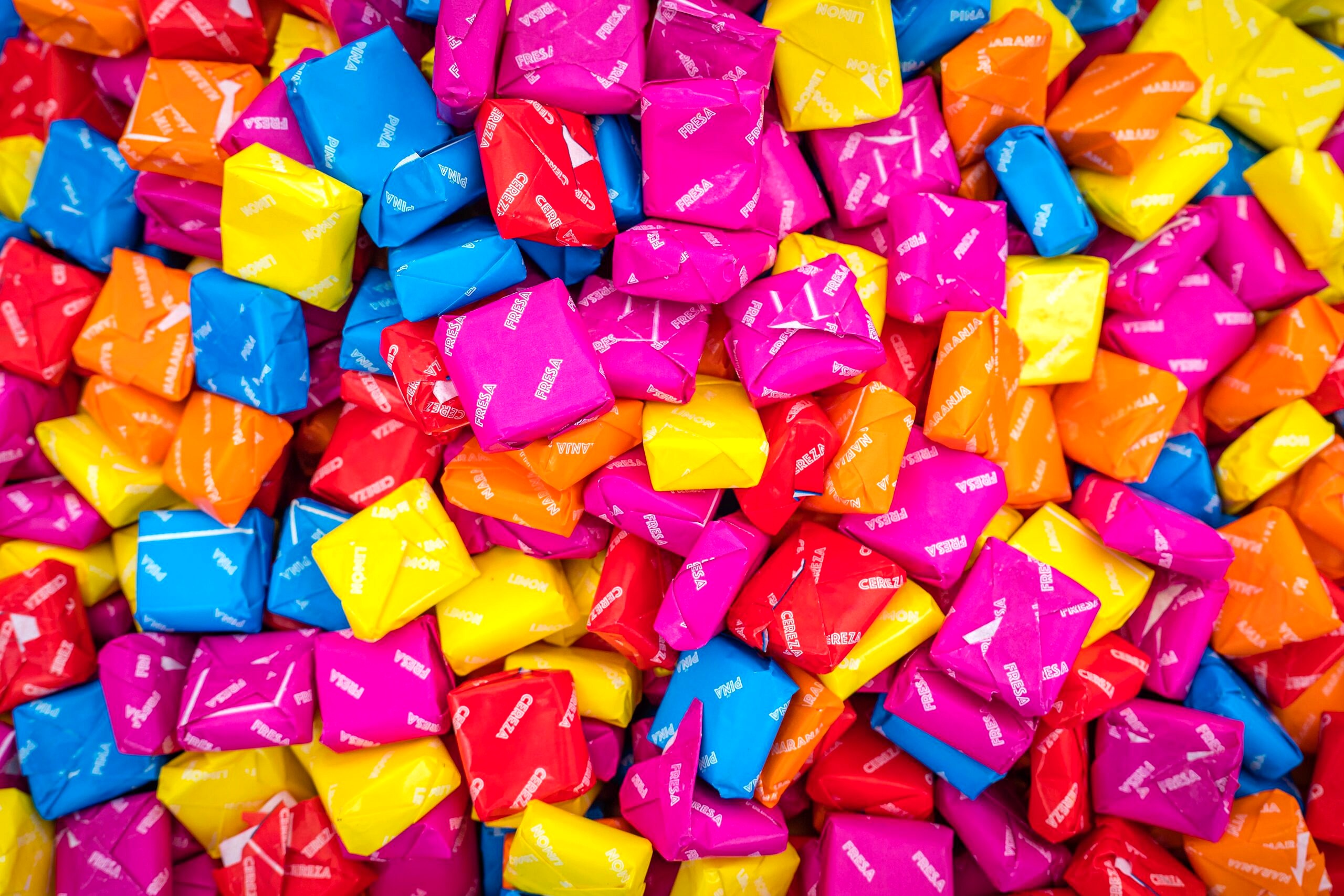
www.abbeyskitchen.com/about-abbey/
  • Previous Page
  • Go to page 1
  • Interim pages omitted …
  • Go to page 26
  • Go to page 27
  • Go to page 28
  • Go to page 29
  • Go to page 30
  • Interim pages omitted …
  • Go to page 89
  • Next Page

Get started with

Eight Free Recipe Books

From the co-founder of Neue Theory and creator of the Hunger Crushing Combo

Sign me up!
Abbey smiling at table
Abbey Sharp

“Foods may never be nutritionally equal. But we can make them morally equal by recognizing that our worth is never determined by what's on our plate.”

— Abbey Sharp, RD About Abbey ◥

Books

  • HCC™
  • Mindful Glow
  • Free E-Books

Blog

  • Nutrition
  • Recipes
  • Motherhood
  • Life

Explore

  • Neue Theory™
  • Bite Back
  • YouTube

Abbey

  • About
  • Coaching
YouTube TikTok Instagram Facebook X Pinterest
Abbey Sharp - The No BS Dietitian From Abbeys Kitchen

© Abbey's Kitchen 2026  All Rights Reserved •  ACCESSIBILITY STATEMENT •  Privacy Policy

This site uses cookies. By continuing to browse the site, you are agreeing to the use of cookies Accept Privacy Policy
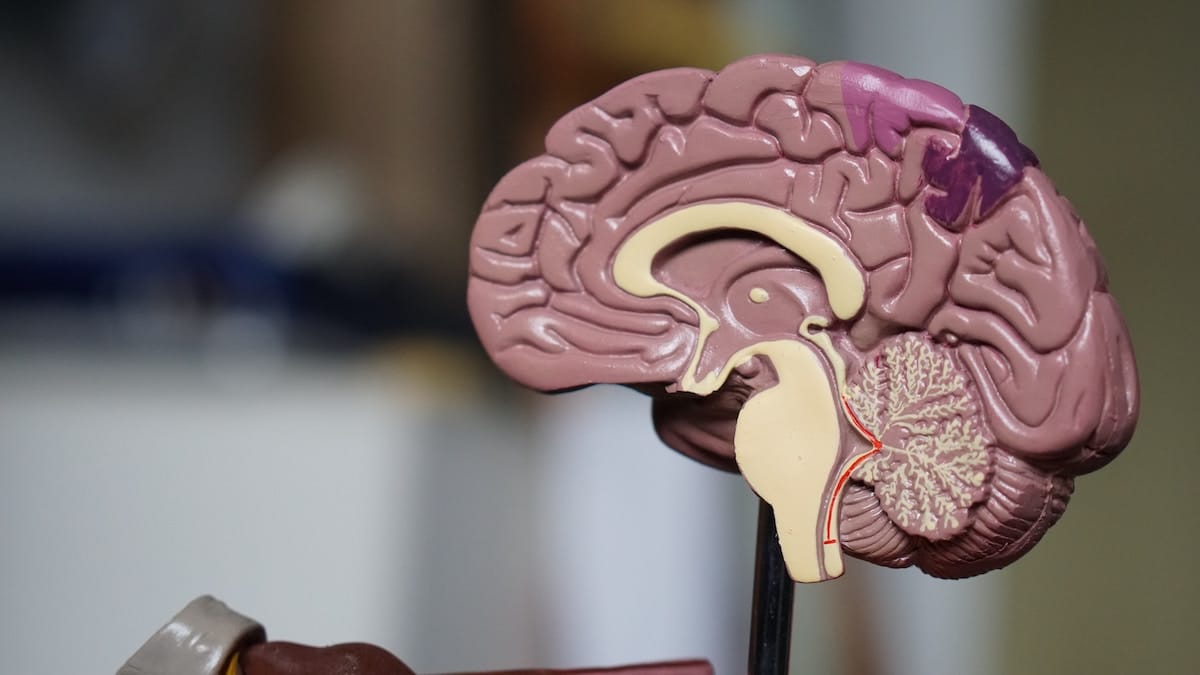
Privacy & Cookies Policy

Privacy Overview

This website uses cookies to improve your experience while you navigate through the website. Out of these, the cookies that are categorized as necessary are stored on your browser as they are essential for the working of basic functionalities of the website. We also use third-party cookies that help us analyze and understand how you use this website. These cookies will be stored in your browser only with your consent. You also have the option to opt-out of these cookies. But opting out of some of these cookies may affect your browsing experience.
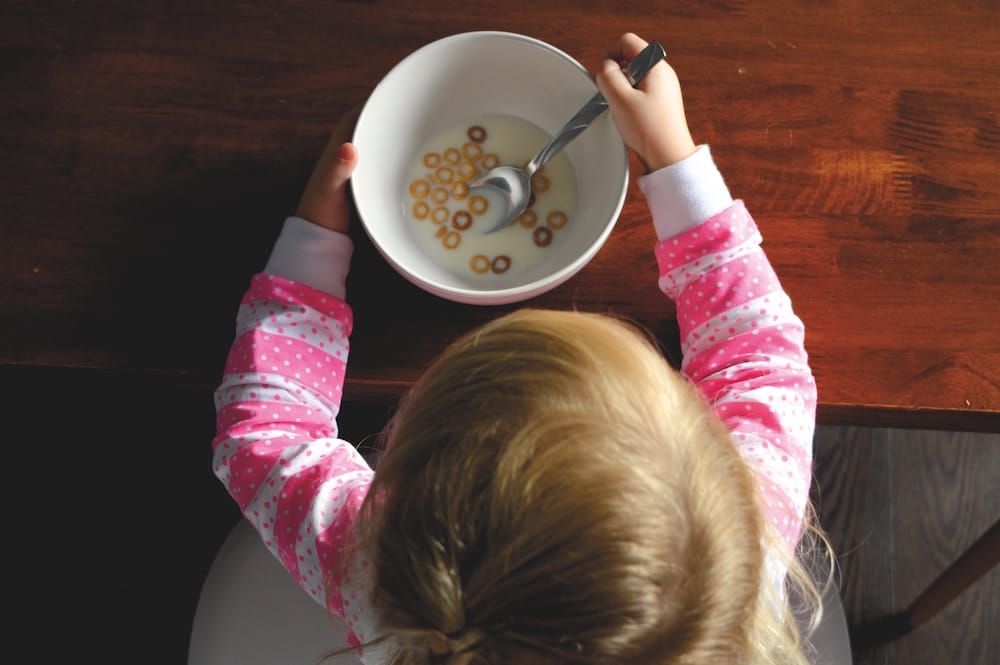
Necessary
Always Enabled
Necessary cookies are absolutely essential for the website to function properly. This category only includes cookies that ensures basic functionalities and security features of the website. These cookies do not store any personal information.
Non-necessary
Any cookies that may not be particularly necessary for the website to function and is used specifically to collect user personal data via analytics, ads, other embedded contents are termed as non-necessary cookies. It is mandatory to procure user consent prior to running these cookies on your website.
SAVE & ACCEPT

Rate This Recipe

Your vote:


A rating is required
A name is required
An email is required