• Skip to main content

Abbey's Kitchen

Healthy Recipes, Nutrition Myth Busting, Healthy Eating Tips

  • Books
    • HCC™
    • The Mindful Glow Cookbook
    • Recipe eBooks
      • Family
      • Hypothyroidism
      • BLW
      • Vegan Week 1
      • Vegan Week 2
      • Vegan Week 3
      • Keto
      • Gluten Free Week 1
      • Gluten Free Week 2
      • Fitness
      • Paleo
  • Blog
    • Nutrition
    • Recipes
    • Motherhood
    • Life
  • Explore
    • Neue Theory™
    • Bite Back With Abbey Sharp
      • Apple Music
      • Spotify
      • Amazon Music
    • YouTube
  • Abbey
    • About
    • Coaching
    • Contact

Abbey Sharp

Last Updated April 1, 2023. Published March 29, 2023 By Abbey Sharp 11 Comments

Constipation Relief for Baby! Best Foods for Constipation Newborns, Toddlers, and Kids

Here we share some constipation relief for baby strategies and some of the best foods for constipated newborns, toddlers and kids to help them poop.
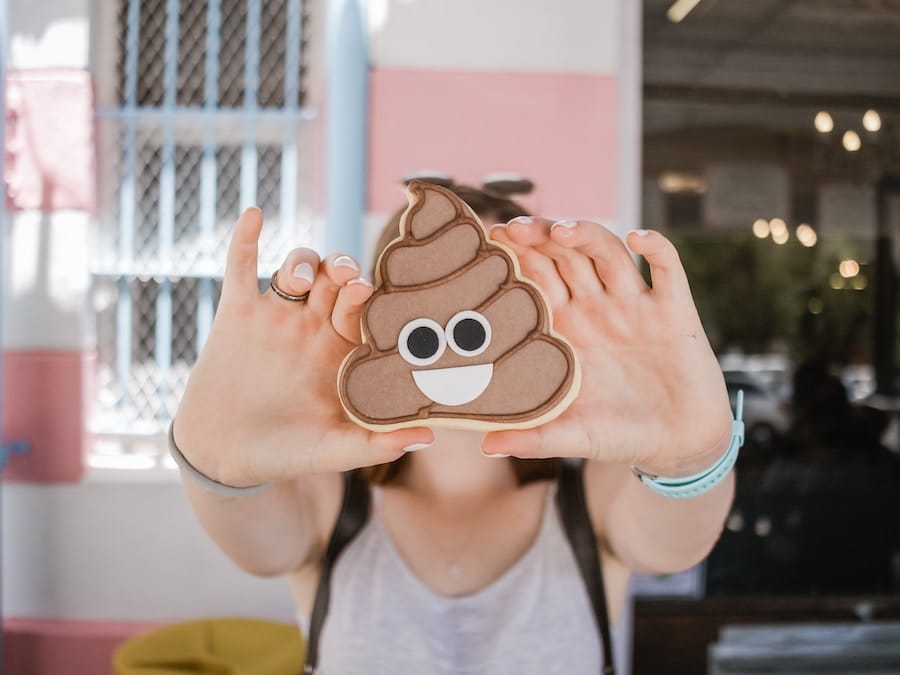
Person holding up a cookie shaped like a poop emoji.

Read through most of my texts with my husband and at least 50% of them have to do with E’s poop. Has he pooped? What colour is the poop? Was said poop dry, runny, messy? Trust me, there’s a lot of great conversations that can be had about poo. So the moment our regular poop schedule (and therefore text trail) becomes irregular, we get a wee-bit nervous. Constipation sucks for all of us, but baby constipation is the WORST. There is nothing more heartbreaking than watching your kid go blue in the face trying to squeeze one out only to erupt into a fit of tears. Honestly bud, I’ve been there (hello postpartum constipation), it totally sucks.

So let’s get down with some constipation relief for baby strategies and some of the best foods for a cranky constipated newborn, toddler or kid.

Baby Poop 101

First, let’s start with the basics and discuss what a normal healthy poop looks like.

How Often Should Your Baby Poop

1- 4 Weeks after Birth

A one to four-week formula-fed baby will generally poop two to three times a day, while a breastfed baby may poop four times a day.

2 months to 3 years of age

As your baby gets older, the number of poops decreases to approximately one to two poops a day, and really this number can be super variable depending on the child. As with adults, its more about regularity than it is about a finite number.

What Does a Normal Baby Poop Look Like?

There isn’t one way your baby’s poop should look like because it depends on several factors, however there are a few common types that you can refer to. If your baby is exclusively breastfed, their poop will typically look more runny compared to formula-fed babies. But before a babe is on solids it will range in colour from shades of brown, tan, yellow and green. Nothing really to be alarmed about here.

Once your baby starts solids, their poop will come in different colours and textures. Trust me, I’ve seen some interesting things in the past few months. This is because their gut is adjusting to the introduction of solids. Instead of the usual runny mustard-looking poops, you’ll start to see more firmer adult-like poops (maybe even with some bits of food) and they’ll be accompanied by some WICKED scents. Like honestly, get a gas mask and a really good diaper pail, you do NOT want to just put one of those bad boys in a regular bin.

Alright, now that we’ve gotten that fun stuff out of the way, let’s talk about baby constipation and how to know if your baby’s bowel movements are normal.

How to Know if My Baby is Constipated?

Happy baby lying on a white blanket.

Constipation is often defined by the lack of frequency of poops, but it is also described by the consistency of poops. Baby constipation can often be identified when the poop is hard and dry, and is (seemingly, since they often can’t tell us explicitly) difficult or painful to pass. In my experience, it’s really easy to know when Baby E is constipated because I hear him grunting, holding his breath and turning red as he bares down to push, and he then usually is very cranky and upset when it doesn’t come. Ugh it breaks my heart.

Why is My Baby Constipated?

So why might your baby be constipated? There could be a number of reasons depending on what’s going on and if we’re talking about a newborn, toddler or fully grown kid.
One of the first major reasons for baby constipation is the addition of solids to their feeding regime. Don’t forget that babies who have previously been only drinking breastmilk or formula have to let their gut adjust to digesting new bigger pieces of real food. Even adding new foods to an already eating baby can cause some temporary distress.
Other major reasons usually revolve around changes to schedules, environment (like starting day care), and travel – basically just like us!

Best Constipation Relief for Baby Strategies

Tummy Massage

Baby's feet lying on its back.

If you’ve got a young baby who has yet to start solids, your options are honestly limited for what they can be given. Massage is usually your best bet for that baby constipation! Giving your baby a gentle belly massage can help to stimulate their bowels to pass a bowel movement. A popular tummy massage for babies is called the “I Love U” method. Here’s how to do it:

  • Lay your baby on their back on a clean floor facing you
  • Say “I” as you use your index finger and middle fingers to draw the letter “I” on your baby’s left side
  • Draw an upside down “L” on baby’s right side, across the top of the tummy and down baby’s left side
  • Then draw an upside-down U
  • To finish, rest your hands on your baby’s abdomen, encouraging baby to release any tension in their tummy

Fluids for Baby Constipation

If your baby is under six months, there is no need to give them fluids aside from breastmilk or formula. But if you’ve just started solids, you will want to make sure you’re regularly offering water to help move things along. It is recommended you offer babies six to twelve months about 2 to 3 ounces (or 60-90 mL) at a time.

Get Your Baby Moving
baby sitting on the floor

A lot of us adults find we get backed up when we’ve been less active than normal, and the same goes for out little tots. Obviously they can’t hit the gym or go for a sweaty spin class, but encourage them to crawl, walk and kick as much as they can. The Jolly Jumper was KEY for us around here! If your baby is really young and not doing much moving independently yet, try moving your baby’s legs in a bicycle movement to get things rolling.

Best Foods to Help with Constipation Relief for Baby

If your baby has started solids, you’ll want to focus on foods rich in fibre. Here are some great baby friendly options for relieving baby constipation.

Vegetables
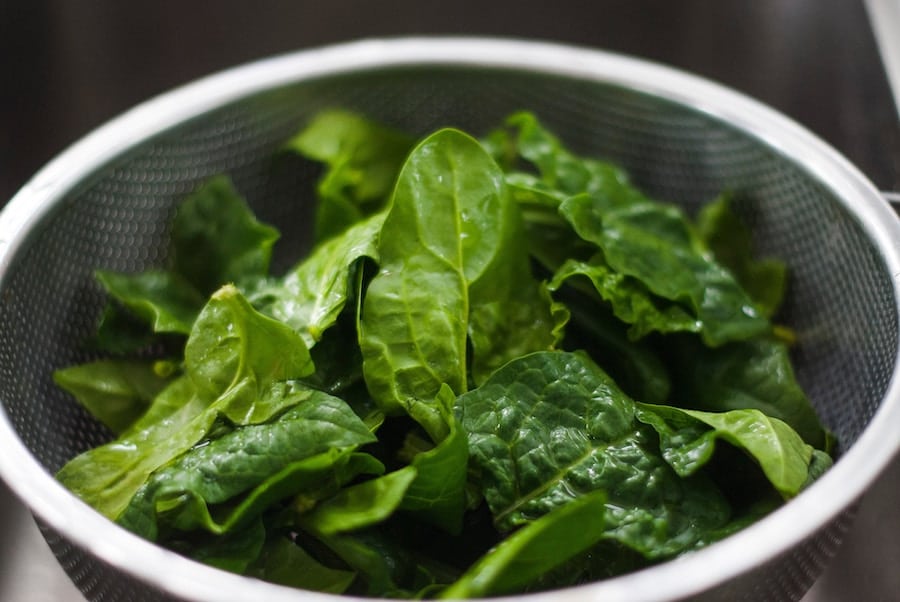
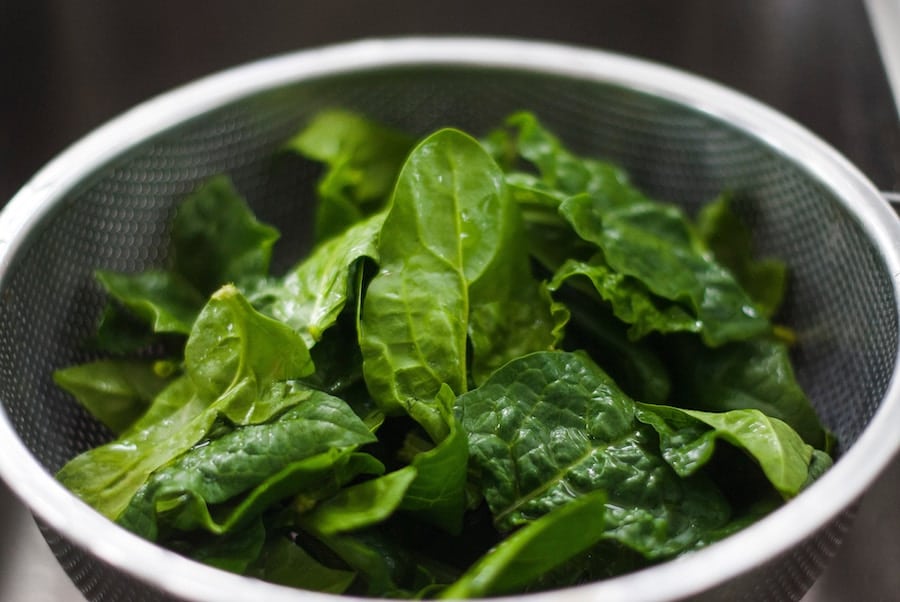
leafy greens in a large silver bowl

Spinach (pureed into pancakes or fritters)
Broccoli (steamed or roasted)
Artichokes (jarred and rinsed to remove excess salt)
Peas (pureed or steamed whole)
Potato (baked or mashed)
Sweet potato (baked or mashed)

Fruit
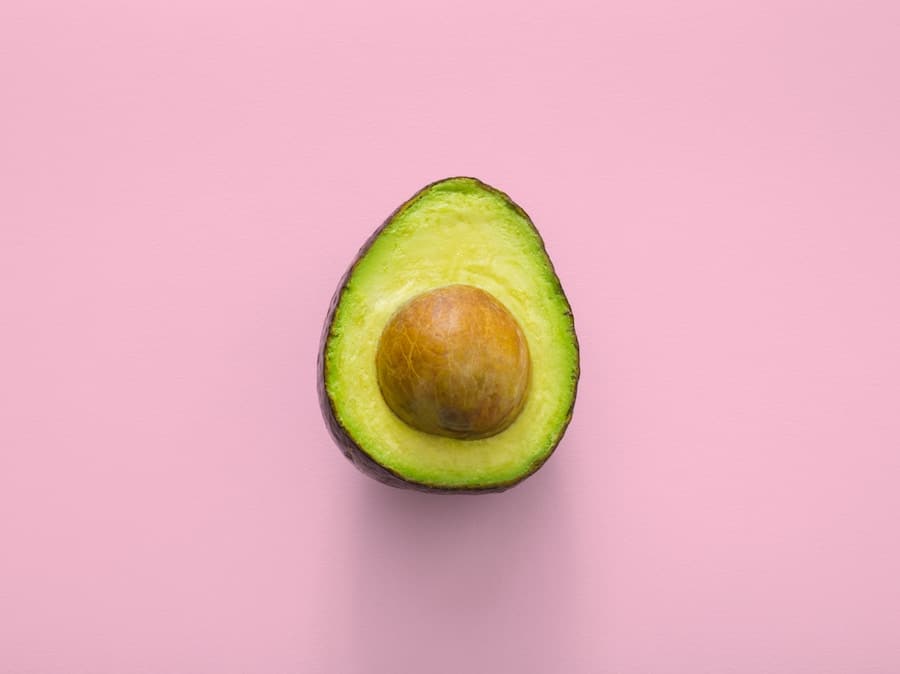
half of an avocado on a pink background

Prunes (pureed, or stewed)
Avocado (sliced or mashed)
Blackberries (halved)
Pears (cooked or pureed)
Apples (cooked or pureed)
Raspberries (halved or whole)
Kiwi (sliced)
Figs (quartered)

Grain Products
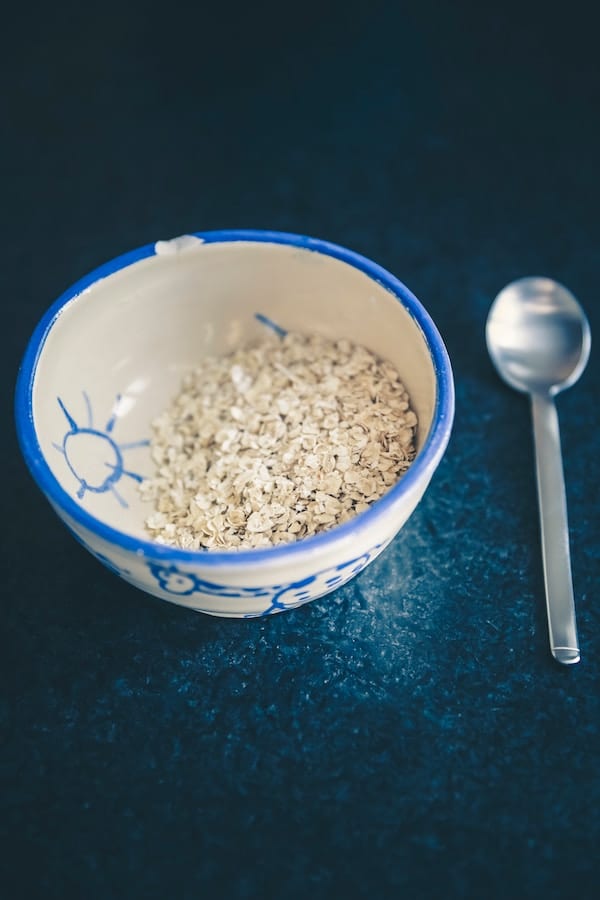
oats in a small bowl next to a silver spoon

Bran-based cereal (cooked with water or breast milk)
Oatmeal
Quinoa

Meat Alternatives
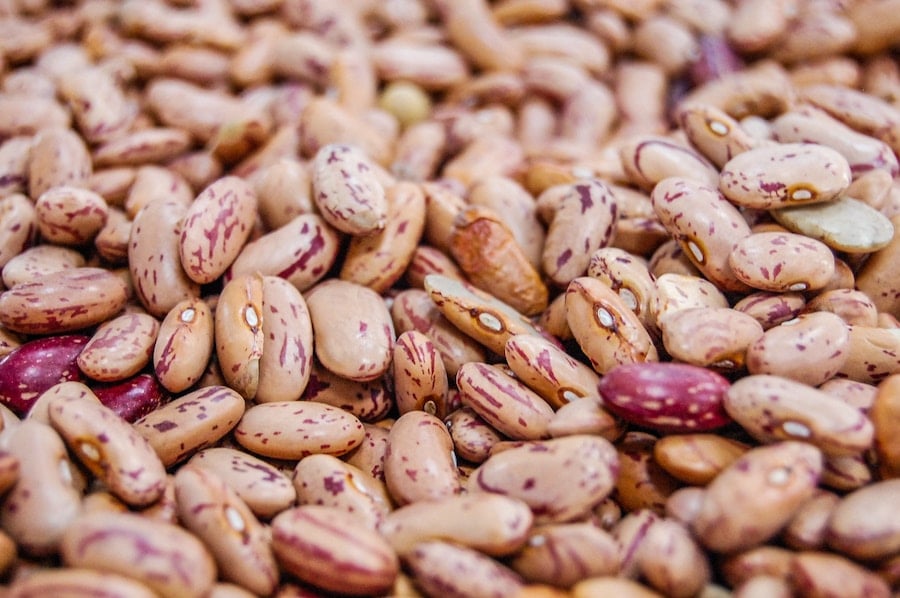
Dried beans.

Almond Butter
Beans (cooked or pureed)
Chickpeas (cooked or pureed)
Edamame (pureed or steamed)
Lima beans (pureed or steamed whole)
Lentils (cooked and pureed or added to fritters or pancakes)
Flax seeds (added to baked goods)
Hummus
Split peas (cooked and pureed)

When introducing those fibre rich foods, be sure to incorporate them into their diet slowly so as not to shock their system and worsen their constipation. Here are some creative ways to use these high fibre foods in their meals.

  • Add berries, or grated carrots, zucchini, apples, and pears when making muffins, breads or pancakes
  • Add vegetables to casseroles, soups, pasta sauces, and pizza
  • Add sliced fruit or berries to cereal or oatmeal
  • Sprinkle oat bran and flax into fruit sauce, casseroles, patties, yogurt, dips or sauces
  • Use whole wheat flour, whole grains or bean puree when baking
  • Add bean, lentils, peas or chickpeas to soups, sauces and chilli
  • Serve hummus or other bean dips with whole grain breads or crackers

Probiotics

Some research has found that specific strains of probiotics can help treat baby constipation. In this randomized controlled trial, the administration of lactobacillus strain of bacteria in infants with chronic constipation improved their bowel movement frequency. A more recent 2017 systematic review showed that probiotics increased stool frequency and had beneficial effects in Asian children, however the authors caution these outcomes and that more evidence from larger samples is needed before we can make these recommendations. Be sure to speak to your baby’s pediatrician about the use of probiotics to make sure it will be helpful for you.

What You Should NOT Use for Constipation Relief for Baby

So now we know some useful strategies for combating baby constipation, now let’s talk about some things you may want to avoid.

Typically Constipating Foods

Low fibre foods like white rice, white bread and pasta can bind babies up. Other foods like apple sauce, bananas and cereal could also cause baby constipation. While these foods may have caused your baby’s constipation it’s not recommended to cut them out altogether for ever. Instead, cut back until things get moving again, and then continue to offer these foods in moderation alongside other sources of nutritious fibre.

Sensitive Foods

Watch out for specific foods that your baby may be sensitive too. When introducing solids, take note of which new foods your baby is trying and whether they have any digestive issues afterwards. They may honestly not have anything to do with the problem, so you don’t want to jump the gun and eliminate these foods prematurely, but just keep an eye at reoccurring offenders and speak to your doctor or dietitian about an appropriate course of action to take.

Fibre Supplements

Avoid any type of fibre supplements that you would often maybe see advertised for regularity to try to treat your baby’s constipation. Fibre supplements (both pills and powders) are not designed for babies and will likely just fill them up without any calories. The result is that you could be risking serious malnutrition. Our tip is to offer more calorie-rich, high-fibre rich foods instead.

Laxatives
purple smoothie in a mason jar next to a blender

These are a serious no no. Laxatives and over the counter treatments can be easily abused in adults, never mind in the teeny tiny bodies of babies, toddlers or even kids. Using laxatives (without medical supervision) for babies is not advised.

When to Get Help for Your Baby’s Constipation

If you’ve tried all of these strategies and your baby is still not able to poop, please consult a doctor. If your baby is also experiencing other symptoms aside from constipation like fever, abdominal distension, nausea, vomiting, weight loss, blood in stool, not eating, or slow weight gain, there may be something more serious else going on. I hope these strategies will help you and your baby get some relief and you and your partner can get back to your daily poop texts as usual.

Other Blog Posts You Might Like

  • HOW TO START BABY LED WEANING
  • HOW TO INTRODUCE PEANUT BUTTER TO BABY TO REDUCE THE RISK OF PEANUT ALLERGY
  • SOY BASED BABY FORMULA | IS IT SAFE FOR VEGAN BABIES?

What do you find help with constipation relief for baby? Do you have any foods that you find tend to be the culprit when your baby is constipated? Leave us some tips moms and dads- we would love to hear from you!

Abbey Sharp

Abbey Sharp is a Registered Dietitian (RD), regulated by the Ontario College of Dietitians. She is a mom, YouTuber, Blogger, award winning cookbook author, media coach specializing in food and nutrition influencers, and a frequent contributor to national publications like Healthline and on national broadcast TV shows.
www.abbeyskitchen.com/about-abbey/

Last Updated March 19, 2023. Published March 24, 2023 By Abbey Sharp 2 Comments

Carrot Cake Banana Bread with Cream Cheese Frosting (Vegan)

This vegan carrot cake banana bread with healthy vegan cream cheese frosting is loaded with veggies and fibre making it a perfect snack or dessert you and your family can enjoy any day of the week. 

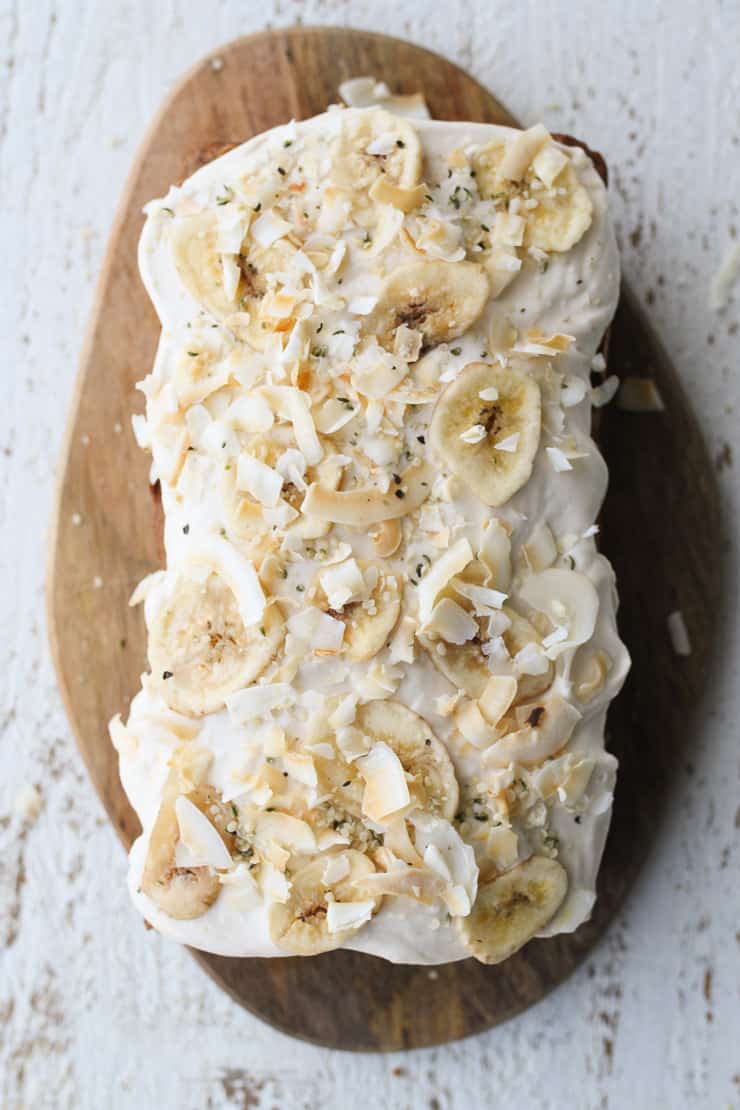
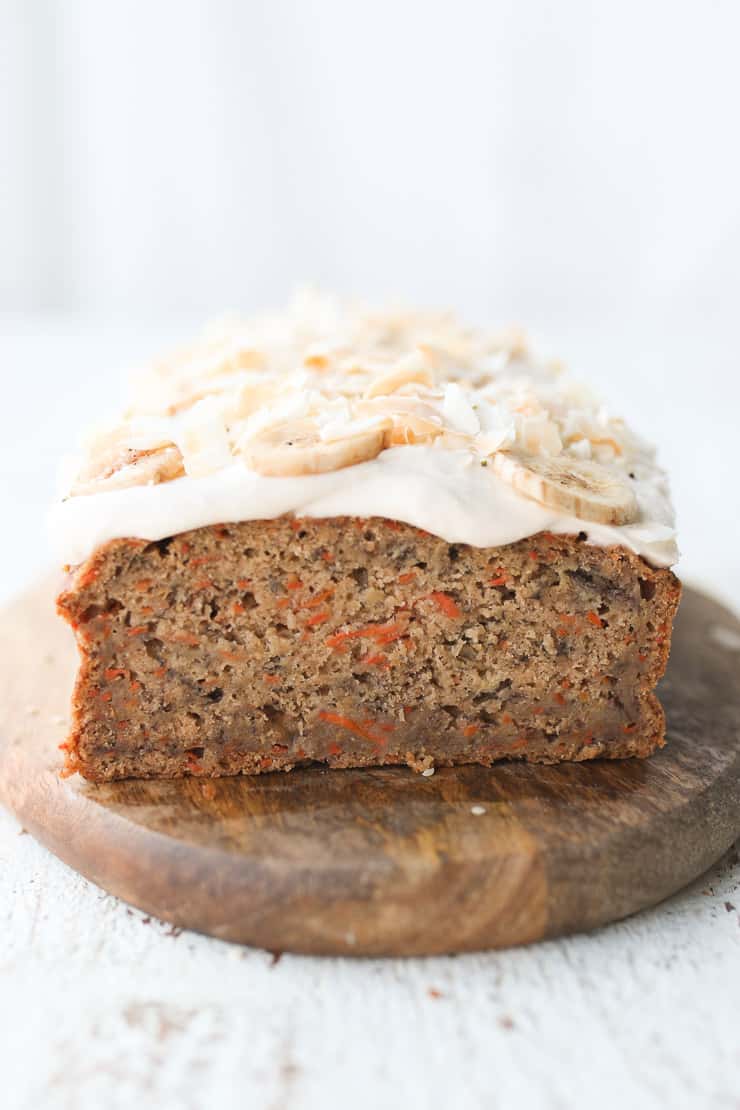
Overhead view of a banana carrot cake with cream cheese frosting.

When I was still pregnant and waiting for the arrival of my little baby O, I was batch cooking like a mad woman so I could make sure I had enough food to hold me over when the postpartum hunger hits. I knew that I wanted a sweet treat at the ready when I needed one, but I couldn’t decide whether or not to make a big batch of carrot cake or banana bread. So I thought – why not just save myself the stress and combine the two? So if you’re wondering what would happen if carrot cake and banana bread had a baby – this carrot cake banana bread is your answer. 

Maybe It’s a dietitian thing (or mom thing), but I just love to add veggies and/or fruit to my baking any way that I can. This carrot cake banana bread

is no exception. Not only do the carrots and banana add an extra nutrition boost, but the bananas give it natural sweetness and moisture, while the carrots provide that soft texture we know and love about carrot cake. Not to mention, we got some amazing vegan cream cheese frosting to top it all off which is an absolute MUST! You cannot have carrot cake without cream cheese IMO (and just because you’re plant based doesn’t mean you need to miss out).

Table of contents

  • Why This Recipe Works
  • Key Ingredients
  • How to Make This Recipe
  • Expert Tips
  • Recipe FAQs
  • More Recipes You Might Like

Why This Recipe Works

This carrot cake banana bread is the perfect dessert for SO many reasons! It is

  • Vegan-friendly.
  • A family favourite.
  • Freezer-friendly.
  • Made without a mixer. No special equipment needed.

Key Ingredients

Whole wheat pastry flour —  I really love the natural nuttiness this adds to the carrot cake banana bread. 

Ground flaxseed — Whenever I am baking, flaxseed is always invited to the party! Not only does it up the fibre content but it also adds some healthy omega 3 fats. 

Banana — We want some very ripe bananas for this recipe (like almost going black but not all the way). This will add some natural sweetness and moisture.

Shredded Carrots — I use my food processor to quickly shred carrots fine. Just make sure to use a fine grater or grating plate for this recipe. 

Vegan Butter — This gives the cake a delicious buttery flavour that we all love about a good dessert. 

Unsweetened Oat Milk — I am loving oat milk these days, especially in my baking because it adds such a lovely nutty flavour. But any plant-based milk (or dairy milk if you’re not making this vegan) will work! 

Vegan Cream Cheese — In my opinion, carrot cake just isn’t carrot cake without some glorious cream cheese icing on top. So yes, some vegan cream cheese is absolutely necessary but you can also use regular cream cheese if you’re not dairy-free.

Non-dairy Plain Yogurt — This helps to make the vegan cream cheese EXTRA creamy, but you can use regular plain yogurt if you are not dairy fre.

Toppings — I use crushed banana chips, toasted coconut chips, and hemp hearts for this recipe, but feel free to leave it as is, or add whatever you like (chocolate also is great).  

How to Make This Recipe

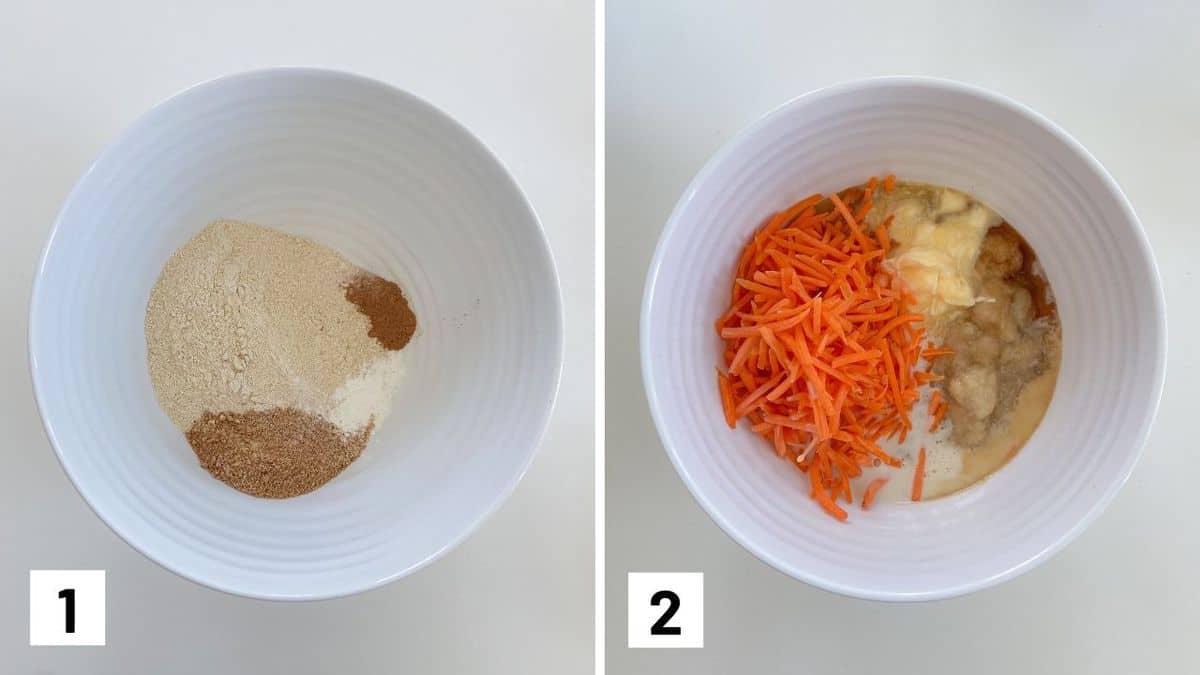
Set of two photos showing the dry ingredients being mixed with wet to form the batter.

Step 1: In a large bowl, mix together the flour, flax, baking soda, baking powder, cinnamon, nutmeg, and salt.

Step 2: In another bowl, mash the banana and mix with the shredded carrots, maple, vanilla, butter, and oat milk. Mix the wet into the dry until well combined.

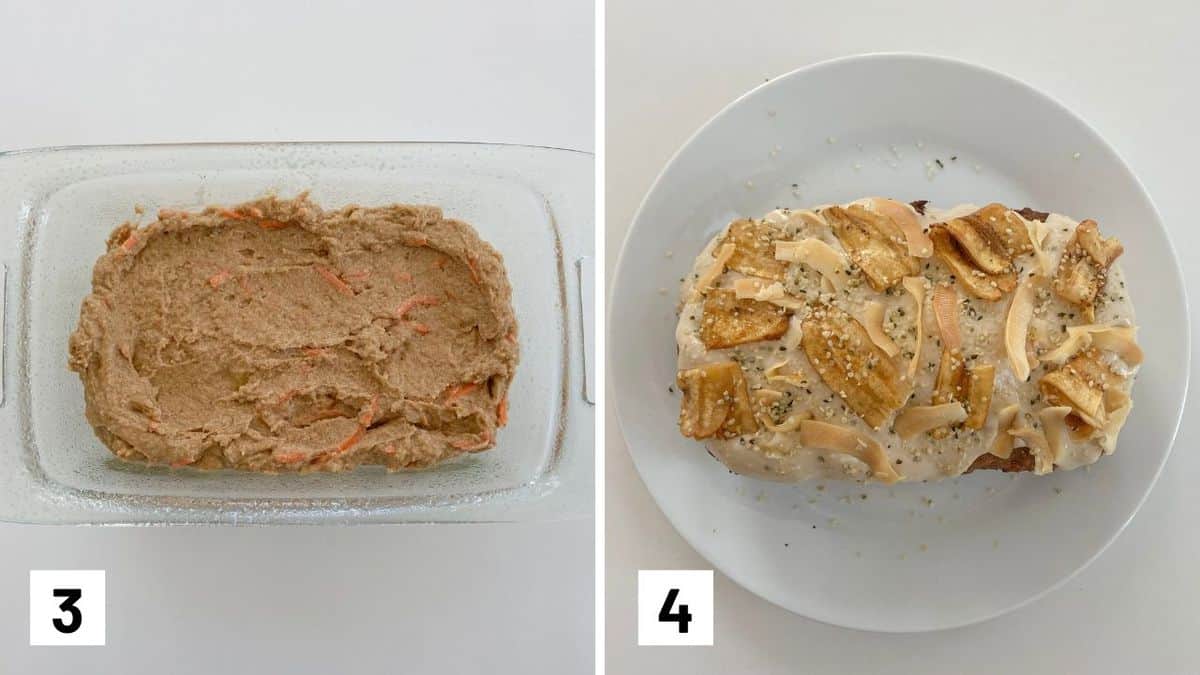
Set of two photos showing the before and after of the cake being baked.

Step 3: Line a 1 L (8.5”) loaf tin with a piece of parchment paper across the width. Grease with nonstick spray. Transfer the batter to the tin. Bake in a 350 F oven and bake for 55-60 minutes or until a toothpick inserted in comes out clean. Allow to fully cool.

Step 4: While the cake is baking, beat the cream cheese with the yogurt, maple syrup, vanilla, and lemon juice until smooth. Spread onto the bread and top with banana chips, coconut, and hemp hearts.

Expert Tips

It’s very important that you do two things for this recipe. Use really ripe bananas – if they’re not speckley, they won’t give you any sweetness or enough moisture.

Squeeze the excess liquid out of your carrots. If you’ve got too much moisture, you’ll end up with a soggy batter. We want MOIST carrot and banana cake, not soggy.

Do not overmix the batter or you might end up with a dense loaf.

Make sure your baking soda is not expired to ensure your bread rises and doesn’t come out dense and flat.

Recipe FAQs

Is this gluten free?

I use whole wheat pastry flour for this recipe, so for this reason its not gluten free. I personally prefer to use whole wheat pastry flour for cake recipes like this one because it gives it a very tender and nutty flavour. However, if you are gluten free you can definitely substitute this for a gluten free flour instead.

Can I make this with dairy?

Definitely! Feel free to use regular butter, yogurt, and milk for this recipe. 

Is this cake kid-friendly?

Yes absolutely! Big Boy E gobbled this cake up REAL fast so I can confidently say that it’s a hit with little ones. I also love that this cake is nutrient and veggie packed, so it’s definitely something you can feel good about serving your kiddo. 

Can I freeze this?

Oh yes! When I was pregnant, I made sure to make a big batch to hold me over for when baby came. You can simply wrap it in foil and put it in a freezer bag for up to 6 months. When you’re ready to eat, simply thaw and enjoy! If you’re going to frost it before you freeze it, I suggest freezing it “naked” on a baking tray until the frosting is solid, then wrapping it (otherwise, it may may a mess). 

What other fruit or veggies can I add to this cake?

I’d say any sweet fruit or neutral-tasting veg can work well with this recipe. I liked the idea of combining a classic banana bread with a carrot cake to create a yummy hybrid of both, so you can totally take the same approach with other veggie breads that you love like zucchini bread with banana, for example. 

Banana Carrot Cake cut in half topped with cream cheese.

More Recipes You Might Like

Want more carrot-packed recipes like this carrot cake banana bread? Try these!

  • Vegan Carrot Cake Baked Oatmeal 
  • Carrot Cake Waffles 
  • Carrot Cake Lactation Smoothie 
  • Vegan Carrot Cake Lactation Cookies 
  • Carrot Cake Cupcakes 
Print Recipe
5 from 3 votes

Carrot Cake Banana Bread with Cream Cheese Frosting (Vegan)

This vegan carrot cake banana bread with healthy vegan cream cheese frosting is loaded with veggies and fibre making it a perfect snack or dessert you and your family can enjoy any day of the week. 
Prep Time15 minutes mins
Cook Time1 hour hr
Total Time1 hour hr 15 minutes mins
Course: Dessert, Snack
Cuisine: American
Servings: 8
Calories: 287kcal
Author: Abbey Sharp

Ingredients

Cake:

  • 1 ¾ cup whole wheat pastry flour
  • ¼ cup ground flaxseed
  • 1 tsp baking soda
  • ¾ tsp baking powder
  • 1 tsp cinnamon
  • ¼ tsp nutmeg
  • ½ tsp ground salt
  • 1 2/3 cup mashed very ripe banana about 4 medium
  • 1 cup finely Shredded Carrots water squeezed out
  • ¼ cup maple syrup
  • 2 tsp vanilla extract
  • 2 ½ tbsp melted vegan butter
  • 1/3 cup unsweetened oat milk

Frosting:

  • 4 oz vegan cream cheese
  • 2 tbsp maple syrup or more to taste
  • 2 tsp vanilla extract
  • ½ tbsp lemon juice
  • 2 tbsp non-dairy plain yogurt or more or less depending on how thick your cream cheese is
  • Crushed banana chips for topping
  • Toasted coconut chips
  • Hemp hearts

Instructions

  • Preheat oven to 350 F. Line a 1 L (8.5”) loaf tin with piece of parchment paper across the width. Grease with nonstick spray.
  • In a large bowl, mix together the flour, flax, baking soda, baking powder, cinnamon, nutmeg, and salt.
  • In another bowl, mash the banana and mix with the shredded carrots, maple, vanilla, butter and oat milk. Mix the wet into the dry until well combined. Transfer to the loaf tin.
  • Bake for 55-60 minutes or until a toothpick inserted in comes out clean. Allow to fully cool.
  • Meanwhile, beat the cream cheese with the yogurt, maple, vanilla and lemon juice until smooth. Spread onto the cake and top with banana chips, coconut and hemp hearts. Enjoy!

Notes

  • It’s very important that you do two things for this recipe. Use really ripe bananas – if they’re not speckley, they won’t give you any sweetness or enough moisture.
  • Squeeze the excess liquid out of your carrots. If you’ve got too much moisture, you’ll end up with a soggy batter. We want MOIST carrot and banana cake, not soggy.
  • Do not overmix the batter or you might end up with a dense loaf.
  • Make sure your baking soda is not expired to ensure your banana carrot cake rises and doesn’t come out dense and flat.

Nutrition

Calories: 287kcal | Carbohydrates: 46g | Protein: 6g | Fat: 10g | Saturated Fat: 2g | Sodium: 430mg | Potassium: 494mg | Fiber: 8g | Sugar: 17g | Vitamin A: 8540IU | Vitamin C: 7mg | Calcium: 108mg | Iron: 2mg
Abbey Sharp

Abbey Sharp is a Registered Dietitian (RD), regulated by the Ontario College of Dietitians. She is a mom, YouTuber, Blogger, award winning cookbook author, media coach specializing in food and nutrition influencers, and a frequent contributor to national publications like Healthline and on national broadcast TV shows.
www.abbeyskitchen.com/about-abbey/

Last Updated March 19, 2023. Published March 20, 2023 By Abbey Sharp 16 Comments

Pizza Soup Recipe (Healthy & Keto Friendly)

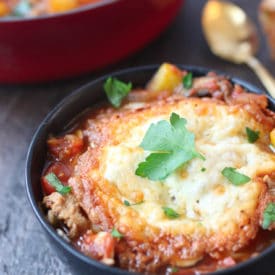
Pizza soup in a black bowl topped with melted cheese and cilantro. A pot of pizza soup in the background.

This healthy Pizza Soup Recipe is a super easy family friendly recipe to help get your pizza fix! It is also keto friendly and gluten free.

Pizza soup in a black bowl topped with melted cheese and cilantro. A pot of pizza soup in the background.

Friday pizza night has a whole new meaning now that I’m a mom. My weeks feel so busy and hectic that I’m honestly always so excited to just put the kids to bed, open a bottle, veg out with my hubs, eat pizza and go to bed by 9 pm.

But on those cold winter Canadian nights when I’m craving something a bit more warming and wholesome, I save a few bucks on delivery fees and opt for this healthy pizza soup recipe instead! Pizza craving is satisfied, and my wallet AND stomach are happy. Win-win.

Table of contents

  • Why This Recipe Works
  • Key Ingredients
  • How to Make This Recipe
  • Expert Tips
  • Recipe FAQs
  • More Recipes You Might Like

Why This Recipe Works

This healthy pizza soup recipe includes all of the flavours of a great pizza pie, but without the crust. That means that by default this recipe is keto friendly, gluten free, and loaded with amazing fibre rich veggies. Here are just a few more reasons why this recipe is a hit!

  • High protein
  • Super versatile
  • Takes only 30 minutes to prepare
  • Made in one pot
  • Family friendly

Key Ingredients

Flat lay image of portioned recipe ingredients including broth, tomato paste, sausage, garlic, cheese, olive oil, oregano, mushroom, bell pepper, onion, and tomatoes.

Sausage – I created this pizza soup recipe with the traditional “Meat Lovers” pizza in mind, which is why we are using tasty sausage as our protein. You can use pork or turkey sausage for this recipe. You can also choose to slice it into chunks or remove the casing if you prefer a more ground texture for the soup.

Veggies – We are staying true to tradition here by using the standard veggies that you’ll commonly find on a pizza pie. That includes onions, bell peppers and mushroom. But, like I said, this recipe is versatile so you can mix it up!

Tomatoes – I mean, duh! No good pizza soup recipe goes without a generous portion of tomatoes. We use san Marzano tomatoes for this recipe.

Cheese – We are using mozzarella cheese for this recipe and are adding a special twist by making crispy cheese rounds to add on top of the soup! To be honest, this recipe is totally worth making if not only for the crispy cheese rounds.

How to Make This Recipe

Two side by side images showing how to cook onion and garlic in a sauce pot, and later adding in the sausage, mushroom, bell peppers, and tomato paste.

Step 1: To a large sauce pot, heat the olive oil over medium heat. Add the onion and garlic and stir until fragrant, about 3 minutes.

Step 2: Add the sausage, mushrooms, bell peppers and tomato paste, and cook for about 5 minutes.

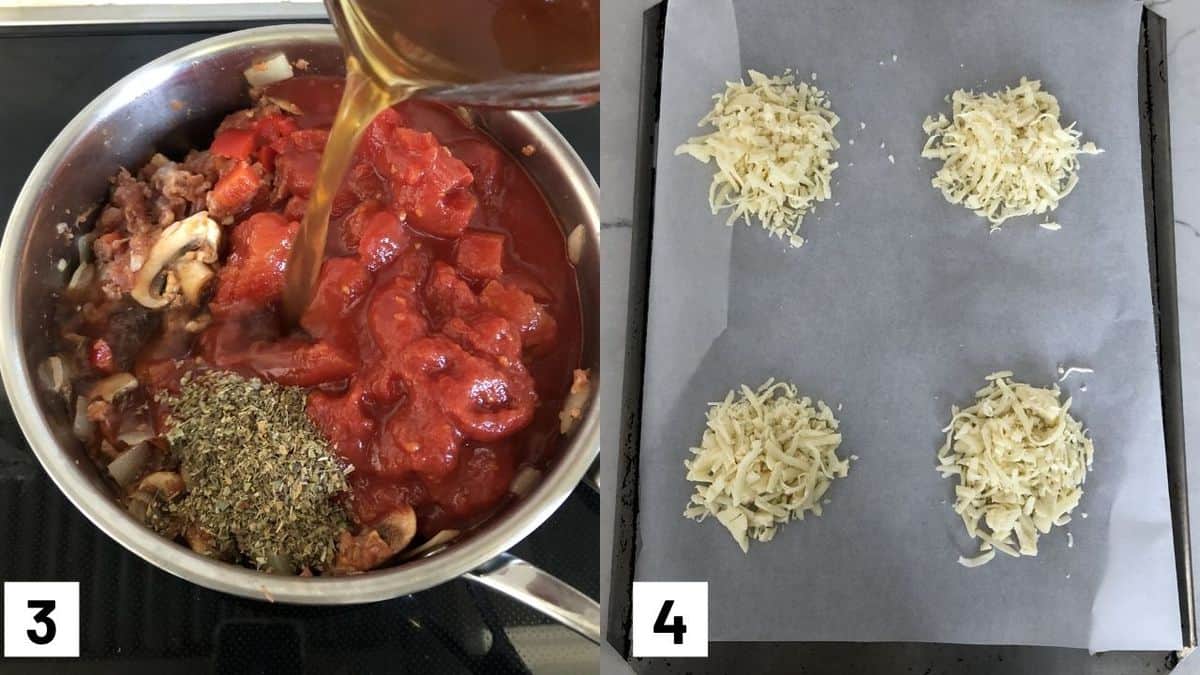
Two side by side images showing the broth and oregano being added to the sauce pot, along with how to broil the cheese on a baking sheet.

Step 3: Add the tomatoes, oregano and broth and cook, uncovered, until the vegetables are tender and the sausage is cooked through, about 10 minutes. Season with salt and pepper, to taste.

Step 4: Transfer to a bowl and top with the grated cheese. Using a blow torch, lightly brulee the cheese. Alternatively, you can put a small handful of cheese on a lined baking sheet lined and broil until bubbly and golden brown. Enjoy immediately.

Expert Tips

This healthy pizza soup recipe is deliciously versatile because you can dress it up however you normally order your pizza! Like I said, we created this recipe with a Meat Lover’s pizza in mind by including sausage and veggies. But if you’re a pepperoni lover, or you’re vegetarian, then by all means, you do you! Chicken, eggplant, zucchini, hot peppers, bacon, and more! Okay so I’m not sure I would put pineapple in this pizza soup (a la Hawaiian) but if you try it, I would love to know how it turns out!

No matter what you throw in there, the most important element, of course, is the cheese crust on top. You can use a kitchen torch or a broiler to get a nice melty gooey top, but if your bowls are not broiler friendly I’ve got a little trick. Place a mound of grated cheese on a silpat on a baking sheet and broil until golden brown, then just transfer your cheese “lace” to the top of the soup.

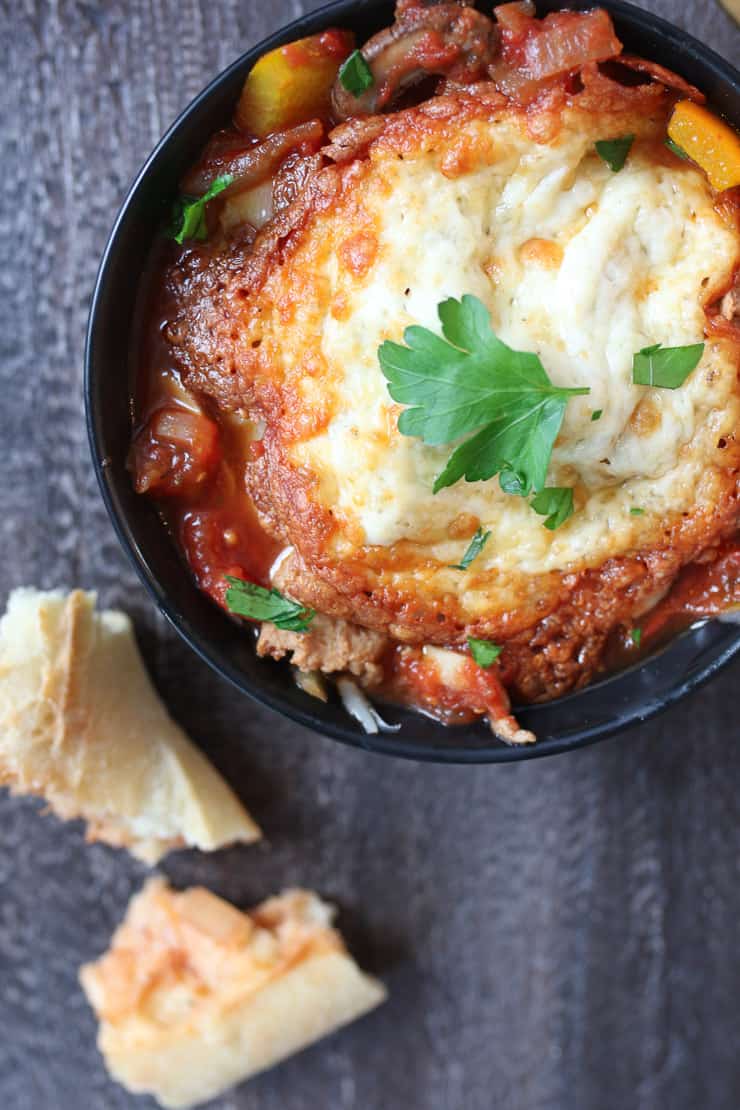
Birds eye view of pizza soup in a black bowl garnished with parsley and pieces of a baguette on the side.

Recipe FAQs

How long does this last in the fridge?

This soup stays fresh for about 3-4 days in the fridge and up to 6 months in the freezer.

Why is this keto friendly?

This pizza soup recipe is essentially pizza in liquid form without the “crust” which naturally makes it lower in carbs. One serving of soup provides around 20 grams of carbs which makes it a good option for those following a keto diet who are limited to 50 grams of carbs a day to stay in ketosis.

Can I make this vegan?

Absolutely! You can use veggie ground round or veggie pepperoni to make it vegan friendly.

How can I make this low sodium?

To make this pizza soup recipe low sodium make sure to choose low or no sodium versions of the beef broth and canned tomatoes.

How can I add more carbs to this if I don’t want it to be low carb?

One of my favourite ways to carb up this pizza soup recipe is to pair it with a crusty bread for dunking! Otherwise you can mix your favourite grain into the soup like rice, quinoa or bulgur.

More Recipes You Might Like

Here are some more of my favourite soup recipes on the blog!

  • VEGAN BROCCOLI WHITE BEAN SOUP
  • VEGAN BEET SOUP WITH APPLES & GINGER 
  • MEXICAN TORTILLA SOUP 
  • VEGAN ROASTED FENNEL TOMATO SOUP

What would you put in your of this healthy pizza soup recipe? Leave me a comment below with your thoughts!

Close up of a black bowl of pizza soup topped with melted cheese and parsley.
Print Recipe
4.50 from 12 votes

Pizza Soup Recipe (Healthy & Keto Friendly)

This healthy Pizza Soup Recipe is a super easy family friendly recipe that will help you get your pizza fix in soup form. It is also keto friendly and gluten free!
Prep Time10 minutes mins
Cook Time20 minutes mins
Total Time30 minutes mins
Course: Main Course
Cuisine: American
Diet: Gluten Free
Servings: 4 people
Calories: 339kcal
Author: Abbey Sharp

Ingredients

  • 1 tbsp extra virgin olive oil
  • 1 large sweet onion diced
  • 5 cloves garlic minced
  • 1 lb turkey or pork sausage if keto, casing removed and pulled into pieces
  • 2 cups mushrooms thinly sliced
  • 2 bell peppers diced
  • 2 tbsp tomato paste
  • 1 can 28 san Marzano tomatoes cut up with scissors
  • 1 tbsp dried oregano
  • 2 cups reduced sodium beef broth
  • 4 oz mozzarella cheese grated

Instructions

  • To a large sauce pot, heat the olive oil over medium heat. Add the onion and garlic and stir until fragrant, about 3 minutes.
  • Add the sausage, mushrooms, bell peppers and tomato paste, and cook for about 5 minutes.
  • Add the tomatoes, oregano and broth and cook, uncovered, until the vegetables are tender and the sausage is cooked through, about 10 minutes. Season with salt and pepper, to taste.
  • Transfer to a bowl and top with the grated cheese. Using a blow torch, lightly brulee the cheese. Alternatively, you can put a small handful of cheese on a baking sheet lined with a silpat and broil until bubbly and golden brown. Enjoy immediately.

Video

Nutrition

Calories: 339kcal | Carbohydrates: 20g | Protein: 39g | Fat: 13g | Saturated Fat: 5g | Trans Fat: 1g | Cholesterol: 85mg | Sodium: 678mg | Potassium: 1278mg | Fiber: 4g | Sugar: 11g | Vitamin A: 2348IU | Vitamin C: 93mg | Calcium: 230mg | Iron: 3mg
Abbey Sharp

Abbey Sharp is a Registered Dietitian (RD), regulated by the Ontario College of Dietitians. She is a mom, YouTuber, Blogger, award winning cookbook author, media coach specializing in food and nutrition influencers, and a frequent contributor to national publications like Healthline and on national broadcast TV shows.
www.abbeyskitchen.com/about-abbey/

Last Updated April 7, 2023. Published March 15, 2023 By Abbey Sharp 8 Comments

The PEGAN Diet (Paleo Vegan) | A Dietitian’s Guide to Risks vs Benefits

We share a dietitian’s guide to the Pegan diet (aka. Paleo Vegan) and look at the potential risks, benefits, pros and cons of this new diet trend.

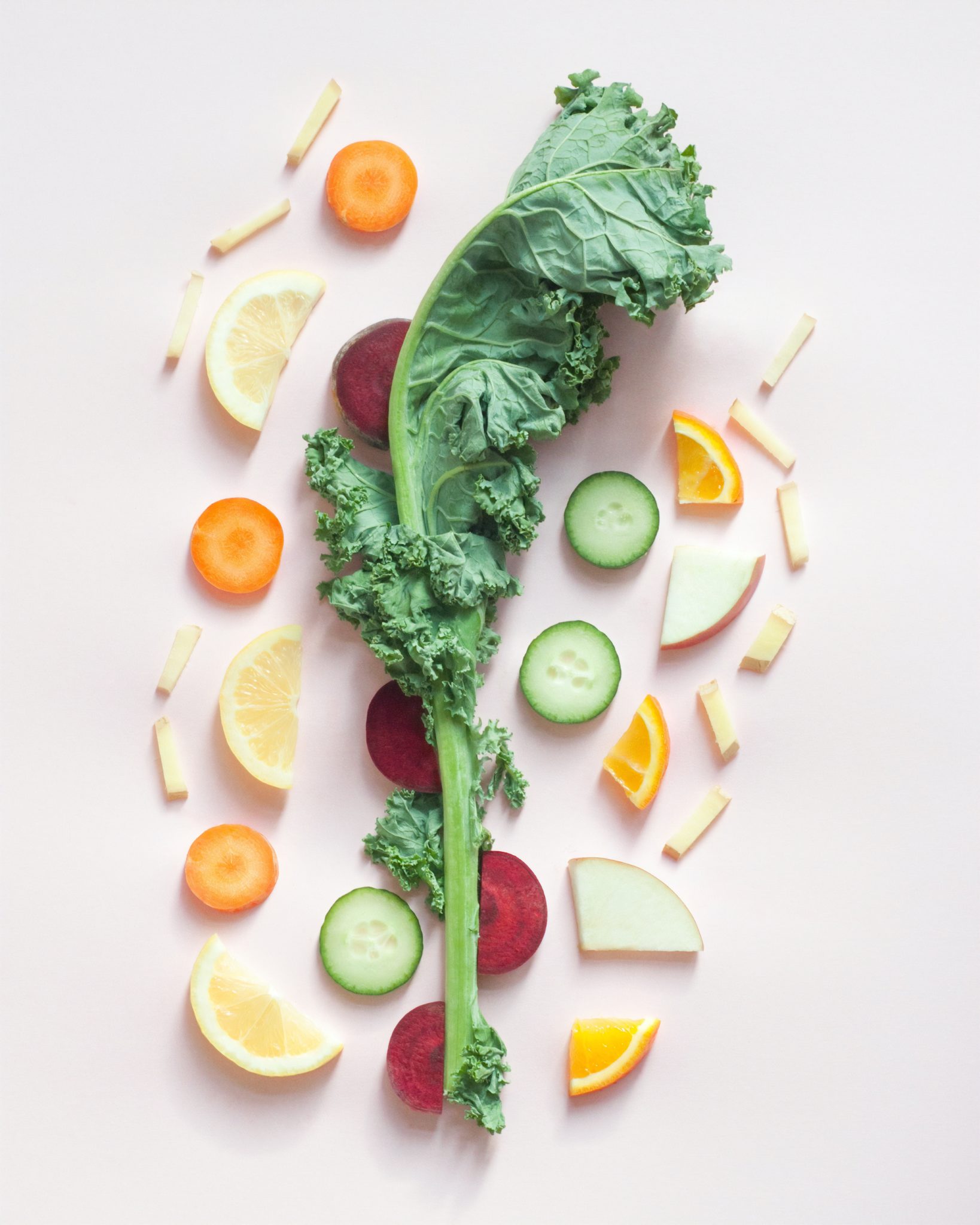
A kale stem on top of chopped fruits and vegetables representing the pegan diet

It’s no secret that the new year brings out new interest in a wide range of diets, all promising a healthier happier you. While I feel pretty confident that veganism (not a fad) is here to stay, and Paleo, while fading, isn’t going anywhere yet either, a new hybrid is sweeping the wellness category- peganism (aka paleo-veganism!)What is the pegan diet, and what can and can’t you eat on this meal plan? Here’s what you need to know before deciding if becoming a cruelty-free caveman or woman is for you.

What Is the Pegan Diet?

Paleo-veganism, termed “pegan” by New York Times best-selling author Dr. Mark Hyman, encompasses more than a diet, although that’s what many people focus on when they’re new to the concept. It combines elements of plant-based eating and vegan lifestyle with the low-carb, high-protein aims of the paleo diet. It helps to know a bit about each of the two meal plans that blend to create this one. In veganism, people refuse to consume any animal products. This abstinence often extends beyond their diet into the clothes they wear and other items they buy. Purist vegans, for example, would no more wear a leather vest than they would eat a hamburger. Because they do not eat animal products, they typically get their protein from sources such as beans and legumes. Some vegans rely on protein powder for an additional boost of this macronutrient. Various studies have shown that veganism done right has the potential to reduce risk of heart disease, lower A1C levels to manage diabetes, promote weight loss and lower the risk of colon cancer. You all know that while I myself am not vegan, I’m a big fan of eating more plant-based.The paleo diet, on the other hand, seeks to mimic the eating patterns of our pre-agricultural ancestors. It relies heavily on fresh fruits and vegetables to make up the majority of one’s diet. It also focuses on consuming high amounts of protein and natural fats. The diet doesn’t require participants to give up the kind of saturated fat they find in animal foods. It does require them to cut out harmful trans fats often found in processed foods, however. Some studies have shown that the benefits of the paleo diet include reduced insulin resistance, weight loss, reduction in waist circumference, higher glucose tolerance and more, though it is difficult to tease apart whether it is the removal of highly processed foods or something specific about this lifestyle that results in this outcome.

What Does a Typical Day on the Pegan Diet Look Like?

image of a blue plate with tiles on top that read "vegan" against a white background

The primary difference between a paleo vegan diet and a vegan lifestyle in general is the number of different food products restricted. Few people would argue that going vegan alone makes you healthier. For example, potato chips fried in vegetable oil are technically vegan. However, too many of those will pack on extra pounds and destroy your arteries from all the excess sodium. The paleo part of this diet aims to mediate this by eliminating processed and fast food that are associated with a wide range of health issues. The challenge with this added element arises, however, when we consider how we would get adequate protein. Typically, healthy vegans derive their protein from legumes and grains. However, the paleo diet restricts the intake of both of these food groups. Eliminate these foods, and pegans need to derive much of their protein from nuts and protein supplements. Some not-so-strict pegans will allow ancient grains like quinoa and amaranth. That’s still really limited. While I love nuts, they aren’t a super efficient way to get a lot of protein without also simultaneously getting a lot of calories. Can it be done? Yes. But you will be restricted. Typically, the pegan diet includes the following foods:

  • Lots of plants, such as whole fruits and non-starchy vegetables
  • Seeds (avoid processed seed oils)
  • Olives and avocado, including cold-pressed olive and avocado oil
  • Omega-3s, especially if they come from low-mercury algae
  • Coconut, including unrefined coconut oil
  • Nuts (except peanuts)
  • Some legumes, like lentils, black beans, pinto beans and chickpeas
  • Some whole grains, like quinoa, millet, oats, teff, black rice and amaranth

Foods to avoid if you’re eating paleo-vegan are:

  • Legumes
  • Refined oils such as sunflower, corn and canola oil
  • Food additives such as preservatives, colorings and flavorings
  • All forms of sugar
  • Grains that contain gluten
  • Gluten-free grains (small amounts may be occasionally permitted)
  • Dairy like yogurt, cow’s milk and cheese

Sample Pegan Meal Plan

A typical meal plan the pegan way might look like the following.

  • Breakfast: The first meal of the day might consist of sweet potato paleo muffins and a side of fresh fruit.
  • Lunch: For lunch, you can always go with a delicious salad with veggies in all colors. Pair it with potato-and-olive-stuffed banana peppers for a hearty meal.
  • Dinner: You have a world of things you can cook. Try asparagus in a cashew cheese sauce paired with paleo eggplant Parmesan for an Italian flair on supper.
  • Snacks: For snacks, reach for nearly any fresh vegetable except for root veggies, like carrots. These contain a hefty dose of carbs. However, you can dip sweet peppers in paleo-vegan spinach artichoke dip when you need an energy boost.

Potential Benefits of Peganism

"eat what makes you happy" in lights written on a brick wall

Proponents of peganism claim many health benefits. One benefit of the lifestyle is reducing inflammation in the body by removing common food sensitivities that tend to lead to inflammation, such as dairy and gluten. While researchers believe chronic inflammation plays a role in most diseases, we don’t have a lot of good evidence that the average person without celiac or an allergy would benefit from cutting these foods out. Additionally, paleo-veganism benefits health by eliminating a lot of processed foods which are higher in sodium, saturated fat, additives and carcinogens. Other benefits of this diet include higher fruit and vegetable intake, more fiber and more unsaturated fats, all of which contribute positively to human health.

Concerns About Peganism

A hand with a tape measure wrapped around fingers

Many experts do express concerns about the restrictiveness of this paleo-vegan diet. Psychologically, it can obviously be really hard to eliminate so many foods at once. On a paleo-vegan diet, processed foods are forbidden, which means vegan burgers, pizzas and similar alternatives cannot be enjoyed.Research also indicates overly restrictive diets lead to binge eating, orthorexia, and obsessive behavior related to eating and exercise habits. Because dairy, whole grains and legumes are forbidden, it can also be difficult for individuals following the paleo-vegan diet to eat out with family and friends which can in turn result in social isolation and emotional distress. Another concern is that ultimately, calories do count. You might struggle to eat enough calories when going pegan, resulting in headaches, fatigue, and difficulty concentrating.In addition to calorie deficiency, the paleo-vegan diet can lead to common nutrient deficiencies, such as magnesium, iron or calcium deficiency, among others. Deficiencies like these can lead to muscle weakness, increased risk of fractures, growth delays, lowered immune function, heart disease, Type 2 diabetes and several other serious health problems.Furthermore, if you do lose weight and are undereating, the impact on your metabolism may result in significant rebound and gaining even more weight than you lost. Other disadvantages associated with the pegan lifestyle have to do with logistics. For instance, the foods allowed – such as organic and grass-fed options – aren’t always readily accessible, which can make them more expensive and difficult to find. What’s more, they’re fresher, meaning more grocery shopping and extra meal prep and planning to keep foods from going bad before consumption.

The Bottom Line on the Pegan Diet

There is no disputing that a vegan or plant-based diet is healthy and contributes a wide range of amazing health benefits. It’s also obvious to me that we could all benefit from reducing our processed food consumption. But there’s a lot left to be desired with a diet like pegan and it’s my opinion that it turned an already challenging diet for some people (vegan) and took it to an unbearable level. It would be shocking to me if anyone was able to maintain this diet in the long run without incurring serious psychological damage.Ultimately I believe that the best healthy diet is one that you’ll actually follow to help you live your healthiest and happiest life. Peganism is getting a hard pass from me.

More Blog Posts You Might Like

If you liked this blog post discussing the pegan diet then you might also enjoy more blog posts on other diet reviews:

  • FOOD COMBINING DIET: THE SHOCKING TRUTH ABOUT THE DIET FOR WEIGHT LOSS, BLOATING, & IBS
  • THE HORMONAL ACNE DIET – THE BEST FOODS FOR HEALTHY CLEAR SKIN
  • INTERMITTENT FASTING AND WORKING OUT | THE PROS AND CONS FOR WEIGHT LOSS
  • VITAMIN INFUSIONS | IS IV VITAMIN THERAPY THE KEY TO GOOD HEALTH?

Now friends, tell me – have you tried the pegan diet? What are your thoughts on the rules and restrictions? Leave me a comment below with your thoughts!

Contribution by Kate Harveston

Abbey Sharp

Abbey Sharp is a Registered Dietitian (RD), regulated by the Ontario College of Dietitians. She is a mom, YouTuber, Blogger, award winning cookbook author, media coach specializing in food and nutrition influencers, and a frequent contributor to national publications like Healthline and on national broadcast TV shows.
www.abbeyskitchen.com/about-abbey/

Last Updated March 12, 2023. Published March 10, 2023 By Abbey Sharp 50 Comments

Strawberry Lemonade Homemade Pop-Tarts | Healthy Air-Fried Treats!

Healthy Strawberry Lemonade Vegan Pop-tarts that are the perfect good-for-you treat when you need a little pick me up.

Healthy Strawberry Lemonade Homemade Pop-tarts that are the perfect good-for-you treat when you need a little pick me up.

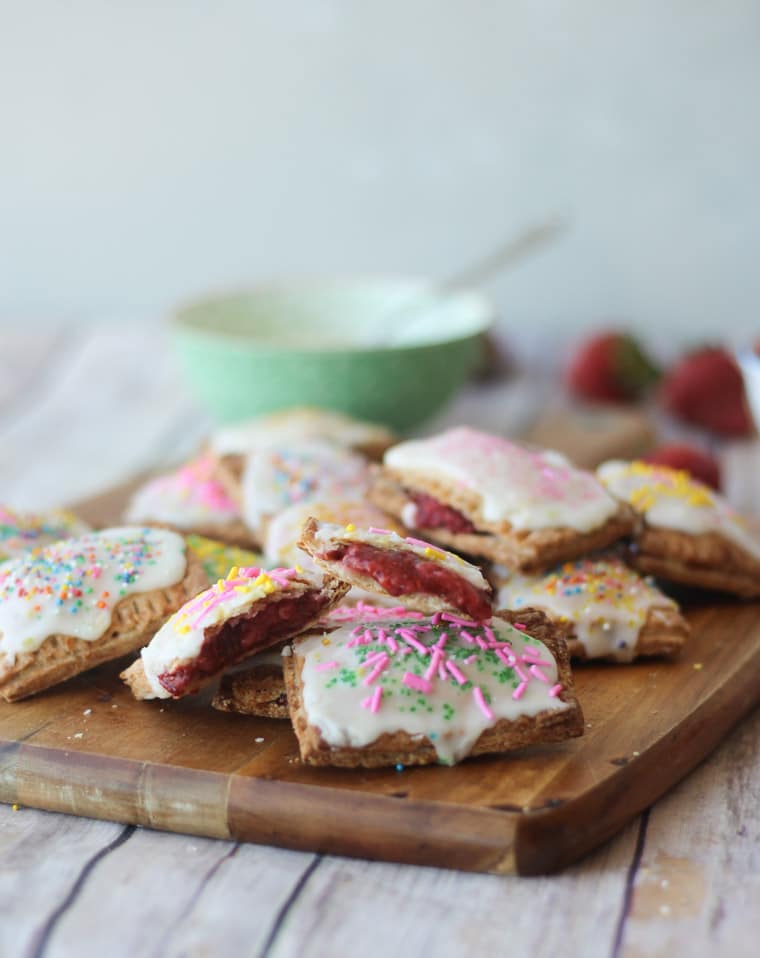
Homemade poptarts on a wooden board.

My mom was what I call a real-world mom. We weren’t raised on house churned grass-fed butter, or organic free-range ducks from our backyard. Nope. We were a busy family. We were always on the run to some activity, class or job, so most of our meals were usually in the car. I would be lying if I said that these homemade pop-tarts weren’t a morning staple and that “blue” was the breakfast flavour of choice. Today, not a whole lot has changed.

Table of contents

  • Why This Recipe Works
  • Key Ingredients
  • How to Make This Recipe
  • Expert Tips
  • Recipe FAQs
  • More Recipes You Might Like

Why This Recipe Works

Okay, so I am a dietitian and I prefer my pop-tarts from a bakery, not a box, and served at the dining room table (usually) after dinner as dessert, but I still have a serious nostalgic love for the things. I can’t believe I don’t have a homemade pop-tart recipe on my blog, so I figured this was the time to do it. I love this recipe because it’s

  • Packed with more fiber than traditional pop tarts (~3 grams per serving)
  • Customizable — perfect for picky eaters
  • A great way to get kids involved in the kitchen!
  • Completely vegan!
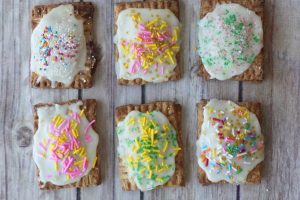
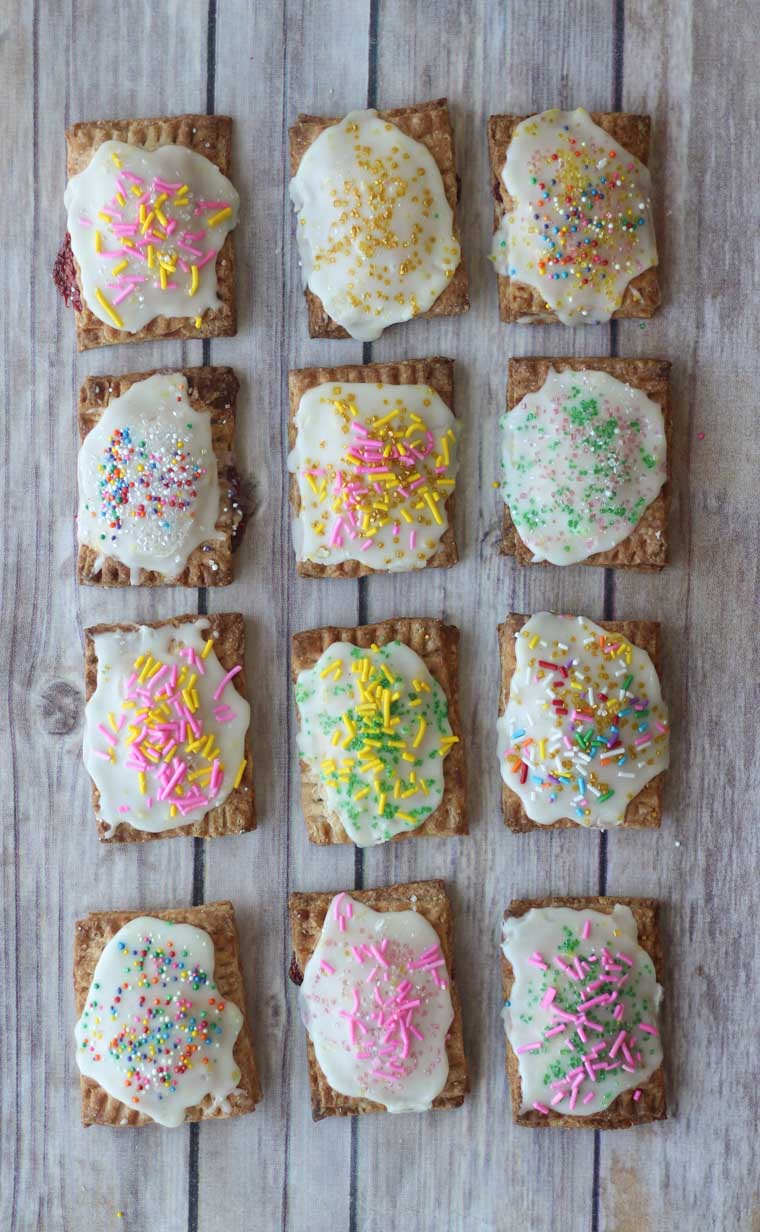
Homemade pop tarts topped with icing and sprinkles

Key Ingredients

Strawberries & Cherries – These are needed to make the delicious filling for our homemade pop-tarts. Strawberries and Cherries are packed with antioxidants and naturally add some sweetness to reduce added sugar content.

Chia Seeds – Chia seeds add extra fiber and are packed with healthy omega-3 fatty acids which ups the nutrient density of these homemade pop-tarts.

Wheat Pastry Flour – To ensure that these homemade pop-tarts turn out perfect, make sure you you purchase wheat PASTRY flour, not regular wheat flour! It may throw the texture off.

How to Make This Recipe

Chia Jam:

Step 1: In a saucepot, heat the cherries and strawberries until they start to bubble and get syrupy. Once super soft, mash them with a potato masher until the mixture is jammy, loose, and with some visible little bits of fruit in it.

Step 2: Add in the lemon juice and maple syrup, and taste. Adjust the lemon and maple syrup depending on the sweetness of your fruit.

Step 3: Take the mixture off of the heat, transfer it to a container and add in the chia seeds. Allow the mixture to set for at least 20 minutes, or until it thickens up. You’ll have lots of extra jam so you can use it on toast or on oatmeal throughout the week.

Pop-tarts:

Step 1: In a large bowl, mix flours, salt and sugar. Cut in the cold coconut oil with a pastry cutter or fork until you see tiny pea-shaped pieces in the dough.

Step 2: Drizzle in the vanilla and one tablespoon at a table, add in the ice cold water. It should be moist enough that you can form it into a ball without it flaking away, but not sticky.

Step 3: Cut the dough in half and lightly flour your surface and rolling pin. Roll out the dough to just a few millimeters thick then cut into 5 cm by 7 cm rectangles. Place the rectangles on a baking sheet lined with a silpat or parchment paper.

Step 4: Place one heaping teaspoon of jam onto half of the dough rectangles in the centre. Then wet your finger and moisten all around the perimeter (around the jam). Top with another rectangle, and using your fork, crimp the edges to seal. Poke three sets of three holes into the top of the pop tart with your fork. Continue with remaining pop-tarts. Place the baking sheet in the fridge to set for 20 minutes.

Step 5: Heat the Philips Airfryer to 400 F. Add four pop-tarts to the fryer basket and set the timer for 10 minutes. Remove and repeat with the remaining pop-tarts until they’re all cooked. Allow to cool for about 20 minutes.

Lemon Glaze:

Step 1: In a bowl, mix together the powdered sugar, lemon juice, lemon zest, coconut oil and vanilla extract.

Step 2: Spread about a teaspoon of the icing on each of the homemade pop-tarts and decorate with your favourite sprinkles and sugars. Allow the icing to set and enjoy!

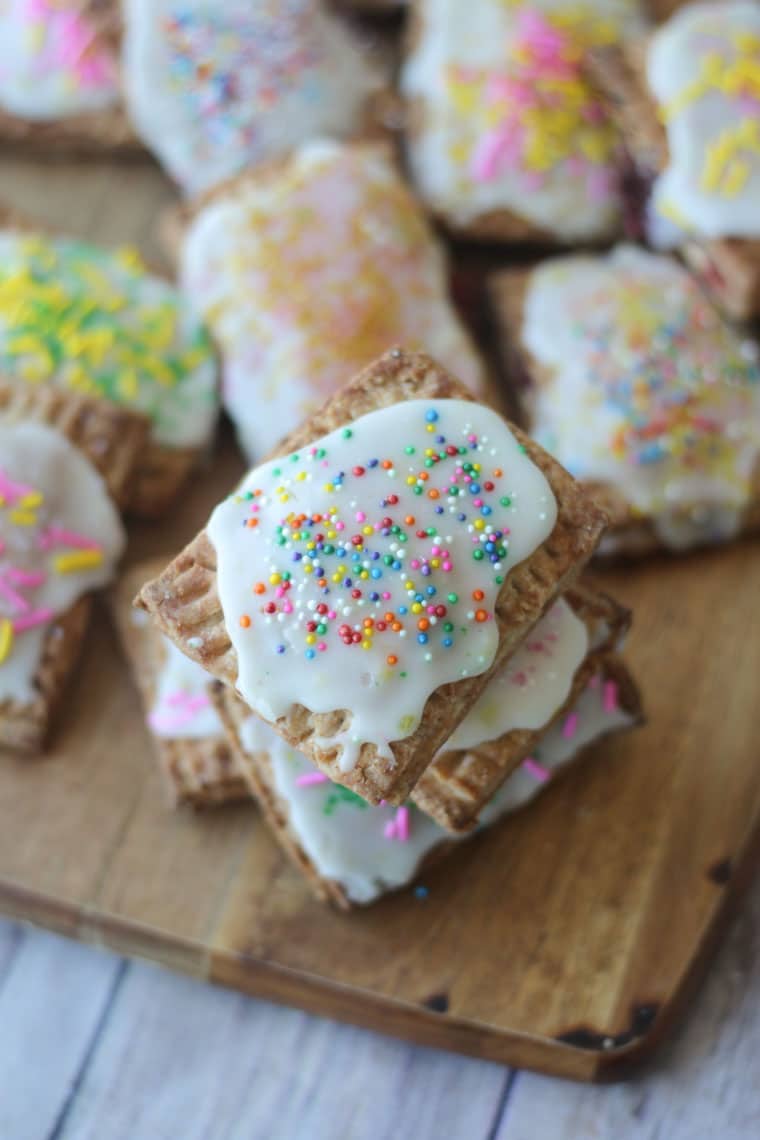
Homemade pop tarts on a wooden board.

Expert Tips

Looking for the perfect air fryer for these homemade pop-tarts? I personally use this Philips Airfryer. If you haven’t used this amazing appliance yet, it essentially uses a unique TurboStar technology to get air circulation to each corner of the basket so you get perfectly fried food without the fat. Seriously, I don’t even add any oil to the basket and they cook 50% more evenly than other Airfryers while getting crispy and golden brown just like the butter-loaded pastries I ate as a kid. It’s also crazy fast (just 10 minutes to cook- you don’t even have to preheat!) and really easy to clean because it’s super non-stick and dishwasher safe.

Recipe FAQs

Can I prep these homemade pop-tarts ahead of time?

Yes! You can easily keep these in the fridge or freezer then pop in the air fryer to heat up for a quick breakfast!

Can you use other flavored icing for these homemade pop-tarts?

Of course! Whatever you pack on there, these homemade Pop-tarts are the perfect sweet treat to bring you back to the ease of your childhood without the preservatives or crazy fat.

Are these the size of traditional pop tarts?

For these homemade pop-tarts, I like to cut into small, cute, mini pop-tarts for those times I just need a little quick fix, but hey, if you want to go for the classic momma-size, you do you.

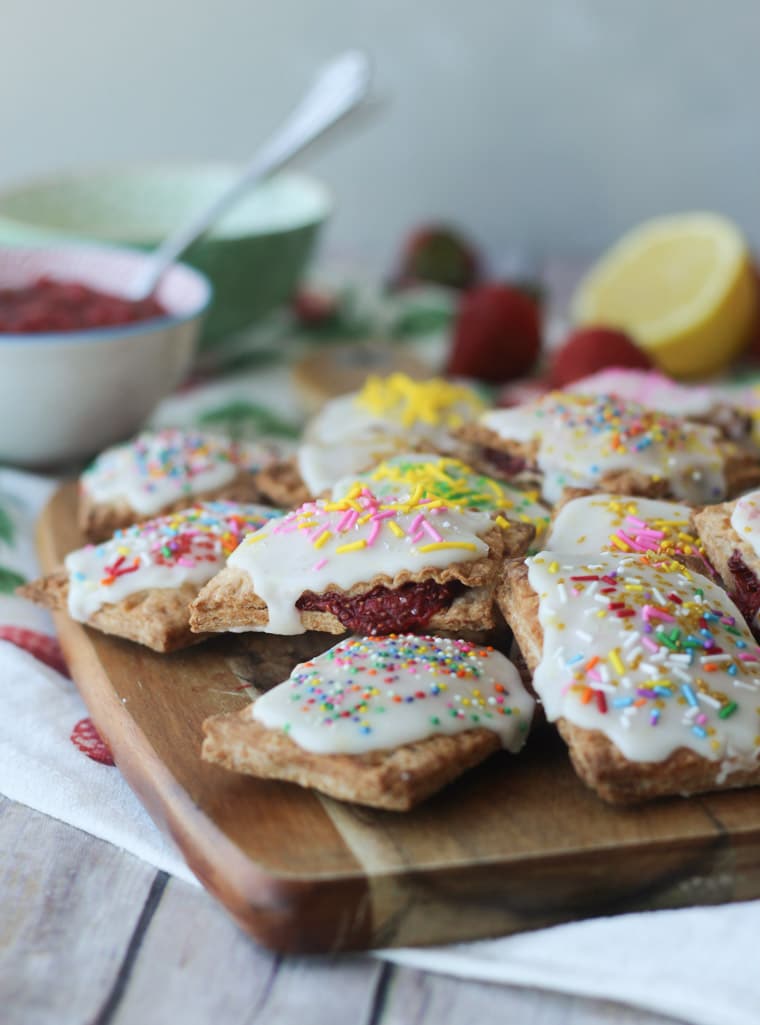
Several homemade pop tarts lined up on a wooden background.

More Recipes You Might Like

Love delicious breakfast recipes like these homemade pop-tarts? Check out some of my favorite recipes below!

  • BREAKFAST BREAD PUDDING MUFFINS WITH BERRIES
  • CHOCOLATE PROTEIN PANCAKES WITH CHERRIES
  • CHURRO FRENCH TOAST
  • CHOCOLATE CHERRY COBBLER OVERNIGHT OATS

Now tell me, what are your favourite childhood treats? What did you have for breakfast as a child that you miss? Have you tried making these homemade Pop-tarts? Leave me a comment below with your thoughts!

Healthy Strawberry Lemonade Vegan Pop-tarts that are the perfect good-for-you treat when you need a little pick me up.
Print Recipe
5 from 9 votes

Strawberry Lemonade Homemade Pop-Tarts

Healthy Strawberry Lemonade Vegan Pop-tarts that are the perfect good-for-you treat when you need a little pick me up.
Prep Time40 minutes mins
Cook Time10 minutes mins
Total Time50 minutes mins
Course: Dessert
Cuisine: American
Servings: 12 -14 pop-tarts
Calories: 272kcal
Author: Abbey Sharp

Ingredients

Strawberry Chia Jam:

  • 1 1/2 cups sliced strawberries fresh or frozen
  • 1 1/2 cups pitted dark cherries
  • 2 tbsp lemon juice or to taste
  • 2 tsp maple syrup or to taste
  • 3 tbsp chia seeds

Pop-tarts:

  • 1 cup whole wheat pastry flour
  • 1 cup all purpose flour
  • ¼ tsp salt
  • 2 tbsp light brown sugar
  • 2/3 cup very cold coconut oil
  • ½ tsp vanilla extract
  • ½ cup (or so) ice cold water

Lemon Glaze:

  • 1 1/4 cup powdered sugar
  • 2 tbsp lemon juice
  • zest of 1 lemon
  • 1 tsp melted coconut oil
  • ¼ tsp vanilla extract
  • Colourful sprinkles to decorate

Instructions

Chia Jam:

  • In a saucepot, heat the cherries and strawberries until they start to bubble and get syrupy. Once super soft, mash them with a potato masher until the mixture is jammy, loose, and with some visible little bits of fruit in it.
  • Add in the lemon juice and maple syrup, and taste. Adjust the lemon and maple syrup depending on the sweetness of your fruit.
  • Take the mixture off of the heat, transfer it to a container and add in the chia seeds. Allow the mixture to set for at least 20 minutes, or until it thickens up. You’ll have lots of extra jam so you can use it on toast or on oatmeal throughout the week.

Pop-tarts:

  • In a large bowl, mix flours, salt and sugar. Cut in the cold coconut oil with a pastry cutter or fork until you see tiny pea-shaped pieces in the dough.
  • Drizzle in the vanilla and one tablespoon at a table, add in the ice cold water. It should be moist enough that you can form it into a ball without it flaking away, but not sticky.
  • Cut the dough in half and lightly flour your surface and rolling pin. Roll out the dough to just a few millimeters thick then cut into 5 cm by 7 cm rectangles. Place the rectangles on a baking sheet lined with a silpat or parchment paper.
  • Place one heaping teaspoon of jam onto half of the dough rectangles in the centre. Then wet your finger and moisten all around the perimeter (around the jam). Top with another rectangle, and using your fork, crimp the edges to seal. Poke three sets of three holes into the top of the pop tart with your fork. Continue with remaining pop-tarts. Place the baking sheet in the fridge to set for 20 minutes.
  • Heat the Philips Airfryer to 400 F. Add four pop-tarts to the fryer basket and set the timer for 10 minutes. Remove and repeat with the remaining pop-tarts until they’re all cooked. Allow to cool for about 20 minutes.

Lemon Glaze:

  • In a bowl, mix together the powdered sugar, lemon juice, lemon zest, coconut oil and vanilla extract.
  • Spread about a teaspoon of the icing on each of the pop-tarts and decorate with your favourite sprinkles and sugars. Allow the icing to set and enjoy!

Nutrition

Calories: 272kcal | Carbohydrates: 36g | Protein: 3g | Fat: 14g | Saturated Fat: 11g | Sodium: 51mg | Potassium: 125mg | Fiber: 3g | Sugar: 18g | Vitamin A: 10IU | Vitamin C: 13.7mg | Calcium: 32mg | Iron: 1.2mg
Abbey Sharp

Abbey Sharp is a Registered Dietitian (RD), regulated by the Ontario College of Dietitians. She is a mom, YouTuber, Blogger, award winning cookbook author, media coach specializing in food and nutrition influencers, and a frequent contributor to national publications like Healthline and on national broadcast TV shows.
www.abbeyskitchen.com/about-abbey/

Last Updated February 27, 2023. Published March 8, 2023 By Abbey Sharp 17 Comments

Why I Took Anxiety Medication While Pregnant

A woman screaming in black and white.

I share my experience taking anxiety medication while pregnant because I believe that the benefit of better maternal mental health is sometimes worth the risk.

A close up of two hands waving in black and white referring to experiencing anxiety while pregnant.

This is one of those blog posts that have sat half-written for quite some time. Like most of my more “personal” shares (infertility, anxiety, orthorexia, body image etc.), I worried about being judged. But after reading so many stories from fellow pregnant mama’s, and making so many new connections as a result of it, I knew I was in a safe place to make a difference. I mean, Abbey’s Kitchen is my home, and I don’t welcome trolls into my home. So if you’re here to comment below shaming me then just #getthefuckout.

Why Everyone Forgets that Mom’s Mental Health Matters

So let’s talk about mental health and motherhood, something that is all too often overlooked. When I joined the special mom club (and the obligatory troll-laden internet mom groups that accompany it), I learned that there are a lot of ways to parent your child. Some moms use cry it out to help their kid go to sleep. Others prefer to co-sleep as long as they can. Some moms do baby-led weaning to introduce solids. Others prefer to start with a spoon. Some moms use cloth diapers. Others go disposable.

Sure, there’s a lot to disagree on and sometimes things get a little judgy online, but I often feel there’s one universal rule that most parents (and non-parents) seem to believe – now that you’re a mom, your kids always comes first.

The moment you pee on a stick and see two faint lines, you are no longer just able to live life your way. You eat better, because it affects the baby. You stop smoking, because it affects the baby. You go to all your weekly prenatal appointments to keep tabs on the health of the baby. And while eating well, smoking cessation and medical attention all arguably benefit mom too, what happens when there is a discrepancy between the needs of mom and babe? Do our needs as mothers now always have to suffer for the (even potential) benefit of the child?

This seems to be the controversial question when it comes to anything related to mental health and taking anxiety medication while pregnant. Let’s back up to get some context for just a hot minute.

My Anxiety During Pregnancy

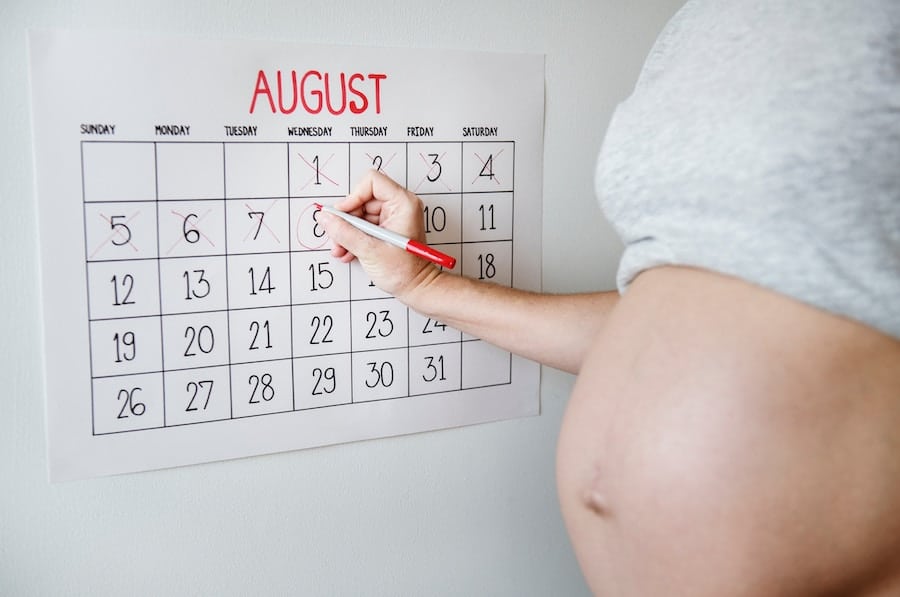
Pregnant women marking due date on a calendar.

I’ve suffered from anxiety all my life and have written about it in detail in my blog post on having high functioning anxiety. I have spent virtually all of my adult life in therapy (with questionable levels of effectiveness) and a few years ago decided that an occasional dose of drugs for anxiety would be helpful. It was. Tremendously. But then I got pregnant.

The first thing I did was call Mother Risk (this AMAZING help hotline that is run by Sick Kids out of Toronto). The very amazing non-judgemental operator walked me through the very limited research and basically told me that there wasn’t much evidence on the safety (or danger) of the drug I was using but in the very low and infrequent dose I was taking, he couldn’t foresee an issue. He suggested I just follow up with my doctor to confirm my plan.

It’s not uncommon for there to be little to no research when it comes to drugs and prenatal care. For ethical reasons, we can’t just perform randomized control trials on pregnant women not knowing what the effect of a drug is, so we have to look at population studies of women who ARE taking a particular pharmaceutical product and follow their pregnancy to see if anything bad happened. Obviously, I didn’t love the lack of solid evidence, but I did feel some relief with Mother Risk’s lack of concern.

So I made an appointment with my doctor (a man) to ask him about my meds, expecting he would give me my blessing, a refill for my script and I could move on with business as usual (plus bump). His response? “We don’t have research on its safety, so I recommend you just don’t take them”

Don’t take them. Quit cold turkey. Venture out into the world in your already more anxious, worried, pregnant state without the safety vest I’ve been wearing for so long.

I panicked. My heart filled with shame and guilt and worry. This doctor, this medical professional, just told me that I was about to do was potentially dangerous for my unborn baby! What if I took something that harmed him/her?! I would never EVER forgive myself.

My emotional brain was losing its shit spiraling into “what if” scenarios. My rational brain demanded a second opinion.

A woman screaming in black and white referring to experiencing anxiety while pregnant.

I told the next doctor I saw (another man) that I found it really hard to not take my anxiety medication while pregnant, and that it was interfering with my ability to work. Again, I was met with, “well, we just don’t really know” and that he couldn’t recommend I take anything. That was not what I wanted to hear!

As my medical team failed to help calm my (now extra heightened, unmedicated anxiety while pregnant), I went where no anxious mom-to-be should ever go – the internet. Here I found some people who said “my doctor and I decided a small dose was fine”, but the overwhelming response was, “medications cross the placenta and make it to the baby! Can’t you just try not to be anxious?!”

Um.. NO. I cannot just not be anxious when I’m reading that I’m going to kill my baby just trying to not be anxious! AM I GOING CRAZY HERE?!

I went back to my doctor and begged to see a prenatal psychiatrist who I hoped would have more insight into my specific drug and fetal health, but she was booking far in advance. Like, I would be halfway through my pregnancy by the time I got in. I made the appointment but obviously I had to make some hard choices in the interim while I waited.

Armed with so much anxiety, guilt, and shame, and no one officially willing to evaluate my unique situation’s from a benefit risk perspective, I quit the drugs cold turkey. Boy, did that ever back fire. Anxiety, at least for me, can be augmented by my state of mind, and just the thought of not having my pharmaceutical crutch made me spiral out of control. This state literally took me MONTHS to dig my way out of through hundreds (if not thousands) of dollars in therapy, and hours of meditation.

Why I Started Taking Anxiety Medication While Pregnant

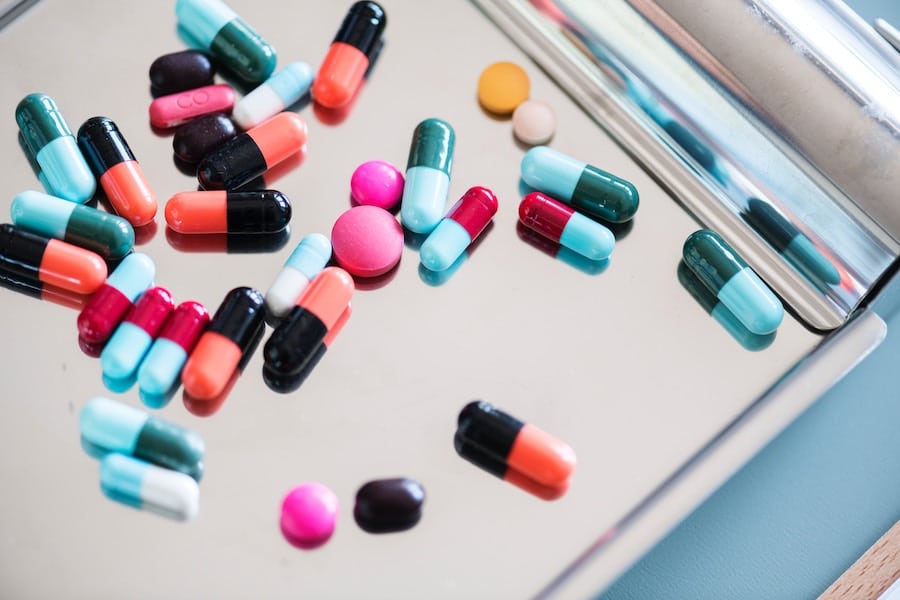
An assortment of colourful pills on a metal tray referring to taking anxiety medication while pregnant.

Then about a month or so before I finally got in to see the prenatal psychiatry specialist, I realized that the anxiety I was currently harbouring just from the thought alone of not having my medication was not conducive to growing a healthy baby. I have no randomized control trial to prove this, but my mama intuition told me that I was doing more damage to my body (and therefore potentially to my baby) walking around on the verge of a perma-panic attack than I was taking an occasional anti-anxiety drug to calm my nerves.

I made the choice to take my anxiety medication while pregnant. Thankfully, when I finally did get to see that psychiatrist specialist (whom I am SO grateful I got to work with), she confirmed that (while again, there wasn’t great evidence either way), she didn’t think my dose was something to worry about either way. And while it still took a lot of therapy and self-talk to get myself back to baseline even with the anxiety drugs, since I had developed some pretty horrible anxiety associations sans drugs, I slowly started to feel like myself.

When Doctors Overlook Mothers Mental Health

Close up of a doctor's labcoat with pens in the pocket and a stethescope around their neck.

So here’s what I learned in this process. Unless you have the ability to seek out specialized help, the general health care system does not prioritize mothers’ mental health. In fact, for the most part, I was made to feel like a frivolous, selfish mom-to-be who clearly had not grasped the universal mom code that our needs now come last.

Interestingly, this seems to be associated with the fact that even by 2019, mental health in general is not prioritized in health care. If a pregnant mom-to-be was suffering from some sort of chronic physical illness, we wouldn’t be telling her not to take her meds. But anxiety medication while pregnant? It’s like we’re told it’s within our control and therefore just “not worth the (largely unidentified) risk”. And the reason it’s largely unidentified is because in comparison with medications for physical ailments, there just isn’t a lot of money invested in research on mental health. I get that doctors are covering their asses, but we need some advocacy so that woman, like me, can go through those 9 months of their lives feeling like they can function.

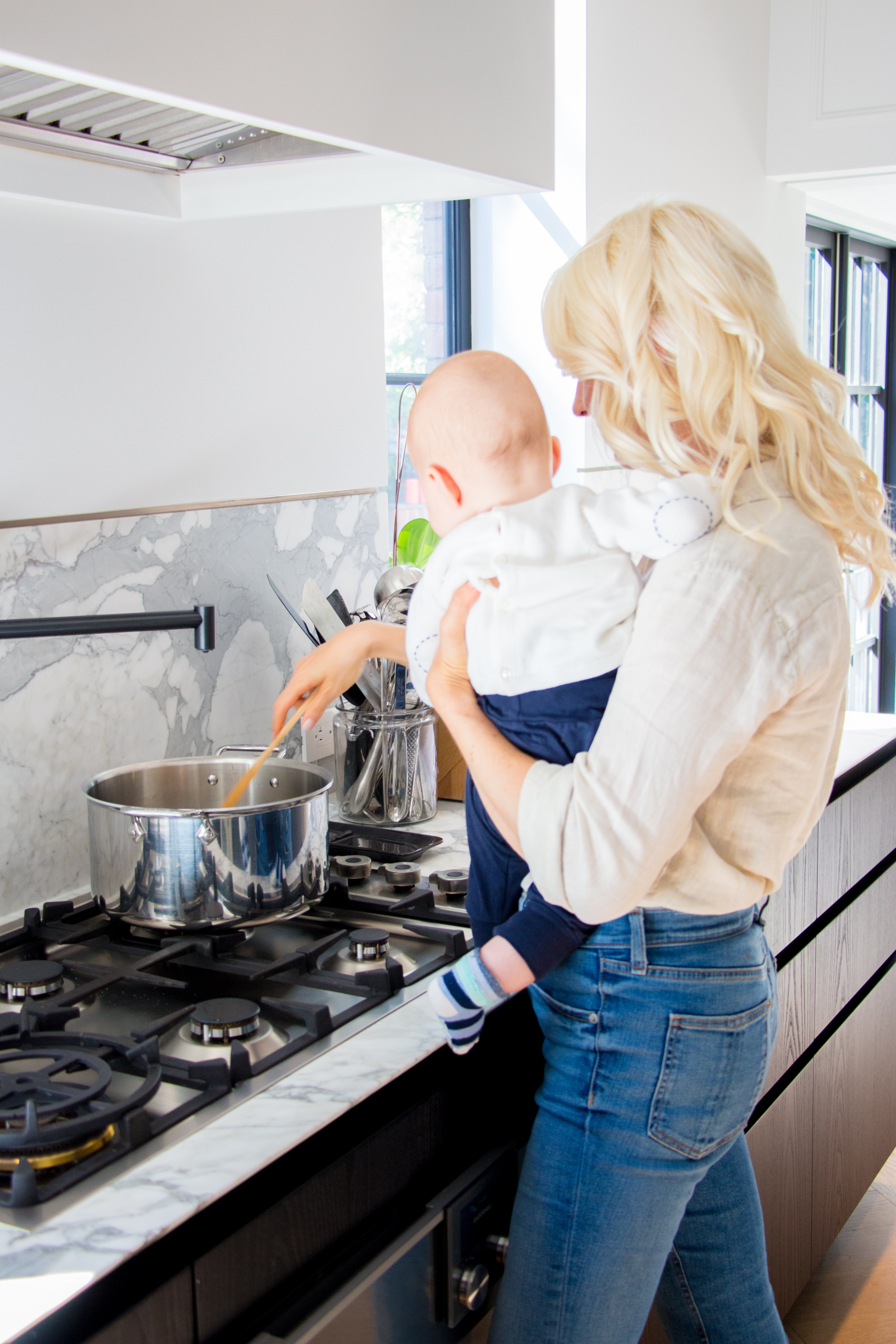
Woman holding her baby next to a stove in their kitchen.

Now, as a breastfeeding mama, I have chosen to just avoid reading too far into the fear mongering and mom-shaming that happens between women online. I feel confident in my decision to put my mental health first, because I know I am a healthier, happier, better mom with a little help. This isn’t a sign of weakness, in fact, I’m choosing to see this as a strength. I have the strength to oppose the pervasive cultural rhetoric that a mother’s job is to prioritize herself last. I have the strength to share my story of taking anxiety medication while pregnant in an effort to stop the stigma around moms taking control over their mental health. They say that when you’re on the airplane and the plane goes down, you need to put your oxygen mask on before assisting others (even your sweet baby next to you). I needed to help myself to be of any help to others in my life.

I’m now 10 months postpartum and I am probably in the best place with my mental health and anxiety that I’ve ever been in my life. For that reason, I can say – without guilt or shame or self-consciousness – that my choice to take my anxiety medication while pregnant and breastfeeding was absolutely worth the (likely small, but truly unknown) risk. Had I continued dragging on drug-free, my prenatal and postpartum experience could have had a very different ending.

So moms, tell me – have you felt pressure to compromise on your wellbeing and mental health for your baby? What has been your experience with health care providers prioritizing your mental health needs? Leave me a comment below with your thoughts!

More Blog Posts You Might Like:

If you liked this blog post discussing anxiety while pregnant then you might also enjoy more blog posts on pregnancy:

  • My Postpartum Anxiety Story | How Becoming a Mom Actually Reduced My Anxiety & Stress
  • Can You Diet While Pregnant?
  • What I Did to Get Pregnant with Thin Uterine Lining & Miscarriage History
  • Activities & Foods to Avoid When Breastfeeding & Pregnant That I’m Totally Doing Now
  • Sh*t You Should Never Say to Pregnant Women About Their Bodies
  • Low Carb Pregnancy: Can it Cause Birth Defects?
Abbey Sharp

Abbey Sharp is a Registered Dietitian (RD), regulated by the Ontario College of Dietitians. She is a mom, YouTuber, Blogger, award winning cookbook author, media coach specializing in food and nutrition influencers, and a frequent contributor to national publications like Healthline and on national broadcast TV shows.
www.abbeyskitchen.com/about-abbey/

Last Updated March 5, 2023. Published March 6, 2023 By Abbey Sharp Leave a Comment

Creamy Miso Pasta Noodles with Edamame (Vegan)

These creamy miso pasta noodles with edamame are a vegan nutrient-packed meal that makes for the perfect comfort meal with some Asian-inspired flare!

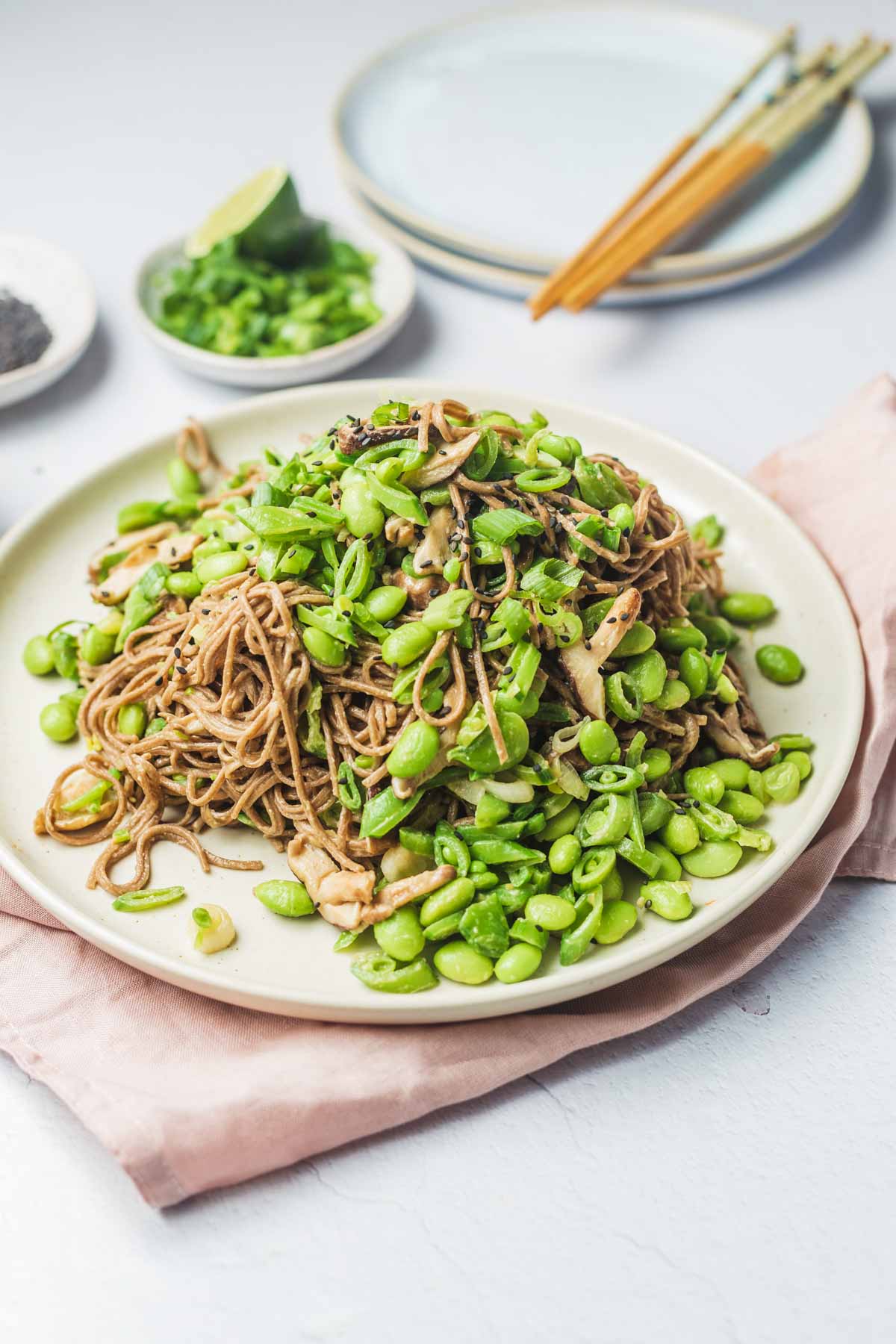
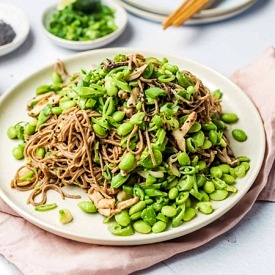
Up close view of miso pasta on a white plate with plates, ingredients, and chop sticks in the background.

Okay, fine I’ll say it. I am obsessed with miso noodles. I could have them all day, everyday if I had my way – and that includes breakfast, lunch, and dinner. There is something about the combination of veggies, noodles, and umami miso sauce that just makes my mouth water and, before I know it, my UberEats app is processing my order. But this is obviously no way to live and is a fast tracked way to drain my wallet. So, instead, I like to keep this easy creamy miso pasta recipe with edamame in my back pocket for whenever the craving hits and I want to give my UberEats app a rest day.

Table of contents

  • Why This Recipe Works
  • Key Ingredients
  • How To Make This Recipe
  • Expert Tips
  • Recipe FAQs
  • More Recipes You Might Like

Why This Recipe Works

If you also love an Asian-inspired meal and want to create a restaurant worthy dish right from the comfort of your own home, then get ready to add this creamy miso pasta to your weekly menu. Here are a few reasons why I am lovin’ this recipe:

  • Made with pantry staple ingredients
  • Packed with plant-based protein
  • Veggie loaded
  • Provides 17g of protein
  • Only takes 30 minutes to prepare
  • Flavourful as can be!

Key Ingredients

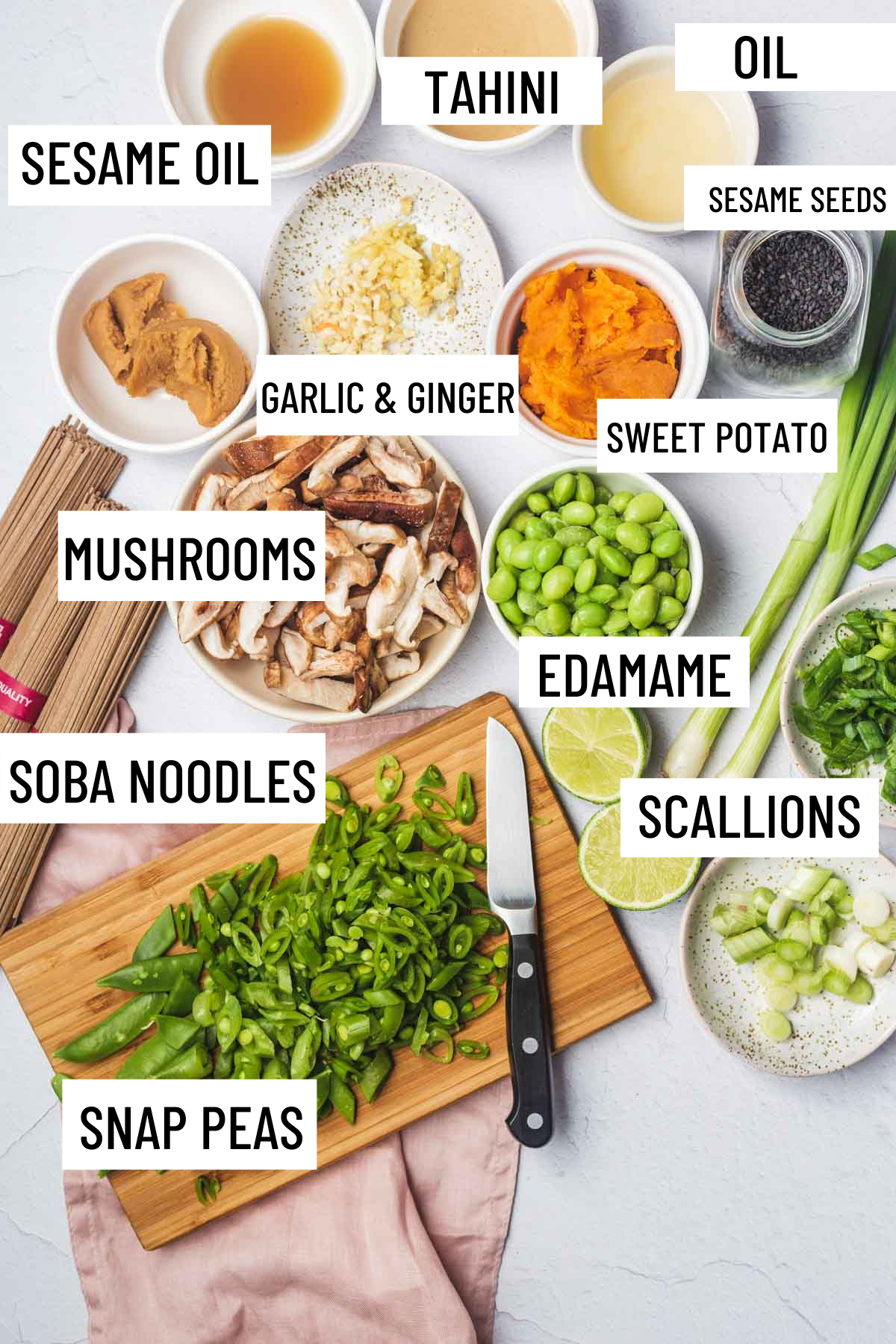
Birds eye view of the ingredients.

Soba Noodles -Soba noodles are a thinner type of noodle derived from buckwheat and are totally gluten-free, making them a great option for those who can’t tolerate gluten. They are also ready in 5 minutes or less, making them a great quickie carb option!

Edamame – I always make sure to have a pack of frozen edamame ready to go in the freezer for a quick protein option for meals and snacks. In fact, one cup of edamame provides a whopping 22 grams of protein, and 7 grams of fiber.

Sweet potato – We have sweet potato to thank for making the miso pasta sauce extra creamy and delicious. It also adds an extra dose of fiber and vitamin A, which I ain’t mad about.

Sesame seeds – We love healthy fats around here, so in addition to the tahini and sesame oil in the sauce, I like to add a generous sprinkle of sesame seeds to top off this creamy miso pasta. Plus, what kind of Asian-inspired meal is complete without a sprinkle of sesame seeds?

Veggies – To up the veggie content of this creamy miso pasta we’ve thrown in Shitake mushrooms as well as green onions and snap peas for a pop of colour! But this recipe would totally thrive by adding in more Asian-veggies like bok choy or green cabbage.

How To Make This Recipe

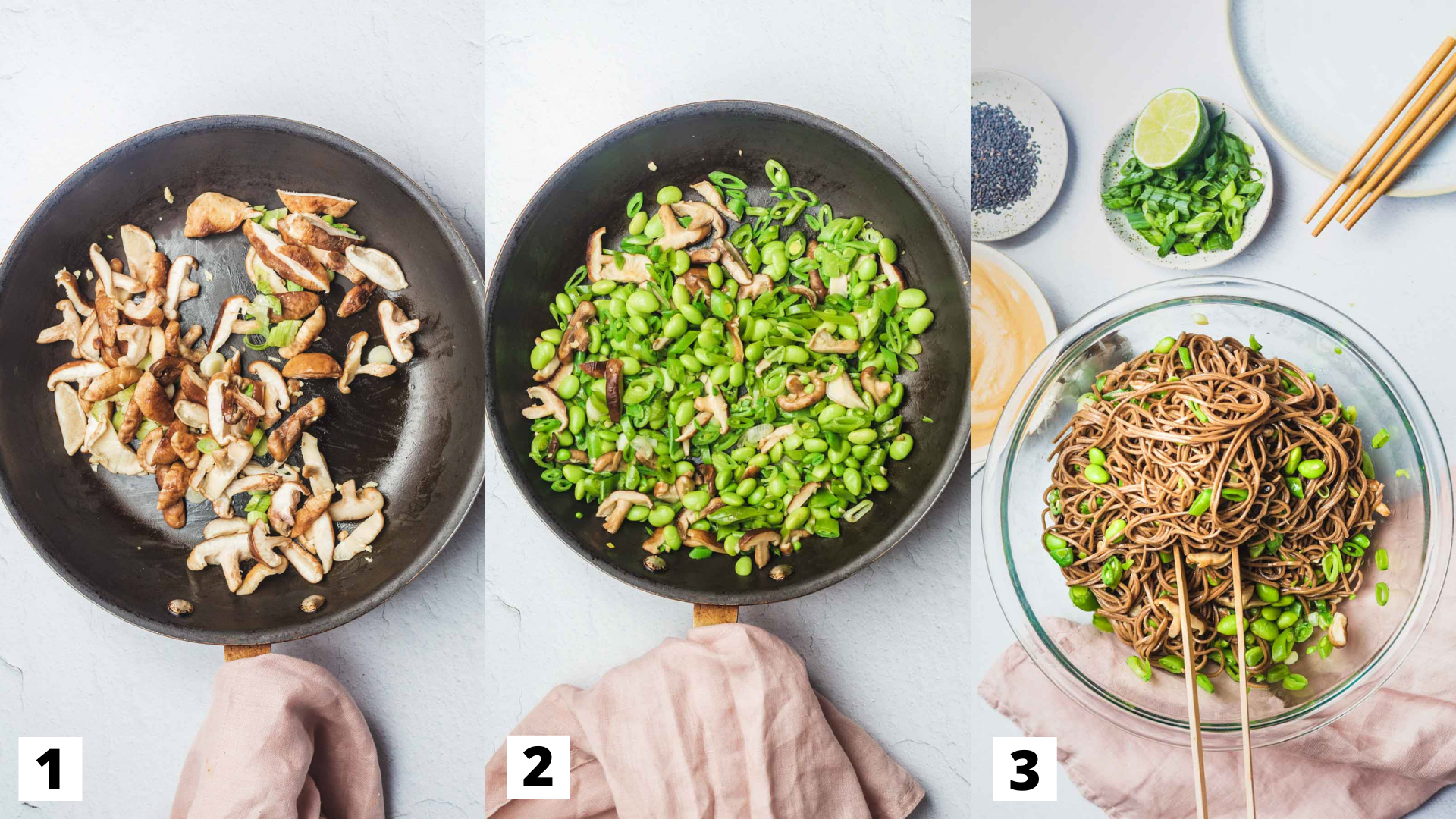
Birds eye view of 3 steps on how to make the recipe.

Step 1: Add oil to skillet and cook Shitake mushrooms over medium-high heat until the water evaporates.

Step 2: To the skillet, add minced garlic and the scallion whites and saute for 1 minute, or until fragrant. Add edamame and sugar snap peas and toss until vegetables turn bright green, about 1-2 minutes.

Step 3: Remove skillet from heat and combine veggies with cooked Soba noodles. Mix in 4-5 tablespoons of sauce and toss until everything is well coated. Garnish with scallion greens and sesame seeds. Serve and enjoy!

Expert Tips

Soba noodles can very easily overcook, so be sure to follow package cooking instructions to ensure they don’t get too soft and mushy. Once you strain the noodles, I would also recommend running them under cold water to stop the cooking process and then immediately tossing them in a light drizzle of sesame or olive oil to prevent the noodles from sticking together.

If you don’t have a ton of time on your hands and need to shorten the cooking time of this creamy miso pasta, pre-processed ingredients are your bff! I generally like to have pre-minced garlic and ginger in my fridge because mincing these ingredients is my least favourite part of any recipe. You can also look for pre-chopped mushrooms and scallions to save on prep time!

Another quickie hack that I like to lean on is to blanch the edamame in the microwave. Simply add the frozen edamame to a microwave safe bowl, add enough water to cover, and pop in the microwave for 2-3 minutes. Strain the water, and you are good to go.

Recipe FAQs

Is this creamy miso pasta recipe best served hot or cold?

Something that I love about this recipe is that it can be served either hot or cold! Whatever your palate desires.

Is this creamy miso pasta recipe gluten-free?

This recipe is generally gluten-free, however, I would double check the packaged ingredients such as the soba noodles, miso paste, and tahini to ensure there is no wheat, barley, and rye added.

How do I store this recipe?

You can store this recipe in an air-tight container for up to 5 days in the fridge. I recommend separating the sauce & noodles just so that the miso pasta doesn’t get soggy or lose its texture.

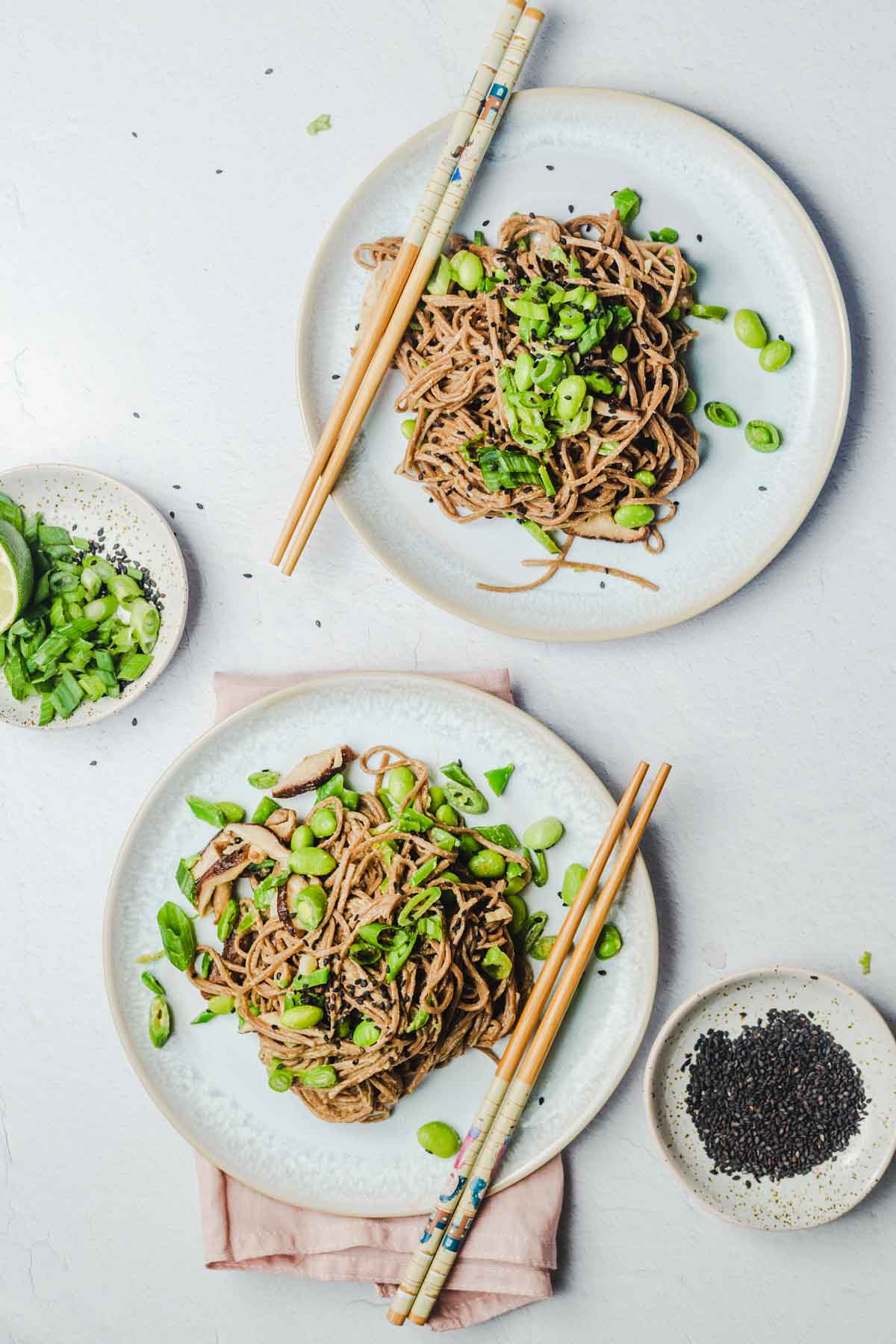
Birds eye view of 2 dishes of miso pasta on white plates with chopsticks resting on each plate. There is a bowl of scallions to the left and plate of black sesame seeds to the right.

More Recipes You Might Like

If you’re looking for more ways to add some Asian-inspired cuisine like this creamy miso pasta to your weekly meal rotation, check out some of these recipes:

  • SOY MIRIN GLAZED HALIBUT WITH ASIAN STIR-FRY
  • ZUCCHINI NOODLES STIR FRY WITH HOISIN ASIAN PORK TENDERLOIN
  • CHICKEN LETTUCE WRAPS WITH PEANUT SAUCE (EASY NO COOK RECIPE)
  • GOCHUJANG SOUP (VEGAN & GLUTEN FREE)
Print Recipe
5 from 2 votes

Creamy Miso Pasta Noodles with Edamame (Vegan)

This miso pasta recipe is completely vegan, nutrient packed, and the perfect dish to make if you're craving an asian inspired meal!
Prep Time15 minutes mins
Cook Time15 minutes mins
Total Time30 minutes mins
Course: Main Course
Cuisine: Chinese, Japanese
Diet: Vegan
Servings: 4 servings
Calories: 426kcal
Author: Abbey Sharp

Ingredients

  • 8 oz soba noodles
  • 1 box shiitake mushrooms, sliced
  • 1 cup sugar snap peas, sliced thinly across
  • 1 cup frozen edamame
  • 1 tsp neutral tasting oil
  • 1 tsp toasted sesame oil
  • 3-4 scallion whites
  • 1 clove garlic

Sweet Potato Miso Sauce

  • 1/2 cup cooked sweet potato (1 small ish sweet potato)
  • 2 tbsp miso paste
  • 1/4 cup tahini
  • 2 tbsp rice vinegar
  • 1 clove garlic
  • 1 tbsp toasted sesame oil
  • 1 inch ginger grated
  • 1 tsp salt
  • 1 tsp pepper
  • 1 pinch chilli flakes

Garnish

  • toasted sesame seeds (to garnish)
  • scallions greens (to garnish)

Instructions

Make the Sauce:

  • In a blender, blend all the sauce ingredients with ¼ cup water until smooth. Taste and adjust the seasoning.

Miso Pasta:

  • Bring a pot of water to a boil and cook your soba noodles per package instructions.
  • Drain and rinse the soba noodles under cold running water. Drain them in a large  bowl. Toss and coat the noodles in a sesame oil  to prevent them from sticking.
  • Heat the oil in a skillet over medium-high heat. Add shitake mushrooms to the pan and cook until the water evaporates. Add in minced garlic and the scallion whites and saute until fragrant about a minute.  Add in edamame, sugar snap peas and toss till it becomes bright green about a minute or two. Remove from heat and add all the veg to the bowl of noodles.
  • Add in the sauce 4-5 tablespoons of sauce and toss till everything is well coated. Taste and adjust seasoning, Add more sauce if desired. Garnish with scallion greens and sesame seeds.

Nutrition

Calories: 426kcal | Carbohydrates: 59g | Protein: 17g | Fat: 16g | Saturated Fat: 2g | Polyunsaturated Fat: 7g | Monounsaturated Fat: 6g | Trans Fat: 1g | Sodium: 1368mg | Potassium: 550mg | Fiber: 5g | Sugar: 3g | Vitamin A: 2742IU | Vitamin C: 20mg | Calcium: 98mg | Iron: 4mg
Abbey Sharp

Abbey Sharp is a Registered Dietitian (RD), regulated by the Ontario College of Dietitians. She is a mom, YouTuber, Blogger, award winning cookbook author, media coach specializing in food and nutrition influencers, and a frequent contributor to national publications like Healthline and on national broadcast TV shows.
www.abbeyskitchen.com/about-abbey/

Last Updated February 26, 2023. Published March 1, 2023 By Abbey Sharp 14 Comments

Iron Rich Foods for Babies | The Ultimate List of Foods for Toddlers & Children

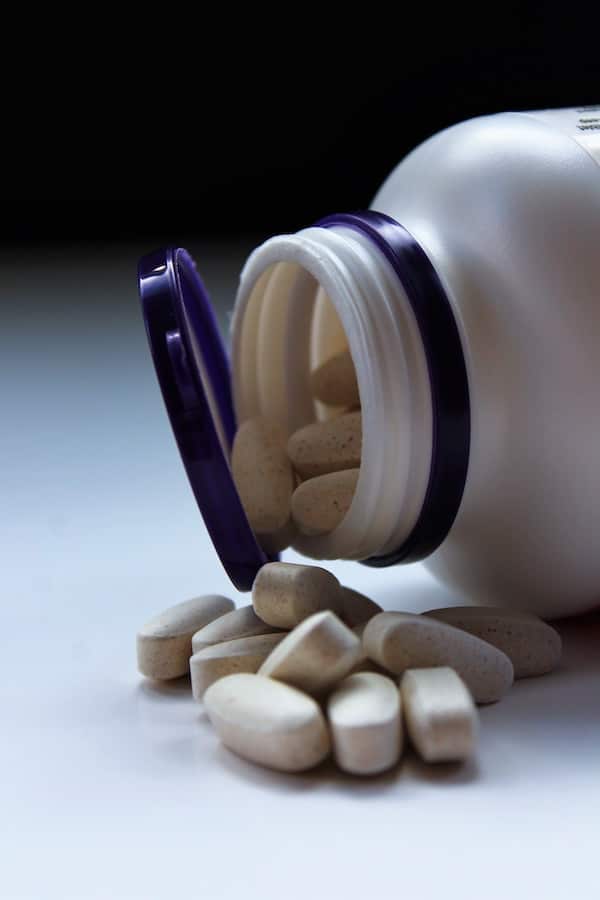
A pill bottle containing iron supplements.

We review the importance of iron for children and share the ultimate list of iron rich foods for babies, toddlers and children.  

Baby's feet lying on its back.

Dietitian confession: I never thought that much about iron until I had a baby. We are constantly bombarded with messaging about the importance of protein, calcium, vitamin D, but iron deficiency is a bit of a ninja- silent, but potentially quite dangerous. Iron deficiency is also one of the most prevalent nutritional deficiencies worldwide, and children are at especially high risk. In Canada alone, it is estimated that 24% of babies have low iron stores. And that’s not really that surprising considering that children have relatively high requirements because of their growth needs but tend to eat small portions of iron rich foods. Talk about an unfortunate “catch-22” type of situation, eh?

Why is Iron Important for Babies, Toddlers & Children?

You can think about iron as being the bricks and mortar that keep a house standing up. It is a component of hemoglobin, which carries oxygen around the body, and it carries carbon dioxide out. It is also a part of myoglobin, which is a storage protein in muscles. Basically, it is essential for your children’s movements- from when they first wrap their little fists around your finger, yank your hair out, sit up, crawl, run, and jump. All these things are possible because of iron. It is also a crucial component in cellular metabolism, DNA replication, and repair.

Research has shown that children with low iron can face:   

  • Social and mental delays– problematic behaviour, increased fatigue and anxiety, poorer test scores
  • Increased risk for psychiatric disorders (mood disorders, autism spectrum disorder, ADHD)
  • Decreased immune function
  • Poor growth/weight gain
  • Lower levels of physical activity

What Does Iron Deficiency in Babies and Children Look Like?

Okay let’s be honest, not every kid who doesn’t meet the recommended iron amounts will become iron deficient. These are targets based on population characteristics, but your child may need more or less. It’s important to look out for any changes in your kids, or the signs and symptoms of iron deficiency. These include:

  • Tired
  • Pale or yellowish skin
  • Irritable
  • Poor intake of food
  • Poor concentration
  • Poor growth and development
  • Increased thirst
  • Faintness/dizziness
  • Sweating
  • Weak and rapid pulse
  • Rapid breathing
  • Shortness of breath
  • Lower leg cramps

How Much Iron Do Babies, Toddlers and Children Need?

A dozen eggs in a carton.

So we obviously want to avoid those scary sounding outcomes as best as we can, so how much iron is enough? Well, most healthy babies are born with solid stores of iron. There is some research that shows delayed cord clamping past 60 seconds, have higher mean levels of ferritin, as it is estimated that about 80% of placental transfusion happen in the first minute after birth. In fact, delayed cord clamping is recommended by the World Health Organization to improve iron status for up to 6 months after birth and is particularly important for children living in areas with difficulty accessing iron rich foods. If your children are breastfed, they will likely be meeting their requirements from breast milk alone up until they are 4 to 6 months old. It is estimated that about 70% of iron in breast milk is absorbed- compared to cow-derived infant formula where absorption is typically less than 12%. This isn’t to say you shouldn’t formula feed, but you and your baby’s doctor may have to more vigilantly monitor for iron deficiency. 

After 6 months, you’ll likely have to start introducing new foods because your baby’s iron stores will mostly be used up. Health Canada warns against introducing solid foods too early (before 4 months), as it may interfere with absorption and decrease the duration of exclusive breastfeeding (among other reasons I discuss here); however, introducing solids too late (past 6 months), and feeding breast milk alone may not meet the high requirements. According to an American Academy of Pediatrics report, if you do plan to exclusively breastfeed for longer than 4-6 months, then you might actually need to consider some form of liquid drop iron supplement. That’s something to discuss one-on-one with your doctor, however, because even that is controversial stuff. There are some interesting trials suggesting that the iron in breastmilk is better absorbed when babies are not supplemented, likely because your baby has a programmed defense mechanism to increase absorption when they get lower amounts!

So when you DO decide to start solids, we recommend starting off with iron rich foods (BTW check out this amazing post to help you get started with solids here).

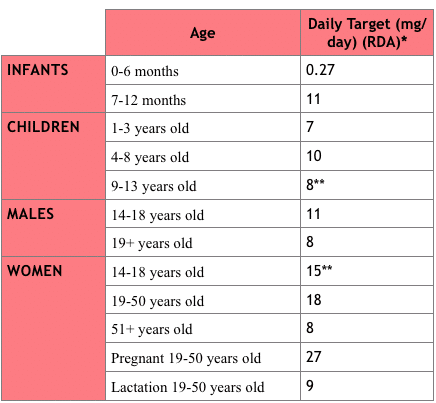
So let’s get started with this handy dandy guide to get a sense of what the targets are for each age group.

chart listing iron rich foods for kids

 Dietary Reference Intakes, Health Canada                                             

* For individuals under 14 years old, stay below 40 mg/day of iron. For individuals over 14, stay below 45 mg/day of iron.

**if females begin to menstruate before 14, use requirements for females over 14.

Important Things to Consider About Iron Absorption

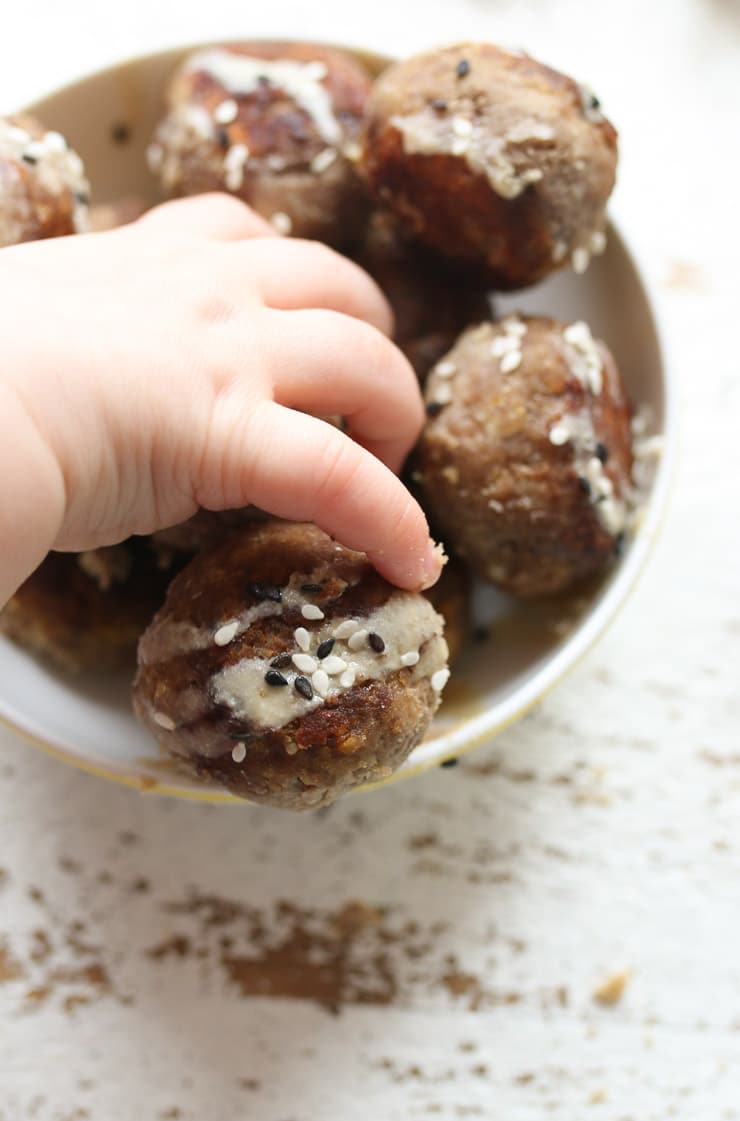
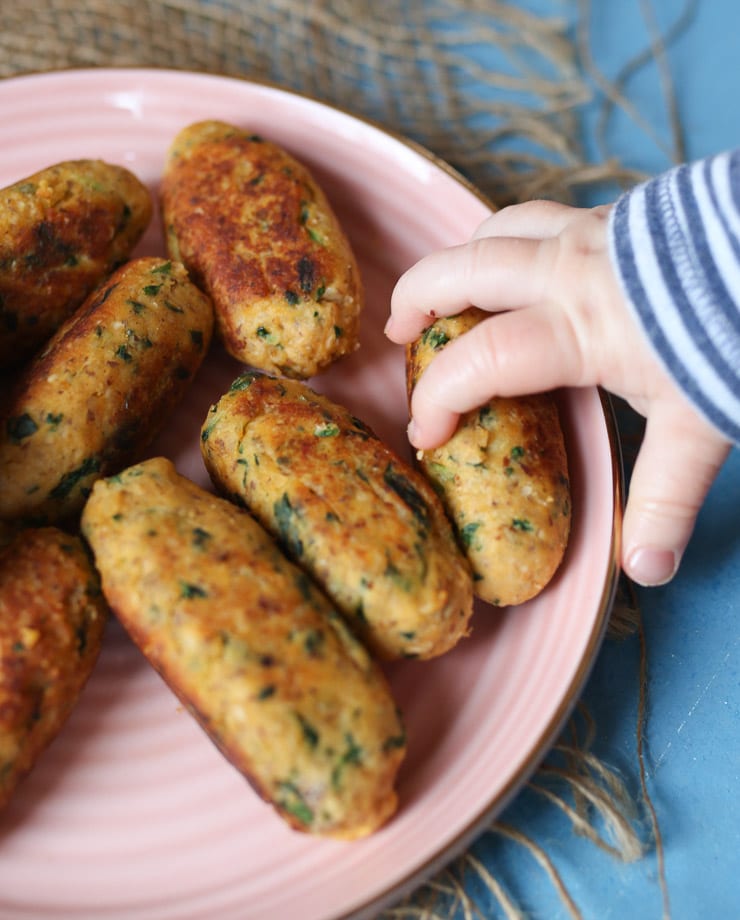
Baby hand reaching for a hummus baby meatball with tahini drizzle and sesame seeds.

So is it a straight-up numbers game? Not so fast. Nutrition science is always way more complicated than that. Even as a dietitian it can be overwhelming to consider all of the factors that effect nutrient absorption. I’m going to try to breakdown some of the key points below, but first let me say- the most important thing is that you include a variety of iron rich foods in your child’s diet. Not all of it will be absorbed well, and yes, we do know some sources are better than others, but trying to count every milligram of iron and what percent will be absorbed will just give you a headache! PARENTS, COME ON, DON’T WE HAVE ENOUGH ON OUR PLATE?! This is one of the reasons why I follow a baby led weaning approach. Consider some of these basic principles below as ways to structure your children’s meals but know that it’s not going to be a perfect science.

So how is iron absorbed? Essentially, we eat iron-containing foods, they land in our stomach, and are then oxidized into a form that can be used by our bodies. Iron is mainly absorbed in a section of the small intestine called the duodenum. It can be carried around in the body by transferrin (also an indicator of iron deficiency and can be tested in the blood).

There are various things to consider: the physical state of iron, facilitators that promote absorption, and inhibitors that decrease the absorption of iron.

Physical State: Heme vs. Non-Heme Iron

There are two types of iron: heme and non-heme.

Heme iron comes from animal sources such as meat, fish, and poultry. When you eat a heme source, you are essentially eating the hemoglobin and myoglobin contained within the animal. This makes it much easier for your body to absorb because it doesn’t need to do as much to process it. Still, only about 20-25% of heme iron is actually absorbed.

Non-heme iron comes from plant sources like beans, peas, wheat, oats, and vegetables. But also, about 55-60% of iron in meat is the non-heme kind. For most people, iron intake is predominantly consumed in this form. Non-heme iron needs to change into a different arrangement before it can be absorbed, so less of it can be used by the body. This is also the reason why vegetarians and vegans actually have higher requirements- you need almost twice the recommended amounts.

Facilitators for Iron Absorption

Colander with fresh spinach.

There are certain things that can increase the amount of iron absorbed in a product.

  • Pairing iron rich foods with foods high in Vitamin C
  • Pairing iron rich foods with foods that are high in Vitamin A or beta-carotene
  • Eating iron-fortified grain products with either a heme source, or Vitamin C
  • Mixing non-heme sources with heme sources at meals

Structuring your baby’s meals with these thoughts in mind is a great way to increase absorption. And it doesn’t have to be the nutrition-ese complicated thoughts I just listed above. Here’s how to put it simply. You could serve iron-fortified infant cereal with oranges or cut-up kiwis, or add broccoli or red peppers to meat. Basically, if you’re serving a veggie or fruit with your an iron rich food at every meal, you’ll basically be good to go.

Inhibitors for Iron Absorption

Person pouring a jug of milk into a cup.

There are some foods that might decrease the amount of iron absorbed, so it is especially important to be cautious if an individual has an iron deficiency, or is at an increased risk of developing one.

  • Calcium: Did you know that Health Canada does not recommend drinking more than 3 cups of milk per day for children under 24 months? The rationale is two-fold. For one, it fills up children and might make them too full to eat other iron rich foods. But also, it can prevent the absorption of iron! Eating (or drinking) more than 300 to 600 mg of calcium can impair the absorption of iron. Just to put this into perspective, one cup of cow’s milk has just over 300 mg of calcium, so if you’re struggling to get your toddler to eat enough iron rich foods, consider spacing it out from his/her milk or incorporate lower calcium dairy such as cheese and yogurt with those meals, instead!
  • Phosvitin (phosphoprotein): This is a protein found in eggs, mainly in the yolk, that has iron binding capacity. A boiled egg can decrease iron absorption by an estimated 28% at a meal!
  • Oxalates: Foods with oxalic acid, such as spinach, kale, beets, and some teas, can impair the absorption of non-heme iron by binding to it. Yup that’s right- the iron in spinach isn’t actually that well absorbed because of the oxalates in it.  
  • Polyphenols: These include chlorogenic acid (found in cocoa, coffee, and some herbs), phenolic acid (apples, peppermint, herbal teas), and tannins (black tea, coffee, walnuts, and some fruits). These items can have really significant impairments to iron absorption. While your kids might not be having coffee, be careful with eating or drinking these things too close to meal time- it’s ideal not to serve them for two hours before or after an iron rich meal.
  • Phytates: This includes soy protein and fiber found in some nuts, beans, lentils, and cereals. Even a small amount of phytates in a meal, can decrease iron absorption by 50%.

Trust me. I know that is a lot of information, and I considered not even sharing that info on inhibitors. But you know me, I’m thorough and I do believe that knowledge is power. Once we get through all of your iron options, I’ll help you sort through what you actually need to know.

So this brings me to the mother load of iron information – the ULTIMATE list of iron rich foods for babies, toddlers or kids.

The ULTIMATE List Iron Rich Foods for Babies, Toddlers & Kids

Chicken satay on a stick served next to a peanut dip.

This list of iron rich foods for babies focuses on portion sizes for infants aged 7 to 12 months old (where the target is 11 g/day). If you have a toddler or child who is older, then simply adjust the portions based on how much your child needs.

Heme Sources
Food Serving Size Iron (mg)
Beef, baby food puree 2 tbsp 0.53
Beef, ground 2 tbsp 0.49
Chicken, baby food puree 2 tbsp 0.21
Chicken Breast 2 tbsp 0.20
Chicken Nugget 1 piece 0.29
Clam 1 small clam 0.15
Clam Chowder ¼ cup 0.06
Duck 2 tbsp 0.50
Haddock 2 tbsp 0.04
Halibut 2 tbsp 0.04
Ham 1 thin slice 0.19
Lamb, baby food puree 2 tbsp 0.31
Lamb, cooked 2 tbsp 0.11
Liver, Chicken* 2 tbsp 2.15
Perch** 2 tbsp 0.05
Salmon** 2 tbsp 0.06
Tuna** 2 tbsp 0.17
Turkey Breast, cooked 2 tbsp 0.05
Veal, baby food puree 2 tbsp 0.40
Veal, ground 2 tbsp 0.16
Non-Heme Sources
Food Serving Size Iron (mg)
Apple Sauce 2 tbsp 0.05
Asparagus 2 spears 0.28
Baked Beans*** 2 tbsp 0.10
Baked Potato 1 small (4.4 cm to 6.4cm dia/130 grams) 1.49
Beets 2 tbsp 0.36
Beyond Burger ½ patty 2.70
Blackstrap Molasses**** 1 tsp 1.21
Bread, whole grain (fortified) 1 slice 0.76
Broccoli, boiled 2-3 small florets (¼ cup) 0.28
Cereal, Barley (with milk) ½ cup 7.76
Cereal, Rice (with milk) ½ cup 7.60
Chickpeas*** 2 tbsp 0.19
Cream of Wheat, cooked (fortified) ¼ cup 1.09
Dark Chocolate (70-85%)**** 1 square (10g) 1.19
Dried Apricots**** 2 halves 0.44
Dried Prunes**** 2 prunes 0.18
Dried Raisins**** 2 tbsp (1/8 cup) 0.33
Edamame**** 2 tbsp 0.60
Eggs 1 egg 0.69
Gluten-free bread, unfortified 1 slice 0
Granola Bars**** 1/2 bar 0.31
Heart of Palm, canned*** 1 heart 1.03
Hemp seeds 1 tbsp 1.13
Hummus*** 1 tbsp 0.38
Kale, boiled ¼ cup 0.31
Lentils*** 2 tbsp 0.87
Meatless, chicken 20 g 0.73
Meatless, luncheon slices*** 1 slice 0.25
Nuts, Almonds**** 4 almonds 0.16
Nuts, Almond Butter 1 tsp 0.19
Nuts, Cashews**** 4 cashews 0.3
Nuts, Cashew Butter 1 tsp 0.27
Nuts, Peanuts**** 4 peanuts 0.08
Nuts, Peanut Butter 1 tsp 0.12
Nuts, Pecans**** 4 pecans 0.14
Nuts, Pistachios**** 4 pistachios 0.20
Nuts, Walnuts**** 4 walnut halves 0.45
Oats, dry ¼ cup, cooked 0.38
Pasta, Macaroni (fortified) ¼ cup, cooked 0.45
Peas, green 2 tbsp 0.42
Peas, split, boiled 2 tbsp 0.33
Quinoa, cooked 2 tbsp 0.36
Rice, Brown, cooked 2 tbsp 0.11
Rice, Parboiled, cooked 2 tbsp 0.06
Seeds, Pumpkin**** 1 tbsp 0.27
Seeds, Sesame**** 1 tsp 0.47
Seeds, Squash**** 1 tbsp 0.27
Soda Crackers*** 2 crackers 0.30
Spinach, boiled 2 tbsp 0.85
Tahini 1 tbsp 0.38
Teething Biscuits 1 biscuit 0.39
Tempeh 25 g 0.53
Tofu 1/8 cup 1.76
Wheat Germ 1 tbsp 0.46
White Beans, boiled 2 tbsp 0.67
Yeast Extract Spread (Marmite/Vegemite)**** 1 tsp 0.25
Yogurt, plain ¼ cup 0.08
Yogurt, plain, soy ¼ cup 0.53

*Do not feed more than once a week

**Choose fish low in mercury more often, and limit to less than two servings a week.

***Use low sodium options when using canned or pre-packaged items

**** Not recommended for children 7-12 months old (high sugar/salt content, potential choking hazard)

A few notes about the chart above. Not all of these foods are recommended for children 7 to 12 months old. Some foods that are extremely high in iron (such as liver or other organ meats), are not recommended to be consumed more than once a week. There are also potentially some issues with bacteria in organs and intestines if not cleaned and cooked properly, and so it is better to keep these options to a minimum. For fish consumption, it is important to choose fish that have lower exposure to mercury, such as trout, sole, herring, salmon, whitefish, and canned light tuna. However, some fresh and frozen tuna are better to be avoided. If you’re unsure, you can get more information here. Another thing to keep in mind is that not all of the foods mentioned above are safe for your children- some are higher in sugar and salt, and others can potentially be a choking hazard (such as nuts, some seeds, and any other small, round foods). Keep in mind safe eating recommendations for infants, even if the foods are high in iron. These foods are listed because some can still be incorporated into recipes or are great additions for older children. If you’re looking for some recipes, that are high in iron and baby approved (Baby E would tell you if he could!), check out my: Salmon Sweet Potato Fritters, Vegan Sweet Potato Lentil Baby Fritters, or Kale Pepper Baby Frittata Fingers.

Should I Give My Children An Iron Supplement?

A pill bottle containing iron supplements.

There are several ways to get your iron requirements- you can eat foods that naturally contain iron, eat fortified foods, or supplement through pills, injections/shots, or IV’s. However, is going the supplemental road worth it with your baby? Well, it depends.

If your child is iron-deficient or anemic, then speaking to your pediatrician about an iron supplement may be helpful in raising their stores. For premature babies, doctors will often recommend an iron supplement from about 8 weeks up until one year of age- however, in both of these cases, a health care professional will likely be involved so follow their recommendations.

The Canadian Anemia Guidelines do not currently recommend supplementation for full-term, breastfed infants to 6 months. Infants that are formula fed should ensure that their formula is fortified with iron, and can also supplement in the first four months, with an additional amount of 0.5 to 2 mg of elemental iron per kg, per day. For otherwise healthy infants and children who are eating enough food, iron supplements are not usually needed. Not to mention that iron supplements can be quite hard on baby’s stomach, with side effects like constipation, diarrhea, nausea, and dark black stools. Even if your child follows a plant-based diet with higher requirements, with careful planning, your child can still meet their needs with just food.  

AH! Baby’s iron needs are high, the amounts in foods are low, there are inhibitors in everything-WTF DO I FEEL MY KID?

Baby grabbing a salmon sweet potato fritter.

I know, I know, that was a LOT of information and for those of us who do BLW and allow baby to take the lead on feeding (which, spoonfed or BLW, we should be), we might see this list of foods and see that list of inhibitors and think HOW THE F IS MY KID GOING TO GET ENOUGH? Let’s take a big breath because I have really good news for you. Basically, unless your baby has absorption issues, or has confirmed iron deficiency – both scenarios where I would hope baby was being followed by a dietitian- you don’t really need to worry too much about inhibitors. Following Ellyn Satter’s division of responsibility, our job as parents is to offer a wide range of foods, and their job is determine what and how much they eat.

My suggestion to parents with healthy children (that is, those not with confirmed anemia or absorption issues) – focus on getting at least one source of iron in at every meal and aim to make most of them heme based, whenever possible.

You should also aim to include a source of vitamin C at every meal with the iron, which is really as easy as serving a veggie or fruit breakfast, lunch and dinner (a good habit to get into anyway).

For my vegetarian and vegan friends, you’ll likely need to pay a bit more attention to the iron sources you offer baby as technically the kiddo will need to consume more non-heme iron to absorb the same amount found in heme-based foods. It might be wise to try to hold off on serving calcium-rich foods for an hour before and after you serve those iron-rich foods, just to help ensure the absorption factor isn’t compromised any further.

Bottom line moms and dads, just focus on serving a variety of healthy foods in a relaxed enjoyable environment. They might eat no iron one meal, and a ton in the next, but in the end, it usually all evens itself out. I hope this gave you iron anxious mamas and dads out there everything you need to help your kid get the nutrition he or she needs.

Now I want to know, what are your favourite iron rich foods for babies, toddlers or kids? Have you had any struggles getting your child to eat iron rich foods? I know, I’m always thinking about how to incorporate iron at each meal. Leave me a comment below about your thoughts!

Contribution by Dietetic Intern Elinor Fridman

Abbey Sharp

Abbey Sharp is a Registered Dietitian (RD), regulated by the Ontario College of Dietitians. She is a mom, YouTuber, Blogger, award winning cookbook author, media coach specializing in food and nutrition influencers, and a frequent contributor to national publications like Healthline and on national broadcast TV shows.
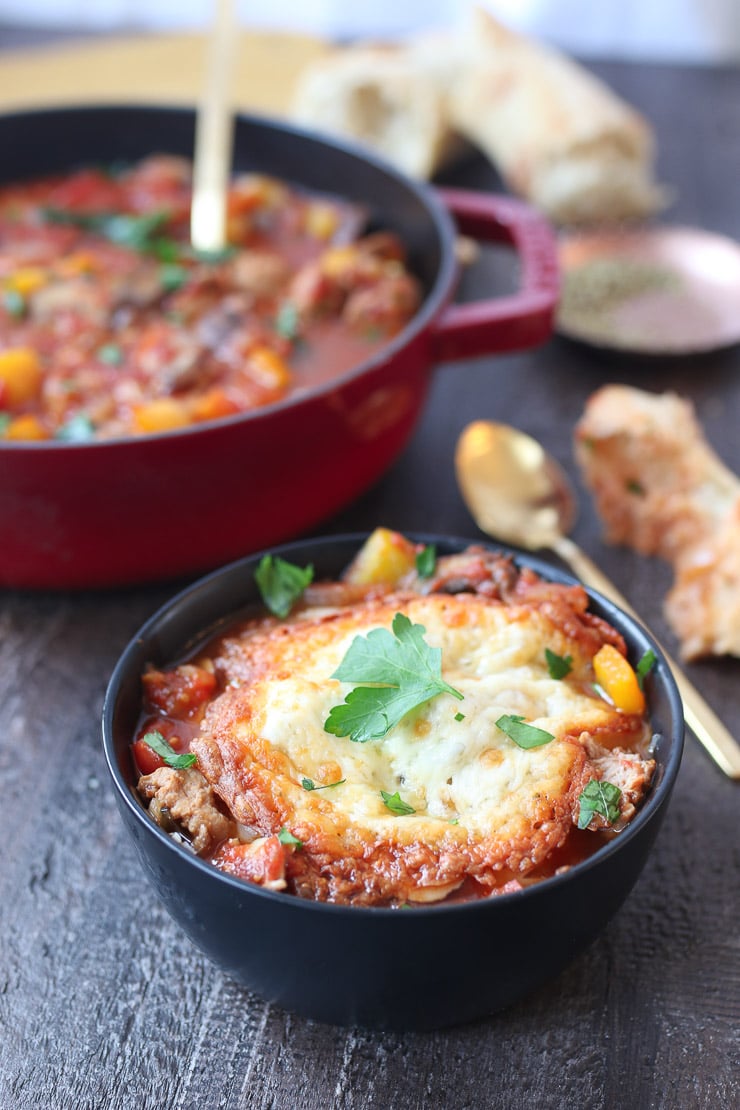
www.abbeyskitchen.com/about-abbey/

Last Updated February 7, 2023. Published February 27, 2023 By Abbey Sharp 8 Comments

Protein Cookie Dough Bites with Chickpeas (Vegan & Gluten Free)

These protein cookie dough bites with chickpeas are a delicious vegan and gluten free snack that tastes just like cookie dough! They also make for the perfect kid friendly treat.

Birds eye view image of protein cookie dough bites on a white plate with chocolate chips in the background.

Does anyone else low key still try to resist eating raw cookie dough when baking cookies? I would totally cave if it wasn’t for the safety concerns (and my moms voice in my head from childhood).

As a mama myself, I can totally relate to the concerns around eating raw cookie dough for my little ones. But what if you could have a snack that tastes just like the real deal and is 100% safe AND healthy? Introducing these protein cookie dough bites!

Table of contents

  • Why This Recipe Works
  • Key Ingredients
  • How to Make This Recipe
  • Expert Tips
  • Recipe FAQs
  • More Recipes You Might Like

Why This Recipe Works

If you are an avid cookie dough lover, I promise you that these protein cookie dough bites are about to be on heavy rotation. Here are a few reasons why:

  • Only require 8 ingredients to prepare
  • Vegan & gluten free
  • High protein (4 grams per bite)
  • High Fibre (4 grams per bite)
  • Kid friendly
  • Perfect for snacking!

Key Ingredients

Flat lay image of recipe ingredients including maple syrup, peanut butter, oat flour, vanilla, coconut oil, salt, and chickpeas.

Chickpeas – Chickpeas are the key to making these cookie dough bites as they not only pack tons of fibre and protein, but they also mimic the perfect “doughy” texture. I also use no salt added canned chickpeas so as to not interfere with any of the sweetness that we’re going for.

Peanut Butter – I am a peanut butter lover through and through, but you can use any nut butter of your choice for these cookie dough bites. No matter what nut butter you use, I also recommend stirring well so that you end up with a smooth cookie dough that is not too oily.

Chocolate Chips – the chocolate chips in this recipe serve two purposes as they get added to the cookie dough mixture, and they also serve as a chocolate coating.

Gluten Free Flour – You can use oat or almond flour as they are both naturally gluten free.

Toppings – We love to top these bites with sea talk, pistachios, sprinkles, and coconut flakes.

How to Make This Recipe

Three side by side images showing how to prepare the batter in a food processor, combining with chocolate chips, and rolling into balls.

Step 1: In a food processor, combine the chickpeas, peanut butter, vanilla, almond flour, maple syrup, cinnamon, and salt until smooth.

Step 2: Transfer cookie dough batter to a mixing bowl and folding in chocolate chips until combined.

Step 3: Using a 1 tbsp cookie scoop, shape into balls.

Two side by side images showing how to coat balls in chocolate and sprinkling with toppings.

Step 4: Melt chocolate & coconut oil using a double boiler or heating in the microwave in a microwave safe bowl for 30 second increments until fully melted. Using two forks, carefully coat cookie dough balls in melted chocolate until fully coated.

Step 5: Place cookie dough balls on a parchment linked baking sheet and sprinkle selected toppings on top. Allow cookie dough balls to set in the fridge for 30 minutes. Cover and refrigerate the cookie doughs until ready to serve.

Four side by side images showing cookie dough topping options including coconut flakes, sprinkles, pistachio, and sea salt.

Expert Tips

Be sure to rinse and dry the chickpeas well and remove the skins. You can do this by rubbing them through your hands or between two clean cloths. This will ensure the cookie dough is super smooth.

I’d also recommend taste testing the cookie dough bites after combining everything in the food processor and then sweetening to your liking. We use 3 tablespoons of maple syrup, but you can use more or less to taste.

Recipe FAQs

Can I make this allergy friendly?

Absolutely! To make these bites allergy friendly, you can use a nut-free soy butter or sunflower seed butter.

Whats the best way to store these bites?

These are best stored in the fridge in an air-tight container for up to 5 days. You can also store it in the freezer in a sealed freezer bag for up to 3 months.

What makes this recipe healthier than other cookie doughs?

These cookie dough bites are lower in sugar and also have added fibre, protein, and healthy fats! This makes them the perfect snack because it will help to keep you fuller for longer.

Are these bites safe for babies and toddlers?

They have a pretty thick consistency, so I don’t recommend it as cookie dough for babies under 1 or new eaters since it could ball up and get sticky in their mouth. But you could thin it out with almond milk to be more of a dip and serve it with fruit.

What other toppings can I use?

The sky is the limit! It really depends on what you like and what you have on hand. You can top them with crushed nuts, seeds, dried fruit, freeze-fried fruit or crushed cookies.

Close up of cookie dough balls on a white plate with chocolate chips in the background.

More Recipes You Might Like

If you loved these protein cookie dough bites, then you’re going to LOVE these easy snack recipes on the blog!

  • Tofu Pudding with Sweet Potato
  • Baby Muffins with Carrots
  • Chocolate Covered Almonds with Chili Orange
  • Almond Chocolate Bark with Granola Crunch
  • Gluten Free Energy Balls with Pecans and Cherries
  • Quinoa Coconut Energy Balls

So tell me – did you try these protein cookie dough bites? Let me know your thoughts down in the comments below!

Print Recipe
5 from 11 votes

Protein Cookie Dough Bites with Chickpeas (Vegan & Gluten Free)

These healthy cookie dough bites with chickpeas are a delicious vegan and gluten free snack that tastes just like cookie dough!
Prep Time50 minutes mins
Total Time50 minutes mins
Course: Dessert, Snack
Cuisine: American
Diet: Gluten Free, Vegan
Servings: 18 bites
Calories: 117kcal
Author: Abbey Sharp

Ingredients

  • 1 15 oz can 1 ½ cups no salt added drained and rinsed canned chickpeas
  • ¼ cup natural peanut butter
  • 2 tsp vanilla extract
  • 3 tbsp almond or oat flour
  • 2-4 tbsp maple syrup or more to taste
  • 1/4 tsp salt
  • 2 tbsp chocolate chips vegan

Chocolate Coating

  • 1 cup dark chocolate chips vegan -1 cup was appropriate/
  • 2 tsp coconut oil

Toppings

  • Pistachios
  • Sea salt
  • Sprinkles
  • Toasted Coconut

Instructions

  • In a food processor, combine the chickpeas, peanut butter, vanilla, almond flour, maple syrup, and salt until smooth.
  • Transfer cookie dough batter to a mixing bowl and folding in chocolate chips until combined.
  • Using a 1 tbsp cookie scoop, shape into balls.
  • Melt chocolate & coconut oil using a double boiler or heating in the microwave in a microwave safe bowl for 30 second increments until fully melted.
  • Using two forks, carefully coat cookie dough balls in melted chocolate until fully coated.
  • Place cookie dough balls on a parchment linked baking sheet and sprinkle selected toppings on top
  • Allow cookie dough balls to set in the fridge for 30 minutes.
  • Cover and refrigerate the cookie doughs until ready to serve.

Nutrition

Calories: 117kcal | Carbohydrates: 16g | Protein: 4g | Fat: 4g | Saturated Fat: 4g | Trans Fat: 1g | Cholesterol: 1mg | Sodium: 55mg | Potassium: 163mg | Fiber: 3g | Sugar: 6g | Vitamin A: 12IU | Vitamin C: 1mg | Calcium: 43mg | Iron: 1mg
Abbey Sharp

Abbey Sharp is a Registered Dietitian (RD), regulated by the Ontario College of Dietitians. She is a mom, YouTuber, Blogger, award winning cookbook author, media coach specializing in food and nutrition influencers, and a frequent contributor to national publications like Healthline and on national broadcast TV shows.
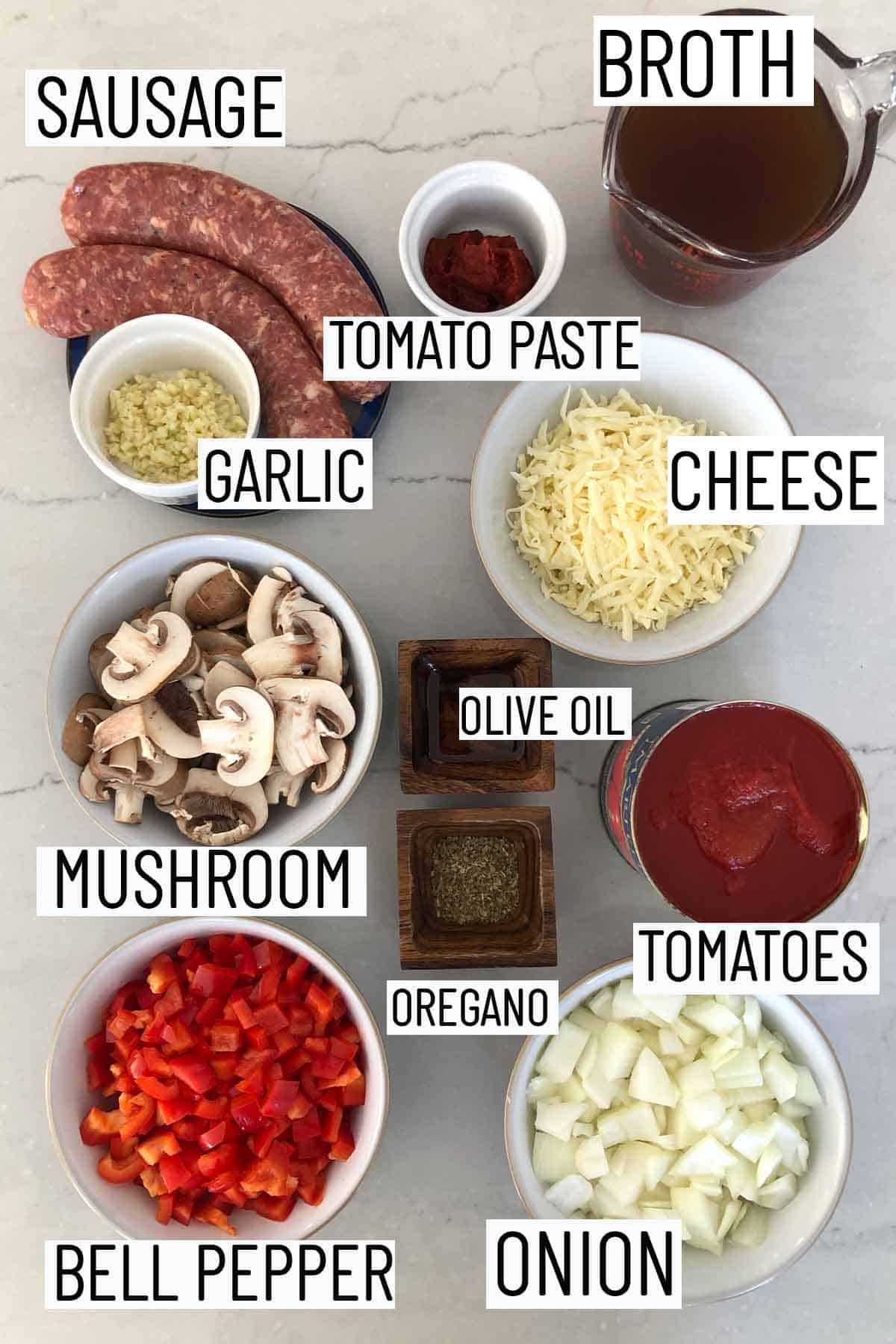
www.abbeyskitchen.com/about-abbey/

Last Updated February 12, 2023. Published February 22, 2023 By Abbey Sharp 3 Comments

Can I have Coffee While Breastfeeding? How Much Caffeine is Safe?

image of coffee in a coffee mug

We examine the research on whether or not drinking coffee while breastfeeding poses any risks for babies and moms.

Coffee mug served on a saucer.

As a foodie and dietitian, I honestly never knew the true meaning of sacrifice until I became pregnant. No soft cheeses? Sucks, but I’ll manage. No evening glass of red wine? It hurts, but I’ll survive. But coffee? Ugh. Thank goodness it’s suggested the 200-300 mg or less of caffeine in pregnancy is safe- about the amount in 2 cups of joe.

Having said that, some of us with miscarriage history still played it safe, and it wasn’t until I gave birth that I craved coffee again. But does drinking coffee while breastfeeding or pumping involve any postpartum risks?

Caffeine and Breastfeeding 101

Well, even though baby is no longer inside you, if you’re breastfeeding, you’re still providing baby with its sole source of nourishment. Breastfeeding in and of itself comes with a whole new set of struggles and sacrifices and I’ve shared all about my experience with breastfeeding which you can read about right here. But when it comes to the safety of incorporating coffee back into our postpartum routines, it’s easy to get swayed by the mixed opinions in parenting circles warning of the potential dangers (I know I certainly was). But what does the science say about the safety of consuming caffeine for us coffee lovers? And how much caffeine can you truly have while breastfeeding?

Does Caffeine Get into Breastmilk?

Short answer: yes, it is possible for caffeine to get into breastmilk through the bloodstream. However, according to the American Academy of Pediatrics (AAP) breastmilk contains less than 1% of caffeine taken by mom. While the amount of caffeine that gets into breastmilk is generally too low to pose any negative effects, the total concentration of caffeine in the breastmilk largely depends on:

  • Caffeine sensitivity
  • The time between caffeine intake and feeds
  • The amount of caffeine consumed
Neon sign that says "coffee".

Caffeine Sensitivity

On average, it can take around over 4-6 hours for half of a substance’s caffeine content to clear from our systems after consumption. However, the amount of time can vary from person to person depending on their caffeine sensitivity. Caffeine sensitivity refers to how efficiently an individual’s body (specifically, their liver) is able to metabolize caffeine. Variations in the amount of enzymes in our livers determines how we metabolize caffeine and can depend on things like age, gender, medications, and genetics. So, for example, fast metabolizers can tolerate several cups of coffee a day or even have a cup of coffee right before bed and fall asleep an hour later. On the other hand, slow metabolizers may find themselves jittery and anxious from a single cup of coffee and may also find that the effects of caffeine take a long time to wear off.  That’s me!

Compared to adults, it’s no surprise that babies are much more sensitive to caffeine and it can take several hours or days for caffeine to clear from their system if they’ve been exposed. To compare, let’s take a look at the amount of time it takes for caffeine in the body to decrease down to half of its starting dose (aka its half-life).

  • Newborn: up to 97.5 hours (approx. 4 days)
  • 3-5 months old: 14 hours
  • 6+ months old: 2.5 hours
  • Adult: 5 hours

As you can see, newborns are extremely sensitive to caffeine making it very possible for them to experience caffeine stimulation. It can also take approximately five half-lives to eliminate a substance completely from the body. This means it could take up to 20 days total for an infant’s body to completely rid itself of caffeine, compared to adults who take around 10 hours on average for their body to completely clear their systems from caffeine. However, some research shows that genetics may play a role in how long caffeine stays in your system, so it could take more or less time depending on the individual. Signs of caffeine stimulation to be aware of in baby’s include irritability, fussiness, or under-sleeping.

Person carrying a newborn.

Timing of Feeds

The concentration of caffeine in the blood and breastmilk is thought to typically peak at around 1-2 hours after consumption. If you’re concerned about overstimulating baby, you can simply go easy on the coffee while breastfeeding. Keep in mind that some individuals may be slow metabolizers of caffeine, so it is important to still look out for any signs of caffeine stimulation in baby even if you are spacing out your feed 1-2 hours post-caffeine intake.

Amount of Caffeine Consumed

Research shows that caffeine consumption exceeding 300 mg per can increase the likelihood of an infant showing symptoms of caffeine stimulation. It can also take 1-2 weeks of either decreasing or halting all caffeine for this tapering to affect the baby. As mentioned, depending on mom and baby’s tolerance to caffeine, baby can potentially be stimulated by smaller amounts. So bear this in mind as you gradually increase your caffeine intake postpartum and monitor baby for symptoms of caffeine stimulation.

A woman sitting outside breastfeeding.

Coffee While Breastfeeding: How Much Can You Have?

The recommended guidelines for caffeine consumption while breastfeeding suggest that 200-300 mg of caffeine per day is considered safe. Here are some examples of what this would look like for common caffeinated beverages:

  • Two cups of coffee
  • Six cups of black tea
  • Two 16oz cans of monster energy drinks
  • Four 500ml bottles of coke
  • Eight cups of green tea
  • A short coffee
  • A double espresso

Research shows that if caffeine consumption is kept within the recommended guidelines, the amount that can be passed onto an infant through breastmilk would be so small that it would be considered negligible. Therefore, it is totally possible to enjoy a caffeinated beverage or two while still keeping your intake within the recommended amount considered safe for breastfeeding.

Caffeine in Matcha vs. Coffee While Breastfeeding

Matcha latte in a white mug.

Matcha tea has quickly become the caffeinated beverage of choice for multiple reasons. One, because it has three times more caffeine than standard green tea, and two because it has a “slow burning” effect on energy levels, compared to the energy spike and subsequent crash that coffee often provides. To compare, 1 cup of matcha green tea contained about 77mg of caffeine which is similar to 1 cup of coffee which contains around 95 mg of caffeine.  Despite the caffeine content in matcha being similar to that of coffee, the body metabolizes the caffeine from matcha differently.  This effect is due to an amino acid in matcha called L-theanine, which helps the body to absorb caffeine at a slower rate. Due to the effect of this amino acid, matcha provides a more stable source of energy that doesn’t result in the same crash. This means that slow metabolizers of caffeine may find themselves less jittery or anxious by swapping a cup of coffee for a cup matcha, while still reaping the energizing benefits of caffeine.

However, does the “slow burn” effect of matcha impact the caffeine intake of breastfeeding mothers? Well, according to the Centres for Disease Control and Prevention, no matter the source of your caffeine fix, the answer to the question “How much caffeine can you have while breastfeeding?” being 200-300mg of caffeine per day remains the same.

Does Caffeine Cause Sleep Disturbances for a Breastfed Baby?

Three people cheersing with caffeinated beverages.

Most babies will not show any signs of having adverse sleeping effects, so long as their breastfeeding parent is consuming moderate amounts of caffeine throughout the day within the 200-300mg range. However, babies who are exposed to higher amounts of caffeine have been reported to show certain behavioural patterns, such as being fussy, irritable, and having a hard time falling and staying asleep at night. This is important to note as a parent, because lack of sleep in an infant may result in poor functioning throughout the day, growth disturbances, poor memory consolidation, lack of concentration, and substandard energy levels. A child who is not getting enough rest may also present as moody, irritable, drowsy, restless, and unable to wake up in the morning. This is all just to say that a well slept baby is important for a multitude of reasons and for any of my readers who have children of their own – you’re probably WELL aware of the effects of baby not getting adequate sleep (not fun).  It’s therefore important to take note any of the signs of sleep disturbance as you begin to increase your caffeine intake postpartum.

The good news is that research has shown that so long as you consume no more than the recommended 200-300mg amount of caffeine per day, you should be in the clear. One prospective cohort study found no significant evidence to suggest that consuming up to 300mg of caffeine while breastfeeding can negatively impact baby’s sleep. However, a recent cohort study from 2021 showed that small reductions in neonatal anthropometric measurements with increasing caffeine consumption were observed.

Findings also suggest that caffeine consumption during pregnancy, even at levels much lower than the recommended 200 mg per day of caffeine, are associated with decreased fetal growth.

Another study looking at the effect of consuming more than 300mg of caffeine per day while breastfeeding, found that it increased the likelihood of restlessness, irritability, and sleep disturbances for baby. These sleep disturbances were reported to have subsided within two weeks of a mother terminating all caffeine intake. But again, these effects may be different depending on an individual’s caffeine tolerance. Meaning, it may be possible to consume the recommended amount of caffeine and still see caffeine stimulation in baby, particularly if you are more sensitive to caffeine. It is therefore important to continue to monitor the quality of baby’s sleep as you gradually reintroduce caffeine into your day-to-day life.

A newborn baby being held in someones hands.

Does Caffeine Reduce Breast Milk Supply?

This is a very common myth, however, there is no evidence to suggest that caffeine directly reduces breast milk supply, as long as consumption is kept within the recommend range. However, it is possible for there to be a chain-effect if baby becomes jittery from consuming too much caffeine from breastmilk resulting in decreased appetite. Consequently, a parent will likely find a decreased supply of breastmilk due to the reduced amount of nursing. In this case, it is advisable for a breastfeeding person to eliminate all caffeine for approximately one week to ensure their infant’s appetite returns to normal. Another scenario that can result in reduced breast milk supply is a parent becoming dehydrated due to excessive caffeine consumption, subsequently lowering their production of breast milk (although this would take an extreme amount of dehydration). To prevent dehydration and any subsequent impact on breastmilk supply, aim to drink around 2-3 litres of water per day while also incorporating a variety of water-rich fruits and vegetables in your diet.

Birds eye view of two lattes on a table.

Does Coffee While Breastfeeding Cause Growth or Development Issues in Babies?

Relating to concerns about coffee while breastfeeding, it is a common myth that caffeine consumption can cause growth and development issues for children. However, no substantial evidence exists to prove that this is the case. A study conducted analyzing the relationship between mild caffeine consumption and newborns found no adverse consequences for development, temperament, or behaviour. This misconception originates from the belief that caffeine can interfere with calcium absorption, which is crucial for bone health and bone formation. Calcium malabsorption can lead to a number of serious health problems, such as osteoporosis, wherein one’s bones become brittle and fragile from loss of tissue. Signs of calcium deficiency in infants can include a variety of mental and physical symptoms, such as erratic emotional behaviour, irregular teeth formation, protruding belly, loss of appetite, frequent episodes of sickness due to weakened immune system, sleeplessness, insufficient growing patterns, and low blood pressure.

However, there are a number of ways to prevent calcium deficiency in infants as well; despite breast milk being the primary source of calcium for a newborn, you can also optimize your child’s calcium absorption by making sure they have adequate access to sunlight, as vitamin D from the sun helps to ensure optimal calcium absorption. In dire cases, calcium can also be administered through the bloodstream of an infant, although this method is only recommended for extreme cases of calcium deficiency.

Image of a newborn's feet.

All of this being said, the reduction in calcium absorption that can result from caffeine consumption has actually been found to be so small that it is considered negligible when analyzing the entirety of a child’s health and development; this quantity is even more insignificant when assessing the minor amount of caffeine that may appear in breastmilk. There is no substantial evidence to prove that caffeine can directly cause growth or development issues in children.

Does Caffeine Cause Digestive Issues in Breastfed Babies?

It is possible for caffeine to cause digestive issues for a child through breastmilk depending on the amount of caffeine consumed and caffeine sensitivity. In addition, because a newborns liver is not fully developed, they are unable to break down caffeine for proper digestion especially if they’ve been exposed to a high concentration via breastmilk. As a result, caffeine can remain in a baby’s system for longer than it should, potentially delaying the rate of gastric emptying, therefore resulting in fewer bowel movements.

One of the more common potential digestive issues that can result from consuming caffeine through breastmilk is constipation. Constipation in newborns can present as firm stools or less than one stool per day for more than two weeks (though it’s not abnormal for a breastfed baby to poop less than a formula fed one – every baby is unique). It’s mainly important that baby is still gaining adequate weight so always check in with your doctor. If your older breastfed child has begun eating solids, you can also to try incorporating more water as well as high-fibre foods into their meals such as whole grains, fruit, veggies, and prunes which also have a laxative effect.

Some mothers may find that another potential digestive issue that can result from caffeine in breastmilk is the exacerbation of acid reflux, which is already a common condition in newborns. Acid reflux occurs because the lower esophageal sphincter, which is intended to keep stomach acid from rising back up into the esophagus and throat, malfunctions in infants due to the fact that it is still under-developed. Methods for treating acid reflux in babies includes holding your baby upright for 30 minutes post feeding, feeding your child smaller and more frequent meals, and thickening their bottle with cereal or attempting solid food (with your doctor’s approval).

To avoid acid reflux from caffeine, it is recommended for caffeine intake to be spaced out between feeding/pumping, leaving 1-2 hours for the caffeine to metabolize beforehand. In addition, acid reflux is less likely to occur if caffeine intake is kept within the recommended range. However, like we mentioned previously, continue to monitor your baby’s symptoms to really gauge their tolerance and any adverse effects from caffeine exposure via breastmilk.

A newborn baby's hand being held in a parent's hand.

Alternatives To Caffeine While Breastfeeding

That wraps up our discussion on the impacts of having caffeine like coffee while breastfeeding. However, if you are worried about baby being exposed to caffeine through breastmilk, there are a number of caffeine-free options you can try when you’re in need of an energy fix (as most new parents are). Here is a list of some healthy alternatives to caffeine to replace your morning cup of joe:

Golden Milk Latte

I know, a turmeric latte is not the same as a coffee latte. However, replacing your morning coffee or tea with this delicious alternative might satisfy that craving for a warm beverage. Not only does a golden milk latte taste amazing, it is also full of anti-inflammatory health properties (thanks to our friend, turmeric), and contains zero caffeine.

A Balanced Breakfast

A balanced meal made up of protein, healthy fats, and carbohydrates will not only energize you, but also ensure stable blood sugar levels to help power you through your morning. Some great examples of energizing breakfasts include eggs and avocado on top of whole grain toast, Greek yogurt paired with fruit and/or granola, or a smoothie packed with protein, nut butter, and fruits/veggies.

Staying Hydrated

Dehydration can often result in fatigued and low energy levels. In addition, caffeine acts as a mild diuretic, which can cause you to go to the bathroom more often, thereby flushing extra sodium and water from your body. So, whether you are drinking caffeine or not, it’s important for all of us to stay hydrated to support our energy levels and our bodily functions. As we mentioned previously, aim for 2-3 litres of water and plenty of water-rich fruit and veggies to keep you hydrated throughout the day.

A white coffee mug on a table.

Movement

If you have the time (keeping in mind this article is intended for new parents), adding in some movement in the morning can be a great way to get your blood flowing to give you energy for the day. This can be anything from a full-blown workout at the gym, or even some light movement like stretching or a gentle walk. Any movement counts and will help to naturally boost endorphins, which can improve mood and energize you for the day.

Decaf

Lastly, if none of these alternatives sound appealing to you and you long for the comforting taste of a warm cup of coffee, try opting for decaffeinated versions of your favourite beverages. Although they are not 100% caffeine free, the amount of caffeine in decaffeinated products is substantially lower than their caffeinated counterparts. Here are a few examples of some decaf options you can enjoy, and their caffeine content compared to a standard cup of coffee (which contains 95 mg of caffeine)

  • Decaf black coffee: 3mg of caffeine per 8oz cup
  • Decaf black tea: 2mg of caffeine per 8oz cup
  • Decaf green tea: 2mg of caffeine per 8oz cup

Bottom Line on Caffeine and Breastfeeding

I can attest that even though life with a newborn is a really exciting time, it can also be exceptionally tiring. So it is totally understandable if you feel like you need a cup of coffee to help power you through your day and give you an energy boost (especially if you are experiencing sleepless nights as all us mama’s know all too well).

While it is certainly possible that caffeine intake while breastfeeding can lead to negative side effects for baby – like sleep disturbances and digestive issues – it really depends on you and baby’s tolerance to caffeine and the amount consumed. So bear this in mind as you begin to gradually reintroduce caffeine into your postpartum routine, keeping your intake within the 200-300mg recommendation, and monitoring whether this has any negative effects on baby.

With that said, you can definitely enjoy moderate amounts of your favourite caffeinated beverage while keeping baby safe! I hope this blog post helped to answer all your questions regarding coffee while breastfeeding. So mamas, cheers to that – congrats on your newborn, and enjoy a glorious hot cup of coffee!

Contribution by Rachel Levy and Giselle Segovia RD MHSc

More Blog Posts You Might Like:

  • Cow’s Milk Protein Allergy in Infants | Should Breastfeeding Moms Go Dairy Free? 
  • The Truth About Drinking Alcohol While Breastfeeding: Will it Harm My Baby?
  • Not Losing Weight Breastfeeding? Does Breastfeeding Cause Weight Loss or Weight Gain?
  • The Ultimate Exclusively Pumping & Breastfeeding Essentials Guide
  • Colic in Babies and Dairy – Should Breastfeeding Moms Go Dairy Free
  • How to Increase Breastmilk Supply From a Dietitian Mama’s Perspective with Food and Breastfeeding Techniques

What has been your experience with caffeine and breastfeeding? Let me know in the comments below!

Abbey Sharp

Abbey Sharp is a Registered Dietitian (RD), regulated by the Ontario College of Dietitians. She is a mom, YouTuber, Blogger, award winning cookbook author, media coach specializing in food and nutrition influencers, and a frequent contributor to national publications like Healthline and on national broadcast TV shows.
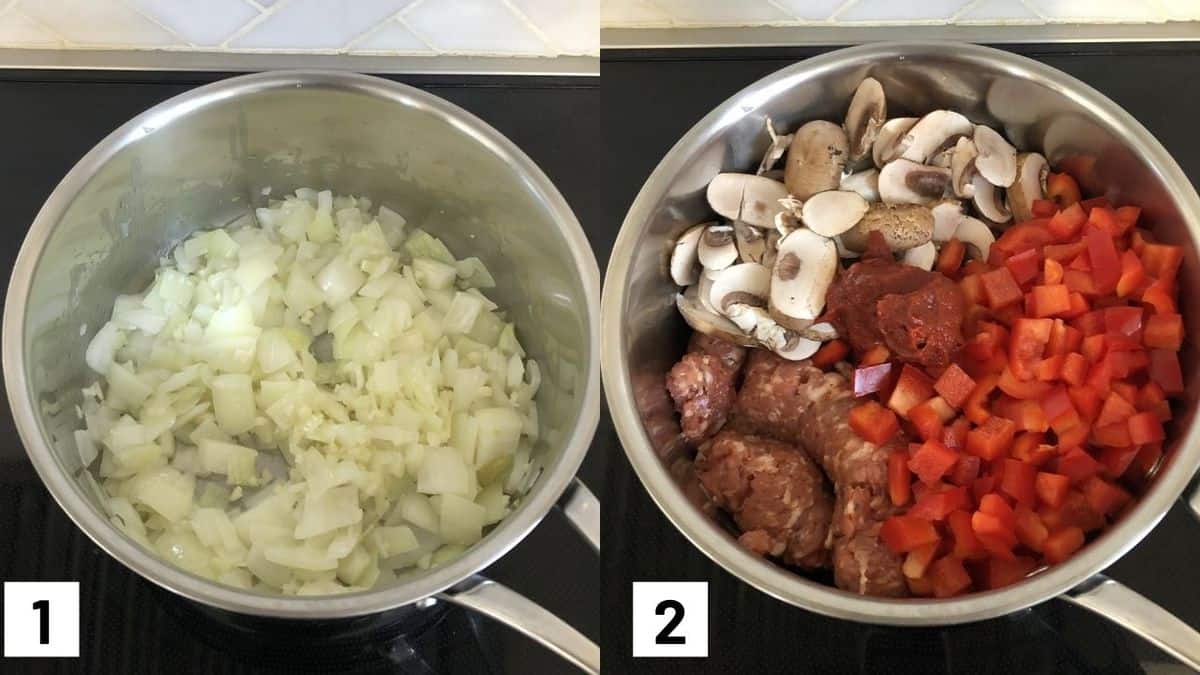
www.abbeyskitchen.com/about-abbey/
  • Previous Page
  • Go to page 1
  • Interim pages omitted …
  • Go to page 20
  • Go to page 21
  • Go to page 22
  • Go to page 23
  • Go to page 24
  • Interim pages omitted …
  • Go to page 89
  • Next Page

Get started with

Eight Free Recipe Books

From the co-founder of Neue Theory and creator of the Hunger Crushing Combo

Sign me up!
Abbey smiling at table
Abbey Sharp

“Foods may never be nutritionally equal. But we can make them morally equal by recognizing that our worth is never determined by what's on our plate.”

— Abbey Sharp, RD About Abbey ◥

Books

  • HCC™
  • Mindful Glow
  • Free E-Books

Blog

  • Nutrition
  • Recipes
  • Motherhood
  • Life

Explore

  • Neue Theory™
  • Bite Back
  • YouTube

Abbey

  • About
  • Coaching
YouTube TikTok Instagram Facebook X Pinterest
Abbey Sharp - The No BS Dietitian From Abbeys Kitchen

© Abbey's Kitchen 2026  All Rights Reserved •  ACCESSIBILITY STATEMENT •  Privacy Policy

This site uses cookies. By continuing to browse the site, you are agreeing to the use of cookies Accept Privacy Policy
Privacy & Cookies Policy

Privacy Overview

This website uses cookies to improve your experience while you navigate through the website. Out of these, the cookies that are categorized as necessary are stored on your browser as they are essential for the working of basic functionalities of the website. We also use third-party cookies that help us analyze and understand how you use this website. These cookies will be stored in your browser only with your consent. You also have the option to opt-out of these cookies. But opting out of some of these cookies may affect your browsing experience.
Necessary
Always Enabled
Necessary cookies are absolutely essential for the website to function properly. This category only includes cookies that ensures basic functionalities and security features of the website. These cookies do not store any personal information.
Non-necessary
Any cookies that may not be particularly necessary for the website to function and is used specifically to collect user personal data via analytics, ads, other embedded contents are termed as non-necessary cookies. It is mandatory to procure user consent prior to running these cookies on your website.
SAVE & ACCEPT

Rate This Recipe

Your vote:


A rating is required
A name is required
An email is required