• Skip to main content

Abbey's Kitchen

Healthy Recipes, Nutrition Myth Busting, Healthy Eating Tips

  • Books
    • HCC™
    • The Mindful Glow Cookbook
    • Recipe eBooks
      • Family
      • Hypothyroidism
      • BLW
      • Vegan Week 1
      • Vegan Week 2
      • Vegan Week 3
      • Keto
      • Gluten Free Week 1
      • Gluten Free Week 2
      • Fitness
      • Paleo
  • Blog
    • Nutrition
    • Recipes
    • Motherhood
    • Life
  • Explore
    • Neue Theory™
    • Bite Back With Abbey Sharp
      • Apple Music
      • Spotify
      • Amazon Music
    • YouTube
  • Abbey
    • About
    • Coaching
    • Contact

Abbey Sharp

Last Updated February 11, 2021. Published November 30, 2022 By Abbey Sharp 4 Comments

Period Weight Gain | What’s a “Normal” amount?

We take a look at the common causes of period weight gain, how much is normal, and how you can minimize these effects during that time of the month.
A red popsicle melting against a pink wall.

Folks, you don’t need me to tell you that getting your period is a royal pain – literally. In the days leading up to your period not only are you feeling all the feels, but you’re so exhausted that no amount of sleep is enough, your appetite is fluctuating like crazy, you’re crampy and bloated, and oh – is that a breakout I see? Fan-freaking-tastic.

It’s hard to believe that us menstruating people have to experience this roller coaster of physical and emotional symptoms on a monthly basis. But alas – we do it and we carry on with our day-to-day lives like it ain’t no thang.

Now, I am sure that many of you reading this are no stranger to the symptoms I’ve just described, and it is by no means an exhaustive list. As a result of the bloating and food cravings that ensue during this time, one of the most common concerns that I get asked about when it comes to menstruation is period weight gain. While the waist band on your pants may feel tighter in around that time of the month – do you actually gain weight while on your period? And if so, how much?

So, we breakdown what is really going on with the extra weight on board during the time of the month and how you can minimize the discomfort.

IS PERIOD WEIGHT GAIN NORMAL?
A blue plate with the words "weight gain" written in tiles.

I want to start off by saying that period weight gain is 100% normal. In fact, it is also perfectly normal for your weight to fluctuate on a daily basis, regardless of whether or not it’s your time of the month. But I totally get that the bloating and feeling of weight gain around the time of your period can feel especially prominent and uncomfortable.

While everybody is different, on average, most people gain approximately 3-5 pounds during their period which should typically go away about a few days after your period starts. This is because you’re unlikely to actually gain any body fat during your period (assuming that you don’t experience any drastic changes in your eating and activity level). Instead, the temporary period weight gain is attributed to the natural hormonal fluctuations and PMS symptoms that can leave you feeling bloaty and uncomfortable.

With that said, let’s briefly break down the culprit behind the weight fluctuations we experience during our period – aka our lovely hormones.

HORMONAL FLUCTUATIONS
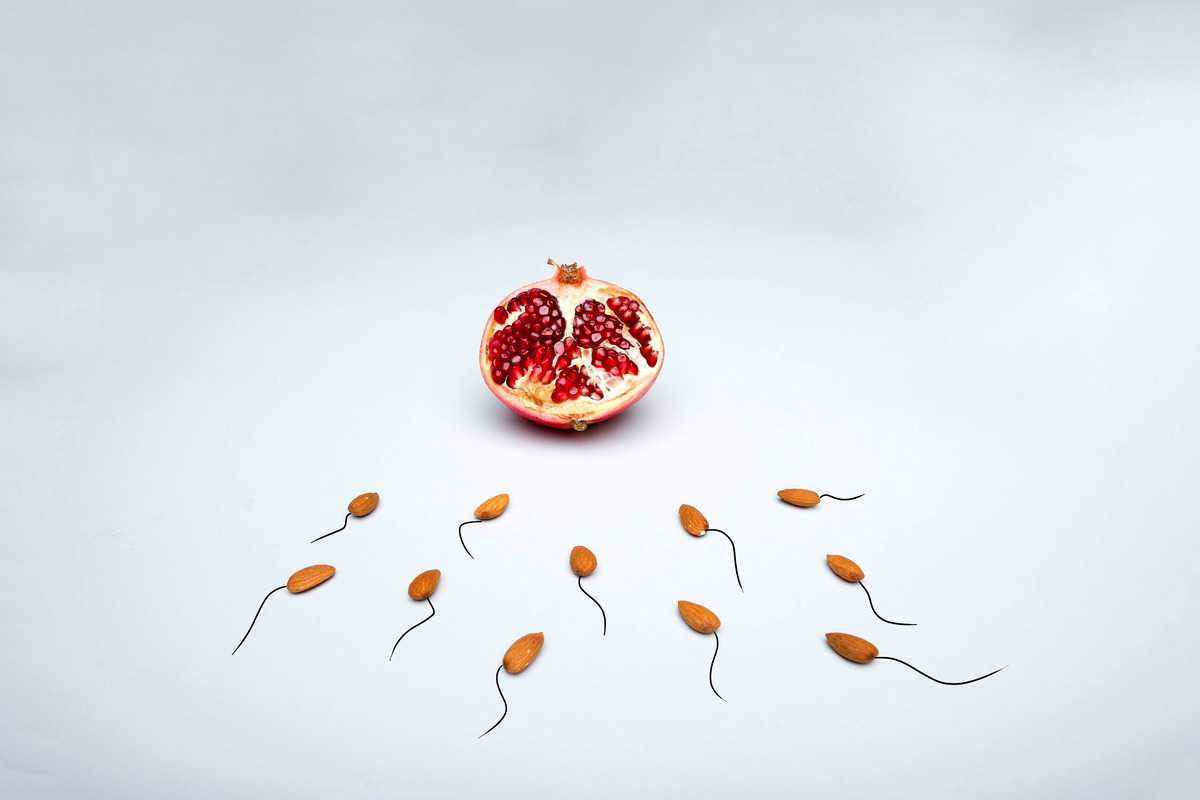
Image of almonds, representing sperm, travelling towards a pomegranate, representing the egg.

Throughout our menstrual cycle, our hormones are fluctuating like cray cray. This is all in an effort to prepare our womb for fertilization. But unless you are actively trying to conceive, rather than welcoming a sweet little babe into the world, we welcome something a little less cute and a little messier into our underpants. If you need a bit of a refresher from sex-ed class from many moons ago, here is a brief summary of what goes down during the four phases of the menstrual cycle.

  1. Menstruation – involves the shedding of the uterine lining in the absence of pregnancy (aka our dear aunt flow, the crimson wave, whatever you wanna call it).
  2. Follicular phase – this phase overlaps with menstruation and triggers the ovaries to begin preparing an egg for ovulation.
  3. Ovulation –the egg is released from the ovary and is ready for fertilization. 
  4. Luteal phase – if an egg is not fertilized, this phase initiates the deterioration of the corpus luteum and prepares for shedding of the uterine lining during menstruation.  

When it comes to period weight gain, specifically, the key hormonal players are – progesterone and estrogen. These two hormones fluctuate the most during the luteal and follicular phase, which is the period of time when we tend to feel the most uncomfortable. Let’s take a closer look, shall we?

Luteal phase – progesterone & estrogen peak and drop

The luteal phase occurs after ovulation and before the follicular phase/menstruation and typically lasts for 12-14 days. Progesterone is the dominant hormone in this phase and will increase and peak around halfway through the luteal phase. Estrogen will also increase, albeit to a lesser degree than progesterone.

The increase in progesterone helps to thicken the uterine wall in preparation for the implantation of a fertilized egg. However, if an egg is not fertilized, progesterone and estrogen levels start to decline which will then trigger menstruation. The fluctuation in progesterone is associated with the common symptoms of PMS that most people tend to experience such as mood changes, breast tenderness, headaches, bloating, thirst and appetite changes, acne etc.

Follicular phase – low estrogen and progesterone

The follicular phase begins from the first day of menstruation until the beginning of ovulation and lasts for an average of 16 days.  Estrogen is the dominant hormone here, and during the early stages of the follicular phase progesterone and estrogen levels are at an all-time low. But as the ovaries begin to prepare an egg for fertilization, estrogen levels start to rise which peaks just before ovulation. This is usually around the time nearing the end of our period when we start to feel better and back to normal.

COMMON CAUSES OF PERIOD WEIGHT GAIN

So now that we know the basics of how our hormones fluctuate around our periods, what the heck does any of this have to do with period weight gain anyhow?

As mentioned, while it is unlikely that you will gain body fat during your period, it is common for most menstruating people to experience temporary period weight gain. This is because the fluctuations in progesterone and estrogen during the luteal and follicular phase increase the likelihood of experiencing uncomfortable physical symptoms such as water retention, constipation, and increased appetite – all of which can result in modest period weight gain.  

Water Retention
Image of water in a clear water glass representing water retention as resulting in weight gain during period.

In the words of Cady Heron from Mean Girls – “It’s just water weight”. Water retention is one of the most common symptoms of PMS and affects 92% of individuals who menstruate.  In fact, water retention can cause weight fluctuations by as much as 2-4 pounds. This is because progesterone and estrogen are involved in fluid regulation. As a result, the hormonal fluctuations during the luteal and follicular phase causes our bodies tissues to accumulate more water. This results in swelling and puffiness in the breasts, stomach, face, and extremities.

In addition, progesterone is also involved in the activation of aldosterone which causes the kidneys to retain water and salt. As a result, aldosterone levels increase during the luteal phase which also contributes to water retention. So even though water retention can give the appearance of weight gain, one 2014 study confirmed that individuals experiencing water retention during their period, did not experience significant weight changes throughout the rest of their menstrual cycle.

In other words, water retention does not have a significant impact on overall weight. So, keep in mind that any water retention or swelling that you experience is likely to be more intense during the early days of your period but should quickly decrease afterwards.

Digestive Stress
Image of a roll of toilet paper against a blue background.

You know those days leading up to your period when you can’t really remember the last time you visited the bathroom to take a #2? Yeah, we have progesterone to thank for that.

The increase in progesterone about a week before the arrival of your period can result in “prolonged transit time”. In other words, progesterone slows down the rate of digestion which can leave you feeling a wee bit constipated. Feeling backed up around the time of your period is very common among people who menstruate, with one 2014 survey reporting that 73% of participants experienced GI symptoms such as gas and constipation before and during their period.

With that said, the resulting discomfort of constipation can make you feel like you’ve gained a few extra pounds leading up to your time of the month. However, this should quickly resolve itself once progesterone levels decline and your bowel movements become regular once again (Hellooo period poops, am I right?!).

Food Cravings & Metabolic Rate

A large box of chocolates representing food cravings during period.

If you tend to feel hungrier than usual during the days leading up to your period, not to worry – there is actually a scientific explanation for that. Progesterone is an appetite stimulant, which means that you may experience increased hunger right before your period when progesterone is at its peak (aka the luteal phase).

On the other hand, estrogen suppresses appetite which means that your baseline hunger levels should return back to normal a few days after your period starts and estrogen levels start to increase (aka the follicular phase).

It’s also worth noting that progesterone is not the only factor influencing our revved-up appetites. Serotonin, an important neurotransmitter that controls our mood and appetite, is regulated by and has a direct relationship with estrogen. Meaning, that when estrogen drops before and during the early days of our periods, so too does serotonin. This results in not only an increase in appetite, but it is also to blame for our crappy moods. With that said, research also suggests that the drop in serotonin can increase food cravings, specifically for carbohydrate-rich foods. This is because when you’re craving carbs, you’re actually craving foods that increase serotonin production.

One theory behind the serotonin-boosting effects of carbohydrates is that it acts as a shuttle for tryptophan to get into the brain. Tryptophan is an amino acid that is directly involved in the production of serotonin. Therefore, the more tryptophan available in the brain the more serotonin we are able to produce. So even though carbs are not directly involved in serotonin production, they provide an important step to increase the circulation of tryptophan.

Considering the appetite stimulating effects of fluctuating progesterone and serotonin, it’s no surprise that studies have shown that menstruating people tend to eat more calories during the luteal phase compared to the follicular phase. It is during this phase that people also tend to experience increased food cravings for sweet and salty foods (which may also further exacerbate water retention).

However, despite the increase in appetite during the luteal phase, it is unlikely that increased food intake will necessarily result in permanent weight gain. This is because the increased progesterone during the luteal phase can actually cause a modest increase in basal metabolic rate by up to 12% or more. Research has confirmed that even though caloric intake may increase before the start of your period, there tends to be a compensating decrease as you period begins to wind down (aka the end of the follicular phase). In other words, it is unlikely that any increase in food intake before your period will result in permanent weight gain.

HOW TO PREVENT PERIOD WEIGHT GAIN

Several period tampons laid out against a dark blue background.

Our hormones are gonna hormone the way they wanna hormone. Which is my obnoxious way of saying that there’s not much we can really do to prevent the modest weight gain we experience during our periods. However, we can do our best to help minimize their effects and ward off some of the discomfort that ensues. Here are some of my top tips to help minimize period weight gain.

Drink More Water

Drinking more water during the early days of your period and staying hydrated may help to not only reduce water retention, but it can also help to relieve constipation, as well. To ensure you stay optimally hydrated, aim to drink roughly 6-8 cups of water daily. However, this recommendation is highly individualized and may vary depending on your activity level and climate.

A good rule of thumb to ensuring you are well hydrated is to check the colour of your urine. If you see a clear to pale yellow colour, that’s a good indication that you are well hydrated and drinking enough water.  It would also be a good idea to avoid carbonated beverages during this time as it can increase bloating and gas.

Go Easy on The Salt
A wooden spoon with flakey salt.

While it is totally normal to crave salty carbohydrate-rich foods before around your period, increased salt intake may easily exacerbate already existing water retention. This is because the sodium in salt binds to water in the body – meaning that increased salt intake leads to increased water retention.

With that said, try to minimize consumption of salty foods, particularly highly processed foods which tend to have a high sodium content. When looking at food labels, choose foods with less than 15% daily value of sodium per serving.

If you do happen to have a high sodium meal, no need to stress! You can always balance things out with water rich foods (i.e. cucumber, tomatoes, citrus foods) as well as foods that are rich in potassium as this will help to flush out excess sodium from the body. Some excellent sources of potassium include potatoes, beans, avocado, bananas, yogurt, and dark leafy greens.

Boost Your Magnesium Intake  

One study found that taking 250 mg of magnesium can help to reduce period water retention and bloating. In general, most foods that contain dietary fibre also contain magnesium. But to get the most bang for your buck during your time of the month, the most abundant sources of magnesium include nuts, seeds, leafy greens, and whole grains.

To give you an example, a magnesium rich meal that provides more than 250 mg of magnesium would look like:

  • 2 tablespoons of peanut butter (40mg of Magnesium)
  • 2 slices of whole wheat toast (46 mg of Magnesium)
  • 1 banana (32 mg of Magnesium)
  • 2 tbsp pumpkin seeds (155 mg of Magnesium)

Move Your Body
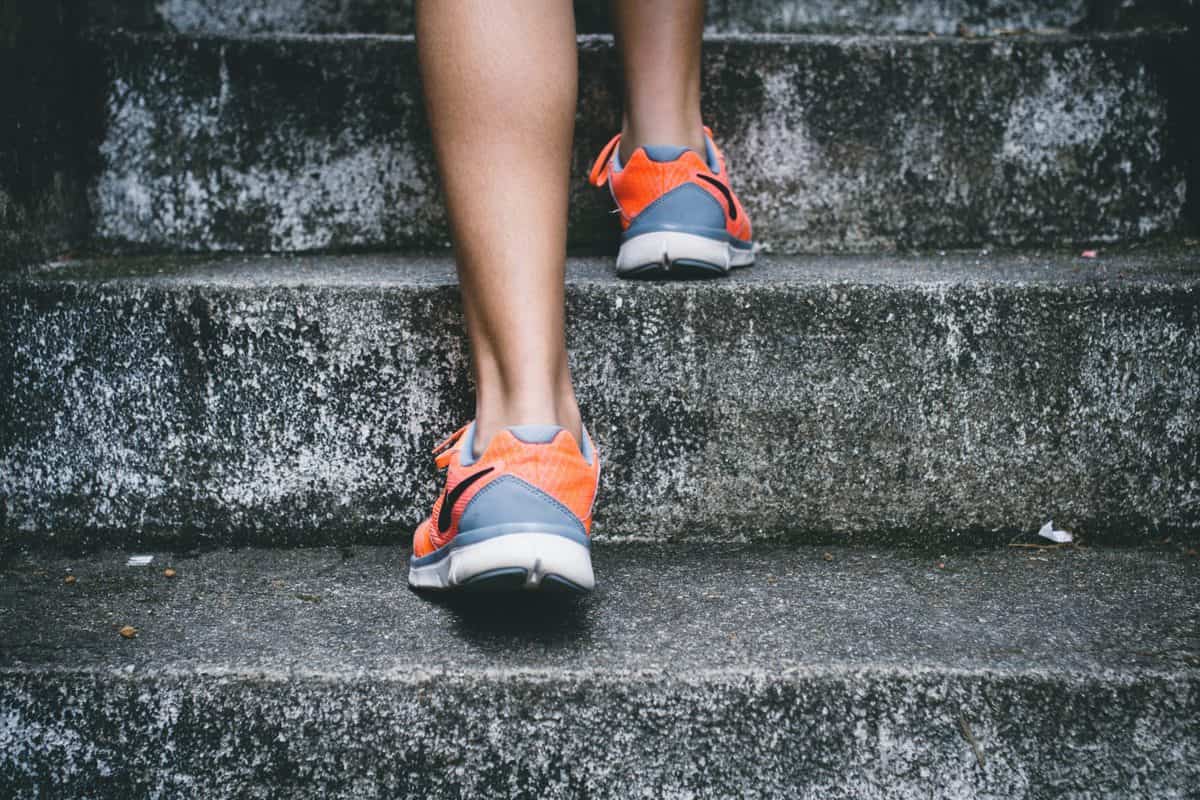
A person wearing colourful running shoes and walking outside to minimize weight gain on period.

I know I know – the last thing you probably want to do when your period comes knocking at your door is get out of the comfort of your warm and cozy bed, much less go for a run. But trust me, some gentle movement during this time will certainly do your body good and help boost your mood!

A light walk or gentle stretching (whatever you can muster) can help to reduce fluid buildup and improve symptoms of constipation. A bonus perk of gentle movement during your period, is the release of endorphins can also help to relieve painful cramps. It’s a win-win!

Fibre is Your Friend

In addition to upping your water intake, making sure you’re getting enough dietary fibre is essential for keeping you regular and may help to ward off the pre-period constipation blues. The general fibre recommendation that you should aim for (regardless of that time of the month) is 25 grams/day for women and 38 grams/day for men. Unfortunately, on average, most people consume about half of their fibre recommendation.  To up your fibre intake, aim to consume more fruit, vegetables, whole grains, legumes, nuts and seeds.

But if you really want to up the ante to counteract the constipating effects of progesterone, you can also aim to incorporate more psyllium fibre into your diet. Psyllium is a natural laxative that has been shown to promote overall digestive health, including constipation relief. In fact, according to a 2020 review, psyllium is 3.4 times more effective than wheat bran in the treatment of constipation. You can obtain psyllium fibre in supplemental form or in high-fibre cereals such as my personal fav, All Bran Buds. Adding just a 1/3 of a cup of All Bran Buds to your yogurt provides a whopping 11 grams of fibre (aka 44% of your daily fibre recommendation).

Get Your Carb Fix
Two loafs of banana bread on a cooling wrack.

Complex carbs that is. We already know that the time of the month will have us craving all the carbs as our appetites get revved up and our cravings make themselves known. While you may be more inclined towards refined carbs during this time, make sure you are giving equal importance to complex carbs, as well.

Complex carbs such as whole grains, legumes, fruits, and vegetables will not only help to keep you fuller for longer but will also help to keep your blood sugar levels even throughout the day. This may help with the overall sluggishness and lack of energy we tend to experience on our periods.

In addition, we also know that eating carbohydrates helps to facilitate serotonin production which helps to boost mood and regulate appetite. Aiming to consume more fruits and veggies during our periods may also help to relieve water retention, especially those with high water content that are also potassium-rich. This includes foods such as cantaloupe, oranges, tomatoes, and grapefruit.

Be Gentle With Yourself

Most importantly, my number one piece of advice is this – be kind to yourself. At the end of the day, it’s really no biggie for our weight to fluctuate during this time of the month and it is a perfectly normal part of a healthy menstrual cycle. It is also certainly not a reflection of your worth or even your behaviours.

In addition, if you are on a weight loss journey, gaining a few lbs during your period is not an indication that you “failed” or that you need to restrict food or exercise more. So listen to your body through these hormonal shifts, give it a little extra love, and don’t let the extra water weight on board cramp your style. This is a monthly normal routine, so put on your comfy pants and just know your skinny jeans will fit better next week!

BOTTOM LINE

At the end of the day, gaining a modest amount of weight during our time of the month is perfectly normal and temporary. Ultimately, our hormones are gonna do their thing and we have no choice but to let them. But even though we can’t really do anything to completely prevent the uncomfortable side-effects of our fluctuating hormones, through simple lifestyle changes we can help to relieve the discomfort that comes from temporary water retention and constipation.

Written by: Giselle Segovia RD MHSc

More Blog Posts You Might Like

  • Your Menstrual Cycle Diet: What to Eat on Your Period
  • Period Talk: What to Do When You’ve Lost Your Period
  • Does Birth Control Make You Gain Weight?

Abbey Sharp

Abbey Sharp is a Registered Dietitian (RD), regulated by the Ontario College of Dietitians. She is a mom, YouTuber, Blogger, award winning cookbook author, media coach specializing in food and nutrition influencers, and a frequent contributor to national publications like Healthline and on national broadcast TV shows.
www.abbeyskitchen.com/about-abbey/

Last Updated November 30, 2022. Published November 28, 2022 By Abbey Sharp 9 Comments

Coconut Lentil Curry with Acorn Squash (Vegan)

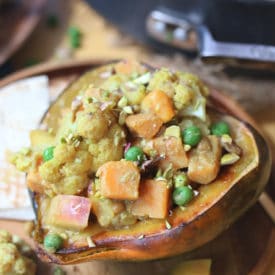
Curry stuffed in acorn squash.

This Coconut Lentil Curry with Acorn Squash makes for a super fast and easy weeknight dinner that is family friendly!

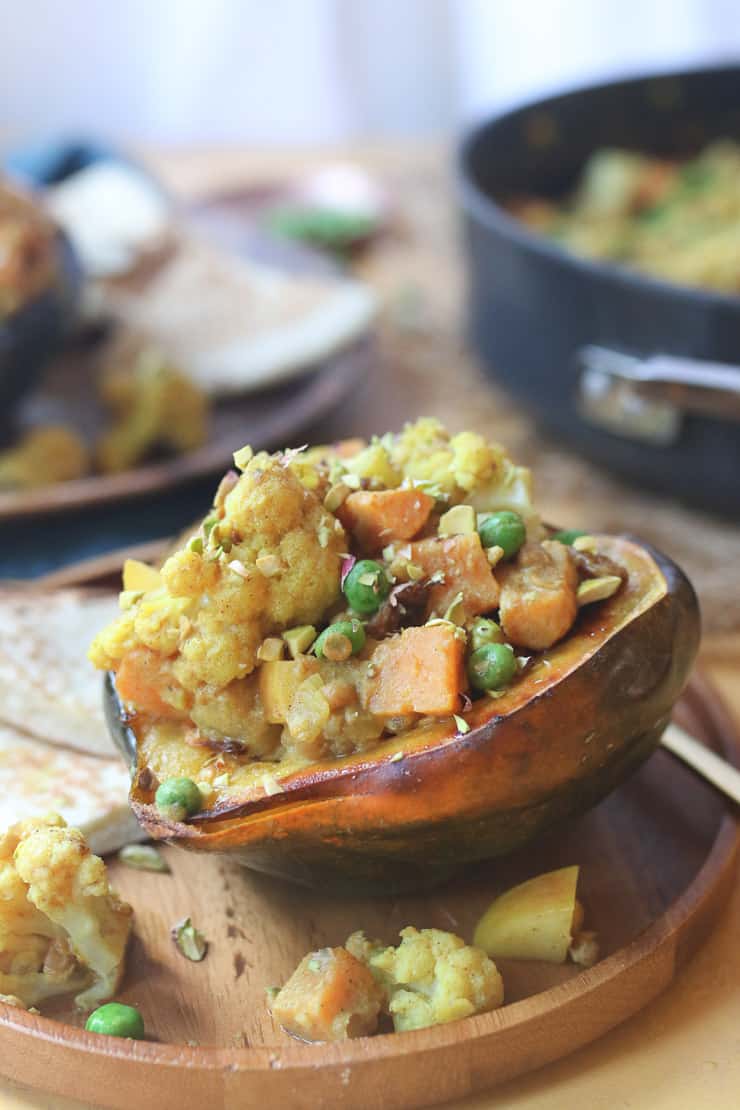
Coconut lentil curry stuffed in an acorn squash.

We’ve always been fans of coconut lentil curry here at Abbey’s Kitchen. My chicken and chickpea curry has always been one of my most popular recipes on the blog and I’ve also got super tasty recipes for curry soup and lychee curry. With winter settling in and my family in need of comfort, I was craving another warming, one pot curry. To make things even more cozy and fun, we’re using the powerhouse vegetable, acorn squash, as our edible bowl.

Table of contents

  • Key Ingredients
  • How To Make This Recipe
  • Expert Tips
  • Reader FAQs
  • More Recipes You Might Like

Why This Recipe Works

This coconut lentil curry is a repeat recipe in my kitchen for a couple of reasons:

  • Vegan and Gluten-free
  • One pot (less dishes!)
  • High fibre
  • Meal prep friendly

Trust me, one you start making this it’ll become a staple!

Key Ingredients

Acorn Squash – This will be the “bowl” for the curry.

Aromatics – Onion, garlic, ginger 

Seasonings – Curry powder, cinnamon, turmeric for traditional, Indian-inspired flavours

Sweet Potato – A great source of vitamin A, thanks to the plant pigment beta-carotene.

Vegetable Broth – I used veggie broth to keep this recipe vegan, but if you don’t need to make this vegan you can go ahead and use chicken or beef broth. 

Cauliflower – For a little veg action! I also just love to add cauliflower to my curries in general because they soak up so much aromatic flavour and help add bulk.

Apple – I know you wouldn’t expect to see apple listed in a curry recipe, but trust me on this! This will add some extra flavour and sweetness to the curry that really takes it to the next level. 

Coconut Milk – Very important! No good curry can go without a some delicious creamy coconut milk. Full fat or lite works.

Coconut Sugar – For some extra sweetness. If you don’t have it on hand, swap for table sugar or omit. Note that table sugar is sweeter than coconut sugar, so you may need less!

Lime – You’ll need the juice and zest to add some citrusy tang.

Lentils – Lentils are a great source of plant-based protein and fibre. Half a cup contains around 8 grams of fibre!

Frozen Peas – I love adding frozen peas anywhere I can because its a super easy way to add in some extra nutrition. If you’re not a fan of peas though, feel free to omit this ingredient all together. 

Raisins – If you aren’t yet adding raisins to your curry, thank me later! 

How To Make This Recipe

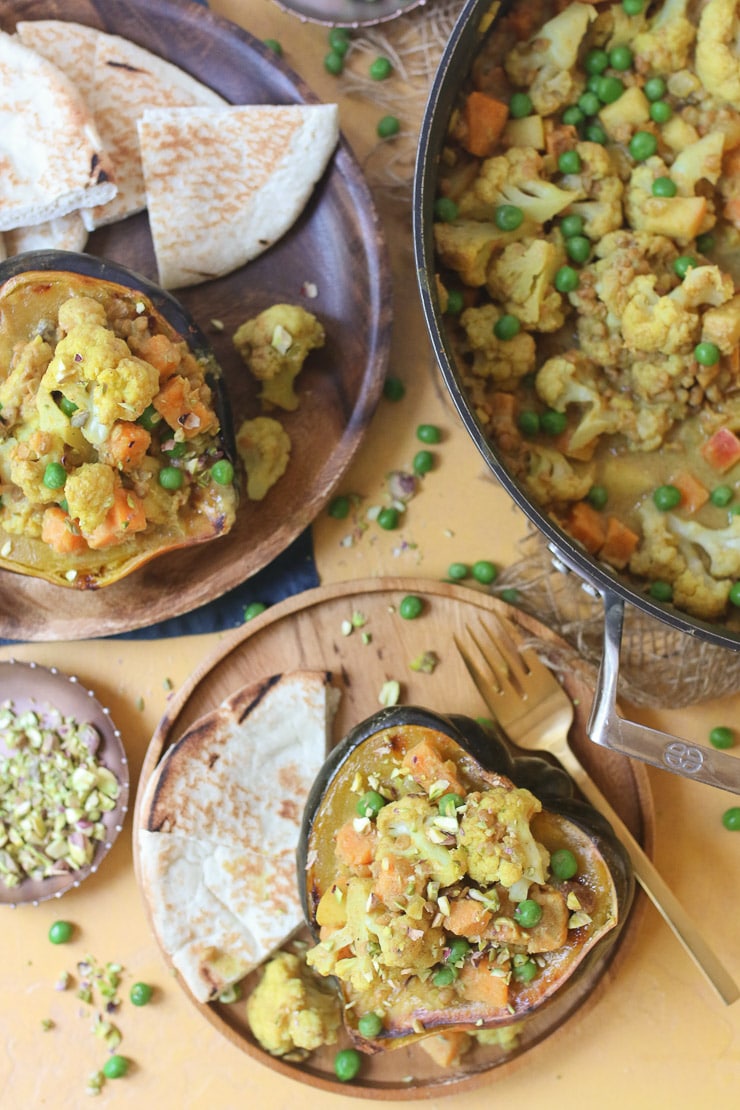
Coconut lentil curry garnished with pistachios served on wooden plate with naan.

Step 1: Preheat oven to 375 and drizzle the acorn squash with olive oil and a pinch of salt and pepper. Roast, cut side up for 45 to 60 minutes until tender.

Step 2: Meanwhile, heat the olive oil in a large nonstick skillet over medium heat. Add the onion, garlic, ginger, curry, cinnamon, and turmeric and cook for 4 minutes. Add the vegetable broth and sweet potato and cook for 5 minutes with the lid on.

Step 3: Add the cauliflower and apple and cook for an additional 5 minutes with the lid on. Remove the lid and add in the coconut milk, coconut sugar, lime zest and lime juice. Allow to cook with the lid off for 3-4 minutes.

Step 4: Finally, add the lentils, peas and raisins and season with salt and pepper, to taste. Fill the acorn squash halves and garnish with pistachios.

Expert Tips

The best thing about this coconut lentil curry is that it’s very forgiving and very customizable. Don’t have frozen peas? Leave them out. White potatoes instead of sweet potatoes? Perfect, works just the same! Once you master the basic recipe, you can have fun playing around with the ingredients.

I love serving this with some warm naan on the side.

Reader FAQs

Can I make this coconut lentil curry without the acorn squash?

Of course! Just serve this on top of rice or quinoa and enjoy as is!

Can I add chicken or shrimp to this coconut lentil curry?

Yes! And since there’s lentils in here already, you really won’t need much! In this situation, I like to treat meat as a condi-meat (get it, like condiment!!). So go ahead, add a few shrimp, pieces of chicken, tofu or steak. It’s totally customizable.

Can I batch-prep this recipe?

For sure. Curry is one of those meals that tastes even better the next day! Double your batch and keep it in the fridge for lunches throughout the week.

Can I freeze this curry?

Yes, it can last up to 3 months in the freezer. You can keep it in an airtight freezer safe container.

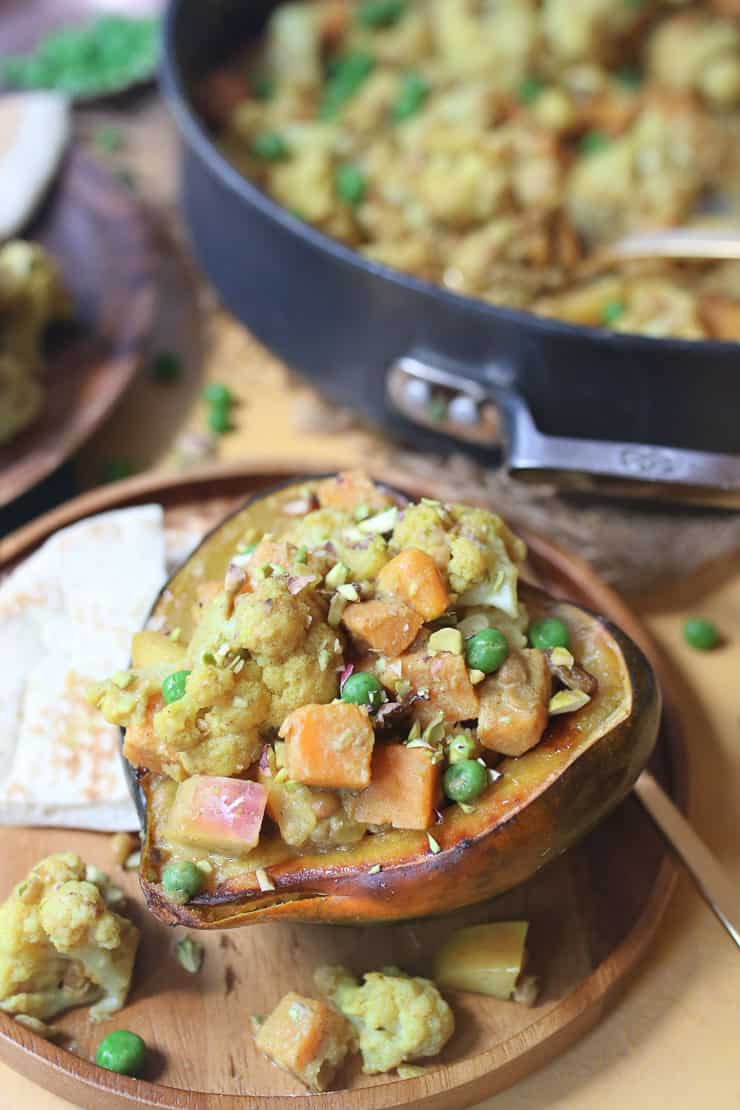
Coconut lentil curry stuffed in an acorn squash on a plate.

More Recipes You Might Like

If you haven’t been able to tell, I am obsessed with a good curry. Here are some more of my favourite recipes that you might like!

  • Chicken Sweet Potato Curry (Easy Gluten Free Recipe)
  • Vegan Curry with Spaghetti Squash Noodles (Gluten Free + Low Carb)
  • Vegan Curry Soup with Yellow Beets
  • Shakshuka Breakfast with Curry Spice

Now loves, tell me – Have you tried this coconut lentil curry? Let me know in the comments below!

Curry stuffed in acorn squash.
Print Recipe
4.25 from 4 votes

Coconut Lentil Curry with Acorn Squash (Vegan)

This Coconut Lentil Curry with Acorn Squash makes for a super fast and easy weeknight dinner that is family friendly!
Prep Time15 minutes mins
Cook Time1 hour hr 5 minutes mins
Total Time1 hour hr 20 minutes mins
Course: Dinner
Cuisine: Indian, American, Asian
Servings: 4 people
Calories: 557kcal
Author: Abbey Sharp

Ingredients

  • 2 acorn squash halved lengthwise
  • 1 tbsp extra virgin olive oil
  • Salt and pepper
  • 1 tbsp extra virgin olive oil
  • 1 small onion diced
  • 3 cloves garlic minced
  • 1 ½ tbsp minced ginger
  • 4 tsp curry powder
  • 1 tsp cinnamon
  • ¼ tsp turmeric
  • 1 ½ cups vegetable broth
  • 1 Sweet potato finely diced
  • ½ head cauliflower cut into florets
  • 1 apple diced
  • 1 400 ml can lite coconut milk
  • 2 tbsp coconut sugar
  • Zest of ½ lime
  • Juice of 1 ½ limes
  • 1 19 oz can lentils drained and rinsed
  • ½ cup frozen peas
  • ¼ cup raisins
  • Salt and pepper to taste
  • To garnish:
  • ¼ cup crushed pistachios

Instructions

  • Preheat oven to 375 and drizzle the acorn squash with olive oil and a pinch of salt and pepper. Roast, cut side up for 45 to 60 minutes until tender.
  • Meanwhile, heat the olive oil in a large nonstick skillet over medium heat. Add the onion, garlic, ginger, curry, cinnamon, and turmeric and cook for 4 minutes. Add the vegetable broth and sweet potato and cook for 5 minutes with the lid on.
  • Add the cauliflower and apple and cook for an additional 5 minutes with the lid on.
  • Remove the lid and add in the coconut milk, coconut sugar, lime zest and lime juice. Allow to cook with the lid off for 3-4 minutes.
  • Finally, add the lentils, peas and raisins and season with salt and pepper, to taste.
  • Fill the acorn squash halves and garnish with pistachios.

Nutrition

Calories: 557kcal | Carbohydrates: 93g | Protein: 19g | Fat: 15g | Saturated Fat: 8g | Sodium: 504mg | Potassium: 1854mg | Fiber: 21g | Sugar: 17g | Vitamin A: 5772IU | Vitamin C: 74mg | Calcium: 160mg | Iron: 8mg
Abbey Sharp

Abbey Sharp is a Registered Dietitian (RD), regulated by the Ontario College of Dietitians. She is a mom, YouTuber, Blogger, award winning cookbook author, media coach specializing in food and nutrition influencers, and a frequent contributor to national publications like Healthline and on national broadcast TV shows.
www.abbeyskitchen.com/about-abbey/

Last Updated November 23, 2022. Published November 23, 2022 By Abbey Sharp Leave a Comment

Seed Cycling For Fertility | Does It Actually Work?

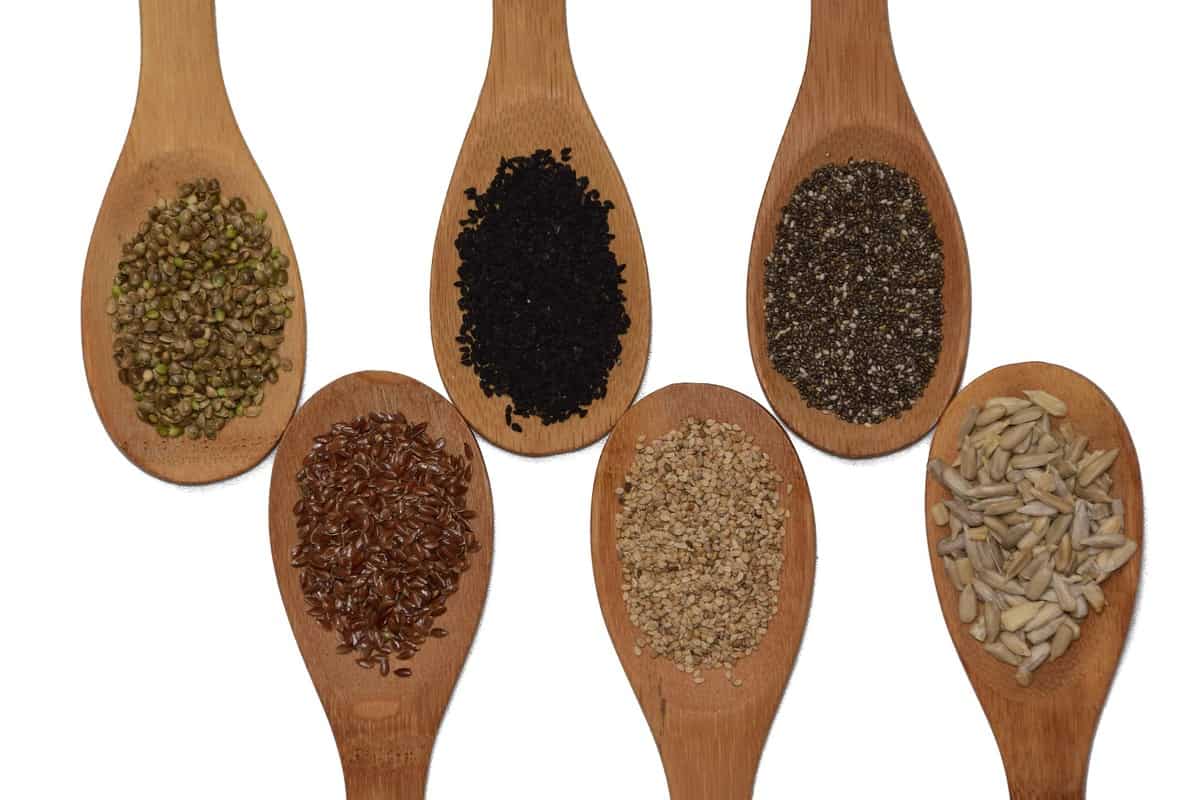
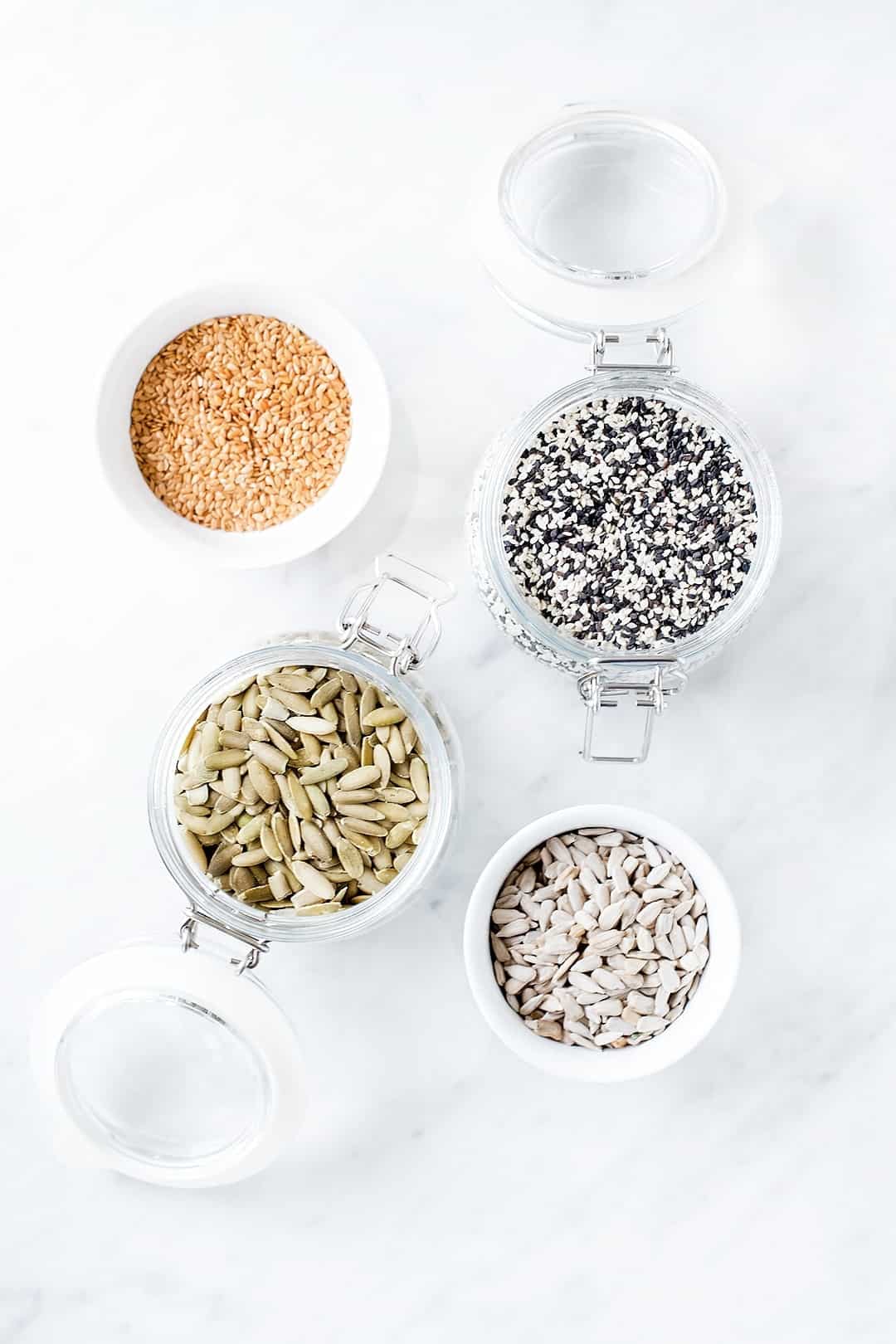
several seeds in jars for seed cycling

We look at the evidence to determine if seed cycling for fertility actually works and if you should be consuming different seeds throughout your menstrual cycle.

Birds eye view of various seeds in jars for seed cycling.

The first time I heard about seed cycling, I thought it was some sort of sustainable farming practice.  But as I’ve been thrown deeper into the natural fertility world, I’ve learned that’s not the case. Seed cycling is a natural, alternative medicine practice that has been in conversation frequently over the past few years. The concept of seed cycling is to eat specific seeds such as flax, sesame, pumpkin, and sunflower seeds during particular times of your menstrual cycle. The practice claims to aid in regulating your cycle, reduce premenstrual symptoms and improve symptoms of menopause.  The physiological goal of seed cycling is to help regulate estrogen during the follicular phase of the menstrual cycle, and progesterone during the luteal phase.

What are the Recommendations for Seed Cycling?

The recommendation for seed cycling during your menstrual cycle is as follows:

Follicular Phase (Day 1-14 of your cycle): 1 tablespoon each of flax seeds and pumpkin seeds per day.

Luteal Phase (Day 14-30 of your cycle): 1 tablespoon each of sesame seeds and sunflower seeds per day.

For postmenopausal women, the first day of their cycle would roughly start on a full moon.

How does Seed Cycling for Fertility Work?

close up of whole flaxseed in a bowl for seed cycling

Flaxseeds include abundant dietary compounds known as phytoestrogens. The type of phytoestrogens in seeds are known as lignans. In flaxseeds, the lignan thought to have an impact on a woman’s hormonal health is termed secoisolariciresinol diglucoside (SDG). These phytoestrogens have a chemical structure that mimics the chemical structure of estrogen; thus, it is believed that these phytoestrogens in flaxseeds can have estrogenic or antiestrogenic effects in the body.

In the pumpkin seeds, zinc is said to help boost Follicle Stimulating Hormone (FSH) which can help initiate ovulation. FSH is a hormone that spikes at the very end of the follicular phase, which communicates to the ovaries to prepare for ovulation. This process then supposedly leads to production of progesterone for the luteal phase.

In simpler terms, it is thought that flaxseeds help balance estrogen levels while pumpkin seeds help prepare for the luteal phase. In the luteal phase, the lignan found in sesame seeds, sesamin, is thought to aid in the inhibition of estrogen production in hopes to keep progesterone levels at par. Lastly, it’s claimed that vitamin E in sunflower seeds can also help boost progesterone levels.

What does the Research say on Seed Cycling?

Several pumpkin seeds for seed cycling.

After lots of searching, it was difficult to find many thorough research studies on seed cycling for fertility, as little research has been done. Of the research found, only a handful of studies stated that consuming the individual types of seeds had any significant impact on menstrual cycles. Studies on seed cycling as a practice were second to none. Research indicated that phytoestrogens may be associated with cycle regularity, however, more extensive research should be done before making any conclusions. Research had found that flaxseeds and vitamin E may have a substantial impact on the reduction of breast pain, which is a common symptom during your menstrual cycle. In addition, multiple studies revealed a relationship between phytoestrogens and the reduction of menopausal symptoms, though it was once again concluded that more research should be done. Although lack of evidence doesn’t mean that these things don’t help or hurt hormonal balance, it’s clear that there needs to be more extensive, long term studies done on the direct impacts of seed cycling.

The Alternatives to Seed Cycling for Menstrual Regularity and Menopause Management

An individual doing a pushup for exercise.

Exercise

Although research is lacking on the topic of seed cycling, there are some other alternatives that have much more evidence in relation to regulating periods and PMS symptoms. One of the most overlooked alternatives is regular exercise. Not only does exercising regularly promote good health all around, many studies support the claim that exercising can help not only regulate menstrual cycles, but also reduce symptoms in women with Polycystic Ovary Syndrome (PCOS). A study conducted in 2013 stated that yoga, specifically, helped regulate cycles in women with period irregularities.

Vitamin D

Another alternative is making sure to get enough vitamin D. Multiple studies have shown that vitamin D has significant impact on cycle regularity, PMS symptoms, as well as symptoms related to PCOS. Vitamin D levels tend to decrease during the luteal phase of the cycle, so it’s important to get enough vitamin D in your diet through food or supplements.

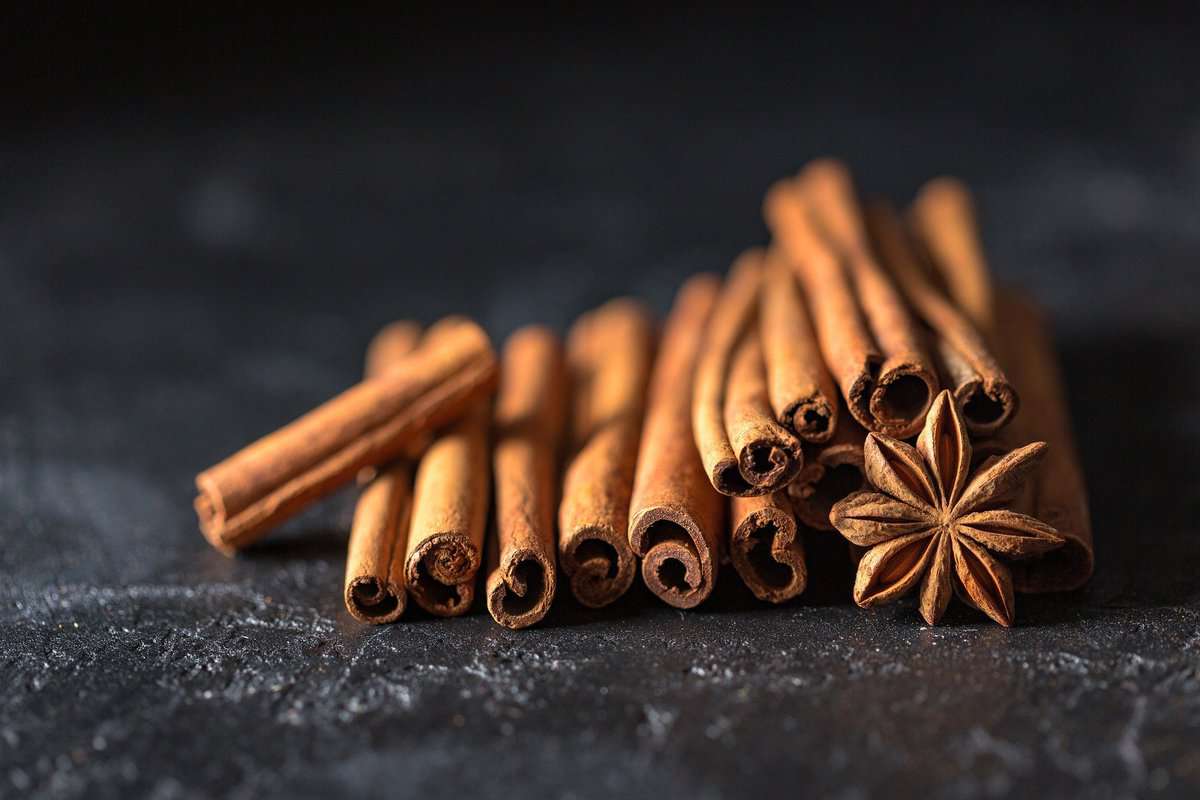
Cinnamon

Several cinnamon sticks on a counter.

Lastly, one other option includes consuming a lot of cinnamon. Thiazolidinedione, an insulin sensitizing reagent, has been used throughout the years in women with PCOS to lessen the symptoms, however researchers attempted to find a more natural alternative. Cinnamon is argued to have insulin sensitizing outcomes similar to those found in the use of thiazolidinedione, in hopes of making it a good alternative. Of the research found, consuming about 1.5g of cinnamon per day has been linked with cycle regularity, minimized menstrual pain, and reduced symptoms associated with PCOS.

The Bottom Line on Seed Cycling

Several spoons of seeds for seed cycling for fertility.

Overall, seed cycling does not have strong enough evidence proving that it helps regulate menstrual cycles or menopause symptoms. Seed cycling might work for some people, whether that’s an outcome of the placebo effect or an individual response, but no diet change will produce the same result consistently for every individual. This is due to the fact that every person has different dietary needs, health matters, and genetic makeup. This doesn’t mean people should avoid seeds due to lack of evidence. Seeds in general are very rich in fiber, protein and healthy fats, and have many proven overall health benefits such as reduced blood pressure and cholesterol. Multiple studies have shown that the regular consumption of seeds (about a tablespoon per day) have been linked to reduced symptoms of PCOS, as well as reduced risk of cancers, so there are lots of reasons to imbibe.

Personally, I find these unfounded practices just one more food rule to have to worry about. If you like pumpkin but not sesame, then eat pumpkin seeds all cycle long. And if you don’t like seeds at all, look into other methods to manage your monthly flow.

The bottom line is that there are just so many natural wellness recommendations floating around the web, you’ve got to sometimes figure out what feels good to you vs what feels like an imposition to your life and mental health.

What are your thoughts on seed cycling for fertility? Leave me a comment below and share this with someone who does seed cycling religiously!

Contribution by Madeline Hermann

Abbey Sharp

Abbey Sharp is a Registered Dietitian (RD), regulated by the Ontario College of Dietitians. She is a mom, YouTuber, Blogger, award winning cookbook author, media coach specializing in food and nutrition influencers, and a frequent contributor to national publications like Healthline and on national broadcast TV shows.
www.abbeyskitchen.com/about-abbey/

Last Updated November 16, 2022. Published November 16, 2022 By Abbey Sharp 37 Comments

Vitamin Infusions | Is IV Vitamin Therapy the Key to Good Health?

We review the evidence on IV Vitamin Therapy and answer the question, are vitamin infusions the key to good health and wellness?

We review the evidence on IV Vitamin Therapy and answer the question, are vitamin infusions the key to good health and wellness?

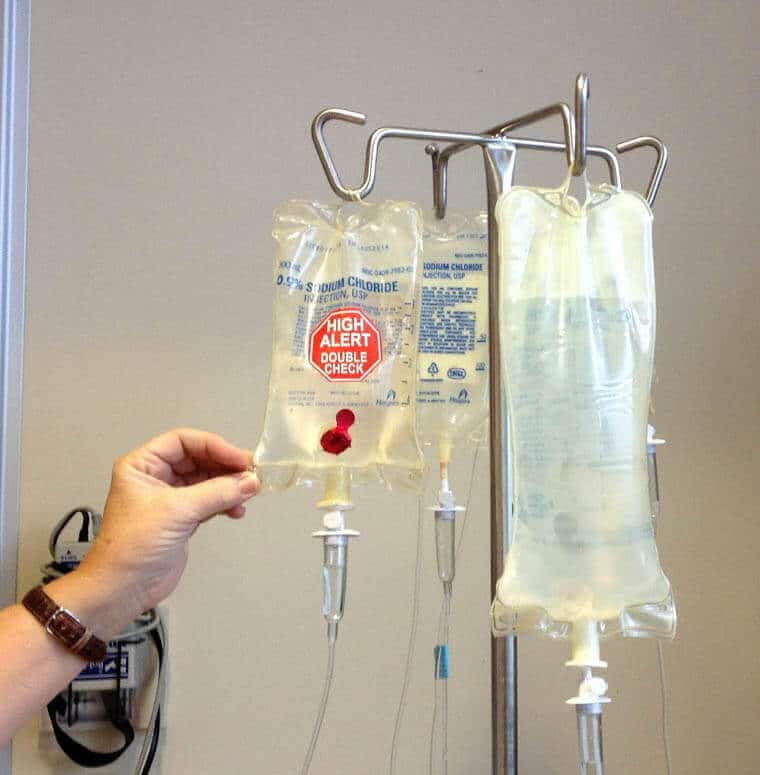
IV vitamin therapy bags

What are Vitamin Infusions?

Tired? Hungover? Run down? Well according to the headlines, maybe vitamin infusions can help! The most recent health trend to hit the city is getting a transfusion of vitamins through an IV line. Yes, you heard that right. Clinics for vitamin infusions have been popping up all over major cities allowing people have vitamins infused directly into their veins in an effort to boost energy and health. Curious? Let’s look at what these labs actually do.

So What do Vitamin Infusions Claim to Do?

Labs designated towards vitamin infusions claim to get rid of rid of the toxins in the body, balance hormones, improve chronic medical conditions, and make your skin glow (among other questionable promises). For example, IV Nutrition Lounge, a Toronto based IV vitamin clinic, claims to help people recover from health concerns or chronic illness. IV Nutrition Lounge also claims to treat and prevent cancer, arthritis, fatigue, and colds- some pretty steep promises considering it’s just a little prick. The Dempster Clinic, also a Toronto based clinic, claims to help people recover from their health issues quickly, reduce the risk of chronic illness, and make people feel better. Sound too good to be true? Let’s read on for more.

How much do Vitamin Infusions Cost?

Vitamin Infusions can cost on average, anywhere from $95 to $175. Yikes! Those are some pricy vitamins.

person holding a bank card

Are there any scientific basis for Vitamin Infusions?

Honestly, this is such a new (and in my opinion, strange) phenomenon, that the research hasn’t really had a chance to fully explore the unusual claims these clinics are making.

But let’s start with the basics- do we need these extra vitamins in the first place? There’s a great article written by Science-Based Medicine examining the evidence on the pros and cons of routine multivitamin use. They looked at three papers recently published in the Annals of Medicine on the routine use of multivitamins in healthy people and found no meaningful health benefits. They did specify that there’s a time and place for specific vitamin use when it’s backed by scientific evidence such as pregnant women taking folic acid to prevent neural tube defects, vitamin D supplementation in breastfeeding babies or those in Northern climates, or potentially iron for vegans. However, for most well nourished adults, regular multivitamin use has been shown to have no effect on preventing mortality or morbidity risk from any chronic diseases. So why does more than almost half the population regularly take multivitamins? Many studies have shown the strong placebo effect multivitamins can have, and this is probably why we won’t stop taking them anytime soon.

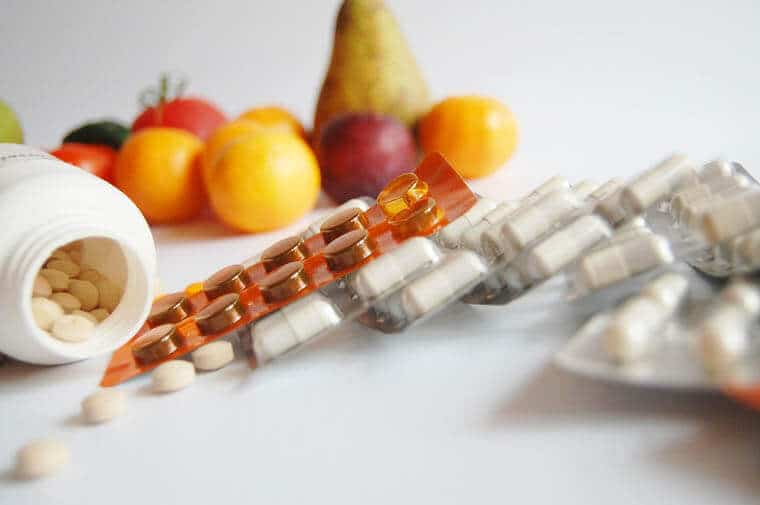
packets of vitamins next to fruit

So then what’s the difference between taking your over-the-counter multivite and vitamin infusions? Are vitamins more effective in an IV form? Well, there’s very little evidence on how an IV multivitamin infusion compare to the capsule form, but for other vitamins (such as vitamin C), it will simply get into your system faster. And since we just talked about how a lot of vitamins (especially Vitamin C) are somewhat unnecessary for the healthy population unless you have an existing deficiency, you probably don’t need it getting into your system that much faster. One study gave half their participants an IV vitamin solution and the other half received a placebo infusion. They found that both groups felt better after when compared to baseline, further proving the placebo effect of vitamin infusions. The author went on to say that rather than getting IV nutrition, which is not really necessary in healthy people, it’s better to go for a 30-minute walk. No needle needed. We couldn’t agree more.

Are there any dangers in Vitamin Infusions?

Jason Hartman, a physician from the Philadelphia College of Osteopathic Medicine stated that vitamin infusions come with some risk of infection, pain, bruising or bleeding and that serious complications may include blood clots and inflammation of the vein. Your risk of infection increases because IV administration means the supplement bypasses your G.I. system which is where your antibodies that fight off infections are. These antibody warriors filter out any harmful toxins or bacteria, so when the solution skips this step, it increases your risk of getting an infection.

And there’s more! Did you know we have upper limits for vitamins and minerals and they can become toxic past that point? It’s proven that vitamin E, beta carotene and vitamin A can be harmful in excessive doses – to name just a few. Most companies administer a low dose of vitamins to avoid these risks, but it’s still an inherent risk of excessive IV multivitamin infusions especially if you’re also consuming a well balanced diet.

The Bottom Line

So, what does this mean for you? If you’re willing to fork out a hefty price tag with no scientific research to back up the strong claims IV vitamin labs are touting, then the risks will likely be minimal. Just remember that you may be paying for a placebo-effect illusion that you may have been just as able to achieve from a healthy snack and a walk.

MORE BLOG POSTS YOU MIGHT LIKE

  • DO SUGAR BEAR HAIR VITAMINS WORK?
  • ARE POWDERED GREENS GOOD FOR YOU? 
  • ARE SUPPLEMENTS SAFE? (HOW TO CHOOSE THE RIGHT SUPPLEMENT)
  • ARE ANTINUTRIENTS SAFE? LECTINS, OXALATES, PHYTATES AND MORE

Contribution by RD Tiffany Schebesch & RD2B Preveena Manisekaran

Abbey Sharp

Abbey Sharp is a Registered Dietitian (RD), regulated by the Ontario College of Dietitians. She is a mom, YouTuber, Blogger, award winning cookbook author, media coach specializing in food and nutrition influencers, and a frequent contributor to national publications like Healthline and on national broadcast TV shows.
www.abbeyskitchen.com/about-abbey/

Last Updated November 14, 2022. Published November 14, 2022 By Abbey Sharp 10 Comments

Chicken With Balsamic Glaze (Easy Sheet Pan Recipe)

This sheet pan chicken with balsamic glaze, rosemary and grapes is a cozy and easy meal that is perfect for busy weeknights!

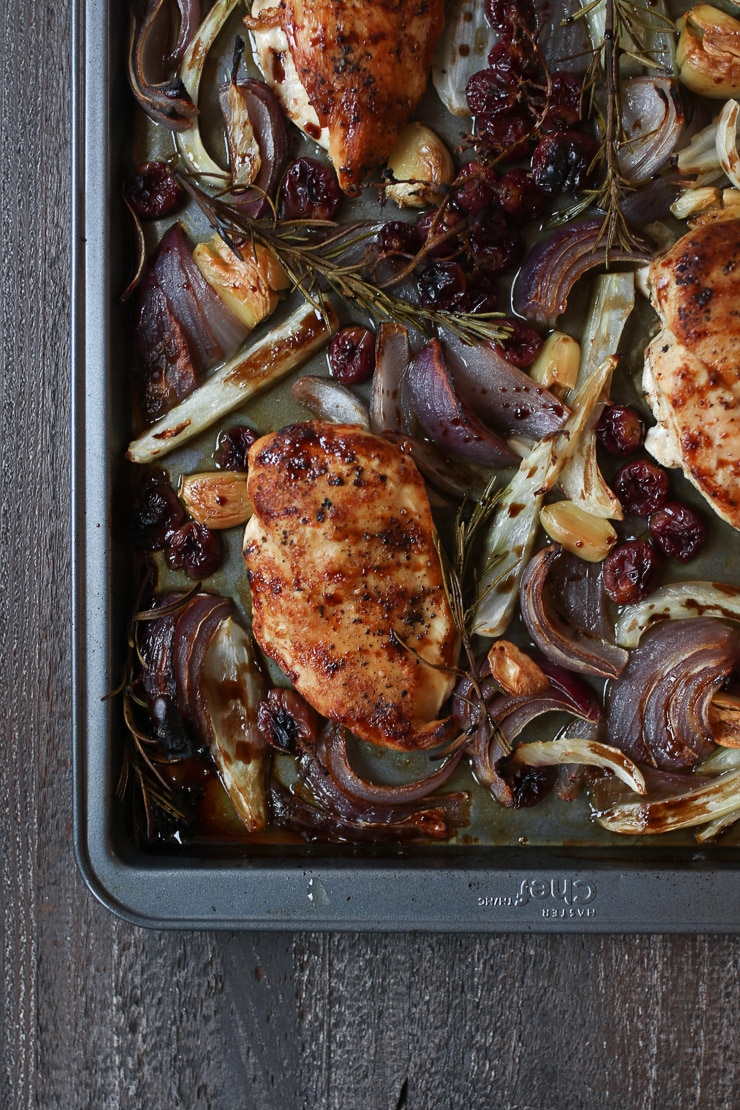
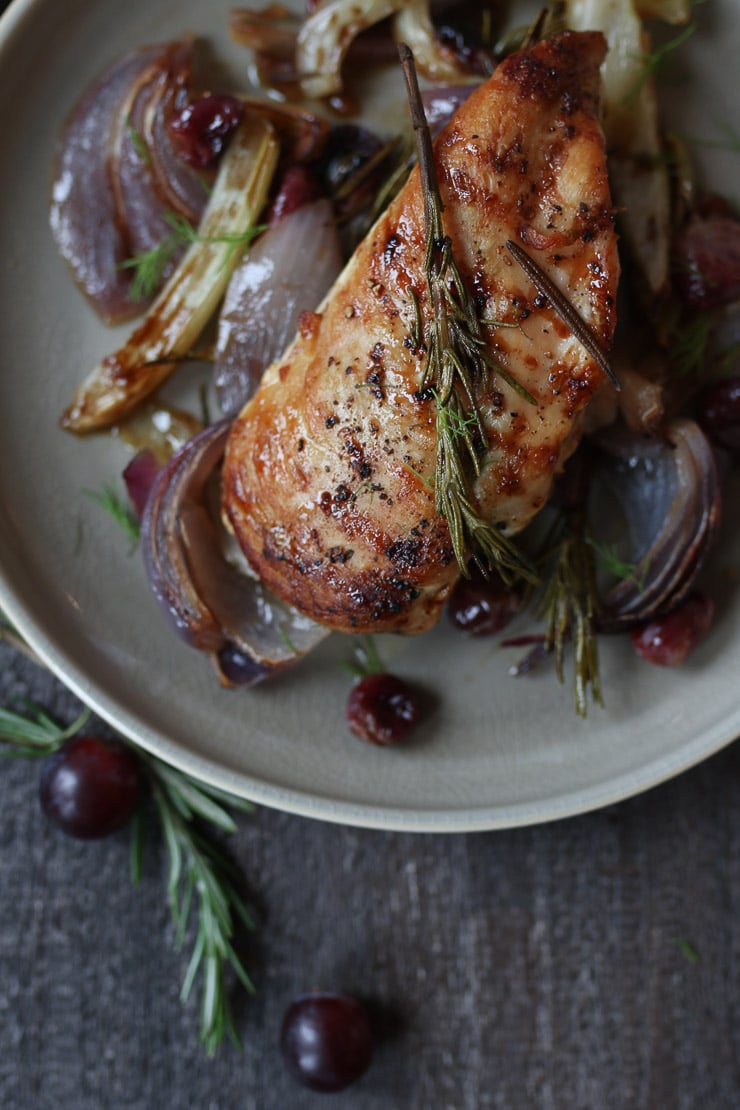
Chicken with balsamic glaze on a sheet pan with roasted grapes and veggies.

Whenever I am pressed for time during the week, I rely on easy sheet pan meals to get dinner on the table in a flash! They are simple, minimal mess, impossible to screw up, and save this mama a ton of time and energy in the kitchen.

You’re probably used to the simple veg and protein combo when preparing a sheet pan meal, but I am changing all the rules with this sheet pan balsamic glazed chicken with rosemary and roasted GRAPES.

Roasted Grapes!? What the WHAT?

Since when do grapes belong in a savoury meal? Hear me out. The grapes get super caramelized and sweet, and impart a ton of sticky juice onto the chicken with balsamic glaze. It’s so darn delish that I’ve started to incorporate roasted grapes into more recipes like these balsamic roasted brussel sprouts. Who knew the humble little grape was so versatile?

Table of contents

  • Why This Recipe Works
  • Key Ingredients
  • How to Make This Recipe
  • Expert Tips
  • Recipe FAQs
  • More Recipes You Might Like

Why This Recipe Works

This chicken with balsamic glaze ain’t your average sheet pan recipe! It’s is easy enough as a weeknight family meal, and elevated enough for the holidays or entertaining guests. Here are a few more reasons why we love this recipe:

  • Requires less than 10 ingredients
  • Made in 35 minutes
  • Protein packed
  • Dairy free
  • Budget friendly
  • So darn delicious!

Key Ingredients

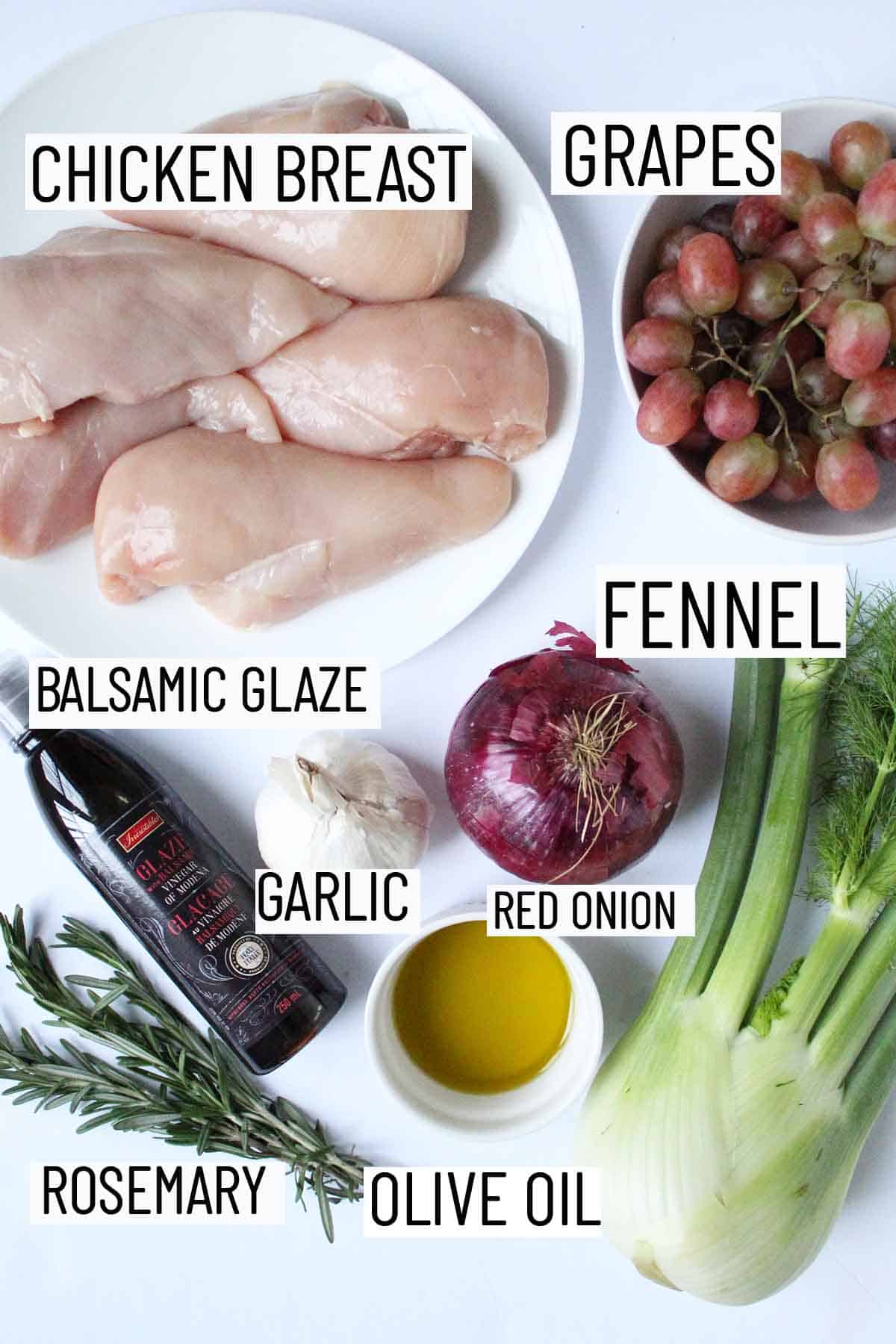
Flay lay image of recipe ingredients including chicken breast, grapes, fennel, balsamic glaze, garlic, red onion, olive oil, and rosemary.

Grapes – Grapes are easily the star of the show in this sheet pan dinner. We prefer to use red grapes as they tend to yield a sweeter flavour than green grapes, which are slightly more tart and sour.

Roasted Vegetables – It isn’t quite a sheet pan meal without at least some roasted caramelized veggies thrown in. The combination of roasted fennel, red onion, and whole garlic cloves is totally divine and adds tons of flavour to this recipe.

Chicken Breast – We use boneless chicken breast for this sheet pan recipe as it has a shorter cook time. However, this recipe is really versatile and you can easily swap in a different protein depending on what you have on hand. Chicken thighs, tofu steaks, and salmon would also work well with this recipe.

Balsamic Glaze – You can use a store-bought balsamic glaze for this recipe or you can make your own from scratch. I have a super easy two-ingredient recipe right here.

How to Make This Recipe

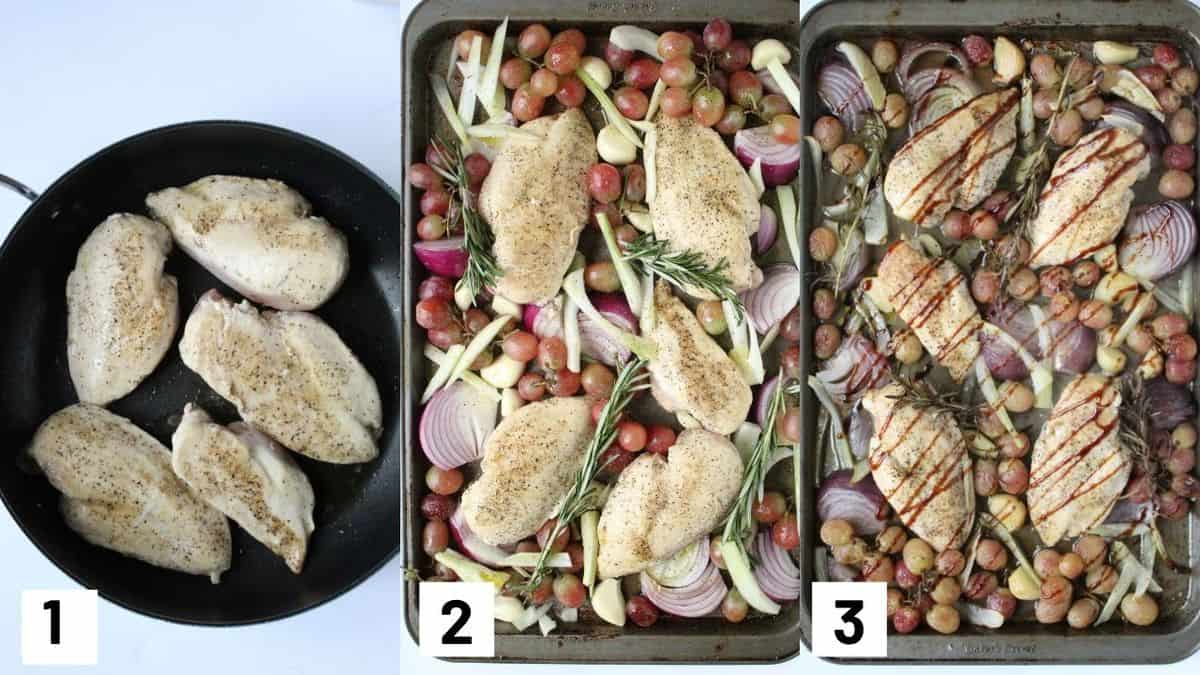
Three side by side images showing how to prepare recipe including browning the chicken, adding ingredients to sheet pan, and drizzling with balsamic glaze.

Step 1: In a skillet, season chicken with salt and pepper and brown on both sides.

Step 2: Transfer chicken to a baking sheet, add the garlic, onion, fennel, grapes and rosemary to the pan and drizzle oil. Season with salt and pepper and roast for 30 minutes.

Step 3: Remove from the oven and top with the balsamic glaze. Return for an additional 5 minutes in the oven until the vegetables are very caramelized and the chicken reaches 165 F.

Expert Tips

This sheet pan chicken with balsamic glaze is as simple as it gets! Even though browning the chicken makes it a two step meal, it can absolutely be a one-step sheet pan dinner if you’re in an even bigger rush. I just kinda like the added flavour that comes from browning the chicken first, but it certainly doesn’t make or break the recipe.

I would also suggest using a meat thermometer to ensure that the chicken is fully cooked. We want to aim for an internal temperature of 165 F in the thickest part of the meat.

In addition, if you are REALLY pressed for time I would also suggest purchasing peeled garlic cloves instead of the whole bulb. You will easily be saving yourself 5 minutes of prep. Plus, I think we can all agree that peeling garlic is a pretty annoying step of any recipe, especially if you are peeling the whole clove.

Recipe FAQs

How long does this recipe last in the fridge?

This recipe lasts in the fridge for around 3-5 days. You can reheat in the microwave and I usually like to add a bit more balsamic glaze on top as well.

What can I pair this with?

If you want to keep things lower carb you can pair this recipe with a side salad, otherwise I love to have this recipe on top of a bed of rice or quinoa with some greens on the side.

What can I use instead of chicken?

Instead of chicken breasts, you can totally use chicken thighs or a fatty fish like salmon or rainbow trout. If you wanted to make this recipe vegan, it would also be delicious with tofu.

Chicken with balsamic glaze on a plate with roasted onions and grapes.

More Recipes You Might Like

If you like this recipe, you might like:

  • Vegan Chickpea and Cauliflower Sheet Pan Dinner
  • Gluten Free Sticky Chicken Breasts Sheet Pan Dinner
  • Chinese Five Spice Shrimp Stir Fry Sheet Pan Dinner
  • Gluten Free Buffalo Chicken Fingers Sheet Pan Dinner

Have you tried this chicken with balsamic glaze? What are your go-to sheet pan recipes for those busy weeknights?

Print Recipe
5 from 10 votes

Sheet Pan Chicken with Balsamic Glaze, Rosemary and Grapes

This sheet pan chicken with balsamic glaze, rosemary and grapes is a cozy and easy meal that is perfect for busy weeknights!
Prep Time15 minutes mins
Cook Time41 minutes mins
Total Time56 minutes mins
Course: Dinner
Cuisine: American
Servings: 4 people
Calories: 349kcal
Author: Abbey Sharp

Ingredients

  • 3 tbsp extra virgin olive oil divided
  • 1 ¼ lb skinless boneless chicken breasts
  • Salt and pepper
  • 1 head garlic separated into cloves and peeled
  • 1 red onion cut into wedges
  • ½ head fennel sliced
  • 2 cups red grapes
  • 2 tbsp balsamic reduction
  • 4 sprigs rosemary

Instructions

  • Preheat oven to 425 F.
  • In a cast iron skillet, heat 1 tablespoon of oil over medium high heat. Sprinkle the chicken with salt and pepper and cook, presentation side down until browned, about 4 minutes. Transfer to the other side for just 2 minutes and then transfer to the baking sheet.
  • Add the garlic, onion, fennel, grapes and rosemary to the pan and drizzle with the additional oil. Season with a pinch each of salt and pepper. Roast for 30 minutes. Remove from the oven and top with the balsamic and return for an additional 5 minutes in the oven until the vegetables are very caramelized and the chicken reaches 165 F.
  • Serve immediately.

Video

Notes

This sheet pan balsamic chicken recipe is as simple as it gets! Even though browning the chicken makes it a two step meal, it can absolutely be a one-step sheet pan dinner if you’re in an even bigger rush. I just kinda like the added flavour that comes from browning the chicken first, but it certainly doesn’t make or break the recipe.
I would also suggest using a meat thermometer to ensure that the chicken is fully cooked. We want to aim for an internal temperature of 165 F.
In addition, if you are REALLY pressed for time I would also suggest purchasing peeled garlic cloves instead of the whole bulb. You will easily be saving yourself 5 minutes of prep time. Plus I think we can all agree that peeling garlic is a pretty annoying step of any recipe, especially if you are peeling the whole clove.

Nutrition

Calories: 349kcal | Carbohydrates: 22g | Protein: 29g | Fat: 17g | Saturated Fat: 3g | Cholesterol: 135mg | Sodium: 145mg | Potassium: 653mg | Fiber: 2g | Sugar: 14g | Vitamin A: 150IU | Vitamin C: 8.4mg | Calcium: 44mg | Iron: 1.8mg
Abbey Sharp

Abbey Sharp is a Registered Dietitian (RD), regulated by the Ontario College of Dietitians. She is a mom, YouTuber, Blogger, award winning cookbook author, media coach specializing in food and nutrition influencers, and a frequent contributor to national publications like Healthline and on national broadcast TV shows.
www.abbeyskitchen.com/about-abbey/

Last Updated November 11, 2022. Published November 11, 2022 By Abbey Sharp 12 Comments

Protein Oatmeal with Tofu (Vegan)

This protein oatmeal with tofu is the easiest vegan oatmeal recipe you’ll ever make! It’s super satisfying and only requires 7 ingredients and 12 minutes to prepare.

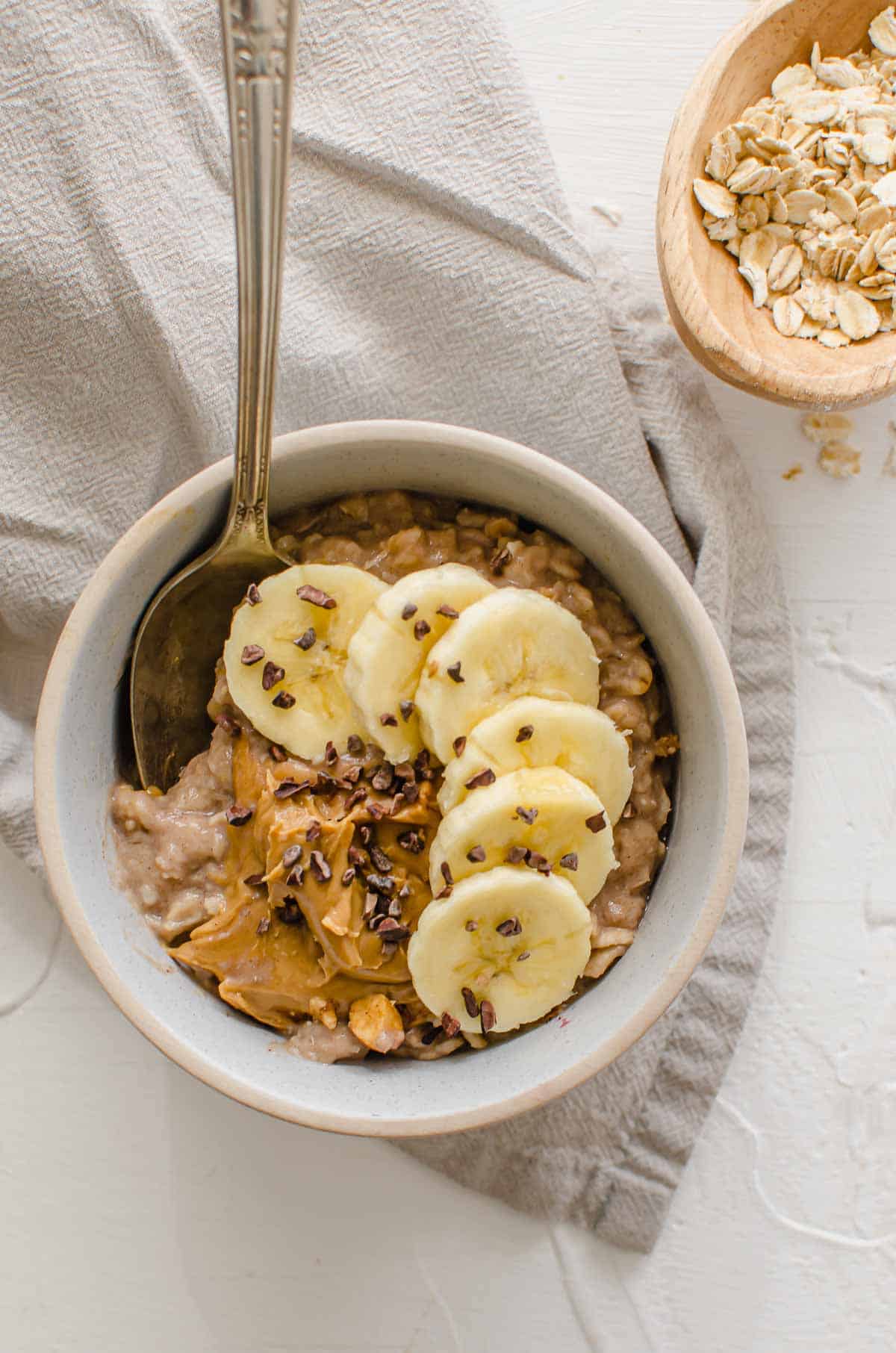
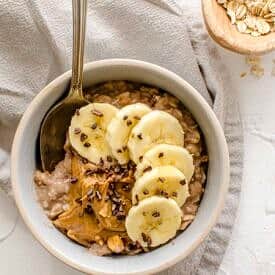
Birds eye view of protein oats topped with banana, peanut butter, and cacao nibs.

If there is one thing that I don’t mess around with in life it’s my morning bowl of oatmeal. Tucking into a warming bowl of the good stuff is quite honestly my own form of meditation because it makes me feel zen AF.

So you KNOW that whenever I have a new oatmeal recipe up on the blog, that it has been seriously vetted. I made sure that this protein oatmeal with tofu hit all of my criteria – including nutrition, flavour, and efficiency (and the *zen* factor of course). Your morning routine will thank you!

Table of contents

  • Why This Recipe Works
  • Key Ingredients
  • How to Make This Recipe
  • Expert Tips
  • Recipe FAQs
  • More Recipes You Might Like

Why This Recipe Works

This protein oatmeal is insanely easy, you’ll wonder what you ever did without it! But if you need a bit more convincing, here are a few more reasons why you need to try this recipe ASAP.

  • High in protein (8 grams per serving)
  • High in fibre (5 grams per serving)
  • Requires less than 10 ingredients
  • Only takes 12 minutes to prepare
  • Balanced and satiating

Key Ingredients

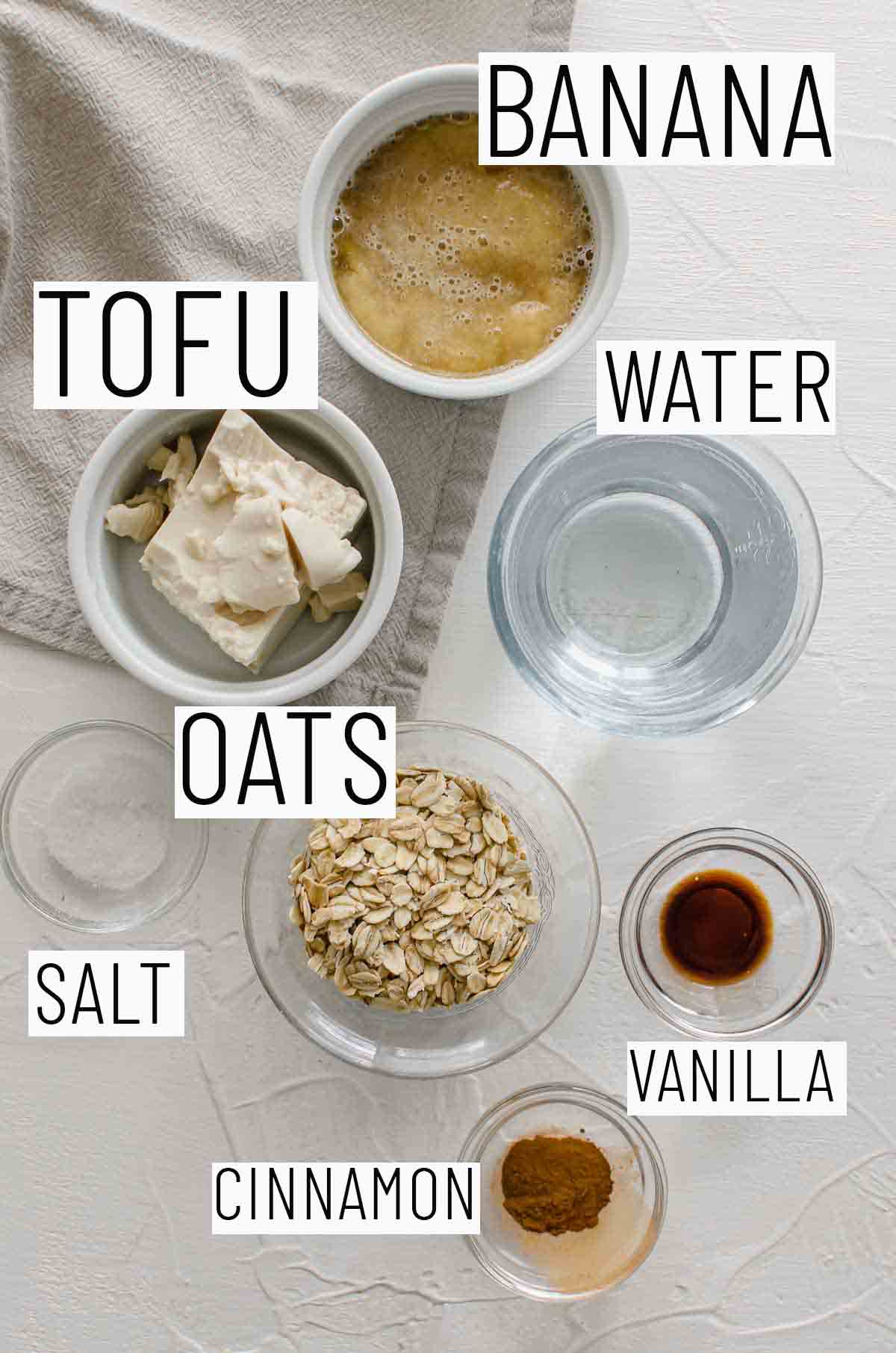
Flat lay image of recipe ingredients.

Oats – We use old fashioned rolled oats as they cook more quickly than steel cut oats. If you need to make this recipe gluten free, you can also opt for gluten free oats.

Silken Tofu – This is the secret ingredient to making this protein oatmeal high in protein AND vegan friendly. I will often rely on my whipped protein oatmeal recipe in the mornings which uses egg whites, but silken tofu is an excellent alternative if you need to make this egg-free or vegan.

Banana – A super ripe banana is one of my favourite ways to sweeten oats without the need to add any additional added sugar.

Flavour Enhancers – To give this protein oatmeal a flavour boost we add some cinnamon and maple syrup while also having a little fun with the toppings! You can top these protein oats with anything you have on hand but I love adding fruit, nut butter, yogurt, granola, or sprinkles.

How to Make This Recipe

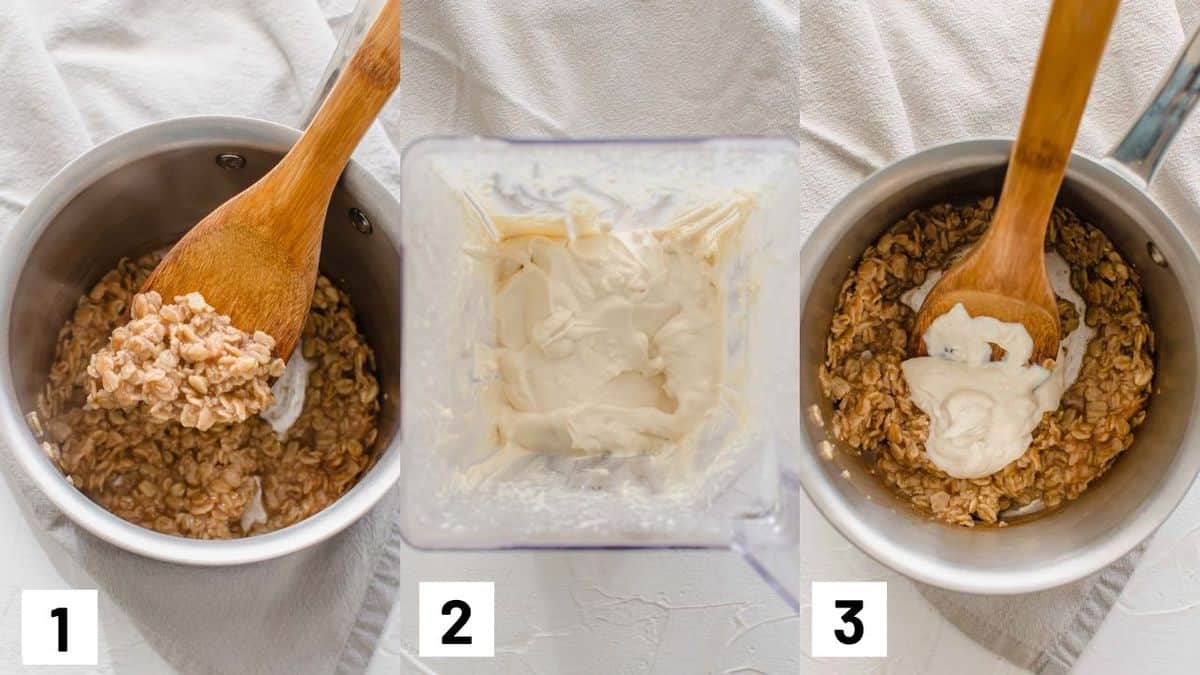
Three side by side images showing how to prepare oats and tofu.

Step 1: In a small pot, combine the oats with the water, salt and cinnamon. Bring the mixture to a simmer over medium-high heat, then reduce the heat to medium. Stir the pot occasionally until the oats have absorbed almost all of the water but are still very moist and thick (about 3-5 minutes).

Step 2-3: Blend the tofu in a blender then add them to the pot with the oats. Cook, stirring constantly until the mixture is creamy and fluffs up (about 3 minutes).

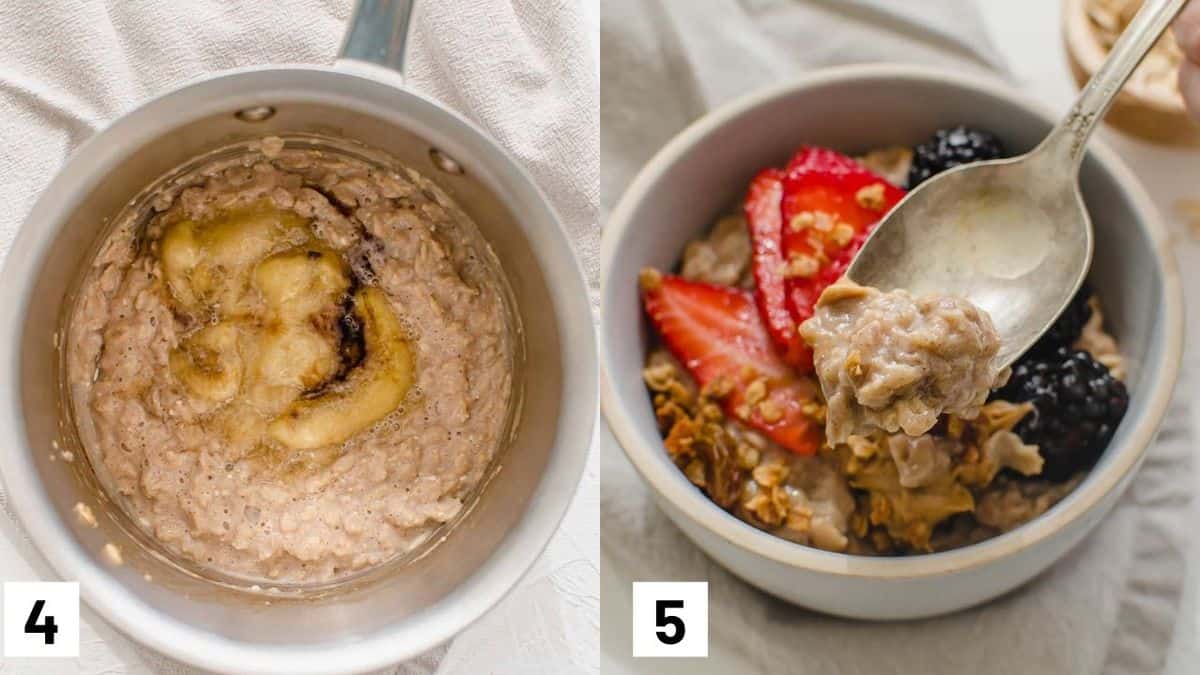
Two side by side images showing final oat mixture with toppings.

Step 4: Stir in the vanilla, and banana and again, stir until well combined. Turn off the heat, cover the pot, and let the oats sit for another 3 minutes until they really puff up and get super creamy and rich.

Step 5: Add toppings of choice and enjoy!

Expert Tips

I am a BIG oatmeal gal, and I take every element very seriously – and that very much includes TEXTURE. Which is why we are using water instead of milk to make this tofu protein oatmeal because water yields a creamier texture. I find that using too much milk will yield a thick and sticky oatmeal and that is no bueno in my books.

A super ripe banana is ideal if you like your oats to be on the sweeter side (because the browner the banana, the sweeter the taste). But if you are impartial to sweetness, a moderately ripe banana is perfectly fine to use and will still add some extra creaminess and flavour to this protein oatmeal.

Recipe FAQs

Can I make this ahead of time?

Definitely! You can make these overnight oats styles or cook them the day before and reheat in the morning with a bit of water or milk and add your favourite toppings when you are ready to eat.

Can I use firm tofu instead of silken?

Silken tofu is preferred as it yields a thick and creamy texture when blended, making it ideal as a stand-in for milk or cream. While you can totally try using regular tofu, it may yield more of a crumbly texture and that is just a hard no in my books (like I said, I take texture VERY seriously).

Can I make this gluten free?

Definitely! You can make this gluten free by using gluten free oats.

What are some other ways I can boost up the protein in oats?

So many ways! You can add protein-rich toppings such as hemp seeds, nuts, seeds, or your favourite butters. Otherwise, you can mix in some high-protein yogurt (vegan or otherwise).

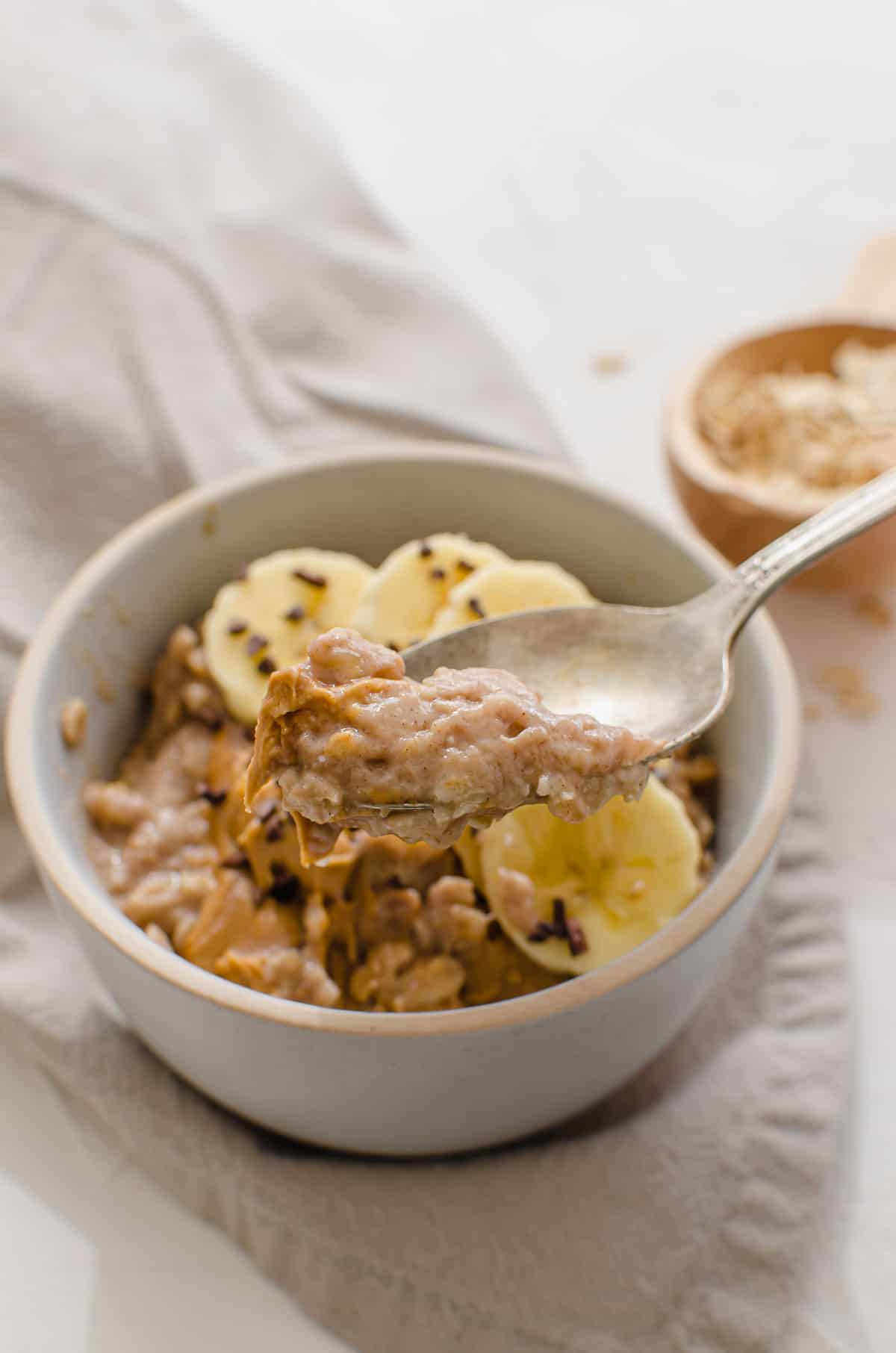
Close up of a spoonful of protein oats with bowl of oats in the background.

More Recipes You Might Like

If you loved this protein oatmeal, then you will love these oatmeal recipes on the blog!

  • Whipped Protein Oatmeal (PROATS)
  • Creme Brulee Oatmeal
  • Pina Colada Oatmeal
  • Baked Oatmeal with Chocolate and Zucchini

Have you tried this protein oatmeal with tofu? I’d love to know your thoughts down in the comments below!

Print Recipe
4.70 from 13 votes

Protein Oatmeal with Tofu (Vegan)

This protein oatmeal with tofu is the easiest vegan oatmeal recipe you'll ever make! It's super satisfying and only requires 7 ingredients and 12 minutes to prepare.
Cook Time12 minutes mins
Total Time12 minutes mins
Course: Breakfast
Cuisine: American
Diet: Vegan
Servings: 1
Calories: 236kcal
Author: Abbey Sharp

Ingredients

  • ¼ cup old fashion rolled oats gluten free if needed
  • 3/4 cup water
  • Pinch of salt
  • ¼ tsp cinnamon
  • 3 oz silken tofu
  • ½ tsp vanilla extract
  • 1 very ripe banana finely mashed

Topping Suggestions

  • Yogurt, granola, nut butter, fruit
  • Chocolate chips, peanut butter, banana
  • Sprinkles and fruit

Instructions

  • In a small pot, combine the oats with the water, salt and cinnamon. Bring the mixture to a simmer over medium-high heat, then reduce the heat to medium. Stir the pot occasionally until the oats have absorbed almost all of the water but are still very moist and thick (about 3-5 minutes).
  • Blend the tofu in a blender, then add them to the pot with the oats. Cook, stirring constantly until the mixture is creamy and fluffs up (about 3 minutes).
  • Stir in the vanilla, and banana and again, stir until well combined. Turn off the heat, cover the pot, and let the oats sit for another 3 minutes until they really puff up and get super creamy and rich.

Nutrition

Calories: 236kcal | Carbohydrates: 44g | Protein: 8g | Fat: 4g | Saturated Fat: 1g | Sodium: 16mg | Potassium: 654mg | Fiber: 5g | Sugar: 16g | Vitamin A: 77IU | Vitamin C: 10mg | Calcium: 53mg | Iron: 2mg
Abbey Sharp

Abbey Sharp is a Registered Dietitian (RD), regulated by the Ontario College of Dietitians. She is a mom, YouTuber, Blogger, award winning cookbook author, media coach specializing in food and nutrition influencers, and a frequent contributor to national publications like Healthline and on national broadcast TV shows.
www.abbeyskitchen.com/about-abbey/

Last Updated April 12, 2021. Published November 9, 2022 By Abbey Sharp 1 Comment

The Hormonal Acne Diet – The Best Foods for Healthy Clear Skin

We look at the hormonal acne diet and break down the research on the best and worst foods for healthy clear skin.

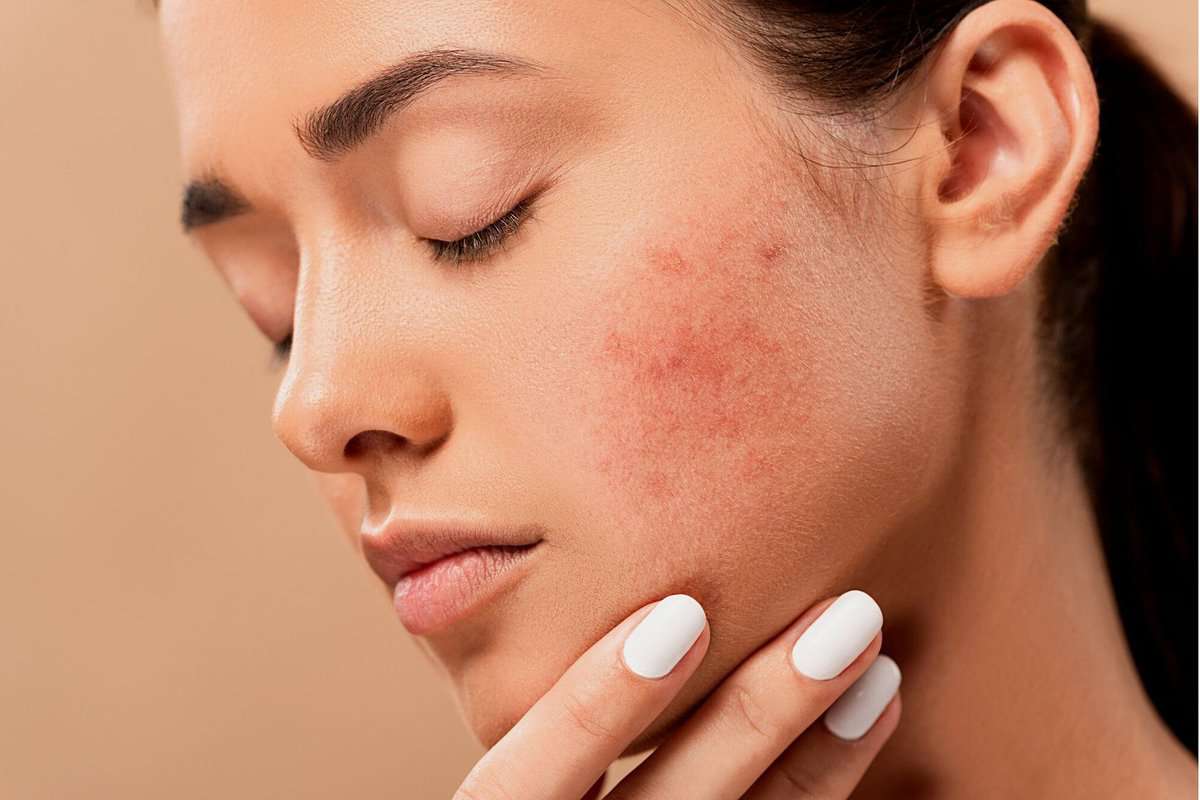
Woman with hormonal acne on her cheek and touching her skin.

There’s no question that skin care is a hot topic these days. Considering the crazy schedules most of us have, I am sure most of us have had to deal with more than our fair share of stress pimples and have probably fallen into multiple Google deep dives on how to treat and prevent pesky breakouts.

If this sounds like you, then you are likely among the 80% of individuals who have struggled with acne at one point in their life. Whether it was in your early teens or as an adult, it’s safe to say that getting acne under control is a struggle.  

Now, I am obviously no dermatologist or skin specialist. So, if you were looking for tips on how to upgrade your skin care routine, you’ve come to the wrong place. BUT, what I can do is put my dietitian hat on and discuss what the research has to say about the role of diet and hormonal acne. While experts have strongly debated whether or not diet can help to treat acne, there is some promising research suggesting that what you eat may make a difference.  With that said, what does the research have to say about the hormonal acne diet?

Causes of Hormonal Acne

Acne occurs when the pores on our skin become clogged with dead skin cells, bacteria, or excess oil (also known as sebum). This results in acne, in the form of white heads, black heads, and pimples which commonly occur on the face, neck, back and shoulders. The development of acne can vary in its severity and triggers, however, some of the most common factors that have been known to contribute to acne formation include:

  • Oily skin
  • Make-up products that clog pores
  • Genetics
  • Medications
  • Sunlight exposure without adequate sun protection
  • Hormonal fluctuations  

Hormonal acne, specifically, is most often triggered by hormonal changes experienced during:

  • Puberty
  • Menstruation
  • Pregnancy
  • Menopause
  • Discontinuation of birth control

One of the mechanisms by which hormones can trigger the development of hormonal acne has to do with the rise in androgen hormones, such as testosterone. Increased androgen levels can trigger higher sebum production in the skin, which can clog pores and lead to an acne breakout. In addition, other hormones such as estrogen help to suppress sebum production. Therefore, during periods where estrogen is low (i.e., during menopause, or menstruation), you may be prone to more acne breakouts.

Does Diet Impact Hormonal Acne?

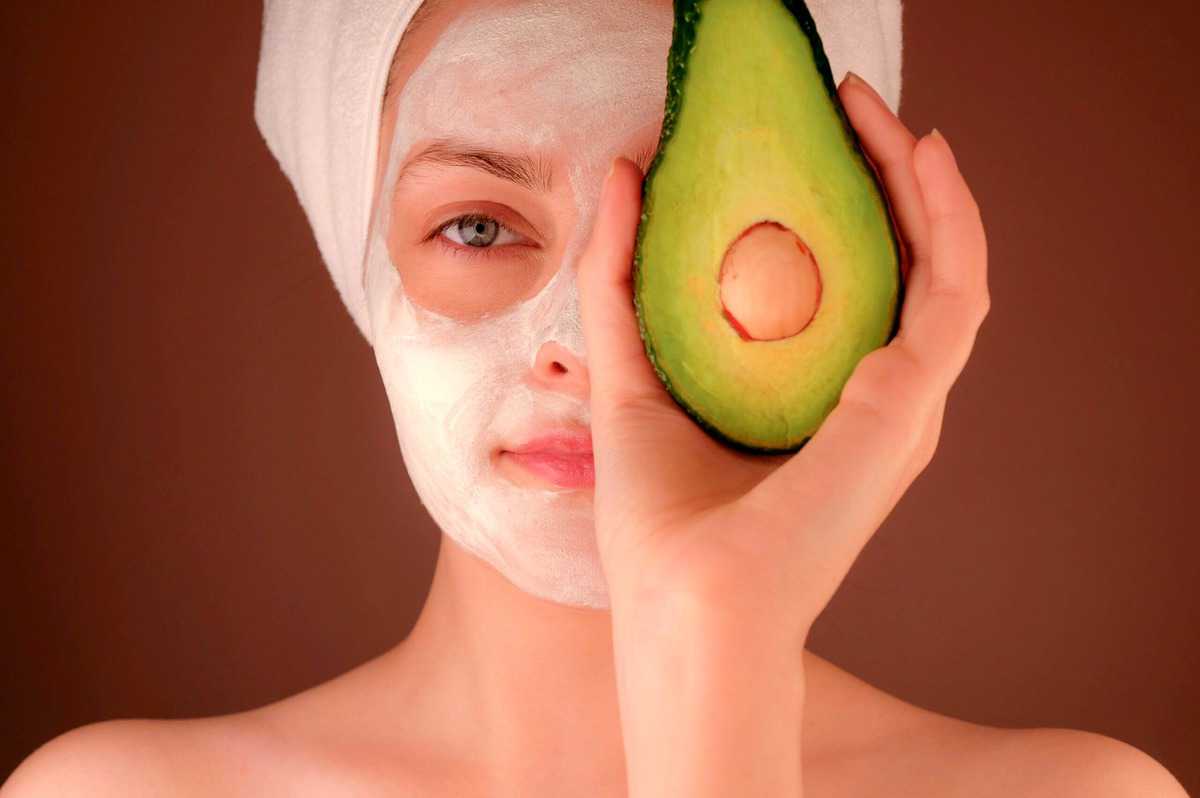
Woman with a white face mask holding up an avocado to her eye.

It is a common belief that what you eat can either worsen or improve the development of acne. In fact, one 2016 survey reported that 71% of participants believed that certain foods cause acne, including fried food, chocolate, dairy and soda. As for whether or not diet plays a strong role in hormonal acne has yet to be determined, as the evidence is mixed and controversial. This likely has to do with the fact that the development of acne is highly complex and multifactorial, so we are unable to make any generalizations around what specific foods cause acne. There is no one-size-fits-all treatment.

Despite the inconclusive evidence of the role of diet and acne, research suggests that certain elements of the Western diet are more closely linked to acne production compared to other geographical areas and associated dietary patterns. This is because the Western diet tends to be higher in processed carbohydrates, refined sugars, and dairy products which can increase blood sugar levels and cause inflammation when consumed in excess.

With that said, there is evidence to suggest that foods that raise blood sugar levels and ilicit a greater insulin response can worsen acne. This not only stimulates the secretion of androgens, but it also triggers the production of another hormone called Insulin-like Growth Factor-1 (IGF-1). Some studies suggest that IGF-1 can worsen the symptoms of acne by increasing sebum production. Considering there are some foods that can raise IGF-1 levels, it may be helpful to consider whether or not limiting these foods in your hormonal acne diet can improve your skin.

Foods That May Worsen Acne

Now that we know that insulin and IGF-1 may play a role in the development of acne, how can we use this information to our benefit so we can craft a hormonal acne diet? Let’s take a closer look at the research to find out the common foods that have been shown to increase IGF-1 and possibly increase the occurrence of acne.  

High Glycemic Index Foods (Refined Carbs & Sugar)

Four donuts in a line side by side and drizzled with icing and sprinkles.

As previously mentioned, the typical Western diet tends to be made up of higher amounts of refined carbohydrates – in other words, high glycemic index (GI) foods. The glycemic index essentially categorizes carbohydrate-containing foods by how quickly they increase blood sugar levels. High GI foods have a more significant effect on blood sugar levels compared to low GI foods. This means they are absorbed more quickly into the bloodstream, which can trigger the cascade of events that can stimulate acne production (i.e., increased insulin > increased IGF-1 > increased sebum production > acne)

 Some examples of high GI foods include:

  • White bread
  • White rice
  • Potatoes
  • Baked goods
  • Sugar-sweetened beverages
  • Candy and sweets  

With that said, several research studies have suggested that high GI foods can contribute to acne. For example, one 2017 study found that participants with moderate-to-severe acne consumed more refined carbohydrates compared to participants without acne. Another large study also found that frequent consumption of high GI foods (including sugar, pastries, and cakes) was associated with a 30% increase in developing acne among teenagers. Similarly, a more recent 2020 study on more than 24,000 adults found that those with acne were 54% more likely to consume high-sugar foods compared to those without acne.

To compare the effects of low GI vs high GI foods on acne, one review investigated the prevalence of acne in Indigenous groups living in different geographical locations. The study found that acne prevalence was low in locations consuming a low GI diet. It wasn’t until participants were exposed to high GI foods typically associated with the Western diet, that higher rates of acne began to develop. In addition, other studies have likewise shown that the occurrence of acne is lower in rural and non-industrialized areas.

Dairy

A glass of milk spilling against a black background.

Dairy has gotten a pretty bad rep as one of the major culprits behind acne breakouts and is often one of the first food groups to be eliminated in individuals struggling with acne. But is dairy really a cause for concern when it comes to our skin health? Unfortunately, we don’t have a straightforward answer.

For example, a 2016 review found a weak link between dairy consumption and acne. On the other hand, a 2018 review found that people who consumed dairy milk were 16% more likely to have acne than those who did not. Another large review found that dairy consumption (including milk, cheese, and yogurt) was associated with a greater risk of acne regardless of the frequency or amount consumed.

While dairy consumption may or may not increase the risk of acne, dairy is considered to be a low GI food (aka it doesn’t cause a spike in blood sugar levels). With that in mind, we know that low GI foods do not increase insulin production, so how exactly would it cause acne? One proposed theory behind the mechanism by which dairy increases acne is that it may still stimulate the production of  IGF-1 in the blood stream, despite having a low GI. As a result of the increase in IGF-1, dairy may thereby increase sebum production and acne breakouts.

With that said, more research is needed to confirm the link between dairy and acne. In addition, most research to date has mostly focused on teenagers and have only shown a correlation between milk and acne. Meaning, that the research has yet to show a cause-and-effect relationship. However, you may find that anecdotally, some or all sources of dairy may exacerbate your acne. Like we said, everyone is different and dietary acne triggers will vary from person to person. So, if you personally find that dairy doesn’t agree with you when it comes to your skin, you can slowly reduce your dairy consumption as part of your hormonal acne diet and monitor for changes. I would also suggest eating more non-dairy calcium sources to compensate for the dairy restriction. Some alternative sources of calcium include tofu, legumes, almonds, leafy greens, and fortified beverages.

Chocolate

Several pieces of chopped up chocolate as a possible trigger for hormonal acne.

Another commonly speculated acne offender is none other than chocolate. While chocolate may be the snack of choice during your period when your acne breakouts are at their peak, there isn’t much evidence to support a link between chocolate consumption and acne. One review found a very weak association between chocolate and acne, but also identified significant flaws in the study designs. For instance, many studies did not control for the type of chocolate used in the experiment. This would be an important distinction as we do not know if chocolate sweetened with sugar and milk (both ingredients which may exacerbate acne) will have a different effect on the skin than chocolate that is lower in sugar and has a higher cacao content.

Moreover, an older study compared the effects of a chocolate bar vs a bar containing no chocolate on individuals with moderate acne. This study found no difference in acne development, regardless of the type of bar consumed. This same study also tested the effects of consuming two chocolate bars daily for a one-month period and found that the increased consumption of chocolate did not increase sebum production.

On the other hand, one small study on young and middle-aged men found that continuously consuming 10 grams of dark chocolate for 4 weeks led to skin changes that could make acne more likely. The results were especially true for the younger male participants in the study. However, larger studies are needed to get a better understanding of these effects.

Foods That May Minimize Hormonal Acne

Low GI Foods

Several vegetables representing low glycemic index foods which are beneficial for the hormonal acne diet.

Considering what we know about the possible effects of high GI foods on acne occurrence, prioritizing low GI foods may be a good place to start when it comes to a hormonal acne diet. Some examples of low GI foods include:

  • Whole grains (quinoa, barley, bulgur)
  • Cereals (oats, oat bran)
  • Beans and legumes
  • Nuts and seeds
  • Fruits (apple, berries, melon, pear, peaches, mango)
  • Dairy (yogurt, dairy milk, plant-based milk)

Not only can low GI foods help to stabilize blood sugar levels, but research studies seem to support its use for reducing acne symptoms. For example, one study conducted a 12-week low GI dietary intervention which resulted in reduced acne as well as decreased circulating androgen and IGF-1 levels.  Similarly, another small study found that following a low GI diet for 10 weeks resulted in improvements in acne in individuals with mild to moderate acne symptoms.

A larger study looking at non-Western populations found that out of the 1300 subjects, no instances of acne were reported. Upon further investigation, it was found that these populations subsisted on a low GI diet composed of fruits, vegetables, nuts, meat, and whole grains with a very small percentage of their diet being made up of Western foods.

While it is totally a-okay to continue to eat higher GI foods if that’s what you fancy, you can still help to minimize the potential effects on blood sugar levels by balancing your plate with low GI foods and/or a source of protein and fat. For example, a meal that has a combination of high and low GI foods might look like:

  • Jasmine rice (high GI)
  • Chickpeas or lentils (low GI AND a source of protein)
  • Leafy greens (low GI)

The protein and fibre from the legumes (as well as the fibre from the leafy greens), will help to slow down the rate in which your body breaks down the carbohydrates from your meal into glucose (blood sugar). This will help to slow down the release of insulin and, consequently, acne provoking IGF-1.

Omega-3 Fats

A piece of seasoned salmon, lemon slices, garlic, a chefs knife and soy sauce on a cutting board.

It is well documented in the literature that omega-3 fats have powerful anti-inflammatory properties, but they also have the ability to lower IGF-1. This suggests that consuming more omega-3 fats may be beneficial in reducing instances of acne. One study on over 1000 teens found that participants who consumed larger amounts of omega-3 rich foods (namely fatty fish and seafood), had less acne symptoms. Similarly, a small study with just 5 participants found that those who regularly took omega-3 supplements had a reduced number of acne lesions. In addition to the positive effects it may have on the skin, consuming more omega-3 fats also provides additional mental health benefits with one study showing that individuals taking omega-3 supplements were able to simultaneously improve both their acne and mood.

Omega-3 fats are found naturally in foods and in fortified foods. Some examples of omega-3 fat sources include:

  • Fatty fish (such as salmon, tuna, sardines, and trout, mackerel)
  • Fish oil supplements or algae oil
  • Nuts and seeds (flaxseed, chia seed, walnuts)
  • Omega-3 eggs
  • Fortified foods (breads, cereals, plant-based milk etc.)

Antioxidants

A hand holding a bowl of strawberries which have antioxidants beneficial for the hormonal acne diet.

While we know that eating a diet rich in antioxidants can help to fight oxidative stress and reduce disease risk, it may also play a role in reducing acne. A 2008 study found that individuals with acne had significantly lower levels of antioxidants in their blood (specifically vitamin A and vitamin E). Another study found that vitamin E and selenium supplementation helped improved skin conditions in individuals with acne. While research does seem to suggest that increasing antioxidant intake may improve skin health, the link remains unclear and more research is needed.

In any case, it certainly doesn’t hurt to increase your antioxidant intake to reap the rewards of their health benefits. Antioxidants can be found in a variety of foods including fruits, vegetables, and nuts. FRAP (ferric reducing ability of plasma) analysis measures the antioxidant content of foods by how well they can neutralize a specific free radical. The higher the FRAP value, the more antioxidants the food contains.

According to FRAP analysis, some of the richest sources of antioxidants you can try in your hormonal acne diet include:

  • Pecans
  • Berries (blueberries, strawberries, raspberries, Goji berries)
  • Artichokes
  • Leafy greens (kale, spinach)
  • Red cabbage
  • Beans
  • Dark chocolate (the higher the cocoa content, the higher the antioxidants)
  • Beets
  • Grapes
  • Green tea
  • Orange vegetables (sweet potato, carrots, squash)

Vitamin D

A person holding up their hand against the sun.

Some research suggests that adequate vitamin D intake may potentially improve acne symptoms, albeit research in this area is limited. One study compared a group of individuals with and without acne and found that vitamin D deficiency was detected in 50% of individuals with acne compared to only 23% of individuals without acne. Those with vitamin D deficiency were given a 1000 IU vitamin D supplement for 2 months, which was found to significantly improve their acne. A more recent 2020 study found similar results, suggesting that vitamin D deficiency is more frequent in individuals with acne. While more research is needed to understand the link between vitamin D and acne, one theory is that the positive effects of vitamin D may be attributed to its anti-inflammatory properties.

While few foods naturally contain vitamin D, you can maximize your vitamin D intake through sun exposure and supplementation.  Some food sources of vitamin D include:

  • Fatty fish (rainbow trout, salmon)
  • Mushrooms exposed to UV light
  • Fortified milk (cow’s milk and plant-based milk)
  • Fortified cereals
  • Eggs (with the yolk!)

Dairy Alternatives

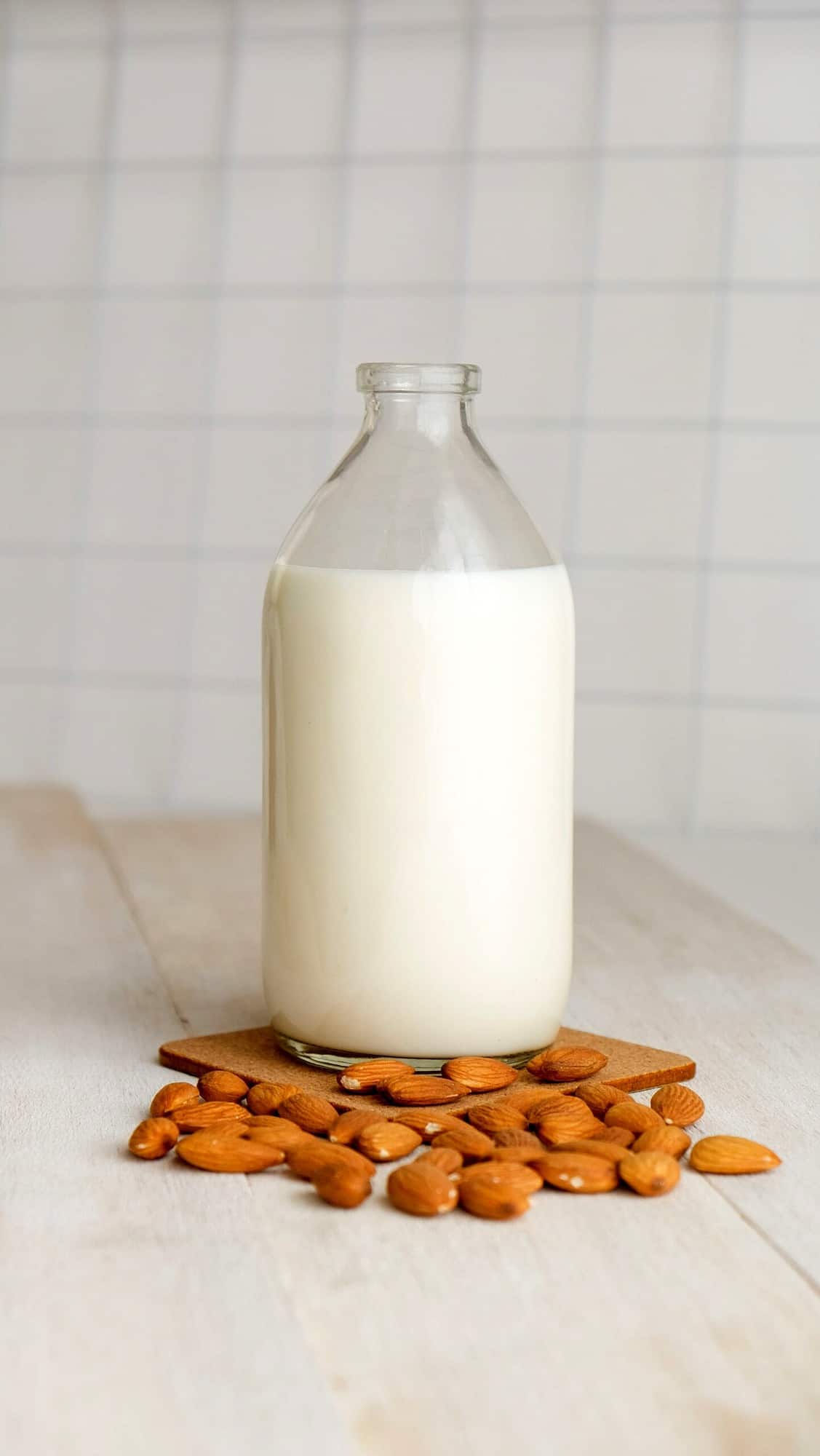
A bottle of almond milk with almonds scattered around it.

As mentioned previously, the research on dairy intake and acne is a bit messy and inconclusive. However, there are some minor tweaks that you can trial in your hormonal acne diet to see if it has a positive effect on your skin.

Instead of completely going cold-turkey and cutting out all dairy in one go, you may want to first try consuming full fat dairy rather than low fat or skim as some research suggests that low fat/skim milk may be more positively associated with acne compared to full fat. One possible theory is that low fat/skim dairy products tend to have higher amounts of sugar than their full fat counterparts, which can in turn have a greater impact on blood sugar levels. On the other hand, higher fat dairy may help to buffer the body’s response to the natural sugars (aka lactose) in milk – meaning that it doesn’t elicit as much of an insulin response.

But, like we said, dairy + acne = messy, as other studies have shown a positive association with the consumption of ALL milk (including skim, low fat, and full fat).

While the verdict is still out on the relationship between dairy and acne, if trialing full fat dairy still isn’t working for you, you can try opting for plant-based dairy alternatives instead and see if that makes a difference for your skin. For example, you can swap cow’s milk for soy milk or almond milk (or any other slew of plant-based milk on the market). You can also try substituting for non-dairy yogurt and cheese options. However, keep in mind that these dairy alternatives may not provide the same nutrients obtained from dairy (including protein, calcium, vitamin D). Consider this your friendly dietitian reminder to be mindful of obtaining these nutrients from other sources in your diet!

Bottom Line

While there is no one-size-fits-all when it comes to the hormonal acne diet, you may experience some improvements in your acne by trialing subtle changes in your eating pattern – such as prioritizing low GI over high GI foods, omega-3 fats, antioxidant-rich foods, vitamin D, and possibly limiting dairy intake. If you suspect that dairy or sugar may be a trigger for your acne, you can work with a dietitian to trial an elimination diet and see if it works for you. However, you may not need to completely eliminate sugar or dairy to improve your skin. What works for one person, may not work for you. It would also be highly beneficial to work with a certified dermatologist or MD to get to the root cause of your hormonal acne triggers.

Written by Giselle Segovia RD MHSc

More Blog Posts You Might Like

If you liked this post on the hormonal acne diet, then you might also enjoy these blog posts!

  • Does Seed Cycling for Hormonal Balance ACTUALLY Work?
  • Foods that Cause and Treat Eczema
  • How Much Weight Do You Gain on Your Period?
  • What to Do When You’ve Lost Your Period

Do you struggle with acne? Have you found a hormonal acne diet that works for you? Leave me a comment below!

Abbey Sharp

Abbey Sharp is a Registered Dietitian (RD), regulated by the Ontario College of Dietitians. She is a mom, YouTuber, Blogger, award winning cookbook author, media coach specializing in food and nutrition influencers, and a frequent contributor to national publications like Healthline and on national broadcast TV shows.
www.abbeyskitchen.com/about-abbey/

Last Updated November 3, 2022. Published November 3, 2022 By Abbey Sharp 13 Comments

Working Mom Guilt | Juggling a Baby and Career

I discuss my own experiences dealing with the mom guilt associated with juggling a baby and career, and the struggles I have faced as a mompreneur working mom (especially without any sort of designated mat leave!)

I discuss my own experiences dealing with working mom guilt associated with juggling kids and a career, and the struggles I have faced as a mompreneur (especially without any sort of designated mat leave!)

Women working on laptops.

My Working Mom Guilt Juggling a Baby and Career

This is going to be a bit of rant, so bear with me as I get it all out. You know, hormones (and lack of sleep).

Motherhood is just one big f*cking guilt trip, and I might argue that no one knows that better than the working mom. I’m now a couple years into motherhood, yet I still live in constant state of mom guilt about how to balance both of my babies. My real boys, E and O, and my work baby, Abbey’s Kitchen. Sometimes I feel like I spend more time feeling guilty these days about how I’m juggling kids and a career than I do actually successfully juggling kids and a career. It’s probably not a productive state of affairs.

But you know, it’s a constant struggle. I feel guilty when I take a 2 hour walk with O in the middle of a Tuesday and don’t look at my phone once (#LivingOnTheEdge). And when I was breastfeeding, I felt guilty when I spent 2 hours trying to pump out a blog post (like this one) while my husband fed the baby my pumped milk. It’s really a lose-lose situation.

Mom holding her baby on her lap.

But alas, I guess I saw that coming. I’m also an entrepreneur (or I guess, “mompreneur” as they say) so there’s no such thing as a government funded maternity leave. For that reason, my husband and I went into my pregnancies knowing that I would continue to work. I couldn’t just so easily put my whole company on hold and pick up a year later. When people would ask me if I was taking a mat leave, I would laugh and remind them I was an entrepreneur. People who know me would smile politely and laugh with me, “oh yes, of course, you’re crazy, I forgot!” Crazy sounding, maybe, but that arrangement felt like the only non-crazy thing I could do.

Now that I have both my kids, I get all sorts of comments about my parenting and career balance (or maybe lack-thereof). In the first month after E’s birth, every allied health or medical professional I saw would look mortified if I told them I was already dabbling back at work. Hell, they gave me a look of disapproval just for saying I was going to leave the house to grab something at the store! Even if it was unintentional, it just fueled my woking mom guilt.

Never in my life had I felt so judged for my independence, ambition or even just suggesting that I was feeling good enough to get out of the f*cking house for 30 minutes. And this was largely from fellow moms (men, on the other hand, don’t seem to care what we do, probably because the pressures on them look so different).

Struggles of a Working Mom

Woman working on her laptop holding a cup.

Being a working mom, I’ve had to give up a lot of my ideals on how this whole motherhood thing would shake out. I recently talked about my botched birth plan, and my struggle to breastfeed my son, so I feel like I came into this feeling like a bit of a failure already. But being a working mom just trying to juggle my sons and career meant I had to give up a lot of control. Like, a lot. And that’s a damn hard thing for a Type A person to do.

The mom guilt first hit hard after E was born. Not only did I not get that special breastfeeding bond due to latch issues, but it means someone else often got to feed (and cuddle) my son altogether using the milk I worked my ass off around the clock to pump. It meant I had to try to ignore his cries in the nursery next to my office as I talked on a conference call, all the while watching my breasts leak milk right through my shirt. It meant I could go a half or even full day without really seeing his sweet little face (I guess this is how a lot of husbands feel). And it also meant the possibility of missing one of those hallmark “firsts” because I had a meeting with a client, or YouTube shoot. That last one was a particularly hard pill to swallow.

Sometimes when I hear my friends talk about having never even left their child alone with another person until they were 6, 8 or 12 months, I ask myself if what I’m doing is wrong. Will I regret losing this precious time when my kids are all grown up? Am I a bad mom for not having this innate need to keep them by my side all day and night when they’re not in school? Sometimes the working mom guilt is crippling. But I’ve come to recognize that while I think worrying about the future is a natural part of motherhood, it isn’t in any way productive. All I can do is try to recognize what’s right for me now. And right now, I’m going to just have to be comfortable doing a good enough job balancing a career and motherhood.

Woman holding a mug that says: Like a Boss.

But here’s my ask: While I try to maintain some confidence in how I’m doing with this daily struggle, I just hope that we can all recognize that we don’t all have to do motherhood the same. It’s hard enough to physically balance work and mothering, so we don’t need the criticism from others who decide to run their homes or lives differently. I would love if we could call a truce. It would be nice if moms (and dads) could support one another, wherever they are in their parenthood journey. Both stay-at-home moms could enjoy their time at home, and working moms could just enjoy their own little juggle. I recognize how hard that is given we’re probably all questioning the deal we cut at least a million times each day. I mean, we’re all giving up something, or different percentages of things. But let’s cut each other some slack and recognize that it’s not easy for any of us. There is no right way, or even better way. Just a good enough way for you.

So moms, next time you speak to a fellow mama about how she stays at home with her kids, or how she juggles a baby and career, please remember to be kind. We’re all just trying to survive this motherhood thing in our own imperfect way, and we may feel insecure about the sacrifices we’ve chosen (or maybe not willingly chosen) to make. Let’s work past this working mom guilt together.

Become an Abbey’s Kitchen Subscriber

More Blog Posts You Might Like

  • Postpartum Stress | How Becoming A Mom Actually Reduced My Anxiety
  • Mom Guilt | My Breastfeeding Failure Story
  • Things No One Told Me About Motherhood That I Learned When I Became A Mom
  • The Most Important Lessons Motherhood Taught Me On My Baby’s First Birthday

Moms, let me know if you’ve ever felt working mom guilt for how you choose to divide your time. Leave me a comment below with your thoughts!

Abbey Sharp

Abbey Sharp is a Registered Dietitian (RD), regulated by the Ontario College of Dietitians. She is a mom, YouTuber, Blogger, award winning cookbook author, media coach specializing in food and nutrition influencers, and a frequent contributor to national publications like Healthline and on national broadcast TV shows.
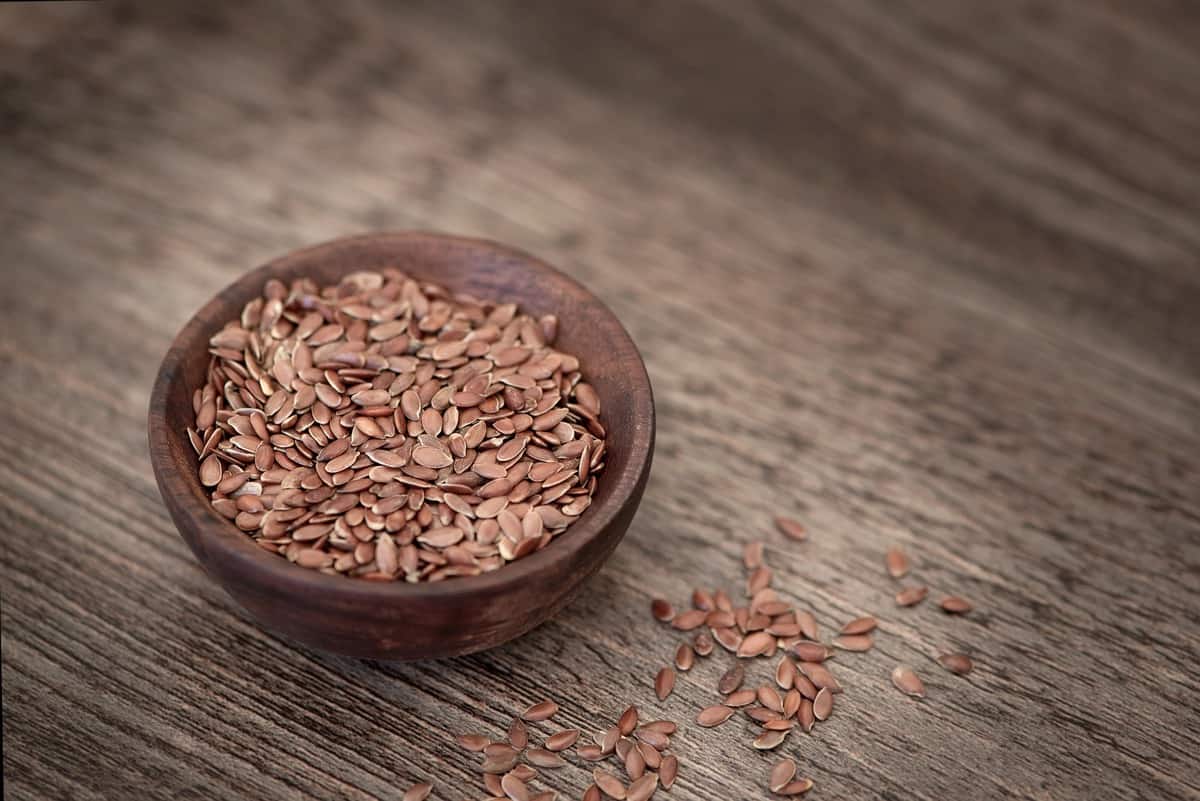
www.abbeyskitchen.com/about-abbey/

Last Updated October 24, 2022. Published October 24, 2022 By Abbey Sharp 24 Comments

Homemade Snickers Bars (Healthy Vegan Copycat Recipe)

These Vegan Snickers Bars are the ultimate gluten free healthier Halloween candy for filling your kid's candy bag and enjoying all year long.

These homemade snickers bars are the ultimate healthy Halloween candy for filling your kid’s candy bag and enjoying all year long.

Several healthy homemade Snickers bars stacked on top of one another.

I have no shame admitting that I have a real good sweet tooth and I often buy boxes of Halloween “fun sized” chocolate bars just for myself. But if you find those a little too cloying for your taste, you’re not a fan of the processed ingredients, or you’re looking for a vegan, gluten free Halloween candy alternative, these homemade snickers bars are for you.

Table of contents

  • Why This Recipe Works
  • Key Ingredients
  • How to Make This Recipe
  • Expert Tips
  • Recipe FAQs
  • More Recipes You Might Like

Why This Recipe Works

These homemade snickers bars are such a hit with my family and friends, and here’s why you’ll love them too:

  • Vegan
  • Gluten free
  • Made with wholesome ingredients you probably have!
  • Freezer friendly

Key Ingredients

Birds eye view of portioned ingredients to make Snickers bar.

Nougat Layer – To make these homemade snickers bars, it starts with a gluten free “nougat” layer made from oat flour, almond flour, peanut butter, maple syrup and coconut oil. So simple and honestly, delicious enough that you’ll want to just eat it out of the food processer all on its own.

Date Caramel – The vegan caramel is naturally sweetened with dates, coconut cream, and lots of crunchy peanuts. I’m a big fan of making caramel out of dates, and this version is just as sticky and chewy as the classic stuff you’re used to.

Chocolate Coating – Finally, I like to finish with a luscious layer of dark chocolate melted with a bit of coconut oil that hardens it into a beautiful shell.

How to Make This Recipe

Side by side process shots of homemade snickers bars, including ingredients being mixed in a food processor.

Step 1: To a food processor, puree the oats, almond flour, peanut butter, coconut oil, maple syrup and salt until smooth. Pack into the bottom of the loaf pan and freeze.

Step 2: Place dates, maple syrup and coconut cream in a sauce pot and simmer until bubbling.

Step 3: Transfer to the food processor and puree until very smooth.

Side by side process shots of homemade snickers bars being assembled on a tray.

Step 4: Mix with the peanuts and layer on top of the nougat layer. Transfer back to the freezer for 2 hours.

Step 5: Remove the parchment from the sides and cut into bars.

Step 6: Dip the bars into melted chocolate until fully coated. Refrigerate or freeze for 10 minutes.

Expert Tips

I make these homemade snickers bars full size, and then cut them into pieces, but feel free to use a Twinkie mold or a smaller pan to make more dainty bars. You can also simply cut them into smaller pieces before coating them in chocolate.

Either way, you’re going to want to make a triple batch. I even like to keep any leftovers in my freezer and let them thaw out for about 10 minutes before digging in. The freezer is a GREAT spot to keep treats like this so that you have to plan ahead (even just by 10 minutes), rather than just pounce on a hangry impulse when you need a little sweet somethin’ somethin’.

Recipe FAQs

How is this gluten free?

These homemade snickers bars uses almond flour and oat flour, which don’t naturally contain gluten. If you have Celiac disease, use products labelled gluten free to avoid risks from cross-contamination.

How long do these bars stay fresh?

You can store these in an air tight container in a cool dark place or the fridge. They should stay fresh for about 2-3 weeks. You can also try freezing them in a freezer bag and they can last for up to a year.

What If I’m allergic to nuts?

You can totally omit the peanuts or try substituting sunflower or pumpkin seeds to add some texture, however it may alter the taste slightly.

Why can’t I just have a regular Snickers?

You definitely can 😉 I totally think there’s a time and place for a classic Snickers bar, but it’s also fun to experiment with your own ingredients! Plus, there’s something super satisfying about recreating your favourite flavours in your own kitchen.

Hand showing the cross section of a homemade snickers bar

More Recipes You Might Like

If you loved these homemade snickers bars for Halloween, you’re going to love these recipes!

  • Healthy Twix Bars (Vegan)
  • Halloween Blood & Guts Chocolate Cups (Vegan)
  • Healthy Halloween Dirt Cups (Vegan & Kid Friendly)
  • Halloween Chocolate Mousse Graveyards

What’s your favourite Halloween candy? Have you tried these homemade snickers bars? Let me know down in the comments below!

These Vegan Snickers Bars are the ultimate gluten free healthier Halloween candy for filling your kid's candy bag and enjoying all year long.
Print Recipe
5 from 15 votes

Homemade Snickers Bars (Healthy Vegan Copycat Recipe)

These homemade snickers bars are the ultimate healthy Halloween candy for filling your kid's candy bag and enjoying all year long.
Prep Time3 hours hrs
Cook Time5 minutes mins
Total Time3 hours hrs 5 minutes mins
Course: Dessert
Cuisine: American
Servings: 12 bars
Calories: 374kcal
Author: Abbey Sharp

Ingredients

Nougat

  • 1/3 cup gluten free oats pureed in the food processor to a flour
  • 1 cup almond flour
  • 1/3 cup natural peanut butter
  • 3 tbsp maple syrup
  • 1/4 cup melted coconut oil

Date Caramel

  • 2 cups medjool dates diced
  • 1/4 cup maple syrup
  • 3 tbsp coconut cream
  • 1/2 cup chopped peanuts

Coating:

  • 150 g dark chocolate chopped
  • 1 tbsp coconut oil

Instructions

  • Line a loaf pan with parchment paper extending up both sides like wings.
  • To a food processor, puree the oats, almond flour, peanut butter, coconut oil, maple and salt until smooth. Pack into the bottom of the loaf pan and freeze.
  • Place the dates, maple and coconut cream in a sauce pot and simmer until bubbling. Transfer to the food processor and puree until very smooth. Mix with the peanuts and layer on top of the nougat layer. Transfer back to the freezer for 2 hours.
  • Meanwhile, melt the chocolate and coconut oil in the microwave on 50% in 30 second intervals until smooth, stirring between each 30 seconds.
  • Using a greased knife, carefully remove the parchment from the sides of the bars and cut into 12 bars.
  • Prepare a baking sheet lined with a silpat.
  • Dip the bars into the chocolate until fully coated and place on the silpat. Refrigerate or freeze for 10 minutes. Enjoy!

Video

Notes

Cutting Instructions
I make these full size, and then cut them into piece. You can also use a Twinkie mold or a smaller pan to make smaller bars. You can also simply cut them into smaller pieces before coating them in chocolate.
Freezing Instructions 
Freeze in individual portions in a freezer bag and let thaw for 10 minutes before eating.

Nutrition

Calories: 374kcal | Carbohydrates: 38g | Protein: 7g | Fat: 24g | Saturated Fat: 11g | Cholesterol: 1mg | Sodium: 38mg | Potassium: 398mg | Fiber: 5g | Sugar: 27g | Vitamin A: 41IU | Vitamin C: 1mg | Calcium: 68mg | Iron: 3mg
Abbey Sharp

Abbey Sharp is a Registered Dietitian (RD), regulated by the Ontario College of Dietitians. She is a mom, YouTuber, Blogger, award winning cookbook author, media coach specializing in food and nutrition influencers, and a frequent contributor to national publications like Healthline and on national broadcast TV shows.
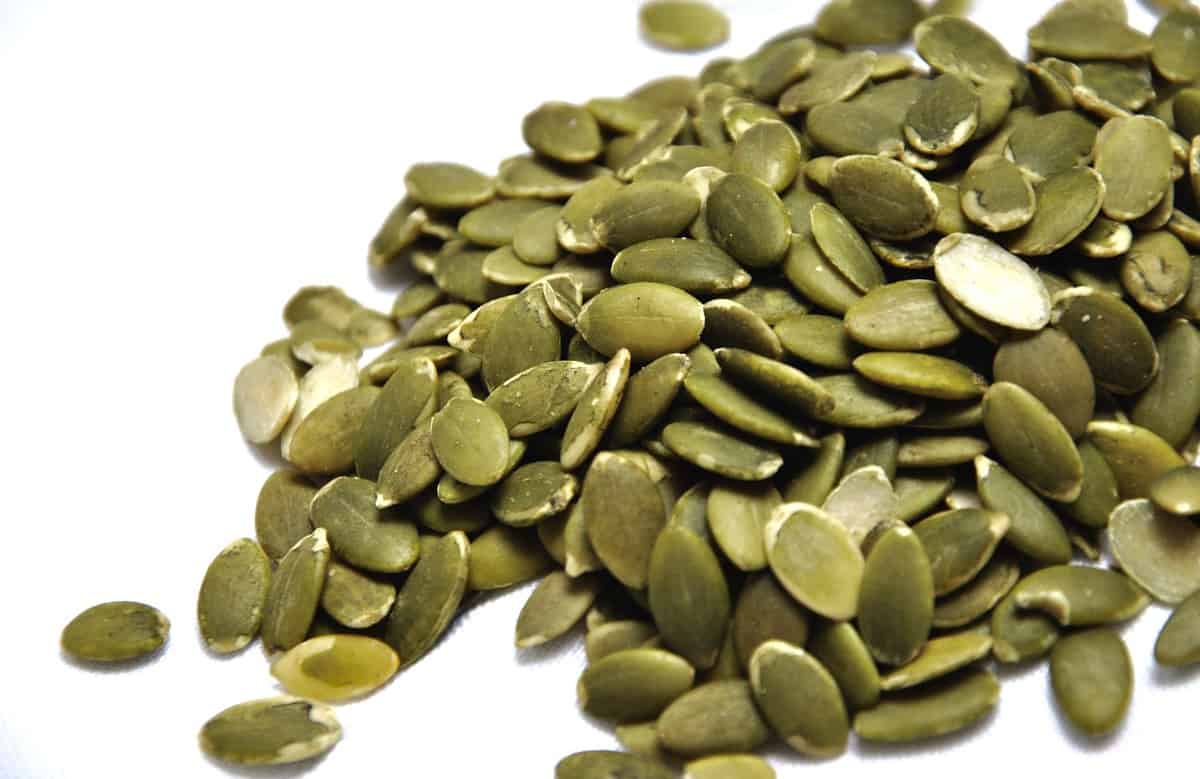
www.abbeyskitchen.com/about-abbey/

Last Updated November 1, 2022. Published October 20, 2022 By Abbey Sharp 24 Comments

How to Fix a Slow Metabolism | Reverse Dieting Vs. All-In

We look into how to fix a slow metabolism, discuss metabolic damage and metabolic adaptation, and explore the Reverse Dieting and All In approaches.

Person holding a measuring tape.

Diet culture is powerful stuff. The allure of a new weight loss diet is so enticing, we often assume that even though the last 10 diets didn’t work, this next one will do the trick. Unfortunately, research suggests that for most people, weight loss diets are not sustainable in the long term and often result in re-gaining the lost weight – and then some. The reason for this weight cycling (aka weight loss and weight regain) is metabolic adaptation.

What is Metabolic Damage / Metabolic Adaptation? 

Metabolic adaptation, better known as metabolic damage or starvation mode, is the body’s response to long term caloric restriction or starvation. The term “metabolic damage” tends to make this seem like a really negative unfortunate side effect of caloric restriction or extreme dieting. In fact, metabolic adaptation is a normal and natural survival mechanism. When our body doesn’t have enough energy (calories) available to use, it slows down our metabolism to burn fewer calories throughout the day. This is literally a desperate attempt to preserve energy for the body to use for normal everyday functions like breathing, digestion, walking, standing, etc.

Major Influencers on Body Weight Changes

Based on what we know about metabolic adaptation and weight cycling, the ability of a person to lose a significant amount of weight for good and keep it off is up for debate. So let’s look at this from a calculation perspective and consider what would be required to change your body weight. A lot of people might believe that it’s as simple as energy in minus energy out, but it’s a lot more nuanced than that.

The ENERGY IN is more realistically:

The actual number of calories consumed

So this information is readily available from food packaging or calorie trackers. However, according to the FDA, the nutrition information on the food label can be off by up to 20% and still be considered compliant. So the calories you see on the nutrition label or the number you’re logging into your MyFitnessPal may be very different than what you’re actually consuming.

MINUS

The calories not absorbed from food

The number of calories in food may not actually equal the number of calories you absorb from that food. Rates of absorption may vary significantly depending on how food is processed, cooked, the fibre content, your microbiome make-up etc.

On the other hand, ENERGY OUT is a combination of:

Resting metabolic rate (RMR)

This is the  number of calories you burn each day simply at rest. RMR supports bodily functions like breathing, blood circulation, organ function, and brain function and is largely dependent on genetics, age, sex, weight, and possibly gut microflora). RMR represents about 60% (the majority) of our energy output or “metabolism”.

The thermic effect of food (TEE)

This is the amount of energy or calories required to eat, digest and absorb food. The amount of energy expenditure varies per macronutrient. For example, carbohydrates and fat require 5-15% of your energy output to digest, while protein requires 20-35%.

Physical Activity (PA)

This is purposeful exercise like going to the gym, jogging, riding your bike etc. The amount of energy expenditure is highly variable depending on an individual’s unique activity level.

Non Exercise Activity Thermogenesis (NEAT)

These are the little unconscious things you may do that use up energy like fidgeting, sitting up straight, playing a musical instrument, twirling your hair anxiously, etc. This makes up about  10-15% of your energy output.

To summarize this information and present it in a simplified math calculation:

Changes in body weight

= ENERGY IN [actual calories in – calories not absorbed] – ENERGY OUT [RMR + TEE + PA + NEAT]

How Does Metabolic Adaptation Happen?

Metabolic adaptation research is largely based on theories like the set point theory and the dual intervention point theory (among other variations on these).

 The set point theory suggests that our bodies have a comfortable weight that is genetically predetermined that it will fight to defend. When we decrease our intake and lower our body weight through dieting, for example, we have compensatory mechanisms in place that reduce the energy output and energy input in an effort to maintain homeostasis. Our weight, in this regard, is a lot like a thermostat. If the house gets hot, it’s triggered to cool it back down. If the house gets cold, it’s triggered to heat it back up.

Person standing on scale.

 The Dual Intervention Point Theory considers that we genetically have a set point, but that it’s more of a range than a static number. Outside the upper and lower intervention points, or set point “range”, physiological control mechanisms get switched on to bring us back within the range. However, when our weight falls within the set point range, these control mechanisms are weaker. To give you an example, if your set point range is 110-135 lbs, because the physiological control mechanisms for weight are weaker within this range, this range can be more easily influenced and may fluctuate up or down depending on things like diet and movement. However, these efforts are more likely to be thwarted if you try to get outside the range (i.e. down to 100 lbs or up to 160 lb). It’s important to note that there is no one range size, and individuals will vary in how “tight” their set point range is. Since everyone’s upper and lower intervention boundaries (aka set point range) are different and variable in width, it helps explain why some people’s weight seems to be more tightly regulated than others. We all know someone who can eat ANYTHING and stay the same weight, while others have an extra beer on the weekend and gain weight. The former likely has a very narrow set point range, so their body works harder to keep them within that range. Similarly, the latter may have a wider range, meaning their weight is more likely to fluctuate to a greater degree.

Based on these theories, when we restrict calories and lose weight below the lower intervention threshold (aka set point range), a few major energy out mechanisms kick in to bring the body back to homeostasis:

  1. We have less energy available to push ourselves hard in the gym (physical activity declines)
  2. We may unconsciously fidget or move less (NEAT declines)
  3. We may absorb more calories from food to compensate for the lack of caloric intake (TEE decreases)
  4. We weigh less so our body needs fewer calories to sustain that lower weight (RMR decreases).
Birds eye view of notebook with metabolism calculations, fruits, tea, and measuring tape.

To summarize, all aspects of the energy out equation (PA, TEE, NEAT, RMR) DECLINE in an effort to balance out the restricted energy in and bring the body back within its normal weight range. Unfortunately, it would appear that this isn’t a precise science as metabolism (aka energy out/energy expenditure) may decline more than what you would expect for the change in body weight, likely as a survival mechanism to safeguard against body and fat mass loss.  We saw this survival mechanism play out in the popular weight loss reality TV show, The Biggest Loser where results from a 6 year follow up study on 14 contestants from the show showed that not only did contestants regain the weight that they lost, but some contestants gained even more weight than what they weighed prior to participating on the show. One of the most significant findings of this study was the dramatic decline in resting metabolic rate after weight loss. Meaning, they burned fewer calories (about 500 fewer) in energy expenditure than they did before they competed on the show.  These results suggest that metabolic adaptations or a slow metabolism is a defense mechanism that acts in proportion to weight loss.  So for example, if you needed 2000 calories at 150 lbs, and a mathematical equation suggested you would need 1500 calories at 130 lb (after you lose 20 lbs), the sad reality would suggest you would ACTUALLY need only 1000 calories only to maintain your new 130 lbs. Ugh, no wonder people who lose weight gain it back! Note: these are fictitious numbers to make a point.

In addition to changes in metabolic rate, our hormones will likewise adjust to compensate for changes in body weight which can influence the energy in equation. For instance, when we lose weight:

Leptin Declines

Set point theory puts leptin front and centre as the main compensatory player for consumption. Leptin, stored in fat cells, is our satiety hormone and signals to us when we feel full. When we lose weight, these cells shrink and leptin levels drop, meaning our normal healthy fullness signals become silenced. As a result, we feel the need to eat more to feel full as our body fights to regain its preferred weight.

Ghrelin Increases

This is the “hunger hormone” that increases our appetite and tells us when it’s time to eat. Ghrelin is inversely related to calorie intake, meaning when we eat fewer calories than what our body needs, this hunger hormone revs up and increases our appetite. Studies show that people who try to lose weight and keep it off end up producing more ghrelin then they did before losing weight, which is the bodies attempt to increase appetite so you eat more and regain the lost fat.

Cortisol Increases

This is the “stress hormone”, which is often released under severe caloric restriction or excessive exercise. Increased cortisol can slow metabolism and impair the ability to sustainably lose weight Some studies have even shown that women who consume low calorie diets have higher cortisol levels and report more feelings of stress compared to women who do not restrict their diet.

Increased Insulin Resistance

As we know, insulin is the hormone responsible for regulating our blood sugar levels by assisting the cells in absorbing glucose for energy. Insulin sensitivity, in other words the degree to which the cells respond to insulin and the uptake of glucose, is negatively associated with cortisol. Meaning, when cortisol increases due to severe caloric restriction the cells becomes LESS sensitive to insulin and instead become more insulin resistant. This means they don’t respond as efficiently to insulin, resulting in higher blood sugar levels, as glucose is not being absorbed by the cells.

All of these compensatory mechanisms become common responses to severe weight loss, caloric restriction and yo-yo dieting as the body fights to maintain its natural “set point” weight or weight range.

Signs and Symptoms of a Slow Metabolism

 If you’re wondering if you’re suffering from metabolic adaptation, some signs to look out for include:

  • Gas
  • Bloating
  • Fatigue
  • Heart burn
  • Constipation
  • Diarrhea
  • Increased hunger
  • Sleep disturbances
  • Weight gain
  • Plateauing
  • Anxiety
  • Loss of muscle
  • Irregularity of periods
  • Low immunity.

How to Fix a Slow Metabolism from Dieting

Two of the most common ways to restore a “damaged metabolism” following a period of restriction is reverse dieting and the now popular all-in approach.

What is Reverse Dieting?

Reverse dieting is exactly as it sounds. It’s often called the “diet after the diet”. It’s a way of eating that is usually performed after a diet or a period of restriction. It entails progressively increasing calories over a certain period of time to boost up resting metabolic rate (RMR) back to its “original” (or close to its original) rate.

How to Fix a Slow Metabolism with Reverse Dieting

The truth is, there isn’t a lot of peer reviewed research on reverse dieting. This is a method that has largely been used in the fitness competition and sports nutrition arena, and success is largely anecdotal. In lieu of adequate scientific research, I spoke with two sports registered dietitians who frequently use the technique to get their thoughts.

Sports dietitian, Chelsea Cross of MC Dietetics, suggested that caloric restriction can often cause the body’s metabolic rate to adjust to a slower rate, and that slowly increasing calories through reverse dieting is an attempt to increase the metabolic rate back to baseline. Sports dietitian and founder of Evolved Sport and Nutrition, Ben Sit, also stated that it’s natural and normal for the body to adjust its metabolic rate to preserve calories for energy throughout the day.

Under the care of a sports dietitian, a client attempting reverse dieting would increase their calories by about 50-100 per week while adjusting for this amount if weight or fat gain was occurring too quickly. They would do this until a particular weight goal, caloric goal, or perceived set point was reached. There can be a lot of experimentation involved, but because the progression is so slow and calculated there is a lower risk of “overshooting” the desired or set point weight (by very little, at least).

Birds eye view of bowl of food used for reverse dieting.

As with any diet that involves adding calories after a period of restriction, Sit explained that it’s important to monitor for the “signs and symptoms of refeeding”, referring to the clinical condition called refeeding syndrome. Refeeding syndrome occurs when someone with a low body weight consuming a low-calorie diet over a sustained period of time drastically increases their calories. This causes a potentially fatal shift in fluid and electrolyte balance due to a spike in insulin in response to greater caloric intake. This is often a major concern in eating disorder recovery, but it can also occur after prolonged dieting or restrictive eating. Both dietitians agreed that a caloric increase of 50-100 calories per week is generally safe to prevent refeeding syndrome and not likely to result in extreme fat or weight gain. However, some people can tolerate greater amount of calories outside of this range while others need to be more conservative. This is why it’s very important to work with a professional on your reverse dieting journey.

“All In”

 The all in approach is a process created by Dr. Nicola Rinaldi which was informed by previous treatment methods used in eating disorder recovery. It was originally developed to restore hormonal function quickly in order to reverse symptoms of hypothalamic amenorrhea (HA) such as menstrual irregularity, extreme hunger, lack of libido, infertility, and temperature sensitivity. While Rinaldi didn’t develop the concept for metabolic recovery, per se, the all-in approach is now often used to restore metabolic function, albeit faster than reverse dieting. One study looked at the resting metabolism of women who had HA, and then again when they recovered from their HA and their hormones returned to normal. The difference was an impressive 300 calories a day!

 How to Fix a Slow Metabolism with “All In”

 In Dr. Rinaldi’s book, “No Period, Now What?”, she suggests three main pillars which she encourages people to stick to for a minimum of 6 months to see a complete recovery. The requirements include:

  1. Following her eating plan daily (aiming for a minimum of 2500 kcal/day without a maximum, allowing yourself to eat to full satiety).
  2. Cutting out all high intensity exercise.
  3. Reducing stress and making time to relax.

It’s not uncommon for people who have come off of a period of intense restriction to experience “extreme hunger” and therefore need a lot of calories. This is your body’s way of begging for not only enough calories to return to baseline, but also to help replenish your body after months or years of underfueling it.

Since the body is operating at a lower metabolic rate while consuming a suboptimal amount of calories, once you jump up to the 2500 calorie minimum, it’s expected that you will gain weight and fat. This is normal. In fact, Rinaldi suggests that most studies and surveys found that the weight gain tended to bring people into a BMI of 22 or more, which is what she calls the “fertile zone”. Everyone’s fertile weight is different, and it may be higher than the weight you aesthetically think you should be. The weight gain therefore may be a little, or it may be a lot.

You may also gain what is often termed “overshoot weight”. This is a term that Rinaldi herself really dislikes (and for good reason, considering a moral weight stigma inherently attached to it). Essentially, some people who follow the “All In” approach find that they may initially gain “extra” weight, but as their metabolism adjusts, this weight resettles down slightly and plateaus. While this does not happen to everyone, and a lot of people may simply plateau at a higher weight when they reach their true set point, if it does occur, it may be for a few different reasons. One is that the initial weight gain may cause changes in fluid and electrolyte storage, which can cause water retention and bloating. Second is that some people (particularly those who come from a disordered eating history) may have very high caloric needs when they begin “All In”, as they not only need calories for baseline needs, but also for repairing and refueling damaged metabolic systems. Over time, once the repairing is complete, these caloric needs may drop and regulate to just cover baseline needs. And third, at the beginning of the “All In” journey, one’s metabolism will likely be pretty slow, which can result in a quick (sometimes significant) jump on the scale. But once metabolism catches up and adjusts to the new incoming caloric load, it’s possible we would see the weight come down and stabilize.

Rinaldi did warn that she strongly dislikes even discussing overshoot weight since it gives the impression that it’s only okay to gain the weight because you’ll lose a lot of it once things stabilize. When in fact, gaining significant weight and not losing a single pound may be necessary for maintaining health.

Benefits and Disadvantages of Reverse Dieting vs All In

 Evidence on reverse dieting and its alleged benefits is lacking, but experts who use this strategy with their clients find that the slow stepwise method to increasing caloric intake allows for gradual metabolic adaptation and reduces the risk of gaining excess fat and weight, while preserving lean muscle mass. This is largely based on anecdotal clinical evidence and not from scientific trials.

The downside is that reverse dieting, like any dieting, may not be appropriate for those struggling with disordered eating, which is common for individuals coming from an extreme diet or pattern of restriction. Carefully counting calories with the goal of metabolic restoration with minimal weight gain can further perpetuate disordered eating and will not help an individual ease back into a more flexible healthy relationship with food and their body. There is also a concern that because the goal of reverse dieting is to slowly bump up caloric intake without risking weight or fat gain, an individual may never reach their body’s true set point weight. Instead, they may continue to be fueling their body at a suboptimal level for their unique needs but stopping when their goal weight or desired weight is threatened by a further caloric increase.

Person holding bowl of food for how to fix a slow metabolism.

The other concern is that reverse dieting does not achieve metabolic restoration quickly, so those who are suffering with the physiological health implications of metabolic damage (like hypothalamic amenorrhea, infertility, thyroid disfunction and other hormonal irregularities) may not achieve the timely recovery they really need.

In contrast, the “All In” approach is arguably the most efficient way to restore hormonal regulation (and by default, metabolism) following a period of restriction. This will mean improvements in everything from sleep, menstrual cycle, thyroid, hunger and fullness cues etc. It is also a more intuitive approach that can help you reach your body’s natural set point while re-learning (often for the first time in a long time) how to listen to your body’s true hunger and fullness cues.

In my professional opinion, I consider the “All In” approach to be true recovery from restriction. While reverse dieting can offer some significant health benefits, it may not allow for full healing to occur – both psychologically and, in some cases, physically. In other words, “All In” is exactly what it sounds like when it comes to refueling your body, while reverse dieting may not be going ALL the way but some of the way at a much slower pace. It could get you all the way, but it also could not.

When to go All In vs Reverse Diet

If you’re trying to decide on how to fix a slow metabolism, it really depends on the goals and the health concerns of the individual. A faster reverse diet or an “All In” approach may be beneficial for someone having complications with their health (e.g. infertility, amenorrhea, extreme hunger, etc.) due to a low caloric intake or body fat level.

In contrast, a slow and meticulous reverse diet may be beneficial for those who want to increase their caloric intake while minimizing fat gain and maintaining muscle mass as best as they can.

I would argue that a reverse diet may not be suitable for anyone with a past or present history of disordered eating. These individuals should be focusing on regaining body trust, not another weight-driven diet (even one that involves ADDING calories to the diet).

Some people may choose an “All In” approach if they are looking to balance and restore their hormones, metabolism and general health at a faster rate, while also working on their relationship with food and their body.

Whichever you choose, Ben Sit warns that people who have been doing “keto, prolonged starvation, or other extremely low-calorie diets” need to make sure that they are being followed by a professional when attempting any kind of extreme rehabilitation diet as they may not recognize the potentially fatal side effects of refeeding syndrome.

Other Steps for Fixing Metabolic Damage

Other than increasing caloric intake (either quickly or at a slower step wise pace), there are a few additional ways to attempt to improve from metabolic adaptation.

Reducing Intense Exercise

We know that exercise is really important but it can become problematic when it’s excessive, not supported by adequate caloric intake, or negatively affecting you mentally. Intense exercise will not only burn the calories that you’re carefully trying to add during metabolic restoration, but it can also increase stress hormones like cortisol. High cortisol levels have been shown to increase insulin and blood glucose levels, which in turn have been linked to an increased risk of obesity and slowed metabolism. Pull back on any long or intense cardio sessions, and stick to gentle strength training, yoga, stretching, and easy walks instead.

Person doing walking as a gentle form of exercise to fix a slow metabolism.

Getting More Sleep

Sleep allows our body to repair itself physically and mentally. Research suggests that when sleep is restricted, cortisol levels rise, which does tend to play a role in metabolism and weight gain over time. Skimping on sleep also seems to further reduce leptin and increase ghrelin, two hormones that are already impacted by metabolic damage.

Cat sleeping under white bed sheets.

Reducing Stress

Stress can of course be in the form of exercise or lack of sleep, but it can also emerge from other life experiences and factors as well, all of which can increase cortisol levels. Look for ways to reduce the stress in your life by engaging in relaxing activities like meditation, journaling, talk therapy, yoga or other acts of self-care.

Person meditating to reduce stress to help fix slow metabolism.

 Bottom Line on Restoring Metabolism

The truth is, if you want to fix a slow metabolism and heal metabolic damage after a period of severe caloric restriction, there are two popular methods to do so. One is a more calculated, but arguably less “effective” method at achieving full metabolic remission – Reverse Dieting. While the other is more aggressive, but faster and more thorough – the “All In” Approach.  Gaining weight and body fat may be part of the process regardless of which method you choose, and it may in fact be necessary for overall health.

Whichever method you choose to reverse metabolic adaptation, it’s very important that you work with a registered dietitian, and if you’re coming from an eating disorder history, a full medical team, to ensure you’re not at risk of refeeding syndrome.

More Blog Posts You Might Like

  • Best Metabolism Booster | Can Food and Exercise Boost our Metabolism?
  • Going All In to Gain Weight to Get Pregnant and Get Back Your Period With HA Vs PCOS
  • How to Gain Weight with a Fast Metabolism
  • How to Speed Up Metabolism – The Best Metabolism Boosters

Now I would love to know – what are your thoughts on metabolic adaptation after dieting? Have you found your metabolism is lower the more diets you have attempted or the more weight you’ve lost? Leave me a comment below with your thoughts!

Edited by: Giselle Segovia RD MHSc 

Abbey Sharp

Abbey Sharp is a Registered Dietitian (RD), regulated by the Ontario College of Dietitians. She is a mom, YouTuber, Blogger, award winning cookbook author, media coach specializing in food and nutrition influencers, and a frequent contributor to national publications like Healthline and on national broadcast TV shows.
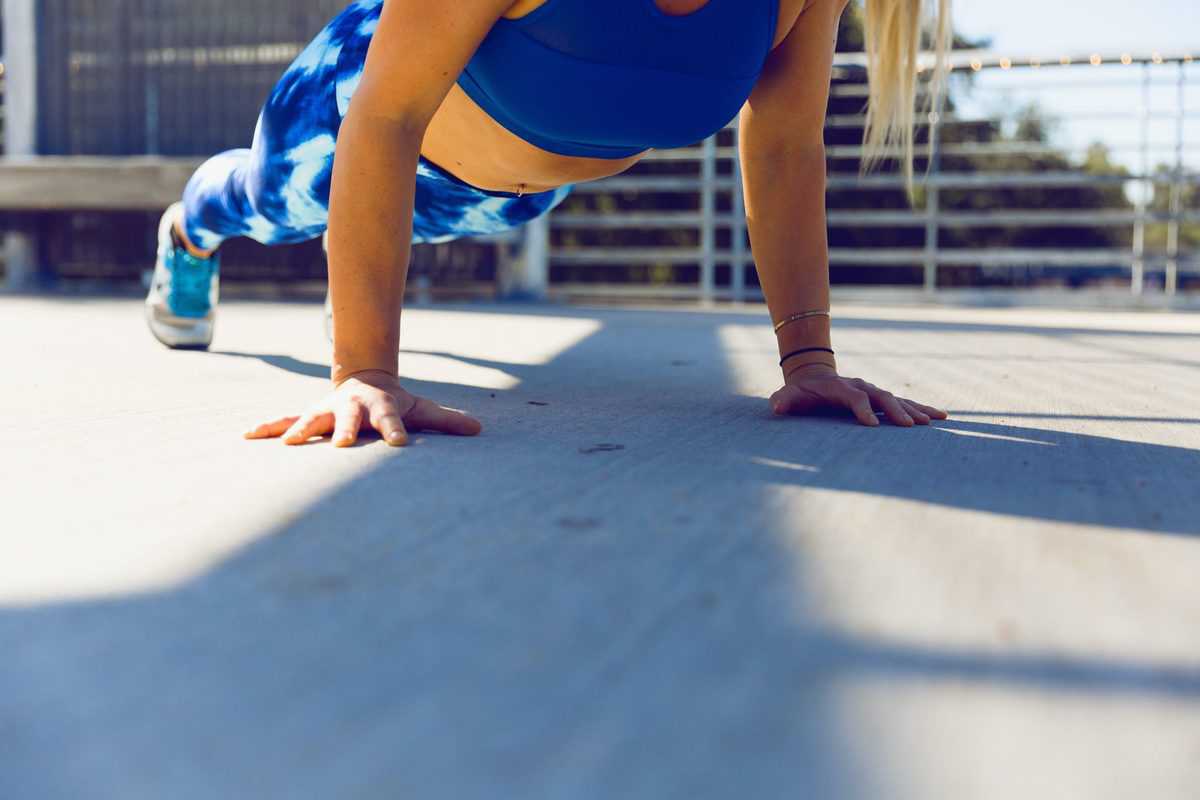
www.abbeyskitchen.com/about-abbey/
  • Previous Page
  • Go to page 1
  • Interim pages omitted …
  • Go to page 23
  • Go to page 24
  • Go to page 25
  • Go to page 26
  • Go to page 27
  • Interim pages omitted …
  • Go to page 89
  • Next Page

Get started with

Eight Free Recipe Books

From the co-founder of Neue Theory and creator of the Hunger Crushing Combo

Sign me up!
Abbey smiling at table
Abbey Sharp

“Foods may never be nutritionally equal. But we can make them morally equal by recognizing that our worth is never determined by what's on our plate.”

— Abbey Sharp, RD About Abbey ◥

Books

  • HCC™
  • Mindful Glow
  • Free E-Books

Blog

  • Nutrition
  • Recipes
  • Motherhood
  • Life

Explore

  • Neue Theory™
  • Bite Back
  • YouTube

Abbey

  • About
  • Coaching
YouTube TikTok Instagram Facebook X Pinterest
Abbey Sharp - The No BS Dietitian From Abbeys Kitchen

© Abbey's Kitchen 2026  All Rights Reserved •  ACCESSIBILITY STATEMENT •  Privacy Policy

This site uses cookies. By continuing to browse the site, you are agreeing to the use of cookies Accept Privacy Policy
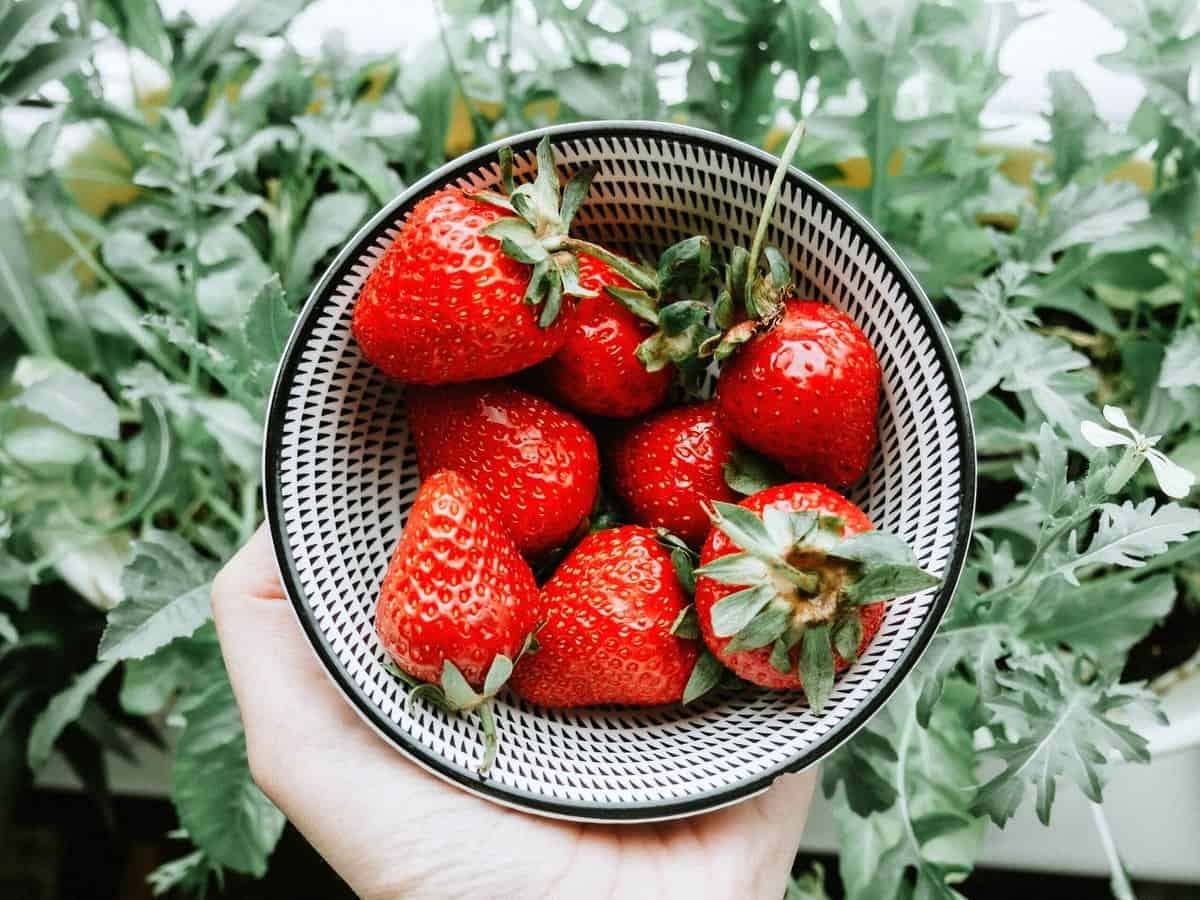
Privacy & Cookies Policy

Privacy Overview

This website uses cookies to improve your experience while you navigate through the website. Out of these, the cookies that are categorized as necessary are stored on your browser as they are essential for the working of basic functionalities of the website. We also use third-party cookies that help us analyze and understand how you use this website. These cookies will be stored in your browser only with your consent. You also have the option to opt-out of these cookies. But opting out of some of these cookies may affect your browsing experience.

Necessary
Always Enabled
Necessary cookies are absolutely essential for the website to function properly. This category only includes cookies that ensures basic functionalities and security features of the website. These cookies do not store any personal information.
Non-necessary
Any cookies that may not be particularly necessary for the website to function and is used specifically to collect user personal data via analytics, ads, other embedded contents are termed as non-necessary cookies. It is mandatory to procure user consent prior to running these cookies on your website.
SAVE & ACCEPT

Rate This Recipe

Your vote:


A rating is required
A name is required
An email is required