• Skip to main content

Abbey's Kitchen

Healthy Recipes, Nutrition Myth Busting, Healthy Eating Tips

  • Books
    • HCC™
    • The Mindful Glow Cookbook
    • Recipe eBooks
      • Family
      • Hypothyroidism
      • BLW
      • Vegan Week 1
      • Vegan Week 2
      • Vegan Week 3
      • Keto
      • Gluten Free Week 1
      • Gluten Free Week 2
      • Fitness
      • Paleo
  • Blog
    • Nutrition
    • Recipes
    • Motherhood
    • Life
  • Explore
    • Neue Theory™
    • Bite Back With Abbey Sharp
      • Apple Music
      • Spotify
      • Amazon Music
    • YouTube
  • Abbey
    • About
    • Coaching
    • Contact

Abbey Sharp

Last Updated June 18, 2024. Published June 21, 2024 By Abbey Sharp 6 Comments

No Bake Oatmeal Bar Recipe | Easy 3 Ingredient Vegan Snack for Kids

This Three Ingredient Easy No Bake Oatmeal Bar Recipe is a perfect healthy snack for BLW, Toddlers, and Kids, and is very versatile depending on what you already have on hand!

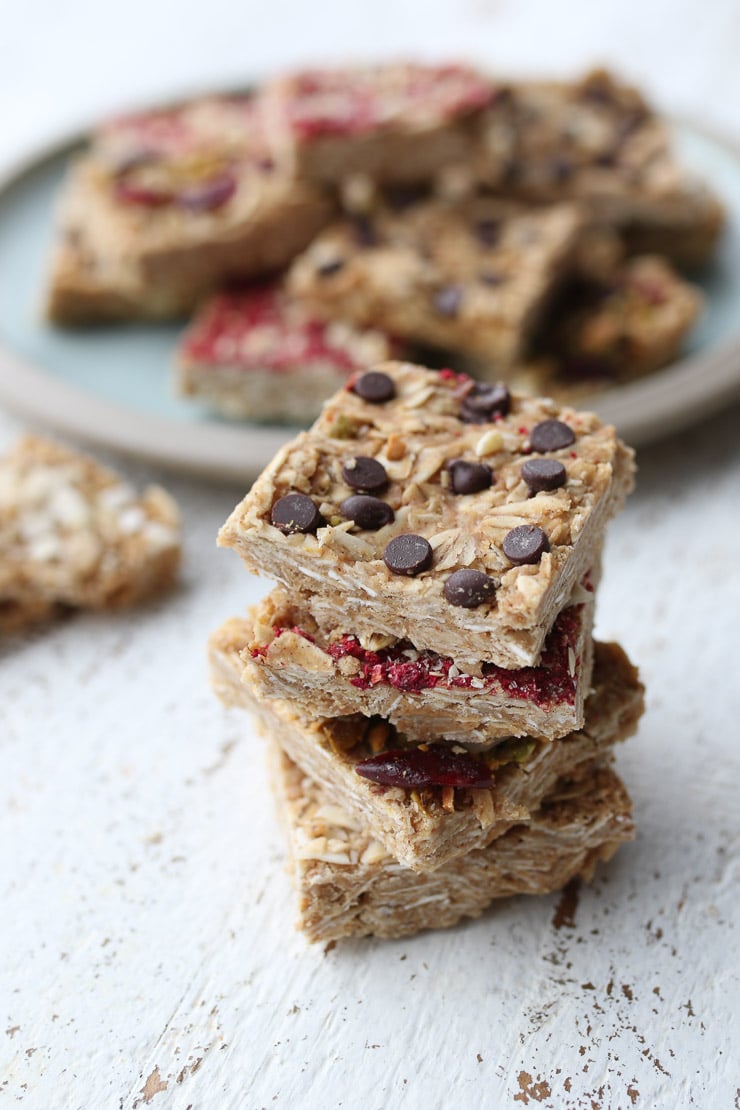
Four oatmeal bars stacked on top of one another with a plate of oat bars in the background.

If your household is looking like MY household, you’re probably gearing up for a busy back-to-school season. And as we all know, back-to-school season means getting back into the routine of packing lunches for the kiddos everyday. Kids have high energy needs, especially with a jam-packed school day. But I know a lot of us don’t have a ton of time to be prepping snacks from scratch or even have the ability to easily and quickly pick up lots of ingredients. So I wanted to share my kiddo’s new favourite snack that is super versatile: this easy, vegan, no bake oatmeal bar recipe.

Table of contents

  • Why This Recipe Works
  • Key Ingredients
  • How To Make This Recipe
  • Expert Tips
  • Recipe FAQ

Why This Recipe Works

This no bake oatmeal bar recipe is sure to be a snack-time favourite for a couple of reasons. They are:

  • Vegan
  • Kid-friendly and school-friendly (with modifications)
  • Packed with whole grains and healthy fats
  • Uses pantry staples
  • Highly customizable

Key Ingredients

This recipe could not be simpler, and basically just utilizes all of your pantry staples – there are only THREE mandatory ingredients!!

Quick cooking oats – I prefer the quick cooking oats to the old fashioned rolled oats since these bars are no bake; the texture is a little easier to handle.

Natural nut butter – Use a good natural peanut butter or almond butter with no added sugar or salt. Soy or seed-based butters (e.g. sunflower seed butter) are good swaps for those with peanut/tree nut allergies.

Maple syrup – This can easily also be honey or agave, whatever you have on hand.

The rest of the ingredients are optional including salt, cinnamon (or another favourite baking spice), vanilla and whatever toppings you want to throw on top.

Several no bake oatmeal bars stacked on a blue plate.

How To Make This Recipe

Step 1: Line a 9-inch square pan with parchment paper and set aside.

Step 2: Put the oats in a large bowl.

Step 3: In a small saucepan over medium-high heat, bring the maple syrup to a boil. Once it’s bubbling, add it to the oats, along with the peanut butter and any optional ingredients. Quickly mix everything, as it will become harder to mix if you wait.

Step 4: Transfer the mixture to the lined pan, and press down hard to pack it tightly. This will help the bars stay together. If you want to add more toppings on top, go for it now! Put the pan in the fridge or freezer for 1 hour, them cut it into 16 bars using a serrated knife.

Expert Tips

The sky is the limit when you’re flavouring up your oatmeal bars. This is your opportunity to really go to town using up any little odd or end you have in the pantry! Here are some ideas:

  • Freeze dried fruit (I like to pulverize or smash mine into a powder)
  • Minced nuts
  • Hemp hearts
  • Chia seeds
  • Flax
  • Mini chocolate chips
  • Coconut shreds
  • Sprinkles!!

Let the kids get involved by adding in some of their favourite toppings.

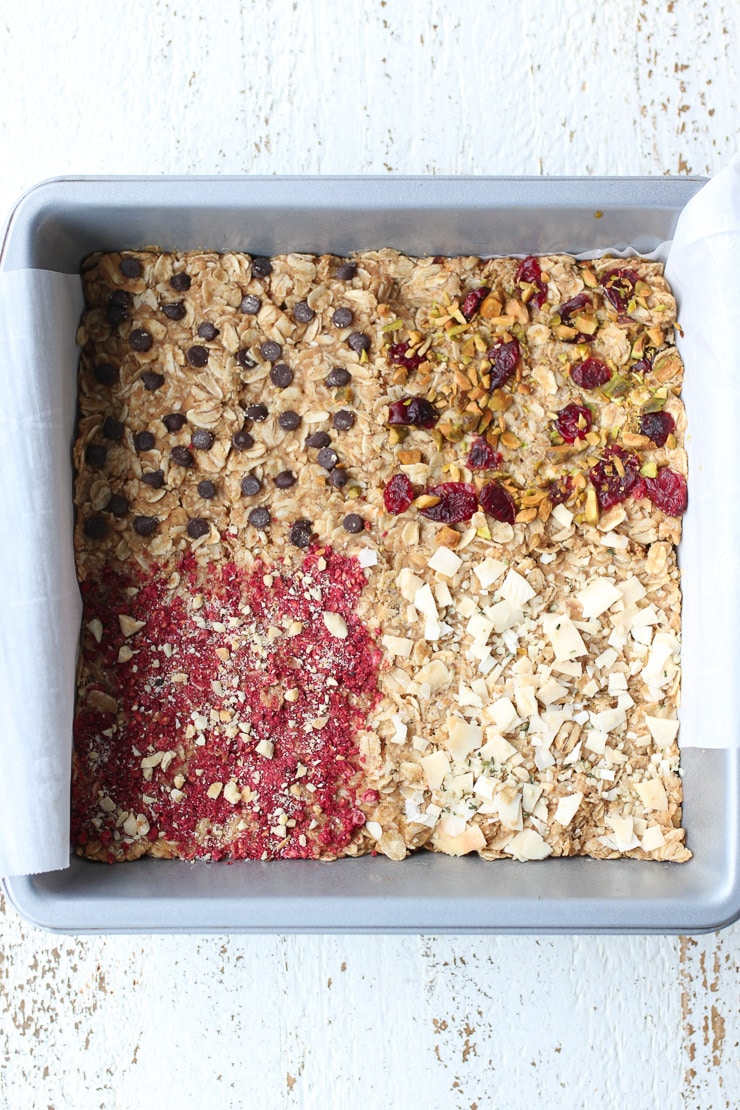
Birds eye view of oatmeal bars with a variety of different topping like chocolate chips, coconut flakes, and freeze dried fruit.

Recipe FAQ

Are these bars safe for a new eater starting BLW?

They are definitely safe, especially if you’re finely mincing up any dried fruit or nuts. Just one thing to note is that there is added sugar in them, so if you’re limiting this for little ones under 1, you may just want to be mindful of portions. In this situation, of course, it would also be really important to use maple syrup instead of honey. But for babies over 1, toddlers, and kids, this is a delicious no bake snack.

Can I get my kids involved in making these bars?

Since these bars are no bake, it’s easy for kids to get involved safely. Once you carefully put the hot maple syrup into the oats, have them help you mix in the peanut butter, and any of the add-ins or optional ingredients. You can also have them help you pack it down really tight. 

How can I store these bars if I make a big batch for snacks?

These bars can be kept at room temperature for 3-5 days in an airtight container (I usually like to cut them into squares and separate them in layers in an airtight container). They will last in an airtight container in the fridge for up to 1 month. You can also freeze them for up to 6 months if you’d like to make a larger batch. They can thaw overnight in the fridge, or in your purse if you’ll need to be out and about.

Can I make these nut free to be safe for school or daycare?

You can use sunflower seed butter or soy based butter in place of the peanut butter (and of course, avoid any nut toppings as your add-ins). However, always check with your school or daycare to make sure that these “faux” nut butters are still okay.

Birds eye view of oatmeal bars in a pan with different toppings like chocolate chips, dried fruit, and coconut.

More Recipes You Might Like

We love bars in my house and I do prefer to make my own to allow me to add in lots of nutritious toppings and limit the added sugar. If you liked this no bake oatmeal bar recipe, here are some more of my favourites:

  • Patriotic Vegan Oatmeal Breakfast Bars 
  • Toddler Vegan Homemade Granola Bars 
  • No Bake Cheerios Bars 
  • Vegan Cinnamon Bun Granola Bars 

Have you tried this no bake oatmeal bar recipe yet? Leave me a comment below and let me know what toppings your family added!

Print Recipe
5 from 9 votes

Easy No Bake Vegan Oatmeal Bars for Kids & Toddlers

These Three Ingredient Easy No Bake Vegan Oatmeal Bars are perfect healthy snacks for BLW, Toddlers, and Kids, and are very versatile depending on what you already have on hand!
Prep Time1 hour hr 20 minutes mins
Total Time1 hour hr 20 minutes mins
Course: Snack
Cuisine: American
Servings: 16
Calories: 113kcal
Author: Abbey Sharp

Ingredients

  • 2 cups quick cooking oats gluten free, if needed
  • ½ cup natural almond butter or peanut butter
  • ½ cup maple syrup
  • 3-4 tbsp the add-ins of your choice see below for ideas
  • 1/4 tsp salt optional
  • 1/2 tsp cinnamon optional
  • 1 tsp vanilla extract optional

Add-ins:

  • Mini chocolate chips
  • Pulverized freeze dried fruit
  • Minced dates raisins, cranberries
  • Minced almonds pecans, pistachios, seeds, coconut
  • Hemp hearts
  • Flax

Instructions

  • Line a 9-inch square pan with parchment paper and set aside.
  • Put the oats in a large bowl.
  • In a small saucepan over medium-high heat, bring the maple syrup to a boil. Once it’s bubbling, mix it in the oats, along with the peanut butter, any of the optional ingredients and your “add ins”.
  • Quickly mix everything together as it will become very hard to mix if you wait.
  • Transfer the mixture to the lined loaf pan, and press down very hard to pack it tightly. This will help the bars stay together. If you want to add more toppings on top, go for it now! Put the pan in the fridge or freezer for 1 hour then using a serrated knife, cut into 16 bars.

Nutrition

Calories: 113kcal | Carbohydrates: 15g | Protein: 3g | Fat: 5g | Saturated Fat: 1g | Sodium: 75mg | Potassium: 111mg | Fiber: 1g | Sugar: 7g | Calcium: 20mg | Iron: 1mg
Abbey Sharp

Abbey Sharp is a Registered Dietitian (RD), regulated by the Ontario College of Dietitians. She is a mom, YouTuber, Blogger, award winning cookbook author, media coach specializing in food and nutrition influencers, and a frequent contributor to national publications like Healthline and on national broadcast TV shows.
www.abbeyskitchen.com/about-abbey/

Last Updated June 5, 2024. Published June 19, 2024 By Abbey Sharp 43 Comments

Postpartum Hair Loss Help | Foods for Hair Growth from a Registered Dietitian

Postpartum hair loss is a normal process, but can cause stress and anxiety for new moms. We review why it happens and what foods you can eat for healthy hair growth.

Postpartum hair loss is a normal process, but it can cause stress and anxiety for new moms. We review why it happens, share postpartum hair loss help and other strategies for healthy hair growth.

Pregnancy is a beautiful thing, and all of the changes it brings along with it are nothing short of magical. But that doesn’t mean it’s fun to watch your hair come out in clumps after you’ve just pushed a freaking human out of your lady flower. Ah yes, if you were enjoying that thick luscious head of hair during pregnancy get ready for a RUDED awakening. According to a statistics from the American Pregnancy Association, 40-50% of women are affected by postpartum hair loss. Okay, so now I don’t feel so bad.

First, let’s talk about how normal hair growth occurs before we get into the some postpartum hair loss help.

The Hair Growth Cycle

Woman holding her hair from the back.

Normal hair cycle involves the replacement of every hair on the scalp every 3-5 years. Each hair follicle on our scalp has its own routine and growth speed uninfluenced by the neighbouring hair follicle. Unfortunately, this makes it even harder for us to understand and control postpartum hair loss, or hair loss in general. What we do know is that the hair cycle has three phases:

  1. Anagen – growth phase.
  2. Catagen – transitional phase which lasts about ten days.
  3. Telogen – resting phase when hair is released and falls out.

What is Postpartum Hair Loss?

Postpartum hair loss or postpartum alopecia is a temporary but sudden shedding of hair after giving birth. Some mothers experience an extra few loose strands while others experience massive clumps of hair coming out. Both are considered a normal (albeit really annoying) postpartum change.

Black and white photo of two people holding their pregnant stomachs.

Explaining postpartum hair loss starts with pregnancy. High levels of estrogen and progesterone during pregnancy causes an increase in hair and nail growth. Maybe you noticed that your nails were suddenly “on fleek” and your hair was doing all the right things. Hey, amidst the hemorrhoids and heart burn, there has to be SOME perks in pregnancy, right?

Well, one study examined the growth phase of hair follicles during pregnancy and found that 85% of non-pregnant woman’s hair follicles were in the anagen phase (aka the growth phase), while in the second trimester, the hair growth phase increased to 95%.

Now, it’s time for the no fun part.

Those nine months of “hair goals” will likely come to an end as your pregnancy comes to a close as your hormone levels drop significantly and normalize. In the study I just mentioned, they found that three months post-pregnancy, the hair growth phase decreased significantly to 77%. BOO!

To give you a better idea, normal hair loss per day amounts to about 50-100 strands of hair. New mothers can shed up to 400. This is a huge chunk of hair, literally! But it’s basically your body’s natural attempt to catch up after nine months of very little hair shedding. After 6 months postpartum, most women describe the shedding as slowing down.

Other Factors That May Cause Postpartum Hair Loss

Stress

Ahh stress. It seems to always play an important role in our health and having a baby can be a really stressful time. If you thought childbirth was stressful, well now you’ve got a newborn baby and you’re probably running on very little sleep. All of these things can impact our health, including our hair cycle.

Low Iron Levels

There is some evidence that low iron levels at postpartum could cause hair loss. During pregnancy a women’s iron requirements are increased from 18 mg to 27 mg, while after pregnancy those iron requirements decrease to only 9mg/day of iron unless you lost a significant amount of blood during childbirth or had a cesarean section. This study found that a cesarian section is one of the many risk factors for severe postpartum anemia. In that case, you may need to take an iron supplement and/or include iron rich food sources in your diet.

Drug Side Effects

Drugs carry a ton of side effects, and hair loss may be one of them. So always consult with your doctor or pharmacist about drug side effects, especially when you’re pregnant.

Breastfeeding

Some claim that breastfeeding can cause hair loss, however there is NO RESEARCH to support that theory. Breastfeeding organizations like the Australian Breastfeeding Association and Canadian Breastfeeding Foundation have concluded that there is no relation between hair loss and breastfeeding. So breastfeed away, and don’t be concerned that it’s causing your hair loss, because postpartum hair loss is a normal process.

Thyroid Condition

When your thyroid gland isn’t working properly, you either produce too much or not enough of certain hormones. This disruption in hormone production can cause hair loss. When hormones T3 and T4 are affected, they can interfere with the development of hair at the root of your scalp and may cause your hair to fall out. Speak with your doctor to monitor your thyroid health and get your levels evaluated.

Strategies to Manage Postpartum Hair Loss

Women experiencing hair loss often express anxiety and fear about going bald. I get it, it’s freaking me out too. Hair loss, postpartum or otherwise, is associated with low self-esteem, depression and social isolation. Women specifically often associate hair with their identity, femininity, attractiveness and sexuality.

While we can’t prevent this hair loss from happening, you can try a postpartum hair loss remedy to promote healthy hair growth and a healthy lifestyle post pregnancy.

Best Foods for Postpartum Hair Loss Help

Protein Packed Foods

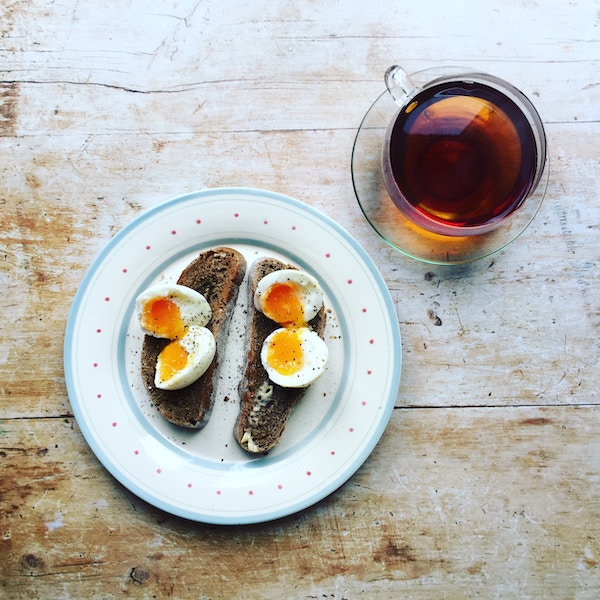
Birds eye view of eggs and toast on a white plate as a postpartum hair loss help.

One of the vitamins often linked to hair growth is biotin, which is a part of the B-vitamin family. According to research, biotin deficiency is often associated with hair loss in humans, however whether it’s an effective form of treatment is debatable. A review of the use of Biotin for hair loss found that biotin supplementation improved hair and nail growth but more definitive research is needed. That doesn’t mean it’s not worth getting lots of protein-rich foods into your day including:

  • Liver
  • Egg yolks
  • Nuts and seeds
  • Salmon
  • Milk, cheese and yogurt
  • Avocados
  • Sweet Potato

Vitamin A Rich Foods

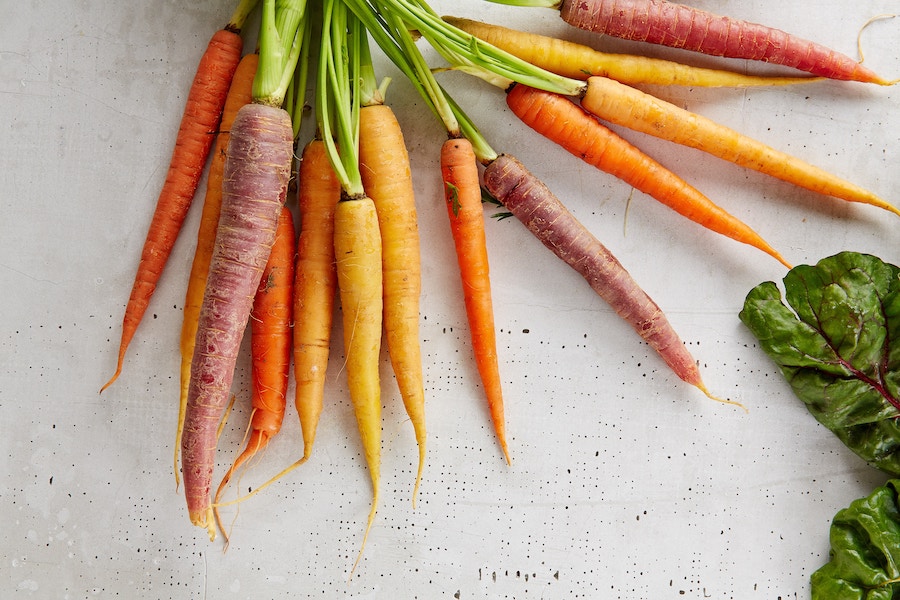
Bunch of multicoloured carrots.

Vitamin A is an essential nutrient for healthy vision, teeth, skeletal tissue and skin. It also helps our skin make an oily substance known as sebum which helps moisturize our scalp to promote a healthy head of hair. Vitamin A can be found in a wide range of foods including, but not limited to:

  • Carrots
  • Sweet Potatoes
  • Pumpkins
  • Spinach
  • Kale
  • Milk and yogurt
  • Eggs
  • Cod liver oil

Vitamin E Rich Foods

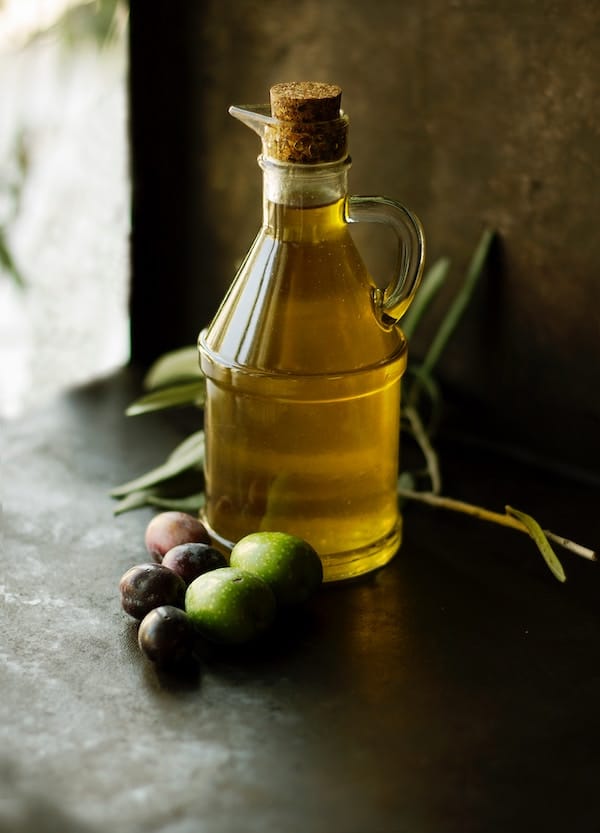
Jug of olive oil consumed as a postpartum hair loss help.

Bring on the antioxidants! Antioxidants should always be included in a healthy diet because they can do wonders for our health, including hair growth. In one study, participants with hair loss experienced a 34.5% increase in hair growth after they supplemented with vitamin E for eight months. This is likely due to the antioxidant known as tocorienol. Some of the best sources include:

  • Vegetable oils (olive, sunflower, corn, safflower)
  • Nuts and seeds
  • Green leafy vegetables (spinach, broccoli, swiss chard)

Zinc Rich Foods

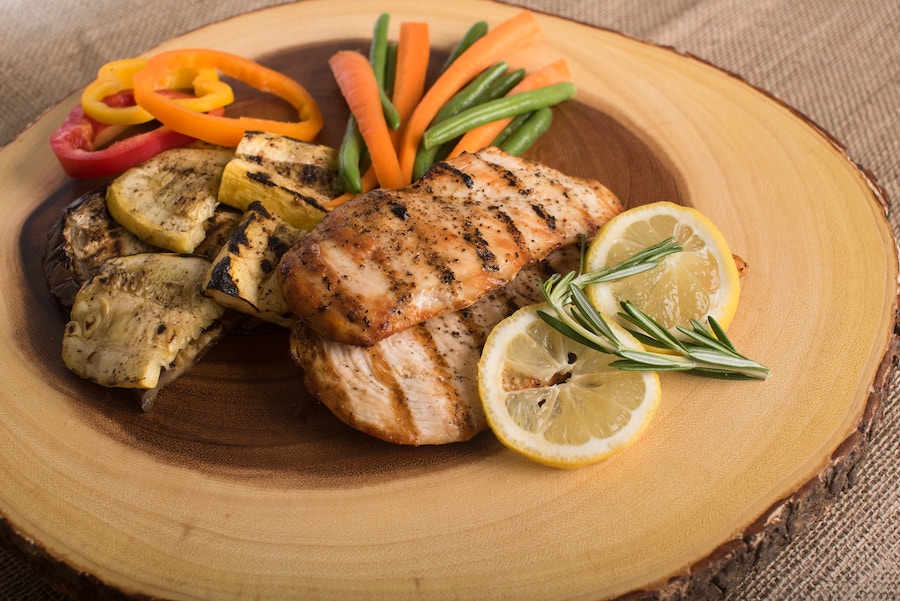
Grilled chicken and vegetables on a wooden plate.

Zinc is an essential antioxidant which is involved in many bodily processes, including wound healing, cell division and growth. Hair loss can be a sign of zinc deficiency, which is why researchers have found that zinc supplementation may aid in hair growth. While alopecia (baldness) is not the same as postpartum hair loss, the research on alopecia treatment may be applied to postpartum hair loss remedies as well. One study found that zinc supplementation was effective in alopecia patients who were suffering from low zinc levels. Having said that, it is still unclear whether eating zinc rich foods or taking zinc supplements is effective in individuals that are not zinc deficient. In any case, getting enough zinc in your diet is essential, so always aim to include a variety of these foods:

  • Seafood (oysters, crab, lobster)
  • Red meat and poultry
  • Beans and lentils
  • Yogurt
  • Cashews
  • Chickpeas
  • Cheese

Vitamin C Rich Foods

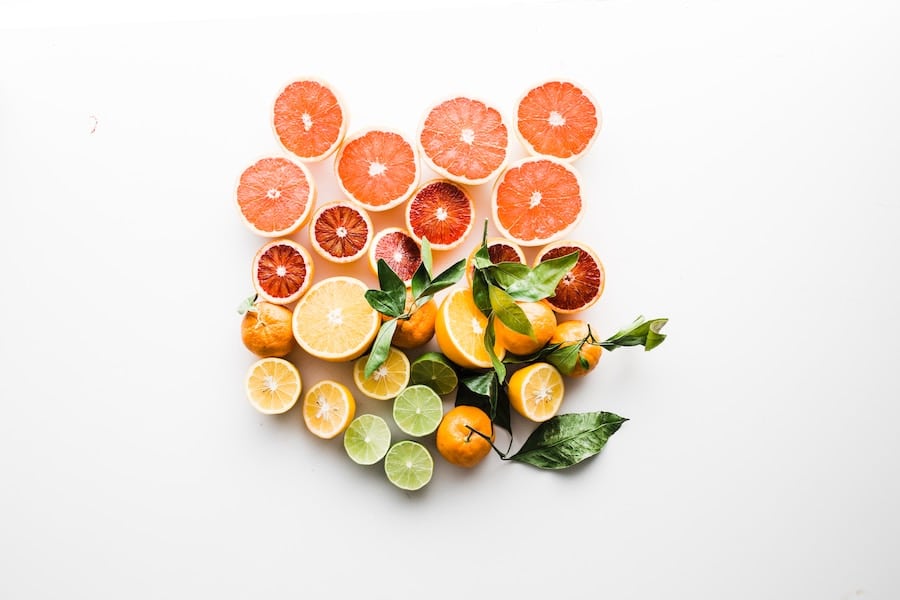
Birds eye view of fruits and vegetables on a white surface.

Yes, another antioxidant! Just like vitamin E, vitamin C is a powerful antioxidant that helps to produce and maintain healthy collagen levels within our hair follicles. Think of collagen like the glue that holds our body together – it provides strength and structure, two things essential to beautiful locks. Get in your vitamin C fix by including these foods in your diet:

  • Cantaloupe
  • Citrus fruits (oranges, grapefruit)
  • Tropical fruits (mango, papaya, pineapple)
  • Berries (strawberries, raspberries, blueberries and cranberries)
  • Watermelon

Alternative Postpartum Hair Loss Help

Styling Your Hair

Try to limit the use of damaging heating tools which can often make your hair look thinner. You may also want to limit brushing and be gentle when you do!

Put it Up

Gently pull your hair back or up if you’ve got a stage four clinger on your hands. I don’t know about you, but if my kid sees as much as a little tuft of hair he can grab onto, it’s going into his death grip and coming out!

Keep Up a Multivitamin

It’s recommended that women take a multivitamin after pregnancy, especially if you’re breastfeeding. You can choose to take either a daily multivitamin or continue to take your prenatal vitamin if you have any leftover.  According to a 2017 review, taking a prenatal vitamin ensures you’re getting enough vitamins and minerals, which are increased when you’re lactating. It is also best to consult with a dietitian before choosing an over the counter supplement because over-supplementation of some vitamins may actually contribute to hair loss.

Minimize Stress

I know, I know. It’s easier said than done – especially for a new sleep-deprived mother. But mothers should prioritize their health and make time for themselves as stress is often linked to hair loss. Stress relief can be different for everyone but it might be nice to indulge yourself in a yoga class, massage session, workout class or reading a book. Moms, let your partner have some alone time with babe. You deserve a little time for you.

Check in With Your Doctor

While postpartum hair loss is a totally natural process while your body adjusts to hormone changes, at times there may be other things at play. To eliminate that doubt, check in with your doctor to make sure everything else is normal.

Bottom Line on Postpartum Hair Loss Help

Before you go popping nutrition supplements or packing your smoothies with mass doses of “hair growth” nutrients, keep in mind that the majority of these research on hair and nutrition is based on the notion that nutrition deficiencies can cause hair loss. Whether taking more of these nutrients aids in hair growth is still unclear. At the end of the day, getting adequate nutrition should be a priority any time in the life cycle, so whether it has a direct impact on postpartum hair loss may not be the most important thing. Somethings we just can’t prevent, but like everything in this motherhood thing, this phase too will pass. Keep looking ahead mama, the next chapter is moments away. You totally got this.

Contribution By:

RD2B Sumeet Chopra and Sofia Tsalamlal, RD, MHSc Nutrition Communication

More Blog Posts You Might Like:

If you liked this blog post discussing postpartum hair loss help, then you might also enjoy more blog posts on pregnancy and postpartum:

  • Low Carb Pregnancy: Can it Cause Birth Defects?
  • Not Losing Weight Breastfeeding? Does Breastfeeding Cause Weight Loss or Weight Gain?
  • My Postpartum Anxiety Story | How Becoming a Mom Actually Reduced my Anxiety and Stress
  • Mom Guilt | My Breastfeeding Story
  • 6 Pregnancy Nutrition Myths That are Total BS: Part 1
  • Even More Pregnancy Nutrition Myths That We’re Sick of Debunking: Part 2

So mamas, let me know – did you experience any postpartum hair loss? Do you have a postpartum hair loss remedy you want to share? Leave me a comment below!

Abbey Sharp

Abbey Sharp is a Registered Dietitian (RD), regulated by the Ontario College of Dietitians. She is a mom, YouTuber, Blogger, award winning cookbook author, media coach specializing in food and nutrition influencers, and a frequent contributor to national publications like Healthline and on national broadcast TV shows.
www.abbeyskitchen.com/about-abbey/

Last Updated June 16, 2024. Published June 17, 2024 By Abbey Sharp 5 Comments

Pistachio Pesto Pasta Salad with Parsley | Vegan, Gluten Free

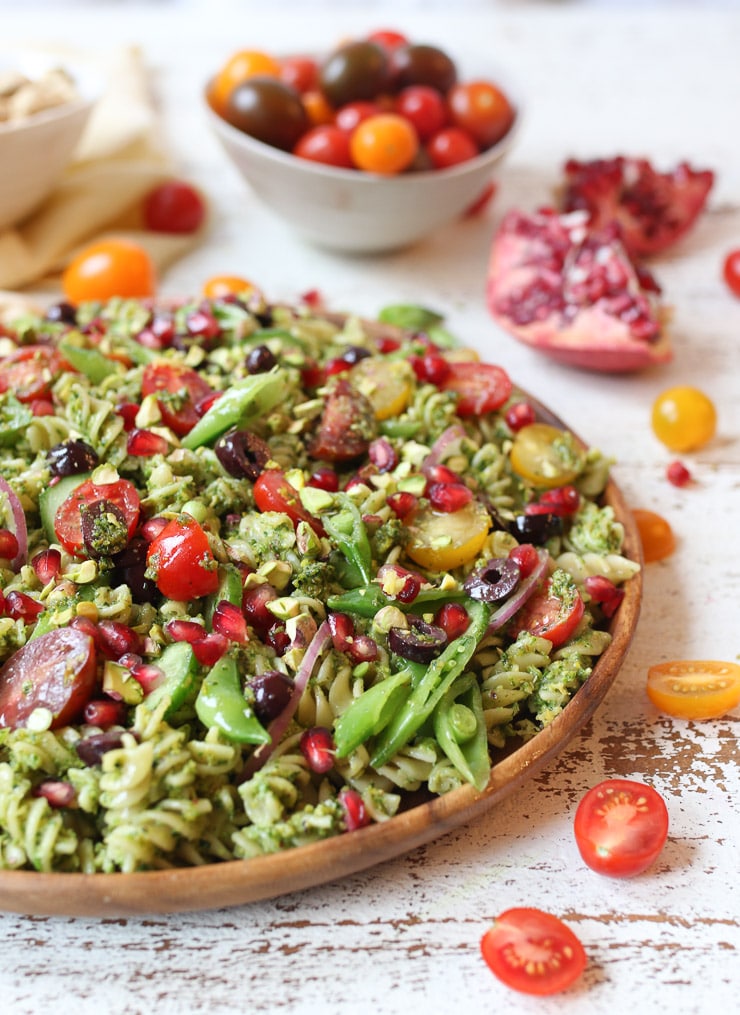
Pistachio parlsey vegan pesto pasta salad on a wooden plate with cherry tomatoes and pomegranates.

This Pistachio Pesto Pasta Salad with parsley and pistachios is the perfect gluten-free, vegetarian picnic food or BBQ side dish. Made with just a handful of ingredients, you’ll have this ready in no time.

Pistachio parlsey vegan pesto pasta salad on a wooden plate with cherry tomatoes and pomegranates.

Whether you’d like to serve this pistachio pesto pasta salad as a main dish or side dish, this pasta salad is perfect for any occasion. Growing up, my dad made a lot of homemade pesto but without the cheese due to my mom’s dislike of cheese so trust me when I say I’ve nailed down a delicious dairy-free pesto! You won’t even notice that the cheese is missing!

Table of contents

  • Why This Recipe Works
  • Key Ingredients
  • How to Make This Recipe
  • Expert Tips
  • Recipe FAQs
  • More Recipes You Might Like

Why This Recipe Works

You’re going to love just how easy it is to make this pistachio pesto pasta salad. On top of ease, this pasta is also:

  • Vegan-friendly
  • Meal prep friendly
  • Can be easily scaled up for parties and potlucks
  • Minimal cooking needed, perfect for hot summer nights!

Key Ingredients

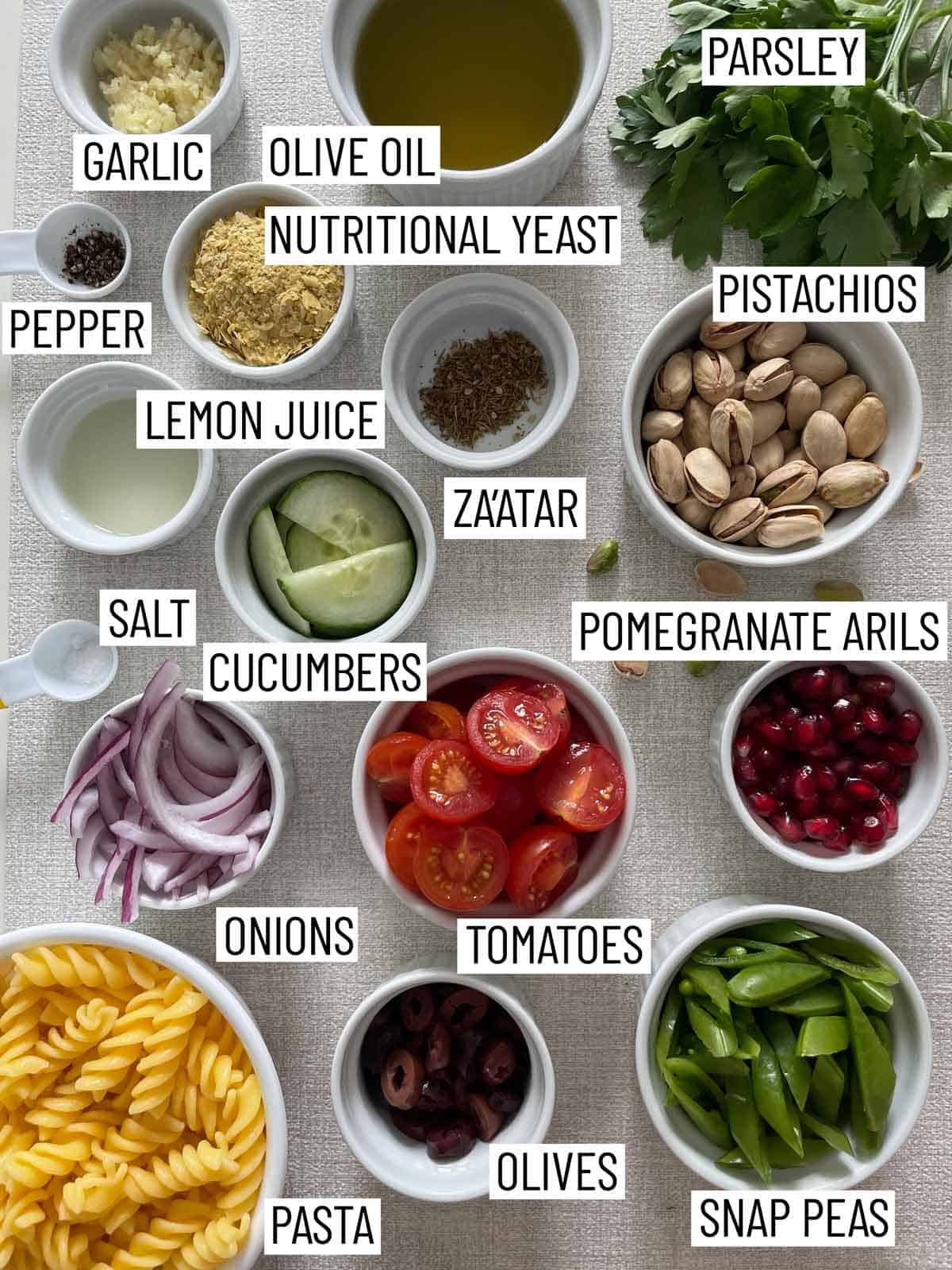
Ingredients needed to make pesto pasta salad.

Vegan pesto — I make my own pesto for this pistachio pesto pasta salad. I use a combination of parsley, pistachios, garlic, nutritional yeast, olive oil, lemon juice, za’atar, salt, and pepper. The nutritional yeast has a similar flavour profile to cheese so be sure to not skip that!

Pasta — Feel free to use gluten free or whole wheat pasta, based on your dietary preferences. You can even use chickpea pasta or lentil pasta if you’d prefer.

Mix ins — To add more nutritional value to this salad, we pack it with a ton of mix ins like snap peas, tomatoes, onions, olives, pomegranate arils, and cucumbers. These can all be used without cooking to cut down on cooking time. You can swap with whatever vegetables you have in your fridge.

How to Make This Recipe

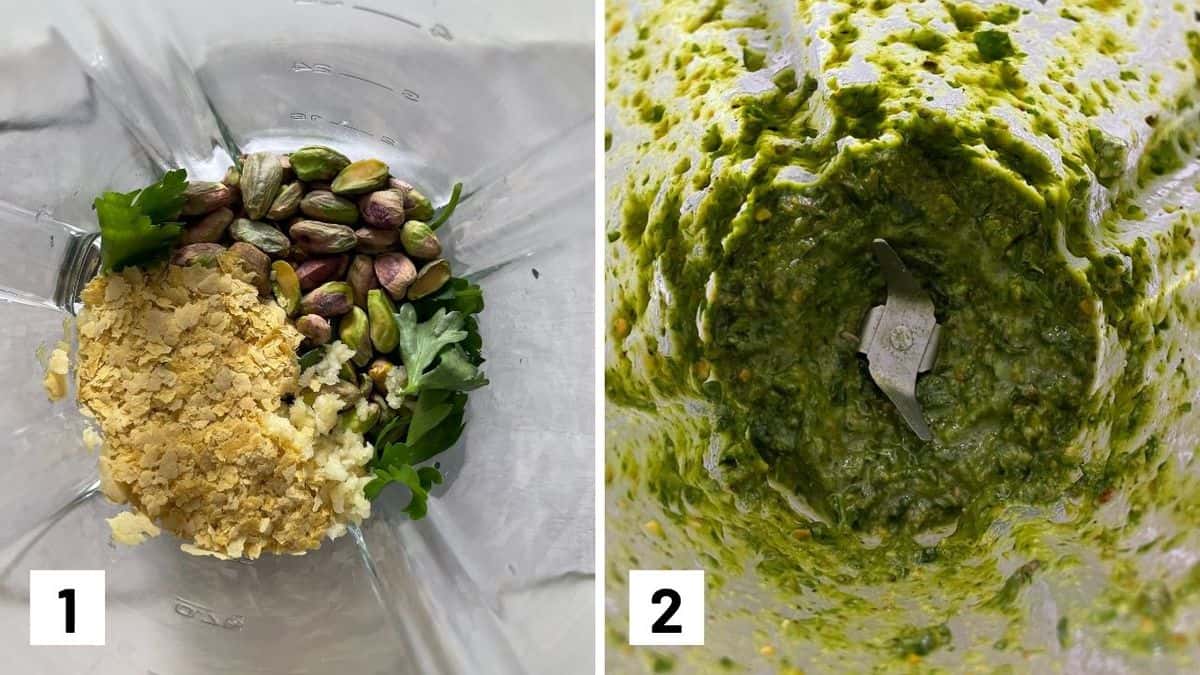
Set of two photos showing pesto ingredients in a blender then blended up.

Step 1: Combine the parsley, pistachios, garlic, nutritional yeast in a food processor.

Step 2: Puree the mixture until smooth. Then add the olive oil, lemon juice, za’atar and salt and pepper to taste.

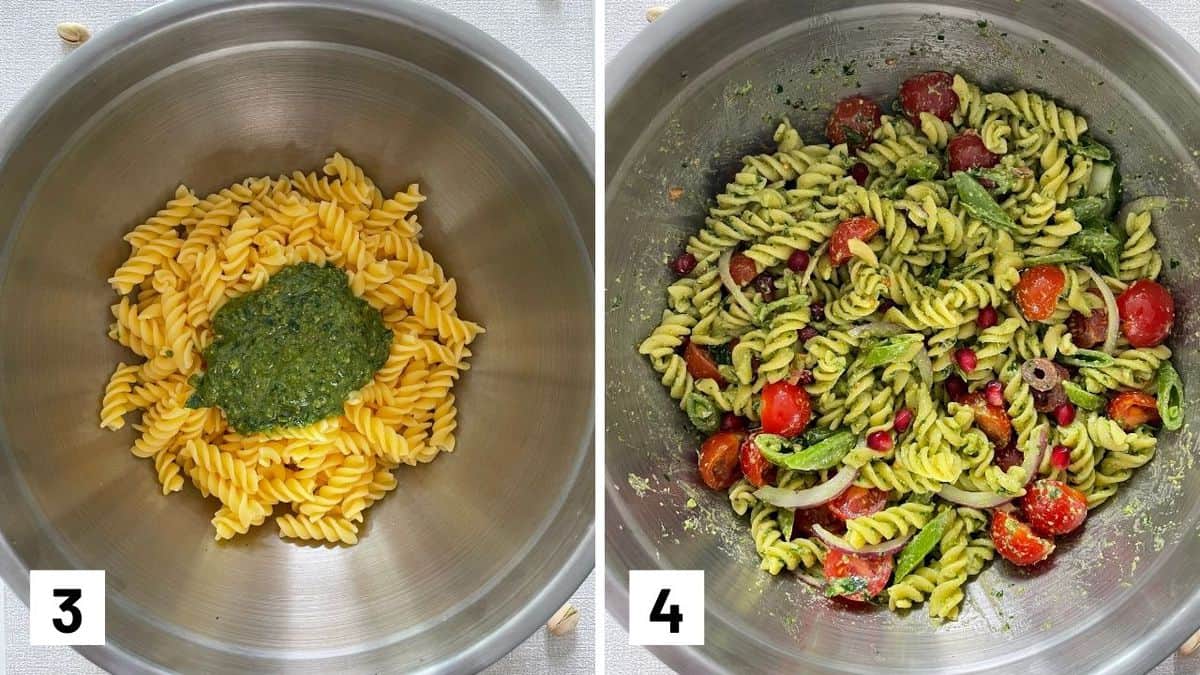
Set of two photos showing the pasta and pesto together in a bowl then tossed with vegetables.

Step 3: Toss the cooked pasta with the pistachio pesto sauce.

Step 4: Toss the pistachio pesto pasta salad with the rest of the salad veggies, olives and pomegranate arils. Enjoy at room temperature.

Expert Tips

Be sure to cook your pasta in a pot of salted water.

Don’t let the pasta cool too much before tossing the pasta in the pesto. The pesto will stick to the pasta better if it’s still a little bit on the warmer side.

Feel free to use a different pasta shape. Penne and farfalle pasta work great for this pistachio pesto pasta salad as well.

Recipe FAQs

What else can I add?

Some cooked peas, sautéed asparagus, green onions, toasted nuts, corn, chickpeas, or even some arugula would make for a nice addition to the pistachio pesto pasta salad.

How do I store this pasta salad?

If you have making this ahead of time, make sure you are placing them into an airtight container in the fridge for the best results. The salad should last for up to 3 to 4 days. You could also dress the pasta and hold off on adding the vegetables until the day of.

Can I make this not-vegan?

You sure can! Shredded chicken, shredded cheese, goat cheese, mozzarella balls, and more can be added to this pistachio pesto pasta salad!

Do I have to use parsley?

You can use whatever fresh herbs you have on hand! Basil is my next go-to.

Pistachio parlsey vegan pesto pasta salad on a wooden plate with cherry tomatoes and pomegranates.

More Recipes You Might Like

If you’re looking for more recipes like this pistachio pesto pasta salad, try these ones:

  • Vegan Olive Pesto Flatbread
  • Beet Green Pesto Zoodles
  • Vegan Buffalo Cauliflower Pasta Salad
  • Grilled Avocado & Watermelon Salad
  • Vegan Grilled Broccoli, Carrots & Avocado Salad

Lovelies, I would love to know what YOU put in your pesto !

Pistachio parlsey vegan pesto pasta salad on a wooden plate with cherry tomatoes and pomegranates.
Print Recipe
5 from 5 votes

Pesto Pasta Salad with Parsley and Pistachios (Vegan)

This Pesto Pasta Salad with parsley and pistachios is the perfect gluten-free, vegetarian picnic food or BBQ side dish. Made with just a handful of ingredients, you'll have this ready in no time.
Prep Time15 minutes mins
Total Time15 minutes mins
Course: Side Dish, Salad
Cuisine: Italian, American
Servings: 6 people
Calories: 417kcal
Author: Abbey Sharp

Ingredients

  • Pesto:
  • 2 cups flat Italian parsley leaves
  • ½ cup shelled pistachios
  • 2 small cloves garlic minced
  • 3 tbsp nutritional yeast
  • ½ c olive oil
  • 1 tbsp lemon juice
  • ½ tsp Za’atar
  • Salt and pepper to taste
  • Salad:
  • 1 lb gluten free or whole wheat pasta cooked
  • 1 cup halved cherry tomatoes
  • ¼ cup thinly sliced red onion
  • ¼ cup thinly sliced cucumber
  • ½ cup snap peas sliced
  • ¼ cup Kalamata olives sliced
  • ¼ cup pomegranate arils

Instructions

  • Combine the parsley, pistachios, garlic, nutritional yeast in a food processor and puree until smooth. Then add the olive oil, lemon juice, za’atar and salt and pepper to taste.
  • Toss with cooked pasta and salad veggies, olives and pomegranate arils. Enjoy at room temperature.

Video

https://www.abbeyskitchen.com/wp-content/uploads/2019/06/Abbey-Pistachio-Pasta-Salad-Final.mp4

Notes

  • Be sure to cook your pasta in a pot of salted water.
  • Don’t let the pasta cool too much before tossing the pasta in the pesto. The pesto will stick to the pasta better if it’s still a little bit on the warmer side.
  • Feel free to use a different pasta shape. Penne and farfalle pasta work great for this pesto pasta salad as well.

Nutrition

Calories: 417kcal | Carbohydrates: 68g | Protein: 17g | Fat: 12g | Saturated Fat: 2g | Sodium: 615mg | Potassium: 569mg | Fiber: 5g | Sugar: 3g | Vitamin A: 2070IU | Vitamin C: 40.1mg | Calcium: 97mg | Iron: 5.2mg

Abbey Sharp

Abbey Sharp is a Registered Dietitian (RD), regulated by the Ontario College of Dietitians. She is a mom, YouTuber, Blogger, award winning cookbook author, media coach specializing in food and nutrition influencers, and a frequent contributor to national publications like Healthline and on national broadcast TV shows.
www.abbeyskitchen.com/about-abbey/

Last Updated June 5, 2024. Published June 14, 2024 By Abbey Sharp 14 Comments

Satay Chicken Recipe with Thai Almond Sauce | Grilled Summer Appetizer

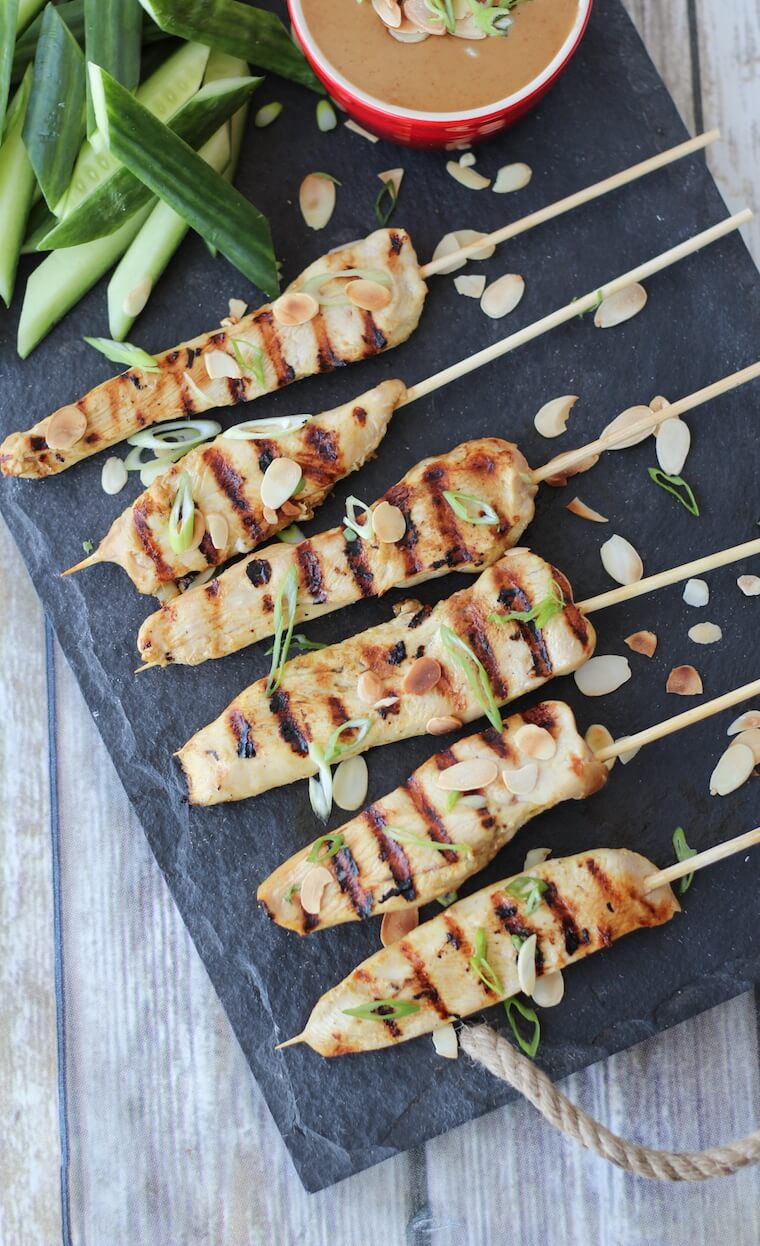
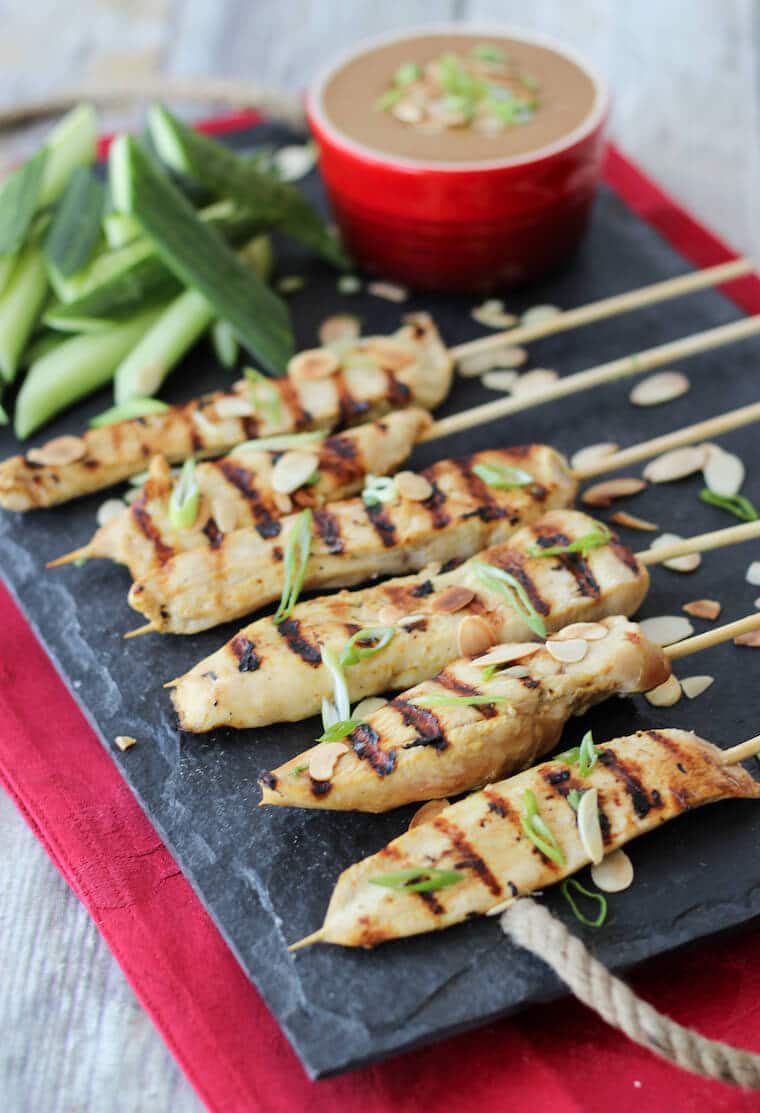
Overhead image of six gluten free chicken satay skewers with green onions on top.

This gluten free satay chicken recipe with Thai almond sauce is a perfect healthy grilled summer appetizer that everyone will love.

Overhead image of six gluten free satay chicken skewers with green onions on top.

I know I’m about to make myself sound like a super white girl (I am pretty pale, to be fair), but chicken satay was the first non-chicken-ball Asian food I ever had. And I was 16. I know- I had a steep learning curve about food ahead of me to get where I am today.

To my defense though, I was raised by two non-foodies and was living in Peterborough at the time. One day, my boyfriend’s parents ordered in from a Thai restaurant and I nervously tried my first order of satay chicken with peanut sauce. Honestly, I’m not sure what I was scared of, but it just goes to show how sheltered I apparently was.

Being a home chef with an arsenal of Asian ingredients in the house at any given time, I thought I would do a chicken satay up my way. I wanted to make gluten free chicken satay for my GF sister (which means tamari, instead of soy), and whip up a delicious Thai almond sauce for a unique twist. It’s not traditional, but I love making it at home.

Table of contents

  • Why This Recipe Works
  • Key Ingredients
  • How To Make This Recipe
  • Expert Tips
  • Recipe FAQs
  • More Recipes You Might Like

Why This Recipe Works

This is a perfect pool party or cottage snack because it’s hand-held, dippable and super lean. The chicken is marinated in lite coconut oil to yield a super moist, yet lean source of protein. I then use almond butter in place of the traditional peanut butter to make a nutrient-rich Thai almond sauce. Peanut butter works too, but I just had almond butter on hand.

I love that almonds have a combination of fibre, protein and healthy fats to keep you feeling fuller longer. They’re also packed with vitamin E, B2, magnesium, phosphorus and iron! This satay chicken recipe is nutrient dense and delicious – dietitian and foodie approved.

Key Ingredients

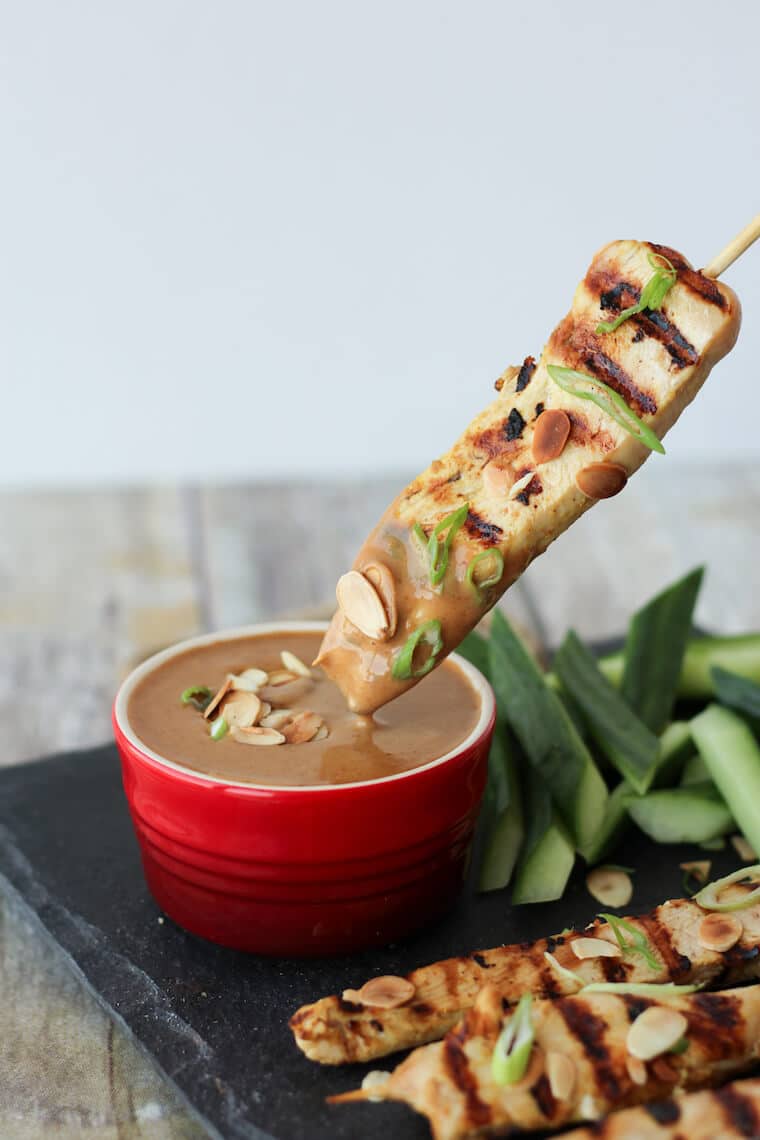
A skewer of chicken satay being dipped in an almond sauce.

Coconut Milk – Thai flavours can be quite spicy, but the cooling effect of the coconut milk balances it out perfectly. I used lite coconut, which has the same flavour and just enough fat.

Lime Juice – Do not skip the lime. Fresh is best, but pre-juiced works as well. The tangy acidity of the lime juice is essential.

Tamari – We use tamari instead of soy sauce to keep this satay chicken recipe gluten free. I went for a reduced sodium version.

Chicken Breast – This is the base of our satay chicken recipe. Of course, you could use another cut of chicken, but the chicken breast works best for skewers.

Almond Butter – The creamy, nuttiness of almond butter pairs really well with chicken. Peanut butter works as well if that’s what you prefer.

How To Make This Recipe

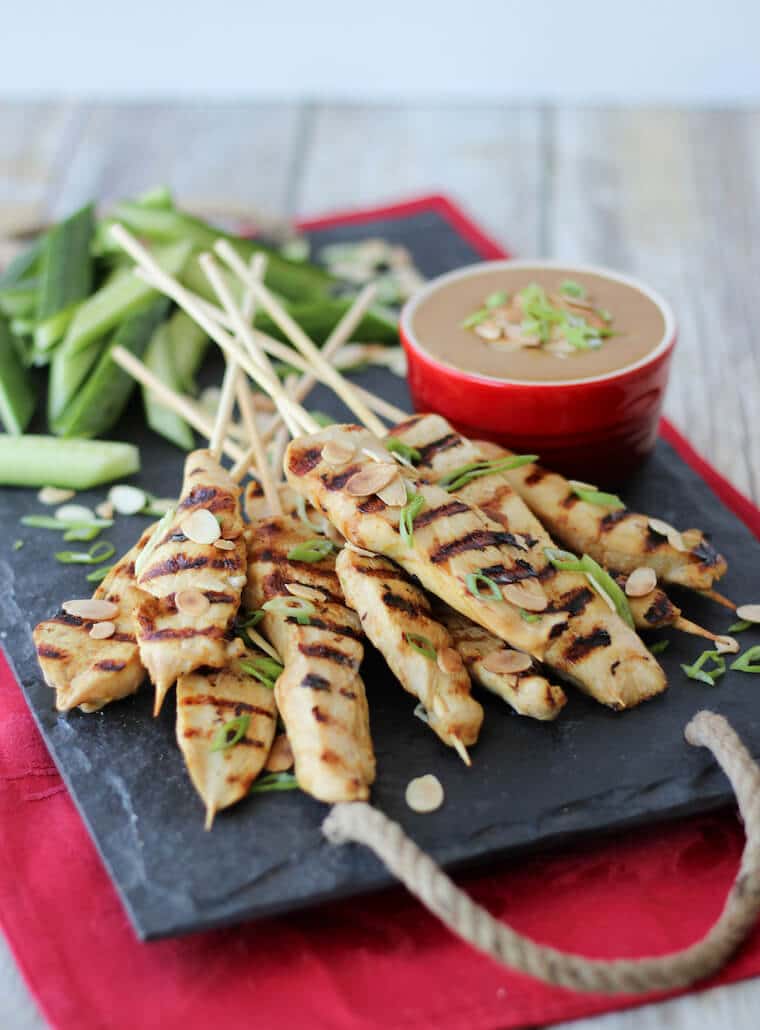
An image of a serving platter of multiple chicken satay with thai almond sauce in the background.

Step One: Combine the marinade ingredients and transfer to a resealable bag with the chicken. Refrigerate and marinate for 2 hours.

Step Two: Meanwhile, mix together the almond sauce ingredients and set aside.

Step Three: Preheat your grill to medium high heat. Thread the chicken pieces onto long skewers (being sure to soak them first if they are wooden) and grill for about 4-5 minutes per side, until cooked through.

Step Four: Serve with the almond sauce, garnished with toasted almonds and green onions.

Expert Tips

I kept this Thai almond sauce pretty mild because my kids eat it too, but feel free to adjust it based on your own tastes. When I’m feeling a bit of a kick, I add a pinch of red chili flakes or hot sauce.

Recipe FAQs

Can I make this satay chicken recipe with soy sauce instead of tamari?

Yes you can. I chose to use tamari to keep this satay chicken recipe gluten free, but soy sauce works fine if you tolerate gluten.

Is there a nut free alternative for the Thai almond sauce?

You could use sunflower seed butter or tahini. It changes the flavour a little, but still delicious in my opinion.

An image of a serving platter of multiple satay chicken recipe with thai almond sauce in the background.

More Recipes You Might Like

If you enjoyed this satay chicken recipe, try these Thai-inspired recipes next:

  • Thai Peanut Hummus Dip
  • Chicken Sweet Potato Curry
  • Chicken Lettuce Wraps with Peanut Sauce
  • Rainbow Fresh Spring Rolls with Cashew Sauce

What are some of your favourite grilled appetizers for summer? Have you tried making this satay chicken recipe? Leave me a comment below with some of the crowd favourites in your circles- I would love to try them out!

A skewer of chicken satay being dipped in an almond sauce.
Print Recipe
5 from 1 vote

Chicken Satay with Peanut Sauce & Sweet Potatoes (Easy Gluten Free Recipe)

This gluten free Chicken Satay with Peanut Sauce is a perfect healthy grilled Summer appetizer that everyone will love.
Prep Time2 hours hrs 30 minutes mins
Cook Time10 minutes mins
Total Time2 hours hrs 40 minutes mins
Course: Appetizer
Cuisine: Thai
Servings: 12 people
Calories: 96kcal
Author: Abbey Sharp

Ingredients

Marinade

  • 1/2 cup lite coconut milk
  • 1/4 cup lime juice
  • 1 Tbsp coconut sugar
  • 3/4 tsp curry powder
  • 1 Tbsp ginger finely grated
  • 2 tsp gluten free reduced sodium tamari
  • 2 tsp fish sauce
  • 1 lb skinless boneless chicken breasts cut into 1/2 inch strips

Sauce

  • 1/4 cup plus 1 Tbsp. natural almond or peanut butter
  • 1/4 cup plus 2 Tbsp. lite coconut milk
  • 1 tsp gluten free reduced sodium tamari
  • 1 tsp fish sauce
  • 1 Tbsp coconut sugar
  • 1 Tbsp lime juice
  • Sriracha to taste

Garnish

  • Toasted sliced almonds
  • Green onion thinly sliced

Instructions

  • Combine the marinade ingredients and transfer to a resealable bag with the chicken. Refrigerate and marinate for 2 hours.
  • Meanwhile, mix together the almond sauce ingredients and set aside.
  • Preheat your grill to medium high heat. Thread the chicken pieces onto long skewers (being sure to soak them first if they are wooden) and grill for about 4-5 minutes per side, until cooked through.
  • Serve with the almond sauce, garnished with toasted almonds and green onions.

Nutrition

Calories: 96kcal | Carbohydrates: 4g | Protein: 9g | Fat: 5g | Saturated Fat: 1g | Cholesterol: 24mg | Sodium: 261mg | Potassium: 185mg | Fiber: 1g | Sugar: 2g | Vitamin A: 10IU | Vitamin C: 2.3mg | Calcium: 20mg | Iron: 0.4mg

Disclosure: This post may contain affiliate links. If you purchase from the link, I make a small commission that adds no cost to you, but helps me pay for my blog! Thanks for your support.

Abbey Sharp

Abbey Sharp is a Registered Dietitian (RD), regulated by the Ontario College of Dietitians. She is a mom, YouTuber, Blogger, award winning cookbook author, media coach specializing in food and nutrition influencers, and a frequent contributor to national publications like Healthline and on national broadcast TV shows.
www.abbeyskitchen.com/about-abbey/

Last Updated June 11, 2024. Published June 12, 2024 By Abbey Sharp 5 Comments

Intuitive Eating and Weight loss? | Advice from a Registered Dietitian + Common FAQs

In this post, I talk about intuitive eating and weight loss, plus answer common questions like: Will intuitive eating help me lose weight?

If you’ve been following my YouTube channel, you may have seen that I’ve recently been posting a lot about intuitive eating and have started a special series to help walk you through the 10 principles of Intuitive Eating called Enlightened.

In today’s post I wanted to go over a few FAQ related to intuitive eating and weight loss. Before I do, I want to acknowledge there are so many better experts in this field out there, particularly those in larger bodies who have lived experience with weight stigma. While I am privileged enough to have a voice here, I feel strongly it’s important to hear their voices and learn from their extensive knowledge. Here are a few names of my favourite intuitive eating experts and fat activists:

  • The Militant Baker: http://www.themilitantbaker.com/
  • Michelle Elman: https://www.michelleelman.com/about/
  • Virgie Tovar: https://www.virgietovar.com/
  • Ragen Chastain: https://danceswithfat.org/
  • Whole Hearted Dietitian: https://www.wholeheartednutrition.org/

What is Intuitive Eating?

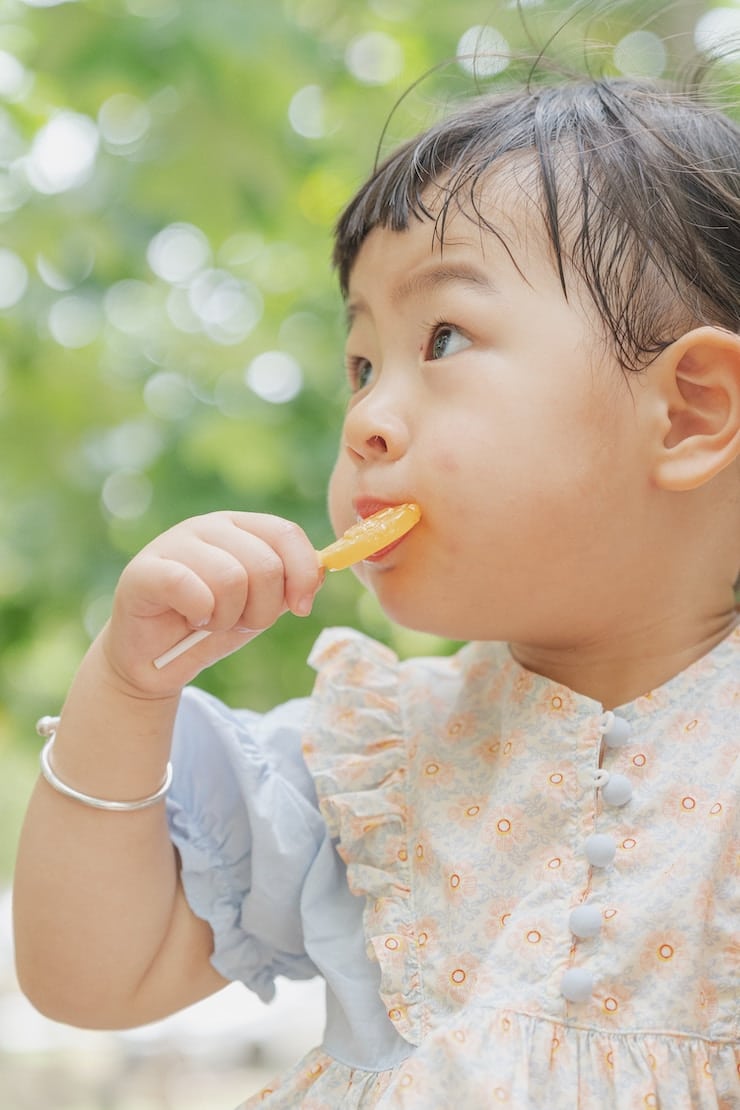
image of a baby looking sideways holding a lollipop

Intuitive Eating is a mind body framework developed by registered dietitians, Evelyn Tribole and Elyse Resche. I highly recommend checking out their book which you can find in my Amazon affiliate shop here. It includes 10 principals that build upon one another. Together these principles are designed to help one heal their relationship with food and honour their body’s true needs. It is an empowerment tool meant to put you in the drivers seat of your eating.

We are all born as intuitive eaters. Baby’s cry when they’re hungry, and push the bottle away when they’re full. But diet culture has gotten in the way of us hearing and respecting those innate cues. Learning to eat intuitively means giving yourself permission to eat what your body needs – physically and psychologically – without judgement. Intuitive eating is not a diet. It is, in fact, an anti-diet. It requires no counting, no scales, no rules, no apps, nothing EXTERNAL to guide your eating.

What are the principals of Intuitive eating?

Before going in greater detail, here are the main tenets of intuitive eating.

  1. Reject the Diet Mentality
  2. Honour your Hunger
  3. Make Peace with Food
  4. Challenge the Food Police
  5. Respect Your Fullness
  6. Discover the Satisfaction Factor
  7. Honour Your Feelings without Food
  8. Respect Your Body
  9. Exercise
  10. Honour Your Health / Gentle Nutrition

I want to cover a few common questions I was getting about intuitive eating starting with the most obvious one…

Can I Practice Intuitive Eating and Weight Loss?

Intuitive eating is not a weight loss diet. Depending on your set point, your current eating patterns, and your relationship with food, intuitive eating may encourage you to lose weight, gain weight, or have no change in weight at all. Every situation is different. It really comes down to your current and past experience with dieting, restriction and food, in general. So the question for you will be: how does the restrict and overeat cycle change when you start to listen to your body’s true needs and what is the impact on my weight?

If Intuitive Eating and Weight Loss Isn’t the Goal, What are the Benefits?

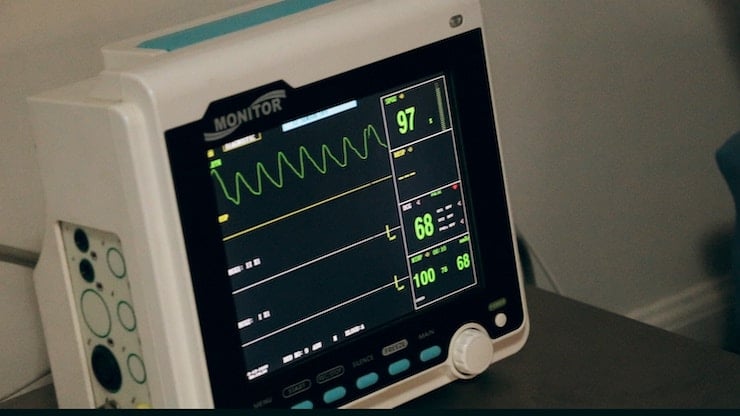
image of a heart rate monitor in a hospital setting

While I’ve already mentioned that some people may lose weight, gain weight, or stay the same weight, depending on your set point and eating patterns, Intuitive eating offers a wide range of health benefits that should not be dismissed. Research suggests these include:

  • Better cholesterol levels
  • Improved blood pressure
  • Stabilize blood sugar
  • Better body image
  • Higher self esteem
  • Improved metabolism
  • Decreased rates of disordered and emotional eating
  • Lower stress levels
  • Increased satisfaction with life

You can experience all of these benefits and not lose any weight. This is another great reminder of why weight is actually NOT the best indicator of health. One systematic review found that Health At Every Size interventions (which focused on intuitive eating, healthy eating behaviours and physical activity) were more successful at improving health (improved psychological health, blood pressure, cholesterol levels, eating behaviours) compared to restrictive diets that focused on body weight.

One of the biggest benefits of this is that it rekindles your relationship with food. When you’re more in tune with your body and with the food you’re eating, you’ll begin to notice how certain foods make you feel physically and emotionally, and what foods you actually like and dislike. This is a long term process for a life long benefit. It’s not a quick fix or a fad.

Does Intuitive Eating Mean Eating Whatever You Want?

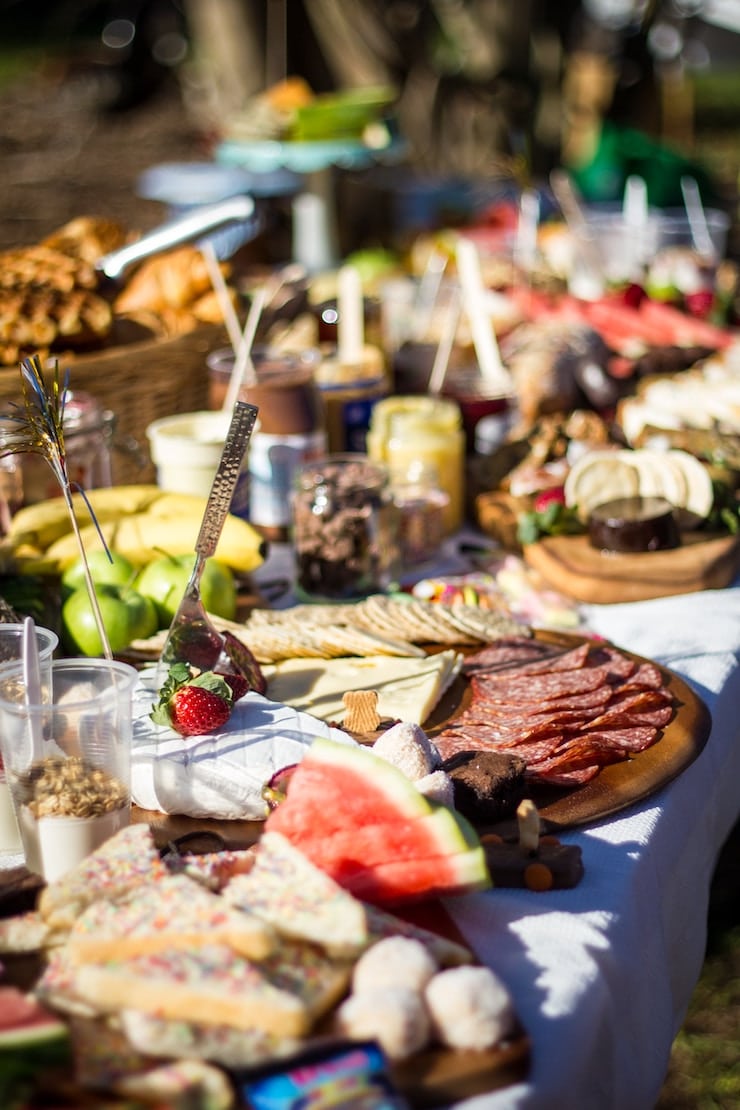
image of a table filled with multiple plates of food

As I mentioned, intuitive eating is a mind, body framework with ten principles that build upon one another, the first of which is to reject the diet mentality. Once we have stopped the cycle of restriction and binging, and the associated guilt and shame that often comes along with it, we can start to relearn our hunger and fullness cues and can incorporate gentle nutrition and exercise (see the principals above). When I say gentle nutrition, I’m talking about honouring your health and tastebuds while feeling our best. So as an example, a lot of people find that when cake is no longer off limits, it starts to lose its allure – it no longer has so much power over us.

Meanwhile, we actually start to acknowledge that a balanced meal with vegetables and protein and maybe some slow burning carbs actually make us feel better physically and emotionally then eating an entire cake. Our blood sugars feel more steady, our bowel movements are more regular, we have better concentration, sleep, digestion etc. So no, intuitive eating is not just promoting us eating sugar all day every day. It’s about listening and honouring our body’s true needs, and the first step to doing that is to give up dieting.

Can You Eat Intuitively If You are in a Larger Body or Have an Eating Disorder?

I first want to flag that it’s not uncommon for people in larger bodies to also be struggling with an eating disorder. You really can’t judge a book by its cover. Having said that, this is why it’s really important to work with an intuitive eating dietitian or counselor because everybody’s journey is going to look different. Some people, especially those who are currently in the throws of an eating disorder and have fallen out of touch with hunger and fullness cues, will need to work with a dietitian to do some mechanical eating (aka following a meal plan or eating every 2-3 hours). This helps to achieve weight restoration, before they are able to fully embrace all of the principles of intuitive eating or mindful eating.

Having said that, I strongly believe that intuitive eating is something that anyone can eventually practice and achieve. Even if you are having to engage in some more mechanical eating at the beginning of your journey, it doesn’t preclude from working with some of the principles of intuitive eating. For example, even if you’re not ready to honour your hunger or respect your fullness (principals 2 and 5, respectively), you could work on rejecting the diet mentality (1), or challenging the food police (4).

I Feel ADDICTED to Food. How Can I Possibly Eat Intuitively?

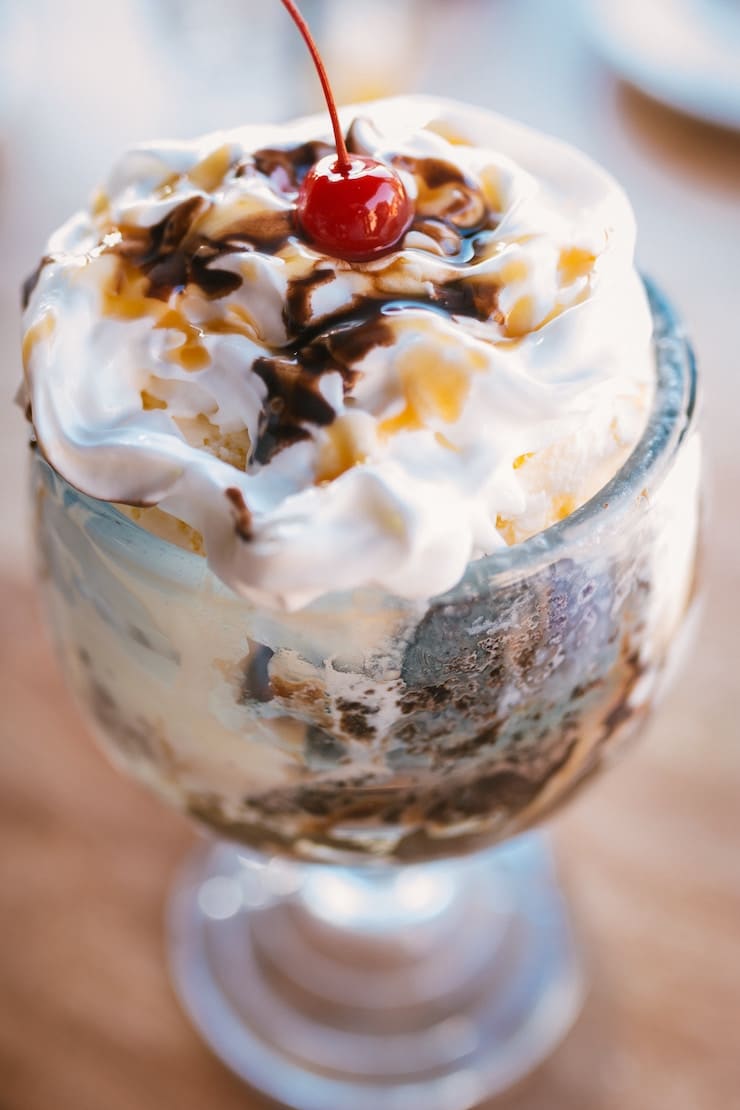
close up image of an ice cream parfait in a clear glass

I actually have a whole post about the idea of food addiction or sugar addiction so definitely read that. I actually absolutely empathize with feeling addicted to food. For a lot of people, however, the evidence suggests that food addiction behaviours are actually only evident in times of restrictions. In other words, you feel addicted to food because of a history with dieting and restriction. Dieting causes an unhealthy obsession around food. This experience is actually mitigated with intuitive eating, and at first, yes, if you’ve been heavily restricting certain foods and quantities of food you are probably going to go overboard and eat these foods in excess. TOTALLY NORMAL. However, this phase is short lived. Once you start to trust that enjoying the food you love wont be followed by complete abstinence. There is power in permission.

Mindful Eating vs Intuitive Eating: What’s the Difference?

Mindful eating is a component of eating intuitively that really involves listening to ones body. Also responding to hunger and fullness cues. Intuitive eating is the broader mind-body framework upon which mindful eating can operate. However, it’s impossible to truly eat mindfully and honour your body’s needs without also incorporating other tenets of intuitive eating like rejecting the diet mentality. I discuss both of these frameworks in my AWARD WINNING book, the Mindful Glow Cookbook (affiliate link).

Final Thoughts on Intuitive Eating and Weight Loss

Before we close this introduction post on intuitive eating, I wanted to really emphasize that here at Abbey’s Kitchen, everyone is welcome. You can sit with us. I heard Christy Harrison, who is amazing, check out her podcast who said “being anti diet doesn’t mean anti dieter”. In other words, you are welcome here if you’re pursuing weight loss. You’re welcome if you’re vegan. You’re welcome if you are paleo. You do you. If you’re eating in a way that feels good to you, then amazing.

More Blog Posts You Might Like

Looking for other posts about intuitive eating and mindful eating? Check out my favorites below!

  • INTUITIVE EATING PRINCIPLES | HOW TO REJECT THE DIET MENTALITY
  • INTUITIVE EATING: FOOD WASTE AND CHALLENGING THE FOOD POLICE
  • MINDING YOUR BUSINESS | FOOD INTOLERANCE & DIET SHAMING OF OTHERS FOOD CHOICES

So, have you tried intuitive eating and weight loss? I will be following this up with more important posts about intuitive eating, health at every size and mindful eating in the future. Leave me a comment below if you have specific questions you want answered and I will do my best to get to those ASAP.

Abbey Sharp

Abbey Sharp is a Registered Dietitian (RD), regulated by the Ontario College of Dietitians. She is a mom, YouTuber, Blogger, award winning cookbook author, media coach specializing in food and nutrition influencers, and a frequent contributor to national publications like Healthline and on national broadcast TV shows.
www.abbeyskitchen.com/about-abbey/

Last Updated June 5, 2024. Published June 10, 2024 By Abbey Sharp 23 Comments

Banana Popsicles with Berries and Chocolate Shell | Healthy Summer Dessert!

A plate with shaved ice containing multiple banana cream pie berry popsicle with chocolate on top.

This healthy Banana Popsicle recipe uses with berries, a cereal pie “crust” high in fibre and a dark chocolate shell. Just like cream pie!

A plate with shaved ice containing multiple banana cream pie berry popsicle with chocolate on top.

Summer is HERE and that means BBQs, picnics and rendez vous with our favourite neighbourhood ice cream truck. But you don’t have to inhale an overpriced sundae to get your fix (not to mention- brain freeze!). My creamy and healthy banana popsicle recipe is speckled with colourful berries and dipped in decadent dark chocolate — Sorry, Mr. ice cream man, it’s going to be pretty slow business this summer!

Table of contents

  • Why This Recipe Works
  • Key Ingredients
  • How To Make This Recipe
  • Expert Tips
  • Recipe FAQs
  • More Recipes You Might Like

Why This Recipe Works

If you’re looking for the perfect treat to keep you cool in these hot summer days, look no further! This banana popsicle recipe is my favorite way to cool down because they’re:

  • Higher in protein and fiber compared to traditional popsicles
  • Packed with real fruit
  • Completely customizable
  • A great way to get kids involved in the kitchen!

Key Ingredients

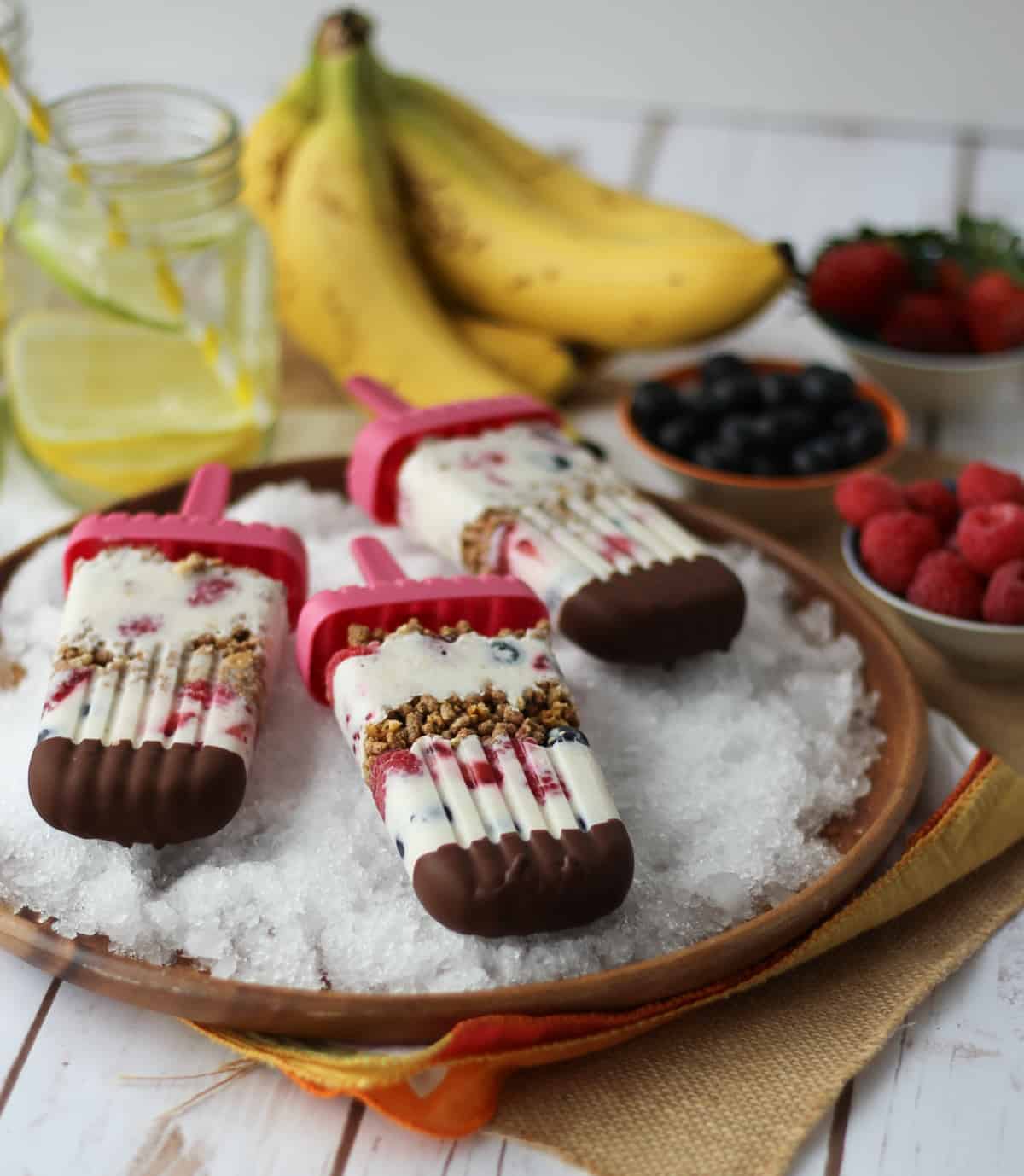
Three banana popsicles on ice with fruits in the background.

Bananas – Ripe bananas have a sweeter taste due to their starch breakdown. They may not be the prettiest bananas to eat alone, but they are the perfect addition to these banana popsicles!

Berries – I love adding a variety of berries to this recipe not only to keep these popsicles even prettier, but they also add extra fiber and antioxidants!

Plain Greek Yogurt – By using plain Greek yogurt, we keep the added sugar content lower while packing in a ton of protein!

How To Make This Recipe

Step 1: In a food processor, puree together the yogurt and bananas. Stir in the berries and set aside.

Step 2: In a small bowl, mix together the cereal, honey, graham crackers and a pinch of sea salt. Set aside.

Step 3: Divide half of the yogurt mixture between 6 ice pop molds. Then add in 3/4 of the bran cereal mixture. Pack the ingredients down with a spoon and add 2 tablespoons of milk to each mold.

Step 4: Continue with the remaining yogurt, then sprinkle the last small 1/4 cup of the bran cereal mixture on the yogurt. Insert the ice pop sticks and freeze them for at least 4 hours, ideally overnight.

Step 5: Before serving, stir together the chocolate and coconut oil in a microwave safe dish. Microwave on high for 15 seconds. Remove and stir. Continue microwaving and stirring in 15-second intervals until the mixture is smooth and fully melted.

Step 6: Run the ice pop molds under hot water to easily remove the Ice Pop, then immediate dip the tops in the dark chocolate shell. Allow the shell to harden instantly and enjoy!

Expert Tips

To boost the fibre and cut sugar and fat in this banana popsicle recipe, I whipped up a layer of pie “crust” made out of a combination of graham crackers and bran cereal. Bran cereal is an easy way to meet your recommended daily fibre intake — It’s also incredibly satiating so you can enjoy your healthy ice pops and not need a snack soon after!

Looking for the perfect ice pop molds for these banana popsicles? I personally love these silicone molds that make it super easy to pop out the pops and enjoy!

Recipe FAQs

Can I use other fruits for this banana popsicle recipe?

Of course!! Experiment with whatever fruit you or your kiddos love! I feel like kiwi and chopped cherries would be great summer fruits to try as well!

Can I use sweetened greek yogurt for this banana popsicle recipe?

Of course! However, since the banana is naturally sweet, you don’t even need to use the sweetened yogurt variety – just a personal preference!

How can I make sure I get the perfect chocolate “shell”?

The first step is to ensure that the chocolate is completely melted and smooth. I then give my pops a LITTLE dip until it forms a thin crackly crust. The thinner the layer, the easier the chocolate will cool and give you the perfect shell!

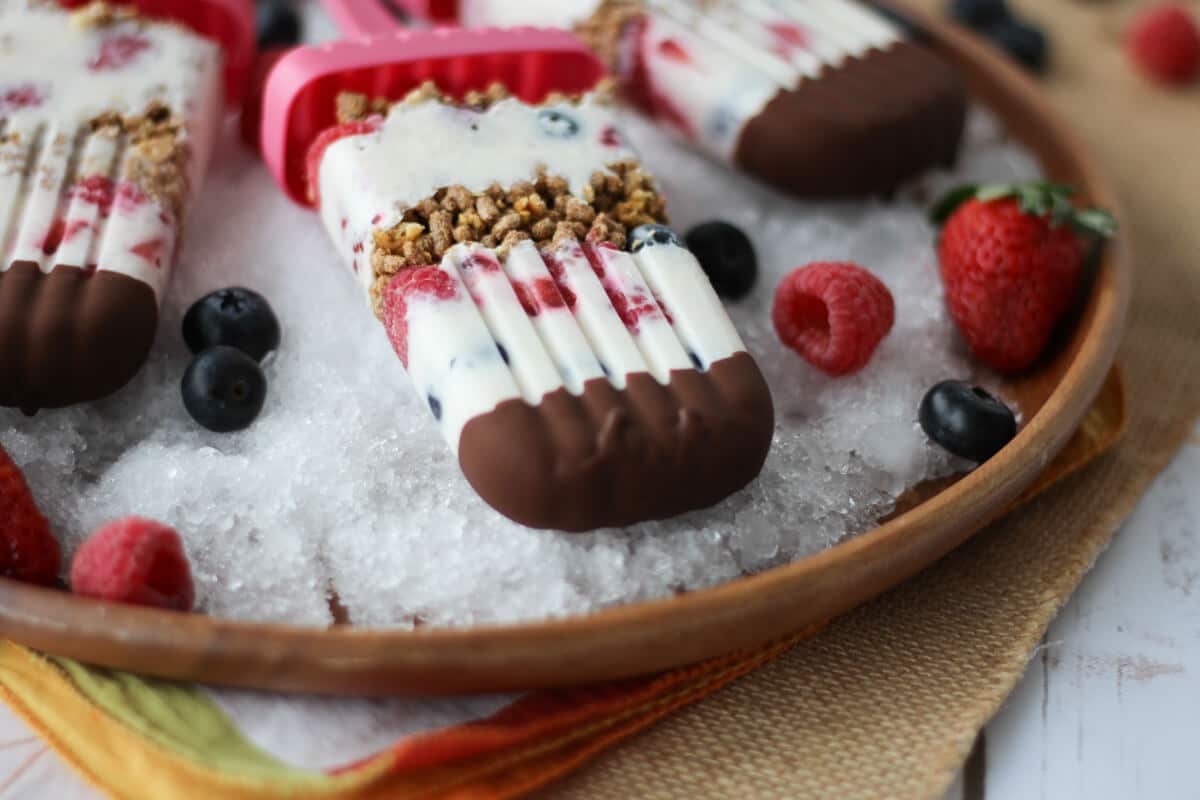
A close up of healthy banana popsicle recipe on a plate of ice.

More Recipes You Might Like

Looking for more delicious summer treats like this banana popsicle recipe? Check out some of my favorites!

  • WATERMELON CAKE
  • NO BAKE CHEESECAKE RECIPE WITH MATCHA
  • BANANA NICE CREAM WITH PISTACHIOS AND GREEN TEA
  • VEGAN OREO CHEESECAKE

What are your favourite frozen treats? Have you tried making these banana popsicle recipe? Leave me a comment below with your go-to ice pop combinations, and make sure to share this recipe with your friends and family!

Print Recipe
5 from 7 votes

Banana Popsicles with Berries and Chocolate Shell | Healthy Summer Dessert!

These summer inspired healthy Ice Pops offer the sweet creamy feel of frozen Banana Cream pie with a fibre-rich bran cereal pie crust.
Prep Time15 minutes mins
Total Time15 minutes mins
Course: Dessert
Cuisine: American
Servings: 6 people
Calories: 232kcal
Author: Abbey Sharp

Ingredients

Ice Pops

  • 1 cup plain 0% Greek yogurt
  • 2 small ripe bananas
  • 1/4 cup strawberries finely chopped
  • 1/4 cup Blueberries
  • 1/4 cup Raspberries
  • 1 cup bran cereal
  • 1 tsp honey
  • 2 tbsp graham crackers crushed
  • 1 Pinch sea salt
  • 3/4 cup skim milk

Chocolate Shell

  • 1/2 cup dark chocolate finely chopped
  • 1 tbsp coconut oil

Instructions

  • In a food processor, puree together the yogurt and bananas. Stir in the berries and set aside.
  • In a small bowl, mix together the bran cereal, honey, graham crackers and a pinch of sea salt. Set aside.
  • Divide half of the yogurt mixture between 6 ice pop molds. Then add in 3/4 of the bran cereal mixture. Pack the ingredients down with a spoon and add in 2 tablespoons of milk to each mold.
  • Continue with the remaining yogurt, then sprinkle the last small 1/4 cup of the bran cereal mixture on the yogurt.
  • Insert the ice pop sticks and freeze for at least 4 hours, ideally overnight.
  • Before serving, stir together the chocolate and coconut oil in a microwave safe dish. Microwave on high for 15 seconds. Remove and stir. Continue microwaving and stirring in 15-second intervals until the mixture is smooth and fully melted.
  • Run the ice pop molds under hot water to easily remove the Ice Pop, then immediate dip the tops in the dark chocolate shell. Allow the shell to harden instantly and enjoy!

Nutrition

Calories: 232kcal | Carbohydrates: 33g | Protein: 8g | Fat: 10g | Saturated Fat: 6g | Polyunsaturated Fat: 1g | Monounsaturated Fat: 2g | Trans Fat: 0.01g | Cholesterol: 3mg | Sodium: 94mg | Potassium: 479mg | Fiber: 6g | Sugar: 16g | Vitamin A: 281IU | Vitamin C: 11mg | Calcium: 137mg | Iron: 4mg
Abbey Sharp

Abbey Sharp is a Registered Dietitian (RD), regulated by the Ontario College of Dietitians. She is a mom, YouTuber, Blogger, award winning cookbook author, media coach specializing in food and nutrition influencers, and a frequent contributor to national publications like Healthline and on national broadcast TV shows.
www.abbeyskitchen.com/about-abbey/

Last Updated May 30, 2024. Published June 5, 2024 By Abbey Sharp Leave a Comment

Natural Remedies for Bloating (Evidence Based Diet and Supplement Tips)

Person lying on bed in pain from bloated stomach.

In part 2 of my series, we’re going to discuss some evidence-based natural remedies to help you with bloating.

Person lying on a bed with stomach pain.

In case you missed Part 1, I went over some of the most common causes of bloating. In this edition of the bloating series, we’re going to talk about what to do about it and natural remedies for bloating.

Before we start, I want to remind you that the cure will depend on the cause. This means that a beneficial food or supplement for someone with constipation may actually cause bloating for someone with SIBO, and vice versa. In some cases, the solution can be as simple as removing or limiting a food, as in the case of a food intolerance. The thing about functional digestive nutrition is that there’s rarely a black and white straight solution. It often involves a lot of trial and error, and it might take a cocktail of supplements, foods or lifestyle changes to experience relief for you.

A lot of “remedies” are also not super well researched, so I always recommend working with your dietitian and doctor to find a solution thats unique to you. I myself consulted with not one, but FOUR of my GI RD colleagues to get their clinical insight. So a big thank you to Dasha Agoulnik, Amber Gourley, Caitlin Self and Lacey Dunn for their help.

We’re going to break this video down into three sections: foods, supplements and lifestyle.

Foods To Relieve Bloating

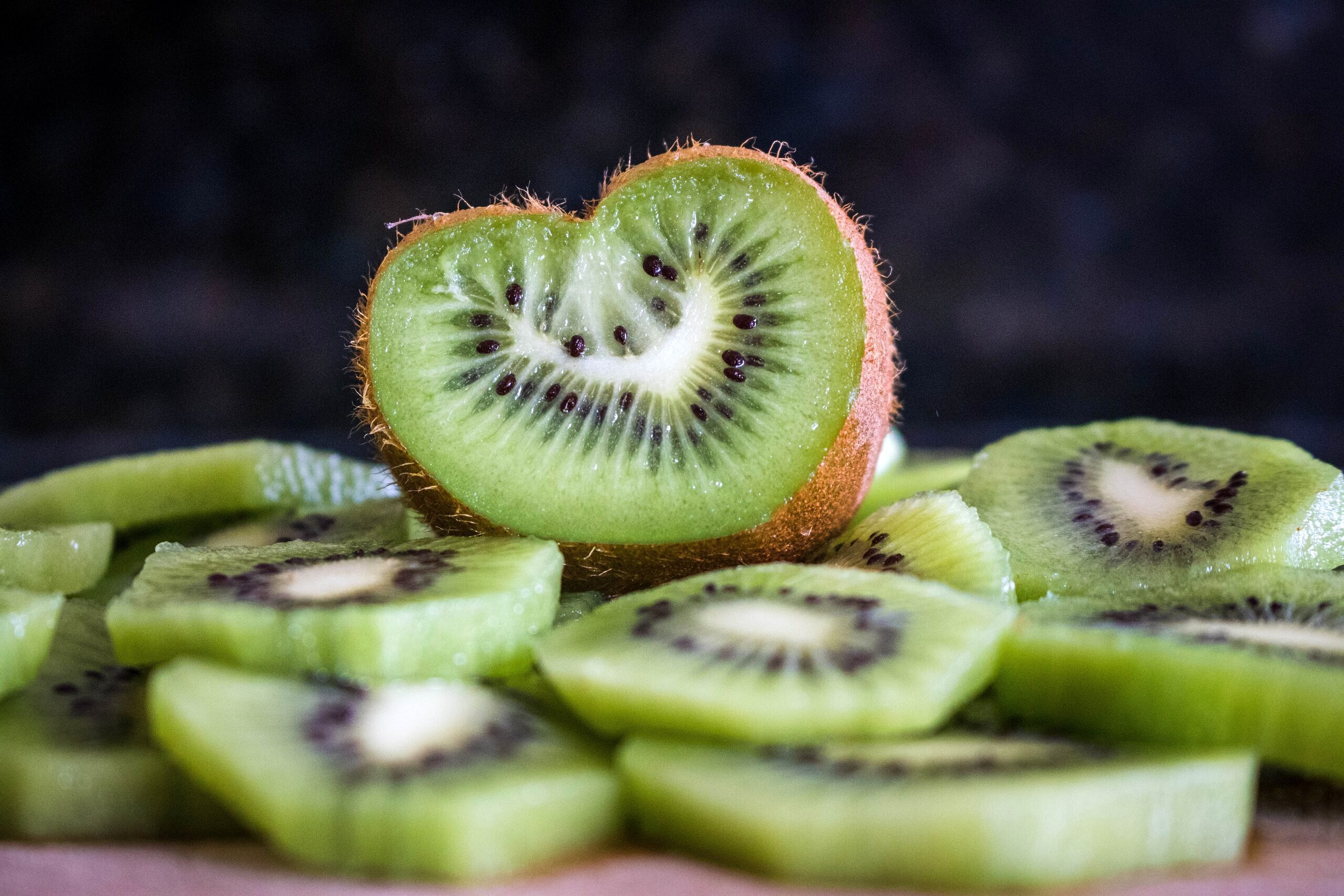
Close up of kiwis on a plate.

Kiwi 

We see a ton of digestive enzyme supplements on the market but there are also foods that naturally contain digestive enzymes to help breakdown food into nutrients that your body can then absorb. For example, papaya contains the enzyme papain, pineapple contains bromelain, and kiwi contains actinidin, all of which work to break down protein into amino acids.

Kiwi specifically is one of the best natural remedies for bloating. While research suggests that prunes, psyllium, and kiwi all helped reduce constipation, only the mighty kiwi helped reduce bloating symptoms. And it only took two kiwi a day! 

Ginger 

Ginger has prokinetic properties that helps to stimulate stomach emptying and digestive motility. It also contains the proteolytic enzyme zingibain, so it’s kind of a double threat. I want to note that the research on ginger has largely been done on concentrated ginger capsules, so you would likely need to consume a lot of fresh ginger to see the same clinical impact. But if you enjoy ginger, I don’t see the harm in incorporating it regularly into your daily diet.

Peppermint Oil

Peppermint is my personal favourite, and it’s something I personally use if I feel particularly bloated after a high FODMAP meal. Peppermint works as an anti-spasmodic that helps to sooth and calm the GI tract. Concentrated peppermint oil, in particular, has been shown to help treat digestive symptoms like bloating and abdominal cramping. But it can exacerbate heartburn, so a note to avoid it if you have GERD.

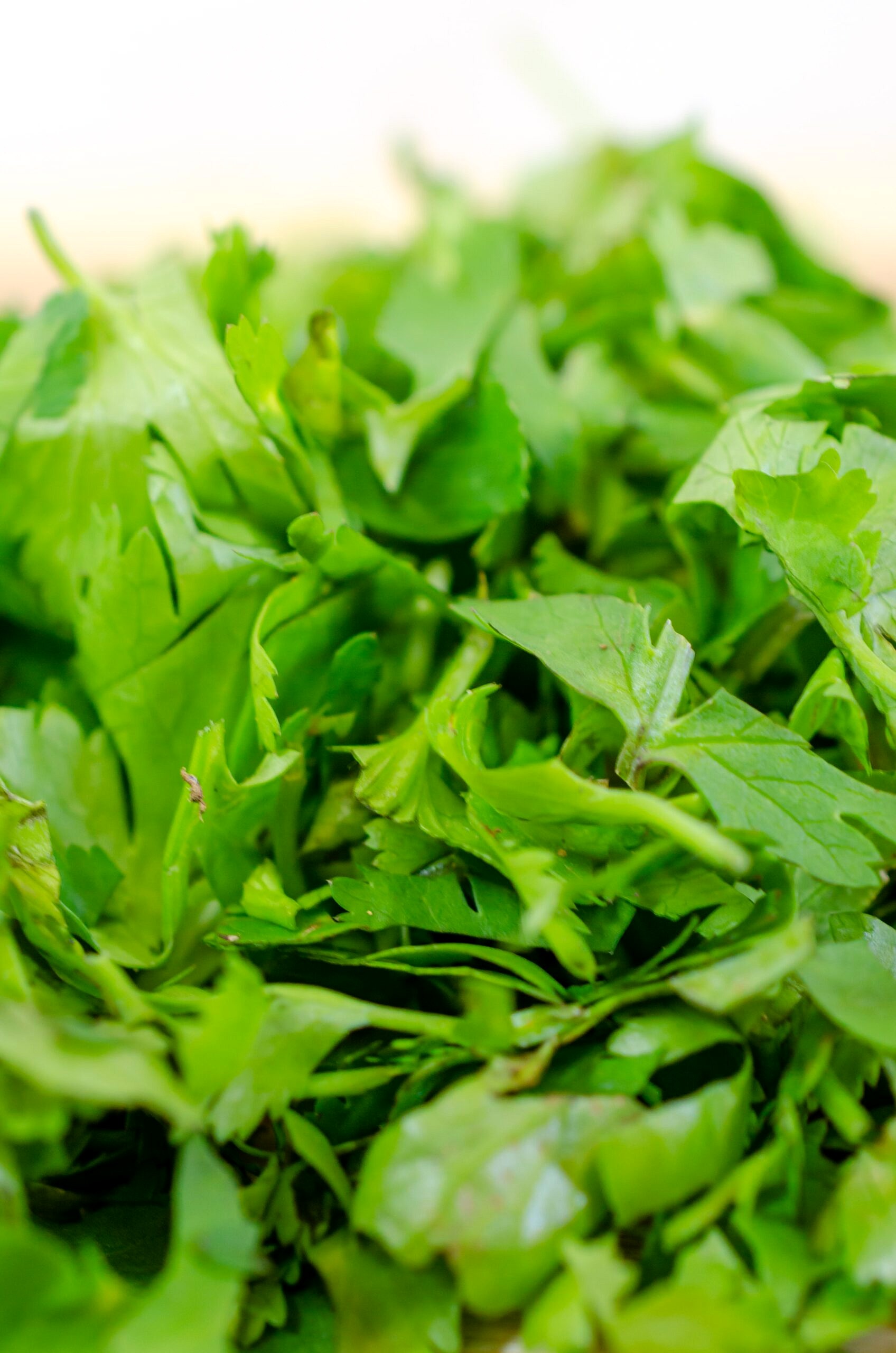
Close up of arugula as one of the natural remedies for bloating.

Bitter Foods

So pretty much all of the dietitians I spoke to mentioned using bitter foods like arugula, dandelion, grapefruit as natural remedies for bloating. Bitter foods, like bitter supplements, may help stimulate the bitter receptors of the gallbladder, pancreas and stomach to help naturally increase bile flow, digestive enzymes and stomach acids. They’re also delicious and in season this time of year, so they are one of my favourite foods.

Fennel Seeds

Not only a good source of fibre, but fennel seeds have antibacterial, anti-fungal and anti-inflammatory properties which can help improve the microbiome to reduce fermentation that causes gas. The anti-inflammatory anethole compound in fennel seeds may also help relax the intestines to allow for better bowel motility, and therefore gas.

Super Sprinkles (AKA Hemp Hearts, Chia & Flax)

You guys know we love hemp hearts in my house, and here’s another reason why. These tiny sprinkles are packed with fibre, but they’re nutrition is quite concentrated so they don’t add a ton of bulk. They also are low fodmap at typical portions so they’re appropriate even for sensitive tummies.

What About Probiotic Rich Foods?

So this one is really hit and miss, and I don’t want to recommend it to the masses as something to specifically focus on if you don’t know the root cause of your bloating.

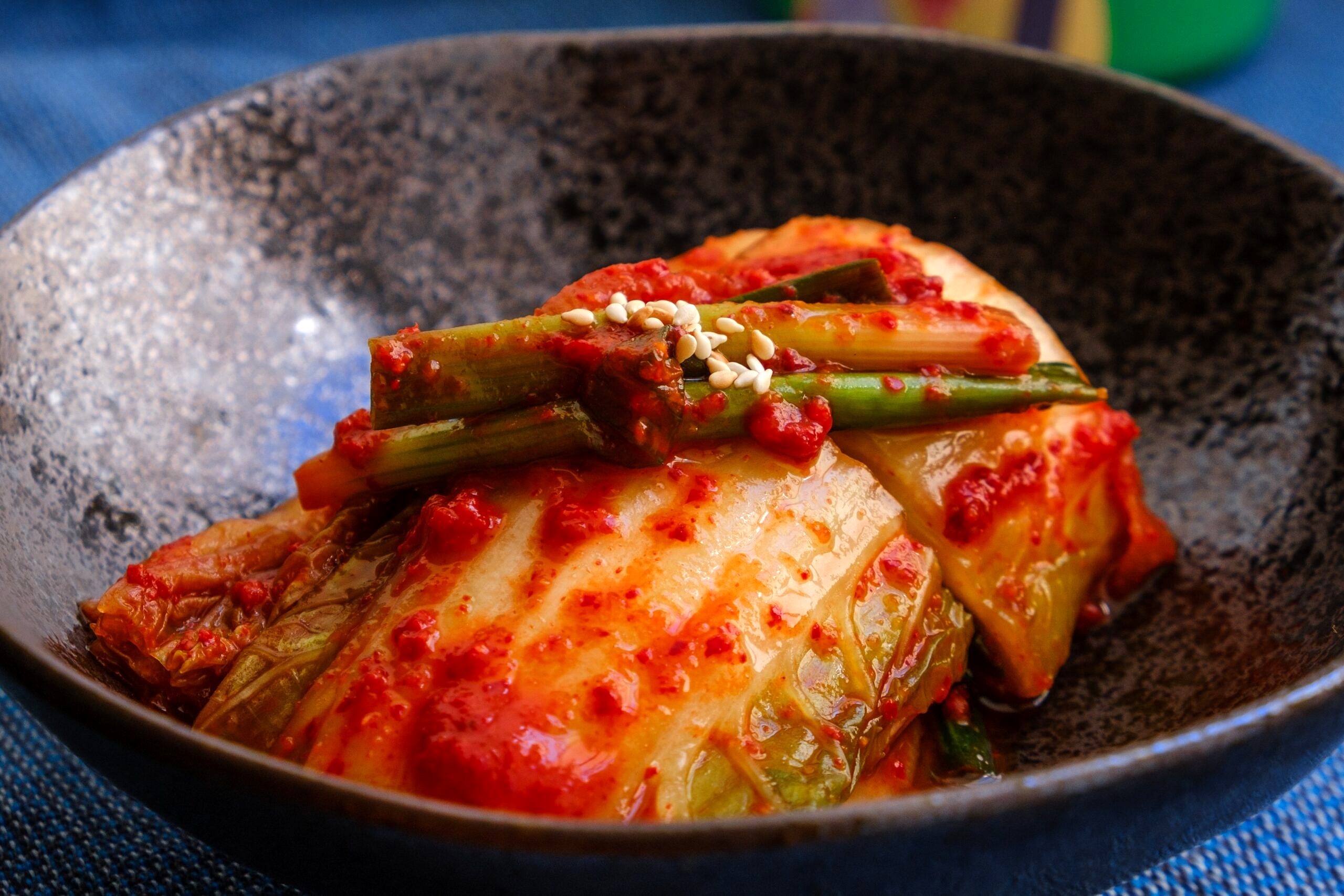
In terms of natural remedies for bloating, some studies have shown that foods rich in probiotics may be helpful in certain scenarios for reducing bloating and gas. In addition, sauerkraut, miso, kimchi, and kefir contain naturally occurring digestive enzymes, such as proteases, amylase, and lipase. So for example, one study found that the lactase enzyme found in kefir helped improve lactose digestion in those with lactose intolerance.

Having said that, if your bloating is the result of an overgrowth or histamine related, you will want to be very cautious about adding bacteria, even if its good bacteria. So this is where we get into strain specific probiotic recommendations for treatment, which is hard to manipulate when we’re talking about food. 

Close up of kimchi in a bowl.

Supplements To Relieve Bloating

Just like food, the right supplement for your bloating will strongly depend on the cause. 

Digestive Enzymes

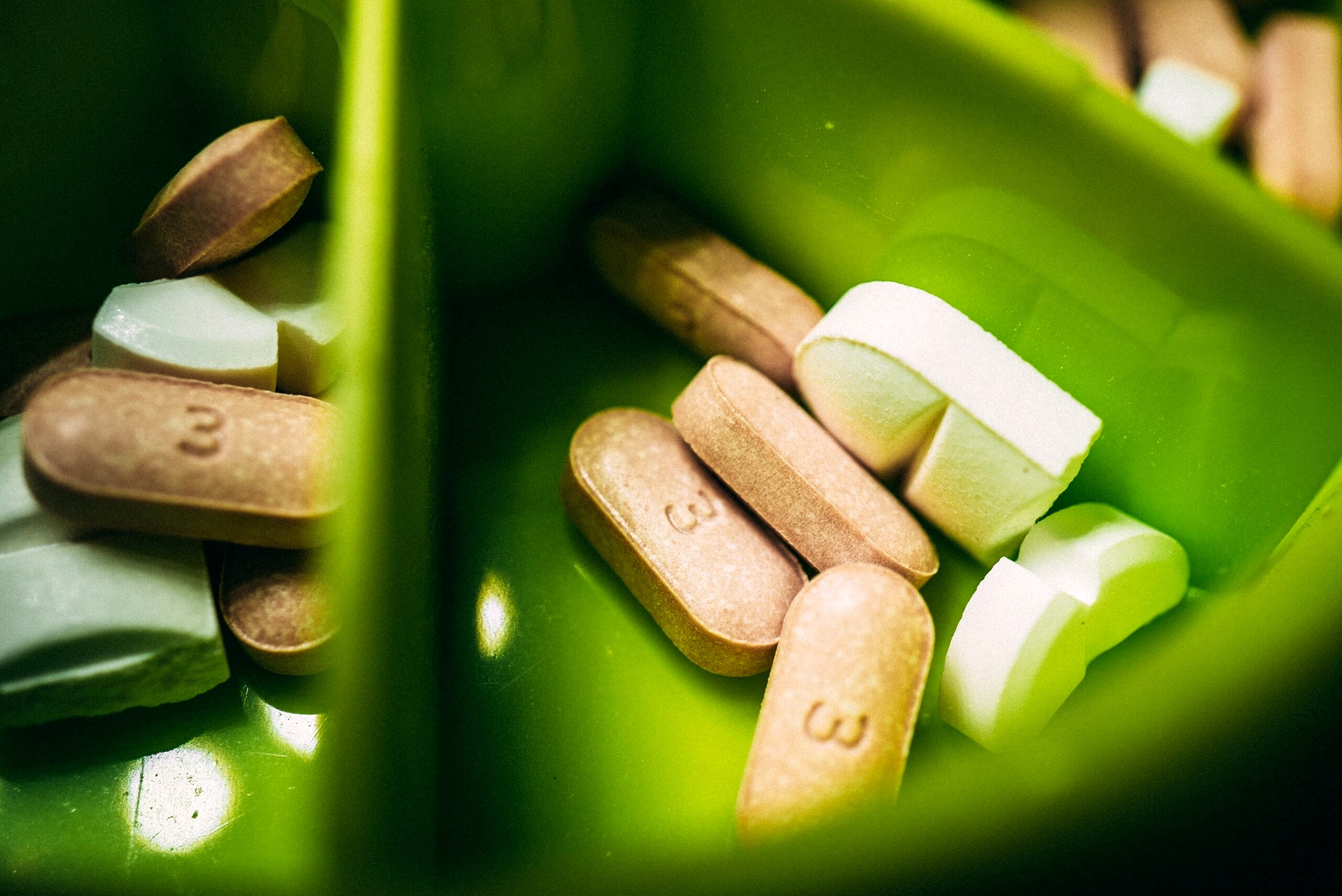
If we’re dealing with a food intolerance or a sensitivity to specific FODMAP foods, then the best course of action would be to limit these foods in your diet and when you cant limit them, to use over-the-counter digestive enzyme supplements like lactaid or alpha-galactosidase (aka beano). These two digestive enzymes are the best supported by evidence for lactose and alpha-galactosidase intolerances, respectively. Even still, most folks find that taking a supplement is really an adjunct therapy to help with tolerance, they don’t really fix the problem, and they also don’t usually provide absolute relief.

As for other digestive enzyme products out there, there are, admittedly so many options, most of which have limited evidence to support. That doesn’t mean they don’t work, and theoretically most should. For example, we do have a study on papaya supplements that found that it helped reduce constipation and bloating and early research suggesting that concentrated doses of the bromelain enzyme in pineapple can serve as a digestive aid. It’s all promising, but more human research is needed to confirm these findings. 

Close up image of digestive supplements in a green bowl.

We also know that folks with pancreatic insufficiency are given prescription grade digestive enzymes like proteases, amylase, and lipase so there is a clinical indication for them. I have spoken to dozens of my colleagues who specialize in this area of practice, who have no skin in the game when it comes to incentive for suggesting enzymes. They agree that while the research is so behind, their clinical experience suggests they often do help. So again, its important to work with a dietitian to get a reputable third party tested product and ideally, to respond to evidence from something like a GI MAP stool test to determine what enzymes you might actually need.

Ox Bile

Ox Bile is often recommended as a supplement for folks who are experiencing severe bloating after consuming fats, to aid the concern that they’re not producing enough bile acids to break those fats down. This is a common suggestion, specifically with SIBO, since one of the purported causes of SIBO is low bile flow, so adding bile can theoretically help. Unfortunately, like most things in the digestive world, we mainly have animal research to go on, which doesn’t mean it doesn’t help, but we just don’t have great evidence yet. It’s also possible to create bile acid diarrhea if you take too much so as always, make sure you’re working with a dietitian to determine if its right for you.

Betaine HCL

Low stomach acid can also trigger bloating due to poor digestion and then fermentation of food. However, research suggests that certain natural remedies for bloating, like Betaine HCL, may help mediate this by helping to increase stomach acid. Like Ox Bile, it’s not without risk if you don’t know the root cause of your bloating. So for example, folks with H Pylori may find that Betaine HCL can cause the H Pylori to go further into the stomach, which ultimately creates a risk of ulceration. So best again to work with your doctor to rule that out.

Iberogast

Iberogast is a tincture made up of ingredients like peppermint, camomile, liquorice root, and lemon balm that has been found to be effective in clinical trials. The research suggests it may help reduce gas formation, regulate muscle contractions along the digestive tract, and also improve digestive secretion, which can collectively help to provide some relief. This is personally a favourite of mine and I use it with every meal.

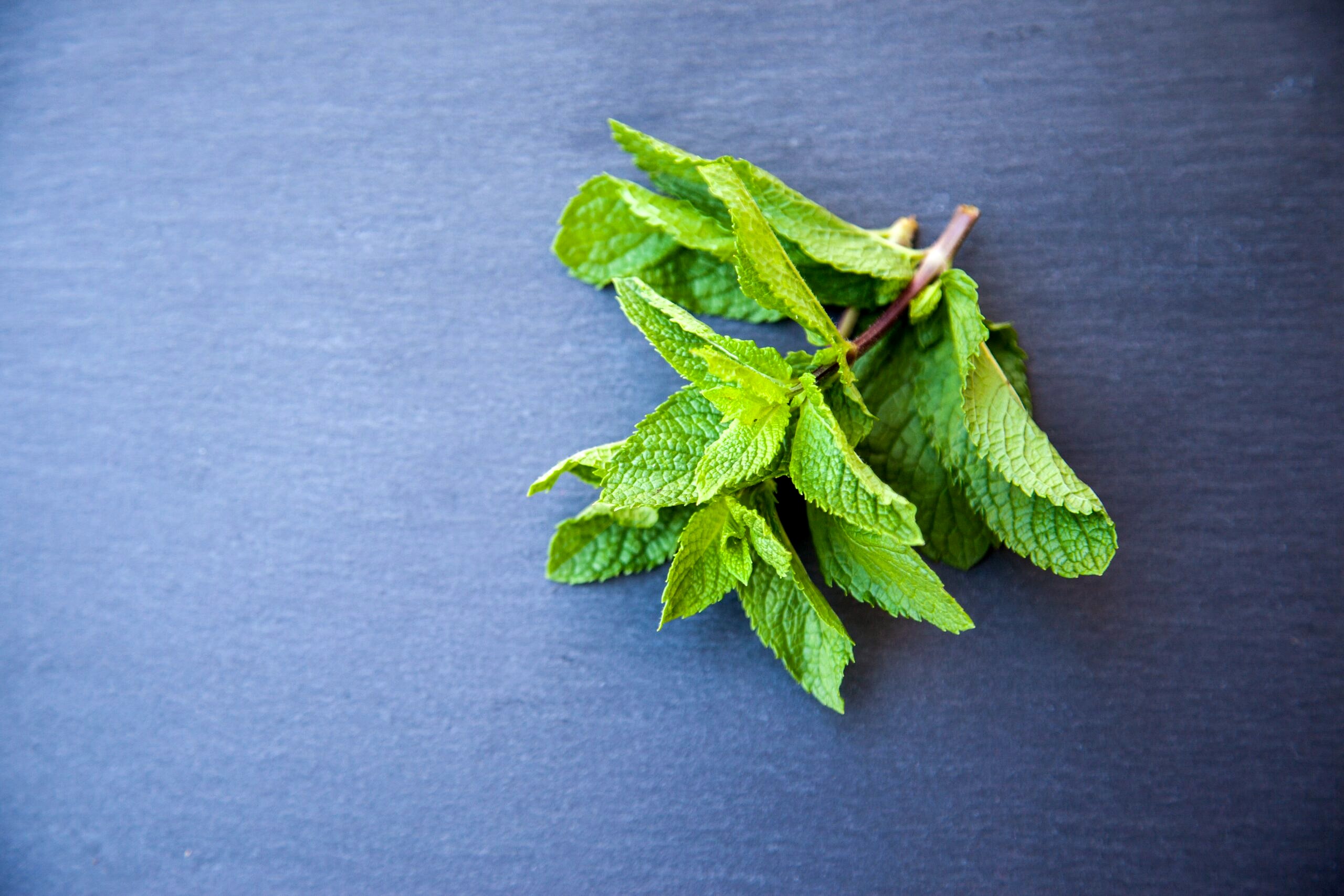
Peppermint leaves on a table.

Fibre Supplements

So we talked about constipation or slow motility being one of the potential causes of bloating, in which case a fibre supplement may help. Partially hydrolyzed guar gum (otherwise known as PHGG) is a prebiotic fibre that has been shown to improve symptoms of constipation in individuals with IBS by boosting bowel frequency without excess fermentation. Similarly, psyllium fibre is another great option for improving constipation and digestion, and has been shown to improve symptoms of IBS including bloating.

However, just like fibre from food, there’s a real goldilocks effect with fibre – both too much or too little can exacerbate bloating. So always work with a dietitian before starting a fibre supplement and slowly work your way up in dose.

Probiotic Supplements

Like with probiotic foods, the world of probiotics is highly strain and individual specific. It can be a bit like throwing fuel on the fire if you take the wrong strain, but it can be worth getting it right to help heal the immune system to prevent further pathenogenic overgrowth and dysbiosis. When it comes to the general population, two systematic reviews suggest that multi-strain probiotic supplements are most effective at supporting IBS symptoms compared to single strains. So we usually see combinations of Lactobacillus and Bifidobacterium strains for generalized IBS-like symptoms.

However, depending on the cause of your bloating, S. Boularddi or a spore-based probiotic like megaspore which is a combination of bacillus stains may be a “safer” options for folks with bacterial overgrowth conditions. 

I also found a ton of research on Bacillus Coagulans and Bacillus Subtilis, which are two spore forming strains that are clinically proven to improve IBS symptoms and other digestive issues like bloating, burping, and gut motility. These are the strains I chose to use in my probiotic protein powder, neue theory, because they’re also low risk for folks with a SIBO history.

Lifestyle Factors

Eating Behaviours

How you eat is often just as important as what you eat when it comes to bloating. Focusing on slow chewing, replacing carbonated drinks with regular water, and mindful eating can all help reduce swallowing too much air. 

Vagus Nerve Stimulation

The vagus nerve is one of the main components of the parasympathetic nervous system which oversees digestion via the brain gut axis. We have research to suggest that activities that stimulate this axis like singing, humming, laughing, deep breathing, and gargling with water can all help improve digestion. We also know that any activities that are stress reducing can help improve digestion, so I would focus on self-care on days you feel particularly uncomfortable. I love the Nerva app for some great digestion related meditations.

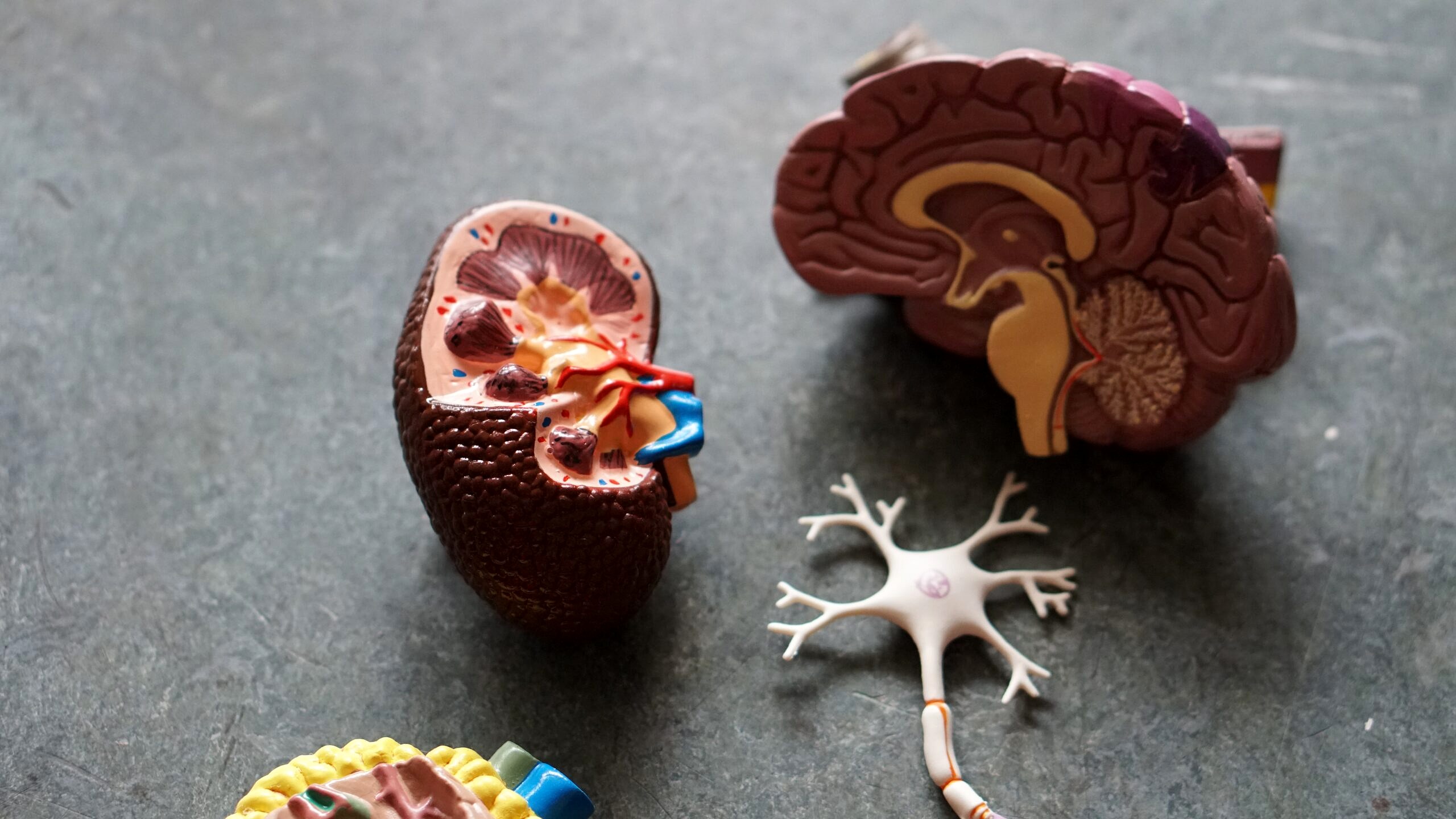
Model of a brain discussing the vagus nerve and natural remedies for bloating.

Movement

I know when we have really bad abdominal pain from bloating, the last thing we want to do is move. But research suggests that gentle exercise like a light walk or yoga poses that target the abdominal area can help get the bowels moving and release the build up of gas.

Massage and Pressure

Similarly to gentle exercise, abdominal massage can help to relax your stomach muscles and release trapped gas while also helping to stimulate digestion. You can gently massage your stomach yourself or even just lay on your stomach to help move things along.

Close up image of a person being massaged.

The Bottom Line

I really tried to make this topic as simple as it could be. If you’re following my SIBO journey on YouTube, you know that digestion is anything but simple. Its not a black and white topic, there’s no expensive product you can buy to miraculously cure everything, and the fact that we are so behind on the research doesn’t make getting effective quality care very easy. Unfortunately, the gut is complex and for most people curing yourself of bloating isn’t going to be fast, easy, or painless. I strongly suggest working with a dietitian who specializes in digestive health to help you navigate this snake oil filled world.

More Blog Posts You Might Like:

If you liked this blog post discussing natural remedies for bloating, then you might also enjoy more blog posts on gut health:

  • How to Stop Stomach Cramps and Pain
  • Vegan Diet and Bloating | How to Improve Gut Health
  • Anti Candida Diet – Helpful or Hype (According to a Dietitian)
  • Evidence on the Best Probiotics for Weight Loss, IBS, Constipation & More
  • Tips to Avoid Holiday Heartburn and Indigestion

Have you struggled with bloating? What natural remedies for bloating have worked for you?

Abbey Sharp

Abbey Sharp is a Registered Dietitian (RD), regulated by the Ontario College of Dietitians. She is a mom, YouTuber, Blogger, award winning cookbook author, media coach specializing in food and nutrition influencers, and a frequent contributor to national publications like Healthline and on national broadcast TV shows.
www.abbeyskitchen.com/about-abbey/

Last Updated June 2, 2024. Published June 3, 2024 By Abbey Sharp 85 Comments

Watermelon Fries with Coconut Lime Dip | Healthy Summer Snack!

These Watermelon Fries with Coconut Lime Dip are a great Gluten Free, Vegan and Healthy Summer Snack that's perfect for the whole family.

These easy Watermelon Fries with Coconut Lime Dip such a fun and delicious snack that is perfect for the summertime! They’re gluten-free, vegan, and take little to no time to make!

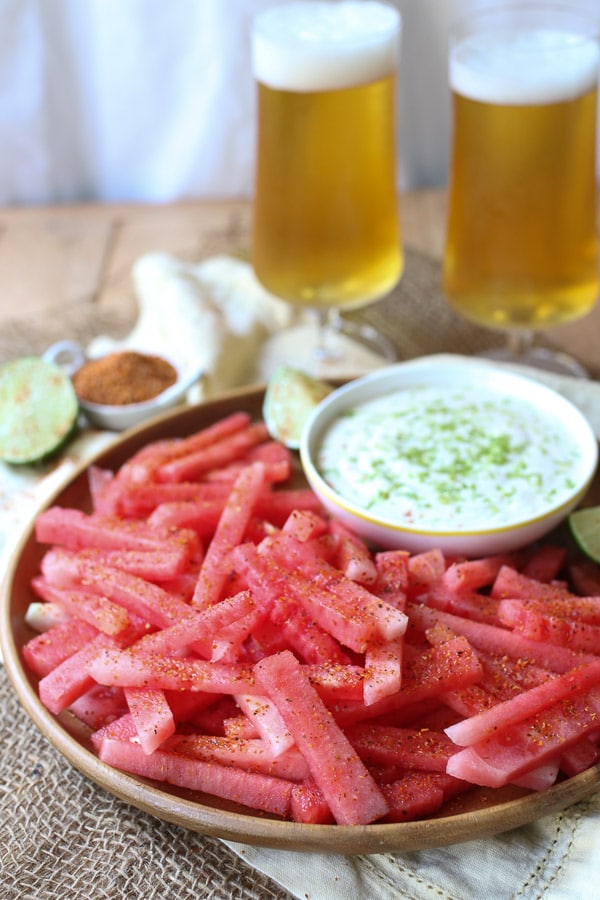
fruit sticks served on a wooden plate next to a dip.

Are you as obsessed with watermelon as I am? I’ve already brought you a watermelon CAKE so today I thought I would whip up something equally fun and playful with watermelon- watermelon fries with coconut lime dip. They’re just like French fries but super healthy. No, you should never have to REPLACE real fries with watermelon fries, but this is great on a hot summer day.

The star of this recipe is Tajin, which is a seasoning blend made of dehydrated lime, chiles, and salt. It originated in Mexico and has quickly gained popularity in North America. Tajin is often paired with fruit or veggies like cucumber, mango, or in our case, watermelon!

Table of contents

  • Why This Recipe Works
  • Key Ingredients
  • How to Make This Recipe
  • Expert Tips
  • Recipe FAQs
  • More Recipes You Might Like

Why This Recipe Works

Other than being the perfect poolside or BBQ recipe during the summer, here are more reasons you’ll love this watermelon fries with coconut lime dip recipe.

  • Refreshing snack
  • Naturally gluten-free
  • Vegan friendly
  • Easy to make
  • Kid friendly

Key Ingredients

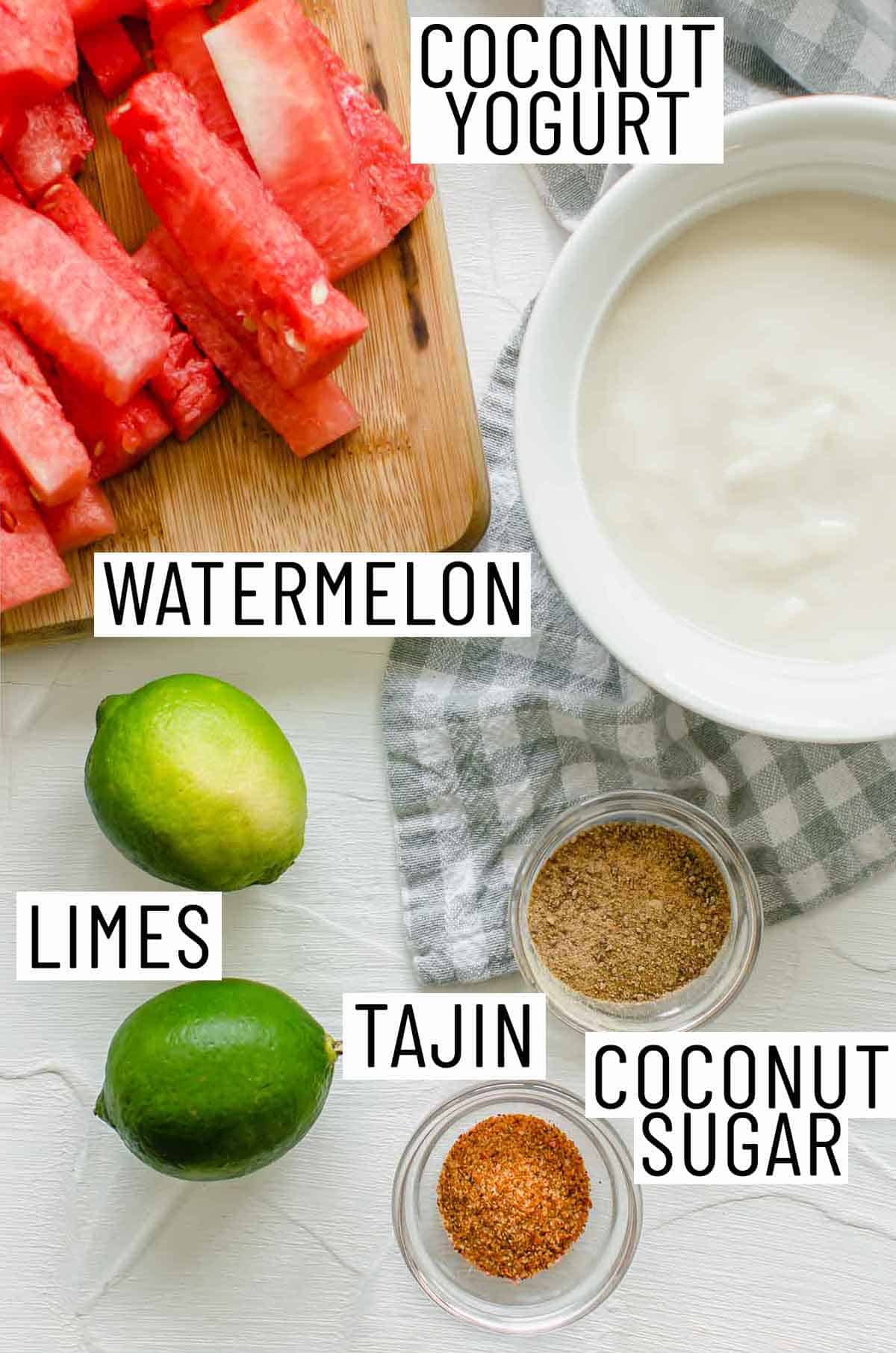
Ingredients needed to make watermelon fries.

Watermelon – Watermelon is, of course, the star of the show in this recipe! I break down everything you need to know about how to choose a watermelon down below. 

Tajin Seasoning – Tajin is a Mexican seasoning made of of very simple ingredients including salt, chili, and lime. Don’t have tajin seasoning? No problem. You can totally swap in salt, chili powder, and lime zest if you already have it on hand.  You can also easily find it online.

Coconut Yogurt – I use a non-dairy coconut yogurt to make this recipe vegan. But you can absolutely try out a dairy coconut flavoured yogurt as well. 

Lime – Lime zest and juice totally make this recipe come alive and gives it that fresh summer flavour.

Coconut Sugar – This gives the coconut lime dip some extra sweetness to the watermelon fries but it’s optional if you find your watermelon is sweet enough. 

How to Make This Recipe

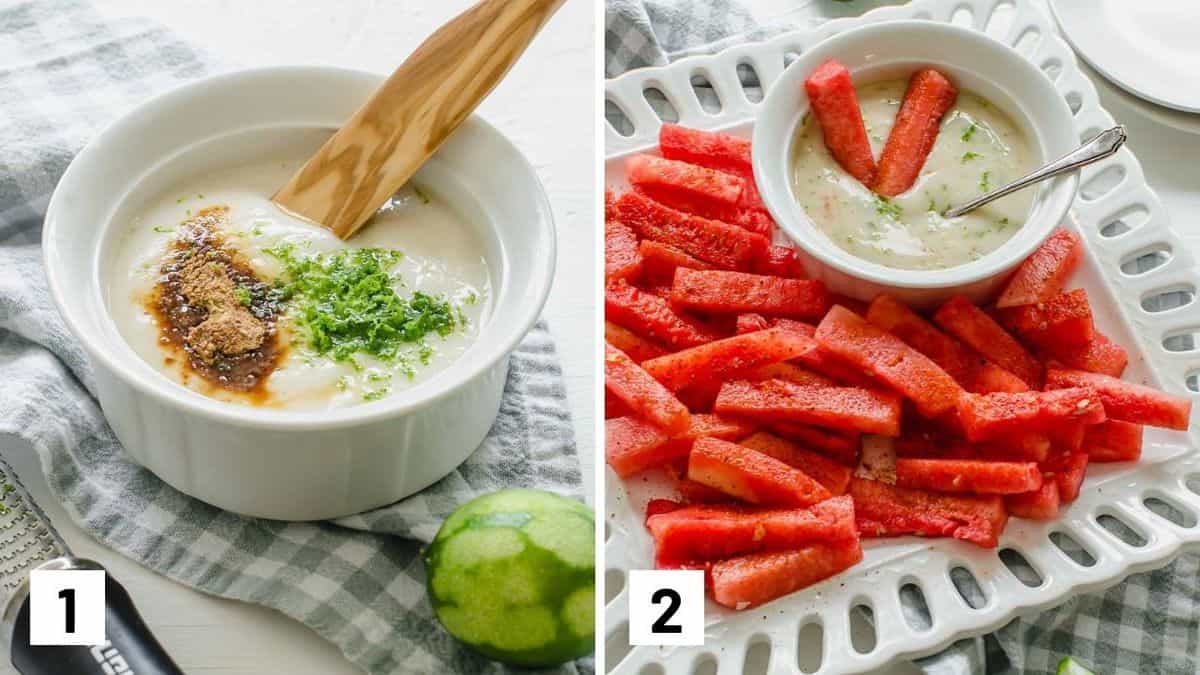
Set of two photos showing how to make the coconut lime dipping sauce and then plated with the sticks.

Step 1: In a bowl, combine yogurt, lime juice and zest and coconut sugar. Set aside.

Step 2: On a plate, scatter watermelon fries and sprinkle Tajin classic seasoning.

Expert Tips

The key to choosing a good watermelon for making watermelon fries is to look for:

  1. A watermelon that feels heavy for its size (regardless of if it’s big or small).
  2. A yellow splotch on one side.
  3. A deep hollow sound when tapped.

To cut the watermelon into fries, you can simply slice the watermelon into rounds, cut off the rind, and then cut the watermelon into the size of fries.

The easiest way to cut a watermelon is by using a serrated knife like a bread knife!

Recipe FAQs

How far in advance should i make this recipe if i want to prepare it for entertaining guests?

I’d suggest cutting up the watermelon into strips a few days in advance but I recommend adding the seasoning prior to serving. Cut watermelon can be stored in an airtight container in the fridge for up to 5 days.

Is there a difference between coconut flavoured yogurt or yogurt with coconut milk as the base?

Yes! There is a difference. For this recipe, I recommend using dairy-free yogurt made with a coconut base. However, if you don’t have that available you cant totally experiment with other yogurts as well. 

What can I use if i don’t have tajin seasoning? 

If you don’t have Tajin seasoning, you can make your own by combining 1/2 tsp of salt, 1/4 tsp of chili powder, and lime zest to taste. You can also  improvise using any spicy seasoning you have on hand. 

Is this watermelon fries with coconut lime dip recipe kid friendly?

For sure! I have never met a toddler who doesn’t love to dip their food and my son is no exception. However, If you are serving this to your kiddo I would suggest holding back on the spice/Tajin seasoning. 

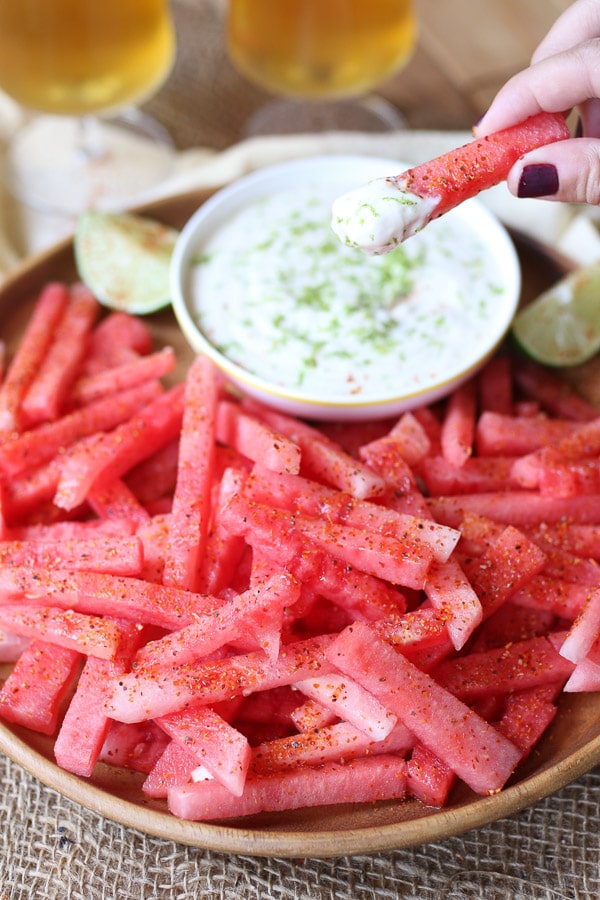
Hand holding a watermelon fry next to dip served in a white bowl, garnished with fresh lime wedges

More Recipes You Might Like

If you want some more fun summer recipes like this watermelon fries with coconut lime dip recipe, here are some of my favourite healthy summer appetizers

  • Honeydew Melon Fries with Lemon Poppyseed Cherry Dip
  • Pineapple Chocolate Donuts with Spicy Salty Crust
  • Grilled Sweet Potatoes with Avocado Lime Sauce

So loves, tell me – have you made watermelon fries? Leave me a comment below with your thoughts!

These Watermelon Fries with Coconut Lime Dip are a great Gluten Free, Vegan and Healthy Summer Snack that's perfect for the whole family.
Print Recipe
4.33 from 185 votes

Watermelon Fries with Coconut Lime Dip | Healthy Summer Snack!

These easy Watermelon Fries with Coconut Lime Dip are such a fun and delicious snack that is perfect for the summertime! They're gluten-free, vegan, and take little to no time to make!
Prep Time5 minutes mins
Total Time5 minutes mins
Course: Appetizer
Cuisine: Mexican
Servings: 12 people
Calories: 129kcal
Author: Abbey Sharp

Ingredients

  • 1 watermelon rind removed and cut into long fry-like shapes
  • 2 tsp Tajin Classic Seasoning

Dip:

  • 1 cup coconut yogurt
  • Zest and juice of 1 lime
  • 1 tbsp coconut sugar or to taste

Instructions

  • In a bowl, combine yogurt, lime juice and zest and coconut sugar. Set aside.
  • On a plate, scatter watermelon fries and sprinkle Tajin classic seasoning.
  • Serve with dip and enjoy!

Video

Notes

The key to choosing a good watermelon for making watermelon fries is to look for:
  1. A watermelon that feels heavy for its size (regardless of if it’s big or small).
  2. A yellow splotch on one side.
  3. A deep hollow sound when tapped.
To cut the watermelon into sticks, you can simply slice the watermelon into rounds, cut off the rind, and then cut the watermelon into sticks the size of fries.
The easiest way to cut a watermelon is by using a serrated knife like a bread knife!

Nutrition

Calories: 129kcal | Carbohydrates: 31g | Protein: 3g | Fat: 1g | Saturated Fat: 1g | Sodium: 9mg | Potassium: 429mg | Fiber: 2g | Sugar: 25g | Vitamin A: 2325IU | Vitamin C: 32.8mg | Calcium: 52mg | Iron: 1mg
Abbey Sharp

Abbey Sharp is a Registered Dietitian (RD), regulated by the Ontario College of Dietitians. She is a mom, YouTuber, Blogger, award winning cookbook author, media coach specializing in food and nutrition influencers, and a frequent contributor to national publications like Healthline and on national broadcast TV shows.
www.abbeyskitchen.com/about-abbey/

Last Updated May 25, 2024. Published May 31, 2024 By Abbey Sharp 15 Comments

Vegan Breakfast Sausage Recipe | Gluten & Soy Free!

Two vegan breakfast sausage patties next to orange slices and toast on a plate.

This Vegan Breakfast Sausage recipe with apple, maple and lentils is packed with fibre and are 100% gluten-free, soy-free, egg-free and nut-free!

Vegan breakfast sausage recipe on a plate.

You know what one of my all time favourite food smells is? Maple breakfast sausages cooking up on a Sunday morning. Since I now try really hard to eat more plant-based meals, I have been experimenting with new ways to get my fix. This maple-infused vegan breakfast sausage recipe is made without any soy faux meat, but rather are packed with mushrooms, lentils, apples, sage and a hint of maple syrup to give that spicy cozy flavour experience without the meat.

Table of contents

  • Why This Recipe Works
  • Key Ingredients
  • How To Make This Recipe
  • Expert Tips
  • Recipe FAQs
  • More Recipes You Might Like

Why This Recipe Works

I’m a big fan of this recipe for a couple of reasons!

  • Allergen-friendly- gluten-free, egg-free, soy-free and nut-free.
  • High in fibre (5g per serving)
  • Freezer-friendly
  • Perfect for meal-prep

Key Ingredients

Two vegan breakfast sausage patties next to orange slices and toast on a plate.

These vegan bangers are surprisingly easy to make. Here’s what you will need to make this recipe:

Cremini mushrooms – Mushrooms add an amazing umami oomph to plant-based recipes that simulates the savoury flavour of meat.

Canned lentils – You can also cook dried lentils, but I love using canned for convenience

Onion and garlic – Our aromatics to make everything more delicious.

Maple syrup – You can try subbing for another liquid sweetener, but for best results I recommend sticking with maple syrup for the warm, sweet tones.

Apple – For subtle sweetness.

Gluten-free low sodium tamari – Sub for coconut aminos or soy sauce, if you’re not gluten-free.

Sage, rosemary, thyme – Together, these dried herbs add a delicious earthy flavour.

Oat flour – I like oat flour for an extra punch of high-fibre whole grains. In this recipe, it serves as our binder.

If you want to ensure that this vegan breakfast sausage is gluten-free, make sure to choose a gluten-free tamari and oat flour.

How To Make This Recipe

Making a vegan breakfast sausage recipe.

Step one: Preheat oven to 425 F.

Step two: Pulse the mushrooms in a food processor until they reach a ground meat like consistency. Transfer to a cheesecloth and ring out as much liquid as possible. Set aside.

Step three: Drain and rinse the lentils and squeeze out any excess moisture. In the food processor, puree half the lentils.

Step four: Heat a tablespoon of olive oil over medium low heat. Add in the onion and cook until lightly browned and caramelized, about 30 minutes. You can also save time and just saute them for 2 minutes before adding the other ingredients but caramelizing adds a lot of flavour.

Step five: Add the garlic, squeezed out mushrooms, the grated and well squeezed apples, maple, tamari, sage, rosemary, and thyme and season with a generous pinch of salt and pepper. Cook until any excess liquid evaporates and the mushrooms are browned.

Step six: Transfer to a bowl along with the lentils, pureed lentils, and oat flour and season with additional salt and pepper.

Step seven: Form into a greased whoopie pie mold. Spritz with olive oil in an oil atomizer and bake for 17-20 minutes or until golden brown.

Expert Tips

Squeezing out excess moisture is a key step in this recipe. When I’m doing this with the rinsed lentils and grated apple, I like using a cheesecloth. If you don’t have a cheesecloth, you can use a kitchen towel too.

Now if you weren’t as meticulous about getting the liquid out, you may need to add a little extra flour in the last step. No biggie!

Recipe FAQs

What if I don’t have a whoopie pie pan?

Don’t worry, you can also totally just carefully form these into patties and pan-fry them.

How do you suggest serving these vegan sausages?

I love my sausages with toast and some fruit, but you could also easily serve these with a nice tofu scramble or on an English muffin like a McDonalds sausage sandwich.

Can you make these sausages ahead of time and freeze them?

Yes! I made a big batch of this vegan breakfast sausage recipe and kept them in the freezer and then I just pulled a few out and rewarmed them in the microwave for 30 seconds. Make sure when you’re storing them to put wax or parchment paper between layers so you don’t have them sticking together.

Maple syrup pouring over vegan breakfast sausage patties on a plate.

More Recipes You Might Like

If you liked this vegan breakfast sausage recipe, give these a try:

  • Vegan Breakfast Casserole | Gluten-Free & Family Friendly
  • Vegan Breakfast Burrito with Tofu Scramble (High Protein)
  • Vegan Avocado Toast with Roasted Tomatoes (High Protein)
  • Vegan Breakfast Sandwich with Tofu

What are some of your favourite breakfast memories? Let me know your thoughts below!

Two vegan breakfast sausage patties next to orange slices and toast on a plate.
Print Recipe
5 from 10 votes

Vegan Breakfast Sausage Recipe | Gluten & Soy Free!

This Vegan Breakfast Sausage Recipe with Apple, Maple and Lentils are packed with fibre and are 100% gluten-free, soy-free, egg-free and nut-free!
Prep Time20 minutes mins
Cook Time1 hour hr
Total Time1 hour hr 20 minutes mins
Course: Breakfast
Cuisine: American
Servings: 12 patties
Calories: 112kcal
Author: Abbey Sharp

Ingredients

  • 8 oz cremini mushrooms stemmed and quartered
  • 1 19 oz can lentils drained and rinsed
  • 1 tbsp extra virgin olive oil
  • 1/2 small onion minced
  • 3 clove garlic minced
  • 3 tbsp maple syrup
  • 1 apple peeled and minced or grated with liquid very well squeezed out
  • 2 tsp gluten free low sodium coconut aminos or tamari
  • 1 ½ tbsp fresh sage minced
  • 1 ½ tbsp fresh rosemary
  • 1 ½ tbsp fresh thyme
  • 6 tbsp oat flour gluten fee if desired
  • Salt and pepper to taste

Instructions

  • Preheat oven to 425 F.
  • Pulse the mushrooms in a food processor until they reach a ground meat like consistency. Transfer to a cheesecloth and ring out as much liquid as possible. Set aside.
  • Drain and rinse the lentils and squeeze out any excess moisture. In the food processor, puree half the lentils.
  • Heat a tablespoon of olive oil over medium low heat. Add in the onion and cook until lightly browned and caramelized, about 30 minutes. You can also save time and just saute them for 2 minutes before adding the other ingredients but caramelizing adds a lot of flavour.
  • Add the garlic, squeezed out mushrooms, the grated and well squeezed apples, maple, tamari, sage, rosemary, and thyme and season with a generous pinch of salt and pepper. Cook until any excess liquid evaporates and the mushrooms are browned.
  • Transfer to a bowl along with the lentils, pureed lentils, and oat flour and season with additional salt and pepper.
  • Form into a greased whoopie pie mold. Spritz with olive oil in an oil atomizer and bake for 17-20 minutes or until golden brown.

Nutrition

Calories: 112kcal | Carbohydrates: 19g | Protein: 6g | Fat: 2g | Saturated Fat: 1g | Sodium: 60mg | Potassium: 319mg | Fiber: 5g | Sugar: 6g | Vitamin A: 57IU | Vitamin C: 3mg | Calcium: 32mg | Iron: 2mg
Abbey Sharp

Abbey Sharp is a Registered Dietitian (RD), regulated by the Ontario College of Dietitians. She is a mom, YouTuber, Blogger, award winning cookbook author, media coach specializing in food and nutrition influencers, and a frequent contributor to national publications like Healthline and on national broadcast TV shows.
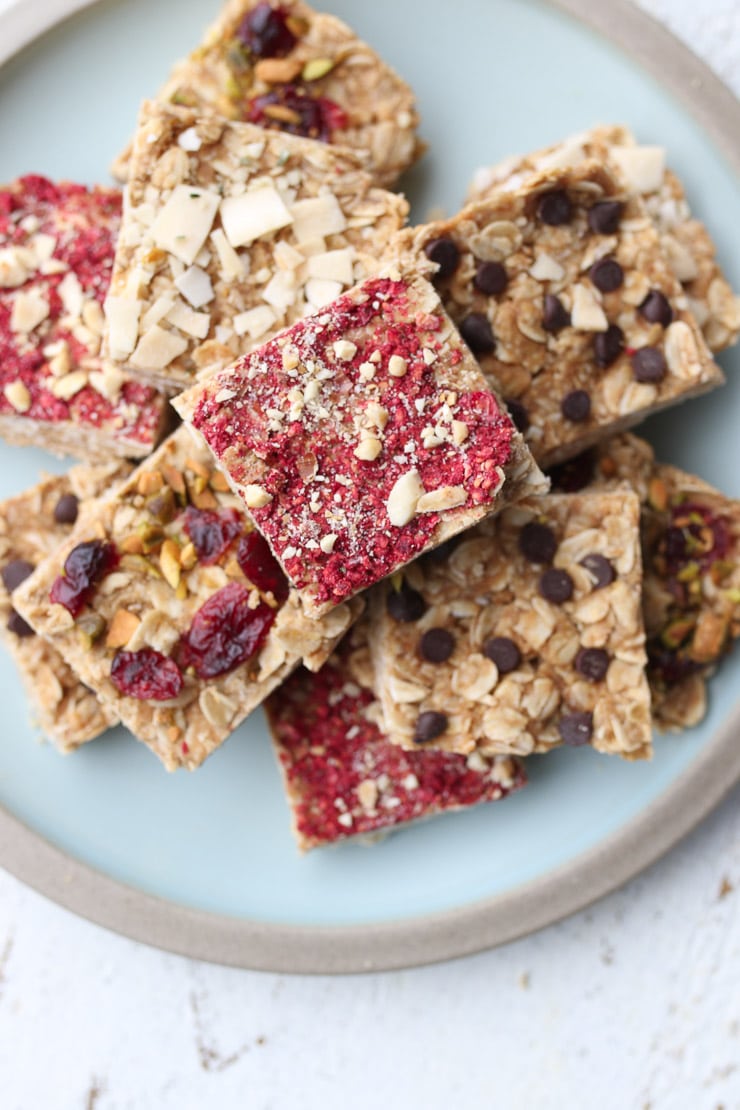
www.abbeyskitchen.com/about-abbey/

Last Updated May 25, 2024. Published May 27, 2024 By Abbey Sharp 3 Comments

Sweet Potato Bars Recipe | Vegan, Kid Friendly

My vegan sweet potato bars recipe is an easy and delicious way to start your day. They’re packed with quinoa, oats, and sweet potato, making them healthy and naturally gluten-free.

Birds eye view of sweet potato bars on a yellow plate.

As we attempt to get back into the school and work routine, I know a lot of us are looking for some easy make-ahead breakfasts for on-the-go eating. If you’re tired of cereal and oatmeal, this sweet potato bars recipe was made for you. You won’t believe just how easy and tasty these are to make.

Table of contents

  • Why This Recipe Works
  • Key Ingredients
  • How to Make This Recipe
  • Expert Tips
  • Recipe FAQs
  • More Recipes You Might Like

Why This Recipe Works

These sweet potato bars are such an underrated meal prep. They’re so easy to make and you’ll absolutely love them. They’re also:

  • Nutrient dense
  • Kid-friendly
  • Easy to pack
  • Gluten-free
  • Dairy-free
  • Vegan-friendly

Key Ingredients

Ingredients needed to make sweet potato bars recipe

Sweet potatoes — Sweet potatoes are packed with fibre, minerals, and vitamins. They also help bind the bars together and provide a natural sweetness!

Oats — We use some old fashioned rolled oats to help bind the sweet potato bars as well. They’re packed with fibre as well.

Quinoa — Quinoa is high in protein and when combined into the bars, it can help you stay full throughout the morning!

Ground flaxseed – This is not only packed with heart healthy omega 3s, protein and fibre, but makes a vegan alternative to eggs when mixed with water.

Toppings — You can top these sweet potato breakfast bars however you’d like but I’m partial to some chocolate, hemp hearts, shredded coconut, dried cherries, and minced pistachios.

How to Make This Recipe

Step 1: Preheat the oven to 350 degrees F. Line two 9 x 5 loaf pans with parchment and set aside.

Step 2: In a small bowl, mix together the flax and water and set aside for 20 minutes.

Set of two photos showing dry ingredients mixed together and then mixed with mashed sweet potatoes.

Step 3: In a large bowl, mix together the oats, cooked quinoa, baking powder, salt, cinnamon and nutmeg.

Step 4: Mash in the sweet potato, almond butter, maple, flax egg (the flax and water mixture) and vanilla and mix until smooth. Then fold in the dried cherries and coconut.

Set of two photos showing the mixture being pressed into a pan and then sliced once cooled.

Step 5: Transfer mixture to the two lined loaf pans and smooth the top with a spatula.

Step 6: Bake on the center rack for 25 minutes until sides brown.
Remove and let cool completely in the pan. Once cooled, transfer to a cutting board and cut into squares. Meanwhile, melt the chocolate chips in a microwave safe bowl with the coconut oil in 30 second intervals until melted. Stir in the almond butter and mix until very smooth. Drizzle or pipe onto the cut bars.

Expert Tips

You can totally get your kids involved with making this sweet potato bars recipe! Your kids can definitely help with mixing the dry ingredients and wet ingredients, as well as mashing the sweet potato. Just make sure it has cooled well before they get mashing.

Some more topping ideas include whatever nuts and seeds in your pantry. Simply sprinkle them on top of your bars after you’ve drizzled chocolate on to it so they’ll stick to it.

To quickly cook your sweet potatoes beforehand, simply microwave it, steam it, bake it, or boil it. Skip adding salt to the sweet potatoes when you cook it as they is salt added to the sweet potato breakfast bars as well.

Recipe FAQs

Is this BLW and baby friendly?

This recipe can be baby and BLW friendly since it is so nutrient dense. If you want to cut back on the sugar, you can omit the maple syrup (it’s got enough sweetness from the sweet potato for a baby under 1), and also omit the chocolate. I would make sure that any nuts you add are pulverized and any dried fruit should be minced very fine.

Can I freeze these sweet potato bars?

I always freeze these. I recommend cutting them into pieces and freezing them on a baking sheet flat until solid (about 1 hour). Then you can transfer them to the freezer bag for up to 4 months.

Can I use canned pumpkin instead of sweet potatoes?

I have never tried to use canned pumpkin, but you could attempt it, but know that it’s a bit more wet, so you may need a little more oats to soak it up. It is also less sweet so you may want to add more maple to balance that out.

If I’m not vegan, can I use regular eggs?

Yes, you can omit the flax eggs (2 tbsp flax + 4 tbsp water) and instead use 2 large eggs.

What if we have a nut allergy?

I would recommend using sunflower butter or a soy based “nut” butter in place of the almond butter, and you can easily omit the pistachios on top.

Are these gluten free?

As long as you use gluten free oats and baking powder, this sweet potato bars recipe is naturally gluten free.

Sweet potato bars on a yellow plate.

More Recipes You Might Like

If you loved this sweet potato bars recipe, you’ll definitely love these other breakfast bars!

  • Homemade Breakfast Bars 
  • No Bake Oatmeal Bars 
  • Oatmeal Breakfast Bars with Berries 
  • No Bake Cheerios Bars 

What are some of your favourite breakfast bars for back to school? Leave me a comment with your thoughts!

Print Recipe
4.80 from 5 votes

Sweet Potato Bars (Vegan & Kid Friendly)

These vegan sweet potato bars are such an easy and delicious way to start your day. They're packed with quinoa, oats, and sweet potato, making them healthy as well as being naturally gluten-free.
Prep Time15 minutes mins
Cook Time30 minutes mins
Total Time45 minutes mins
Course: Breakfast, Snack
Cuisine: American
Servings: 10
Calories: 277kcal
Author: Abbey Sharp

Ingredients

  • 2 tablespoon flaxseed ground + 4 tablespoon water
  • 1 1/4 cup quick cooking oats dry
  • 1 cup cooked quinoa
  • 1 teaspoon baking powder
  • 1/2 teaspoon salt
  • 2 tsp cinnamon
  • ½ tsp nutmeg
  • 2 small sweet potatoes cooked (1 ½ cups mashed flesh)
  • 5 tbsp maple syrup
  • 1/4 cup almond butter
  • 1 tablespoon vanilla extract
  • ½ cup dried cherries
  • 3 tbsp unsweetened shredded coconut

Top with :

  • 1/4 cup dried cherries
  • 3 tbsp shredded coconut
  • 2 tbsp minced pistachios
  • 1 tbsp hemp hearts

Drizzle:

  • 1 tbsp mini choc chips
  • ½ tsp coconut oil
  • 1 ½ tbsp almond butter
  • Maple syrup if desired

Instructions

  • Preheat the oven to 350 degrees F. Line two 9 x 5 loaf pans with parchment and set aside.
  • In a small bowl, mix together the flax and water and set aside for 20 minutes.
  • In a large bowl, mix together the oats, cooked quinoa, baking powder, salt, cinnamon and nutmeg.
  • Mash in the sweet potato, almond butter, maple, flax egg (the flax and water mixture) and vanilla and mix until smooth. Then fold in the dried cherries and coconut.
  • Transfer mixture to the two lined loaf pans and smooth the top with a spatula.
  • Bake on the center rack for 25 minutes until sides brown.
  • Remove and let cool completely in the pan. Once cooled, transfer to a cutting board and cut into squares.
  • Meanwhile, melt the chocolate chips in a microwave safe bowl with the coconut oil in 30 second intervals until melted. Stir in the almond butter and mix until very smooth. Drizzle or pipe onto the cut bars.
  • Store in an airtight container for 3 – 4 days.

Video

Notes

  • You can totally get your kids involved with making this reicpe! Your kids can definitely help with mixing the dry ingredients and wet ingredients, as well as mashing the sweet potato. Just make sure it has cooled well before they get mashing.
  • Some more topping ideas include whatever nuts and seeds in your pantry. Simply sprinkle them on top of your bars after you’ve drizzled chocolate on to it so they’ll stick to it.
  • To quickly cook your sweet potatoes beforehand, simply microwave it, steam it, bake it, or boil it. Skip adding salt to the sweet potatoes when you cook it as they is salt added to the sweet potato bars as well.

Nutrition

Calories: 277kcal | Carbohydrates: 39g | Protein: 7g | Fat: 11g | Saturated Fat: 3g | Cholesterol: 1mg | Sodium: 155mg | Potassium: 399mg | Fiber: 6g | Sugar: 16g | Vitamin A: 6749IU | Vitamin C: 1mg | Calcium: 104mg | Iron: 2mg
Abbey Sharp

Abbey Sharp is a Registered Dietitian (RD), regulated by the Ontario College of Dietitians. She is a mom, YouTuber, Blogger, award winning cookbook author, media coach specializing in food and nutrition influencers, and a frequent contributor to national publications like Healthline and on national broadcast TV shows.
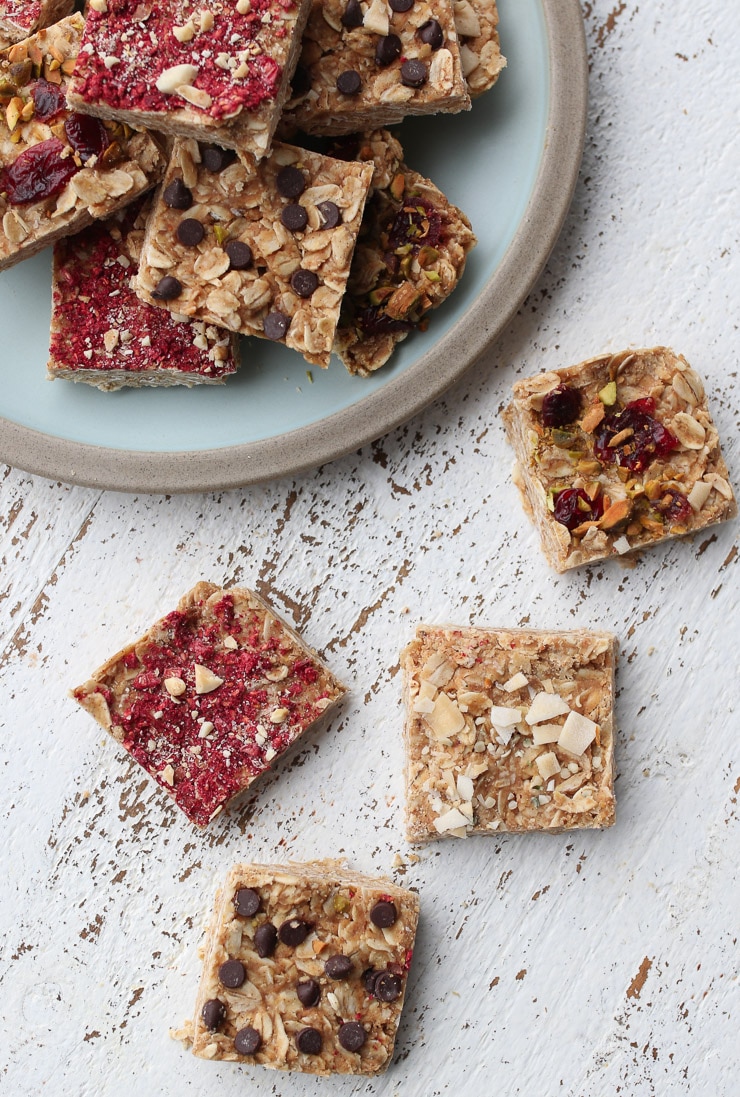
www.abbeyskitchen.com/about-abbey/
  • Previous Page
  • Go to page 1
  • Interim pages omitted …
  • Go to page 4
  • Go to page 5
  • Go to page 6
  • Go to page 7
  • Go to page 8
  • Interim pages omitted …
  • Go to page 89
  • Next Page

Get started with

Eight Free Recipe Books

From the co-founder of Neue Theory and creator of the Hunger Crushing Combo

Sign me up!
Abbey smiling at table
Abbey Sharp

“Foods may never be nutritionally equal. But we can make them morally equal by recognizing that our worth is never determined by what's on our plate.”

— Abbey Sharp, RD About Abbey ◥

Books

  • HCC™
  • Mindful Glow
  • Free E-Books

Blog

  • Nutrition
  • Recipes
  • Motherhood
  • Life

Explore

  • Neue Theory™
  • Bite Back
  • YouTube

Abbey

  • About
  • Coaching
YouTube TikTok Instagram Facebook X Pinterest
Abbey Sharp - The No BS Dietitian From Abbeys Kitchen

© Abbey's Kitchen 2026  All Rights Reserved •  ACCESSIBILITY STATEMENT •  Privacy Policy

This site uses cookies. By continuing to browse the site, you are agreeing to the use of cookies Accept Privacy Policy
Privacy & Cookies Policy

Privacy Overview

This website uses cookies to improve your experience while you navigate through the website. Out of these, the cookies that are categorized as necessary are stored on your browser as they are essential for the working of basic functionalities of the website. We also use third-party cookies that help us analyze and understand how you use this website. These cookies will be stored in your browser only with your consent. You also have the option to opt-out of these cookies. But opting out of some of these cookies may affect your browsing experience.
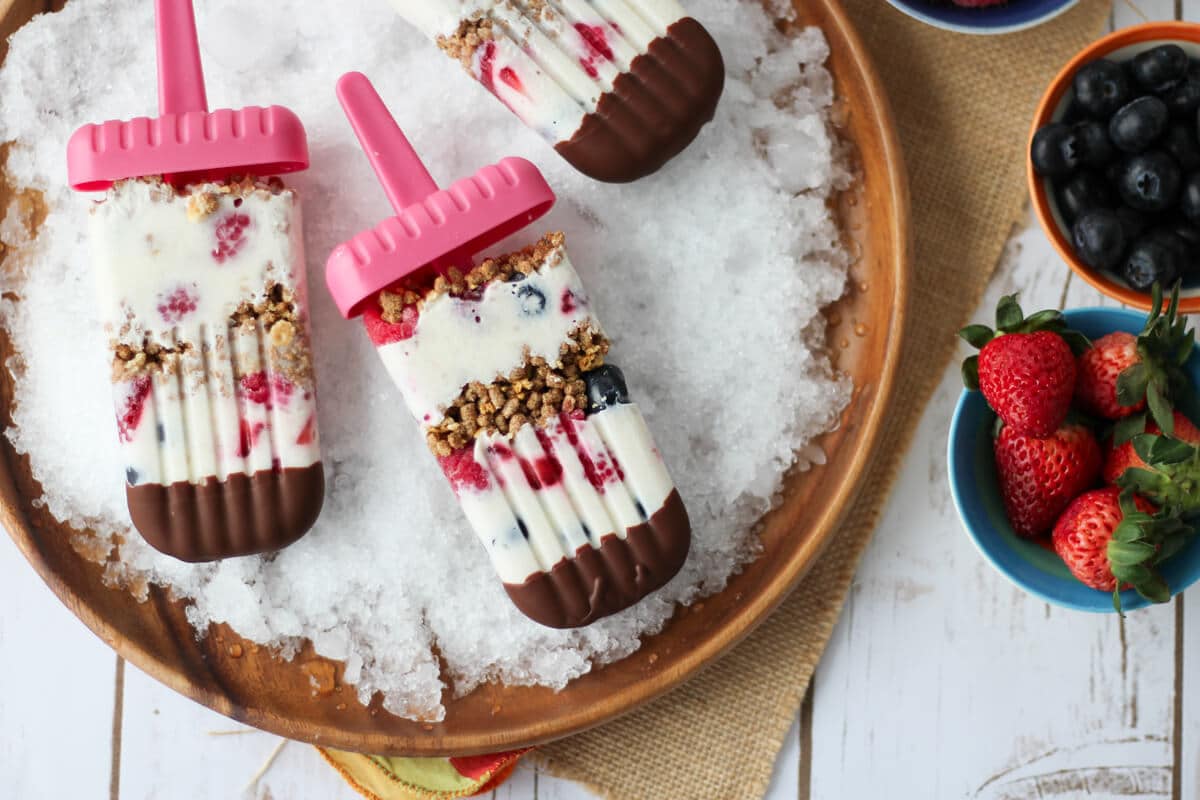
Necessary
Always Enabled
Necessary cookies are absolutely essential for the website to function properly. This category only includes cookies that ensures basic functionalities and security features of the website. These cookies do not store any personal information.
Non-necessary
Any cookies that may not be particularly necessary for the website to function and is used specifically to collect user personal data via analytics, ads, other embedded contents are termed as non-necessary cookies. It is mandatory to procure user consent prior to running these cookies on your website.
SAVE & ACCEPT

Rate This Recipe

Your vote:


A rating is required
A name is required
An email is required